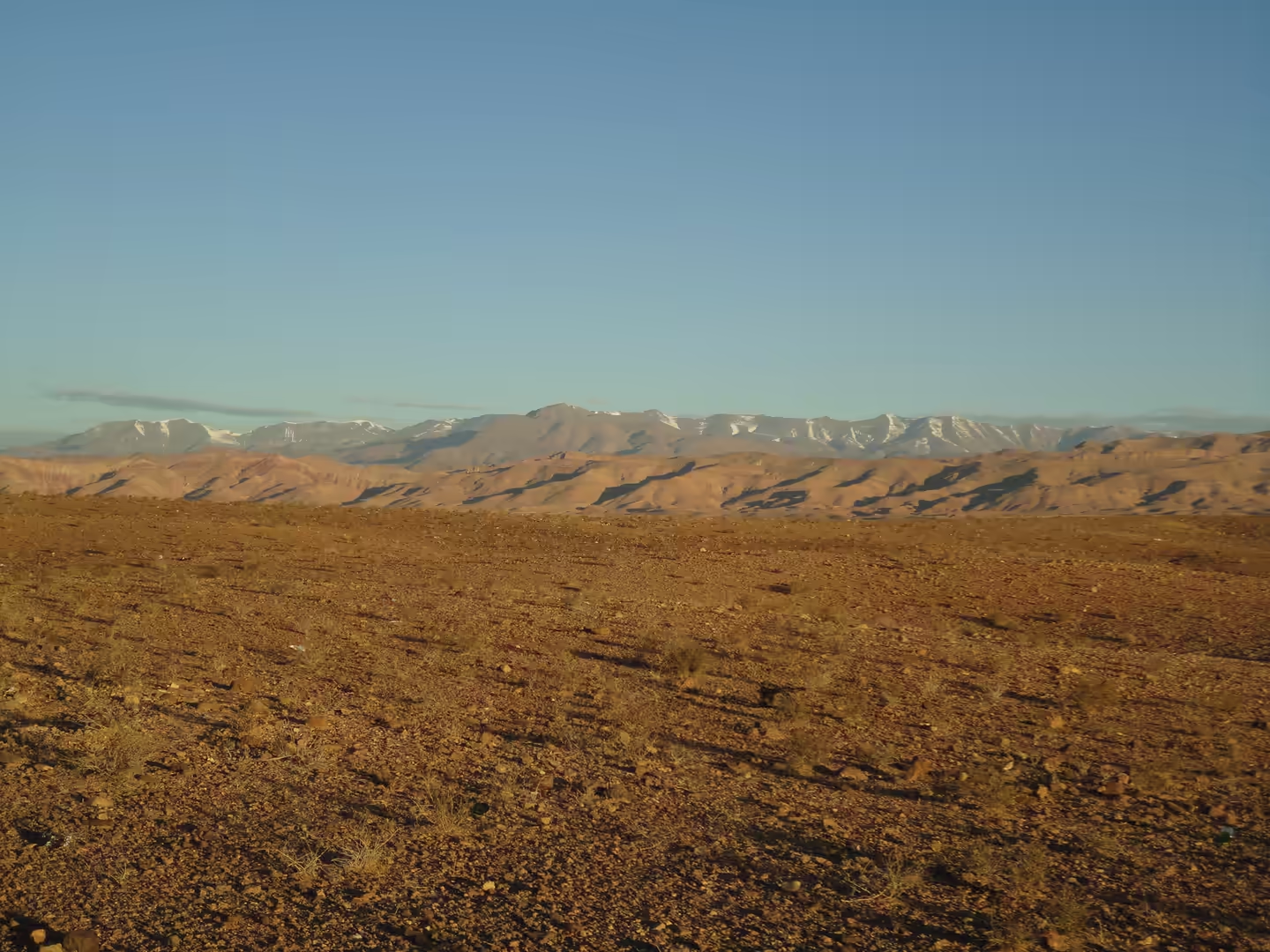
Around 07:00 I set off again in the direction of Ouarzazate, aiming to arrive there by 10:00. To the right, far from the road, I could see the Atlas Mountains with their snow-covered peaks. Everything that is green here exists because of glacial streams and meltwater after the snow has melted. These must create considerable floods that then pour out toward the Sahara. The Draa River eventually turns and flows into the Atlantic; the rest of the water seeps into the desert.
Before I could drive off, a man from the shop beneath the hotel tried to extract 20 dirhams from me, claiming he had watched over my car all night. I didn’t really believe him, but the whole hotel situation made me uneasy. So I paid him and left.
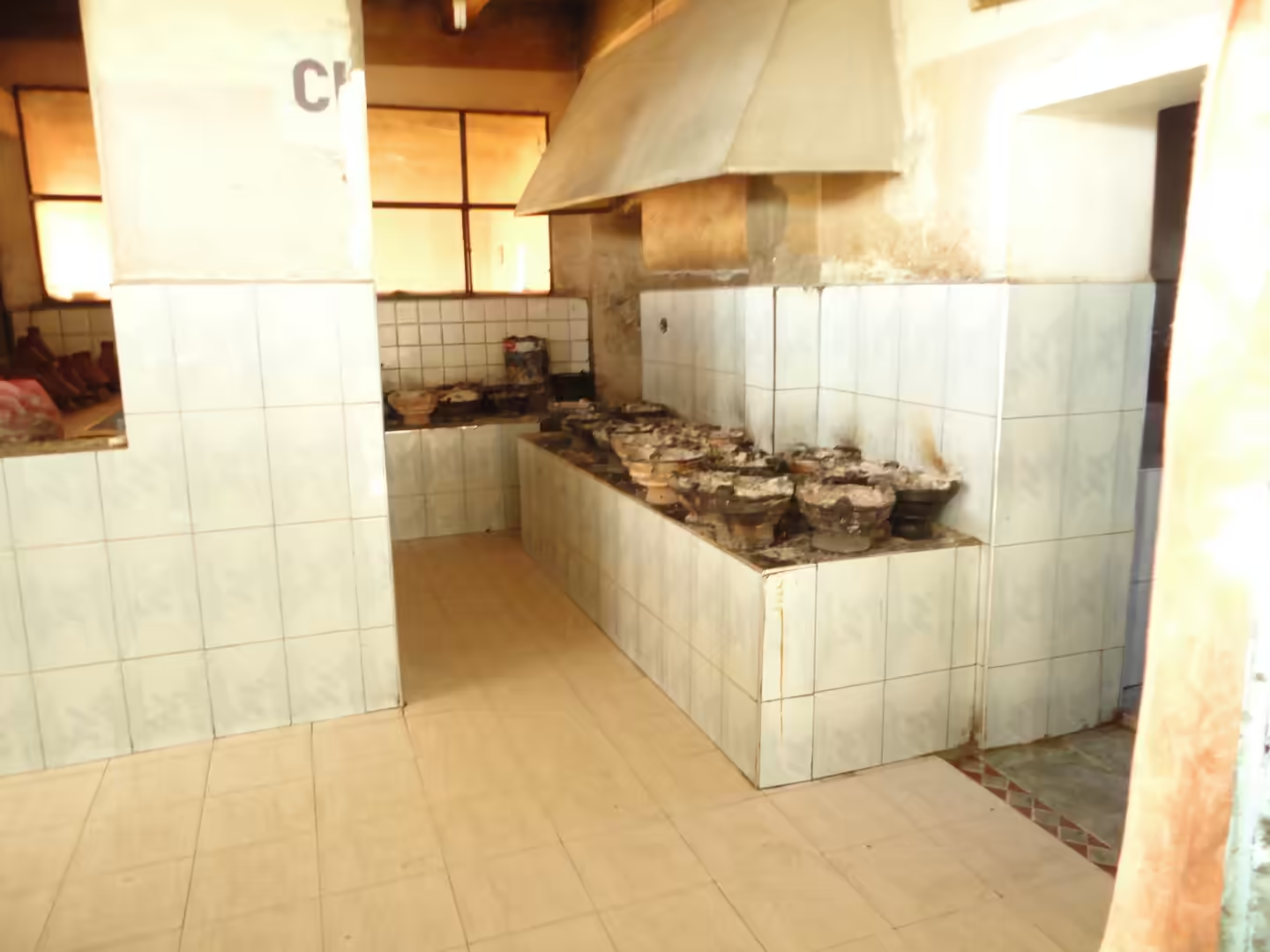
By then it had become quite cold, so I had to turn on the car’s heating early in the morning. After a few kilometers I stopped at what was essentially a roadside rest stop. Considering the surroundings, it was surprisingly well equipped. Several tajine grills stood idle in the kitchen, waiting to be put into service later in the day. As usual, I ordered an omelette with processed cheese, along with plenty of coffee and flatbread.

I arrived in Ouarzazate on time and drove straight to the gas station. I don’t remember what I paid—it wasn’t much. By then a lot of trash had accumulated in the car, which I stuffed into a plastic bag and left in the vehicle.
The car rental agent greeted me again, and the return process began. I was a bit nervous, worried that the car might have been damaged during my excursions. From the outside everything looked fine. He checked his list, inspected the car, and I held my breath when he bent down and crawled underneath it. That made me uneasy, as I hadn’t expected such a thorough inspection. But everything was fine. A short time later I was back outside the shop with my bag of trash.
Following local custom, the trash bag ended up at the edge of the main road, and I went back to the Royal to take another room. This time the process with the old, painfully slow receptionist took even longer than I was already used to. While waiting, I studied the hotel entrance. Interestingly, there was a painting depicting almost exactly the route I had driven over the past 48 hours. That felt strange, as I had only relied on my guidebook maps, while the wall painting showed even more detail.
After a long wait, I finally got to my room, took a good shower—there was always hot water at the Royal—and left my things there. This time I walked toward the newer part of town, in the direction of the road to Zagora. Just after crossing the main road, small gardens began along the Draa River. The irrigation there was still done manually, using hoes and earth embankments to guide water through channels and distribute it over the fields.
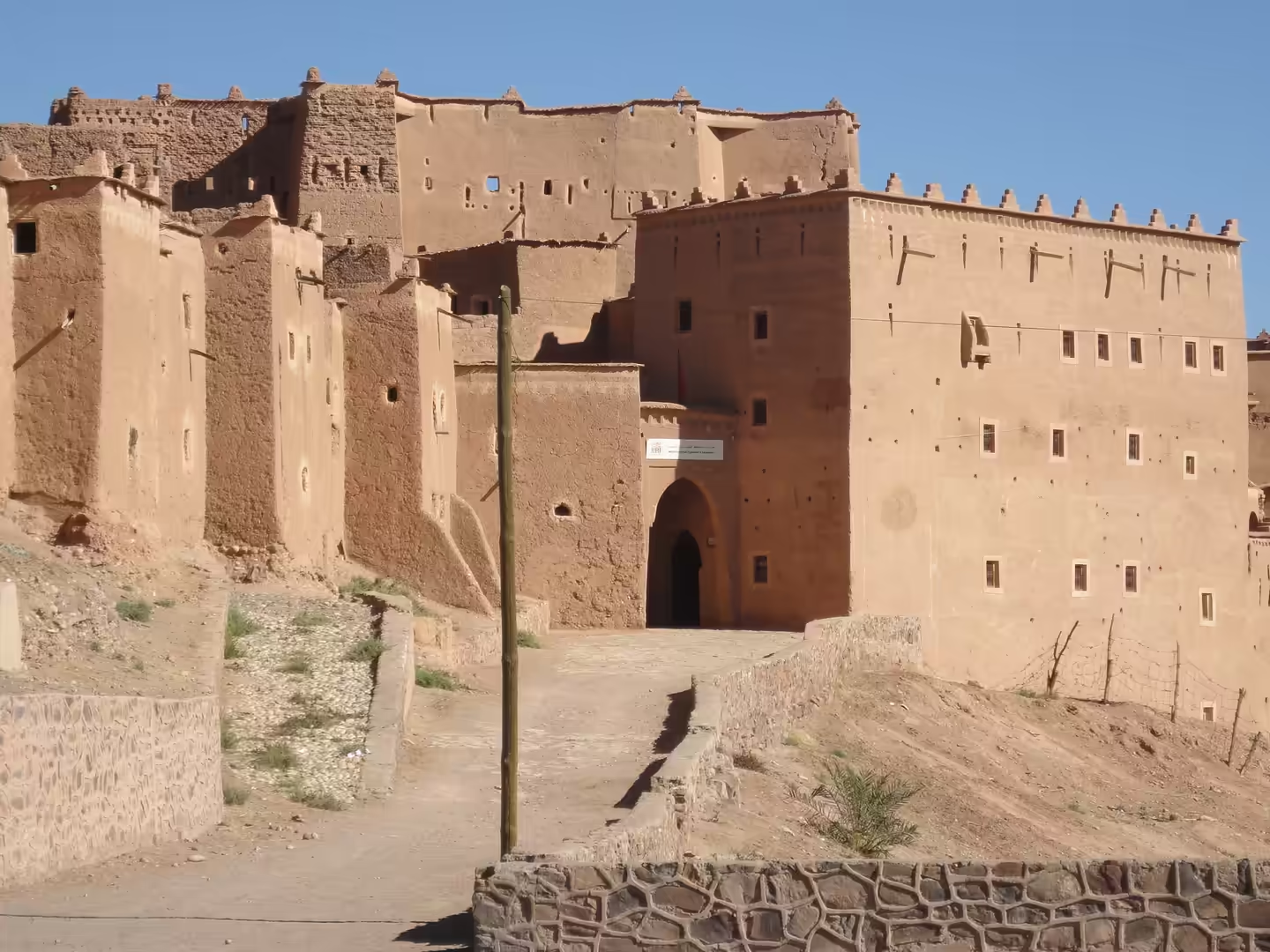
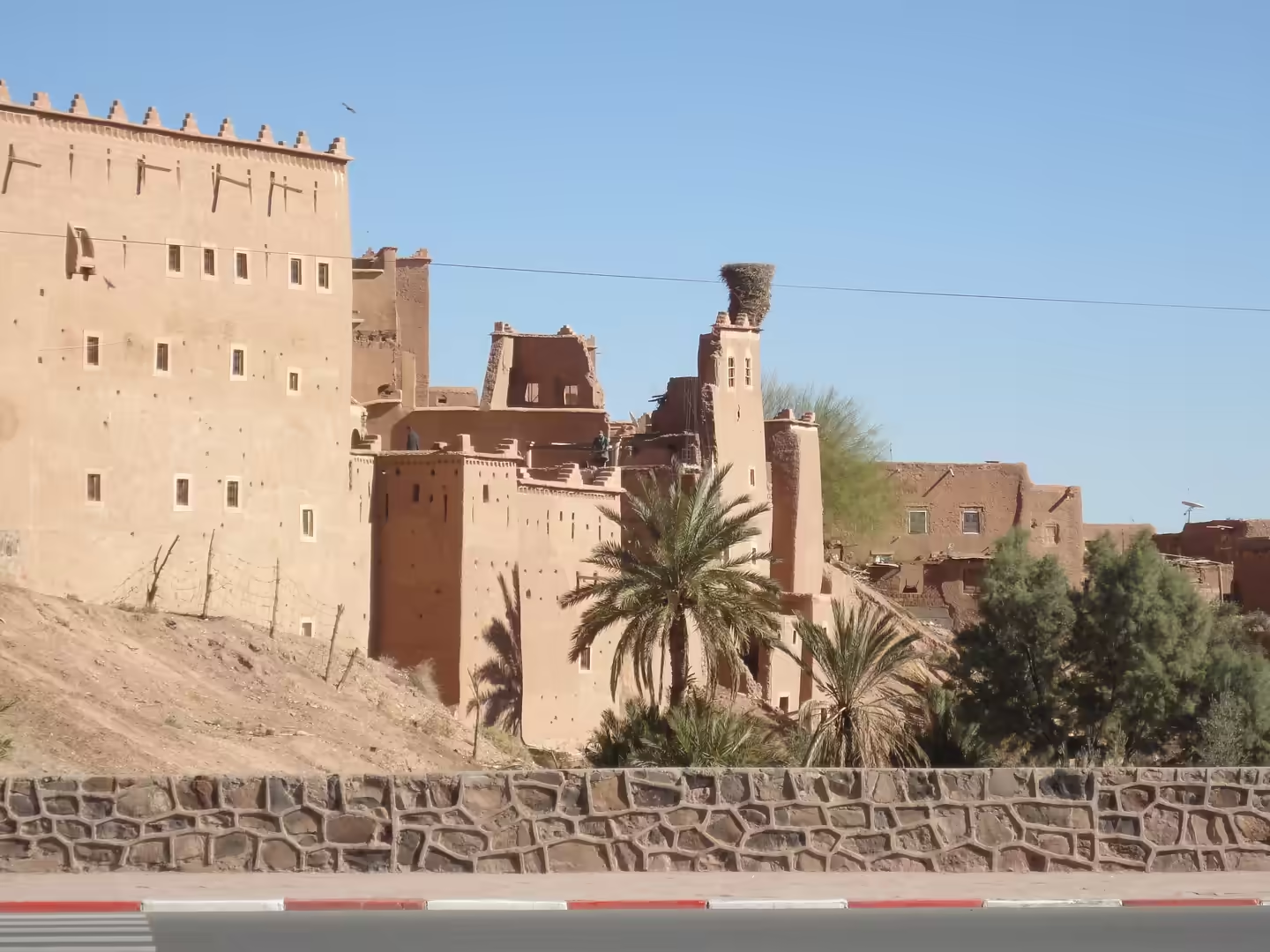
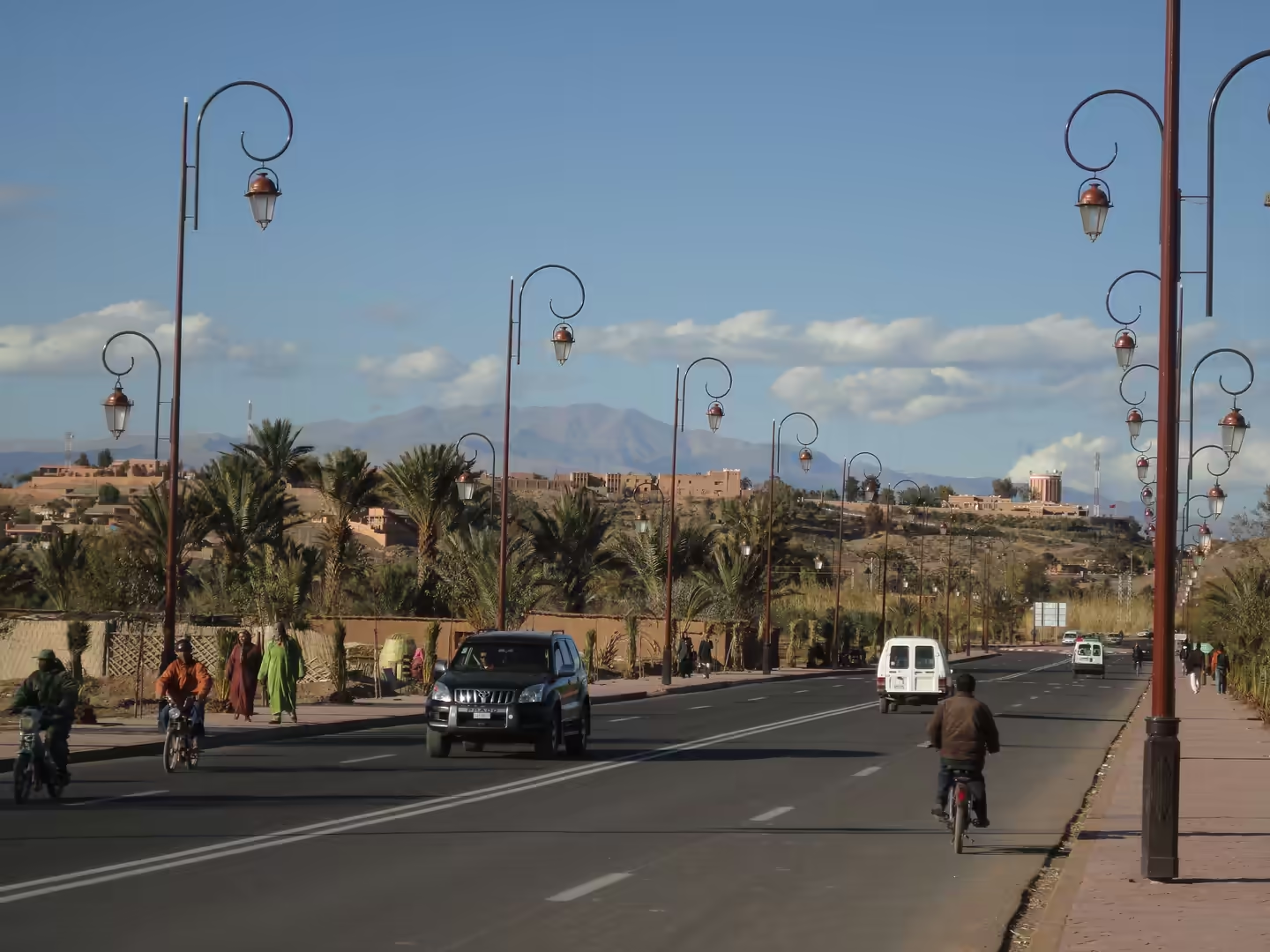
I watched for a while, wandered through the gardens, and then reached the river itself. From there I turned back toward the main road and entered the medina, which is said to be one of the oldest in Morocco—possibly dating back to the 12th century. The lanes were narrow and extremely winding, and more than once I ended up in a dead end. Overall, there wasn’t much activity. Some houses were still partly built from clay.
At the somewhat more modern northern exit toward the main road, a few young local guides were waiting and asked if I wanted a tour. In retrospect, maybe I should have accepted, but by then I had already walked around for quite some time. I continued toward the newer part of town again, crossing the Draa via its narrow bridge, where I nearly stepped into a hole with one foot.
Throughout Morocco it was noticeable how much construction was happening outside cities and villages—not just houses, but sidewalks stretching for hundreds of meters along main roads, often leading into nothing. You could tell these developments were recent: palm trees had been newly planted, were still small, and were watered frequently. This was also visible near the transition into the newer part of Ouarzazate.
I reached a corner but didn’t feel like walking any further. After two weeks on foot, and having been spoiled by the car, I’d had enough walking. I sat down at a corner café by the intersection, drank several coffees, and wrote in my travel notes.
Later I went back and took a look at the old kasbah on the main street near the center. The entire building was made of clay and already quite dilapidated. You could still climb through the rooms and up a few floors, but everything was incredibly narrow and low. I wandered a bit more through the city, but there wasn’t much else to see.
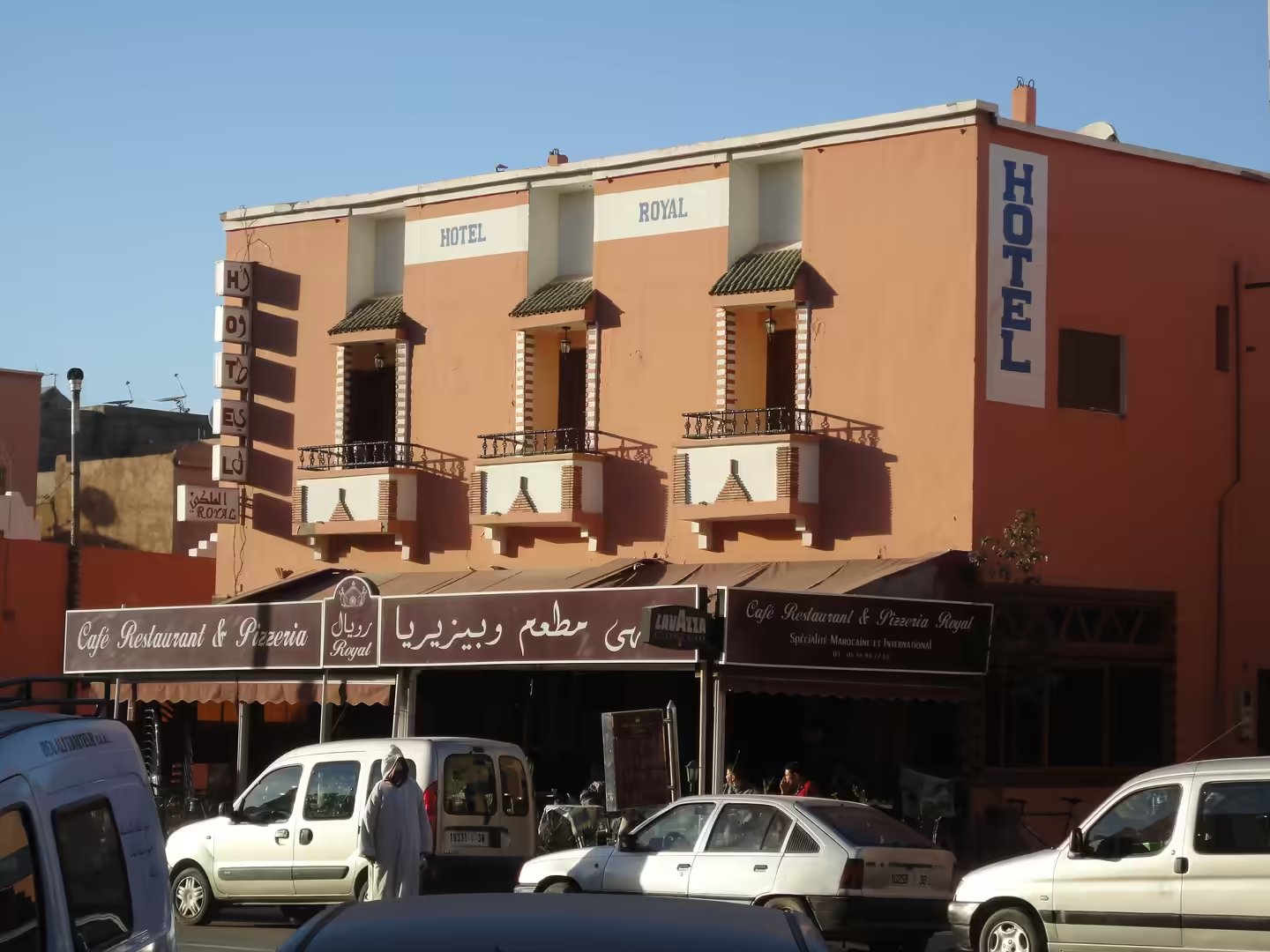
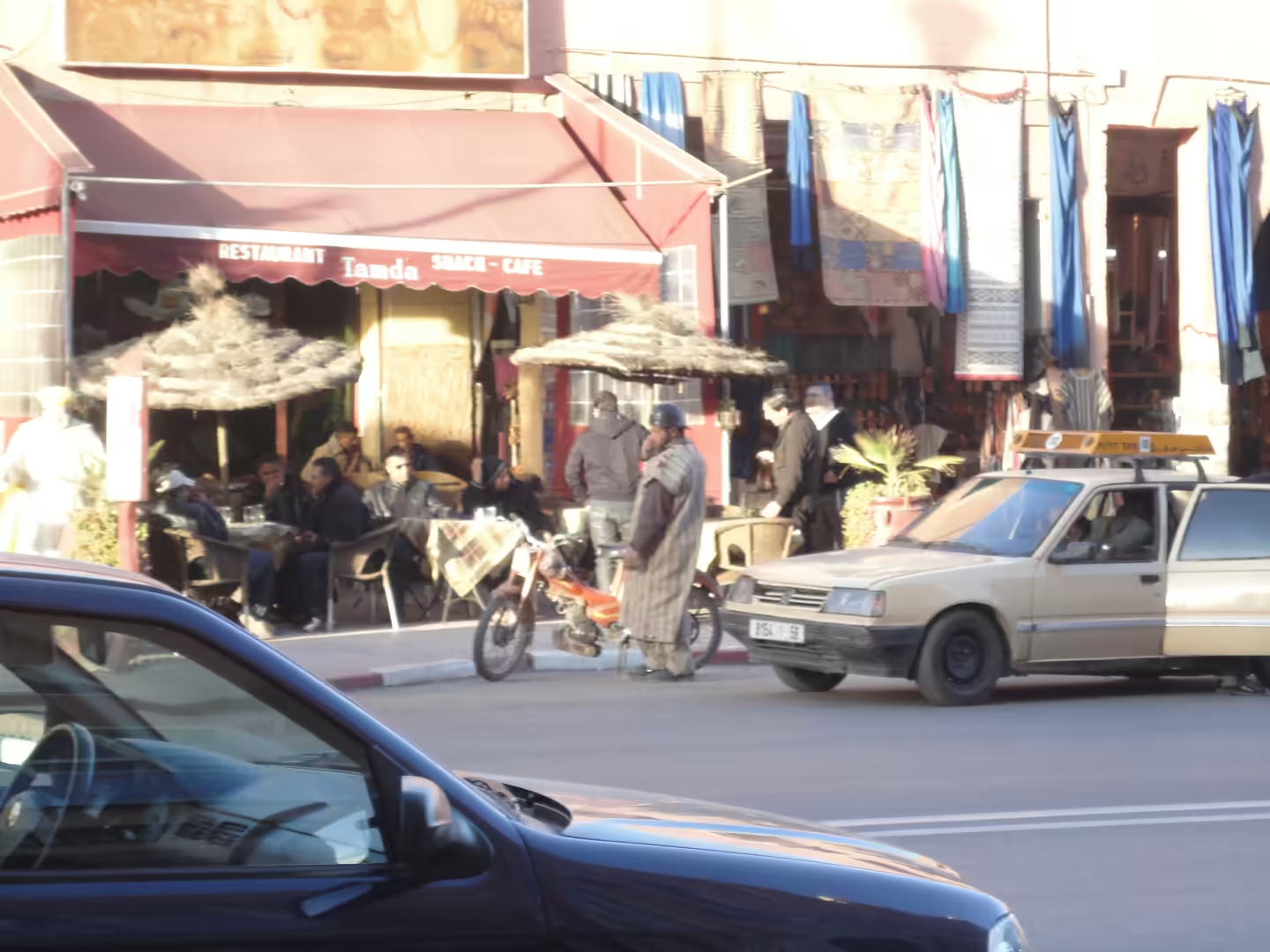
By evening, I headed to the central square, where many people had gathered. Numerous restaurants had set up tables outside. In one of them I had previously noticed a Wi-Fi signal, so I went in with my netbook and ordered a tea. I tried to connect but couldn’t get online. When I asked the owner for the password, he couldn’t really help.
Then I noticed someone sitting alone in a dark corner with a laptop—an unusual sight after days of only sporadic internet access in cafés. I approached him and asked how to get online. He didn’t speak English, and I didn’t speak French, but somehow we managed. I handed him my netbook; he struggled a bit because it didn’t have an Arabic keyboard, but shortly afterward I had internet access.
Interestingly, it turned out to be a public Wi-Fi network covering the square, not tied to any restaurant. As far as I remember, the password was the same as the network name. I found it remarkable that there was a public Wi-Fi hotspot this far out, practically on the edge of the desert.
I spent some time browsing and answering emails until I got too cold, and then I went back to the Royal.