Stage 1 of 21
Day 1 - Windhoek
8 June 2019

Journal Notes
General
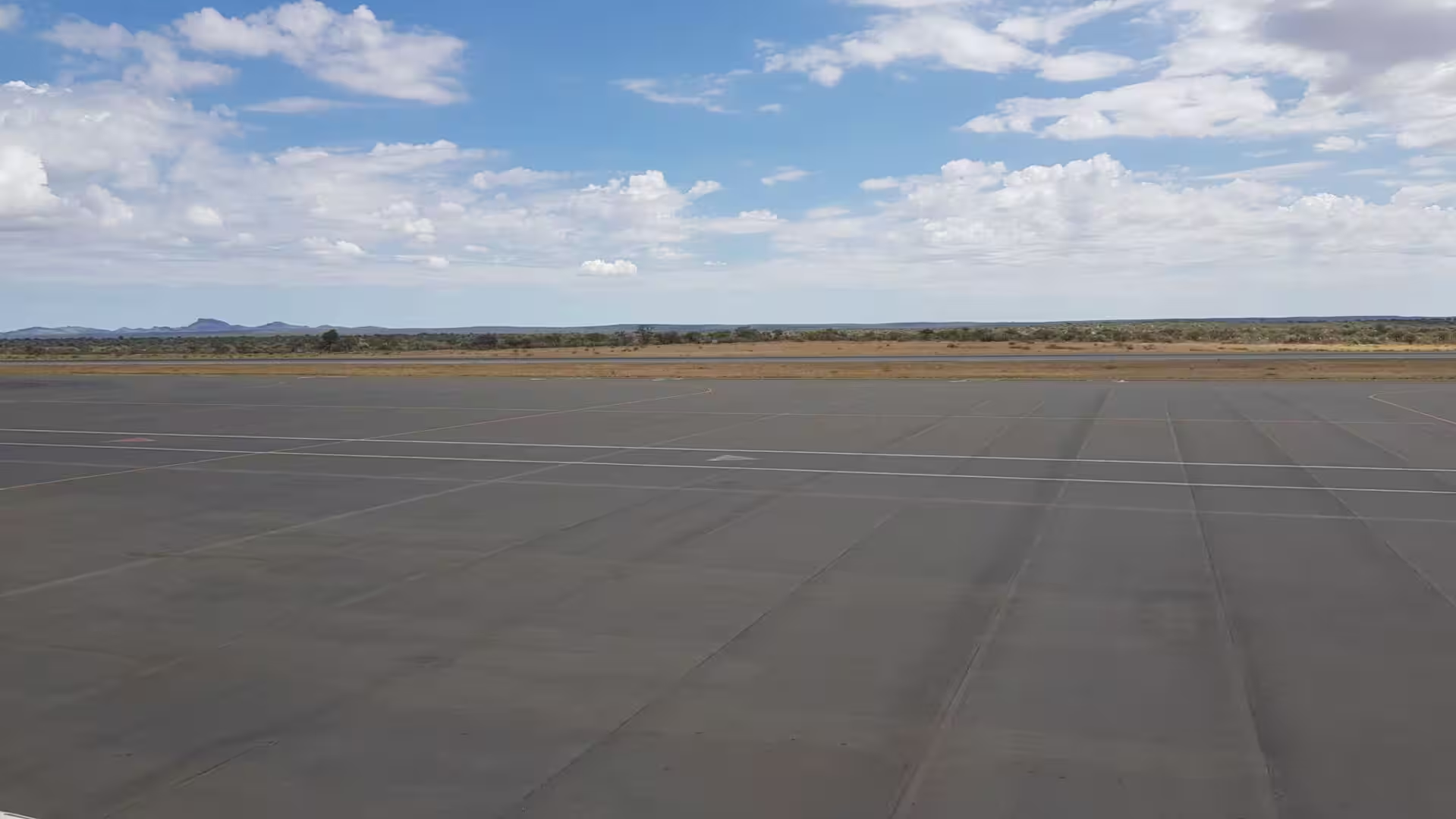
The journey to Namibia began with a night flight and ended on a very small airfield in the middle of a high plateau. The plane came in over country that looked like nothing else the passengers had seen from a window: a flat, pale, stony plain without a single tree in sight, a horizon of low hills in a haze, and a sky of a blue that does not exist in Europe.
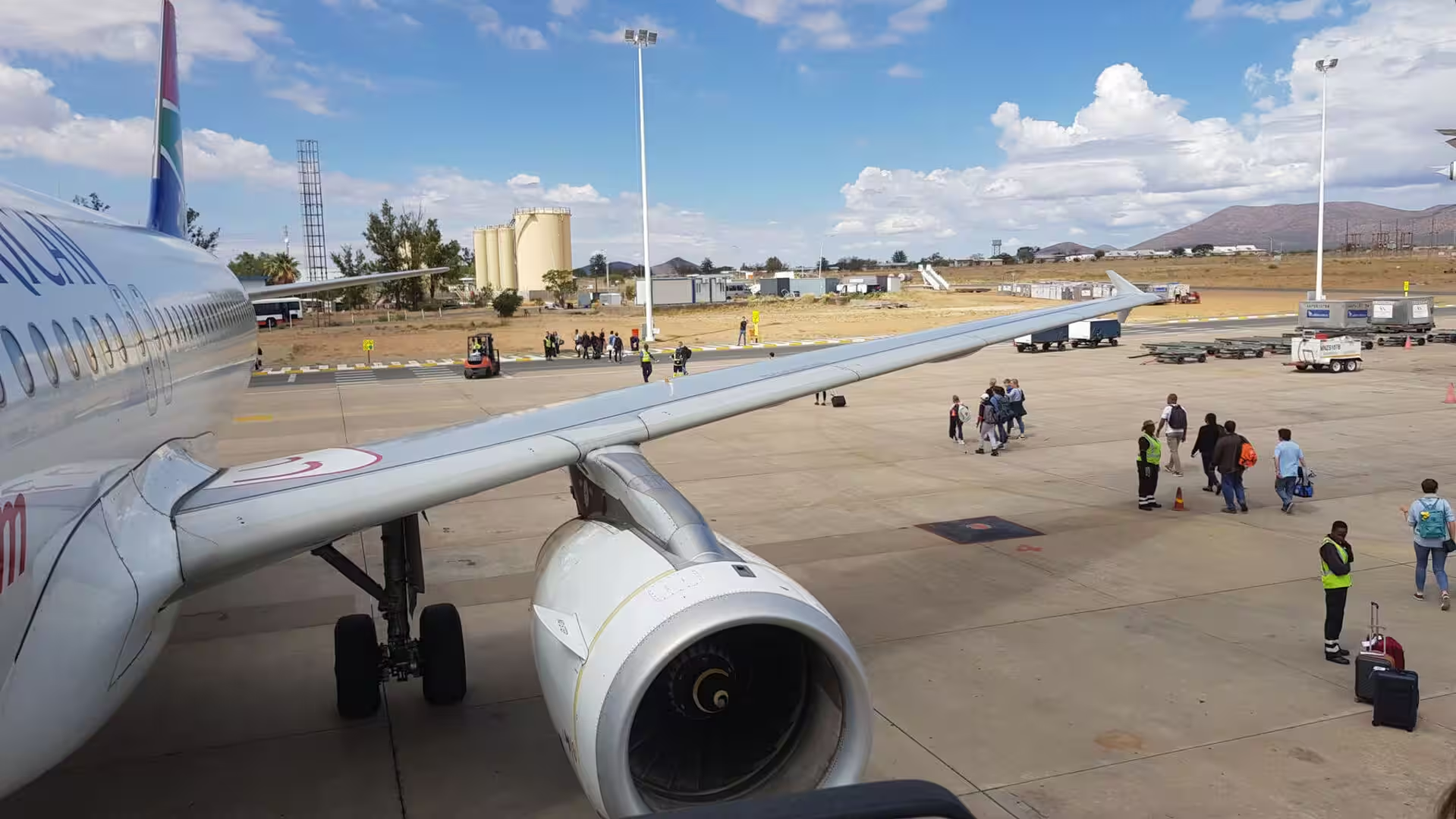
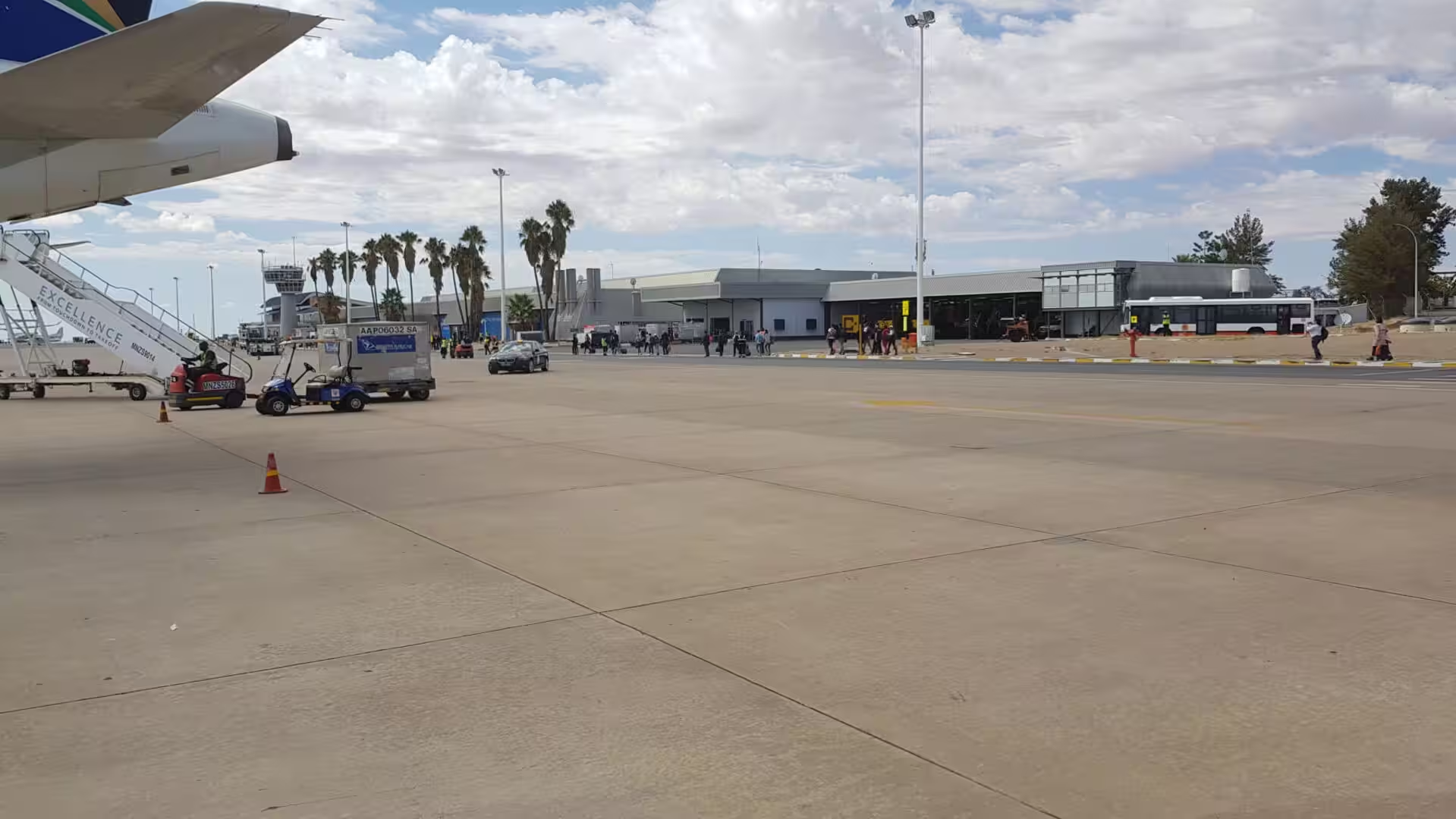
The airport is a modest place for the international gateway of a country, and that is part of the arrival experience. The tarmac is wide, the terminal is a low building of a few halls with a couple of palm trees at the entrance, the stairs are wheeled to the aircraft by hand and the heat arrives in a single wall as soon as the door is opened. Everything about the place says that the country beyond it is empty.
The drive into the capital takes about an hour through country that is dry, open and lightly fenced, with the first acacia trees appearing along the road and the first mountains standing up in the distance. The city, when it arrives, is a surprise: a clean, orderly town of low buildings and broad streets in a bowl of hills, with the office blocks of a small capital and the gardens of a place that has water.
The first night was spent in a camp on the edge of the city, where the pitches are grass and gravel, the ablutions are brick, and the travellers from Europe meet the routine that will organise the whole journey: the roof tent unfolded, the fridge filled, the table and the chairs out, and a fire in the brazier as soon as the sun goes down. It gets dark early and completely, and the temperature drops with it.
The evening ended at that fire. The sky above the camp had more stars than the travellers were prepared for, the silence was broken only by the small noises of the camp and something moving in the dry grass beyond the fence, and the first impression of the country was of space and of dark: the two things that make Namibia different from every other destination in Africa.
History
The country the journey had entered is one of the youngest in Africa and one of the emptiest in the world. Namibia became independent in 1990 after a long war and a longer period of South African administration, it has a population of about three million people in an area more than three times the size of Germany, and its history has been shaped by three powers: the indigenous peoples of the centre and the south, the German empire that colonised it in 1884, and the South African state that took it over after the First World War.
The German period left the deepest marks. The colony of German South West Africa was administered from Windhoek, the settlers took the grazing land of the Herero and the Nama, and when those peoples rose in 1904 the German commander waged a campaign of annihilation that killed most of both nations and is described today as the first genocide of the twentieth century. The war ended in 1908, the survivors were dispossessed, and the consequences are still the subject of negotiation between the two countries.
The airport carries the name of a Herero chief and that is the second half of the story. Hosea Kutako led the Herero community and the early petitions against South African rule in the middle of the twentieth century, and the renaming of the airfield after independence in 1990 was a deliberate correction of the colonial name it had carried until then. The old name honoured a South African prime minister; the new one honours a Namibian.
The capital itself is older than both. Windhoek grew from a settlement around a spring that the Nama leader Jonker Afrikaner established in the 1840s, it became the seat of the German administration, and it has been the political and economic centre of the country ever since. The German buildings of the colonial period still stand in the centre, the Lutheran church of the early twentieth century is the landmark of the city, and the languages heard in the street are German, Afrikaans, English and the Khoekhoe and Bantu languages of the country.
Geology
The plateau on which the capital stands is the first lesson in the country’s geography. Windhoek lies at about seventeen hundred metres above the sea on the Khomas Highland, which is high enough to give the city the mild climate that made it the obvious place for a settlement, and low enough to keep it inside the dry zone that covers the interior. The air is thin and clear, the nights are cold, and the rain that falls in the summer is brief and violent.
The country has three landscapes and the journey was to see all three. In the west lies the Namib, the desert that runs along the Atlantic coast, a strip of sand and gravel a hundred kilometres wide that is believed to be the oldest desert in the world. In the centre rises the escarpment, the step that separates the coastal plain from the plateau. In the east and north east lie the sands of the Kalahari and the woodlands and pans of the north, where the country’s wildlife is concentrated.
The skeleton of the country is its geology. The rocks of the centre and the north were folded and heated in a mountain building event of the late Proterozoic that geologists call the Damara orogen, the same episode that raised the mountains of the Congo and Brazil and left the mineral wealth that the mines of Namibia were founded on. The sediments that followed filled the basins, the ice of the Permian left its marks, and the wind and the rivers have been rearranging the surface ever since.
The climate today is the product of the same geography. The cold current of the Atlantic keeps the coastal desert cool and dry and produces the fog that is the only regular source of water in the Namib, while the interior receives a summer rain that falls between November and April and varies enormously from year to year. The traveller who arrives in the dry season finds a country of dust, sun and enormous visibility, and the traveller who arrives after the rain finds a desert in flower.
The water of the country is the last of the geographical facts that the first days teach. Namibia has no rivers of any size inside its borders except the ones that form the boundaries, the rain that falls evaporates or runs away in hours, and the towns and the mines live from the groundwater and from the dams and pipelines that carry it. The traveller sees the result at every waterhole: the animals, the birds and the plants of a whole region gathered around a tank that a windpump keeps filled, in the middle of country that looks as if it could not support anything at all.
Things to See
The first day in a country is best spent learning its practical rules, and the rules of Namibia are the rules of the desert and of the self drive. Distances are measured in hours, the fuel stations are far apart, and the advice that every rental company gives its customers is to fill the tank whenever it is possible and to carry more water than the plan requires. The roads are good, the traffic outside the capital is light, and the hazards are the animals, the gravel and the heat.
The capital itself deserves half a day. The centre is small enough to walk, the church and the old administrative buildings of the German period stand together on the hill above the main street, the independence museum tells the history of the twentieth century from the Namibian side, and the craft market sells the work of the Herero, the Himba, the San and the woodcarvers of the north. The shops are well stocked, which matters because it is the last place where everything can be bought.
The campsite on the edge of the city is the other institution of the journey. Namibia is a country of campsites, from the simple farm camps of the south to the fenced lodges of the north, and most of them offer the same arrangement: a pitch, a power point, a light, a tap, a barbecue and a shared ablution block that is usually cleaner than the one at home. The traveller who uses them meets the whole travelling community of southern Africa over the fire.
The practical advice for the first evening is the advice for the whole journey. Buy the food and the water in the capital, load the fridge, check the tyres and the spare, and learn how the roof tent works before the first night in the bush. The vehicle is the only thing between the traveller and a very large country, and the first day is the day to make friends with it. The journey that follows is not about the vehicle, but nothing else happens without it.
For the visitor who wants more than the road, the capital is also the place to arrange the excursions that need a permit or a guide: the dunes of the Namib, the rock art of Damaraland, the wildlife of Etosha and the Himba country of the north west all lie within a few days of Windhoek and are best organised before leaving it. The country is safe for travellers who take the usual precautions, and the first evening at the camp is the moment to hear from the others what the roads and the camps are like ahead.
The last thing to arrange in the capital is the paperwork that the journey needs. The parks of the country are administered by a state organisation that sells the permits at the gates and in the towns, the camps inside the parks are booked in advance in the season, and the private camps and the farms take a telephone call. The traveller who plans to sleep inside Etosha or in the Namib should have those nights booked before leaving Windhoek, and the ones who travel in the dry season should book the popular camps weeks or months ahead, because the country fills with self drivers from Europe and South Africa in the holidays.
One more institution of the first day is the roadhouse. The roads of Namibia are served by places that combine a fuel station, a shop, a butchery, a bakery and a restaurant under one roof, and they are as important to the traveller as the towns: the fuel is reliable, the meat is excellent, the coffee is strong and the noticeboard carries the news of the road. The traveller who stops at every one of them will eat better than in most restaurants in Europe and will meet the farmers, the truck drivers and the other travellers of the country in the queue for the pump.
References
- Wikipedia contributors (2026). Namibia. en.wikipedia.org/wiki/Namibia
- Wikipedia contributors (2026). Windhoek. en.wikipedia.org/wiki/Windhoek
- Wikipedia contributors (2026). Hosea Kutako International Airport. en.wikipedia.org/wiki/Hosea%20Kutako%20International%20Airport
- Wikipedia contributors (2026). German South West Africa. en.wikipedia.org/wiki/German%20South%20West%20Africa
- Wikipedia contributors (2026). South West Africa. en.wikipedia.org/wiki/South%20West%20Africa
- Wikipedia contributors (2026). Namibian War of Independence. en.wikipedia.org/wiki/Namibian%20War%20of%20Independence
- Wikipedia contributors (2026). Kalahari Desert. en.wikipedia.org/wiki/Kalahari%20Desert
- Wikipedia contributors (2026). Namib. en.wikipedia.org/wiki/Namib
- Wikipedia contributors (2026). Etosha National Park. en.wikipedia.org/wiki/Etosha%20National%20Park
- Wikipedia contributors (2026). Skeleton Coast. en.wikipedia.org/wiki/Skeleton%20Coast
- Wikipedia contributors (2026). Tropic of Capricorn. en.wikipedia.org/wiki/Tropic%20of%20Capricorn
- Wikipedia contributors (2026). Nama people. en.wikipedia.org/wiki/Nama%20people
- Wikipedia contributors (2026). Damara people. en.wikipedia.org/wiki/Damara%20people
- Schaller D.J. (2017) Genocide in Colonial South-West Africa: The German War against the Herero and Nama, 1904-1907. Genocide of Indigenous Peoples. 37-60. doi.org/10.4324/9780203790830-3
- Zimmerer J. (2008) Colonial Genocide: The Herero and Nama War (1904-8) in German South West Africa and Its Significance. The Historiography of Genocide. 323-343. doi.org/10.1057/9780230297784_13
- (ohne Angabe) (2016) Namibia gains independence. Taming My Elephant. 228-264. doi.org/10.2307/j.ctvh8r31c.15