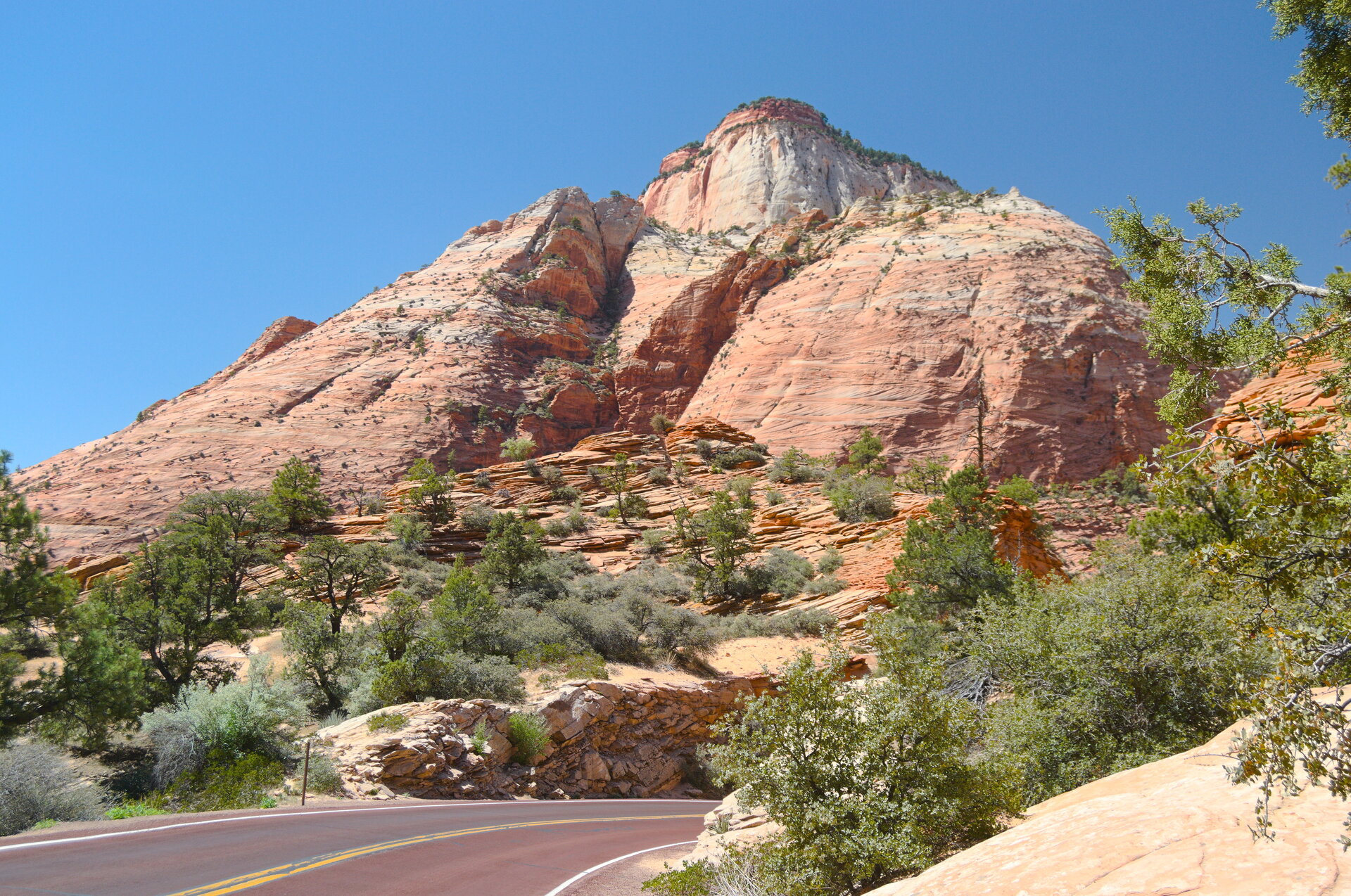


Zion National Park is a protected natural area located in southwestern Utah, near the border with Arizona and Nevada. It lies at the intersection of several major geological and ecological regions, including the Colorado Plateau, the Mojave Desert, and the Great Basin. This unique position gives Zion an exceptional variety of landscapes within a relatively compact area.
The park is best known for Zion Canyon, a deep, narrow gorge carved by the Virgin River. Towering sandstone cliffs rise vertically from the canyon floor, creating dramatic contrasts of scale, color, and light. Elevations within the park range from low desert areas to high plateaus, resulting in diverse climates and ecosystems.
Zion experiences hot summers, mild winters in lower elevations, and cooler conditions at higher elevations. Seasonal rainfall, including summer monsoon storms, plays an important role in shaping the park’s rivers, canyons, and vegetation. Zion National Park is one of the most visited parks in the United States due to its accessibility and iconic scenery.
History
Human presence in the Zion region dates back thousands of years. Indigenous peoples, including the Ancestral Puebloans and later Southern Paiute groups, lived in and around the canyon, using its water sources, fertile soils, and sheltered environments. Archaeological evidence includes habitation sites, rock art, and agricultural remnants.
European-American exploration increased in the 19th century as settlers moved westward. Mormon pioneers established small farming communities near the canyon, relying on irrigation and seasonal flooding of the Virgin River. The name “Zion” reflects the spiritual significance the landscape held for these early settlers.
The area gained national recognition in the early 20th century for its scenic and scientific value. It was first protected as a national monument and later designated as Zion National Park in 1919. Since then, the park has played a key role in the development of conservation practices and visitor management strategies.
Geology
Zion National Park showcases one of the most complete and visually striking geological records in North America. The park’s rock layers represent hundreds of millions of years of Earth’s history, deposited in environments ranging from ancient seas to vast desert dune fields.
The most iconic formations are massive sandstone cliffs formed from compacted desert sand dunes. These layers were later uplifted as part of the Colorado Plateau, raising them thousands of meters above sea level. Erosion by water, wind, and gravity carved the landscape into deep canyons, narrow slots, and sheer walls.
The Virgin River continues to actively shape Zion Canyon, cutting deeper into the sandstone over time. Flash floods, landslides, and rockfall are natural processes that regularly reshape the canyon, contributing to its dynamic character.
Landscapes and Natural Environment
Zion’s landscapes are defined by steep canyon walls, narrow river corridors, and high plateaus. The contrast between the shaded canyon floor and sun-exposed cliffs creates distinct microclimates that support diverse plant and animal life.
Lower elevations feature desert vegetation such as cactus, yucca, and drought-tolerant shrubs. Higher elevations support pinyon pine, juniper, and forested plateaus. Riparian zones along the Virgin River are especially rich in biodiversity, providing critical habitat in an otherwise arid environment.
Wildlife includes desert reptiles, birds of prey, mule deer, and smaller mammals adapted to canyon and plateau environments. Seasonal changes influence water flow, vegetation growth, and wildlife activity throughout the park.
Things to See
Zion National Park offers a wide range of natural and recreational highlights:
Canyon and Rock Formations
- Zion Canyon with towering sandstone cliffs
- Narrow slot canyons carved by water
- Massive rock walls displaying layered sedimentary history
Rivers and Water Features
- The Virgin River flowing through the canyon
- Seasonal waterfalls after rain or snowmelt
- Hanging gardens fed by natural springs
High Plateaus and Viewpoints
- Elevated overlooks with expansive canyon views
- Forested plateaus contrasting with canyon depths
- Scenic drives through varied terrain
Outdoor Activities
- Hiking routes from riverside walks to challenging climbs
- Canyoneering and backcountry exploration
- Scenic shuttle routes reducing traffic in the main canyon
- Photography focused on light, color, and scale
Experience and Character
Zion National Park is defined by intimacy and verticality. Unlike wide-open desert parks, Zion’s narrow canyons create an enclosed and immersive experience where cliffs dominate the field of vision. The interplay of light and shadow changes throughout the day, dramatically altering the appearance of the landscape.
The park combines accessibility with raw natural power. While many areas are easily reached, the environment remains dynamic and potentially hazardous due to floods, steep terrain, and rockfall. Zion leaves a strong impression of geological time, natural forces, and the delicate balance between water and desert.