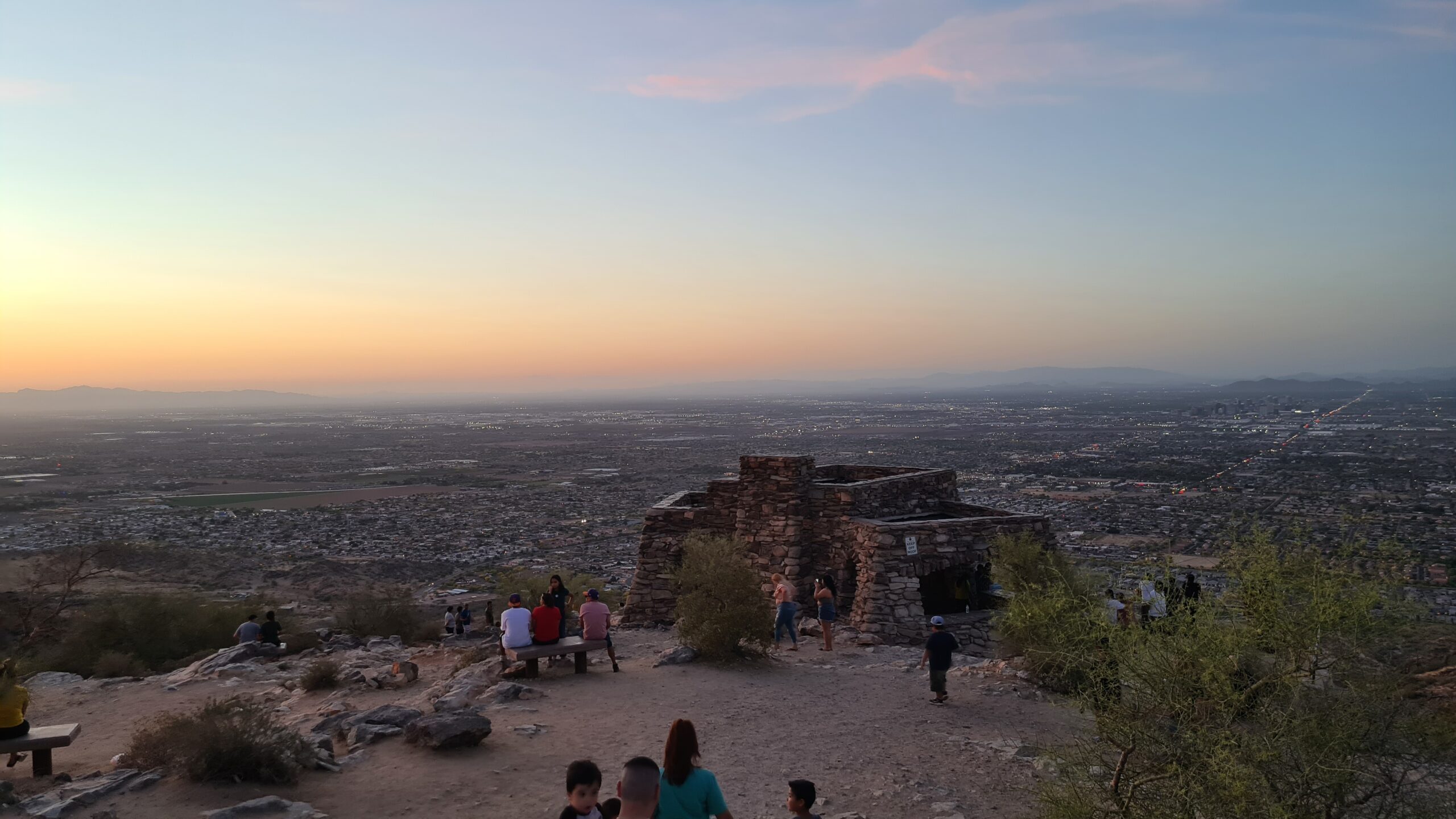



Phoenix is the capital city of Arizona and the core of one of the largest metropolitan regions in the southwestern United States. It is located in the Salt River Valley, surrounded by low mountain ranges and expansive desert plains within the Sonoran Desert. The city is often referred to as the “Valley of the Sun” due to its abundant sunshine and warm climate.
The metropolitan area includes numerous surrounding cities and suburbs, forming a vast urban region that continues to expand outward into the desert. Despite its size, Phoenix maintains a strong connection to its natural setting, with desert preserves, mountain parks, and open spaces woven into the urban landscape.
Phoenix has a hot desert climate characterized by long, extremely hot summers and mild, dry winters. These conditions shape architecture, daily routines, and infrastructure. The city has developed into a major economic center with industries including technology, healthcare, finance, education, manufacturing, and tourism.
History
The history of Phoenix extends far beyond modern settlement. Indigenous peoples, most notably the Hohokam culture, lived in the Salt River Valley for over a thousand years. They engineered an extensive system of irrigation canals, some of which laid the foundation for modern water management in the region.
In the mid-19th century, European-American settlers recognized the agricultural potential of the valley and rebuilt irrigation systems inspired by ancient canals. The settlement that became Phoenix was established near these earlier waterways, symbolizing renewal and continuity.
Phoenix grew steadily through the late 19th and early 20th centuries, supported by agriculture, transportation links, and later the widespread use of air conditioning. It became Arizona’s capital in 1912 and experienced rapid population growth after World War II, transforming it into a major metropolitan hub.
Geology
Phoenix lies within the Basin and Range Province, a geological region shaped by tectonic stretching that created broad valleys and isolated mountain ranges. The Salt River Valley is a sediment-filled basin formed by erosion from surrounding mountains over millions of years.
The mountains around Phoenix, including Camelback Mountain and the Phoenix Mountains, expose ancient igneous and metamorphic rocks, some over a billion years old. These formations record a long history of uplift, faulting, and erosion.
Alluvial soils deposited by rivers and desert washes contributed to the valley’s agricultural potential. While the region is not known for frequent earthquakes, tectonic processes continue to influence the broader geological setting.
Landscape and Natural Environment
Phoenix is embedded in the Sonoran Desert, one of the most biologically rich deserts in the world. The surrounding landscape includes saguaro cactus forests, rocky hills, desert plains, and dry washes that fill briefly during rainstorms.
Mountain preserves within and near the city protect large areas of natural desert habitat. These areas provide wildlife corridors and recreational opportunities while preserving native vegetation. Seasonal monsoon storms bring dramatic cloud formations, lightning, and short bursts of rainfall that temporarily transform the desert environment.
Wildlife in and around Phoenix includes birds, reptiles, mammals, and insects adapted to extreme heat and limited water. The contrast between dense urban development and nearby untouched desert is one of the defining features of the region.
Things to See
Phoenix offers a wide range of cultural, urban, and natural attractions:
Urban and Cultural Areas
- Downtown Phoenix with museums and cultural institutions
- Historic neighborhoods and architectural landmarks
- Arts districts and performance venues
Natural Landscapes
- Desert mountain preserves within city limits
- Sonoran Desert vegetation and scenic viewpoints
- Surrounding mountain ranges framing the valley
Outdoor Activities
- Hiking and trail systems in desert terrain
- Cycling and outdoor recreation year-round
- Desert photography and nature observation
- Golf and resort-based recreation
Experience and Character
Phoenix is defined by adaptation and contrast. Modern urban life exists alongside ancient desert landscapes, creating a city shaped by climate, geography, and long-term human presence. Summers are dominated by heat and indoor activity, while winters bring comfortable conditions that attract visitors and seasonal residents.
The city continues to evolve as it balances rapid growth with challenges such as water sustainability, heat mitigation, and desert conservation. Phoenix represents both resilience and opportunity in a demanding desert environment.