2026 Hungary 4 - Heroes' Square and the City Park
19 June 2026






Journal Notes
Morning settles on Pest with the pavements already warm and the plane trees holding their shadows close to the ground. The day is given to a single long line across the city, beginning at Heroes’ Square, where the capital keeps its most formal public architecture, passing through the green breadth of the City Park, and ending far to the east in a quiet ground where stone and bronze stand among trees. The distances are larger than they appear on a map, and the walking is measured in facades rather than in minutes. Between the monuments the ordinary city continues, wide and orderly, with trams and traffic and shopfronts, and it is this contrast that gives the day its shape.
Heroes’ Square
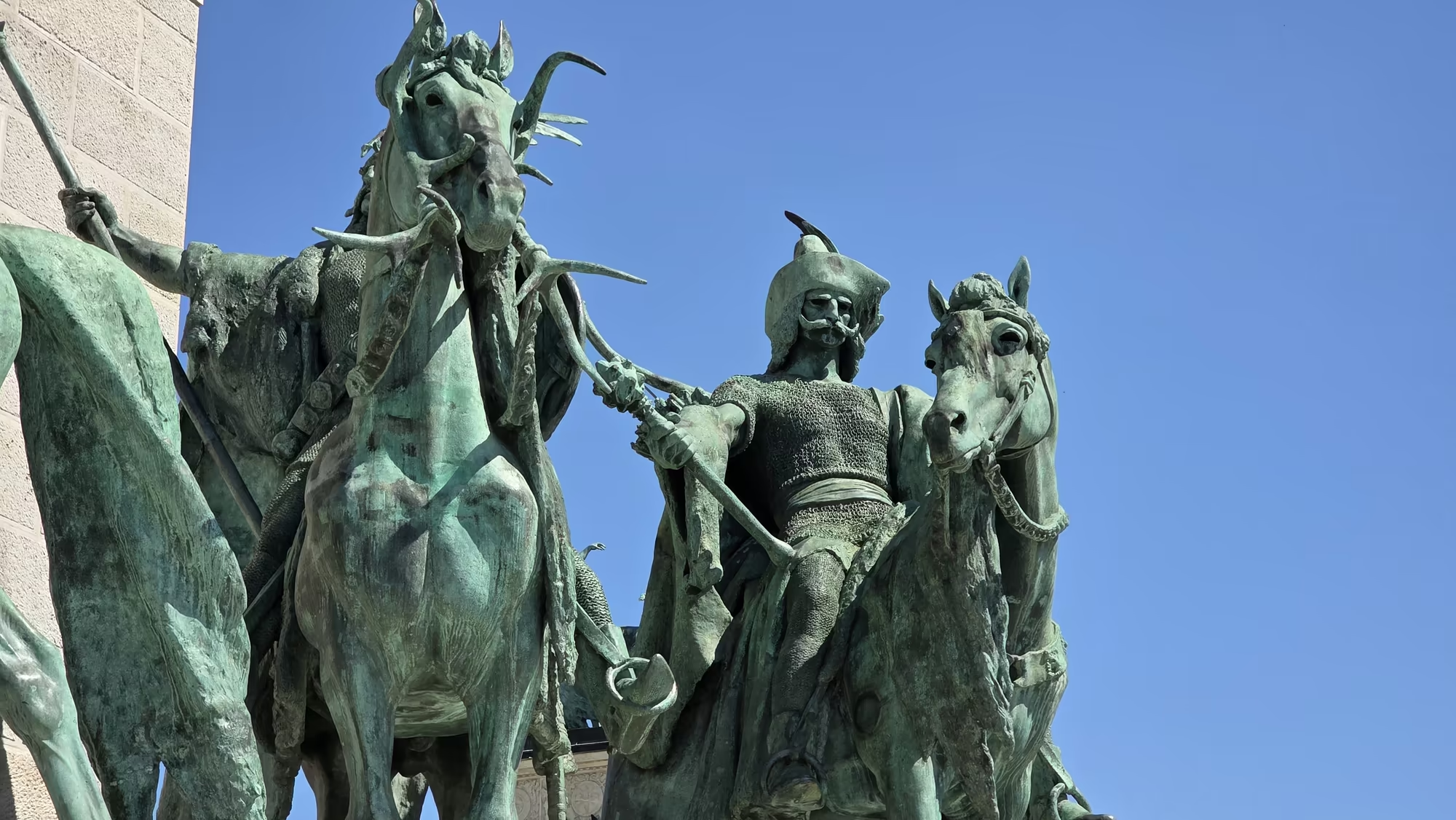
Heroes’ Square opens like a room without a ceiling, a broad floor of pale cobbles bounded at its far side by the column and the two curved colonnades of the Millennium Monument. The column rises from a stepped base, and the bronze figures around it are riders on horseback, their metal darkened and bloomed by long weathering. Flowers in red, white and green rest on a low memorial stone, their ribbon carrying the national colours, and just beyond it a pale metal fence encloses the tomb of the unknown soldier. Even on a bright morning the space keeps a certain quiet, as though the square were holding its breath.
The colonnades curve away on either hand, each column carrying a standing bronze figure above a carved relief panel, row upon row of weathered forms against the sunlit stone. Seen close, the surfaces tell their age: the green patina on the bronze, the grain and jointing of the pale blocks, the small differences between one carved order and the next. A single equestrian knight in chainmail, bearded and straight in the saddle, can be read apart from the rest, his green-lit silhouette sharp against a clear blue sky. Every figure belongs to the memory of an office or a reign, and the whole arrangement asks to be walked along rather than merely seen.
People move between the memorial stone and the base of the column, some reading the inscription, others standing where the light falls best across the bronze. The wording speaks to the memory of heroes, and the fresh wreath suggests the square is still used for ceremony and not only for visitors. It is a national room left open to the weather, and the summer weather is generous to it, warm and clear and unhurried. Around the square the city carries on its business, but the monument keeps its own axis and its own tempo.
Vajdahunyad Castle
Beyond the square the City Park begins, and inside it, across a still green pond, stands Vajdahunyad Castle. A small stone bridge with rounded arches carries the path over the water and towards the gateway, while the building gathers several centuries into one silhouette: a tower with a steep conical roof, pointed windows under dark gables, an arched entrance, and further spires half hidden by trees. The pond holds the whole thing upside down in a calm reflection, and the trees along the bank keep the water in shade and green.
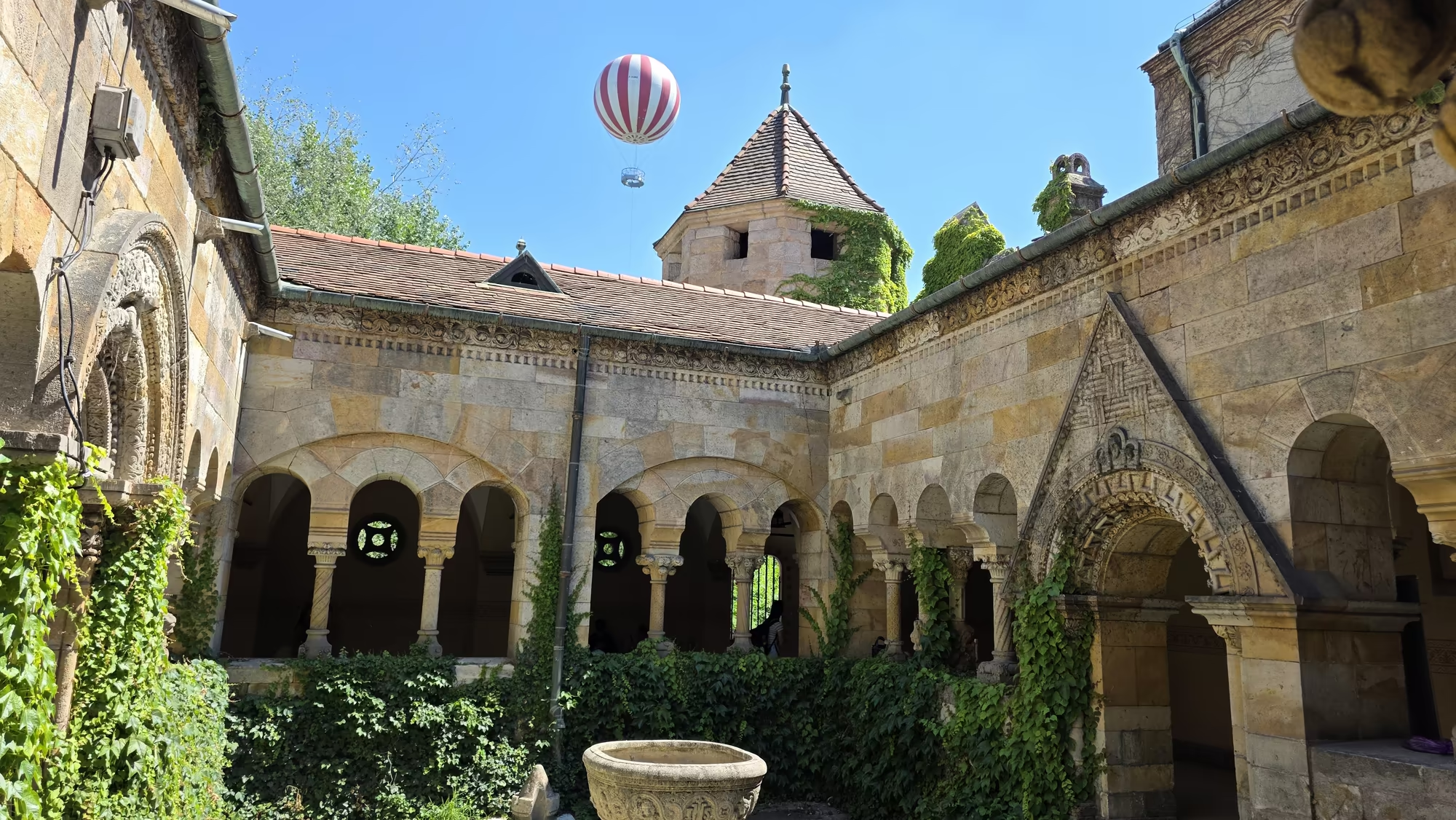
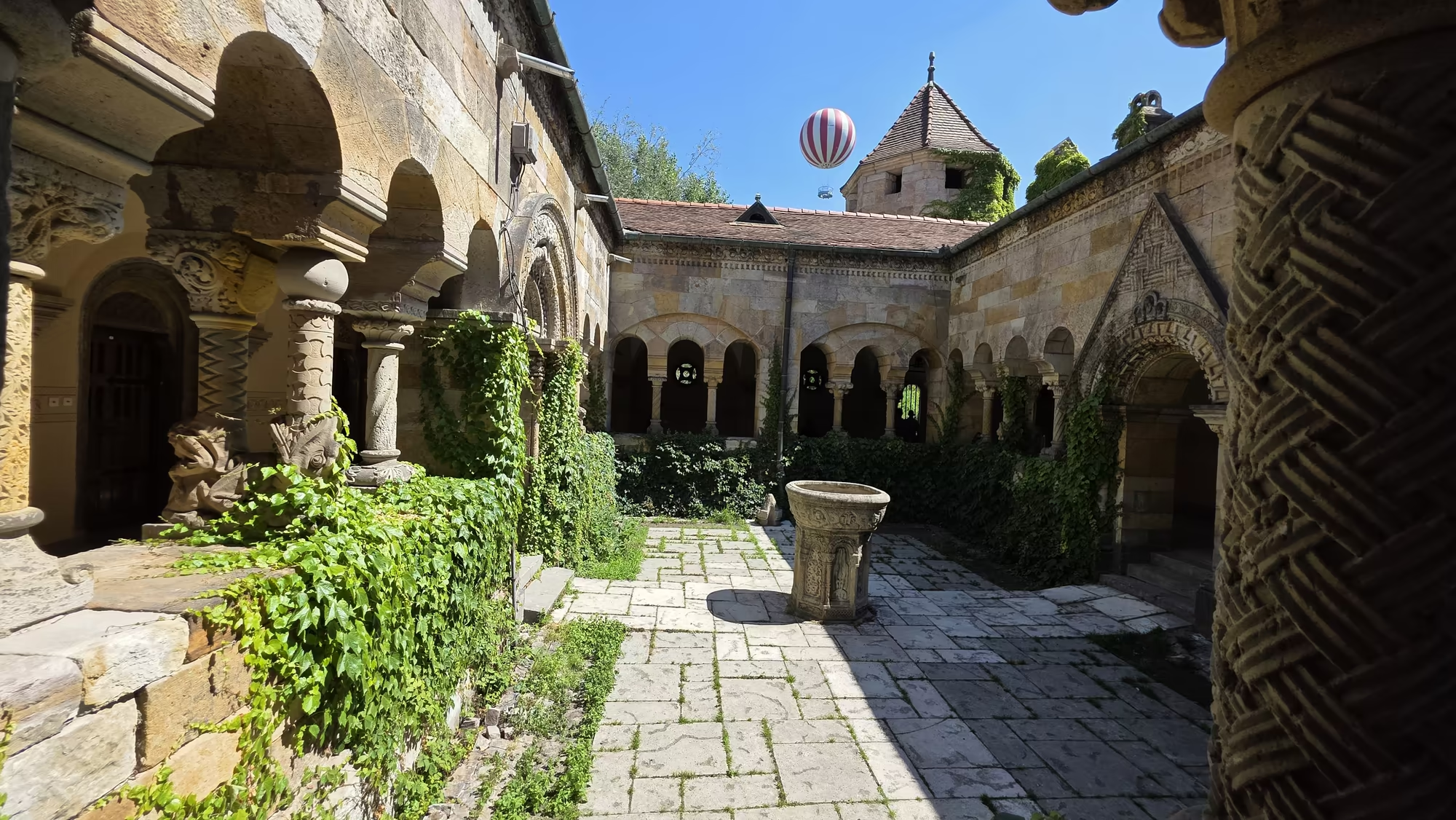
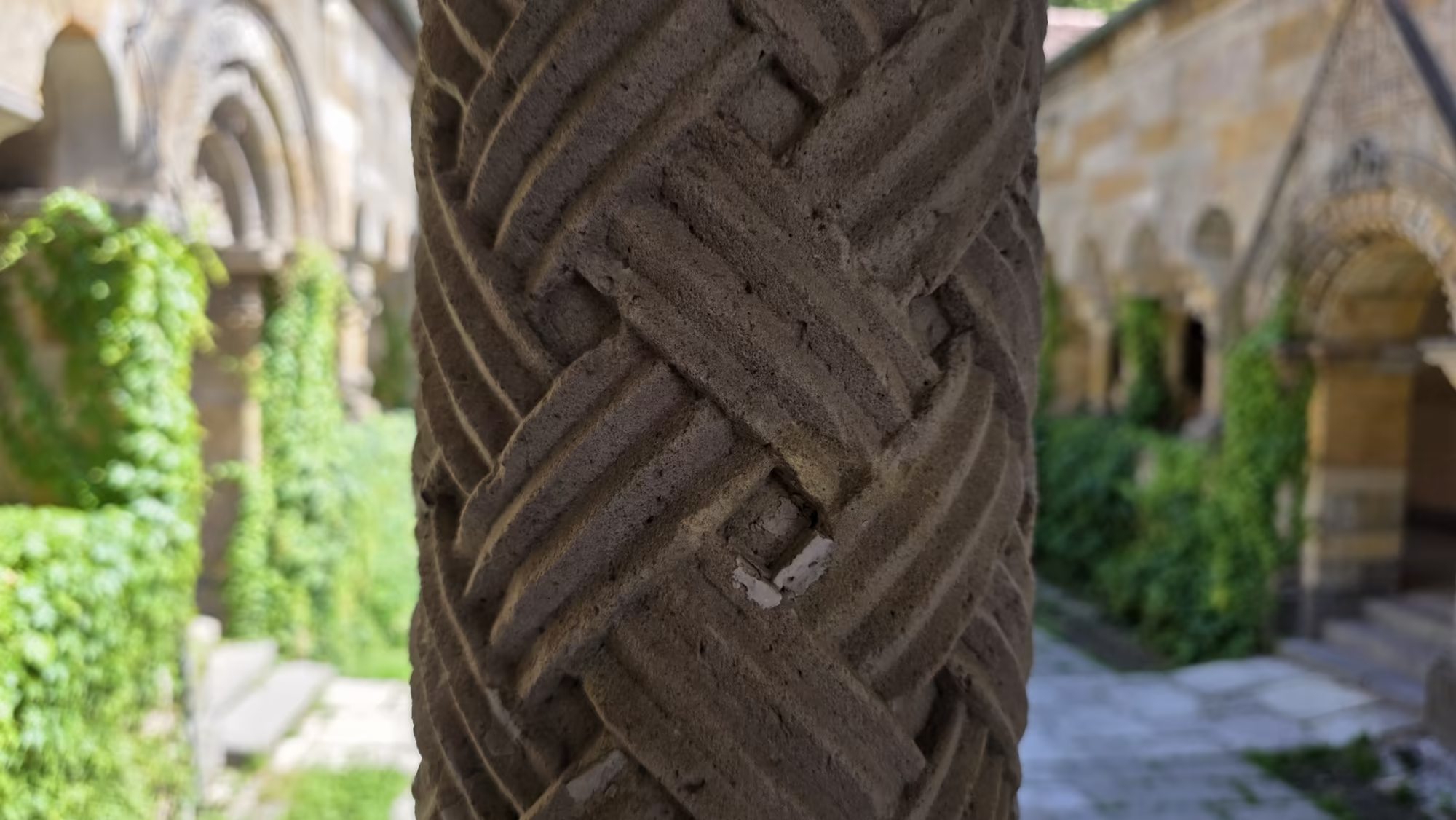
Behind the walls a cloister courtyard opens, ringed by round arches on carved capitals and quiet stone galleries. At its centre sits a carved basin, empty, and from the arcades the light falls in stripes across the paving; overhead a striped hot air balloon drifts past the tiled roofs and a square tower, almost close enough to touch. The detail rewards a slower pace. One column in particular, a single shaft cut with a diagonal braided pattern, stands out from the soft blur of the garden behind it, grey and worn and intricately worked.
The castle is a deliberate anthology, a building that quotes Romanesque, Gothic and Renaissance forms side by side and makes of them a single romantic whole. Walkways, courtyards and water turn it into a place to wander rather than to enter and leave. Sunlight moves across the carved stone through the morning, and the courtyard stays cool and still. It is the kind of architecture that seems older than it is, and stronger, and it belongs to the park as much as to the city.
The City Park
From the castle the park opens into a broad landscaped ground, a promenade running straight between beds of tall ornamental grasses and neat rectangles of lavender, gravel and stone underfoot and scattered clouds above. Lavender is in full bloom along the borders, purple against the grey of the paving, and young trees stand at intervals along the way. At the far end of the axis a long white building with a colonnaded portico closes the view, and low green hills rest on the horizon behind it. The path is made for walking slowly, and the planting is made to soften the walk.
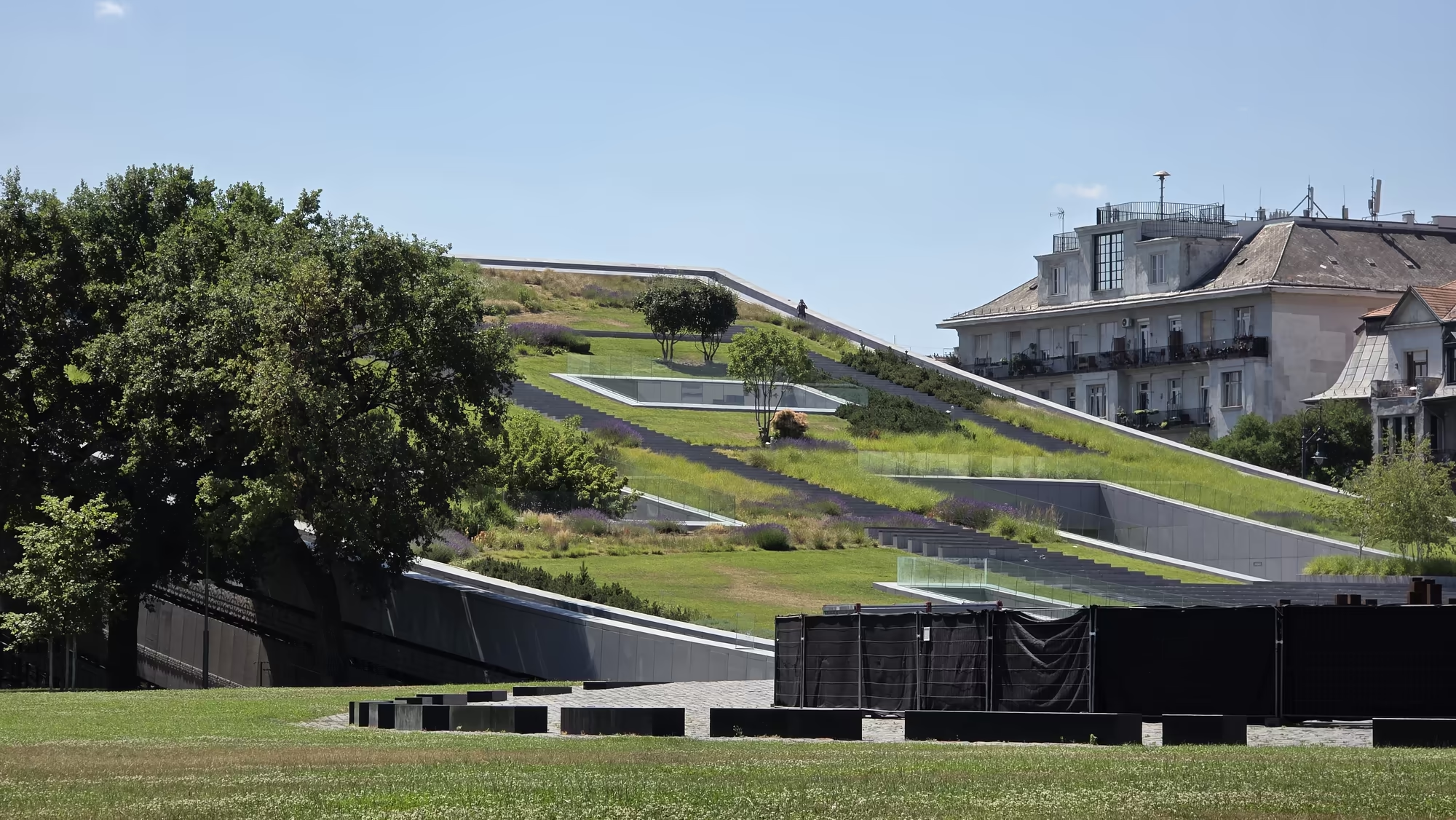
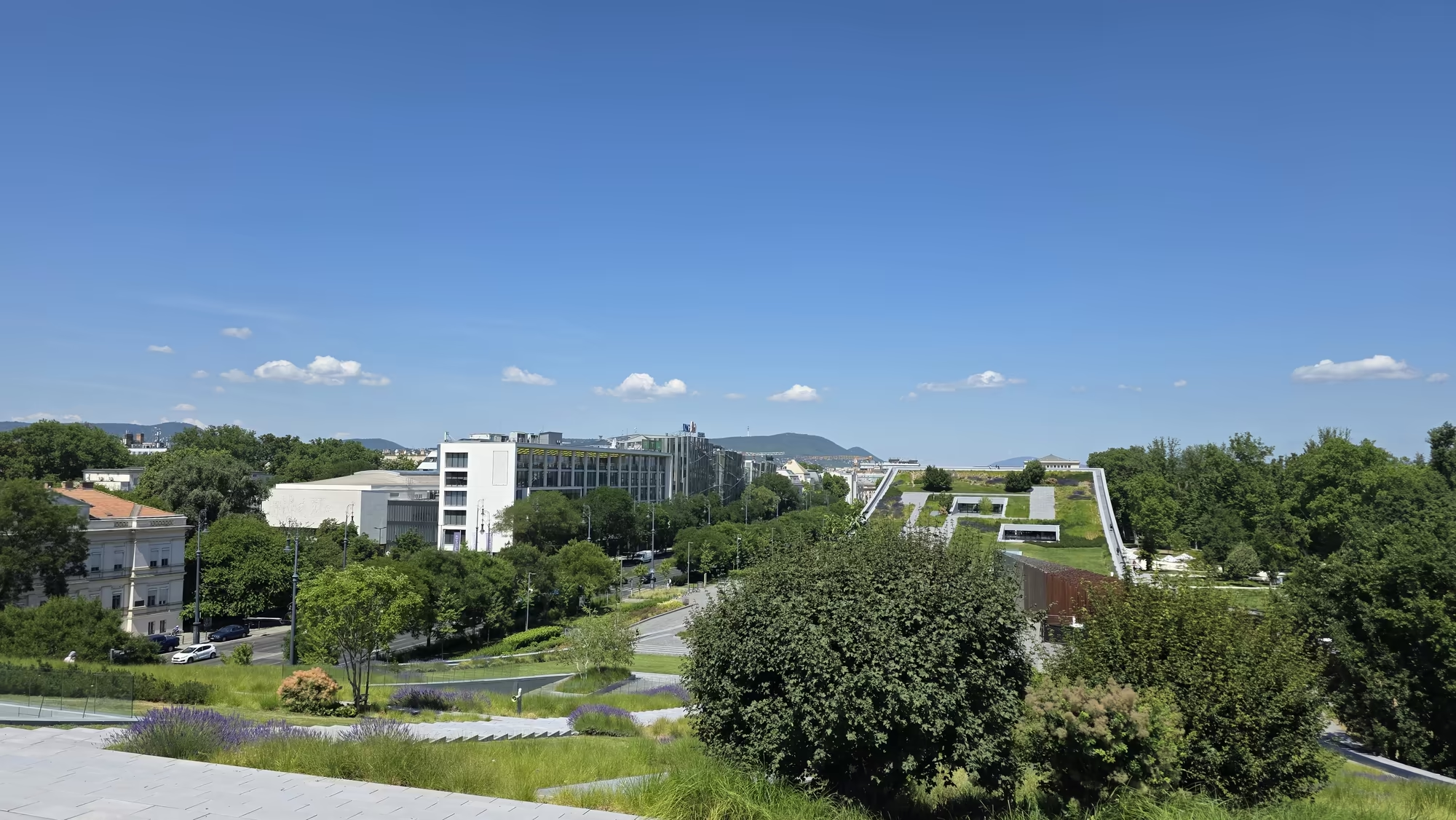
Nearby, terraces step up a sunlit slope between concrete walls and zigzag stairs, planted with purple flowers and young trees and edged with glass balustrades, with a light stone building of dormer windows above. Higher still, a terrace set with lavender and shrubs gives a wide view back over the city: an intersection of roads and tree lined streets, classical facades and modern buildings with green roofs, and beyond everything the low hills on the horizon. The park is not only green space; it is a viewpoint, a garden and a piece of city planning at once.
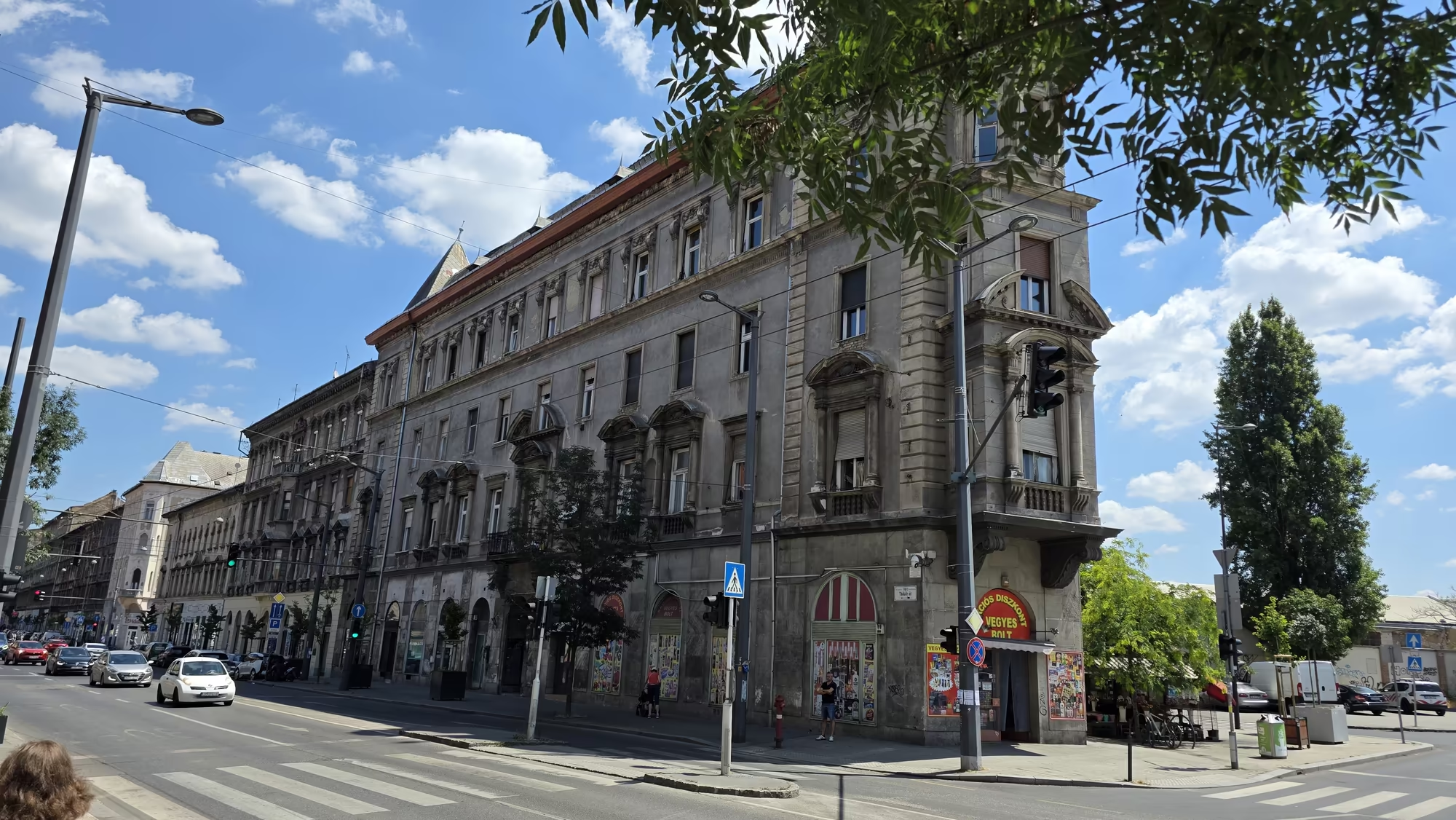
Leaving the park, the route returns through the built city, where an ornate corner house with balconies and a rounded turret rises above a busy boulevard. Cars wait at a zebra crossing beneath a web of overhead tram wires, and pedestrians pass along the pavement in bright light. The transition is quick, from lavender beds and calm water to stone facades, traffic and the ordinary noise of a capital. After the quiet of the park the street feels louder, and the day turns towards its far eastern end.
A Memorial Ground at Kerepesdulo
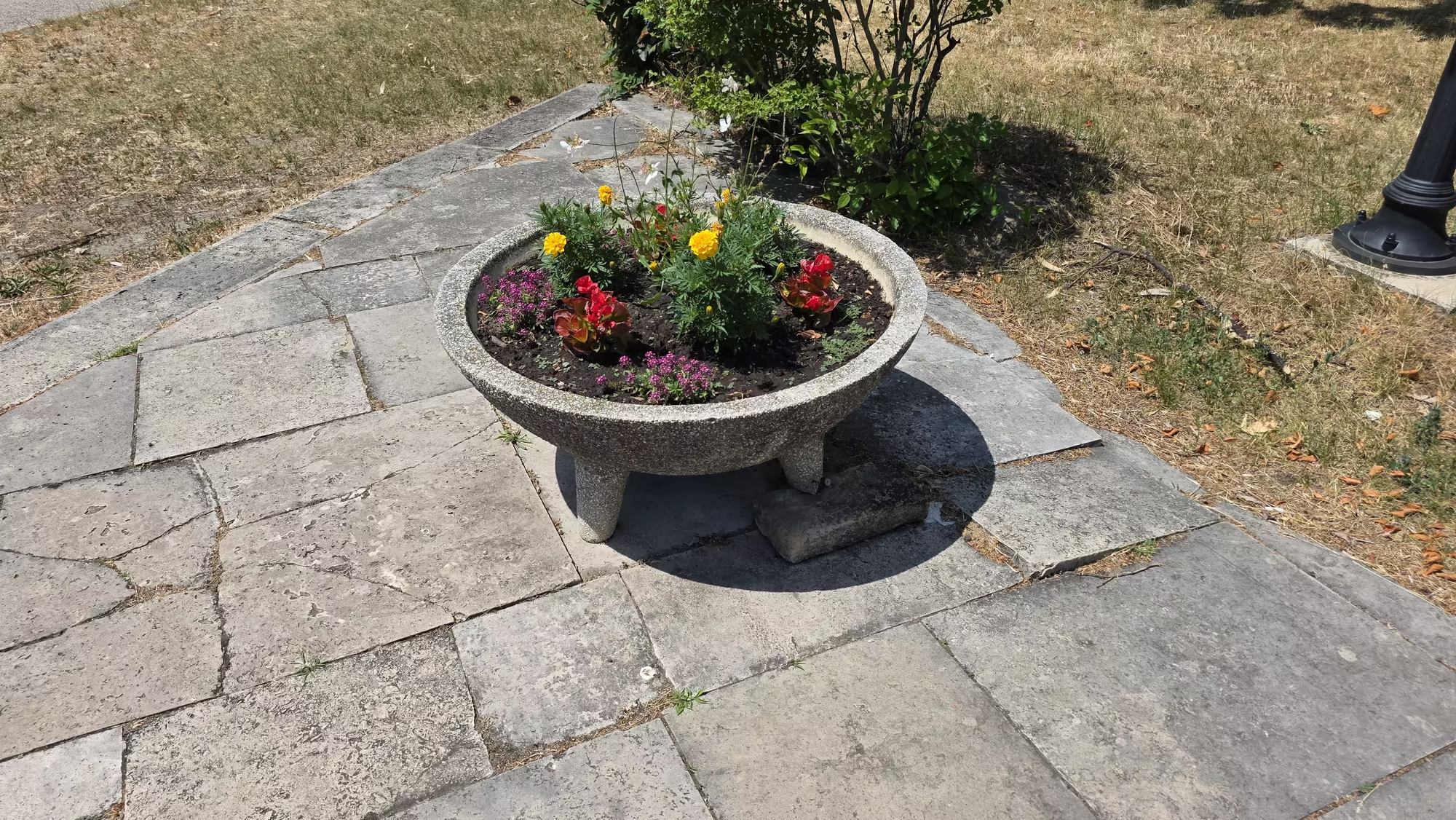
Far out at Kerepesdulo the city thins into a ground kept apart for memory. The approach is by flagstone, past a heavy carved stone planter filled with marigolds and low flowering succulents, its shadow sharp on the paving under an open sky. A wide walkway bordered by dry grass and mature trees leads on towards a low wall of pale stone set with relief panels. Few people are about, and the sound is mostly of leaves and gravel underfoot.
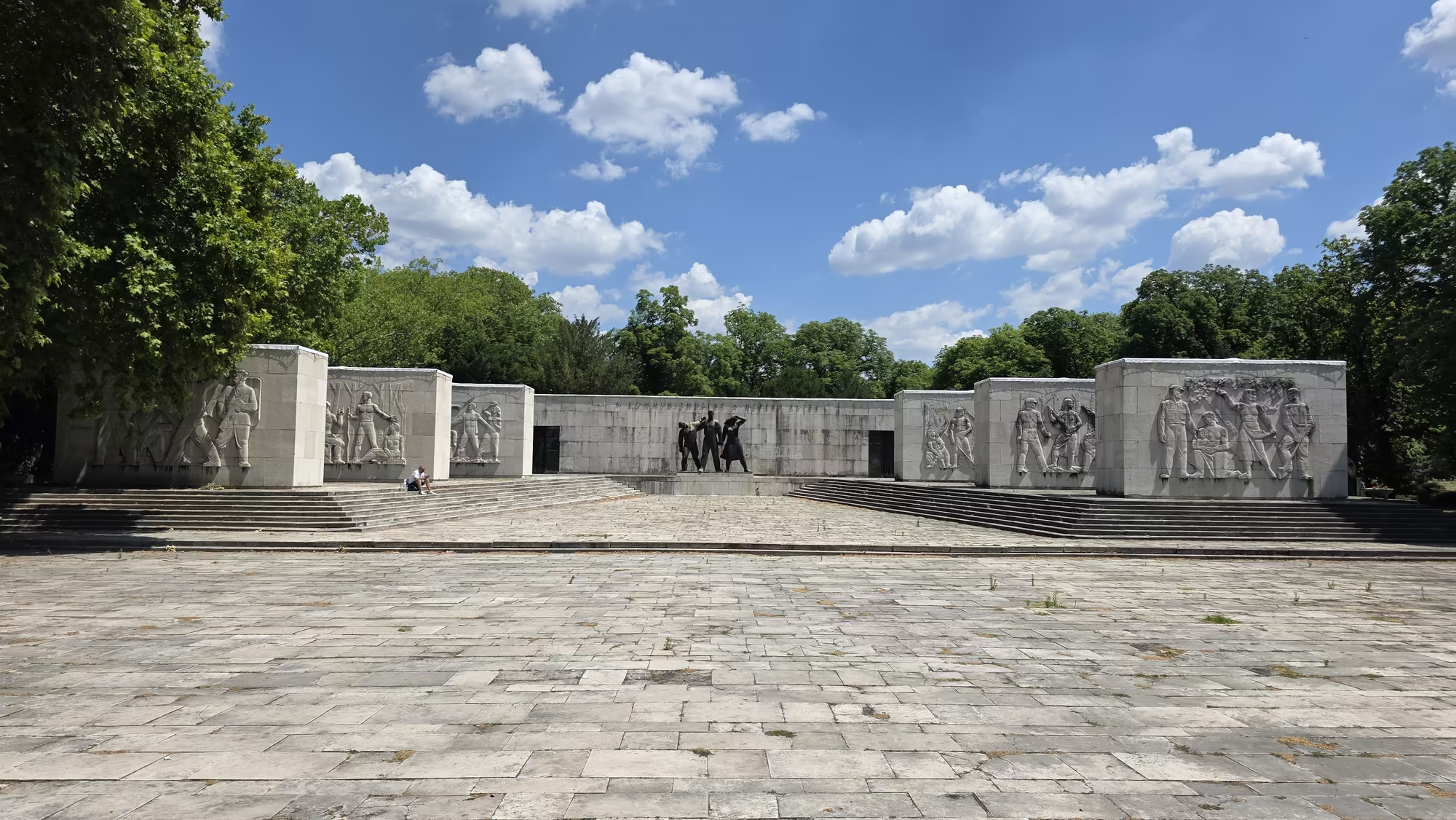
Steps rise to a memorial terrace where the walls carry long rows of carved panels and a dark bronze group of figures stands on a low plinth, three of them, still and green with age. The stone is light and the bronze is almost black in the sun, and the trees frame the whole composition on both sides. It is a place built for standing rather than for passing, and its scale is intentionally larger than a single visitor.
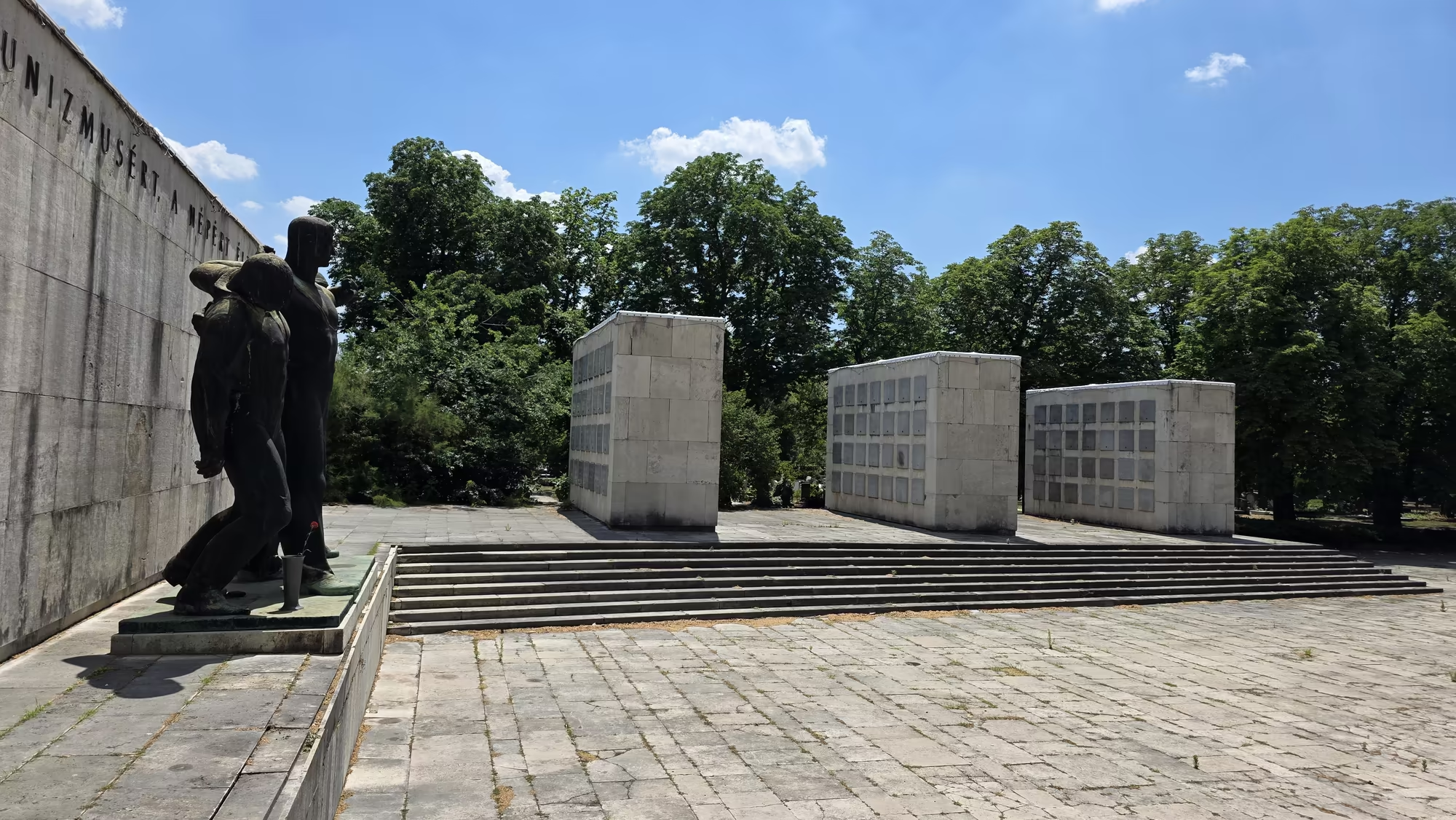
Deeper in, a tall grey wall bears a carved inscription in large letters, and beneath it two bronze figures stand together, one upright, one slumped, the metal dark against the concrete. Behind them rectangular blocks rise on a raised platform, their faces made of small square panels, many of them empty, among dense green trees. This is a statue park, a ground where monuments displaced from the city’s squares are kept in the open, and it wears its age plainly. The last walk back runs along a shaded path of uneven stone slabs, strewn with dry leaves, beside a lawn and thick-trunked trees.