2026 South East Europe 9 - Bosnia
10 September 2026


Journal Notes
General
Bosnia and Herzegovina, often called simply Bosnia, is a country of south eastern Europe on the western side of the Balkan Peninsula, with an area of about 51,200 square kilometres and some 3.4 million inhabitants. It is bounded by Croatia to the north and the west, by Serbia to the east and by Montenegro to the south east, and it holds a coast of only about twenty kilometres on the Adriatic Sea in the south, about the small town of Neum. The capital and largest city is Sarajevo, and the other great towns are Banja Luka, Tuzla, Zenica and Mostar.
The country takes its name from its two historic regions: Bosnia, the larger and northern part, named after the river Bosna that runs through it, and Herzegovina, the smaller and more southern region, whose name is commonly traced to the medieval title of herceg, or duke. No sharp line divides the two, and the whole land is mountainous, lying across the central Dinaric Alps, with the north eastern districts reaching down into the plain of the Pannonian basin.
Bosnia and Herzegovina is a republic of unusual construction, the work of the peace agreement that ended the war of the 1990s. It is made up of two entities, the Federation of Bosnia and Herzegovina and the Republika Srpska, together with the small district of Brčko, and its collective presidency is drawn from the three main peoples of the country: the Bosniaks, who form about one half of the population, the Serbs, about one third, and the Croats, about one sixth.
The languages of the country are Bosnian, Croatian and Serbian, three varieties of the Serbo-Croatian tongue, written in both the Latin and the Cyrillic alphabets, and the greater part of the people are Muslim, with large Orthodox and Catholic communities beside them. The mosques, the Orthodox churches and the Catholic churches of the towns stand within sight of one another, and the climate runs from the continental winters of the north to the Mediterranean summers of Herzegovina, the land living from agriculture, from industry, from timber and from the earnings of those who work abroad.
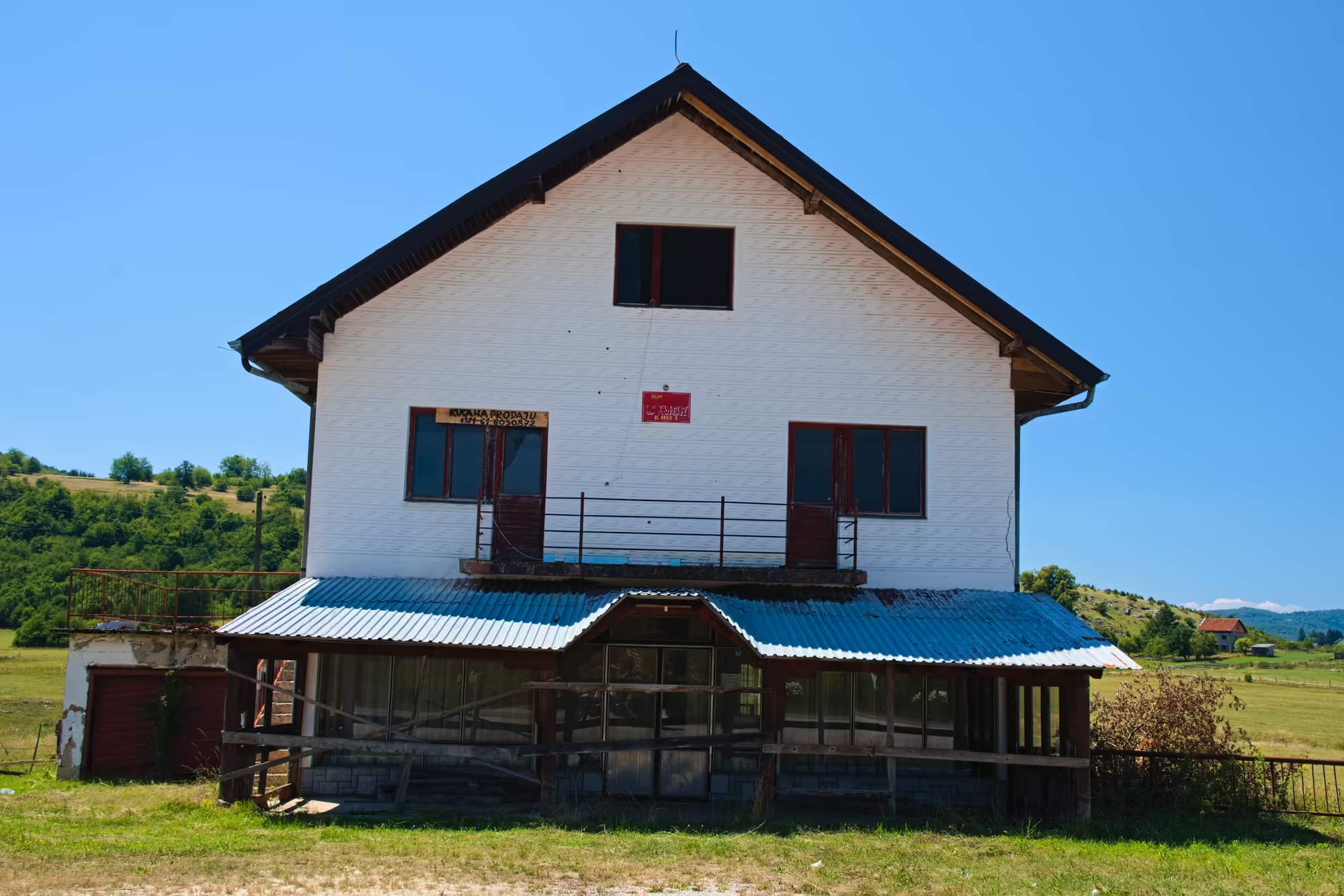
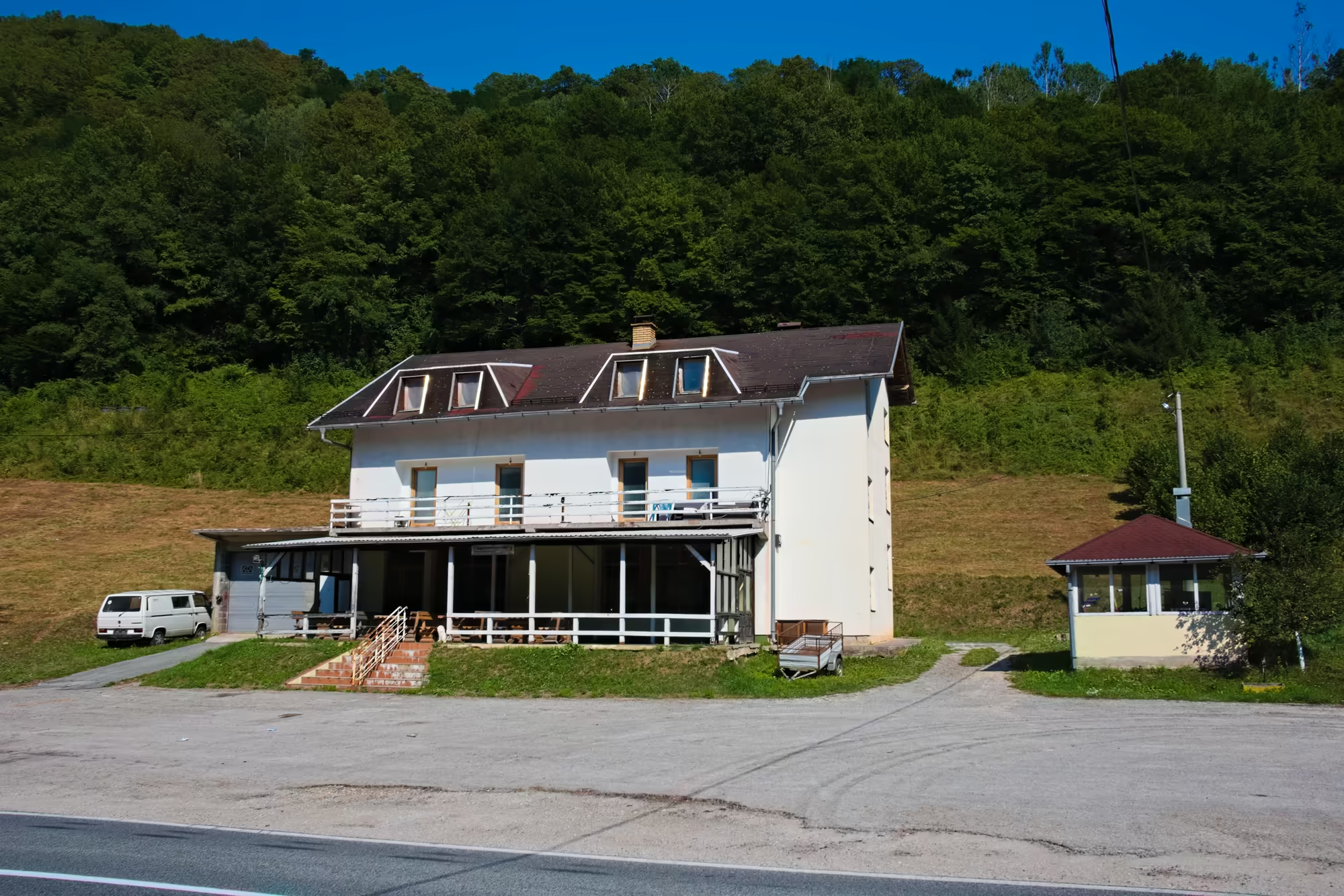
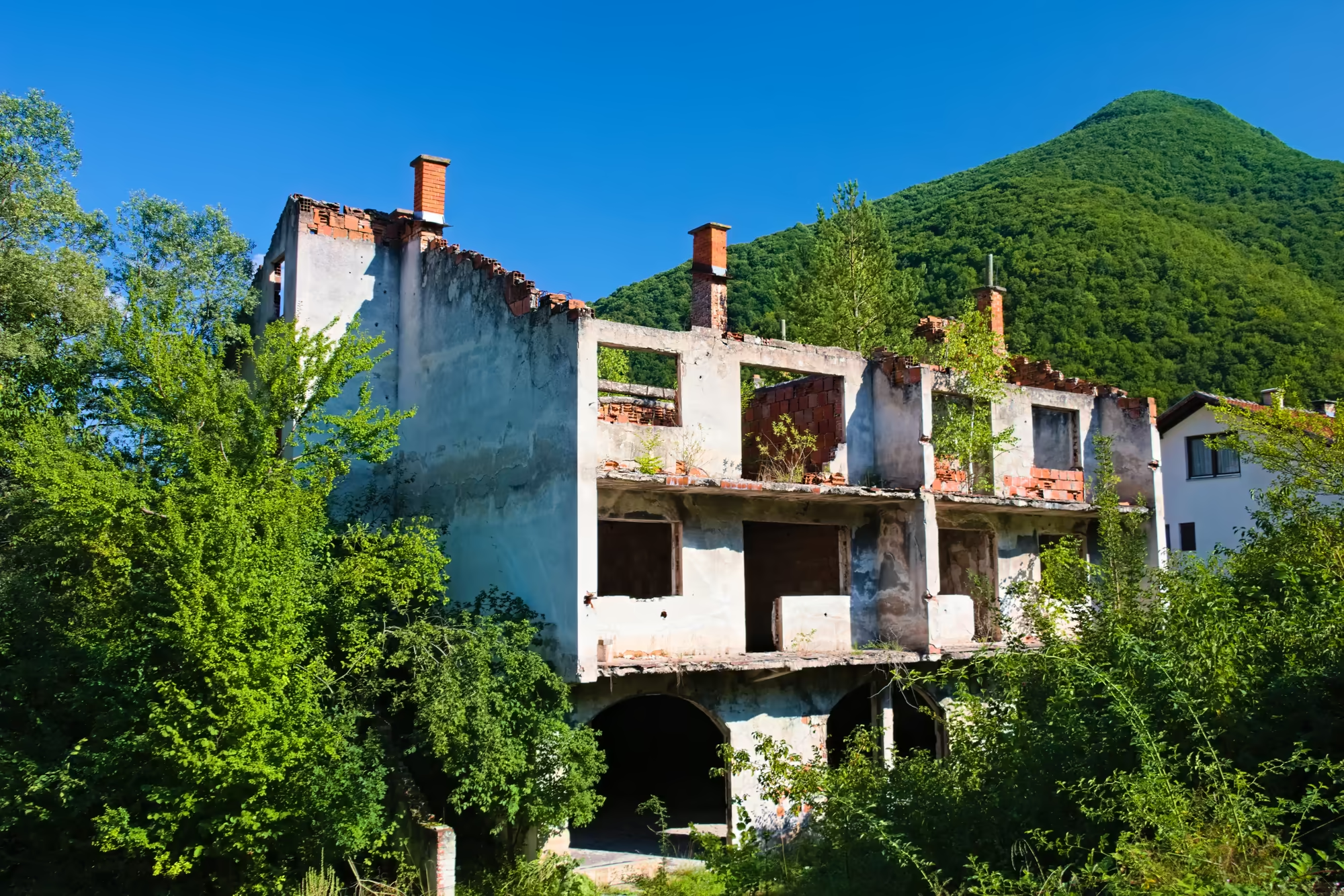
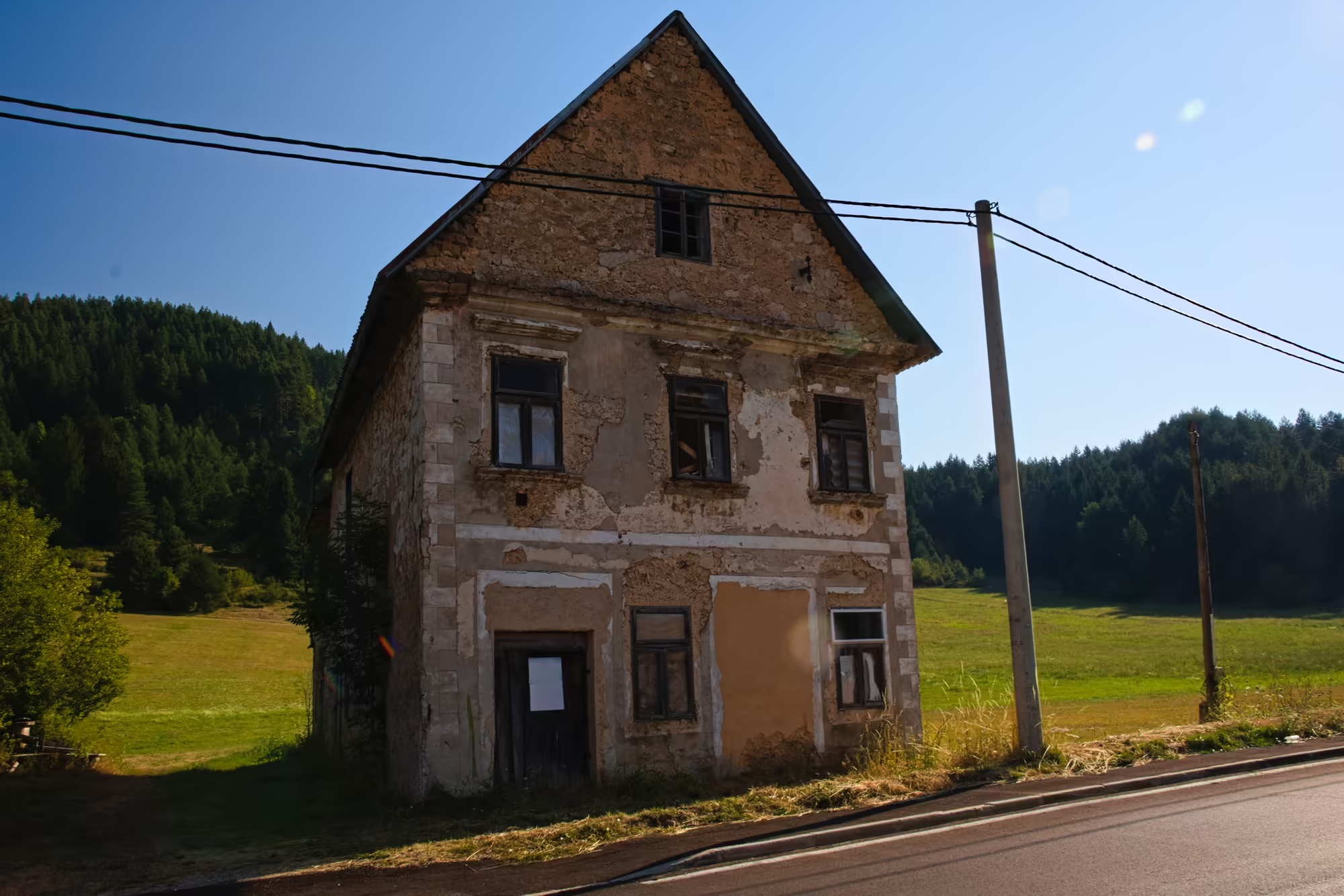
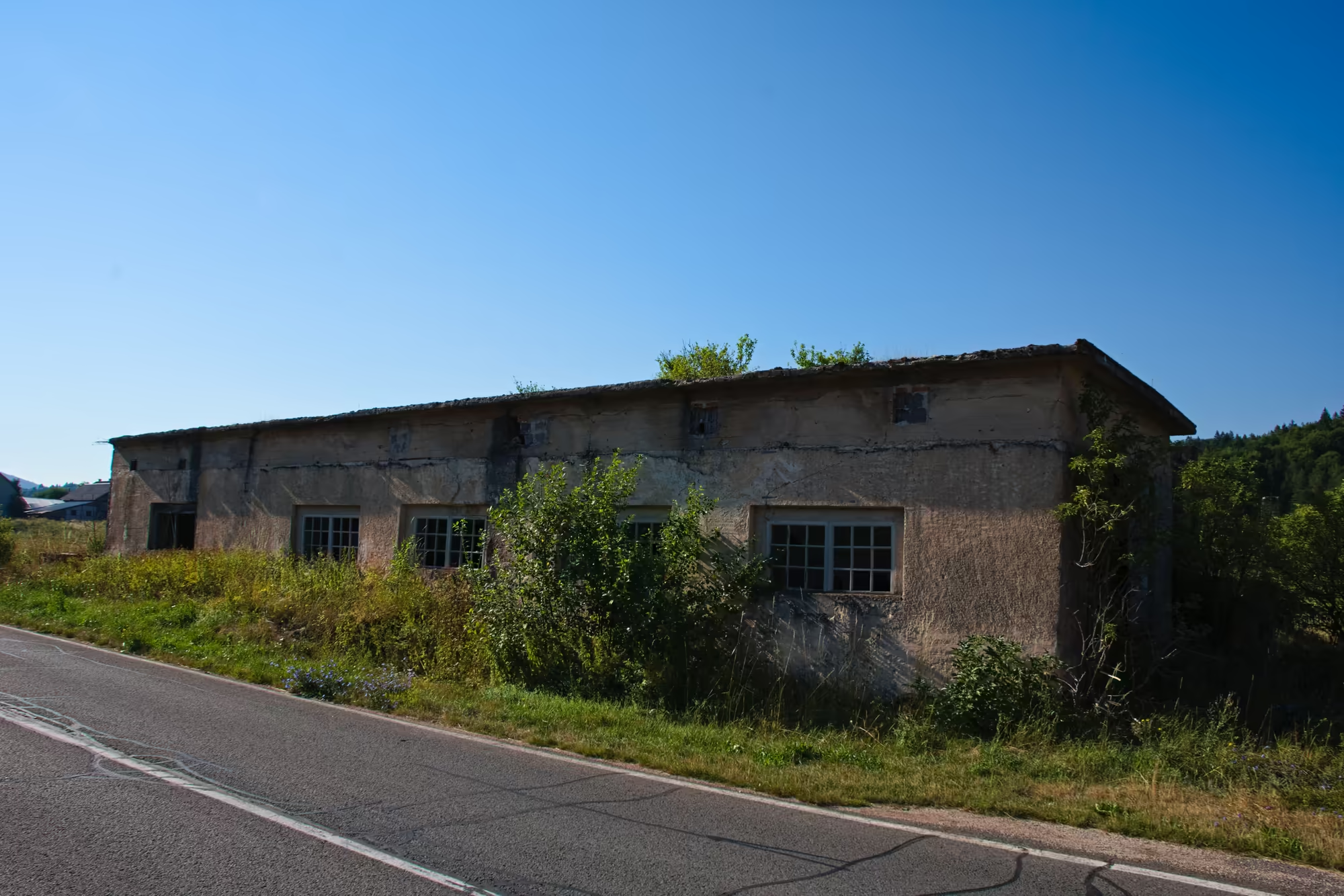
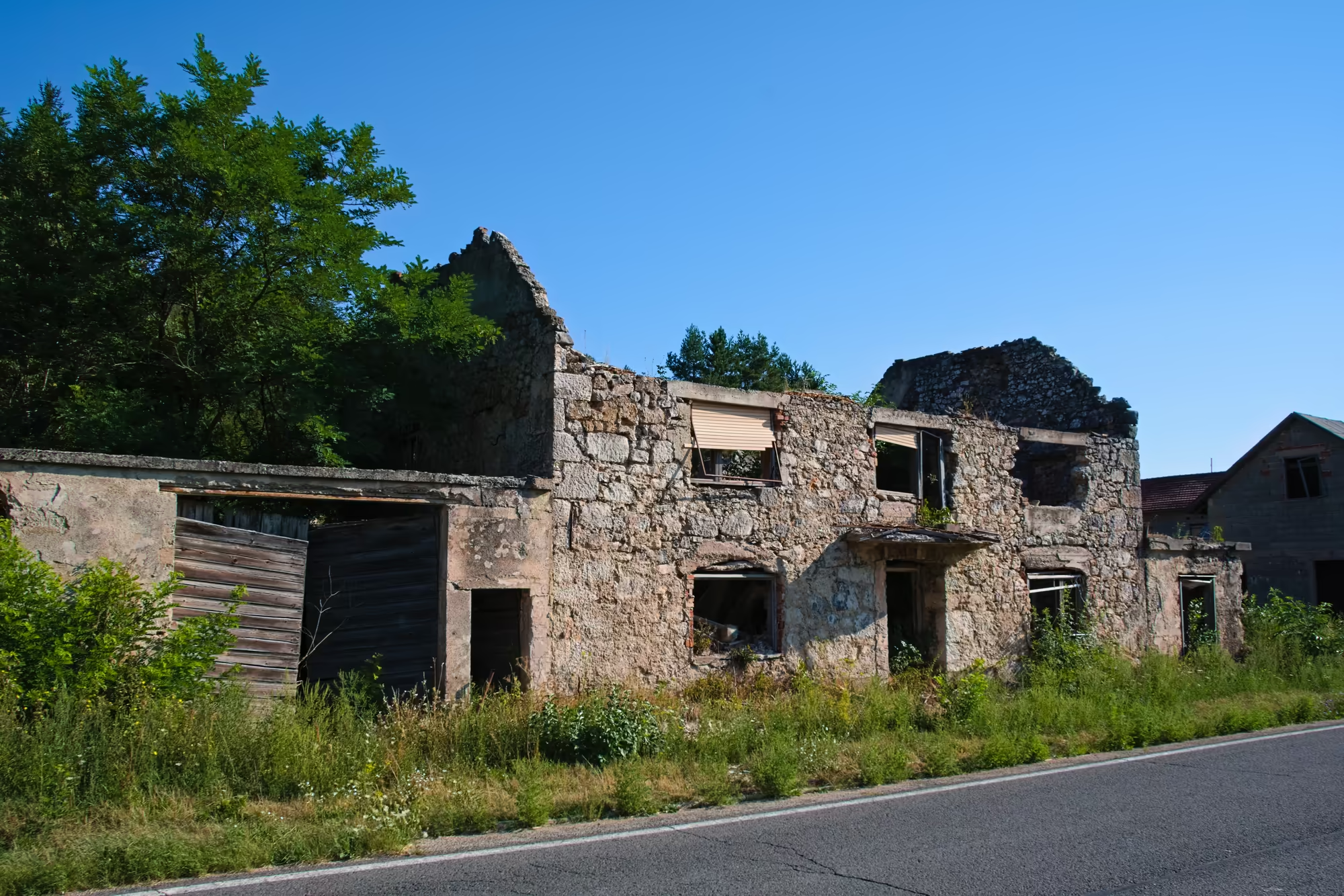
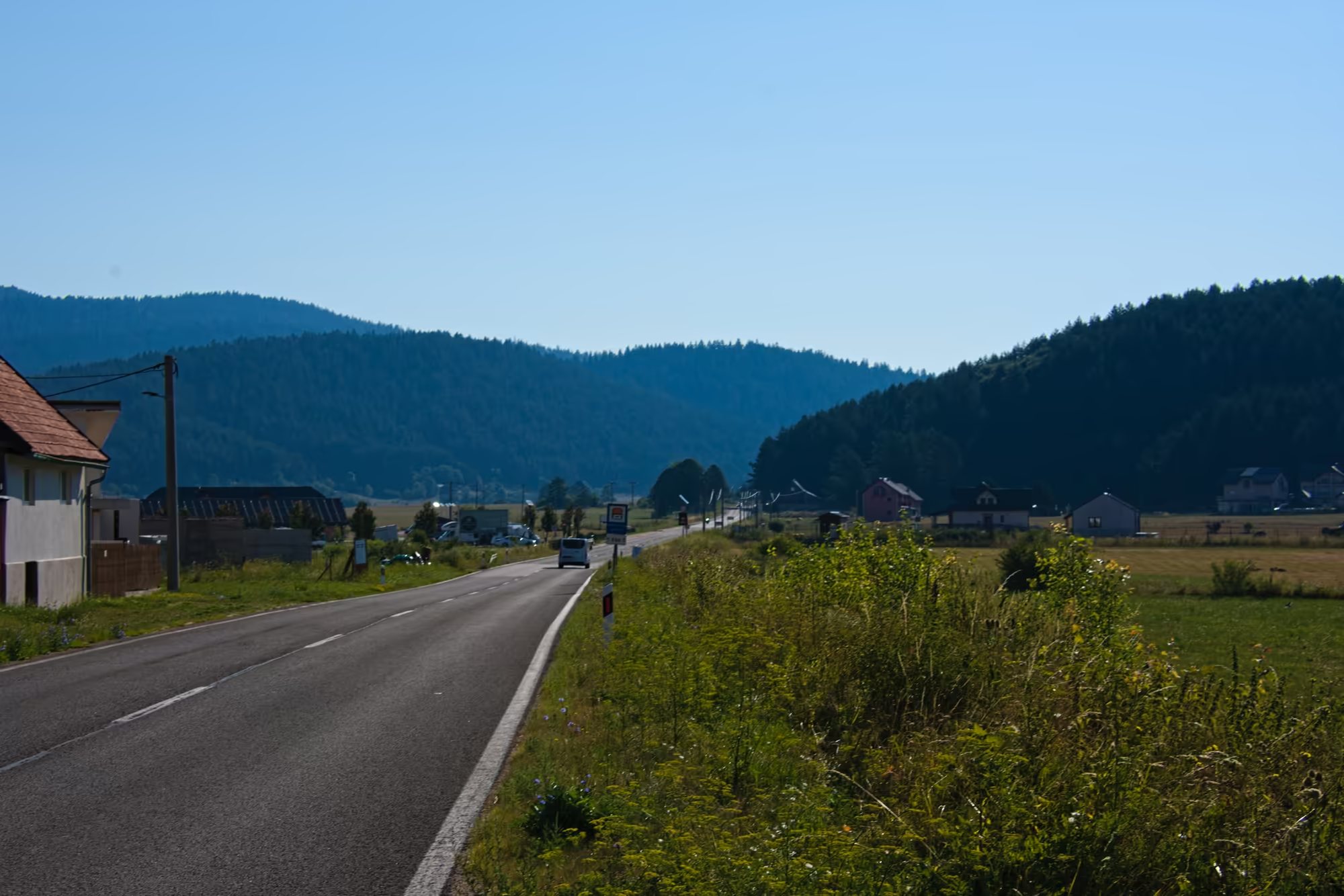
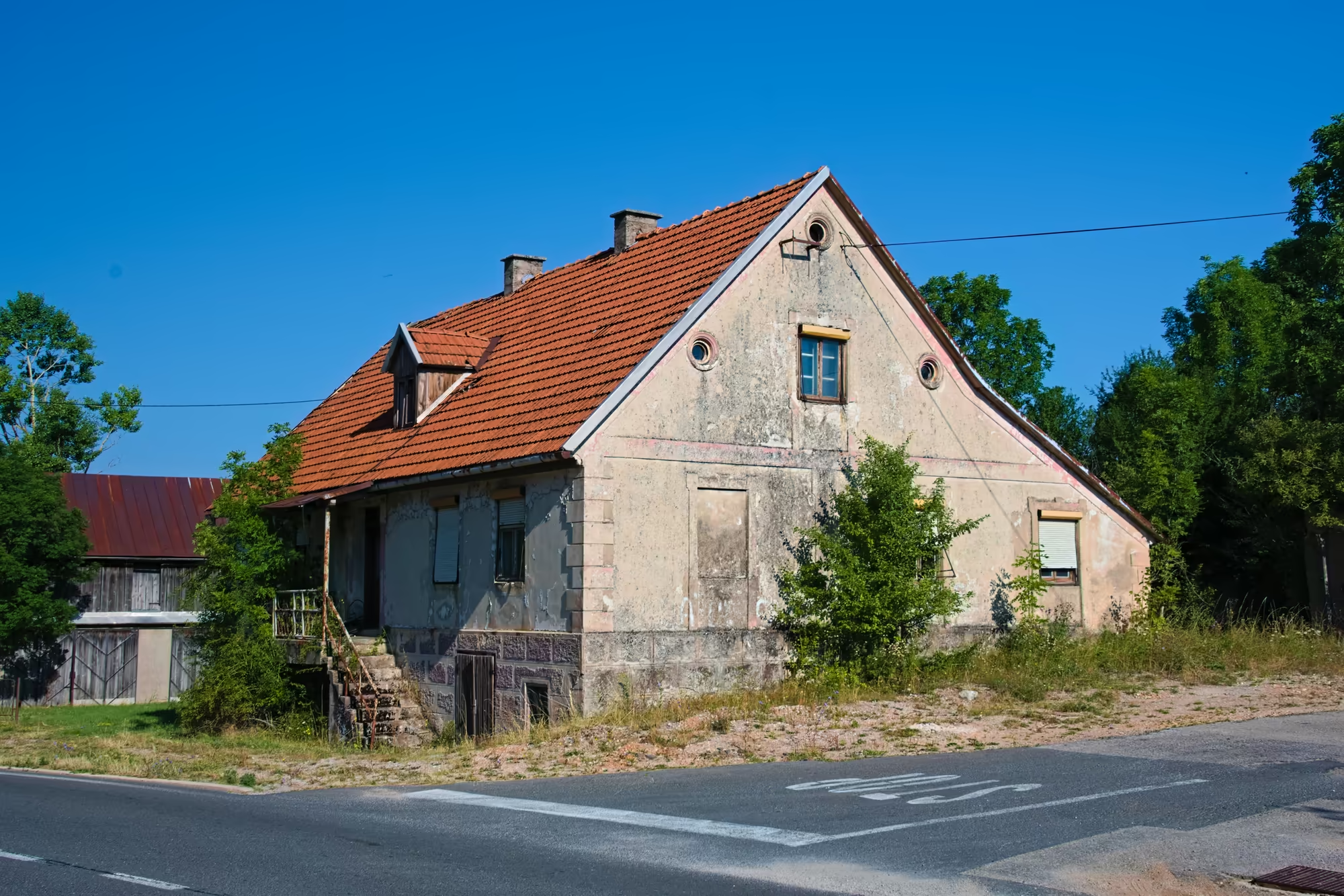
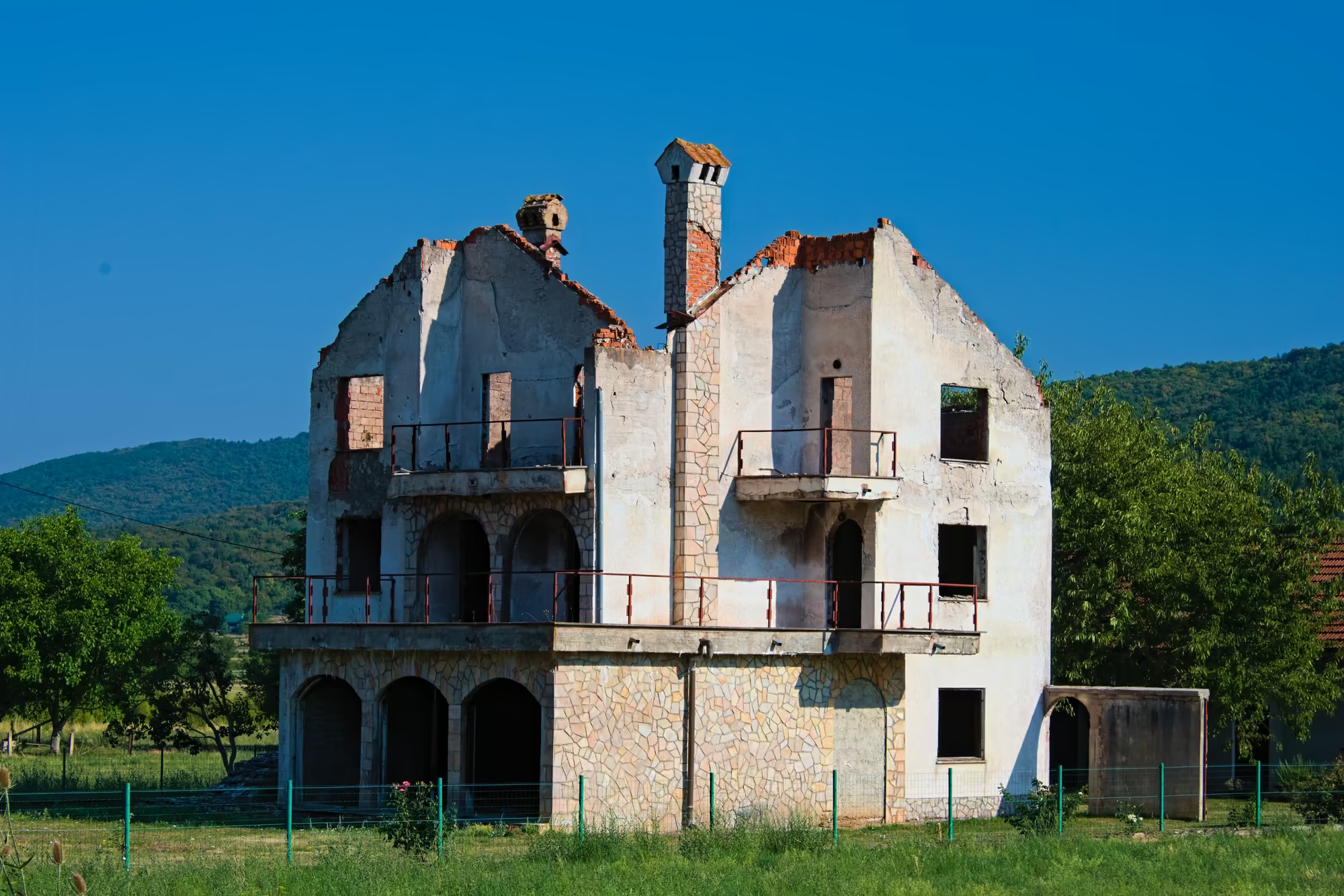
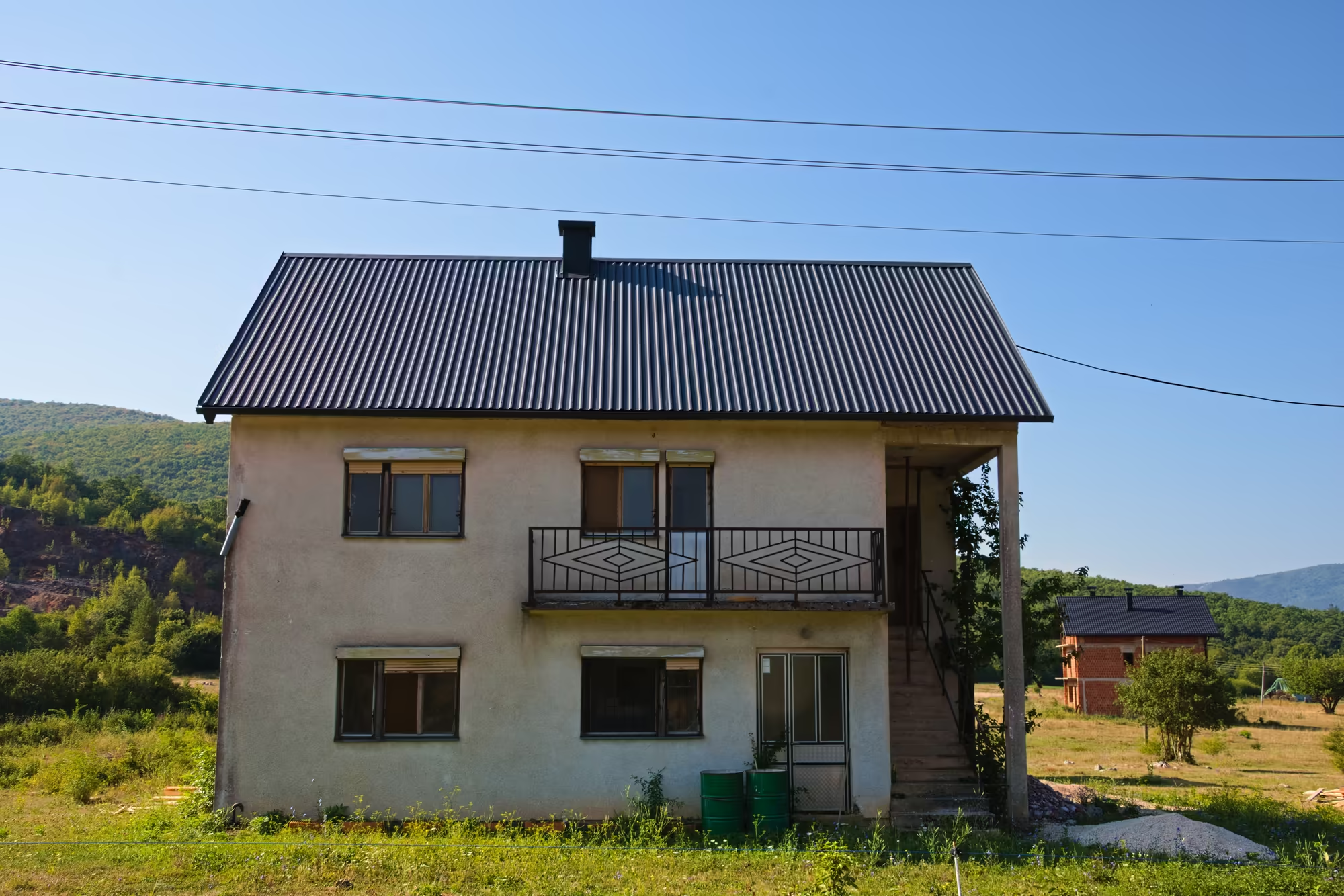
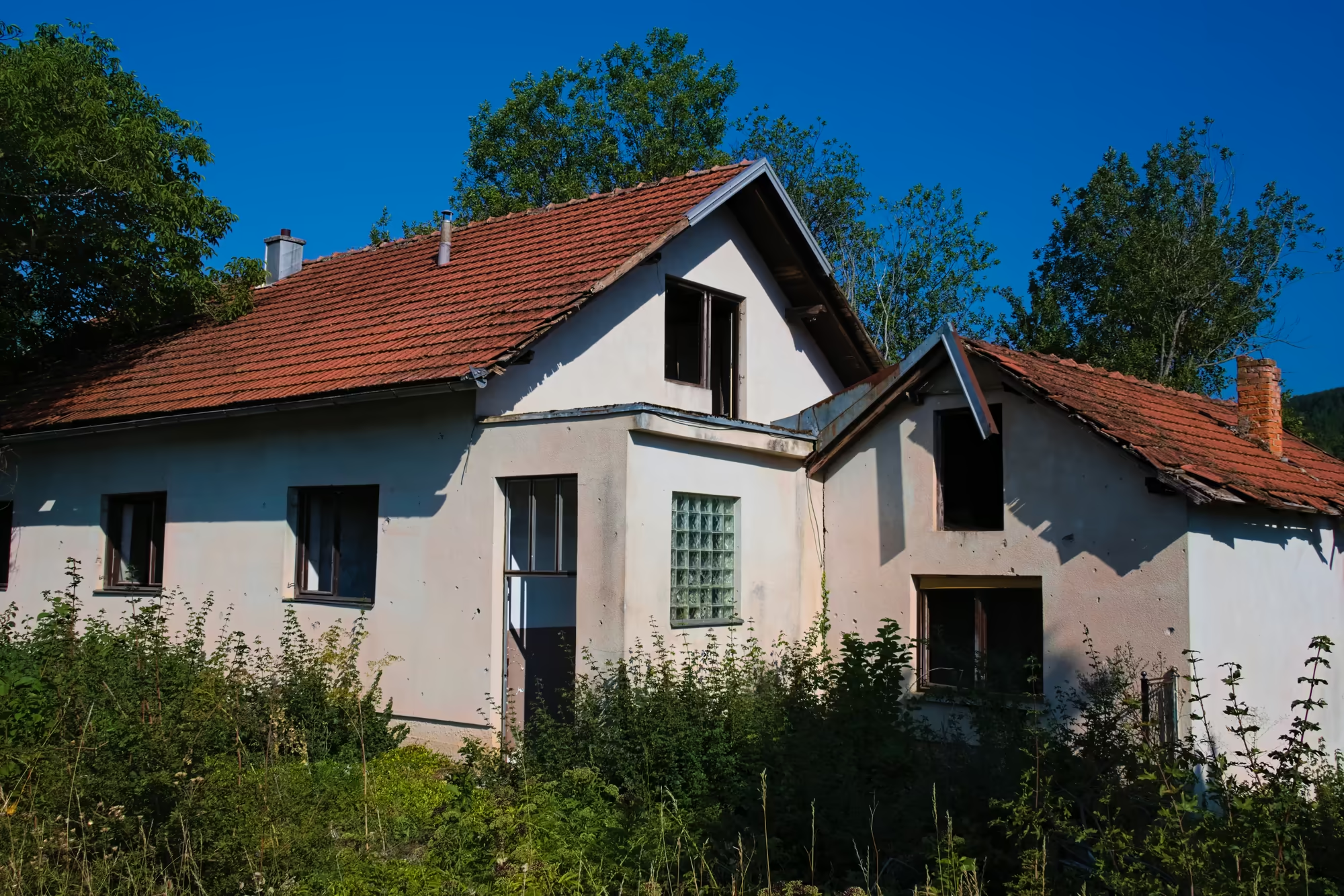
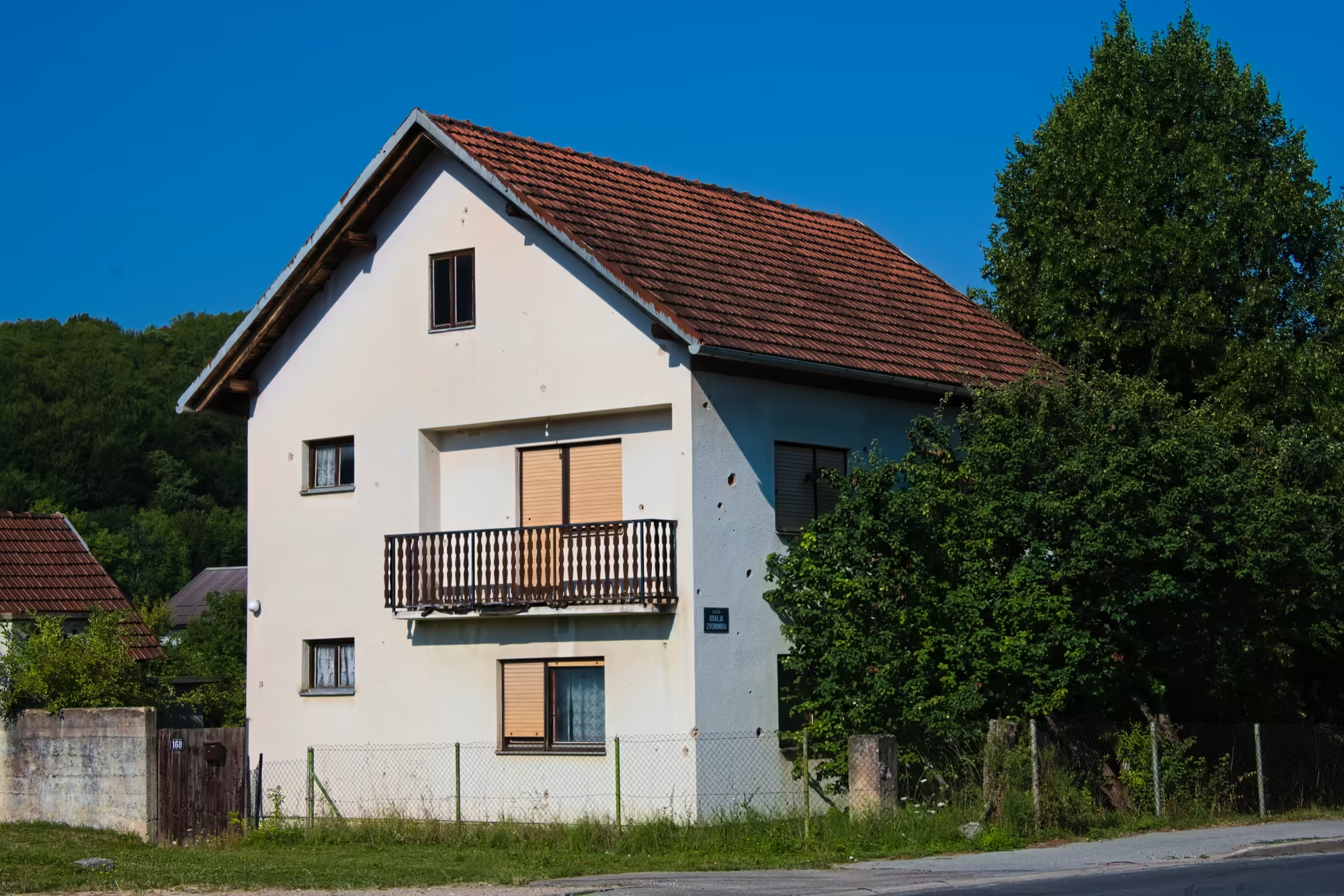
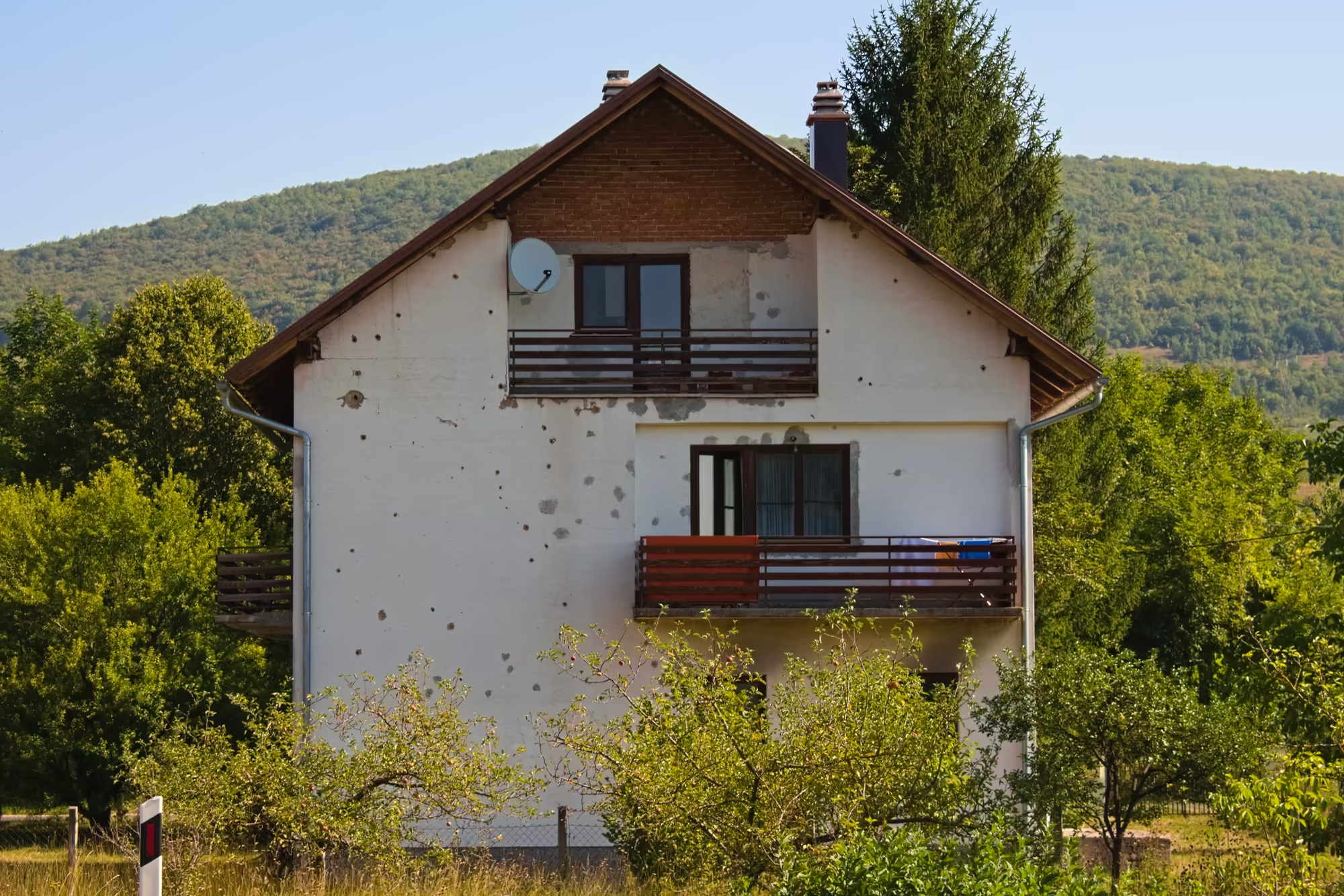
The countryside of Bosnia is a land of wooded hills, of rivers in deep gorges and of villages strung along the valleys, where the houses are built of stone and plaster with steep roofs of tile or of metal, and where the fields are small and often terraced. Much of the interior is thinly peopled, and the marks of the troubled century are visible in it everywhere, in the ruined houses, in the mills that no longer turn and in the half finished buildings that stand beside the roads.
History
Bosnia has been inhabited since the Upper Palaeolithic, and permanent settlement goes back to the Neolithic cultures of the region, above all to the people of the Butmir culture, whose pottery is among the oldest art of the Balkans. In the Bronze Age the land was settled by Illyrian and Celtic peoples, and by the middle of the first century before Christ most of it had been drawn into the Roman province of Dalmatia.
The ancestors of the South Slavs arrived between the sixth and the ninth centuries. In the middle of the twelfth century the Banate of Bosnia emerged as a political entity of its own under local bans, and in 1377 Tvrtko I was crowned king, so that the Kingdom of Bosnia became the strongest state of the western Balkans in the fourteenth century.
In 1463 the country was annexed by the Ottoman Empire, and so began more than four hundred years of Ottoman rule, in which Islam took root among a large part of the population and the towns grew around their mosques, their hans and their bridges. Bosnia was the frontier province of the empire towards the west, and its soldiers, its craftsmen and its scholars travelled from Sarajevo and Mostar to Constantinople and back.
A rising of the peasantry in 1875 forced the Ottomans to hand the administration of the country to the Habsburg monarchy at the Treaty of Berlin in 1878, and in 1908 the empire annexed Bosnia outright, a step that deepened the crisis of the Balkans. On 28 June 1914 a member of the Young Bosnia movement, Gavrilo Princip, shot the heir to the Habsburg throne in Sarajevo, and that event set off the First World War. After it Bosnia became part of the Kingdom of Serbs, Croats and Slovenes, which was renamed Yugoslavia in 1929.
The Second World War brought occupation, a savage civil conflict and a strong partisan movement, and in socialist Yugoslavia Bosnia and Herzegovina was one of the six republics, industrialising quickly and building its own modern towns. After the break up of Yugoslavia the republic proclaimed its independence in 1992, and the three and a half years of war that followed cost some 100,000 lives and displaced more than two million people, among them the 8,000 men and boys killed at Srebrenica in July 1995. The war ended with the Dayton Agreement, signed in November 1995, which gave the country its present constitution; since then Bosnia and Herzegovina has been rebuilding, and it was granted candidate status for the European Union in 2022.
Geology
Bosnia and Herzegovina lies across the central Dinaric Alps, the mountain system of limestone that runs the length of the western Balkans. The highest ground is on the eastern border, where Mount Maglić reaches 2,386 metres, and the country as a whole is mountainous: long ridges of rock, narrow valleys and high plateaux follow one another from the plain of the Sava in the north to the short coast in the south.
Much of the land is karst, the limestone country in which the water works its way below ground. Caves, sinkholes, dry valleys and great springs are the marks of it, and among the mountains lie the flat floored basins, the poljes, where the water stands in the wet season and the fields lie open in the dry. The rivers that cross this country have cut deep and narrow gorges: the Neretva, some 225 kilometres long and the largest karst river of the Dinaric Alps, runs through a succession of canyons and valleys to the sea, while the Drina, 346 kilometres long, forms a great part of the border with Serbia.
The northern third of the country opens into the Pannonian plain, drained by the Sava and its Bosnian tributaries, the Una, the Vrbas, the Bosna and the Drina. These rivers have cut their way back into the mountains in gorges of great depth, and the meeting of limestone and water has given the country its waterfalls, its mineral springs and its old spa towns. Coal, iron ore, bauxite, salt and above all the water power of the mountain rivers are the mineral wealth of the land.
The climate follows the ground. In the north the winters are cold and the summers warm, with snow lying on the mountains into the spring, while Herzegovina, sheltered from the sea by the mountains of the coast, has a Mediterranean climate of hot dry summers, of figs and of vines. The line between the two runs across the middle of the country, and the high karst of the interior, with its bare rock and its thin pastures, lies between them.
The range runs from north west to south east and continues beyond the borders of the country into Montenegro and Croatia, and the whole of it is young and still rising, so that earthquakes are common and the land is subject to landslides and rockfalls. Along the Sava, at the northern edge of the mountains, the ground flattens into the plain, and the rivers wander between banks of sand and gravel on their way to the Danube and the Black Sea.
Things to See
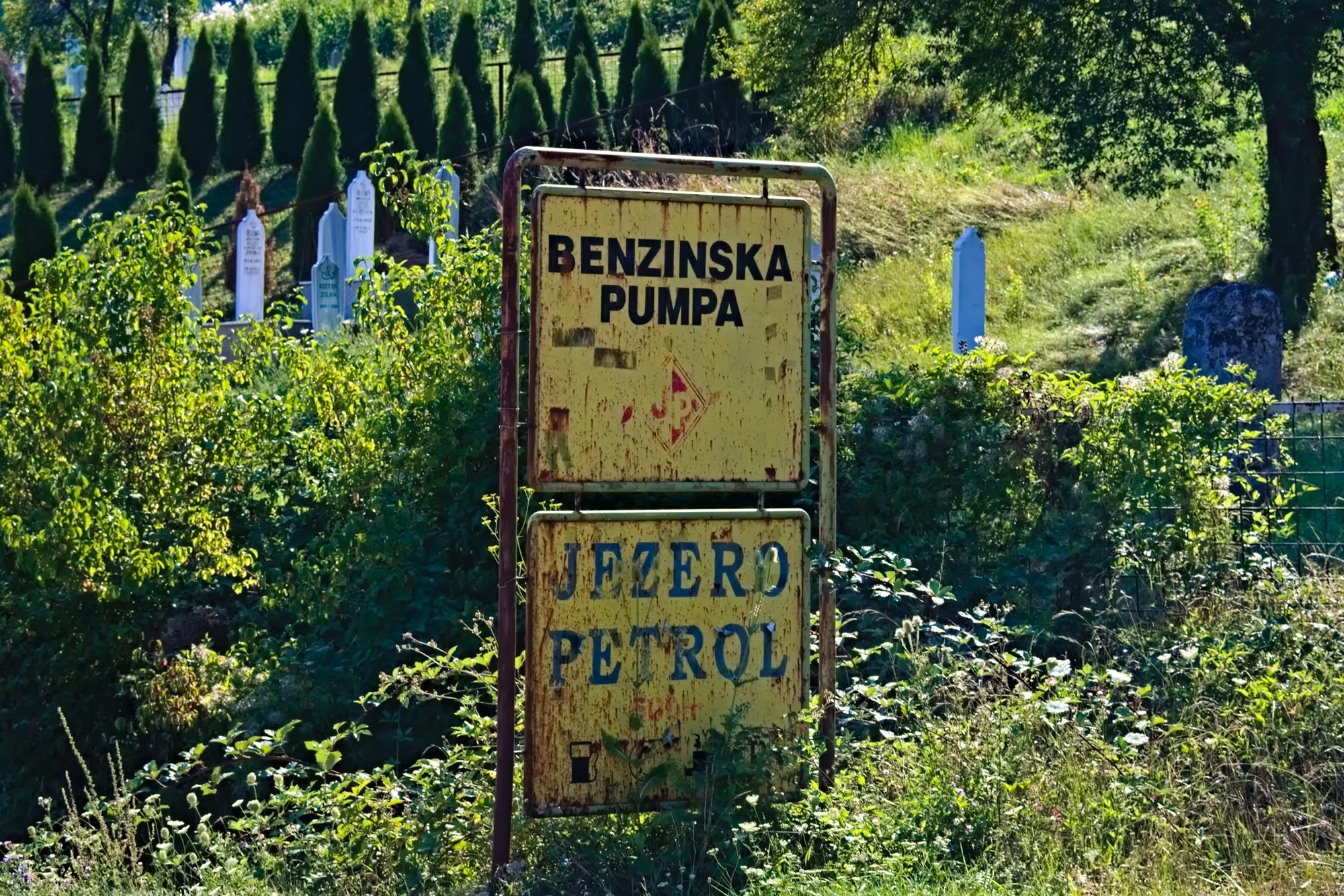
The villages of the interior are the heart of the Bosnian countryside: clusters of houses of stone and plaster, roofed in tile or in metal, with a wooden balcony or a covered stair, a well or a spring beside the road, and a small graveyard with its white stones on the slope above. Around them lie the small fields, the orchards, the plum trees that give the brandy of the country and the hay meadows that are cut in the summer months.
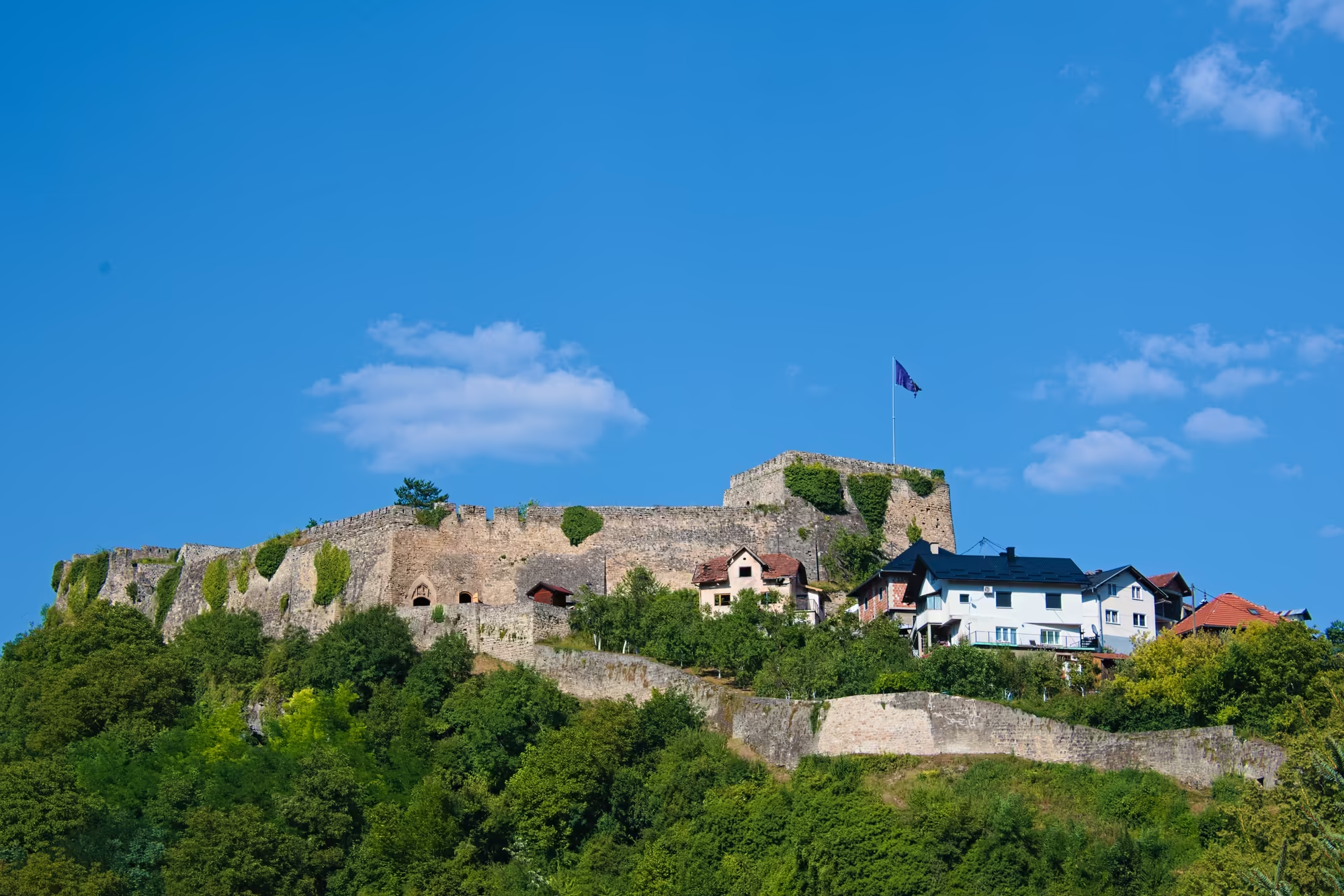
The ruined fortresses of the Middle Ages stand above a great many of the towns and villages of Bosnia, left as they were when the Ottoman armies passed. They are walls and towers of rough stone on a ridge above the roofs, often with a settlement grown up inside or below the circuit of the walls, and among the best known of them are the castles of Tešanj and Travnik, which still dominate their towns, and the fortress of Jajce, which stands above the meeting of the Pliva and the Vrbas and above the waterfalls of the Pliva.
The towns of the Ottoman centuries kept their bazaar quarters, their mosques with slender minarets, their stone bridges and their fountains. The most celebrated of the bridges are the Stari Most at Mostar, built in 1566 and destroyed in the war of the 1990s and rebuilt since, and the bridge of Mehmed Pasha Sokolović at Višegrad on the Drina. Sarajevo, the capital, holds the old bazaar of Baščaršija beside the Austro-Hungarian streets of the later nineteenth century, a city of mosques, synagogues and churches within a few minutes walk of one another.
The oldest monuments of the country are the stećci, the monumental tombstones of the Middle Ages that lie scattered over its hills. Some 60,000 of them are known within the borders of Bosnia and Herzegovina, cut as slabs, chests, gabled tombs and pillars, many of them carved with dances, hunts, crosses and processions, and the finest collections stand in the necropolises of Radimlja near Stolac and of the villages of Herzegovina; twenty of the sites, with some 4,000 monuments, were inscribed on the World Heritage List in 2016.
The rivers of the interior are sights in themselves: the Neretva running green through its gorges, the Una with its falls above Bihać, the Vrbas in its canyon, the Pliva with its lakes and its little wooden mills, and the Drina, the great border river of the east. Around them lie the forests of the hills, the national parks of Sutjeska and Kozara with their old woods, and the high karst country where the land is bare rock and mountain pasture.
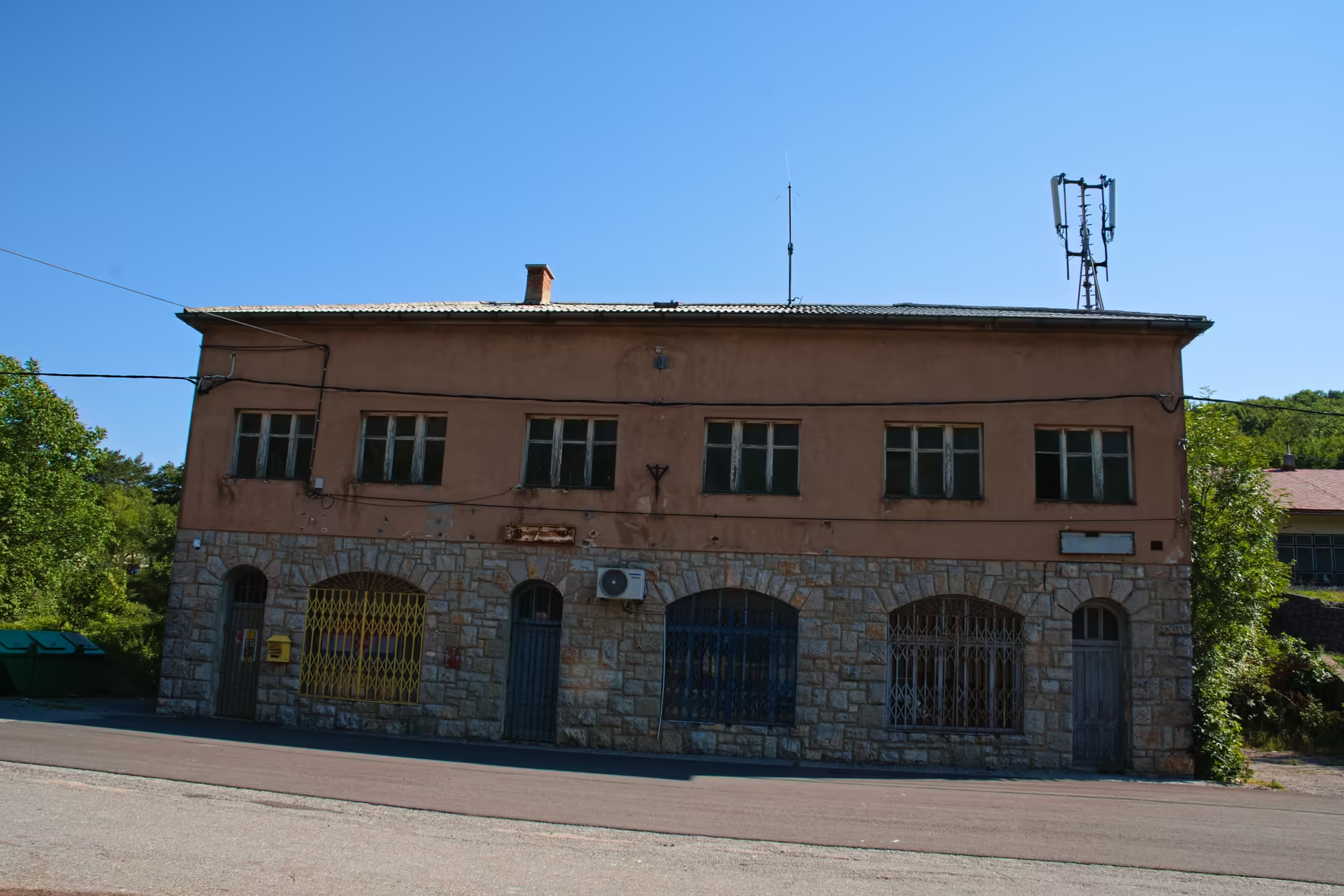
The roads of the interior are long and quiet, running through valleys of hamlets and past the traces of a troubled century: farmhouses with their roofs fallen in, mills that no longer turn, houses standing half built and houses offered for sale by the roadside. The countryside of Bosnia has been growing emptier with the years as the young leave for the towns and for work abroad, and the small towns on the way, with their markets, their cafés and their stone built fronts, are the places where the life of the region is still gathered.
References
The references on which this account rests are set out below, and they may be consulted at the links given.
- Wikipedia contributors (2026). Bosnia and Herzegovina. en.wikipedia.org/wiki/Bosnia_and_Herzegovina
- Wikipedia contributors (2026). Geography of Bosnia and Herzegovina. en.wikipedia.org/wiki/Geography_of_Bosnia_and_Herzegovina
- Wikipedia contributors (2026). History of Bosnia and Herzegovina. en.wikipedia.org/wiki/History_of_Bosnia_and_Herzegovina
- Wikipedia contributors (2026). Sarajevo. en.wikipedia.org/wiki/Sarajevo
- Wikipedia contributors (2026). Mostar. en.wikipedia.org/wiki/Mostar
- Wikipedia contributors (2026). Stari Most. en.wikipedia.org/wiki/Stari_Most
- Wikipedia contributors (2026). Bosnian War. en.wikipedia.org/wiki/Bosnian_War
- Wikipedia contributors (2026). Dayton Agreement. en.wikipedia.org/wiki/Dayton_Agreement
- Wikipedia contributors (2026). Bosnia Eyalet. en.wikipedia.org/wiki/Bosnia_Eyalet
- Wikipedia contributors (2026). Republika Srpska. en.wikipedia.org/wiki/Republika_Srpska
- Wikipedia contributors (2026). Neretva. en.wikipedia.org/wiki/Neretva
- Wikipedia contributors (2026). Drina. en.wikipedia.org/wiki/Drina
- Wikipedia contributors (2026). Stećak. en.wikipedia.org/wiki/Stećak
- Wikipedia contributors (2026). Dinaric Alps. en.wikipedia.org/wiki/Dinaric_Alps
- UNESCO World Heritage Centre. Stećci Medieval Tombstone Graveyards. whc.unesco.org/en/list/1504
- UNESCO World Heritage Centre. Old Bridge Area of the Old City of Mostar. whc.unesco.org/en/list/946