Grande Traversata delle Alpi · 2026
2026 GTA 2 - Bellino and the Upper Varaita Valley
4 July 2026



Journal Notes
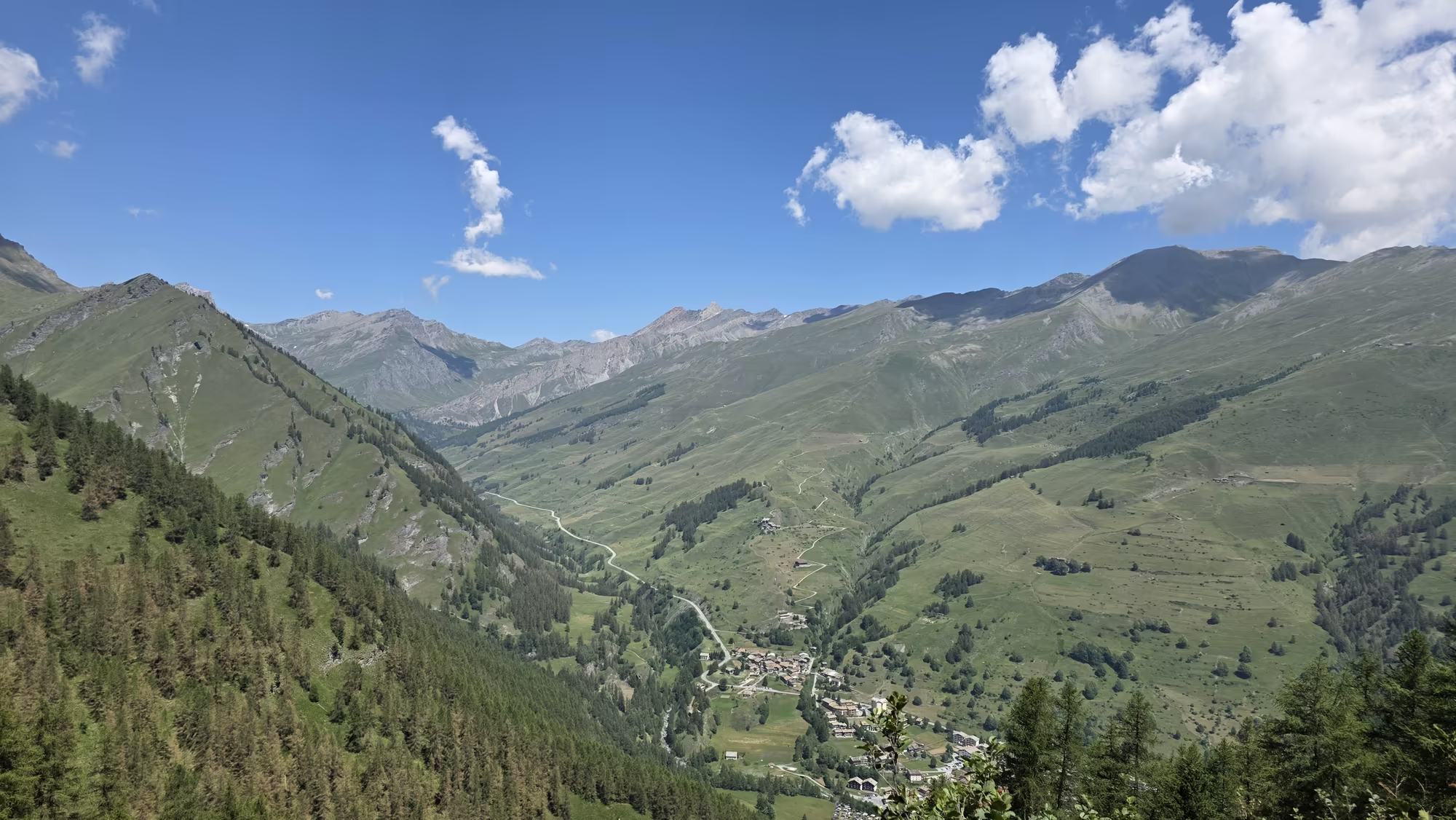
The day opens above the village of Bellino, on a shelf of meadow that looks straight down the Valle Varaita. Cloud lies low on the far ridge and the grass is still grey with it; below, the valley floor holds long bands of light and shade, and the roofs of stone catch the first of the sun. Nothing moves on the track yet. Water works its way down through the turf, a cowbell sounds somewhere out of sight, and the whole upper valley is quiet enough to hear it.
Above the Village of Mas del Bernard
From the shoulder of the hill the settlement below reads almost like a plan of itself. Roofs of flat grey stone lie close together, held down against the wind by their own weight, and between them the tracks show as pale ribbons on the grass. Higher up the slope the land opens into the mountain pasture, mown in summer and grazed afterwards, and beyond that the ridge closes the valley off in a long green wall. There is no road over that ridge. The Grande Traversata delle Alpi, the long footpath that crosses the western Alps from end to end, comes through here, and this upper Valle Varaita is one of its quietest passages. The Valle Varaita rises towards the head of the valley and simply ends, and anyone who wants to go further must walk.
Several of the names here are simply descriptions worn smooth by use. Fontanile means the place of the spring; a mas is a farmstead, the house and its land taken together. Set beside them are the Occitan forms, Blins for Bellino among them, because this valley is one of the last strongholds of the language once carried through these mountains by the troubadours. It is spoken in the upper valley more than the lower, and it lives on in songs, in dances and in the names on the signs.
The comune, in the province of Cuneo, is divided like most of these alpine parishes into two districts: an upper quarter that takes in Celle and its neighbours, and a lower one that begins at Pleyne, where the municipal offices stand. Between them the torrent Varaita runs down from the head of the valley, and the two banks differ as sharply as they can. The bank that faces the sun carries the meadows and the hay, the pastures and most of the summer dwellings; the opposite bank is dark with conifers and gives little but timber and shade.
The Track through the Mountain Pasture
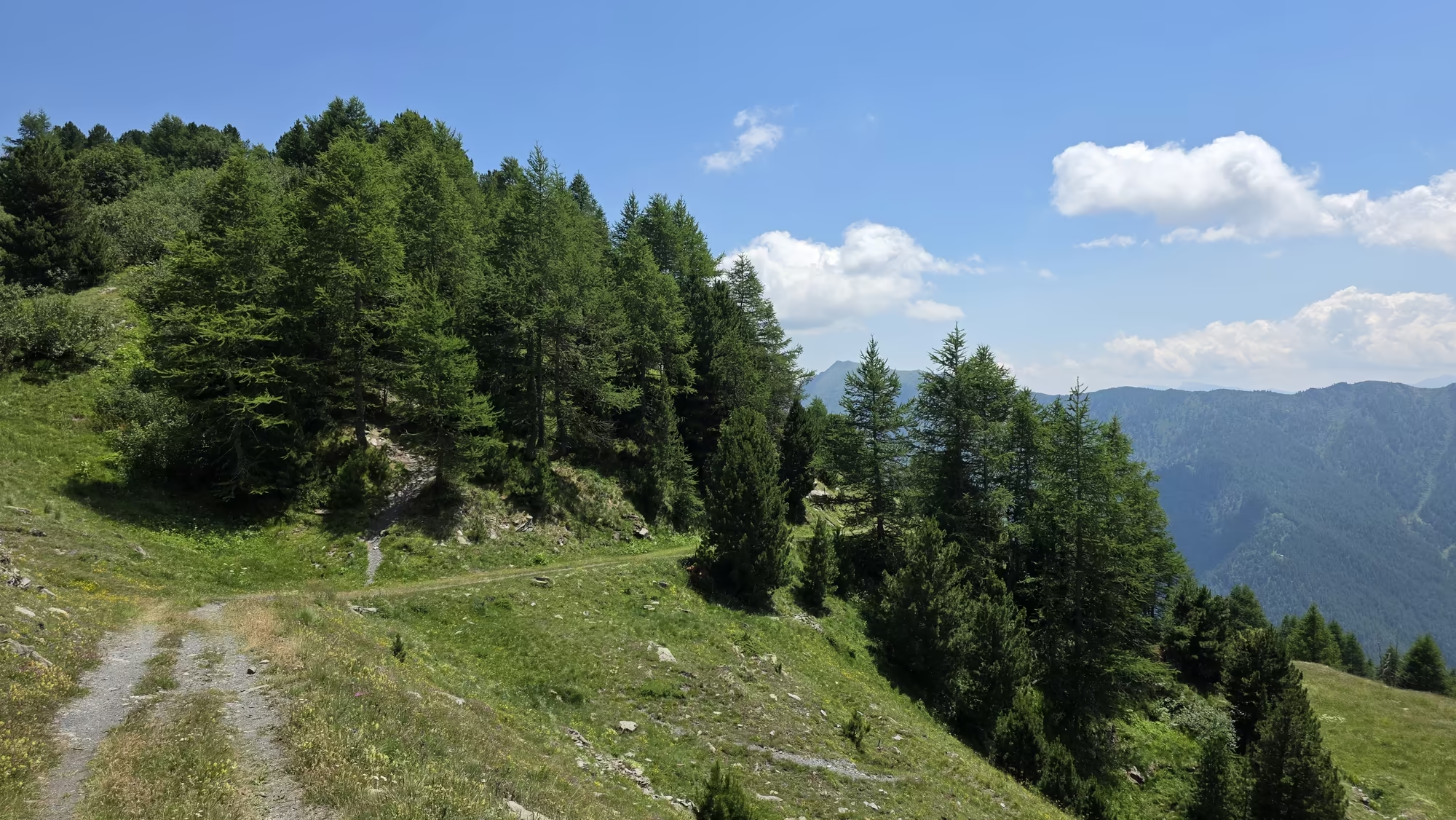
The track out of Mas del Bernard climbs by long traverses, each one flattening into a short run before it turns again. It is a farm road rather than a footpath, built for carts and for animals, and it is surfaced with the same stones the fields are full of. On either side the grass has been cut and dried; the hay is stacked or still lying in windrows, and the smell of it follows the track up the hill.
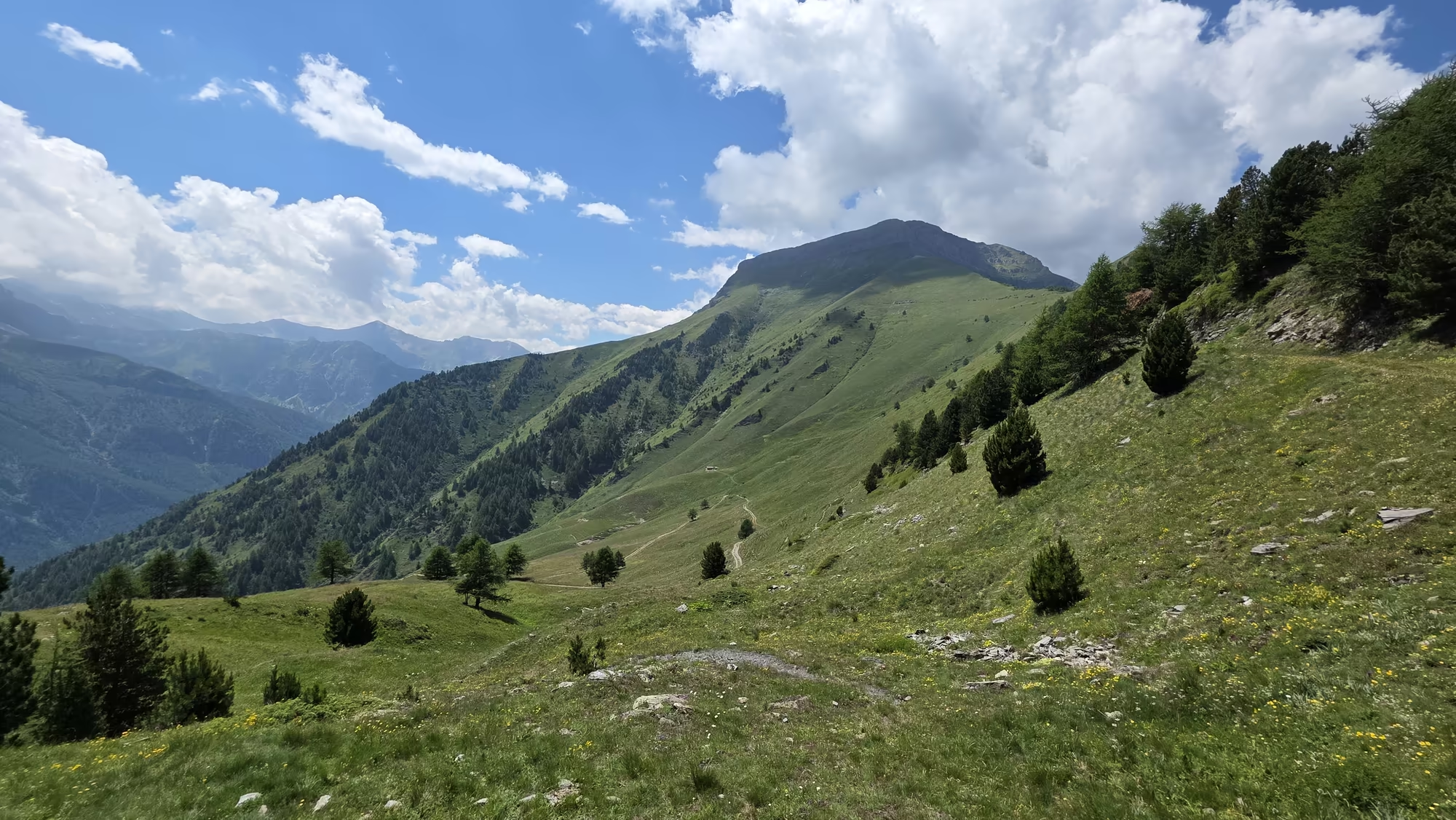
Higher, the path leaves the road and crosses the high meadow on a line that is no more than a worn strip through the grass. The fence posts lean and the wire is old. Someone has cut the bracken back from the path and left it in heaps to dry. A spring rises out of the slope, channelled into a stone trough, and a length of pipe carries the overflow away, so that the meadow sounds of running water even on a still day.
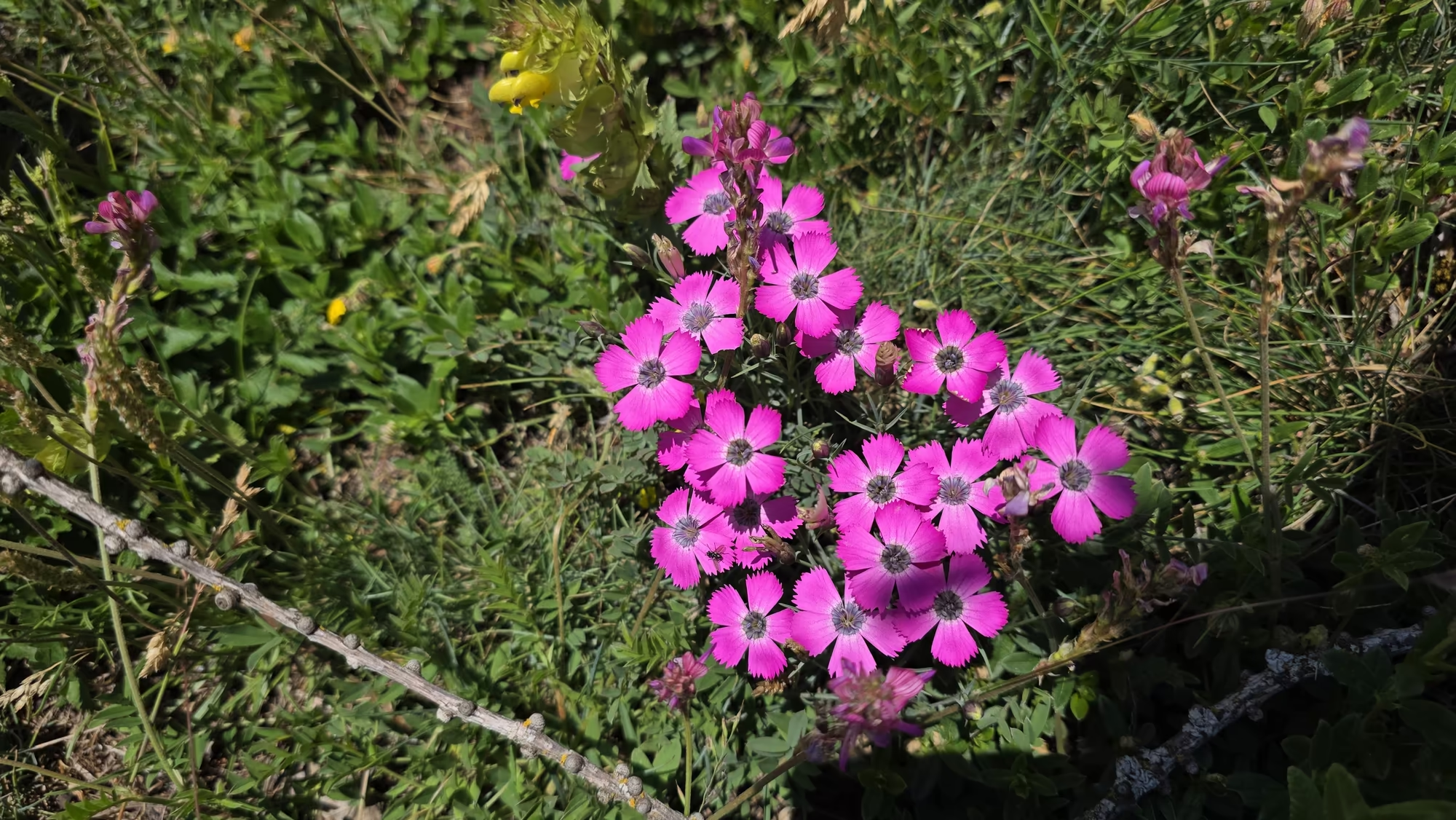
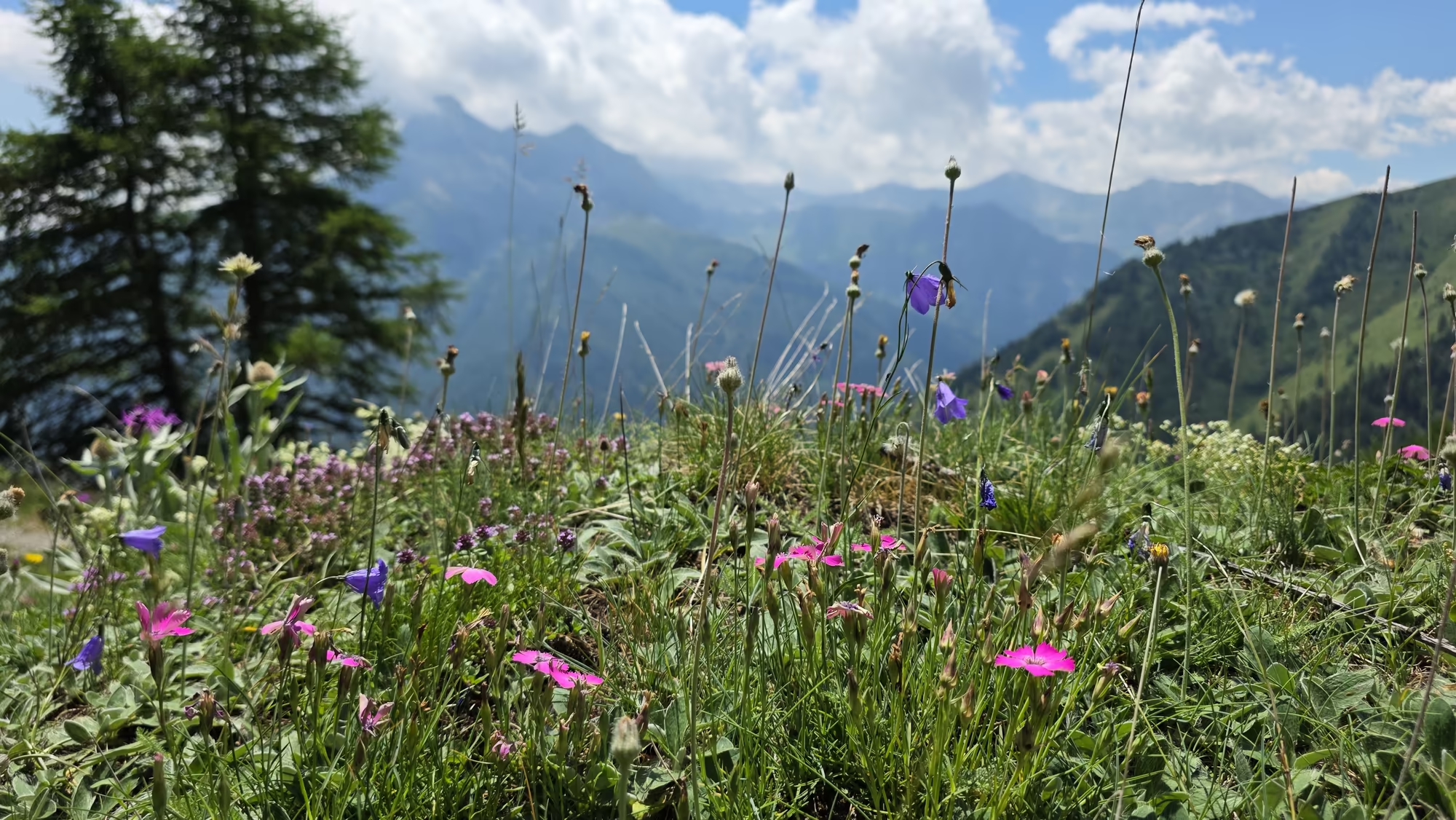
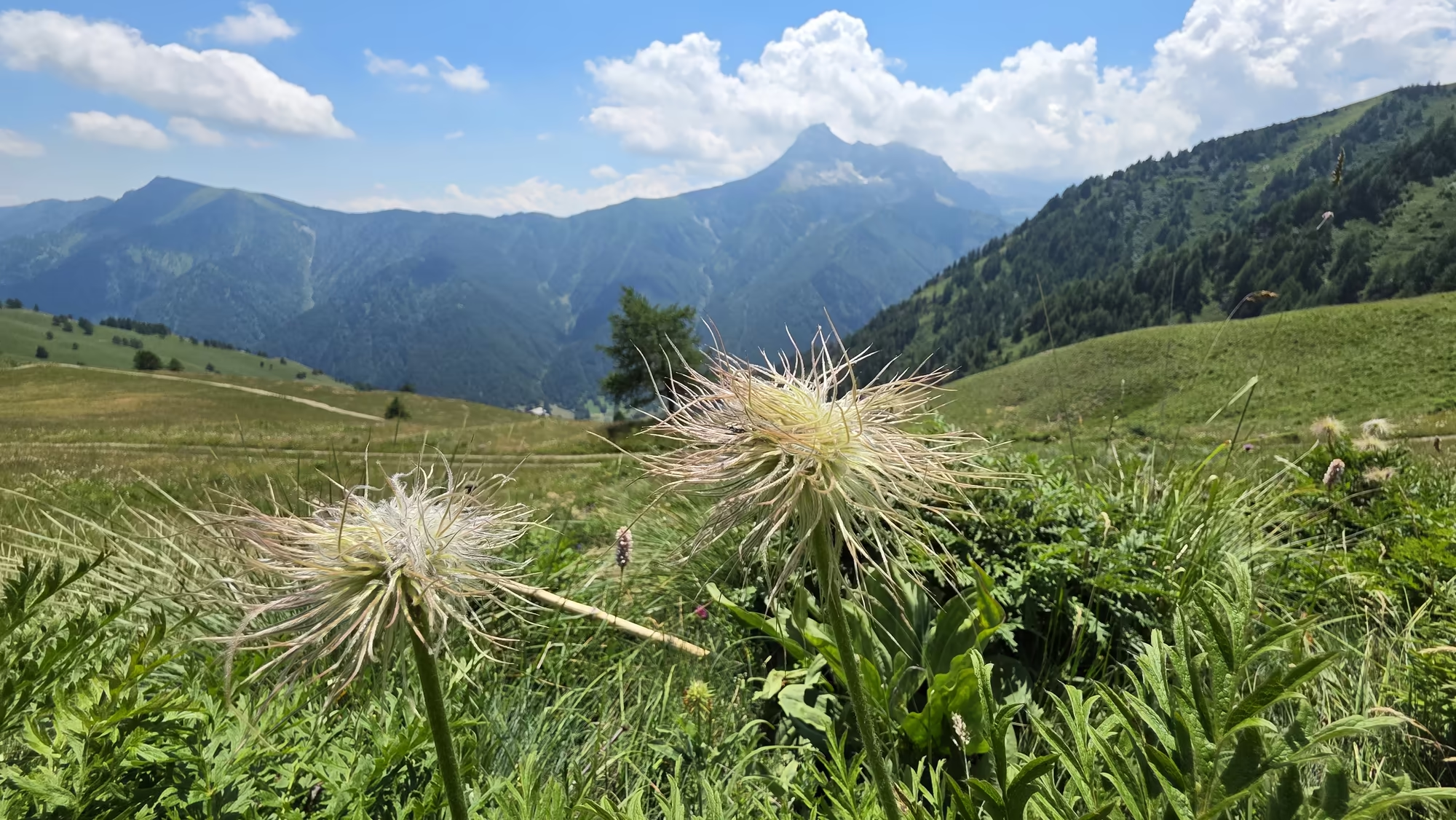
Where the last larches give out, the pasture changes character. The grass is shorter and finer, cropped close by the animals, and the flowers that survive here are small and tough. Wild pinks open along the path in their hundreds, each one a scrap of frayed pink on a stem barely taller than the grass, and the air carries the smell of them mixed with thyme and crushed pine. Higher still come cushions of tiny blossoms packed against the stones, harebells nodding on thin stems, and clumps of yellow and white so dense that the slope looks dusted rather than planted. By the end of the season the thistles take their turn, their seed heads standing above the fading grass, a soft grey crown on a spiny base.
The Barns of Mas del Bernard
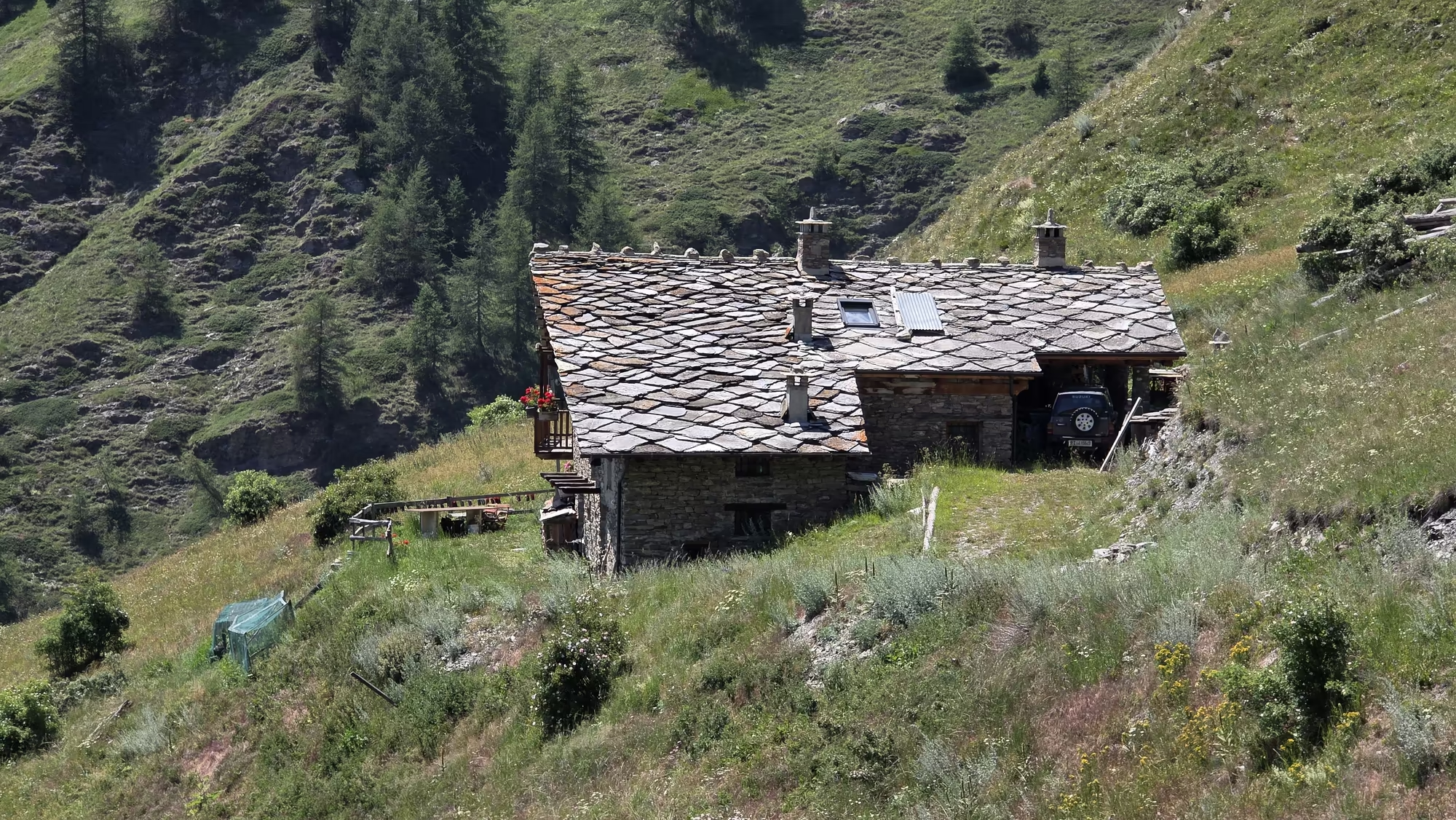
On the steep side of the hill the stone barn sits as if it grew there. Its walls are laid in rough courses, thicker at the base than the eye expects, and the roof is a sheet of flat slabs, great grey plates of schist split from the rock and laid one over another, each course a little smaller towards the ridge. Nothing binds them but their own weight and the steepness of the pitch. That roof has to shed the snow of a mountain winter, and it does so with the same material the hill is made of.
The building is doing several jobs at once. Beneath, the animals stand on straw; above, in the loft, the hay is stored, so that the warmth of the beasts rises through the floor and the winter feed is always within reach. The beams are larch, darkened with smoke and age, and a single round stone column often carries the overhang of the roof in front of the door. In these valleys that column has a name of its own, and it turns an ordinary byre into something almost formal.
Farmstead and barn stand together on the grassy slope. A low wall runs out from the corner and becomes a fence, and beyond it the meadow falls away. These houses tell the story of the valleys as plainly as any book. In the upper reaches it was long the custom to keep an inheritance whole in a single heir, so the houses grew large instead of multiplying, big roofs built to shelter large herds and the hay for seven months of stall feeding.
Sheep on the High Pasture
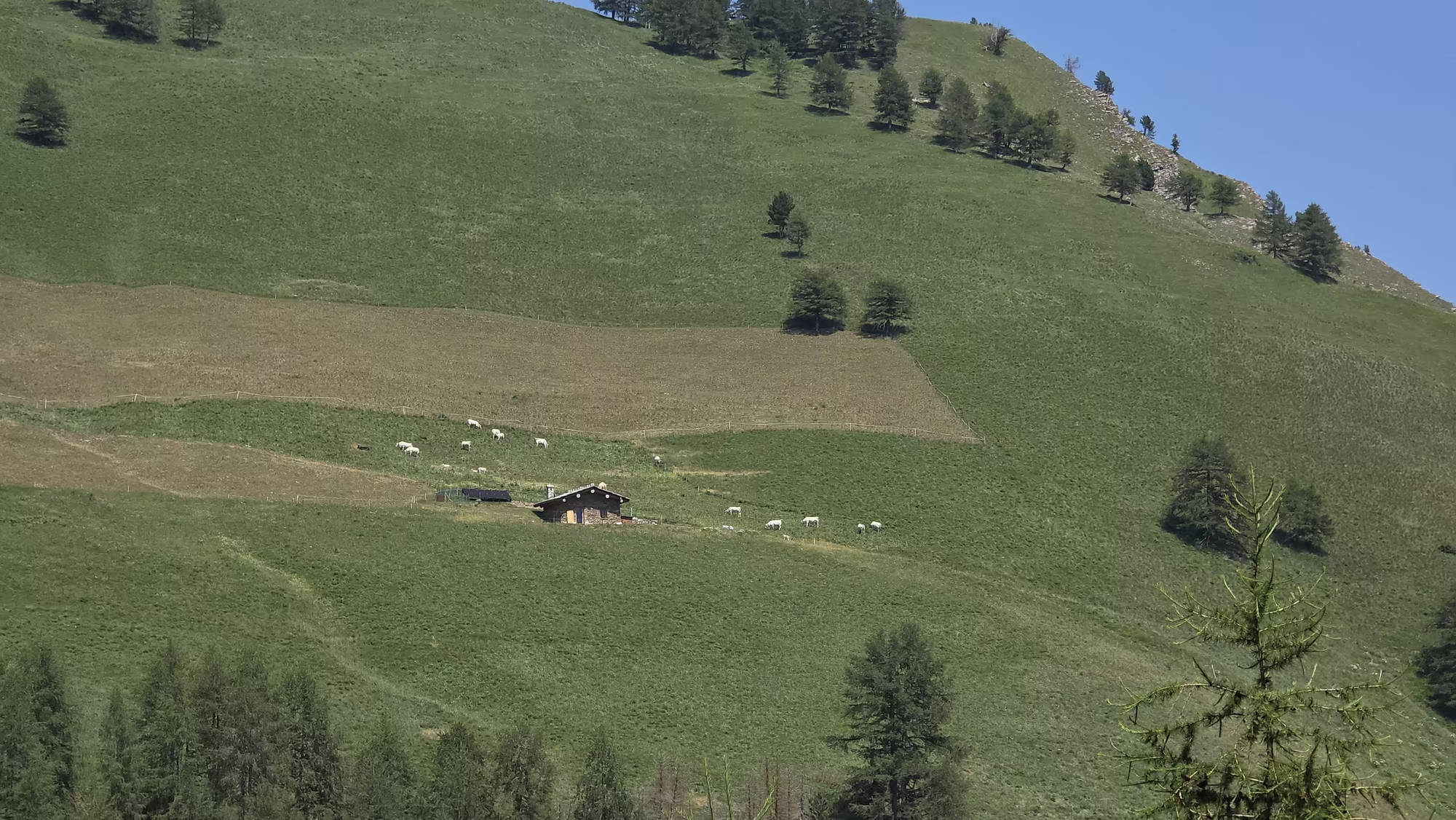
A flock works slowly across the slope above the hut, heads down and used to the ground. Sheep do best on the rougher pastures, the stony faces and the slopes too steep for cattle, and on this side of the valley there is plenty of that. The hut itself is a low building of stone, one room and a stable, raised where a spring keeps the water within a few steps.
Cattle and sheep are grazed together here, and the two habits fit the mountain. The cows take the better grass and the gentler ground; the sheep follow where the cows will not go, thinning the rougher herbage and holding the scrub back. Through the summer the animals move up the valley in stages, following the grass as it ripens at each height, and the cheese made in these huts is one of the few things this high ground still sells as its own.
At the end of the season the movement reverses. The cattle come down first, and the sheep hold the emptied pastures for a while longer, then follow. After they have gone the huts stand open and the grass lies ungrazed, and by the first heavy snow the high meadow is empty again, with only the tracks and the wall lines to show that anything happened there at all.
Wayside Shrines in the Rock
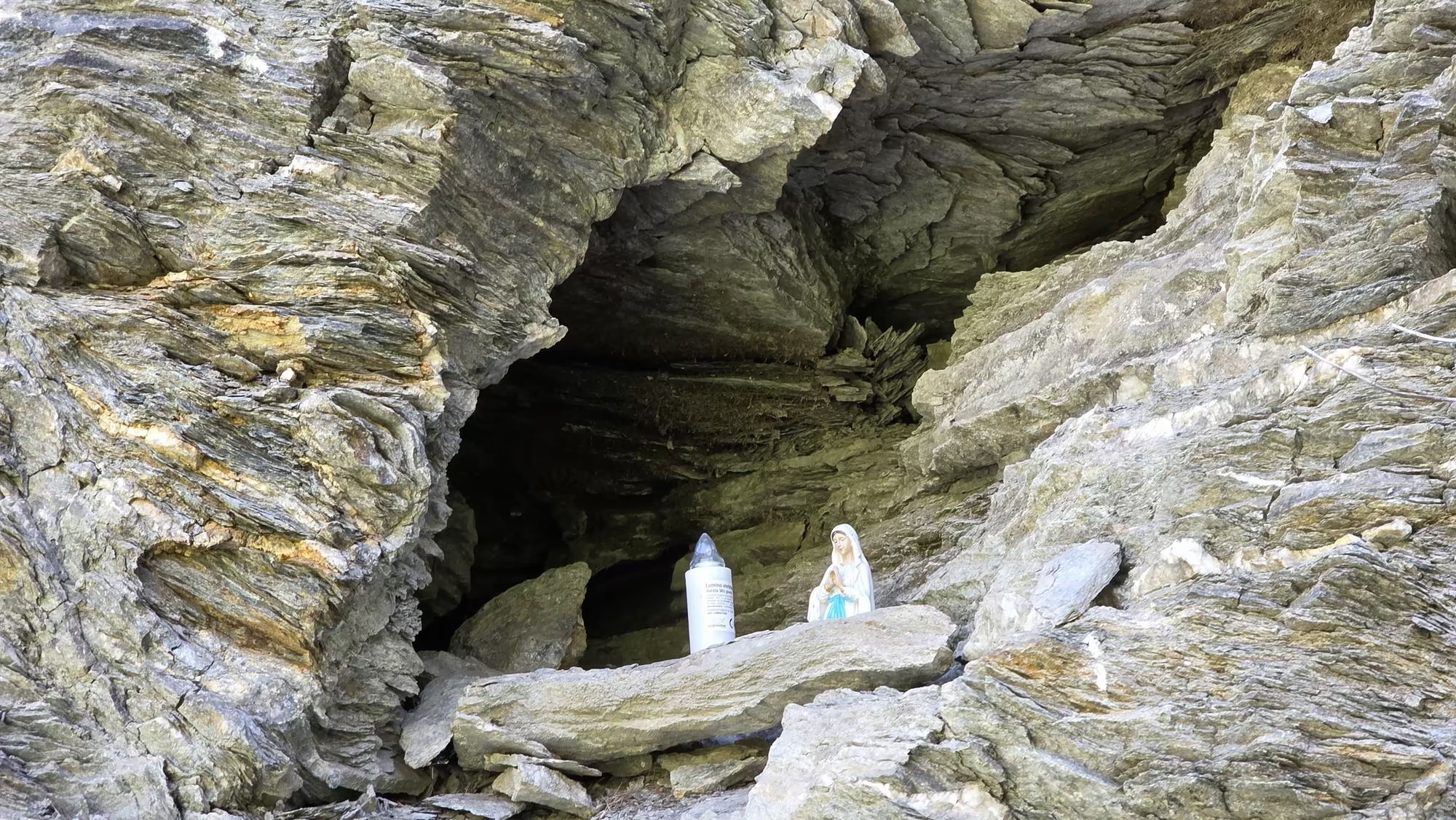
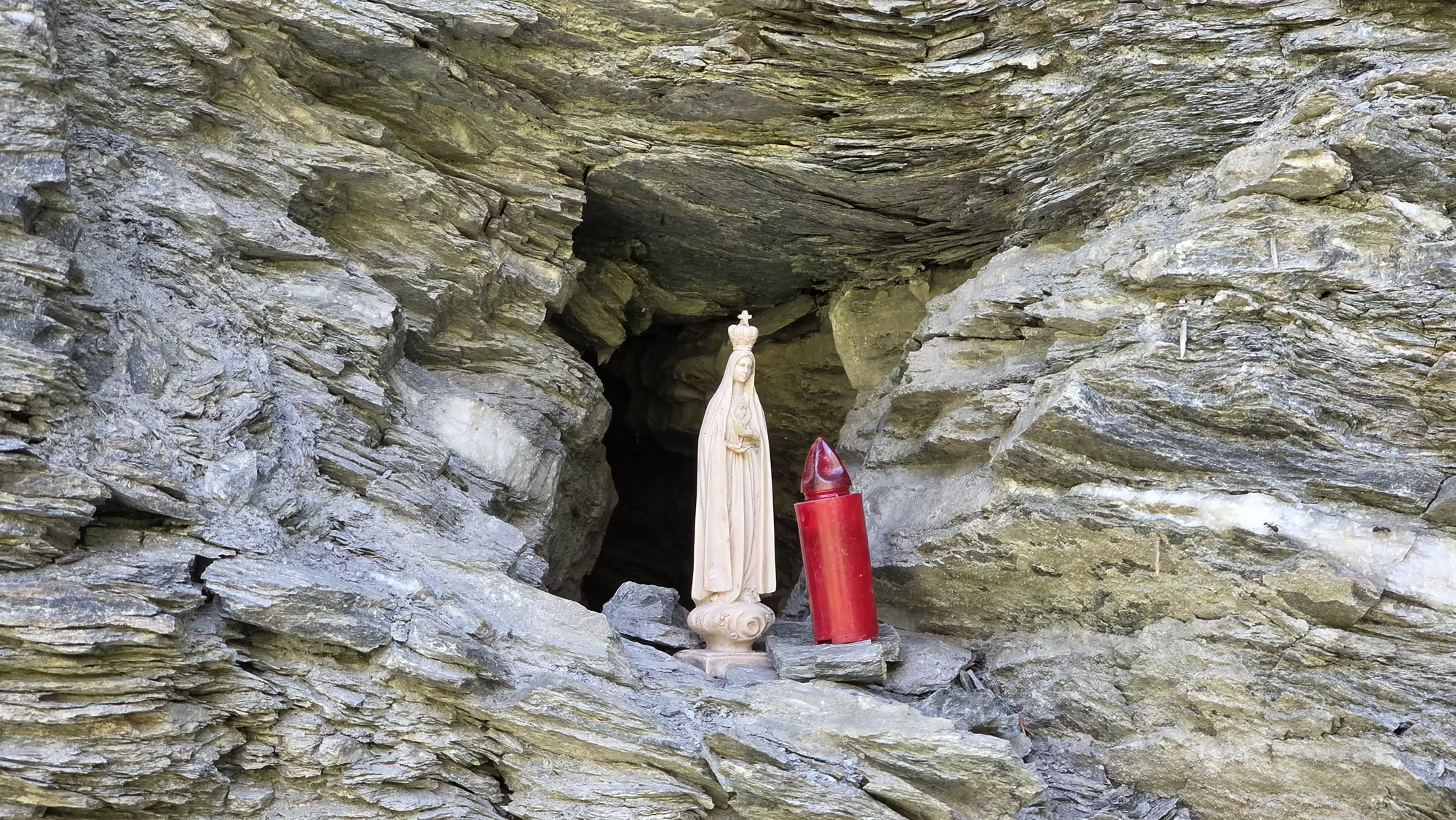
Where the path crosses a shoulder of rock there is a small shrine, and it is made from the rock itself. A niche has been hollowed in the face; inside it stands a Madonna, crowned, in a pale robe with a fold of blue, sheltered from the weather by the overhang. Below, on a ledge just beyond reach, a small angel figure has been set in the open, one wing raised, as if the hollow in the rock were a doorway and this the guard at it.
Shrines of this kind are everywhere in these valleys, and they are almost always local. A household or a hamlet raised them, in thanks for some event or in hope of protection, and each belonged to a particular house or a particular path. The figure stands by the way; whoever passes is meant to be reminded, whether he looks or not, that the route is not entirely his own. In the side valleys here votive pillars are so common that they seem part of the landscape rather than an addition to it.
The figures in the rock niche are older in style than in age, if such things can be judged. The crown, the blue cloak, the small folded hands are all the furniture of ordinary popular devotion, painted and repainted by hands that were not artists. What matters is the placing. A shrine in a rock face is not an ornament on a building; it belongs to the ground, and the ground here has been holy in one way or another long before there was a path across it.
The Hamlet of Fontanile
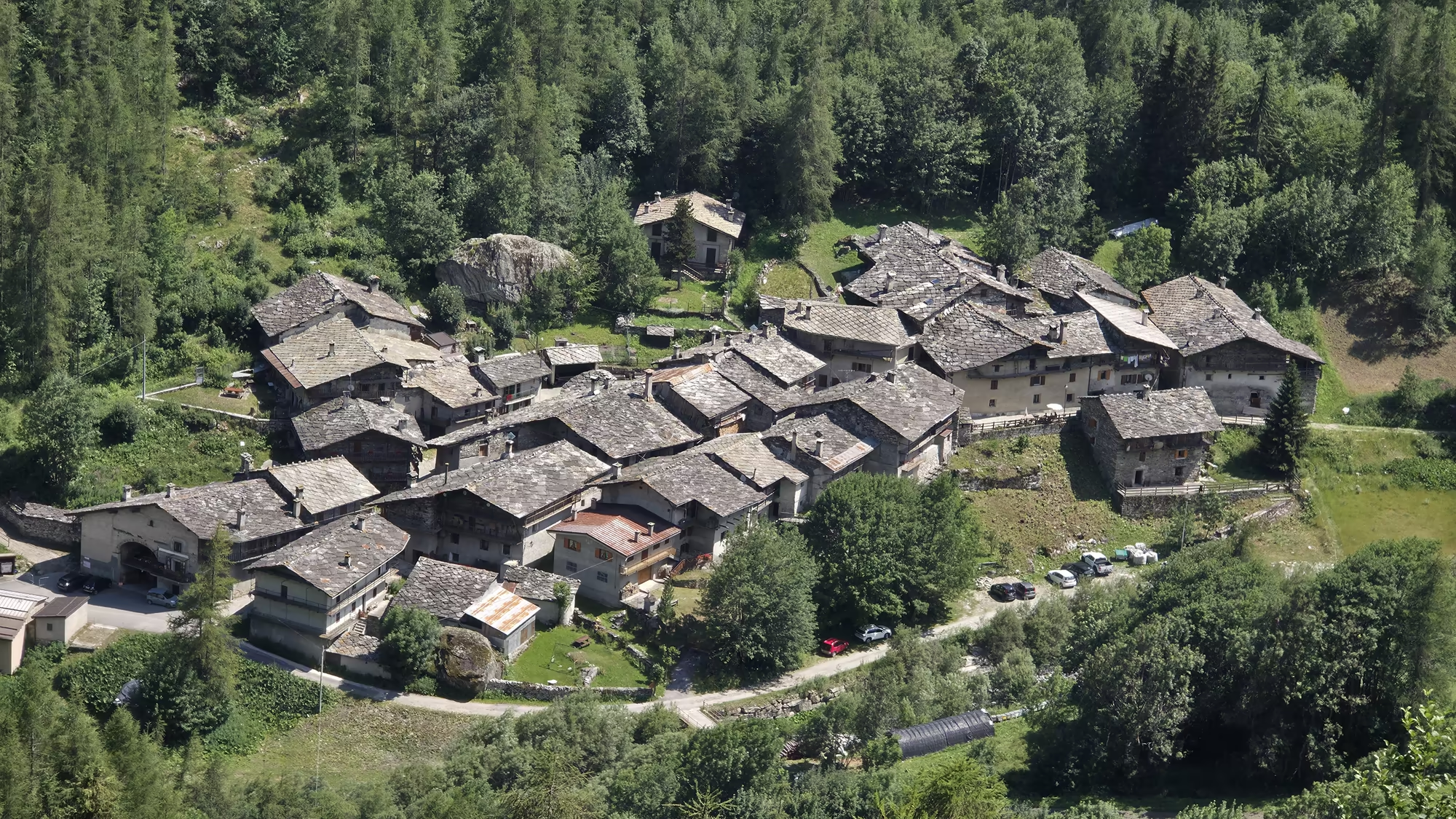
Coming down, the hamlet of Fontanile appears first from above, a tight knot of roofs in a fold of the hillside with the woodland creeping up to meet it. From this angle the pattern is clear. The houses face down and south, the barns stand behind them, and the whole cluster is set just above the spring that gave it its name, so that water reaches the doorsteps without being carried.
Close to, the houses are stone from the foundations to the eaves, with small windows and deep sills, and the steep alleys between them are paved with cobbles that have to shed the rain of a mountain valley. Many are shut for most of the year. Shutters are closed, a few doorways have been repaired and others have not, and grass grows in the gutters of the oldest roofs. In the middle of the hamlet there is a communal oven and a stone fountain, both still used, and a wall with a painted sundial whose lines have been retouched many times.
Fontanile lies on the old way between the hamlets, one of a line of settlements strung along the valley from Pleyne up towards Celle, and it lives now on a mixture of the old economy and the new. In summer the houses fill again with people whose own people came from here; in winter the hamlet is nearly empty. It is the pattern of the whole valley, and it has been the pattern for a long time.
Celle di Bellino
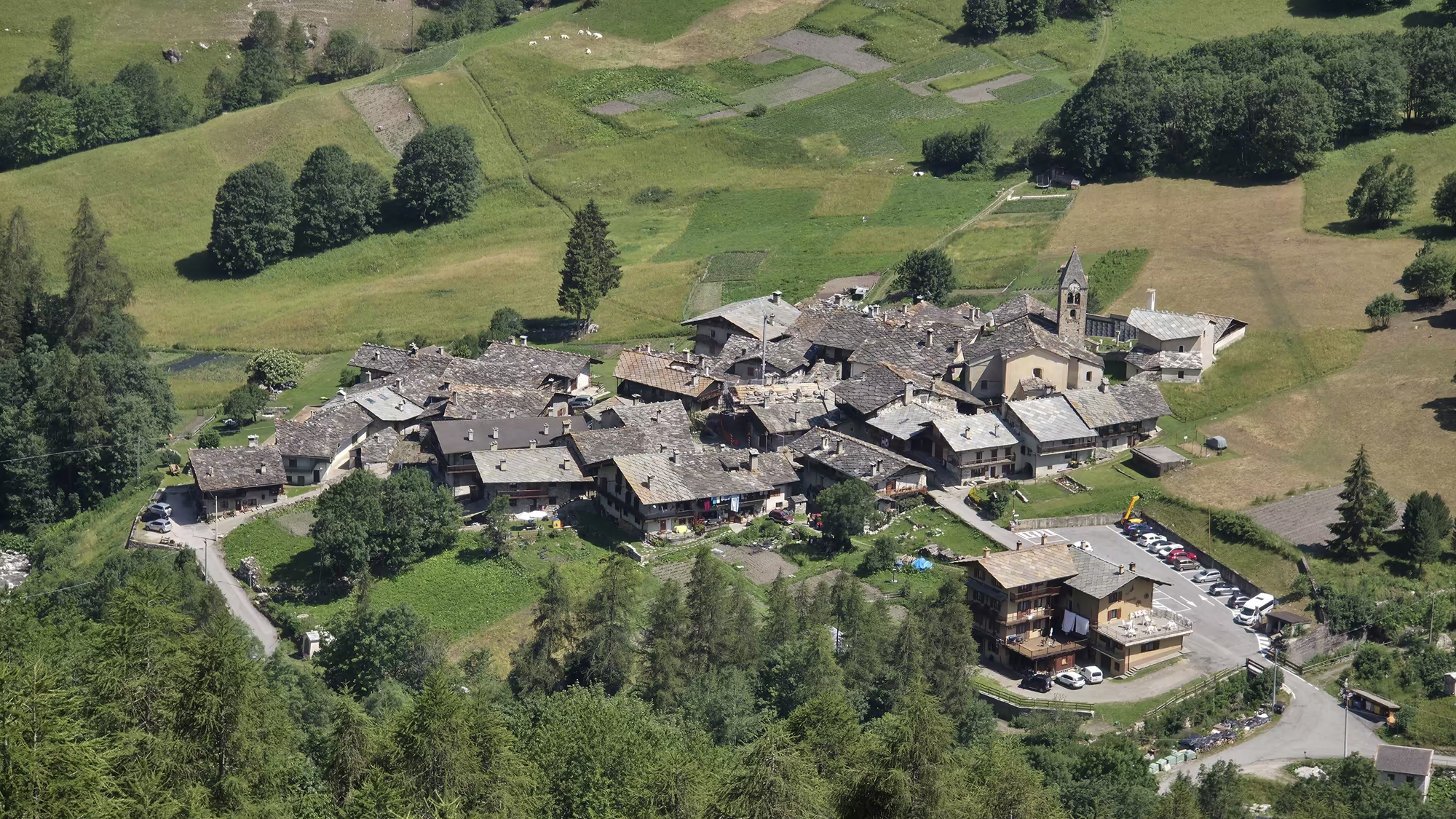
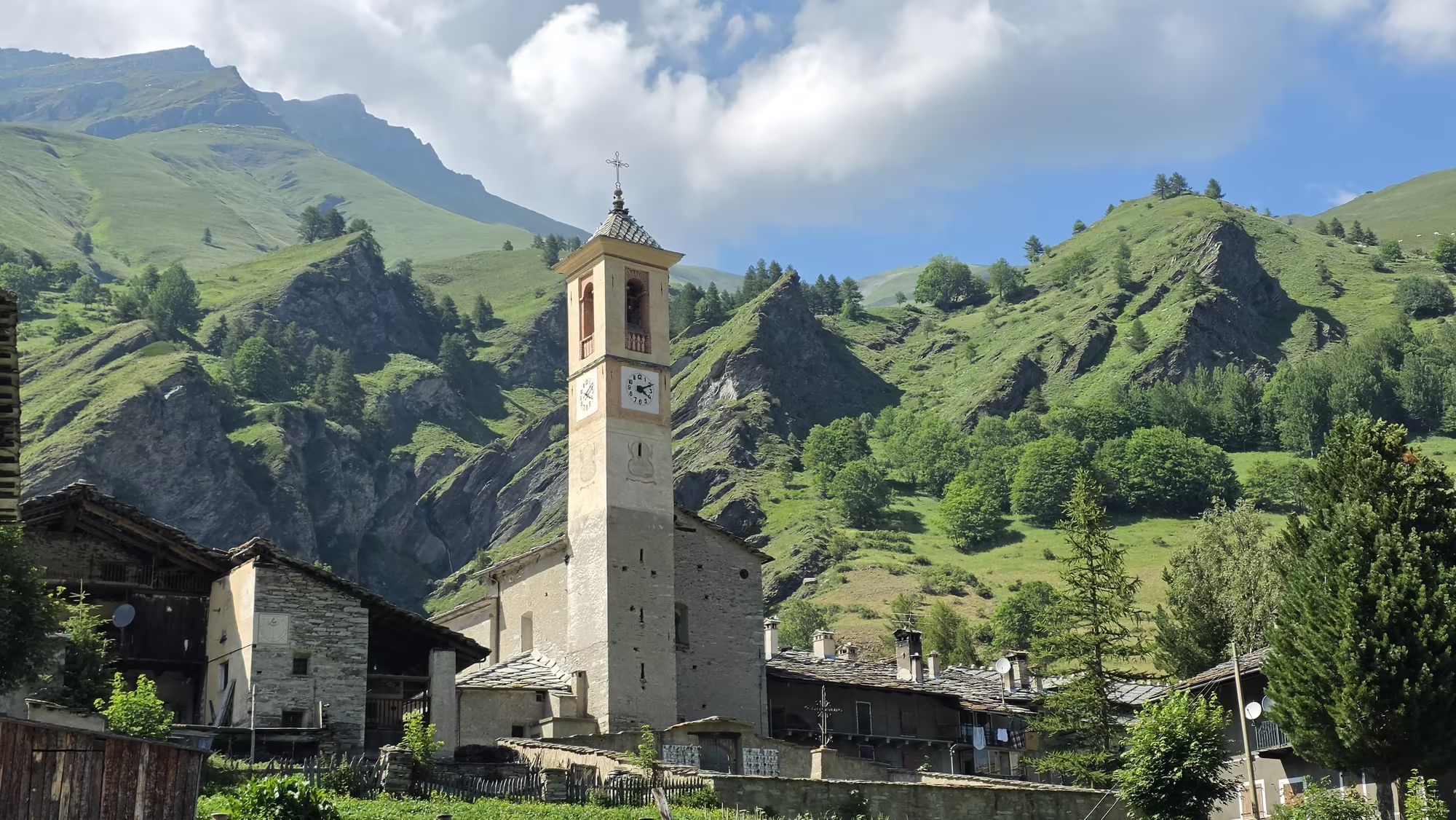
The last stop is Celle di Bellino, and it is the most substantial of the hamlets, a place of old houses that were built to be seen. The lanes run between them in a small maze, and above the roofs stands the church tower, square and plain, the one thing in the valley that is visible from a long way off. The upper quarter of the comune takes in Celle and its neighbours, and it has kept more of its old stone than the lower one.
The walls carry what this valley is proudest of: painted sundials. They are set high on the south faces, some with mottoes in Occitan, some with a figure or an emblem at the foot of the dial, and they have been renewed often enough to have become a kind of local enterprise of their own. The houses themselves are sober, big and well made, with carved doorways and window frames of dressed stone, and several with the round stone pillar that carries the roof forward over a balcony.
The emptiness is the thing that strikes hardest. The comune counts fewer than a hundred residents, where the same valley once held many hundreds, and the houses are built on a scale that only a much larger population could have filled. Occitan has outlived much of that loss, and the festivals and the music continue, but whole rows of windows face the valley with nothing behind them, and the hay stored in the lofts is often the only thing a house now holds. What remains is a landscape built by a great many hands and kept, house by house, by very few.