Stage 1 of 10
Day 1 - Shanghai






Journal Notes
General
Shanghai is a provincial level municipality and the most populous city in China, and it is where this journey began. The city stands on the southern estuary of the Yangtze, with the Huangpu River cutting through it and dividing the built up area into two halves: Puxi, the historic centre on the west bank, and Pudong on the east, which was farmland within living memory and now carries the financial district. The riverfront of Puxi is the Bund, and from the Bund one looks across the water at the towers of Lujiazui, which is the picture that almost everyone has of Shanghai before arriving.
The scale is hard to take in at first. The city has around thirty million people in its urban area, the Yangtze Delta region of which it is the centre holds more than 120 million, and the port of Shanghai is among the busiest in the world. The climate is humid subtropical and the weather on arrival was wet: low cloud, drizzle, and a haze that swallowed the upper floors of the towers across the river. That haze is part of the impression of the place, and it makes the skyline look like a drawing rather than a city.
For a visitor the geography of the city is simple enough to learn in a day. Everything of interest lies within a few kilometres of the river, the metro is cheap and fast, and the historic quarters of the old city sit beside the modern shopping streets. Shanghai is not the administrative capital of China, which is Beijing, but it is the country’s commercial capital, and it behaves like one: the traffic never stops, the shops stay open late, and the streets are busy in the rain as if the weather were merely an inconvenience of no importance.
This account begins with an arrival, a first evening in the city and a first look at the river. The days that follow lead south to Suzhou and then north, first to Dalian on the Liaodong peninsula and finally to Beijing. What connects them is the way the country works: an enormous population, a dense network of fast trains and flights, and cities large enough that a week of travelling between them covers only a small part of the map.
Two practical notes are worth having on the first day. The metro is the fastest way to cross the city, it is signed in Chinese and English, and a journey costs a few renminbi. The currency is the renminbi, the language is Mandarin with a local dialect a visitor will hear in the street rather than in the announcements, and almost everything can be paid for with a phone and a code rather than with cash. It is a city that is easy to use and hard to read, which is the usual arrangement in China.
History
Shanghai is a young city by Chinese standards and an old settlement by European ones. The western part of what is now the municipality was inhabited six thousand years ago, and during the Spring and Autumn period the area belonged to the Kingdom of Wu. The name Hu, used for the city in old records, suggests the fishing village it once was, and it was in 1280 that the place was renamed Shanghai. A first city wall followed in 1554, ten metres high and five kilometres in circumference, built to keep off Japanese pirates, and a City God Temple was added in 1602.
The modern city begins with the First Opium War. After the British victory the Treaty of Nanking opened five treaty ports, among them Shanghai, and foreign settlement followed quickly. The British and American concessions merged in 1863 into the Shanghai International Settlement, where foreigners enjoyed extraterritoriality and consular jurisdiction under the unequal treaties, and the French Concession, which existed from 1849 to 1943, became the city’s best residential and retail district and one of the centres of Catholicism in China. The settlements were not returned to Chinese jurisdiction until 1943.
It was the foreign presence that made the Bund. The western bank of the Huangpu filled up with banks, trading houses and consulates, and the city that grew behind them was nicknamed the Paris of the East. The wealth was real and so were the disasters: in 1937, during the fighting around the city, aircraft dropped four bombs onto crowded streets, two of them on Nanjing Road, and around two thousand people were killed. Nanjing Road was already the shopping street of the city then, and it still is.
The second transformation came after 1978, when the reform and opening policy began to change the whole country. Pudong was designated for development in 1990, and within a generation the east bank carried the Lujiazui financial district and the three supertall towers that stand there now: the Jin Mao Building at 420 metres, the Shanghai World Financial Center at 494 metres and the Shanghai Tower at 632 metres, the world’s first trio of adjacent supertall skyscrapers. The maglev line to Pudong Airport opened in the same period and remains the world’s first commercial high speed maglev, running the thirty kilometres from the city to the airport in eight minutes and ten seconds.
The result is a city that contains its own history in layers. The nineteenth century banks on the Bund still stand, the foreign concessions survive as streets and buildings, the old city keeps its temple and its garden, and around them the modern city has grown to a size that the treaty port merchants could not have imagined. Shanghai is the clearest single example in the country of the speed at which China has changed, and the rain on the first evening simply made the contrast sharper.
Geology
Shanghai stands on the Yangtze Delta, one of the largest deltaic plains in the world, and almost nothing solid lies beneath it. The delta has been built up over thousands of years from sediment carried down by the Yangtze, the third longest river in the world at 6,236 kilometres, which drains about a fifth of the land area of China. The material it brings is fine grained silt and clay, and the plain that results is flat, low, and waterlogged, with the water table only a metre or two below the surface in many places.
The consequences of building a very large city on such ground are visible in several ways. Foundations have to be piled or floated, the ground subsides where groundwater is pumped, and land subsidence across the Yangtze Delta is a documented problem rather than a hypothesis. The whole city lies close to sea level, and the riverfront has been protected accordingly: a levee was built along the Bund, with the result that the embankment now stands about ten metres above street level, a wall that protects the historic centre from the river that made it.
The Huangpu River is the other half of the picture. It is 113 kilometres long, on average 400 metres wide and nine metres deep, and it flows north through the city into the Yangtze estuary. It is a tidal river, so its level rises and falls twice a day, and it takes its main tributary, Suzhou Creek, from the west. Because the estuary is wide and the tides are strong, the water is opaque, brown with suspended sediment, and the ferries that cross it are part of the city’s daily traffic rather than an attraction.
Underneath the delta, far below the silt, the sequence is that of a subsiding basin: sands, clays and older marine deposits in layers, with groundwater in the sands. Because the city grew so fast, the balance between what is pumped out and what seeps back in was disturbed for decades, and subsidence became one of the standard arguments for restricting groundwater use and for bringing surface water in from elsewhere. In a city built on mud, water is not an amenity but a structural question.
The climate completes the geological picture. The region has a monsoon climate with wet summers, and the rain that fell on the first evening was ordinary weather for the season rather than an exception. In summer and early autumn the same coast is exposed to typhoons, and the combination of a low plain, a rising river and a storm surge is the reason why the flood defences of the delta are engineered as seriously as they are.
The estuary in front of the city is one of the great sediment factories of the world. The Yangtze carries silt down from the Tibetan plateau and the interior, and where it meets the tide of the East China Sea the flow slows and the load settles, which is how the delta was built and how it continues to grow. The same sediment is what silts up the shipping channels, and the port of Shanghai therefore requires continuous dredging to stay open. The grey colour of the water is not pollution but geology in transit.
Things to See
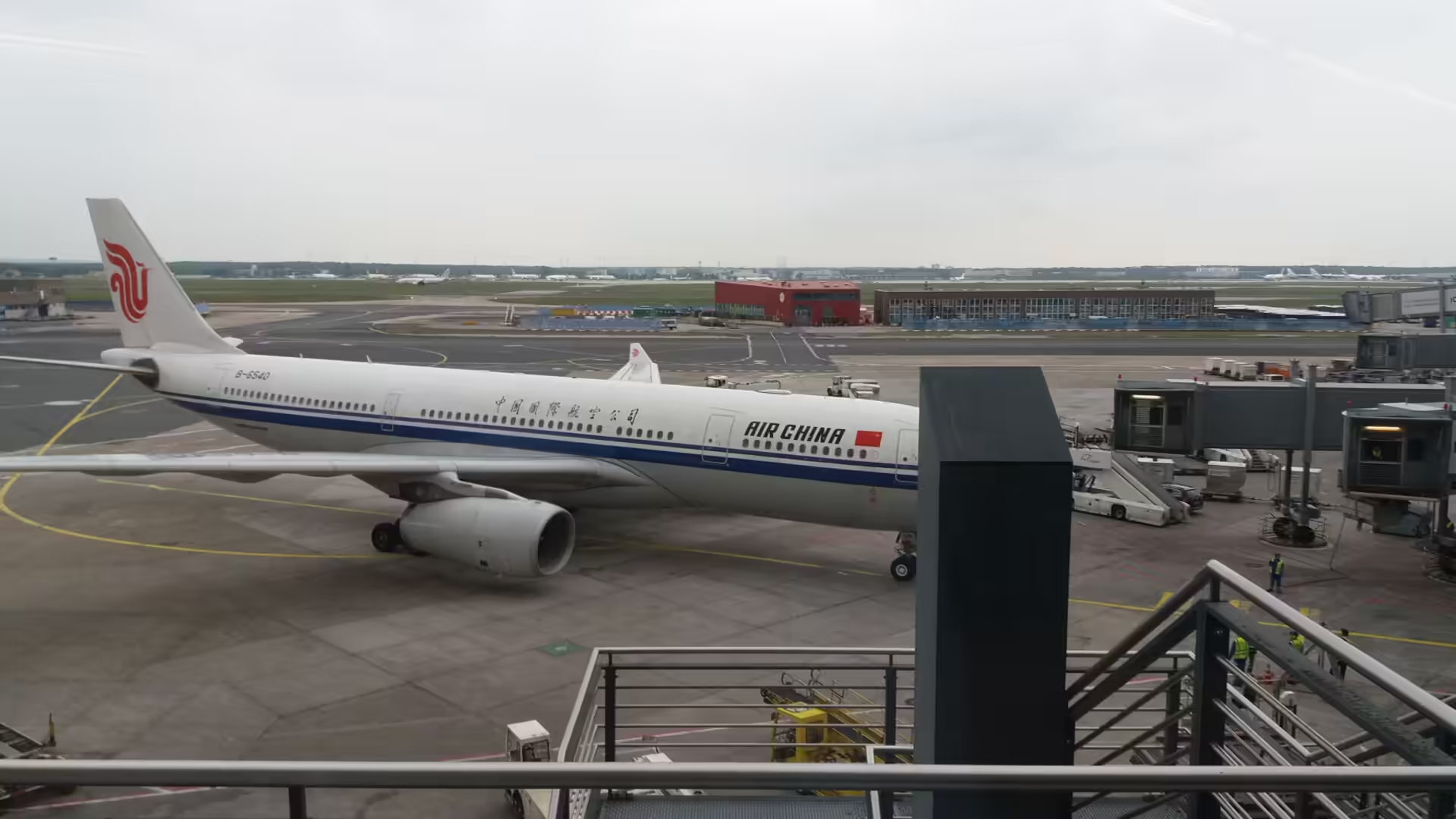
The journey began in the air, on an Air China flight that ended at an airport gate seen through the terminal windows under an overcast sky. Air China is the flag carrier, a state controlled airline that was created in 1988 when the old Civil Aviation Administration was split into separate carriers, and it is the natural way to reach the country from Europe.
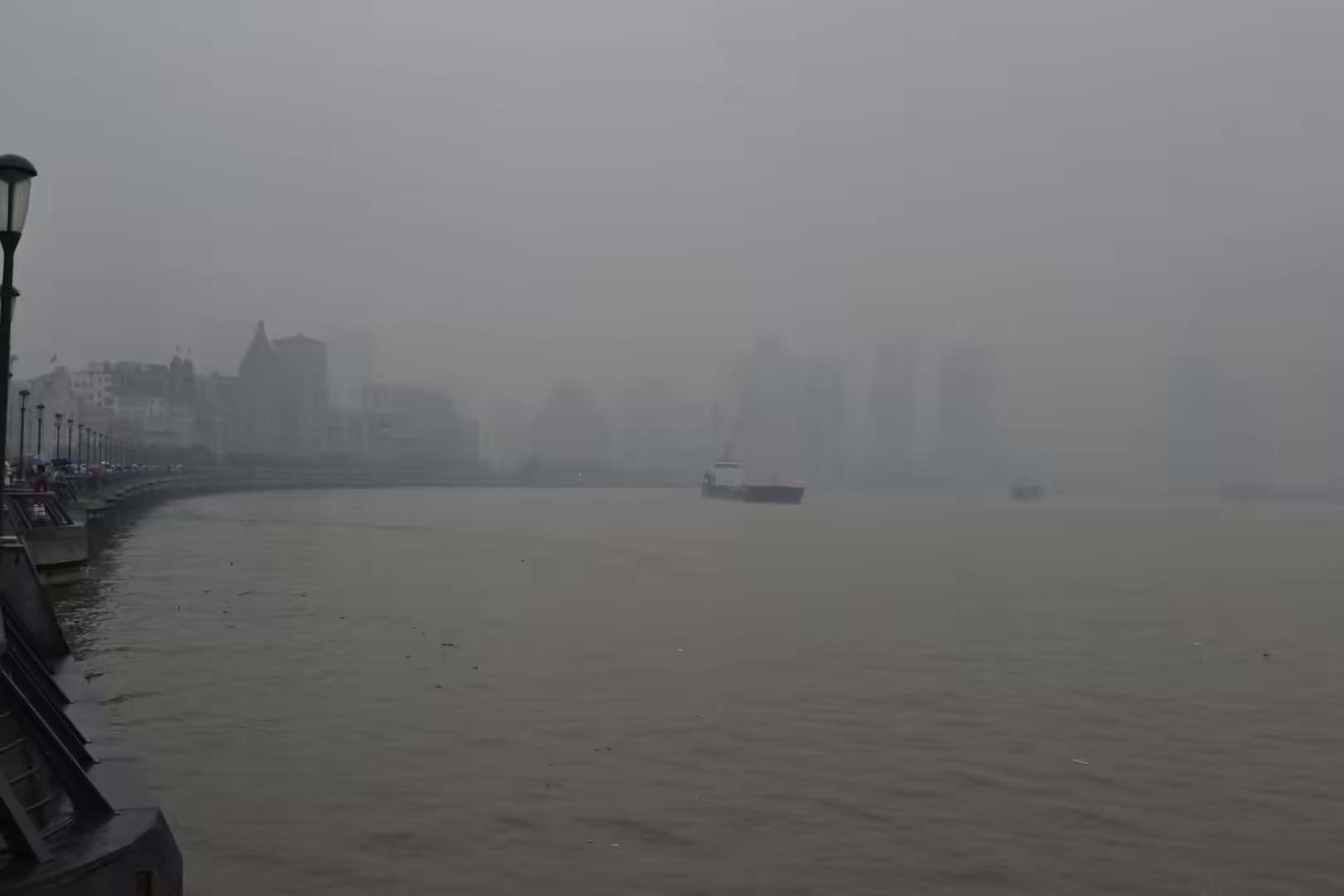
The first sight of Shanghai came from the riverbank, and it was the skyline of Pudong seen through haze. The Oriental Pearl Tower stands out of it, a concrete column with spheres threaded onto it, 468 metres tall, with its top floor at 351 metres and a 137 metre antenna above that. It was built between 1991 and 1994 and was the tallest structure in China and Asia until 2007, and although taller towers have been built beside it, it remains the landmark by which the city is recognised. In weather like this the towers above it dissolved into grey, and the base of the skyline stood above the water like a cut out.
The river below was busy with traffic. Passenger ferries cross the Huangpu constantly, and from the bank one sees them passing in front of the Pudong towers, low and small against the buildings, with the water the colour of weak tea. The old waterfront on the Puxi side and the new towers on the Pudong side face each other across four hundred metres of river, and the contrast between the two banks is the whole history of the city in one view.
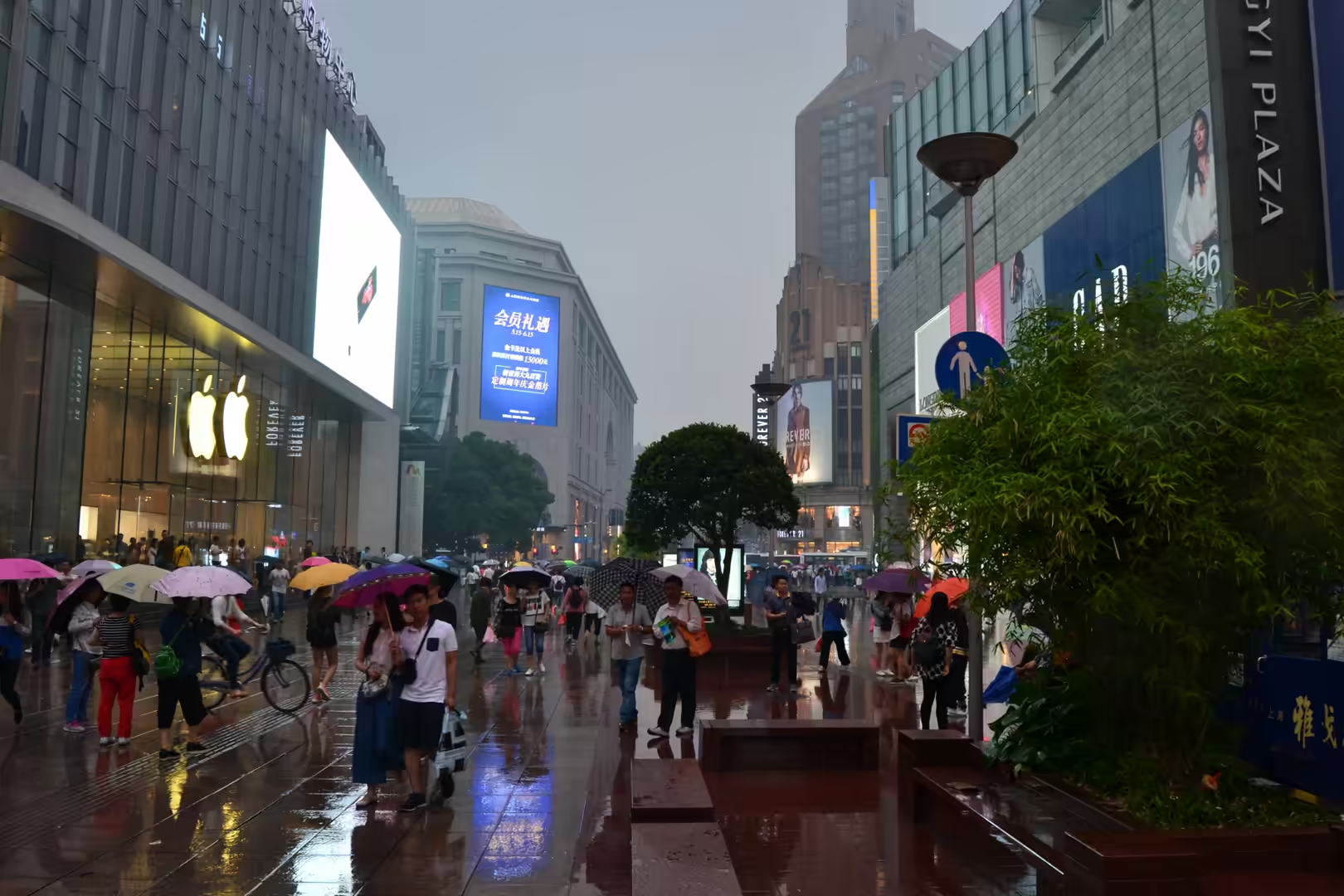
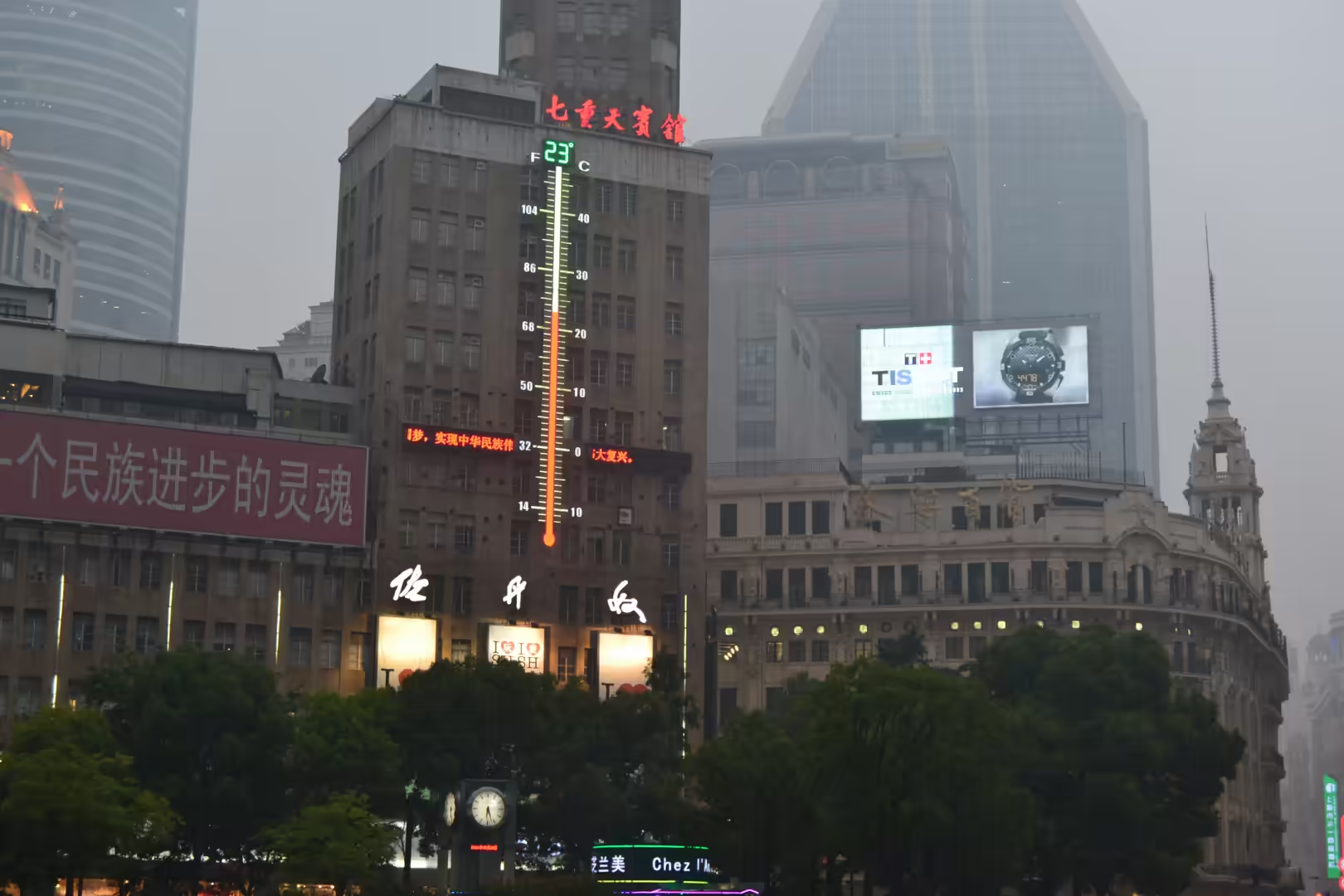
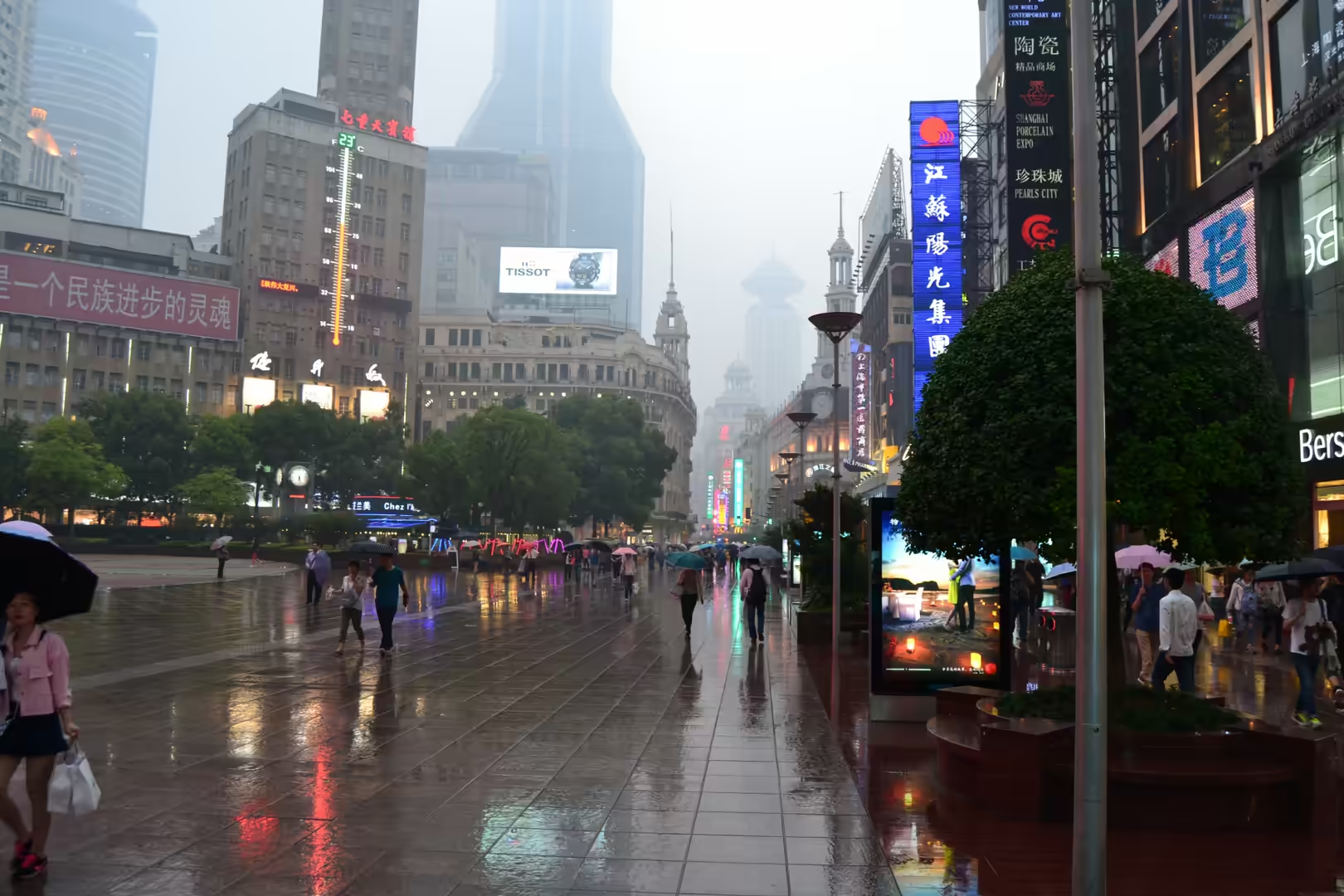
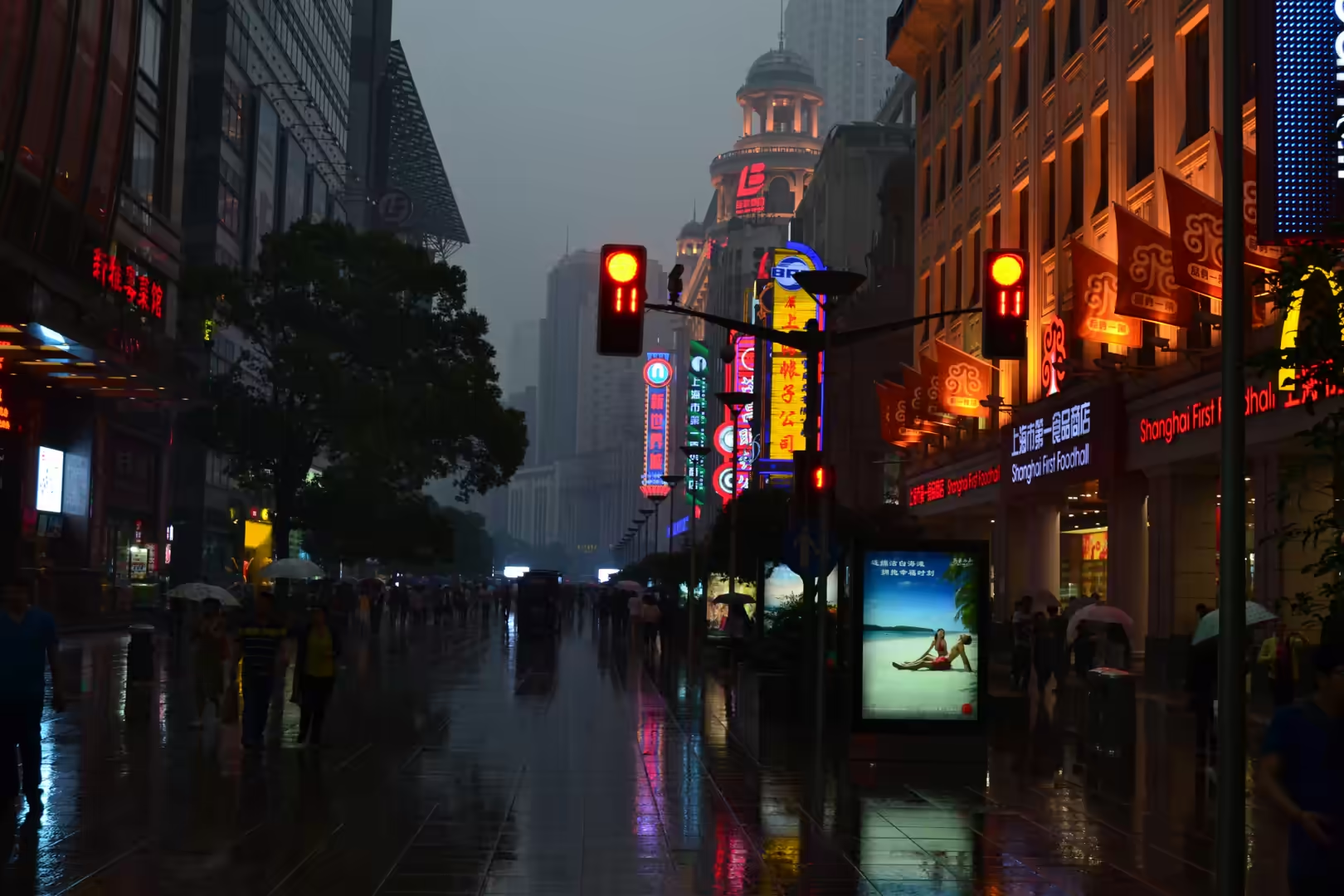
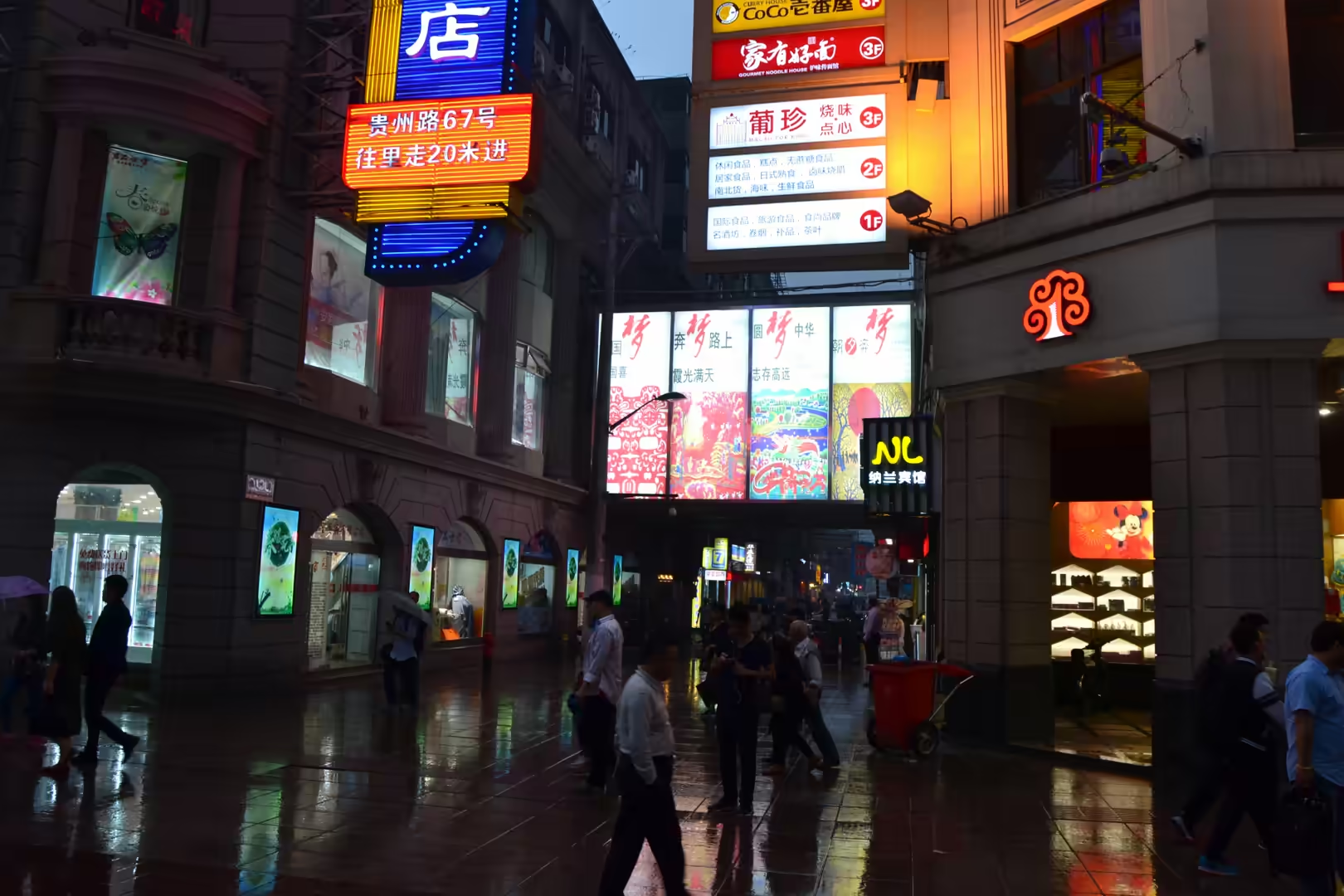
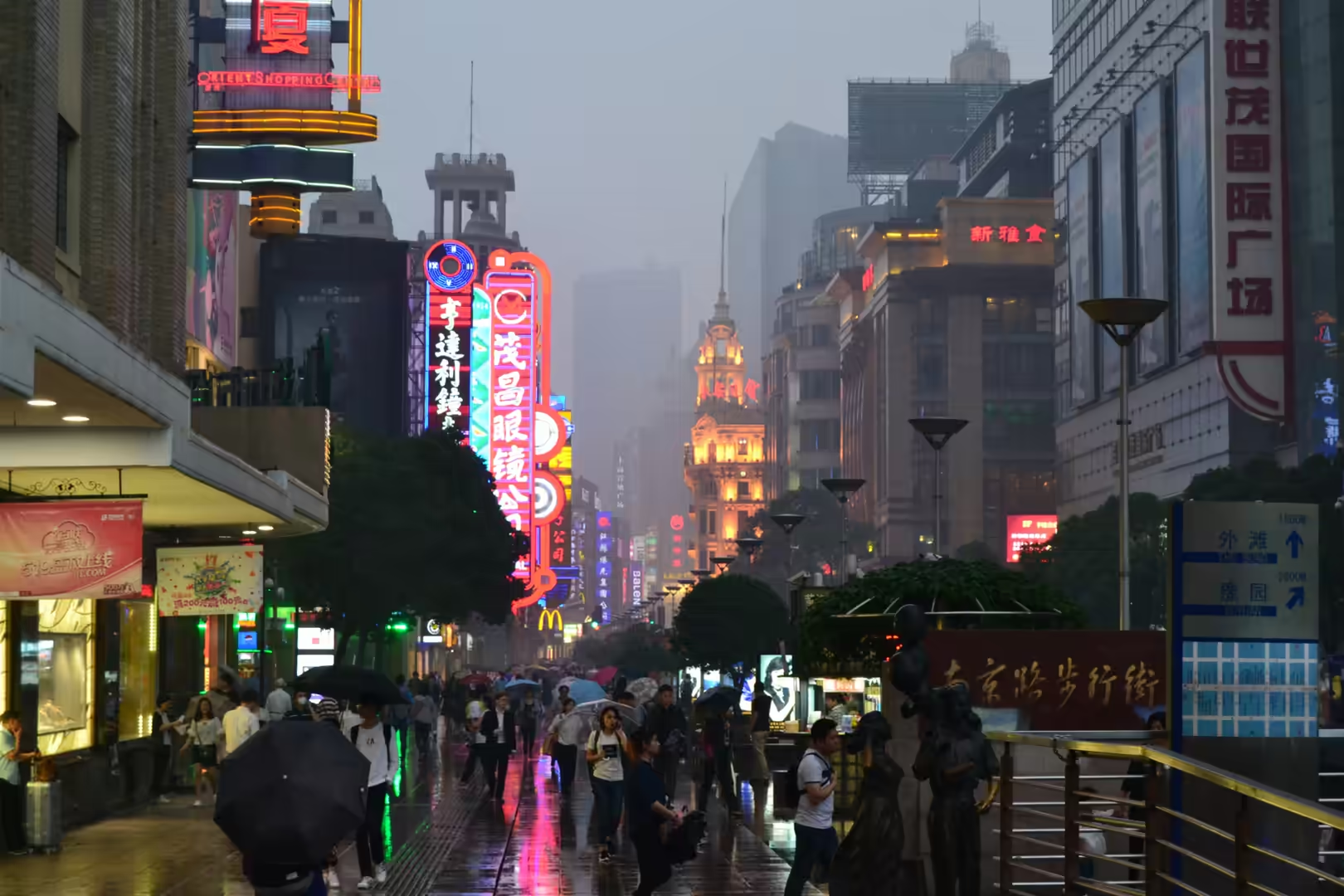
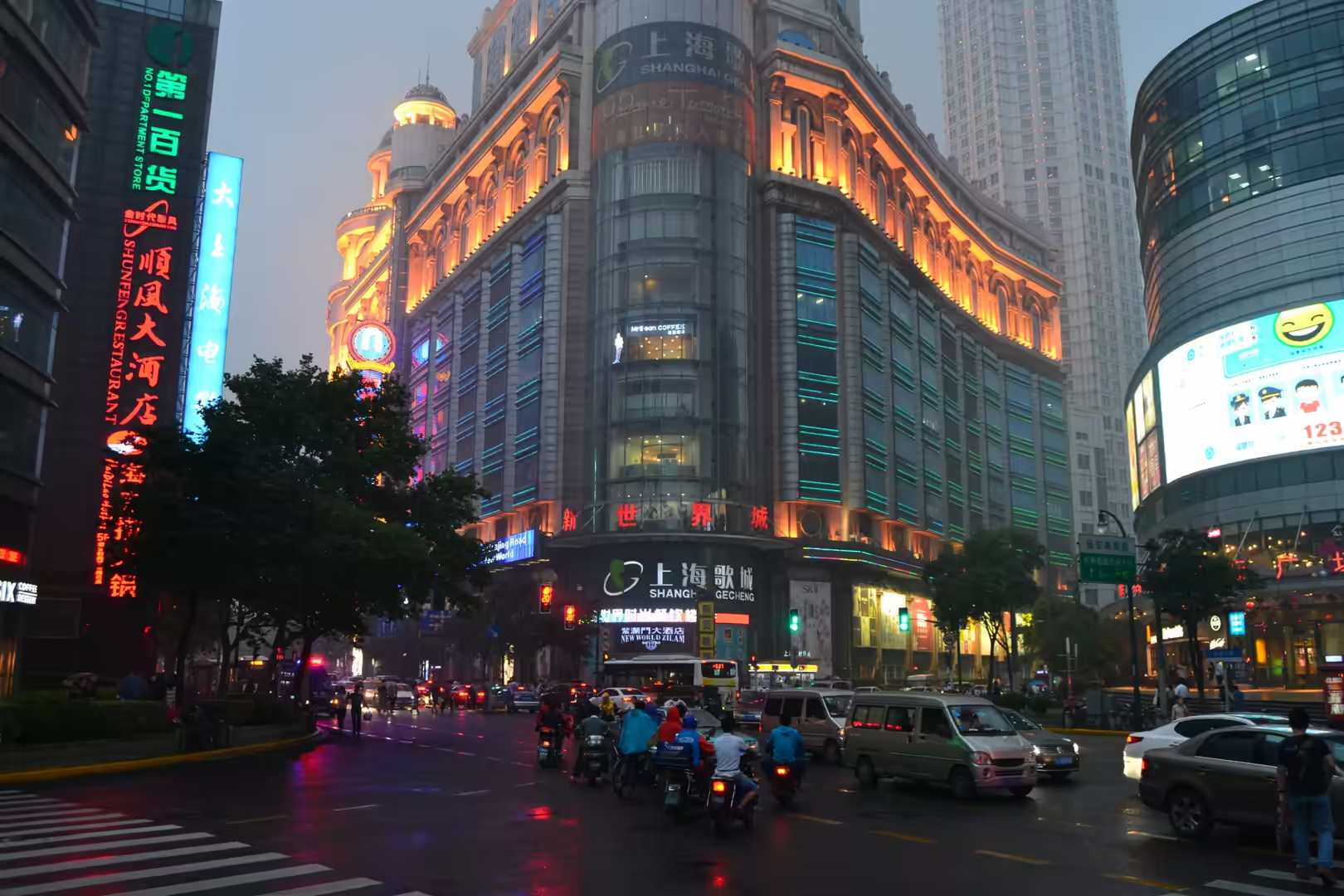
In the evening the rain turned the city into a set of reflections. Nanjing Road, the pedestrian street that runs for about 1,200 metres with a width of some 28 metres, was full of people under umbrellas, and every shop front, billboard and neon sign was doubled in the wet pavement. A vertical display of temperature and time stood above the crowd, red traffic lights glowed through the rain, and the entrance arches of the side streets were lit from below. The New World department store at one intersection was bright enough to light the whole junction, and the crowds kept moving through it all as they do every evening, rain or not.
The day ended in a hotel room, warm and quiet, with a double bed, an armchair, a desk and a window with the curtains drawn against the neon outside. It is a modest way to end a first day in a city of thirty million people, but the contrast between the wet street and the closed room is exactly what an arrival day is made of, and the impressions of the evening were more than enough to carry into the next day. The rest of the journey would be spent looking for the parts of this country that are not made of towers.
References
- Wikipedia contributors (2026). Shanghai. en.wikipedia.org/wiki/Shanghai
- Wikipedia contributors (2026). The Bund. en.wikipedia.org/wiki/The_Bund
- Wikipedia contributors (2026). Pudong. en.wikipedia.org/wiki/Pudong
- Wikipedia contributors (2026). Huangpu River. en.wikipedia.org/wiki/Huangpu_River
- Wikipedia contributors (2026). Oriental Pearl Tower. en.wikipedia.org/wiki/Oriental_Pearl_Tower
- Wikipedia contributors (2026). Nanjing Road. en.wikipedia.org/wiki/Nanjing_Road
- Wikipedia contributors (2026). Shanghai International Settlement. en.wikipedia.org/wiki/Shanghai_International_Settlement
- Wikipedia contributors (2026). Shanghai French Concession. en.wikipedia.org/wiki/Shanghai_French_Concession
- Wikipedia contributors (2026). Yangtze Delta. en.wikipedia.org/wiki/Yangtze_Delta
- Wikipedia contributors (2026). Air China. en.wikipedia.org/wiki/Air_China
- Wikipedia contributors (2026). Shanghai maglev train. en.wikipedia.org/wiki/Shanghai_maglev_train
- Wikipedia contributors (2026). Yangtze. en.wikipedia.org/wiki/Yangtze
- Wikipedia contributors (2026). Chinese economic reform. en.wikipedia.org/wiki/Chinese_economic_reform
- Wikipedia contributors (2026). Yu Garden. en.wikipedia.org/wiki/Yu_Garden
- Wikipedia contributors (2026). Shanghai Museum. en.wikipedia.org/wiki/Shanghai_Museum
- Wikipedia contributors (2026). Shanghai railway station. en.wikipedia.org/wiki/Shanghai_railway_station
- (ohne Angabe) (2009) 7. Shanghai and Yangtze River Delta: A Revolving Relationship. Regional Economic Development in China. 123-154. doi.org/10.1355/9789812309426-012
- Lau S.h.C. The role of the port of Shanghai in the economic development of the Yangtze River Delta Region. doi.org/10.5353/th_b3195208
- Jiang H., Feng G., Wang Y., Xiong Z., et al. (2025) Land Subsidence in the Yangtze River Delta, China Explored Using InSAR Technique From 2019 to 2021. IEEE Journal of Selected Topics in Applied Earth Observations and Remote Sensing. 18. 4174-4187. doi.org/10.1109/jstars.2025.3527748