Day 10 - Beijing




Journal Notes
General
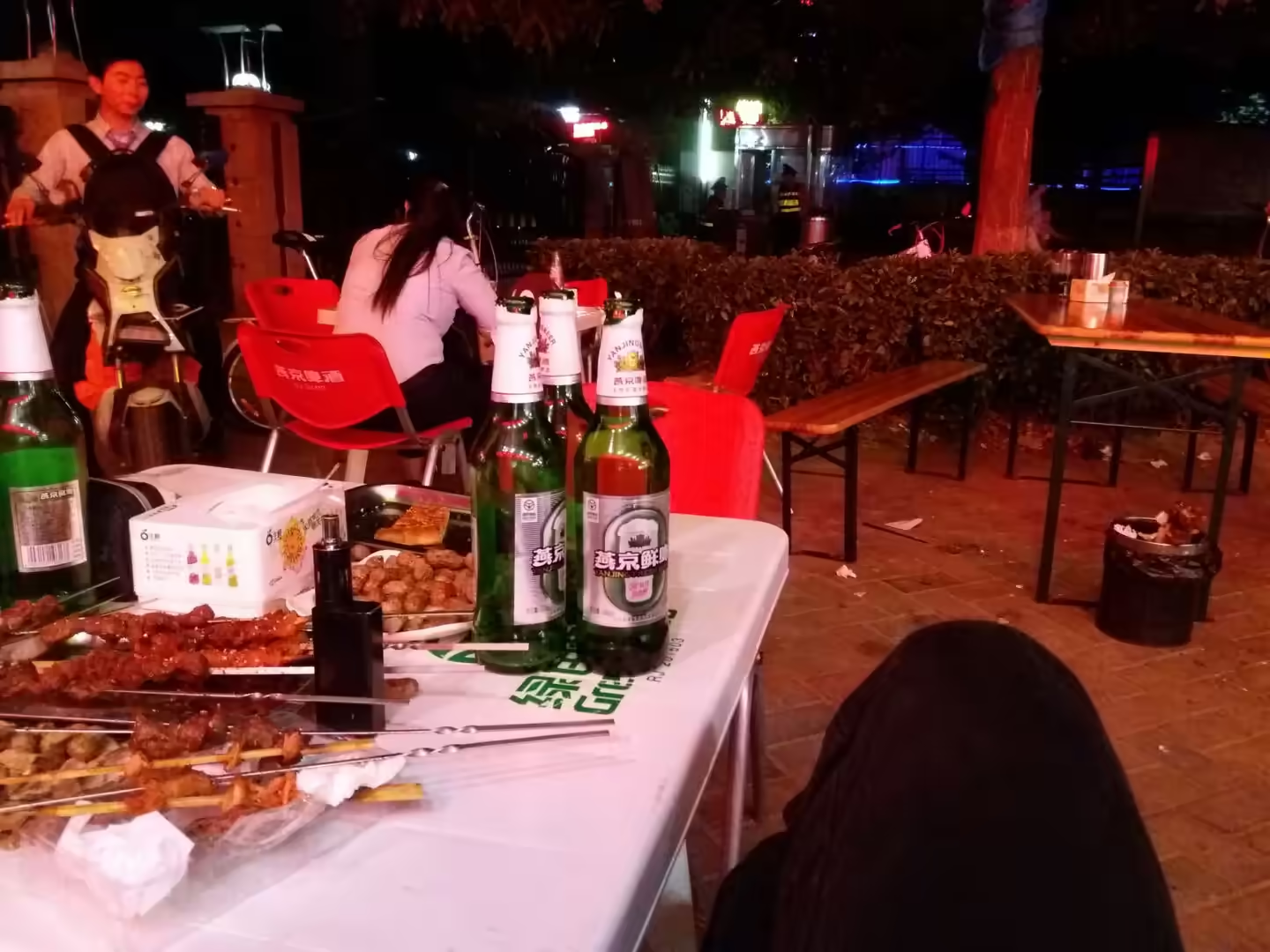
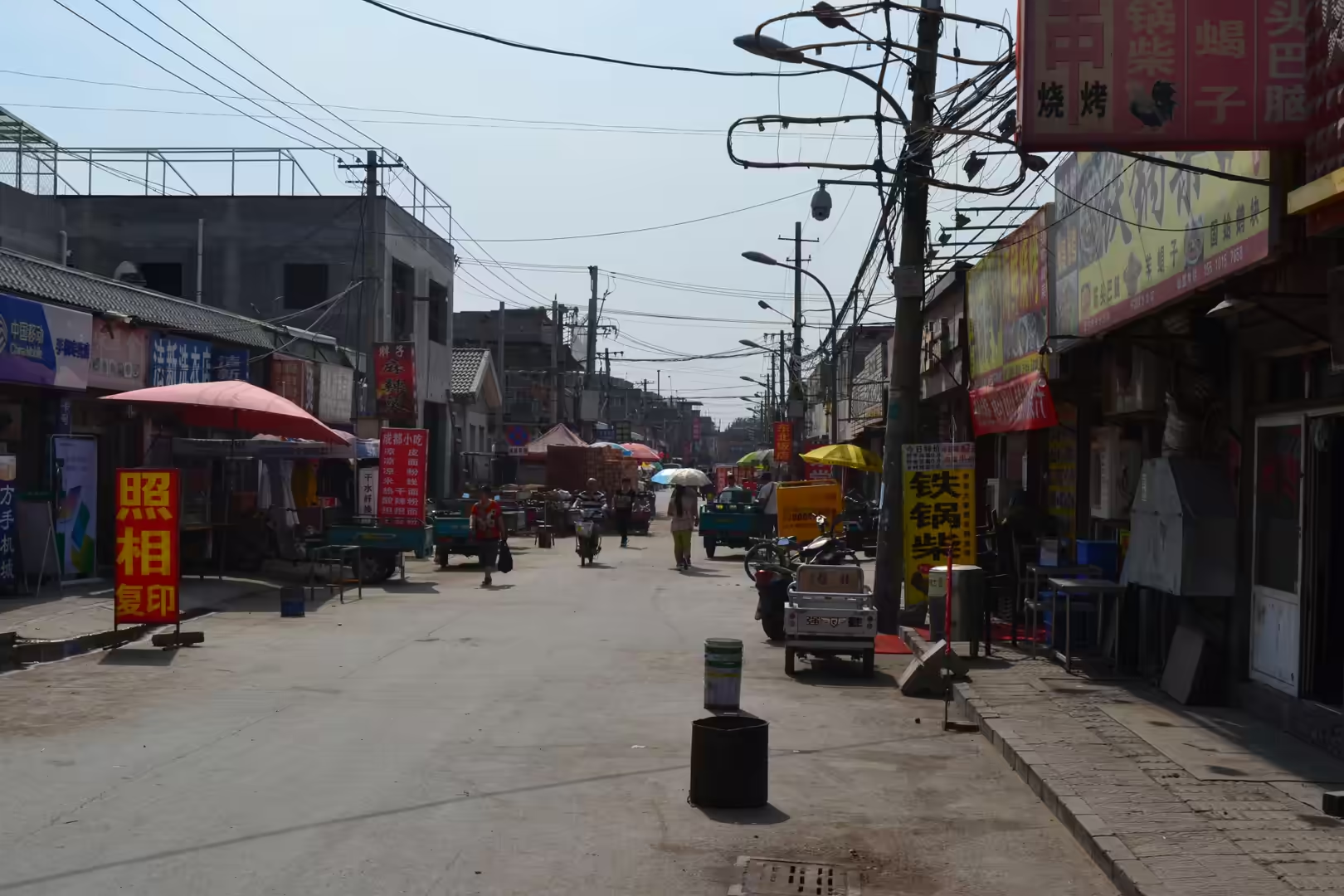
The last day of the journey was spent in the older, low rise Beijing of the hutongs and the street kitchens. It began in the evening with grilled skewers and green bottles of beer at tables set out on a pavement under warm red light, went on to a restaurant with a counter of cold dishes, and continued in daylight through narrow streets lined with small shops, food stalls, scooters, three wheeled vehicles, colorful signs and an extraordinary amount of overhead wiring.
This is the Beijing that most visitors see least of, and it is disappearing at a measurable rate. The hutongs are the alleys formed by lines of courtyard houses, and since the middle of the twentieth century large numbers of them have been demolished to make way for wider roads, apartment blocks and offices. What remains is protected in places, redeveloped in others, and in general under pressure from the value of the land it stands on.
The day was also a summary of the whole journey in miniature. There was the street food of the coast and the city, the commerce of a developing economy in the building materials market, the ordinary infrastructure of a Chinese neighbourhood in the overhead cables and the parked cargo tricycles, and a meal cooked at home and eaten at a table with rice and chopsticks. Ten days of towers, ports and monuments ended in an alley where the drains run beside the shop fronts.
The heat of early June made the evening the best part of the day, and the custom of eating outdoors on the pavement is one of the pleasures of a northern Chinese summer. It is a sociable arrangement: the tables belong to the restaurant, the diners sit in the street, and the street is filled with people doing the same thing until late at night.
The evening also says something about the climate of the plain. Early June in Beijing is warm enough that eating outdoors is a pleasure rather than a test, and the custom of setting tables out on the pavement continues until late. The streets of a northern Chinese city in summer are used as rooms: people sit, eat, play cards and talk outside, and the boundary between indoors and outdoors is much less rigid than in a European city.
History
The hutong is older than the modern city around it, and its origins are not Chinese in the usual sense. The word is generally traced to the Mongol period, when Beijing was the capital of the Yuan dynasty, and the courtyard house and the alley of courtyard houses became the standard form of the city from that time onwards. A siheyuan is a walled compound with buildings on four sides around a courtyard; a line of them, sharing walls, produces an alley; and lines of alleys produce a neighbourhood. The whole of the old city was built on that principle, which is why the older parts of Beijing are a texture of narrow lanes rather than a grid of streets.
The decline began in the twentieth century. The city wall was demolished in the 1960s to make room for the subway and the second ring road, and the redevelopment that followed took more of the old fabric with it. In the twentieth century a courtyard house that had held one extended family was often divided among several households, and the compounds were crowded in ways that their builders had not intended. Some hutongs acquired the reputation of slums, and the case for clearing them seemed obvious to planners for decades.
That judgement has been reconsidered. The hutongs that survive are now protected in some districts and popular with residents and visitors alike, and the descendants of the households that lived in them are entitled to be rehoused in apartments of at least the same size when their courtyards are redeveloped. The complaints are consistent: the new apartments are better equipped, but the street life, the neighbours and the sense of community that the alleys produced cannot be reproduced in a tower block. Many of the courtyard properties are government owned, which gives the state both the power and the administrative problem of deciding what to keep.
The food of these streets is the other part of the district’s history. Beijing cuisine is the cooking of a capital and has absorbed influences from the whole country, above all from Shandong on the eastern coast, and it has in turn influenced the food of the rest of China. The street version of it is the skewer, the dumpling, the noodle and the cold dish, sold from counters and from stalls, eaten standing or at a pavement table. The green bottles on the tables are the universal accompaniment.
What the day shows, in the end, is a city in the middle of a change that has been going on for seventy years and has accelerated since 1978. The reform era made China the world’s largest manufacturer and lifted hundreds of millions out of poverty, and it also rebuilt its cities: between 1978 and 2018 the economy grew from about 150 billion dollars to more than 18 trillion, and Beijing acquired ring roads, subways and business districts that did not exist when the hutongs were the normal form of housing. The alleys that remain are the last large pieces of the older city, and they are worth walking through while they are still there.
Geology
The materials of these streets come out of the ground of the North China Plain. The grey bricks of the courtyard walls are fired clay from the plain’s own sediments, the paving stones are limestone and granite from the hills a short distance to the north and west, and the building materials market seen on this day, with its stacks of tiles, timber, cement and piping, is the modern continuation of a trade in local materials that has been going on for as long as the city has existed.
The plain itself is the largest alluvial plain in China: a rift basin of late Palaeogene and Neogene age, filled and levelled by the deposits of the Yellow River and its neighbours. Beijing occupies its north eastern corner, at the point where the sediments meet the Yanshan mountains, and the city therefore sits on soft ground with hard rock close by. The old city was built with the rock and the clay of that setting, and the modern city builds with steel and concrete on piles driven into the sediment.
Water is the persistent problem of the region and the reason for much of its engineering. The plain has aquifers in its sands and gravels, and the cities of the plain have drawn on them heavily enough that land subsidence from groundwater extraction is a documented effect in eastern China. In Beijing the shortage has been managed by reservoirs, by restrictions on extraction, and in recent decades by water transferred from the Yangtze basin in the south, which is one of the largest engineering projects of its kind anywhere. The canals and moats of the city, some of them surviving from the imperial period, are part of the same managed system.
Dust is the second environmental inheritance. The plain lies downwind of the deserts and loess plateaus of the north west, and mineral dust arrives on the wind in spring, as it has for millennia; over long periods that same dust helped build the soil on which the city stands. In a city of twenty one million people the natural dust is mixed with the products of industry, heating and traffic, and air quality is consequently monitored and managed as a matter of public policy.
The last geological observation belongs to the street itself. A hutong holds the weather differently from a tower block: the walls shade the alleys, the courtyards regulate temperature, and the trees that stand in the lanes make a microclimate that a wide road with air conditioning units does not have. The traditional form of the city was, among other things, a response to the climate of the plain, and the pavement tables of a June evening are one of its more agreeable consequences.
Things to See
The evening began outdoors. Grilled skewers were served at tables in the street with bottles of beer, red plastic chairs, bicycles leaning against the wall and other diners sitting under warm red light. The skewer, or chuan, is the universal street food of northern China: small pieces of mutton, beef, vegetables or tofu on a stick, grilled over charcoal and eaten with a dusting of cumin and chilli.
At the restaurant, a self-service counter held containers of boiled peanuts, pickled vegetables, edamame and other cold side dishes arranged beside small plates. Cold dishes are a standard part of a Chinese meal and they are ordered first, to be eaten while the rest is cooked. A visitor who learns to use that counter has learned to eat in China, and the beer on the table is usually the same one that everyone else is drinking.
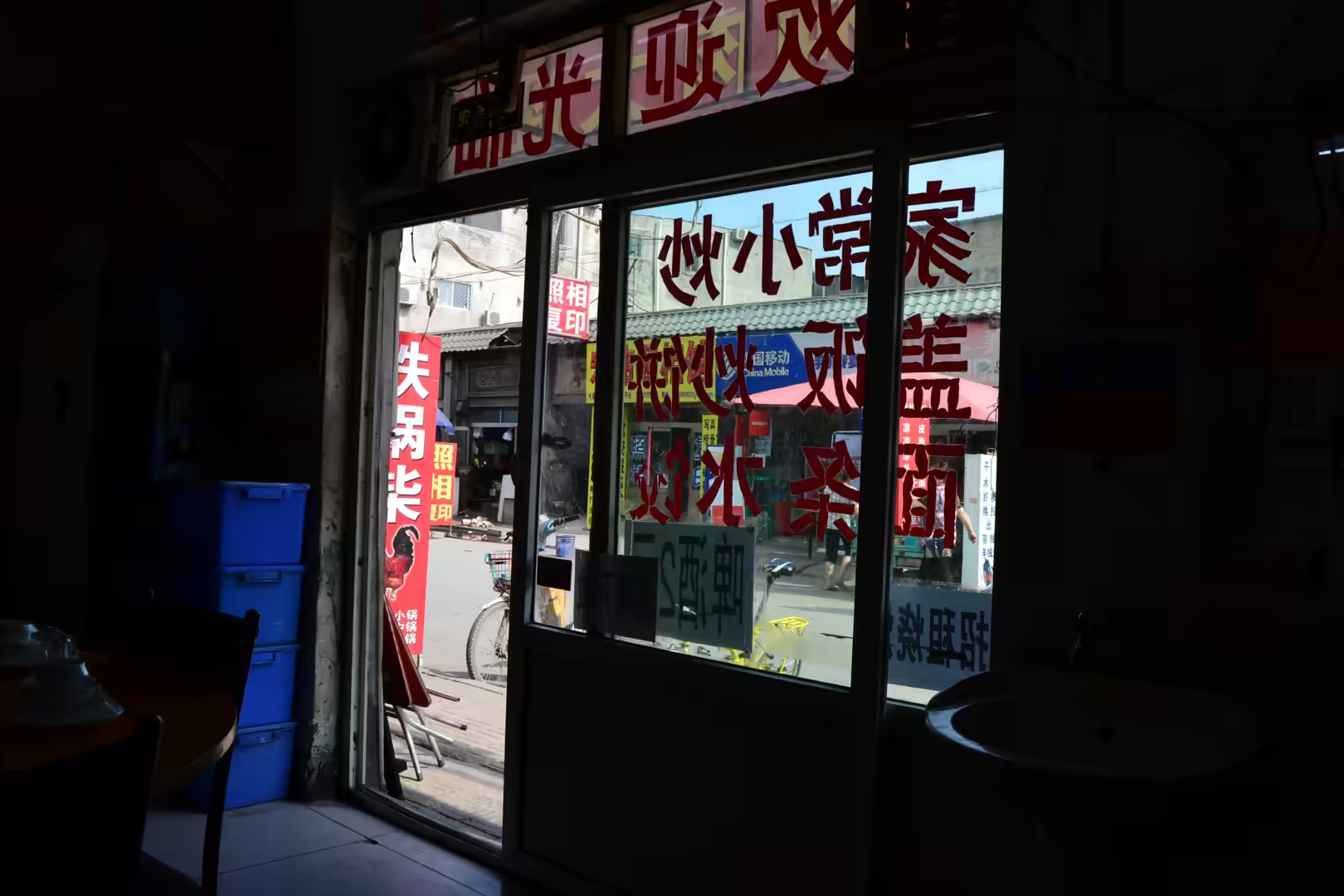
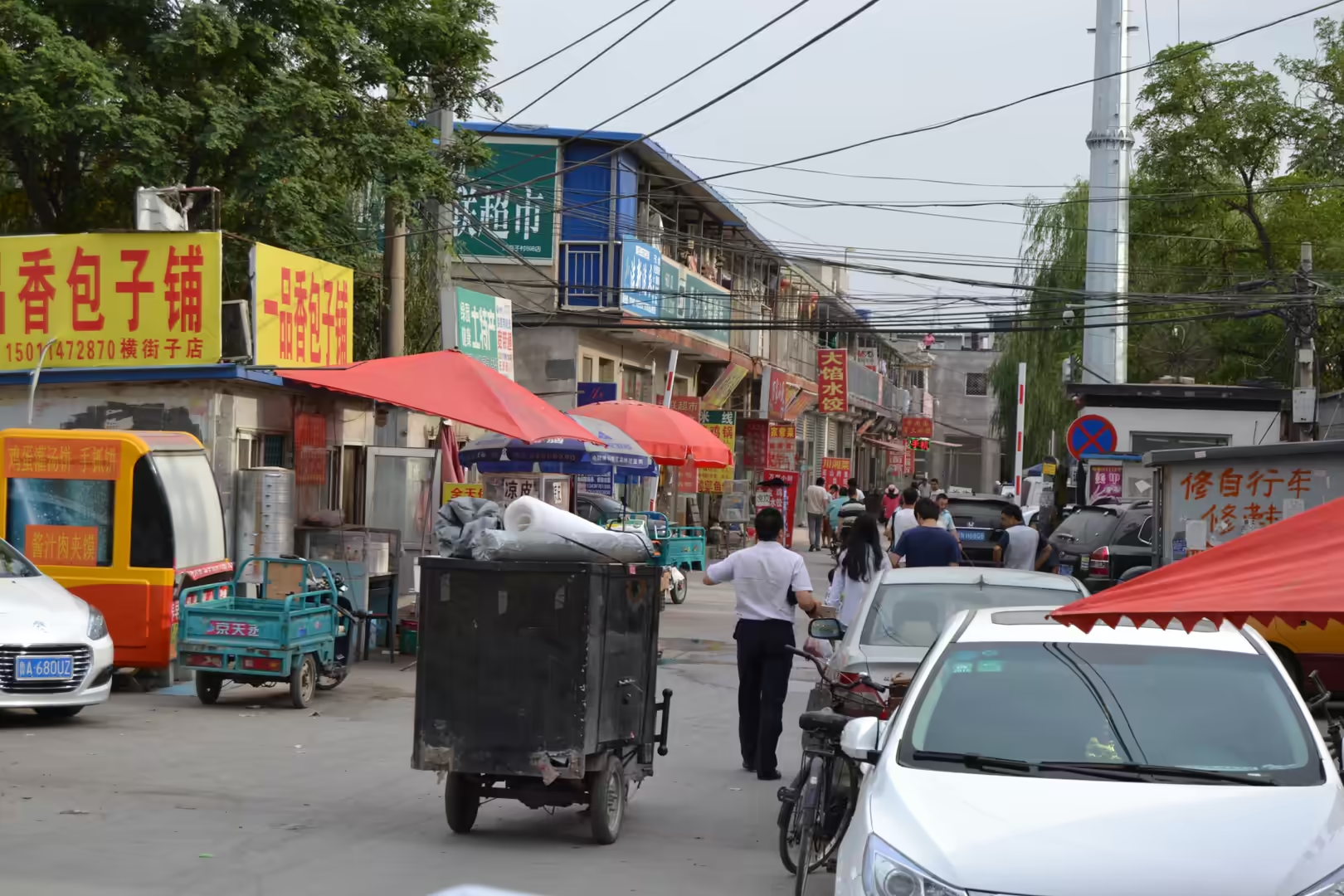
The next day’s walk went through the neighbourhood streets. Narrow lanes lined with small shops, food stalls, scooters, three wheeled vehicles and pedestrians, with signs of every colour and an enormous tangle of overhead wires: the local shopping street of a Chinese city, which serves everything from mobile phones to vegetables. A view from inside one restaurant, looking through glass doors covered with large red Chinese characters towards the busy street outside, is the picture that stays: a small room, a crowd outside, and the whole economy between the two.
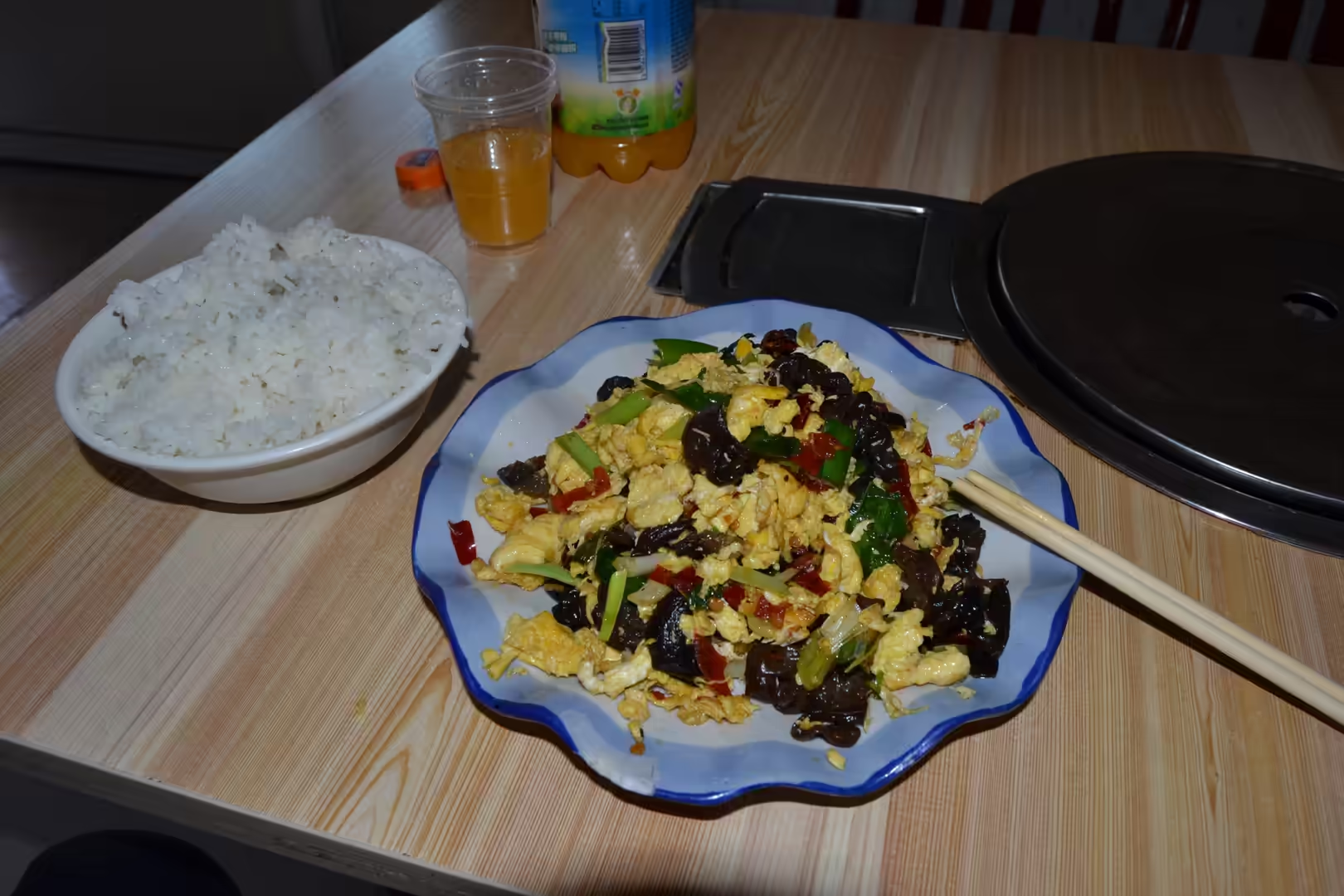
The meal at the end of the day was a home style one: scrambled eggs with black fungus, green vegetables and red peppers, served with a bowl of white rice and chopsticks. Plain northern cooking, of exactly the kind that a family eats at home, and the most convincing argument for the food of the city. In a place where the monumental cuisine is elaborate, the ordinary version is what people actually eat, and it is better.
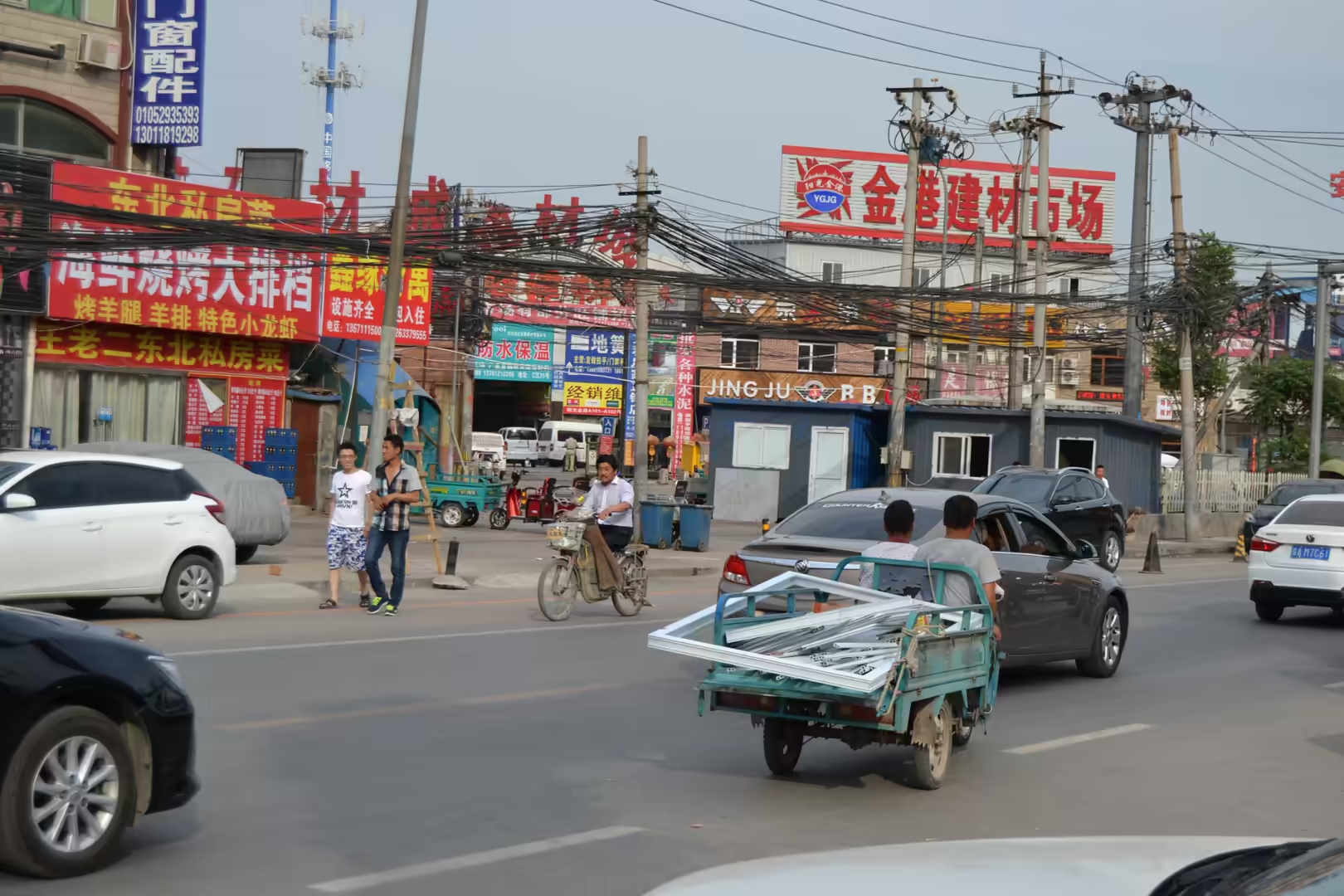
The last sights of the journey were the working streets: a backstreet with parked cars, brick buildings, utility cables, stacked construction materials and scattered debris along the roadside, and then a busy commercial street with a building materials market, dense overhead cables, pedestrians, cars, bicycles and a small three wheeled cargo vehicle. That is the city as it is being built and repaired, and it is a fair place to end an account of the country. The monuments were impressive, but the streets are where China lives, and ten days of travelling is enough to see that they are the more interesting half.
The building materials market is the last of the day’s sights and one of the most instructive. Tiles, timber, cement, piping and fittings are stacked in yards along a busy street with dense overhead cables, pedestrians, cars, bicycles and small three wheeled cargo vehicles weaving between them. It is the supply chain of a city that is constantly being repaired, extended and rebuilt, operating in the open, and it is a better index of the economy than any statistic.
References
- Wikipedia contributors (2026). Beijing. en.wikipedia.org/wiki/Beijing
- Wikipedia contributors (2026). Hutong. en.wikipedia.org/wiki/Hutong
- Wikipedia contributors (2026). Beijing cuisine. en.wikipedia.org/wiki/Beijing_cuisine
- Wikipedia contributors (2026). Chinese cuisine. en.wikipedia.org/wiki/Chinese_cuisine
- Wikipedia contributors (2026). Jiangsu cuisine. en.wikipedia.org/wiki/Jiangsu_cuisine
- Wikipedia contributors (2026). Chinese economic reform. en.wikipedia.org/wiki/Chinese_economic_reform
- Wikipedia contributors (2026). North China Plain. en.wikipedia.org/wiki/North_China_Plain
- Wikipedia contributors (2026). Beijing central business district. en.wikipedia.org/wiki/Beijing_central_business_district
- Wikipedia contributors (2026). Tiananmen Square. en.wikipedia.org/wiki/Tiananmen_Square
- Wikipedia contributors (2026). Zhengyangmen. en.wikipedia.org/wiki/Zhengyangmen
- Wikipedia contributors (2026). National Museum of China. en.wikipedia.org/wiki/National_Museum_of_China
- Wikipedia contributors (2026). Great Hall of the People. en.wikipedia.org/wiki/Great_Hall_of_the_People
- Wikipedia contributors (2026). Mausoleum of Mao Zedong. en.wikipedia.org/wiki/Mausoleum_of_Mao_Zedong
- Wikipedia contributors (2026). Air China. en.wikipedia.org/wiki/Air_China
- Wikipedia contributors (2026). Shanghai. en.wikipedia.org/wiki/Shanghai
- (ohne Angabe) (2013) The Social Impacts of Tourism in a Beijing Hutong-A Case of Environmental Change. Urban Tourism in China. 101-121. doi.org/10.4324/9780203722282-10
- Liu R. (2024) Urban Village Redevelopment in Beijing. Urban Village Redevelopment in Beijing, China. 133-184. doi.org/10.1007/978-3-031-61664-8_4
- Lou S., Lei B., Feng C., Xu J., et al. (2016) In vitro toxicity assessment of sediment samples from Huangpu River and Suzhou River, Shanghai, China. Environmental Science and Pollution Research. 23. 15183-15192. doi.org/10.1007/s11356-016-6683-4