Day 12 - Giarre






Journal Notes
General
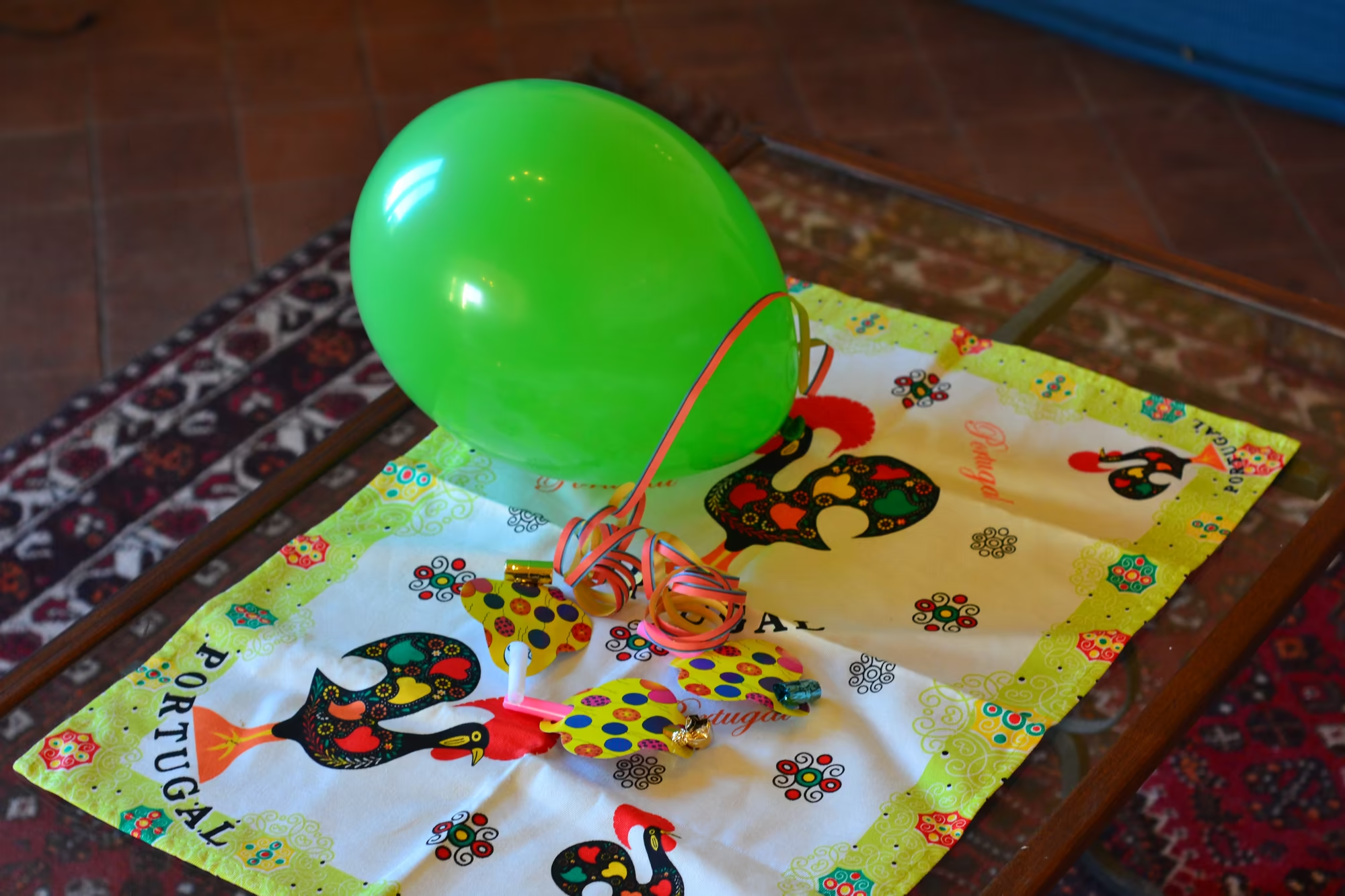
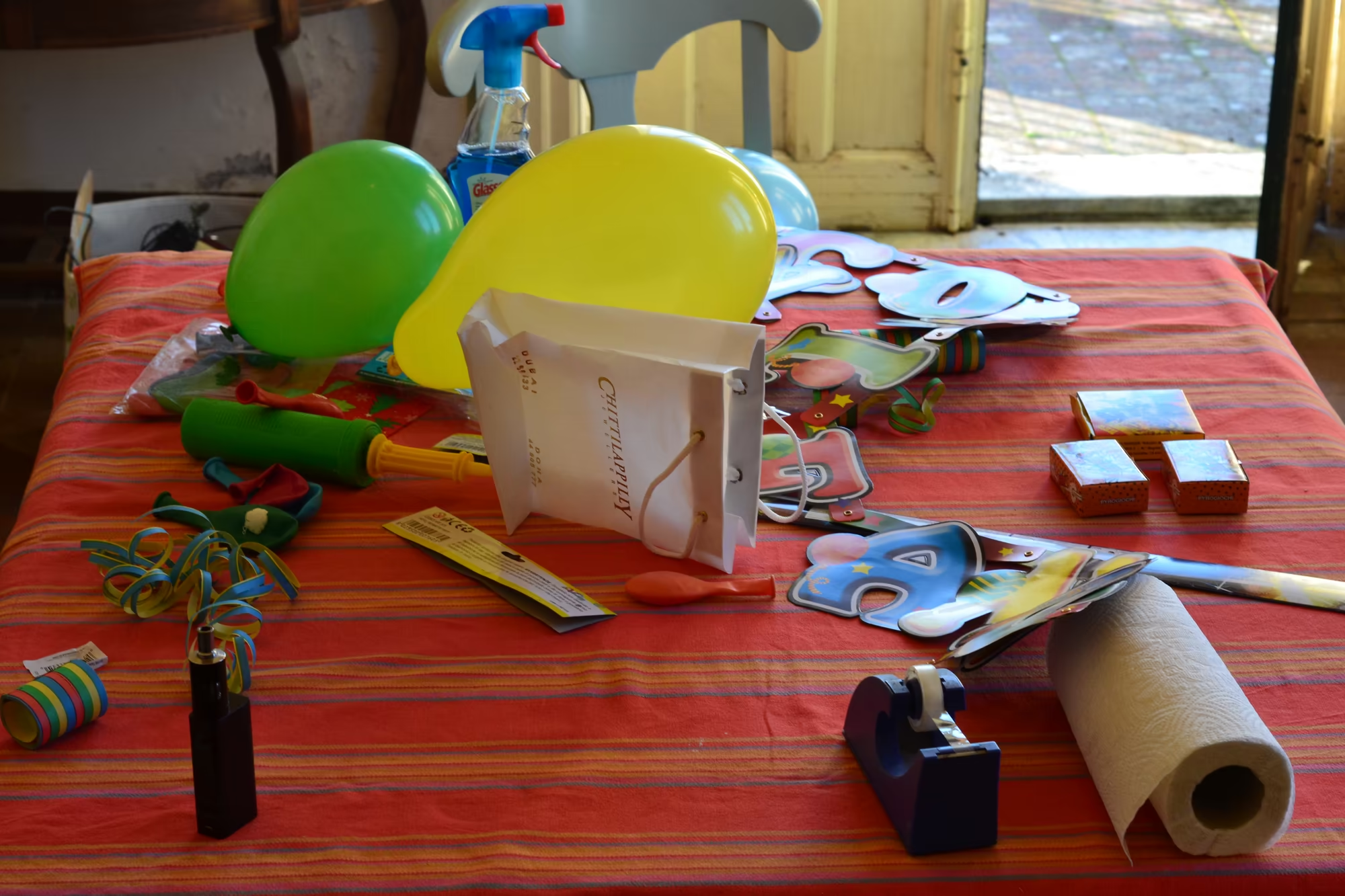
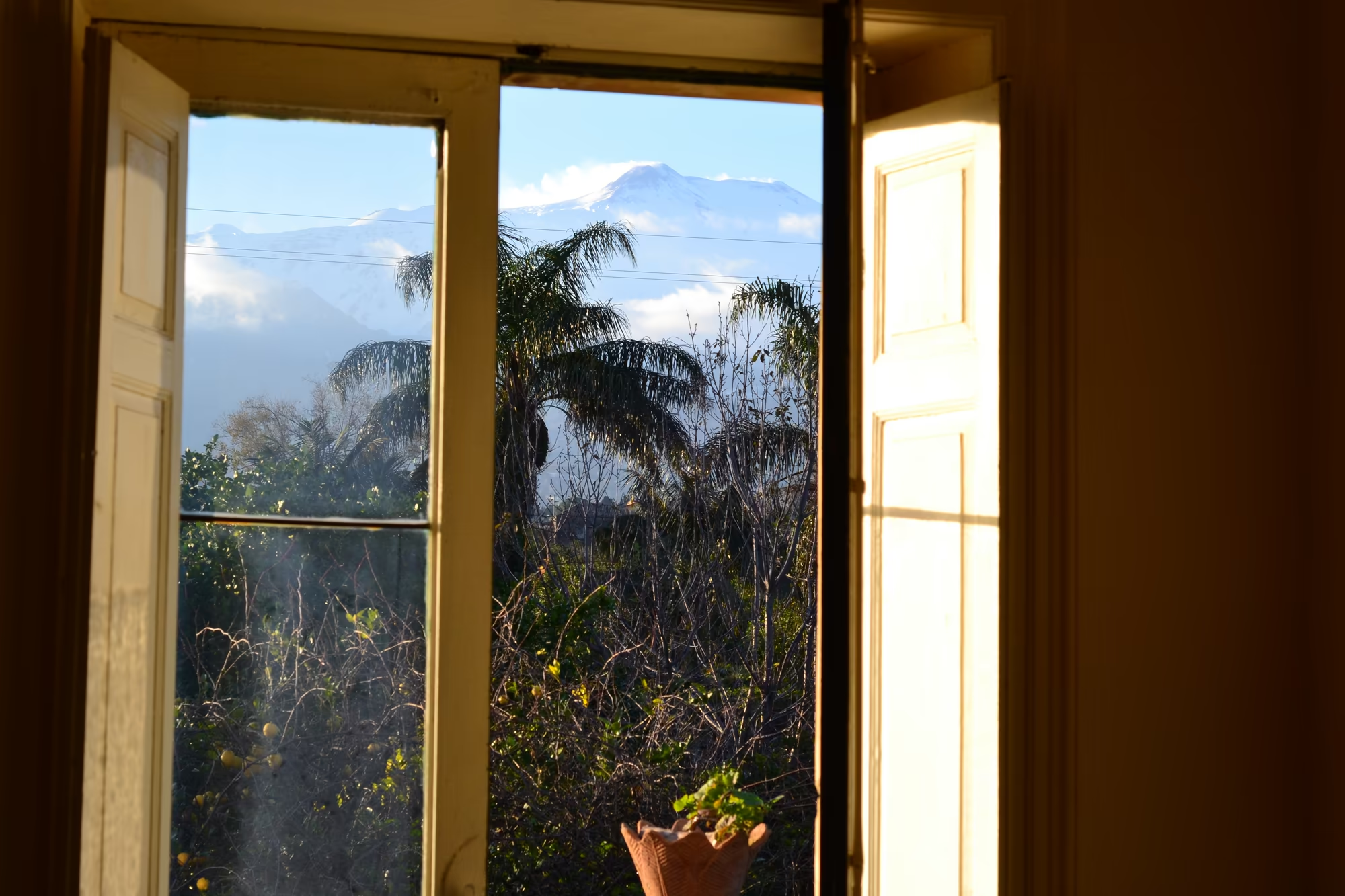
The twelfth day of the journey is a day at home on the farm, and it is the album’s portrait of ordinary life on this coast. Balloons on a patterned cloth, a table laid with a red striped cover, party masks and ribbons, a paper banner reading Buon Compleanno, terracotta pots along a stone wall and a group of oranges on a garden table: the occasion is a birthday, and the setting is a farmhouse in the agricultural belt above Giarre with the snow capped summit of Mount Etna visible through the windows.
The house and its garden are typical of the area. The building is a white plastered farmhouse with green shutters and a green door, terracotta planters with ornamental plants stand on stone pillars along the terrace, and beyond the wall the land runs out to palm trees and the mountain. Because these houses were built to work the land, their gardens are productive as well as ornamental: lemon and orange trees grow beside the ornamentals, and the fruit on the table has travelled a few metres rather than a few hundred kilometres.
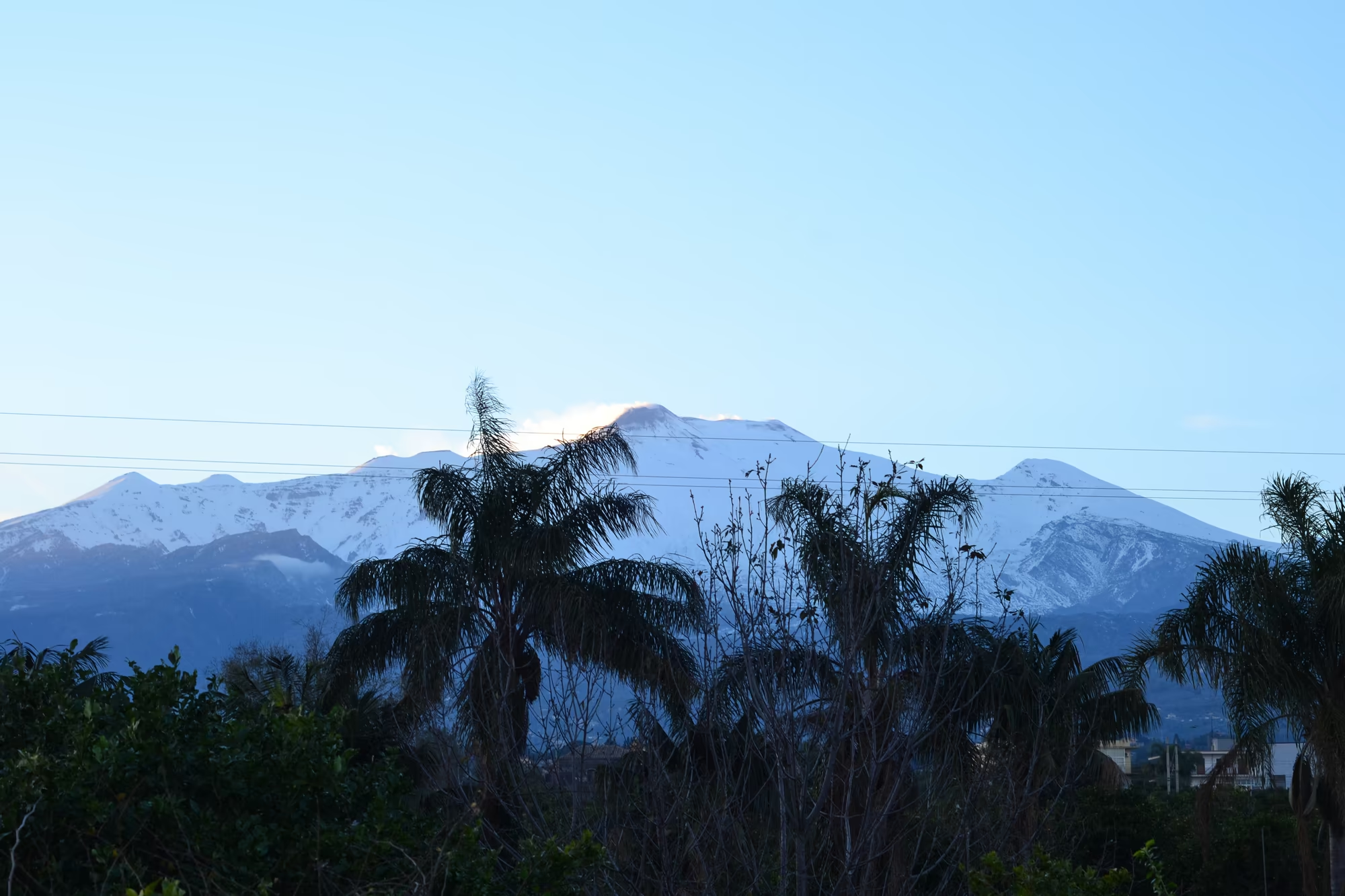
The season gives the day its particular character. February on the eastern slopes of Etna is winter on the mountain and harvest at low level: the summit is white, the evenings are cold, and the citrus fruit is ripe and being picked. The pictures move between those two facts all day, from a table of balloons indoors to palm fronds silhouetted against a snow covered volcano, which is the ordinary backdrop of a family celebration in this part of Sicily.
The setting is the Metropolitan City of Catania, in the belt of country between the Ionian Sea and the volcano, where Giarre and Riposto form a single town and the surrounding municipalities run up the slopes as far as Zafferana Etnea, Sant’Alfio, Milo and Santa Venerina. Farms here are small, family run and diversified: citrus, olives, vines, vegetables, a few animals, and in many cases guests, since agritourism has become part of the income of the same properties that were once purely agricultural.
The farm stay is a modern arrangement with an older basis. Agritourism, the letting of rooms on working farms, spread through Italy in the last decades of the twentieth century as a way of keeping farm incomes viable, and it has been particularly successful in areas like this one, where the buildings are large, the landscape is attractive and the towns are close. The house in these pictures is both: a working property in the citrus belt and a place where guests sleep, which is why its garden doubles as its kitchen.
History
The farmhouse belongs to a long agricultural history. For centuries this land was held in large estates and worked by tenant families: Giarre was a village of the county of Mascali from the late sixteenth century until 1815, and the land above the coast was divided into plots on terraces cut into the volcanic slopes. The stone walls, the small outbuildings and the pattern of narrow plots that still shape the hillside are the physical remains of that system, and the farmhouses were the working centres of it.
Citrus changed the economy of the coast. Oranges and lemons from these slopes were an export crop, carried by sea from harbours like Riposto to markets in northern Europe, and the groves were planted and maintained with that trade in mind. The plants need water and shelter, so the slopes were terraced and channelled, and the result is the landscape of walls, paths and small irrigated plots that surrounds the house in these pictures.
The twentieth century brought the changes that shaped the present farm. Emigration, war and the shift of population into the towns reduced the number of people working the land; the merger of Giarre and Riposto as Jonia during the fascist period and their separation in 1945 rearranged the administration of the two towns; and after 1946 Sicily’s status as an autonomous region gave the island its own government and a different relationship with the state. Farms adapted by diversifying, and the conversion of farm buildings to guest accommodation is one of the results.
Family celebrations belong to that history as much as the crops do. The Italian birthday, with a banner, balloons and a table laid for the household, is a small event in a long tradition of domestic festivity that in this part of the world is tied to the agricultural calendar: the harvest of the oranges, the feast of the patron saint of the town, the end of the picking. In February, in a farmhouse between the sea and the snow line, a family birthday is the winter event of that calendar, and it is celebrated with the fruit of the season on the table.
The kitchen of the house belongs to the oldest layer of the island’s history. Sicilian cooking is built on what the soil and the sea provide, with citrus, olives, almonds, aubergines, tomatoes, wheat, sardines and swordfish as its base, and with the sweet things, cannoli, granita, almond pastries and candied fruit, belonging to the Arab and Spanish centuries in which sugar and ice became available. A table laid in February with oranges, lemons, blossom, bread and wine is a summary of that history rather than a selection from it.
Geology
Everything in the garden rests on volcanic ground. Mount Etna is an active stratovolcano on the east coast of Sicily, in the Metropolitan City of Catania between Messina and Catania, standing above the convergent margin between the African and Eurasian plates; it is the highest ground in Italy south of the Alps at around 3,403 metres, a figure that changes with eruptions, and one of the most active volcanoes in the world. The soil of the terraces above Giarre is made of its lava and ash, weathered into a fertile, well drained material that supports the citrus groves and gardens.
The mountain has been building and rebuilding itself for a long time. Its activity began with submarine fissural eruptions that produced pillow lavas and a first shield volcano, passed through three main stratovolcano stages known as Monte Calanna and Trifoglietto 1 and 2, and reached its present form in the two stages of the Mongibello system since about 15,000 years ago. More than 300 vents are counted on the flanks, and the centres of activity have gradually moved towards the north west.
The difference between summit and flank activity is the difference between spectacle and risk. Summit eruptions can be highly explosive and are visible from the whole coast, but they rarely threaten inhabited areas; flank eruptions open lower down, sometimes at a few hundred metres, close to or within settlements. Since 1600 there have been at least 60 flank eruptions, nearly half of them since 1900, and the vineyard and orchard belt has been repeatedly cut by flows; the soil that makes the gardens productive is the same material that has buried them.
The climate that makes the garden work is also a product of the geography. The sea moderates the coast while the mountain collects cloud and snow, so the winter is mild at low level and severe at height, and cold air draining off the slopes keeps the nights cool enough for citrus to sweeten. The fruit hanging on the trees in February and the snow on the summit in the same landscape are two results of the same arrangement of sea, mountain and season.
The garden’s fertility is a gift of the volcano. Lava and ash weather into a soil rich in potassium and trace minerals, which drains quickly and yet holds moisture in its pores, and the mild winter of the coast allows citrus to ripen on the tree through the cold months; because the mountain also collects rain, the slopes above the house receive more water than the plain. The result is a strip of ground a few kilometres wide that has been farmed intensively since antiquity.
Things to See
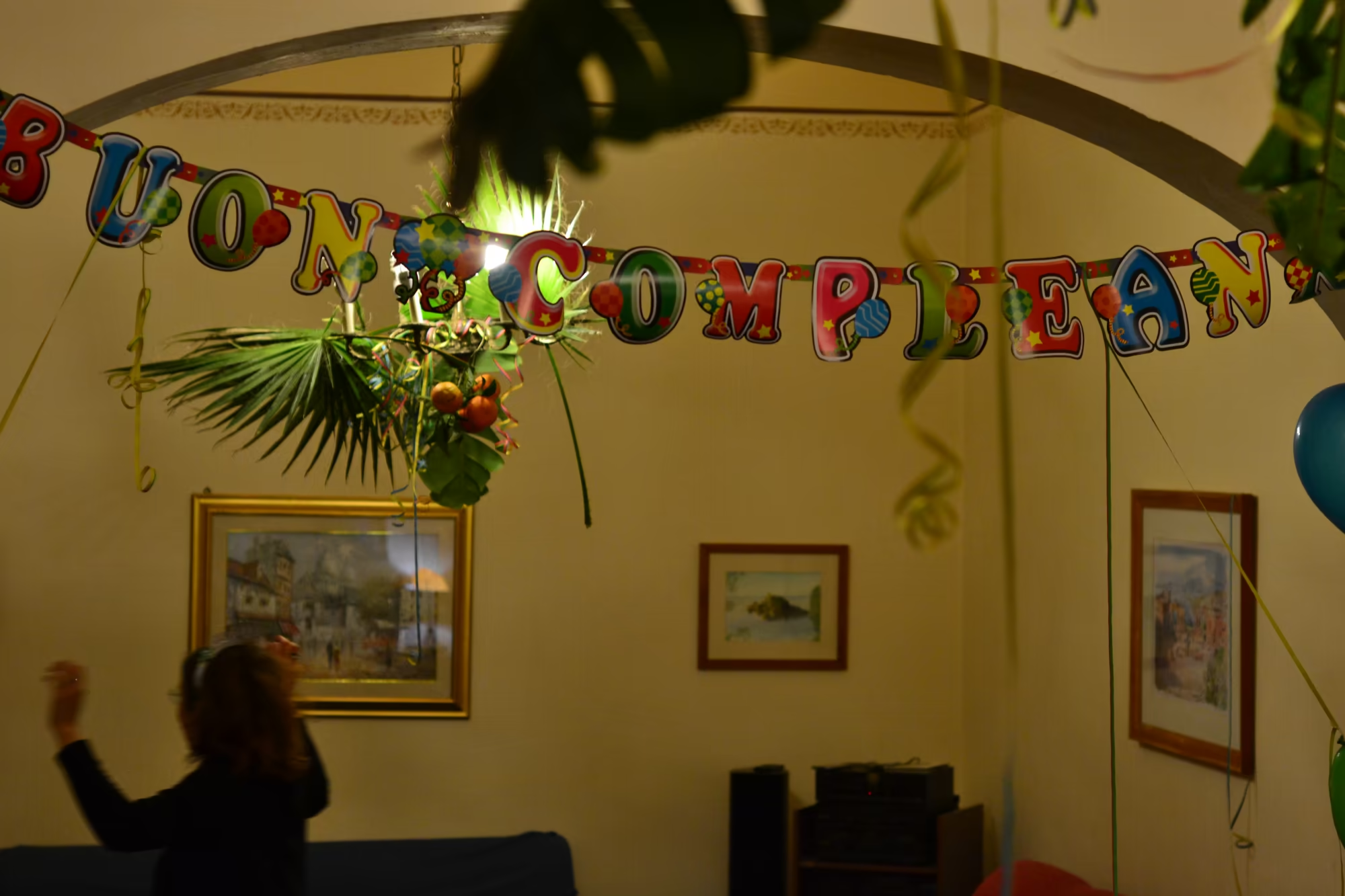
The celebration itself is the first subject, and the album treats it as such. Balloons on a patterned cloth, a table with masks and ribbons, a wooden chest of drawers decorated for the day and a green banner reading Buon Compleanno strung across a room are ordinary props of a family birthday, and in these pictures they carry the whole atmosphere of the house: indoor, warm and improvised, with the garden visible through the windows.
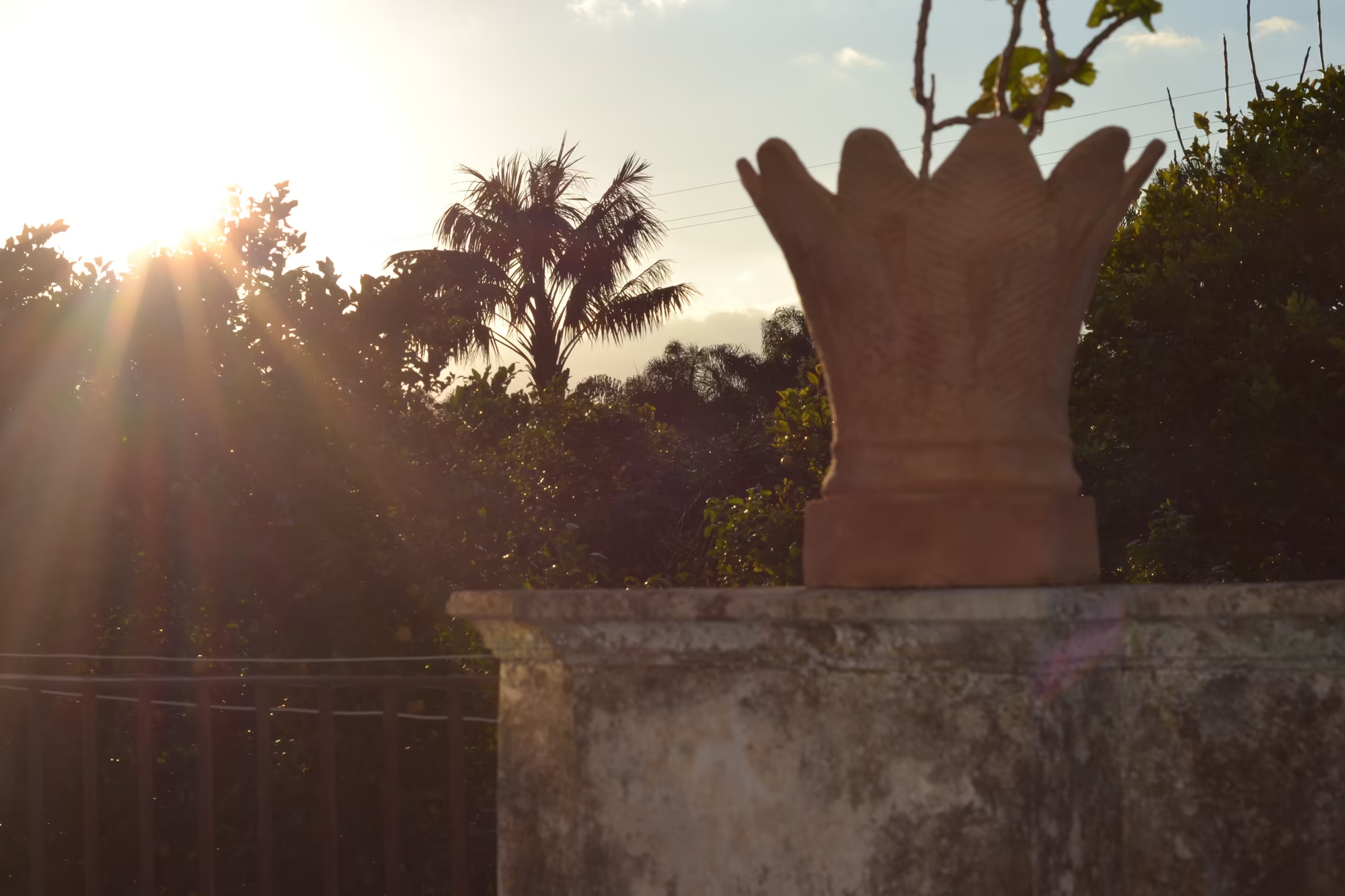
The garden is the second subject and the more interesting one. A white metal table with a patterned top holds a few oranges, terracotta pots line a weathered wall beside a paved walkway, a large urn on a stone wall is silhouetted against the sun, and palms and shrubs frame the mountain beyond. Everything in it is both decorative and useful: the pots hold herbs and ornamentals, the trees hold fruit, and the wall is the boundary of the productive ground rather than a garden feature.
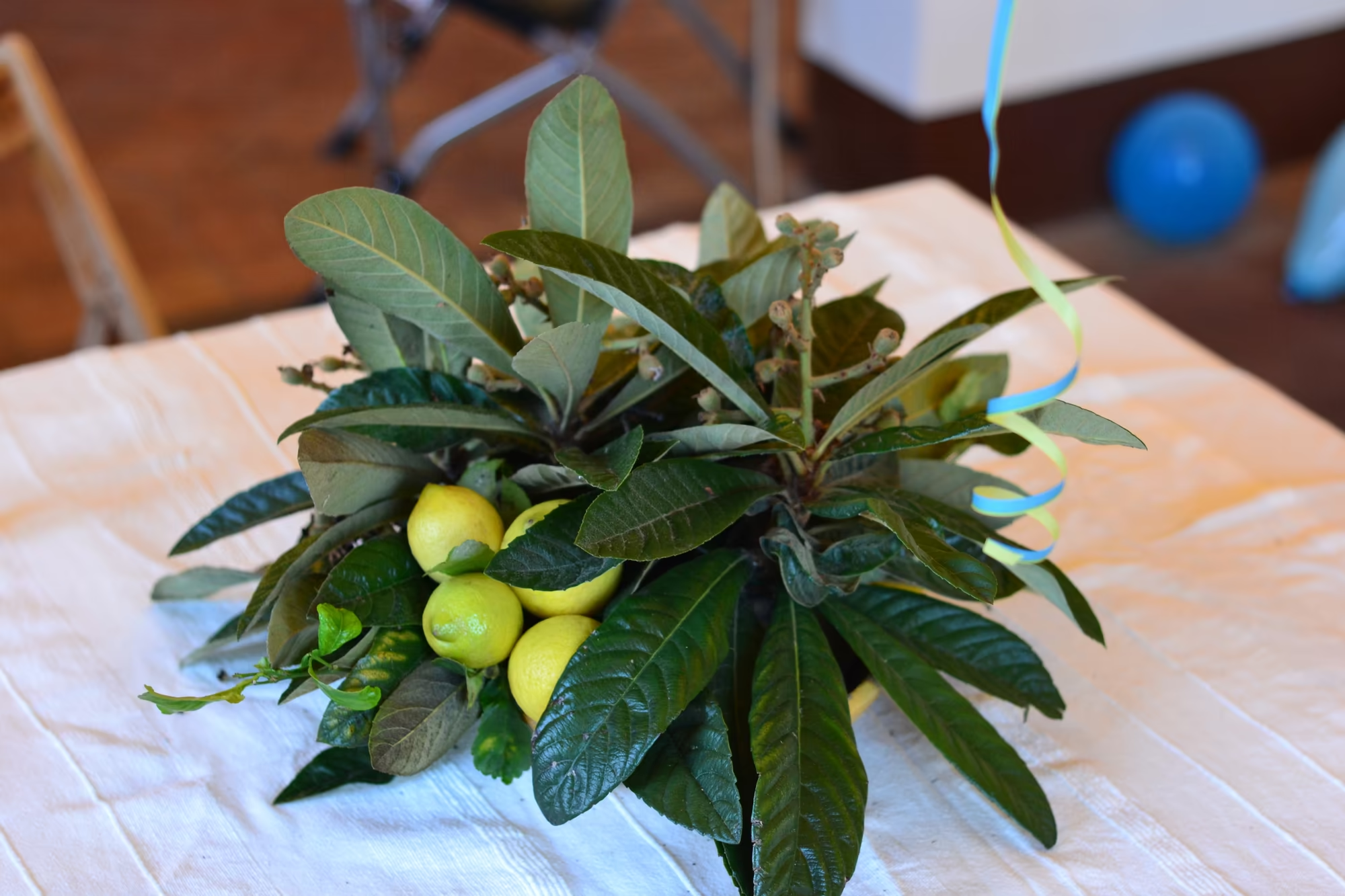
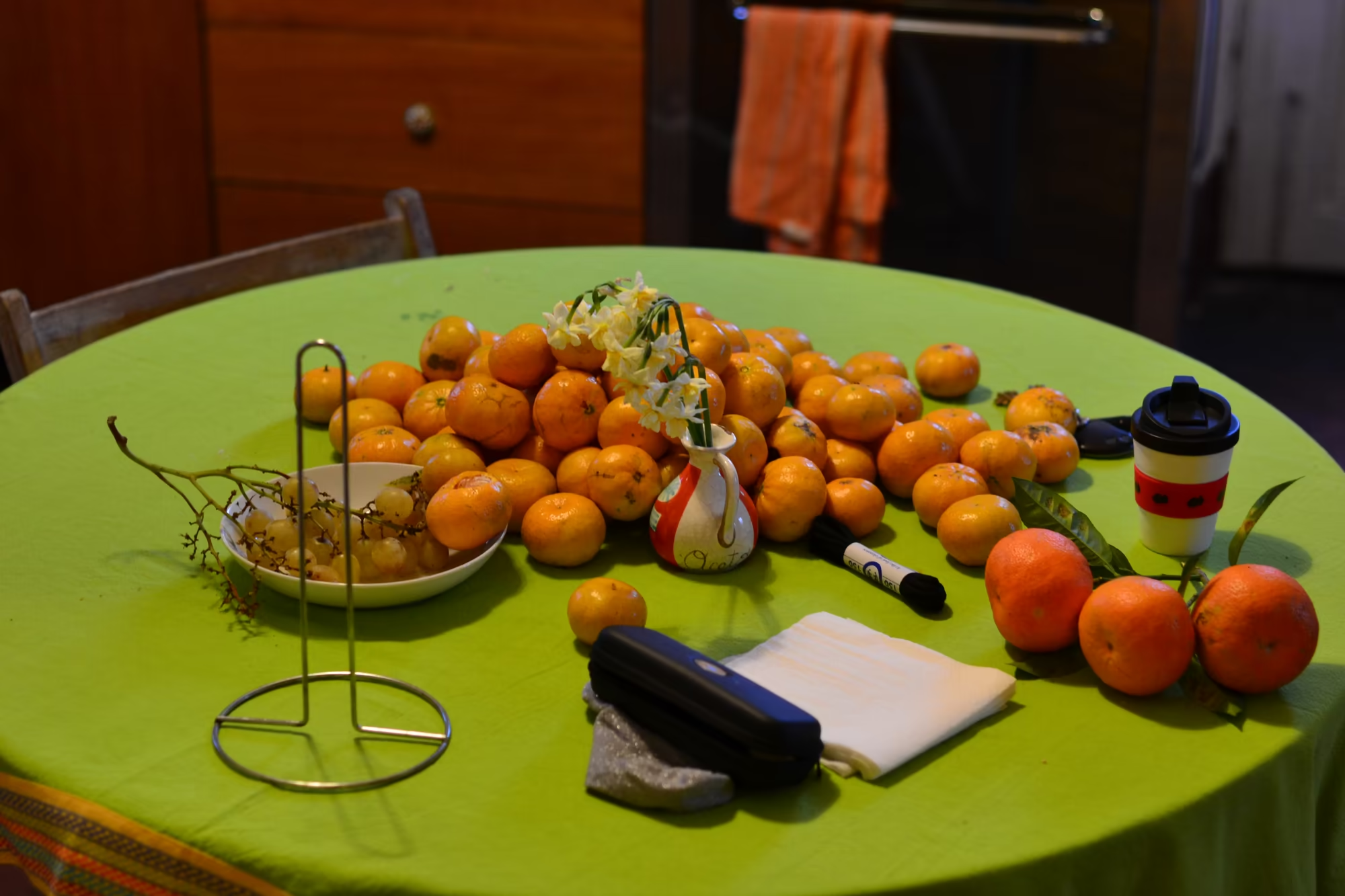
The fruit is worth close attention in February. A pile of fresh lemons rests among large green leaves on a white cloth, oranges lie on a table beside a vase of white orange blossom, and a group of oranges sits on the garden table where it was picked. The blossom is the detail that explains the season: the trees carry fruit and flowers at the same time in a Mediterranean winter, and the smell of the blossom is as much part of the harvest as the fruit itself.
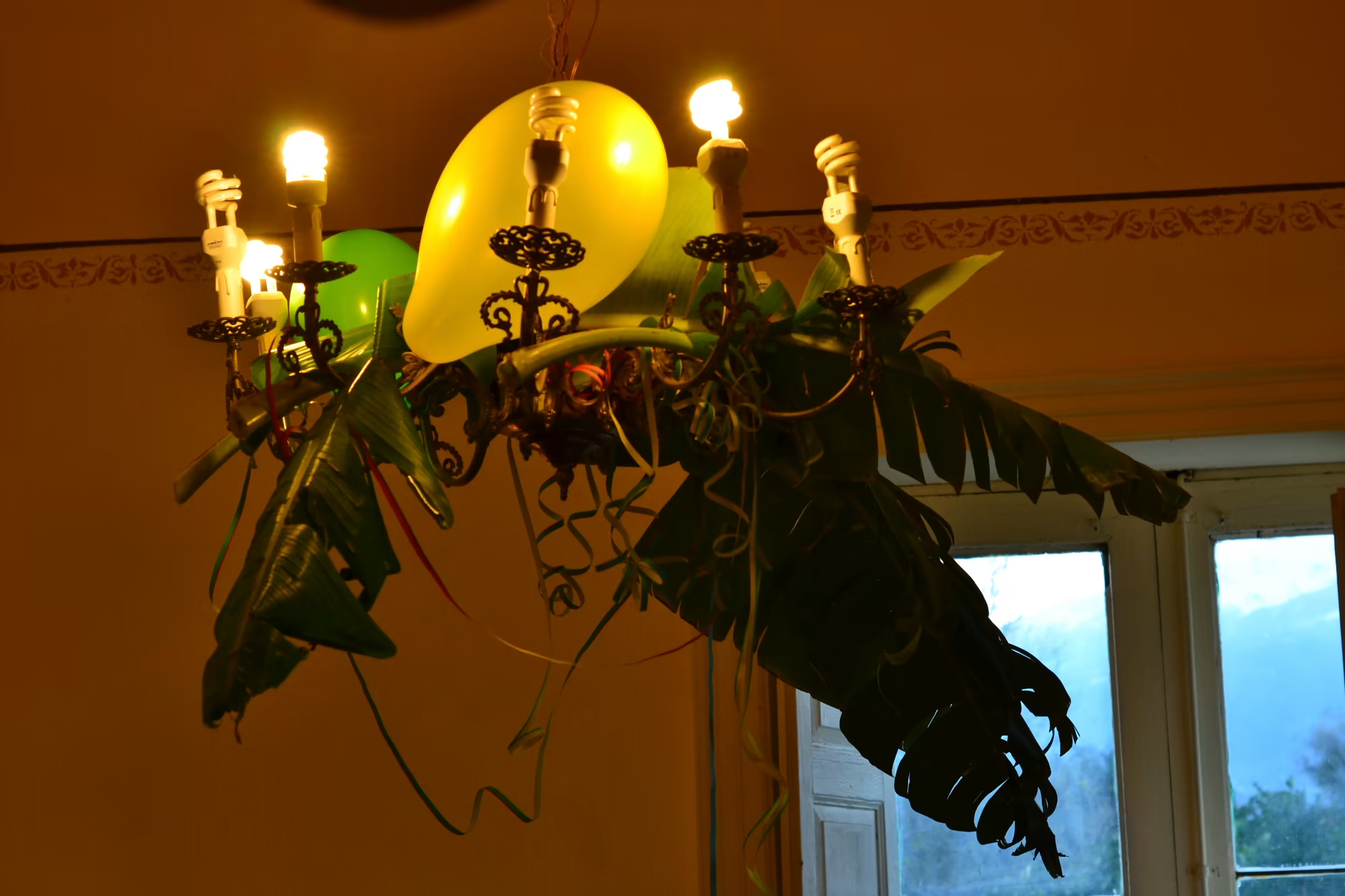
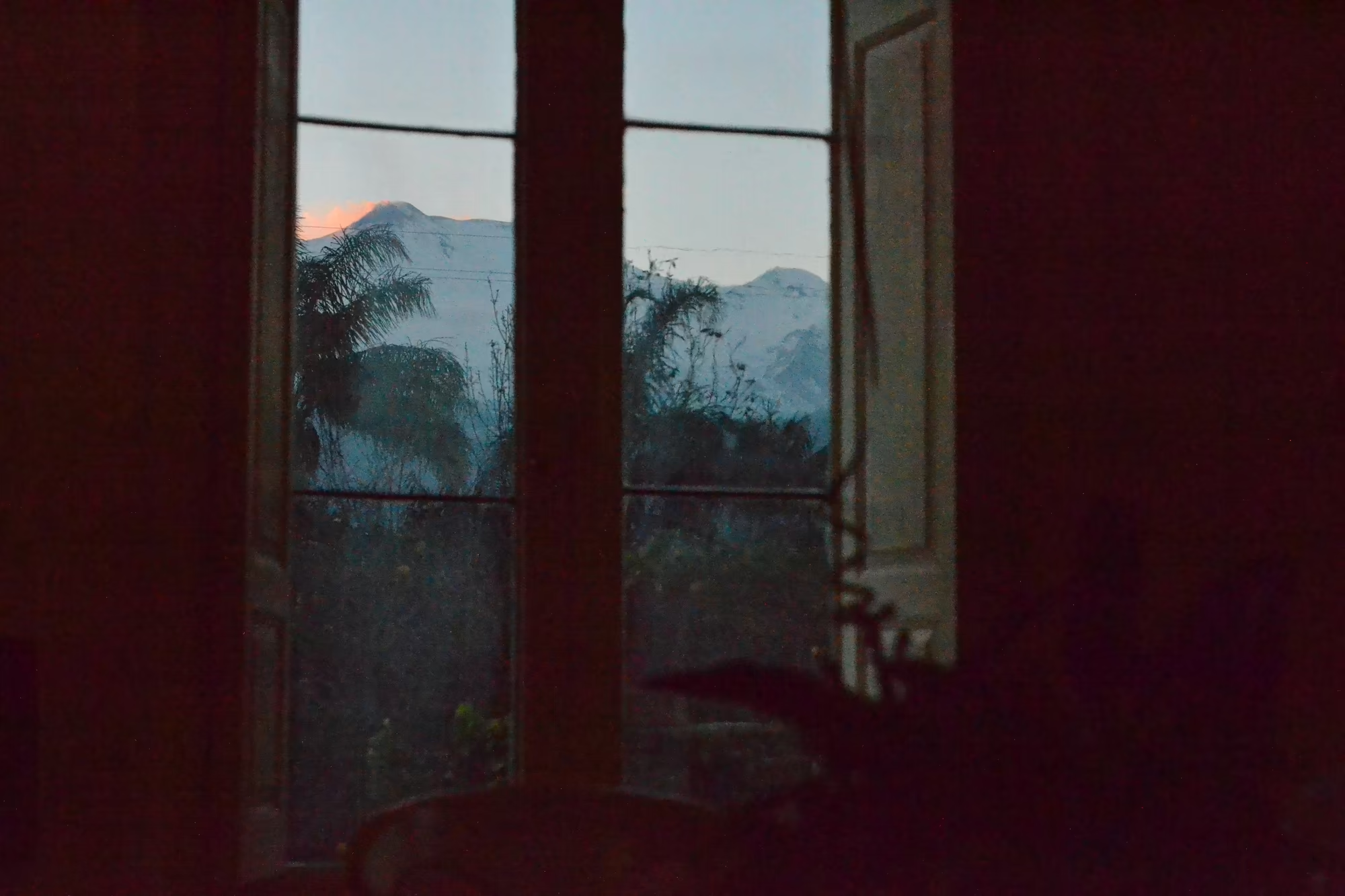
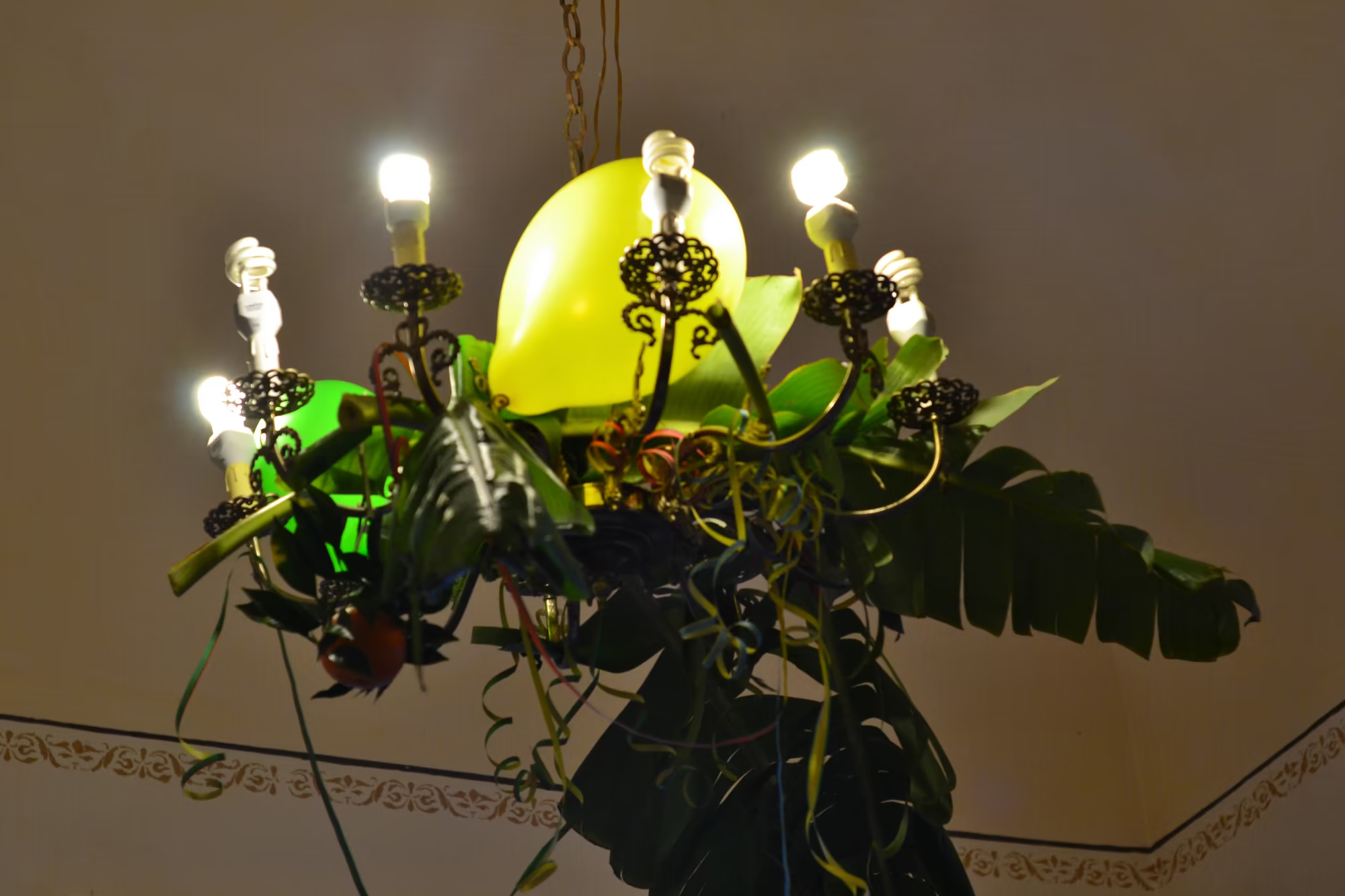
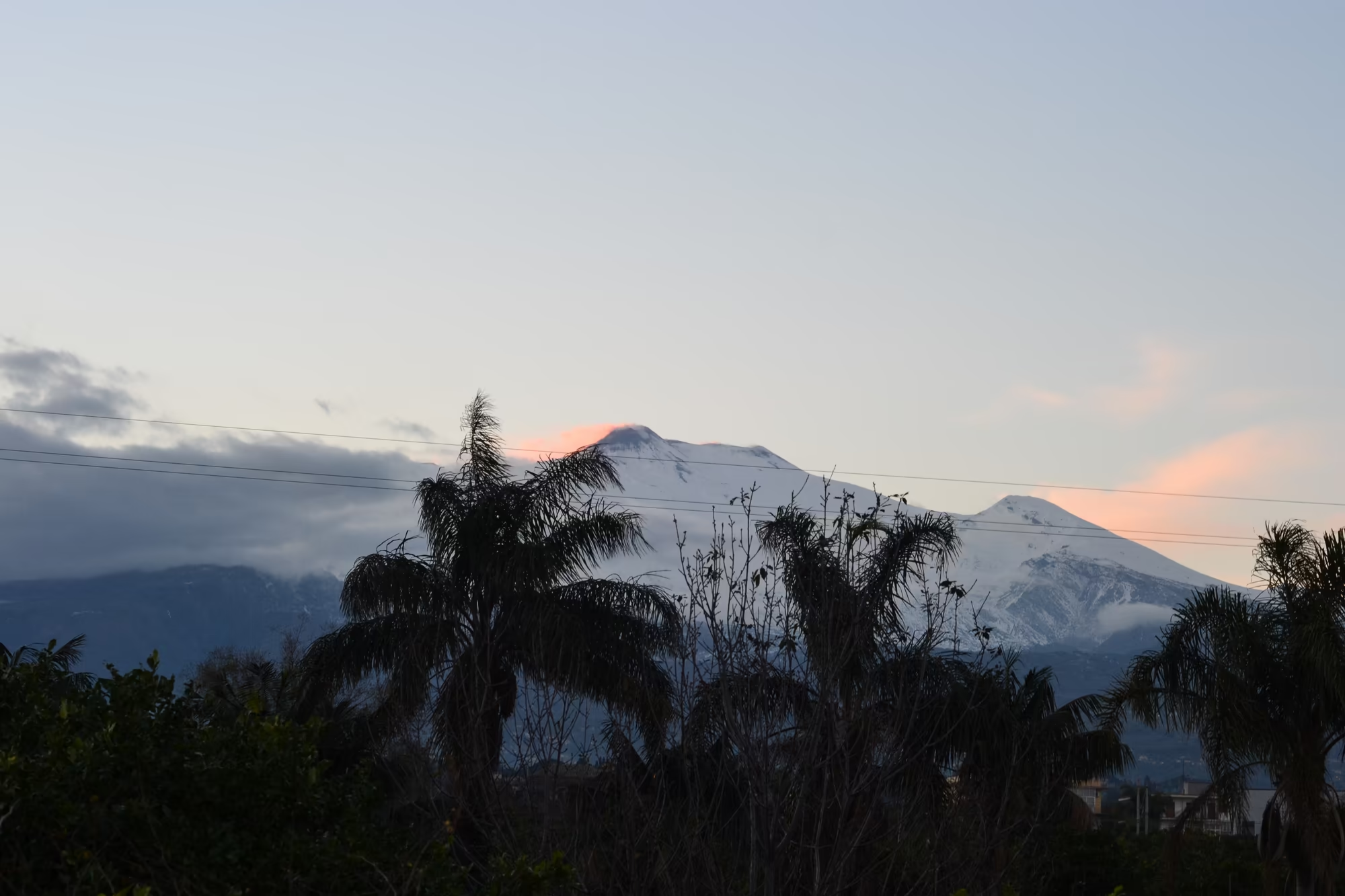
The evening views close the day. Through an open window with white shutters, palm trees and bushes frame a snow covered Etna; dark palm fronds stand against the same summit in low light with pink clouds above the ridge; a chandelier hung with green leaves and ribbons glows above a table indoors. Indoors and outdoors are one room in this house, and the mountain holds the last light of the day, which is the image the album ends on.
The detail of the house repays attention. Green shutters against white plaster, a green door with a hanging chain, terracotta planters on stone pillars, an urn on a wall silhouetted against the sun and chandeliers decorated with palm leaves and ribbons for the day are the ordinary vocabulary of a Sicilian farmhouse, and the decoration is made from what the garden and the fields provide. Nothing in the rooms is bought for the occasion; the balloons are the only exception.
The mountain at the end of the day is the last thing to watch. From the terrace the palms stand against the snow covered summit in the low light, with pink cloud above the ridge and the garden going dark around the table; the lamp above the door comes on before the sky has finished and the room behind the shutters glows. It is the quietest part of an album that is mostly about weather and ground, and it is the reason a farmhouse in this position is worth more than its hectares: the view from the garden is the volcano, the coast and the orchards in a single turn of the head.
References
- Longo, S. & others (2021). Distribution and density of scale insects on citrus-groves in eastern Sicily. In: Integrated Pest Control in Citrus-Groves. doi.org/10.1201/9781003079279-13
- Orange and lemon cultivation in Sicily (1886). Scientific American 54, 118. doi.org/10.1038/scientificamerican02201886-8454asupp
- Wikipedia contributors (2026). Agritourism. en.wikipedia.org/wiki/Agritourism
- Wikipedia contributors (2026). Blood orange. en.wikipedia.org/wiki/Blood_orange
- Wikipedia contributors (2026). Cannoli. en.wikipedia.org/wiki/Cannoli
- Wikipedia contributors (2026). Citrus. en.wikipedia.org/wiki/Citrus
- Wikipedia contributors (2026). Etna DOC. en.wikipedia.org/wiki/Etna_DOC
- Wikipedia contributors (2026). Giarre. en.wikipedia.org/wiki/Giarre
- Wikipedia contributors (2026). Granita. en.wikipedia.org/wiki/Granita
- Wikipedia contributors (2026). Lemon. en.wikipedia.org/wiki/Lemon
- Wikipedia contributors (2026). Mount Etna. en.wikipedia.org/wiki/Mount_Etna
- Wikipedia contributors (2026). Orange (fruit). en.wikipedia.org/wiki/Orange_(fruit)
- Wikipedia contributors (2026). Sicilian cuisine. en.wikipedia.org/wiki/Sicilian_cuisine
- Wikipedia contributors (2026). Sicily. en.wikipedia.org/wiki/Sicily