2016 Tokyo 1















Journal Notes
General
Tokyo is the capital and the most populous city of Japan, and the first day of this visit was spent between its museums and its tallest tower. The city proper has more than fourteen million inhabitants and the Greater Tokyo Area, which includes parts of six neighbouring prefectures, has about thirty three million, making it the third most populous metropolitan area in the world. It stands at the head of Tokyo Bay in the Kanto region, on the central coast of Honshu, the largest of the Japanese islands and home to rather more than a hundred million people.
The scale of the place is matched by its economy. Tokyo accounted for more than twenty per cent of Japan’s output in a recent year, with a nominal product of about 120 trillion yen, which is roughly 62,000 dollars per head of population, and the city is the administrative, financial and cultural centre of the country. It is also a city that is used rather than admired: the metro, whose oldest line is the oldest underground railway in Asia, carries millions of people a day, the streets are clean and quiet, and the whole machine works with an orderliness that visitors notice before anything else.
The arrival was by air, at Haneda, the busier of the two airports serving the metropolis. Haneda began in 1931 as a small field on reclaimed land with a single 300 metre concrete runway, and it now handles up to ninety million passengers a year after its expansion, which makes it one of the busiest airports in Asia. The city that one enters from it is low in the centre and ringed by towers, with the bay on one side and mountains on the horizon.
The day itself was a museum day. It took in a temple, a park, the national museum and finally the observation deck of a tower six hundred and thirty four metres high, from which the whole plain of Tokyo can be seen at once. The season was spring, the flowering trees were out, and the sky was clear enough to make the view from the top worth the queue for the lift.
History
Tokyo is a new name for an old city. Until 1868 it was Edo, which means bay entrance, and it grew from a village in Musashi Province into the largest metropolis in the world. The castle that anchored it was built in 1457 by Ota Dokan, and it was there that Tokugawa Ieyasu established his shogunate in 1603, making Edo the seat of a military government that ruled Japan until 1867. The shogun lived in the castle, the daimyos were required to spend time in the city and to supply materials and money for its construction, and the result was a deliberate policy of urban growth.
That policy worked on a scale that had no parallel in Europe at the time. Edo was rebuilt and extended between 1603 and the 1630s, its population passed a million in the early eighteenth century, and by many estimates it was then the largest city in the world. The administration required to run it was remarkably small: the two offices of the town magistrates had about a hundred and twenty five people each, and the samurai quarters were not their business at all. The city was organised by status and by fire risk rather than by modern municipal government.
In 1868 the shogunate ended, the emperor moved from Kyoto, and Edo became Tokyo, the eastern capital. The twentieth century then did to the city what it did to few others. On 1 September 1923, at two minutes to noon, a megathrust earthquake of magnitude eight struck the Kanto Plain with its epicentre about a hundred kilometres south west of the city. The fires that followed did more damage than the shaking. Over half of Tokyo and nearly all of Yokohama were destroyed, between 105,000 and 140,000 people died, and about two and a half million were left homeless. The reconstruction that followed gave the city much of its modern form.
The Second World War destroyed a large part of it again. Asakusa, where the old temple stands, has fewer buildings older than fifty years than almost any comparable district, precisely because the wartime bombing levelled it, and the temple itself had to be rebuilt. The city that rose afterwards became the manufacturing and financial capital of the post-war boom, and the metro, the expressways and the towers are all products of the last sixty years.
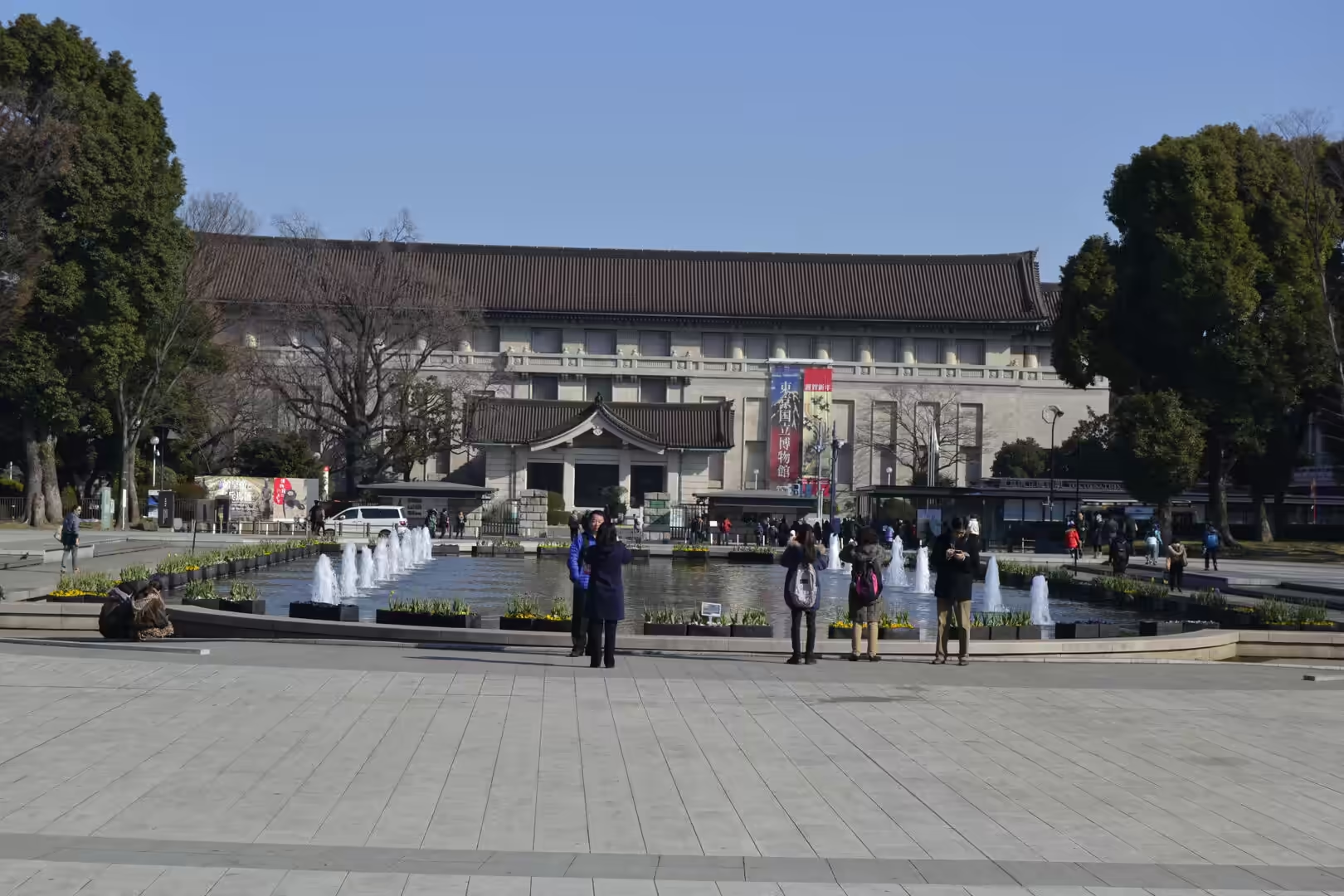
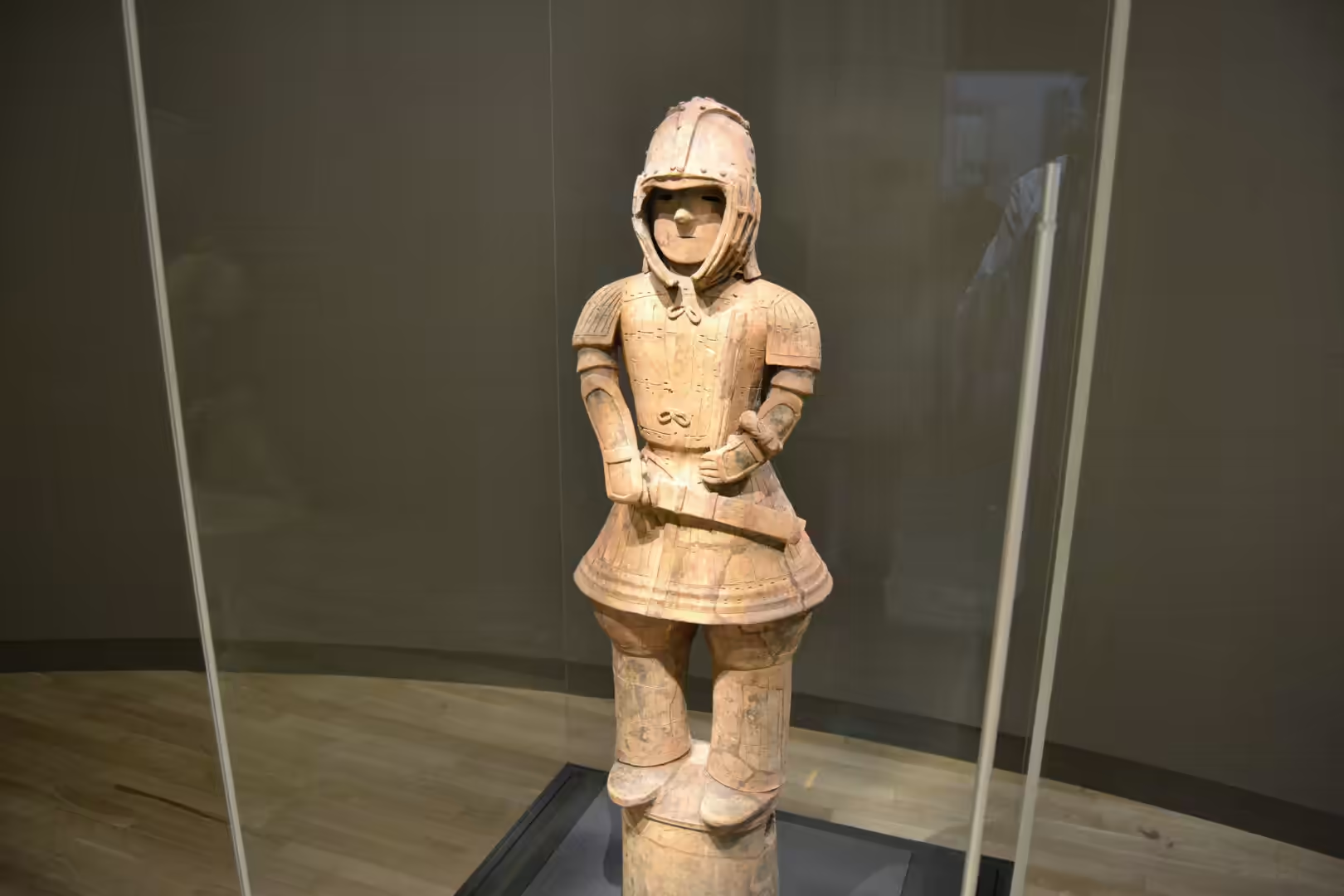
Museums are where this history is kept, and the national museum in Ueno Park is the best of them. It is the oldest national museum in Japan, founded in the 1870s, and it holds the largest collection of art and cultural objects in the country, with an emphasis on ancient and medieval Japanese work and on the Asian art of the Silk Road, including a substantial collection of Greco Buddhist material. Its main building, a stone faced structure with a Japanese roof completed in 1938, stands on land that once belonged to the temple of Kan’ei-ji, and the park around it was laid out as a public park in 1873, following western example in the early years of the Meiji period.
Geology
Tokyo stands on the Kanto Plain, the largest plain in Japan. It covers about 17,000 square kilometres, more than half of the Kanto region, and it extends over Tokyo and six neighbouring prefectures. The plain is a basin of sediment: rivers, above all the Tone, whose drainage area of nearly 17,000 square kilometres is the largest in the country, have filled it with gravel, sand, silt and clay, and the hills that rise out of it stand on older Tertiary strata. The ground falls from about 190 metres at Ome in the west to twenty metres at Yamanote near the centre, and the lowlands of the Arakawa and Sumida rivers beside the bay are pure alluvium.
That is the landscape on which a city of thirty three million people has been built, and it is a landscape in motion. Japan sits where four plates meet, and the Kanto region is at the junction of the Pacific and Philippine Sea plates, which are being subducted beneath the island arc. The great earthquake of 1923 was a megathrust event on that boundary, and the seismic history of the Kanto area is studied as a sequence of large events rather than as isolated disasters. Earthquakes are a design condition in Tokyo, not an exception.
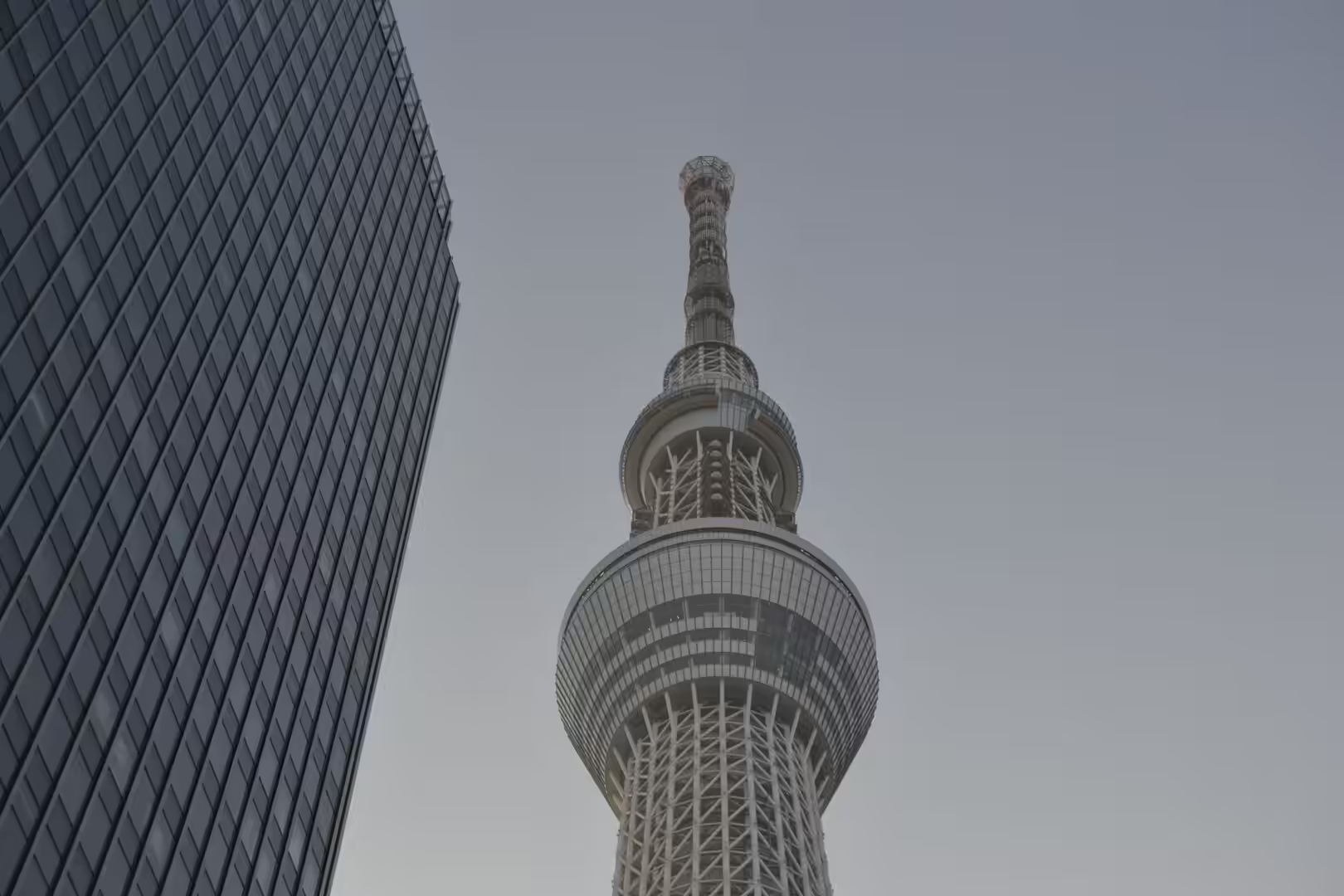
The consequences are visible in the modern city. Buildings are engineered for lateral forces, the metro has evacuation and shut down procedures for earthquakes, and the Tokyo Skytree, the six hundred and thirty four metre broadcasting tower that was the tallest tower in the world when it was completed in 2012, was designed against both wind and earthquake loading, with the fatigue behaviour of its structure studied in detail because a tower of that height accumulates stress cycles from every storm and tremor. It is also the primary television and radio transmission site for the region.
Water and ground level are the second theme. Tokyo is built partly on reclaimed land, including the ground on which Haneda Airport stands, and the pumping of groundwater during the twentieth century lowered the water table under the city and caused the ground to subside, a problem that is now controlled by restrictions on abstraction and by the import of surface water. Land subsidence due to groundwater withdrawal is one of the best documented environmental problems of the plain, and the city’s relation to its own water is the reason.
The bay completes the picture. Tokyo Bay is a shallow, enclosed body of water at the mouth of several rivers, and the city has expanded into it for four hundred years: the shore has been filled and built over until the waterfront of the old maps has disappeared under docks, airports and apartment blocks. The geology of Tokyo is therefore partly natural and partly made, and the parts that are made have to be protected from the same earthquakes and typhoons as the parts that are natural.
Things to See
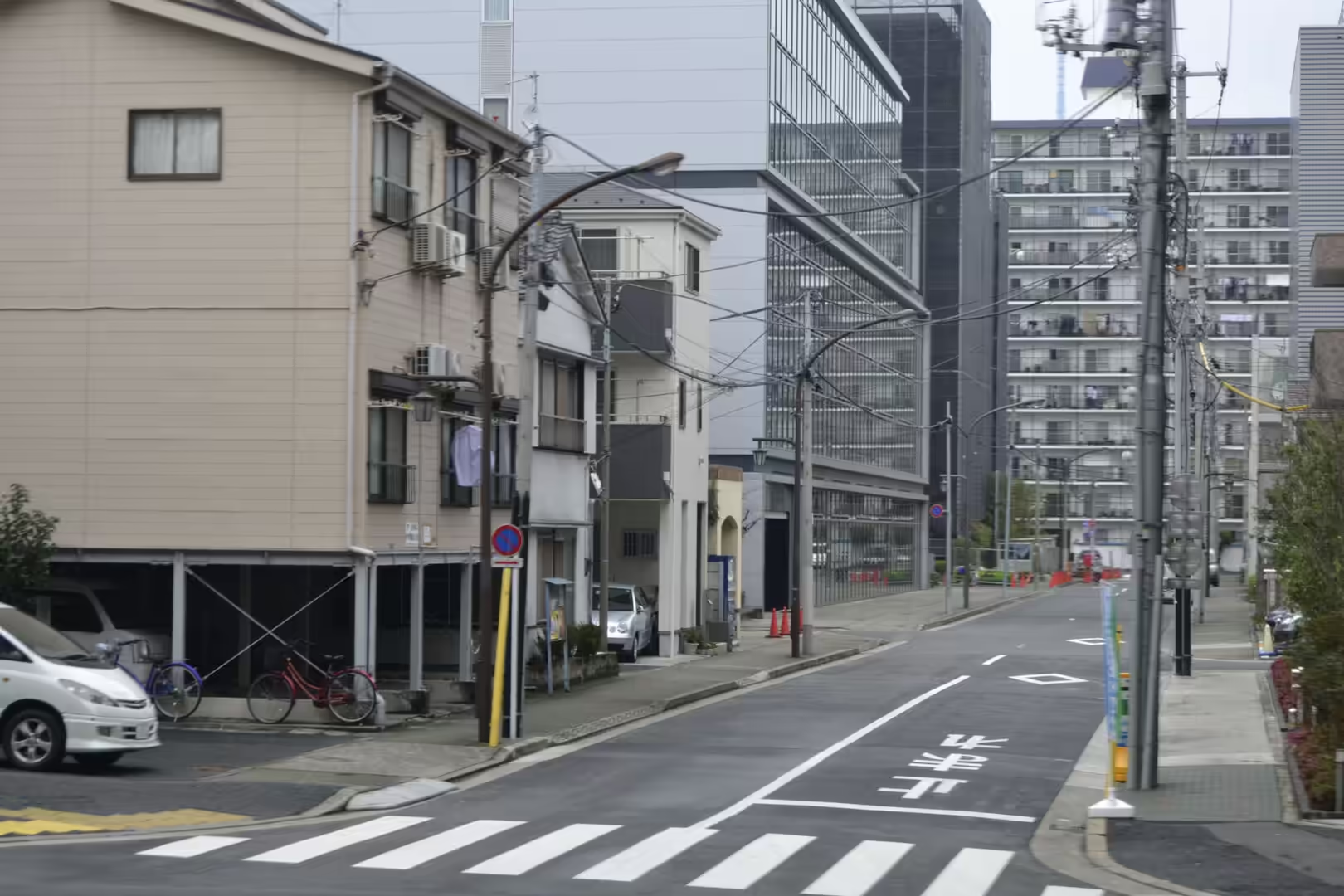
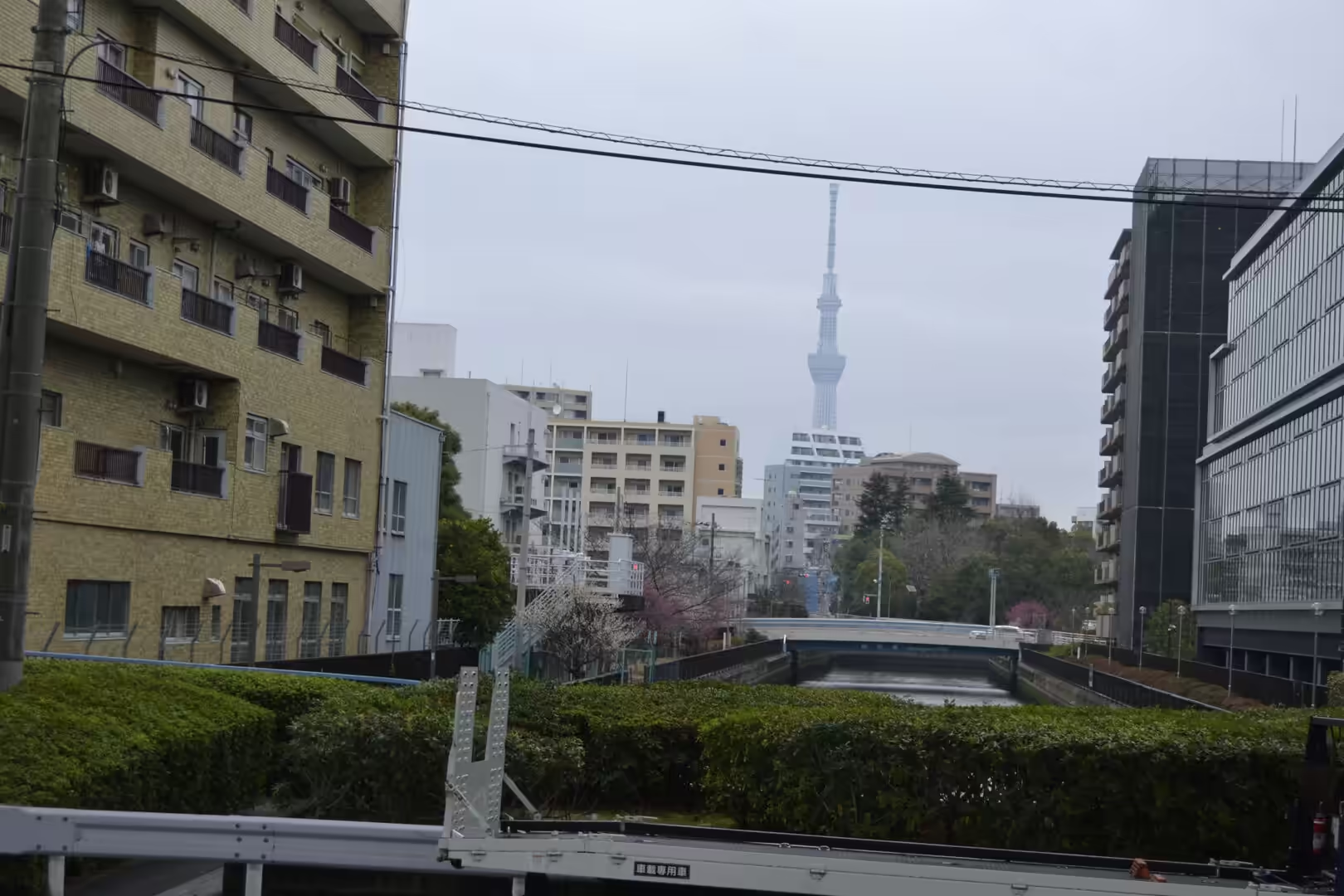
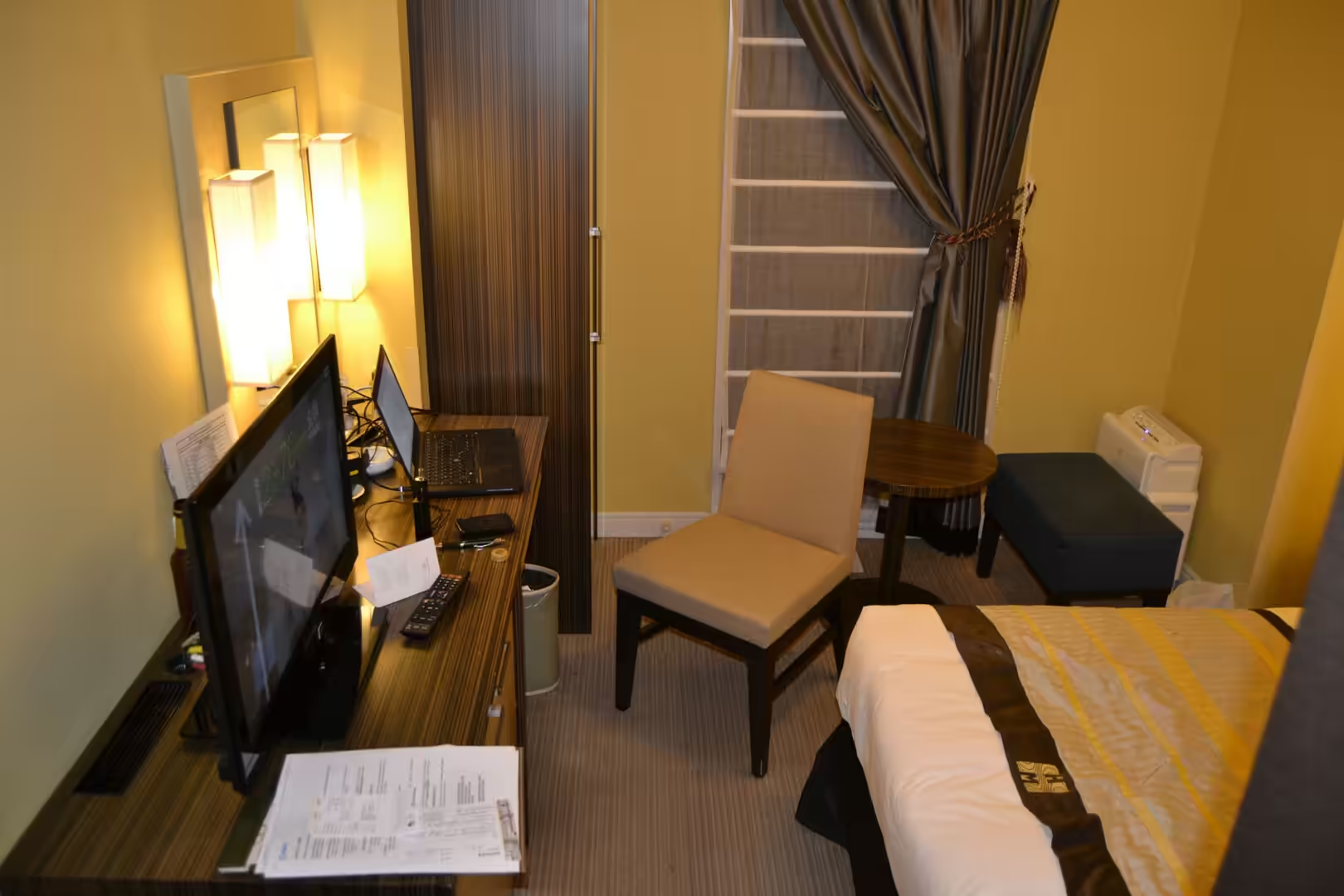
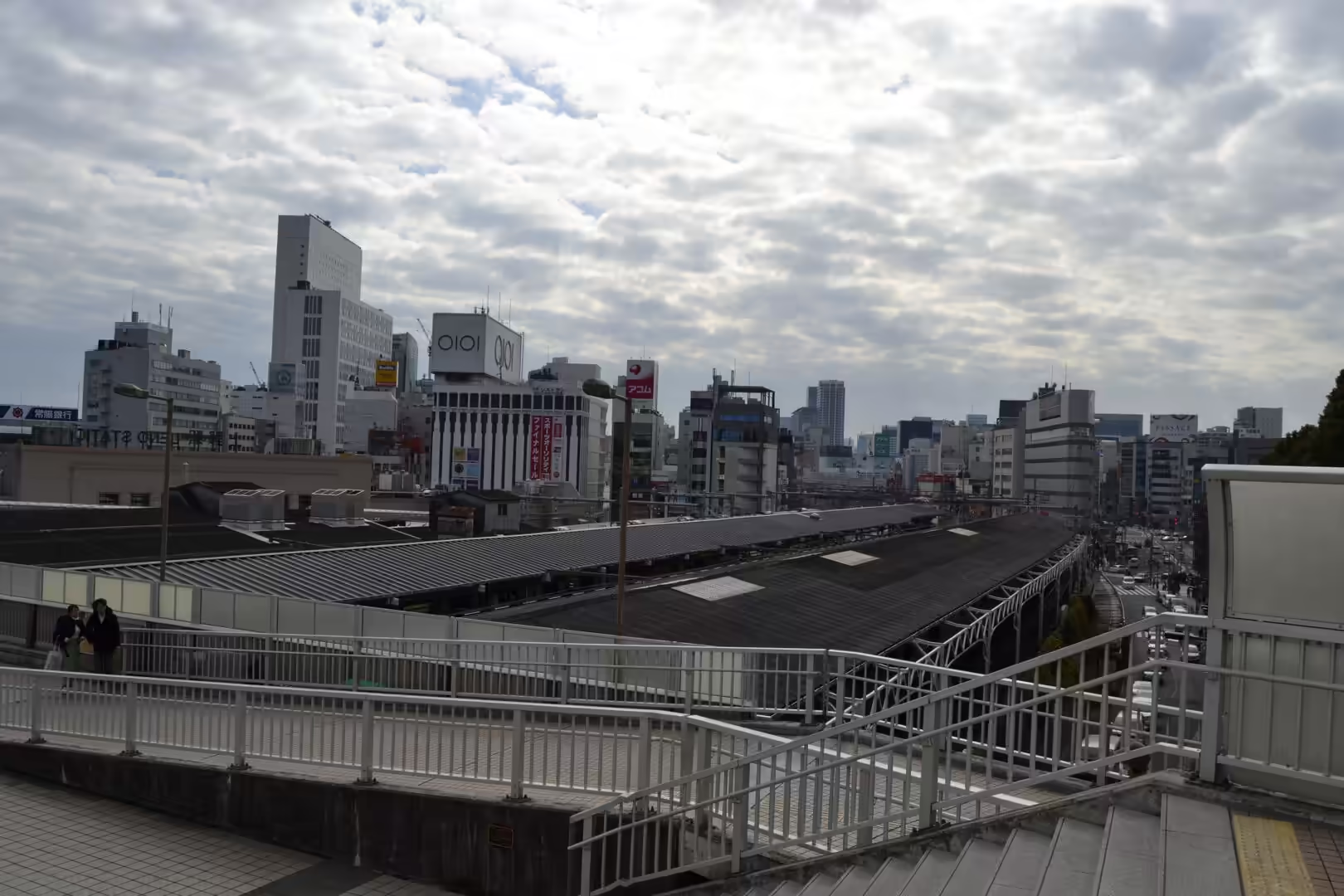
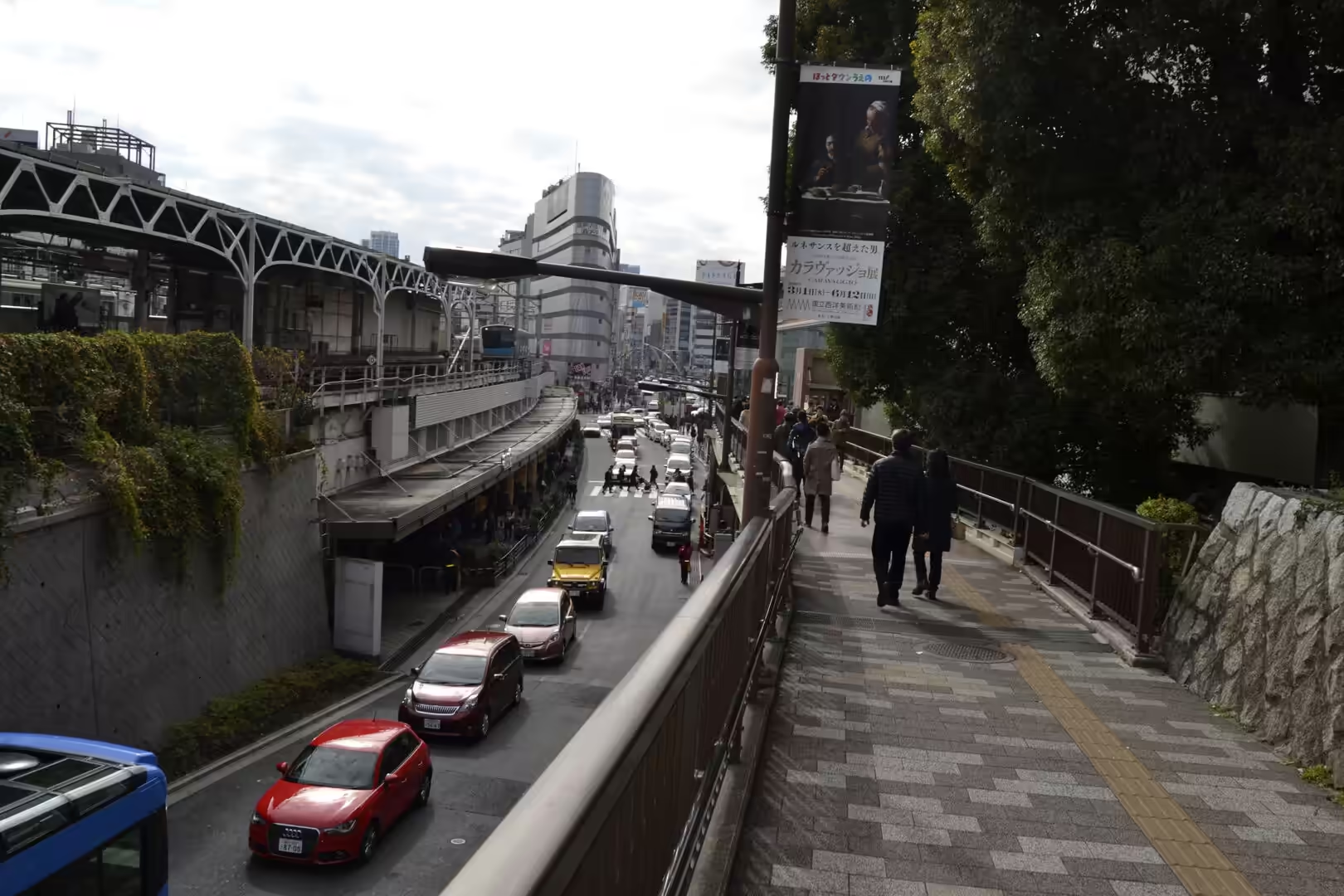
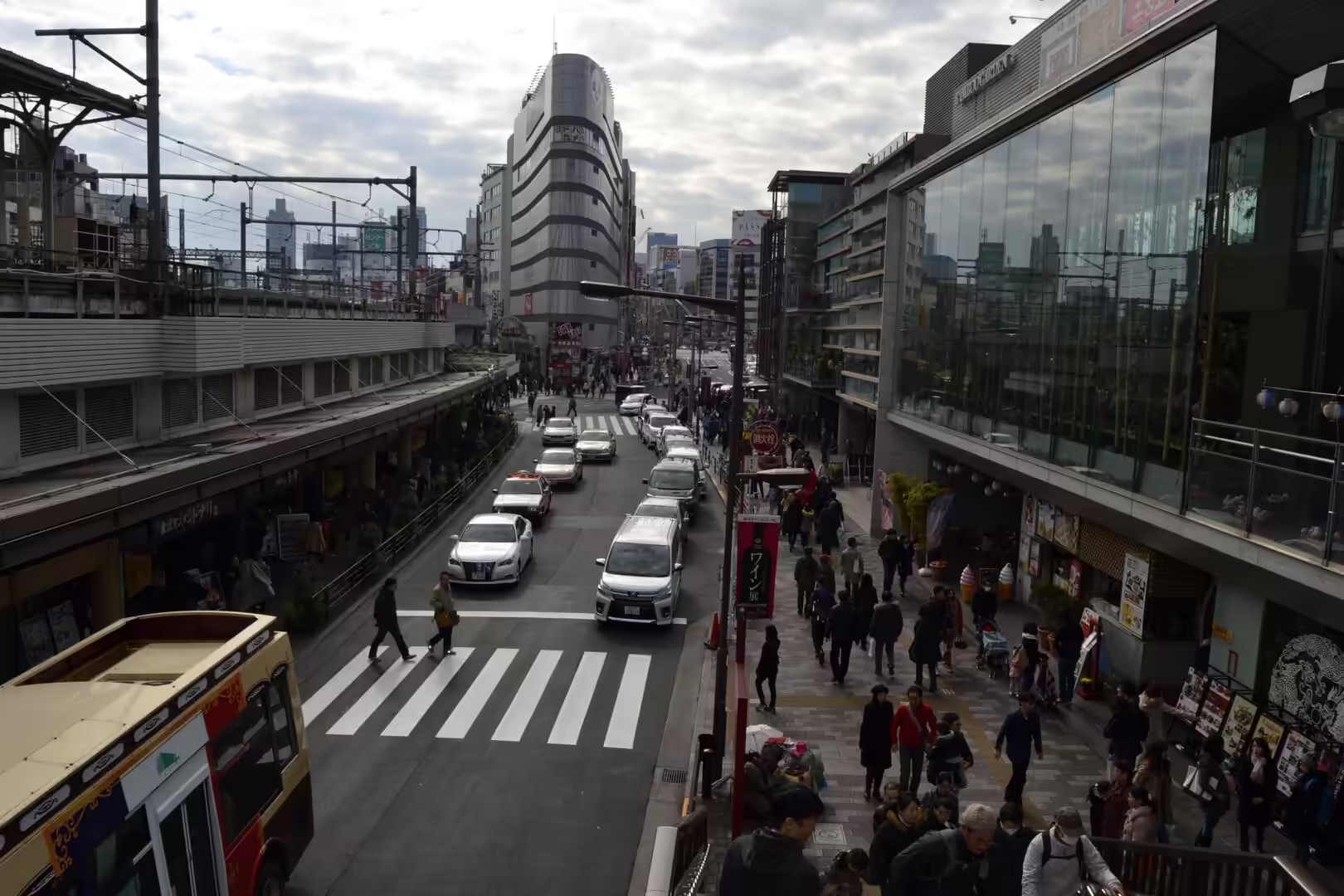
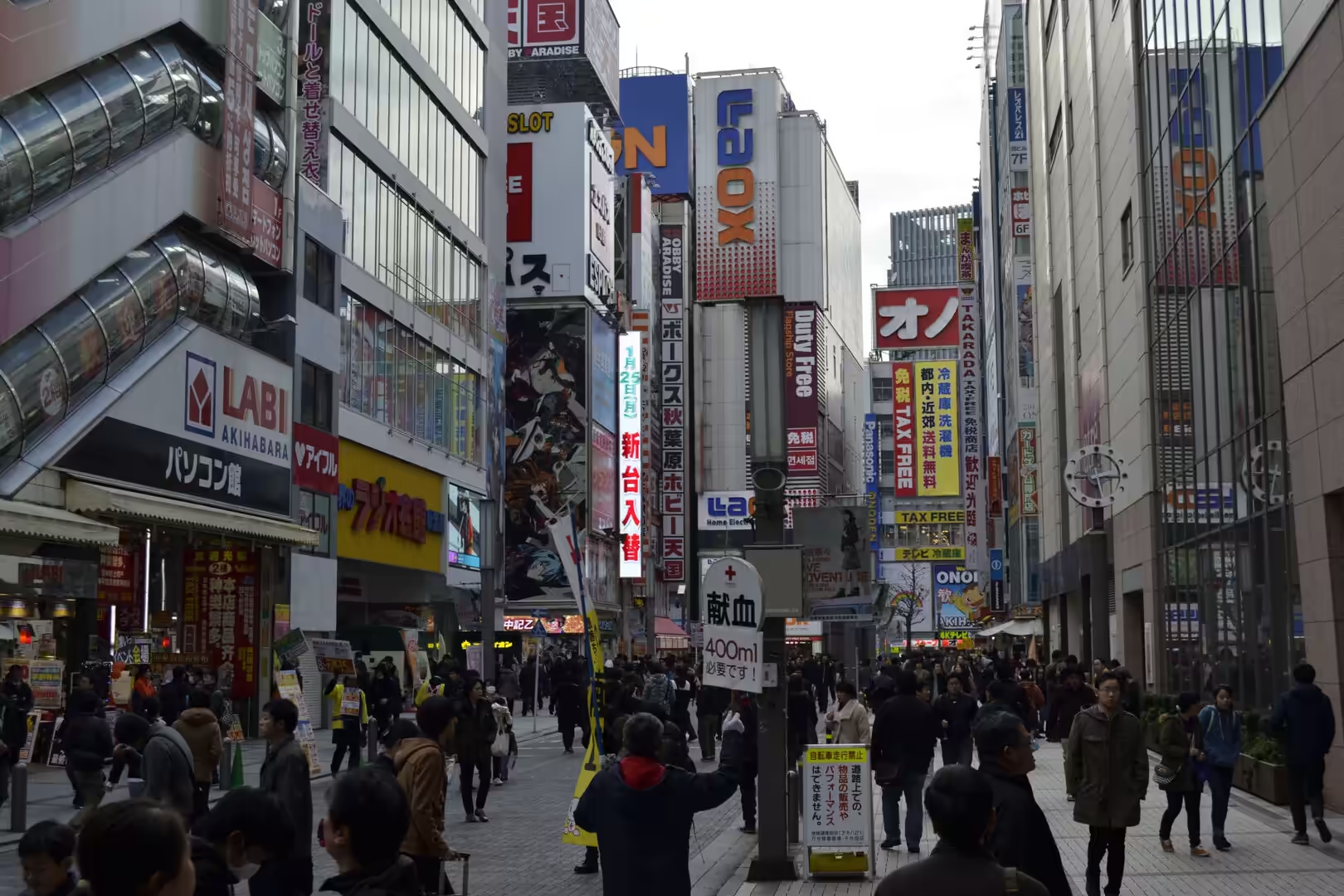
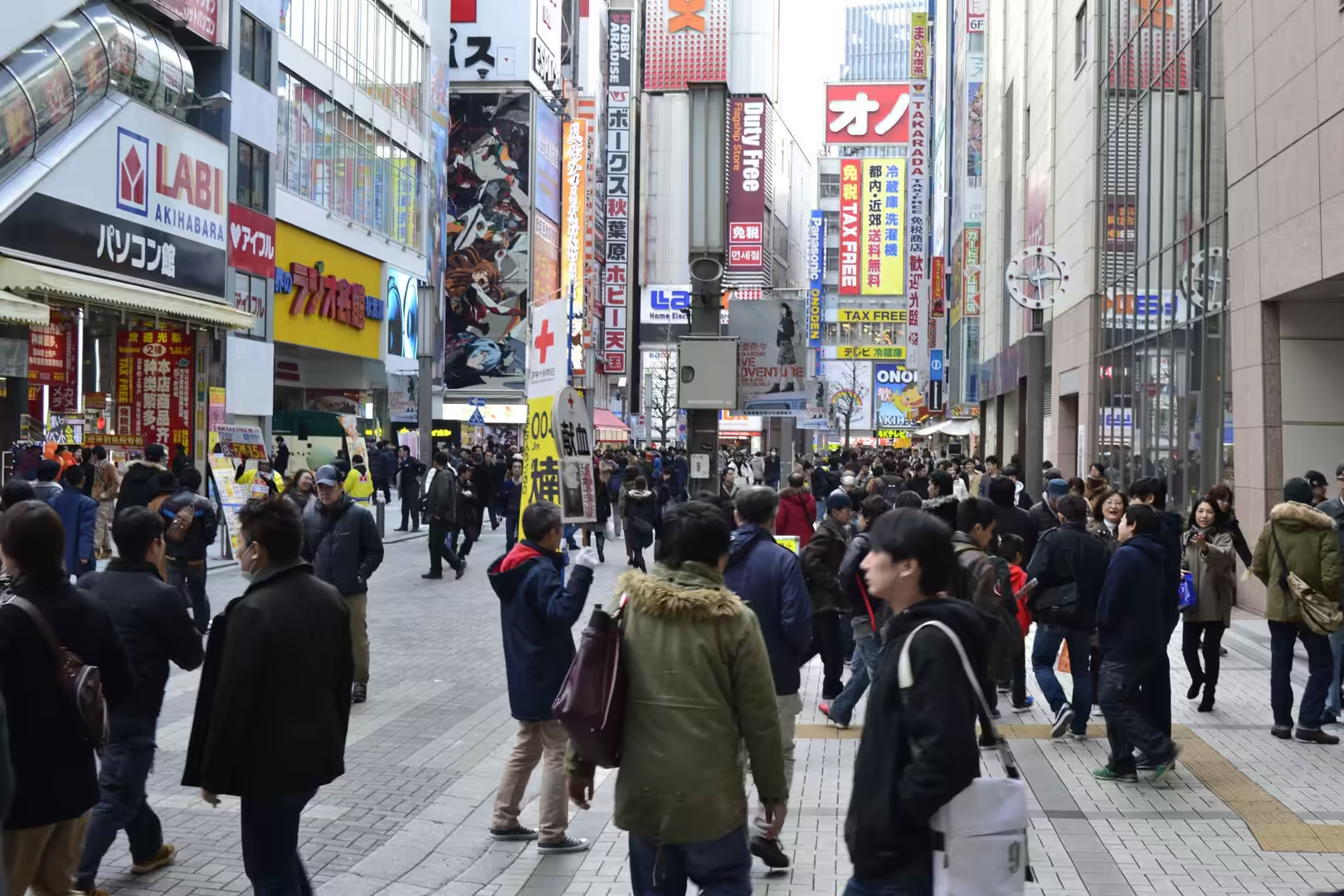
The first impressions of Tokyo were of order. A street with its traffic moving on the left, the pavements clean, the signs in three scripts, and the Tokyo Skytree visible from a distance, a slim grey needle above the roofs. Then a hotel room, which in Japan is a small lesson in design: a double bed, a narrow desk, and a toilet with a heated seat and a control panel on the wall beside it, which is one of the small technical comforts that visitors remember.
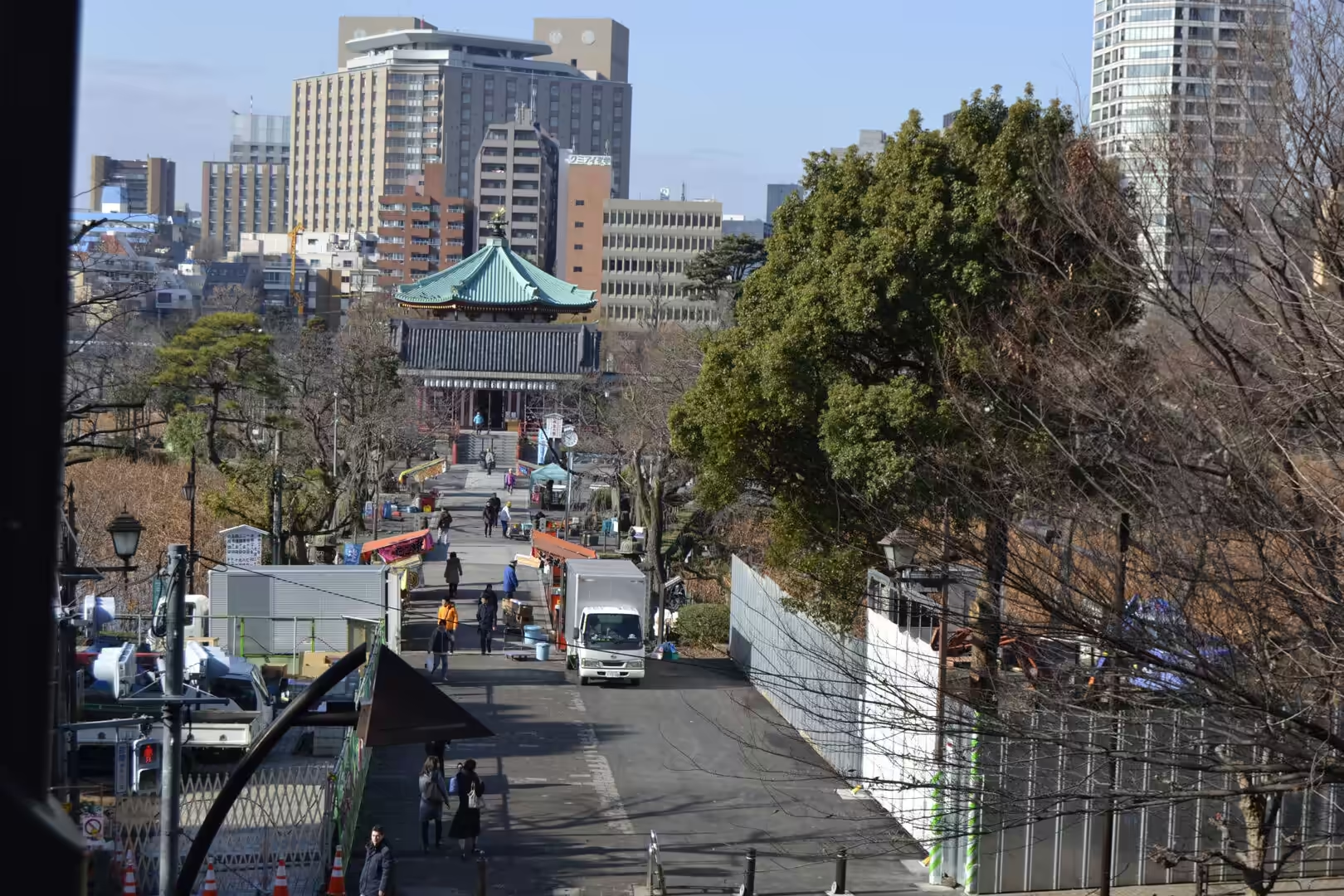
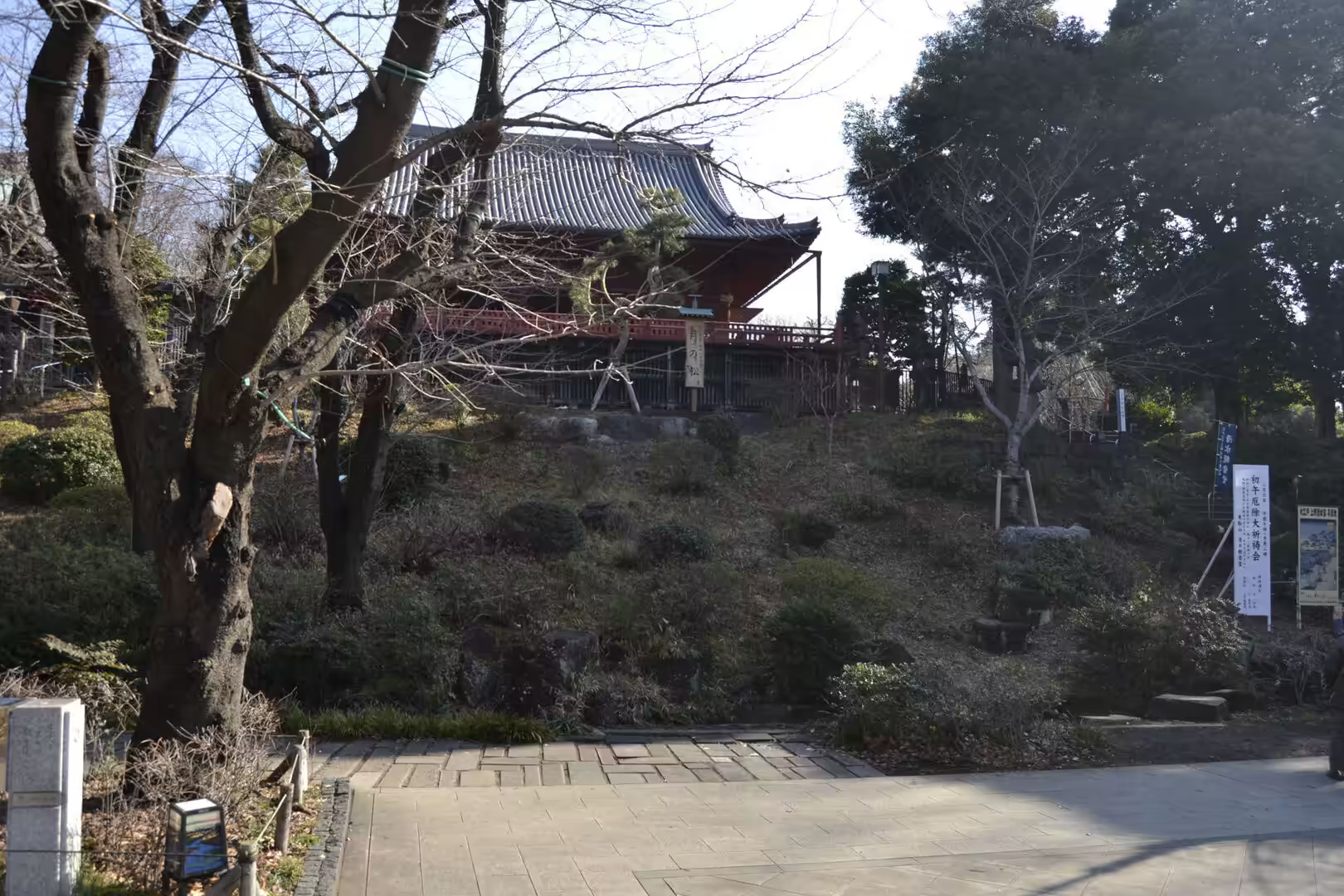
The temple belonged to the older city. It was a Buddhist temple of the kind that Tokyo has kept since the Edo period, with a hall, a pagoda and gates, and with visitors moving through it in the ordinary way of a working religious site. The most famous of these is Senso-ji in Asakusa, the oldest temple in the city, dedicated to Kannon, the bodhisattva of compassion, and visited by more than thirty million people a year, which makes it the most visited religious site in the world. Its gate, the Kaminarimon, is almost twelve metres high and more than eleven metres wide, and the lantern that hangs in it is the most recognisable object in the district.
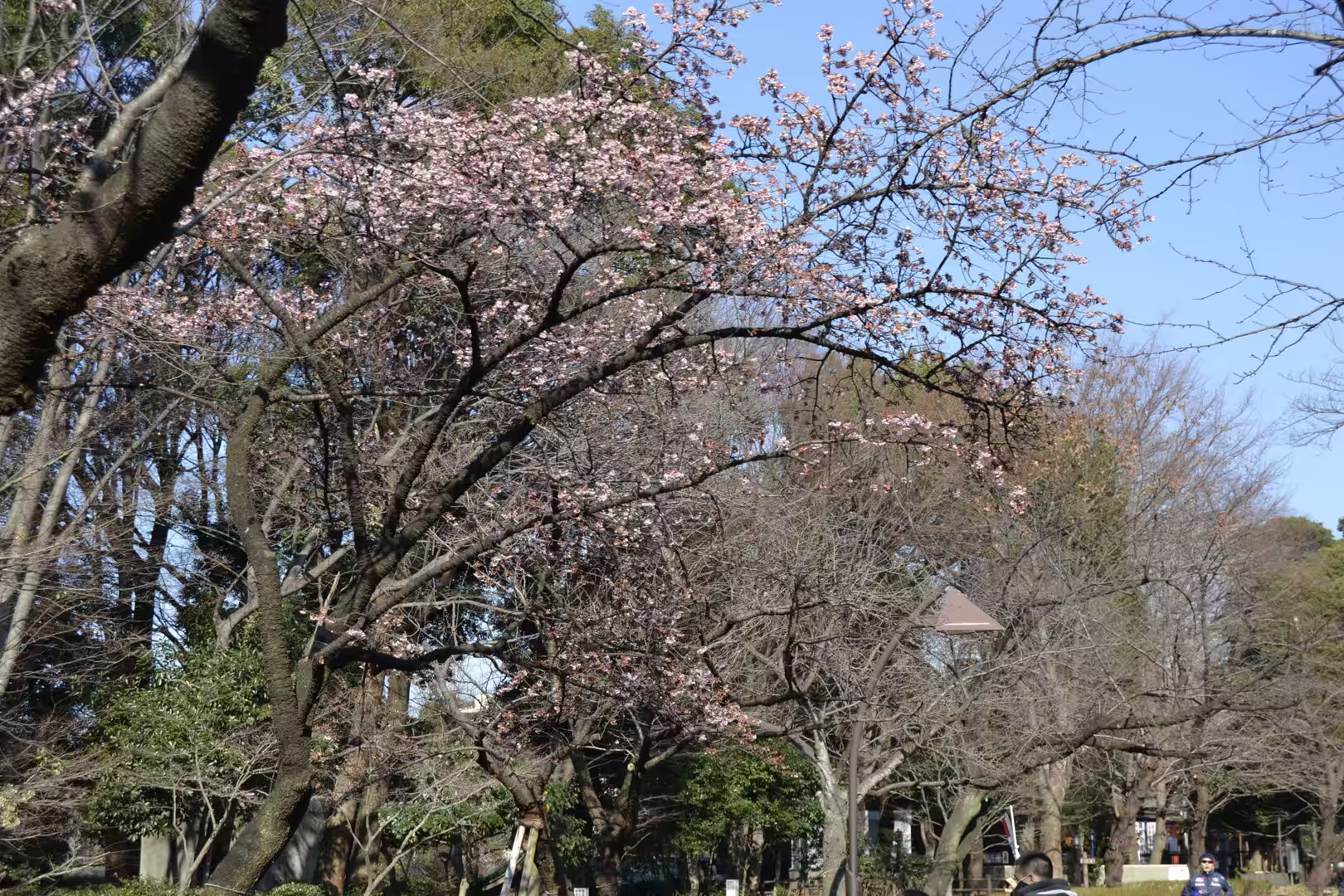
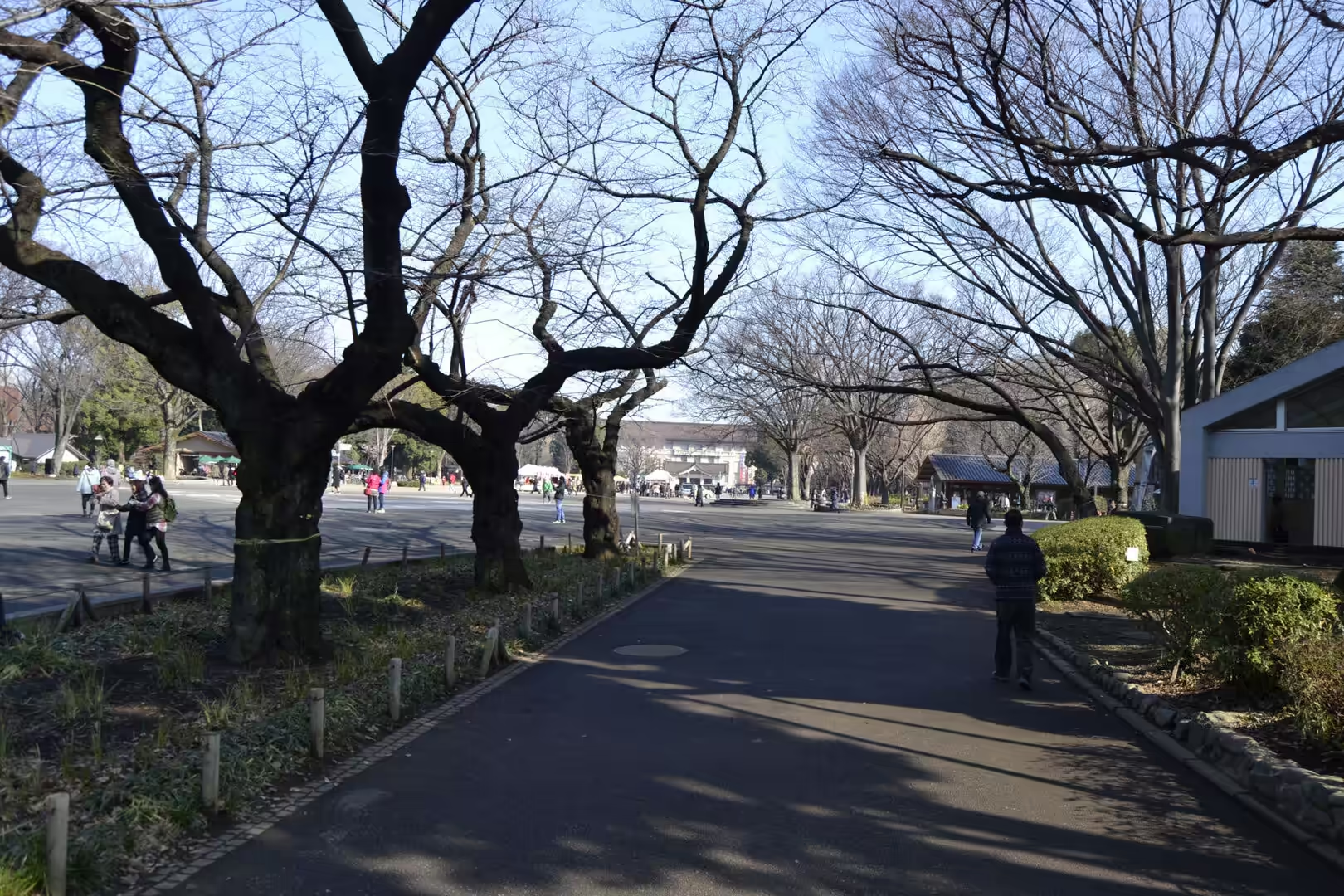
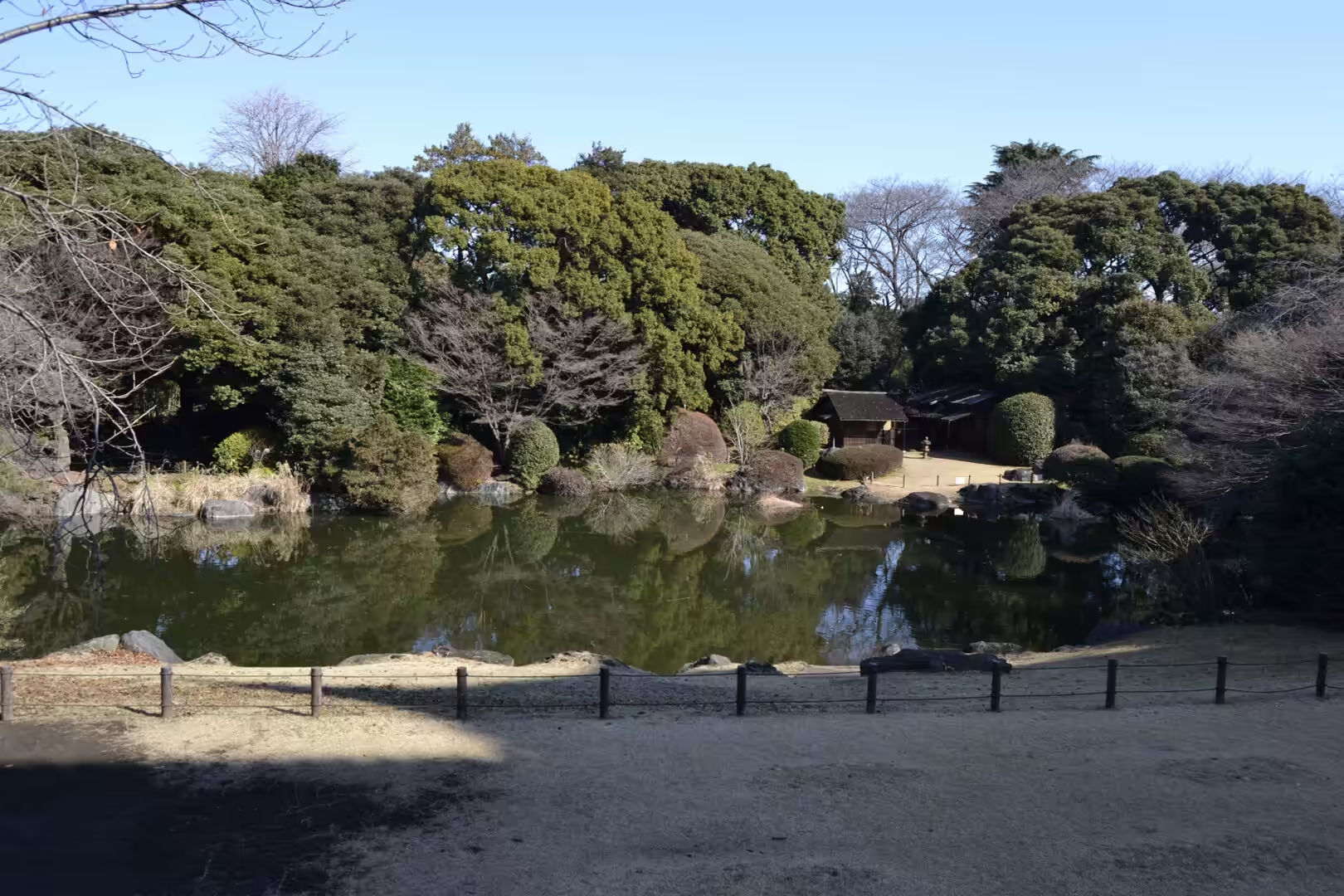
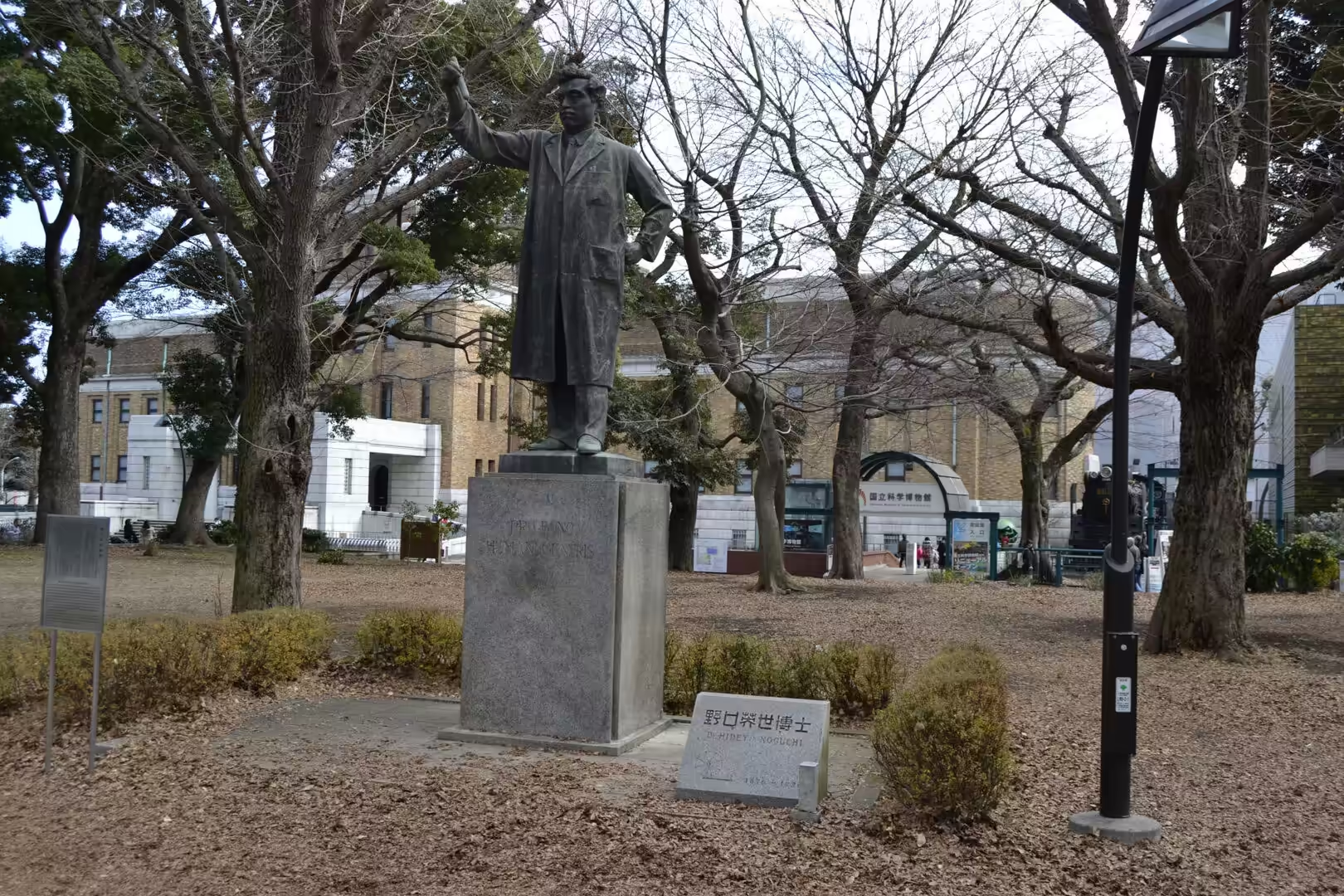
The park was in spring, with a flowering tree standing on its own above the water and the paths busy with people. Ueno Park, which contains both the temple district and the museum, was established in 1873 on land that had belonged to a temple, and it is one of the oldest public parks in the country. In spring the cherry trees open and the park fills with visitors for the few days of the blossom, which is a national institution rather than a tourist attraction.
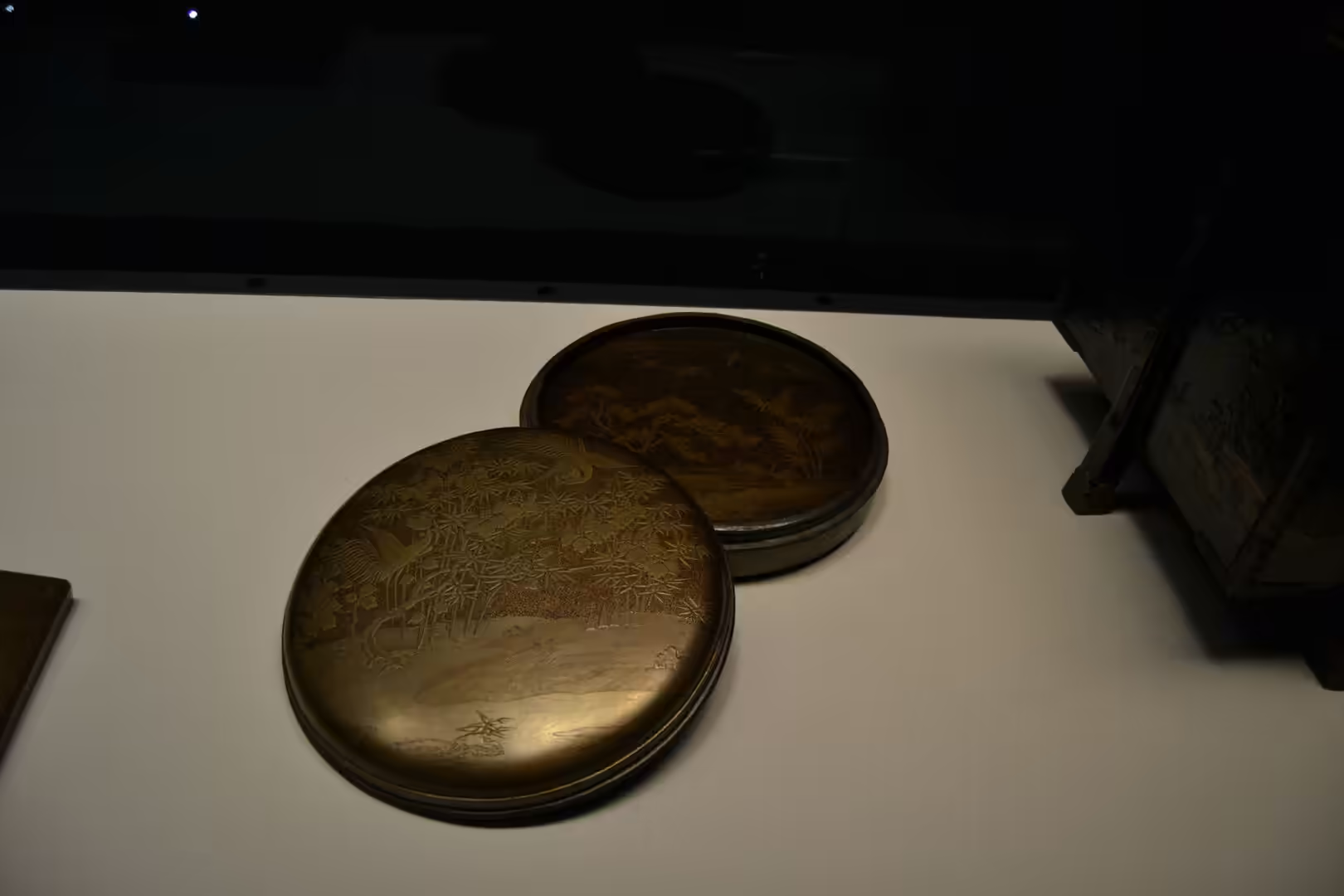
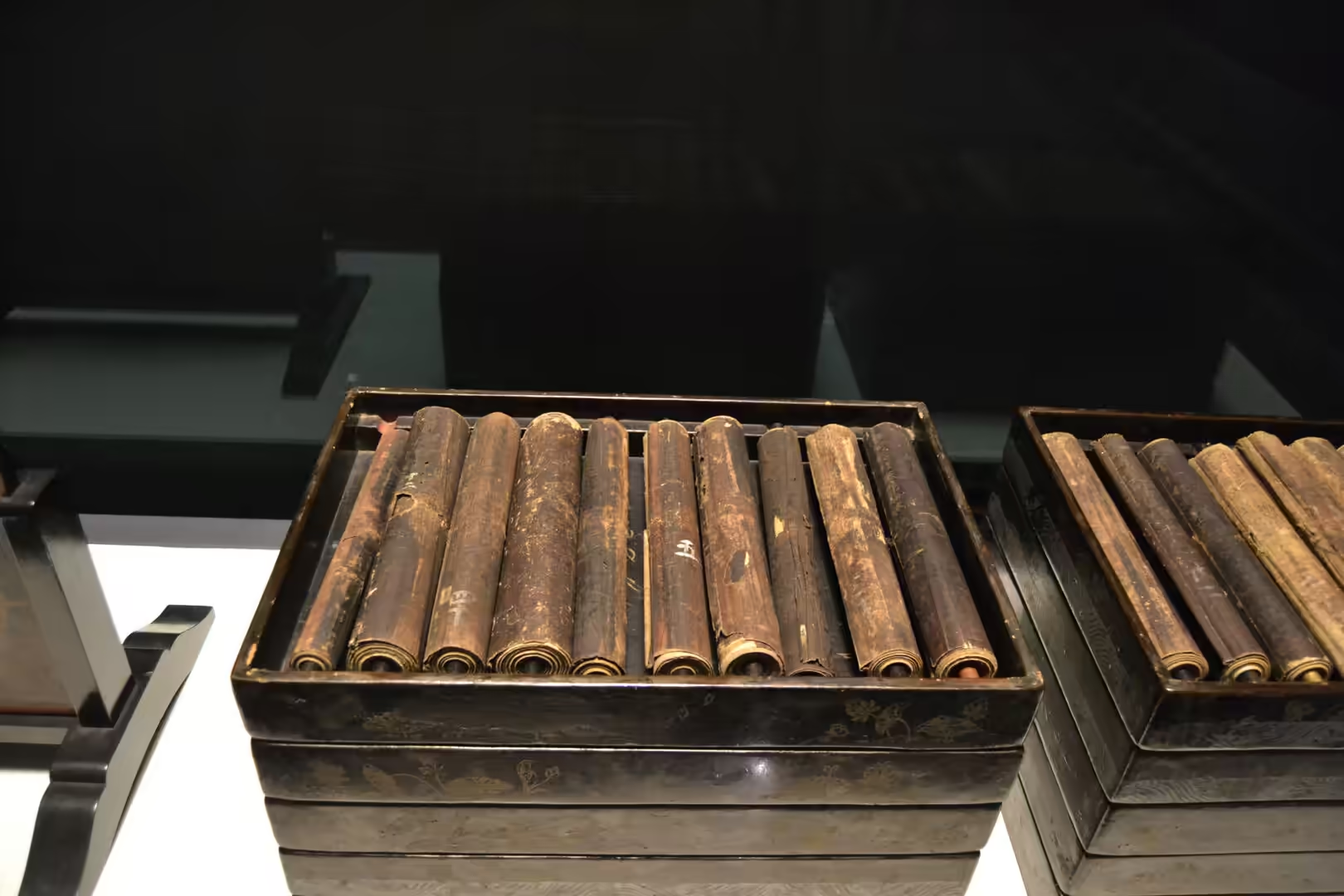
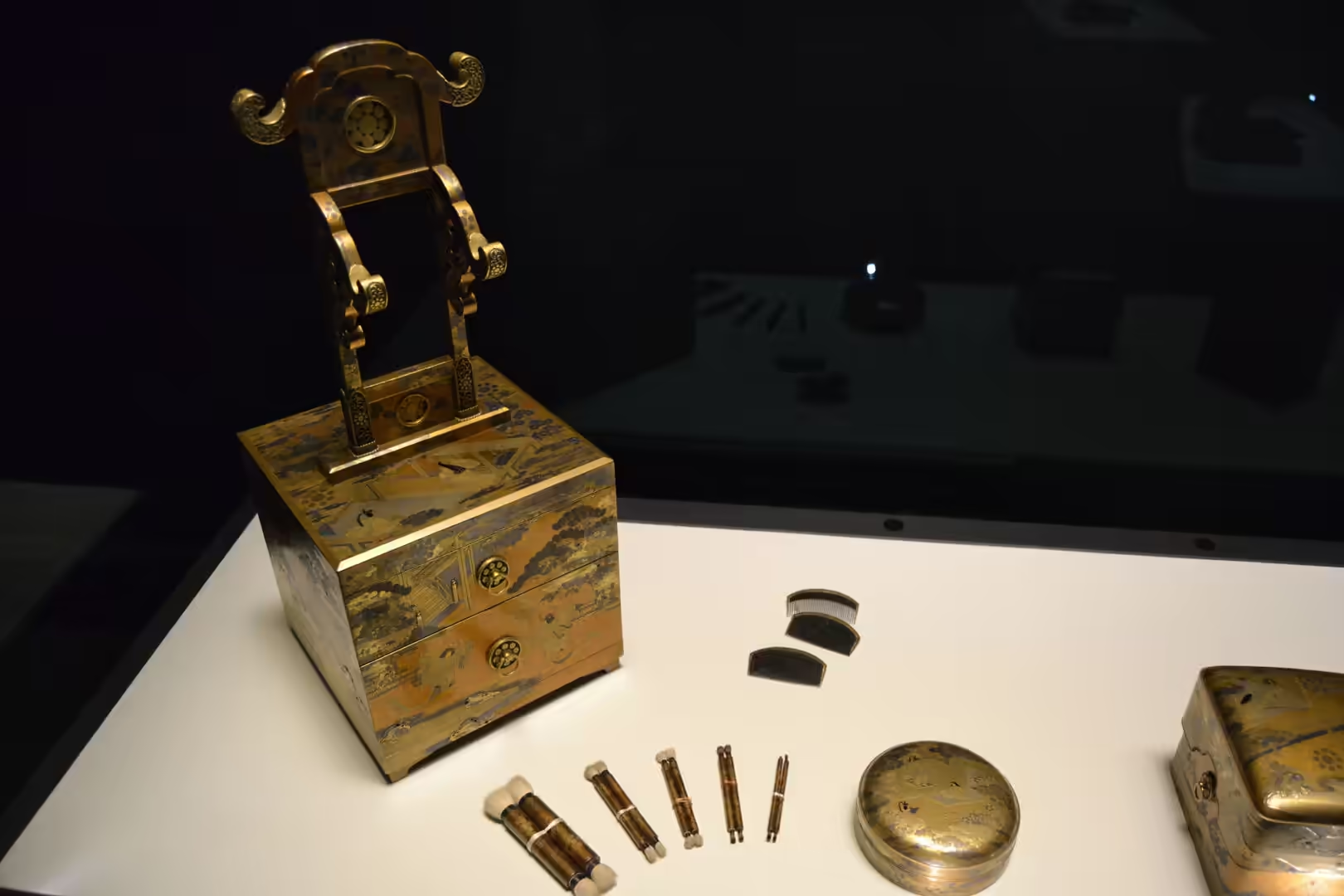
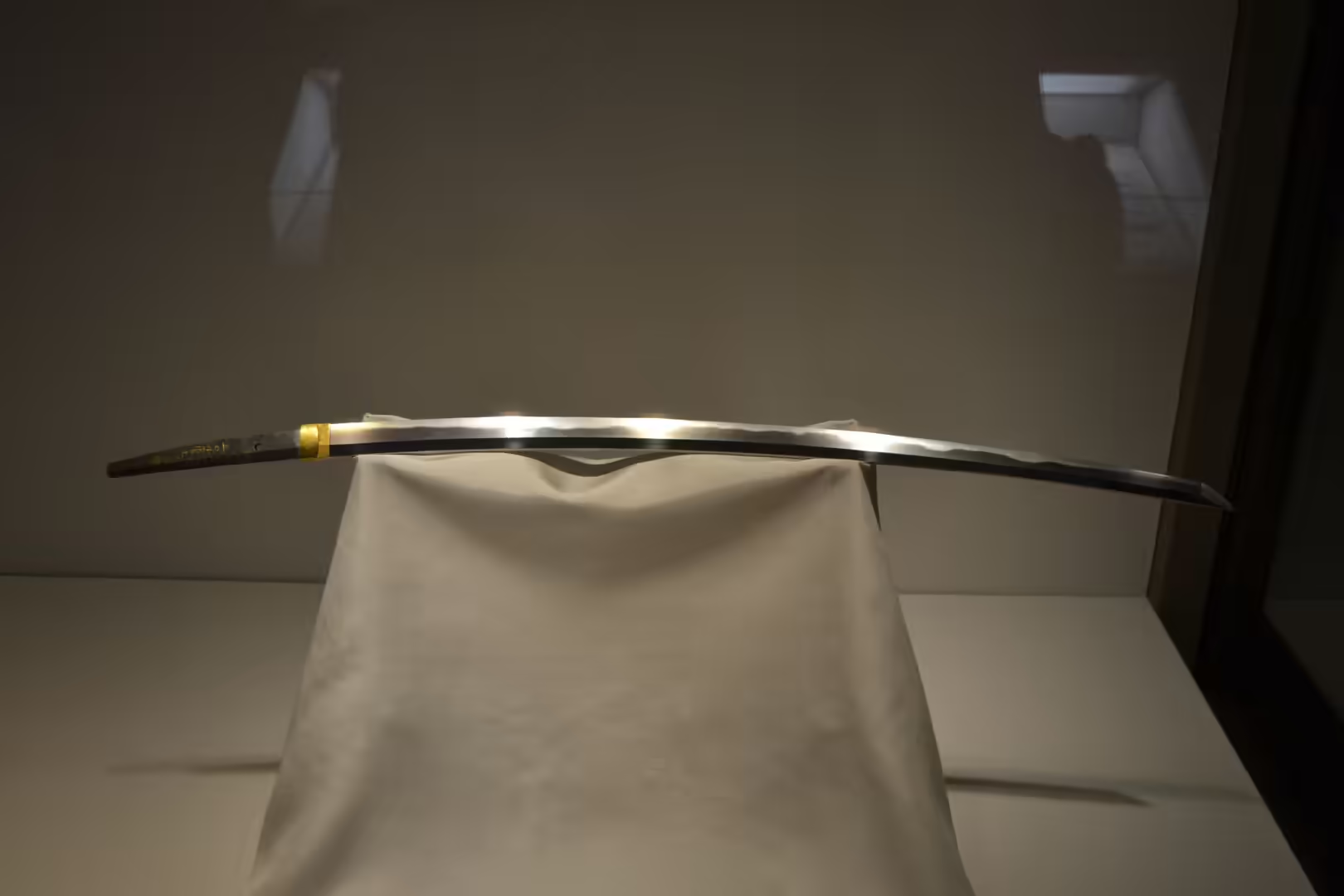
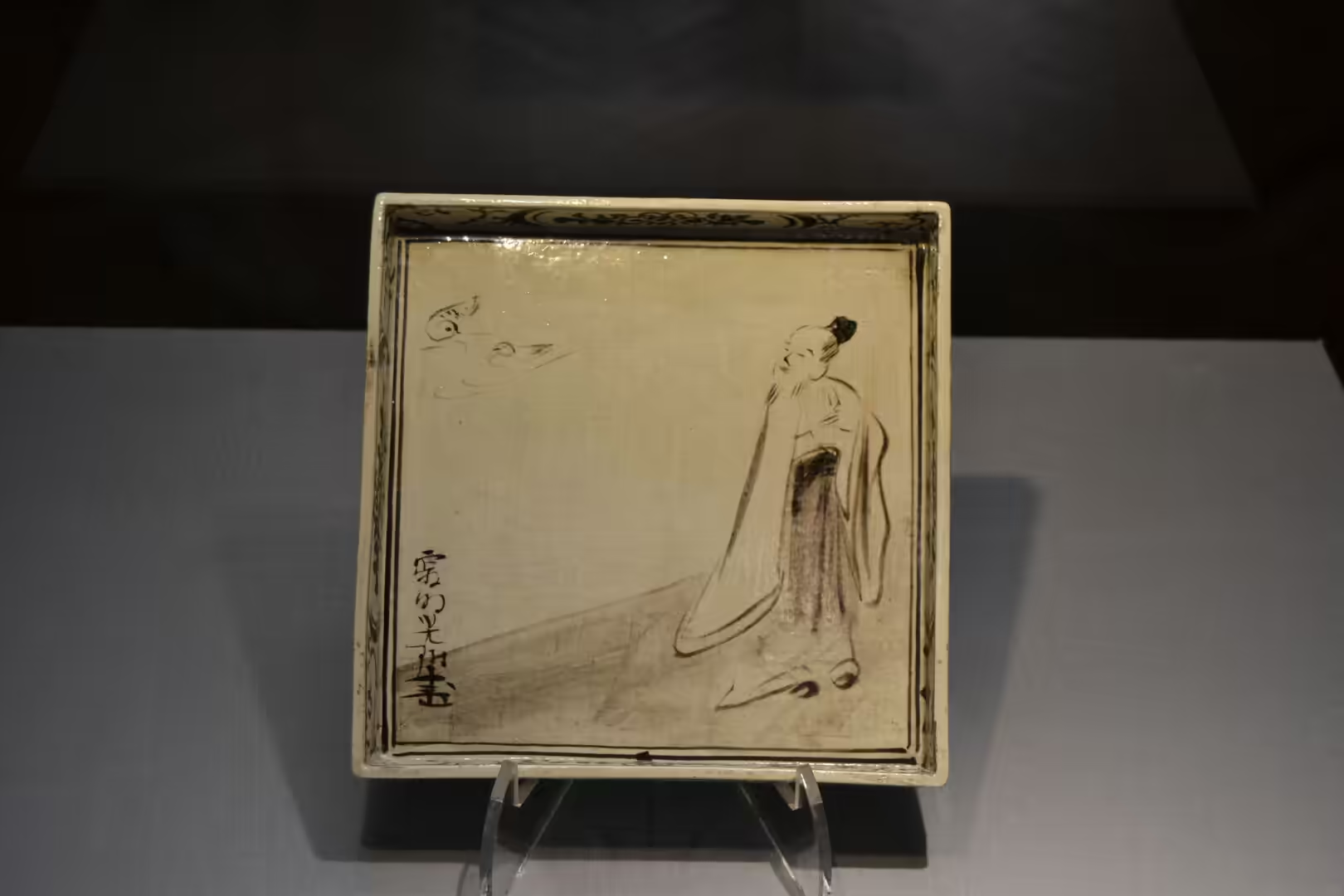
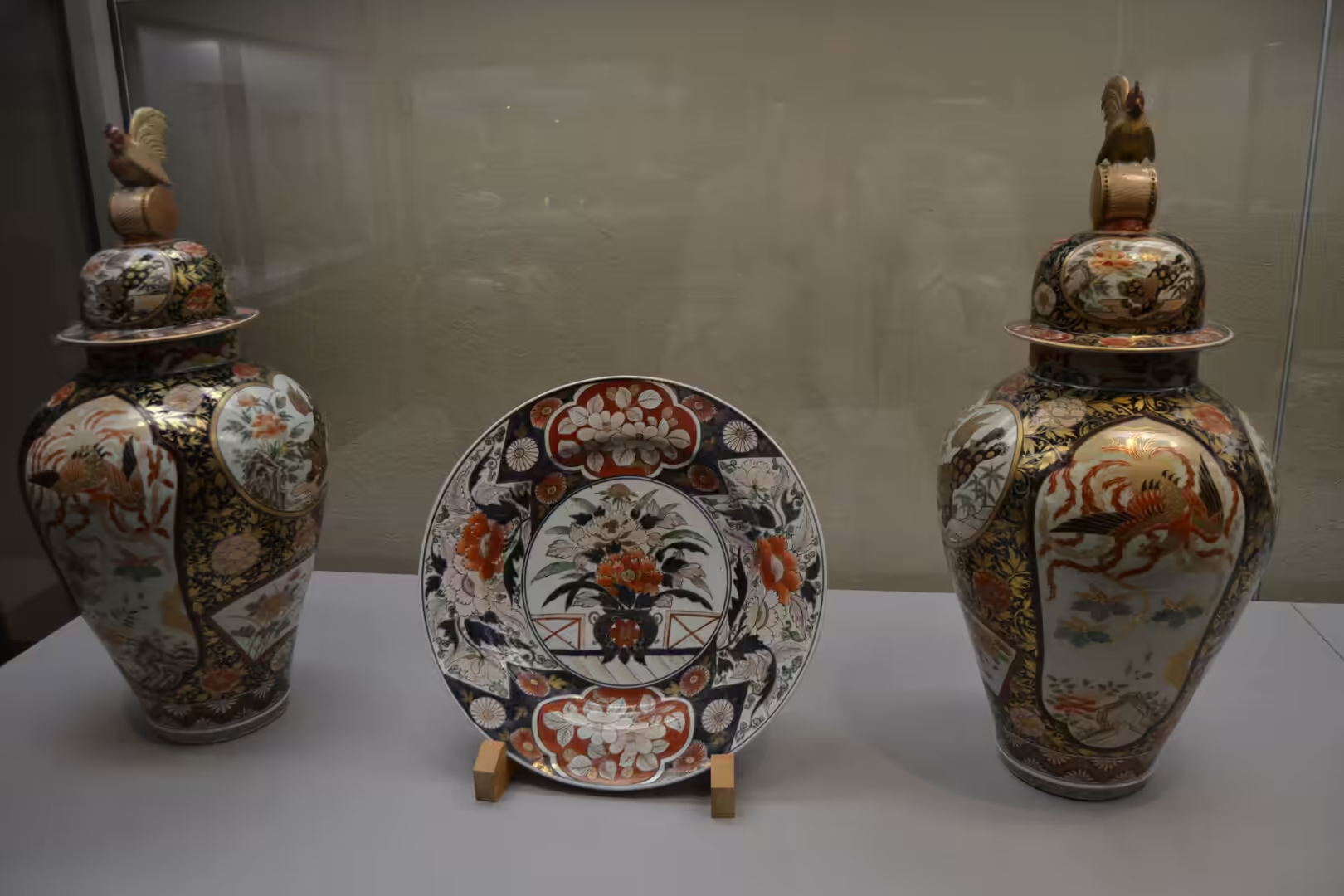
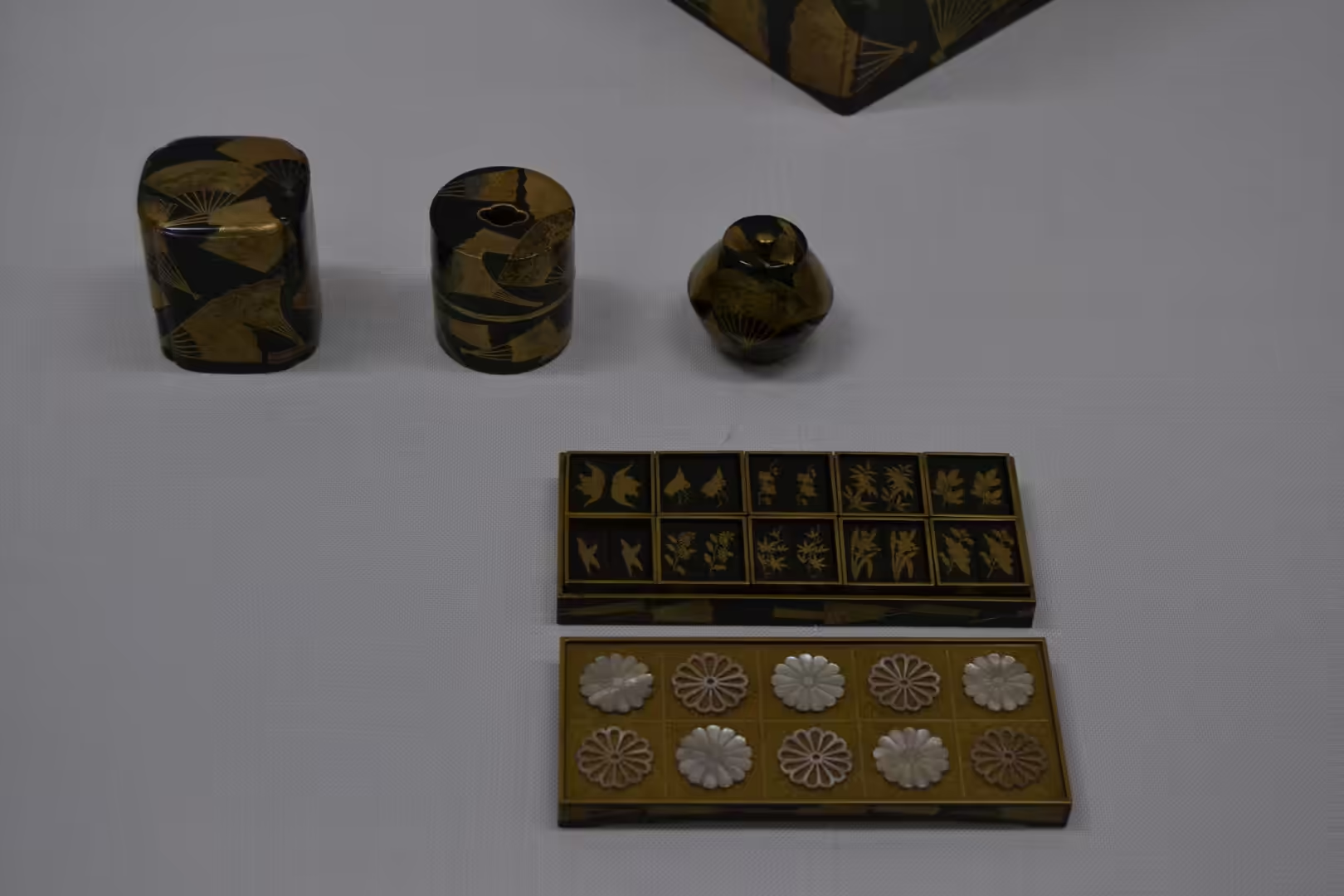
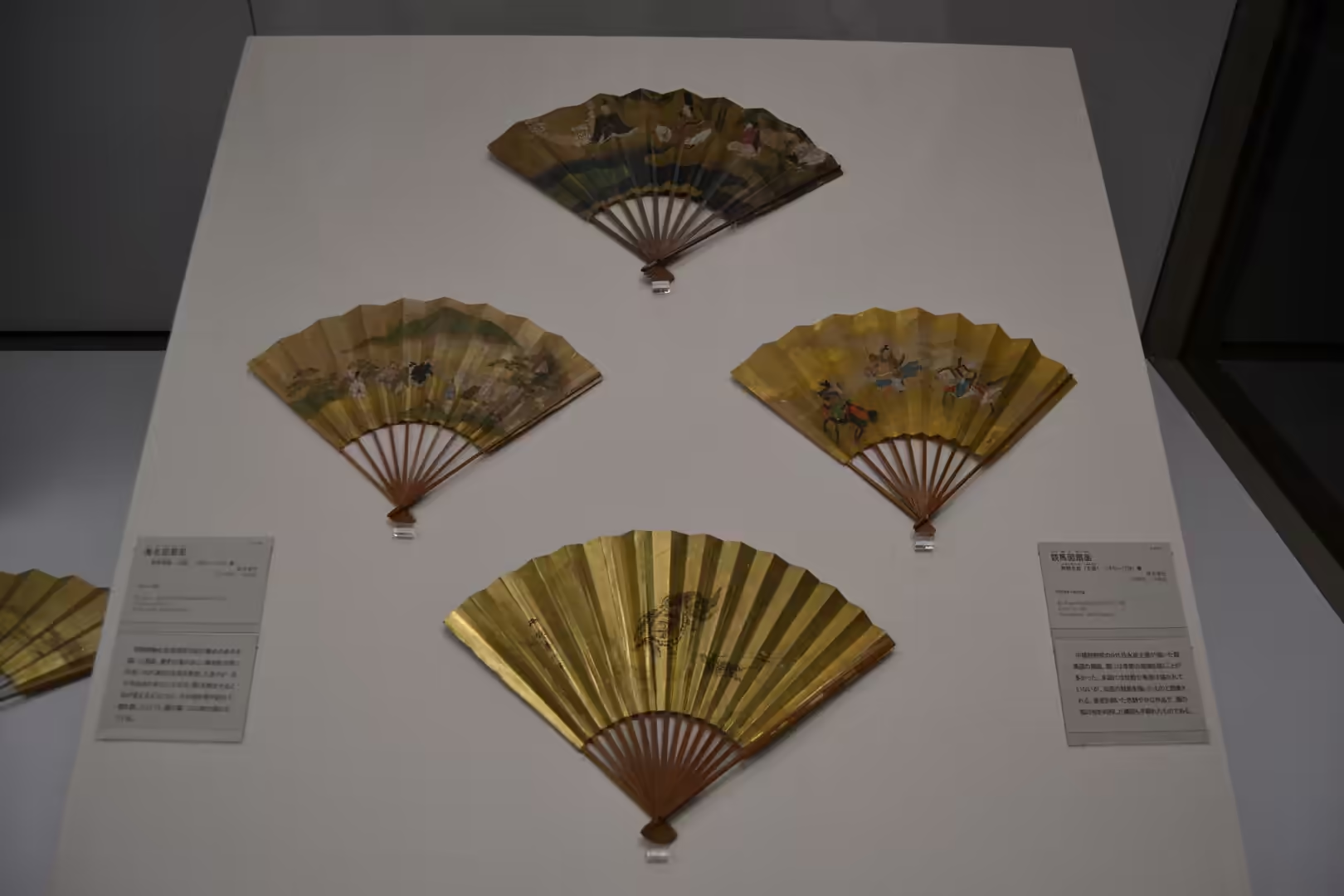
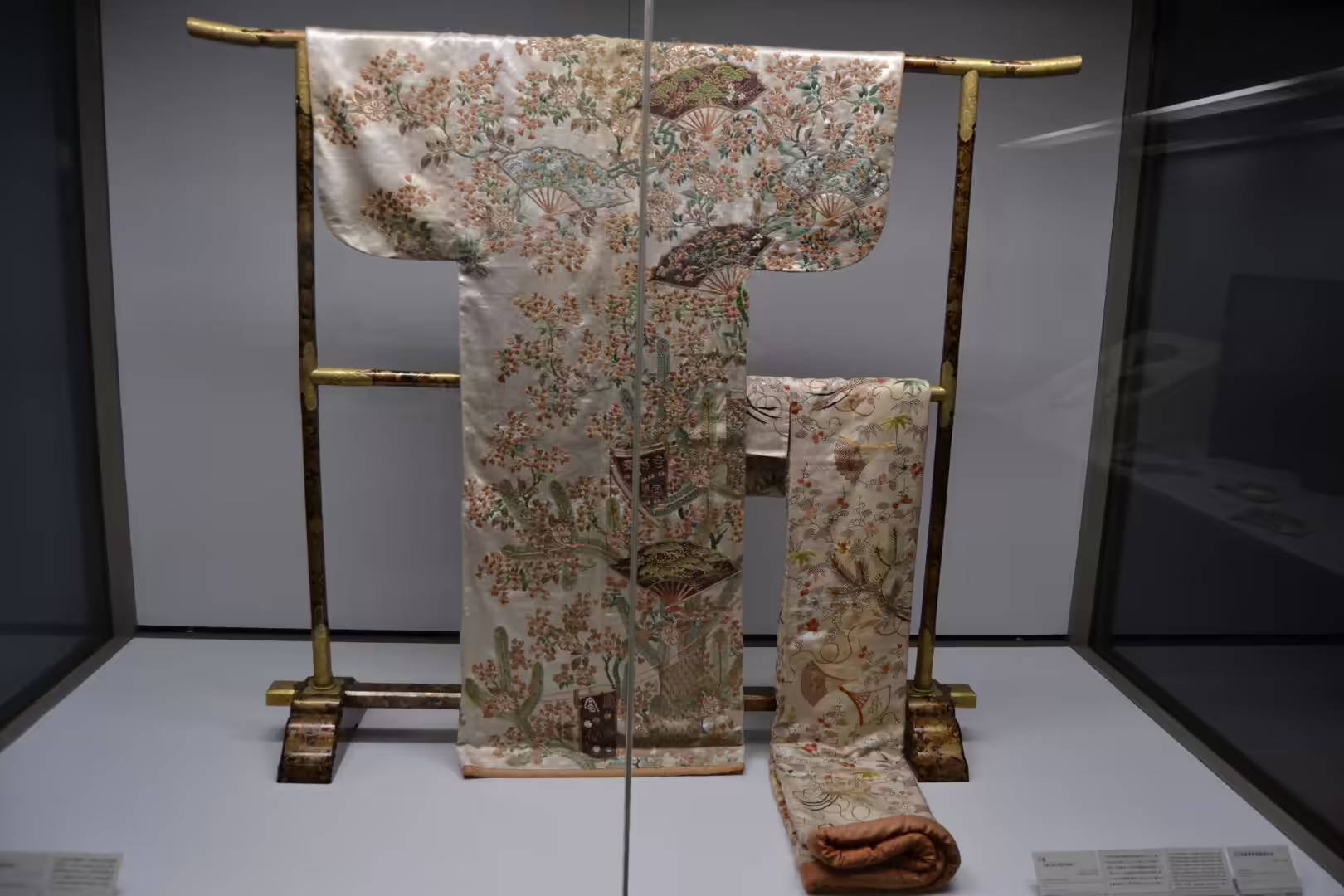
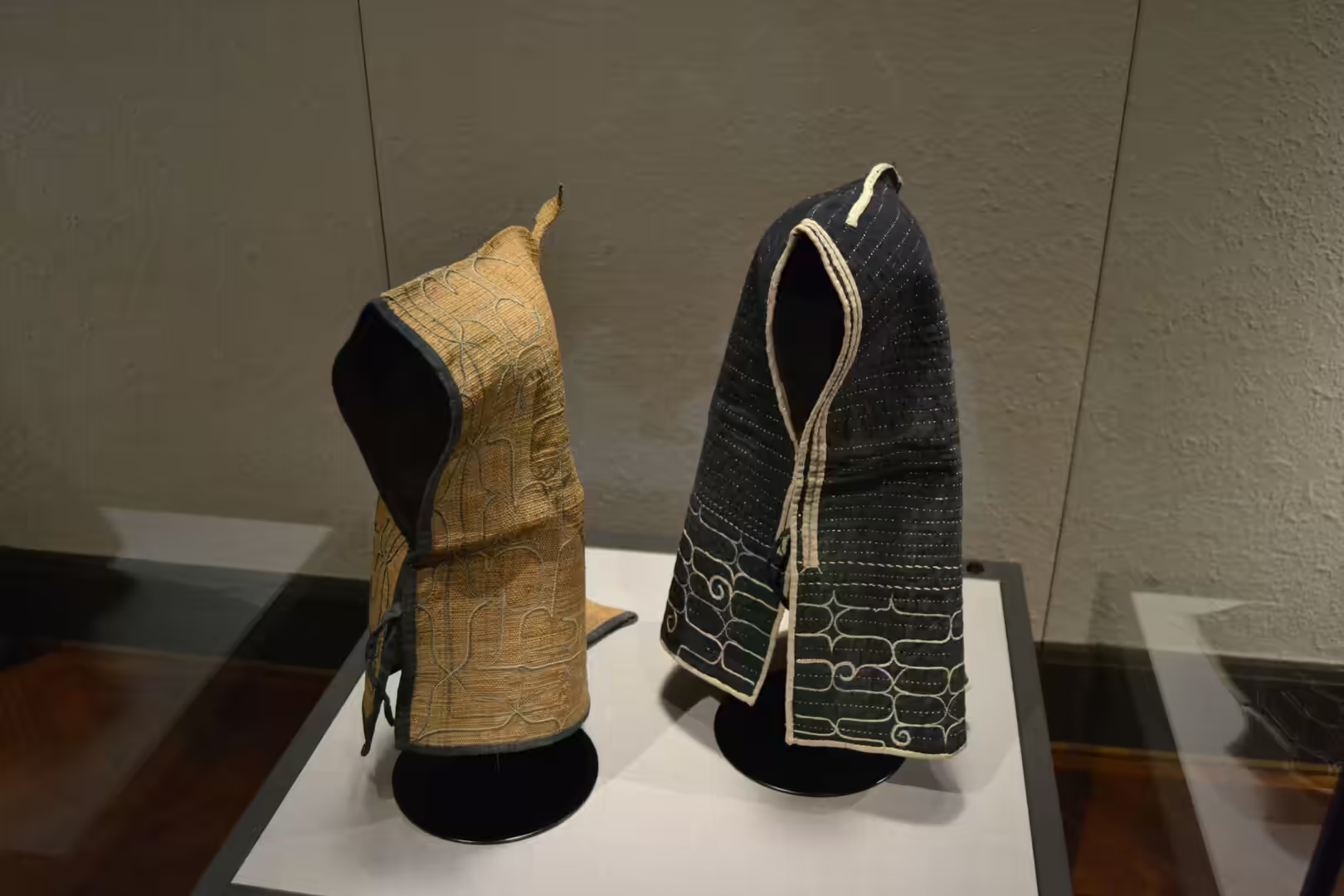
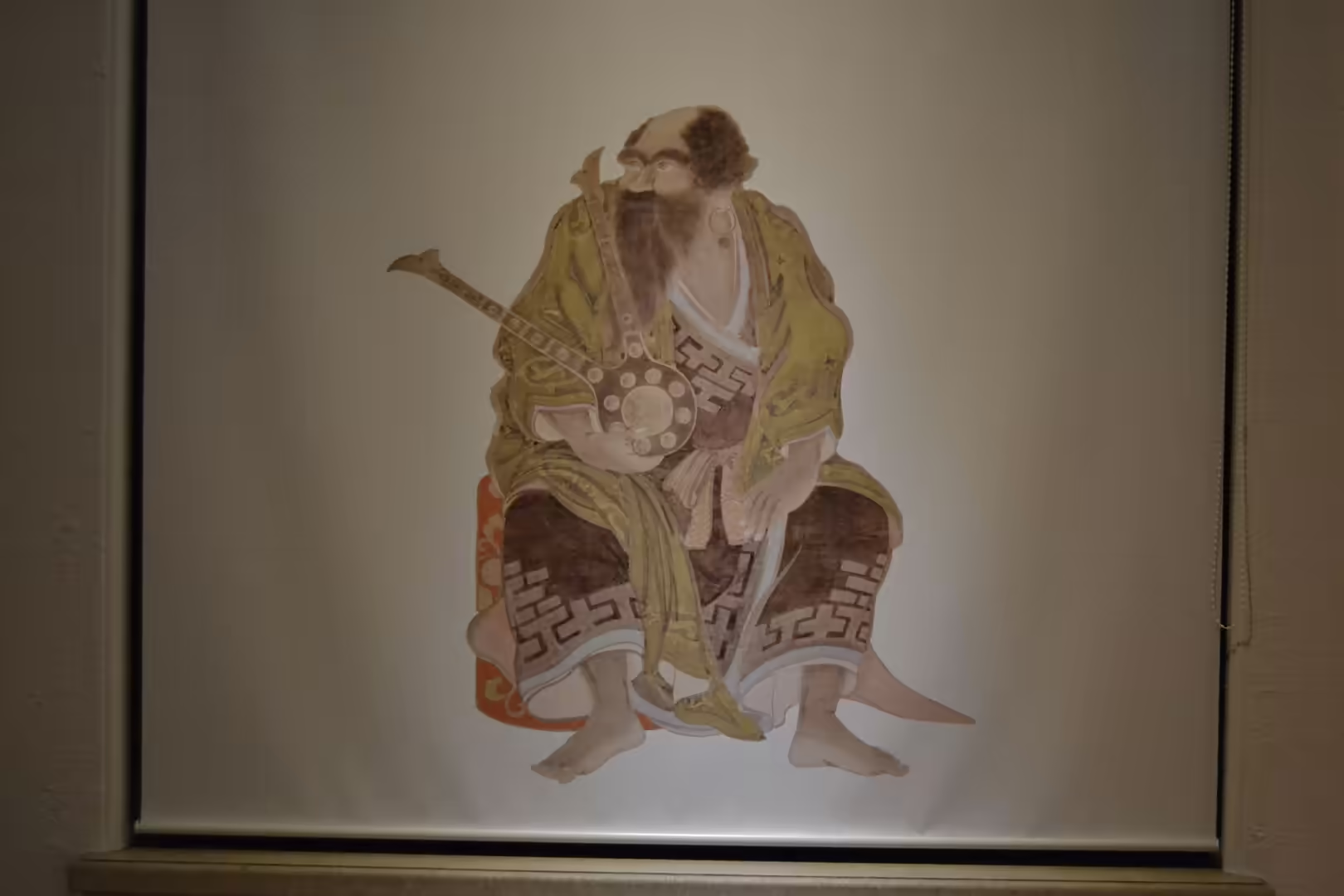
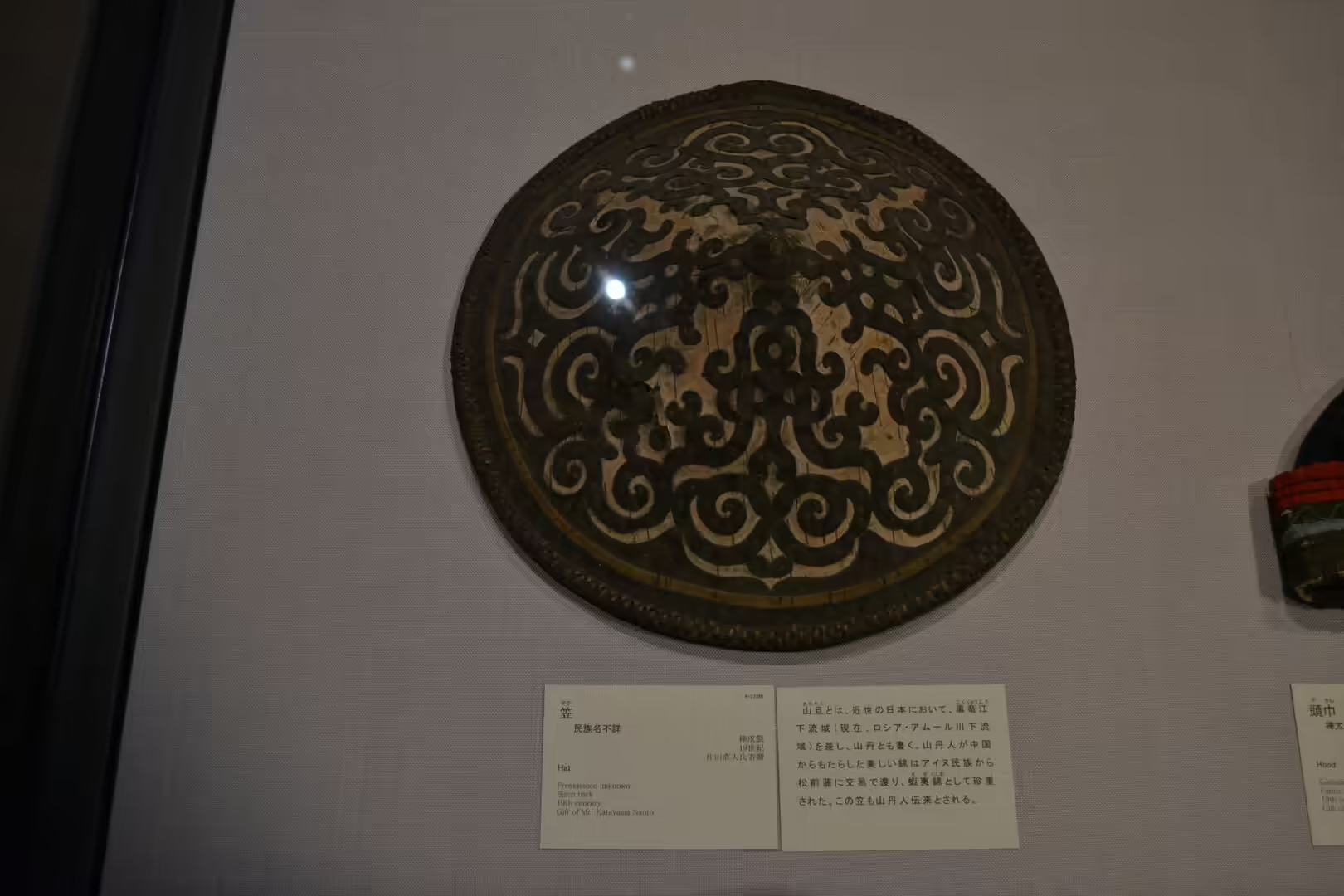
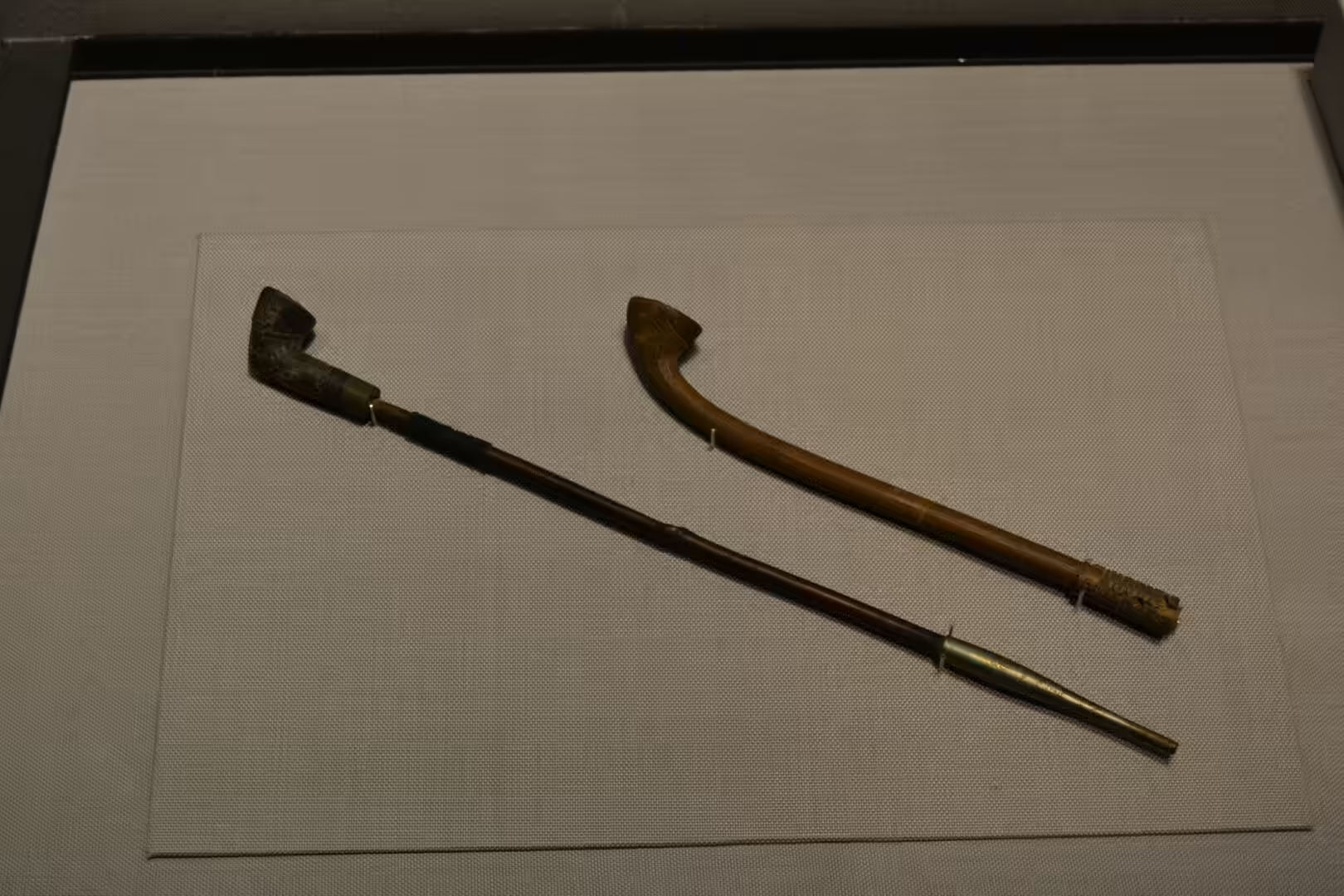
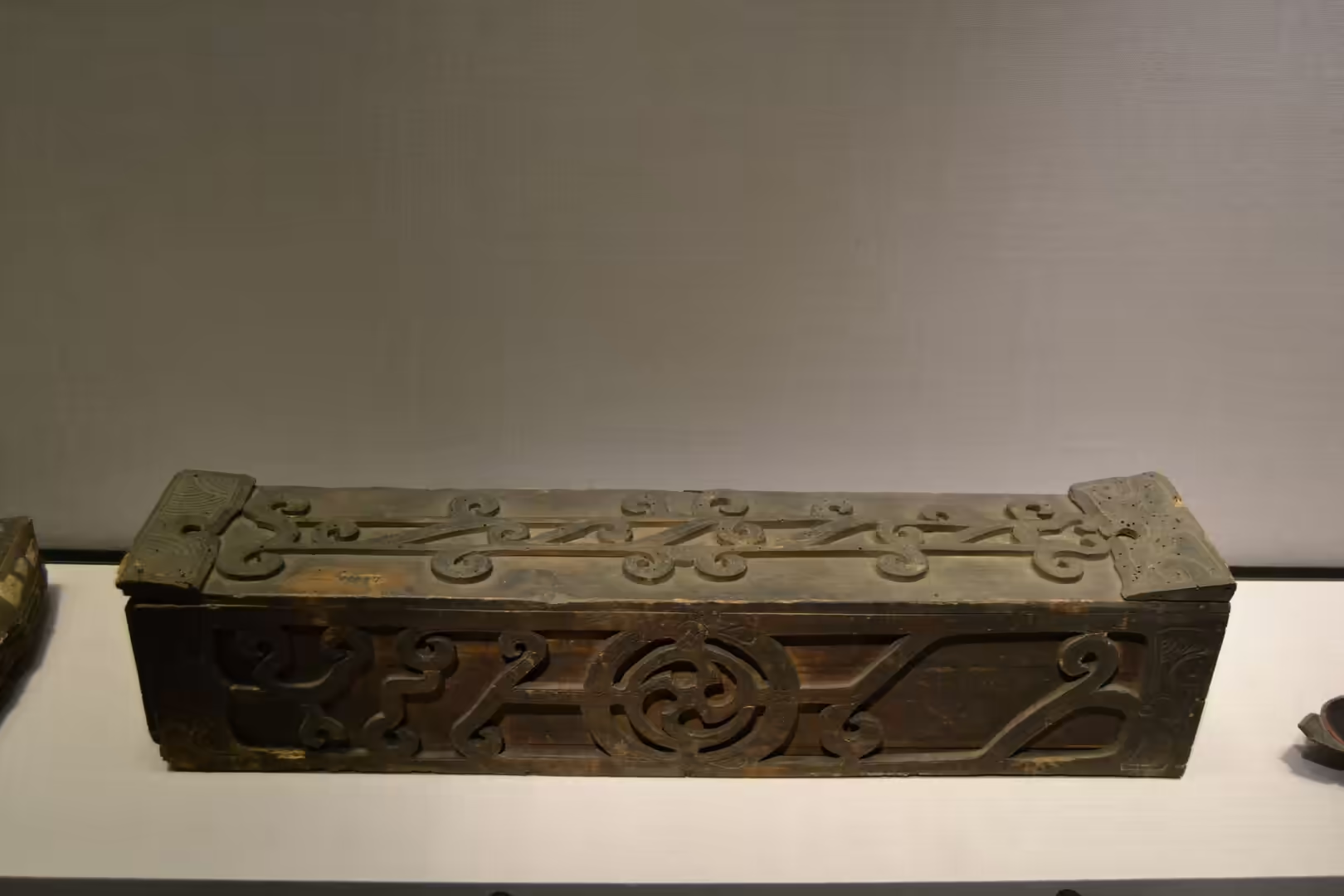
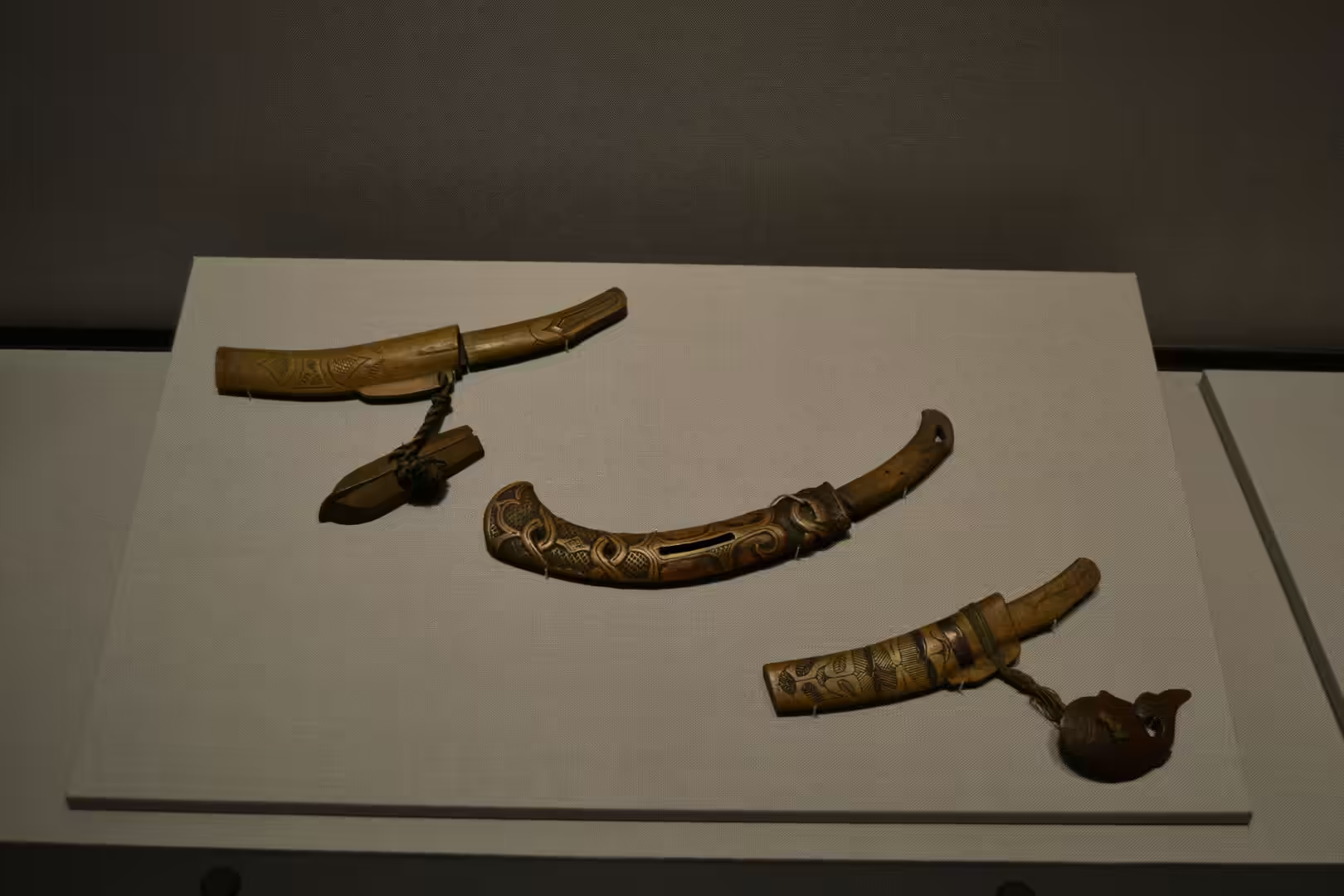
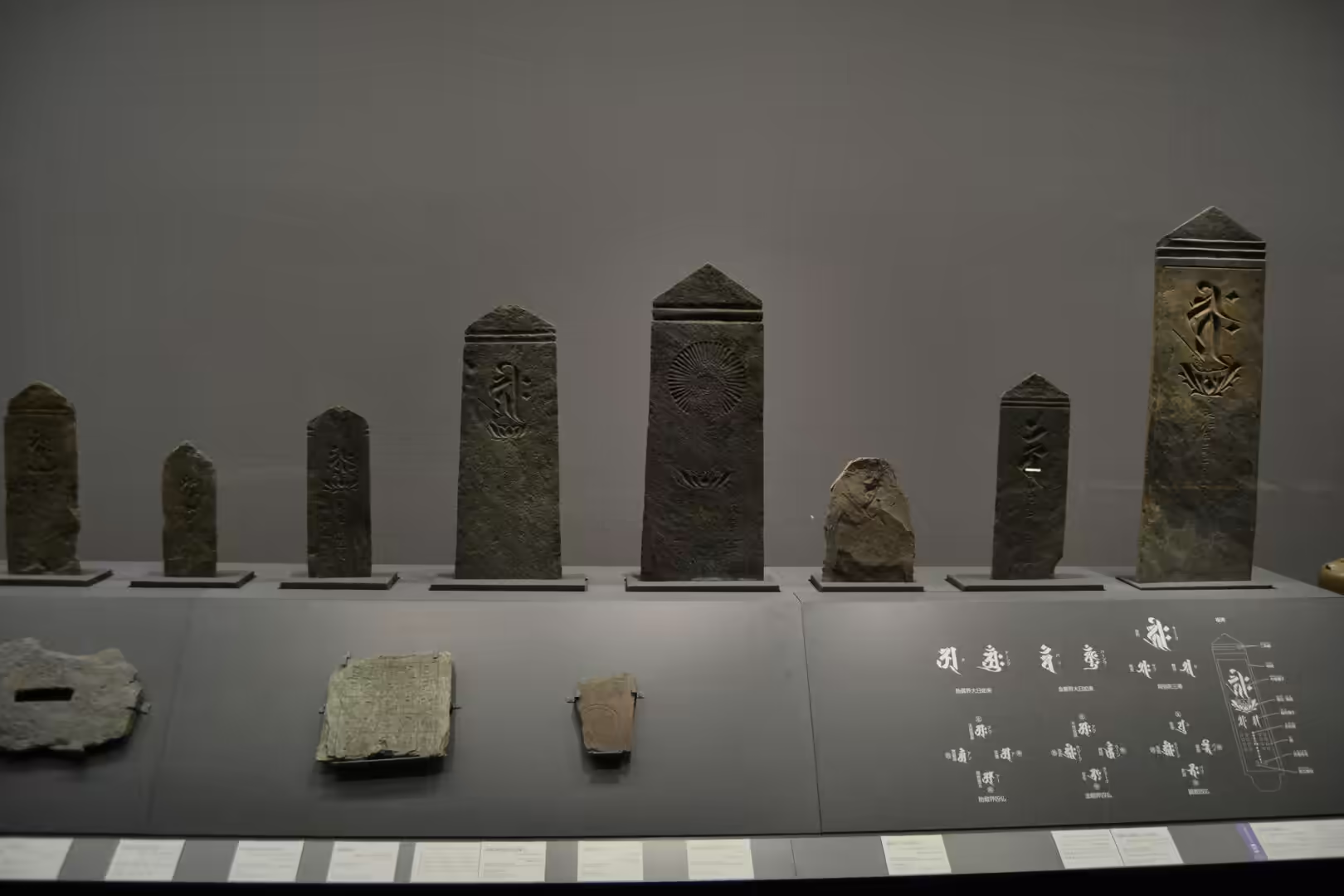
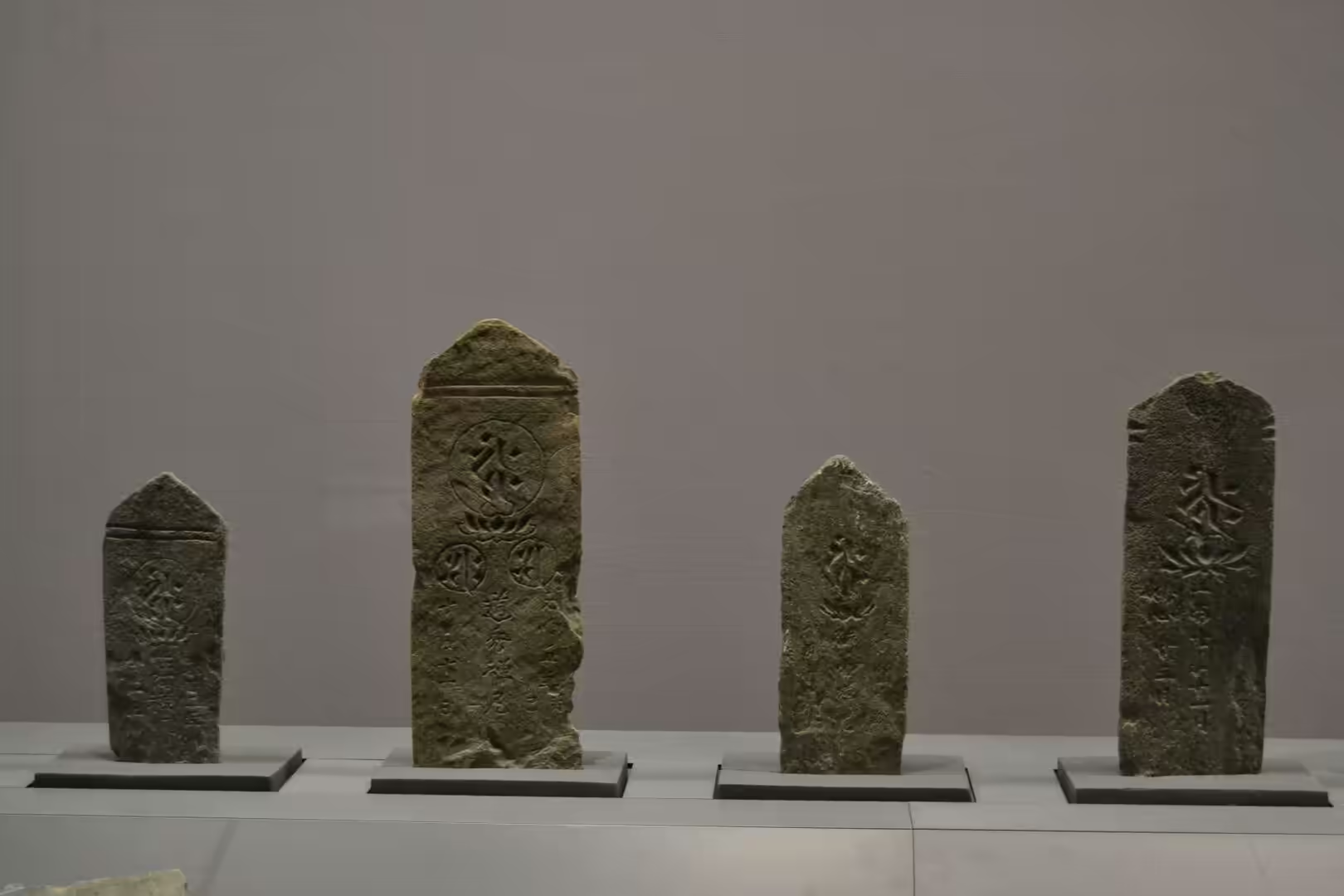
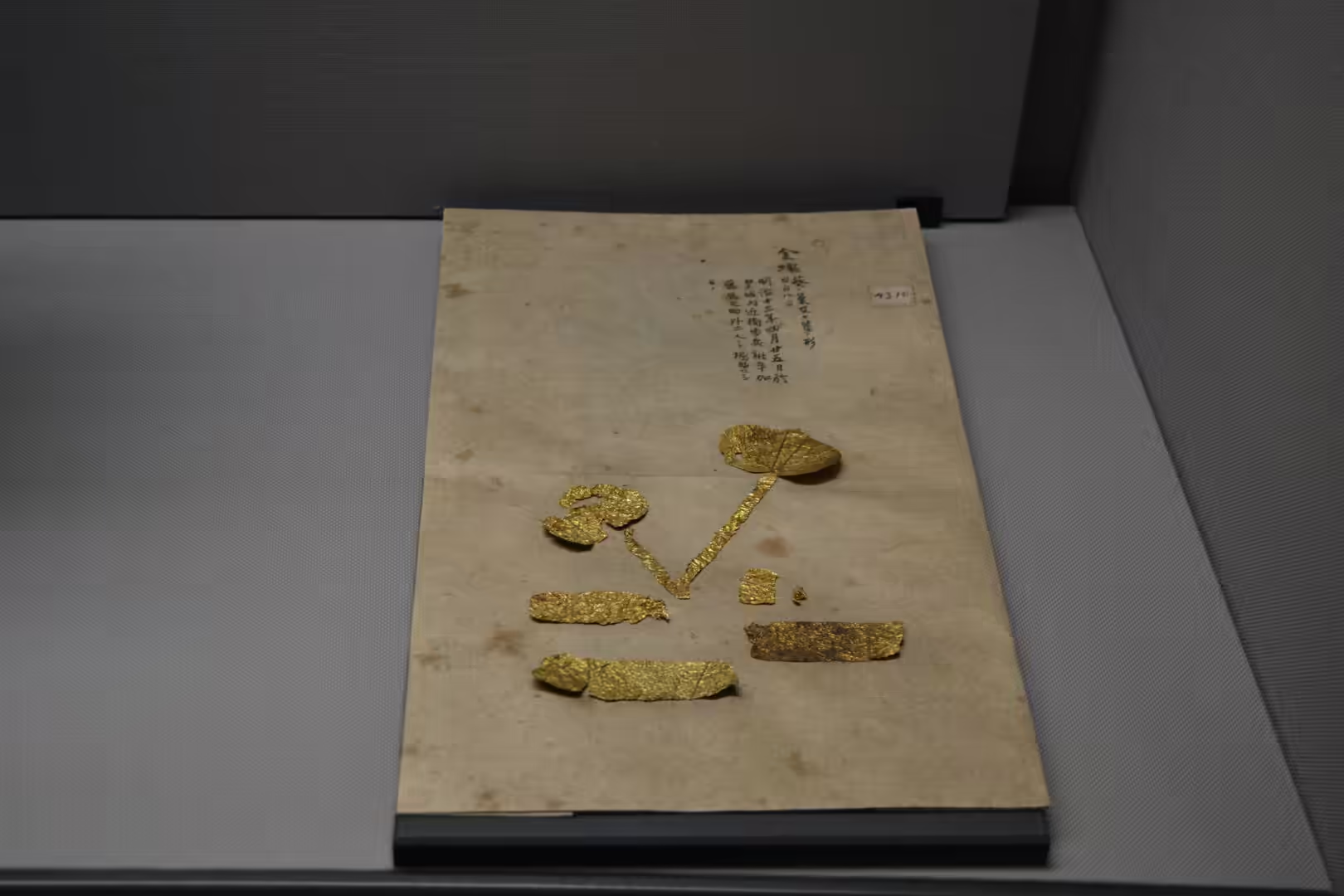
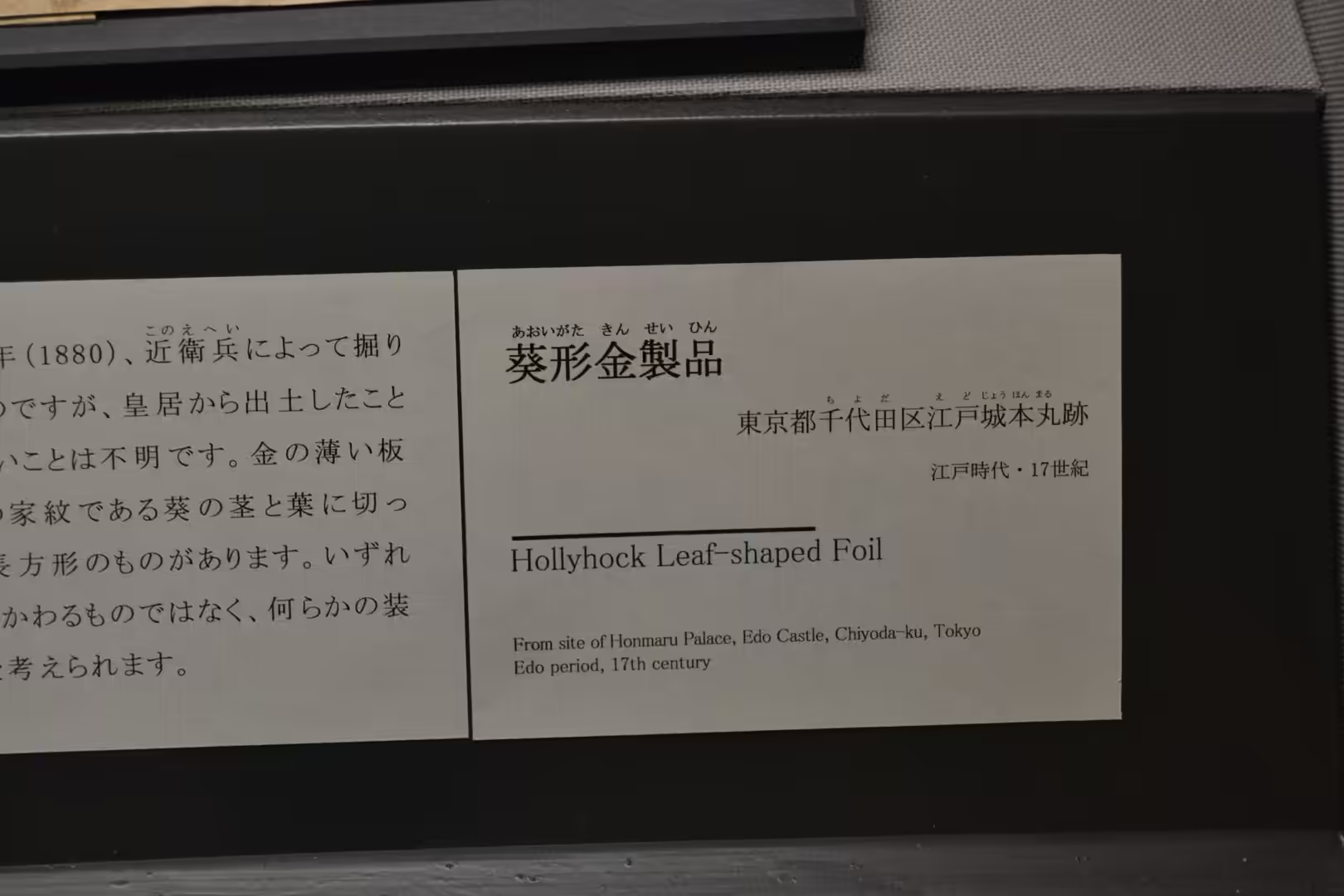
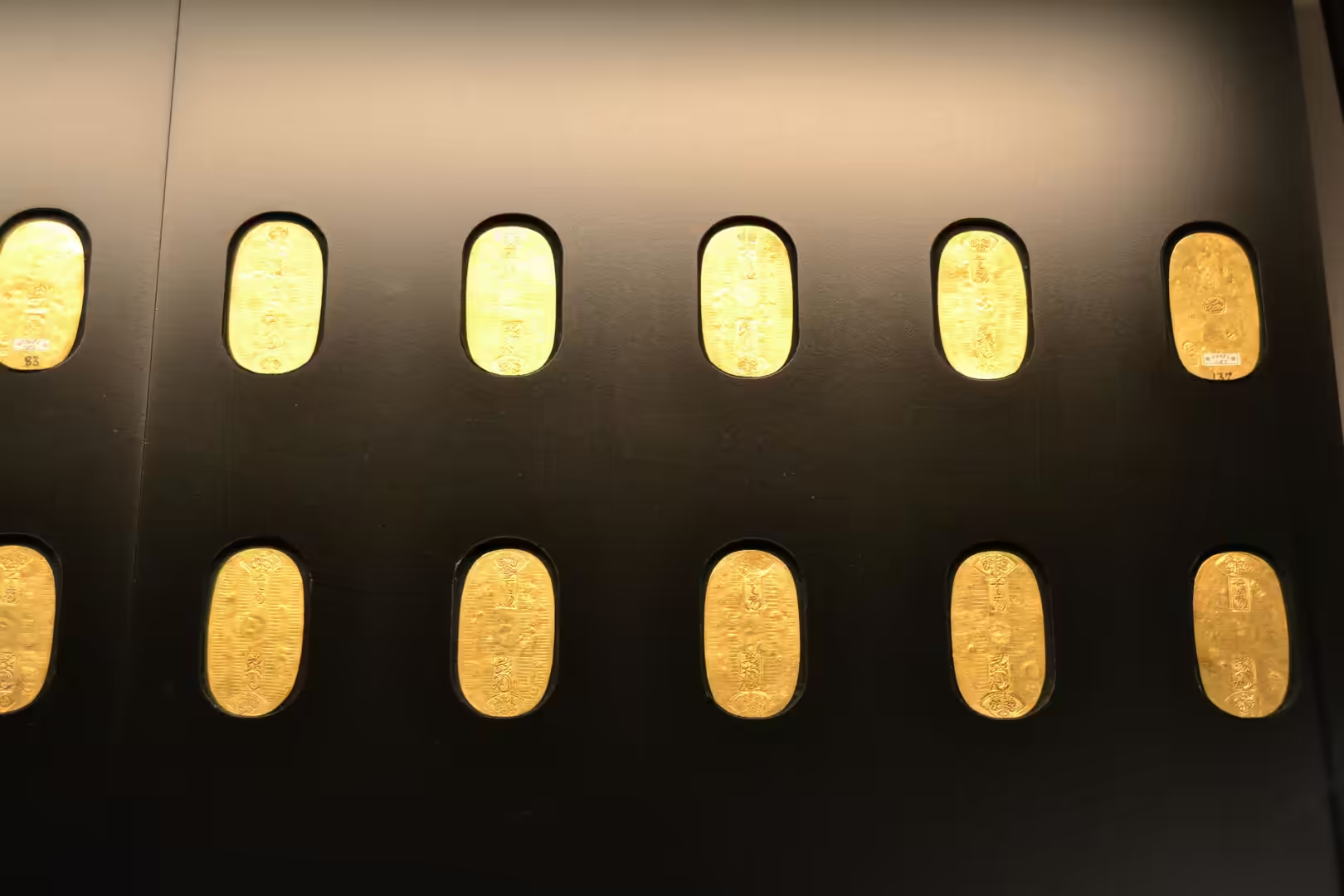
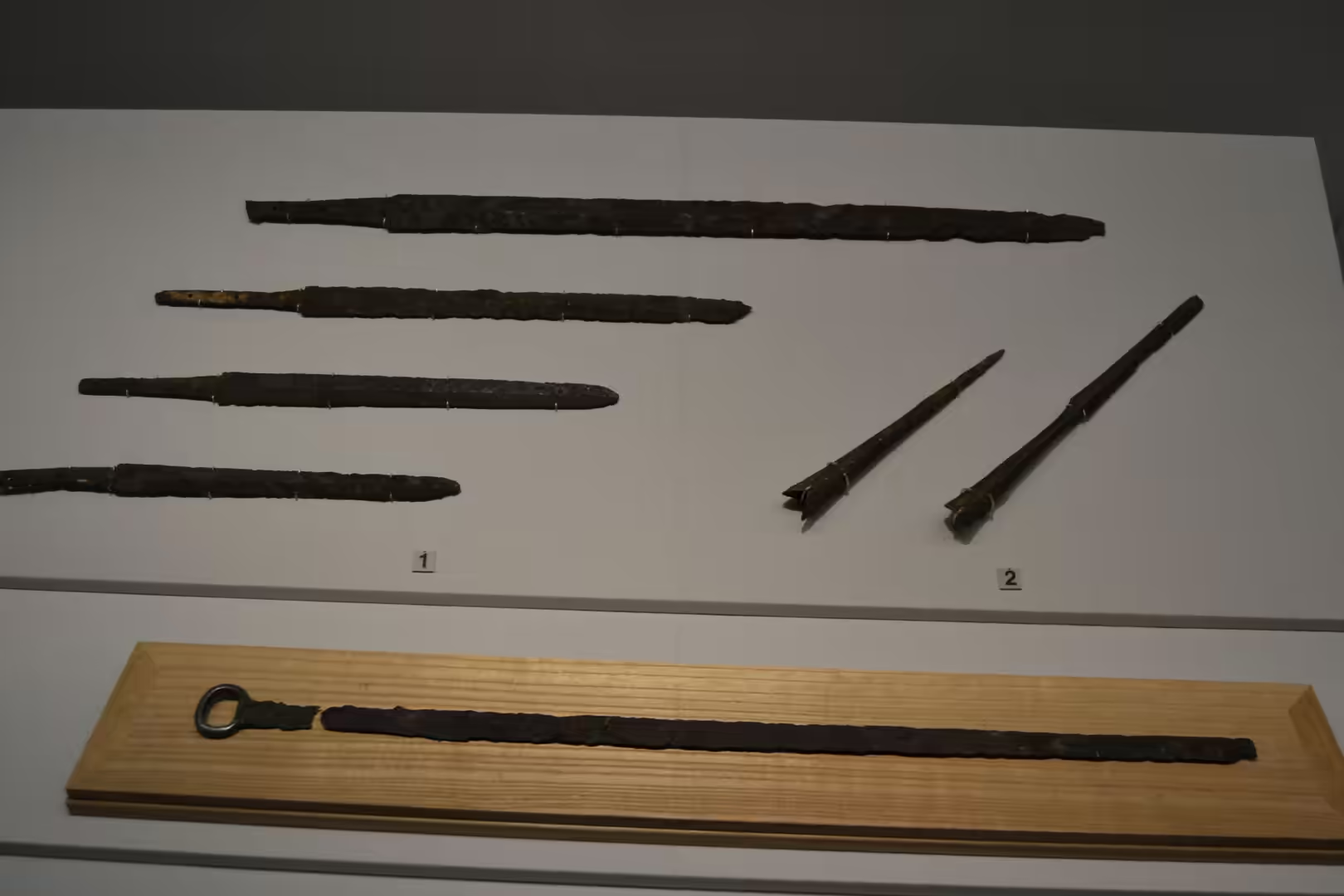
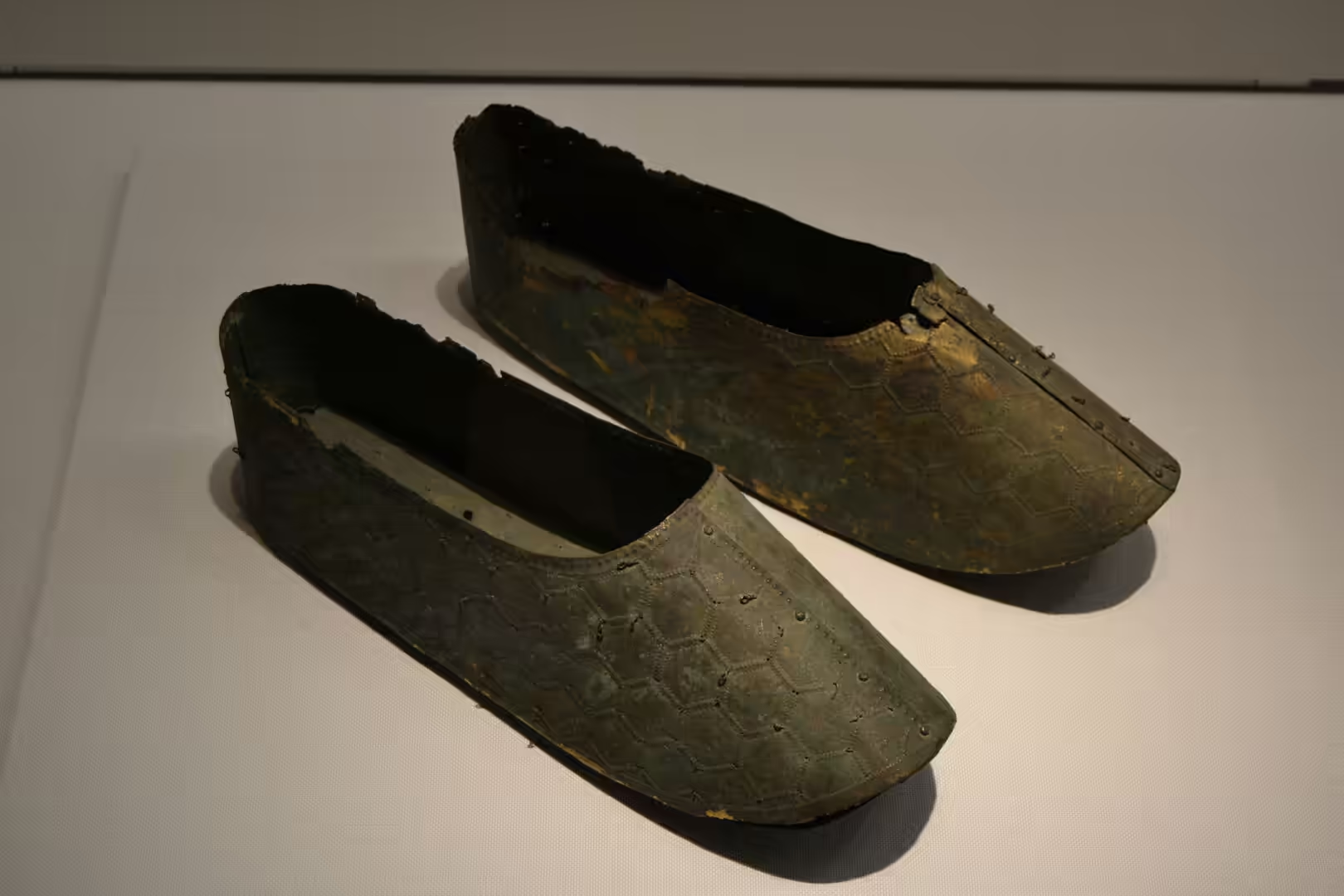
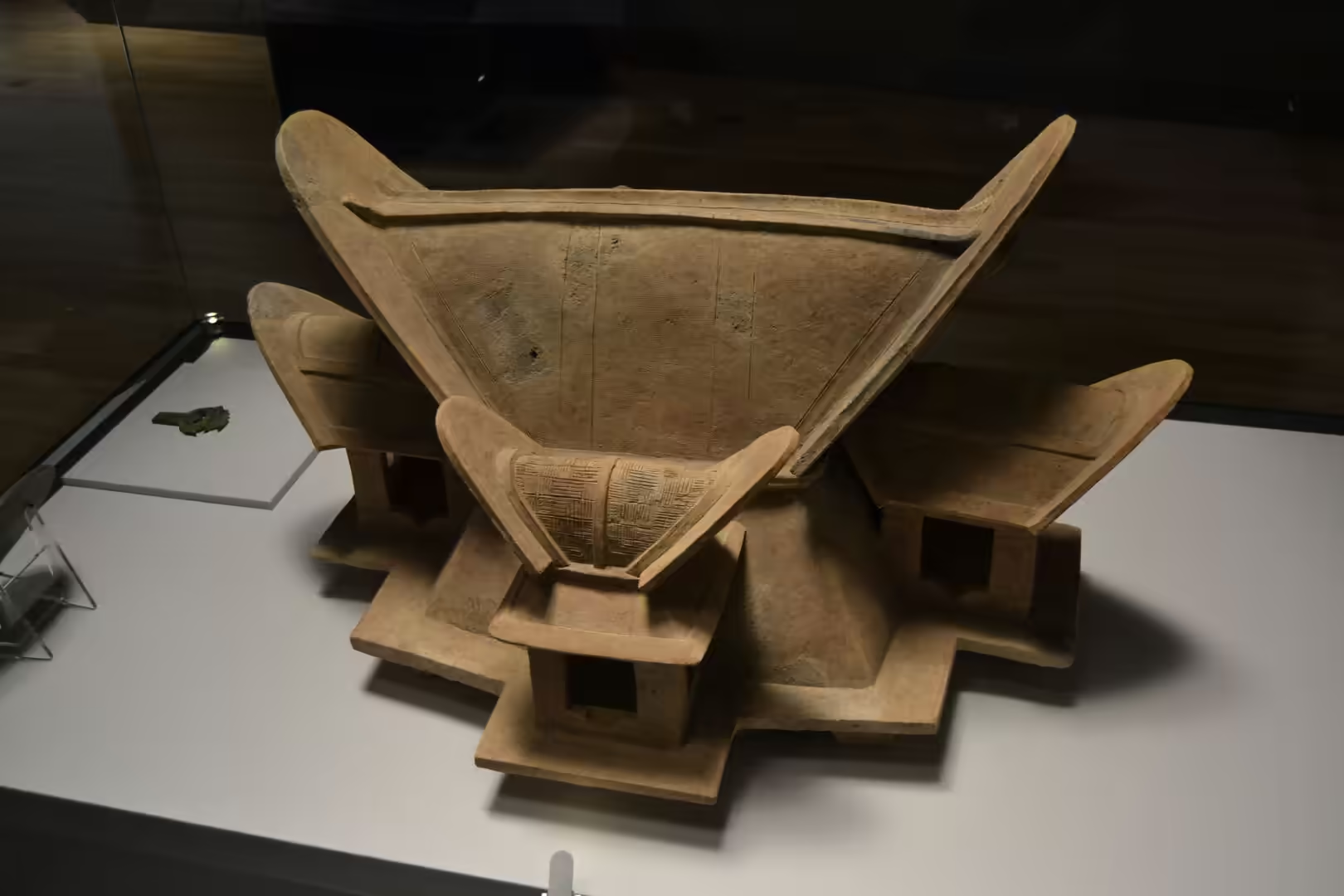
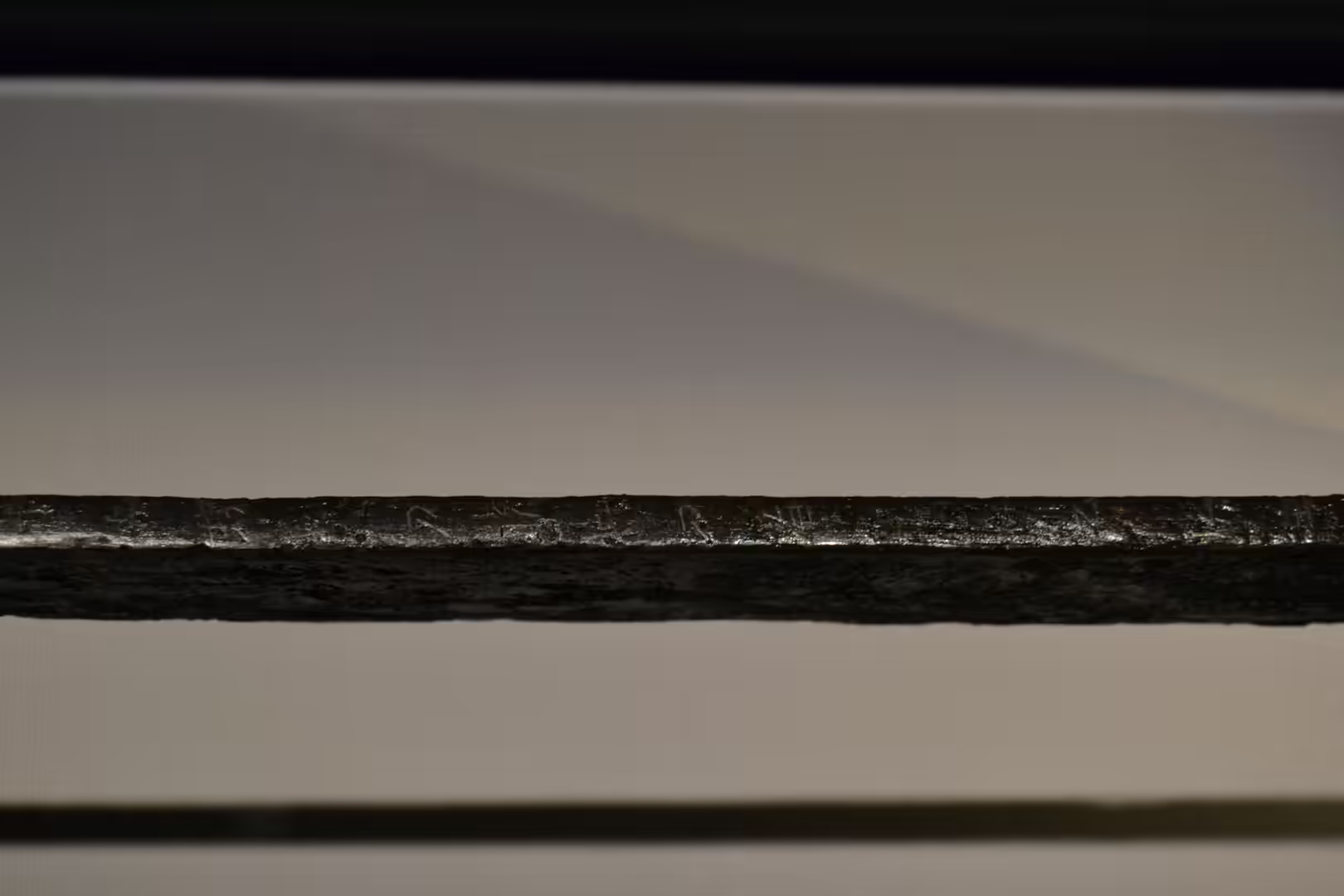
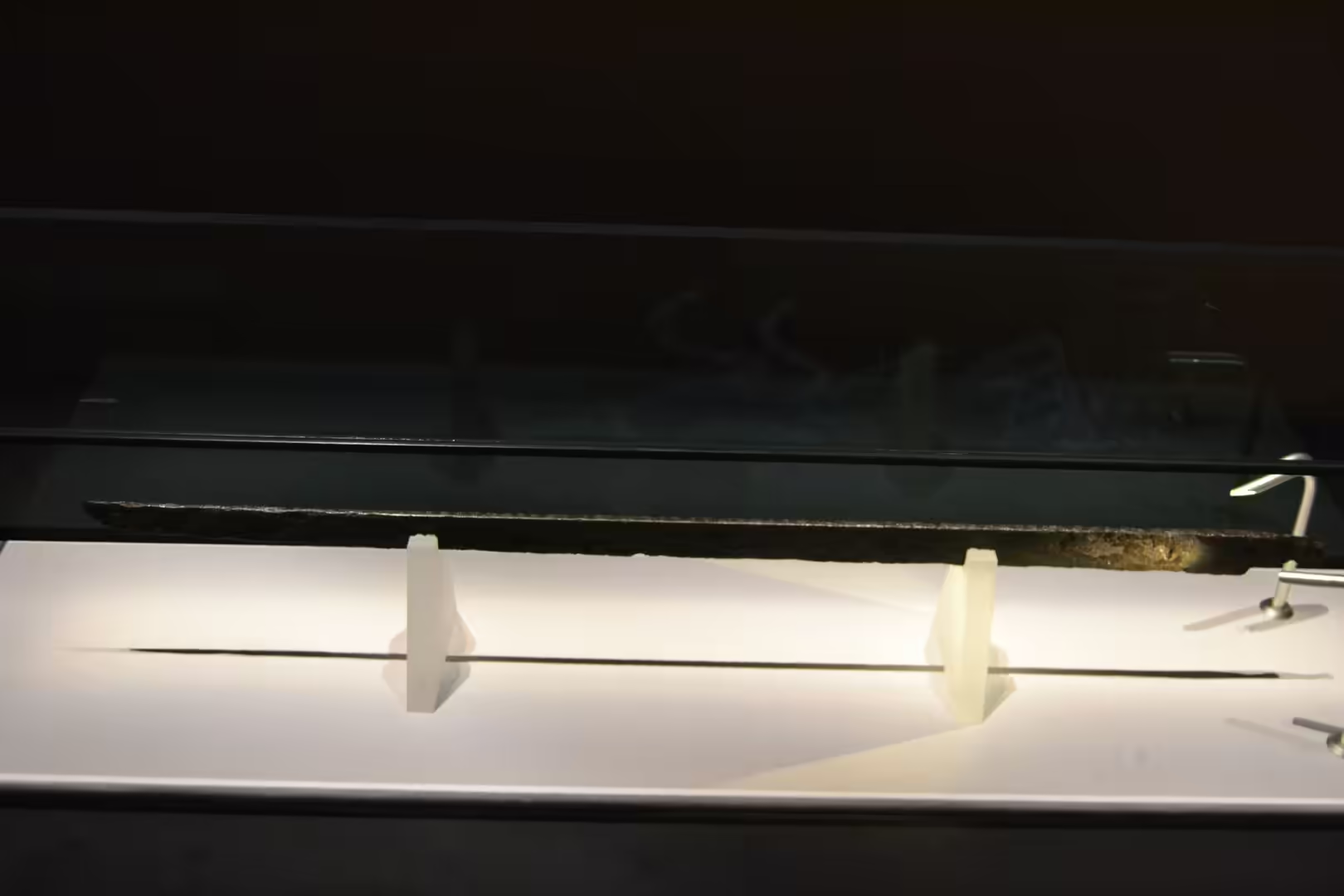
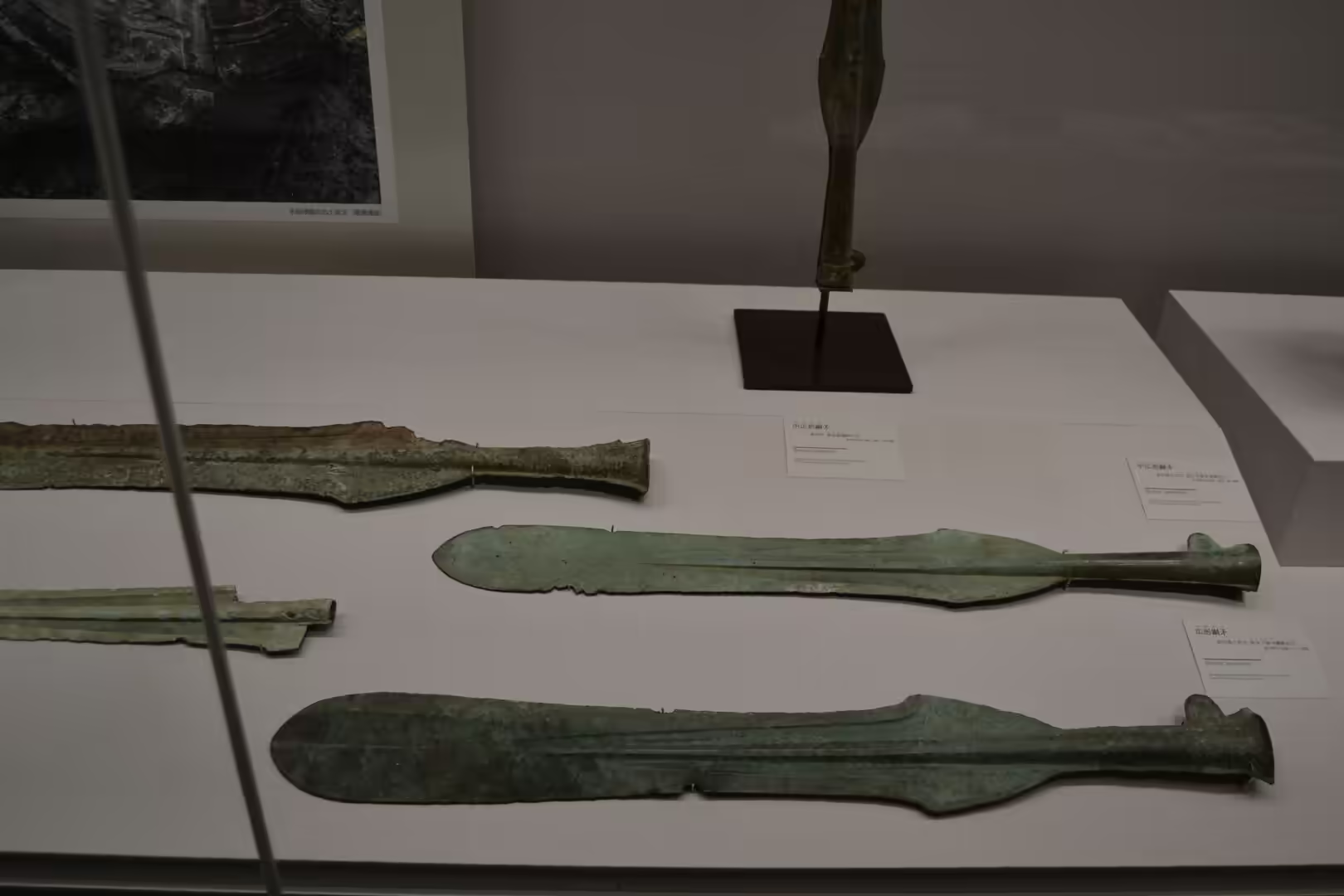
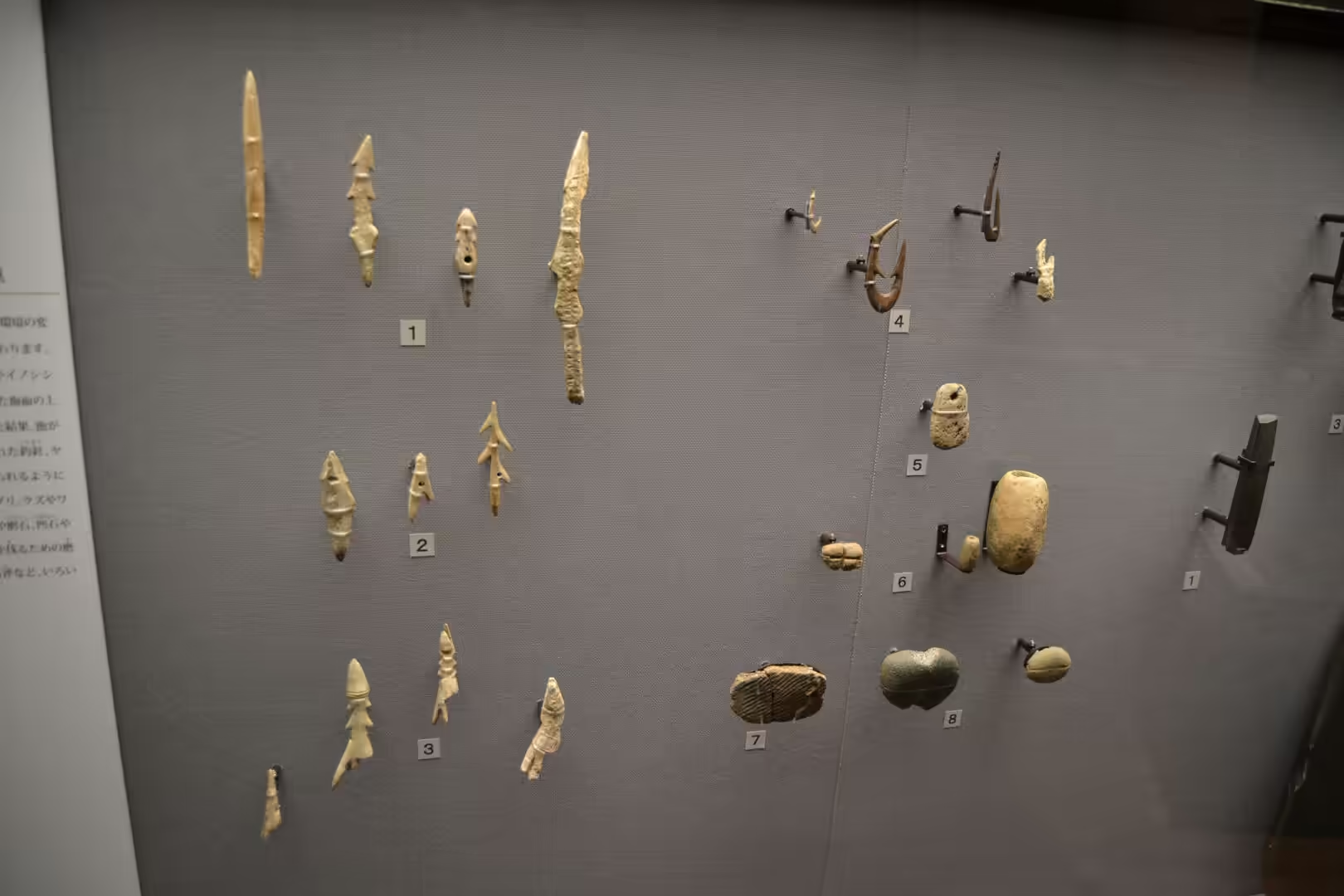
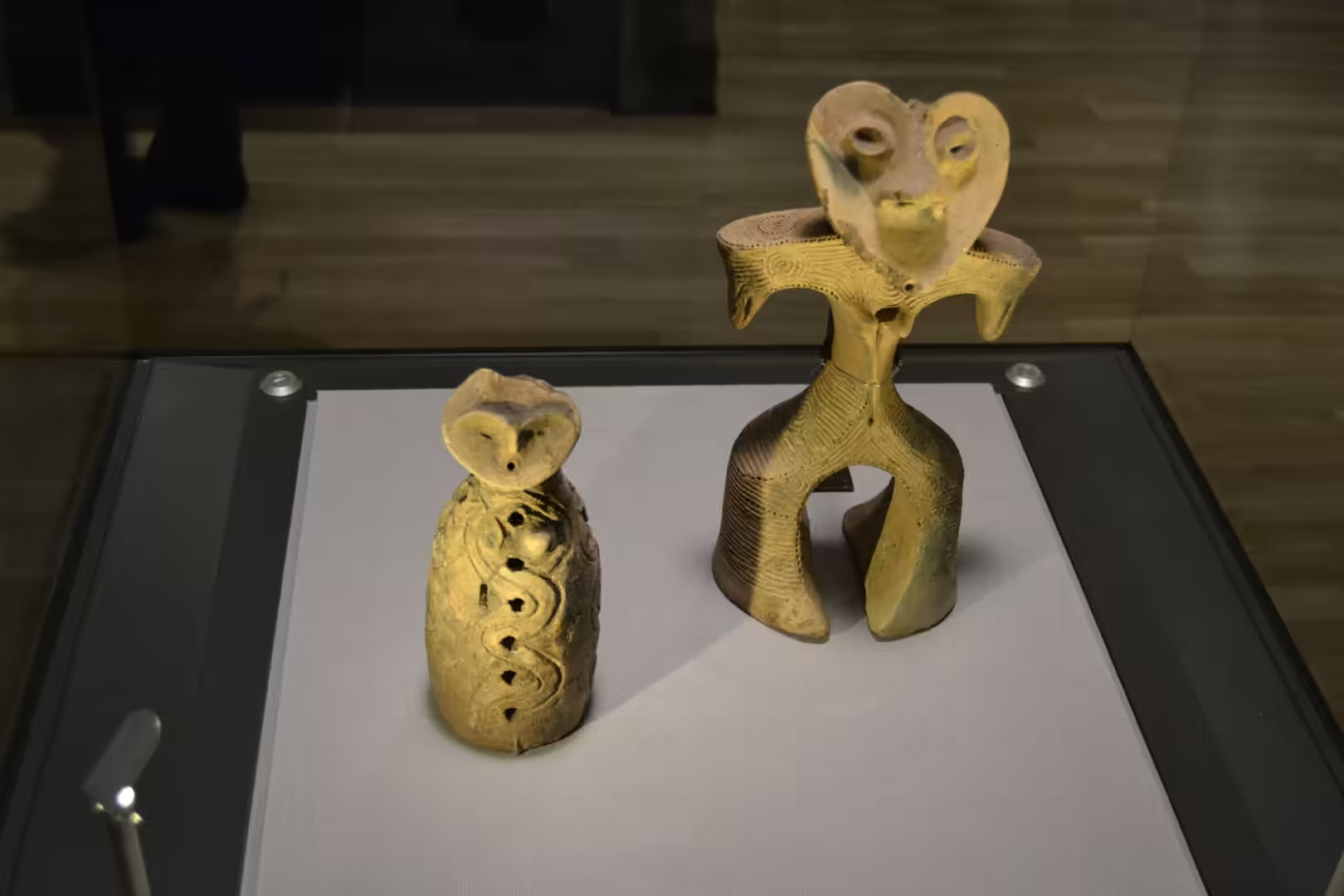
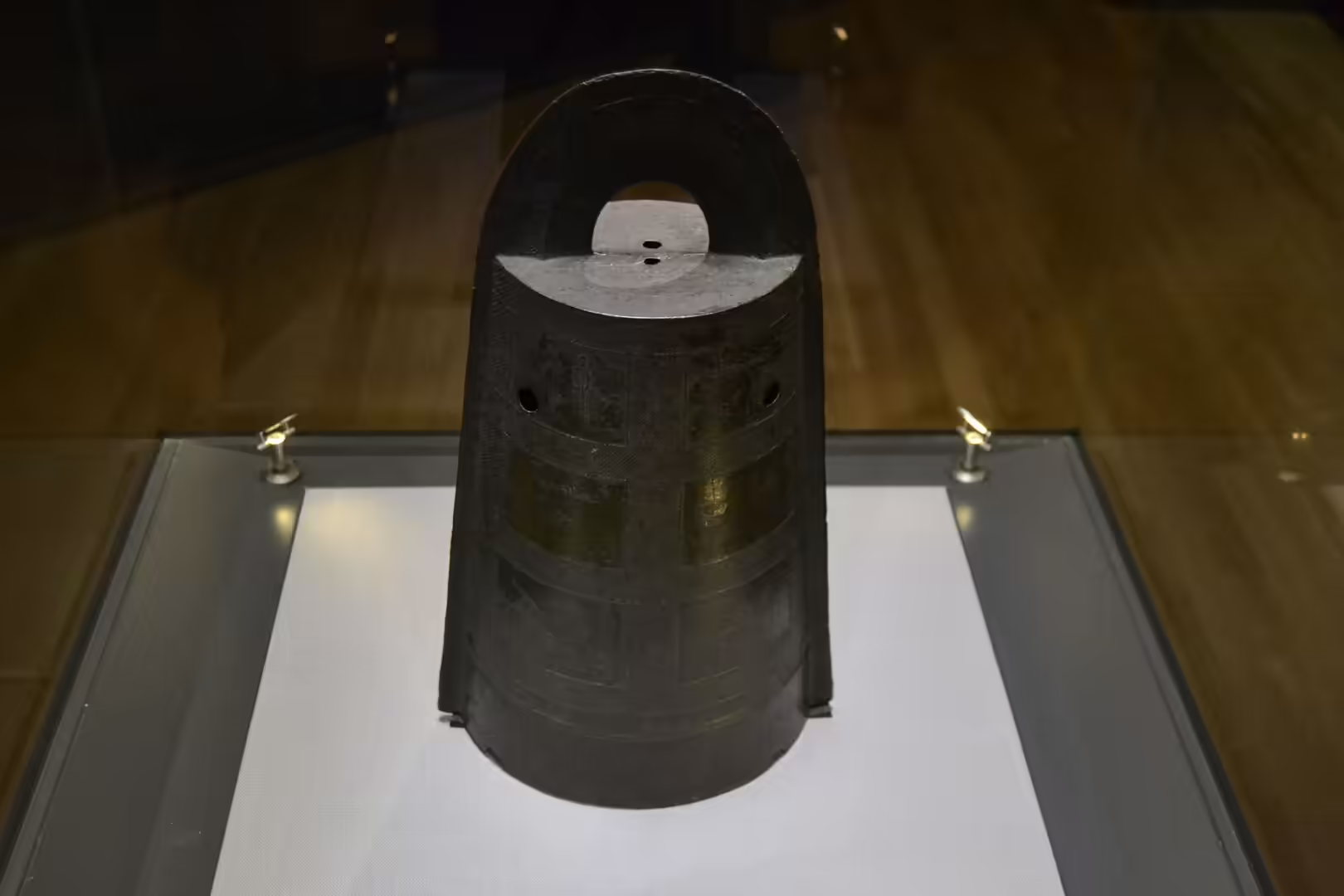
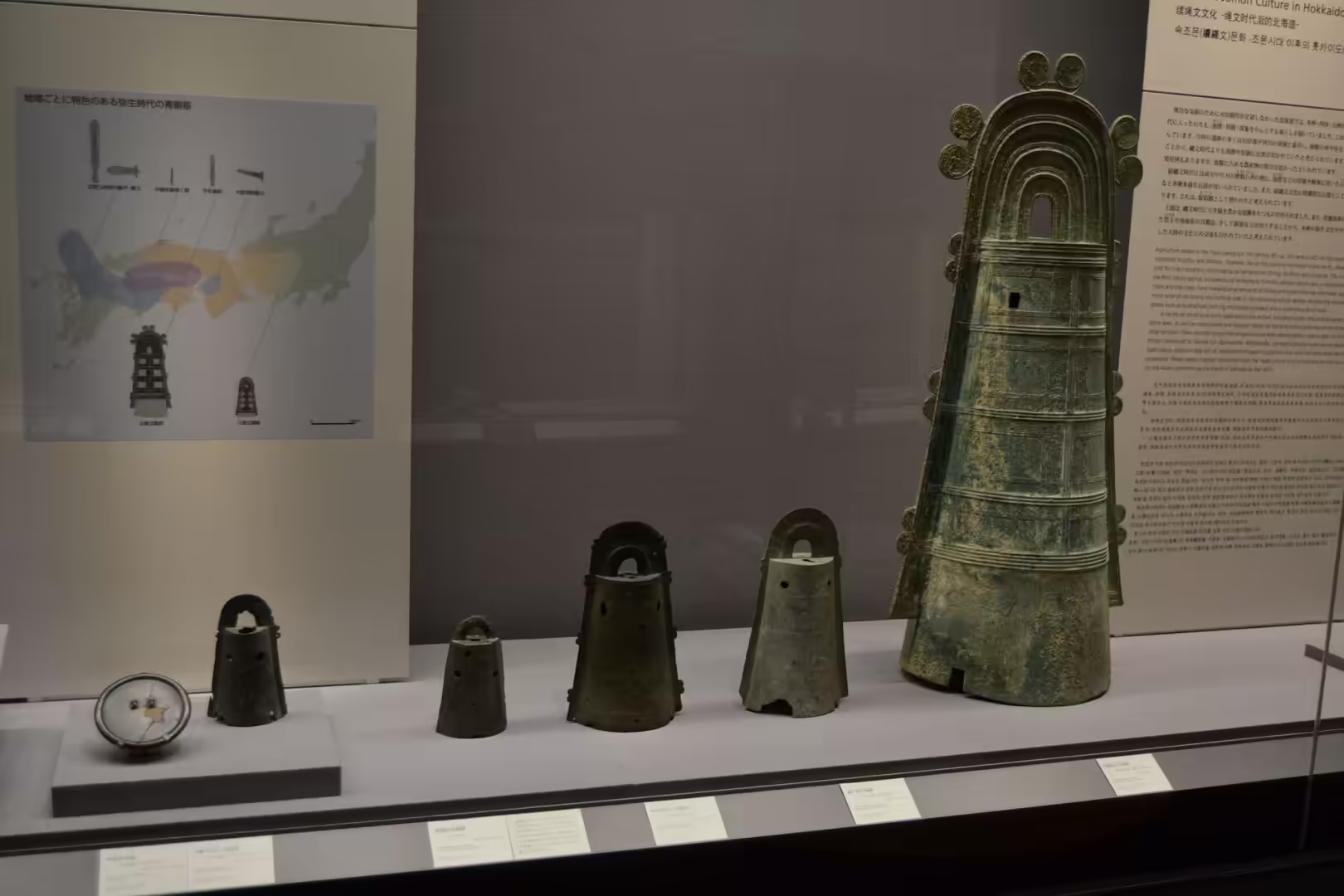
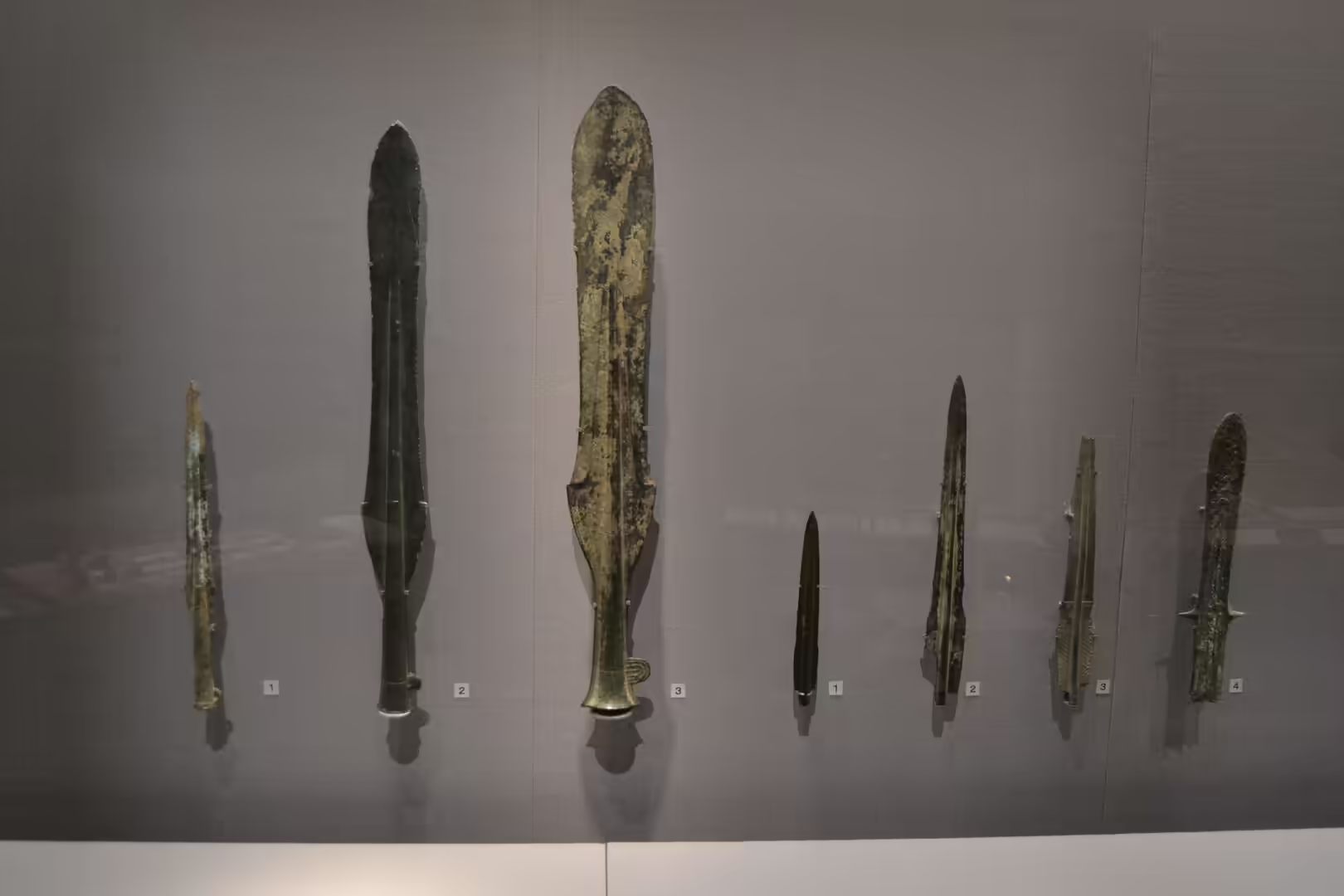
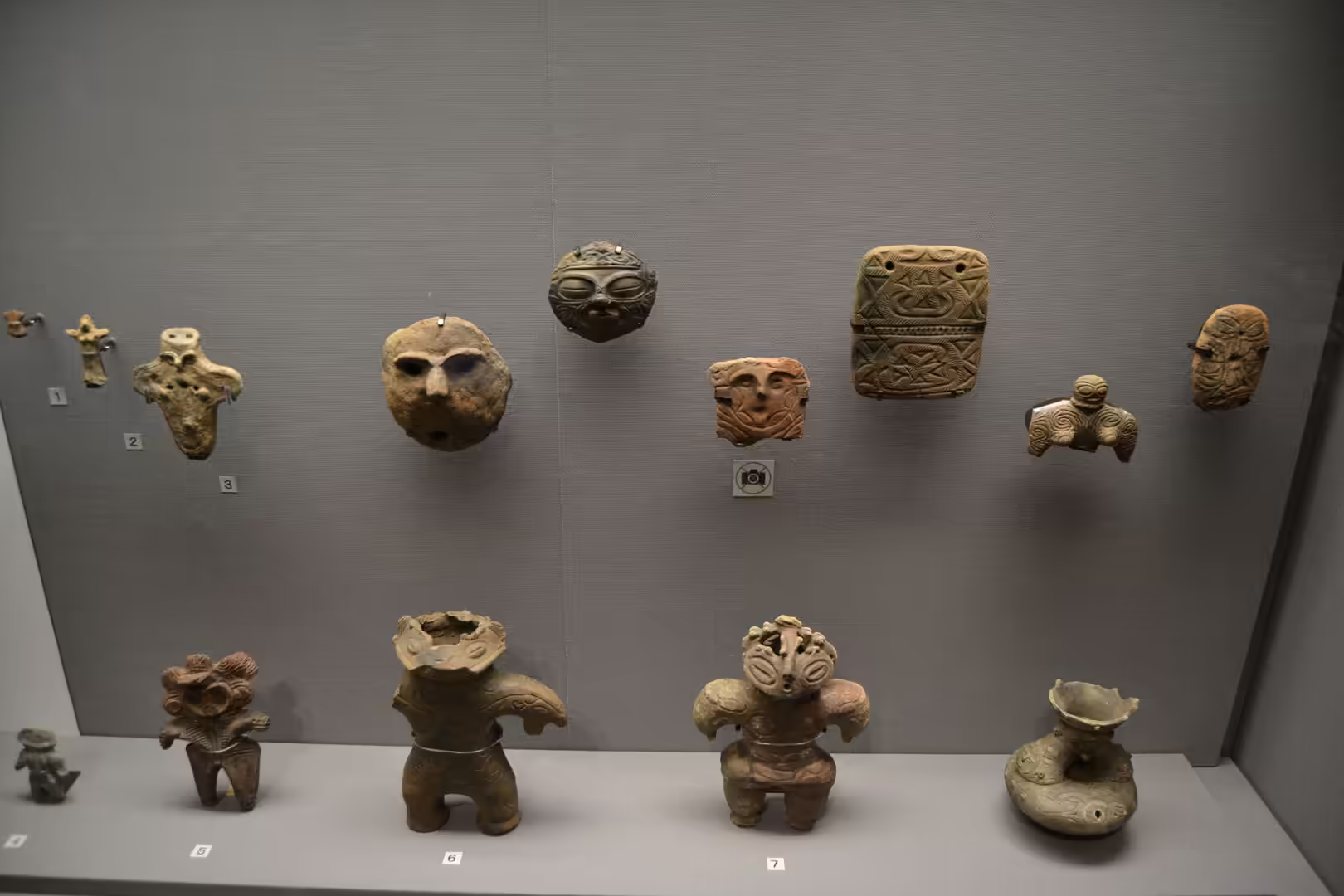
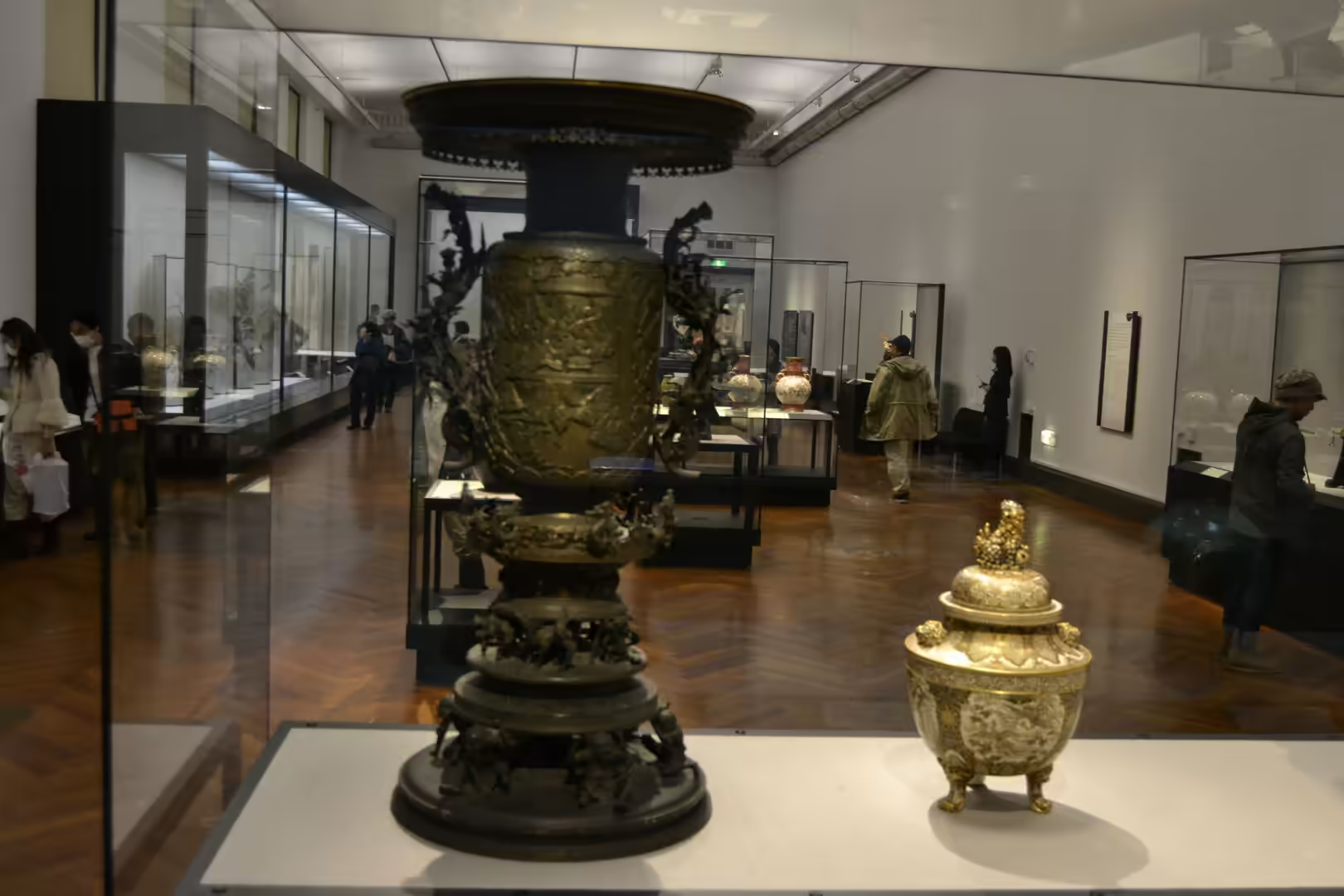
The museum was the centre of the day and it took hours. Room after room of objects from the Edo period and earlier: carved figures and animal figures, a carved metal box, old scrolls, a sword and its carvings, painted plates, ceramics, fans, ancient silk clothing, pictures, headgear and hats, earrings, smoking pipes, knives, spearheads, pottery, fish hooks, bells, gold fragments, gold coins and a pair of metal shoes for a journey. One panel explained that a hollyhock leaf shaped foil had been excavated at the site of the Honmaru Palace of Edo Castle, which is the sort of object that makes a museum of this kind worth visiting: not the famous masterpiece but the small gold leaf that someone dropped in a shogun’s courtyard four hundred years ago and that an archaeologist found.
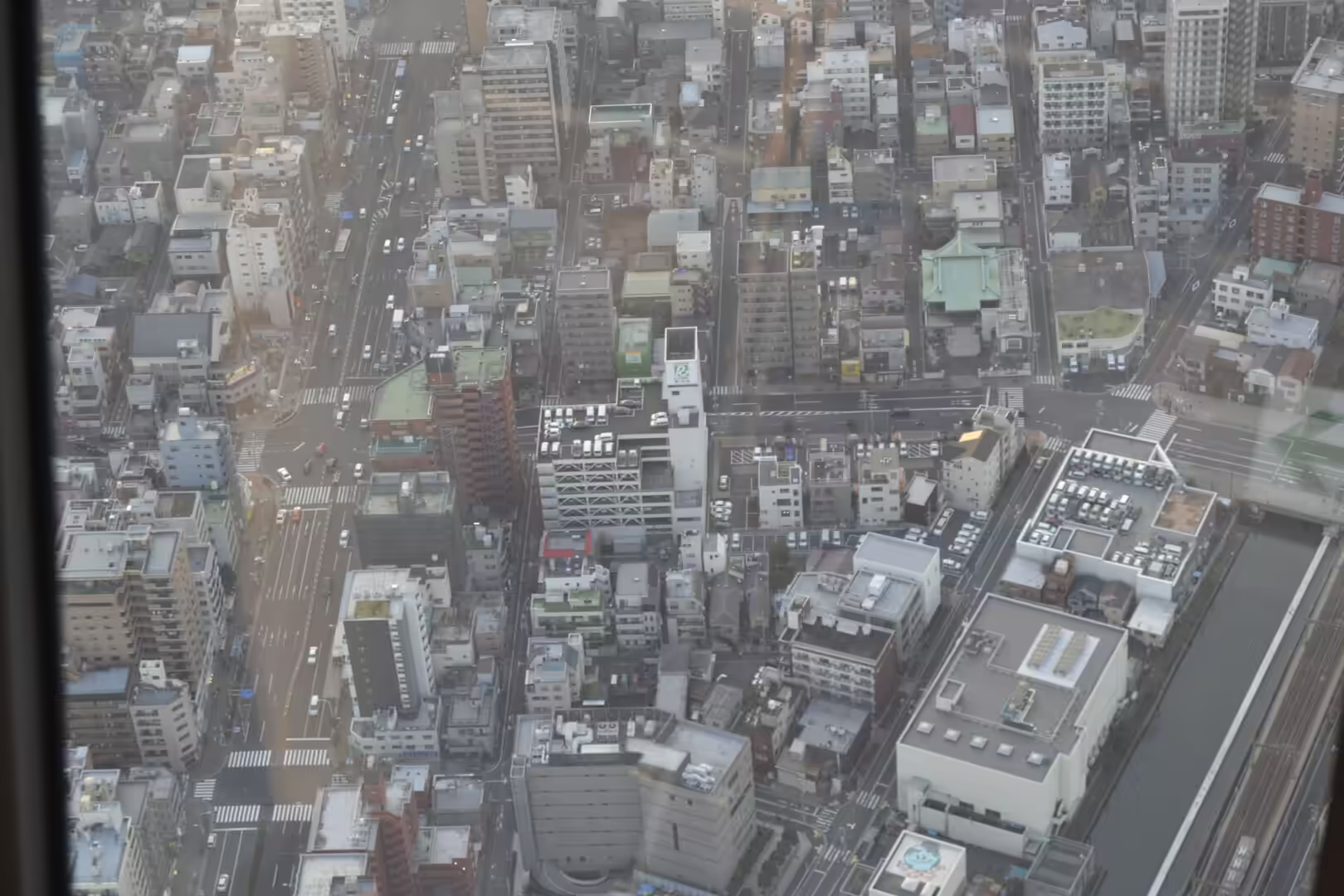
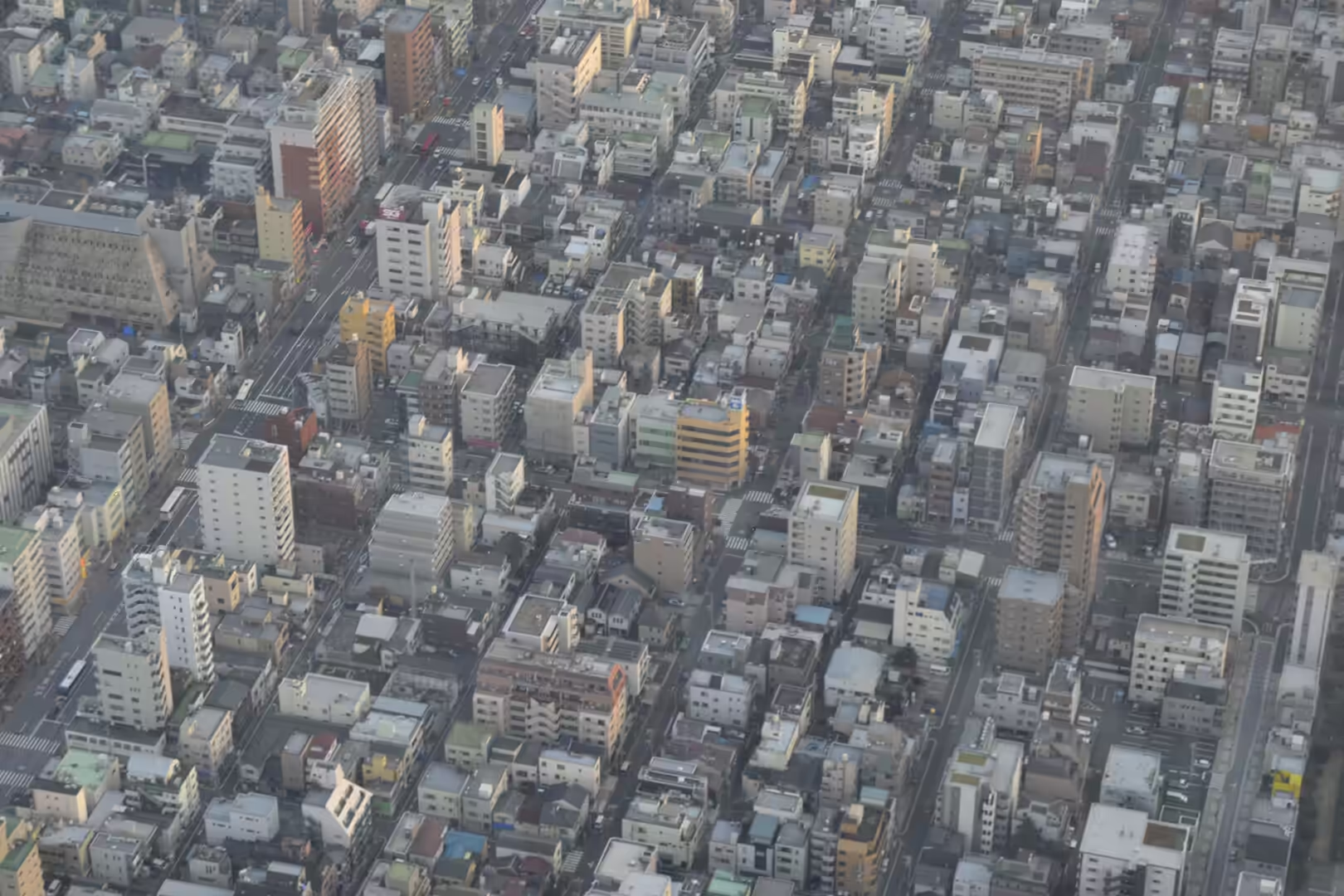
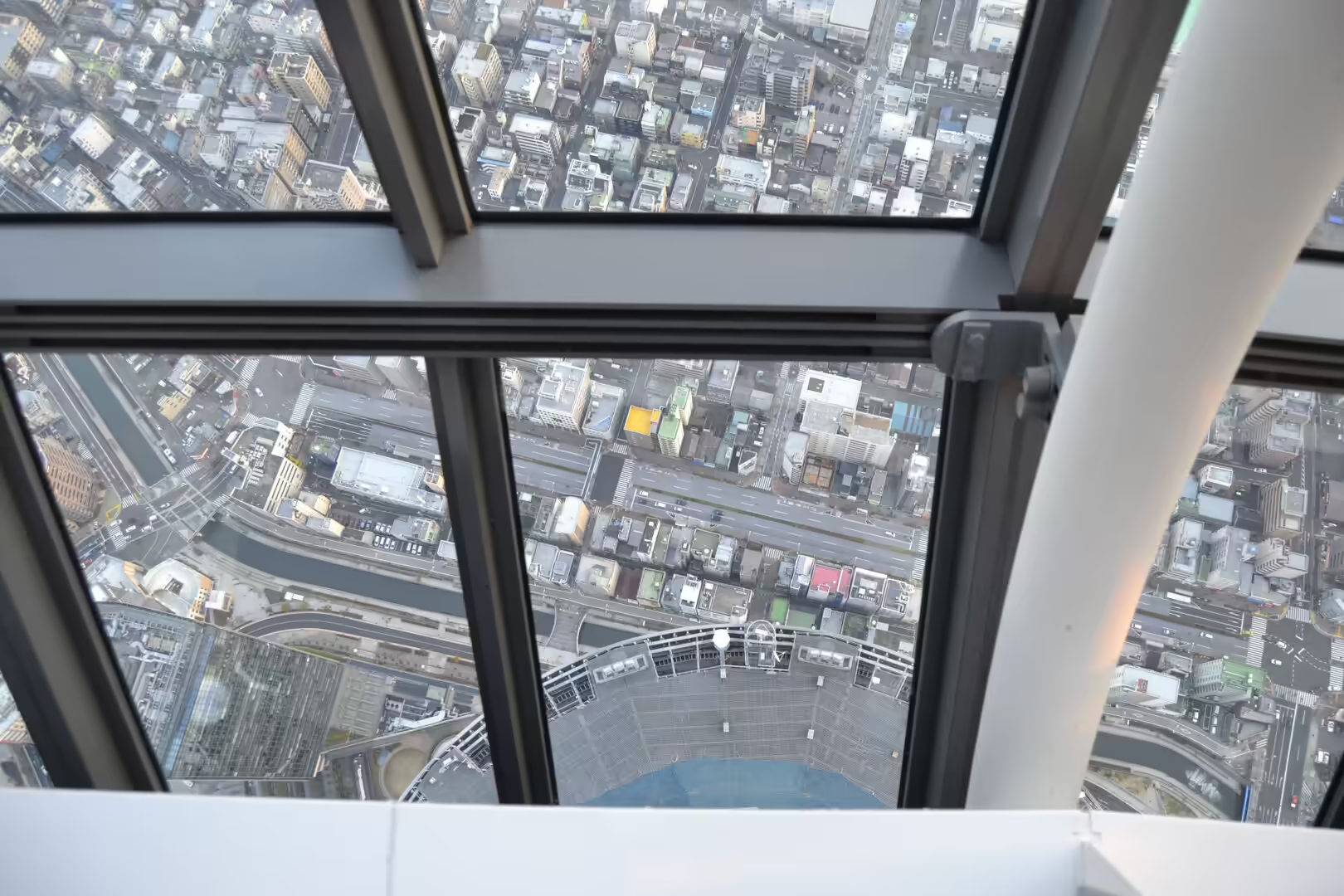
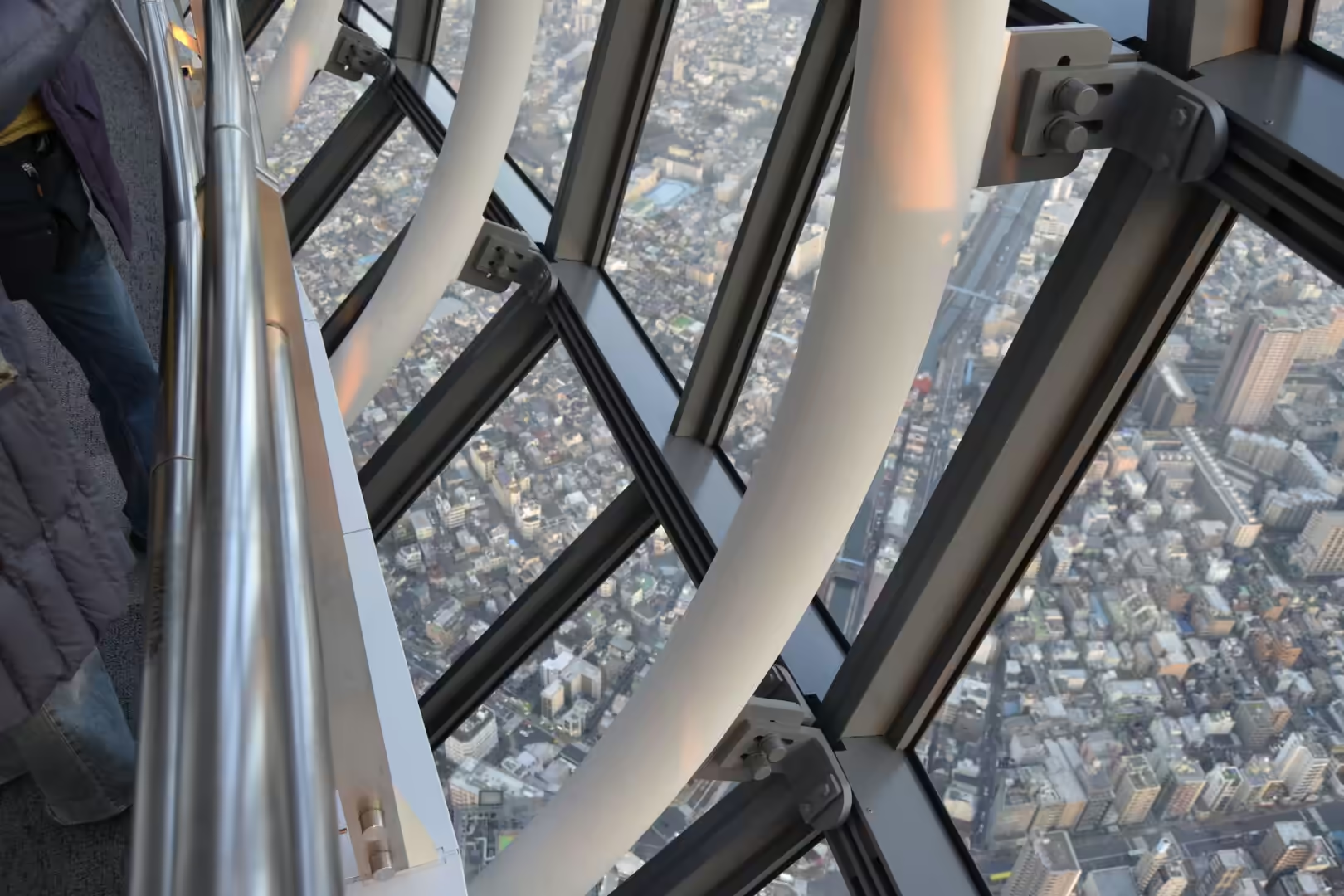
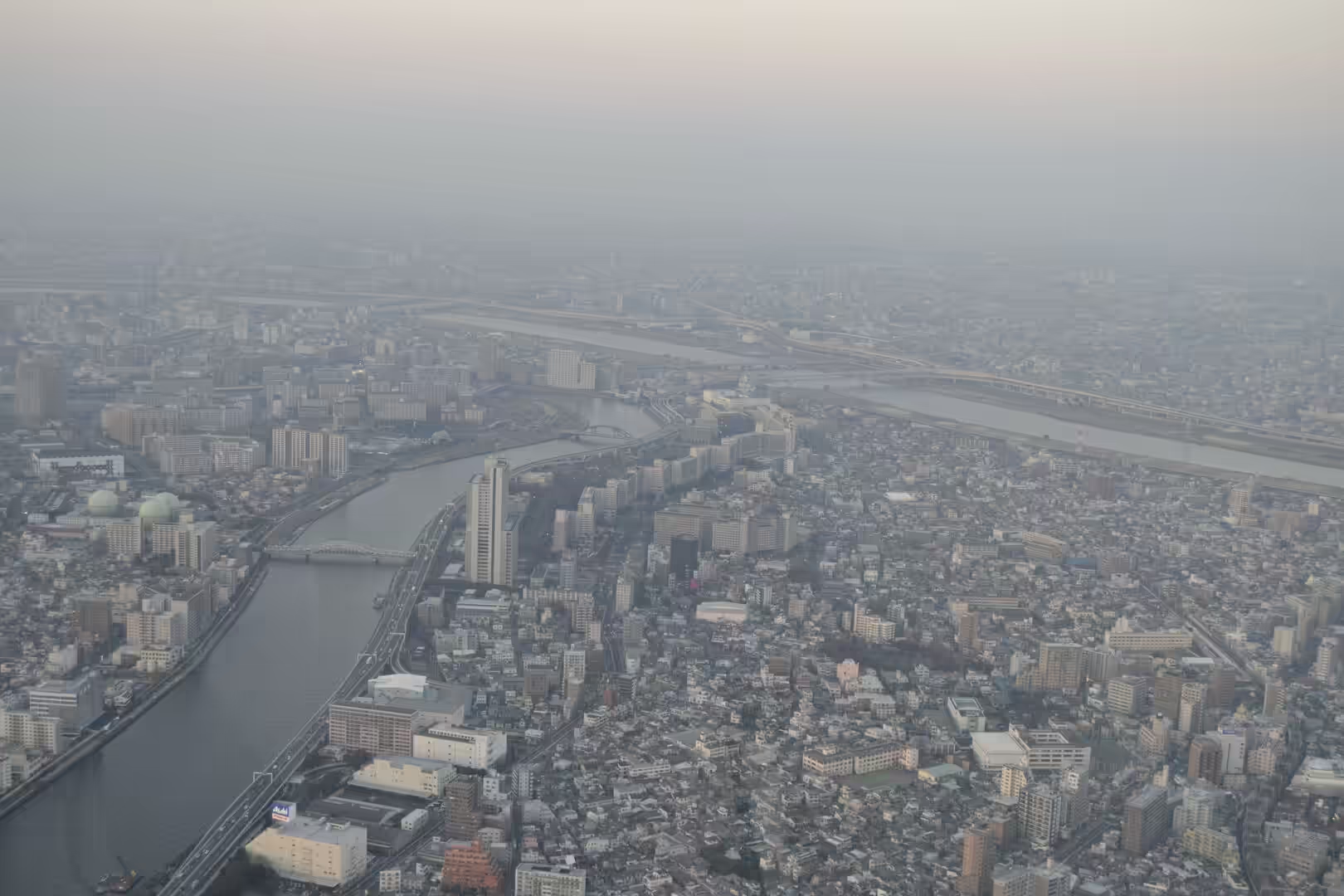
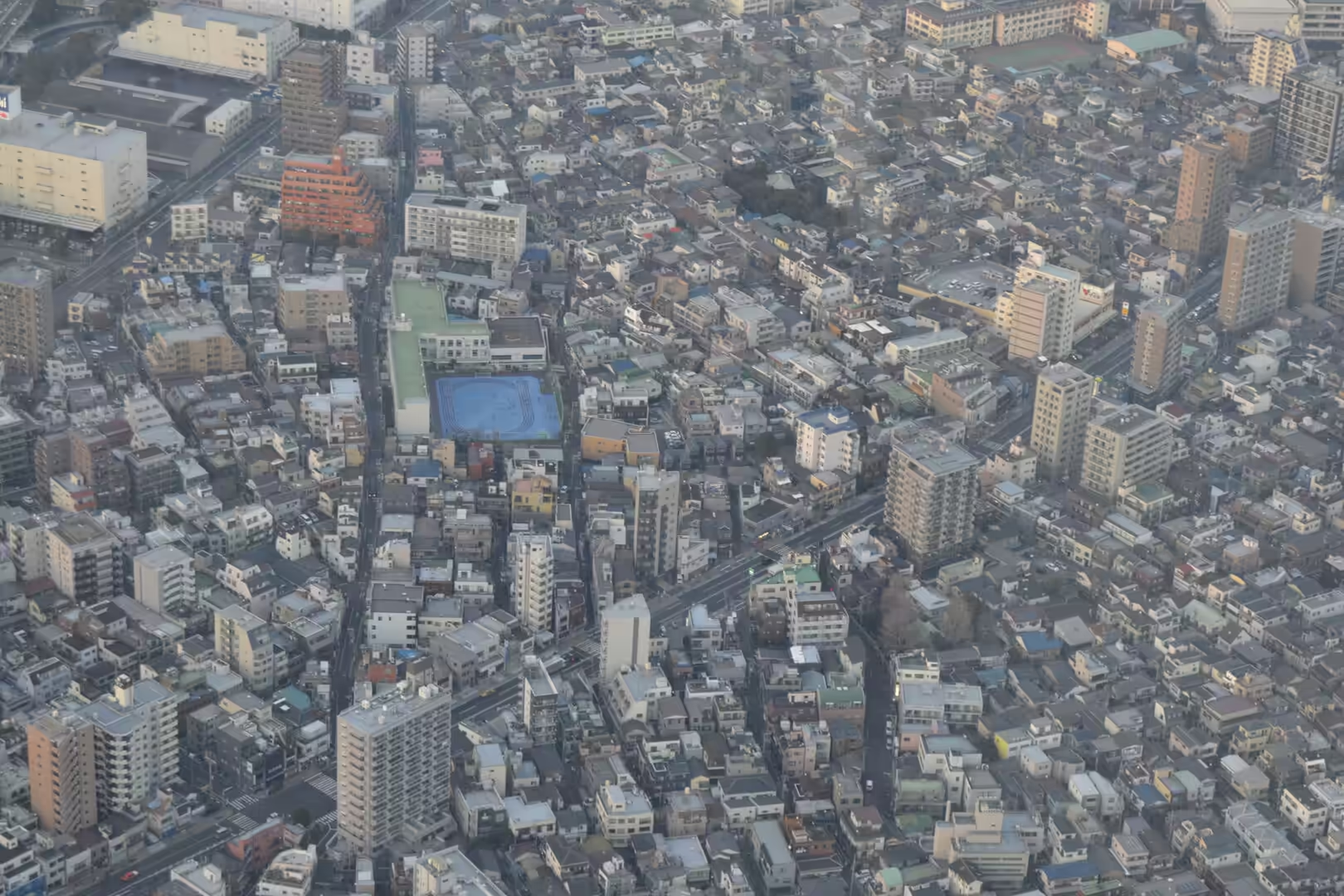
The day ended at the tower. The Tokyo Skytree, which reached its full height of six hundred and thirty four metres in 2011 and opened in 2012, is the tallest tower in the world and the third tallest structure of any kind, after two buildings in the Gulf. The lifts take visitors to observation decks, and from them the Kanto Plain opens out in every direction: the grey carpet of the city, the rivers and canals, the bay with its reclaimed islands, and on a clear day the mountains on the horizon. A chart on one of the decks compares the great towers of the world, and on that scale the Tokyo Skytree is in a class of its own.
References
- Wikipedia contributors (2026). Tokyo. en.wikipedia.org/wiki/Tokyo
- Wikipedia contributors (2026). Edo. en.wikipedia.org/wiki/Edo
- Wikipedia contributors (2026). Tokyo National Museum. en.wikipedia.org/wiki/Tokyo%20National%20Museum
- Wikipedia contributors (2026). Ueno Park. en.wikipedia.org/wiki/Ueno%20Park
- Wikipedia contributors (2026). Sensō-ji. en.wikipedia.org/wiki/Sens%C5%8D-ji
- Wikipedia contributors (2026). Asakusa. en.wikipedia.org/wiki/Asakusa
- Wikipedia contributors (2026). Tokyo Skytree. en.wikipedia.org/wiki/Tokyo%20Skytree
- Wikipedia contributors (2026). Tokyo Bay. en.wikipedia.org/wiki/Tokyo%20Bay
- Wikipedia contributors (2026). Kantō Plain. en.wikipedia.org/wiki/Kant%C5%8D%20Plain
- Wikipedia contributors (2026). 1923 Great Kantō earthquake. en.wikipedia.org/wiki/1923%20Great%20Kant%C5%8D%20earthquake
- Wikipedia contributors (2026). Edo Castle. en.wikipedia.org/wiki/Edo%20Castle
- Wikipedia contributors (2026). Haneda Airport. en.wikipedia.org/wiki/Haneda%20Airport
- Wikipedia contributors (2026). Honshu. en.wikipedia.org/wiki/Honshu
- Wikipedia contributors (2026). Japanese cuisine. en.wikipedia.org/wiki/Japanese%20cuisine
- Mandujano-Salazar Y.Y. (2016) Tokyo Tower and Tokyo Skytree: History and Symbolism in Contemporary Japan. Gremium. 3. 11-22. doi.org/10.56039/rgne1a03
- KONISHI A., KATSUMURA A., TAMURA Y. (2018) Fatigue Resistant Design of TOKYO SKYTREE. Wind Engineers, JAWE. 43. 11-16. doi.org/10.5359/jawe.43.11
- Zaiki M., Mikami T. (2018) Climate Variations in Tokyo Since the Edo Period. International Perspectives in Geography. 35-52. doi.org/10.1007/978-981-10-7638-1_3
- (ohne Angabe) (2022) Aquifer Mechanics and Land Subsidence due to Groundwater. Investigation of Land Subsidence due to Fluid Withdrawal. 55-81. doi.org/10.1061/9780784415702.ch3
- Ohnaka M. (1985) A Sequence of Seismic Activity in the Kanto Area Precursory to the 1923 Kanto Earthquake. Earthquake Prediction. 848-862. doi.org/10.1007/978-3-0348-6245-5_7
- Kanto Quaternary Research Group (1970) Lower Pleistocene Formation in the Southern Kanto Region. The Quaternary Research (Daiyonki-Kenkyu). 9. 93-100. doi.org/10.4116/jaqua.9.93