2017 Sydney I 1





Journal Notes
General
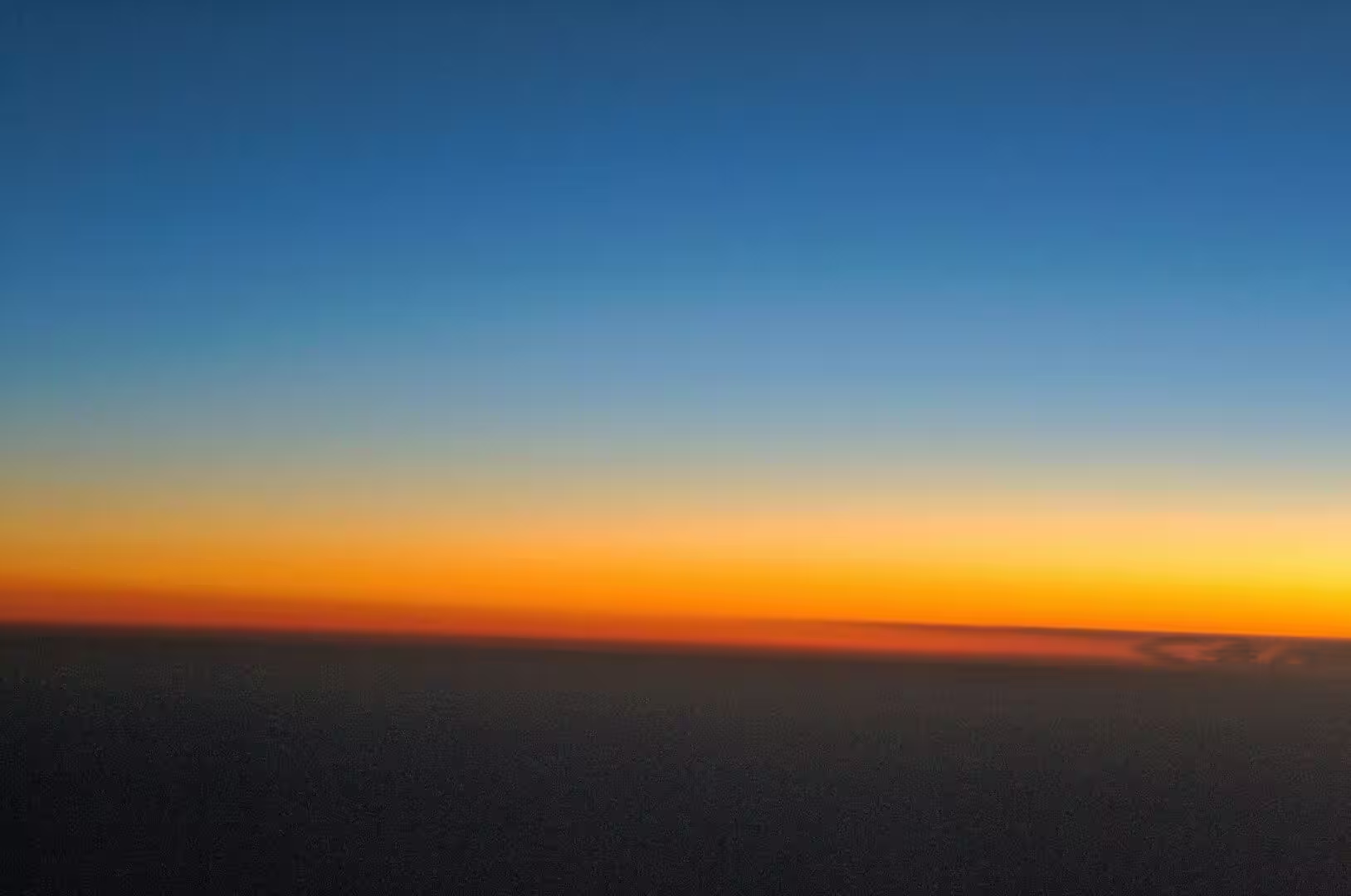
The journey to Australia began with two flights and a day that did not exist. Leaving Europe in the morning and arriving in Sydney the following evening means losing time rather than passing it, and the body has no system for the experience: the light through the window of the aircraft changes, the meals arrive at odd hours, and the first sight of the city comes with the feeling of having been in transit for a week.
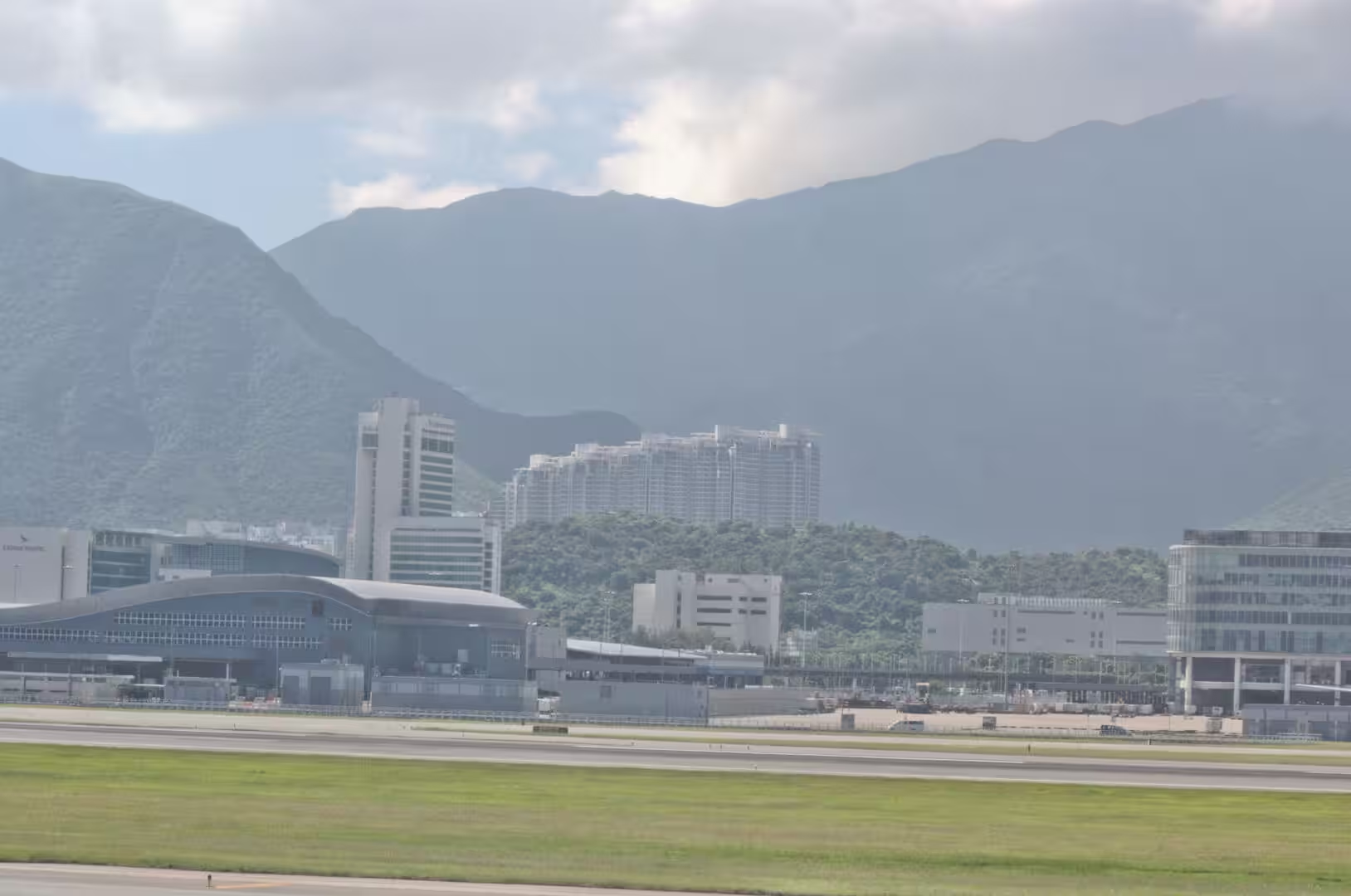
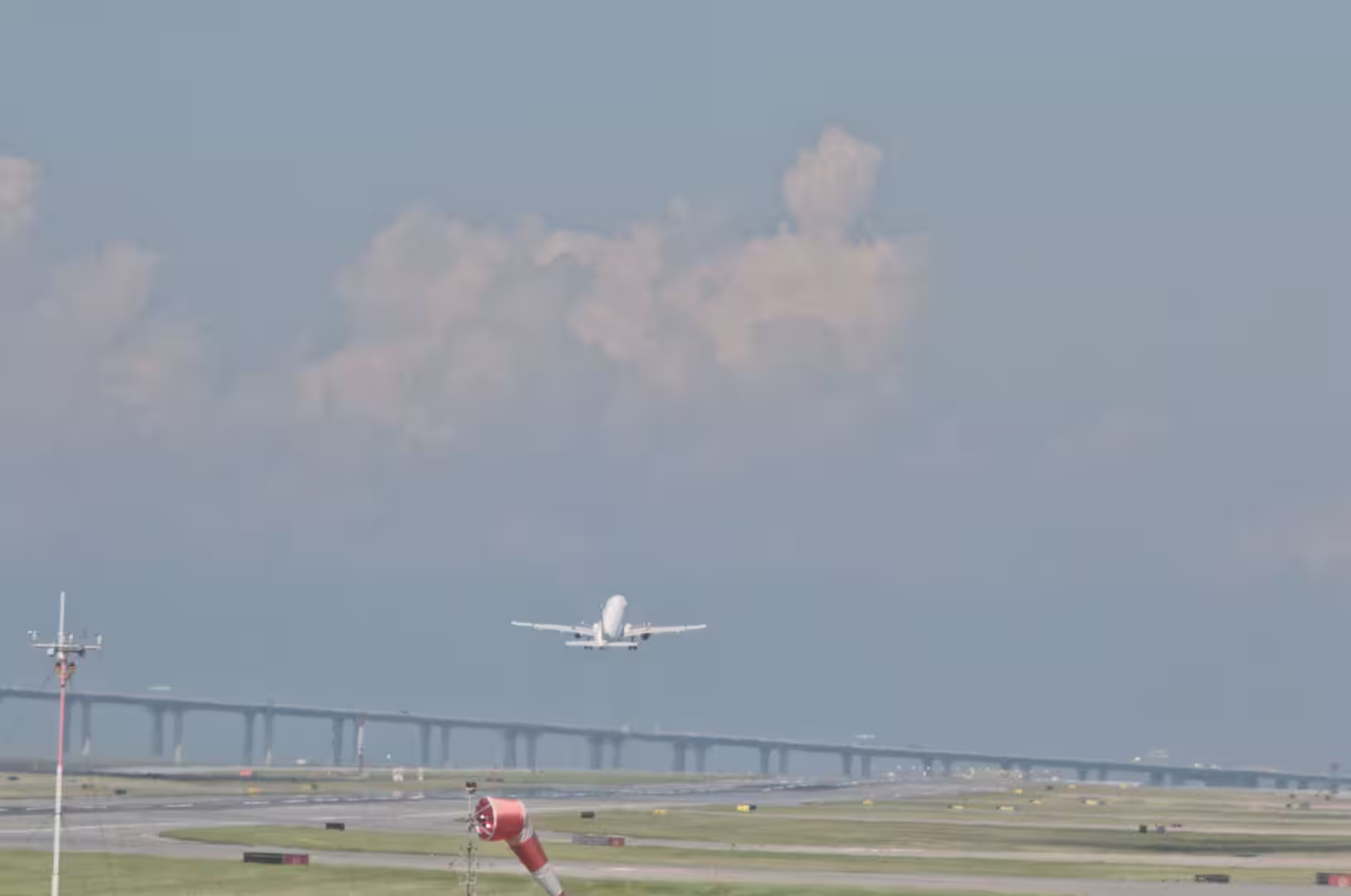
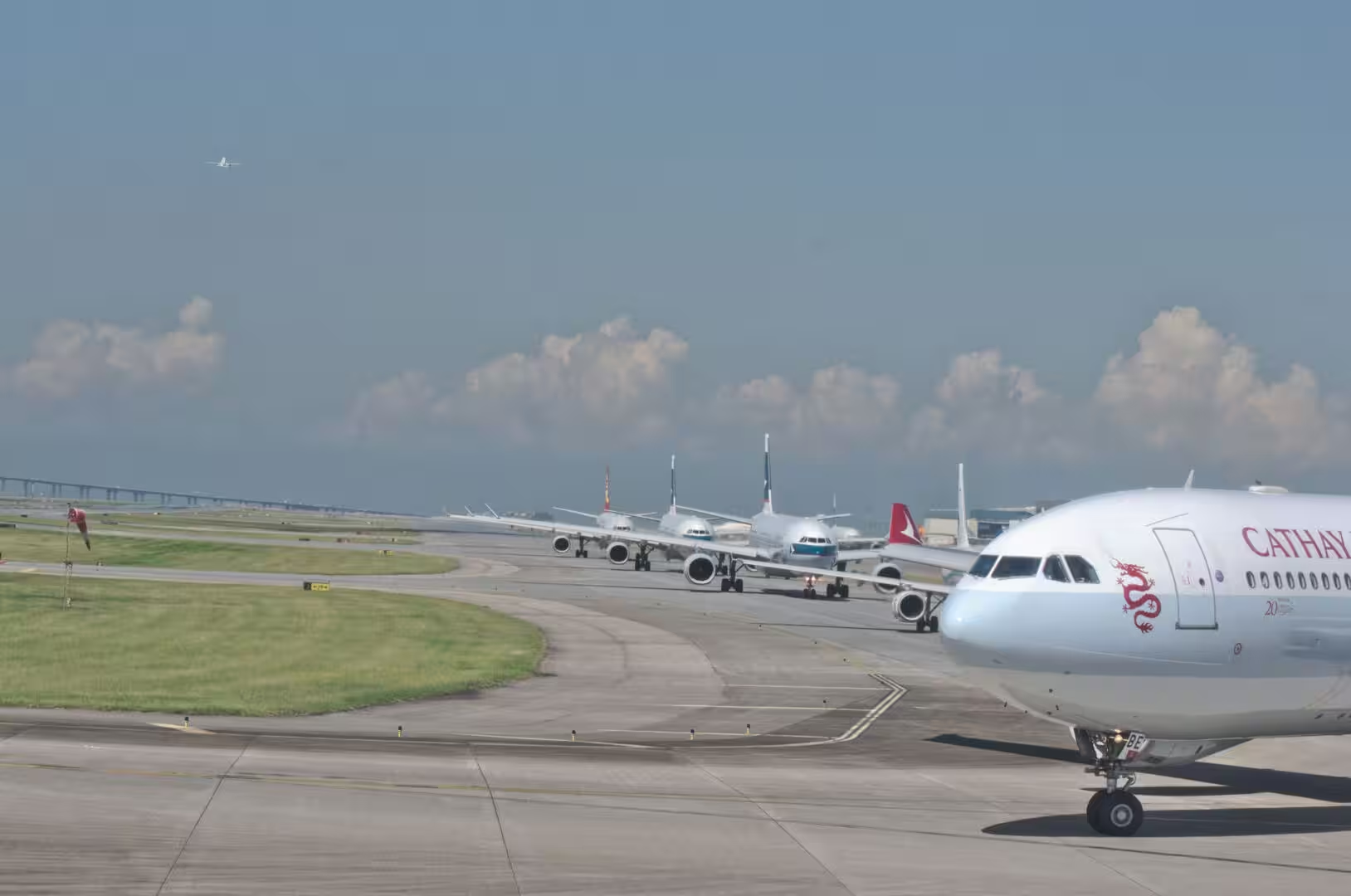
The approach to Sydney is spectacular even for a passenger who has stopped looking out of the window. The aircraft comes in over a coastline of green headlands and blue water, crosses a peninsula where a runway has been built out into the sea, and lands at an airport that is surrounded by water on two sides. The terminal was busy, the formalities were quick, and an hour later the car was on a motorway with the towers of the city visible in the distance.
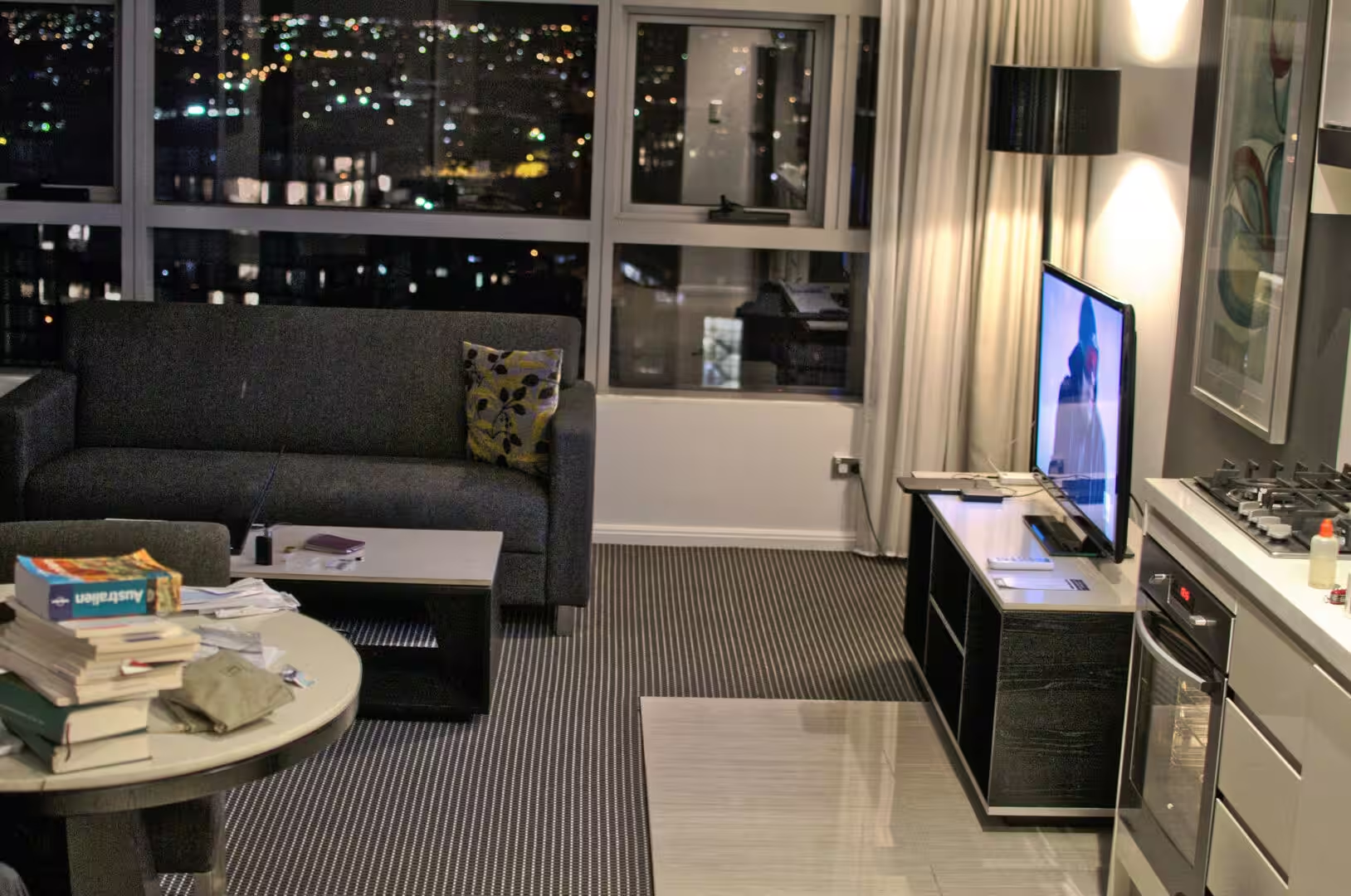
The apartment was on the eleventh floor of a block in the eastern part of the inner city, and the evening was spent doing very little. From the window the lights of the skyline were laid out in a long band, with the observation tower above them, and the harbour was somewhere beyond the rooftops. A first walk to a supermarket for the essentials of the following morning produced the first serious impressions of the country: the distances, the prices, the heat and the birds that were already calling in the dark.
The first morning in a new country is always the same lesson, and in Sydney it was taught by the light. The sun came up before six, the birds in the street were loud enough to wake a person through a closed window, and the air was already warm. A walk to the corner for coffee and fruit passed a park with ibises standing in the grass and a group of people exercising on the equipment beside the playground, and the impression was of a city that lives outdoors and starts early because the middle of the day is too hot for much else.
The city that the visitor meets on the first night is also a city of suburbs, and the suburbs are where most of its people live. The inner east, where the apartment was, is a mixture of the old terraces of the nineteenth century, the apartment blocks of the last thirty years and the warehouses that have been converted into flats and studios. The pattern repeats around the harbour: density in the centre and along the water, and a low carpet of houses with gardens in every other direction, which is why the city looks small from the air and feels enormous on the ground.
History
Arriving by air is how almost everyone arrives in Australia now, and the airport itself is a piece of the country’s history. It stands at Mascot on the northern shore of Botany Bay, where the first aircraft of the 1920s used a grass field, and its runways now extend into the water of the bay on reclaimed ground. The pattern of settlement that the airport serves is the same one that the ships created: the city on the harbour, the port to the south, and the suburbs spreading along the coast and the railway lines.
The route that a modern traveller takes has its own history. Until the 1950s the journey from Europe to Australia was made by ship and took four to six weeks; the arrival of long range aircraft and the immigration programmes of the post war decades turned the voyage into a flight of a day and a night, and they changed the country in the process. The people who arrived in the decades after the war, from Britain, Italy, Greece, the Netherlands, Germany, Yugoslavia, Vietnam, China and everywhere else, are the reasons that a supermarket in Sydney stocks the food of a dozen cuisines and that the city’s restaurants look the way they do.
The city that the new arrival sees was built on that immigration and on the wealth that came before it. Gold in the 1850s, wool for a century, manufacturing after the war, minerals in the west and the service economy of the last decades: the sequence produced a skyline that is a quarter of the age of the buildings of a European capital and twice as confident. The observation tower, the towers of the central business district and the cranes on the building sites are the visible edge of a city that has been under construction continuously since the 1960s.
The harbour is the reason the city is where it is, and its role has not changed. The first settlement was chosen for the fresh water of a stream and the deep water of the cove, the wharves followed within a generation, and for a century everything that arrived in or left the colony went over the water. The ships that brought the immigrants of the twentieth century came to the same harbour, they brought the materials of the buildings that now stand around it, and the container port that has replaced them is on the same coast, a few kilometres south of where the first fleet anchored.
Geology
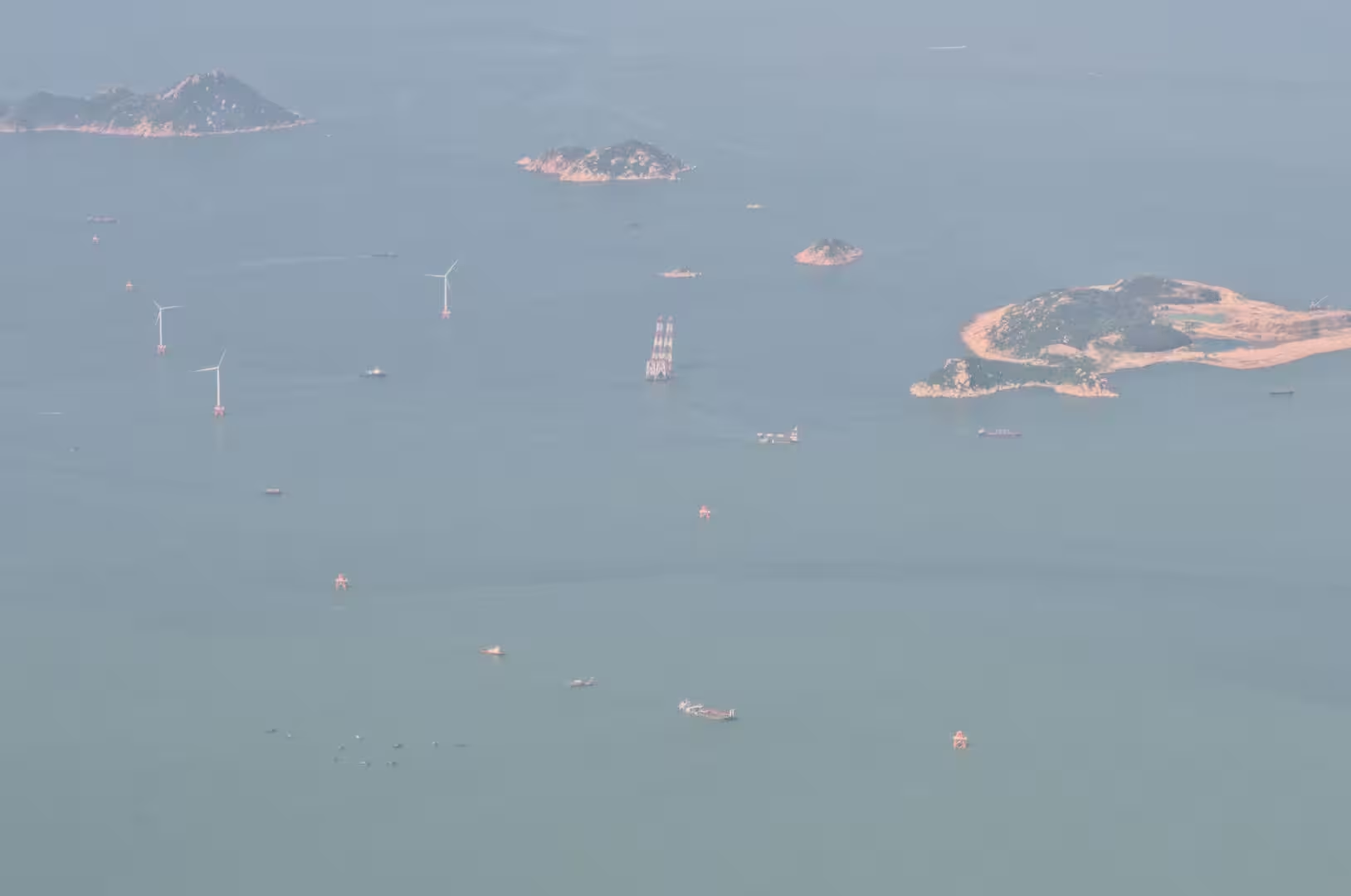
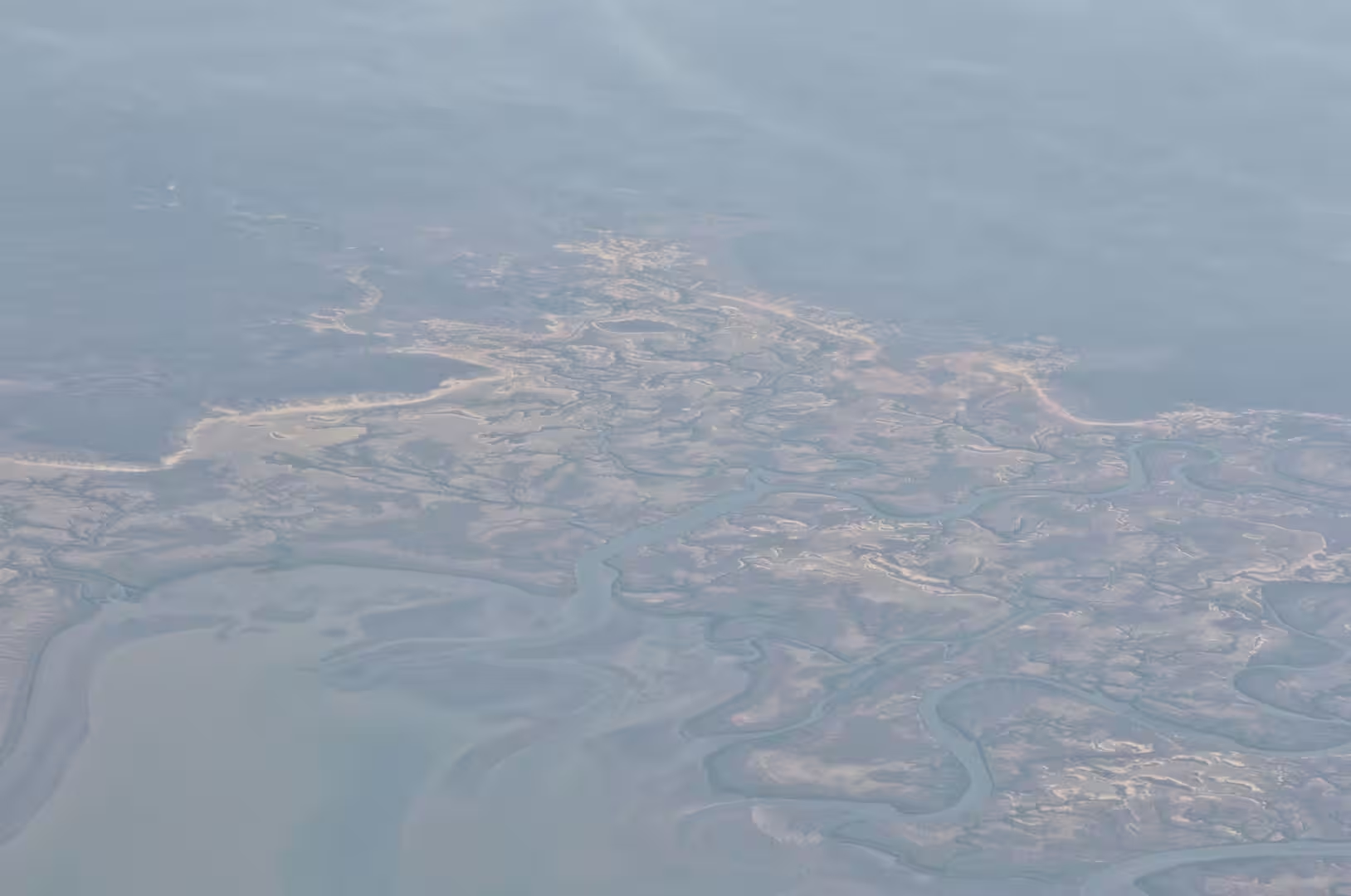
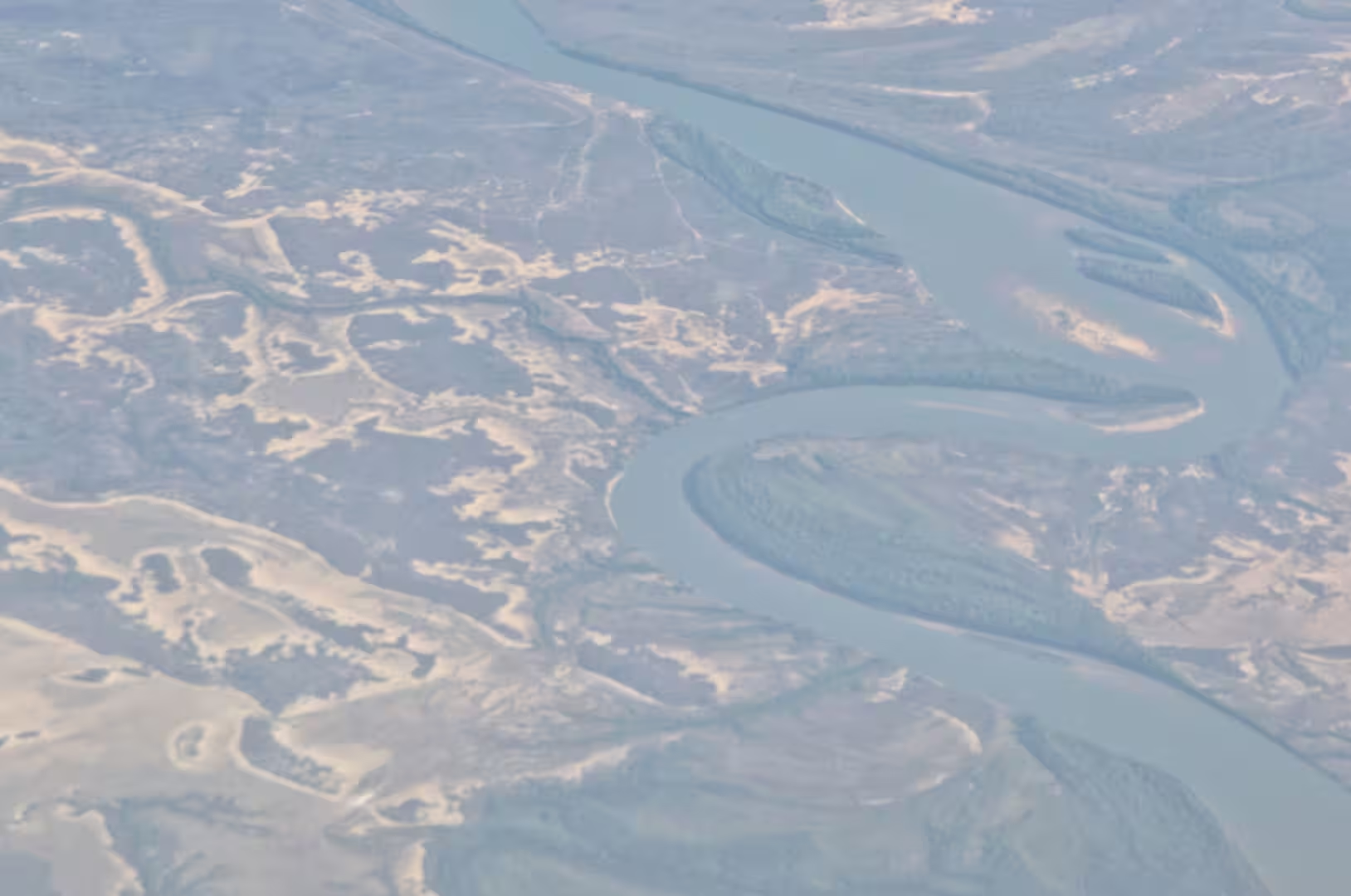
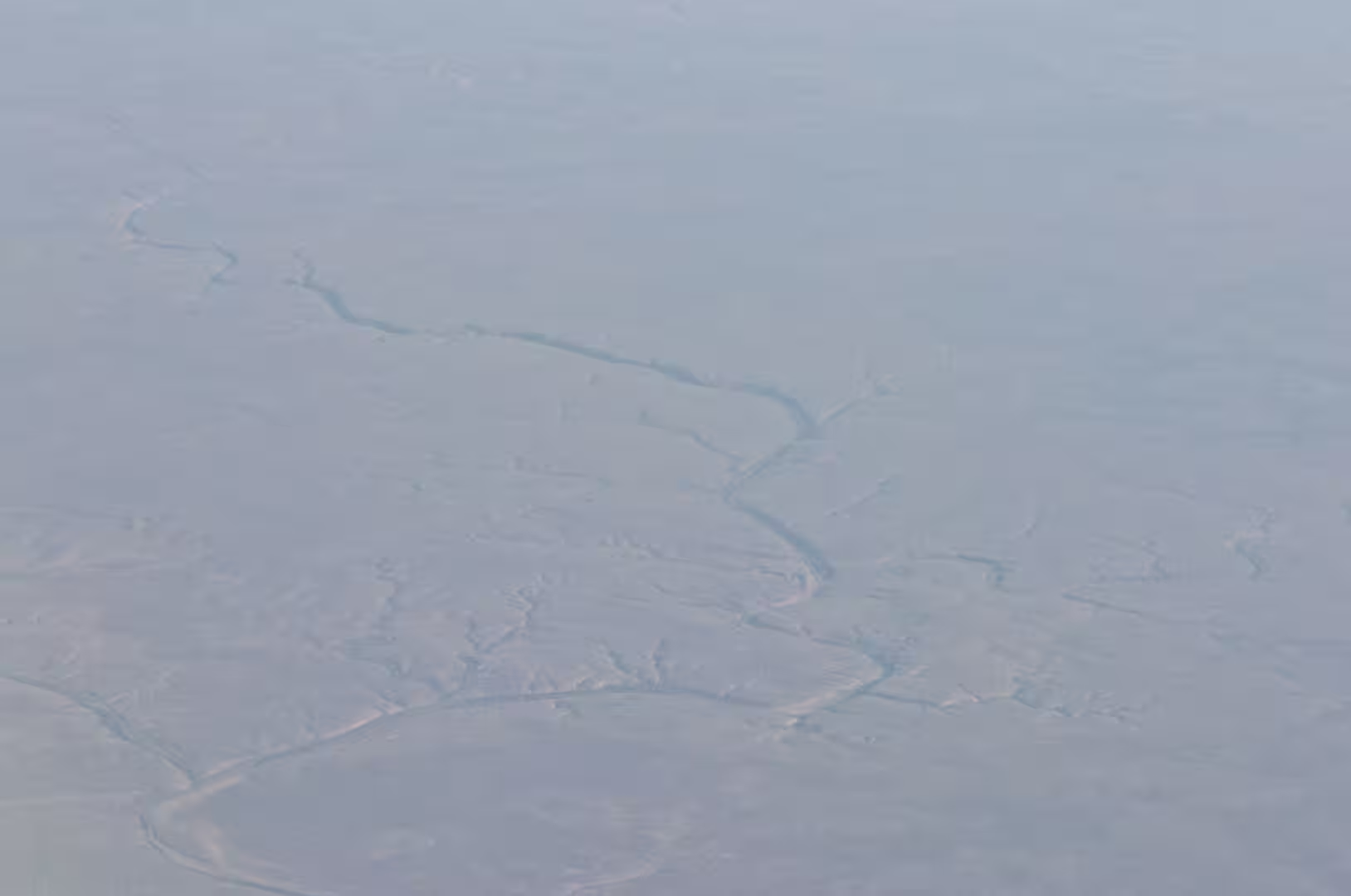
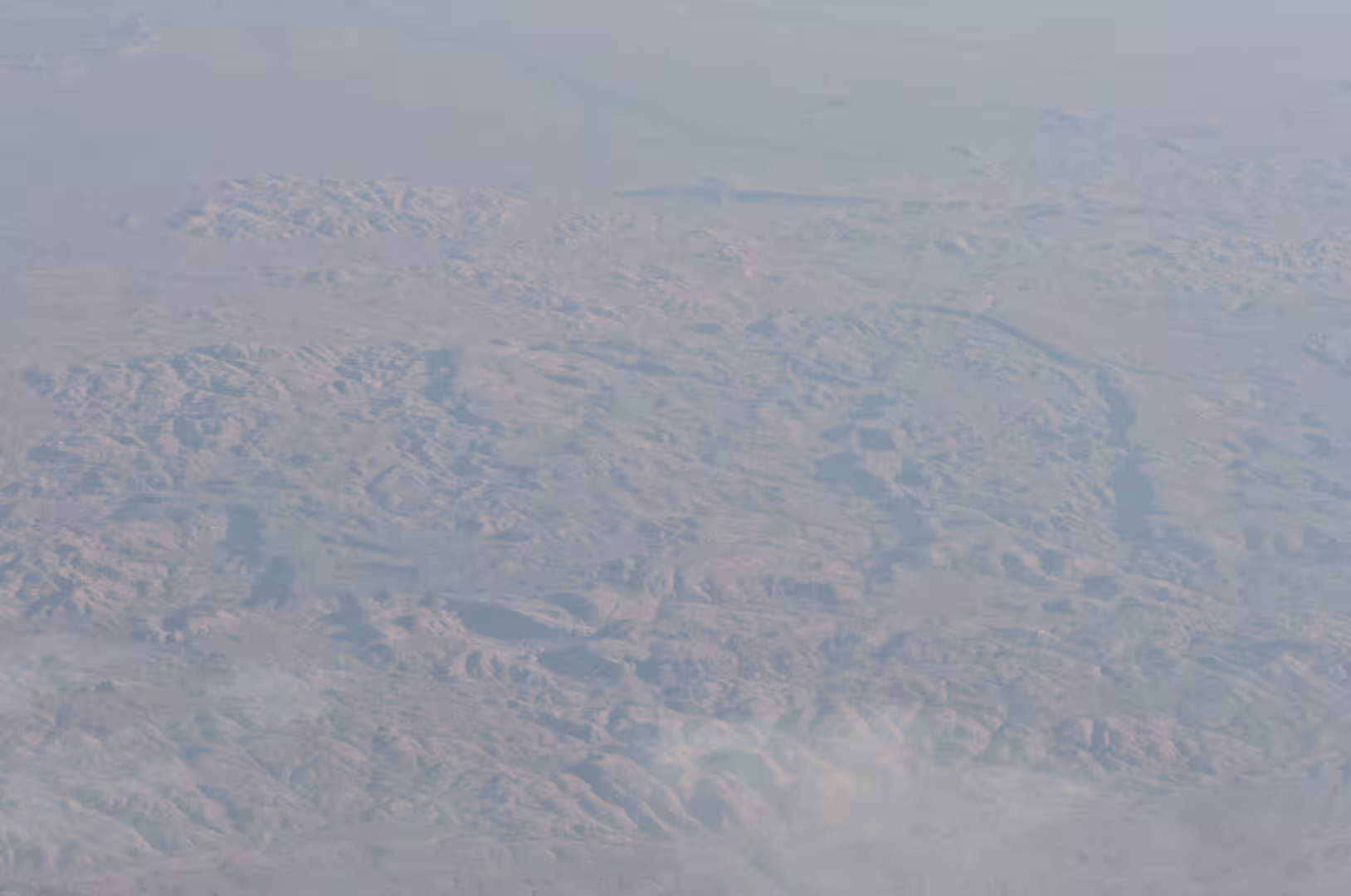
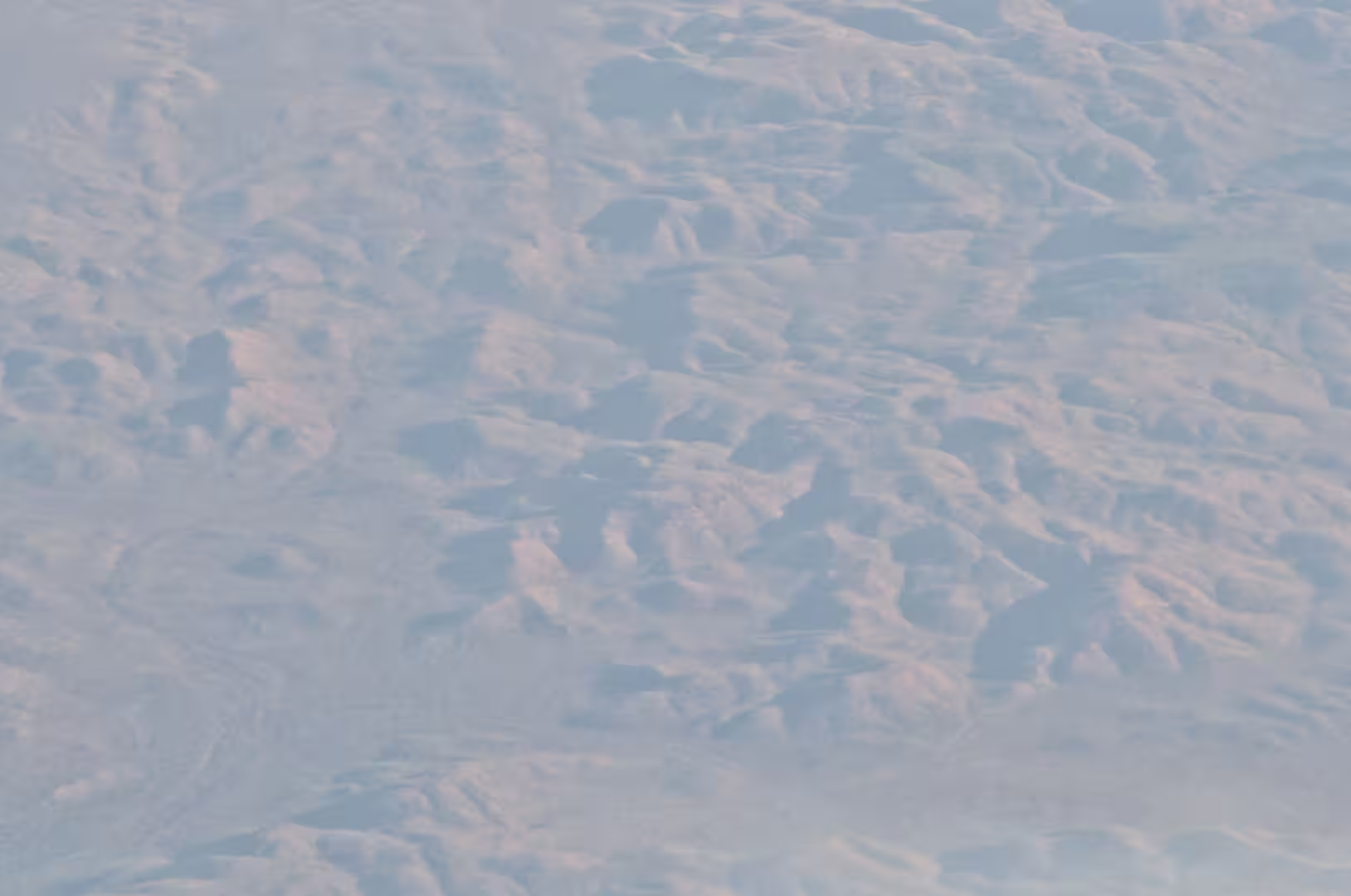
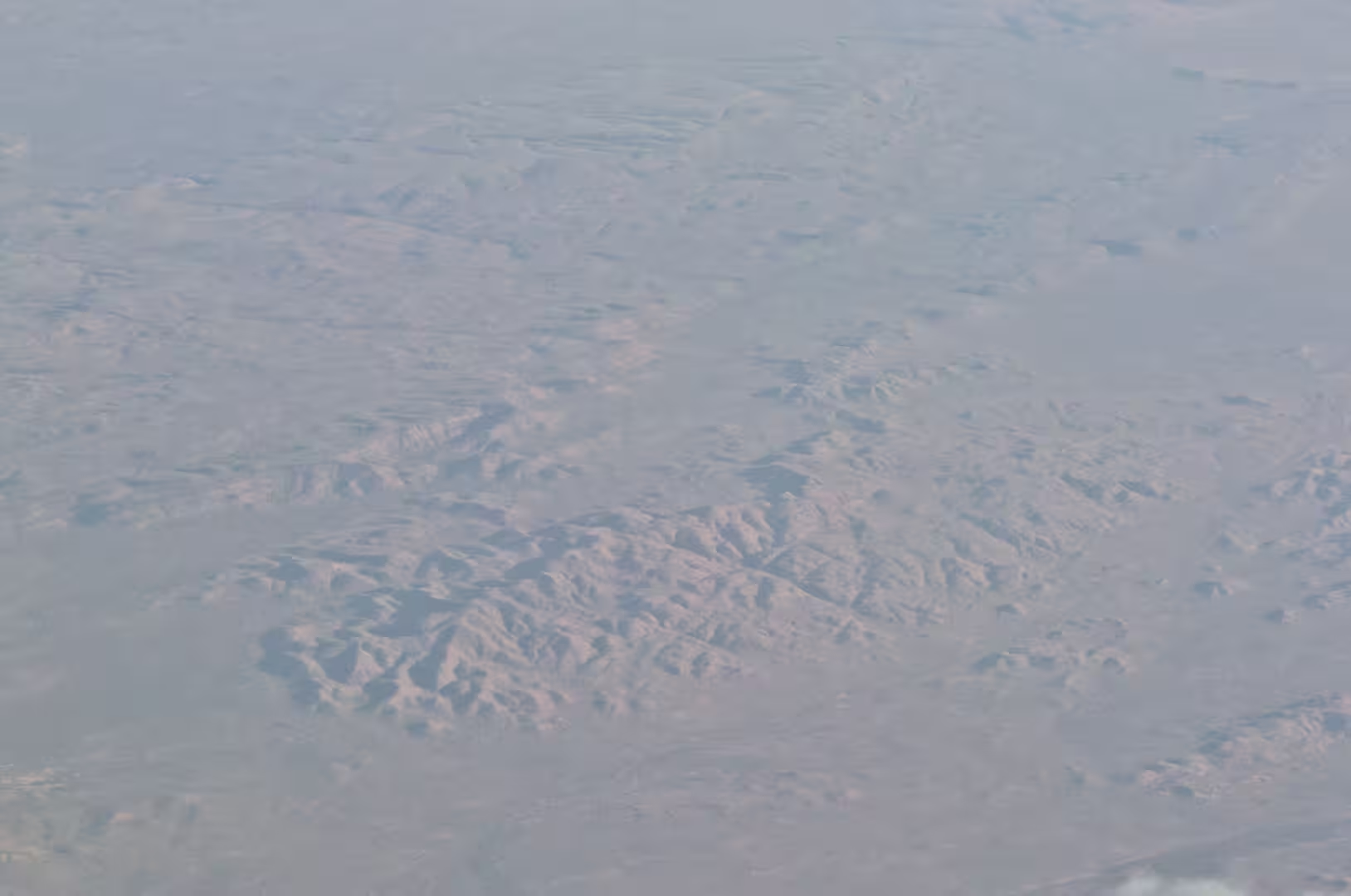
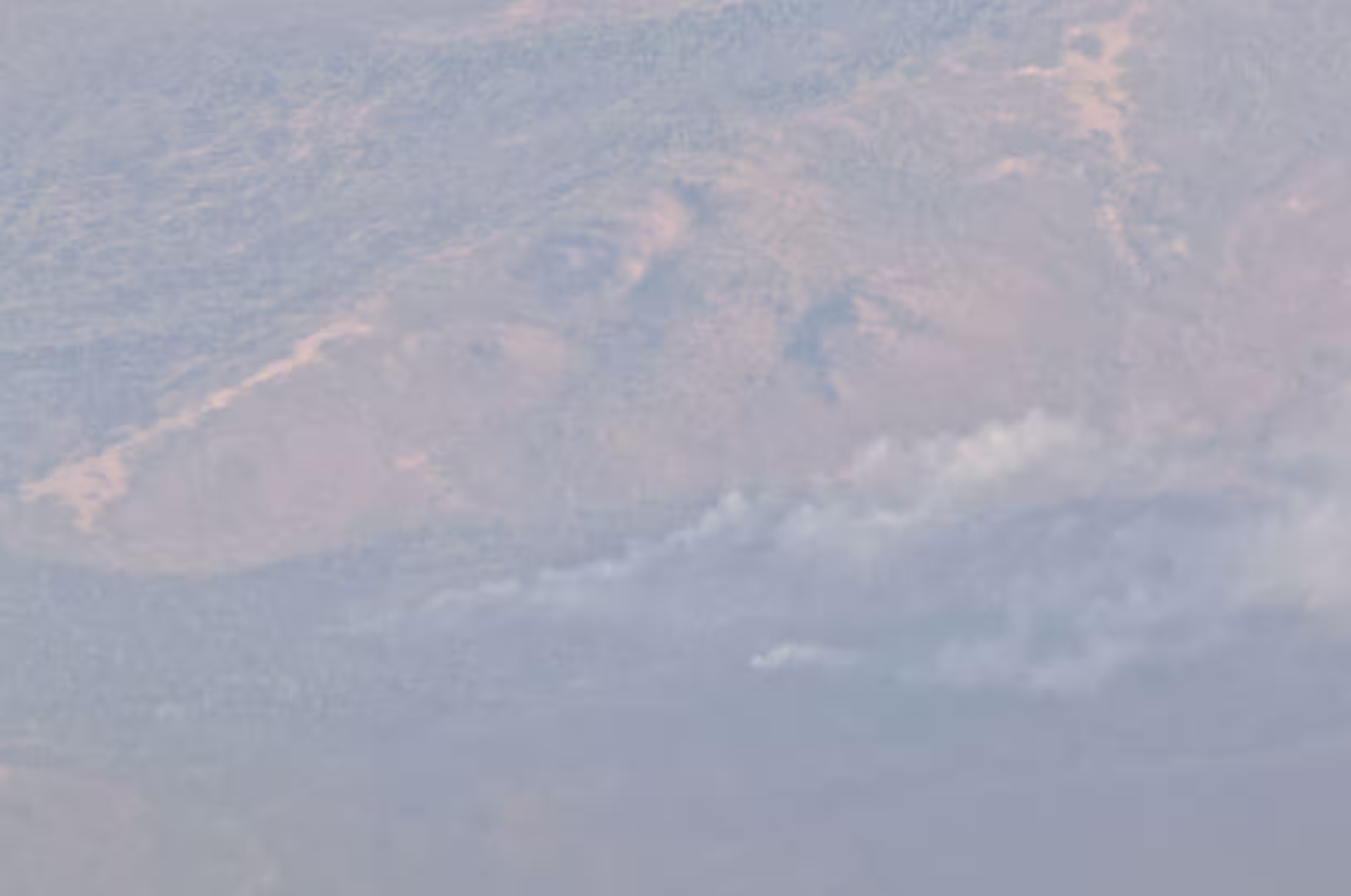
The flight itself is a geological lesson for anyone with a window seat on the right side of the aircraft. The route from Europe to Sydney passes over country that reads like a sequence of the forms the earth produces: a braided delta with its channels and sandbars, an arid floodplain with the faint loops of a river that only flows in the flood season, a plain of parallel dune ridges left by the wind, and a highland of eroded canyons and plateaus. Somewhere in that sequence the aircraft crosses from one continent to another, and the change is visible: the country becomes paler, flatter and emptier, and the coast at the end of it is a green edge on a vast interior.
The city sits on the coastal edge of one of the oldest parts of the continent. The rock beneath it is sandstone laid down in the Triassic, the harbour is a drowned river valley, and the coastline is a sequence of sandstone headlands with beaches of quartz sand between them. The airport occupies a piece of the same system: the northern shore of Botany Bay, a drowned valley of a river that used to reach the sea further east, and the runways stand on ground that was under water within the memory of the port’s first engineers.
The heat that greets a European arrival in December is the other geological fact of the day. The southern hemisphere is in the middle of its summer, the sun is close to the zenith at midday, and the light has a hardness that views do not prepare a visitor for. The city’s answer to it is the water: the beaches on the ocean side, the harbour on the north, and a lifestyle that has been organised around both since the nineteenth century.
Botany Bay, which the airport faces, is the other great inlet of the coast and has a history of its own. It was the landing place that James Cook named in 1770 before the settlement was sited on the harbour, and it is the drowned valley of the Cooks River and the Georges River, filled with sand and shallow water. The runways of the airport extend over it on reclaimed ground, the container port is on its northern shore, and the bay itself is one of the most modified pieces of water in the country.
Things to See
There is not much sightseeing on an arrival day, and there should not be. The first tasks are practical: money, a transport card, a local telephone number and food. The transport network of Sydney is good and cheap by the standards of a European city, the trains and the light rail connect the centre with the suburbs, and the ferries are part of the same system, which is an arrangement few cities can match.
The first evening is best spent at the window. The skyline of the central business district is at its best after dark, when the towers are lit and the traffic is a river of light on the roads below, and the observation tower stands above it all as the single landmark that a visitor can orientate by. The birds that call in the streets at dusk are the other introduction to the country: the white ibis that has made itself at home in every park and rubbish bin, and the possums that live in the roof spaces of the suburbs.
Anyone with the energy for a walk should use it on the neighbourhood. The inner eastern suburbs are dense, green and full of small cafes, and the walk from the apartment block to the water takes twenty minutes in one direction and the same in the other. The first full day can then be planned around the harbour, which is what the following days were.
The practicalities of a first day in Australia are worth setting down for anyone planning the same journey. The jet lag runs the wrong way, so the first night is short and the first morning starts early; the sun is dangerous in a way that northern Europeans underestimate; and the distances between things are larger than the map suggests, because the city is spread along its coast rather than built up in a heap. Everything else is easier than expected, and the shop assistants, the bus drivers and the strangers in the street are helpful in a manner that no European visitor quite believes at first.
The first day is the right time to sort out the mechanics of the city. The transport card covers the trains, the buses, the light rail and the ferries, it is bought at any convenience store, and the fares are charged by distance. The mobile telephone network is good, the tap water is drinkable everywhere, and the public libraries offer free internet to visitors, which is a detail that saves a fortune on a long trip. The neighbourhood of the apartment was dense and walkable, with a supermarket open late and a bus stop within a minute of the door.
The plan for the following days was made on that first evening. The city has three obvious axes for a visitor with a week: the harbour and its ferries, the ocean beaches and the coastal walk that links them, and the mountains inland. Between them they fill a week comfortably, and the weather in December is the variable that decides the order: the beaches are best on the calm days, the mountains on the clear ones, and the harbour works in any weather because the ferries run regardless of the swell.
References
- Wikipedia contributors (2026). Sydney. en.wikipedia.org/wiki/Sydney
- Wikipedia contributors (2026). Sydney Harbour. en.wikipedia.org/wiki/Sydney%20Harbour
- Wikipedia contributors (2026). Port Jackson. en.wikipedia.org/wiki/Port%20Jackson
- Wikipedia contributors (2026). Circular Quay. en.wikipedia.org/wiki/Circular%20Quay
- Wikipedia contributors (2026). Sydney Harbour Bridge. en.wikipedia.org/wiki/Sydney%20Harbour%20Bridge
- Wikipedia contributors (2026). Sydney Opera House. en.wikipedia.org/wiki/Sydney%20Opera%20House
- Wikipedia contributors (2026). The Rocks, New South Wales. en.wikipedia.org/wiki/The%20Rocks%2C%20New%20South%20Wales
- Wikipedia contributors (2026). Royal Botanic Garden. en.wikipedia.org/wiki/Royal%20Botanic%20Garden
- Wikipedia contributors (2026). Royal National Park. en.wikipedia.org/wiki/Royal%20National%20Park
- Wikipedia contributors (2026). Bondi Beach. en.wikipedia.org/wiki/Bondi%20Beach
- Wikipedia contributors (2026). Coogee, New South Wales. en.wikipedia.org/wiki/Coogee%2C%20New%20South%20Wales
- Wikipedia contributors (2026). Manly, New South Wales. en.wikipedia.org/wiki/Manly%2C%20New%20South%20Wales
- Wikipedia contributors (2026). Watsons Bay. en.wikipedia.org/wiki/Watsons%20Bay
- Wikipedia contributors (2026). Tasman Sea. en.wikipedia.org/wiki/Tasman%20Sea
- Wikipedia contributors (2026). Sydney Basin. en.wikipedia.org/wiki/Sydney%20Basin
- Wikipedia contributors (2026). Hawkesbury sandstone. en.wikipedia.org/wiki/Hawkesbury%20sandstone
- Wikipedia contributors (2026). Sydney Ferries. en.wikipedia.org/wiki/Sydney%20Ferries
- Pells P. (2018) Engineering properties of the Hawkesbury Sandstone. Engineering Geology of the Sydney Region. 179-197. doi.org/10.1201/9780203757390-10
- Ward P. (2018) Excavation of Hawkesbury Sandstone in the Sydney Region. Engineering Geology of the Sydney Region. 199-202. doi.org/10.1201/9780203757390-11