Australia 2022 - November - Sydney
Journal Notes
General
Sydney is the capital of New South Wales and the largest city in Australia, and the city that most travellers see more than once. This second stay fell in November, at the end of the southern spring, when the jacarandas are in flower across the suburbs and the first heat of summer has not yet settled over the basin. Greater Sydney counts 658 suburbs across 33 local government areas, and its population of about 5.6 million is roughly two thirds of the population of the whole state.
The shape of the city is a basin around its harbour. Sydney extends about eighty kilometres from the Pacific Ocean in the east to the Blue Mountains in the west, and about the same distance from the Hawkesbury River in the north to the Royal National Park in the south, and it is divided between the flatter Cumberland Plain to the south and west and the Hornsby Plateau to the north, where the valleys are steep and the ridges remain wooded. The harbour, Port Jackson, is the reason for the position of the settlement and still the centre of its geography.
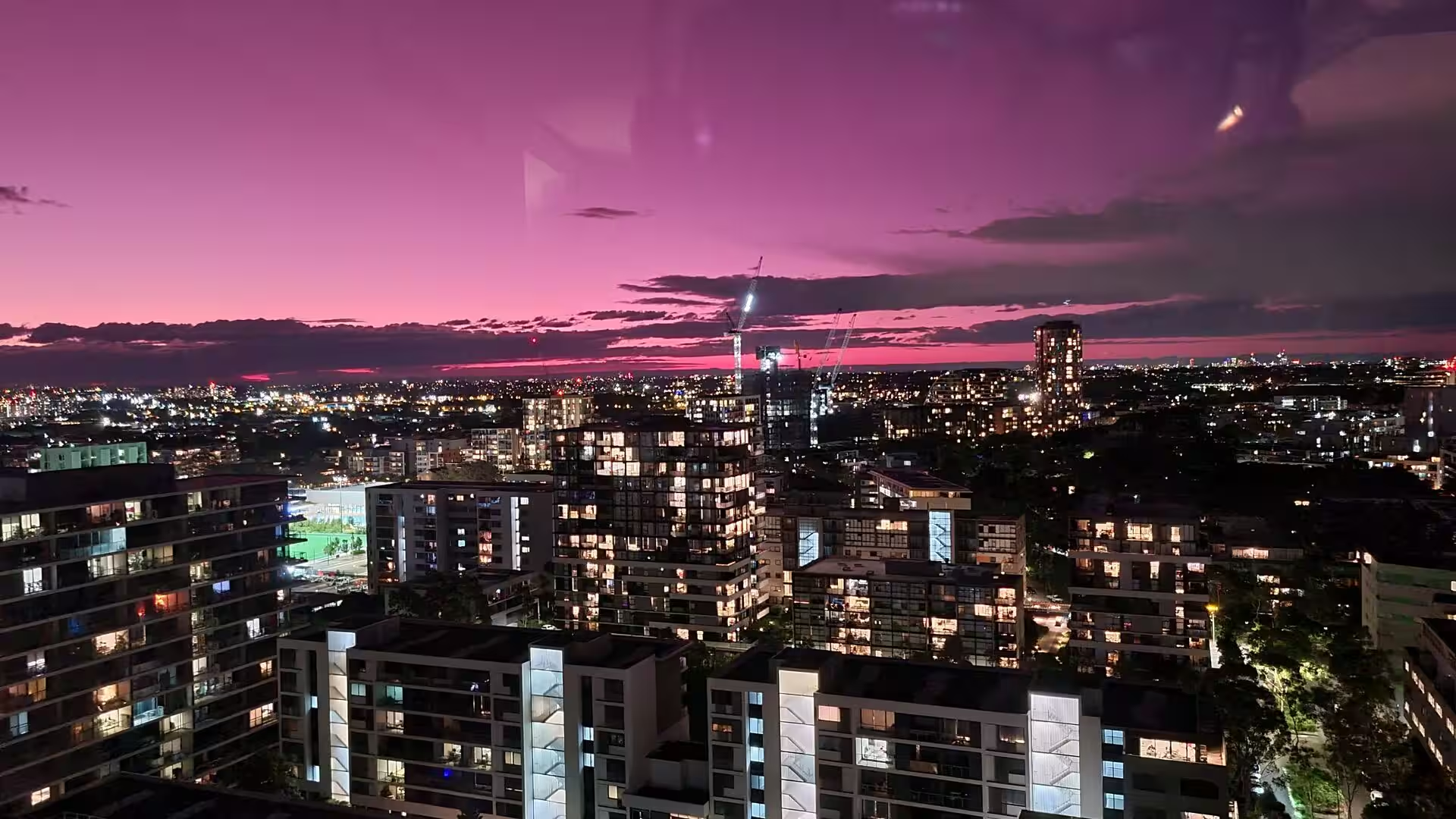
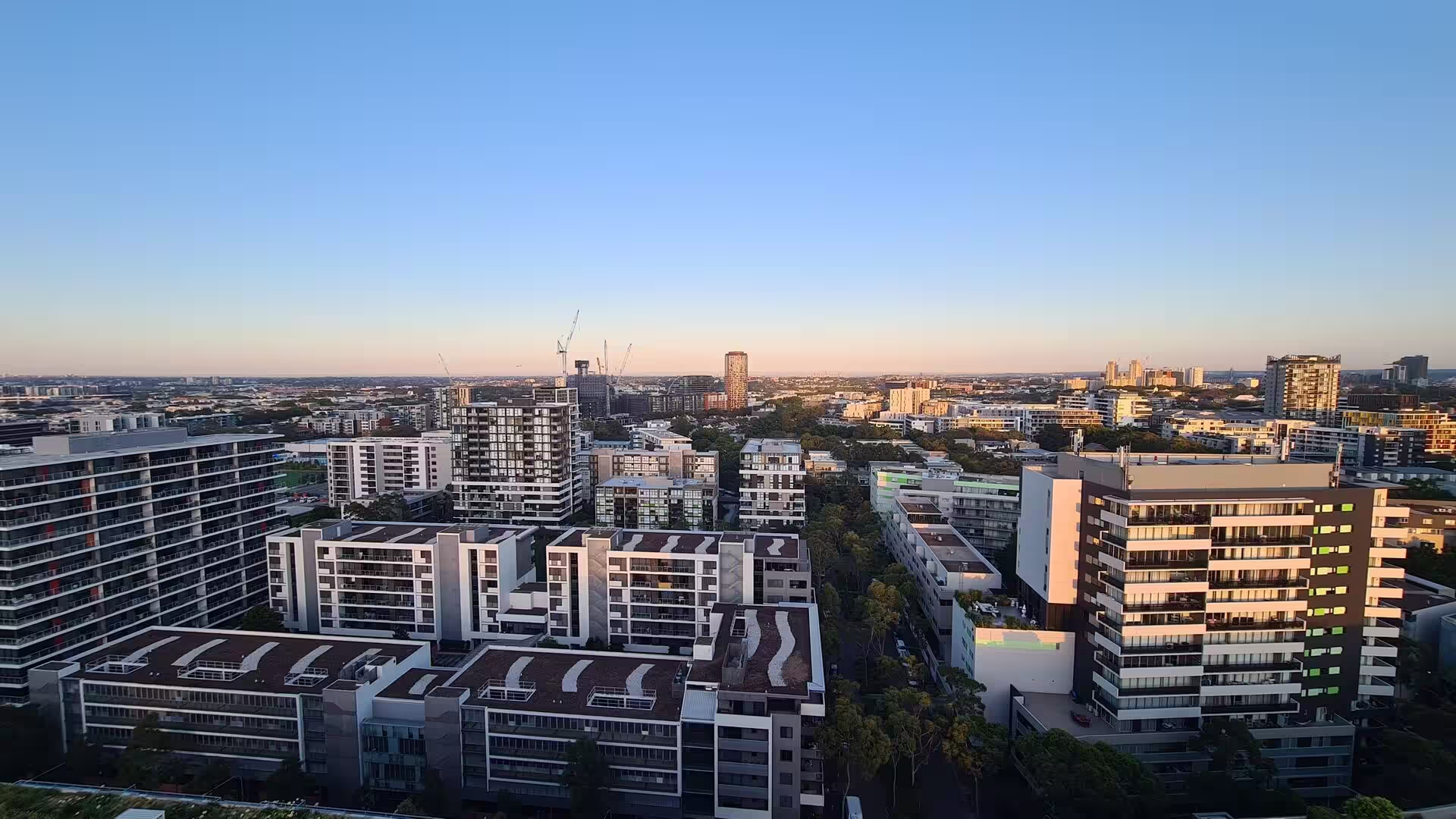
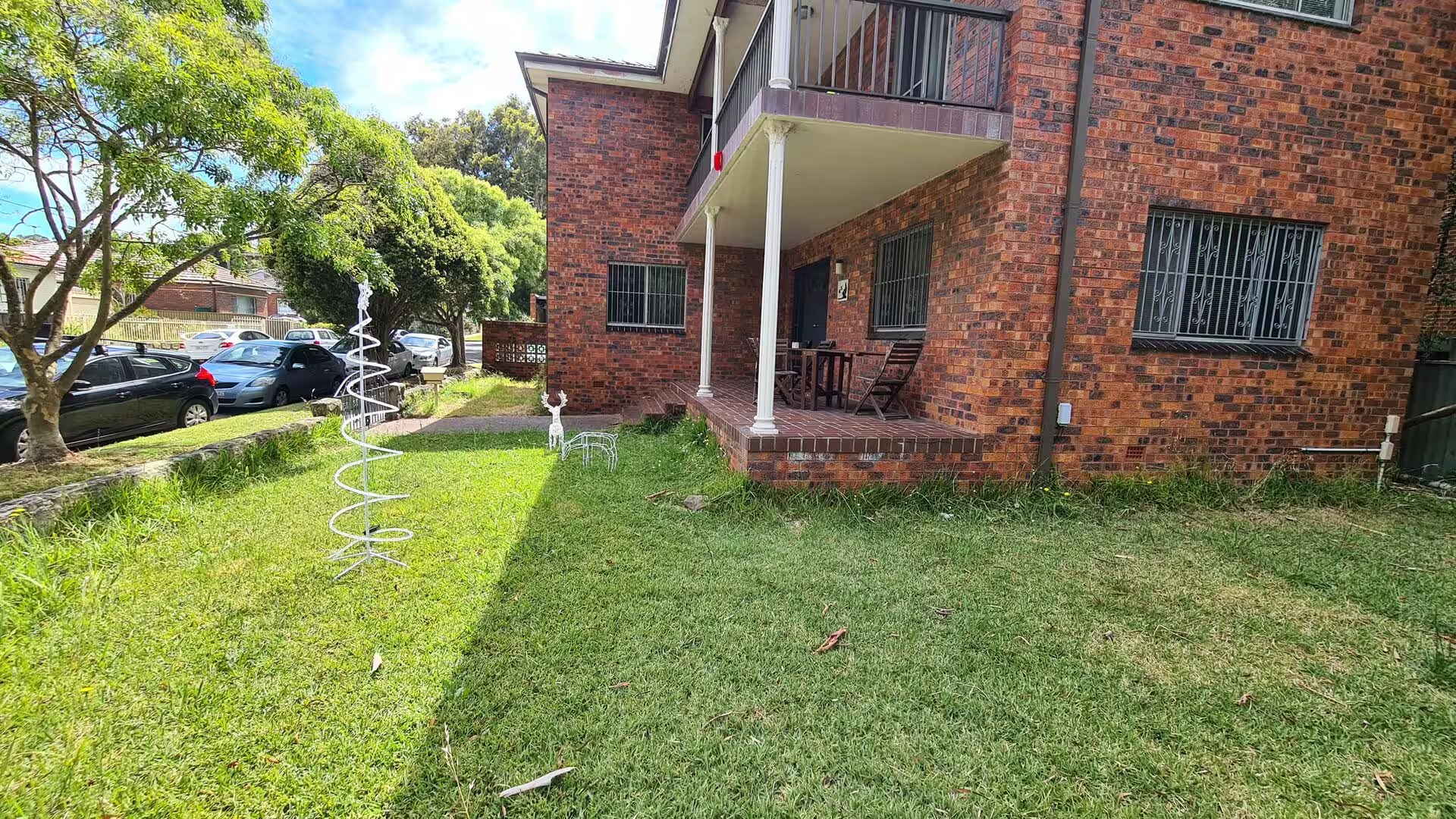
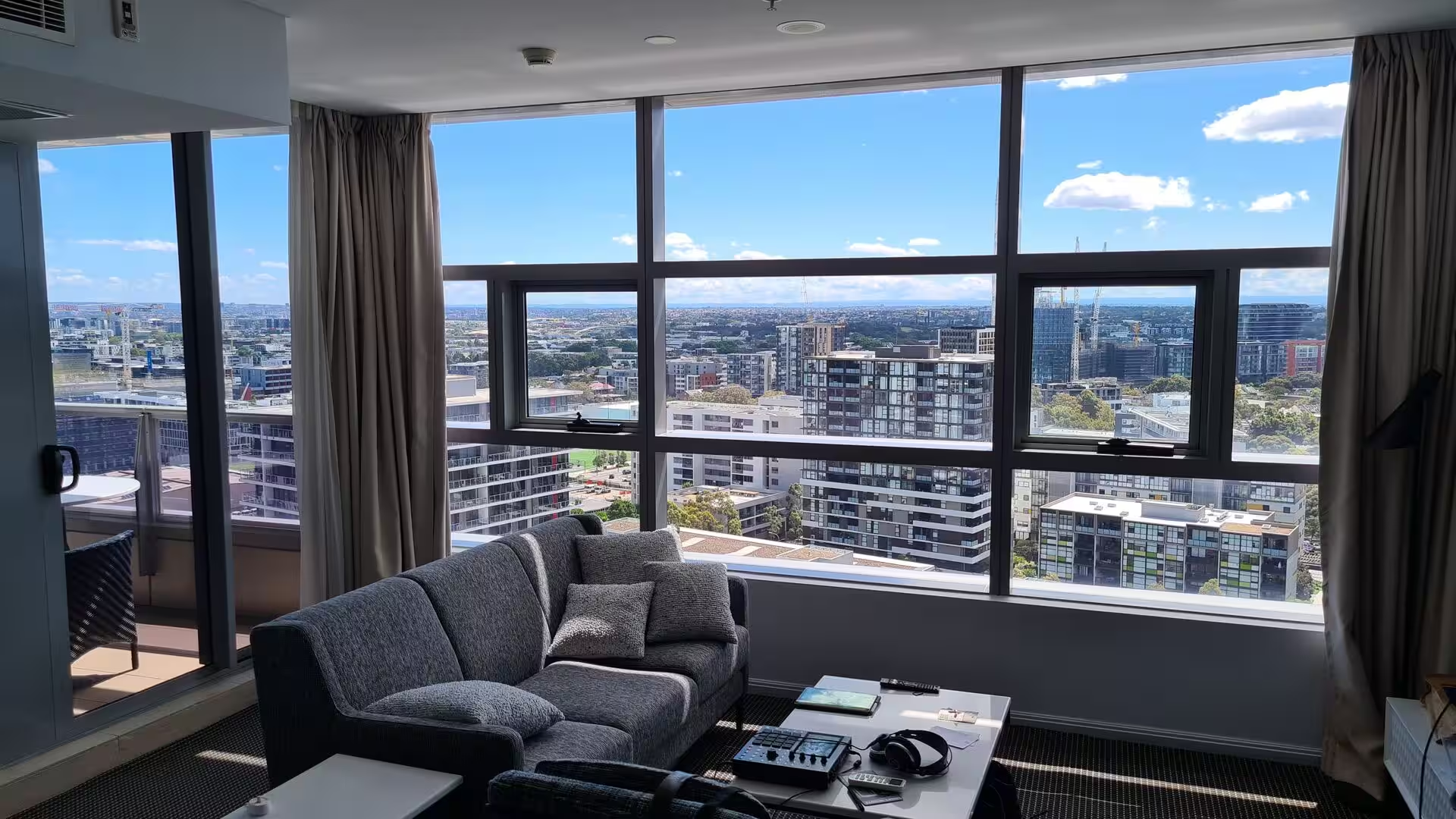
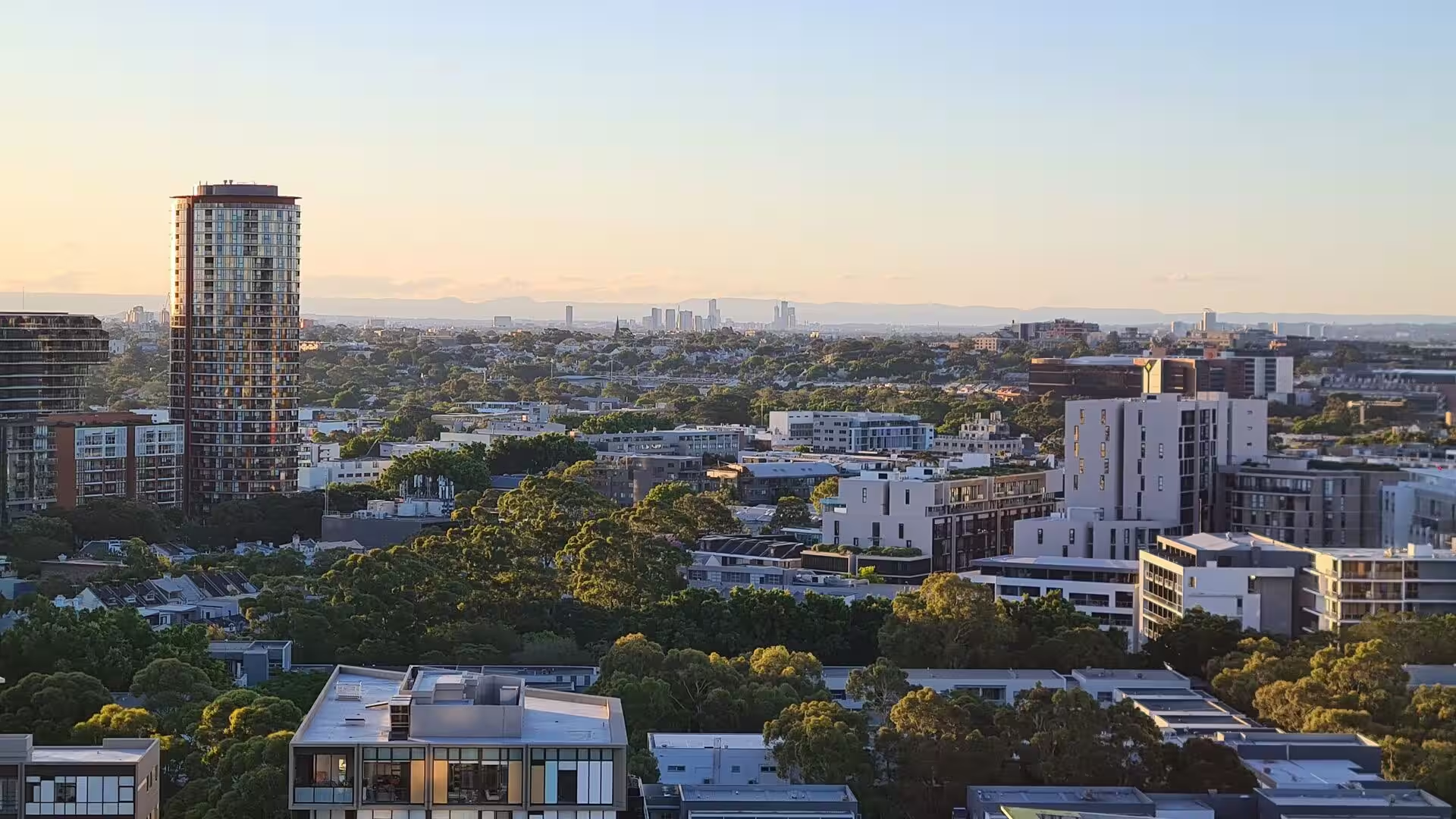
The suburbs carry the history of the city in their buildings. Streets of two storey terraces survive in the inner districts, larger detached houses with gardens fill the middle ring, and the brick apartment blocks of the later twentieth century, with their balconies and their car parks underneath, now line the railway corridors and the main roads. Of the 1.83 million dwellings counted in 2021, just over half were detached houses, a third were apartments and the rest were semi-detached terraces, a distribution that describes the whole structure of the city at a glance.
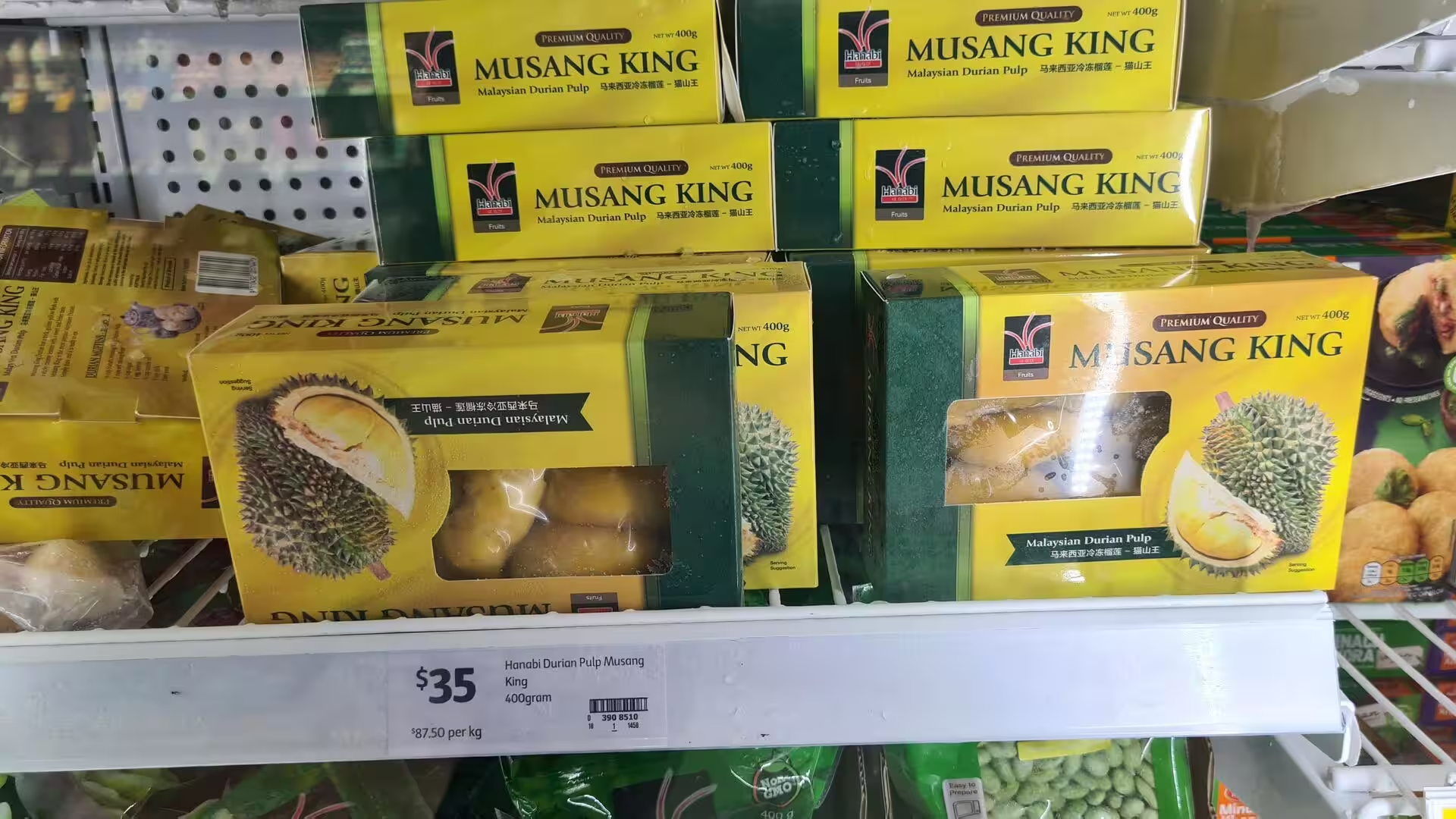
Sydney is a city of migrants, and the suburbs are where that shows. Migration after the Second World War changed the character of the middle and western districts, and by 2021 more than forty per cent of the population had been born overseas, with the largest groups coming from mainland China, India, the United Kingdom, Vietnam and the Philippines. The shops, the food markets and the cafés of a suburb are therefore as good a guide to the city as its monuments, and the supermarket aisle is as typical a sight in Sydney as the harbour.
The climate of November is a transition. Sydney has a humid subtropical climate moderated by the ocean, with warm and sometimes hot summers and mild winters, and in late spring the weather alternates between clear days in the high twenties and sudden stormy changes. The Pacific oscillation governs the year at a larger scale, bringing drought and bushfire in one phase and flooding rain in the other; in the city itself the extremes recorded at Observatory Hill run from 45.8 degrees Celsius in January 2013 to 2.1 degrees in June 1932.
History
Aboriginal Australians have lived in the Sydney region for at least thirty thousand years. The traditional custodians of the land on which the modern city stands are the clans of the Darug, the Dharawal and the Eora, whose country included the harbour, the rivers and the coastal plain, and their engravings, middens and cultural sites are still found across the region. Their place names survive in the landscape as well as in the vocabulary of the city that grew up around them.
European settlement began in 1788, when the First Fleet of convicts under Arthur Phillip took possession of Port Jackson and founded Sydney as a British penal colony, the first European settlement in Australia. For half a century the town was a workshop of convict labour and colonial ambition, and the buildings of that period, from the Hyde Park Barracks of 1819 to the churches and the courthouses, form the oldest architectural layer of the city.
The nineteenth century turned the penal settlement into a commercial port. Wharves and warehouses lined the harbour, the railway reached the suburbs from 1855 onwards, and the colonial government laid out the parks and the boulevards that still give the centre its shape. Sydney became the capital of New South Wales and, with the federation of the Australian colonies in 1901, one of the two great cities of the new nation, competing with Melbourne for the title of the country’s first metropolis.
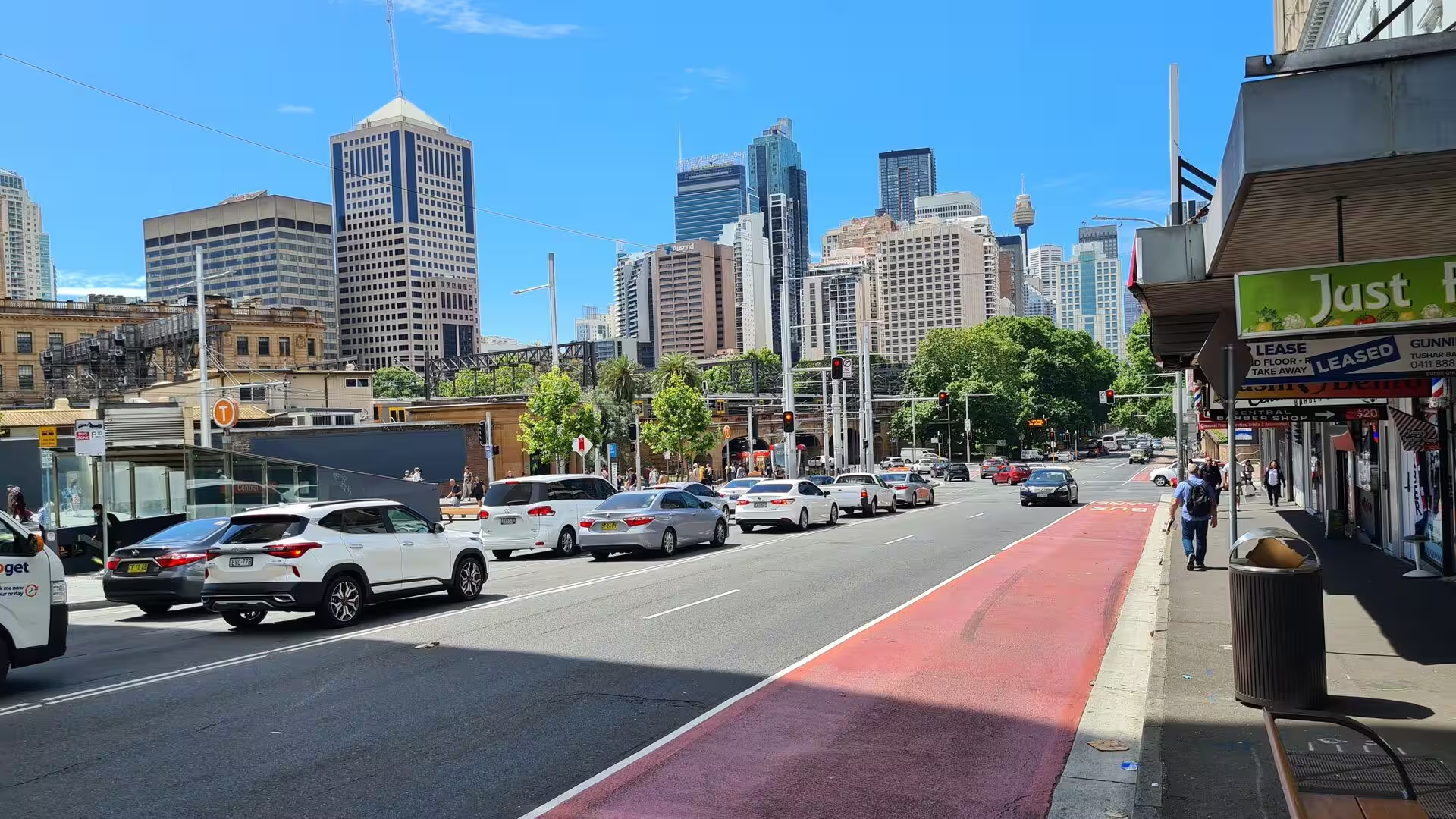
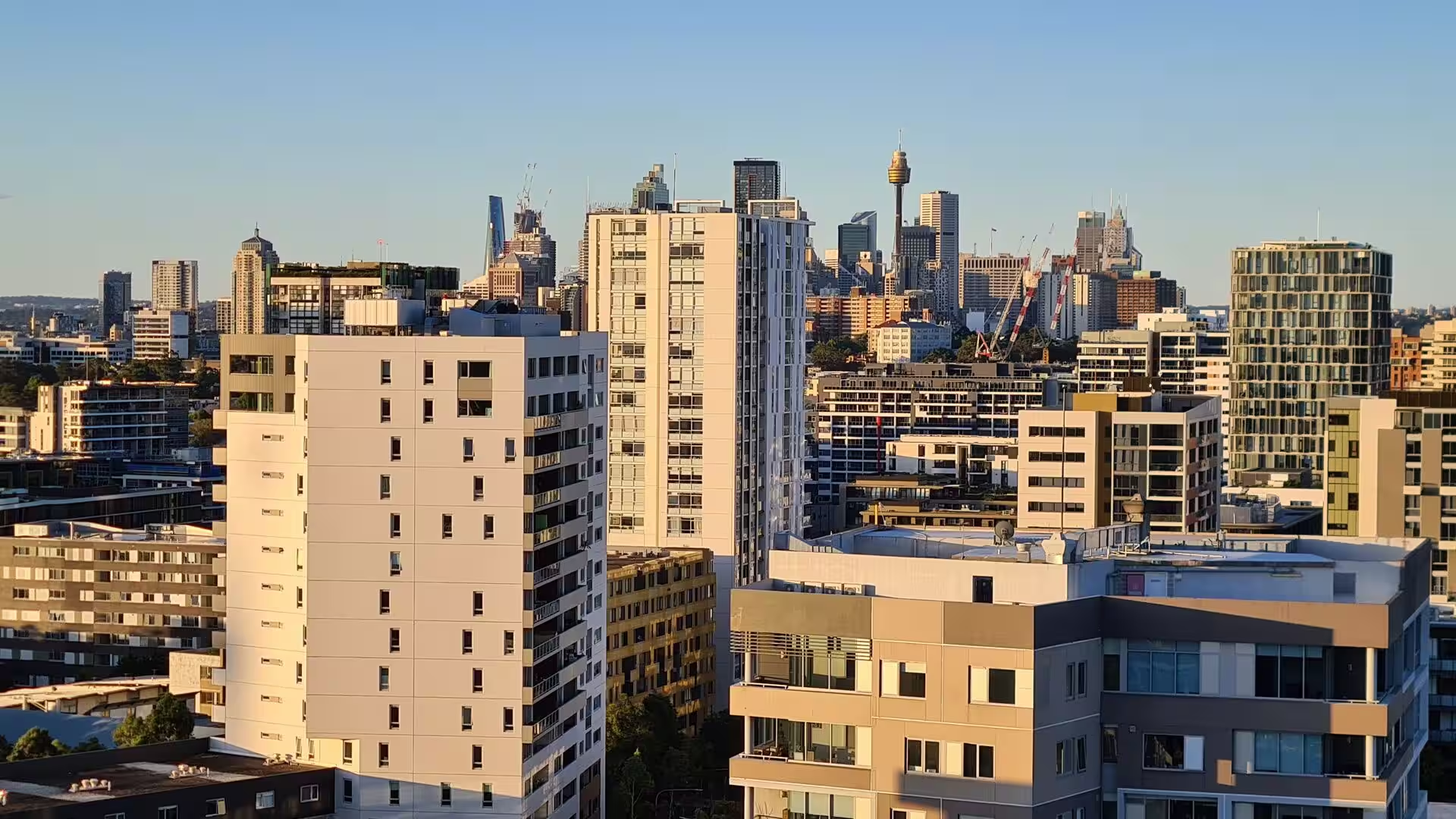
The twentieth century added bridges, towers and suburbs. The Harbour Bridge opened in 1932 and allowed the northern shore to be built up; the city railway spread westward; and after the Second World War immigration and the motor car pushed the built up area far beyond the old boundaries, while the centre began to grow upward: plans for Sydney Tower were unveiled in 1968, work on the office building below it started in 1970 and the tower itself rose from 1975. It is the tallest structure in the city and the second tallest observation tower in the Southern Hemisphere, standing 309 metres above the central business district on Market Street, and by the 1980s the skyline of Sydney was one of the most recognisable in the southern hemisphere.
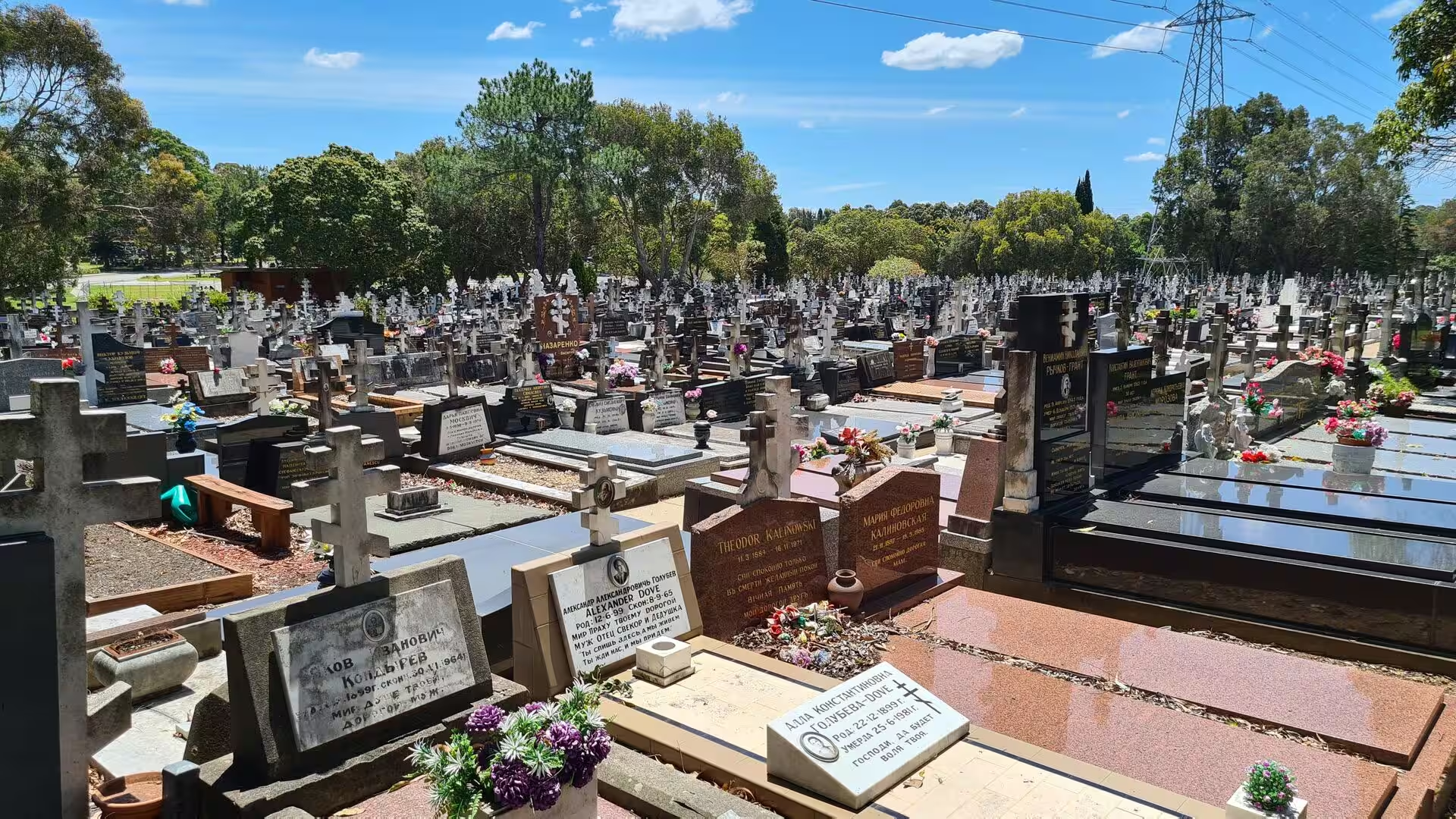
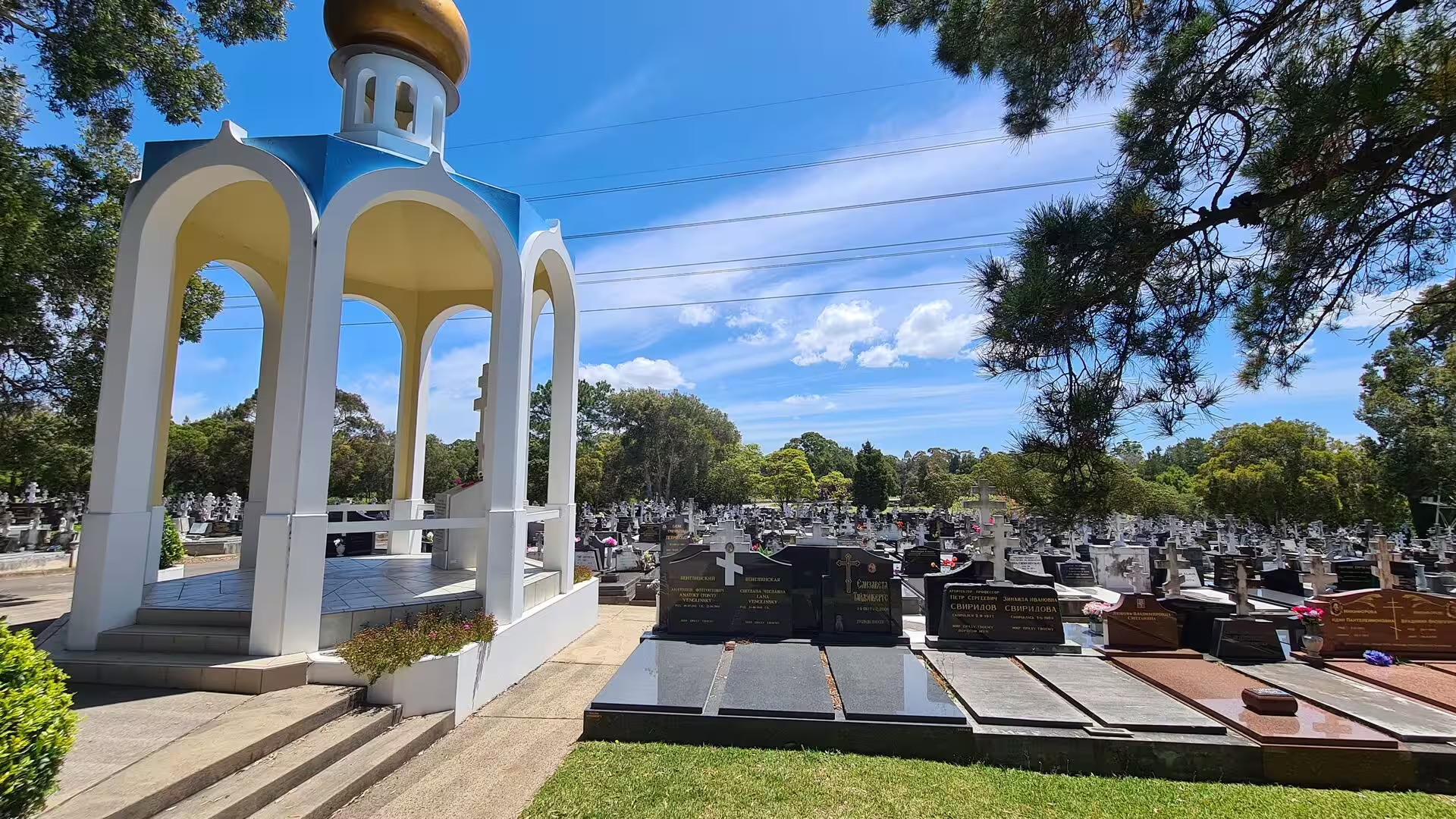
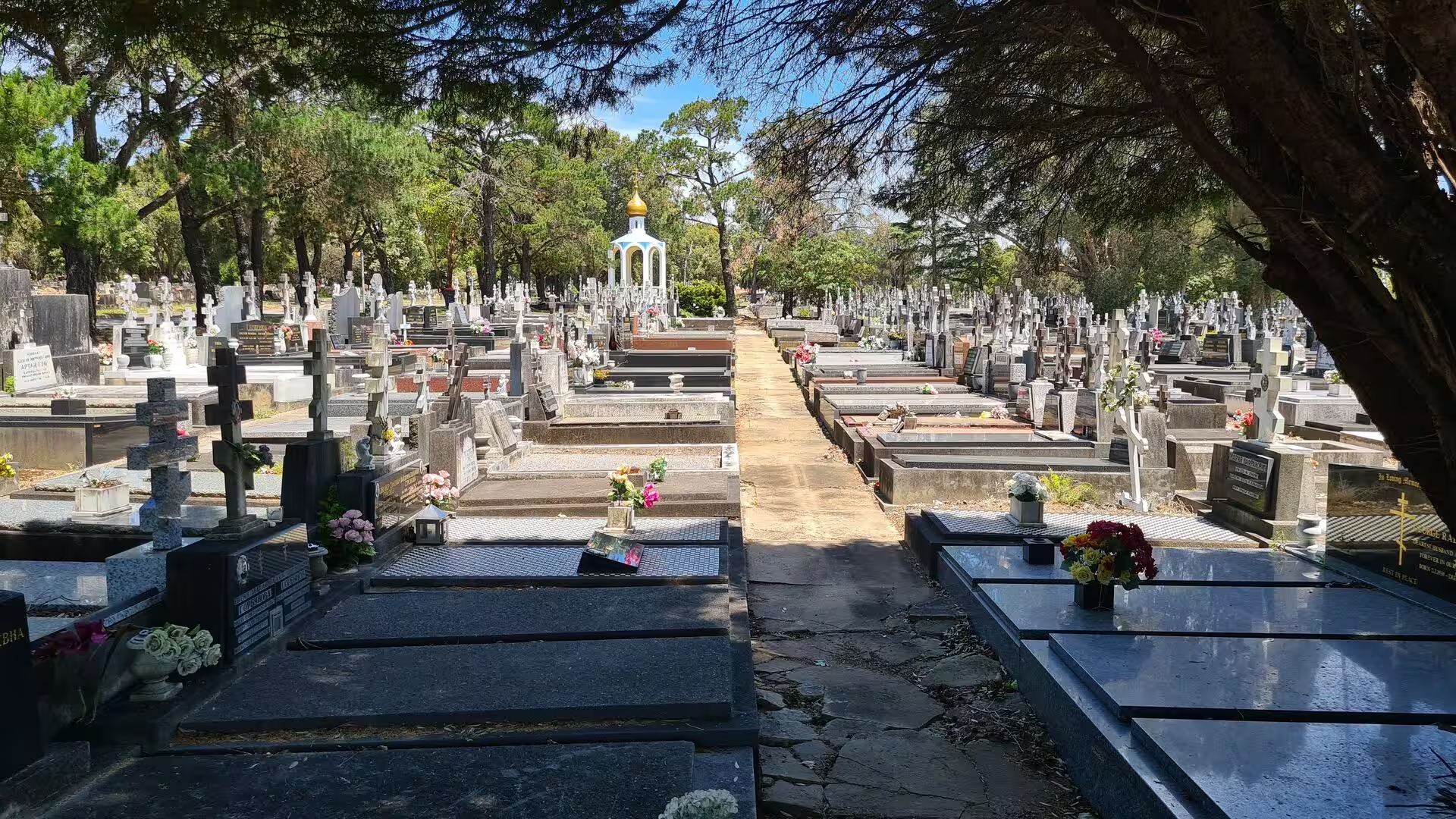
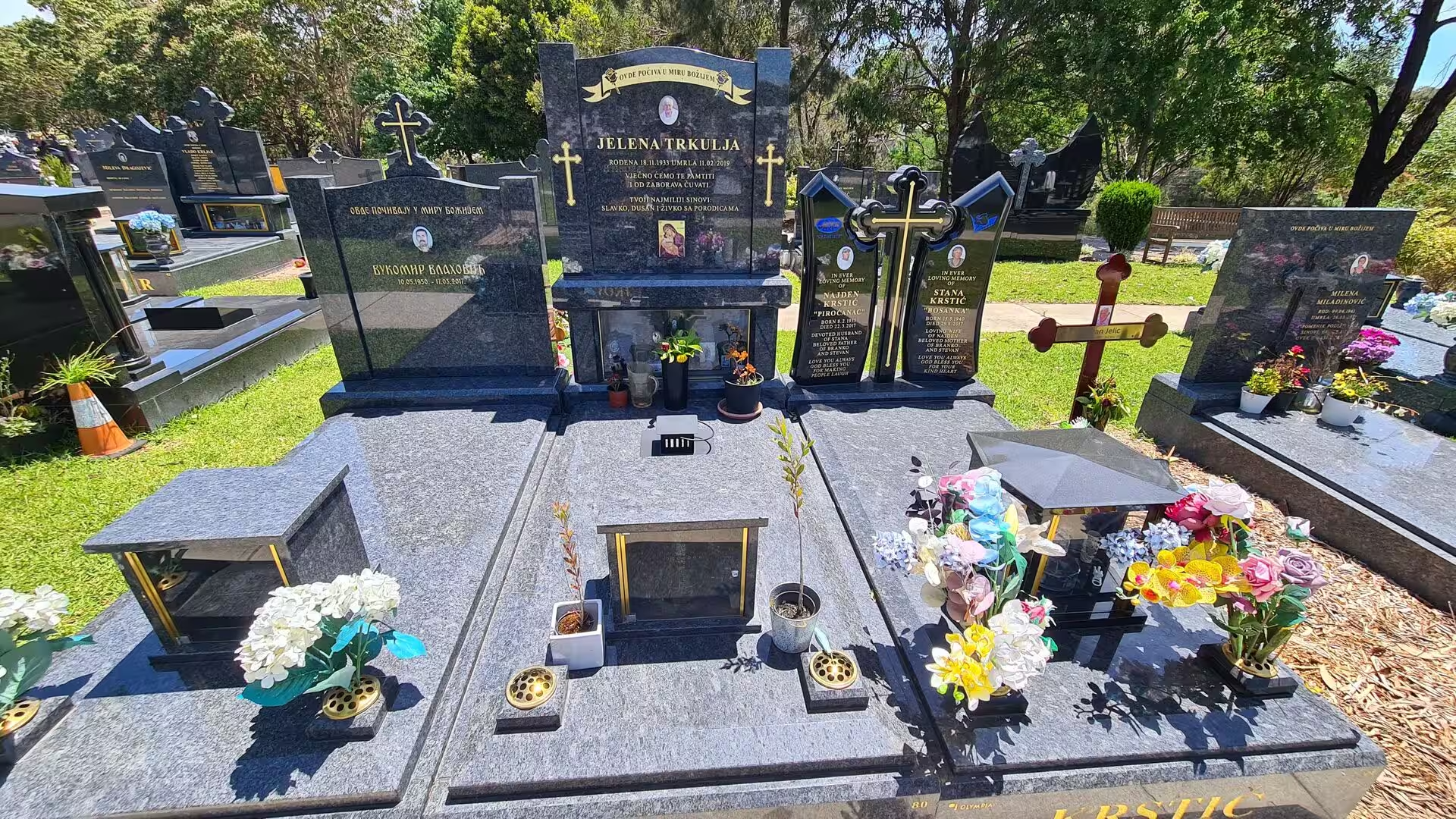
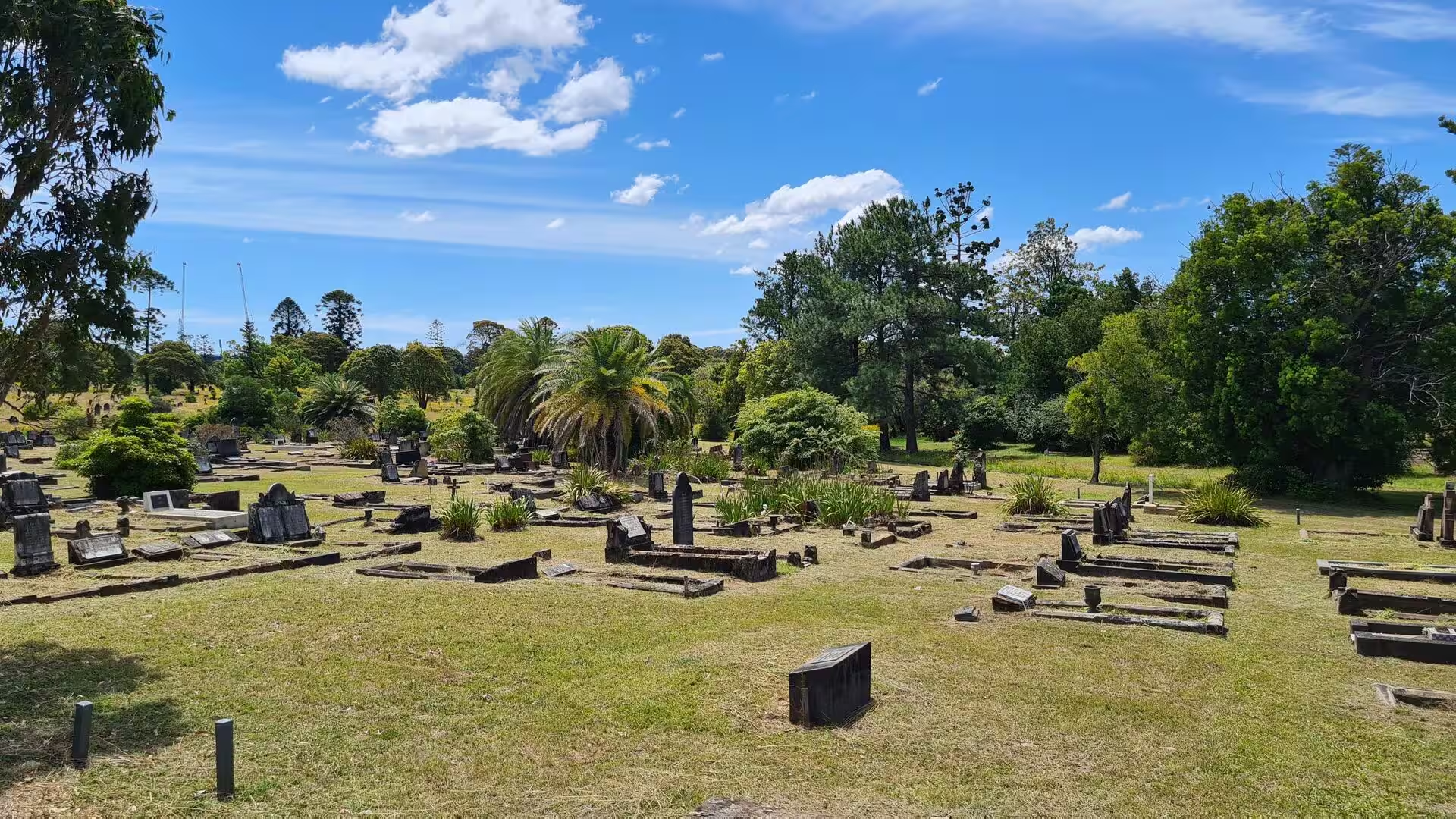
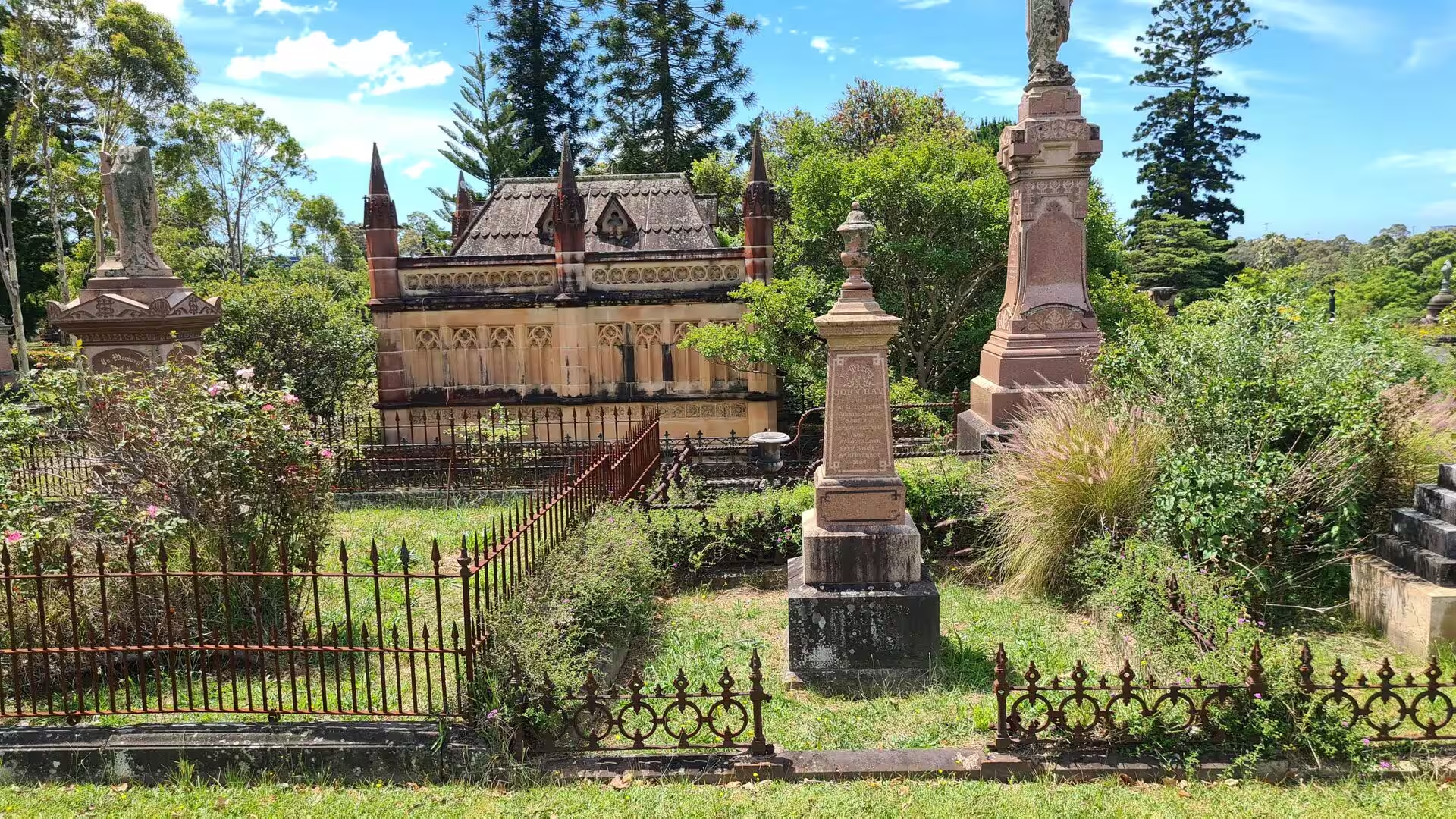
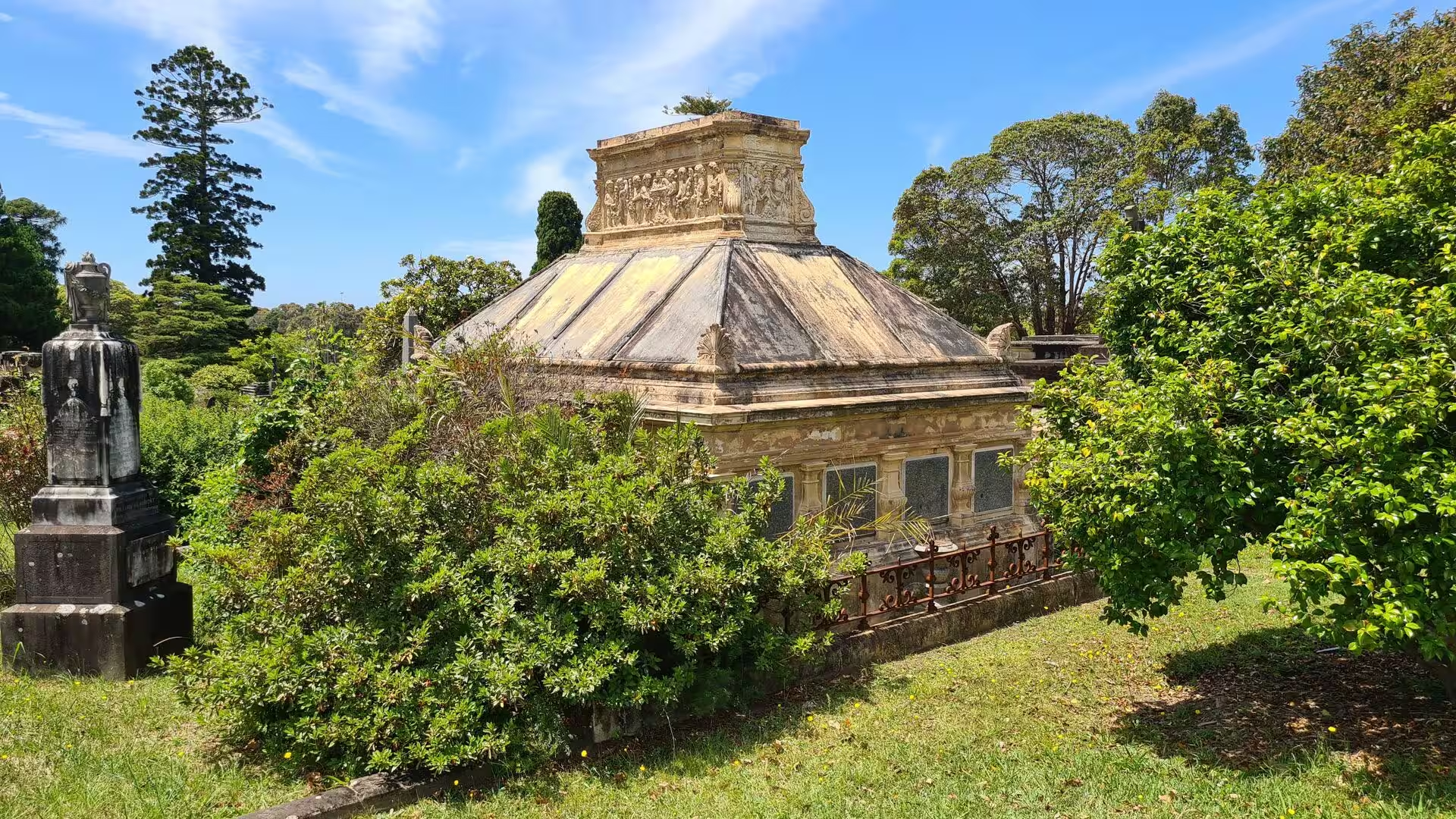
The cemeteries of the city are part of that history. Rookwood Cemetery, officially called the Rookwood Necropolis, is the largest necropolis in the Southern Hemisphere and the largest remaining operating cemetery of the Victorian era anywhere in the world. It lies in the western suburbs near Lidcombe railway station, about seventeen kilometres from the central business district, and it was added to the New South Wales State Heritage Register in April 1999. The grounds are divided into denominational areas, each with its own offices and its own ceremonial buildings, and the result is a place that records the migration history of Sydney directly: the inscriptions run in English, Chinese, Arabic, Greek, Cyrillic and many other scripts, and chapels and memorials of different faiths stand beside one another along the same avenues.
Geology
Sydney stands on the Triassic rocks of the Sydney Basin. The sand that became the sandstone of the region was laid down between roughly 360 and 200 million years ago by a braided river system of continental scale, and the rock preserves shale lenses and the traces of river channels within it. Later igneous activity added dykes and volcanic necks, of which the dolerite intrusion at Prospect, west of the city, is the largest.
The coast and the harbour are the product of erosion and of a rising sea. Deep river valleys, called rias, were cut into the Hawkesbury sandstone during the Triassic, and when the sea rose between eighteen thousand and six thousand years ago it drowned those valleys to form the estuaries and deep inlets of the coast. Port Jackson is one of them, which is why the harbour is branched, deep and surrounded by steep wooded shores.
The soils follow the rocks. Sandy soils derived from the sandstone carry the open woodland and heath of the ridges and the headlands, while the clay soils formed from shales and volcanic rock support the taller forests and the grasslands of the Cumberland Plain. Between the two, a sandstone ridge and a clay flat two kilometres apart can hold visibly different vegetation, and the pattern of the suburbs follows it.
Water is the other organising principle. The southern parts of Sydney are drained by the Georges River and the Cooks River into Botany Bay, the west by the Parramatta River into the harbour, and the north inland by tributaries of the Hawkesbury. The creeks that run through the suburbs are small and often hidden in parkland, but they are the reason for the green corridors, the ponds and the bushland reserves that break up the built up area, and their valleys are the last places where the original vegetation of the basin survives inside the city.
The sandstone of the basin is also the building stone of the city. Quarried as blocks and known as yellowblock for its colour, it appears in the walls of the colonial buildings, the churches, the warehouses and the retaining walls of the older suburbs, and it weathers in the same way as the natural outcrops beside the harbour, darkening where water runs and rounding where the joints allow the rock to fall away. The built city and the natural one are made of the same material.
Things to See
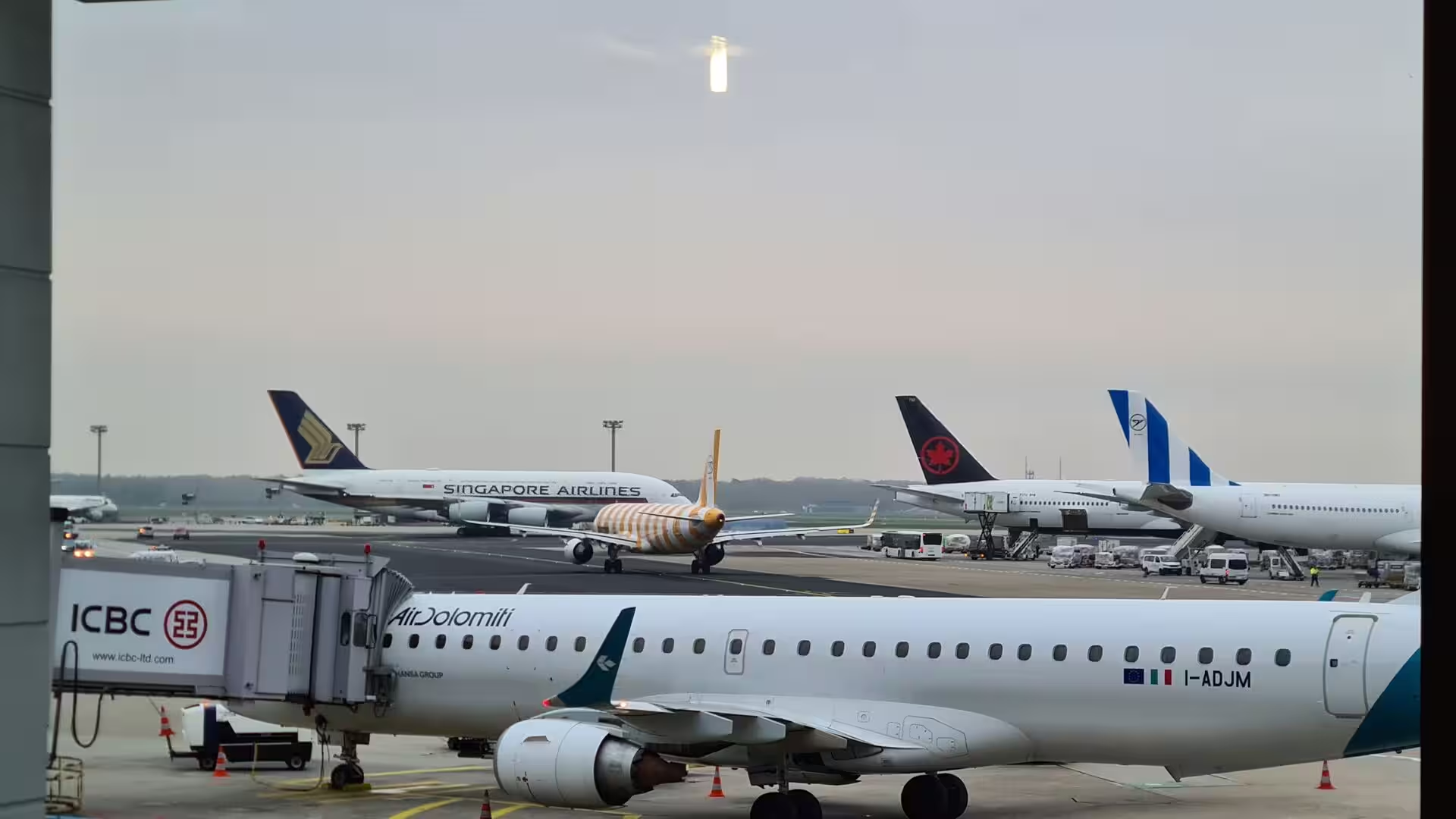
The journey to Sydney from Europe or Asia ends at Kingsford Smith Airport at Mascot, on the northern shore of Botany Bay and about eight kilometres from the centre. The terminal apron, with aircraft of half a dozen airlines standing side by side, is the first genuinely Australian view, and the train under the runway into the city takes about fifteen minutes and crosses the old country of the Eora on the way in.
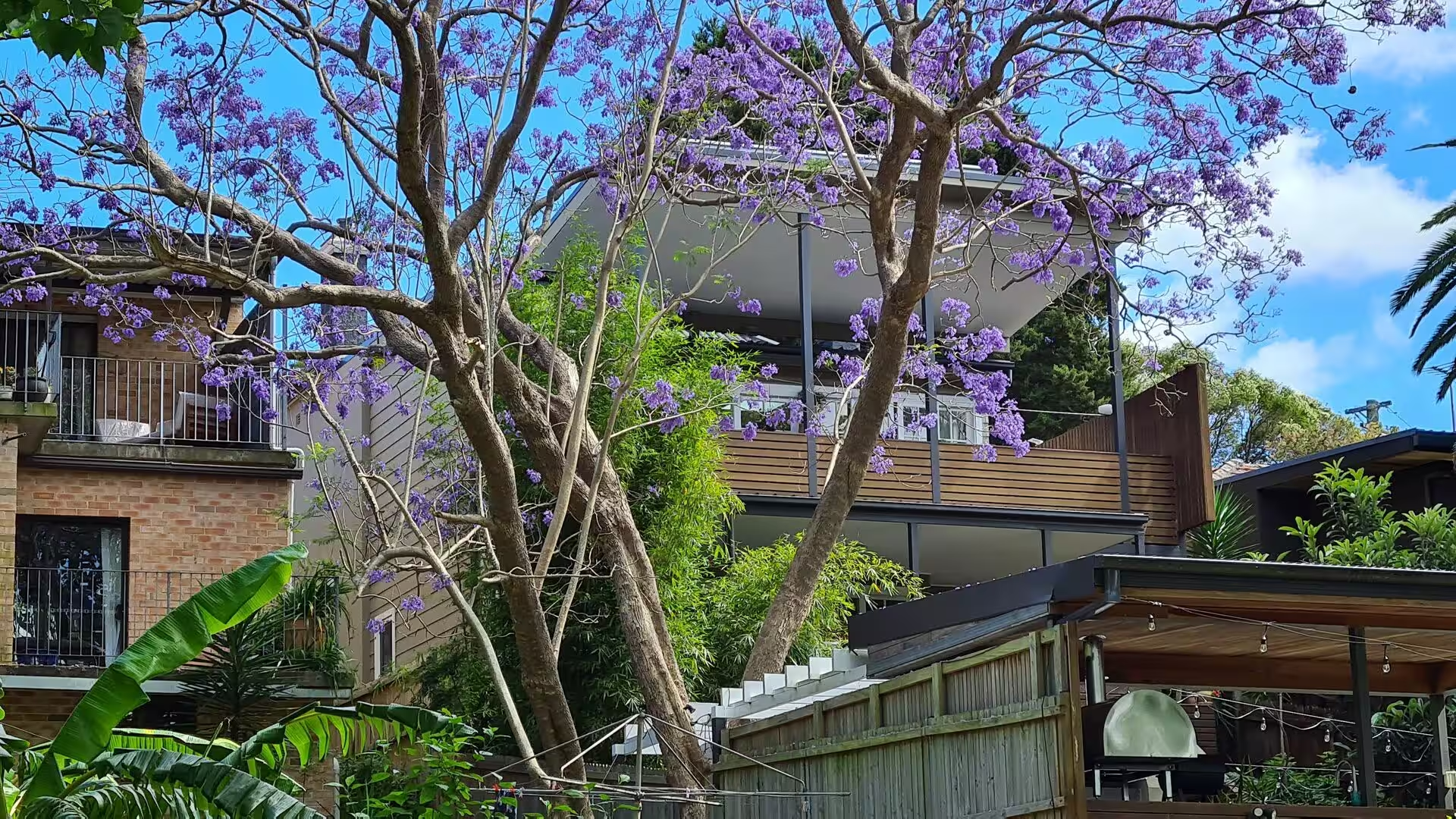
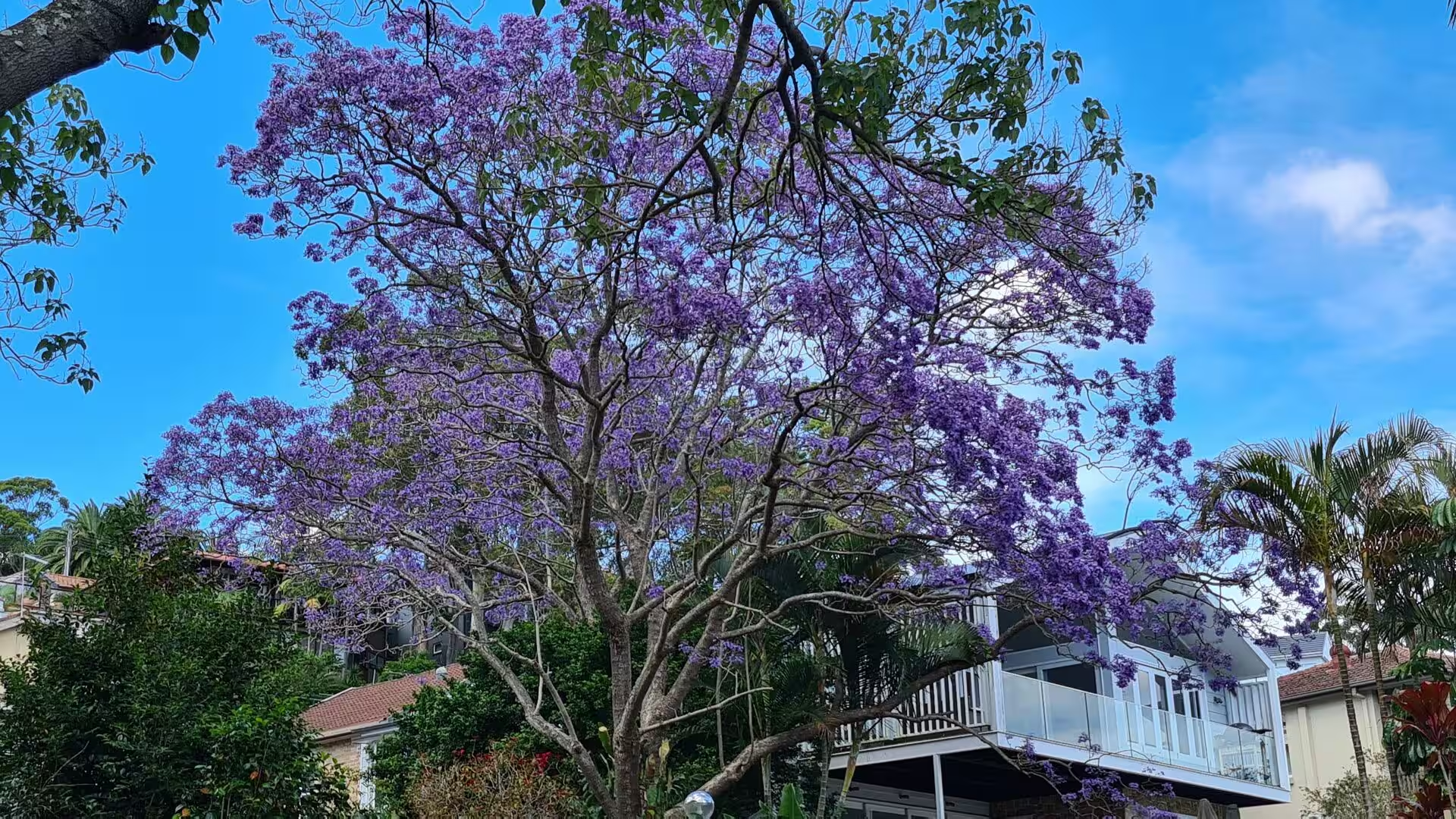
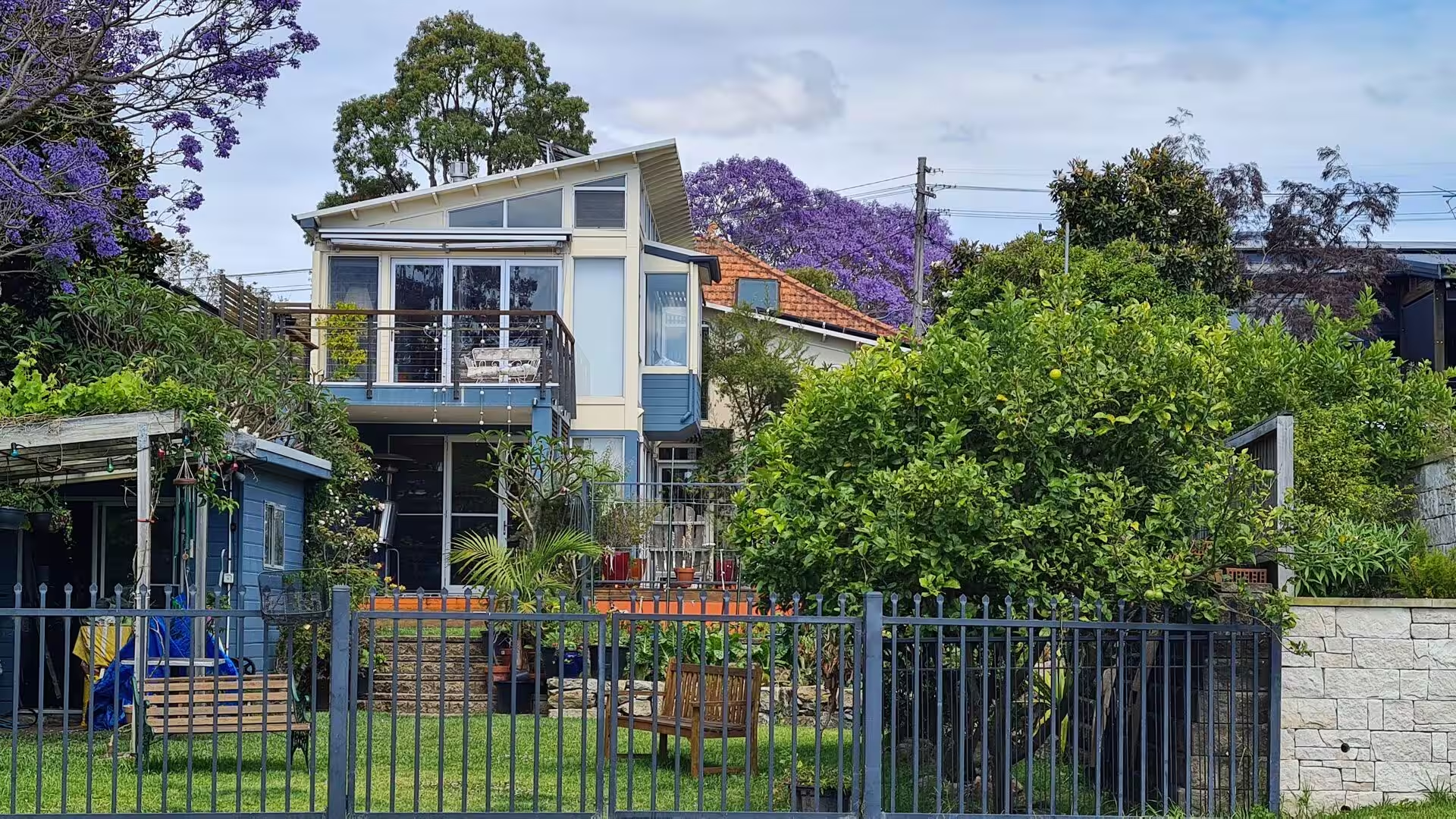
In November the suburbs are at their best. The jacaranda is a genus of forty nine species of flowering plants of the family Bignoniaceae, native to the tropical and subtropical regions of the Americas and cultivated around the world; the species most often grown in Australian cities is Jacaranda mimosifolia, which has spread so widely that it is counted as an environmental weed in several countries and appears in popular culture wherever it grows. In Sydney it flowers from late October into November, and for a few weeks the ordinary brick and render of a suburban street is framed by violet canopy.
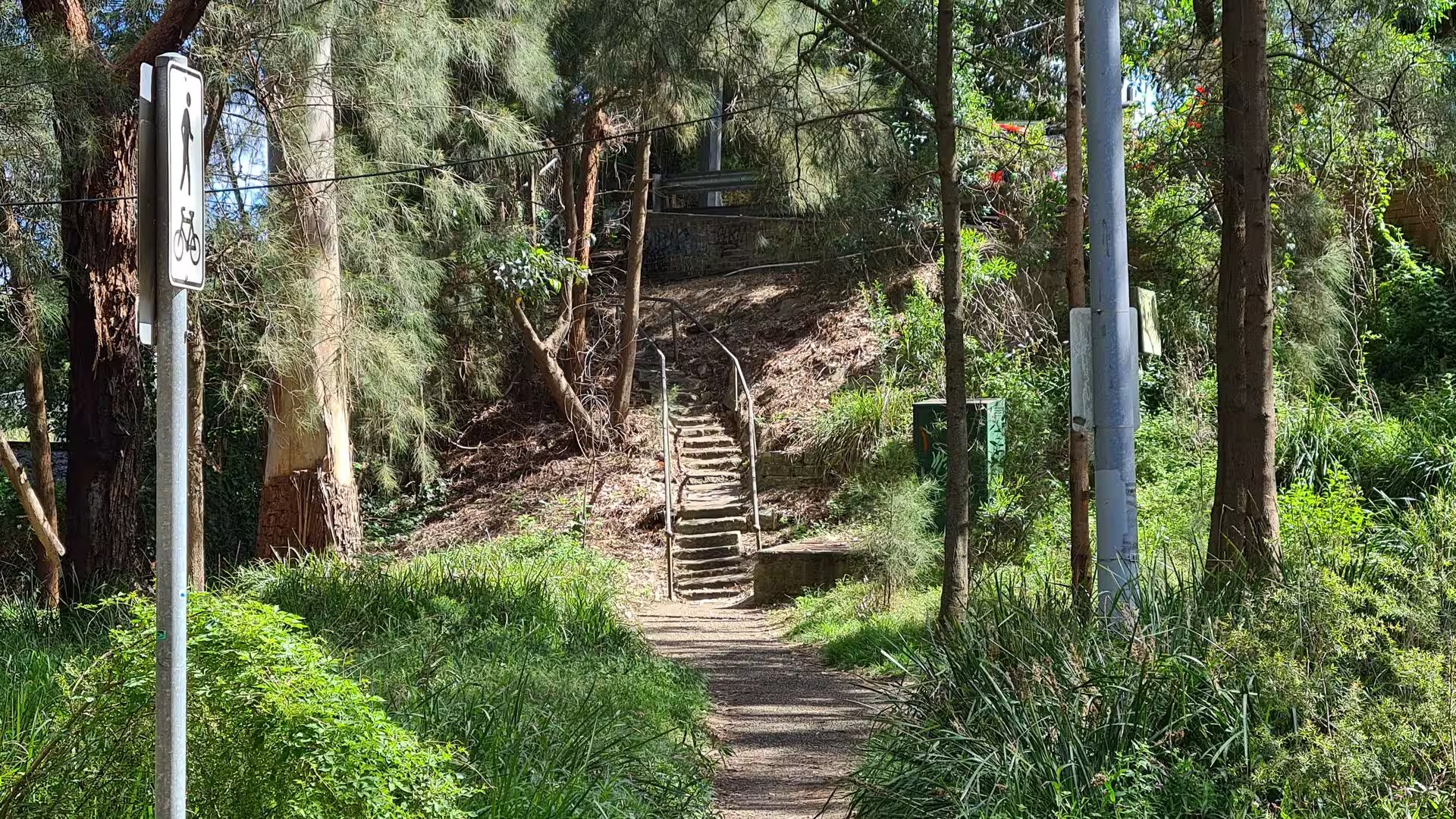
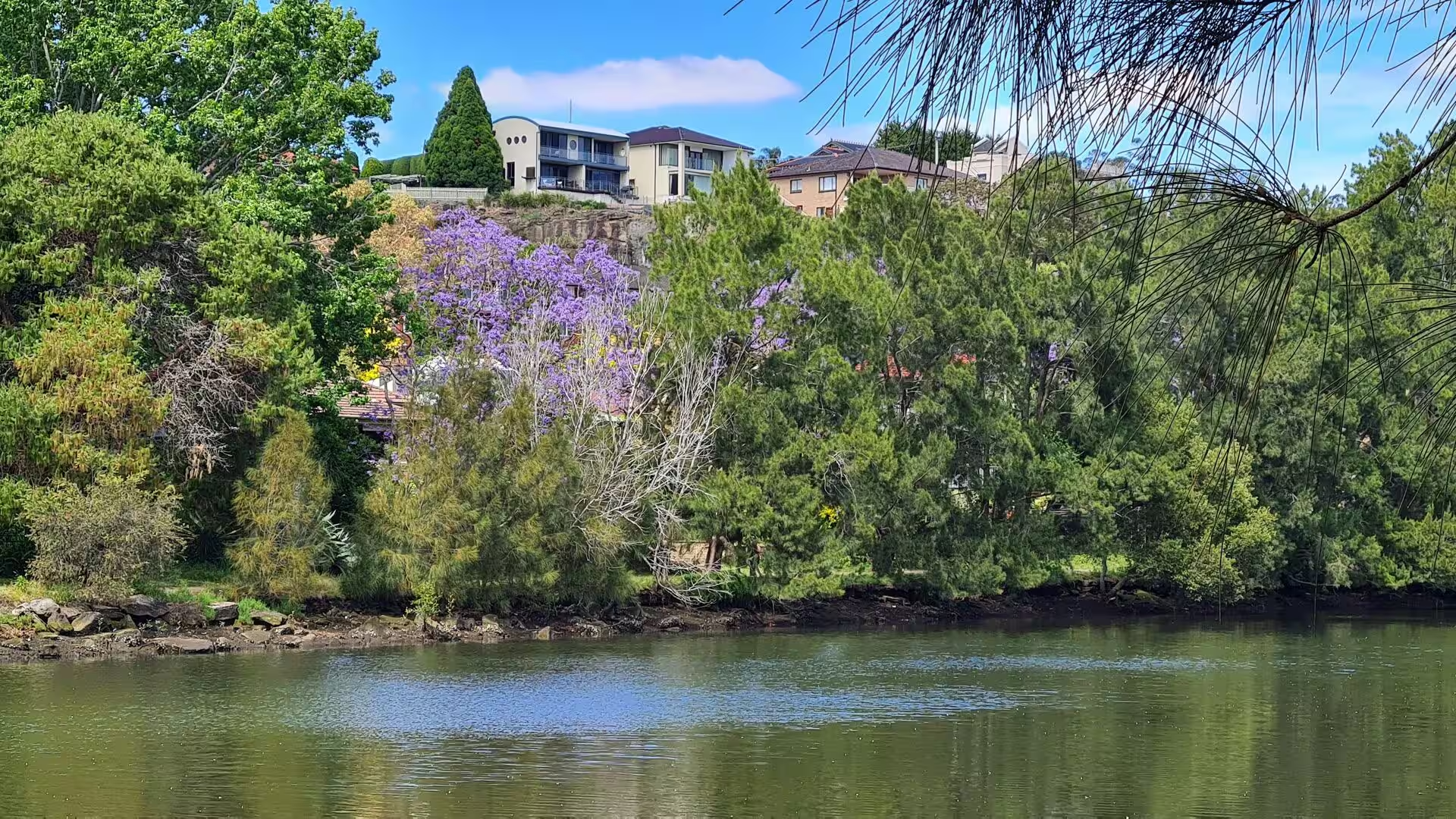
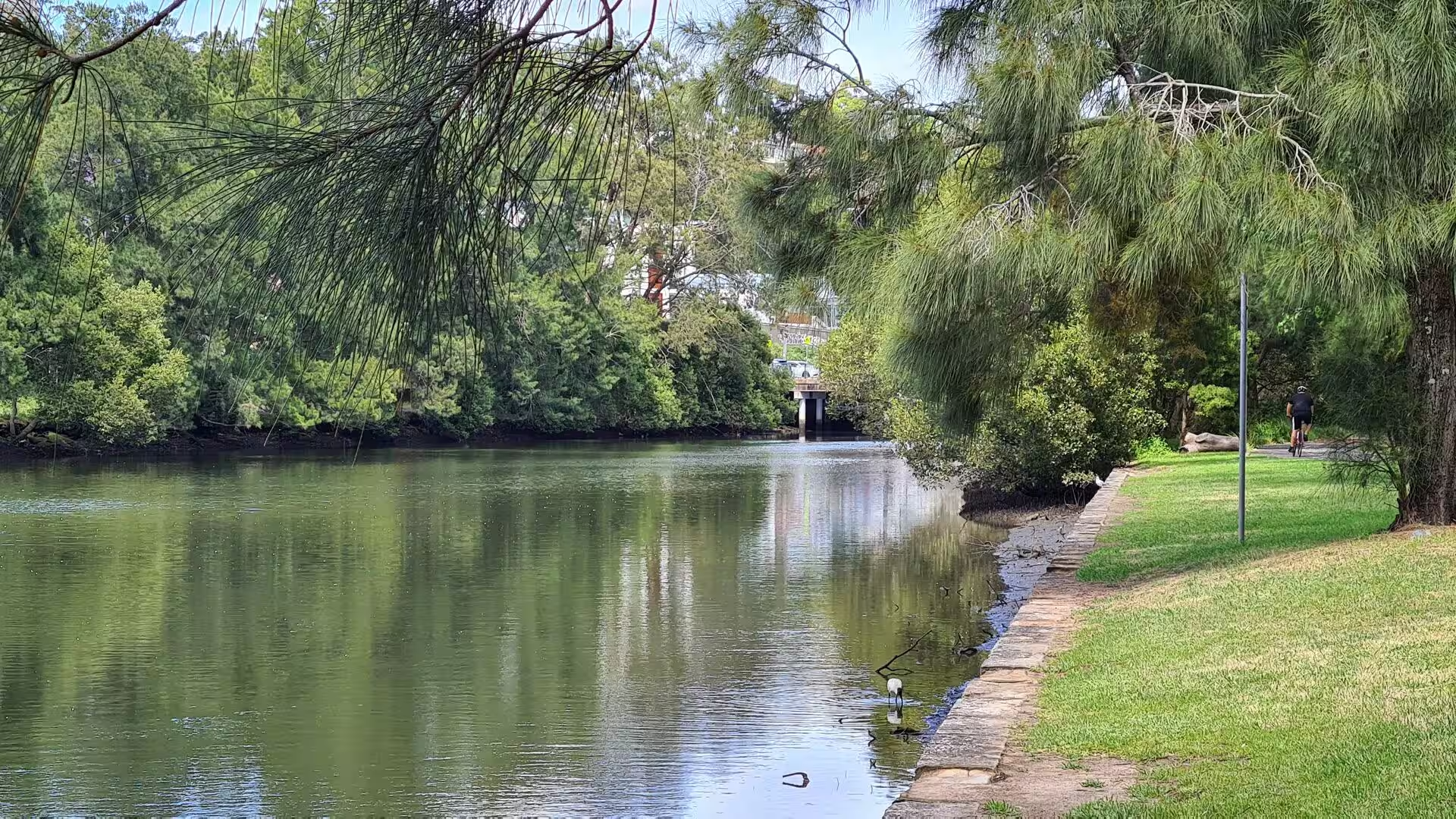
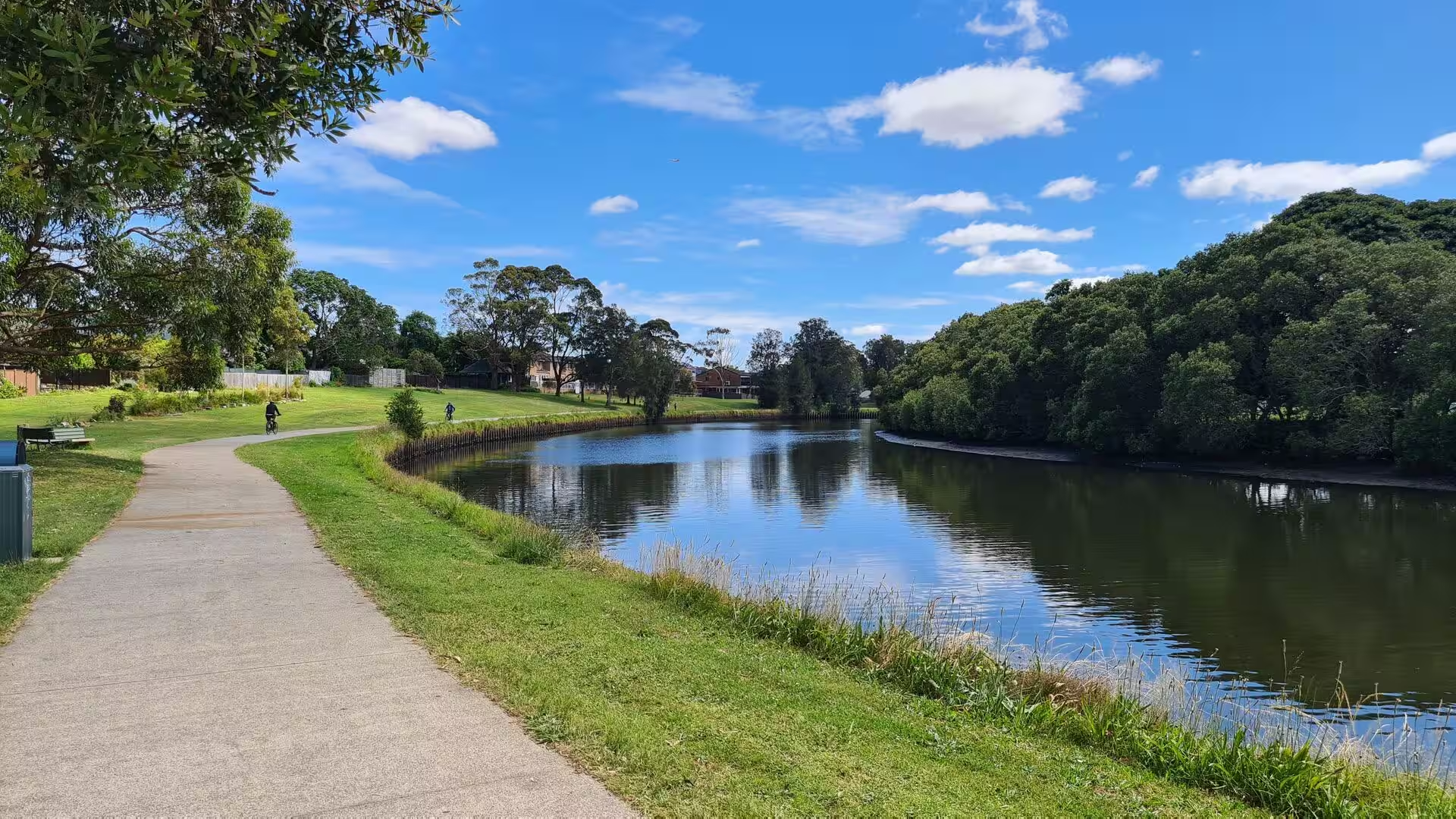
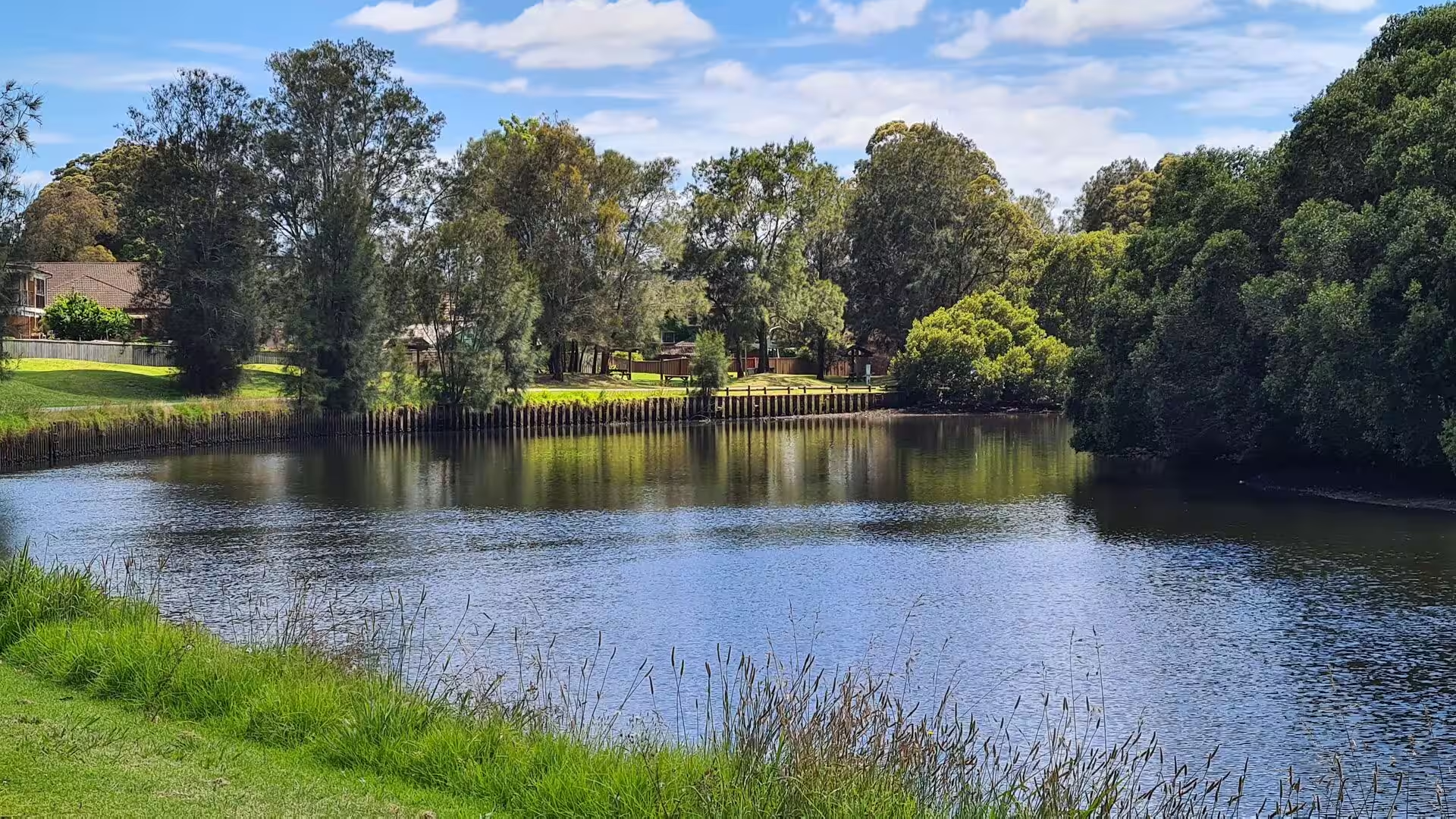
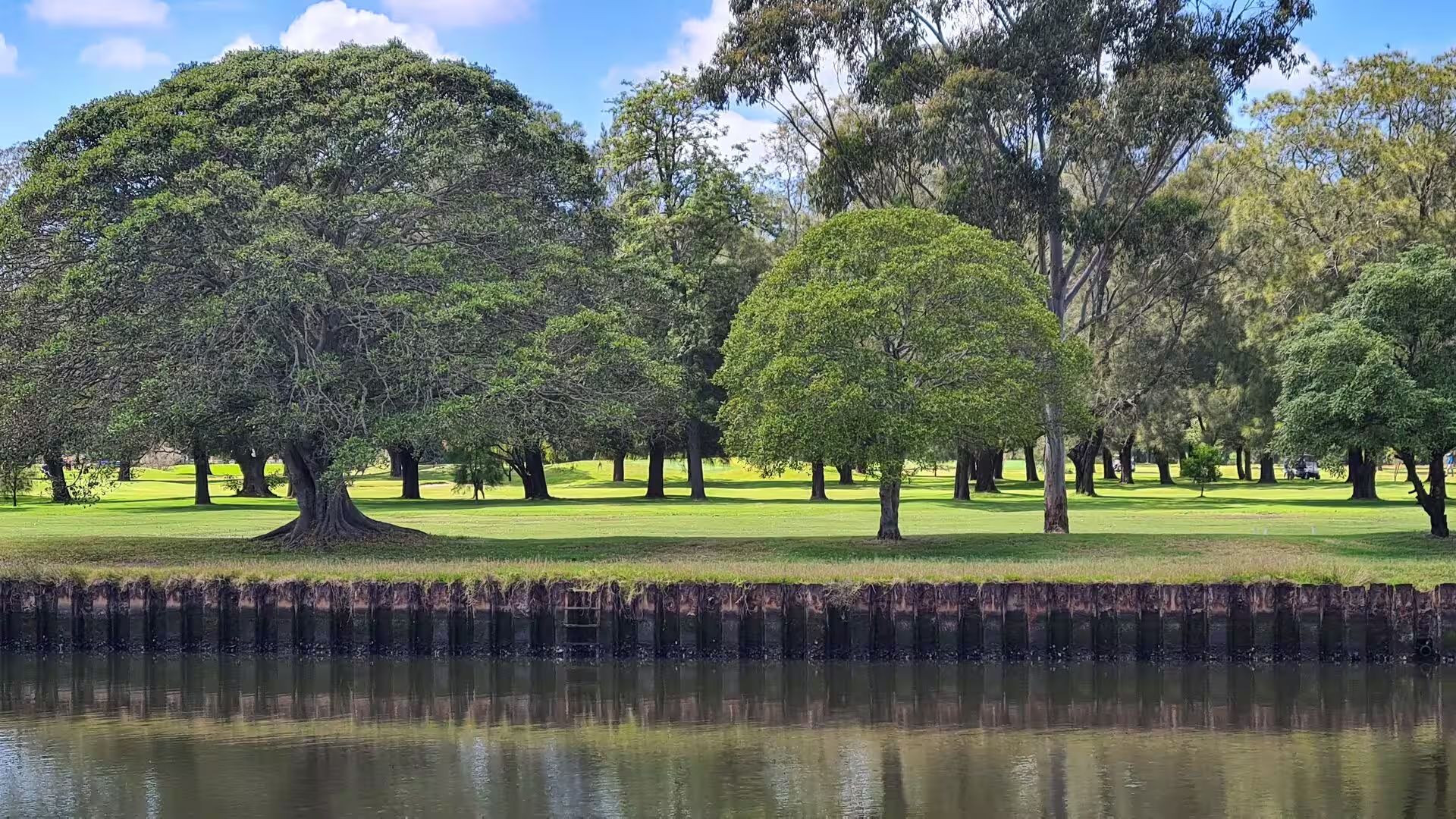
The waterways of the southern suburbs are the quietest part of the city. The Cooks River and its tributaries run through parkland and reserves between the railway lines, with ponds, boardwalks and shared paths, and the bushland that survives along them is a remnant of the vegetation of the Cumberland Plain. Walking a creek corridor in Sydney is the fastest way to understand that the city was built on a plain of clay and small rivers rather than on the sandstone of the coast alone.
The great cemetery of the west is among the most interesting places in the city for anyone concerned with its history. Rookwood Necropolis lies about seventeen kilometres from the centre beside Lidcombe station and is organised into denominational areas, each with its own offices and its own buildings, so that the visitor walks from one tradition to the next along the same avenues: gothic chapels in stone, a memorial with a golden dome, and rows of headstones inscribed in English, Greek, Cyrillic, Chinese and Arabic. The grounds are planted with palms, pines and flowering trees, and their extent gives a sense of how long Sydney has been burying its dead in one place.
The centre of the city is a short train ride away. The harbour, the Opera House and the Harbour Bridge occupy the northern edge of the central business district, and the shops, the office towers and the transport interchanges fill the ground behind them, with the light rail, the suburban railway and the ferries converging on Circular Quay. Sydney Tower stands above the retail core and is visible from most of the inner suburbs.
The inner city is best seen on foot in the early evening. The streets between the harbour and Hyde Park hold the surviving colonial and Victorian buildings, the pubs and the small businesses of a district that has been lived in continuously since the 1790s, and the light on the sandstone at the end of the day is the reason so much of Sydney’s public life takes place outdoors. The walk from Circular Quay through The Rocks to the botanic garden covers almost all of it.
The parks complete the picture. The Royal Botanic Garden occupies the harbour side of the district and is the most used green space in the region, Hyde Park is the oldest parkland in the country, and the fig trees planted in them in the nineteenth century now give the deepest shade in the centre. From Mrs Macquarie’s Point the harbour, the bridge and the Opera House line up in the sequence that has represented Sydney since 1973, and the lawns around it are filled on any fine evening.
The practical notes are the notes of a large Australian city. Distances inside the metropolitan area are long and the trains are the fastest way across them; the ferries are slower but connect the harbour suburbs directly; and the weather in November can turn from bright heat to a violent afternoon storm within an hour, which is worth remembering on any walk along a creek or a beach. Water, sun protection and a plan for the middle of the day remain the basic equipment, as they are for the whole of the Australian coast.
References
- Wikipedia contributors (2026). Sydney. en.wikipedia.org/wiki/Sydney
- Wikipedia contributors (2026). Sydney Tower. en.wikipedia.org/wiki/Sydney_Tower
- Wikipedia contributors (2026). Jacaranda. en.wikipedia.org/wiki/Jacaranda
- Wikipedia contributors (2026). Rookwood Cemetery. en.wikipedia.org/wiki/Rookwood_Cemetery
- Wikipedia contributors (2026). Sydney central business district. en.wikipedia.org/wiki/Sydney_central_business_district
- Wikipedia contributors (2026). History of Sydney. en.wikipedia.org/wiki/History_of_Sydney
- Wikipedia contributors (2026). Strathfield, New South Wales. en.wikipedia.org/wiki/Strathfield%2C_New_South_Wales
- Wikipedia contributors (2026). Wolli Creek. en.wikipedia.org/wiki/Wolli_Creek
- Wikipedia contributors (2026). Sydney Trains. en.wikipedia.org/wiki/Sydney_Trains
- Wikipedia contributors (2026). Georges River. en.wikipedia.org/wiki/Georges_River
- Wikipedia contributors (2026). Cooks River. en.wikipedia.org/wiki/Cooks_River
- Wikipedia contributors (2026). Australian pub. en.wikipedia.org/wiki/Australian_pub
- Wikipedia contributors (2026). Chinatown, Sydney. en.wikipedia.org/wiki/Chinatown%2C_Sydney
- Wikipedia contributors (2026). Darling Harbour. en.wikipedia.org/wiki/Darling_Harbour
- Wikipedia contributors (2026). Surry Hills, New South Wales. en.wikipedia.org/wiki/Surry_Hills%2C_New_South_Wales
- Wikipedia contributors (2026). Redfern, New South Wales. en.wikipedia.org/wiki/Redfern%2C_New_South_Wales
- Small E., Brookes B. (2025) Jacaranda (Jacaranda mimosifolia). Top 100 Flowers. 359-362. doi.org/10.1201/9781003586227-56
- Collins J. (2015) The Political Economy of the Social Transformation of Australian Suburbs. Social Transformation and Migration. 255-268. doi.org/10.1057/9781137474957_16
- Bailey M. (2021) Retail Suburbanization, Modernization, and Growth in Sydney during Australia’s Postwar Boom. Journal of Urban History. 49. 844-864. doi.org/10.1177/00961442211023600