2022 - Rome - 2 - Rome
10 September 2022










Journal Notes
General
Rome is the capital of Italy and the country’s largest city, the seat of the national government and of the Lazio region, and one of the most visited cities in the world. The Vatican City, an independent state since 1929, lies as an enclave within the built up area on the right bank of the Tiber.
The city stands in the middle of Italy on the Tiber, about 24 kilometres upstream from the river mouth at Ostia, and it grew on the left bank on a group of hills that became famous as the seven hills of Rome: the Palatine, Aventine, Capitoline, Quirinal, Viminal, Esquiline and Caelian. The Tiber island, the only natural crossing point of the river within the city, carried the first bridge and the oldest trade route, and the river still divides the town into the historic quarters of the left bank and the districts of Trastevere and the Vatican on the other side.
Rome is above all a city of monuments. The ancient centre around the Colosseum, the Forum and the Palatine lies close to the Renaissance and Baroque quarters of the Campus Martius, so that republican temples, imperial arches, medieval churches and palaces of the seventeenth century can be reached within a few minutes of walking.
The climate is Mediterranean, classified as hot summer Mediterranean, with long hot dry summers and mild wet winters; the hills and the nearby sea modify the extremes, but summer heatwaves can push temperatures far above thirty degrees for days, and the built up centre stores the heat and releases it slowly, which makes the city measurably warmer than the countryside around it.
For visitors the centre is small enough to be covered on foot. The classic circuit runs from the Colosseum and the Forum through the Capitoline hill into the Campus Martius, and it passes a sequence of buildings that belong to the best known images of Europe: the white monument of Victor Emmanuel, the column of Marcus Aurelius, the Trevi fountain, the Pantheon, the fountains of Piazza Navona and the bridges over the Tiber that lead towards Saint Peter’s. A day spent in this area covers the whole range from antiquity to the twentieth century.
History
Rome’s own tradition dates its foundation to the twenty first of April 753 BC, when Romulus is said to have marked out the walls of a new town on the Palatine hill after the quarrel with his twin brother Remus. Archaeology has found traces of huts from the eighth century BC on the same hill, so the legend preserves a real beginning. A sequence of kings followed, the last three of them Etruscan, and under them the forum was drained by a great canal, the Cloaca Maxima, and the first temples and city walls were built.
In 509 BC the monarchy was replaced by the republic, which grew in three centuries from a city state to the master of Italy and then of the Mediterranean. Civil wars ended the republic, and Augustus turned the state into an empire in 27 BC; under him and his successors Rome was rebuilt in marble, with the Colosseum, the imperial forums, the Pantheon and the baths that gave the city its shape. At its height the population is estimated at about one million people, and the supply of grain, water and firewood for that number was the largest logistical task of the ancient world.
The third century brought crisis, and the walls of Aurelian, built in the 270s, mark the change from an open city to a fortified one. Constantine won the battle of the Milvian Bridge in 312 and commemorated it with an arch beside the Colosseum, but the political centre moved away, first to Constantinople and later to Ravenna. Rome itself was sacked in 410 and again in 455, and the population fell from several hundred thousand to a fraction of that figure within a century.
The Renaissance and the Baroque rebuilt the city around that inheritance. Michelangelo planned the Capitoline hill and the dome of Saint Peter’s, Sixtus V opened the great streets that still connect the pilgrimage churches, and Bernini and Borromini filled the Campus Martius with fountains, palaces and theatrical church interiors. Rome became the capital of a united Italy in 1871, and the vast monument to Victor Emmanuel II on the Capitoline slope was erected to celebrate that new role. In 1929 the Lateran Treaty created the Vatican City, and the Olympic Games of 1960 brought further building campaigns.
Modern Rome is a capital, a museum and a tourist destination at the same time. Its historic centre has been a UNESCO World Heritage Site since 1980, and the territory of the comune extends from the old walls to the coast at Ostia, an area of more than 1,200 square kilometres that includes farmland, nature reserves and suburbs. The pressure of visitors, the conservation of monuments that are two thousand years old and the traffic of a city built for horses and pedestrians are the permanent conflicts that shape daily life in the centre.
Geology
Rome stands on the edge of a volcanic plateau. The hills of the city are not folded mountains but the eroded remains of deposits laid down by two volcanic complexes, the Sabatini volcanoes to the north west and the Alban volcano to the south east, whose caldera rim rises about twenty kilometres from the centre to the Monte Cavo. The eruptions produced thick sheets of tuff and loose ash, and the rivers that cut into them left the characteristic flat topped hills and steep slopes on which the Romans built.
The second element of the landscape is the Tiber, with 406 kilometres the third longest river of Italy and a catchment of about 17,375 square kilometres. Within the city it receives the Aniene and meanders through an alluvial plain between the hills, and the low ground beside it was marshy until the Romans drained it: the forum itself lies on ground that was only made usable by the great sewer known as the Cloaca Maxima. Floods remained part of life for two thousand years and regularly covered parts of the Campus Martius, in one case to a depth of about two metres; the flood of 1557 reached a height of about nineteen metres and killed more than a thousand people. Only the high embankments built along the banks from 1876 finally confined the river.
The building materials of the city come from this geology. The oldest walls were cut from volcanic tuff, quarried at several places around the city, among them Fidene in the north and Monteverde on the hills within it; travertine came from the hot springs at Tivoli in the hills east of Rome, and white marble from Carrara and from the eastern Mediterranean. The Colosseum consumed an estimated 100,000 cubic metres of travertine, held together not with mortar but with some 300 tons of iron clamps; later buildings used fired brick, and even the modern study of ancient quarries relies on such material, since travertine and marble can now be traced to their sources.
Rome also lives with earthquakes. The Apennines and the volcanic districts of Lazio are seismically active, and tremors repeatedly damaged the monuments of the city: the Colosseum lost part of its southern side in the earthquake of 1349, and collapses recorded in the ninth and thirteenth centuries belong to the same series. Where earthquakes did not destroy, stone robbers dismantled: for centuries the ancient buildings served as a quarry, and whole families of columns and blocks from the imperial city reappear in the churches and palaces of the Renaissance and the Baroque.
Today the geology of the city shows itself in two further ways. And the low lying quarters near the river still flood when heavy rain falls on the hills, while the tuff terraces and the travertine facades remain the most distinctive colours of the city, the warm beige and the pale grey that travellers have described for centuries.
Things to See
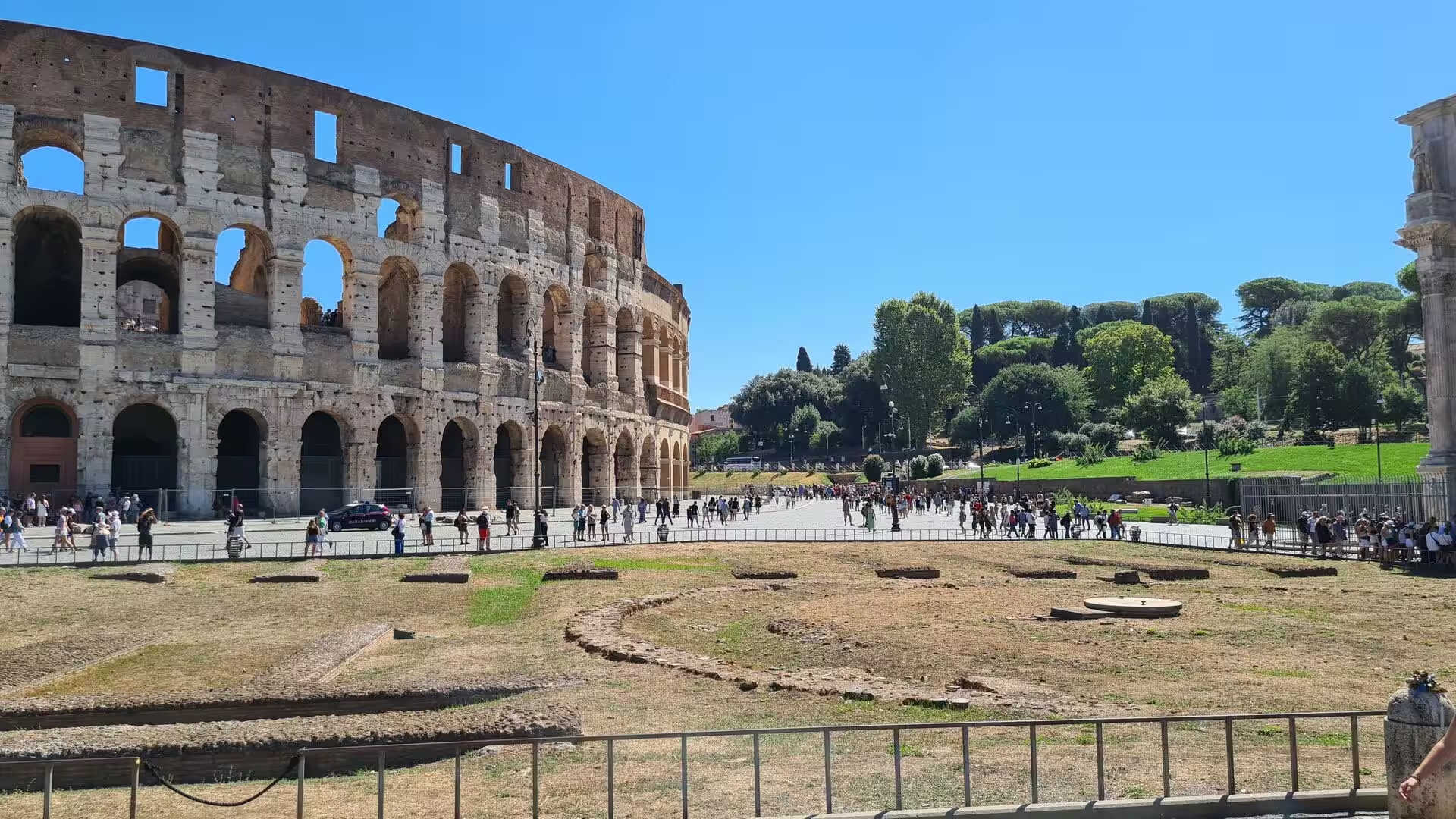
The Colosseum is the largest amphitheatre ever built and the most famous monument of the city. Its outer ellipse measures about 189 by 156 metres, the facade once rose to a height of nearly fifty metres in four storeys, and estimates of the number of spectators lie between fifty thousand and eighty thousand. Construction began under Vespasian in 72 AD on the ground of Nero’s former palace lake and was completed under his son Titus in 80 with a hundred days of games, in which, according to ancient authors, nine thousand wild animals were killed. Below the arena floor lies the hypogeum, the two level system of cells, corridors and lifts that held animals, gladiators and scenery.
The Arch of Constantine stands a few steps away, between the amphitheatre and the Palatine, and is the largest surviving Roman triumphal arch. It was erected to commemorate the victory of Constantine over Maxentius at the Milvian Bridge in October 312 and dedicated about three years later. Much of its decoration was taken from older monuments of the second century, a practice that says as much about the taste of the period as about the shortage of sculptors, and the battle frieze inserted by the Constantinian workshops is one of the largest reliefs of its period. The arch marks the transition from the pagan to the Christian empire.
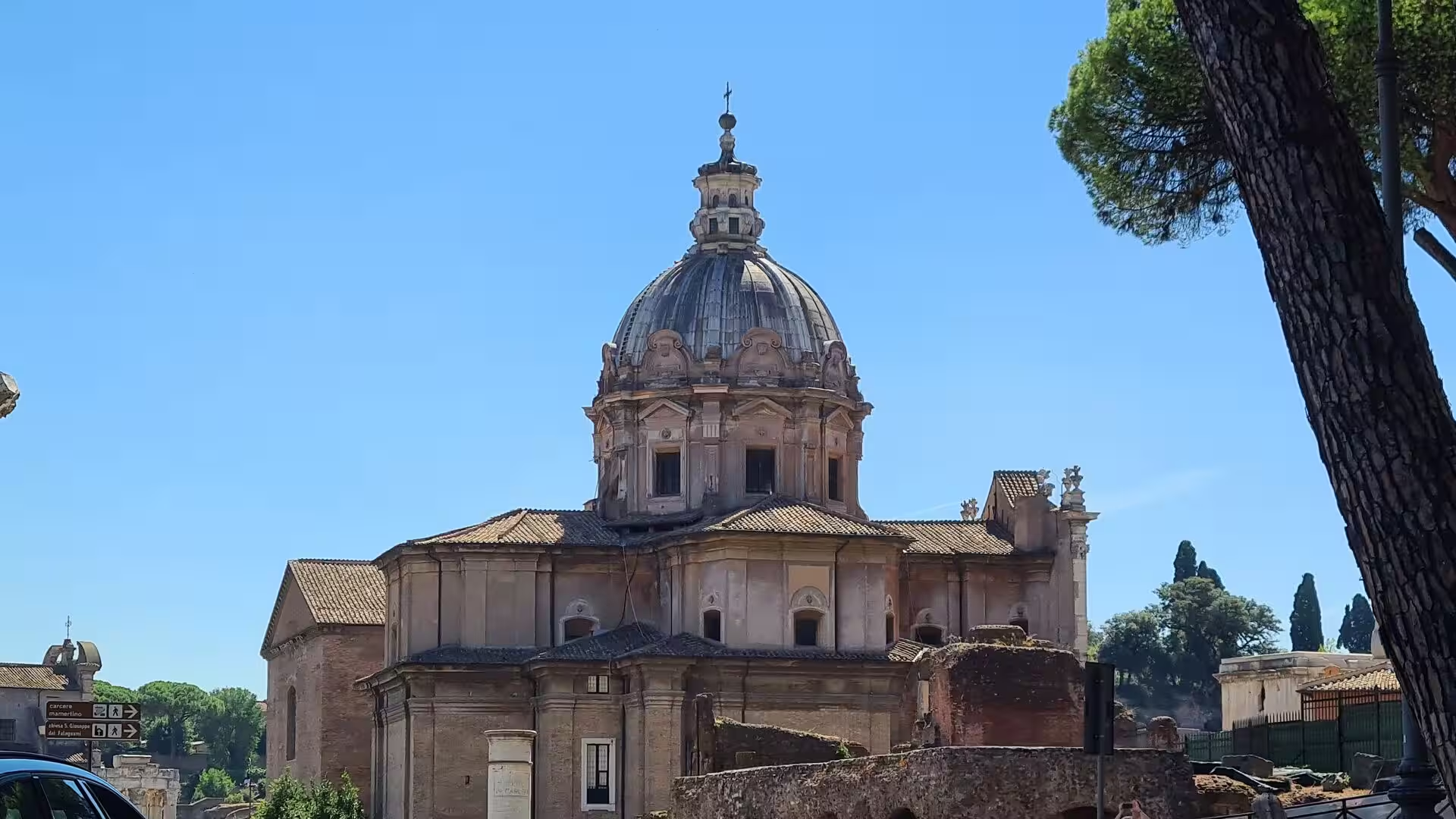
The Roman Forum fills the valley between the Capitoline and the Palatine and was the political, religious and commercial centre of the ancient city. The processional street, the Via Sacra, leads past the round temple of Vesta and the house of the Vestal Virgins, the platform of the rostra from which speeches were held, the meeting house of the senate and the great basilicas where law was administered. Temples of Saturn and of Antoninus and Faustina line the sides, and the triumphal arch of Septimius Severus closes the square at the foot of the Capitoline. Above it, on the Palatine, the ruins of the imperial palaces overlook the whole area.
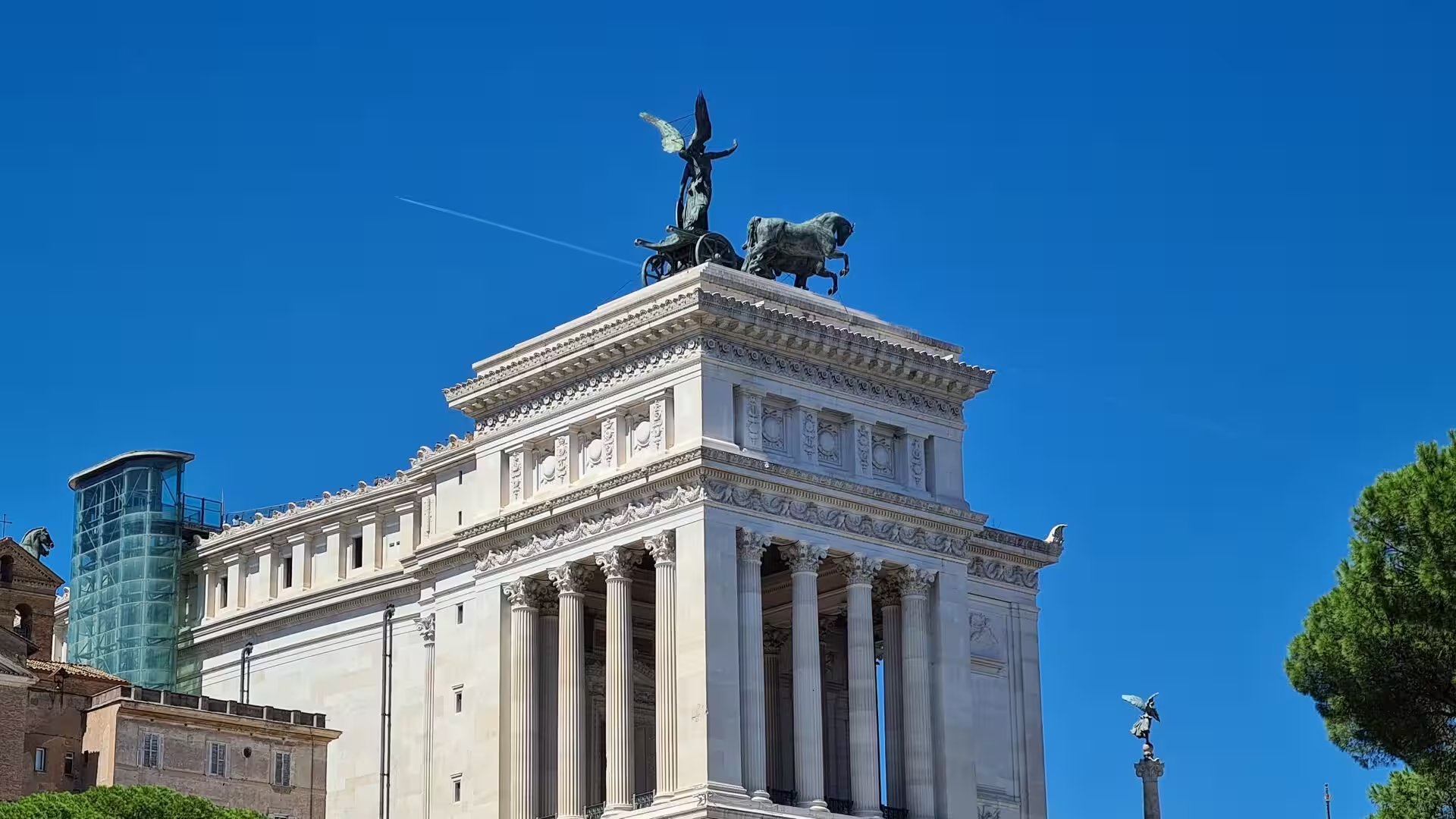
The white monument on the slope of the Capitoline, the Victor Emmanuel II monument or Altare della Patria, dominates the traffic junction of Piazza Venezia. It was designed by Giuseppe Sacconi in 1885, inaugurated in 1911 and completed in 1935; the huge equestrian statue of the first king of united Italy, the quadrigae on the roof and the colonnade make it one of the largest monuments of the city. Its altar of the fatherland became the tomb of the unknown soldier after the First World War, and the building houses a museum of the Risorgimento. The lift to the roof terrace offers one of the best views over the ancient centre.
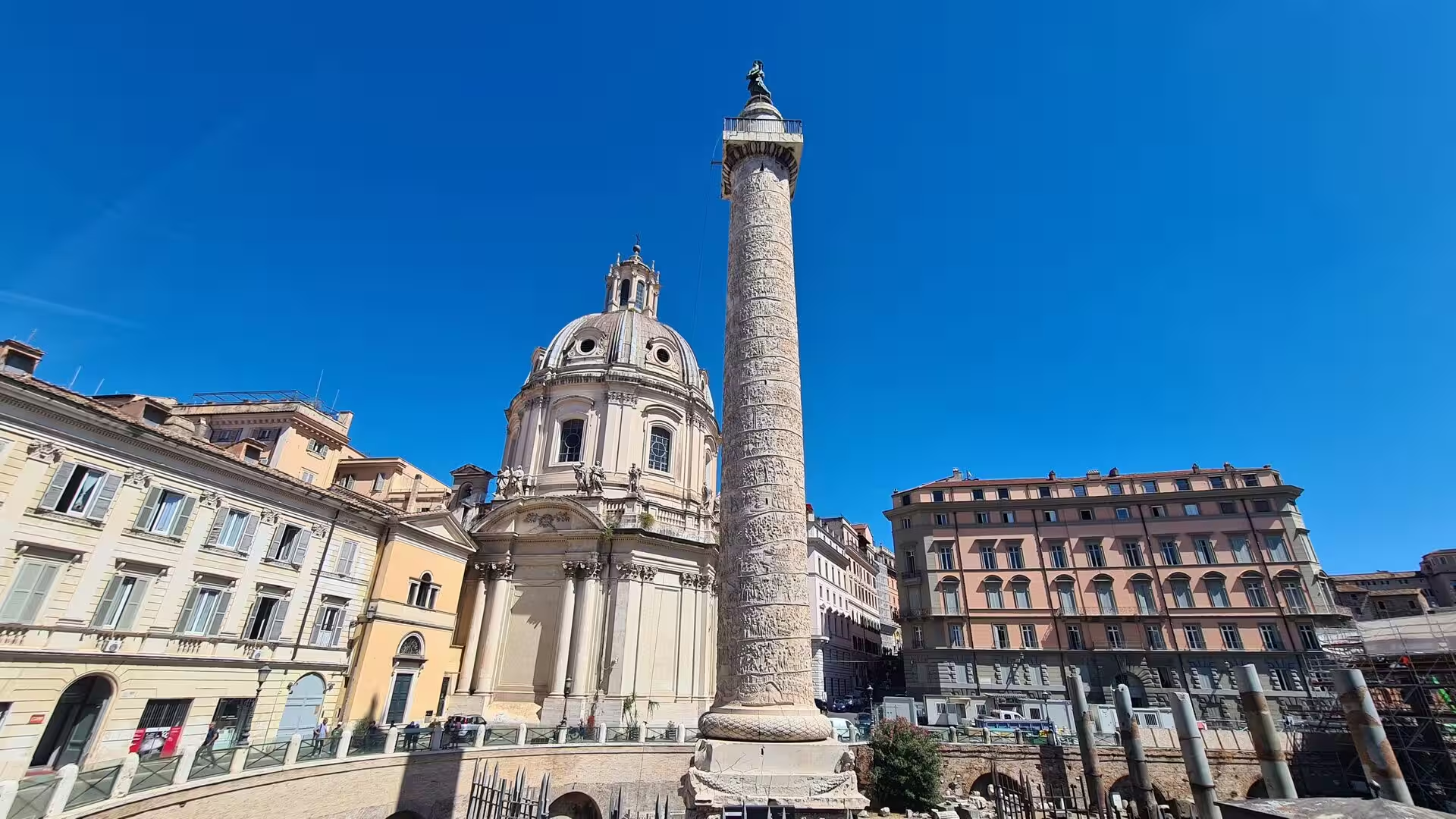
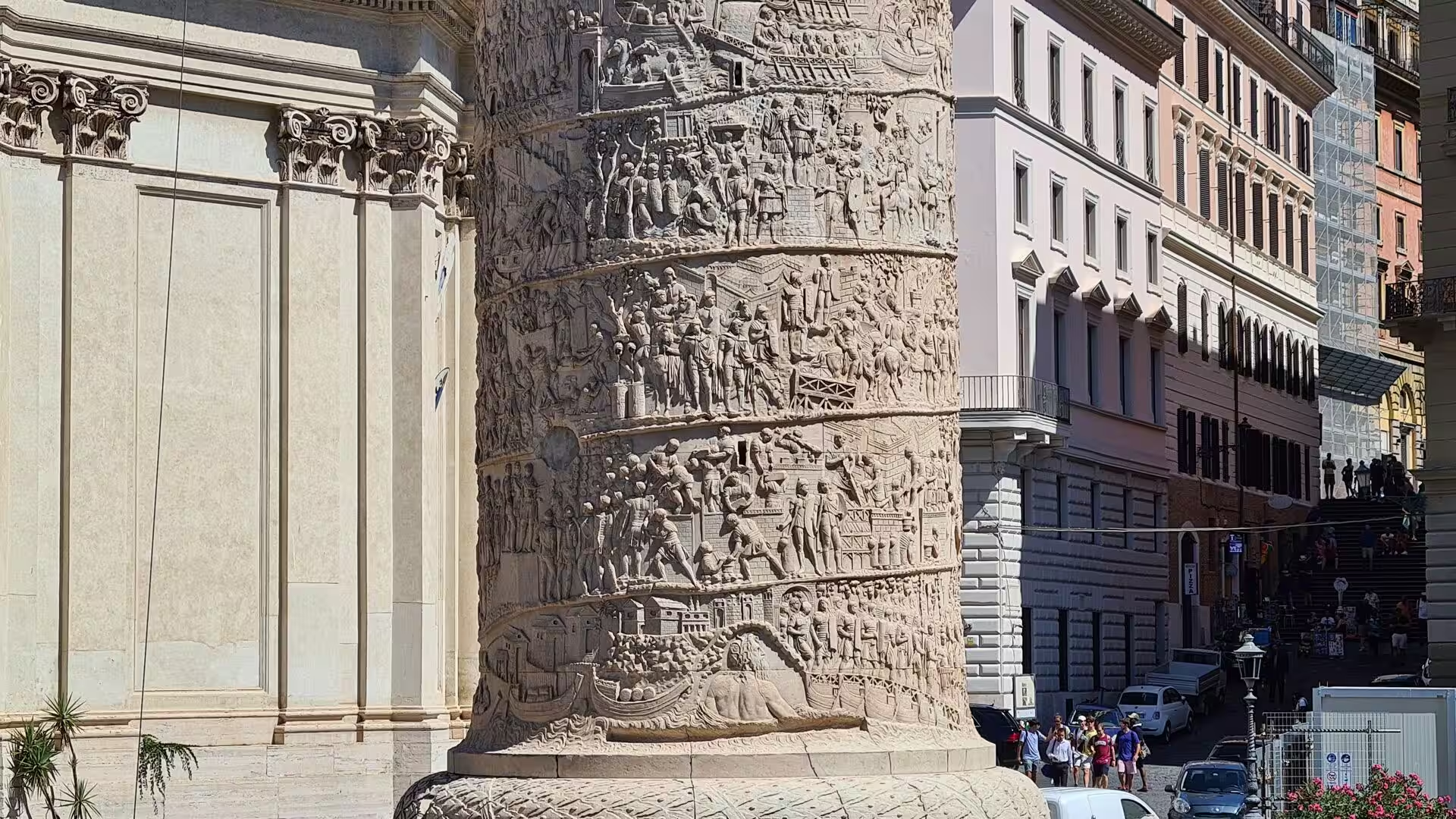
The column of Marcus Aurelius, which gives Piazza Colonna its name, records the campaigns of the emperor against the Germanic and Sarmatian tribes of the Danube frontier. Its shaft is made of Carrara marble, rests on a pedestal of about ten metres and rises altogether to nearly forty metres, and it follows the model of the older column of Trajan in the imperial forums. Twenty spiral bands of relief carry the story upwards in the manner of a picture scroll, and the column was nicknamed the hundred foot column by the Romans themselves.
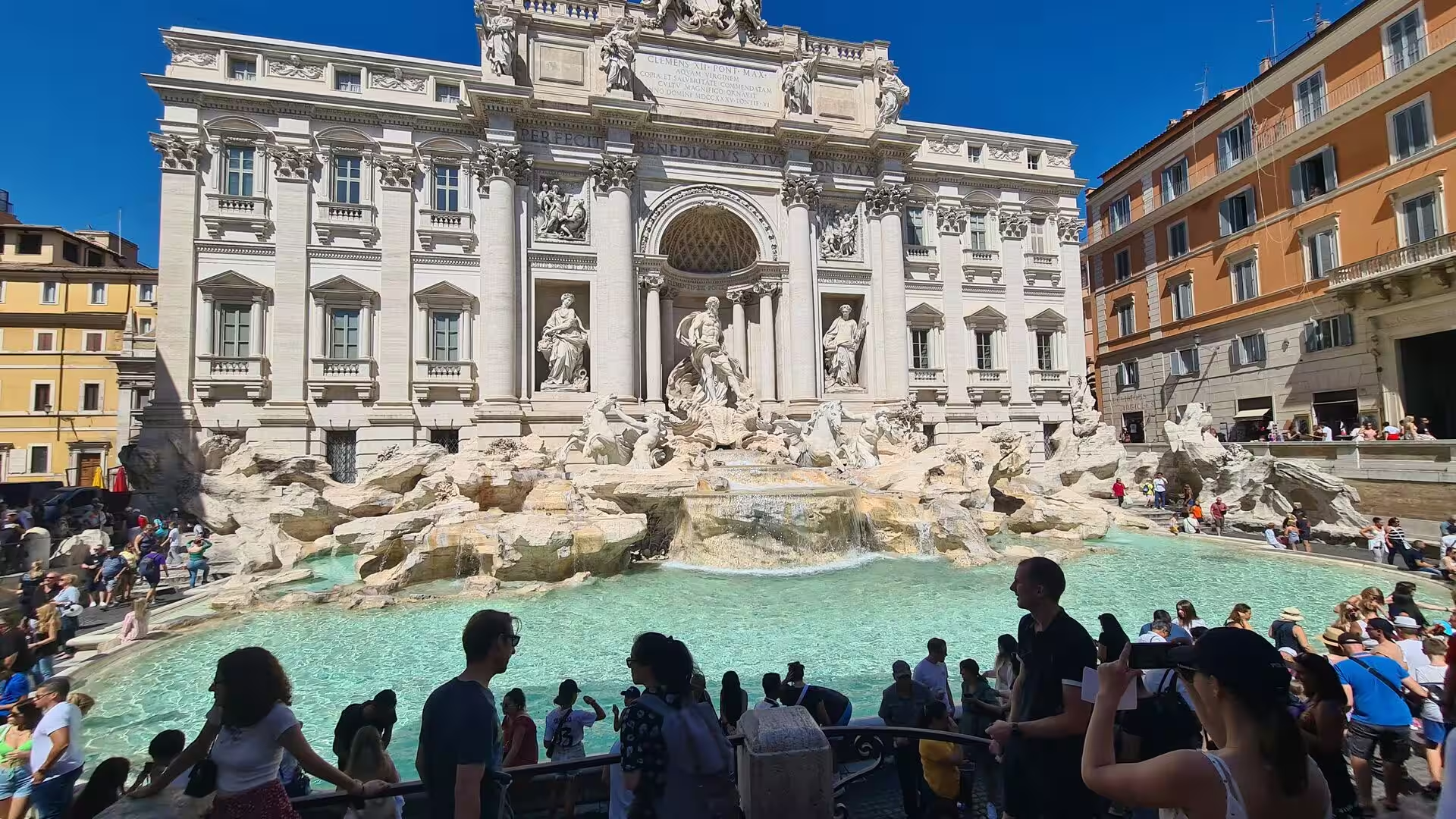
The Trevi fountain is the largest fountain of the Baroque in Rome and the endpoint of an ancient aqueduct. It was designed by Nicola Salvi after a competition in 1730 and finished by Giuseppe Pannini in 1762, and it fills the whole side of a small square that opens unexpectedly between narrow lanes. The basin is about 49 metres wide and the figure of Oceanus under the shell niche reaches a height of 26 metres. The water arrives by way of the Aqua Virgo, an aqueduct brought into the city in 19 BC; the sculpted rocks, sea horses and tritons turn the delivery of drinking water into a theatre of water, and the coins thrown into the basin are collected for charity.
The Pantheon is the best preserved building of ancient Rome and still the most impressive dome of the western world. Marcus Agrippa built the first temple here between 27 and 25 BC; it burnt in the fire of 80 and again in 110, and the emperor Hadrian rebuilt it in its present form, keeping the name of the original founder on the facade. The portico rests on grey granite columns about twelve metres high and weighing some sixty tons, which came from the quarries of Egypt, and the interior consists of a single circular room capped by a coffered concrete dome with an open oculus at its centre. Since 609 the building has served as the church of Santa Maria ad Martyres, which is why it survived; the floors of its portico still bear the marks of the Tiber floods.
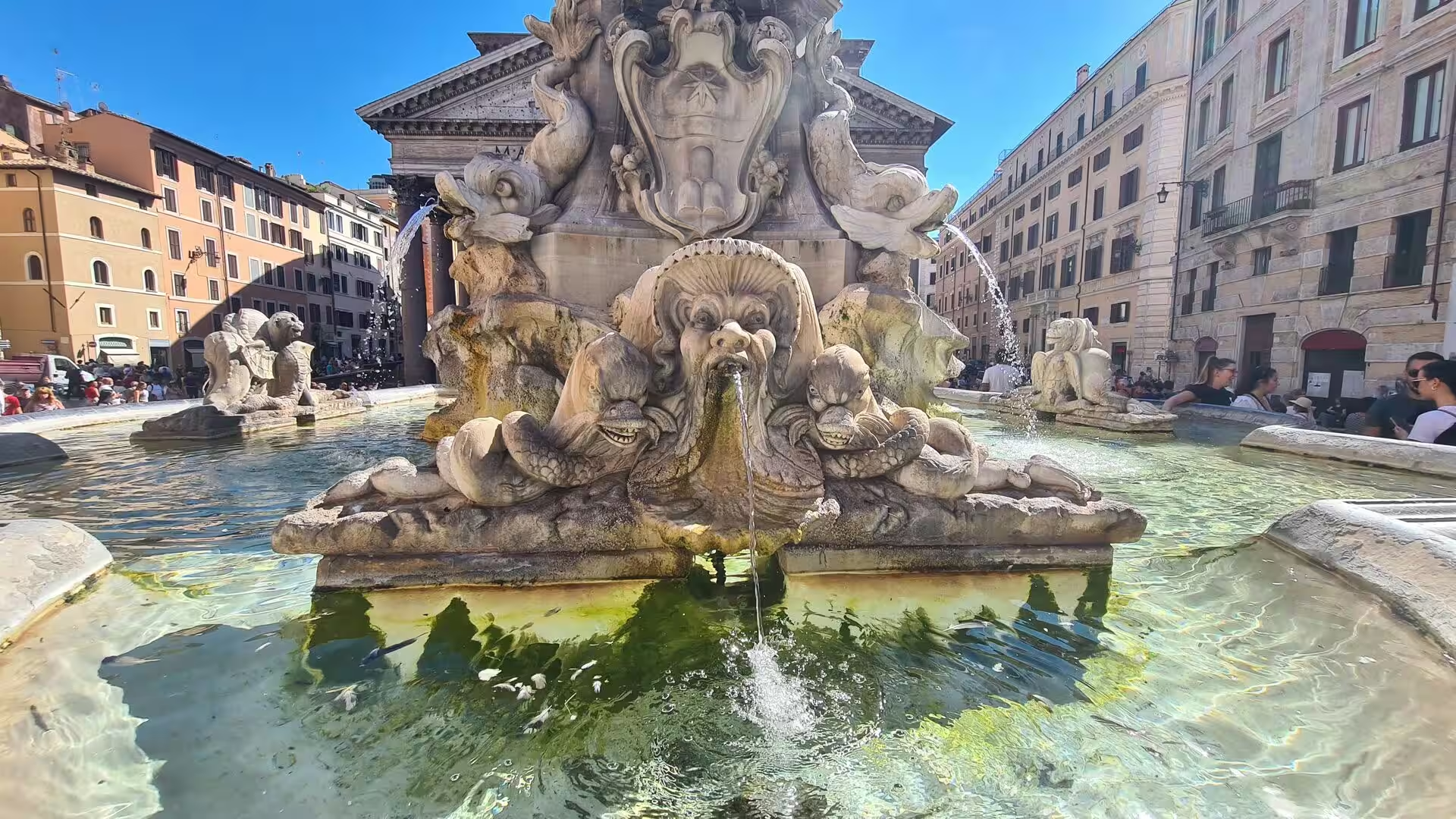
The Campus Martius answers the ancient city with the Rome of the popes. Piazza Navona lies on the outline of the stadium of Domitian, where athletic contests were held under the name of agones; Bernini’s fountain of the four rivers, crowded with the obelisk, marble palms and figures of the continents, faces Borromini’s church of Sant’Agnese in Agone across the square, and the device of the Pamphili pope Innocent X appears on the fountain in front of Palazzo Pamphili. The Jesuit churches nearby open gilded vaults and ceiling paintings over rows of pews, and the walk along the river ends at Castel Sant’Angelo, the mausoleum of Hadrian that became a papal fortress, and at the angel statues of Ponte Sant’Angelo, behind which the dome of Saint Peter rises in the distance.
References
- Wikipedia contributors (2026). Rome. en.wikipedia.org/wiki/Rome
- Wikipedia contributors (2026). History of Rome. en.wikipedia.org/wiki/History_of_Rome
- Wikipedia contributors (2026). Colosseum. en.wikipedia.org/wiki/Colosseum
- Wikipedia contributors (2026). Arch of Constantine. en.wikipedia.org/wiki/Arch_of_Constantine
- Wikipedia contributors (2026). Roman Forum. en.wikipedia.org/wiki/Roman_Forum
- Wikipedia contributors (2026). Altare della Patria. en.wikipedia.org/wiki/Altare_della_Patria
- Wikipedia contributors (2026). Column of Marcus Aurelius. en.wikipedia.org/wiki/Column_of_Marcus_Aurelius
- Wikipedia contributors (2026). Trevi Fountain. en.wikipedia.org/wiki/Trevi_Fountain
- Wikipedia contributors (2026). Pantheon, Rome. en.wikipedia.org/wiki/Pantheon%2C_Rome
- Wikipedia contributors (2026). Piazza Navona. en.wikipedia.org/wiki/Piazza_Navona
- Wikipedia contributors (2026). Castel Sant’Angelo. en.wikipedia.org/wiki/Castel_Sant’Angelo
- Wikipedia contributors (2026). Ponte Sant’Angelo. en.wikipedia.org/wiki/Ponte_Sant’Angelo
- Wikipedia contributors (2026). Spanish Steps. en.wikipedia.org/wiki/Spanish_Steps
- Wikipedia contributors (2026). Seven hills of Rome. en.wikipedia.org/wiki/Seven_hills_of_Rome
- Wikipedia contributors (2026). Tiber. en.wikipedia.org/wiki/Tiber
- Wikipedia contributors (2026). Alban Hills. en.wikipedia.org/wiki/Alban_Hills
- Beckmann M. (2012) The Column of Marcus Aurelius. A Companion to Marcus Aurelius. 249-263. doi.org/10.1002/9781118219836.ch15
- The Colosseum (2013) The Story of the Roman Amphitheatre. 17-47. doi.org/10.4324/9780203187982-12
- Purcell N. (1989) Rediscovering the Roman Forum. Journal of Roman Archaeology. 2. 156-166. doi.org/10.1017/s1047759400010424
- Cecilia A., Casasanta G., Petenko I., et al. (2023) Measuring the urban heat island of Rome through a dense weather station network and remote sensing imperviousness data. Urban Climate. 47. 101355. doi.org/10.1016/j.uclim.2022.101355
- Petrelli M., Perugini D., Moroni B., et al. (2003) Determination of travertine provenance from ancient buildings using self-organizing maps and fuzzy logic. Applied Artificial Intelligence. 17. 885-900. doi.org/10.1080/713827251