Day 13 - Didim to Denizli
22 July 2023







Journal Notes
General
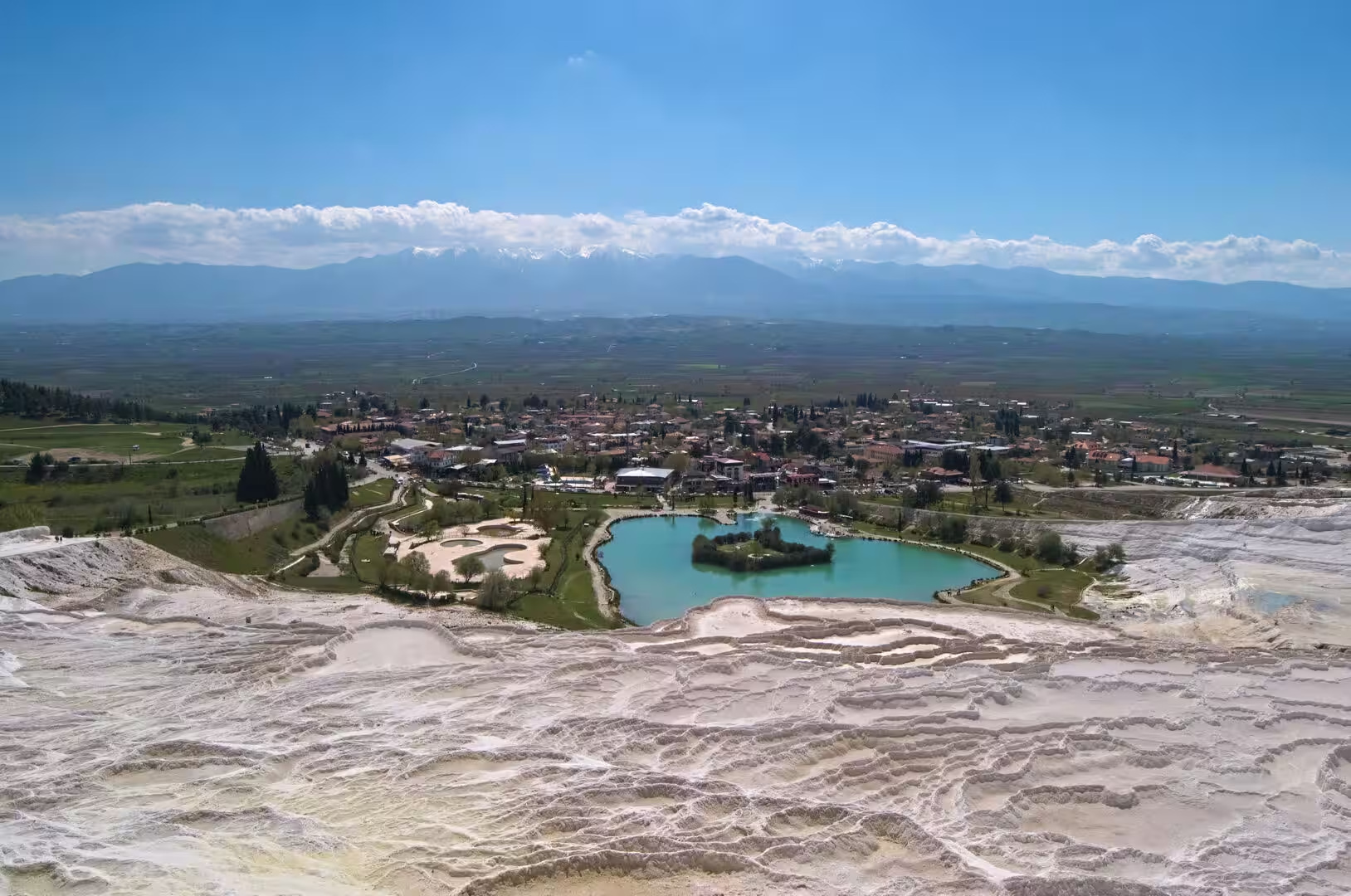
The route climbs inland from the Aegean coast at Didim to the interior of Denizli Province in south-western Turkey, where the day’s sights cluster around the village of Pamukkale. Pamukkale, whose Turkish name means cotton castle, is a natural and archaeological site roughly 20 kilometres from the centre of Denizli, on the flank of the Çökelez ridge above the valley of the Çürüksu river, the ancient Lycus, a tributary of the Büyük Menderes or Maeander.
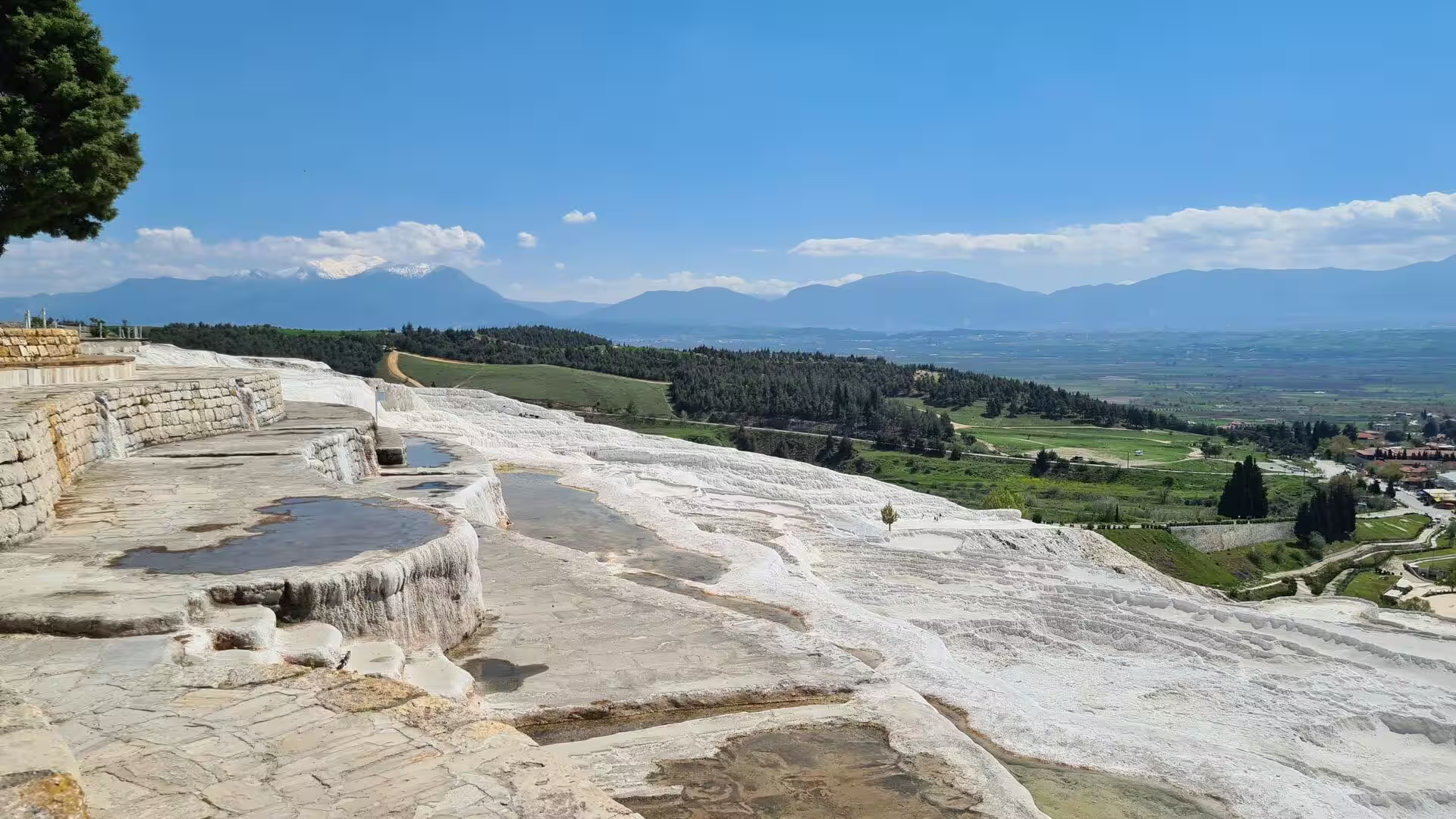
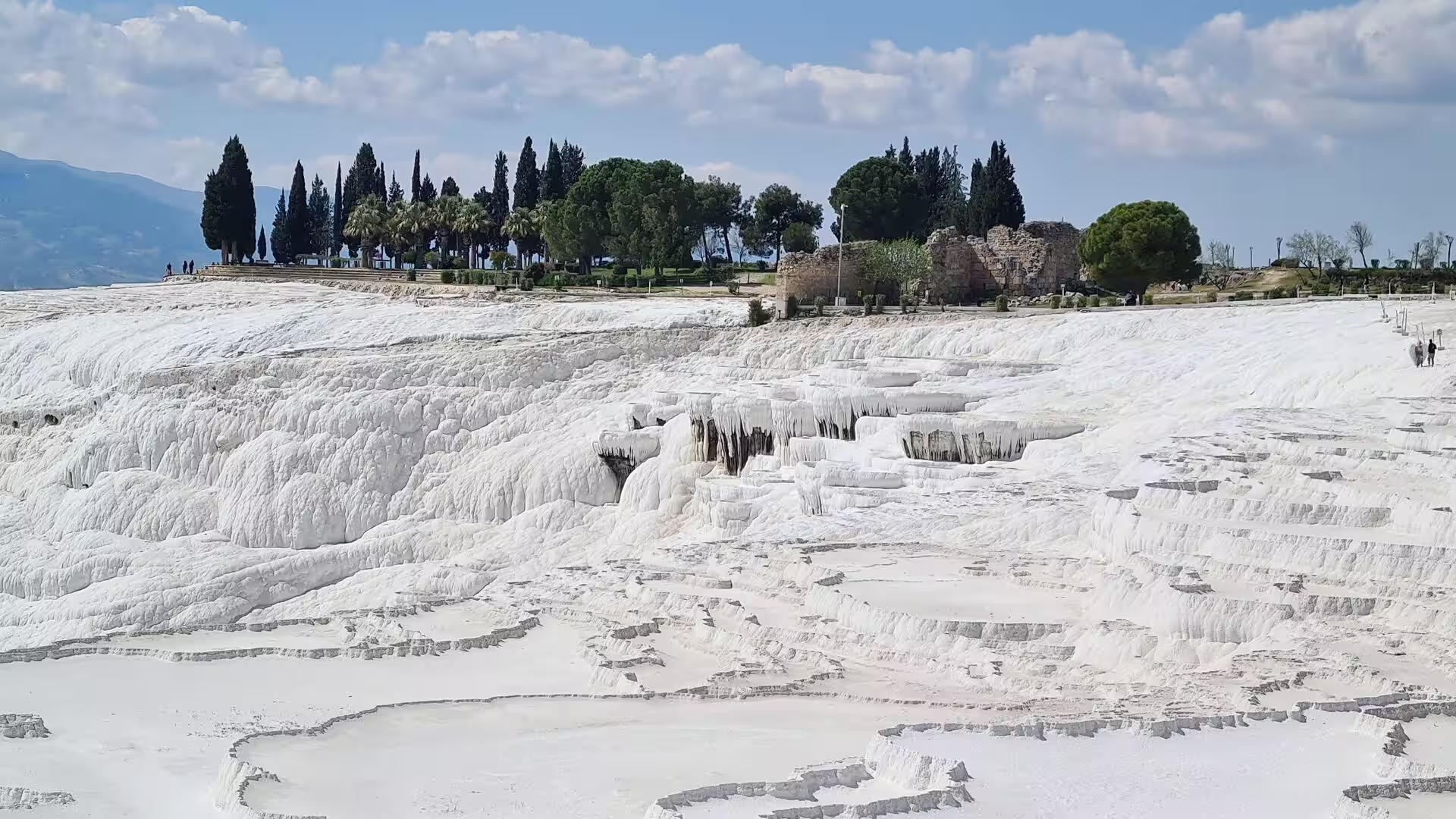
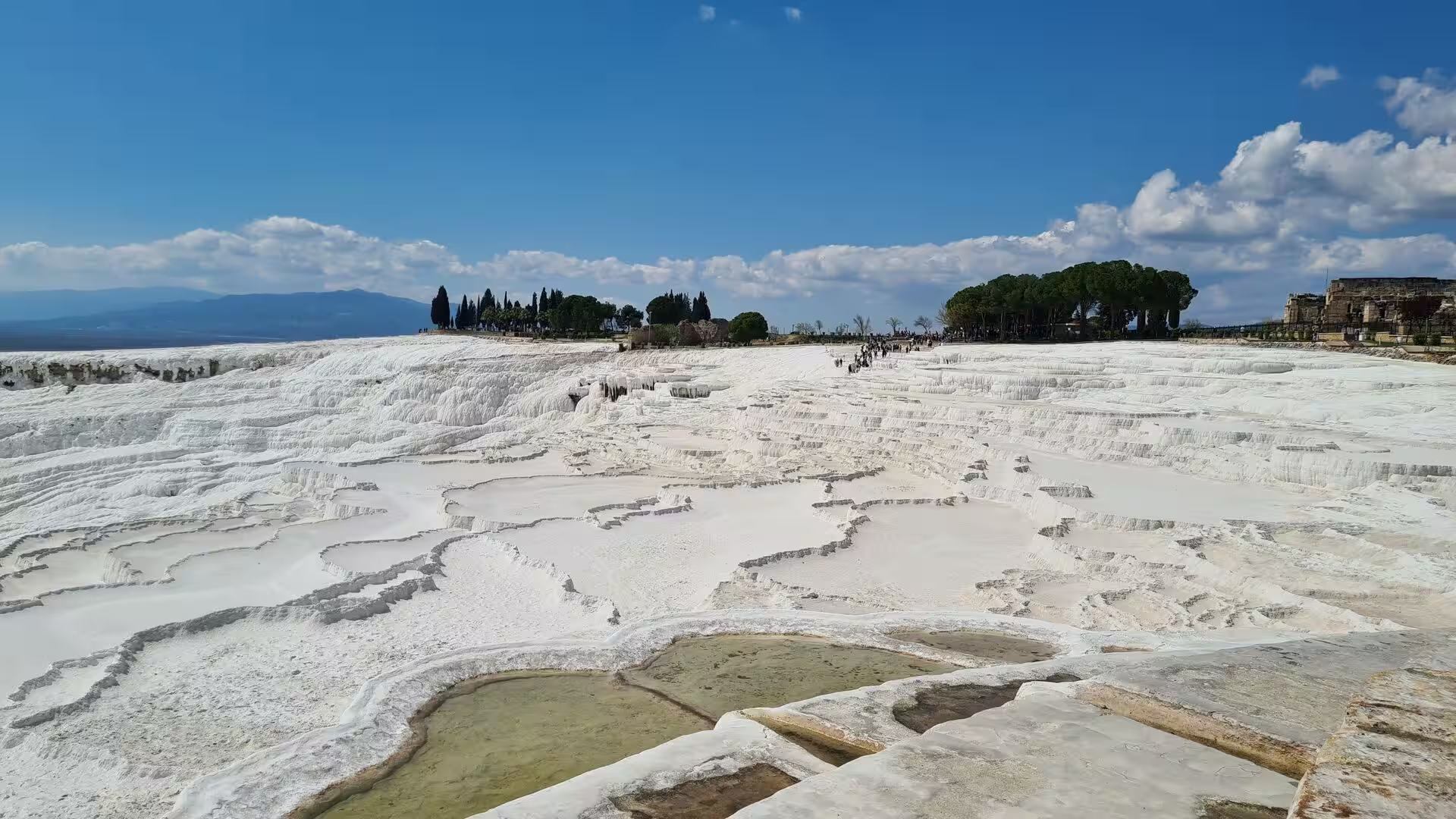
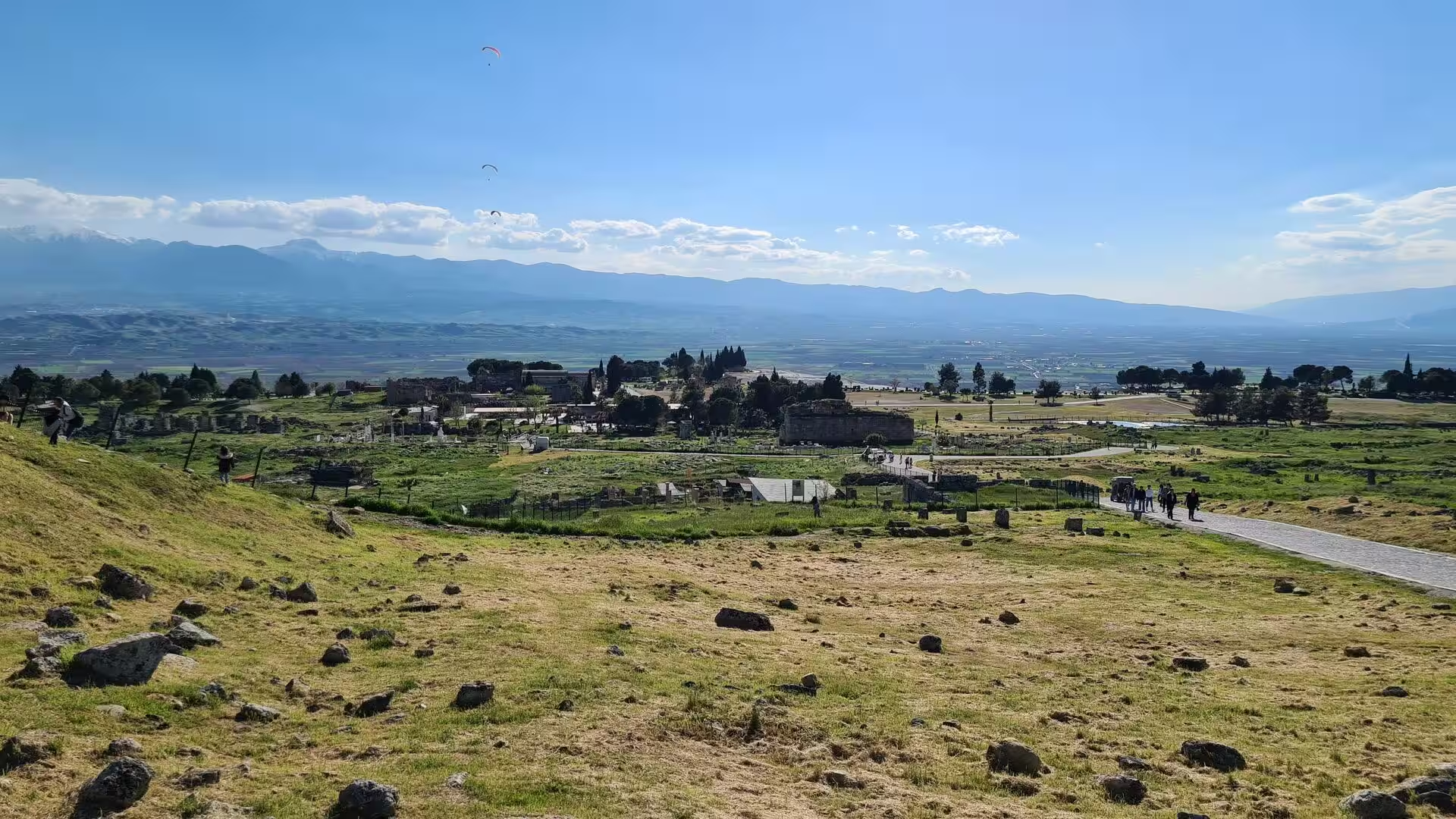
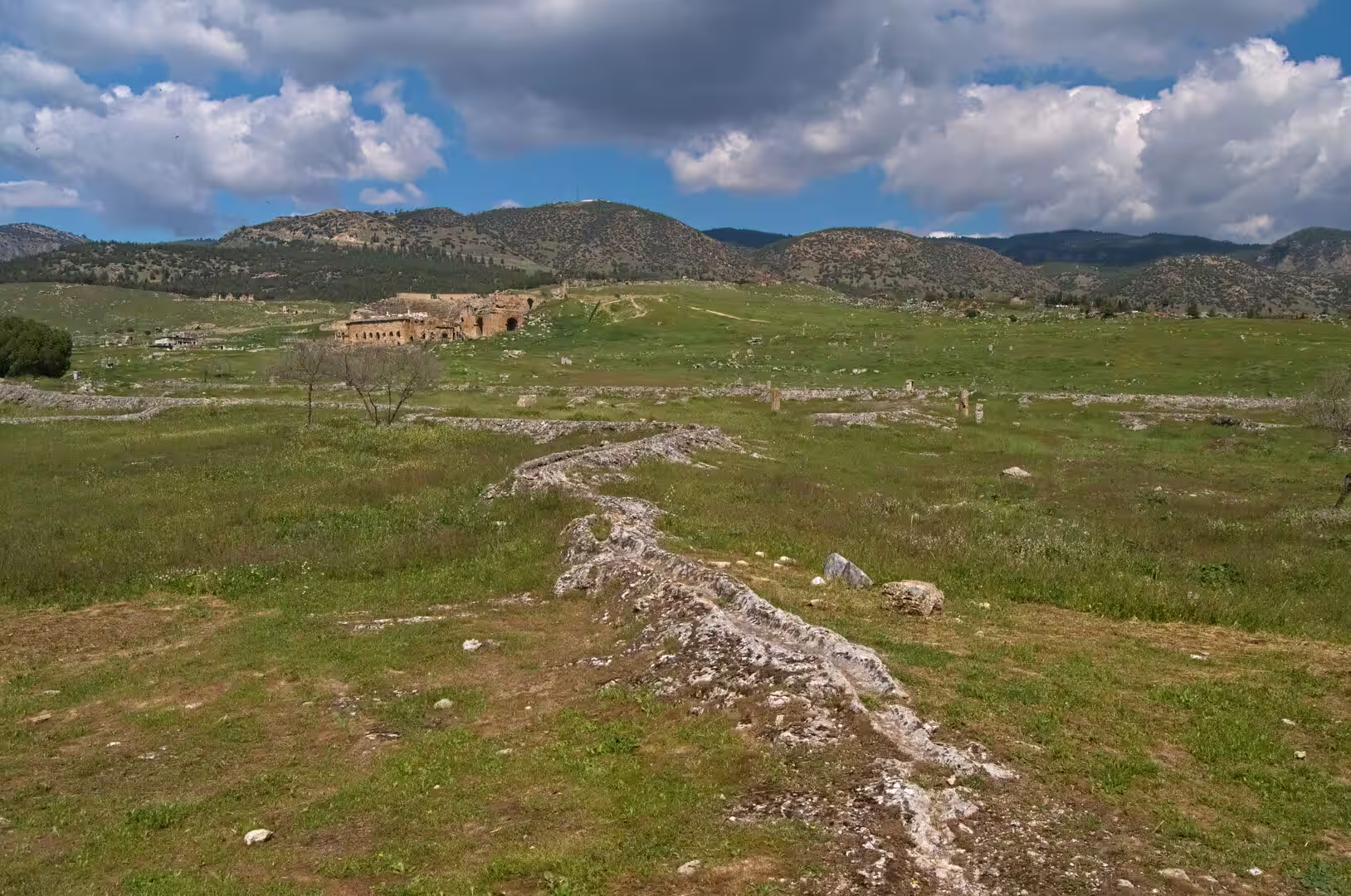
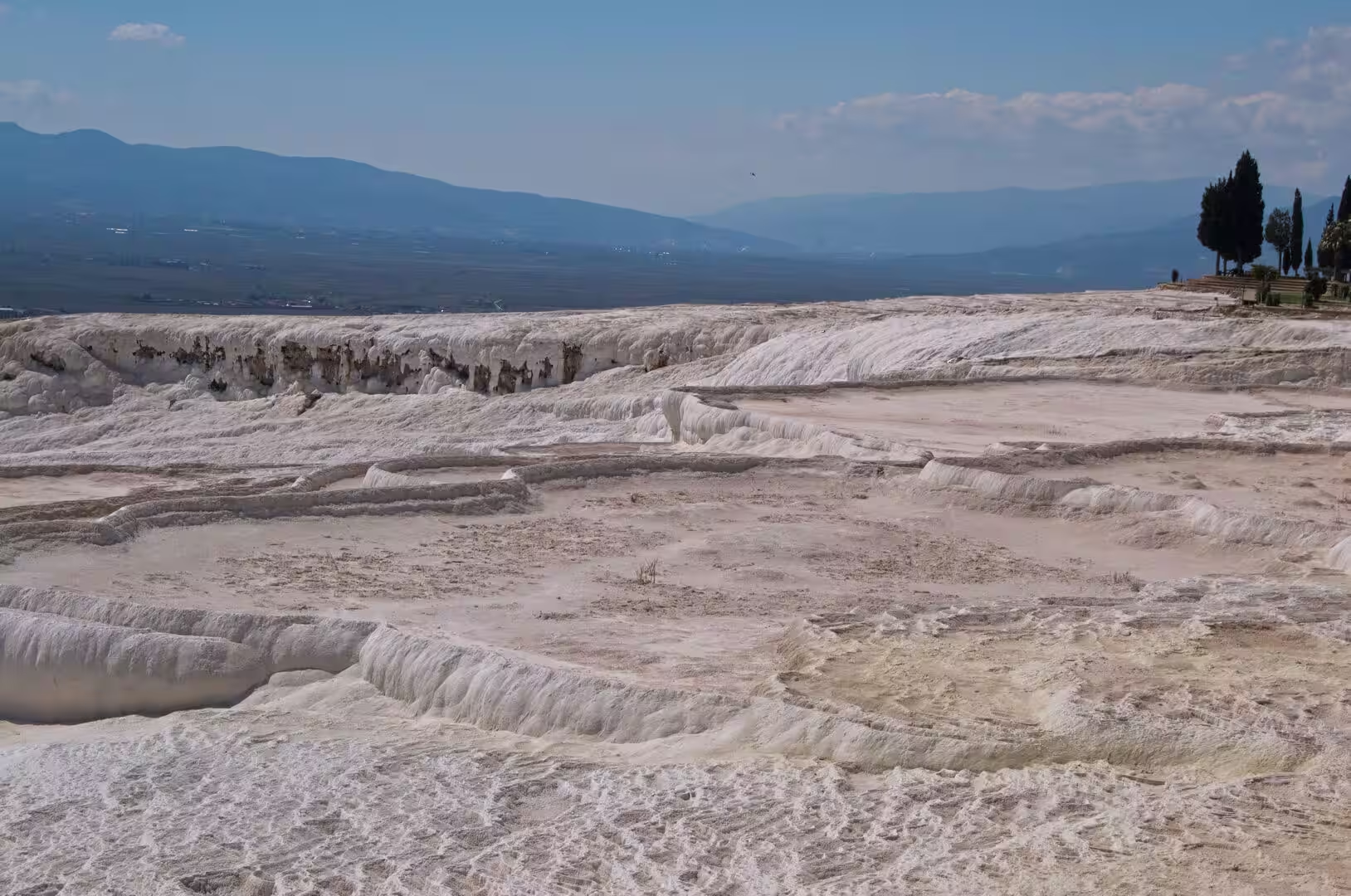
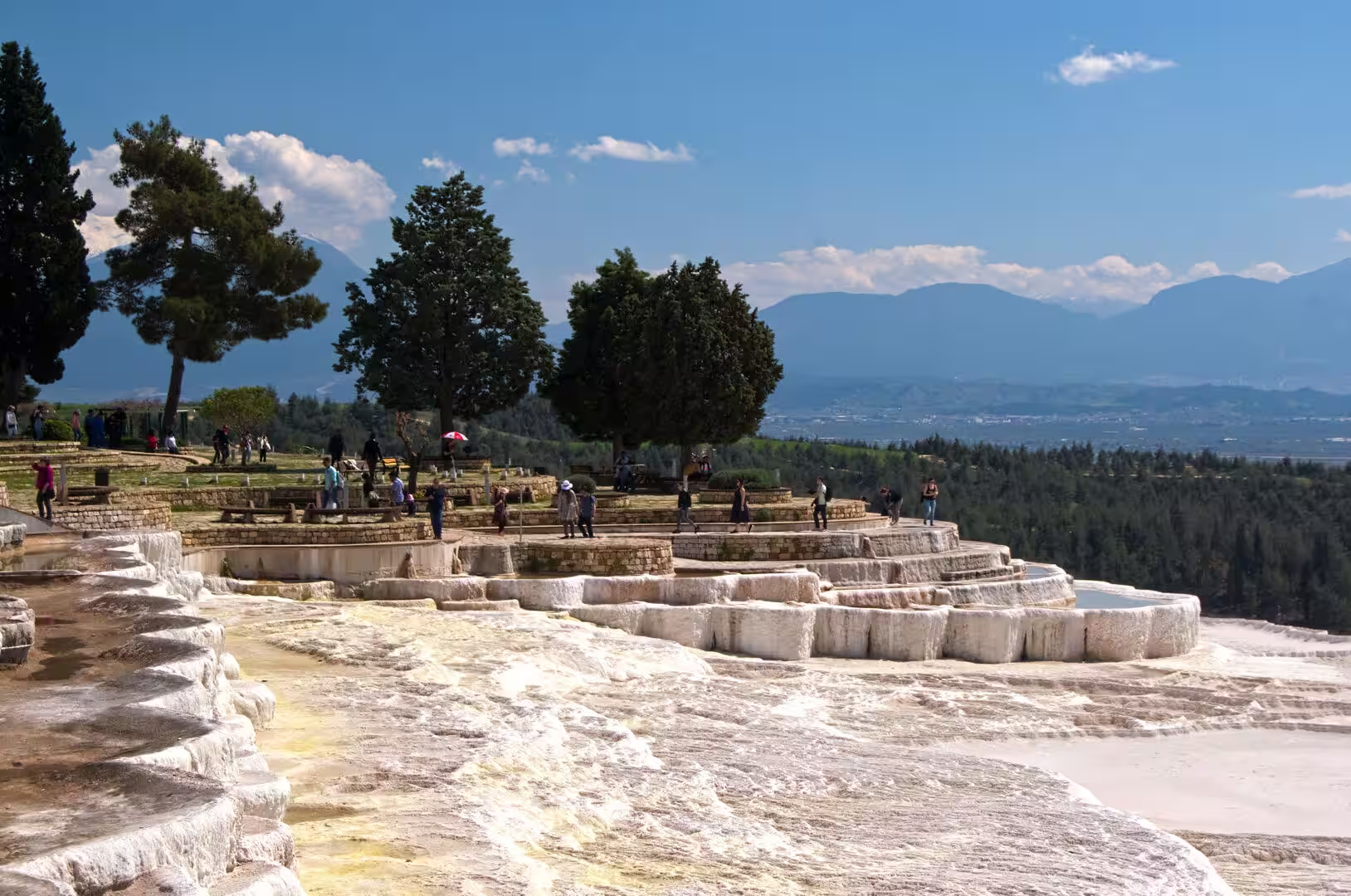
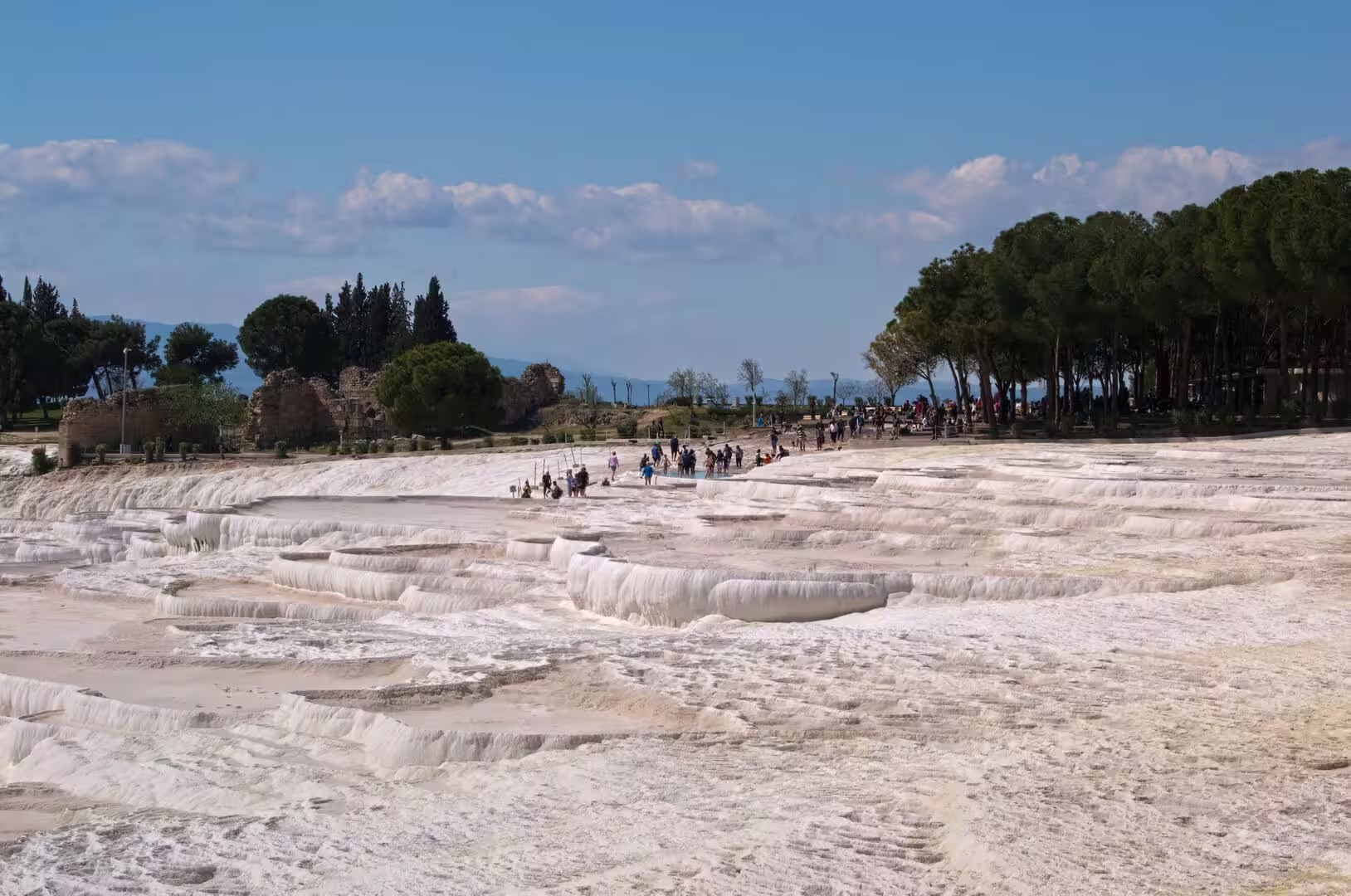
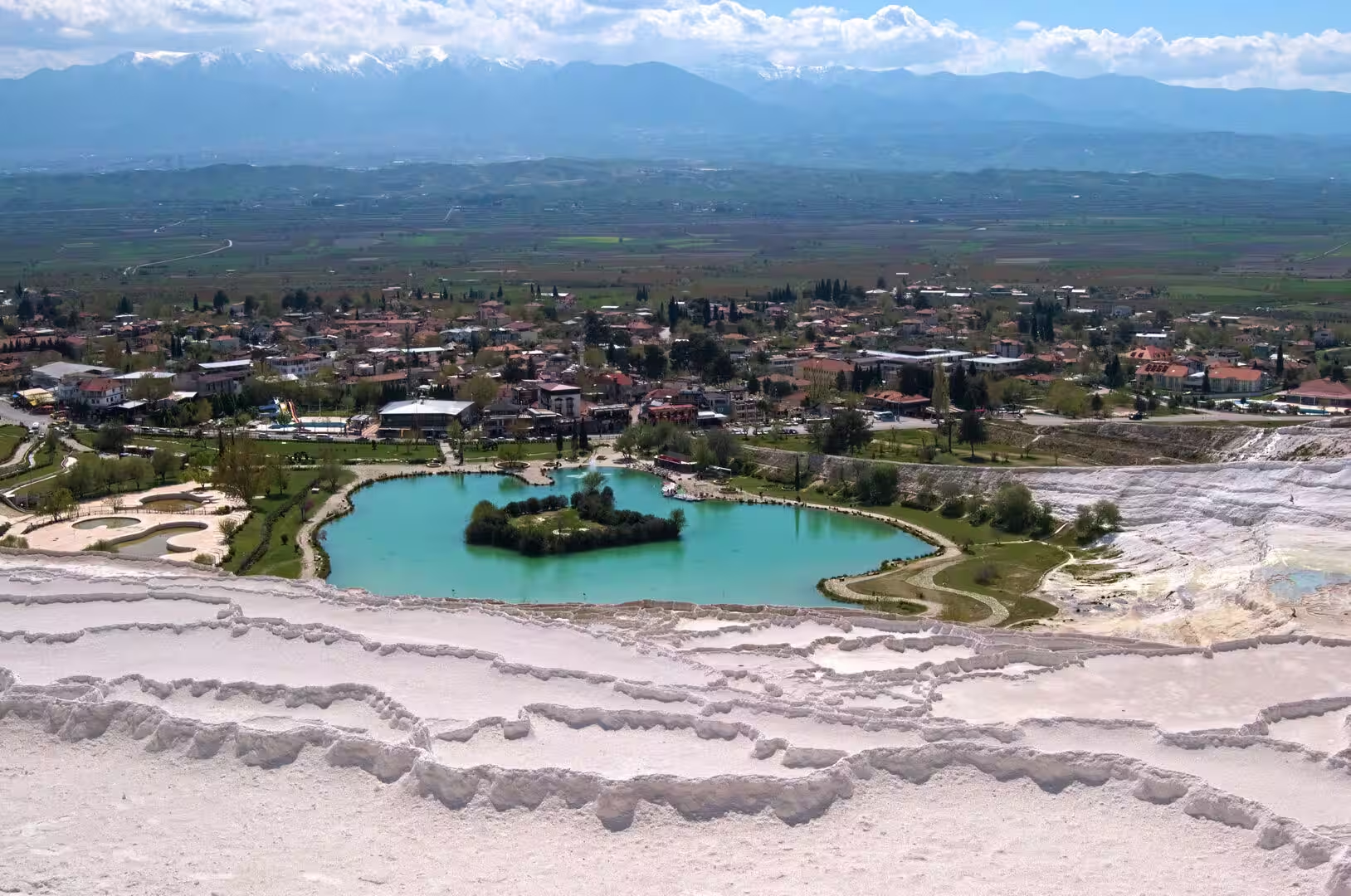
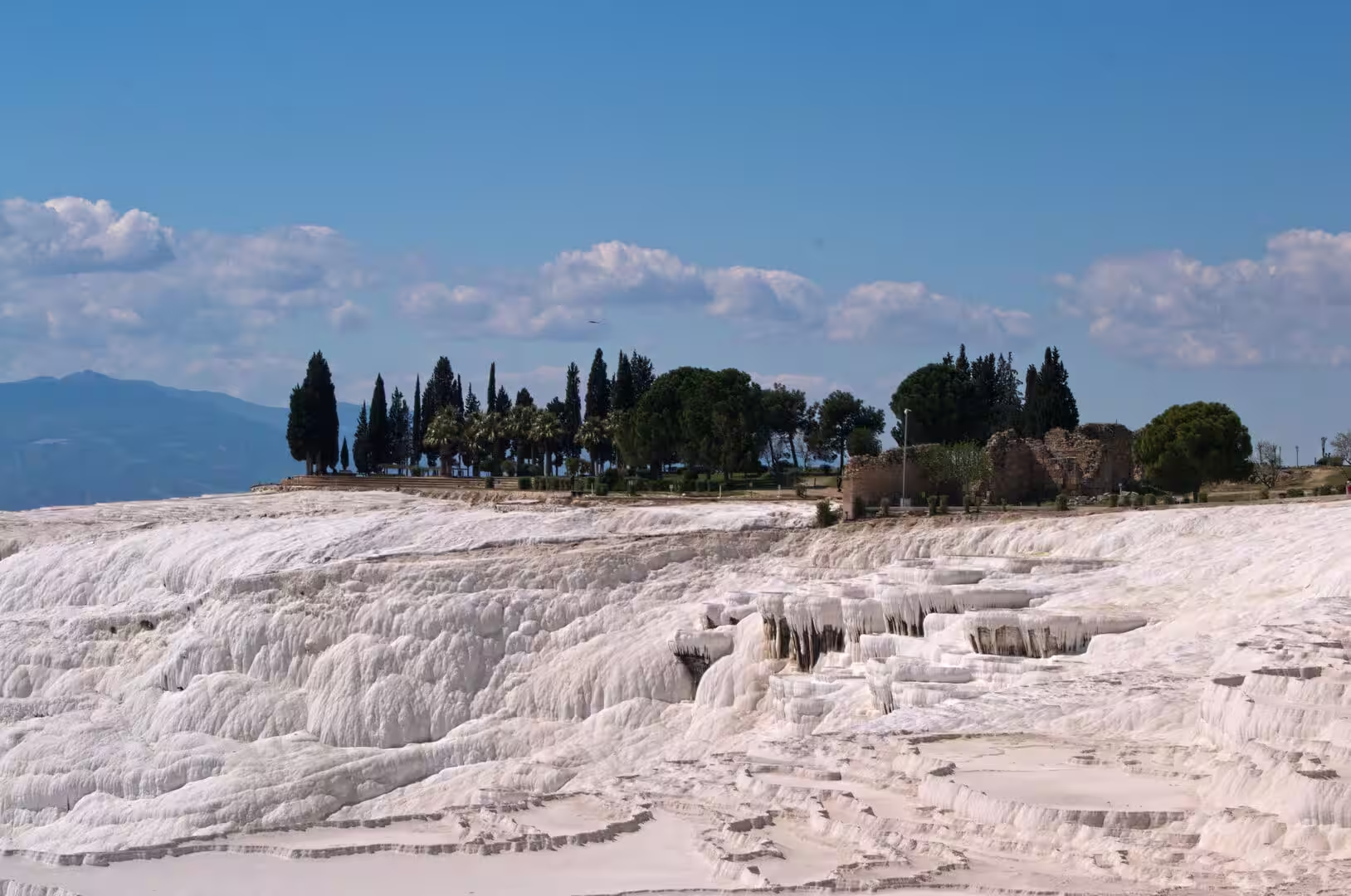
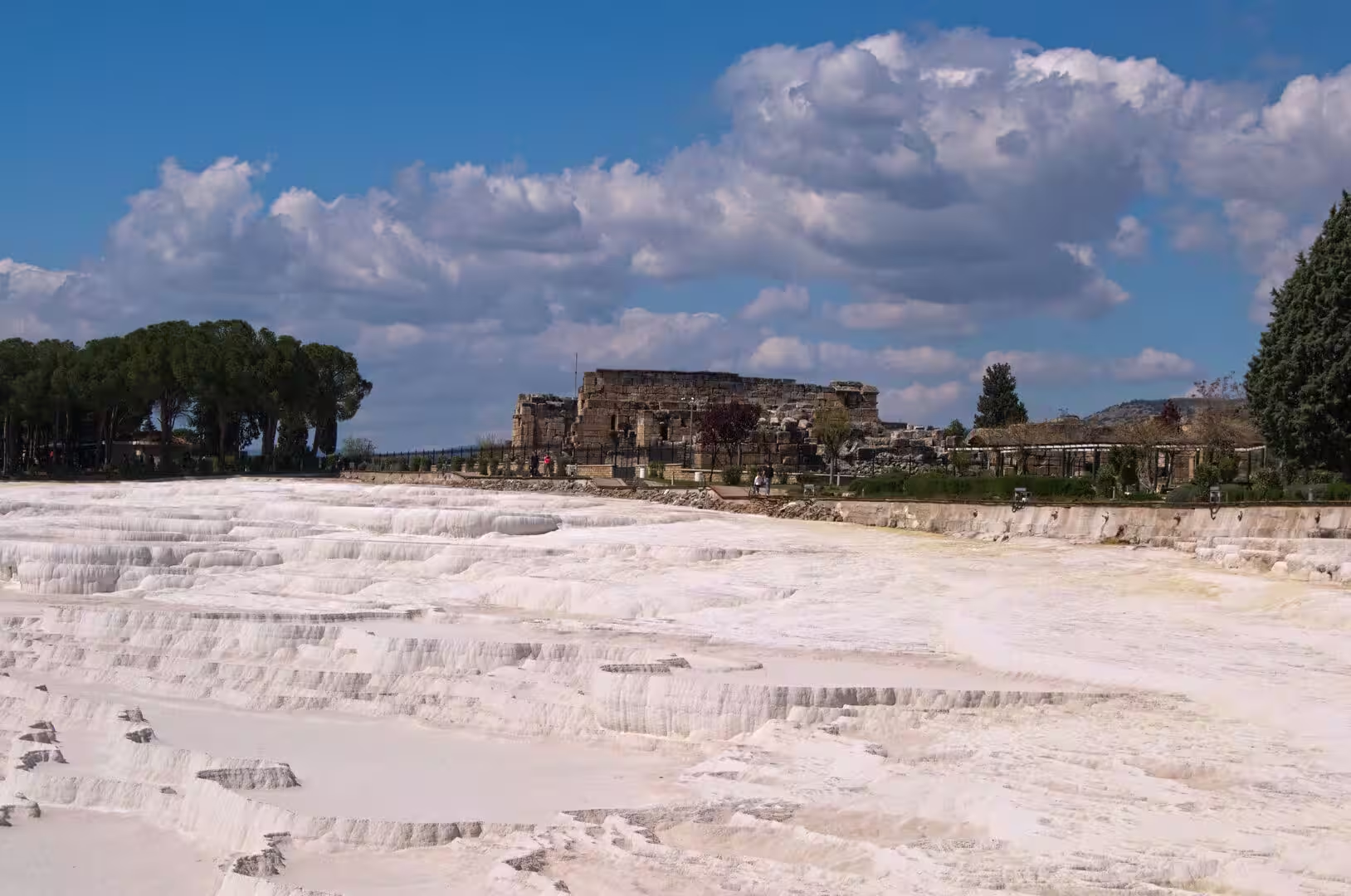
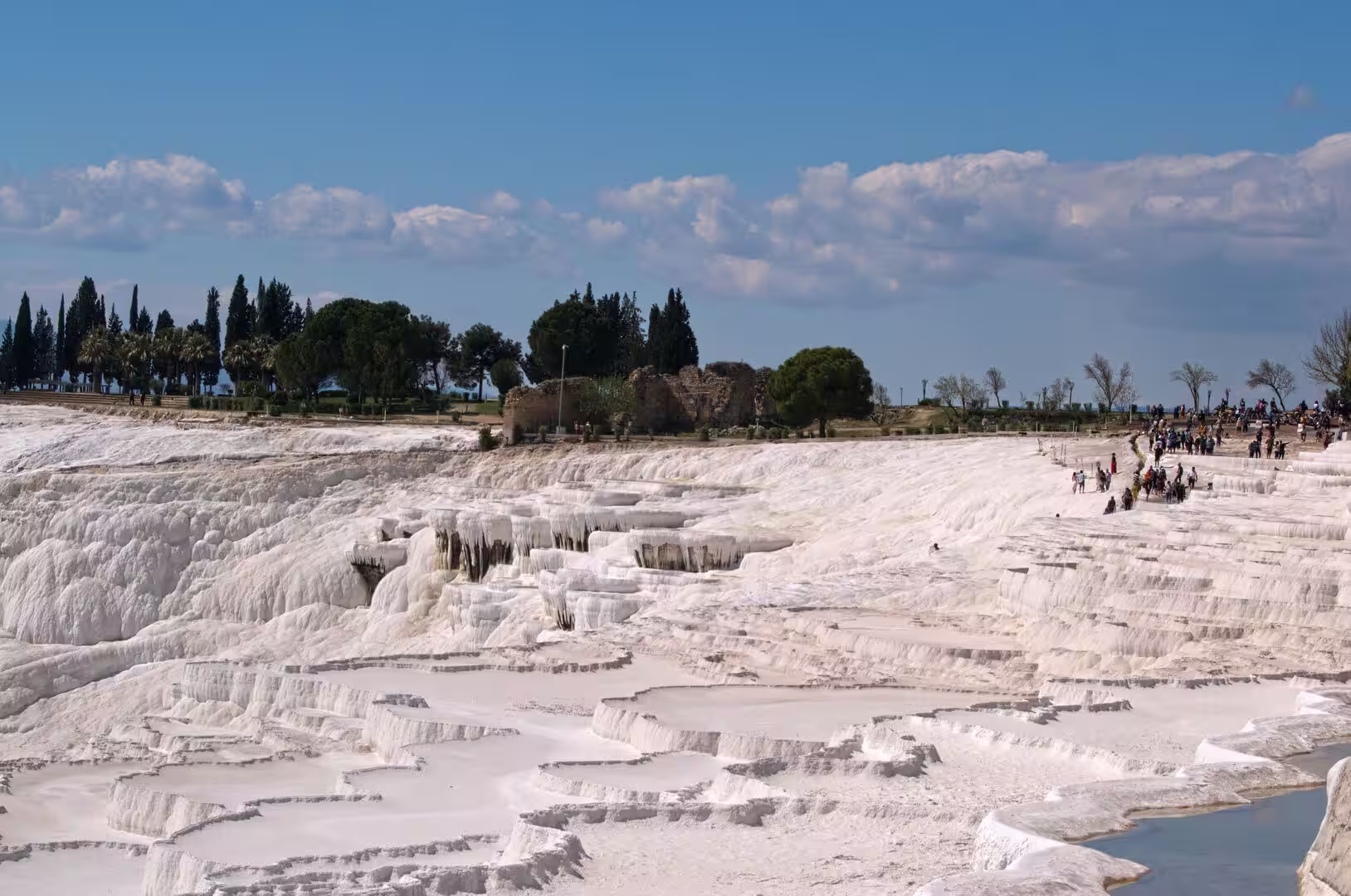
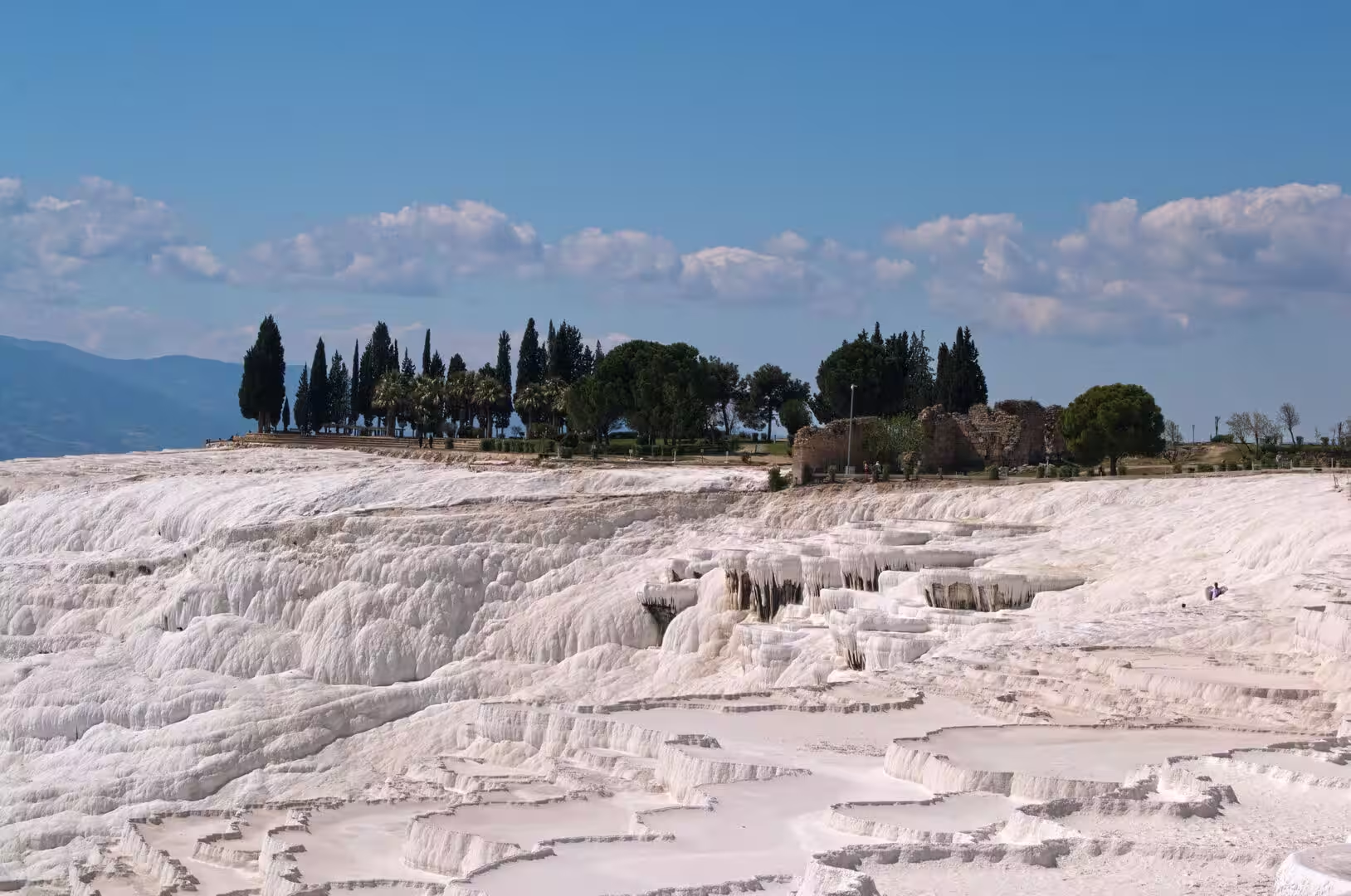
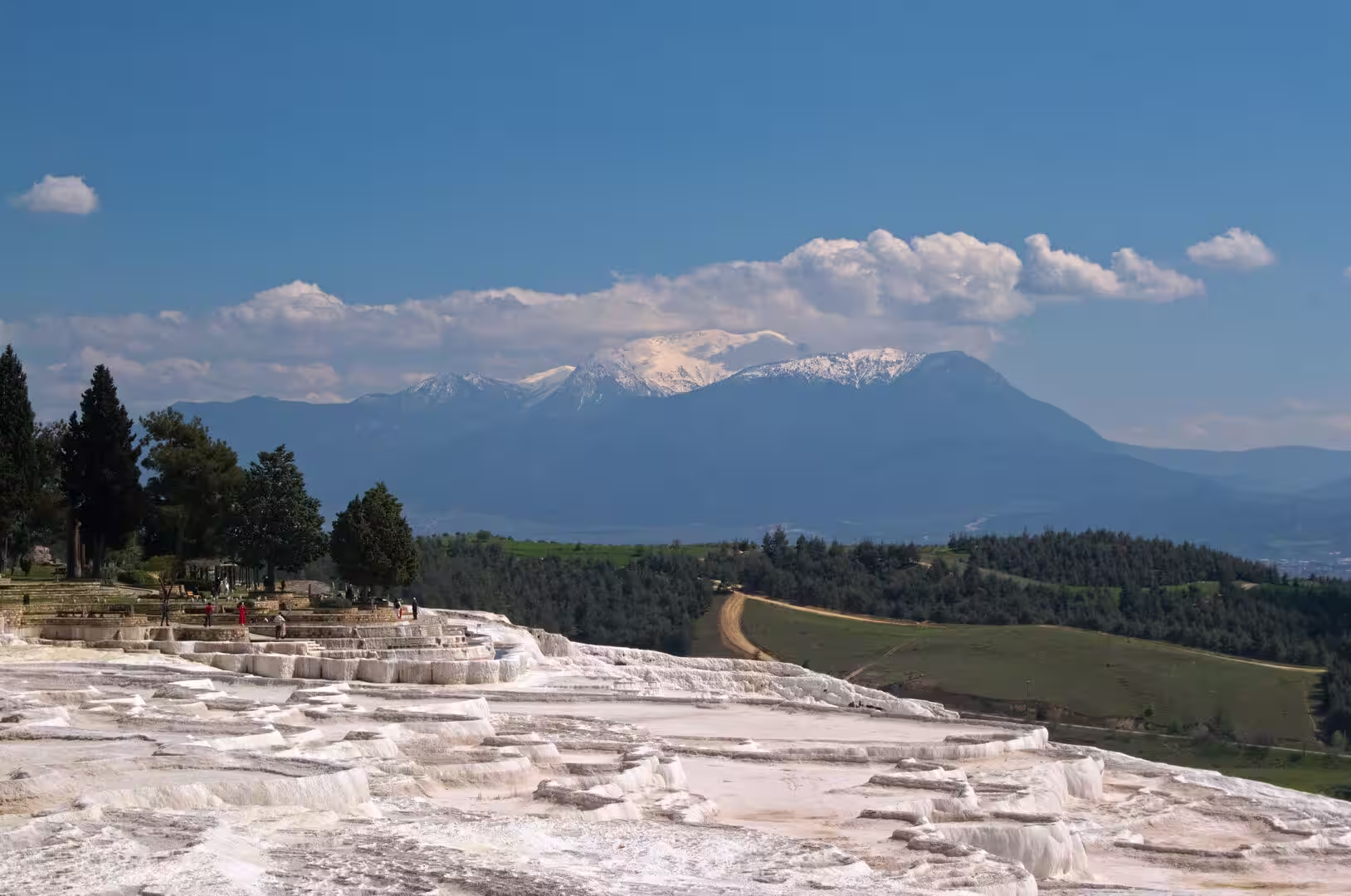
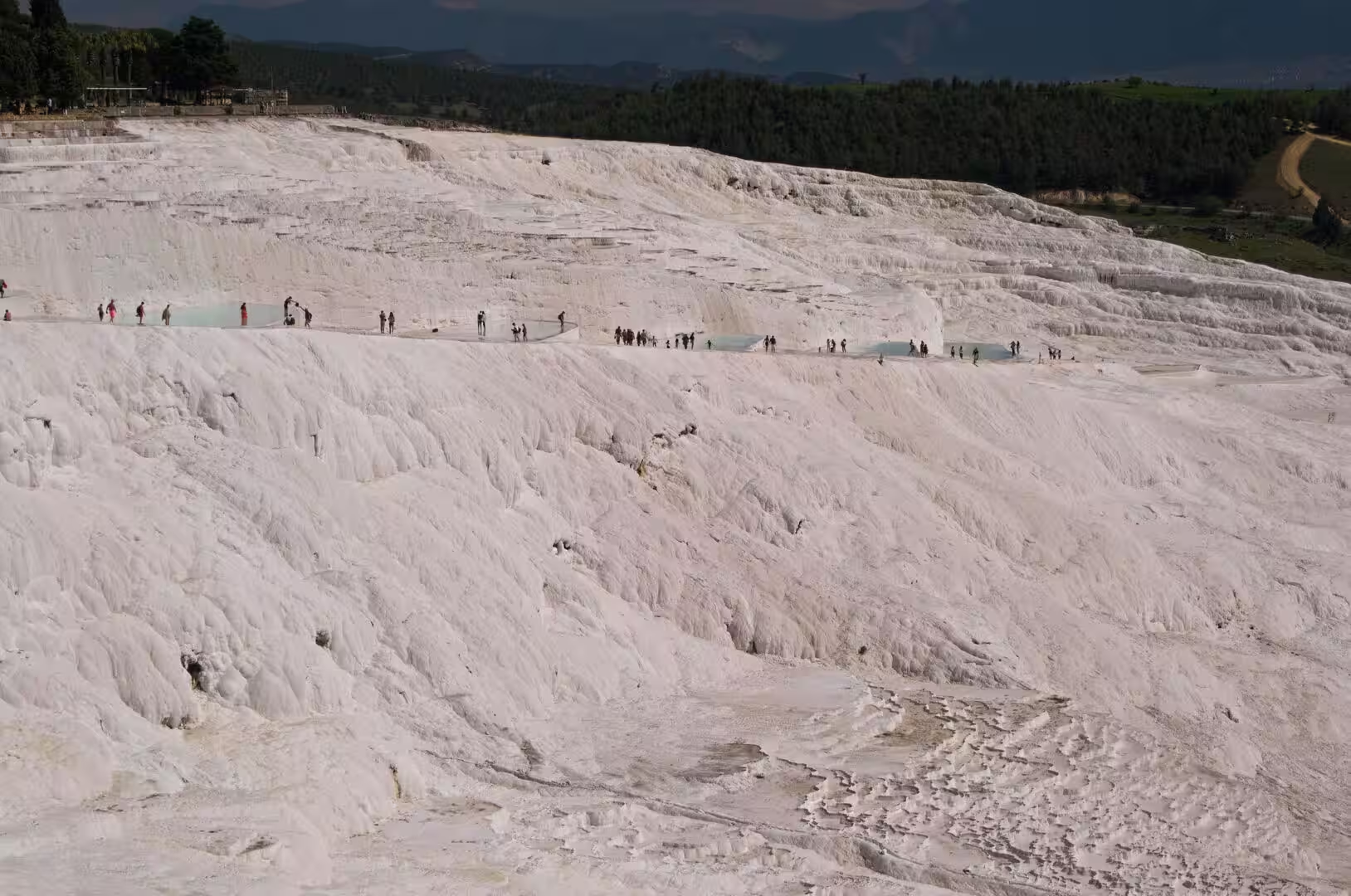
The fame of the site rests on the travertine apron that spills down the hillside below the ancient city of Hierapolis. Calcite-laden spring water emerging from a cliff almost 200 metres high has built an unreal landscape of white terraced basins, petrified waterfalls and mineral forests; the deposit runs about 2,700 metres, is up to 600 metres wide, and fresh crusts of calcium carbonate keep the active terraces dazzling white. Hierapolis occupied the level ground above this apron, looking out over the plain of the Çürüksu towards Laodicea on the Lycus and Denizli beyond.
The terraces and the archaeological park lie administratively in the Pamukkale district of Denizli Province. Since 1988 the combined property of Hierapolis-Pamukkale, covering 1,077 hectares, has been a UNESCO World Heritage Site (criteria iii, iv and vii), a mixed property in which the Greco-Roman thermal city and its early Christian monuments are inseparable from the living geological spectacle below.
Tourism is the economic mainstay of the immediate area, and with well over two million visitors a year Pamukkale ranks among the most visited natural attractions of Turkey. The surrounding plain is farmed for cotton, cereals and fruit, a tradition of the Lycus valley, where the mineral waters were also used for scouring wool, as the World Heritage nomination records. Denizli, a city of about 690,000 inhabitants, is the commercial and industrial heart of the province.
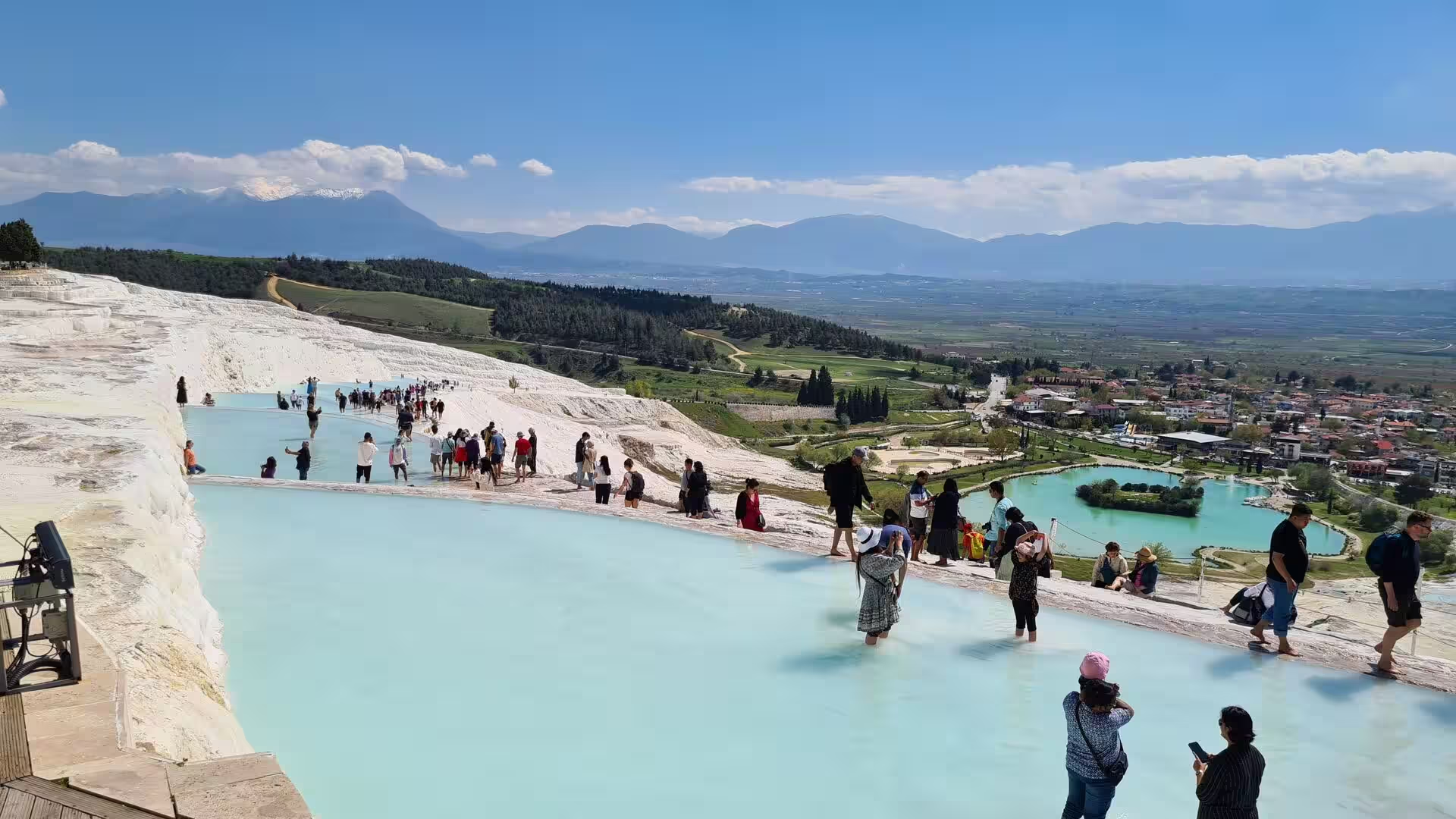
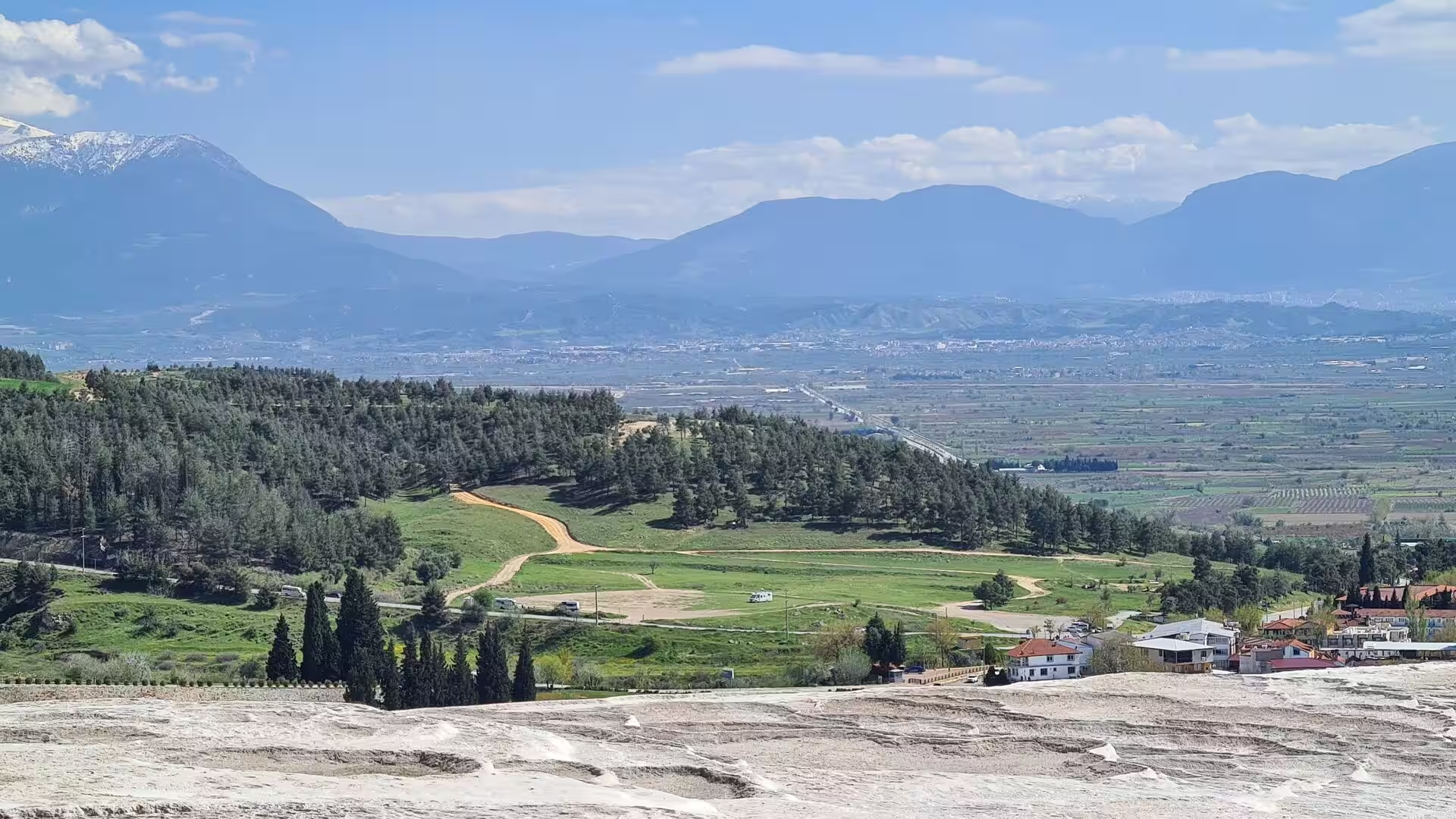
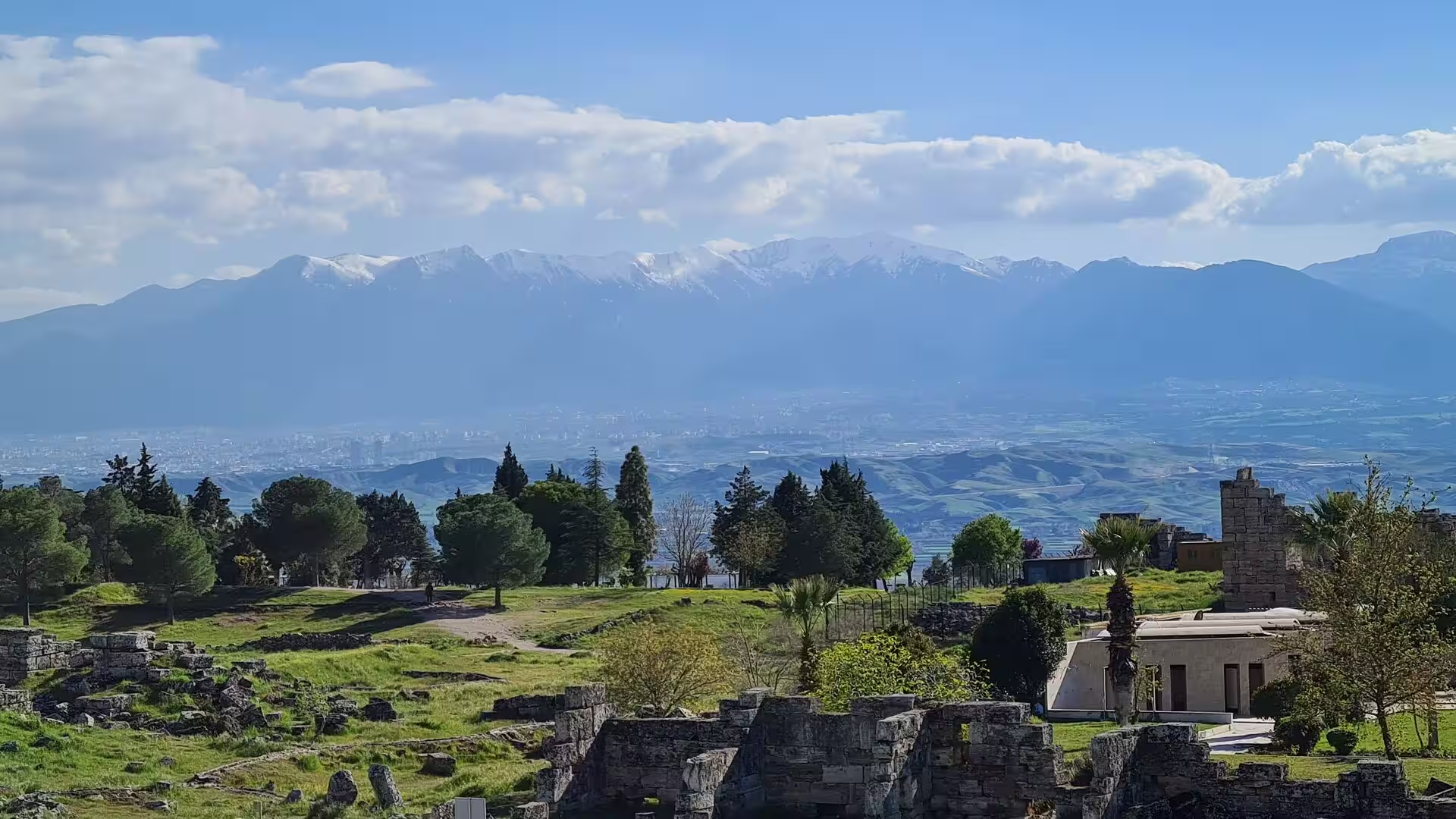
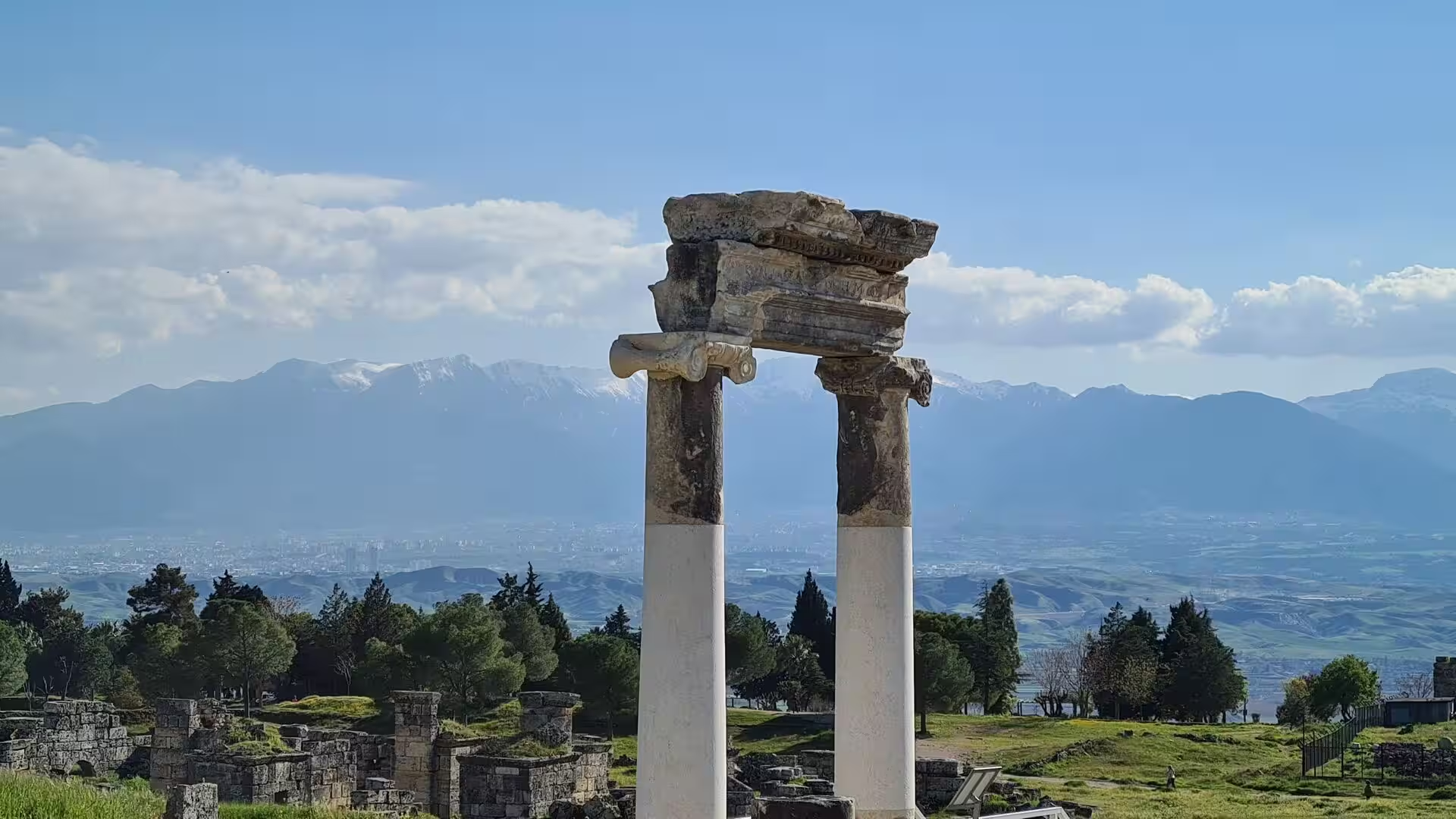
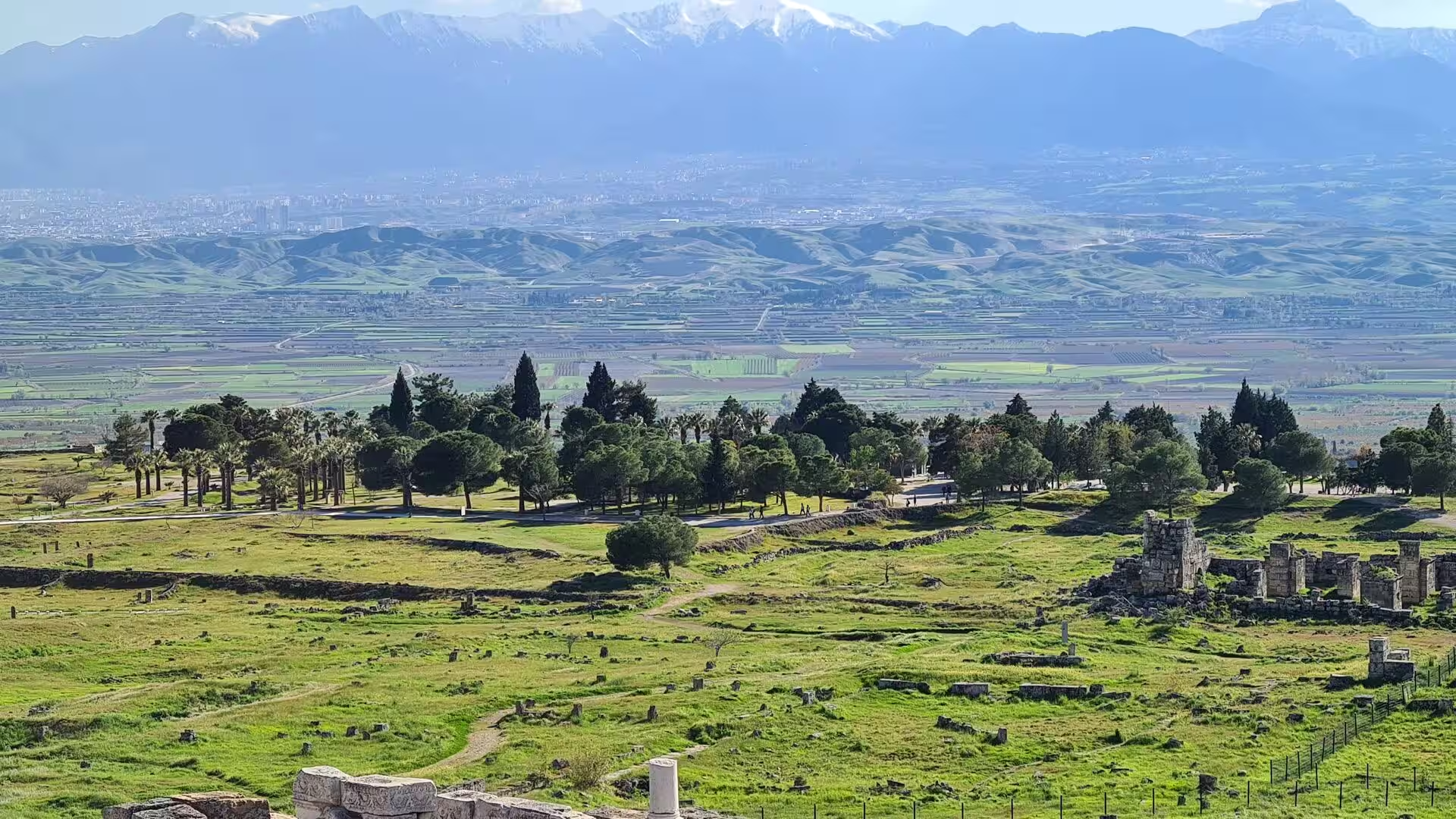
The climate of the basin is transitional between Mediterranean and continental: summers are hot and dry, winters cool and damp, with frost and occasional snow in Denizli. The ranges that frame the plain rise far higher, and their summits, above all Honaz Dağı at 2,571 metres, the highest mountain of the Aegean region, keep snow well into spring, and views across the valley are backed by white peaks.
History
Long before the Greeks arrived, the place was sacred. A cult of the Anatolian mother goddess Cybele gathered around a cave on the hillside, a spot regarded as a gateway to the underworld for the toxic gases seeping from the hot ground, and Iron Age huts stood on the slope of Çökelez overlooking the plain. The Phrygian community is thought to have raised a temple here in the first half of the 7th century BC, on the ground that later formed the city’s centre.
Hierapolis proper grew out of a Greek settlement planted in the 3rd century BC, when the valley lay in the Seleucid kingdom; its earliest coins give the name Hieropolis. After the Roman victory over Antiochus III at Magnesia in 190 BC and the Treaty of Apamea that followed in 188 BC, the region passed to the Attalid kings of Pergamon, and under Eumenes II (ruled 197 to 160 BC) Hierapolis received the status of a polis; most accounts, the UNESCO nomination included, describe it as a Pergamene foundation of the 2nd century BC. It grew as a spa town whose healing waters were famed, with workshops producing woollen cloth and dyed goods of high quality.
When Attalus III died in 133 BC he bequeathed his kingdom to Rome, and Hierapolis entered the Roman province of Asia without ever being refounded as a colony. A major earthquake in AD 17 damaged the city, and in AD 60, under Nero, a still more severe shock levelled it; the rebuilding that followed gave the city the layout whose ruins survive. The city was also the birthplace of the Stoic philosopher Epictetus, born here about AD 50. Its golden age came in the 2nd and 3rd centuries: the theatre was remodelled in the Severan period, in AD 215 the emperor Caracalla granted the honorary title of neocoros, the healing springs drew patients from across the empire, the population reportedly reached about 100,000, and the cemeteries filled with residents and with patients who died during their cures. According to tradition the apostle Philip spent his last years here and was martyred about AD 80.
Christianity took root early in the Lycus valley. By the 4th century the Christians of Hierapolis had filled the Plutonium with stones, and the city became a bishopric of Phrygia Pacatiana; in 531 Justinian raised the see to metropolitan rank, and the Roman baths were converted into a basilica. In the 5th century the great martyrium of St Philip rose over the traditional site of the apostle’s burial. Persian armies and further earthquakes devastated the city in the early 7th century, and it never recovered its former scale.
The area passed to the Seljuk sultanate of Konya in the 12th century, was held briefly by the crusaders of Frederick Barbarossa in 1190, and was abandoned by its inhabitants in the early 13th century, when the Seljuks built a castle on the hill. Deserted for good in the late 14th century, the town was finally toppled by the great earthquake of 1354, and a crust of travertine crept across the ruins. Modern Denizli, meanwhile, had grown up on the plain to the south: after the Seljuk conquest the inhabitants of Laodicea were resettled there, and the town, known successively as Tonguzlu, Donuzlu and finally Denizli, was described by Ibn Battuta in the 1330s and by Evliya Çelebi in the 17th century as a thriving place of gardens, mosques and workshops.
European travellers sketched the ruins, above all the theatre, from the 18th century, but the first excavation came only in 1887, when the German archaeologist Carl Humann worked at the site. Hotels were even built on the terraces before the era of protection began. The Italian Archaeological Mission has excavated and restored the city since 1957, the theatre was restored between 2004 and 2014, and the reopened Plutonium and the martyrium of St Philip, where excavation has revealed a monumental tomb beneath the church, have drawn renewed attention.
Geology
The Denizli basin is a tectonic depression, one of the fault-bounded grabens that dissect western Anatolia as the crust stretches towards the Aegean. Its floor, drained by the Çürüksu river, opens westwards into the great rift valley of the Büyük Menderes, the Maeander of antiquity, which runs on to the Aegean past Aydın. The faults that frame the depression are active and have repeatedly shaken the region; the earthquakes of AD 17, AD 60 and 1354, all documented in the history of Hierapolis, are only the best known of a long series. Hierapolis itself stands on a terrace of travertine roughly 90 metres above the valley floor, at the foot of the Çökelez ridge.
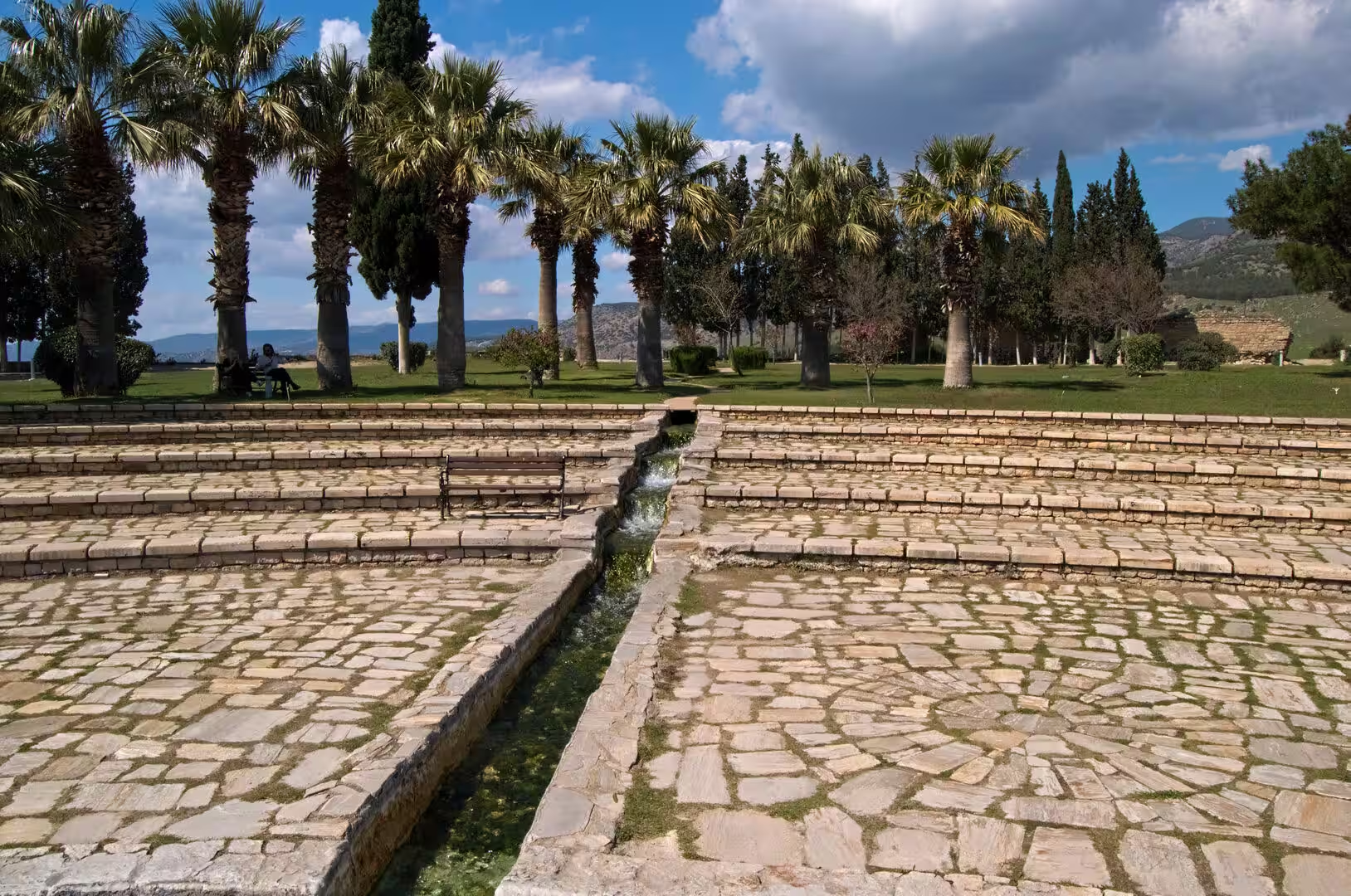
The making of this landscape begins underground. Rainwater seeps through the limestone massifs of the region, absorbs carbon dioxide and, turning slightly acidic, dissolves calcium carbonate. Deep circulation along the fault zones heats the water and enriches it further before it rises again at the springs. In the Pamukkale area some seventeen springs emerge at temperatures between about 35°C and 100°C, and the water that feeds the terraces is carried from the main spring some 320 metres to the head of the apron.
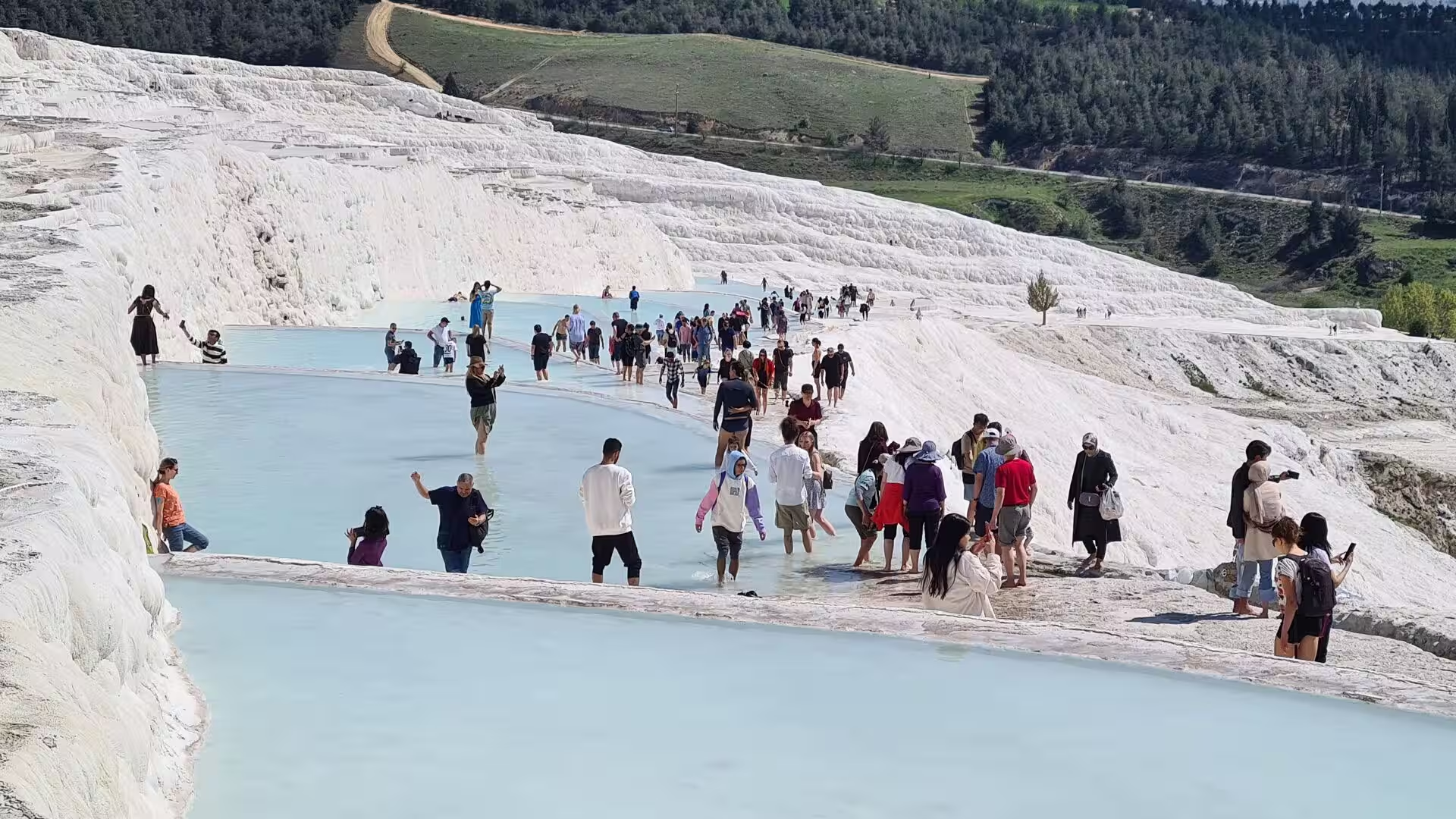
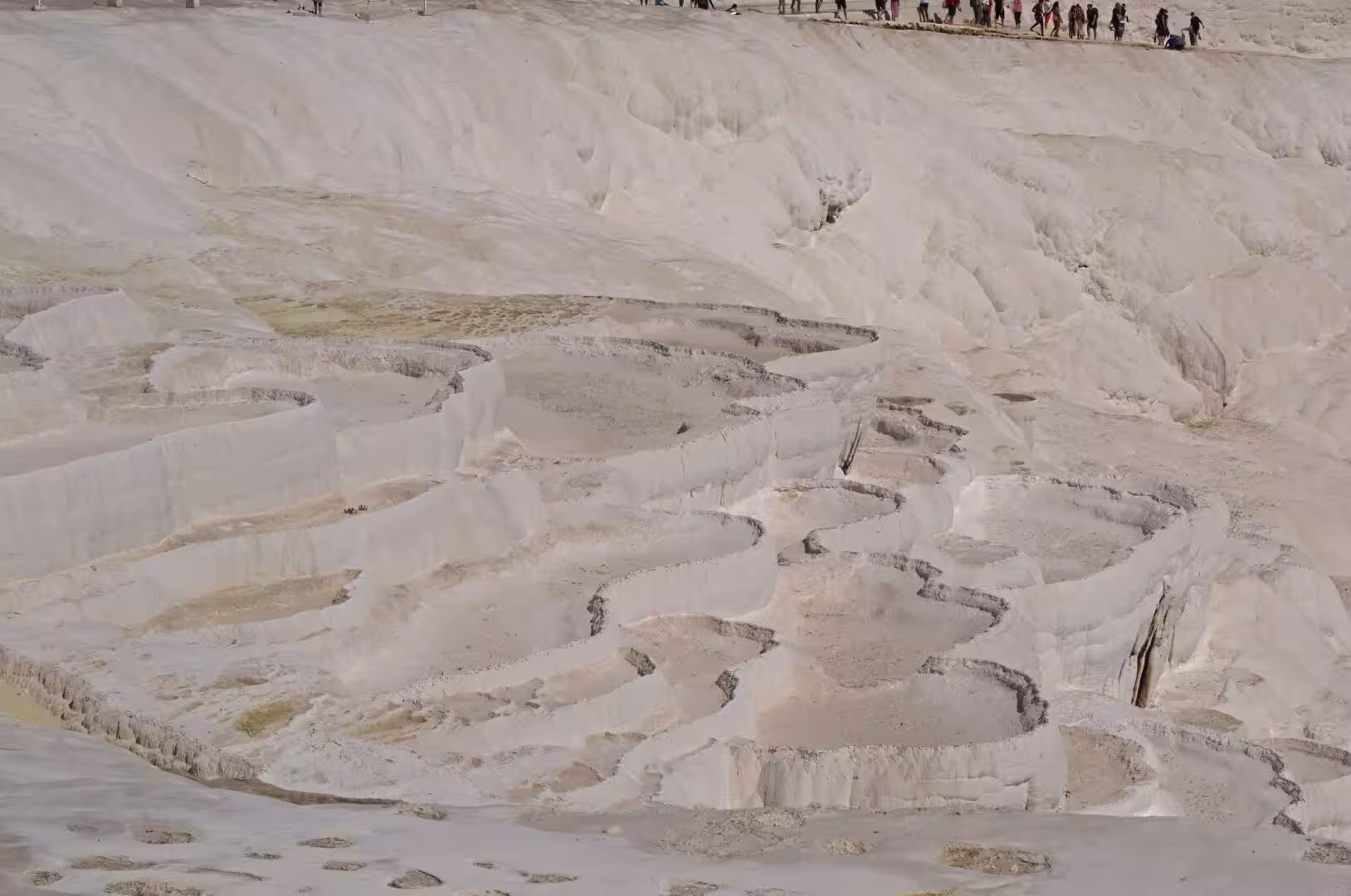
When the calcium-rich water reaches the surface, carbon dioxide escapes and the water can no longer hold all its dissolved mineral. Calcium carbonate is deposited, at first as a soft gel that hardens and crystallises into travertine, a banded freshwater limestone. The precipitation builds low rims along the flow, and the rims grow into dams that pond the water, so that each terrace forms a shallow basin overflowing into the next; the steps range from less than a metre to about six metres in height. The same process forms petrified waterfalls, mineral curtains and smooth crusts, while the warm water pooled in the basins takes on its characteristic milky turquoise colour.
Deposition is fast enough to be seen on a human timescale: Strabo noted that the local water so readily congealed and changed into stone that streams were led through ditches to make stone fences. The ancient city channelled the water through pipes and canals; the World Heritage nomination records a network carrying spring water some 70 kilometres towards Alaşehir and along the Menderes valley, to villages and fields as well as the city baths.
The wider setting is equally varied. South of the plain rises Honaz Dağı, 2,571 metres high, the highest mountain of the Aegean region and a national park since 1995, whose summit keeps snow until late spring. Limestone and marble quarried in the surrounding hills supplied the builders and sculptors of the ancient city and are still cut in modern quarries around Denizli. On the valley floor, rivers and springs have spread fertile alluvial soils that carry the cotton fields and orchards of today.
Things to See
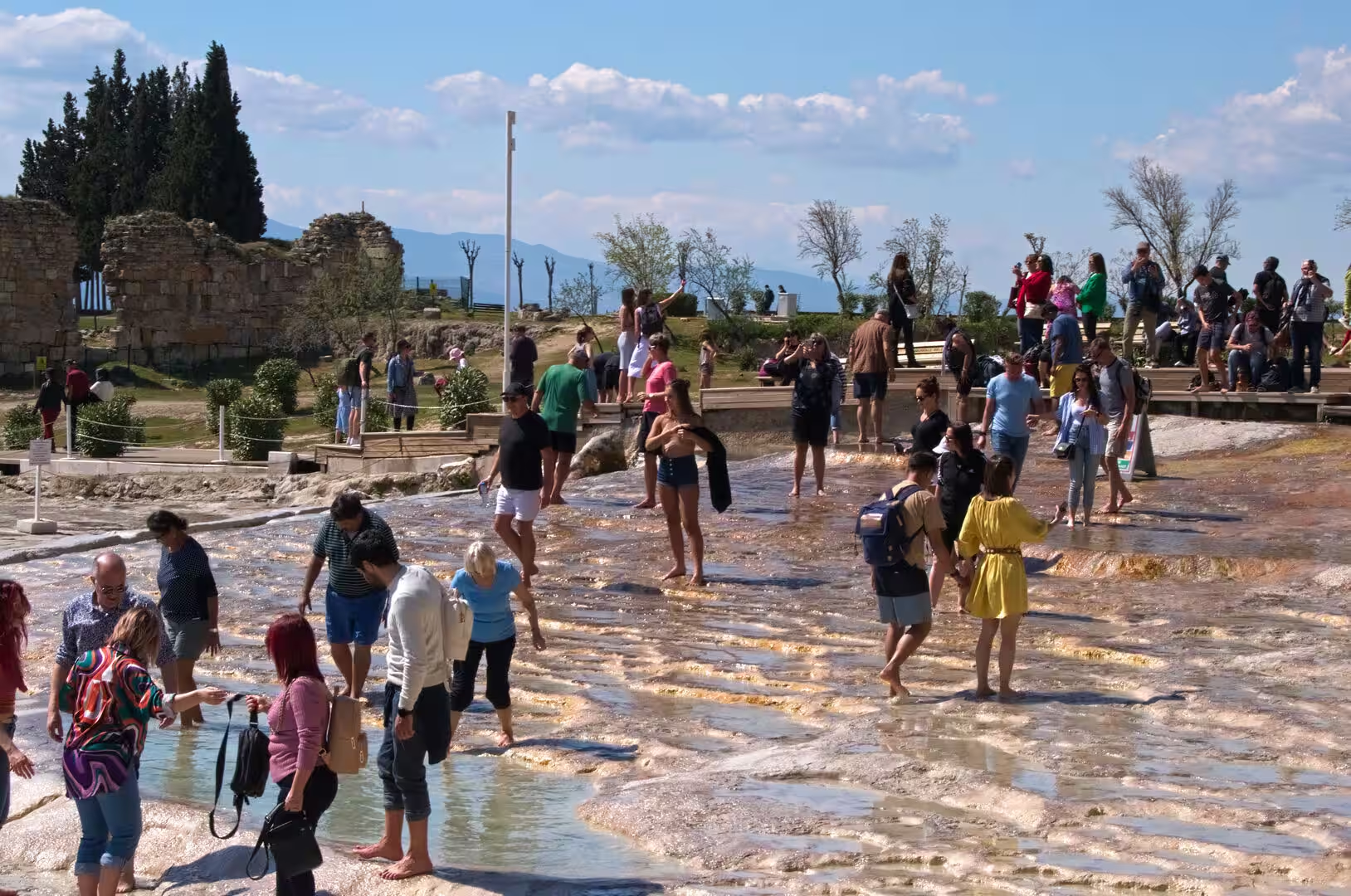
Pamukkale terraces. The travertine apron is the heart of the modern site. Paths, boardwalks and wooden walkways cross it without damaging the crust, shoes are removed before stepping onto the terraces, and bathers wade barefoot through the ankle-deep water; bathing is limited to designated areas, and sections are periodically closed so the formations can regenerate. From the upper edge of the terraces the view drops across the green valley to the plain, while tandem paragliding flights from the hills above drift over the white slope and the ruins.
Antique Pool. At the southern edge of the ruins, a small lake formed by earthquakes and thermal sources around the old civil agora offers the most atmospheric swim on the site: warm mineral water strewn with fallen marble columns and fragments. Popularly called Cleopatra’s Pool, it lies shaded by trees below the terraces.
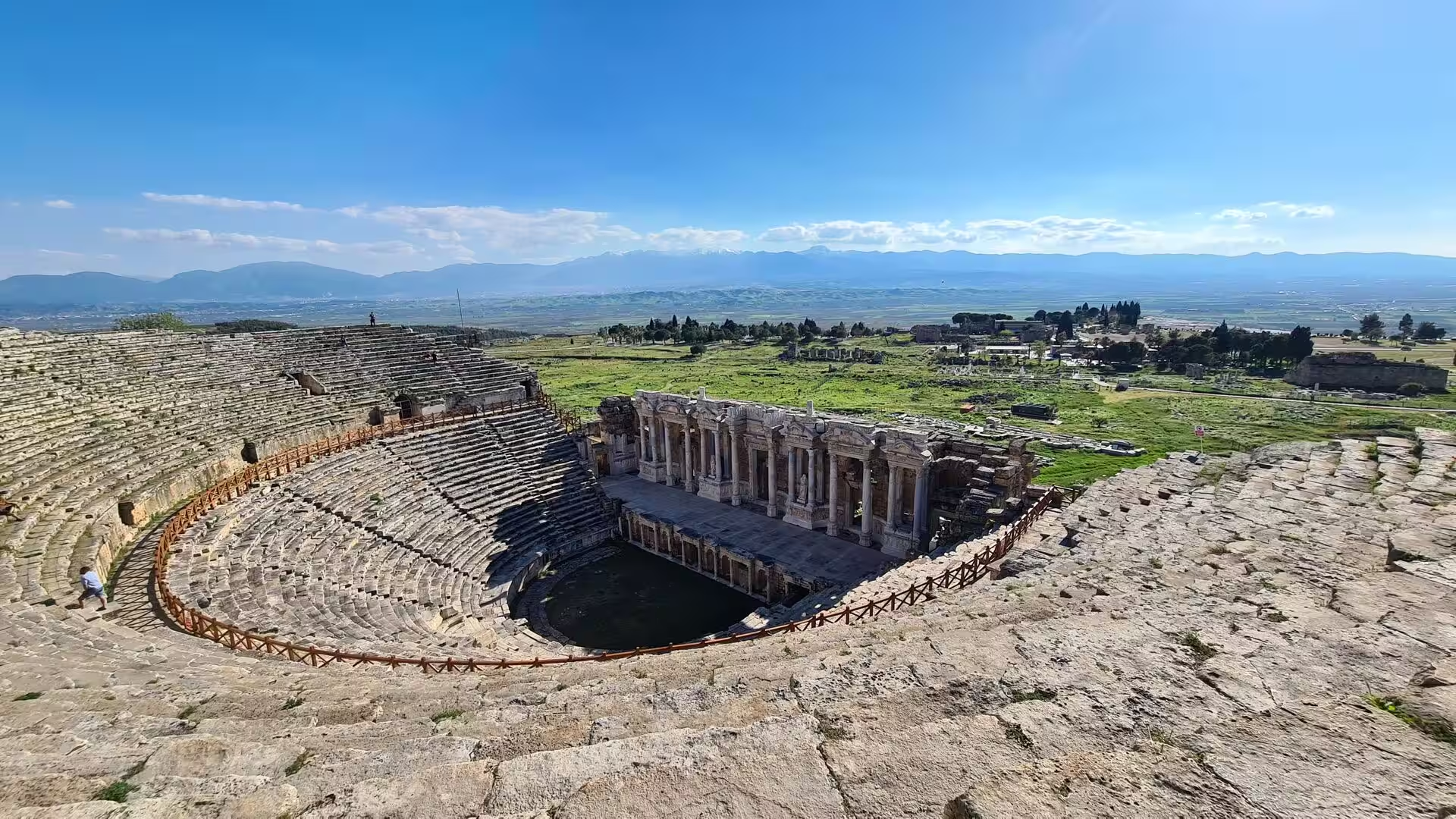
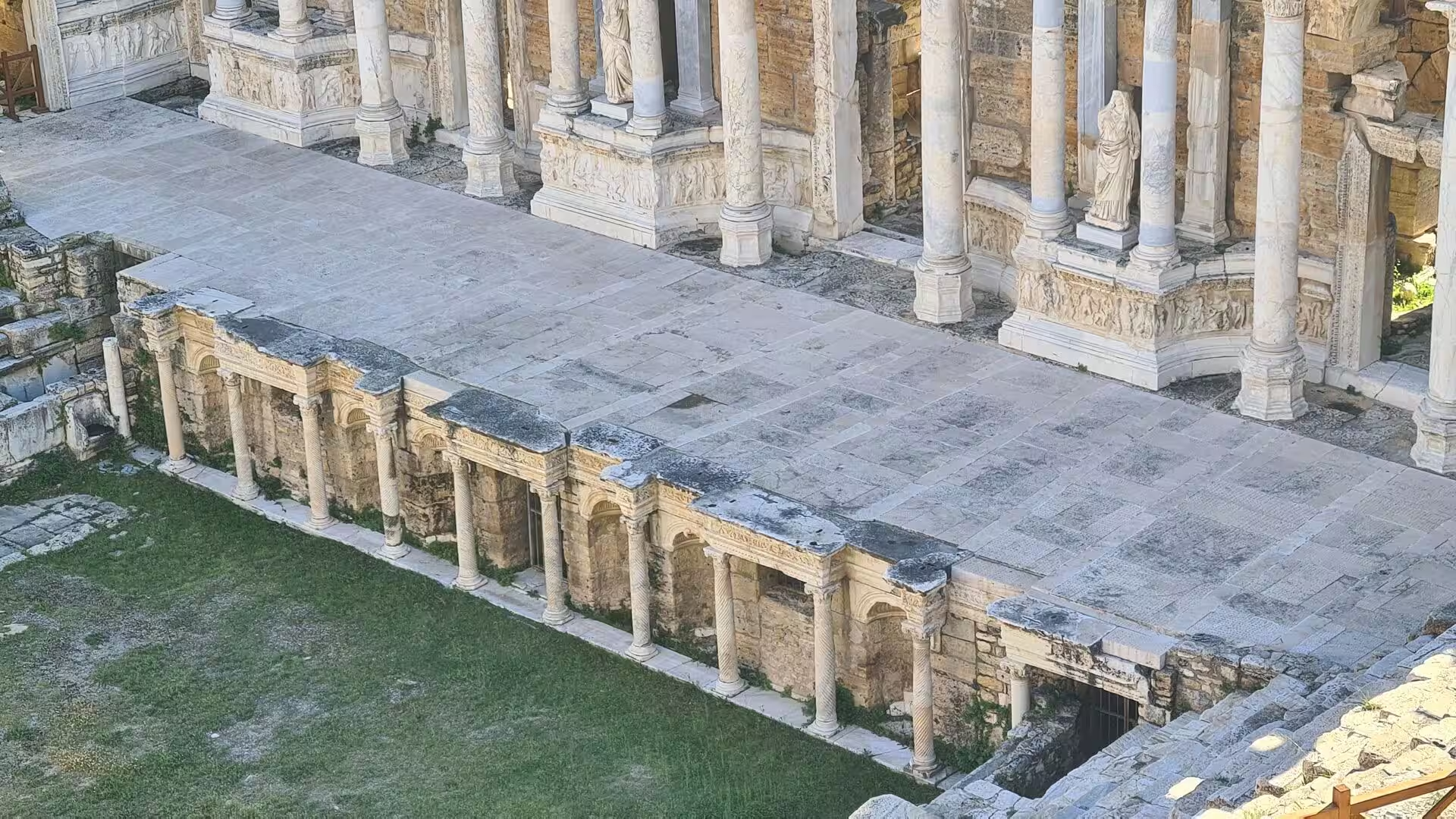
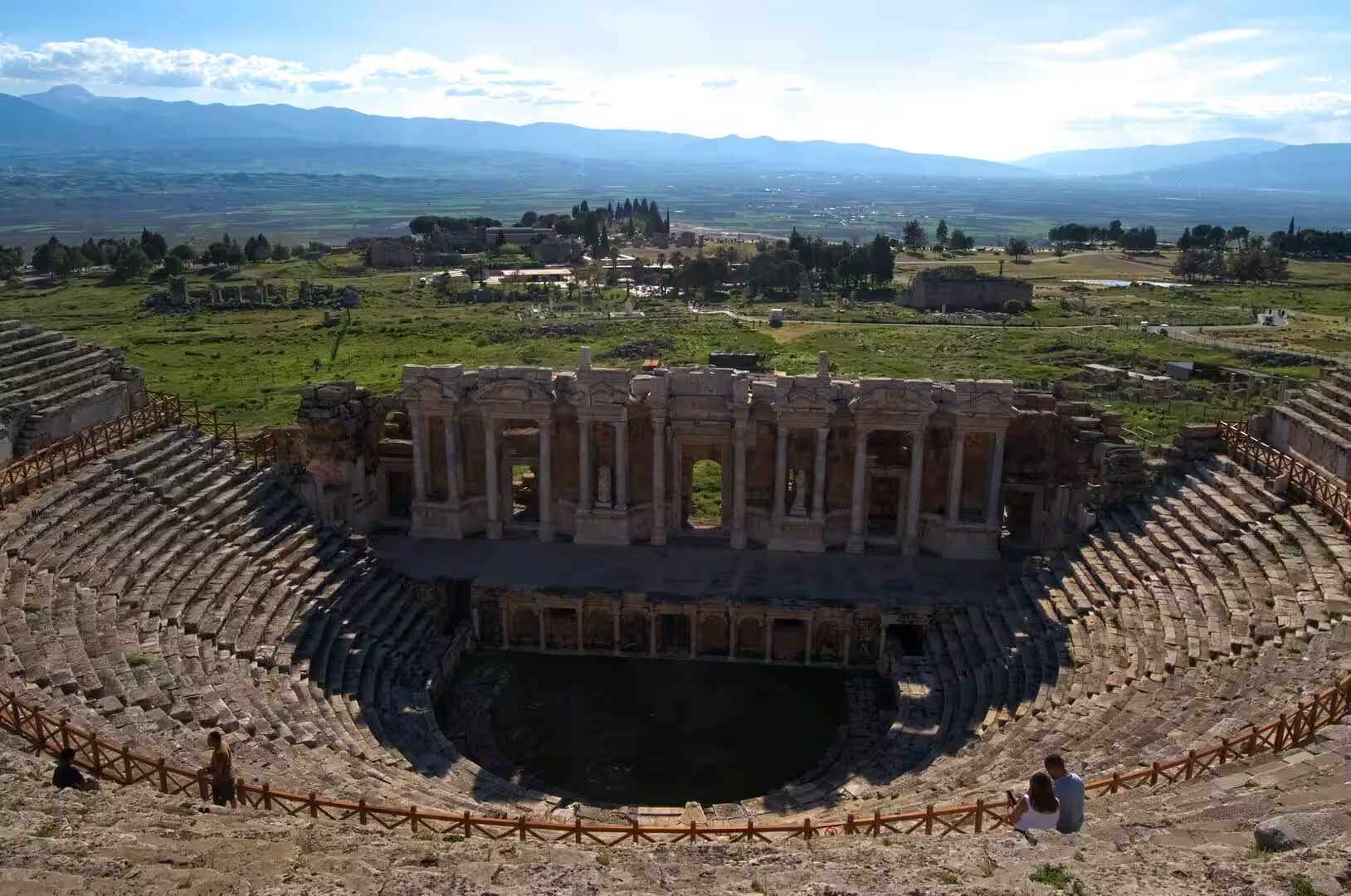
Theatre of Hierapolis. Built into the hillside above the plain, the great theatre is the finest surviving monument of the city. Its cavea held some fifty rows of seats, divided by stairways and a central walkway, for about 15,000 spectators, and the stage building, remodelled in the Severan period, rises three storeys of columned niches, statues and reliefs; the surviving friezes of the stage front include a ritual procession and a sacrifice in honour of Artemis of Ephesus. Restored between 2004 and 2014 and again used for performances, it opens a wide view over the valley.
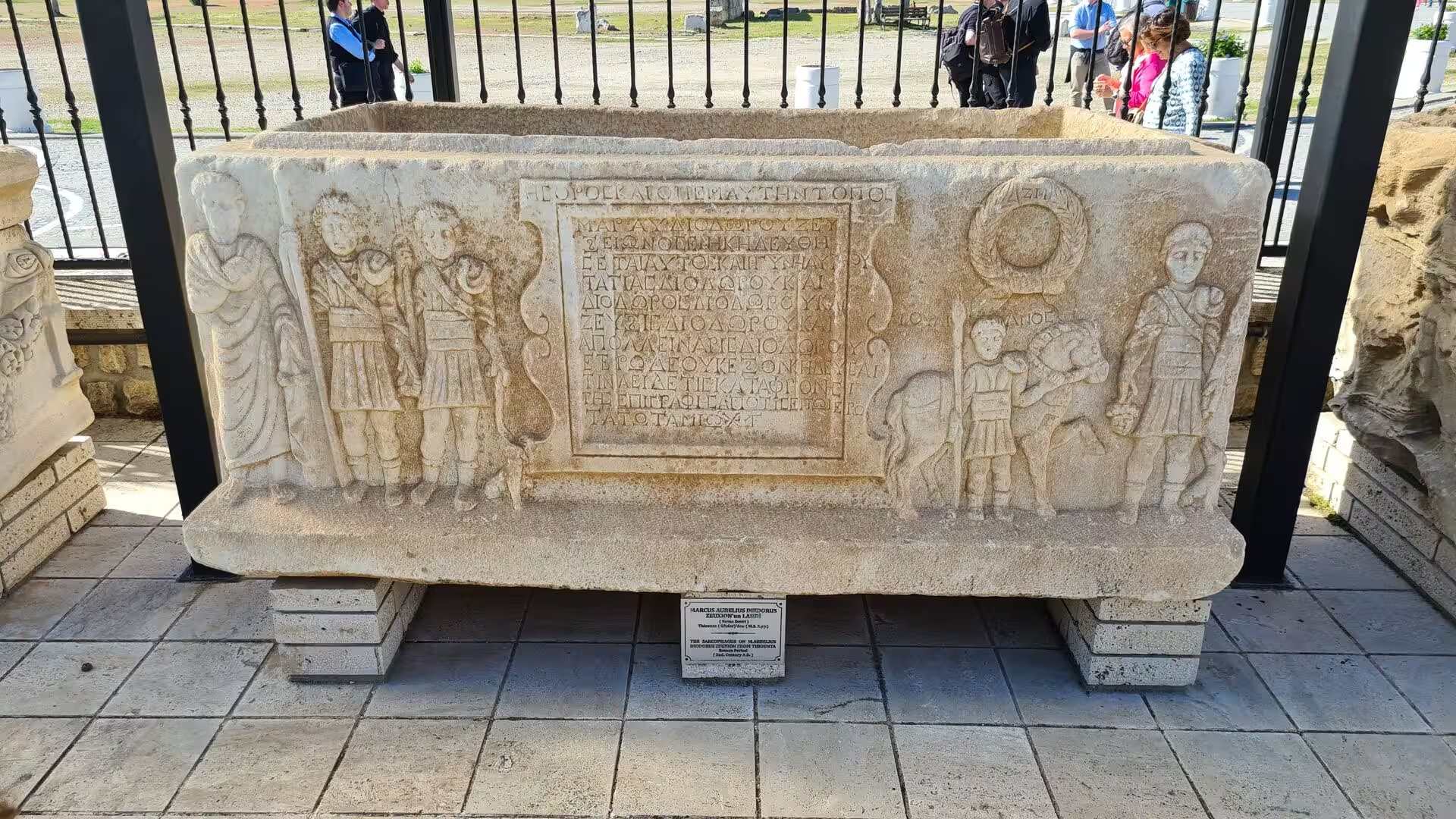
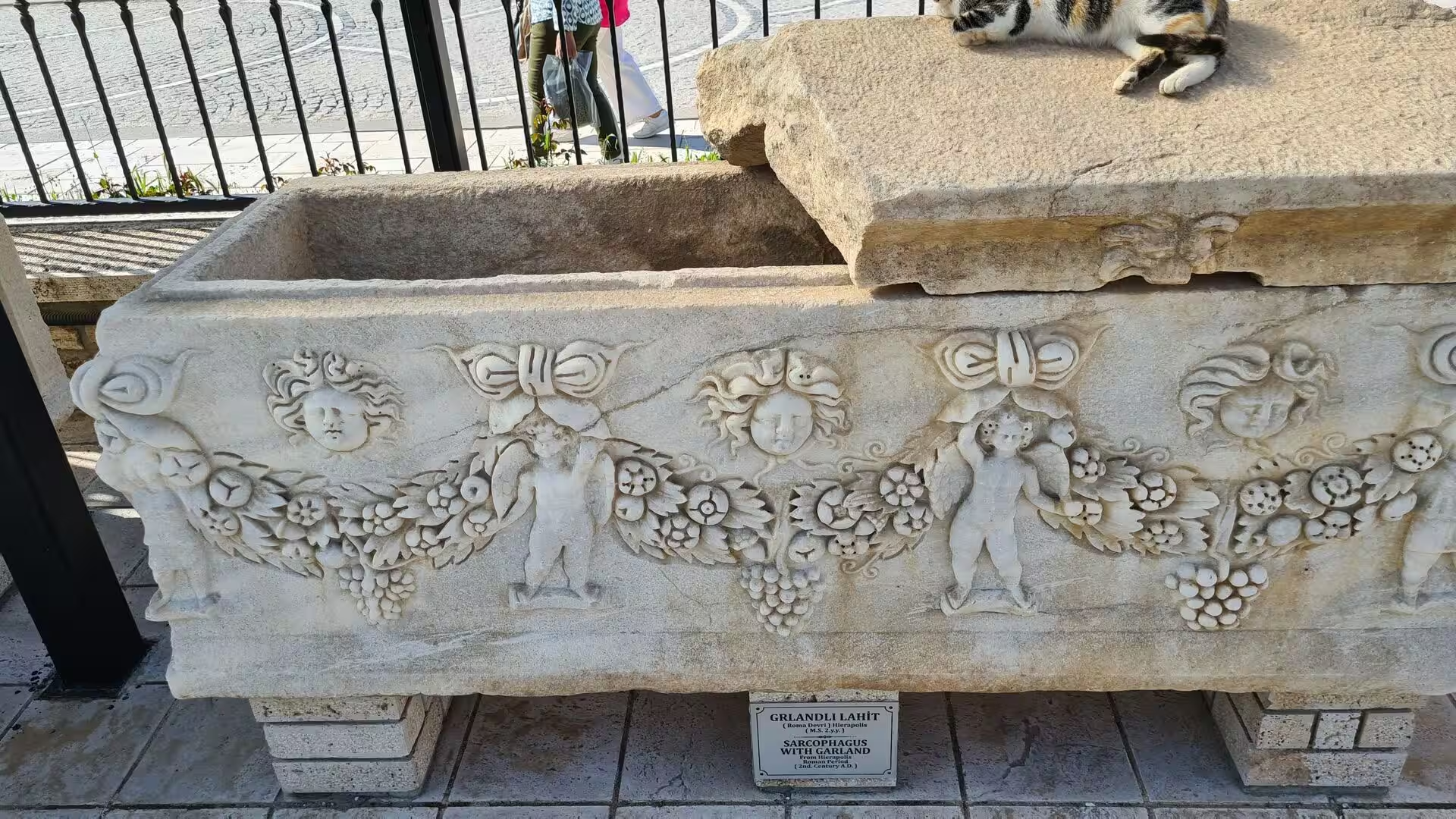
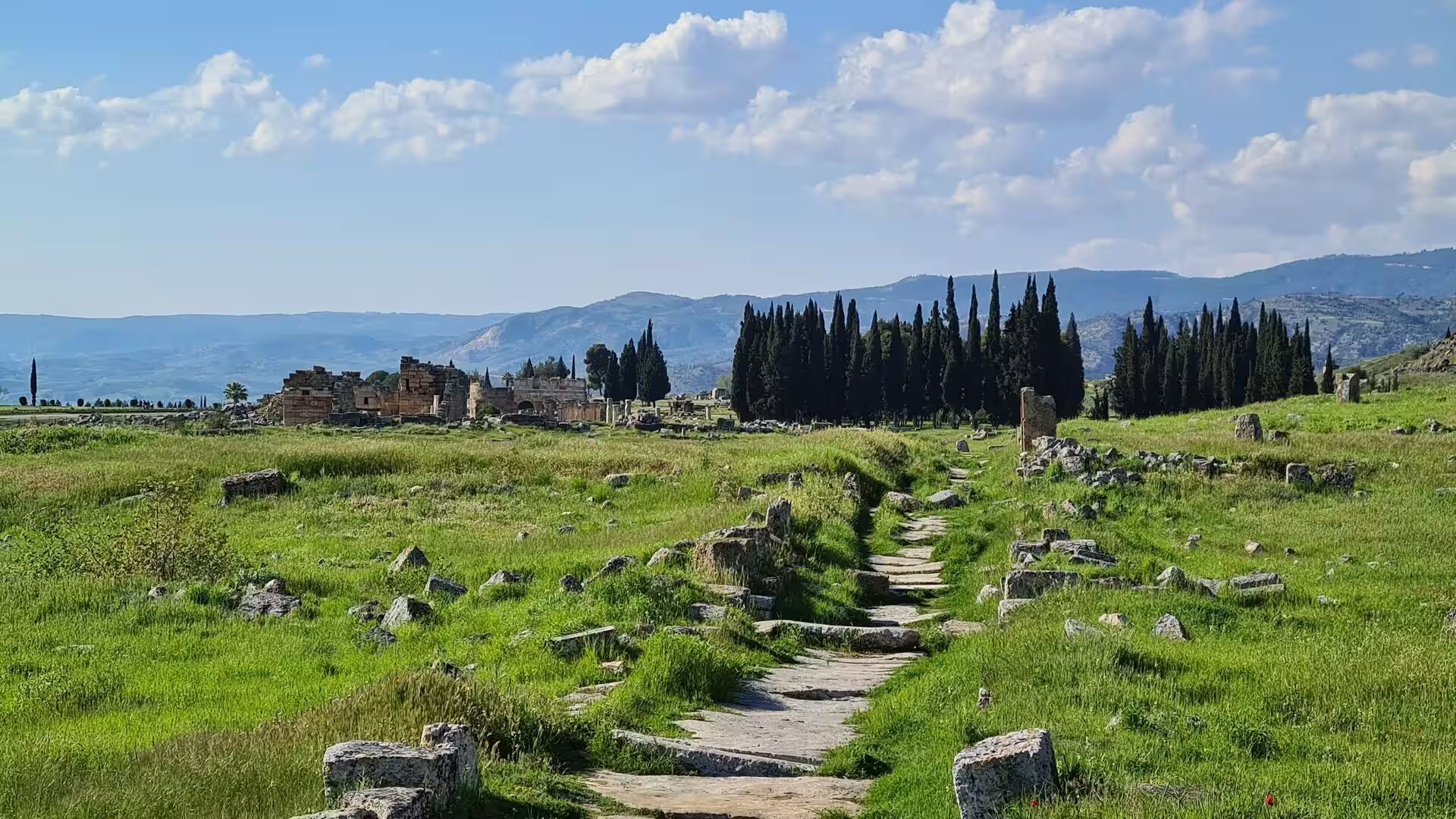
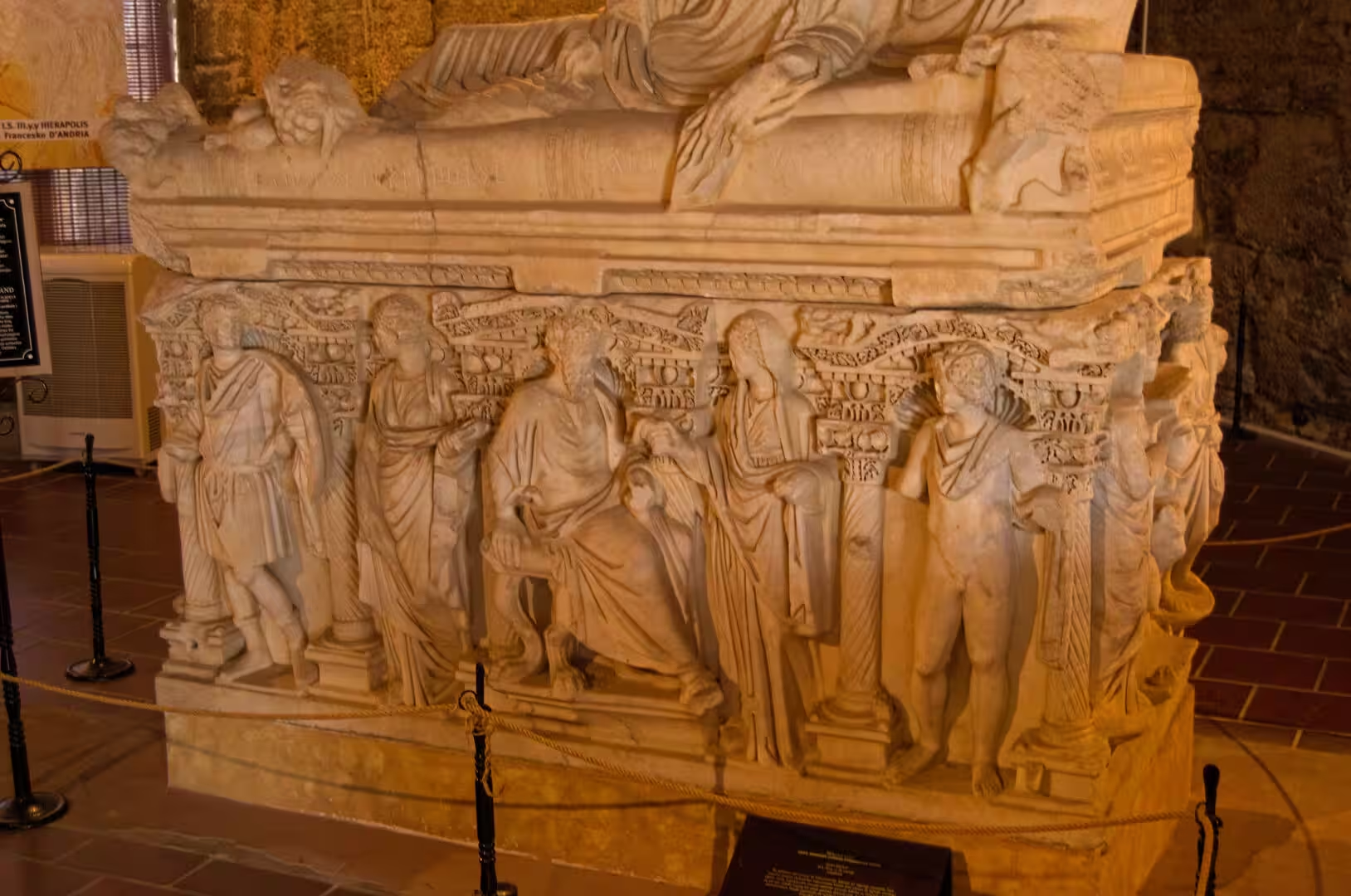
Necropolis of Hierapolis. The cemeteries flank the old roads north, east and south of the city, extend more than two kilometres, and form one of the largest and best-preserved burial grounds of the ancient world, with over 1,200 recorded tombs. Along the paths stand Hellenistic tumuli, house tombs shaped like small temples, and marble sarcophagi, many carved with garlands, wreaths and figured reliefs and inscribed in Greek with the names and professions of the dead. One celebrated relief, on the sarcophagus of Marcus Aurelius Ammianos, shows a water-powered stone sawmill with the earliest known crank and connecting rod mechanism; the fluted chests with gabled lids, a characteristic local type, include the early 2nd century sarcophagus of Neratia Maximilla with its Greek inscription.
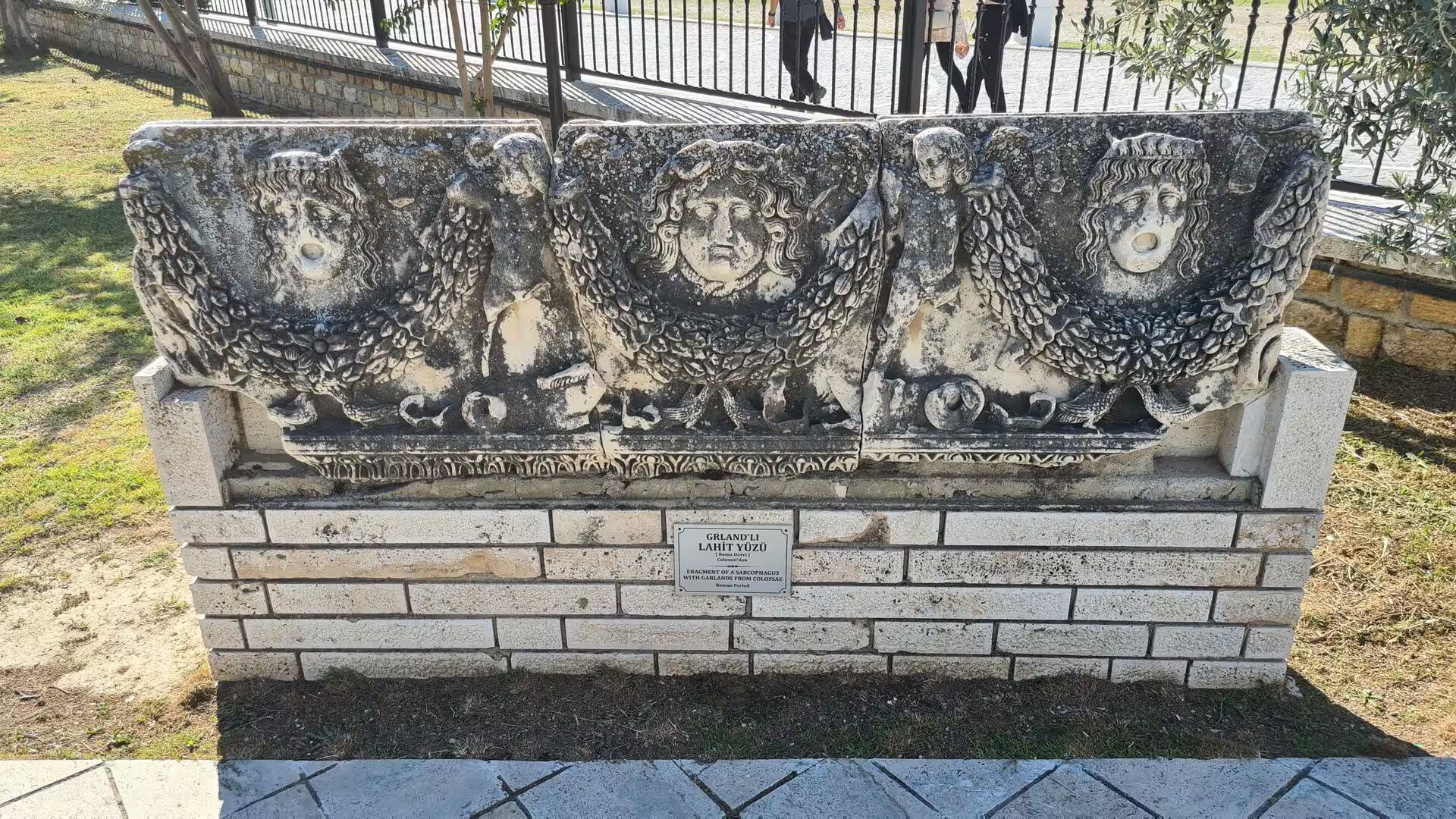
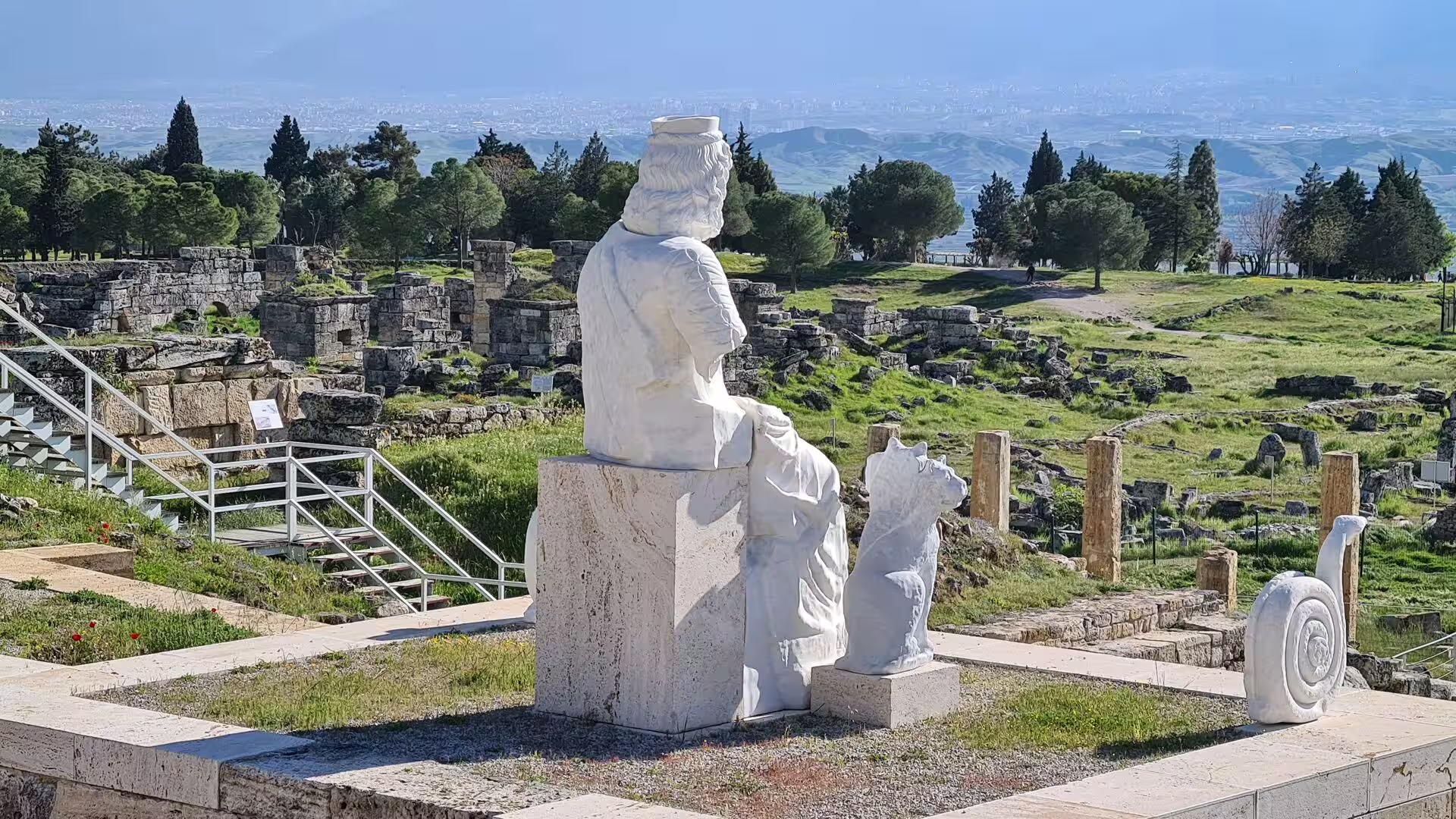
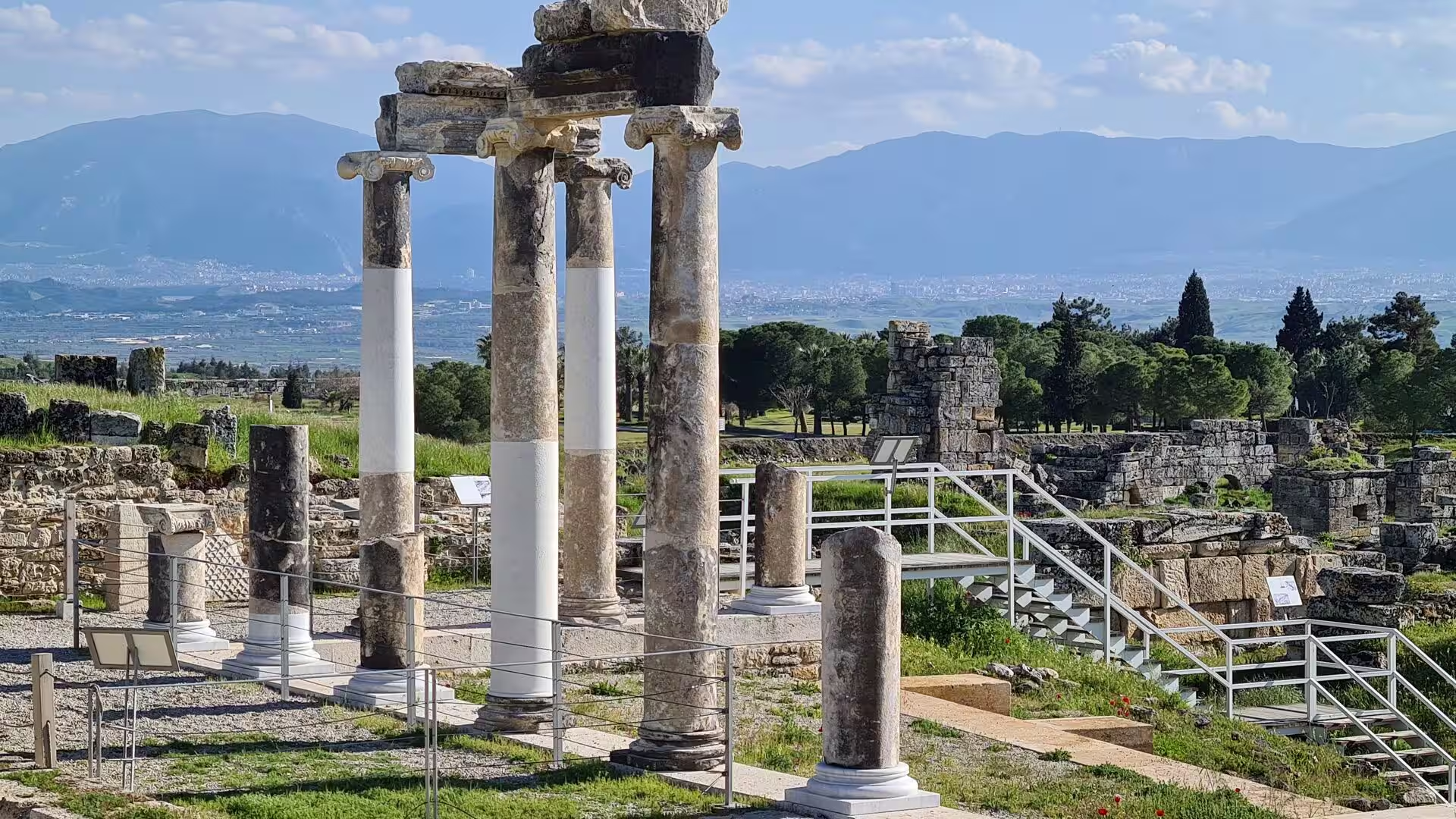
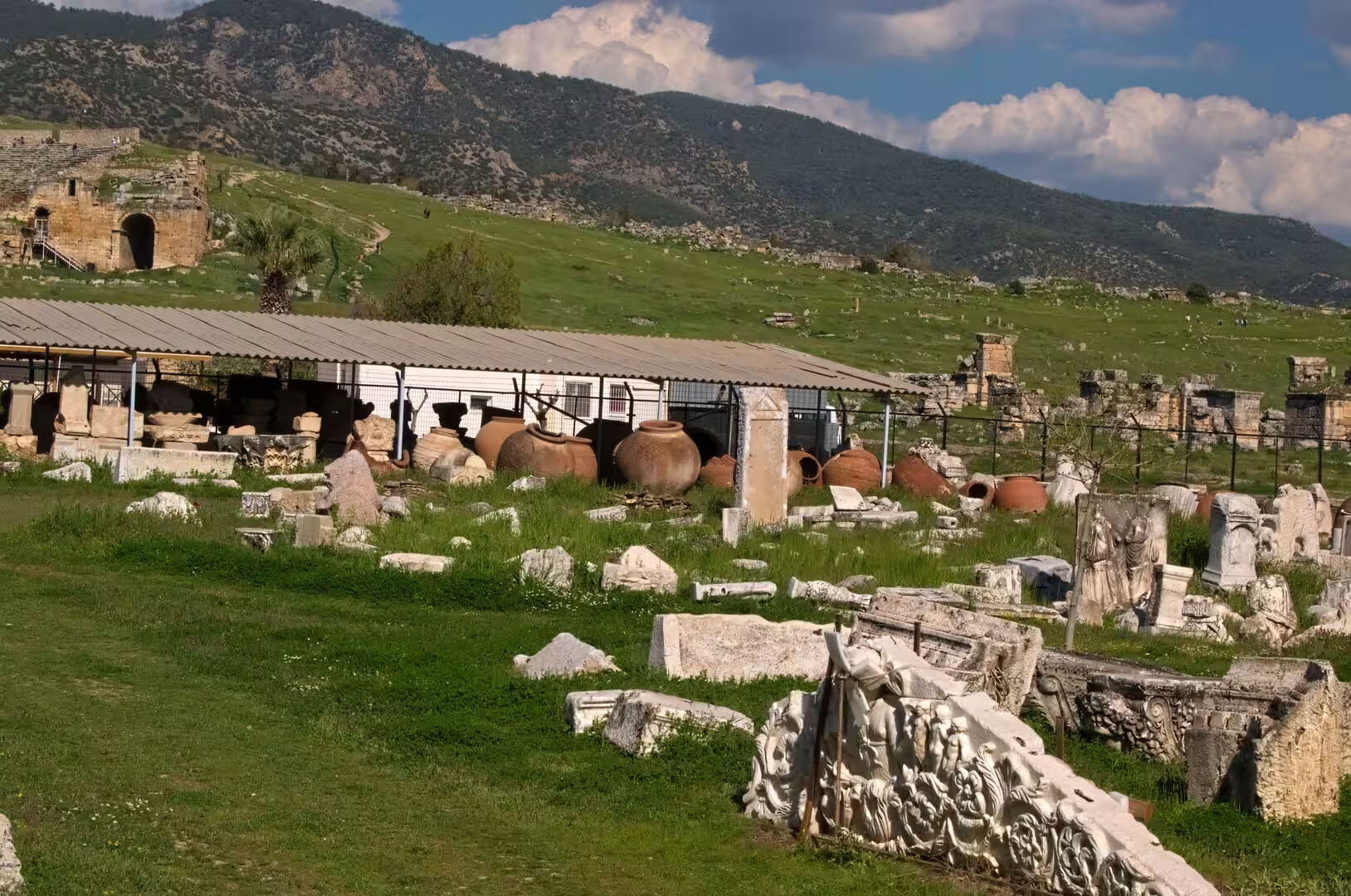
Frontinus Street and the gates. The colonnaded main street, some 14 metres wide, runs from the monumental Frontinus Gate, also called the Gate of Domitian: a triple arch with round towers raised in the late 1st century AD by the proconsul Julius Frontinus. Lined with colonnades, shops and honorific statues, the avenue passed a large U-shaped nymphaeum, a fountain house of the 2nd century AD, and reached the agora, a broad open ground scattered with column shafts. Carved fragments, among them friezes of theatrical masks and draped statues, stand on rebuilt plinths beside the walkways.
Temple of Apollo and the Plutonium. Beside the agora lie the remains of the sanctuary of Apollo Lairbenos, the principal god of Hierapolis, whose temple was built over a seismic fault from which noxious vapours rose. Next to it the Plutonium, the gate of Pluto, was a cave opening from which carbon dioxide streamed; its deadly air was read as proof of the underworld, and Strabo describes bulls dying instantly inside it while the eunuch priests of the Mother Goddess passed unharmed. Rediscovered in the 1960s and reopened in 2013, it is now covered over its still dangerous opening.
Martyrium of St Philip. On the hill above the city stand the remains of the martyrium raised in the 5th century over the traditional burial place of the apostle Philip, martyred at Hierapolis about AD 80. The building is octagonal in plan, with radiating chapels and halls grouped around the central chamber where the tomb was believed to lie; recent excavations have brought to light beneath the church a monumental tomb that the excavators identify as the apostle’s, along with a baptistery and the other buildings of the pilgrimage quarter.
Hierapolis Archaeology Museum. The museum occupies the great Roman bath building, begun under Hadrian and completed under Septimius Severus, used for displays in its vaulted halls since 1984. The collections unite the sculpture, sarcophagi, inscriptions and small finds of Hierapolis with material from the other cities of the Lycus valley: reliefs from the theatre, gladiator and bull-leaping scenes, statues of gods, priestesses and officials, and the fluted sarcophagus of Neratia Maximilla. One hall is devoted to the prehistoric finds from the mound of Beycesultan, and a backlit panel reconstructs the ancient city at its height.
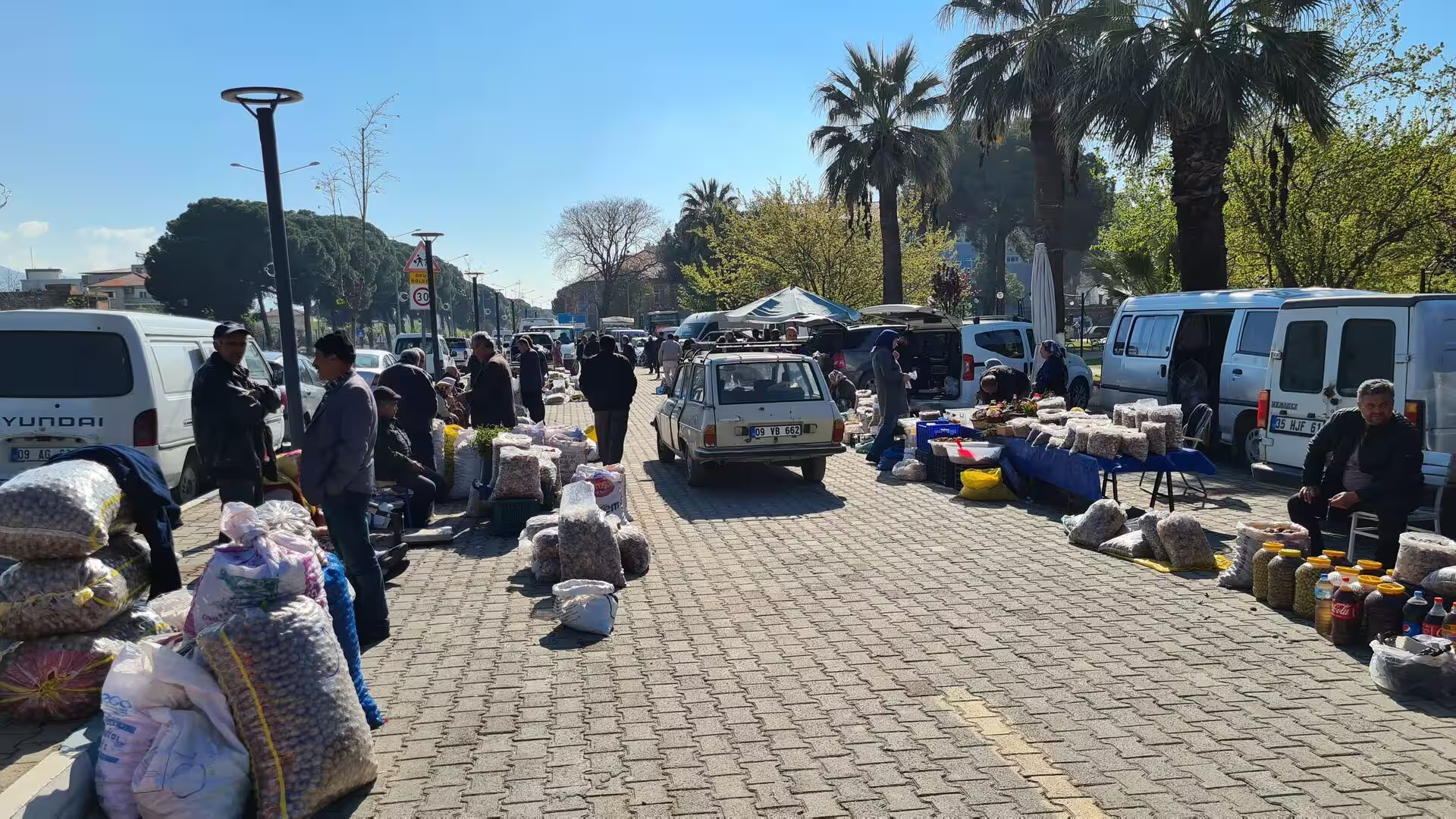
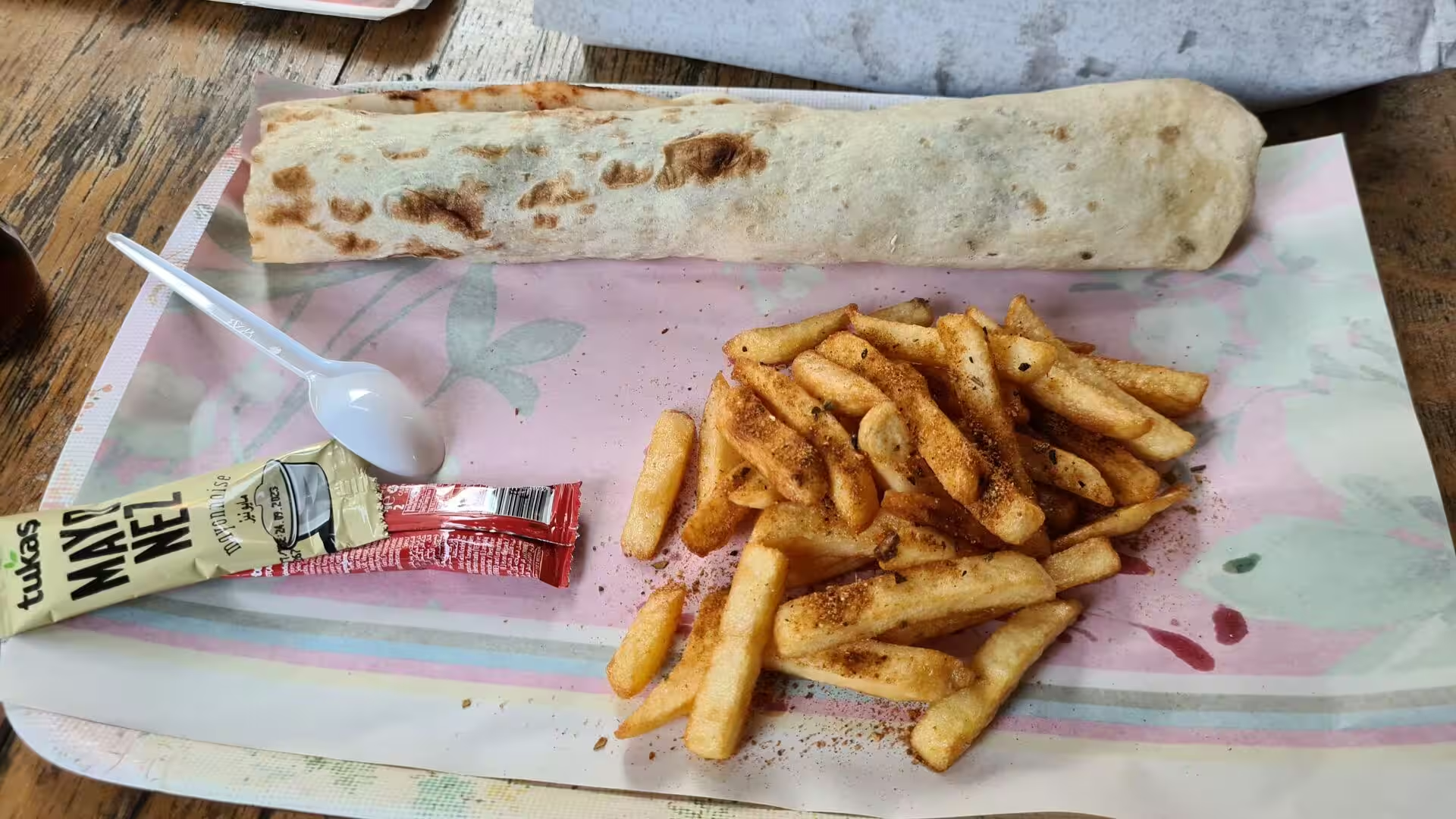
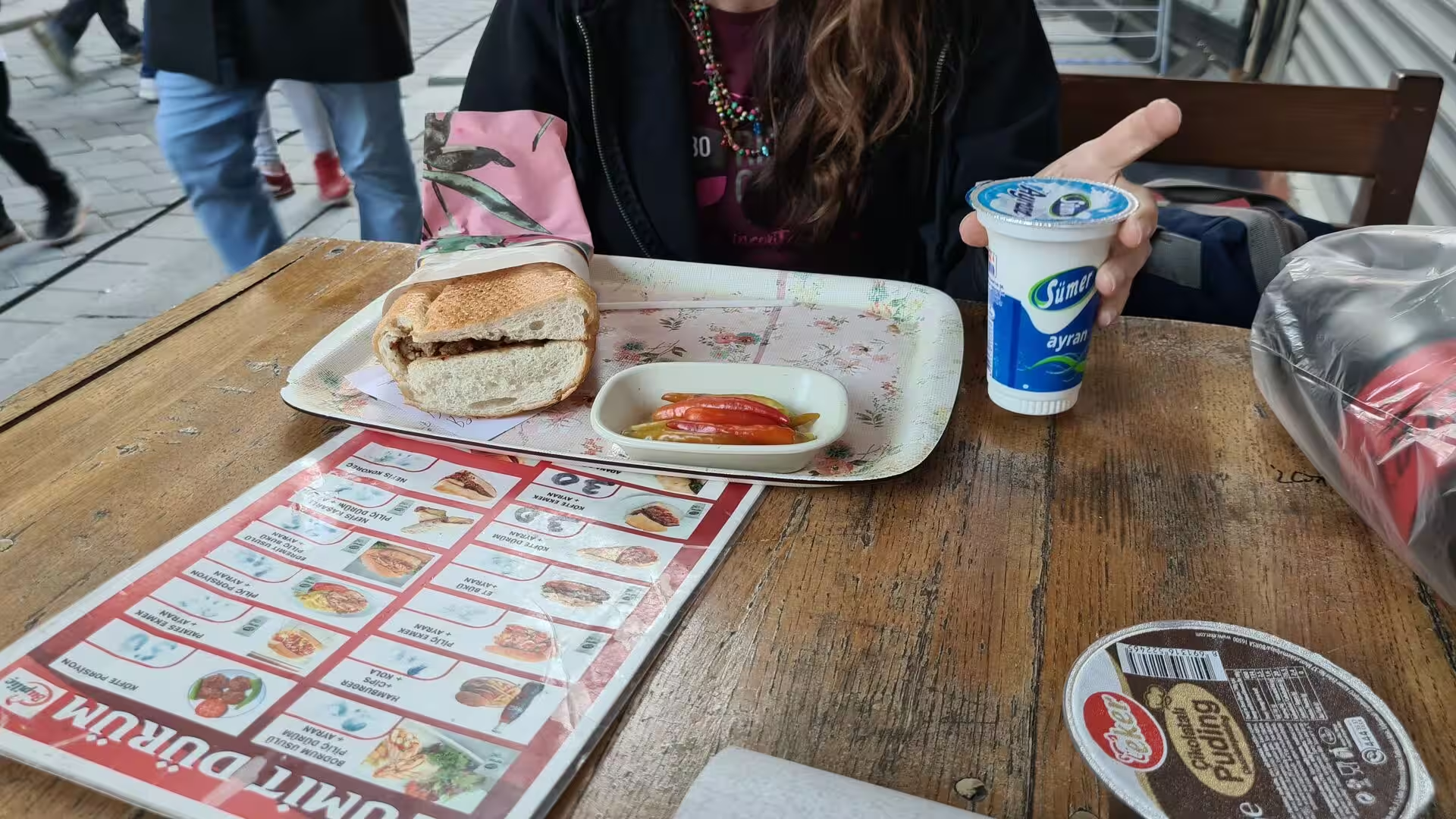
Denizli. The provincial capital at the foot of the plain, some 20 kilometres from the ruins, is a bustling commercial city whose centre mixes modern shops with a traditional bazaar life of market stalls, lokantas and tea gardens. Its food culture is that of western Anatolian street eating: dürüm, the flatbread wrap filled with grilled meat, arrives with chips and a bottle of ayran, the salted yogurt drink, at simple outdoor cafes. The city is also the centre of a textile industry rooted in the ancient wool trade of the Lycus valley and of the modern trade in Denizli travertine.
References
- Anguissola, Anna (2023). “Seriality and Individualization: Carving the Fluted Sarcophagi from Hierapolis of Phrygia.” Open Archaeology 9 (1). doi: 10.1515/opar-2022-0337.
- D’Andria, Francesco (2010). Hierapolis of Phrygia (Pamukkale): An Archaeological Guide. Istanbul: Ege Yayınları.
- Kele, Sándor, Özkul, Mehmet, Fórizs, István, Gökgöz, Ali, Baykara, Mehmet Oruç, Alçiçek, Mehmet Cihat and Németh, Tibor (2011). “Stable isotope geochemical study of Pamukkale travertines: New evidences of low-temperature non-equilibrium calcite-water fractionation.” Sedimentary Geology 238: 191-212.
- Strabo (1929). The Geography of Strabo, Books 13-14, translated by Horace Leonard Jones. London: William Heinemann; Cambridge, MA: Harvard University Press.
- Hierapolis-Pamukkale. UNESCO World Heritage Centre. whc.unesco.org/en/list/485/
- Denizli Hierapolis (Pamukkale) Archaeology Museum. Ministry of Culture and Tourism, Türkiye. muze.gov.tr/Language/Index/EN?url=/muze-detay?SectionId=DHA01&DistId=MRK
- Pamukkale. en.wikipedia.org/wiki/Pamukkale
- Pamukkale. tr.wikipedia.org/wiki/Pamukkale
- Hierapolis. en.wikipedia.org/wiki/Hierapolis
- Denizli. en.wikipedia.org/wiki/Denizli
- Büyük Menderes River. en.wikipedia.org/wiki/B%C3%BCy%C3%BCk_Menderes_River
- Hierapolis Archaeological Museum. en.wikipedia.org/wiki/Hierapolis_Archaeological_Museum
- Ploutonion at Hierapolis. en.wikipedia.org/wiki/Ploutonion_at_Hierapolis
- Philip the Apostle. en.wikipedia.org/wiki/Philip_the_Apostle
- Honaz Dağı. tr.wikipedia.org/wiki/Honaz_Da%C4%9F%C4%B1
- Pamukkale, flying over the UNESCO World Heritage Site. paragliding-turkey.com/en/pamukkale-flying-over-the-unesco-world-heritage-site/