2025 Amalfi 1 - Amalfi
Journal Notes
General
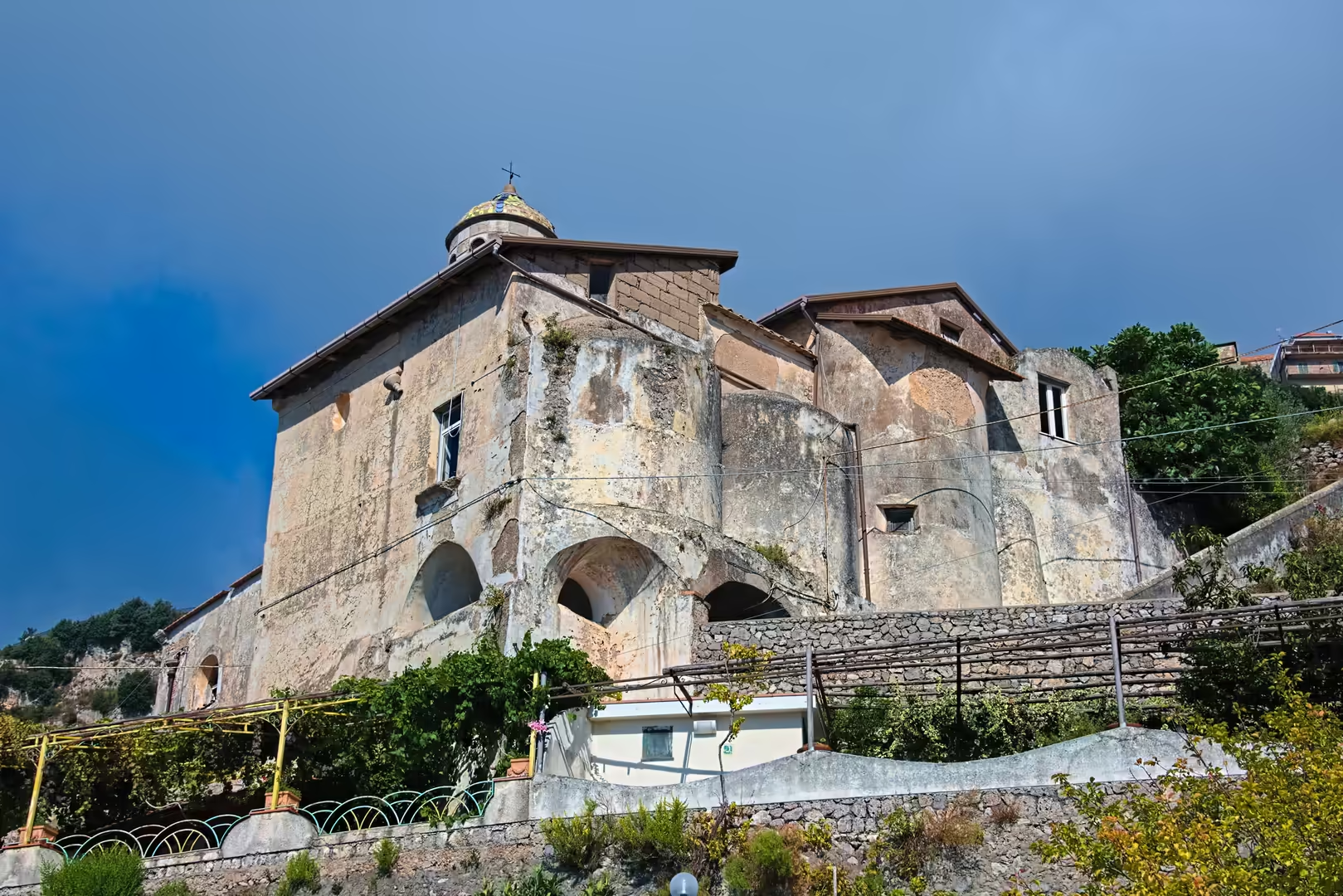
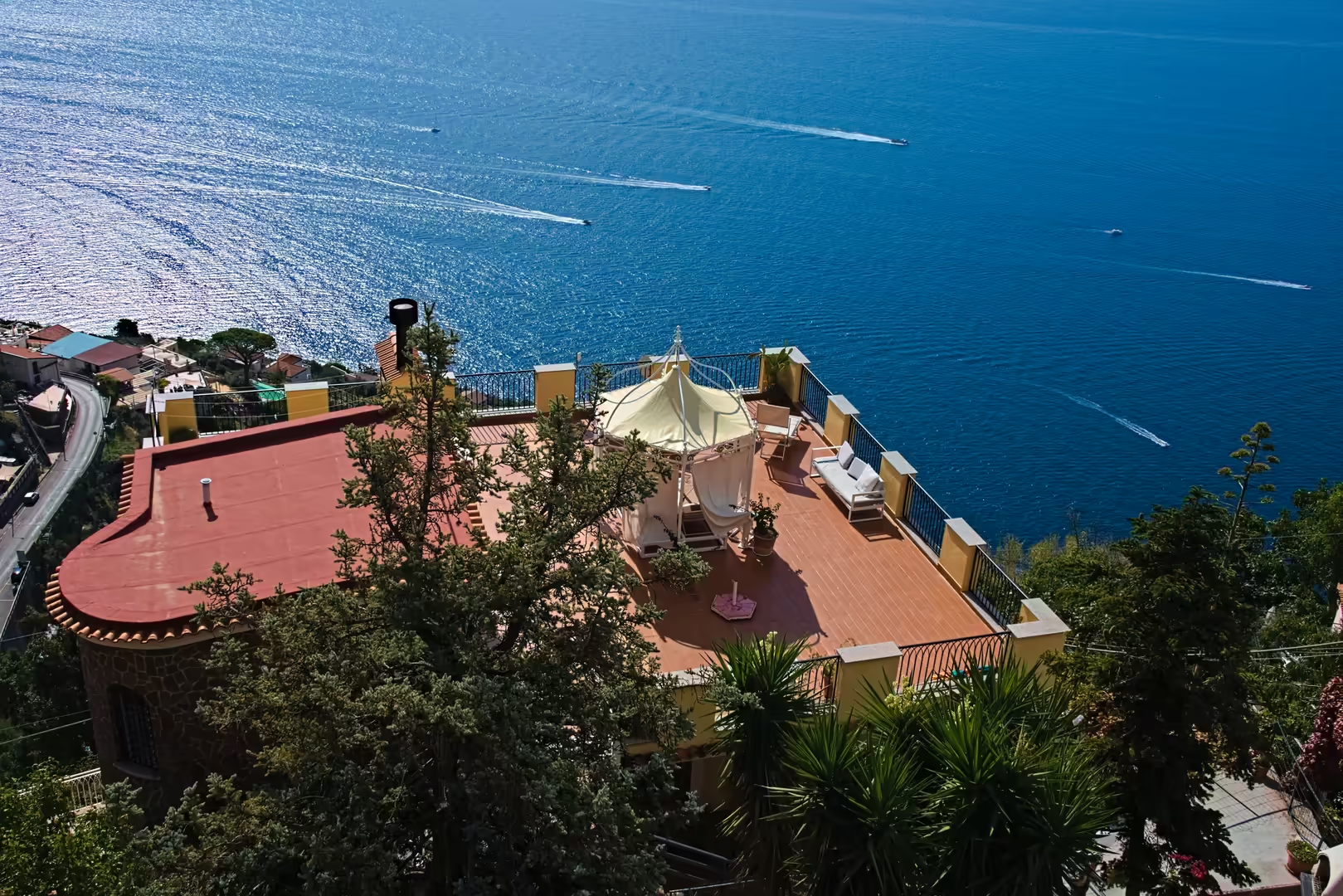
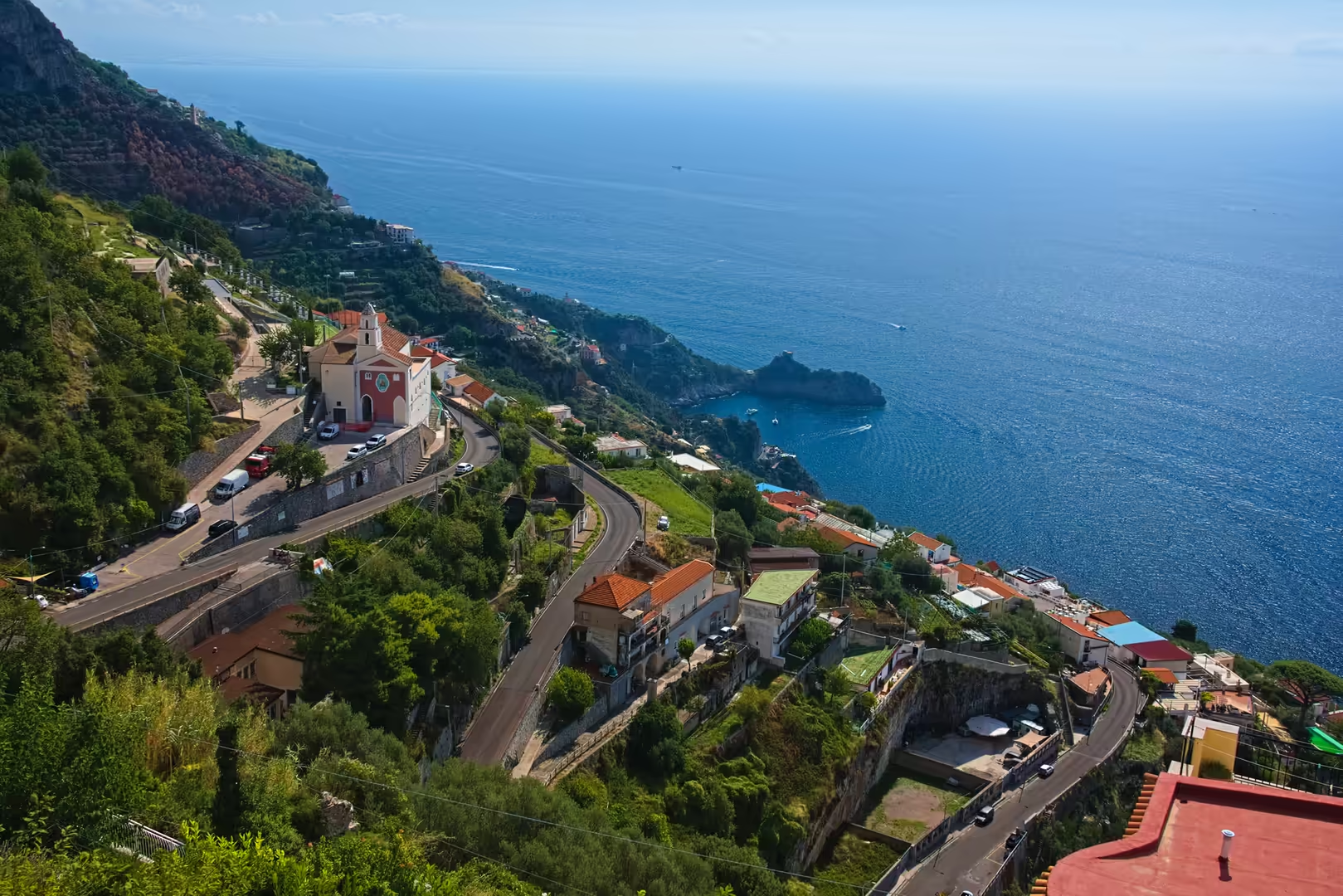
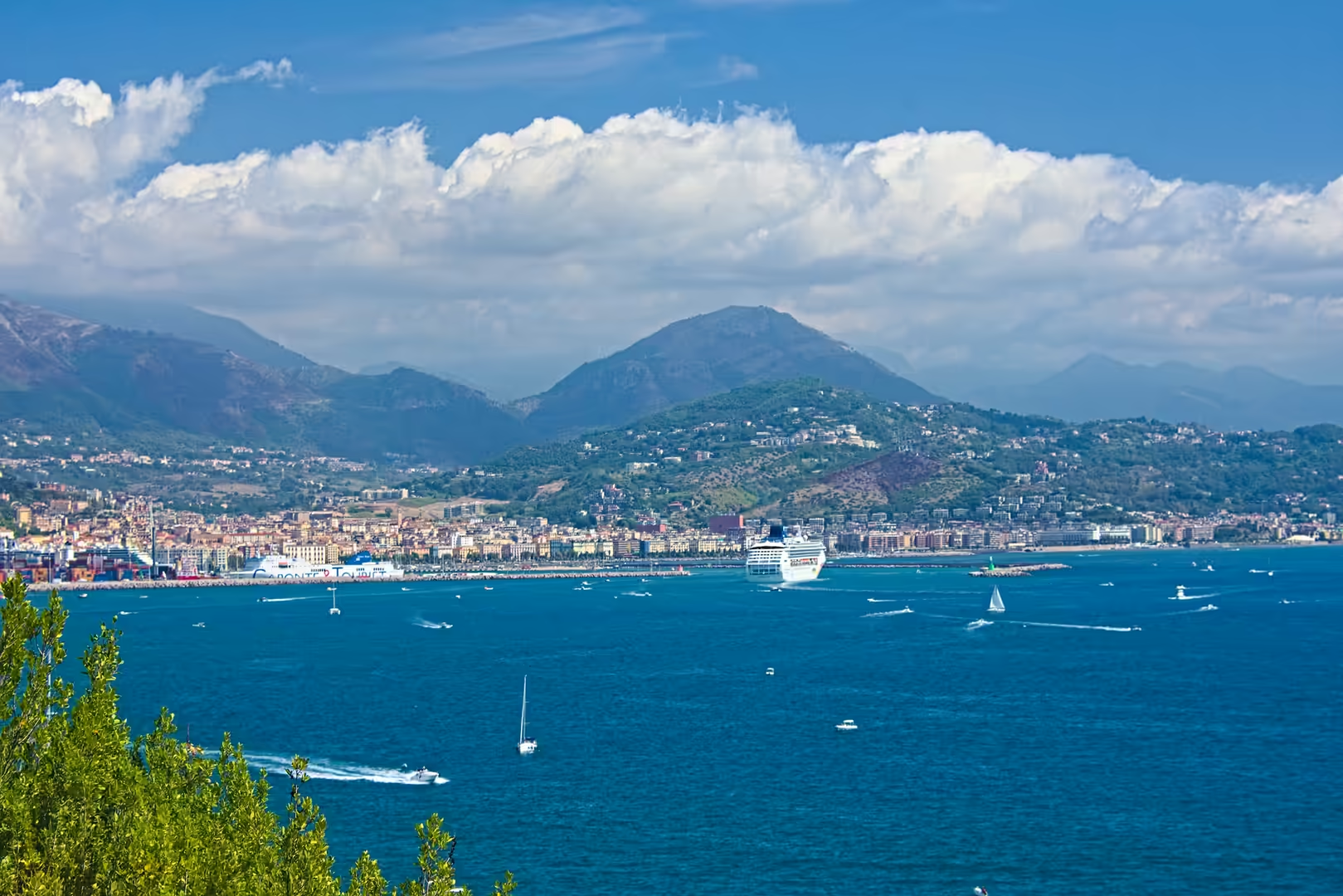
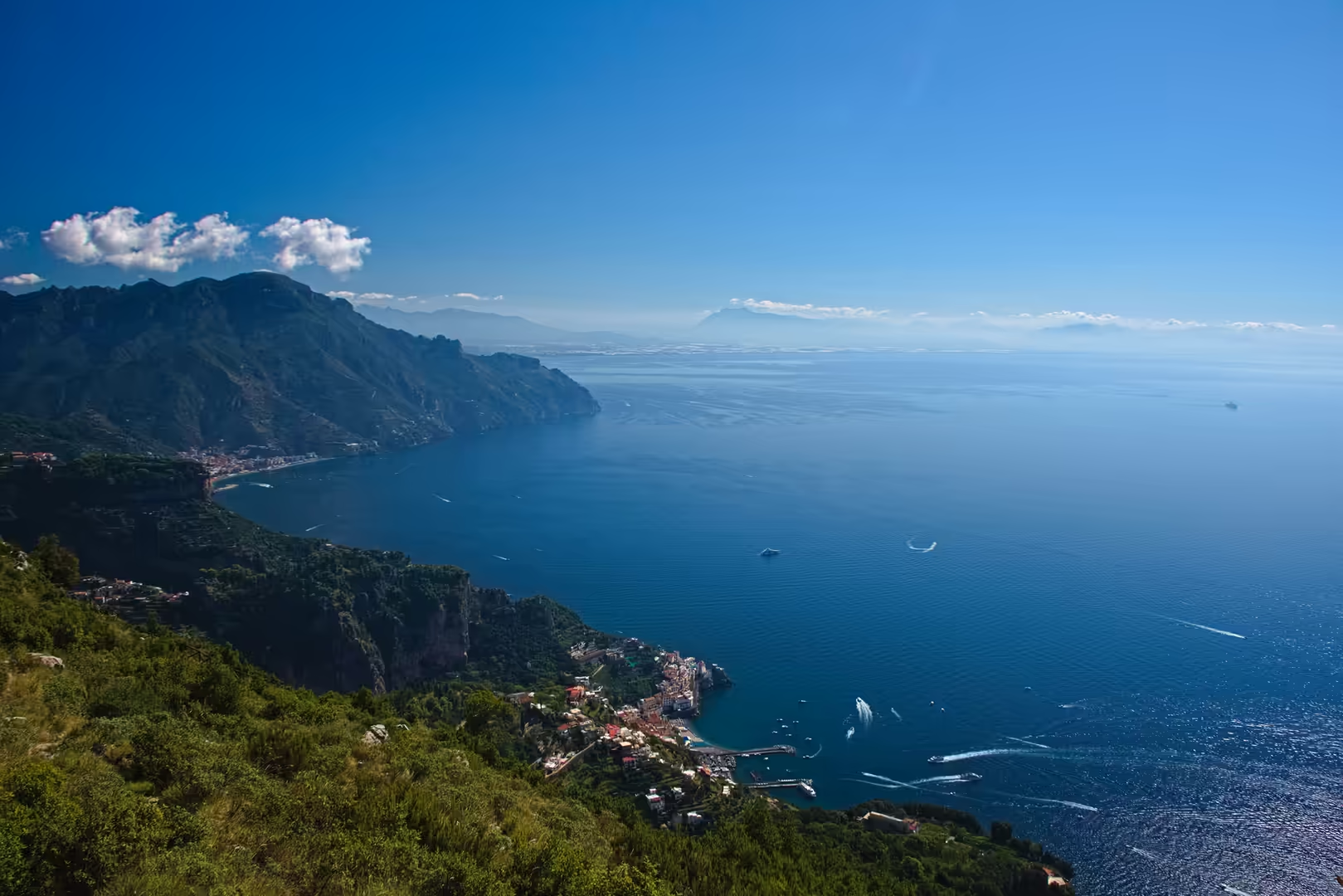
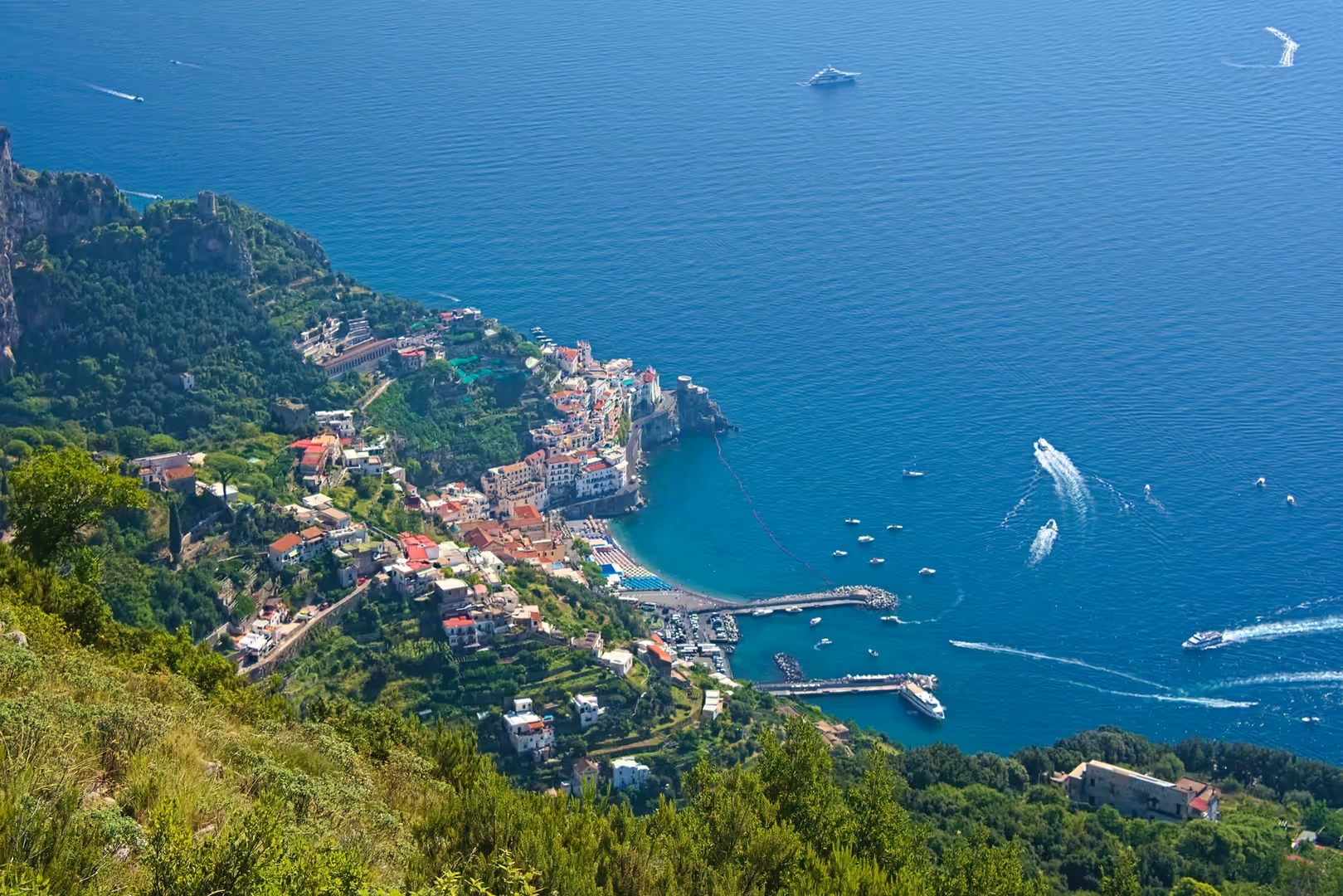
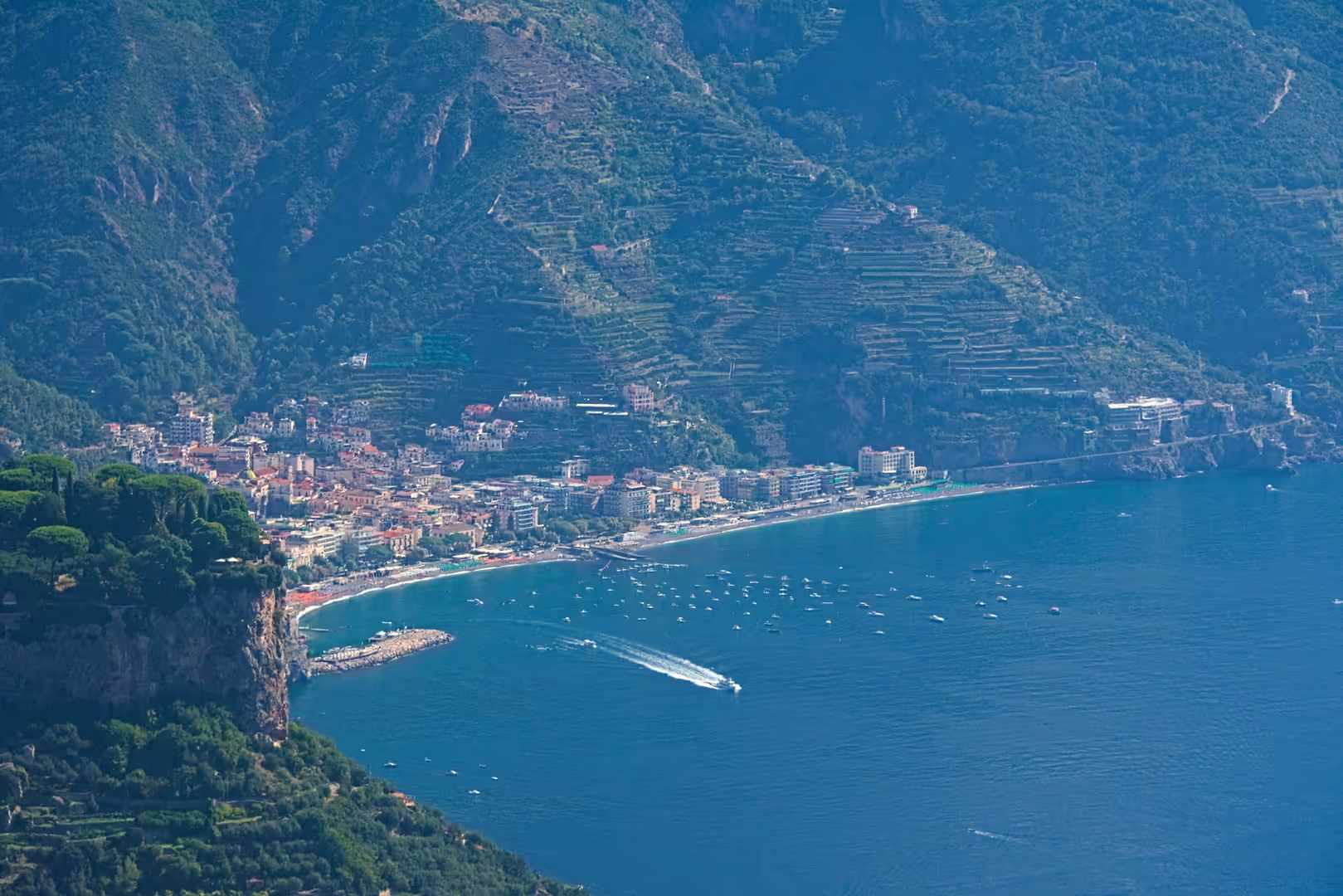
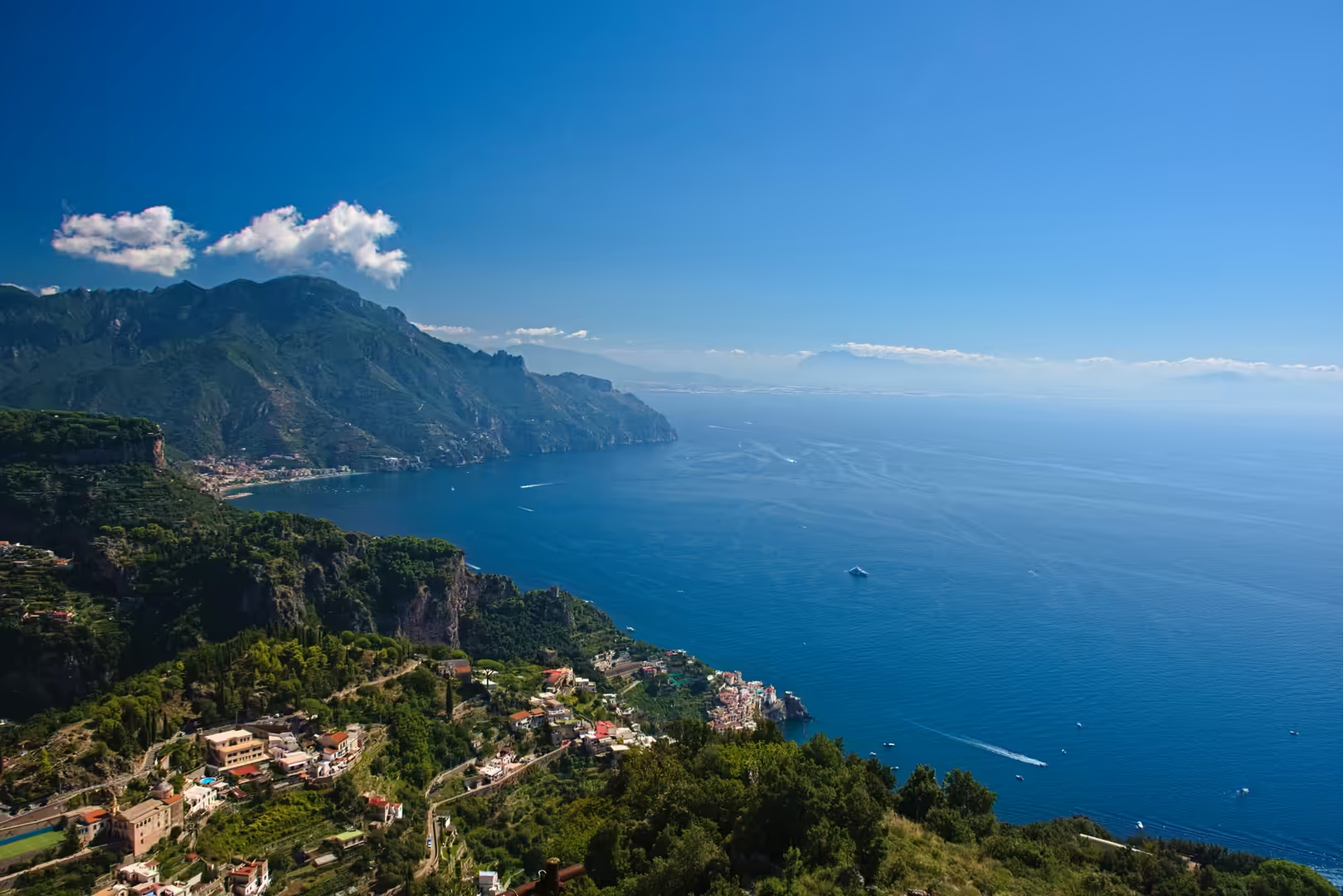
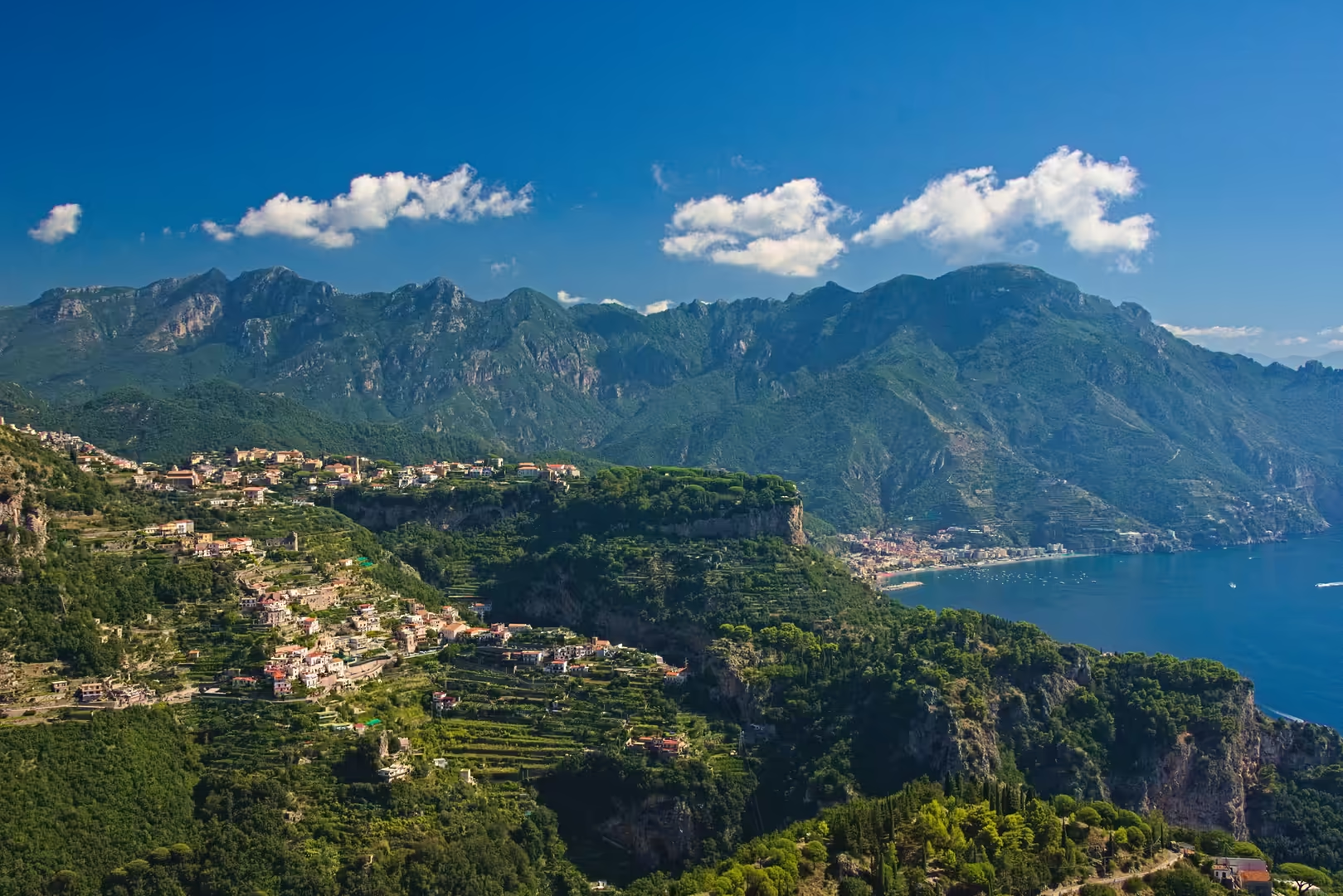
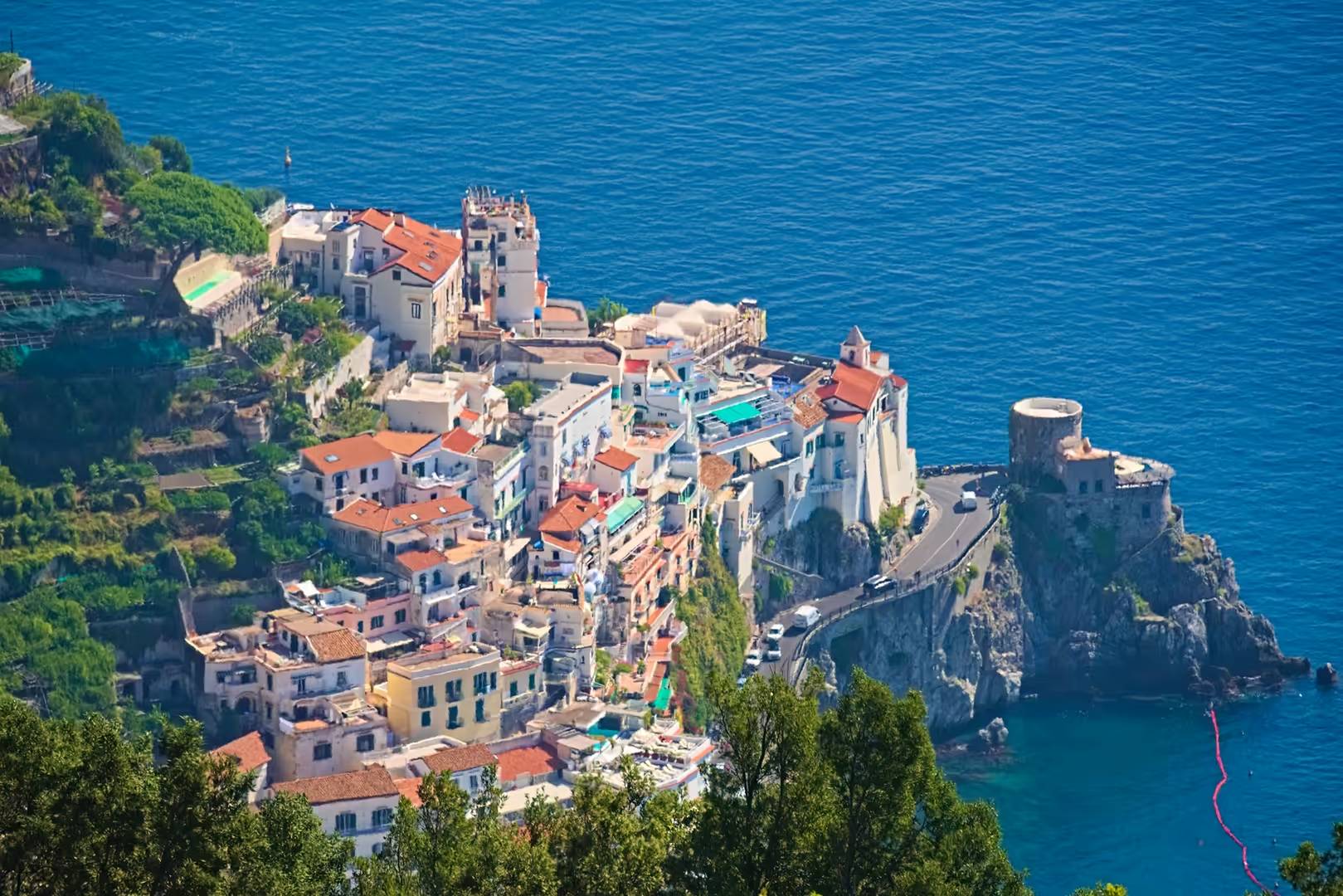
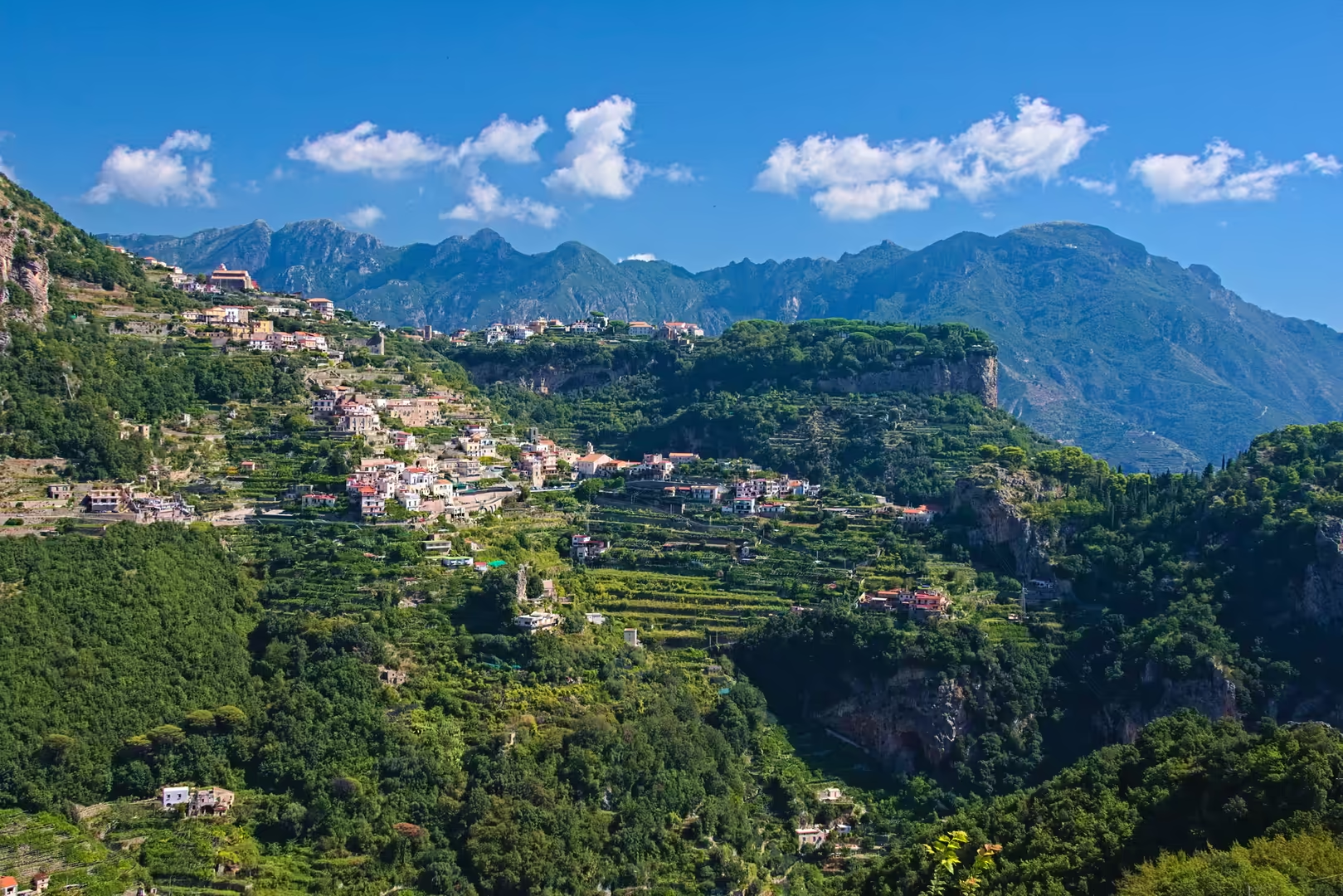
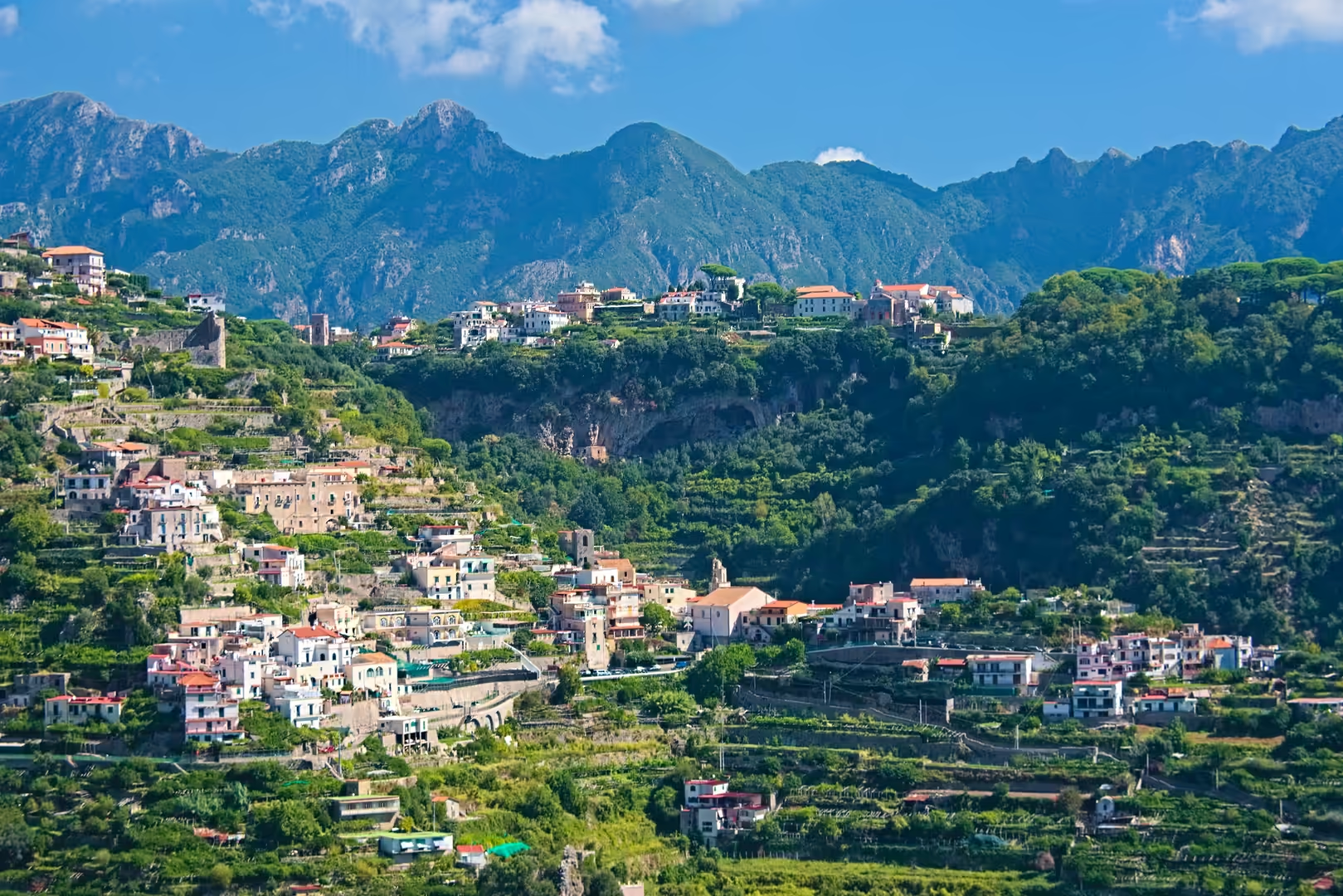
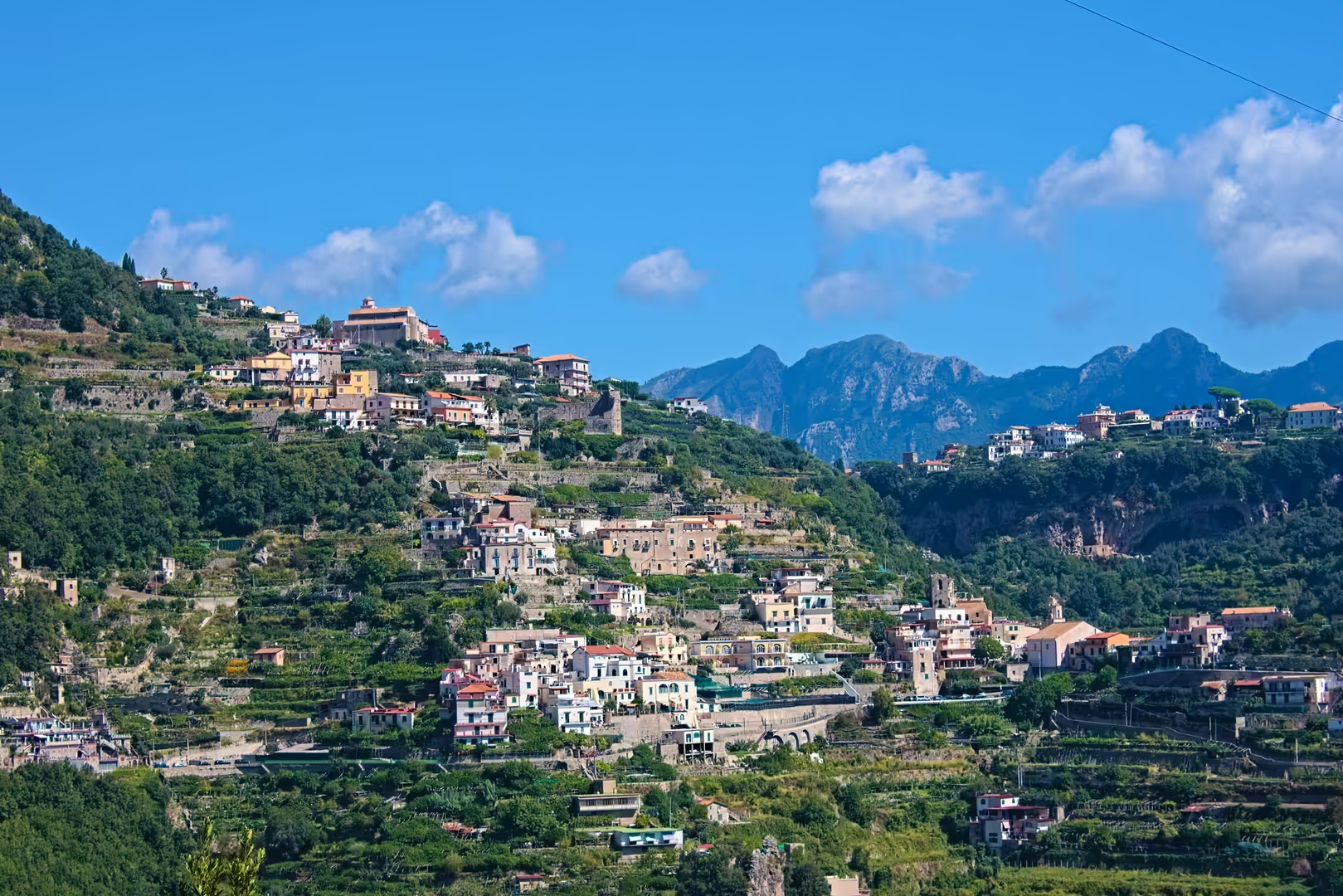
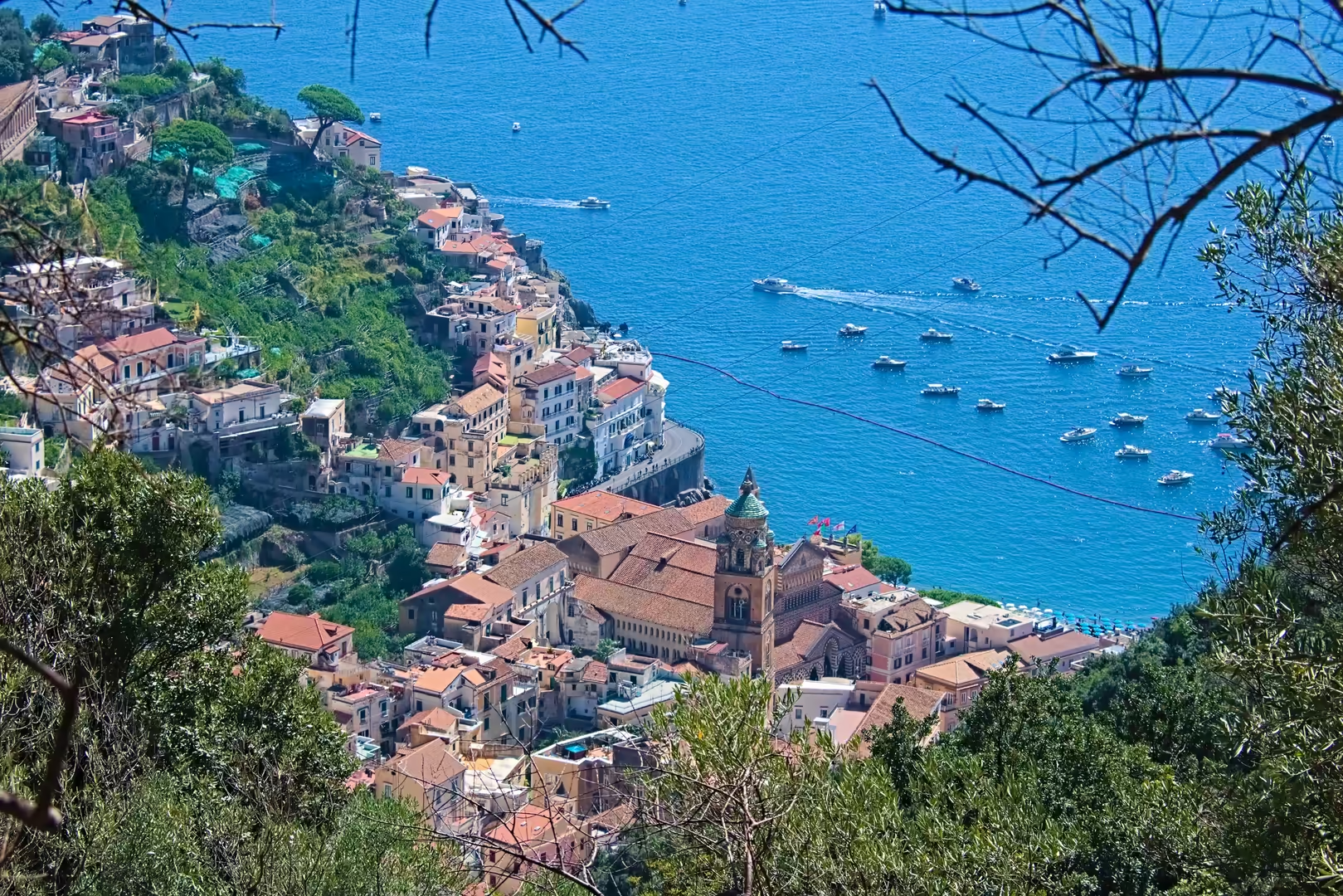
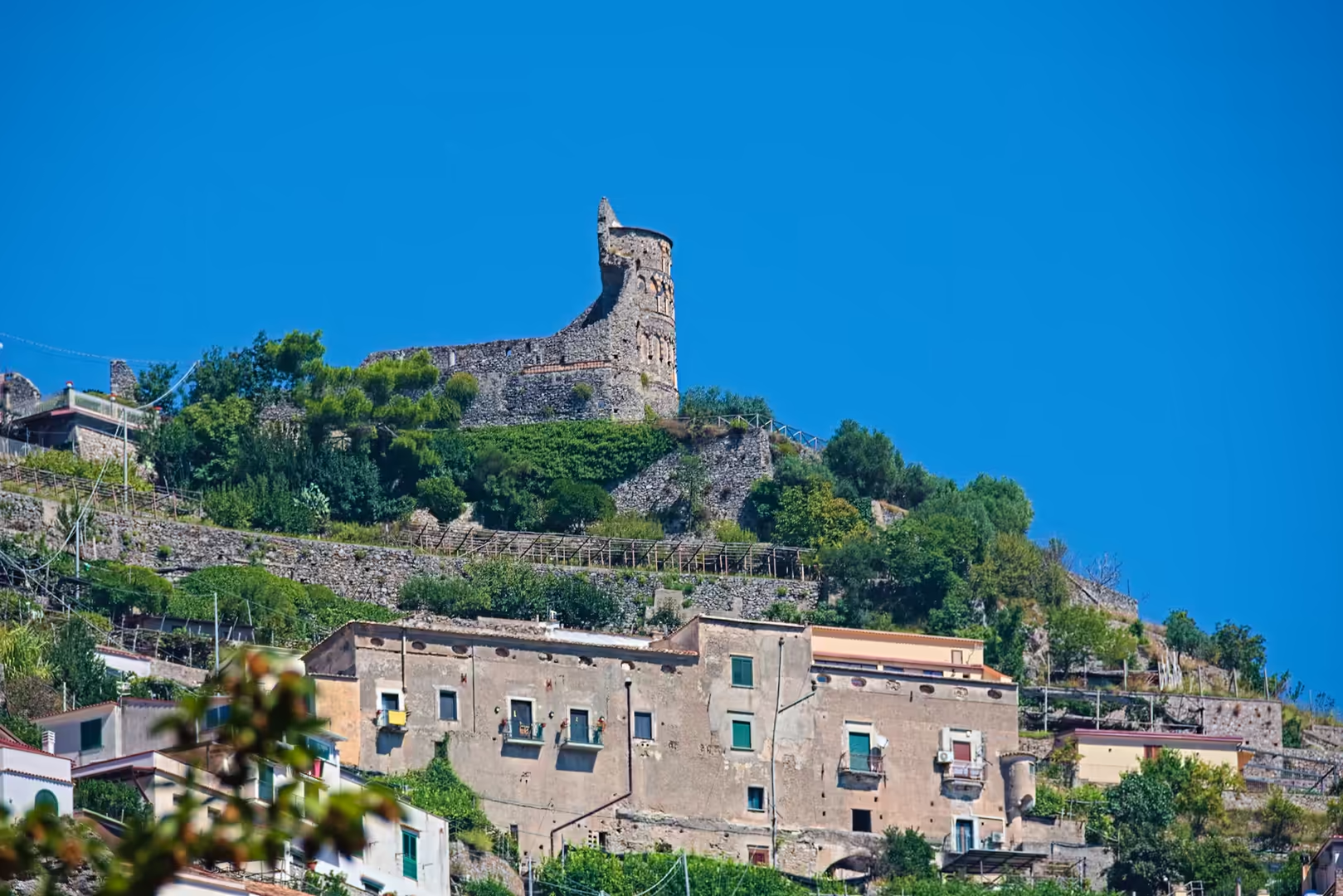
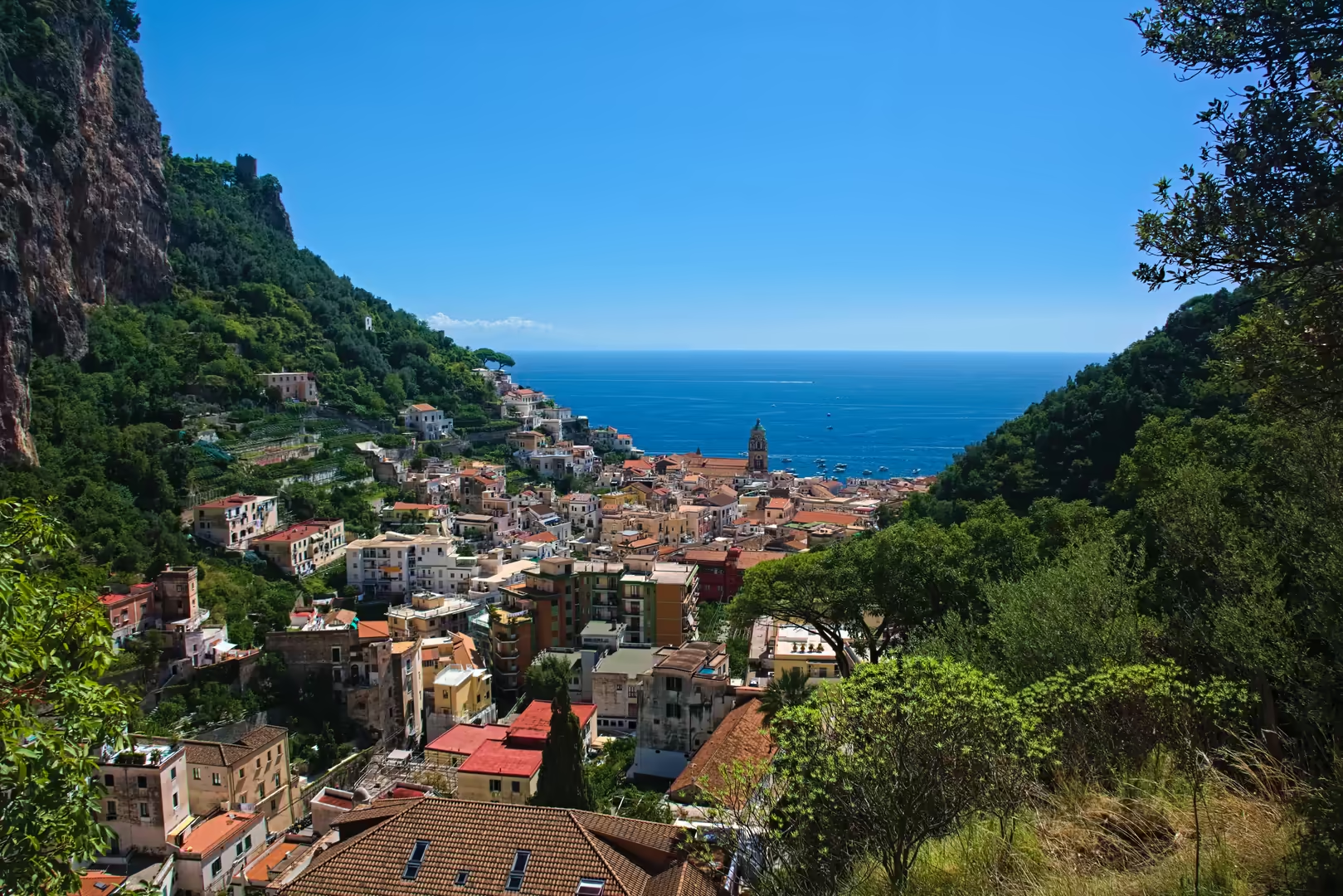
Amalfi is a town and comune in the province of Salerno, in the Campania region of southern Italy, on the Gulf of Salerno. The settlement occupies the terminal floor and the lower slopes of a steep ravine, the Valle dei Mulini, which opens onto the sea on the southern flank of the Monti Lattari; the carbonate summit of Monte Cerreto (1,315 m) rises directly behind the town. The comune covers 5.7 km² and has a resident population of roughly 4,600 (2025), confined to a narrow strip between the harbour and the first mountain slopes. The medieval centre of Atrani adjoins the town on its eastern side, while the comuni of Scala and Ravello occupy the valley head above Amalfi, the whole group forming the demographic core of the central Costiera Amalfitana.
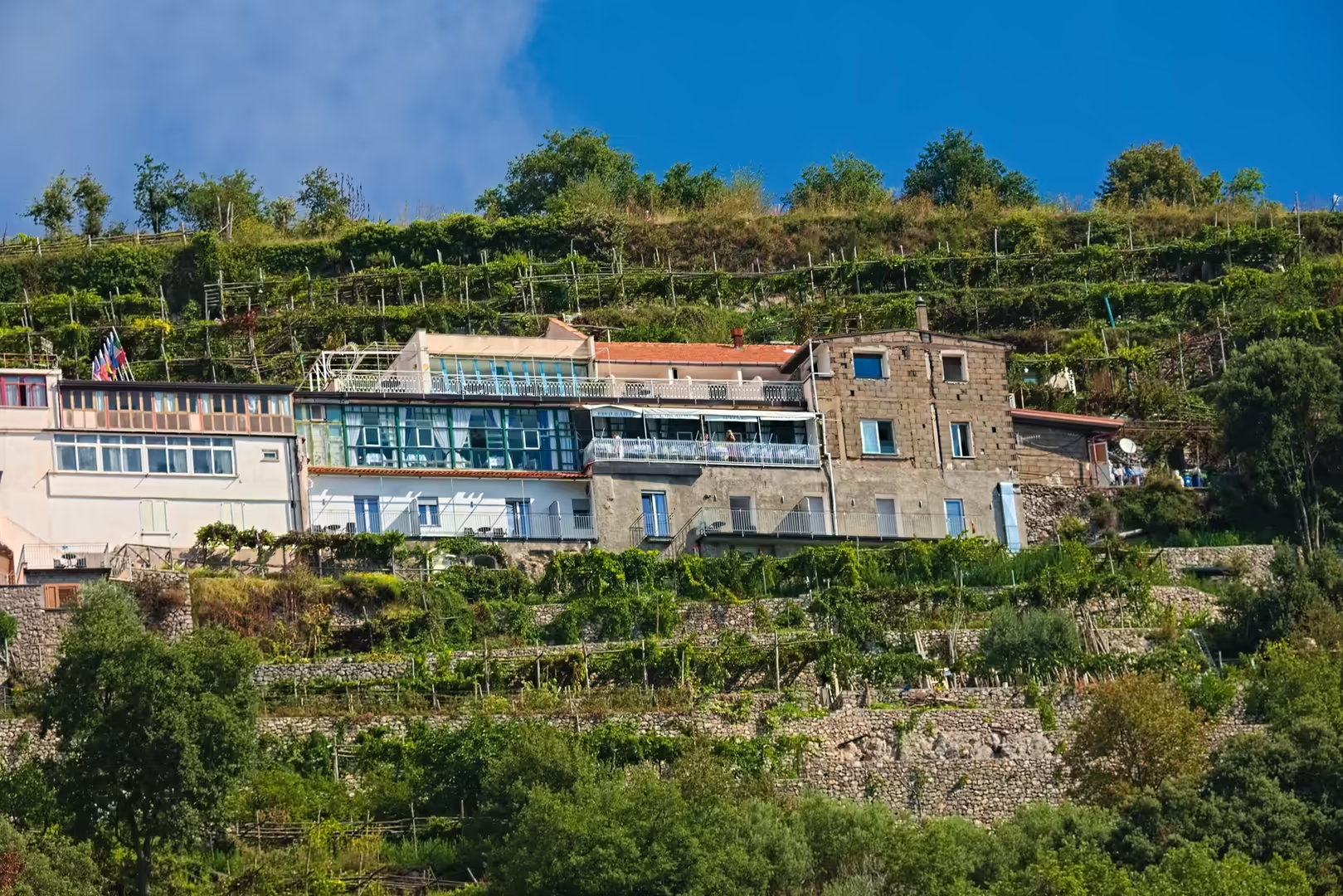
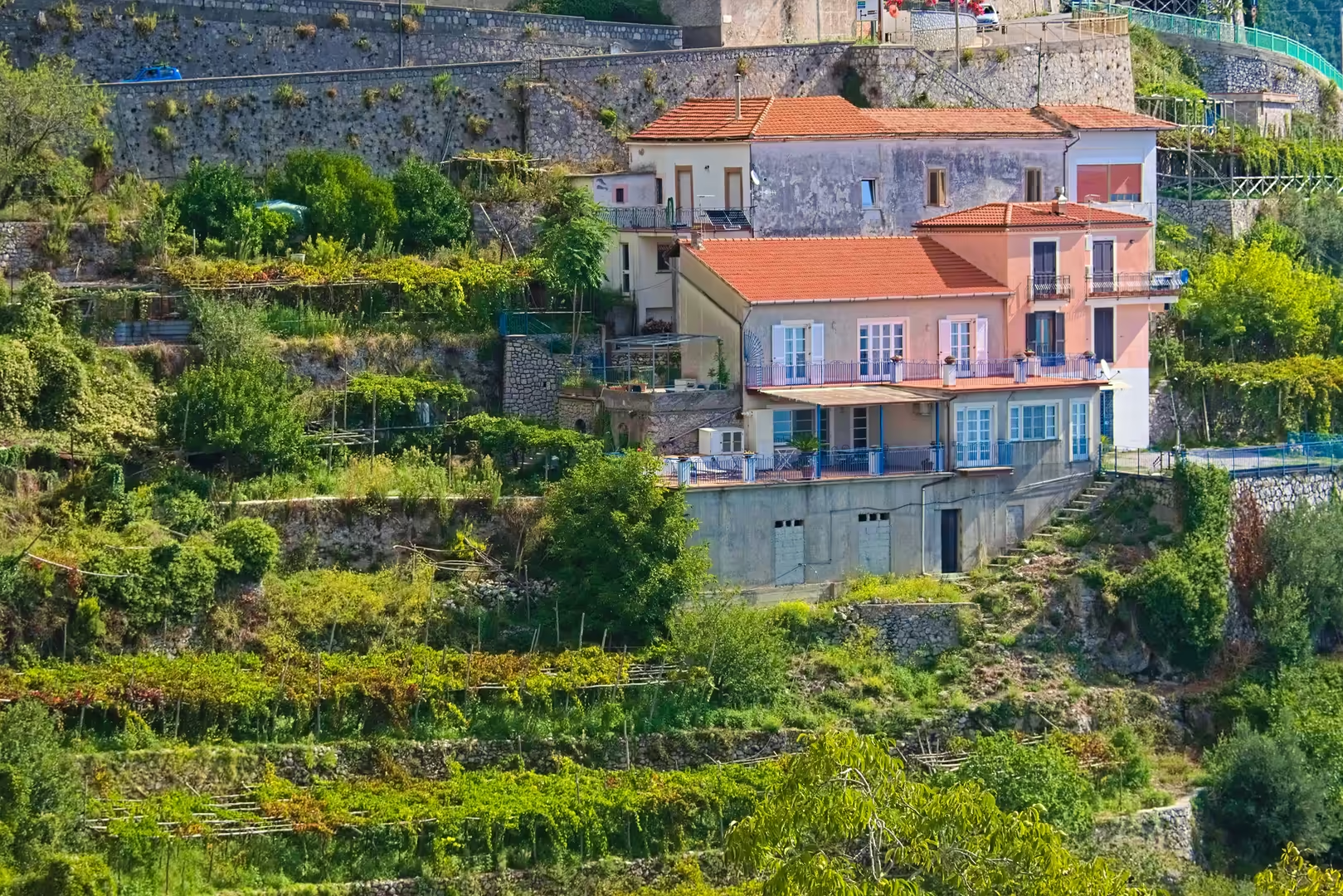
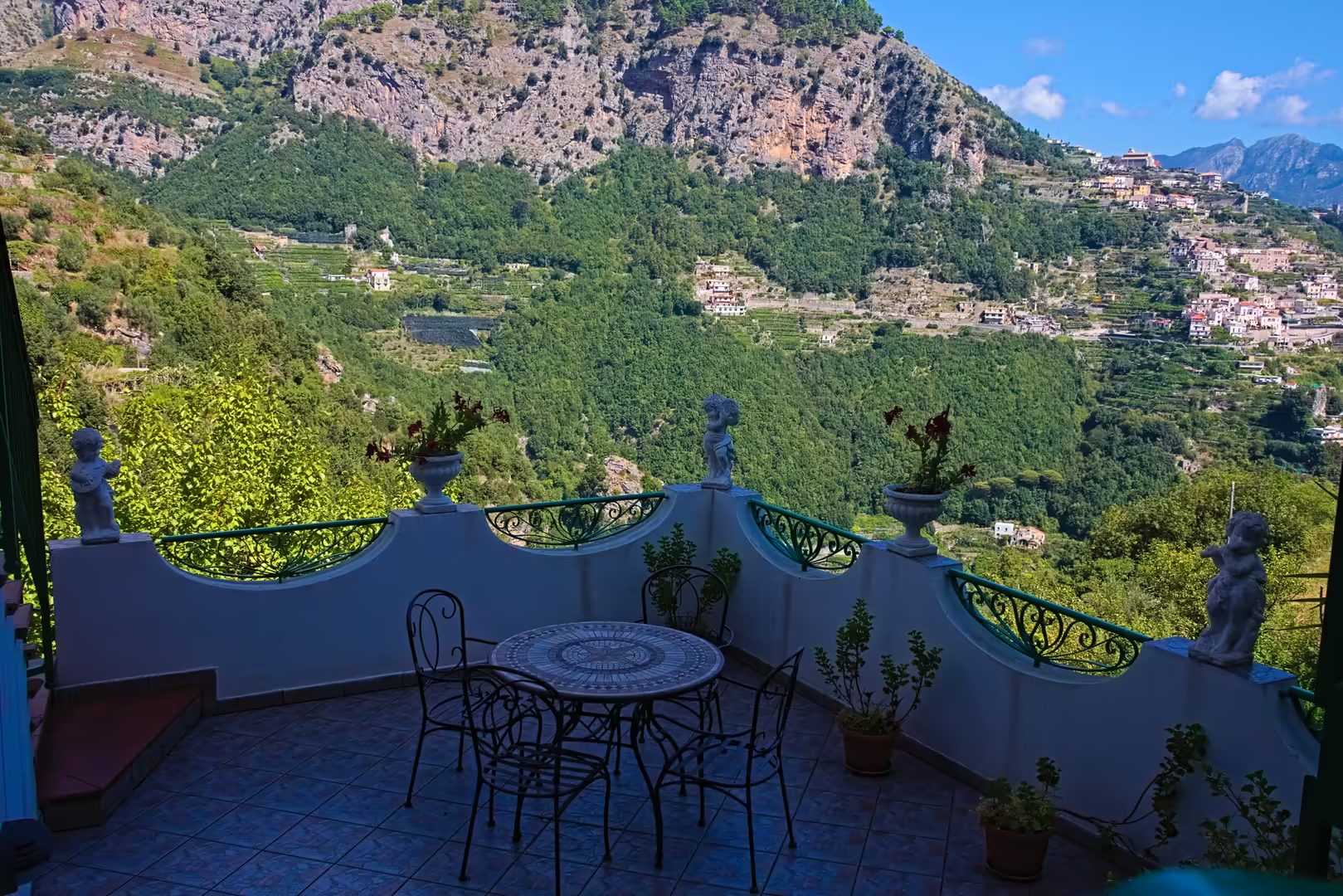
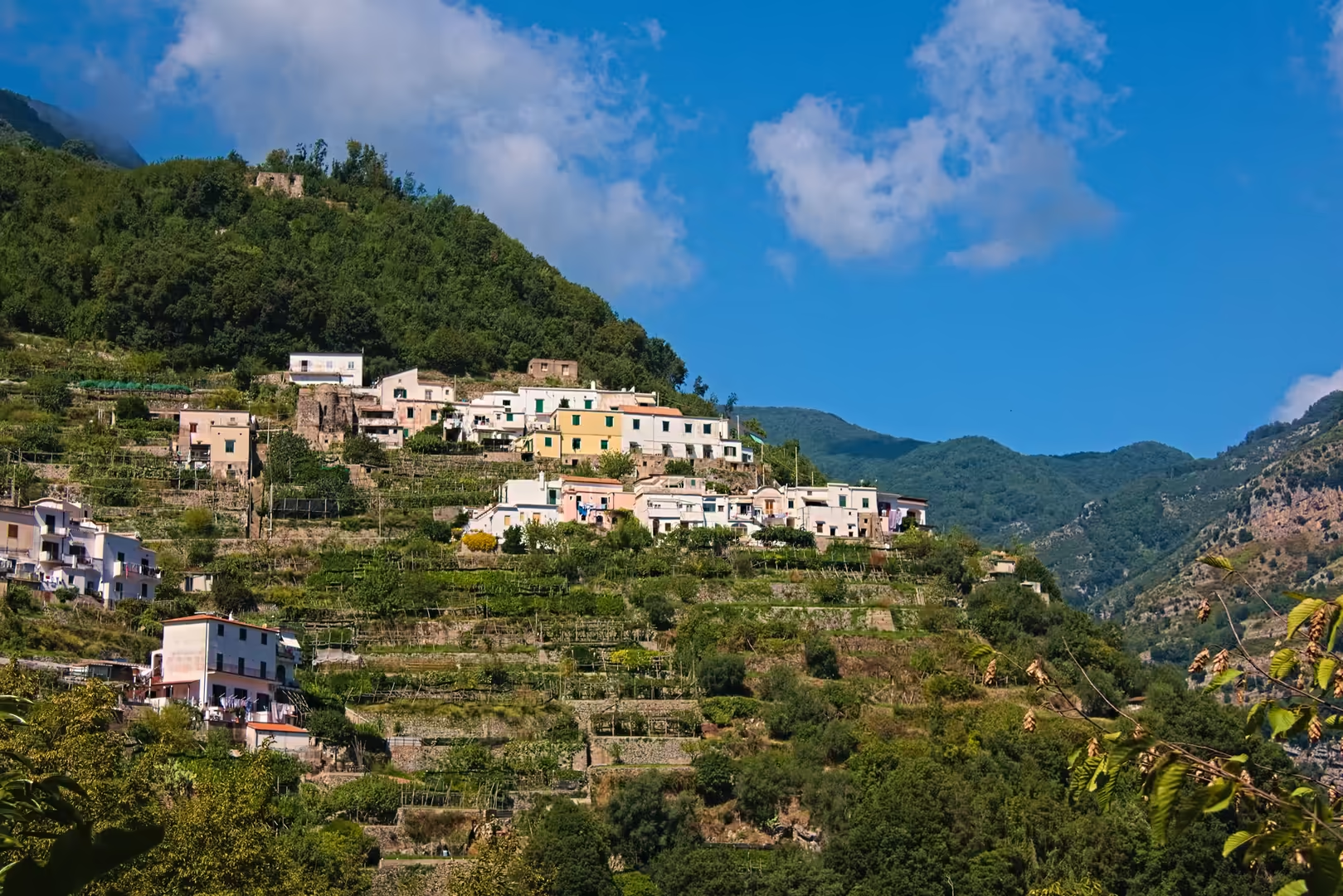
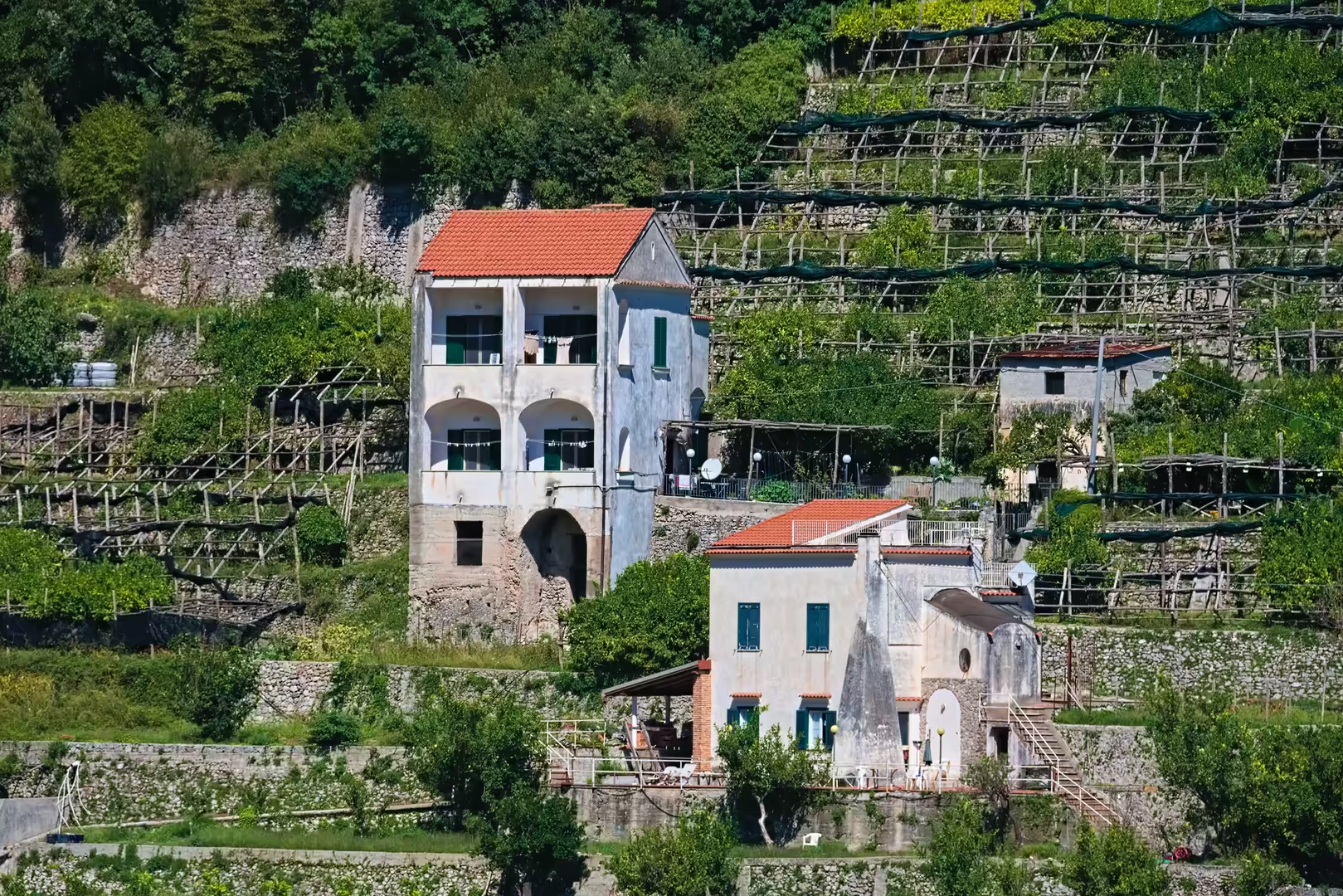
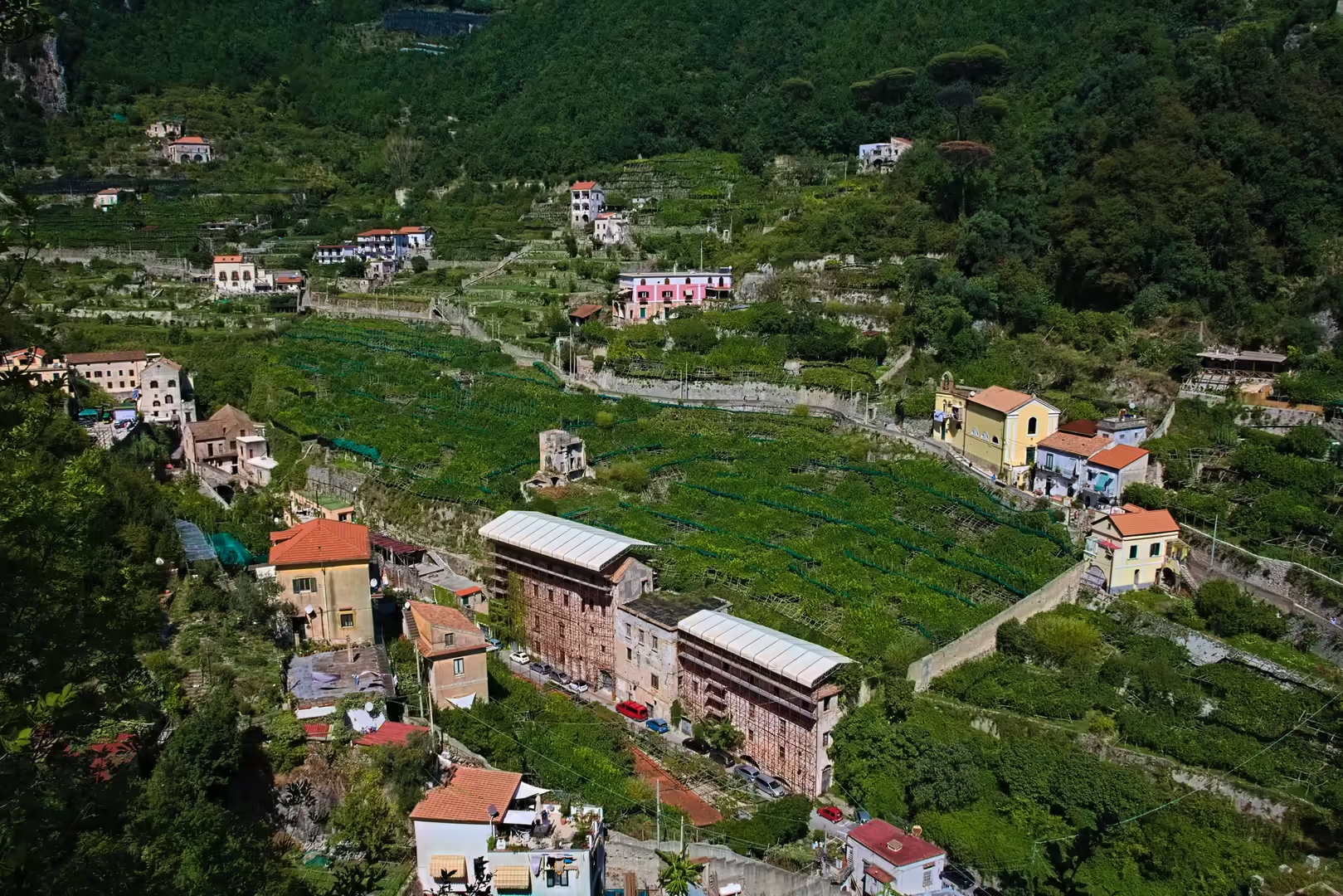
The regional climate is Mediterranean (Csa after Köppen), with hot, dry summers and mild, humid winters. The south-facing mountain front exposes the coast to moist air masses from the Tyrrhenian Sea, and orographic lifting produces locally high annual rainfall, particularly in autumn and winter. The deep, sheltered valleys behind Amalfi maintain a humid, mild microclimate that sustains a luxuriant evergreen vegetation: maquis, chestnut and alder stands along the watercourses and, in the most humid recesses, relicts of a subtropical Tertiary flora. On the cultivated slopes, the terraced landscape is dominated by the sfusato Amalfitano lemon, a large, thick-skinned cultivar of documented local tradition, together with vines and olives.
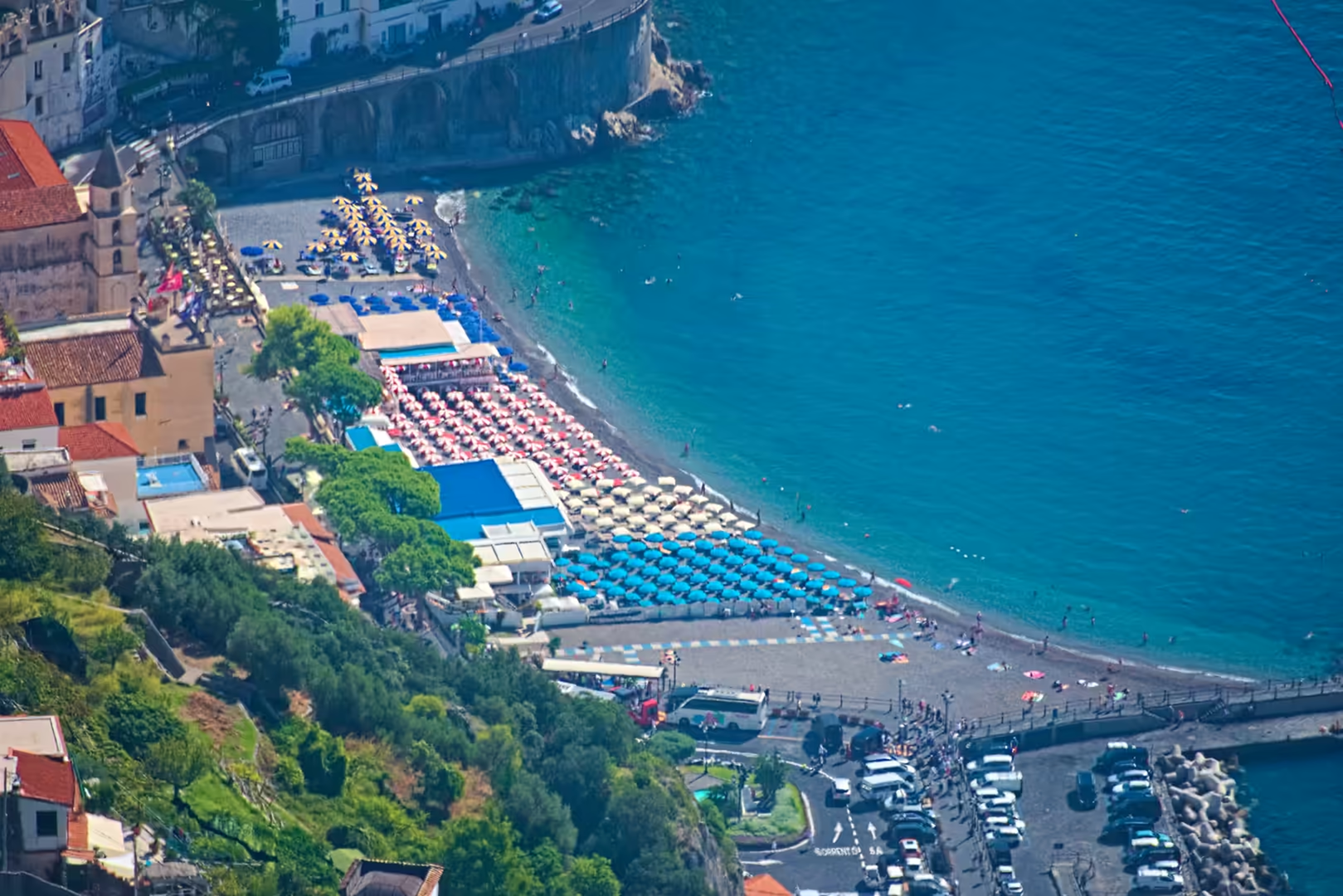
Historically and administratively, Amalfi is the principal town of the Costiera Amalfitana, the coastal belt between Vietri sul Mare and Positano that was inscribed on the UNESCO World Heritage List in 1997 as a cultural landscape, recognised for the interaction between its dramatic topography and a settlement history extending over more than a millennium. Amalfi today serves as the infrastructural centre of the central coast: its harbour provides ferry connections along the Gulf of Salerno and to Capri, the bus terminus links the coastal towns with Salerno and Sorrento, and the urban economy combines tourism with the agriculture of the terraced hinterland. The present population of roughly 4,600 contrasts sharply with the demographic weight of the medieval town, when the duchy as a whole probably counted several tens of thousands of inhabitants.
History
The origins of Amalfi reach back to late antiquity. Tradition dates the foundation of the settlement to 339 CE, and the first written reference to the town is the documentation of a bishopric in 596; the UNESCO nomination dossier likewise places the foundation of Amalfi in the fourth century. The town’s historical importance, however, derives from the early Middle Ages, when its sheltered harbour and its position at the southern margin of the Lombard principalities, yet within reach of the Byzantine-controlled coast, favoured the growth of long-distance maritime trade. Amalfi was captured by Sicard of Benevento in 838, freed itself from Lombard domination in 839, and thereafter governed itself through elected prefects and judges, remaining nominally within the Byzantine sphere of influence.
The early self-governing community was drawn repeatedly into the power struggles of the Campanian coast: in 897 it was defeated in a war against Sorrento, supported by Naples, and in 914 the prefect Mastalus I was appointed as the first judge. Throughout the tenth century Amalfi maintained its commercial ties with the Islamic polities of the central and eastern Mediterranean, trading with the Fatimid Caliphate from about 909, while preserving its formal allegiance to Byzantium. Amalfitan merchants bought grain from its neighbours, salt from Sardinia and timber and other raw materials, exchanging them for the gold coinage of Egypt and Syria and for Byzantine silks, which were re-sold in the West; already in the ninth century they transacted in gold coin, at a time when most of the Italian economy still operated by barter.
In 958 the community elected its first duke, and during the late tenth and eleventh centuries the Duchy of Amalfi became one of the leading commercial powers of the western Mediterranean, rivalling Pisa, Genoa and Venice. Under Duke Manso (966-1004) the duchy reached the height of its prosperity; estimates of its population around the turn of the millennium range from 50,000 to 80,000. Amalfitan trade networks extended across the Mediterranean: merchants maintained privileged positions in the Islamic ports of North Africa and the Levant, kept a permanent community in Constantinople, and, from about 1023, re-established a Latin Christian presence in Jerusalem, where the caliph Ali az-Zahir permitted the rebuilding of a monastery and hospice in the Muristan quarter. The complex, comprising the church of Santa Maria Latina and hospices dedicated to John the Baptist and Saint Mary Magdalene, was served by Benedictine monks and is regarded as the nucleus from which the Hospital of Saint John (later the Order of the Knights Hospitaller) developed. The Amalfitan archbishop John is recorded as having visited Jerusalem around 1080.
The duchy’s maritime law, the Tabula Amalphitana, compiled in the twelfth century, codified practices of salvage, jettison, chartering and the rights of seafarers, and remained an accepted commercial code in the Mediterranean until 1570. Amalfi was also renowned for its schools of law and mathematics, and the magnetic compass, traditionally attributed to the Amalfitan navigator Flavio Gioia, is associated with the town’s navigational culture, although the historical evidence for that attribution is disputed. The monetary economy rested on locally struck gold coinage (the tarì, modelled on Fatimid dinars), alongside the Byzantine solidus.
Political decline came rapidly and from outside. In 1073 the duchy fell to the Norman county of Apulia; in 1131 it was subjugated by Roger II of Sicily; and between 1133 and 1137 the city was sacked three times by its Pisan rivals, who carried off, among other booty, a copy of Justinian’s Pandects. Amalfi never regained its independence, yet it remained a port of some importance until 1343, when a seismic sea wave (an earthquake-generated tsunami) destroyed the harbour and the lower town, an event from which the city never fully recovered. In the later Middle Ages the local economy rested on the water-powered paper mills of the Valle dei Mulini, among the earliest in Europe, in operation from the thirteenth century. From the early nineteenth century Amalfi began to cater to foreign visitors, converting former religious houses into hotels (the Luna Convento in the 1820s and the Cappuccini convent in the 1880s), anticipating the role of the coast as a destination of international travel.
Geology
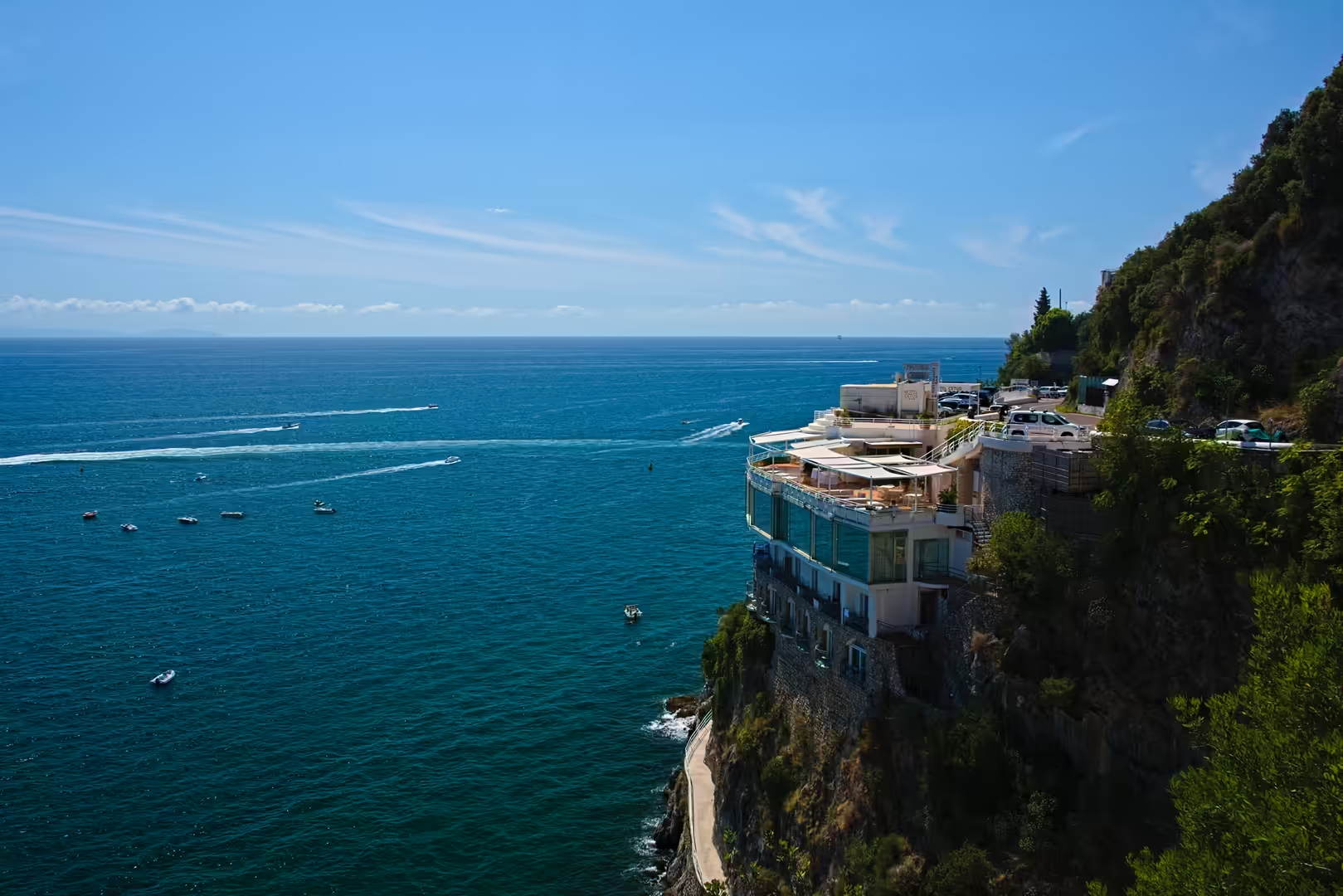
Amalfi lies on the southern flank of the Monti Lattari, the calcareous ridge that forms the backbone of the Sorrento Peninsula and constitutes the westernmost prolongation of the Campanian Apennines. The ridge strikes roughly WNW-ESE, separates the Gulf of Naples to the north from the Gulf of Salerno to the south, and attains 1,444 m at Monte San Michele; the coastal front above Amalfi reaches 1,315 m at Monte Cerreto less than three kilometres from the shore. This combination of extreme relief energy and carbonate lithology governs virtually every geomorphological and geotechnical characteristic of the site, and the physiographic contrast between the steep ridge and the two bordering gulfs is the fundamental precondition of the coastal landscape recognised by UNESCO.
The bedrock consists of a thick succession of Mesozoic platform carbonates (bedded and dolomitic limestones, partly of peritidal character) deposited on the passive southern margin of the Tethys ocean between the Triassic and the Late Cretaceous. The youngest units of the dolomitic limestone succession exposed on the peninsula date from the Late Cretaceous, recording the persistence of shallow-water carbonate sedimentation over more than a hundred million years. During the Neogene, the Apennine orogeny shortened and imbricated this succession: compressional structures verging toward the Adriatic foreland stacked the carbonate platform onto the adjacent basinal sequences, and Miocene flysch sediments were incorporated along the tectonic contacts.
From the Pliocene onward, the chain was overprinted by the extensional tectonics that accompanied the opening of the Tyrrhenian back-arc basin. Normal faulting dissected the carbonate ridge into a series of tilted blocks, depressed the adjacent coastal basins (the Campanian Plain and the gulfs of Naples and Salerno) and produced the high, steep fault scarps that truncate the older, mature landforms. Fluvial dissection, guided by the structural discontinuities, incised the deep transverse valleys of the Valle dei Mulini and the Valle delle Ferriere, which descend from the crest of the range to the sea. The present coastline of the Amalfi district is thus a tectonic coast in the strict sense, shaped by active faulting rather than by simple submergence of an ancient relief.
During the late Quaternary, the carbonate slopes were mantled by volcaniclastic material supplied by the Campanian volcanic district (Vesuvius and the Campi Flegrei), including the products of the Campanian Ignimbrite eruption, one of the largest eruptions of the Mediterranean region, dated by high-precision radiocarbon and argon-argon methods to about 39,800 years before present. Pyroclastic fall and flow deposits, reworked volcaniclastic sediments and coarse detrital and alluvial fans at the valley mouths cover much of the lower slopes and provided the parent material of the agricultural soils. Along the coast, raised marine terraces and erosional notches record the superposition of late Quaternary tectonic uplift on glacio-eustatic sea-level change; during the last glacial maximum the shoreline lay well below its present position, and the post-glacial transgression re-flooded the valley mouths, leaving the present embargoed coastline.
Karst dissolution has shaped the internal drainage of the massif: sinkholes, caves and spring systems are developed in the carbonate succession, and the perennial streams of the coastal valleys are largely spring-fed. The combination of steep dolomitic rock walls, shattered and karstified limestone and a thick, locally unstable pyroclastic cover renders the coastal slopes highly susceptible to rock fall and debris flow. The engineering-geological literature on the Sorrento Peninsula documents a long history of slope instability, and the hazard is a major constraint on settlement, road construction and the preservation of the terraced cultural landscape.
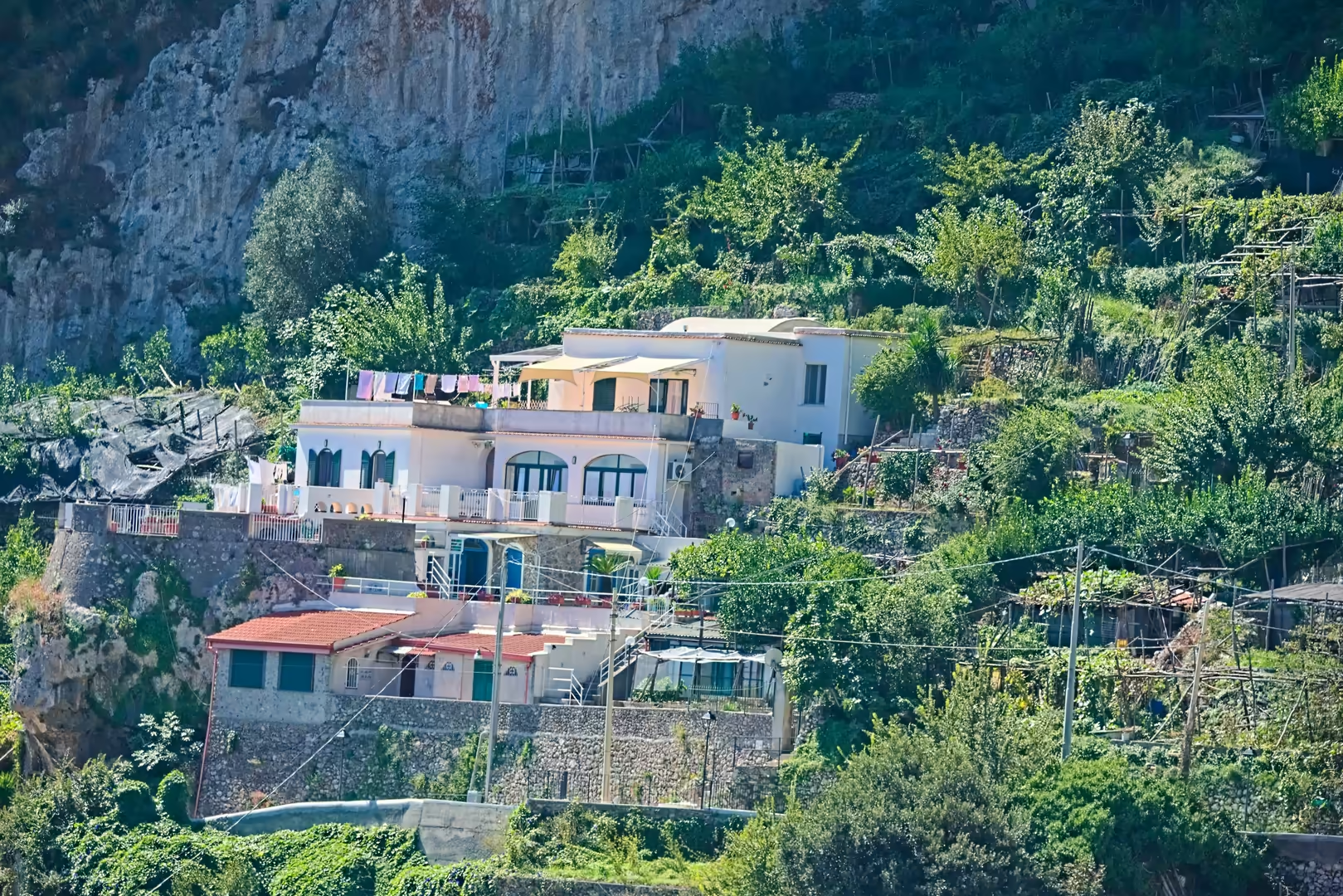
The terraced landscape for which the coast is known is, in essence, a geomorphological response to this setting. Dry-stone retaining walls stabilise the volcaniclastic and colluvial soils on slopes far too steep for agriculture, converting the chronic instability of the carbonate front into productive land and simultaneously controlling surface runoff. The same valleys that once powered the paper industry now channel the drainage of a densely terraced catchment, and the maintenance of the terrace system remains a precondition both of agricultural use and of slope stability, an interdependence recognised in the UNESCO designation of the Costiera Amalfitana as a cultural landscape.
Things to See
The historic core is dominated by the cathedral of Sant’Andrea, whose present fabric dates essentially from the eleventh century. A monumental flight of sixty-two steps rises from the Piazza Duomo to the facade, which combines Byzantine and Islamic (Moorish) decorative elements with interlacing pointed arches. The bronze doors, cast in Constantinople before 1066 and signed by the founder Simeon of Syria, are the earliest post-Roman bronze doors in Italy. The interior, remodelled in the Late Baroque style, comprises a nave and two aisles divided by twenty ancient columns; beneath the sanctuary, the crypt preserves the relics of the Apostle Andrew, translated from Constantinople in the early thirteenth century by the Amalfitan cardinal Pietro Capuano. The freestanding campanile and the adjoining thirteenth-century Chiostro del Paradiso, a cloister in the Moorish arcade style built over the former cemetery and now housing funerary monuments and epigraphic material, complete the cathedral complex, together with the diocesan museum opposite.
The Piazza Duomo, with its monumental fountain of Sant’Andrea, forms the civic centre of the town, framed by the cathedral steps and the loggia of the former Arsenale della Repubblica, the medieval shipyard of the duchy. The Arsenale now houses the Museo della Bussola e del Ducato, documenting the navigational instruments and the institutional history of the maritime republic. Immediately below the piazza, the harbour front and the public beach mark the modern shoreline, from which the medieval town extended inland along the valley floor; two former religious houses converted to hotels in the nineteenth century, the Luna Convento and the Cappuccini convent, survive as early witnesses of the town’s tourist history.
The Museo della Carta in the lower Valle dei Mulini is installed in a restored historic paper mill and documents the production of handmade paper from rags, the industry for which the valley (its name recalling the mills driven by its stream) was known from the thirteenth century. The museum preserves complete mill machinery, vats and presses, illustrating a manufacturing tradition that made Amalfi one of the earliest centres of paper production in Christian Europe.
Above the town, the Riserva naturale Valle delle Ferriere protects the upper valley with its waterfalls, remnant woodland and a relict, humid-Mediterranean flora that includes the giant fern Woodwardia radicans, a Tertiary relict otherwise extinct in Europe outside a few humid stations of Macaronesia and the Mediterranean. The Sentiero dei Limoni, an ancient mule track running eastward through the terraced lemon groves of the sfusato Amalfitano, connects Amalfi with the neighbouring town of Minori and offers an accessible section of the traditional agricultural landscape that underlies the UNESCO designation of the coast.
References
- Braudel, F. (1972). The Mediterranean and the Mediterranean World in the Age of Philip II. London: Collins.
- Cinque, A. (2017). Sorrento Peninsula and Amalfi Coast: The Long-Term History of an Enchanting Promontory. In: Soldati, M. & Marchetti, M. (eds), Landscapes and Landforms of Italy. World Geomorphological Landscapes. Cham: Springer.
- Giaccio, B., Hajdas, I., Isaia, R., Deino, A. & Nomade, S. (2017). High-precision 14C and 40Ar/39Ar dating of the Campanian Ignimbrite (Y-5) reconciles the time-scales of climatic-cultural processes at 40 ka. Scientific Reports 7, 45940.
- Kreutz, B. M. (1991). Before the Normans: Southern Italy in the Ninth and Tenth Centuries. Philadelphia: University of Pennsylvania Press.
- Skinner, P. (2013). Medieval Amalfi and its Diaspora, 800-1250. Oxford: Oxford University Press.
- UNESCO World Heritage Centre (1997). Costiera Amalfitana. World Heritage List, ref. 830. whc.unesco.org/en/list/830
- UNESCO World Heritage Centre (1997). Nomination documentation for the Costiera Amalfitana. whc.unesco.org/document/154393
- Wikipedia contributors (2026). Amalfi. en.wikipedia.org/wiki/Amalfi
- Wikipedia contributors (2026). Amalfi Cathedral. en.wikipedia.org/wiki/Amalfi_Cathedral
- Wikipedia contributors (2026). Amalfi Coast. en.wikipedia.org/wiki/Amalfi_Coast
- Wikipedia contributors (2026). Amalfian Laws. en.wikipedia.org/wiki/Amalfian_Laws
- Wikipedia contributors (2026). Campanian Ignimbrite eruption. en.wikipedia.org/wiki/Campanian_Ignimbrite_eruption
- Wikipedia contributors (2026). Duchy of Amalfi. en.wikipedia.org/wiki/Duchy_of_Amalfi
- Wikipedia contributors (2026). Hospital of Saint John (Jerusalem). en.wikipedia.org/wiki/Hospital_of_Saint_John_(Jerusalem)
- Wikipedia contributors (2026). Monti Lattari. en.wikipedia.org/wiki/Monti_Lattari