2025 Amalfi 5 - Napoli

Journal Notes
General
Naples (Napoli in Italian, Napule in the Neapolitan language) is the regional capital of Campania and the largest city of southern Italy. The comune has about 905,000 inhabitants (2026) within an area of 119 km², while the wider metropolitan city counts almost three million residents and the metropolitan area around 4.4 million, making Naples the third-largest urban concentration of Italy after Rome and Milan and one of the largest on the Mediterranean. The city occupies a magnificent natural setting on the Bay of Naples, between the volcanic district of the Campi Flegrei to the west and Mount Vesuvius to the east, with the limestone ridge of the Monti Lattari closing the horizon to the south.
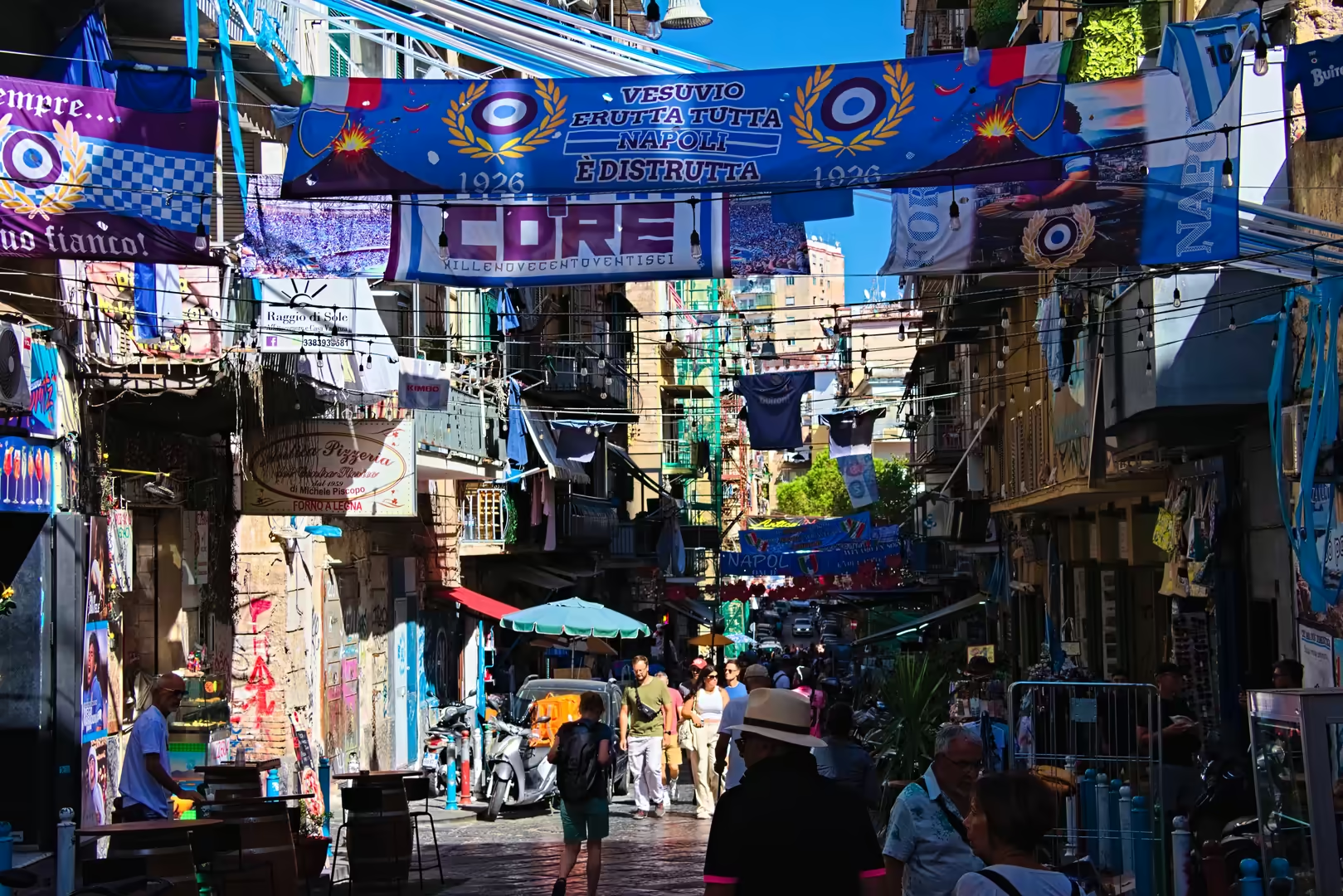
Naples is one of the oldest continuously inhabited cities of the Western world. Founded by Greek colonists in the first millennium BC, it preserves an urban fabric of exceptional density and continuity: the historic centre, laid out on the grid of the ancient Greek city and inhabited without interruption for more than two and a half millennia, was inscribed on the UNESCO World Heritage List in 1995. The city is equally famous for its artistic heritage, its Baroque churches and palaces, its archaeological museums, its music and its cuisine (the birthplace of pizza) and for the fierce local identity expressed above all in the cult of its football club and of Diego Maradona.
The climate is Mediterranean (Csa), mild and humid in winter, hot and dry in summer, tempered by the sea. The historic centre rises from the waterfront between the harbour and the hills of the Vomero and Posillipo, and the modern city extends over the volcanic slopes and plains that surround the ancient core, enclosed between the sea, the Phlegraean Fields and the massif of Vesuvius.
History
The origins of Naples reach back to the Greek colonization of the Tyrrhenian coast. According to tradition, the first settlement, Parthenope, was established on the island of Megaride and the hill of Monte Echia in the ninth or eighth century BC; the name recalls the Siren Parthenope of Greek mythology. In the sixth century BC the Cumaeans refounded the settlement on the adjacent plateau as Neapolis, the “new city”, which became one of the foremost cities of Magna Graecia. The Greek grid of three east-west decumani and narrow north-south alleys still structures the historic centre today, making Naples one of the few cities where the street plan of a Greek colony survives in continuous use.
After the Roman conquest of Campania, Neapolis remained a Greek-speaking city of culture and leisure, favoured by Roman aristocrats for its Greek manners, its music and its mild climate; the Romans cut tunnels through the hills of the city and the Phlegraean Fields to improve its communications. With the decline of the Western Empire, Naples became the capital of a Byzantine duchy that maintained its de facto independence from the seventh to the twelfth century, the Duchy of Naples (661-1139), surviving amid the Lombard principalities and the maritime republics of the coast.
In 1137 the duchy was absorbed into the Norman kingdom of southern Italy; under the Hohenstaufen emperor Frederick II, who founded the university in 1224, Naples became an intellectual capital, and in 1266 the Angevin dynasty made it the capital of the Kingdom of Sicily, initiating the great Gothic building phase of the city. From 1442 the city passed to the Aragonese and then to the Spanish crown, becoming the capital of the Spanish viceroyalty and, from the seventeenth century, one of the largest cities of Europe, at times the most populous city of the Italian peninsula, celebrated for its Baroque art and its music.
The eighteenth century brought the Bourbon dynasty, which ruled the independent Kingdom of Naples and, from 1816, the Kingdom of the Two Sicilies from the city; this was the golden age of the Neapolitan Enlightenment, of the archaeological discoveries at Pompeii and Herculaneum, and of the foundation of the great national museum. In 1861 the Kingdom of the Two Sicilies was incorporated into the newly unified Kingdom of Italy, and Naples lost its role as a capital. The city suffered heavily during the Second World War (including the Four Days of Naples, an uprising against the German occupation in September 1943) and has since undergone a complex process of reconstruction and urban renewal, while remaining the demographic and cultural heart of the Italian south.
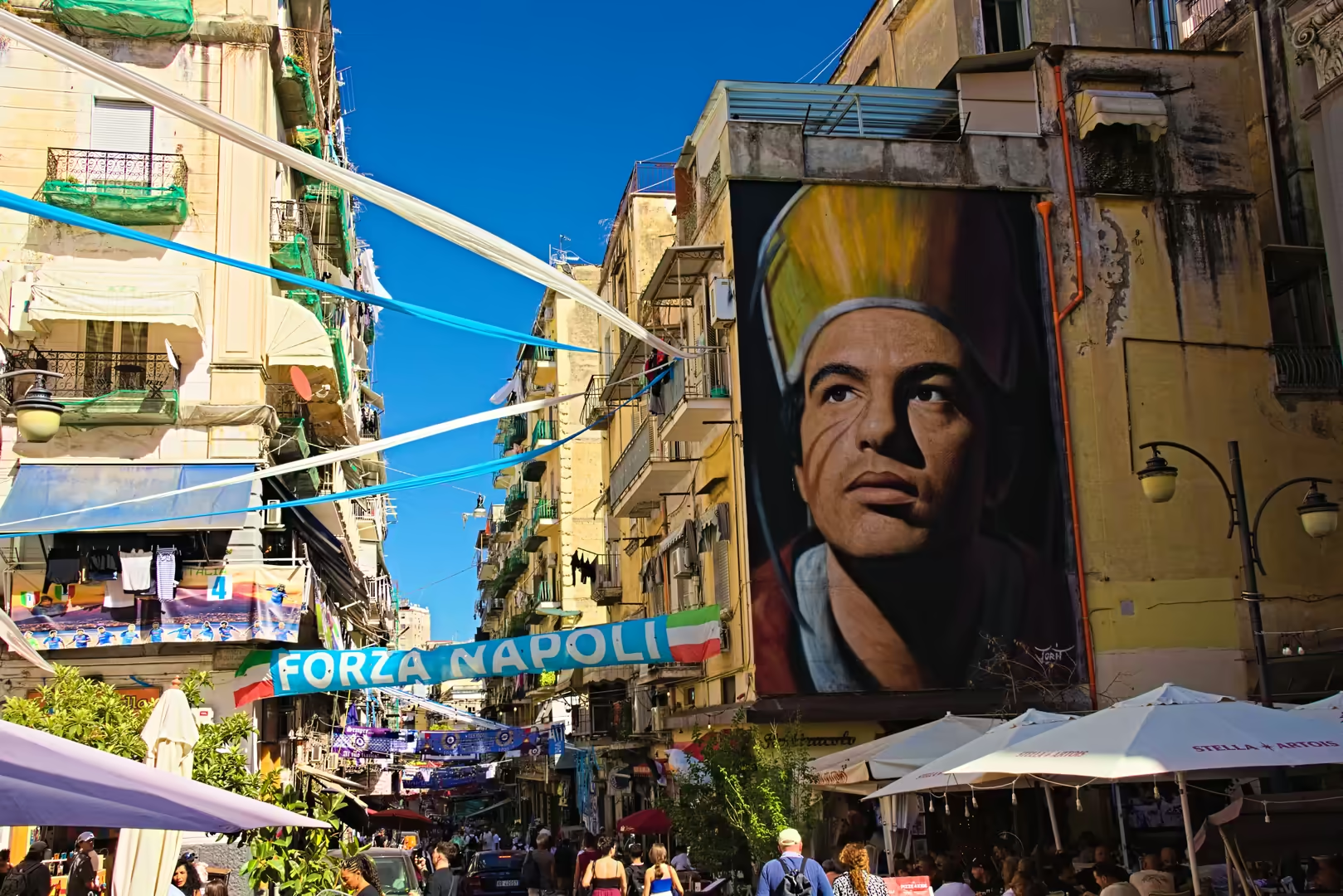
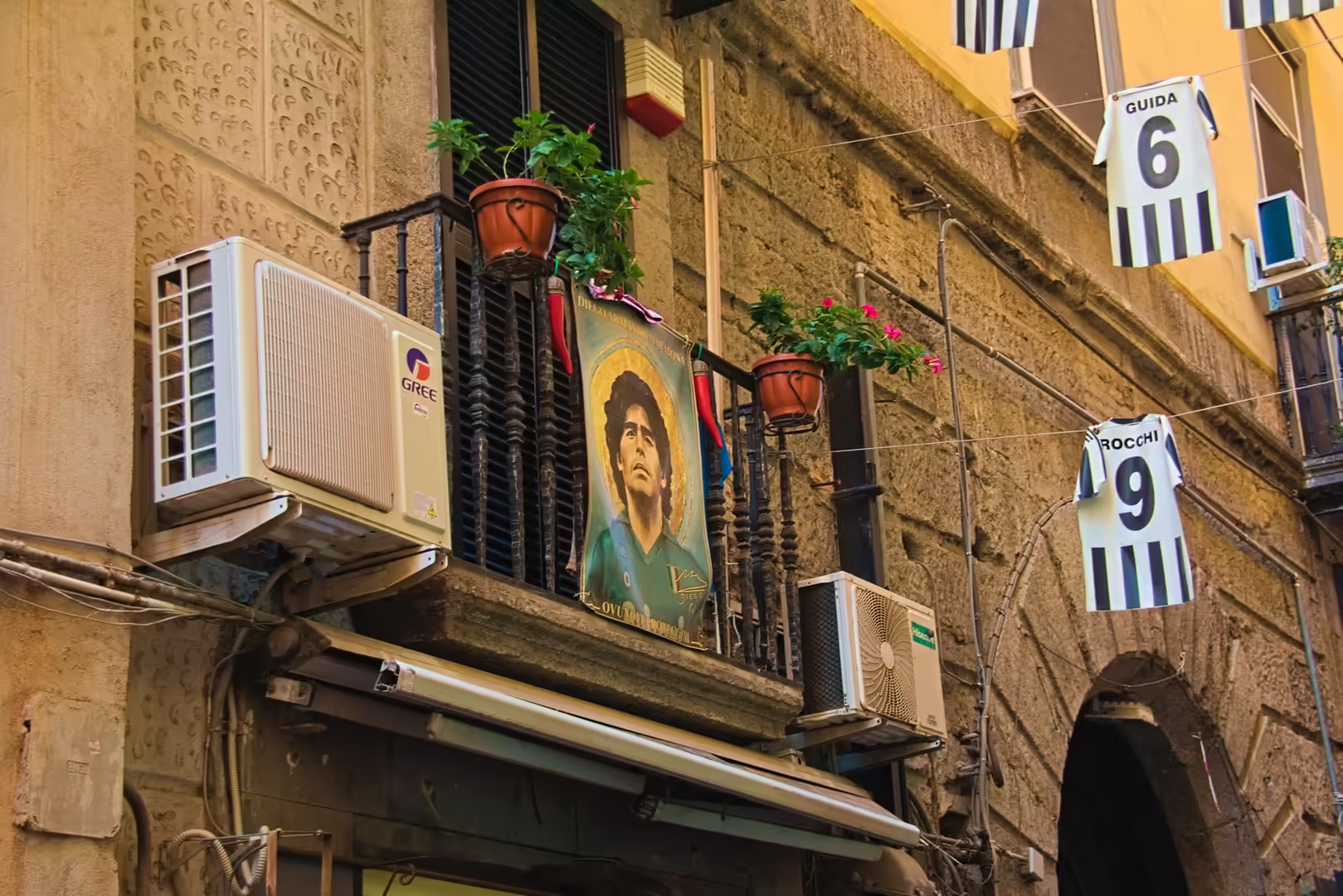
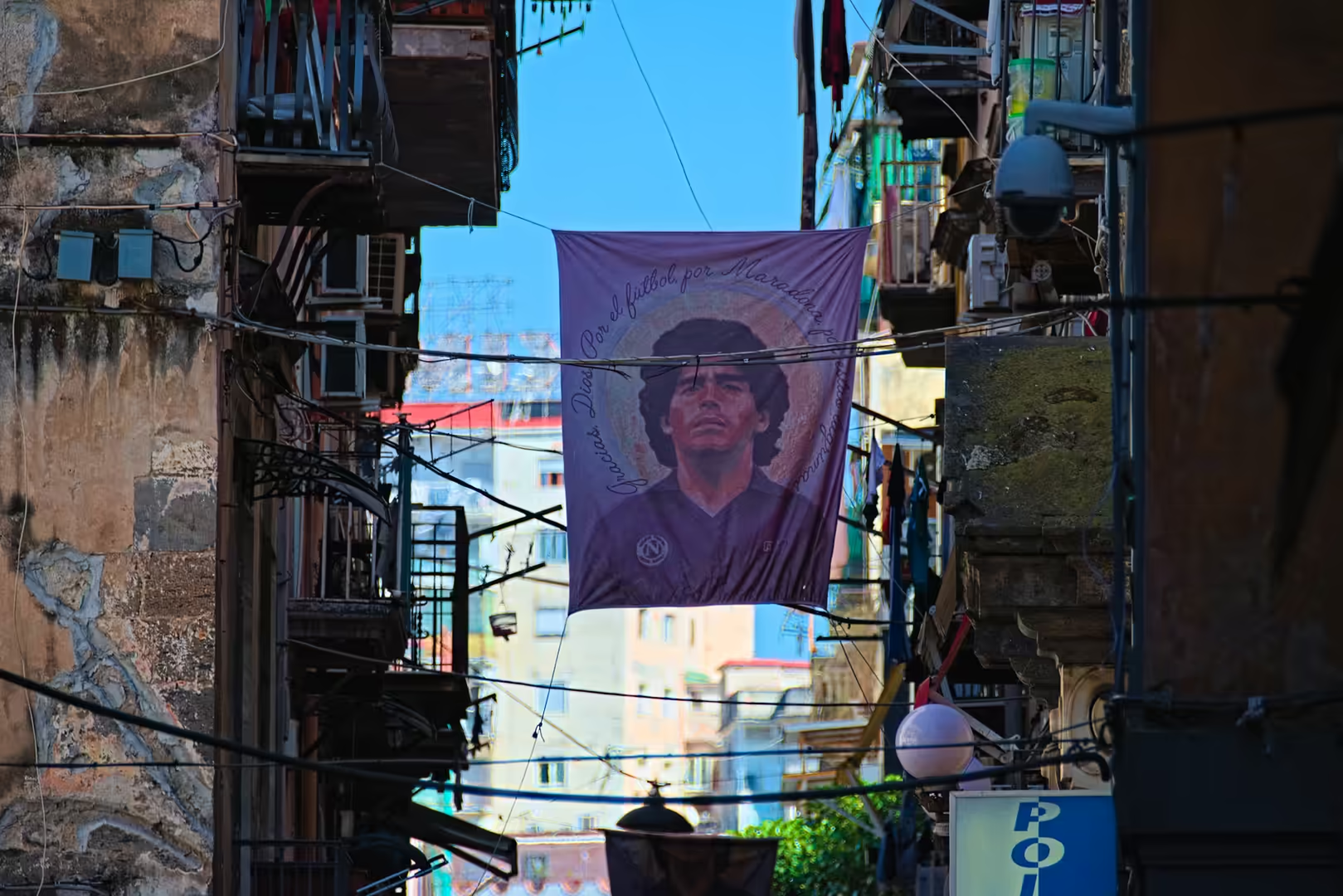
Contemporary Naples is marked by the coexistence of an immense monumental heritage and an intense, often chaotic street life, celebrated in literature, film and music. The international fame of the city in recent decades is inseparable from the figure of Diego Maradona, who played for the SSC Napoli between 1984 and 1991, leading the club to its first two scudetti and becoming a popular icon whose memory still permeates the streets of the city; the stadium bears his name since 2020. The historic centre was inscribed on the UNESCO World Heritage List in 1995.
Geology
Naples occupies one of the most unusual geological settings of any great city: it lies at the centre of the Campanian volcanic province, between the Campi Flegrei caldera to the west and the Somma-Vesuvius volcano to the east, on the coast of a gulf that is itself a submerged volcanic and tectonic structure. The plain on which the city stands is underlain by the products of hundreds of thousands of years of volcanic activity, and almost every district of Naples is built either on volcanic rock or on the soils derived from it.
The geological foundation of the historic centre is the Neapolitan Yellow Tuff, a thick formation of trachytic pyroclastic rock erupted about 15,000 years ago during a large-magnitude phreatoplinian eruption of the Campi Flegrei, which ended with the collapse of the caldera. The yellow tuff is soft enough to be quarried and carved, and it served as the principal building stone of the city: the Greeks and Romans cut their tombs, aqueducts and cisterns into it, and the medieval and Baroque builders faced their churches with it. Beneath the streets of Naples, the tuff is honeycombed with thousands of chambers, cisterns, tunnels and Greco-Roman ruins, the “underground Naples” that is one of the most remarkable archaeological features of the city.
The volcanic history of the district is not merely ancient. The Campi Flegrei, the large caldera west of the city, has erupted repeatedly in historical times (most recently in 1538, when the Monte Nuovo cone was built in a single eruption) and is subject to slow vertical movements of the ground, the bradyseism, which have alternately raised and lowered the coast of Pozzuoli by several metres in the last two millennia, as documented by the marine borings on the columns of the Serapeum. Vesuvius, to the east, erupted in 79 AD and has remained active ever since, its last eruption occurring in 1944; the city of Naples lies just outside the principal hazard zones, but its eastern districts and the whole of the surrounding plain are exposed to the recurring threat of the volcano.
The topography of the city reflects this volcanic and tectonic history: the hills of Naples (the Vomero, Capodimonte and Posillipo) are built of volcanic products, the Posillipo hill being cut by the ancient tunnels of the Crypta Neapolitana and the Grotta di Seiano, while the coast combines volcanic headlands with sedimentary plains. The seismic history of the district adds a further constraint: the Campanian plain is one of the most earthquake-prone regions of Italy, and Naples has repeatedly suffered damage from earthquakes originating in the Apennines and in the volcanic district itself.
For the visitor, the geology of Naples is visible at every step: in the golden tuff of the churches and palazzi, in the steep stairs and ramps that climb the volcanic hills, in the sea view toward the cone of Vesuvius and the low caldera of the Phlegraean Fields, and in the dark underground chambers of the city’s substratum. Few cities display their geological foundations as openly as Naples, where the rock of the subsoil is at once the building material of the monuments and the record of the eruptions that created the landscape.
Things to See
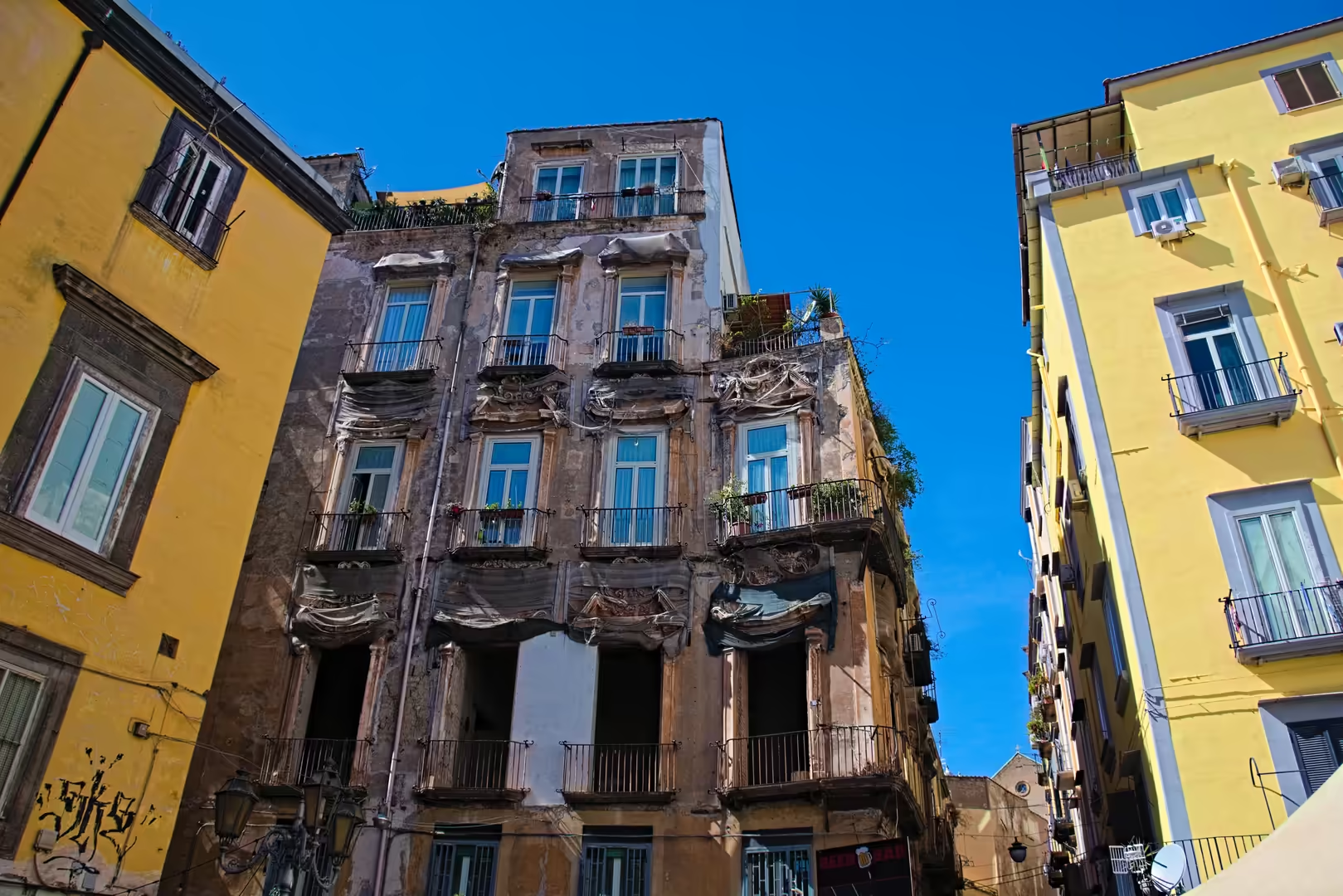
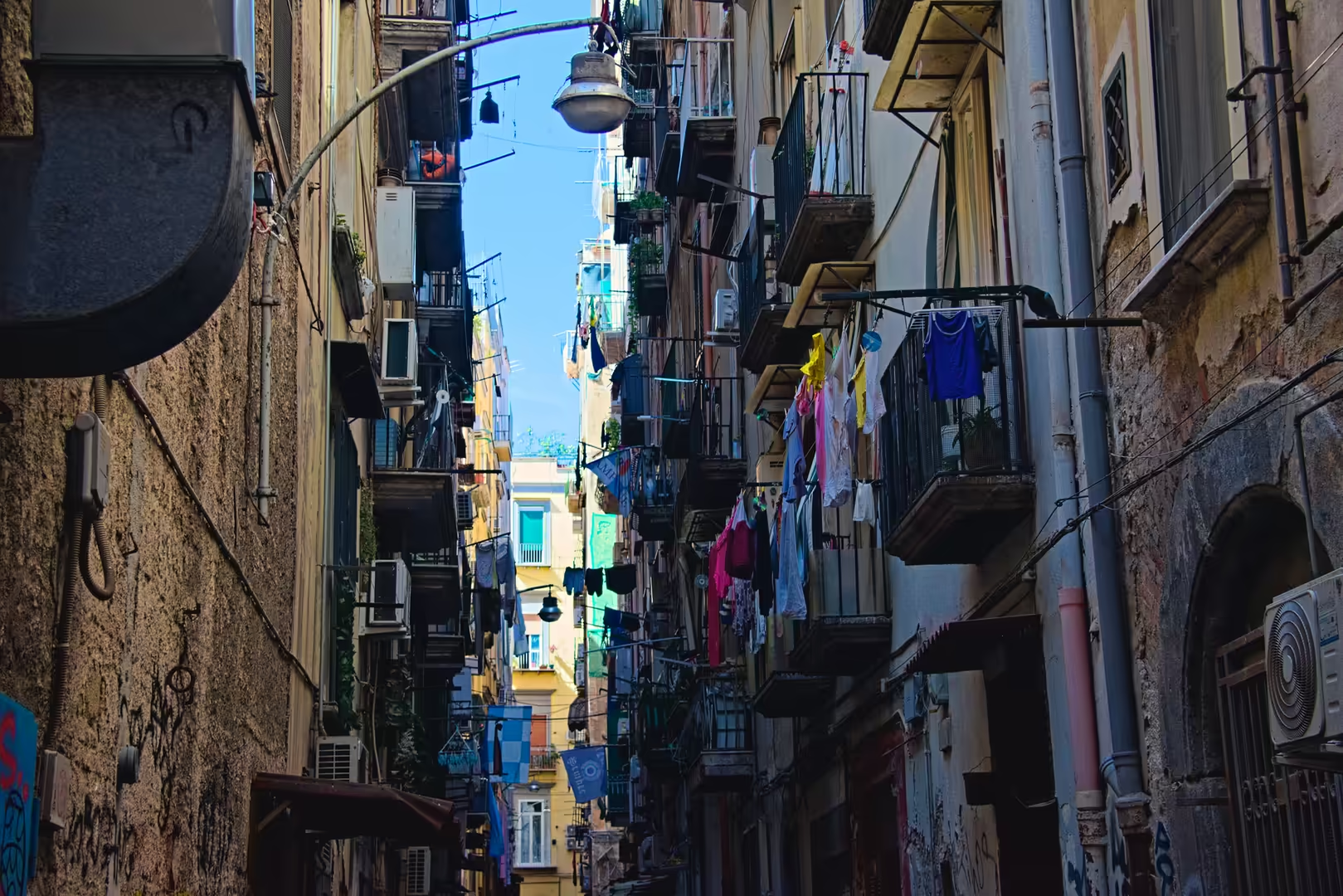
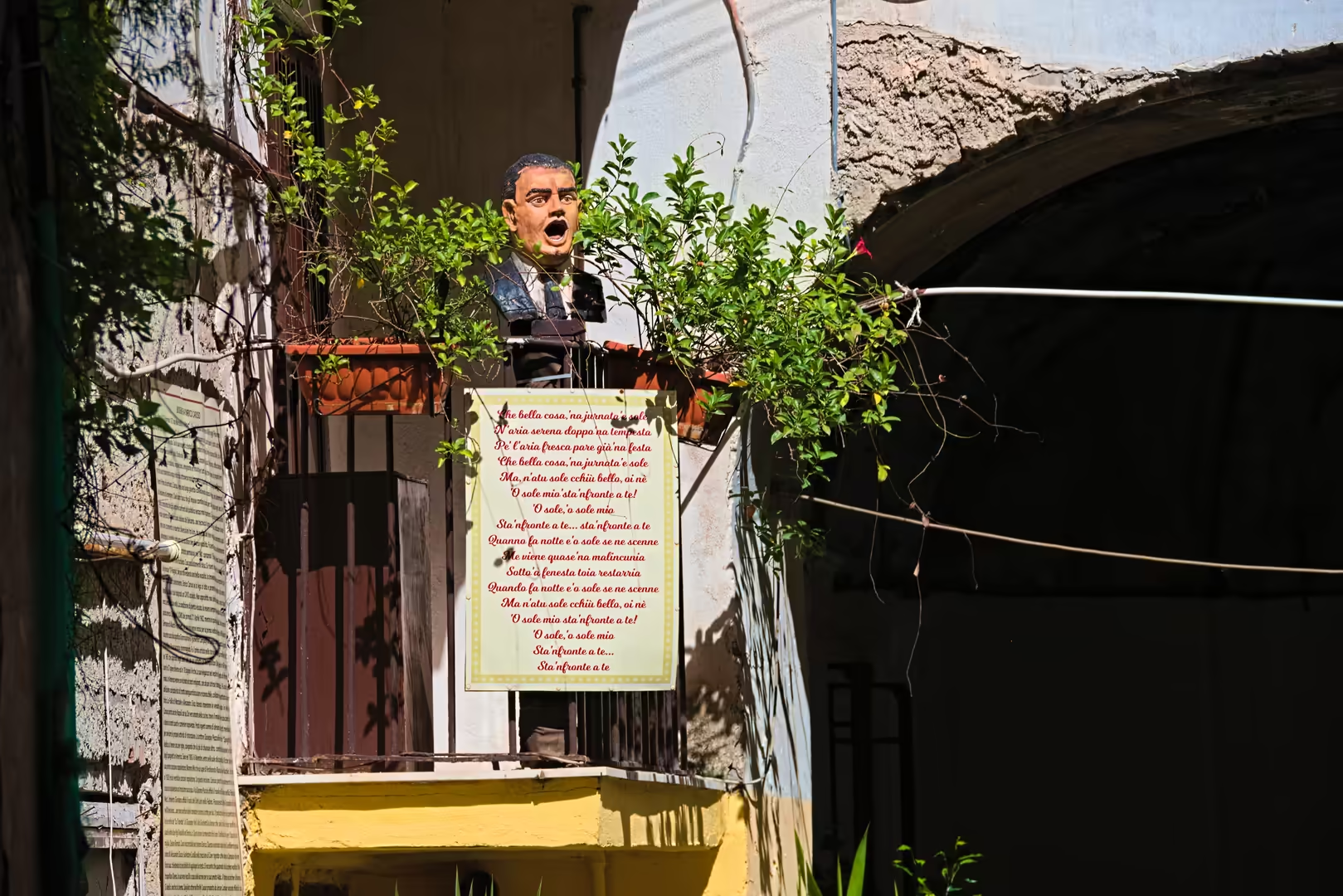
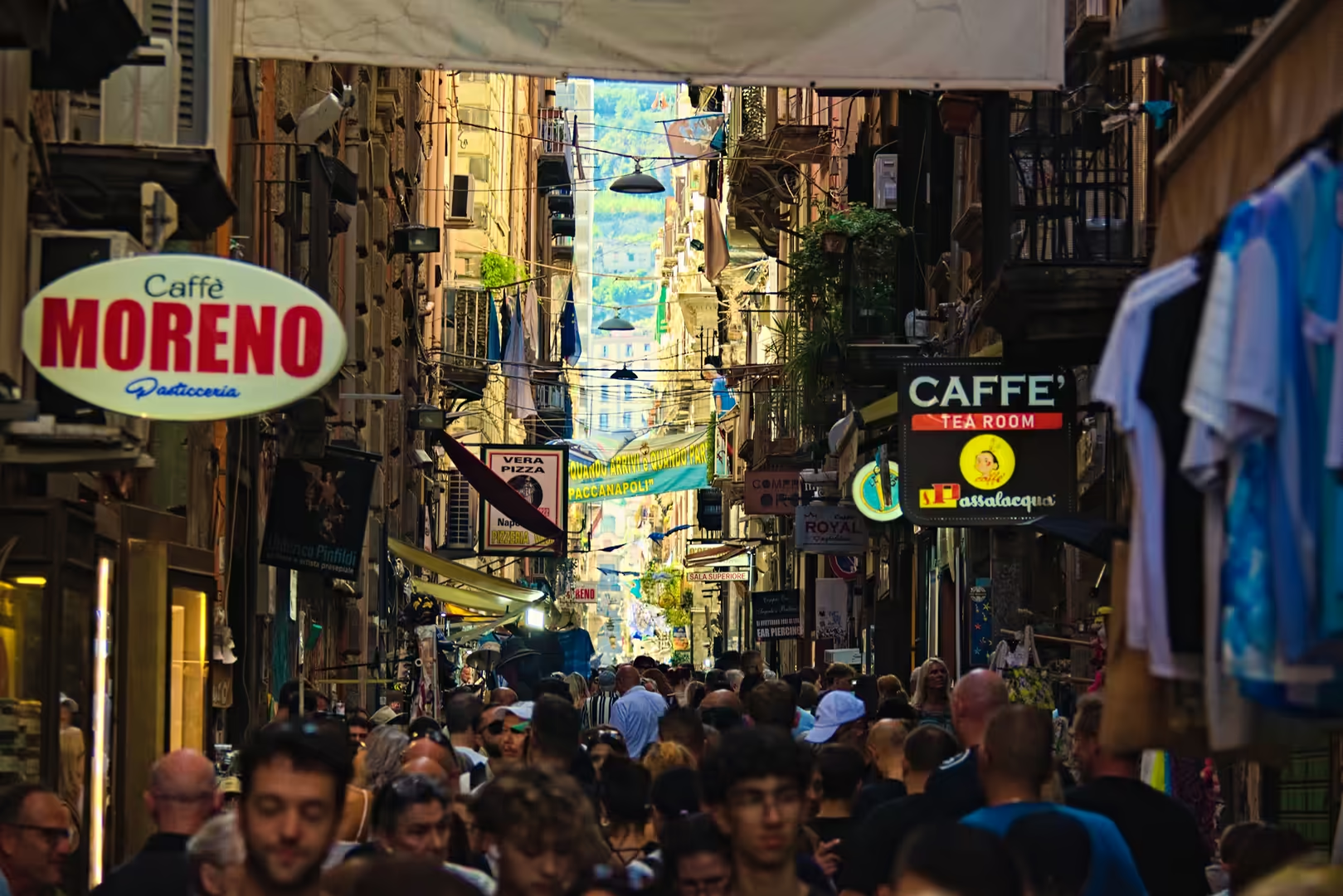
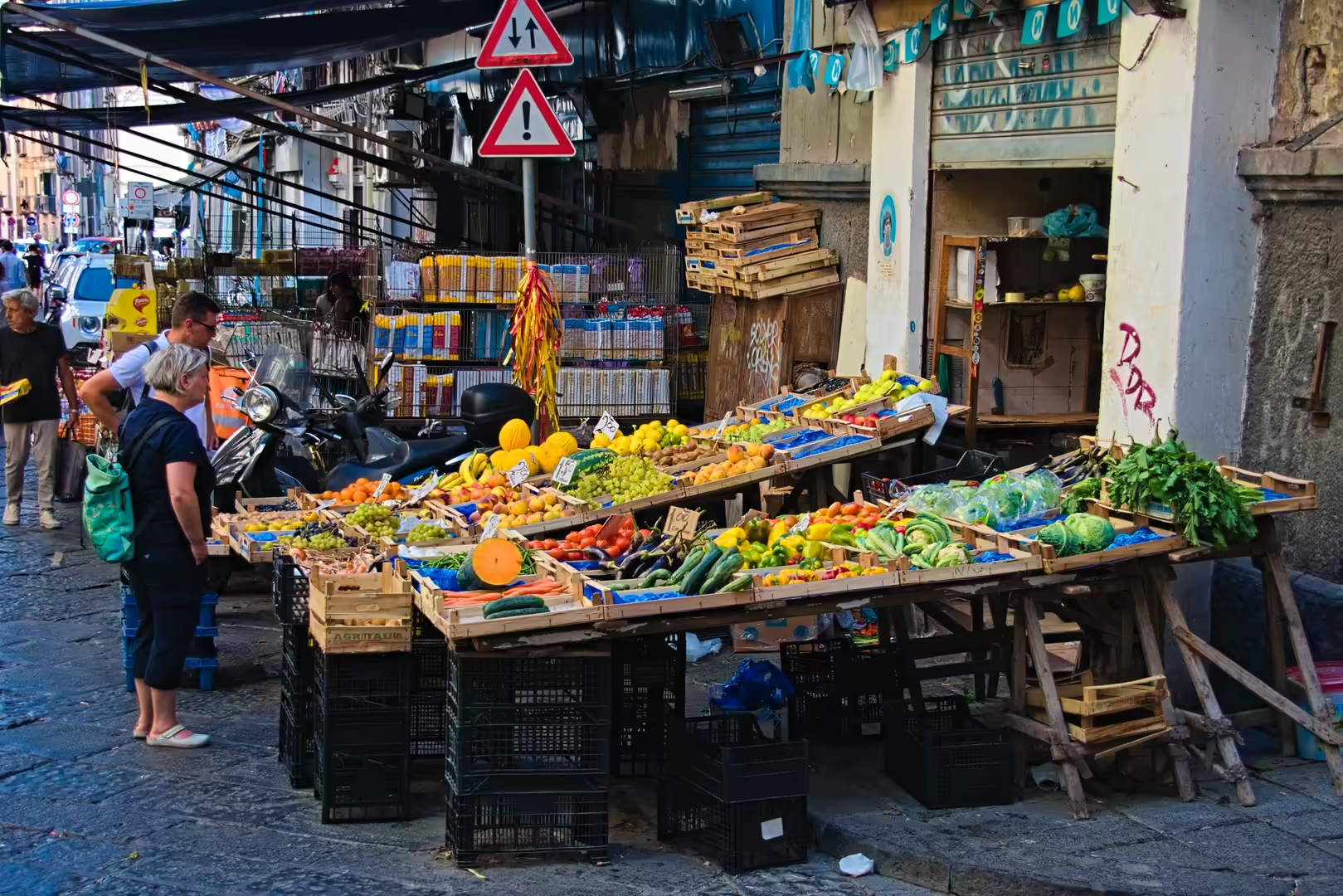
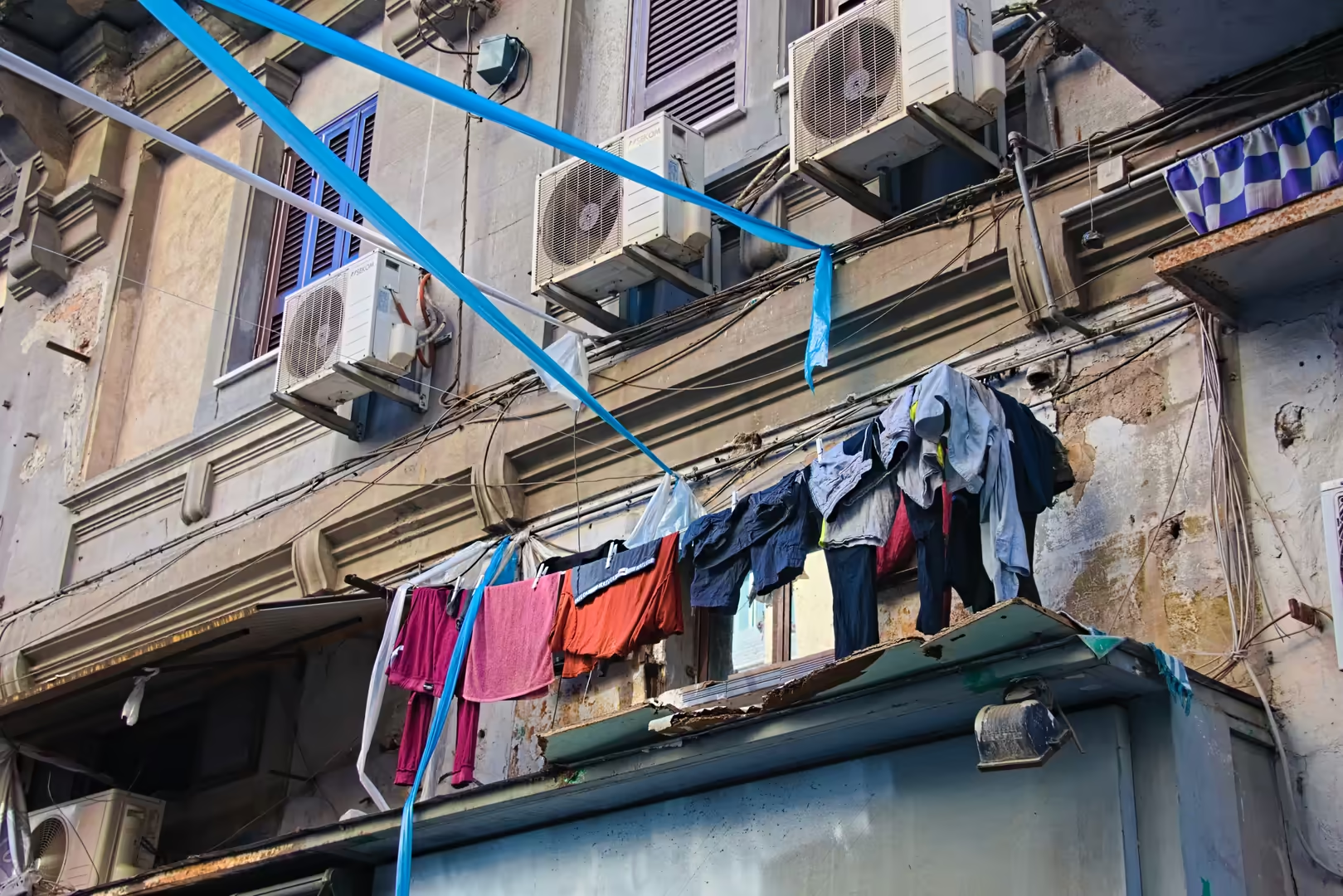
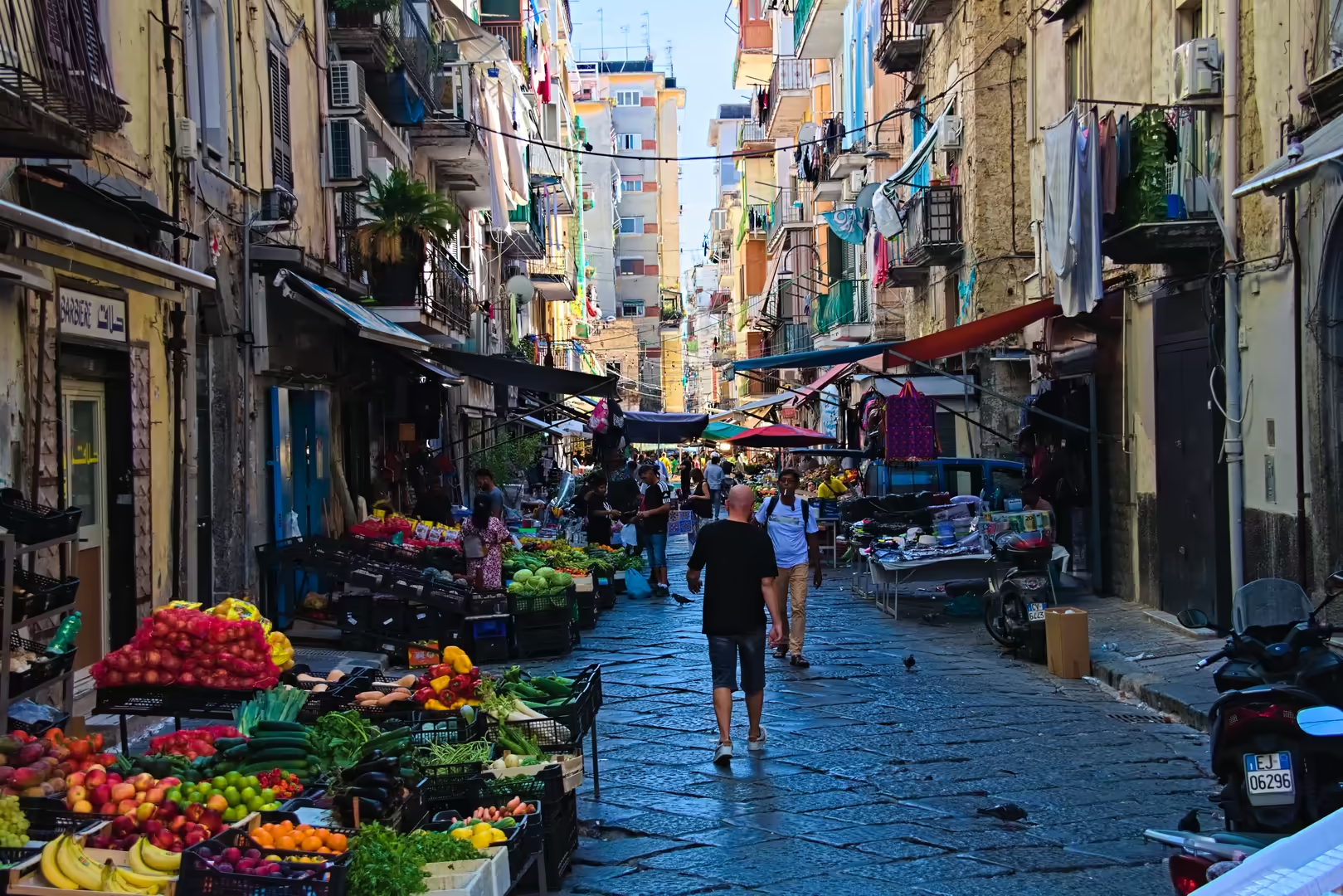
The historic centre of Naples is best experienced on foot, in the dense network of streets that descends from the ancient decumani of the Greek city (above all the Spaccanapoli, the long straight street that “splits Naples” along the line of the lower decumanus) through the markets, churches and courtyards of the oldest quarters. The Spanish Quarters, the grid of narrow alleys built in the sixteenth century between the royal palace and the hills, preserve the most intense form of Neapolitan street life: washing lines strung between the facades, shrines on the balconies, small workshops and the murals and banners dedicated to Maradona that transformed whole streets into open-air sanctuaries of the football cult.
The street markets of the centre are among the great spectacles of the city. The historic market streets, such as the Pignasecca near the Spanish Quarters, sell fruit, vegetables and fish from dawn in a tradition of urban commerce that reaches back to the Middle Ages; the narrow streets of the quarters, with their produce stalls, coffee bars and family shops, display the everyday economy of a city where the street has always been the principal public space.
The monumental heritage of the city surrounds these popular quarters: the cathedral of San Gennaro, patron saint of Naples, with the chapel that preserves the phials of his blood and the famous rite of the liquefaction; the Royal Palace and the San Carlo opera house on the Piazza del Plebiscito; the Castel Nuovo of the Angevin kings; the Castel dell’Ovo on the islet of Megaride, on the site of the ancient Parthenope; the Certosa di San Martino and Castel Sant’Elmo on the Vomero hill, with their panoramic views over the gulf; and the museum district, where the National Archaeological Museum houses the greatest collection of antiquities from Pompeii and Herculaneum together with the Farnese marbles.
Beyond the centre, the waterfront of the Via Caracciolo and the promenade of Mergellina frame the view across the bay to Vesuvius, while the hill of Posillipo and the island landscape of the gulf complete the setting. For a city of such density, Naples offers the constant dialogue between the monumental and the everyday, the subterranean and the skyline, the volcano and the sea: a dialogue that makes the historic centre, in the words of the UNESCO citation, a place of universal value.
References
- Arthur, P. (2002). Naples, from Roman Town to City-State: An Archaeological Perspective. London: British School at Rome.
- Orsi, G., D’Antonio, M., de Vita, S. & Gallo, G. (1992). The Neapolitan Yellow Tuff, a large-magnitude trachytic phreatoplinian eruption: eruptive dynamics, magma withdrawal and caldera collapse in a potentially hazardous volcanic area. Journal of Volcanology and Geothermal Research.
- UNESCO World Heritage Centre (1995). Historic Centre of Naples. World Heritage List, ref. 726. whc.unesco.org/en/list/726
- Wikipedia contributors (2026). Naples. en.wikipedia.org/wiki/Naples
- Wikipedia contributors (2026). History of Naples. en.wikipedia.org/wiki/History_of_Naples
- Wikipedia contributors (2026). Historic Centre of Naples. en.wikipedia.org/wiki/Historic_Centre_of_Naples
- Wikipedia contributors (2026). Campi Flegrei. en.wikipedia.org/wiki/Campi_Flegrei
- Wikipedia contributors (2026). Mount Vesuvius. en.wikipedia.org/wiki/Mount_Vesuvius
- Wikipedia contributors (2026). Bay of Naples. en.wikipedia.org/wiki/Bay_of_Naples
- Wikipedia contributors (2026). Januarius. en.wikipedia.org/wiki/Januarius
- Wikipedia contributors (2026). Quartieri Spagnoli. en.wikipedia.org/wiki/Quartieri_Spagnoli
- Wikipedia contributors (2026). Spaccanapoli. en.wikipedia.org/wiki/Spaccanapoli
- Wikipedia contributors (2026). Stadio Diego Armando Maradona. en.wikipedia.org/wiki/Stadio_Diego_Armando_Maradona
- Wikipedia contributors (2026). National Archaeological Museum, Naples. en.wikipedia.org/wiki/National_Archaeological_Museum,_Naples
- Wikipedia contributors (2026). Castel dell’Ovo. en.wikipedia.org/wiki/Castel_dell’Ovo