2025 Amalfi 8 - Villa Regina
Journal Notes
General
Villa Regina is a Roman farmhouse of the first century BC at Boscoreale, on the lower slopes of Vesuvius about a kilometre north of Pompeii, buried by the eruption of AD 79 and today the only villa of the district that survives in situ, open to visitors. The modern name Boscoreale, “royal grove”, recalls the hunting park that the kings of Naples kept here; in antiquity the district formed part of the countryside of Pompeii, the ager Pompeianus, a fertile plain of vineyards, orchards and grain fields that supplied the town and the villas of its elite. The comune of today, lying within the Vesuvius National Park, still draws its livelihood from the vineyards that produce the wine Lacryma Christi del Vesuvio.
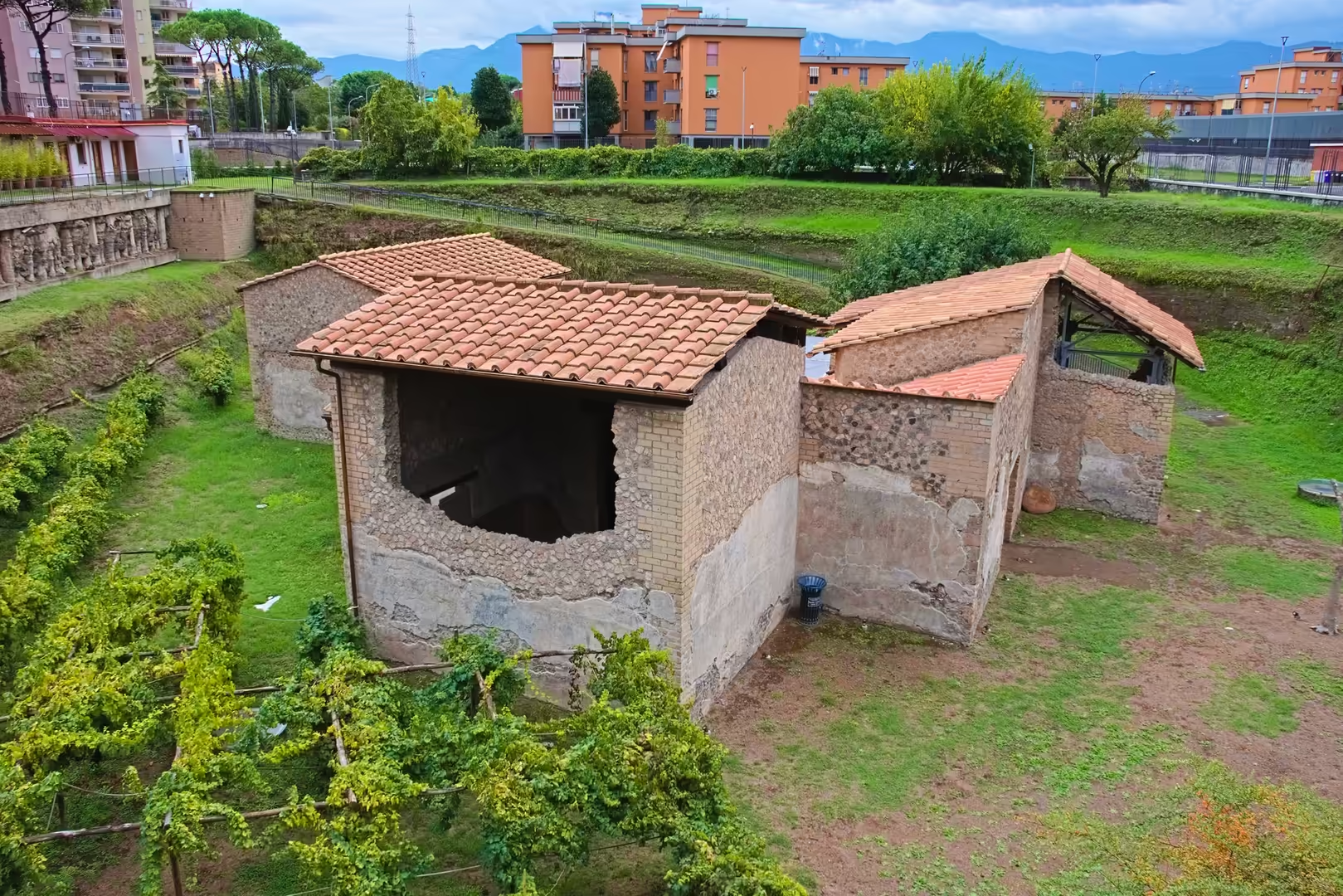
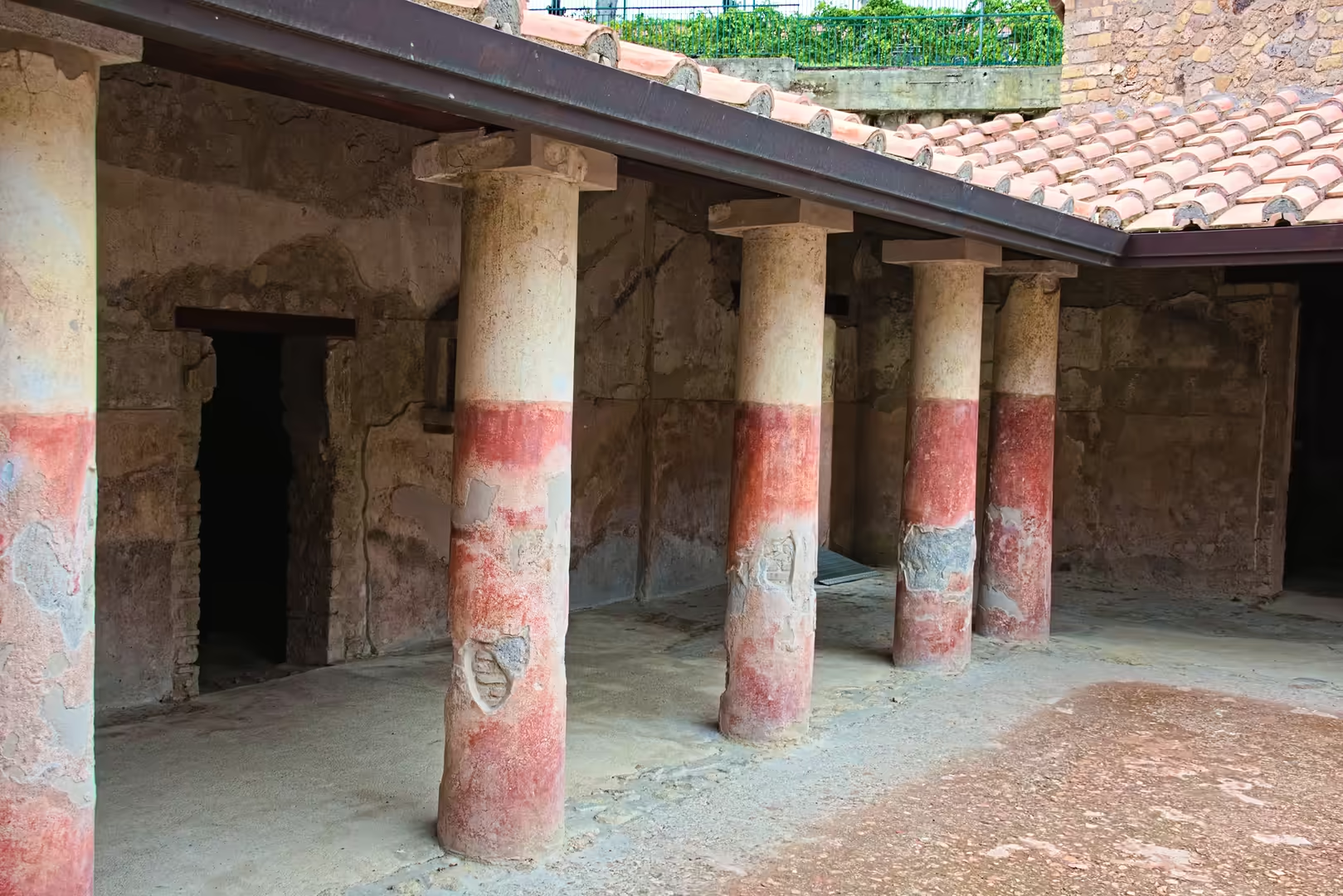
Villa Regina is a villa rustica: a working farm rather than a pleasure palace. Its rooms are grouped around an open courtyard, arcaded on three sides with columns of red- and white-stuccoed masonry, and combine the living quarters of the farming family with the installations of a wine-producing estate: a pressing room with the remains of its wooden press, a cellar in which eighteen large terracotta jars, the dolia, stood buried in the floor, a granary, a kitchen and a cistern. Built in the first century BC and remodelled in the Augustan and Julio-Claudian periods, the farm was overwhelmed in AD 79 and (unlike the Boscoreale villas found by the treasure hunters of the nineteenth century) was excavated archaeologically and preserved complete. It is administered by the Parco Archeologico di Pompei together with the nearby Antiquarium di Boscoreale, the museum founded in 1991 to gather the finds of the Pompeian countryside.
Villa Regina is the counterpart of the great maritime villas of the Bay of Naples: where a few kilometres away the Villa Poppaea at Oplontis speaks of leisure and imperial luxury, the farm at Boscoreale shows the productive world that sustained that society of leisure: the wine, oil and grain of the Campanian plain. The same eruption that sealed the frescoes of the coast preserved the press, the jars and the fields of a working estate, and the ground on which the visitor walks today is the agricultural soil of AD 79, still marked by the roots of the Roman vines.
History
In Roman times the district of Boscoreale formed part of the ager Pompeianus, the territory outside the walls of Pompeii that stretched along the plain of the Sarno through the modern comuni of Pompei, Torre Annunziata, Boscoreale, Boscotrecase, Terzigno and Scafati; the coastal strip toward Torre Annunziata was occupied by the suburb of Oplontis, while much of the farmland was known as the Pagus Augustus Felix Suburbanus. Discoveries of villas, tombs and temples in this countryside go back to the middle of the eighteenth century, contemporary with the exploration of Pompeii itself, and they are almost all villae rusticae: estates combining a residential part with the rooms and yards of agricultural production. Pompeii drew much of its wealth from this land: the town exported its wine and oil as far afield as Provence and Spain, and the farms around the city were worked intensively.
Villa Regina came to light only in 1977, buried beneath the fields of the locality that gives it its name, and was excavated in the years that followed and published by Stefano De Caro in 1994, whose report remains the standard account. Because the site was explored methodically rather than stripped by dealers, the villa survives complete, an exceptional fate in a district where most villas were discovered in the nineteenth century and reburied after their frescoes and objects had been removed. Large quantities of pottery and farm implements were recovered; the wooden doors of the entrance were preserved as casts of their decayed timber; even a farm cart, a plaustrum, had survived in the ruins. An oil lamp of the third to fifth centuries AD found in the villa shows that the buried buildings were dug into again in late antiquity, long after the catastrophe.
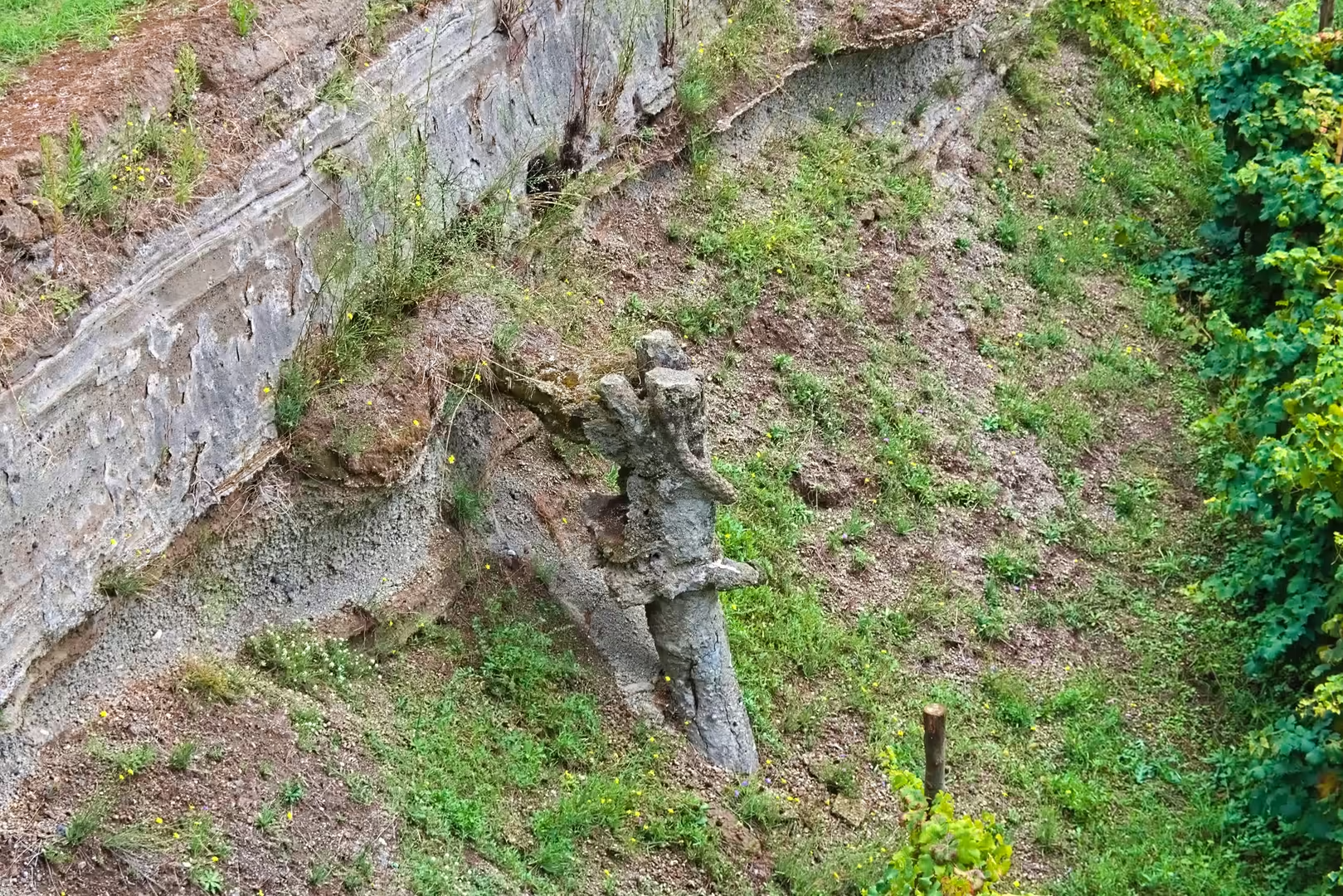
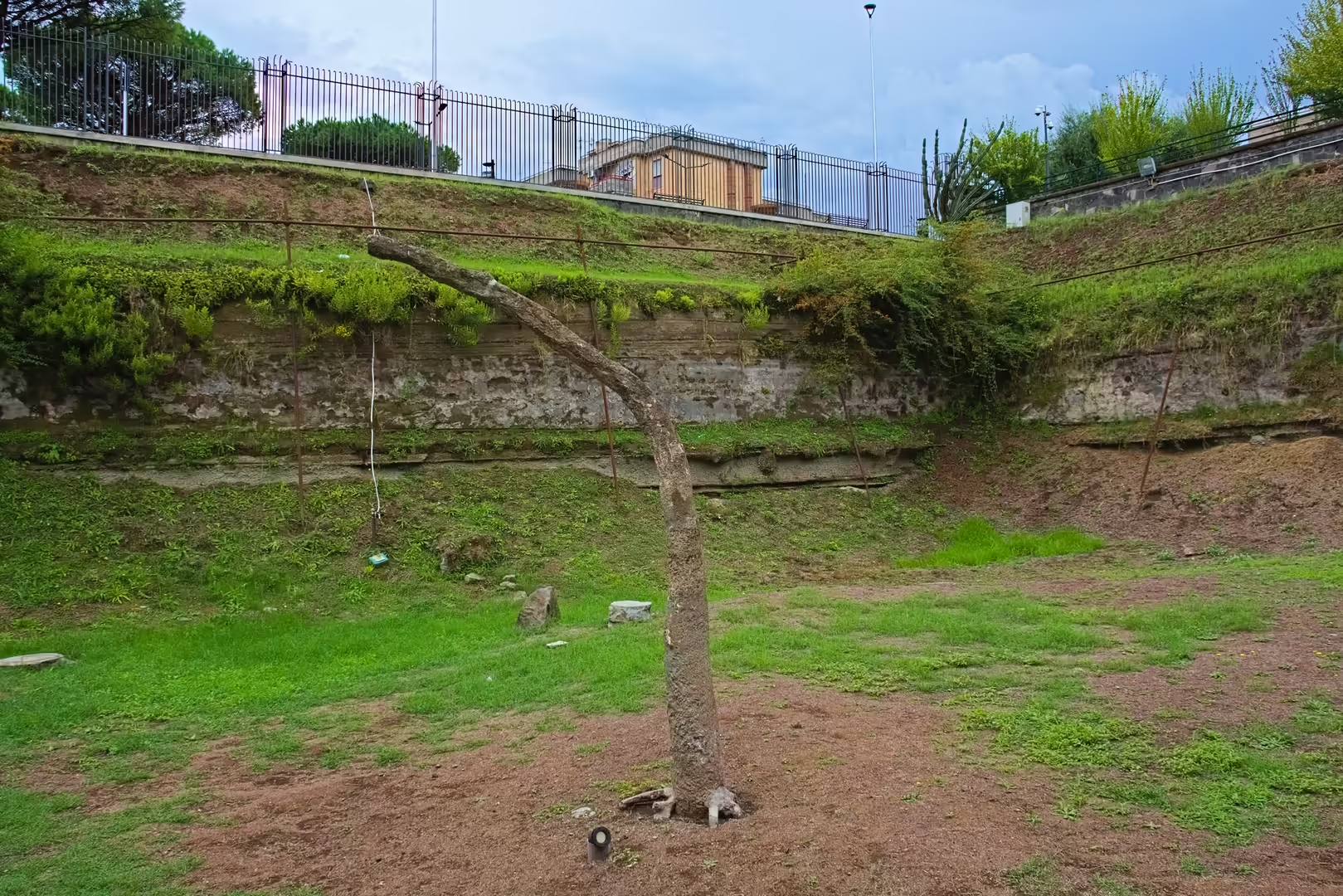
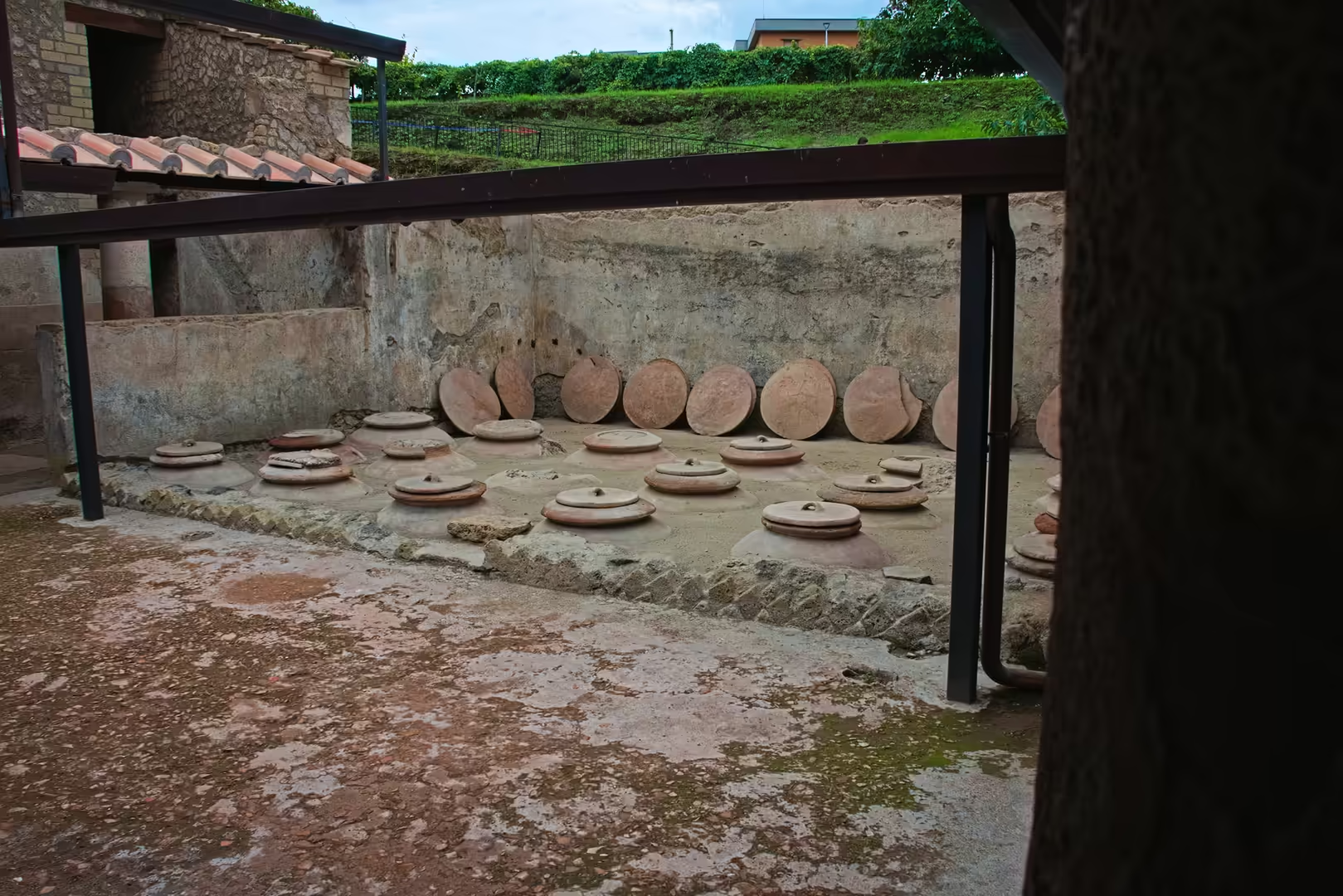
The economy of the estate was centred on wine. In the pressing room, the torcularium, the wooden press was anchored to the floor by holes and sockets, and the juice ran from the pressing tank into a vat for the must; from there it was stored in the eighteen dolia of the cellar, which had a total capacity of about 10,000 litres. The jars, of the type that the Romans set into the ground up to their necks to keep the contents cool and to control fermentation, were still standing buried in the courtyard floor when the eruption came, and it is precisely such sealed jars of fermenting wine that have helped to date the catastrophe, for at the end of October the vintage of AD 79 had just been pressed. Around the buildings the land was planted with vines, whose roots left their cavities in the ancient soil; pollen analysis has confirmed the cultivation of grapes and identified a wide range of other plants, and vines have since been replanted in the original holes.
The farm was not an isolated holding but one element of a densely exploited landscape, and the district’s other villas document the wealth that this countryside generated. The nearby Villa of P. Fannius Synistor, built and decorated about 40-30 BC, had more than thirty rooms around a peristyle and frescoes of exceptional quality; the paintings of its bedroom, with their illusionistic architecture and still lifes, are among the glories of the Metropolitan Museum in New York. The Villa della Pisanella belonged to the Pompeian banker Lucius Caecilius Iucundus, and it was there that the celebrated Boscoreale Treasure was discovered in 1895: a hoard of silver tableware and coins hurriedly hidden in a cistern at the time of the eruption, now divided between the Louvre and other museums. Most of these villas were reburied after excavation; their finds are gathered in the Antiquarium di Boscoreale, founded in 1991, which sets Villa Regina in the context of the whole Pompeian countryside.
Geology
The geological setting of Villa Regina is that of the volcanic apron between Vesuvius and Pompeii. The farm lay on the gently sloping plain at the foot of the volcano, on soils built of the lavas, tuffs and pyroclastic fans of earlier eruptions: among the most fertile in Italy, and the basis of the region’s ancient reputation for wine and oil. This is the Campanian countryside praised by the Roman agronomists and intensively farmed in the shadow of the volcano.
The eruption of AD 79 overwhelmed the farm in two stages, as it did Pompeii a kilometre to the south. First the Plinian column rained pumice and ash for some eighteen to twenty hours; the weight of the falling material brought down the roofs, and the villa lost the upper storey it had possessed. Then the collapsing column sent pyroclastic surges and flows racing across the plain, sealing the ruins under dense, compacted material. Then the collapsing column sent pyroclastic surges and flows racing across the plain, sealing the ruins under dense, compacted material. Excavation has shown the villa buried beneath roughly eight metres of volcanic deposit, with further soil accumulating through the centuries of abandonment; the successive layers of the eruption are clearly visible in the walls of the excavation, and the villa’s floors lie several metres below the level of the surrounding fields.
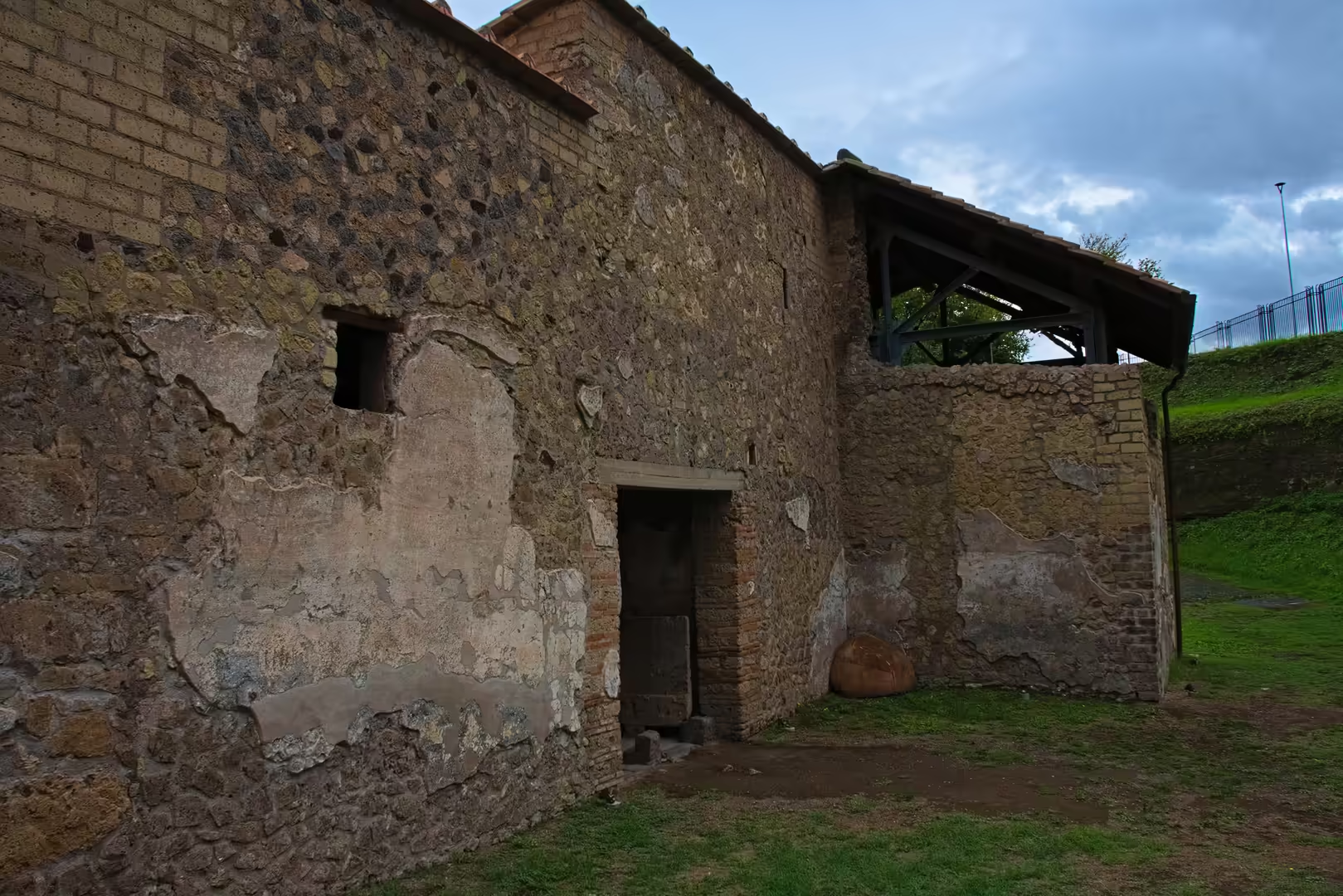
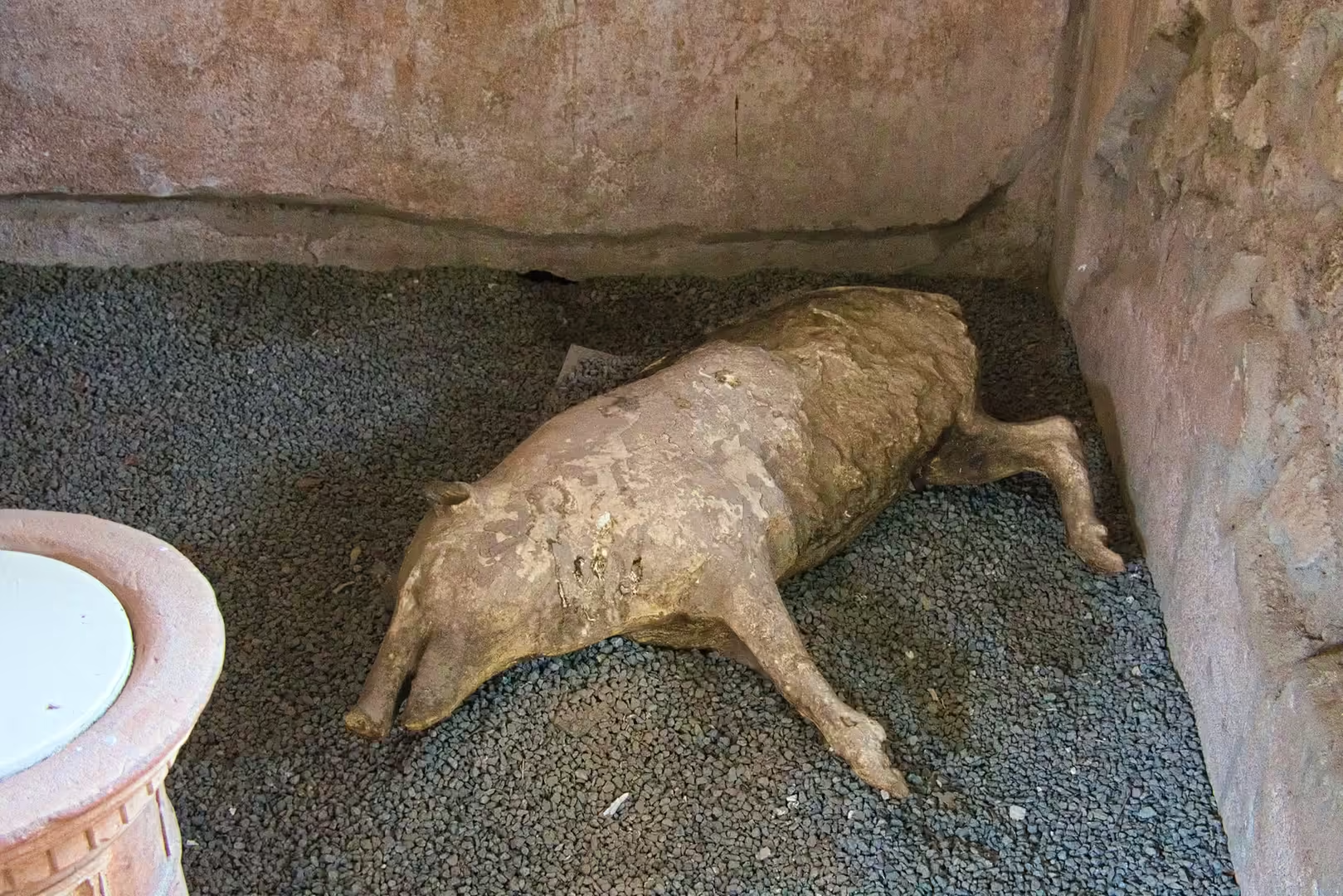
The ash that flooded the rooms after the pumice fall sealed the contents of the farm. Where organic material decayed it left hollows in the consolidated deposit, and from these voids plaster casts have been made of the wooden doors and of the pig that perished in the eruption; pollen survived in the buried soil to document the plants of the villa; and the cavities of the vine roots recorded the layout of the Roman plantation. Preservation of this kind (the imprint of everyday objects and living creatures) is the particular gift of the Vesuvian eruption, and at Villa Regina it extends from the farmyard to the field.
After the catastrophe the area lay buried and forgotten for centuries, and the fields of Boscoreale were cultivated again above the villa until its discovery in 1977. The site is today a sunken hollow in the vineyard landscape, and the contrast between the excavated farm and the plantations around it (in a comune of the Vesuvius National Park that still makes wine from volcanic soil) is one of the most direct encounters with the eruption of AD 79 anywhere in the region.
Things to See
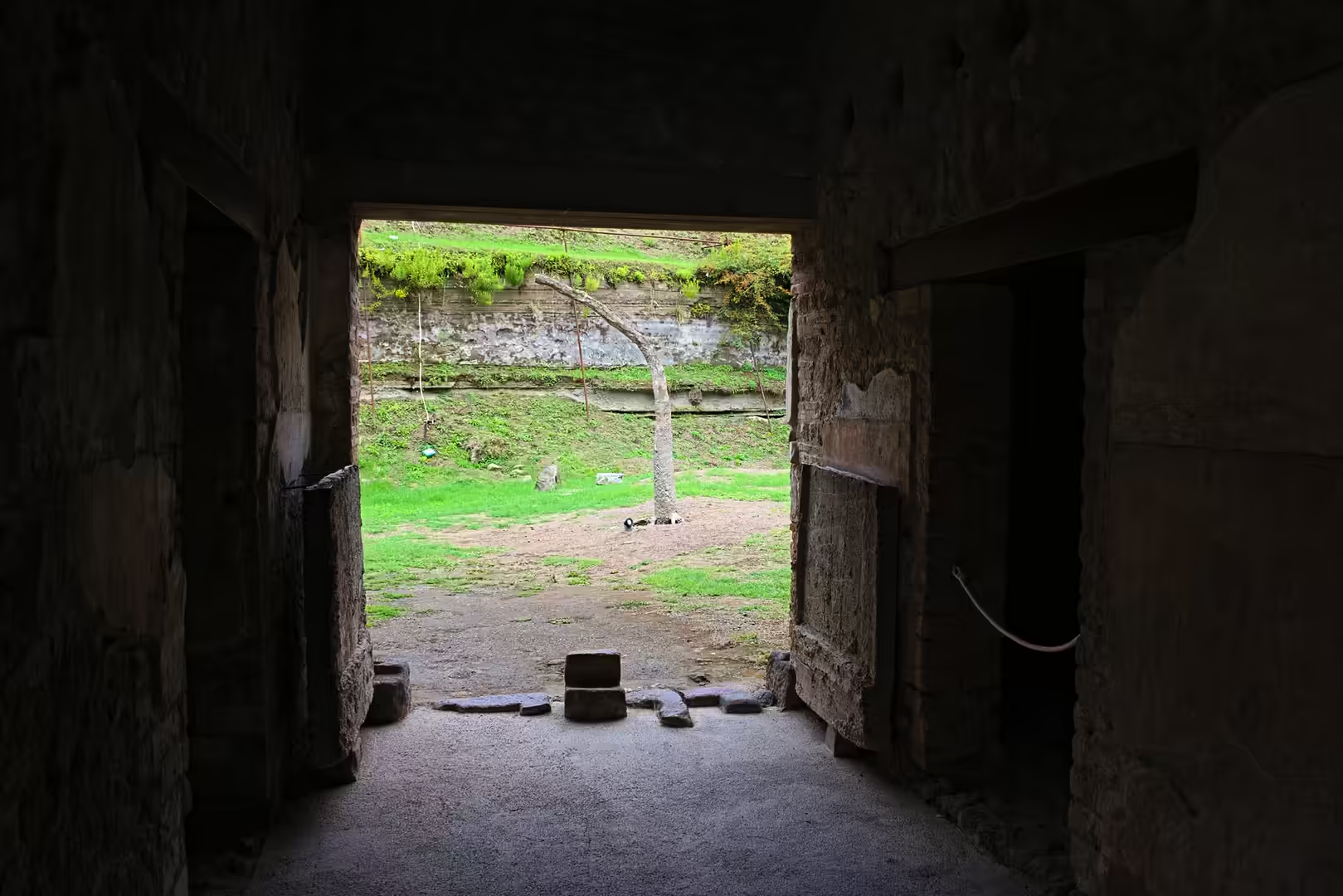
The visit descends into a wide, sunken excavation in the middle of Boscoreale’s fields, overlooked by the houses of the modern town and by Vesuvius itself; the roofs of the villa are gone, but its rooms and yards lie open beneath protective shelters. The path enters through the farm entrance, where the casts of the original wooden doors stand in their frames, and leads into the open courtyard, the heart of the estate, arcaded on three sides with columns whose lower parts still show the red paint of their stucco facing, sheltered today by a modern roof.
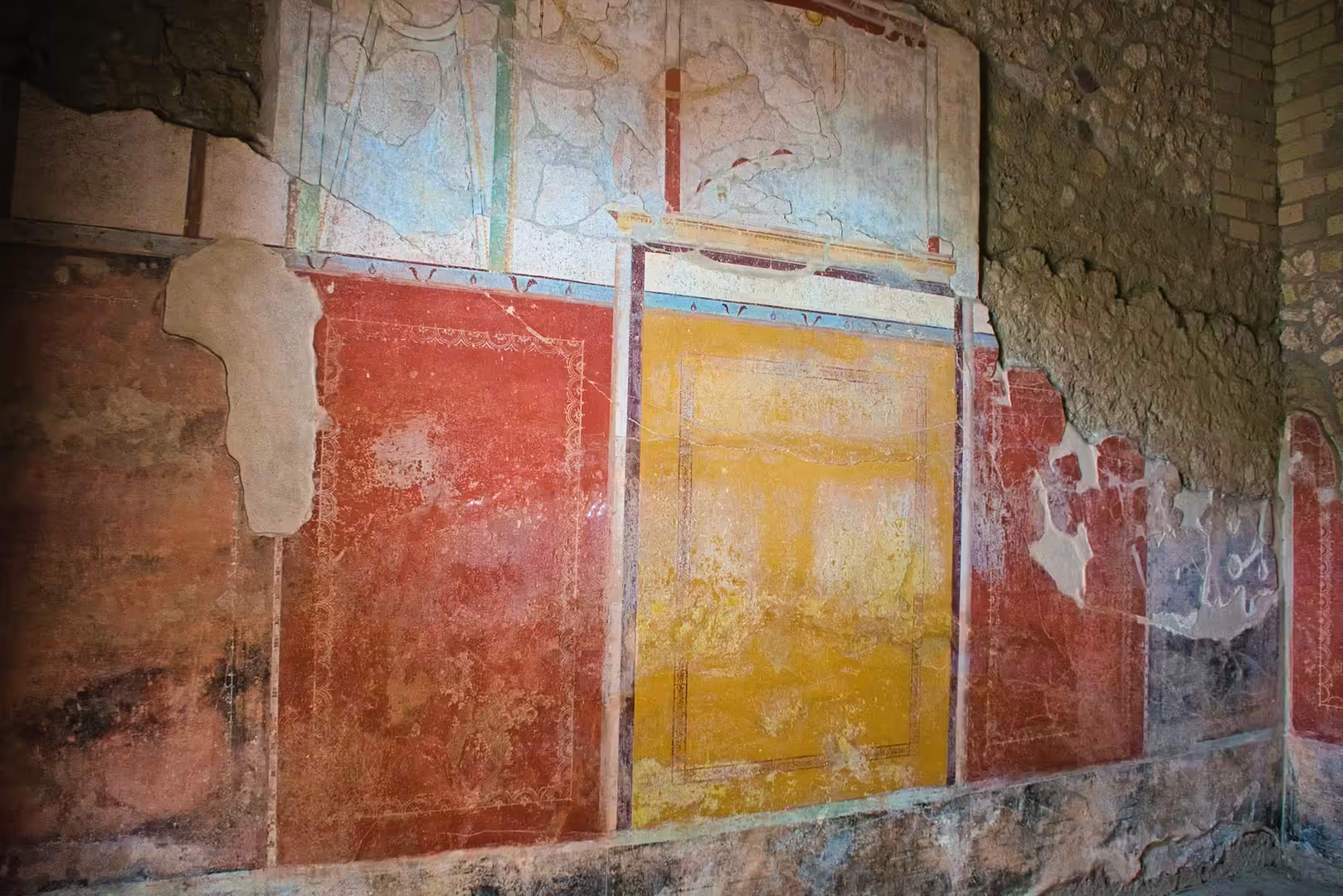
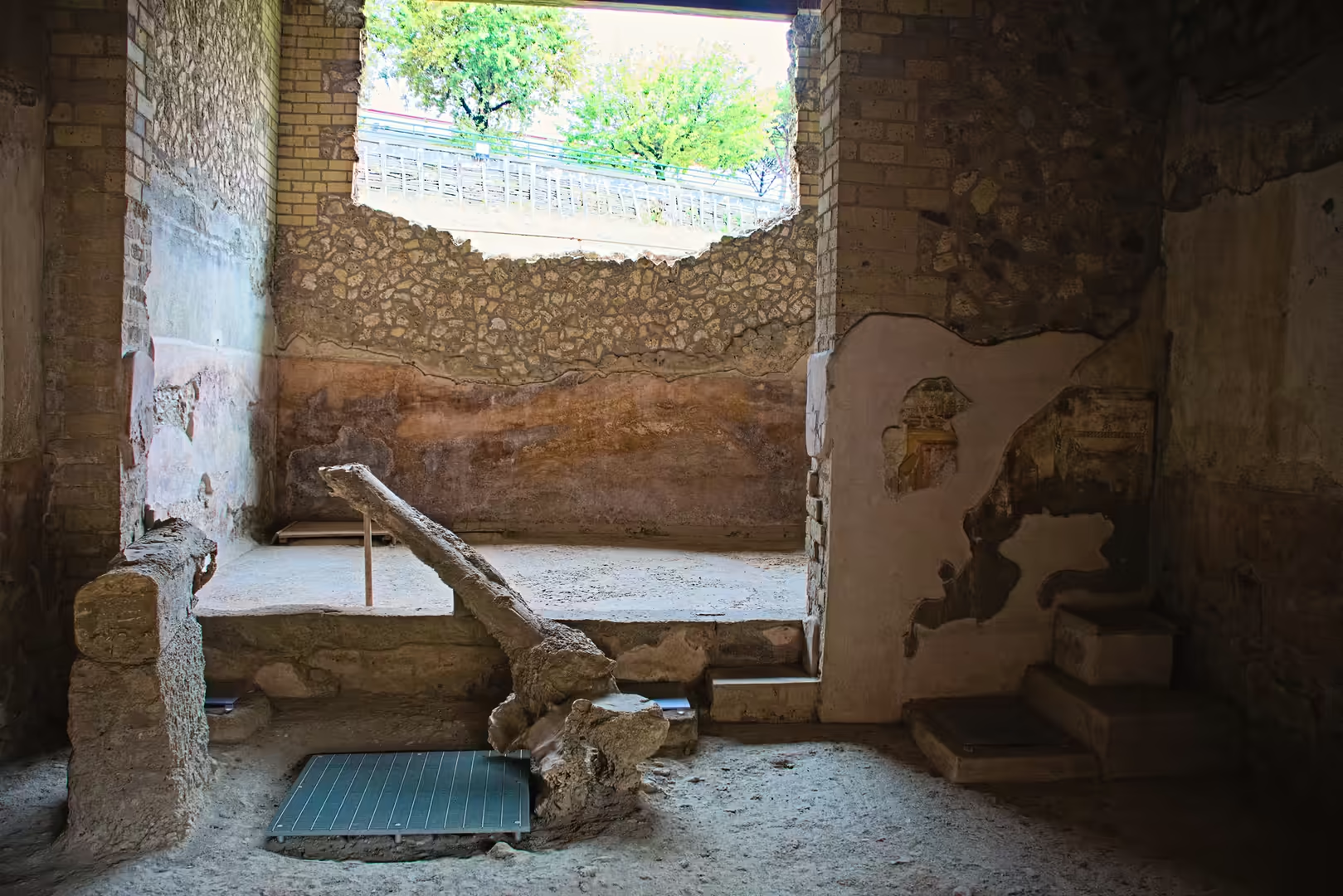
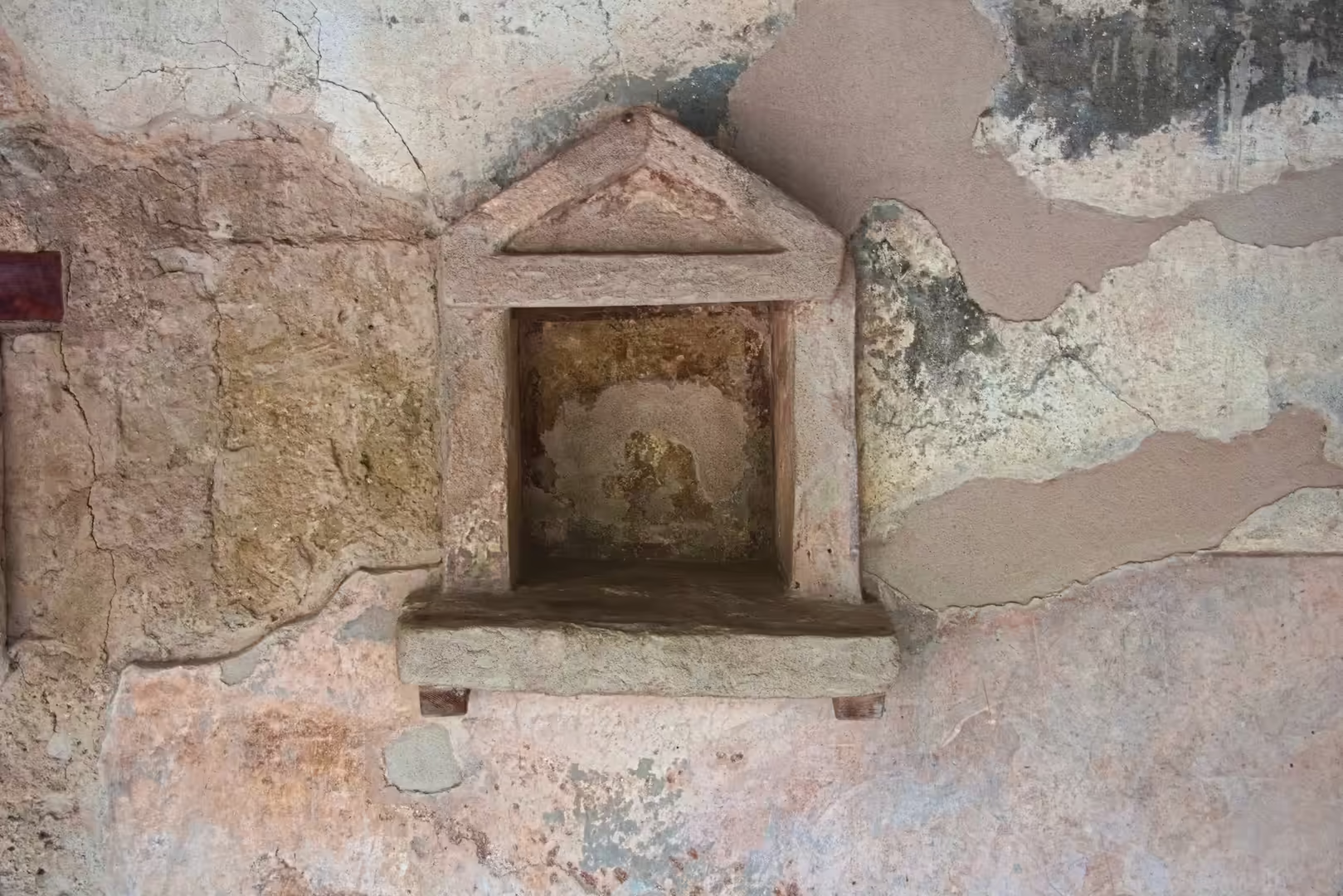
Around the courtyard open the rooms of the farm. The triclinium, the dining room of the owners, retains wall paintings of the transition between the Third and Fourth Styles: panels in deep red and ochre yellow, faded and chipped but unmistakably decorative, showing that even a working farm was not lived in without ornament. The kitchen, with its brick oven and central hearth, was apparently not in use at the moment of the eruption; a service room holds the cistern with its terracotta well-head; and in one interior a broken column lies across the floor, toppled by the violence of the eruption. A small niche crowned by a triangular pediment, its layers of pink plaster still clinging to the wall, is one of the few deliberately decorated details of the farm.
The most evocative part of the site is the wine cellar. In a room beneath a protective canopy eighteen dolia stand as the eruption left them, sunk into the floor up to their necks, their swelling terracotta bodies rising above the ancient ground; together they held about 10,000 litres of must. Beside them lie the remains of the torcularium, the pressing room, with the anchoring holes of the wooden press and the tanks into which the juice flowed: the whole apparatus of Roman wine-making, from grape to jar, comprehensible at a glance.
Among the rooms, the celebrated plaster cast of the pig that died in the catastrophe lies on a bed of gravel, its form preserved by the ash that sealed its body; the casts of the doors and the farm cart discovered in the villa round out the picture of daily work. A weathered marble statue of a winged figure rests in the grass at the edge of the excavation beside an old retaining wall, evidence that even this world of work was not entirely without ornament.
Outside the excavated rooms the ground itself is part of the exhibit: the walking surface around the villa is the agricultural soil of AD 79, in which the cavities of the Roman vine roots have been reopened and planted again with vines, recreating the vineyard of the estate. Across the road, the Antiquarium di Boscoreale displays the material culture of the Pompeian countryside (amphorae, dolia, tools, casts and frescoes from the villas of the district) and sets the farm in its wider landscape. Villa Regina receives a fraction of the visitors of Pompeii, a short distance away, and rewards the traveller with one of the rarest experiences of the Vesuvian sites: a Roman farm preserved complete with its press, its jars and its fields.
References
- De Caro, S. (1994). La villa rustica in località Villa Regina a Boscoreale. Rome: Giorgio Bretschneider.
- Jashemski, W. F. (1979). The Gardens of Pompeii, Herculaneum and the Villas Destroyed by Vesuvius. Vol. I. New Rochelle, NY: Caratzas.
- Rossiter, J. J. (1981). Wine and Oil Processing at Roman Farms in Italy. Phoenix 35 (4), 345-361.
- Parco Archeologico di Pompei (2026). Boscoreale: Antiquarium and Villa Regina. Pompeii Sites. pompeiisites.org/en/boscoreale
- Wikipedia contributors (2026). Villa Boscoreale. en.wikipedia.org/wiki/Villa_Boscoreale
- Wikipedia contributors (2026). Boscoreale. en.wikipedia.org/wiki/Boscoreale
- Wikipedia contributors (2026). Boscoreale Treasure. en.wikipedia.org/wiki/Boscoreale_Treasure
- Wikipedia contributors (2026). Dolium. en.wikipedia.org/wiki/Dolium
- Wikipedia contributors (2026). Villa rustica. en.wikipedia.org/wiki/Villa_rustica
- Wikipedia contributors (2026). Pompeii. en.wikipedia.org/wiki/Pompeii
- Wikipedia contributors (2026). Vesuvius National Park. en.wikipedia.org/wiki/Vesuvius_National_Park
- Wikipedia contributors (2026). Mount Vesuvius. en.wikipedia.org/wiki/Mount_Vesuvius
- Wikipedia contributors (2026). Eruption of Mount Vesuvius in 79 AD. en.wikipedia.org/wiki/Eruption_of_Mount_Vesuvius_in_79_AD
- Wikipedia contributors (2026). Scavi archeologici dell’agro pompeiano (Italian version). it.wikipedia.org/wiki/Scavi_archeologici_dell'agro_pompeiano
- Wikipedia contributors (2026). Boscoreale (Italian version). it.wikipedia.org/wiki/Boscoreale