2025 Nordkapp 1 - Germany to Estonia
26 July 2025









Journal Notes
General
The corridor traced by this route runs from Germany across Poland and the three Baltic states to the Gulf of Finland, a distance of some 1,500 kilometres by road. Its northern terminus is Tallinn, the Estonian capital, from which ferries cross the gulf to Helsinki in Finland. Between the German frontier and Tallinn lie four states, Poland, Lithuania, Latvia and Estonia, whose territories make up the middle section of the North European Plain.
Warsaw, the Polish capital, is the largest city on the line, with a metropolitan population of about three million. The Baltic capitals are smaller: Vilnius, Riga and Tallinn each hold between roughly 400,000 and 650,000 inhabitants within their municipal boundaries. Other centres of note along or near the corridor include Poznań, Bydgoszcz and Białystok in Poland, Kaunas and Klaipėda in Lithuania, Daugavpils in Latvia, and Tartu and Pärnu in Estonia. The route therefore links a series of medium sized cities rather than a single dominant metropolis, and it does so without leaving the lowland.
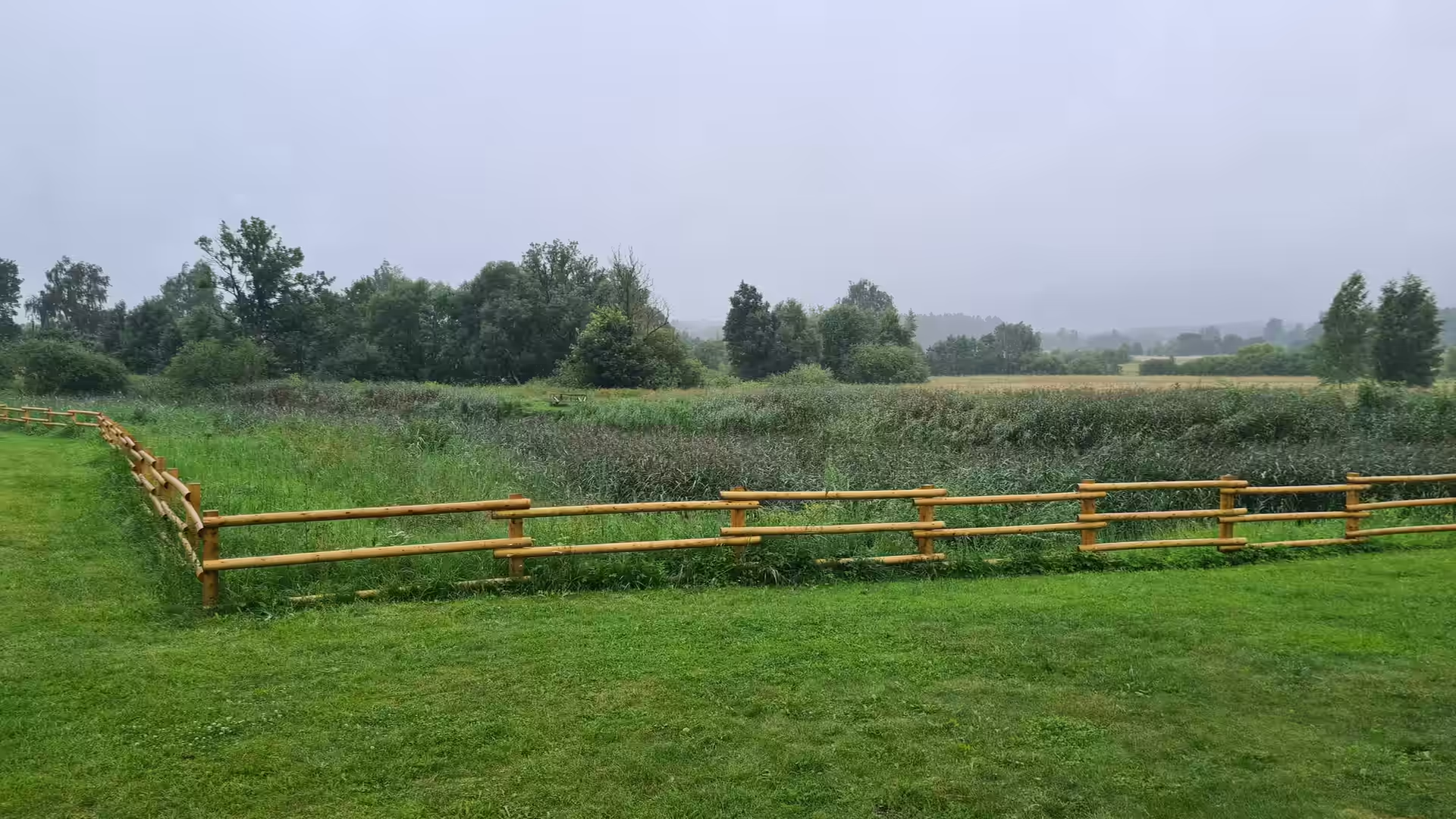
The whole belt belongs to the North European Plain, the broad lowland that extends from the Low Countries and northern France eastward into Belarus and Russia. Elevations along the route seldom exceed 200 metres, and much of the ground lies below 100 metres. The plain is largely the work of the Quaternary ice sheets, which levelled older relief and left behind a thick mantle of glacial deposits. Rivers are slow and meandering, drainage is imperfect, and lakes, marshes and peat bogs are common, notably in the lakelands of Masuria in north eastern Poland and in the Baltic interior.
For much of its length the corridor keeps within reach of the Baltic Sea, whose eastern shore it follows from the Polish coast through Lithuania and Latvia into Estonia. The sea moderates the climate, so that winters are milder than latitude alone would suggest, and it has shaped settlement for a thousand years. Gdańsk, Klaipėda and Riga are historic ports of the eastern Baltic, and Tallinn, at the head of the Gulf of Finland, is the most northerly of them. Inland, the plain carries heavy soils suited to rye, potatoes and sugar beet, while forests of pine, spruce and birch cover a large part of the ground.
The three Baltic states are usually treated as one group because of their shared geography, their parallel modern histories and their comparable size. Together they cover about 175,000 square kilometres, roughly the area of England and Wales, and hold some six million people. Lithuania lies furthest south and has the largest population; Latvia occupies the centre; Estonia is the smallest and northernmost, facing Finland across the gulf. Each has a long Baltic coastline, a low and predominantly rural interior, and a capital that dominates national life. The corridor is a natural route north because the plain offers no serious obstacle between Germany and the Gulf of Finland: there is no mountain barrier, and the great rivers, the Vistula, the Nemunas and the Daugava, are bridged at long established crossings.
History
For a thousand years the southern and eastern shores of the Baltic have formed a single trading and political zone. From the twelfth century the Hanseatic League bound the ports of the region into a network reaching from the Rhine to Novgorod. Riga and Tallinn, known to German speakers as Reval, were leading members, and their wealth rested on exports of furs, wax, flax and timber and on imports of salt and cloth. Hanseatic merchants brought German law, weights and building styles, and the medieval core of Tallinn, with its walls and towers, survives as a monument of that order.
In the thirteenth century the Teutonic Order and its Livonian branch carried crusading warfare into the lands east of the Baltic. The Teutonic Knights conquered Prussia and founded a monastic state there; the Livonian Order established control over the territory of present day Latvia and Estonia. They raised castles of brick and stone, brought the population into the Latin Church, and fostered towns such as Riga and Klaipėda, then called Memel. Their power declined after the Polish and Lithuanian victory at Grunwald in 1410, and in 1525 the Prussian branch was secularised as a duchy under the Polish crown.
The union of Poland and Lithuania, formalised at Lublin in 1569, produced one of the largest states in Europe, stretching from the Baltic almost to the Black Sea. It embraced the modern territory of Lithuania, the southern districts of Latvia, Belarus and much of Ukraine. The Commonwealth was weakened by internal conflict and by the rise of its neighbours, and between 1772 and 1795 it was partitioned three times by Russia, Prussia and Austria. By the third partition Poland had ceased to exist as a state, and most of its lands passed to the Russian Empire, which already held the Baltic provinces of Estonia, Livonia and Courland.
The nineteenth century brought industrial growth to Riga and Tallinn, and the early twentieth brought the collapse of empire in war and revolution. Lithuania, Latvia and Estonia declared independence in 1918 and defended it in the wars that followed, and for two decades the three states functioned as independent republics, though not without internal tension. That independence ended in 1940, when the Soviet Union annexed the Baltic states under the terms of the pact signed by Molotov and Ribbentrop; German occupation followed in 1941, and Soviet forces returned in 1944. The interwar republics were not restored, and large numbers of people were deported or displaced.
The decades that followed saw forced collectivisation, rapid industrialisation and heavy immigration from other parts of the Soviet Union. The independence movements of the late 1980s, above all the Baltic Way demonstration of 1989, in which some two million people formed a human chain from Tallinn to Vilnius, prepared the ground for the restoration of independence in 1991. All three states joined the European Union and NATO in 2004. Across the corridor these centuries have left visible layers: Hanseatic and medieval masonry in Tallinn, Baroque churches in Lithuania and at Aglona in Latvia, wooden manor houses and village buildings, and the port and road infrastructure built since 1991.
Geology
The physical landscape of the corridor is young in geological terms and is largely the work of the Quaternary glaciations. The North European Plain is a broad structural depression filled with thick sequences of Mesozoic and Cenozoic sediments, buried under a cover of glacial material. During the Pleistocene the Fennoscandian ice sheet advanced and retreated across the region several times, and in the last cold stage it reached the northern edge of the Central European uplands. Each advance scoured the older surface, and each retreat left behind what it had carried.
The characteristic deposit is glacial till, also called boulder clay, an unsorted mixture of clay, sand, gravel and stones laid down directly by the ice. Where the ice front paused, meltwater and debris built ridges known as moraines, and terminal moraines mark the maximum extent of particular advances. Drumlins, elongated mounds of till, and eskers, sinuous ridges of gravel deposited by streams beneath or within the ice, are common further north. The whole belt is therefore a constructional landscape, shaped by accumulation rather than by the erosion of hard rock.
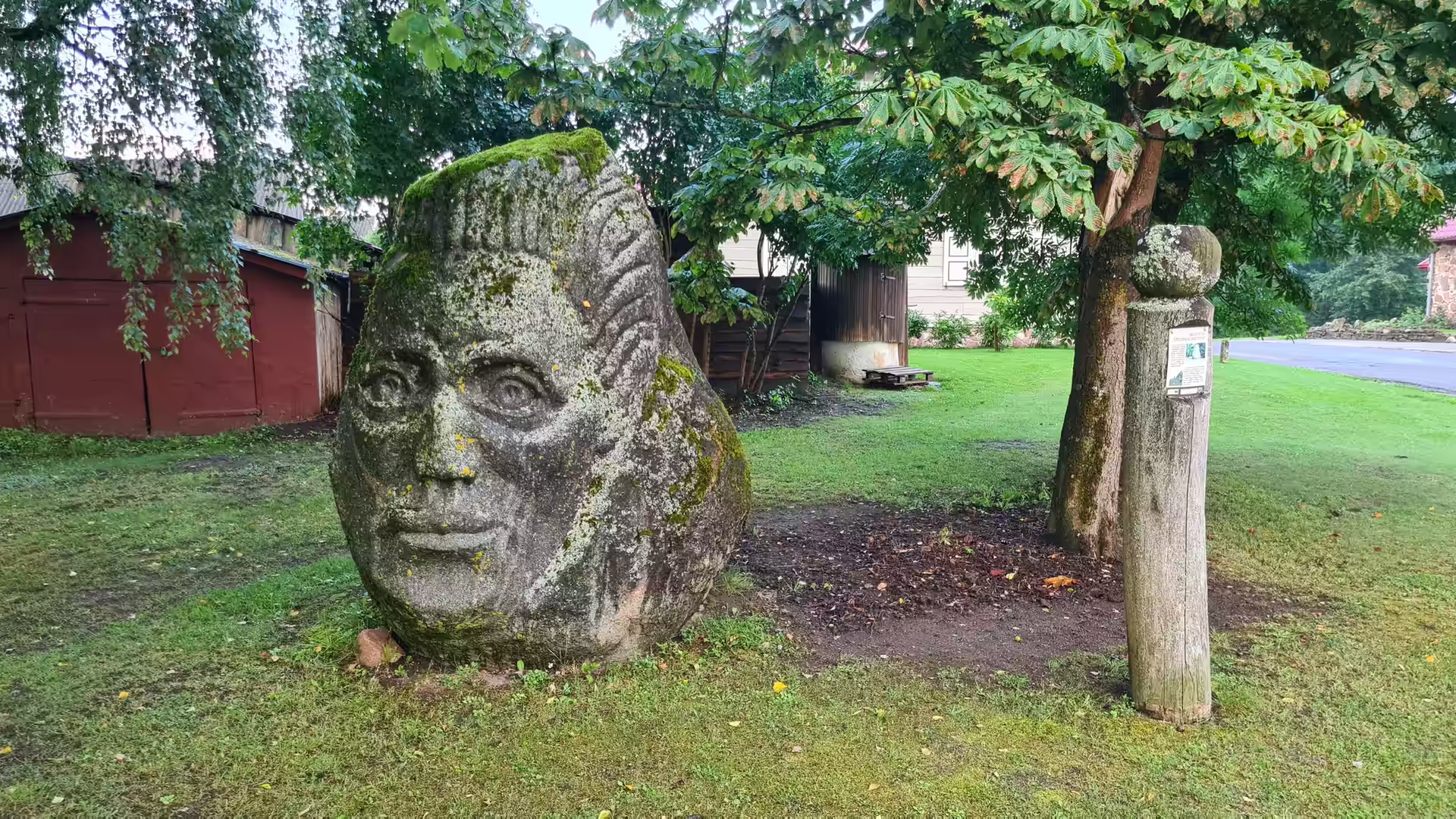
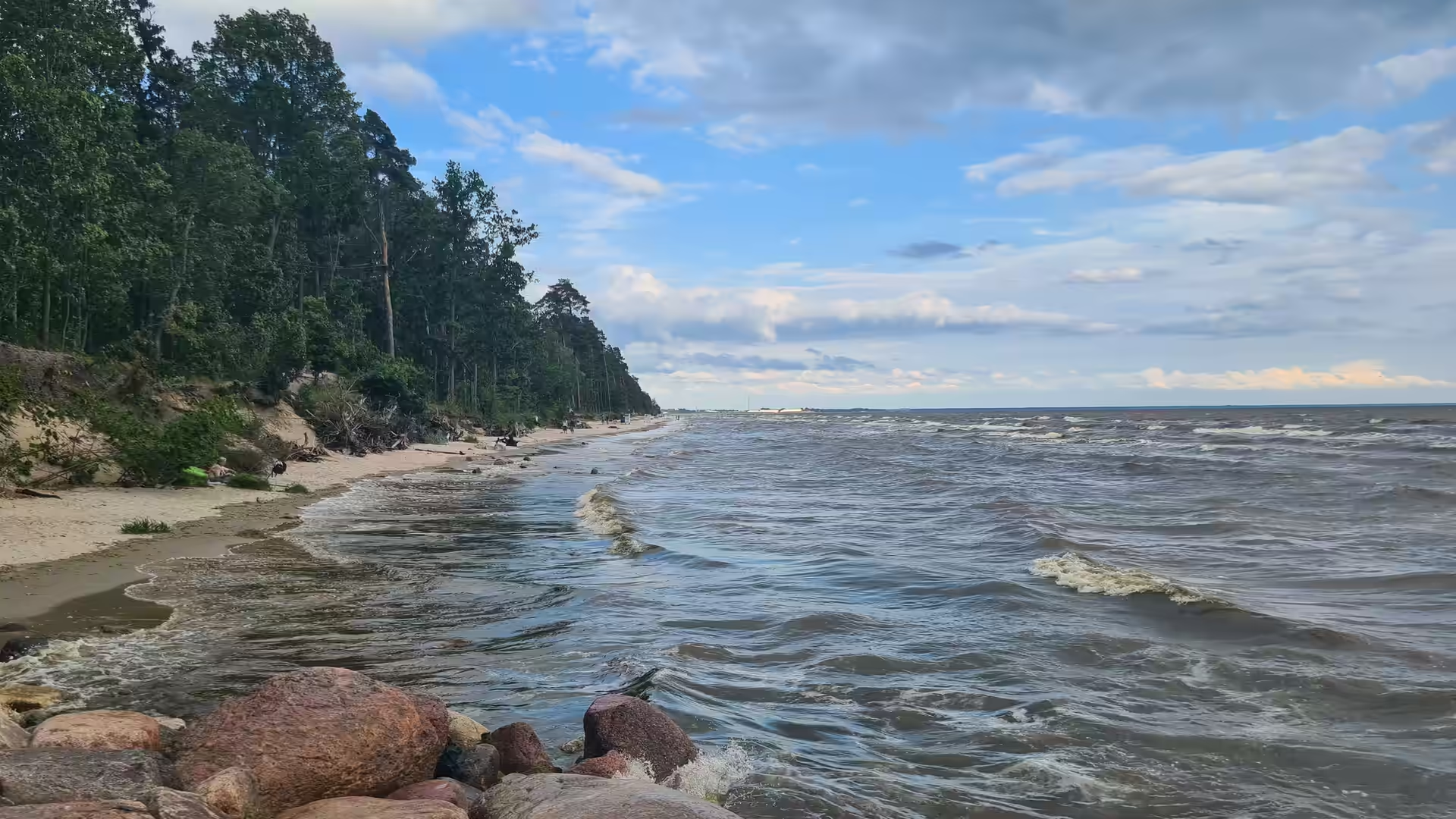
A conspicuous result is the abundance of erratic boulders, blocks carried far from their place of origin and dropped where the ice melted. Many are crystalline rocks from Scandinavia, granite and gneiss in particular, that have travelled several hundred kilometres to the south. In Poland this debris has been gathered from the fields and quarried for centuries as building stone. Erratics large enough to be named, and boulders built into church walls and foundations, occur throughout Lithuania, Latvia and Estonia, where some are protected as geological monuments.
The Baltic Sea occupies a depression whose history is a sequence of postglacial stages. As the ice withdrew, the basin passed through a series of phases known as the Yoldia Sea, the Ancylus Lake and the Littorina Sea before reaching its present configuration, its water shifting between fresh, brackish and fully marine conditions as its connection with the ocean opened and closed. Because the Fennoscandian land mass is still rising after the removal of the ice load, the coasts of Estonia and northern Latvia are slowly emerging from the sea, while elsewhere subsidence and sediment supply work in the opposite direction. Isostatic rebound of a few millimetres a year can be measured along the Estonian shore.
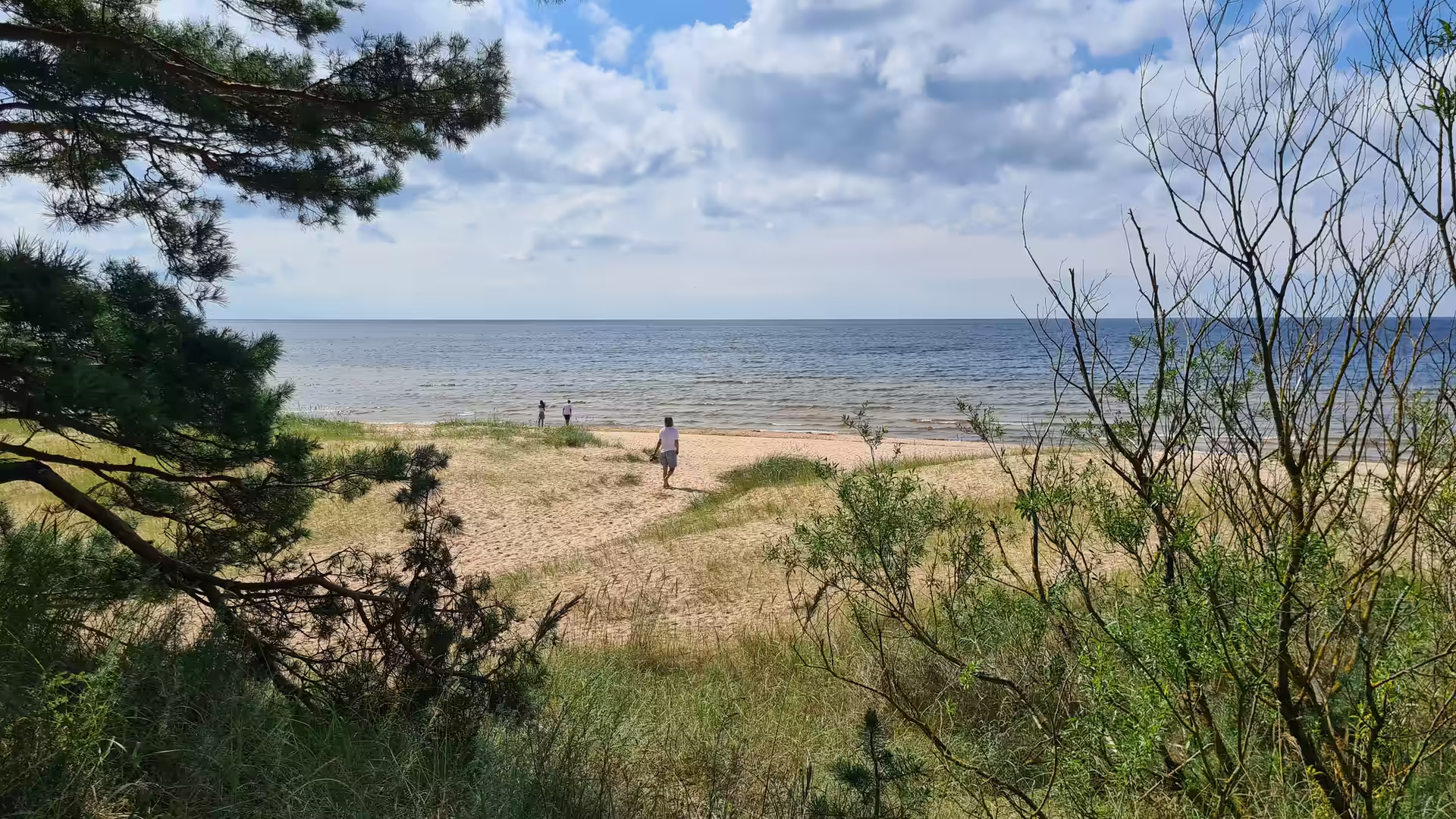
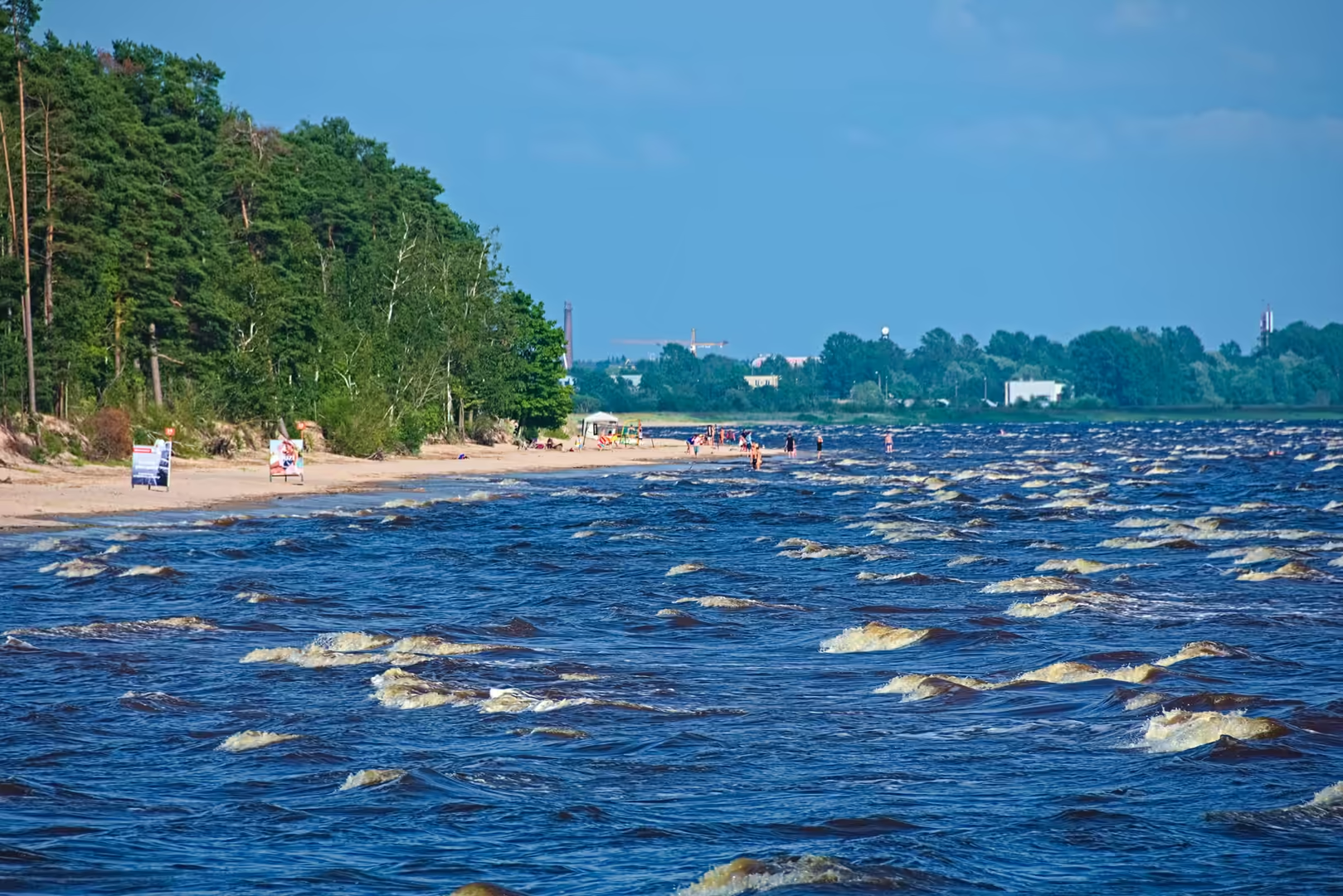
Along the eastern coast the interaction of waves, currents and rebound produces beach ridges and low dunes. The sandy shore at Pärnu, on the Gulf of Riga, is a well developed example, with a broad beach backed by ridges of sand thrown up by storm waves and by pine woods planted to hold the dunes in place. Behind the beaches of northern Estonia and northern Latvia lies a belt of Ordovician and Silurian limestone, the same bedrock that forms the steep escarpment known as the Baltic Klint, where the sea has cut into the plateau. Freshwater sinks readily into this limestone, and karst springs feed the rivers of the coastal lowland.
Things to See
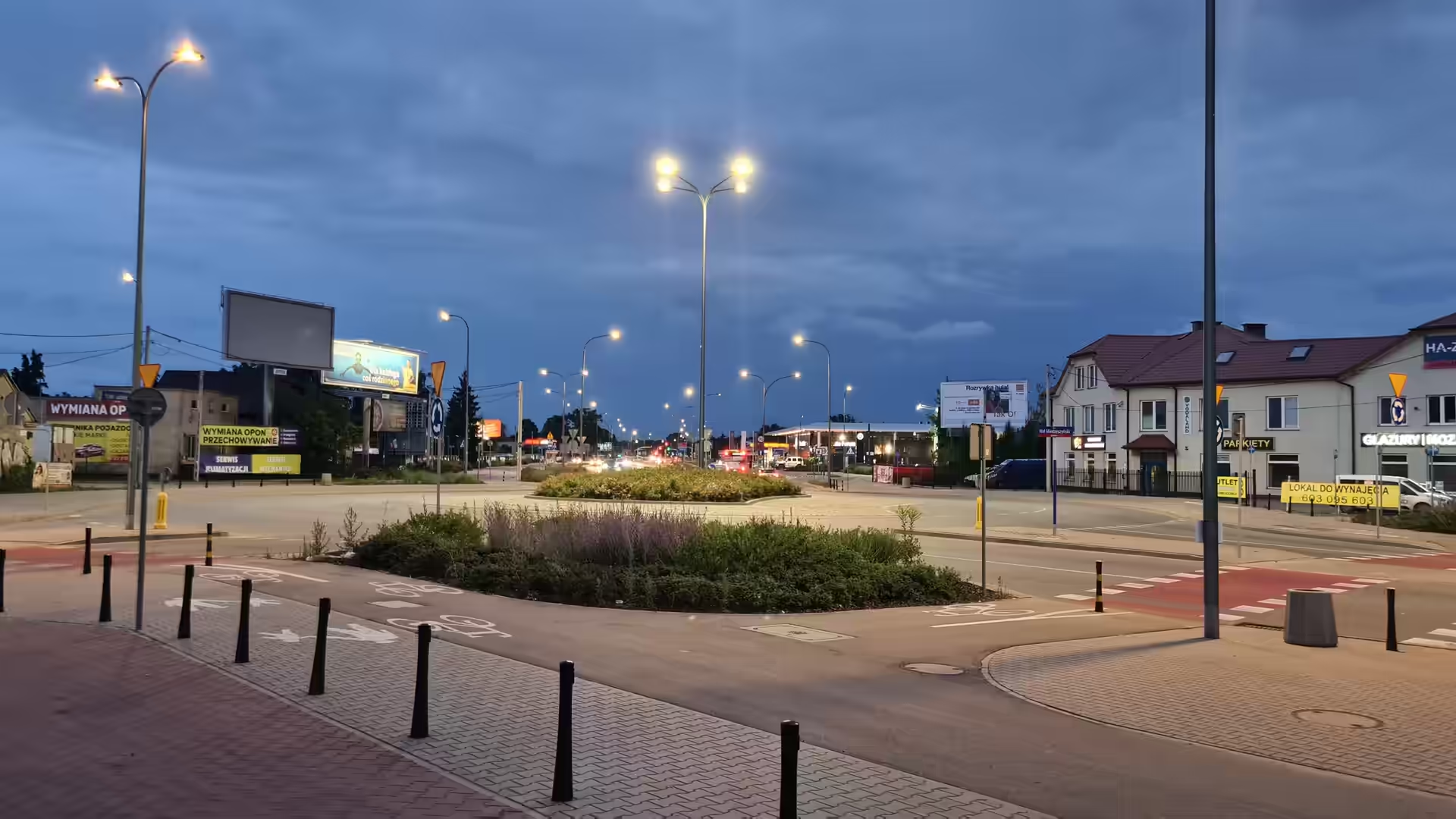
Warsaw is the largest city on the route, and the corridor crosses the Vistula on its way north. The built form of the city is dense and vertical, and its great junctions, above all the multi lane roundabouts that distribute traffic between the central districts, are a distinctive element of the urban landscape. Evening traffic on such a junction, with signals at work and vehicles moving across the lanes, gives the capital a rhythm unlike that of the small towns further east. Warsaw was largely rebuilt after the Second World War, and its reconstructed historic centre is inscribed on the UNESCO World Heritage List. The city is the administrative, financial and cultural centre of Poland, and beyond its suburbs the plain opens into farmland, with the road running north eastward towards the Lithuanian frontier.
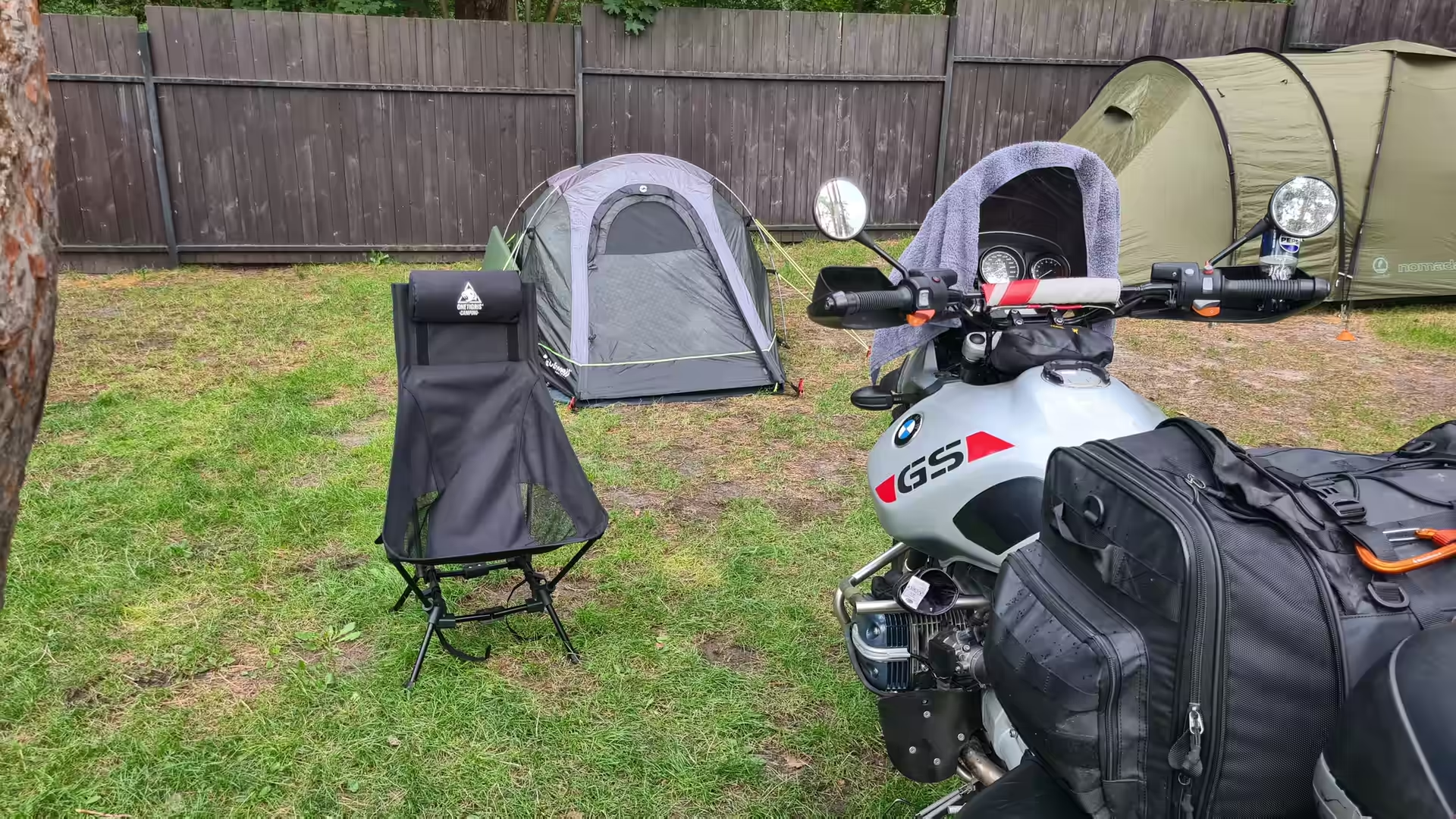
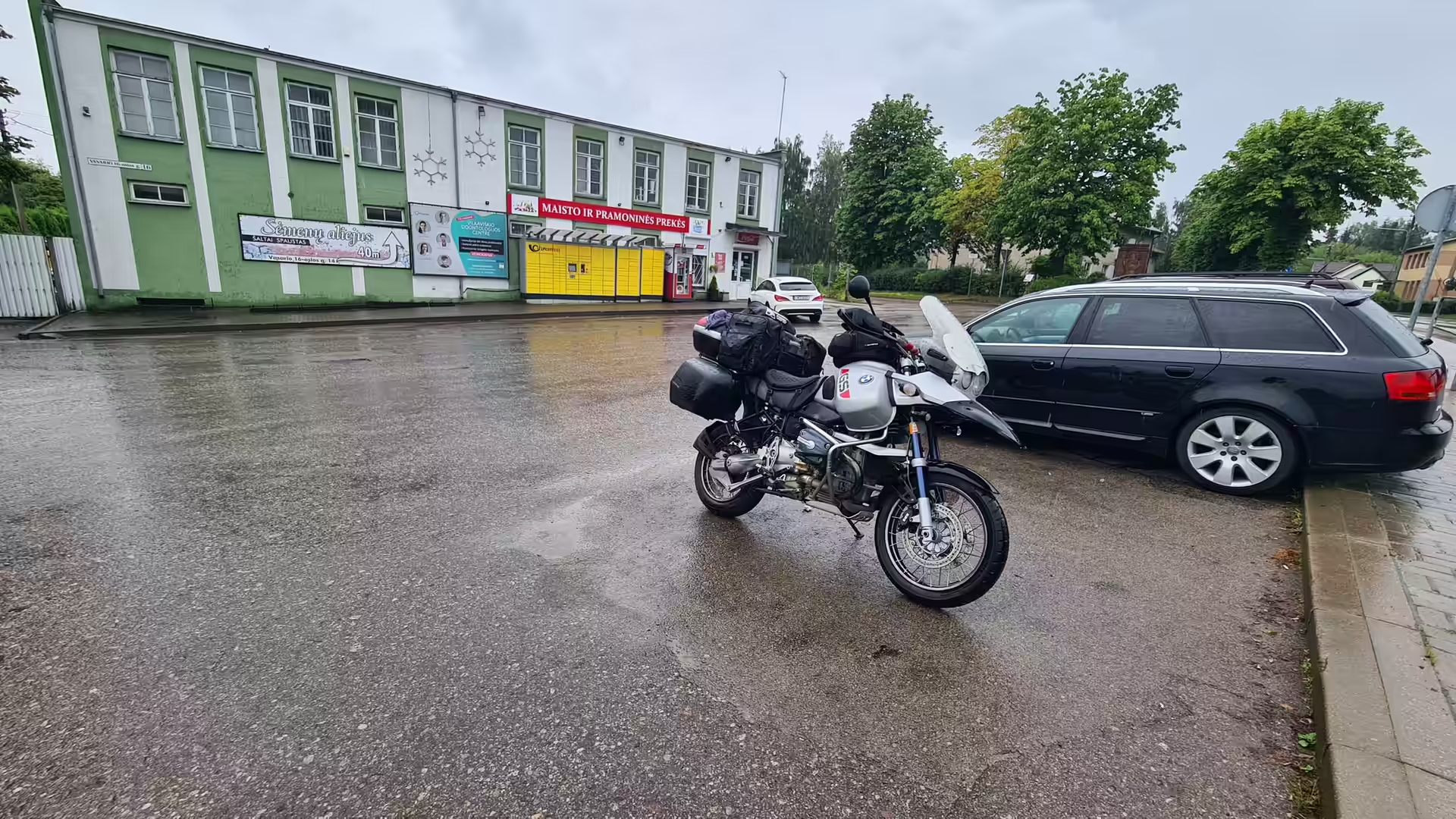
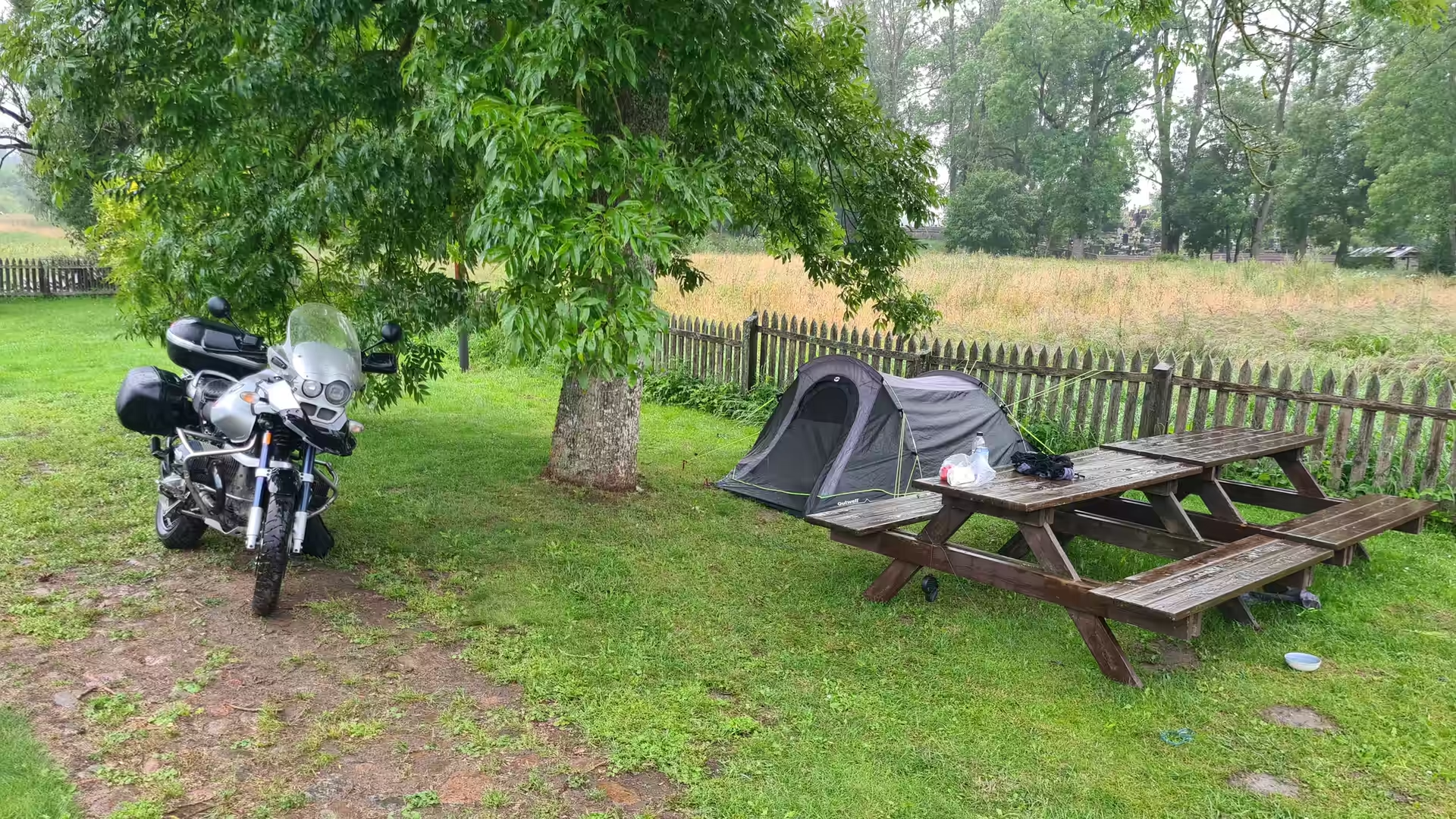
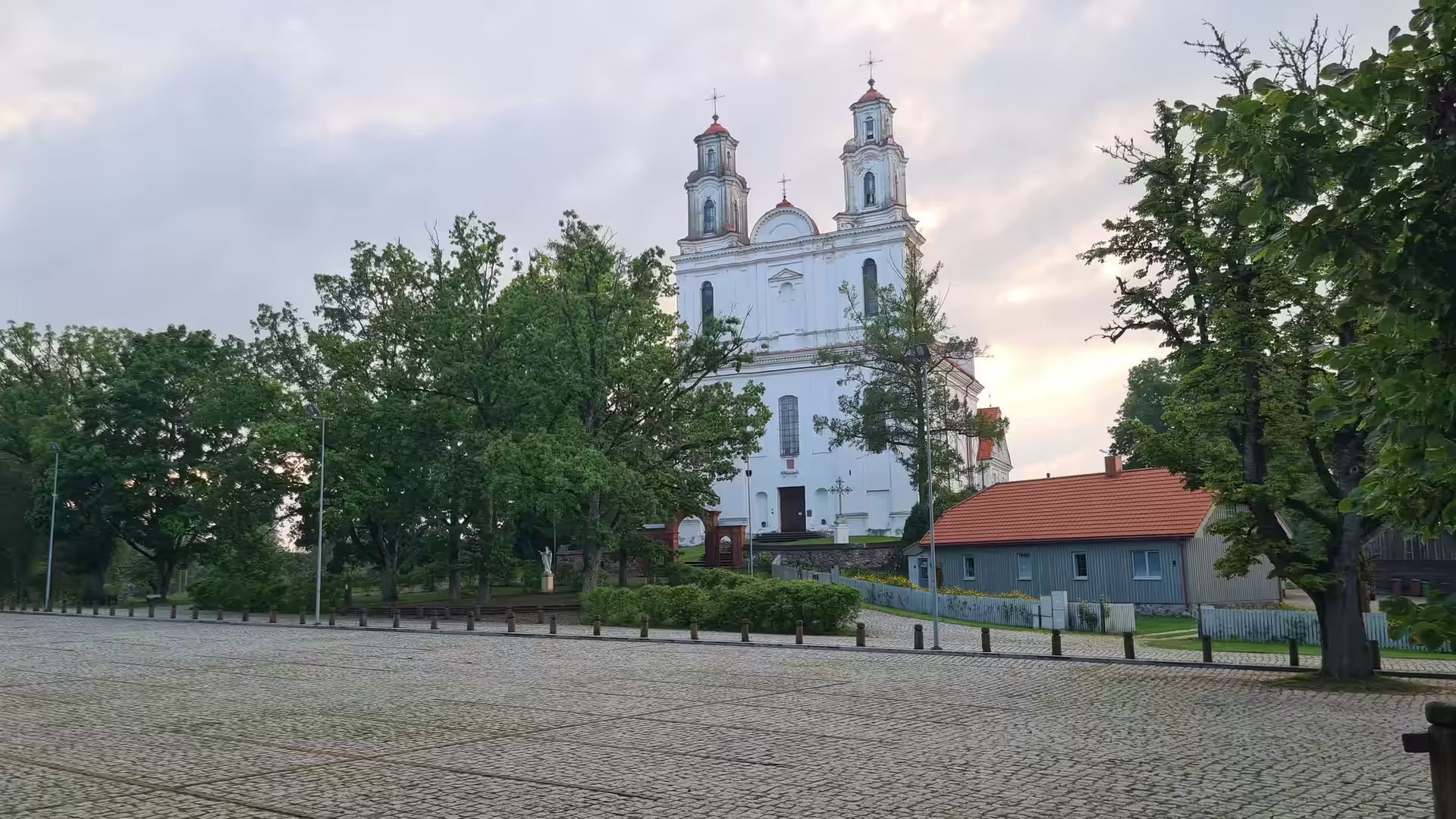
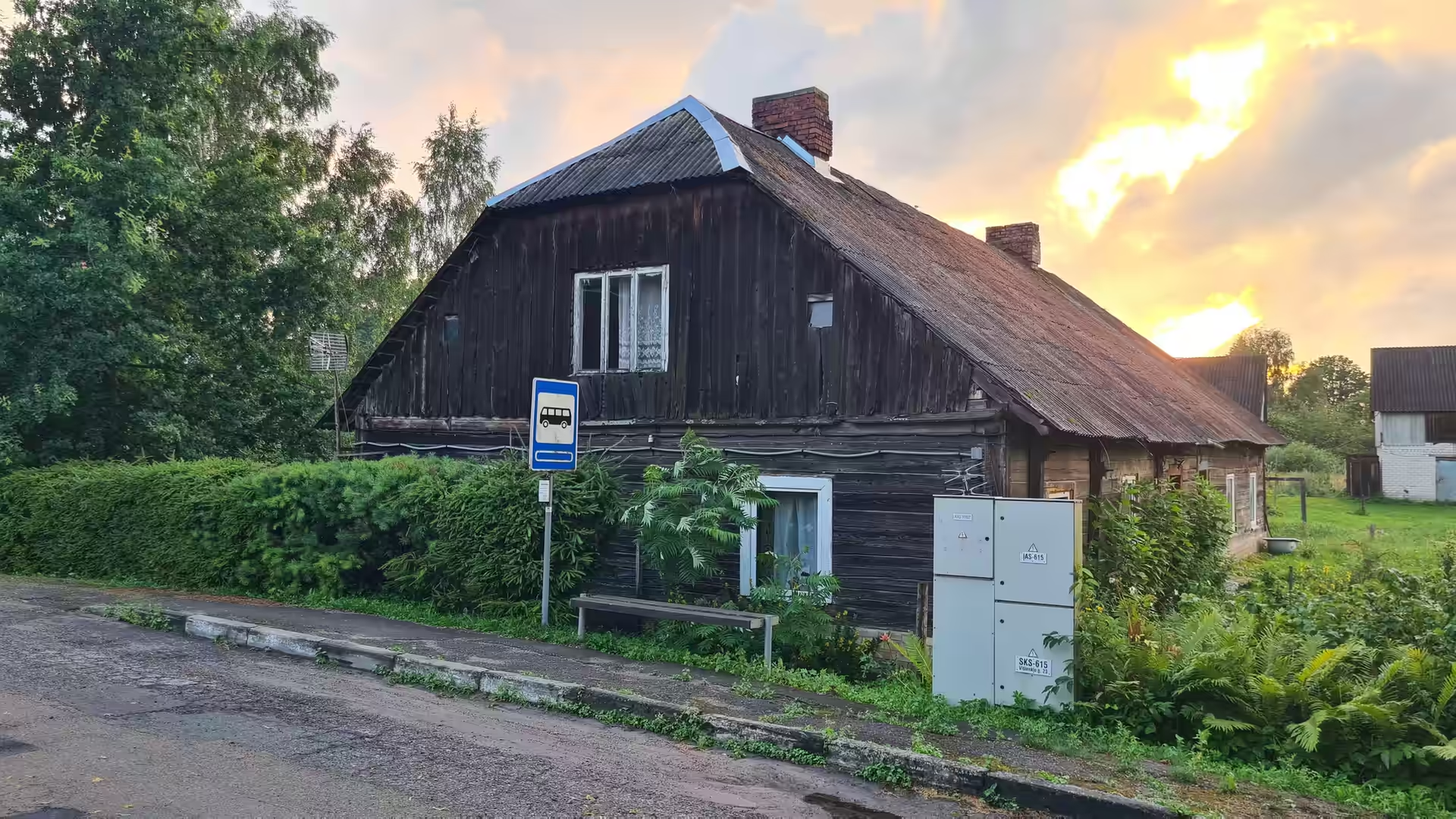
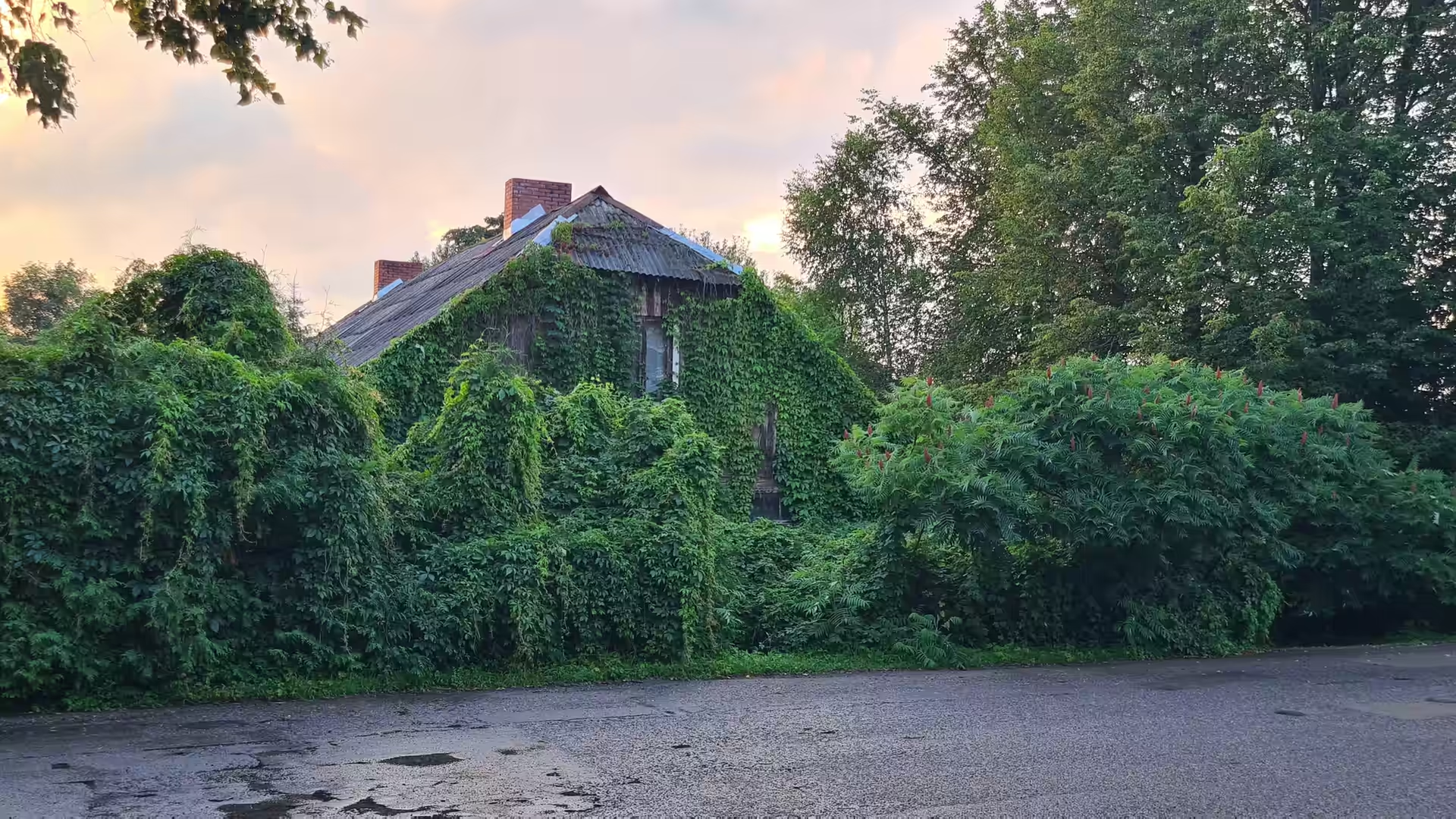
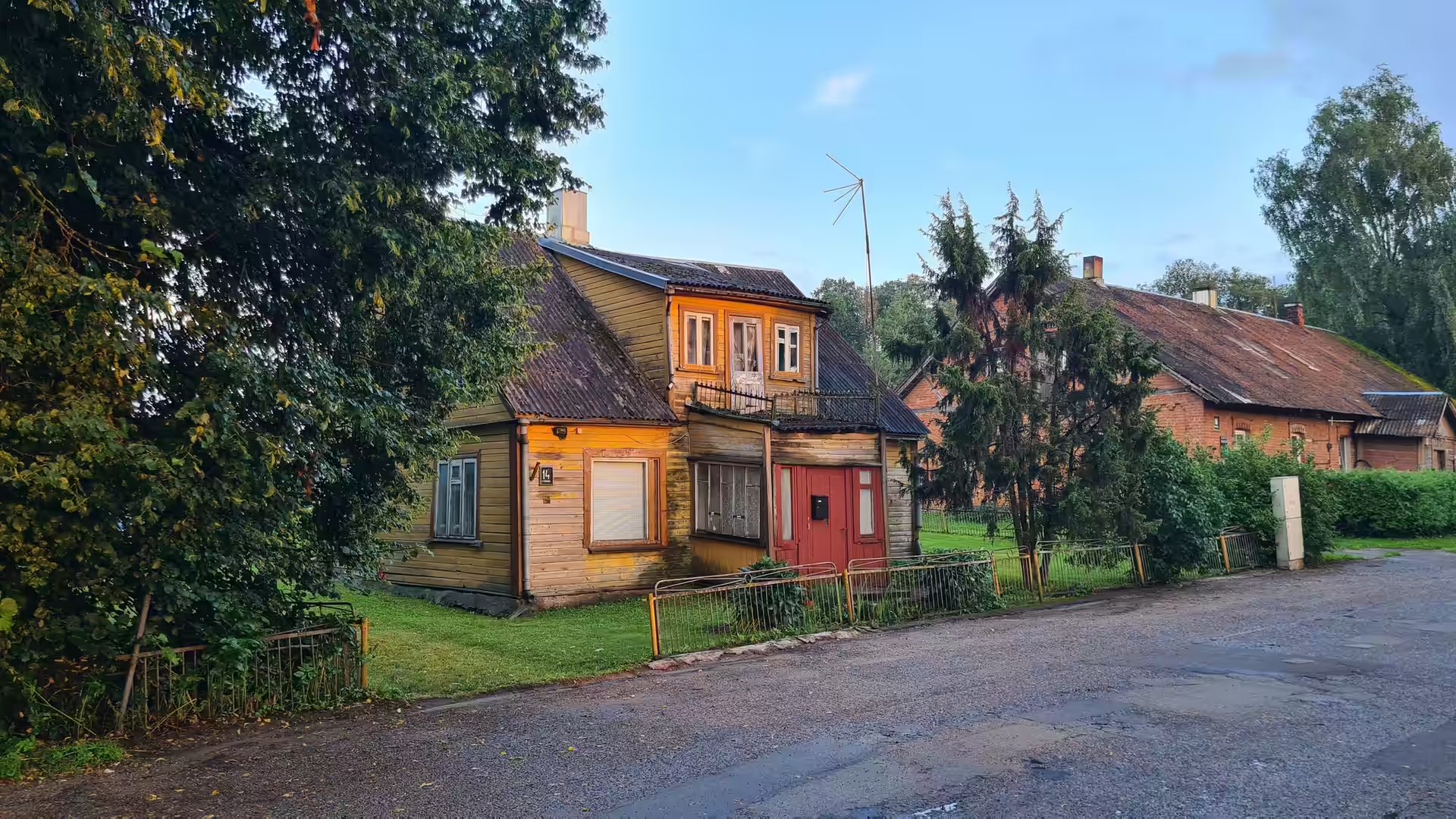
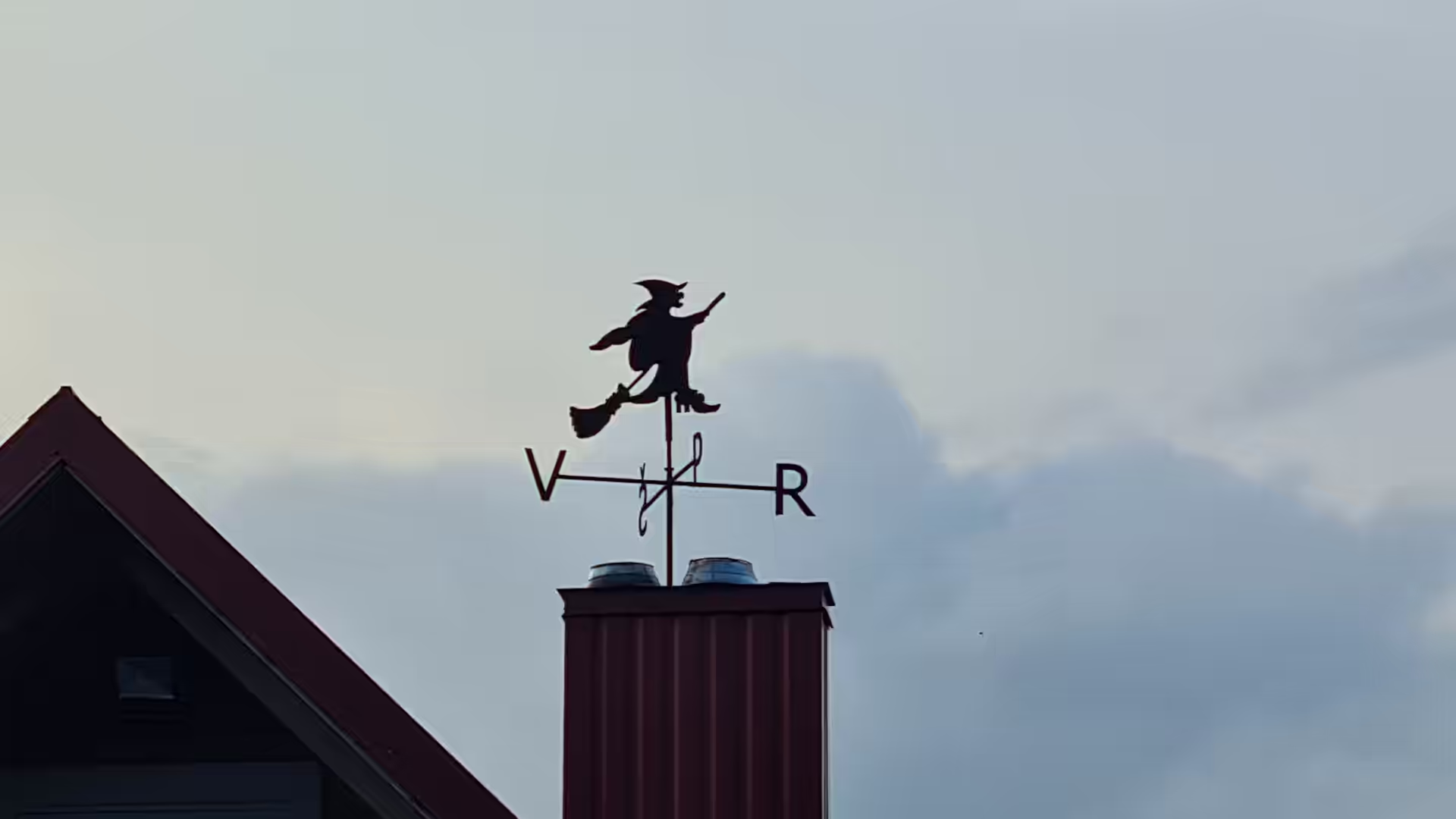
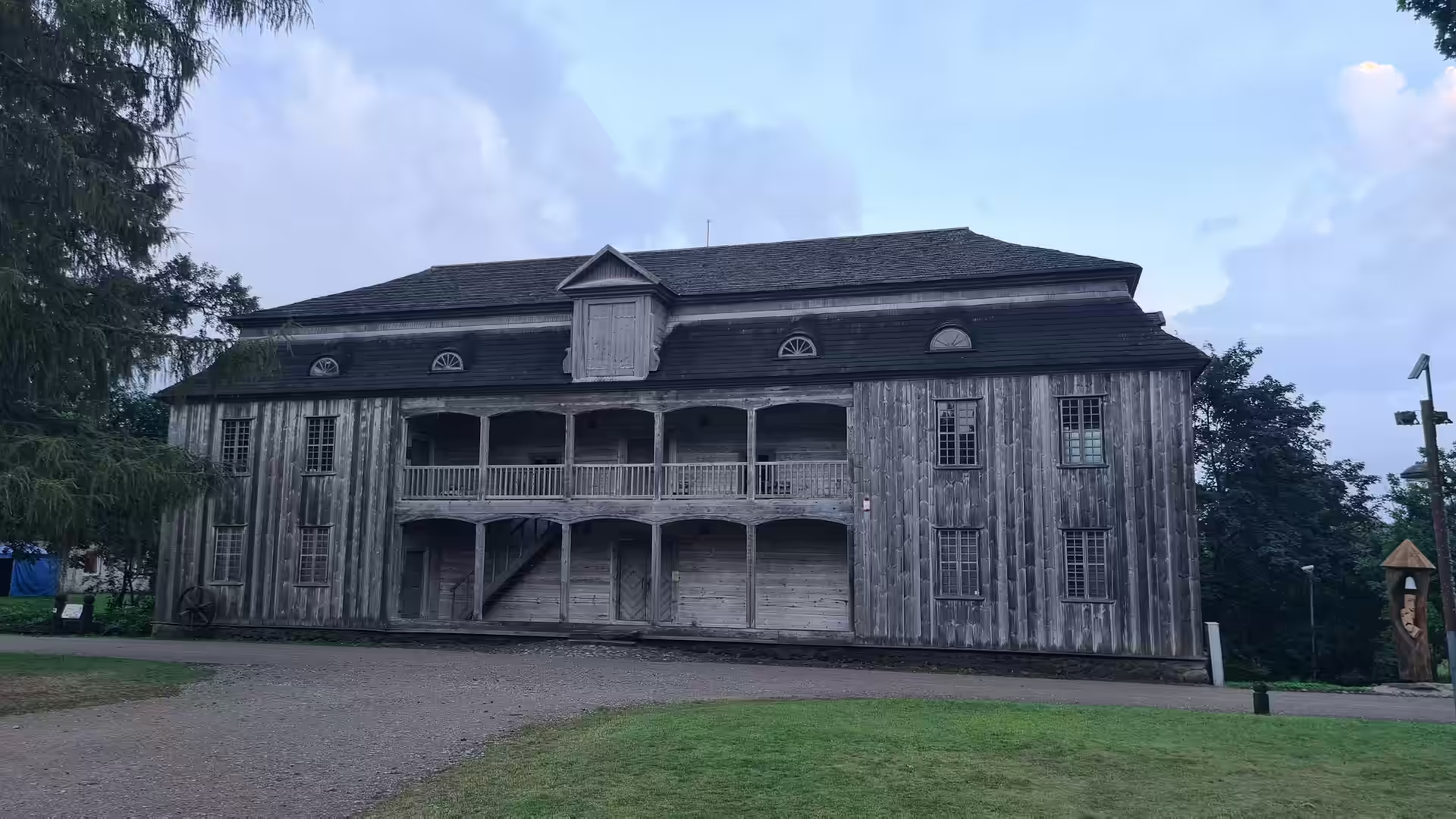
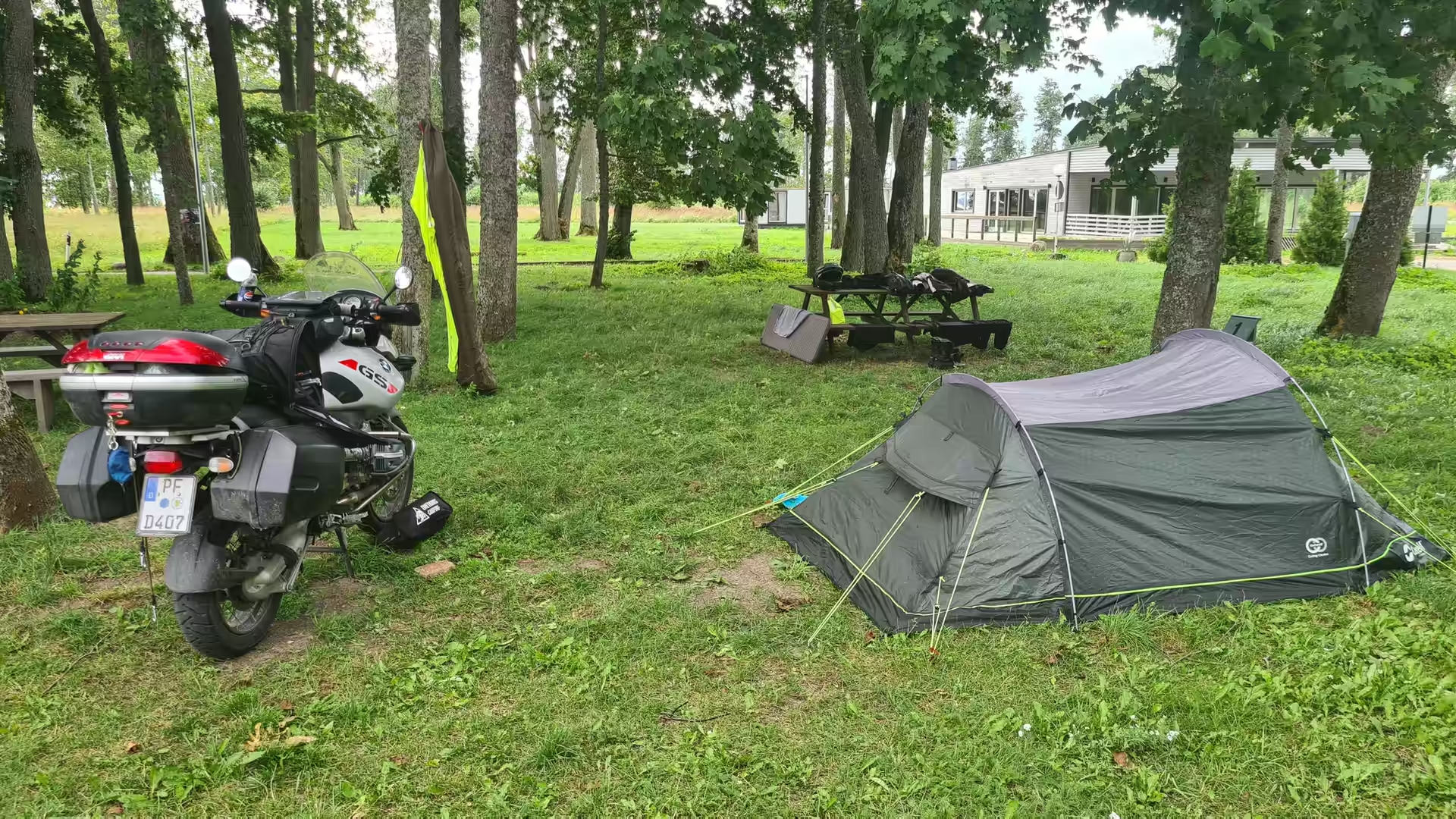
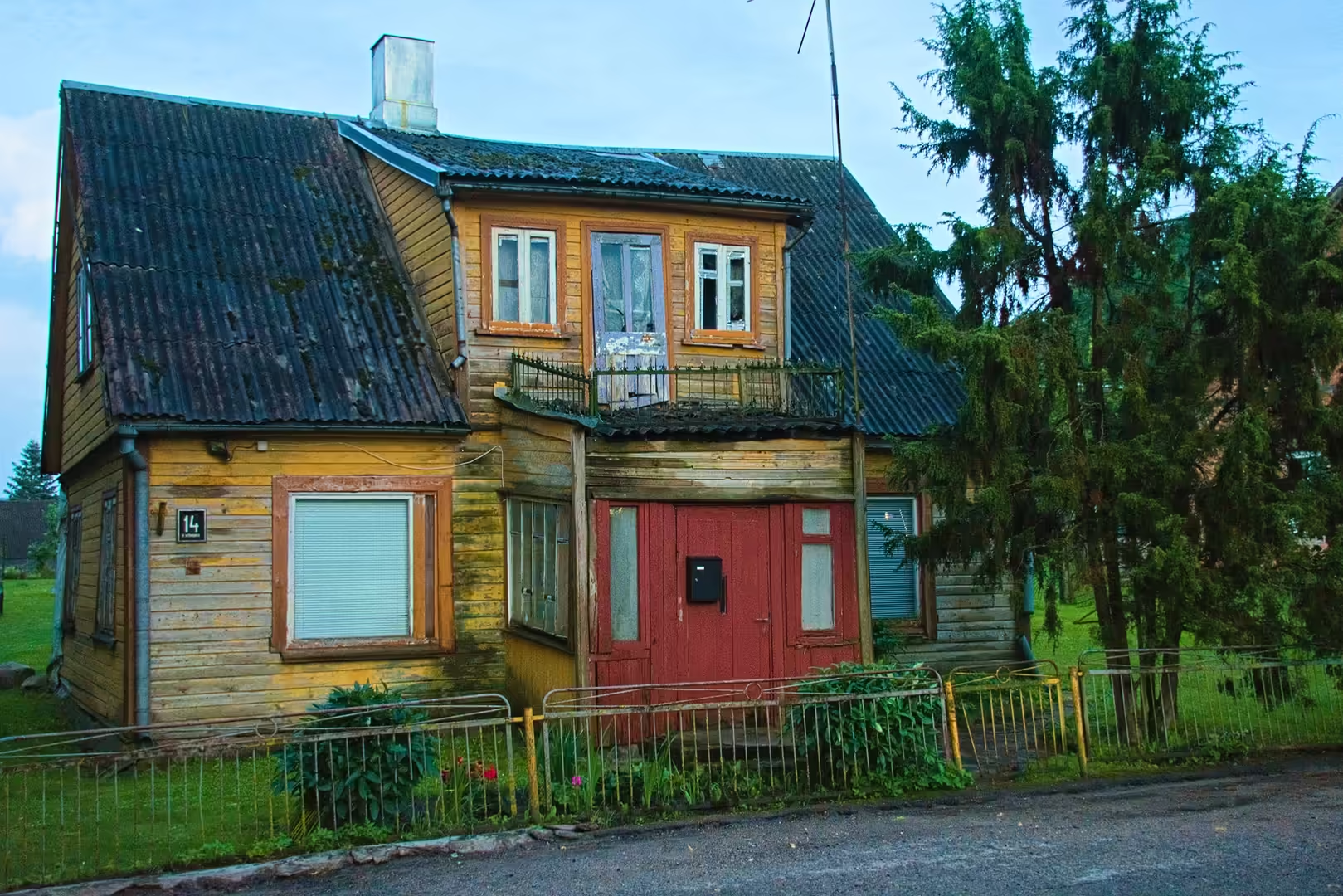
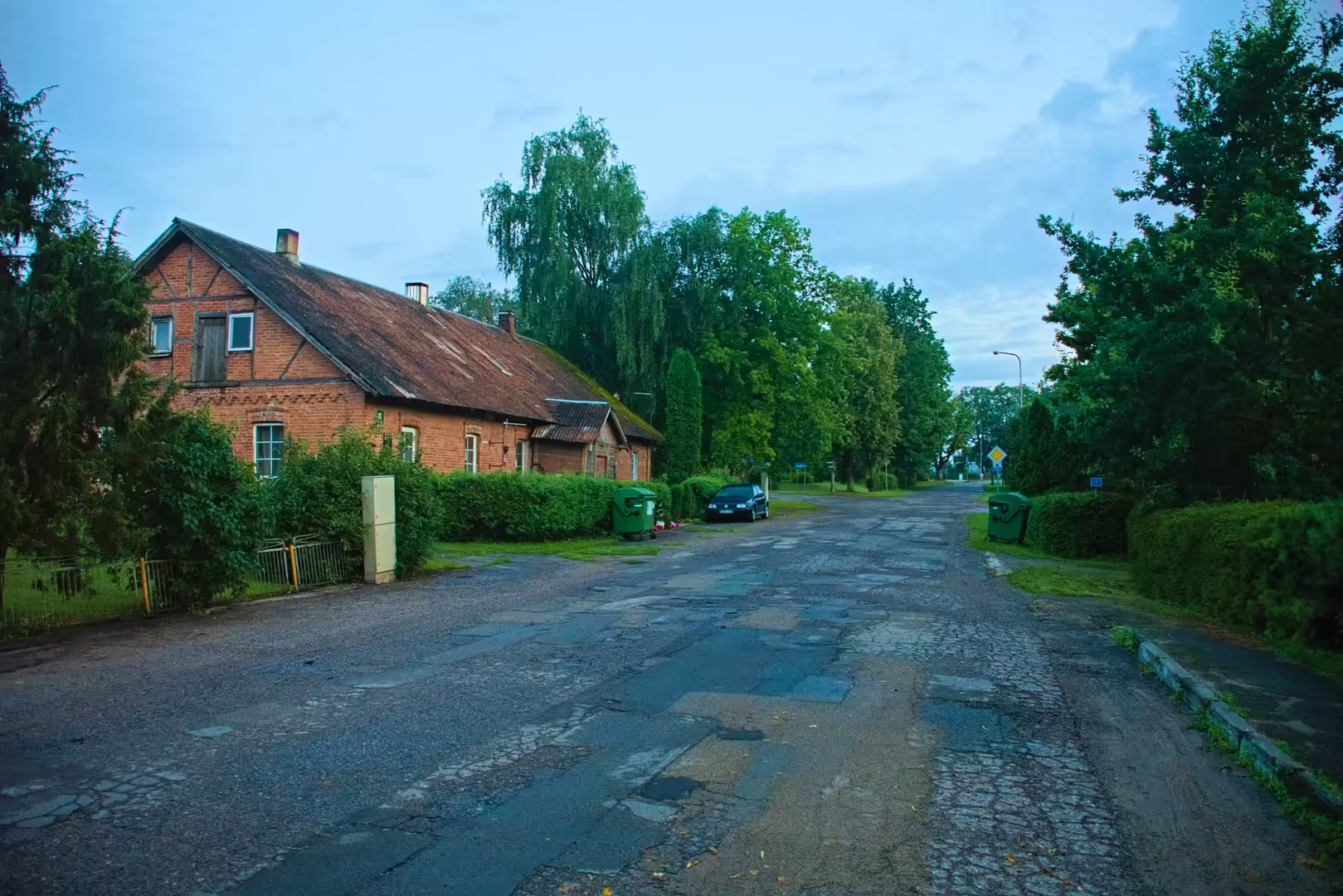
Rural Lithuania preserves a building tradition in timber that has largely vanished from the west of Europe. A historic village street lined with low houses leads past wooden farmhouses with steep roofs and carved gable boards, and a wooden manor house of the former gentry class stands among trees nearby. In one place a house is almost entirely covered by ivy, its walls lost under the growth; elsewhere a metal weather vane shaped as a witch turns on a rooftop, a survival of rural custom. The churches of the countryside range from a Baroque building seen at sunset to older stone churches, and a stone sculpture set beside the street marks local memory. Carved wooden crosses and shrines at crossroads and village entrances are a further feature of the Lithuanian landscape, and the craft of making them is recognised on the national inventory of intangible cultural heritage. Camping among the fields and trees is possible here through the long northern twilight of late July.
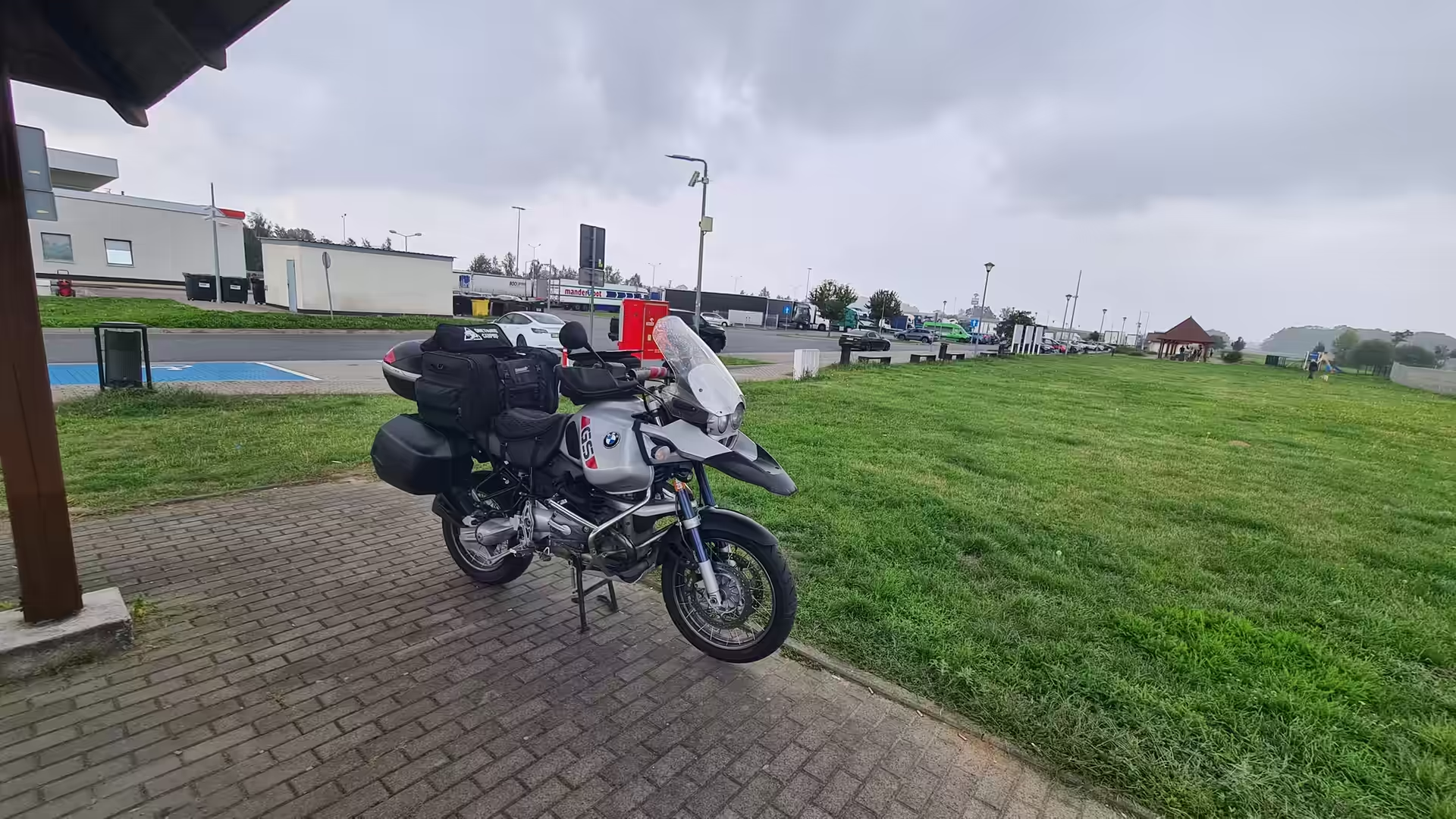
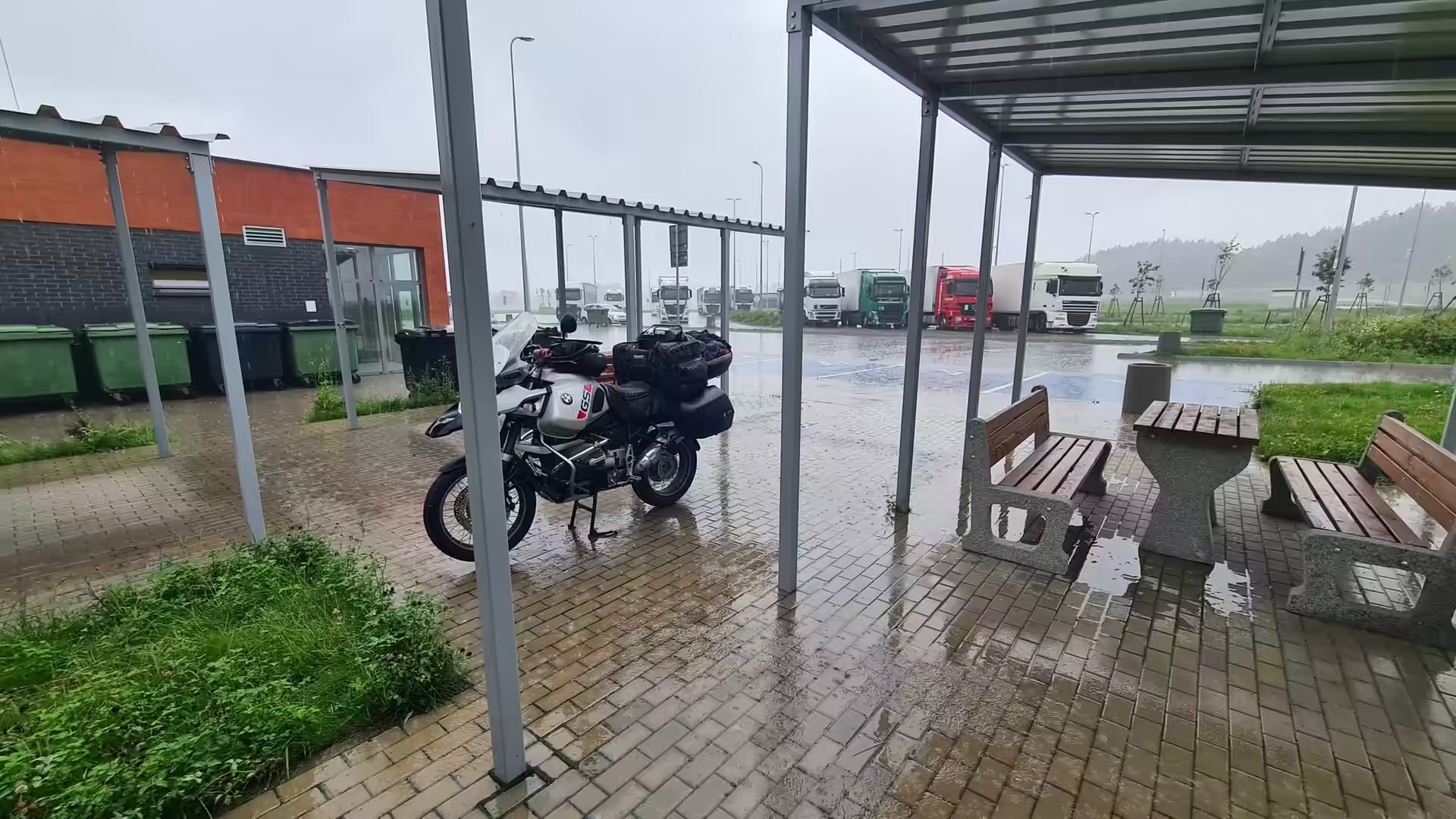
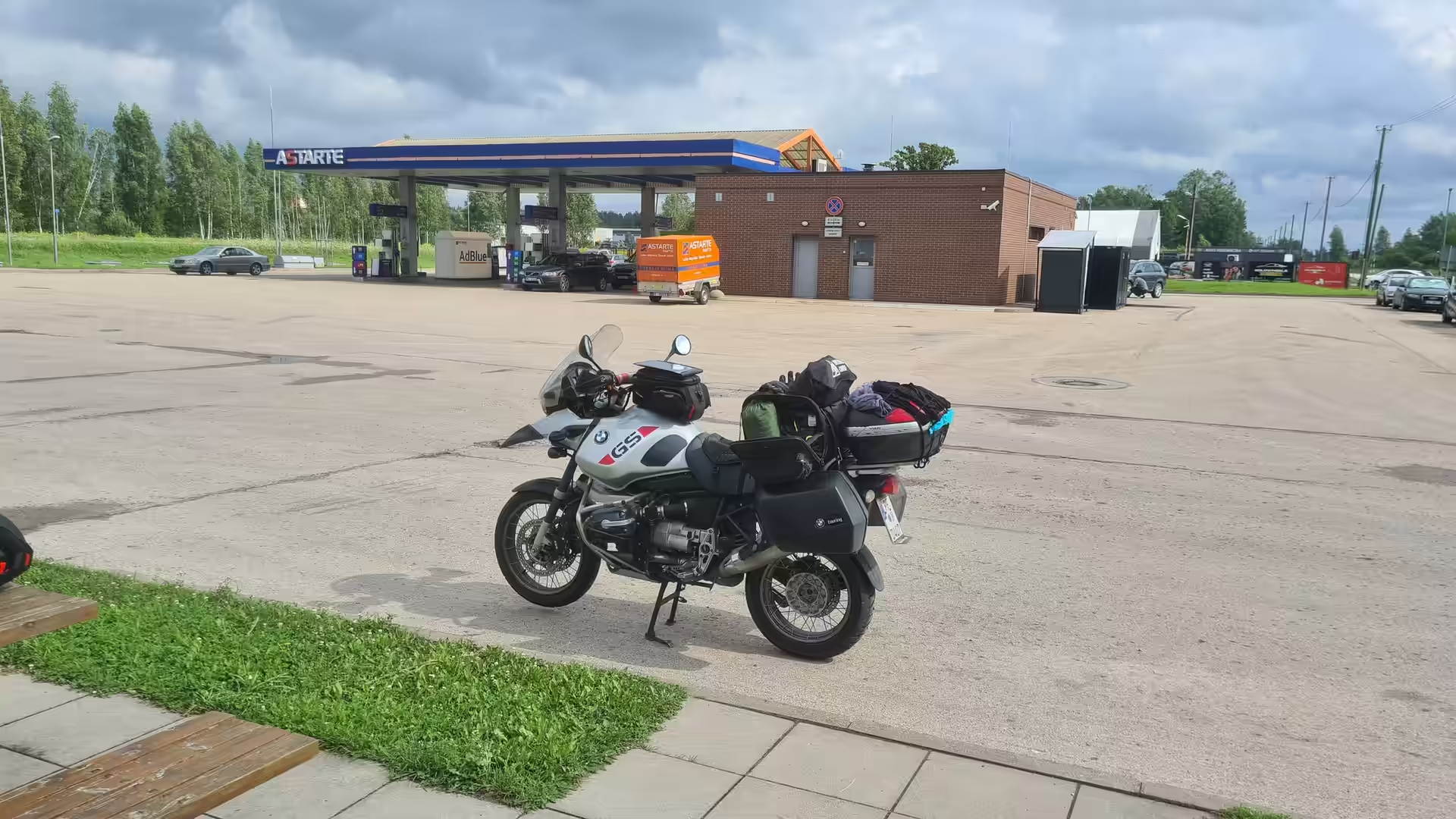
The Latvian section of the route passes Aglona, in the eastern part of the country, the site of the Basilica of the Visitation, the principal Catholic pilgrimage church in Latvia. It is a Baroque building of the late eighteenth century, raised for the Dominican order, with twin towers flanking a central facade that can be seen across the surrounding countryside. Pilgrims gather there in August for the Feast of the Assumption, in one of the largest such assemblies in north eastern Europe. Simple roadside services, fuel stations with shops among them, mark the route through the Latvian interior.
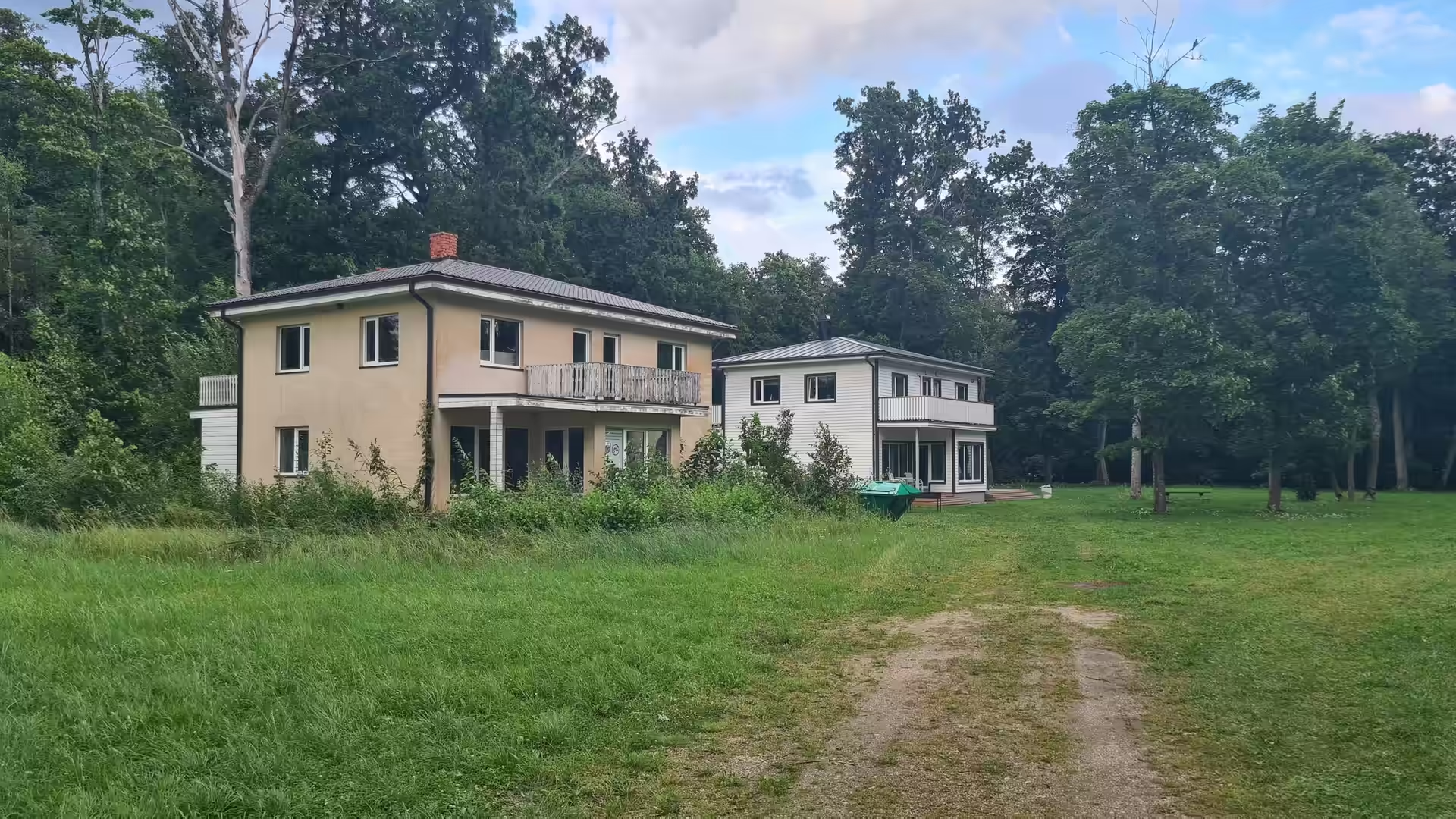
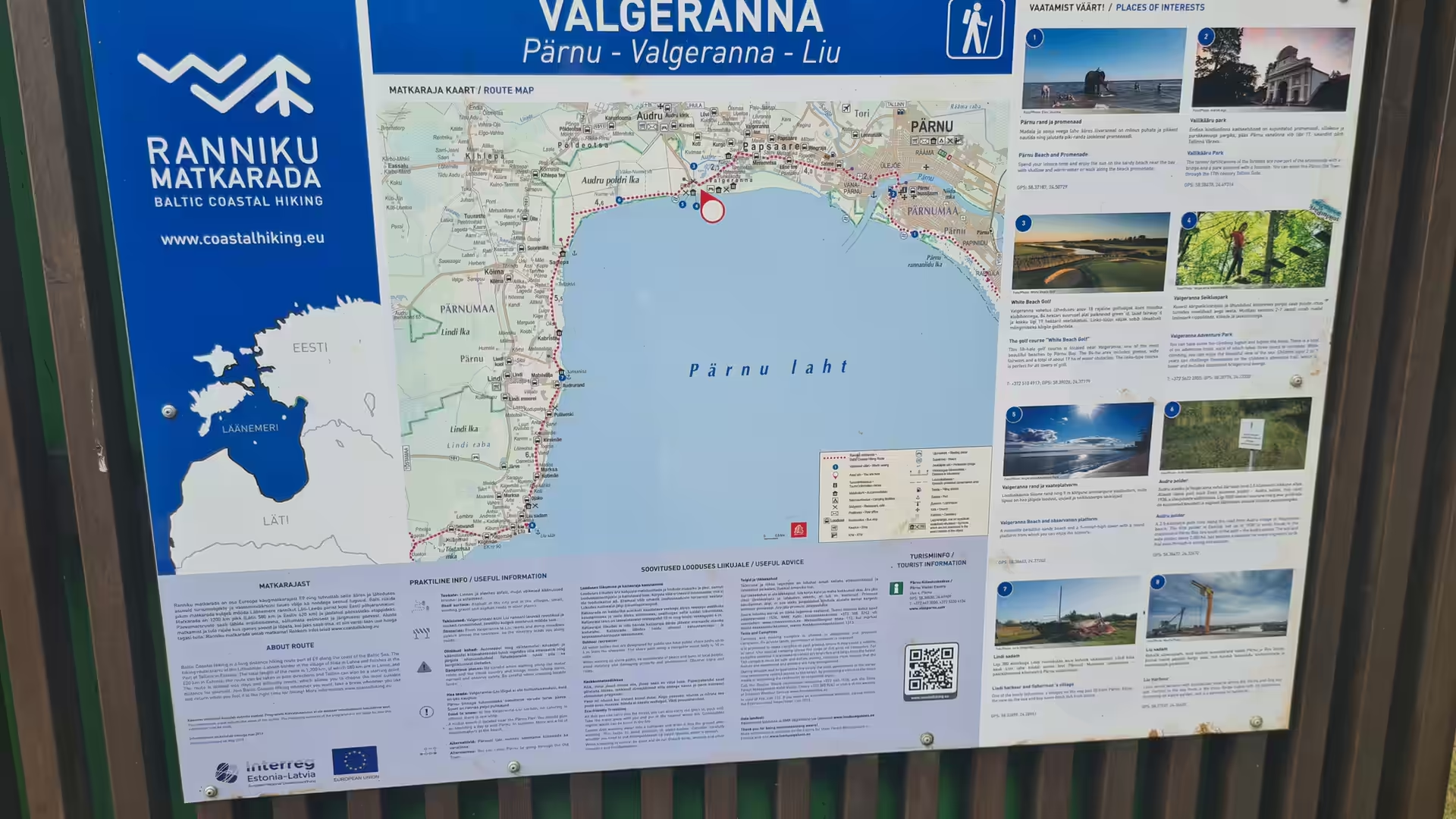
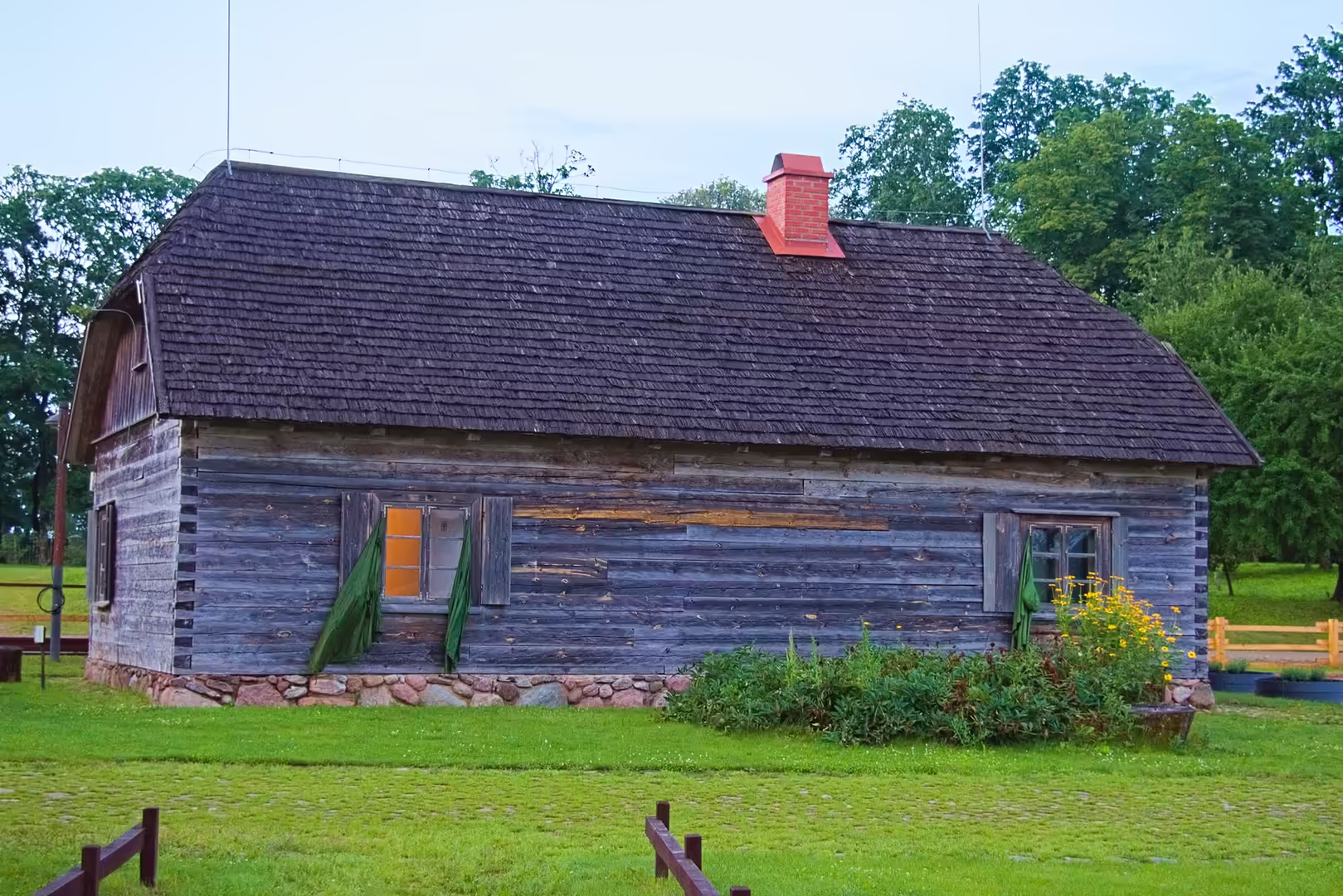
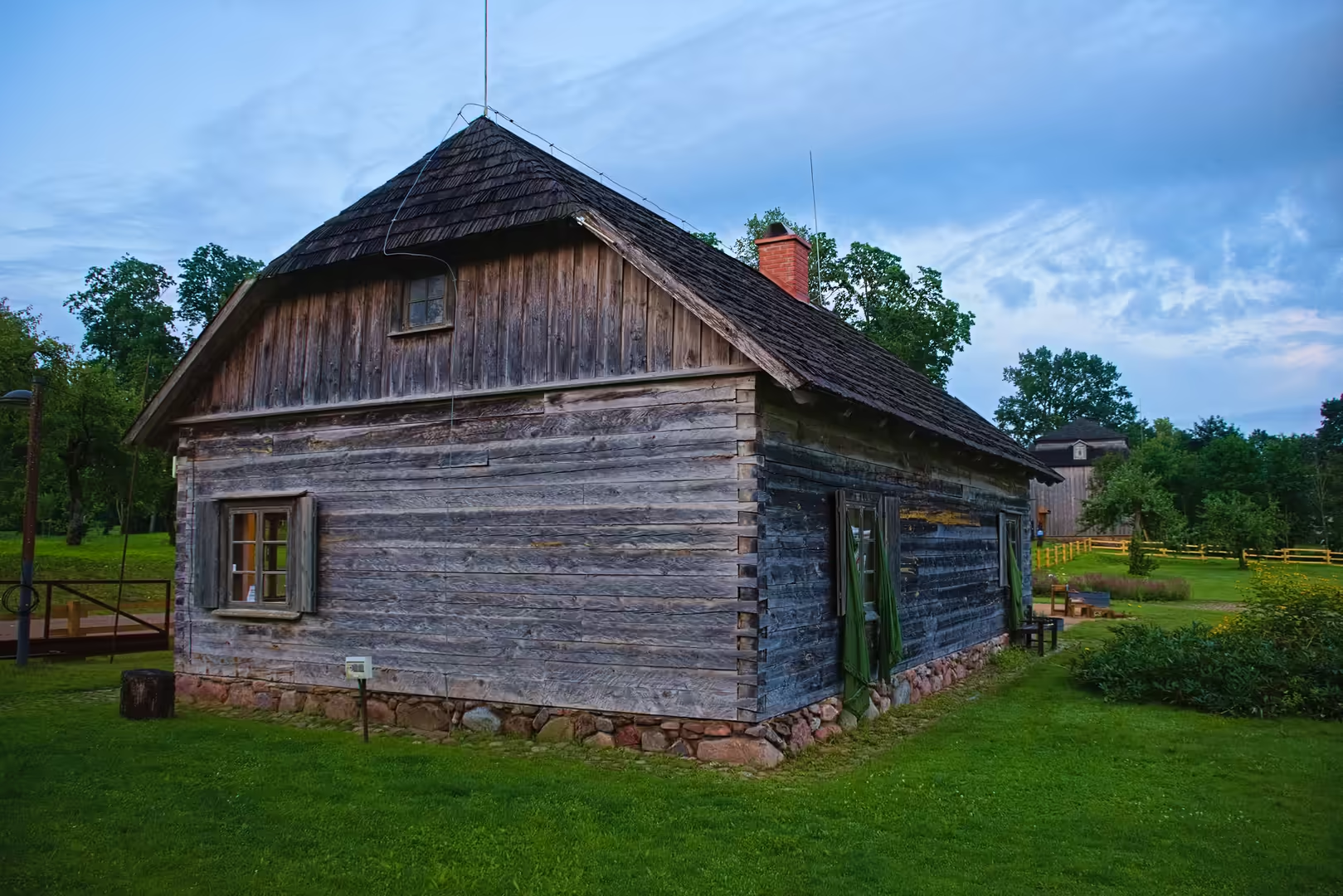
The Estonian coast is the most clearly maritime section of the journey. At Pärnu, a resort town on the Gulf of Riga, the beach is broad and sandy, and the sea can change character within a day, running calm in the morning and breaking in waves under low storm clouds by evening. A coastal hiking trail follows the shore, marked by information boards that describe the dunes, the vegetation and the birdlife of the coast. Guesthouses and a seaside hotel stand behind the beach, and camping is possible on the coastal meadows. Inland, Estonian villages keep extensive wooden building traditions, among them farmhouses, log houses of squared timber, and quiet village streets that retain their traditional layout.
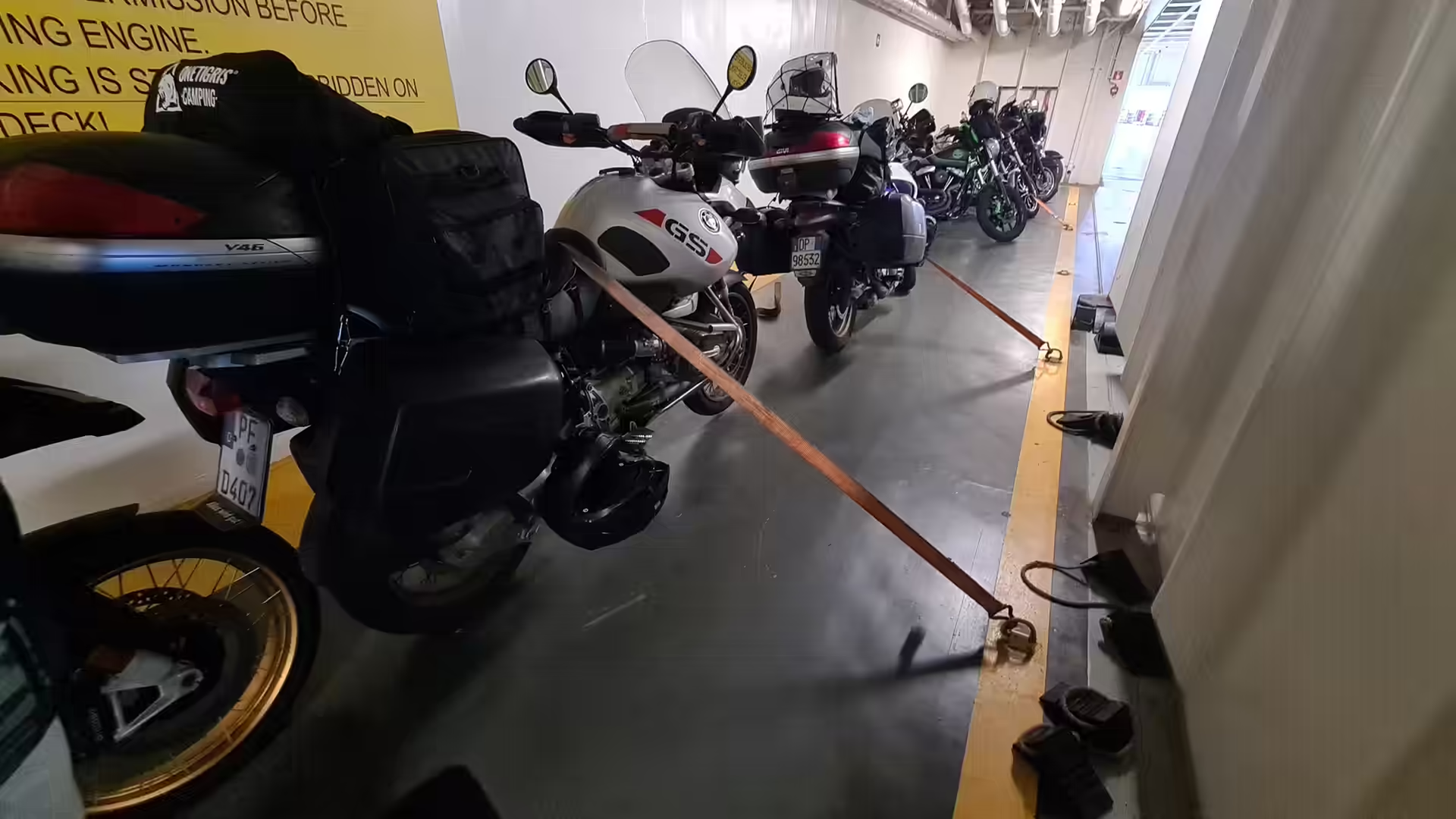
The corridor ends at Tallinn, whose waterfront is dominated by the passenger harbour on the northern side of the old town. Fast shuttle ferries, among them the Tallink Megastar, cross the Gulf of Finland to Helsinki in about two hours, and vehicles, motorcycles included, are carried on the same sailings and lashed to the deck for the crossing. The passage is a short sea route between two capitals and the natural transition from the North European Plain to the Scandinavian peninsula. Above the port stand the medieval walls and towers of Tallinn, an apt final point for a corridor whose wealth was made by Baltic trade. Throughout Lithuania, Latvia and Estonia the countryside is served by campsites that range from small farm sites to larger grounds beside lakes, most offering little more than a level pitch, a shower block and an electric hook-up, and they remain the simplest form of lodging along the way.
References
- Christiansen, E. (1997). The Northern Crusades. London: Penguin Books.
- Ehlers, J. (1996). Quaternary and Glacial Geology. Chichester: John Wiley and Sons.
- Kasekamp, A. (2010). A History of the Baltic States. Basingstoke: Palgrave Macmillan.
- Plakans, A. (2011). A Concise History of the Baltic States. Cambridge: Cambridge University Press.
- Wikipedia contributors (2026). Aglona. en.wikipedia.org/wiki/Aglona
- Wikipedia contributors (2026). Baltic Sea. en.wikipedia.org/wiki/Baltic_Sea
- Wikipedia contributors (2026). Baltic Way. en.wikipedia.org/wiki/Baltic_Way
- Wikipedia contributors (2026). Gulf of Finland. en.wikipedia.org/wiki/Gulf_of_Finland
- Wikipedia contributors (2026). Glacial erratic. en.wikipedia.org/wiki/Glacial_erratic
- Wikipedia contributors (2026). Hanseatic League. en.wikipedia.org/wiki/Hanseatic_League
- Wikipedia contributors (2026). North European Plain. en.wikipedia.org/wiki/North_European_Plain
- Wikipedia contributors (2026). Occupation of the Baltic states. en.wikipedia.org/wiki/Occupation_of_the_Baltic_states
- Wikipedia contributors (2026). Pärnu. en.wikipedia.org/wiki/Pärnu en.wikipedia.org/wiki/P%C3%A4rnu
- Wikipedia contributors (2026). Partitions of Poland. en.wikipedia.org/wiki/Partitions_of_Poland
- Wikipedia contributors (2026). Tallinn. en.wikipedia.org/wiki/Tallinn
- Wikipedia contributors (2026). Teutonic Order. en.wikipedia.org/wiki/Teutonic_Order