Stage 5 of 8
2026 GTA 5 - The Hamlets of the Maira Valley
Published 7 July 2026











Journal Notes
The day opens above Stroppo. On the heights the last of the night still hangs in the larches, and the first light reaches the roofs as a soft grey wash, crossing the ridge line until it settles on the campanile and stays there. Below, the Valle Maira runs away towards Cuneo as a long corridor of shadow and grass, and the road that climbed from the plain already belongs to yesterday. This is a slow stage of the GTA, from Stroppo by way of Albaretto di Macra to Celle di Macra, and it keeps to the high hamlets, where stone, timber and painted plaster have held one another upright for a very long time.
The Village Square of Stroppo
Stroppo sits halfway along the Valle Maira, in the province of Cuneo, a little above a thousand metres. It was for centuries the meeting point of a confederation of twelve upper valley communities, and its standing rested on more than the church. There were inns with stables for the muleteers, workshops, mills turned by the torrent, and a hospice for travellers and the sick that in plague seasons served as a lazaret. The village grew prosperous on the traffic of the passes and then, when the traffic went elsewhere, it grew small again.
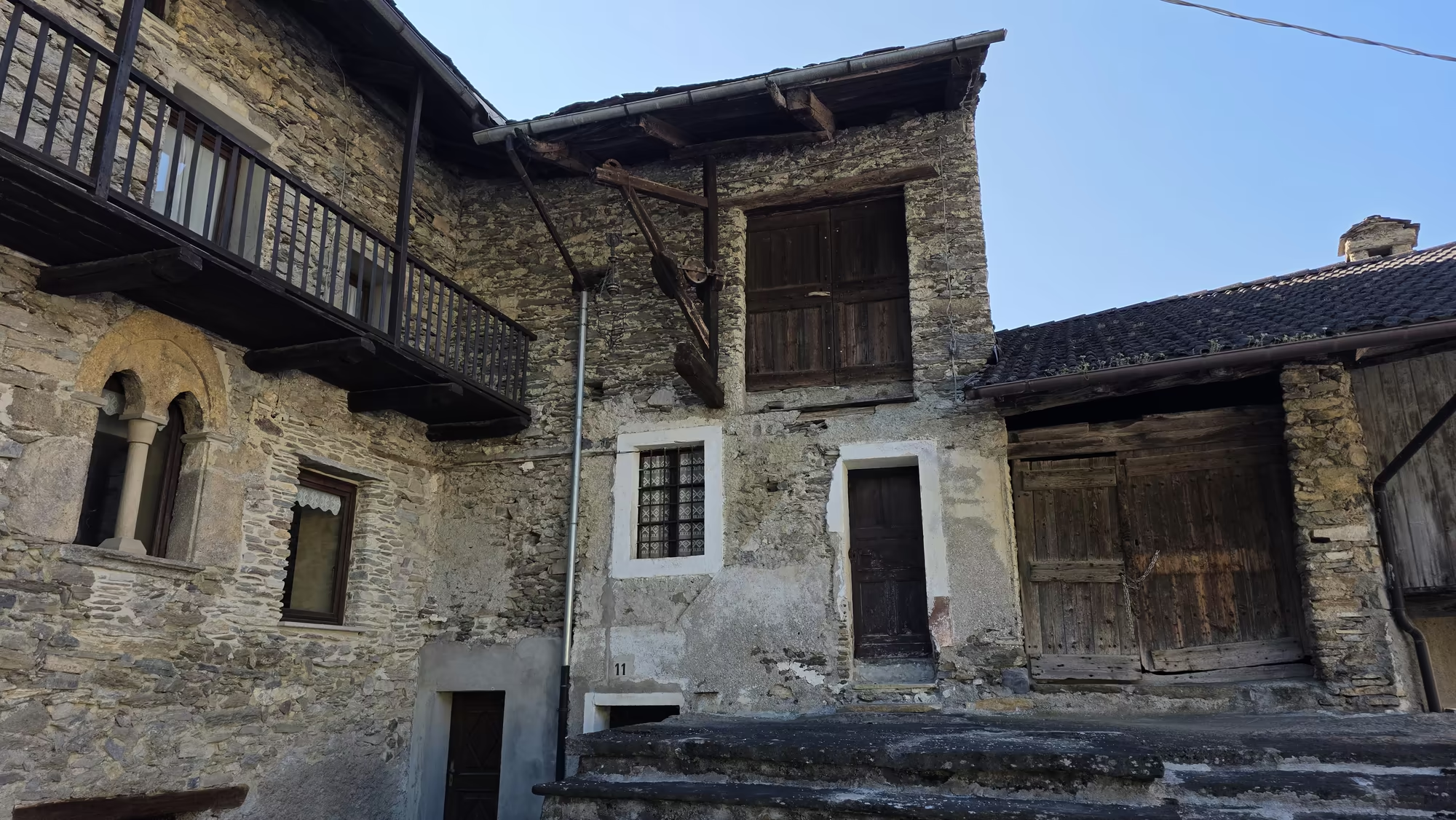
The square is the whole of its public life: a ribbon of paving, a stone campanile with a single bell that sounds directly overhead, a fountain trough fed from a pipe set into the wall, a bench worn smooth in the middle. The houses stand shoulder to shoulder around it, three and four storeys of grey stone, and the doorways are cut high enough for a loaded mule to pass through. Above them the hayloft doors open onto the air, small and square, with a timber sill and a dark mouth behind. On a warm morning the square does not feel abandoned. It feels early.
Past the last houses the bell tower looks over more roofs than people. Stroppo keeps the only middle school of the upper valley, with a boarding house for pupils who come down from the farthest hamlets, and it counts roughly a hundred residents spread over some seventeen hamlets. At its height there were more than a thousand. The number is not a scandal here; it is simply the arithmetic of the mountains, recorded patiently in every village along the valley.
A Schoolroom Kept as a Museum
L’Escolo de Mountanho, the school of the mountain in the Occitan of the valley, occupies the ground floor of the town hall at Stroppo. One room has been rebuilt exactly as a classroom: rows of dark wooden benches scarred with initials and knife marks, each with a hole for the inkwell; the teacher’s desk raised on a small platform; the blackboard; rolled wall maps; a stove in the corner. In glass cases lie the registers, the report cards, the exercise books in careful copperplate, and a wall of class photographs in which every year the same faces get older and fewer.
The museum began as an idea rather than a collection. A geographer with a long attachment to the valley proposed it after a student’s thesis devoted a chapter to mountain schooling, and teachers from the surrounding hamlets gathered the furniture and the paper that had survived in cellars and attics. What remains is a library of primers and readers, some printed long ago and some hardly used, kept in the old order.
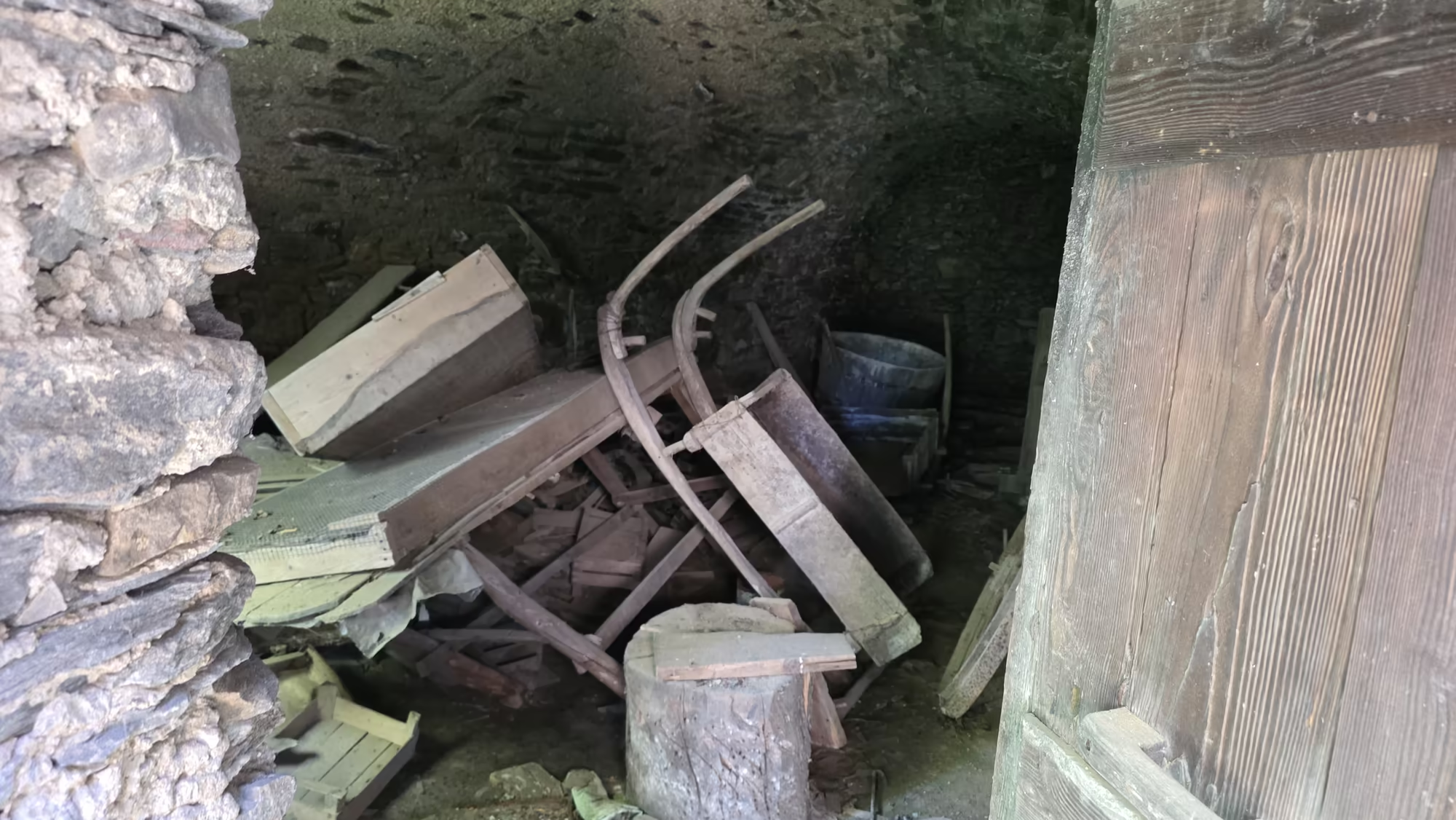
The room remembers a particular kind of institution: the school as the last service still working in a hamlet that had already lost its shop, its post and its bus. The teacher came on foot, sometimes over a pass, and lived in lodgings during the week. Children reached the bench before daylight. When the households left, the school closed, and this room was simply shut with everything still in it, which is why it now tells the story so plainly.
The Osteria and the Sign over the Lane
Halfway up a stone lane at Stroppo a weathered facade still carries the sign of an osteria, the old inn of the valley. The osteria was never only a place to drink. It was the bench, the long table, the open fire, the bed for a traveller and the stable for the animal, the place where the post was read aloud and where the men argued about the date of the harvest. On the mule routes an osteria sat at every stage, and a hamlet that had one was a hamlet people passed through rather than round.
A handful remain along the Valle Maira, some still serving, most shut, their doors padlocked and their paint flaking in the sun. The facade at Stroppo has kept its proportions: a broad arch on the ground floor, a shuttered window above, the name painted in a band across the plaster. It is a small monument to a trade that disappeared with the traffic, and it is difficult to walk past without reading it as a doorway rather than a wall.
Down Through the Gorge to the Water
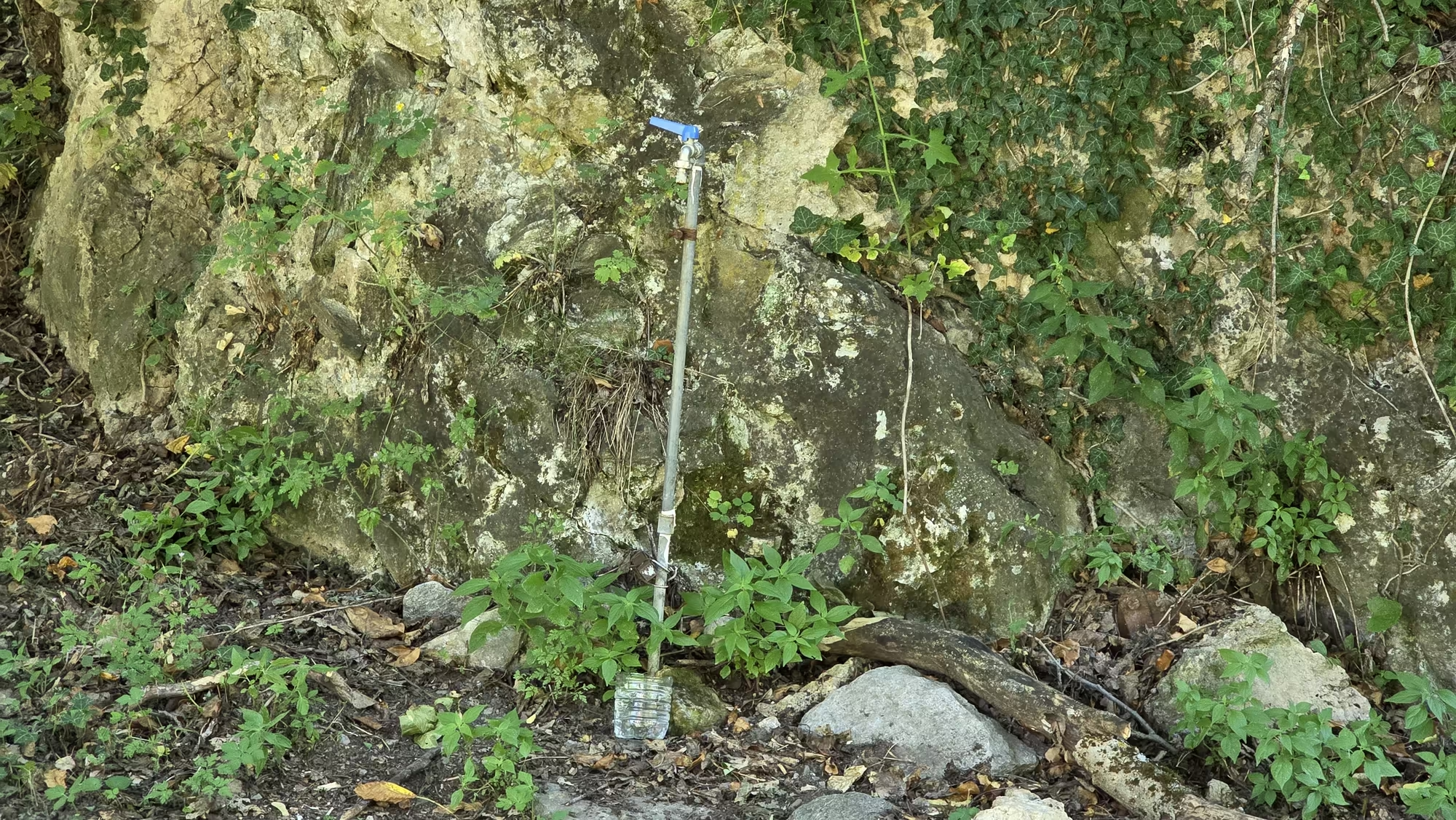
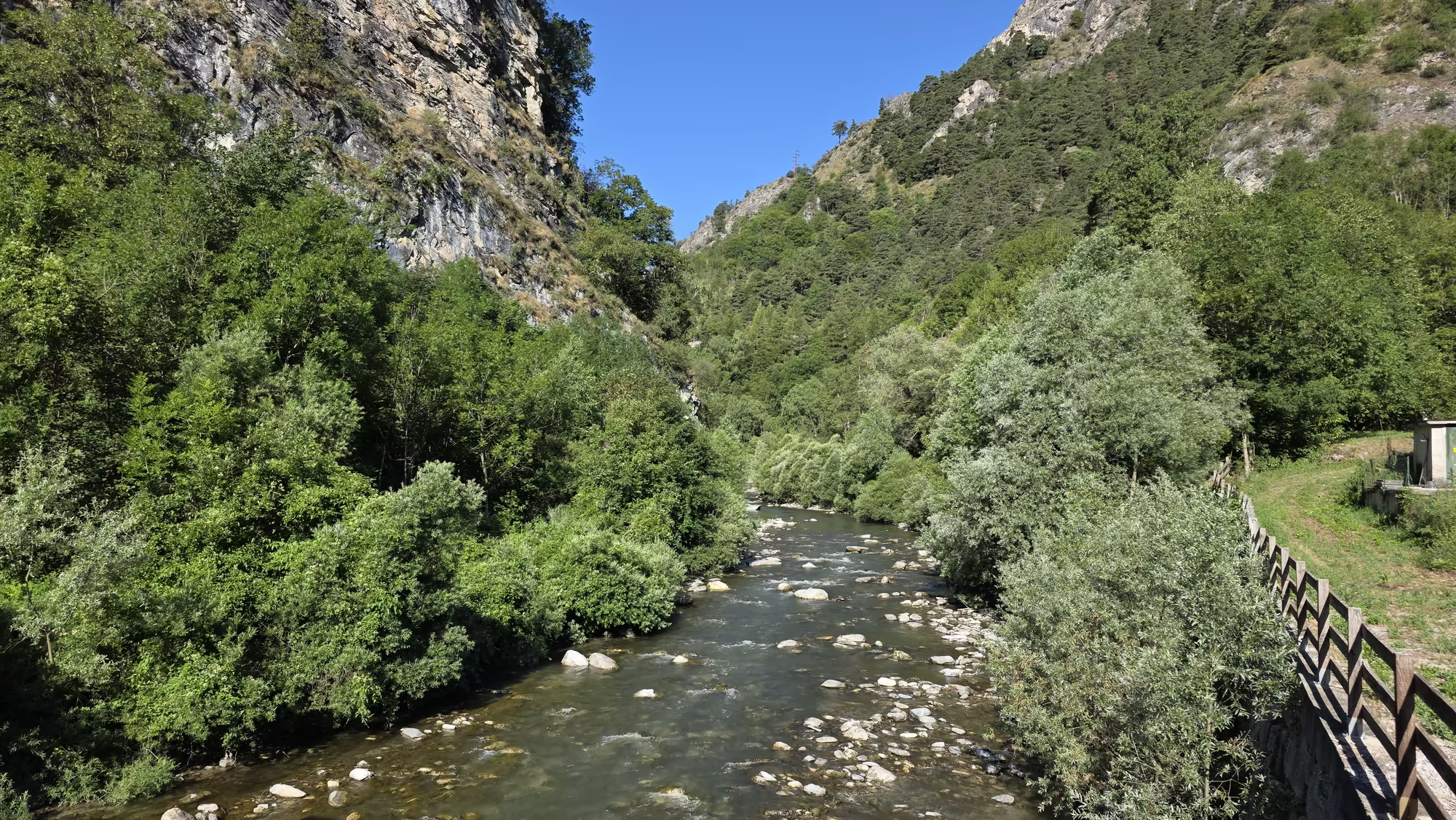
Below the village the path drops into the gorge of the Maira, where the water is loud before it is seen. The stream runs over pale boulders in a narrow cleft, cold even in the middle of summer, and the air inside the ravine turns suddenly damp and green. A rusted pipe and a stone trough mark a spring in a mossy rock face, water spilling from a tap worn into a spout, and someone has left the path to stand there a moment and drink.
A short bridge crosses the stream, its parapet broken at one end, and beside it stands the ruin of a small building, four walls and no roof, taken over by ferns. The gorge is the quiet part of the day. The light falls steeply, the track turns between wet rock and overhanging branches, and the only sound is the water working its way down towards the valley floor.
The Empty Lanes of Albaretto di Macra
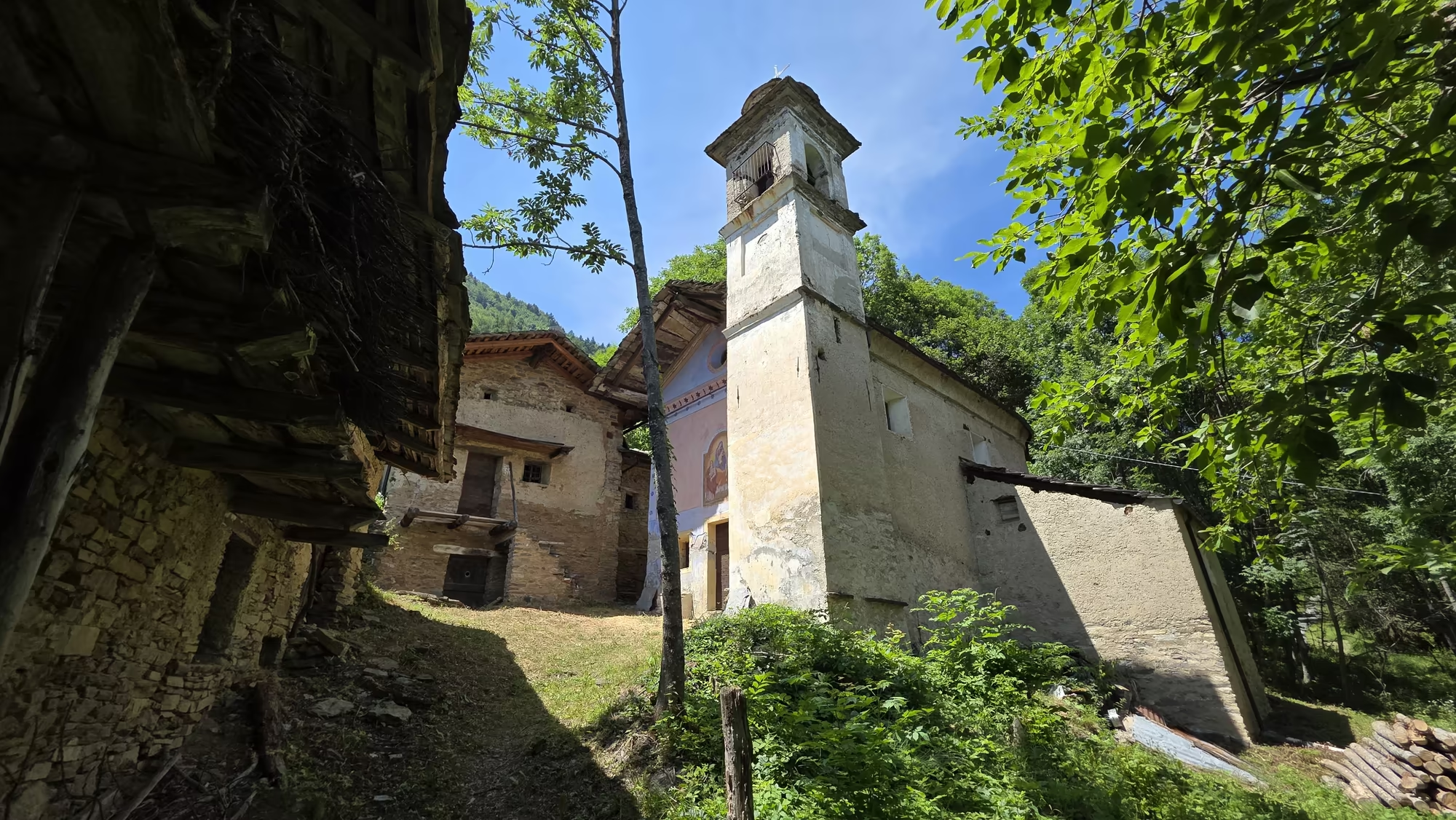
Albaretto di Macra stands on the far side of the stream and was once a comune in its own right before it was joined to Celle di Macra. Its old church keeps a pointed bell tower of Gothic shape and a side door sheltered by a carved pointed arch, with a human head set in the stone above the lintel, a piece of very old local custom in which the face was meant to turn harm away. Above the church the lanes climb between houses built close together for warmth and for defence.
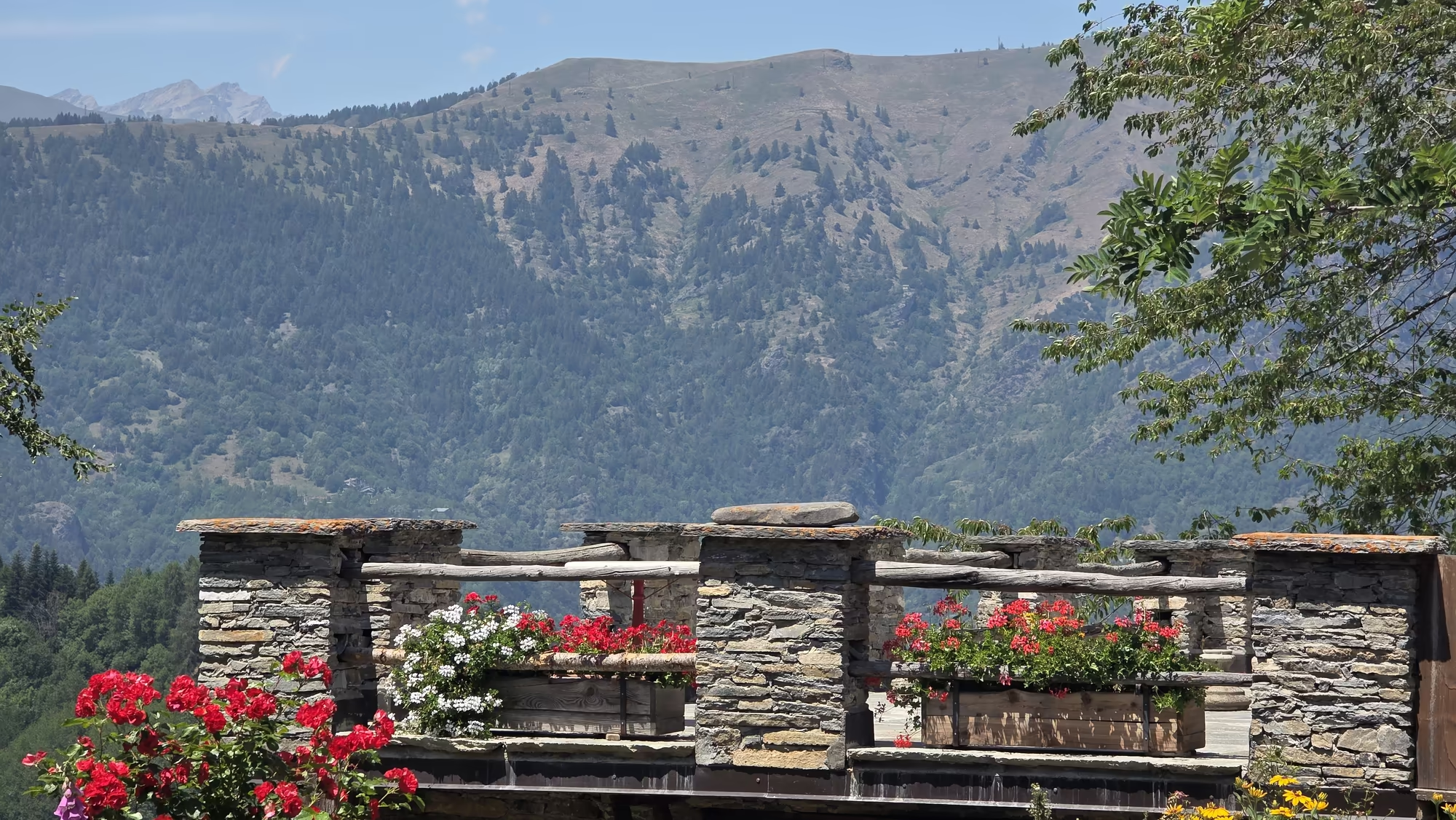
The lanes are of stone, laid in slabs and worn into a shallow channel down the middle, and in one of them a small tracked transporter stands parked against a wall, the machine that replaced the mule for the steepest work, still carrying a film of dust and hay. Balconies overhang the drop with flower boxes red and white, geraniums and petunias spilling down the plaster. A covered passage links two houses across the alley; under it the light turns amber for a couple of paces and then the sun returns.
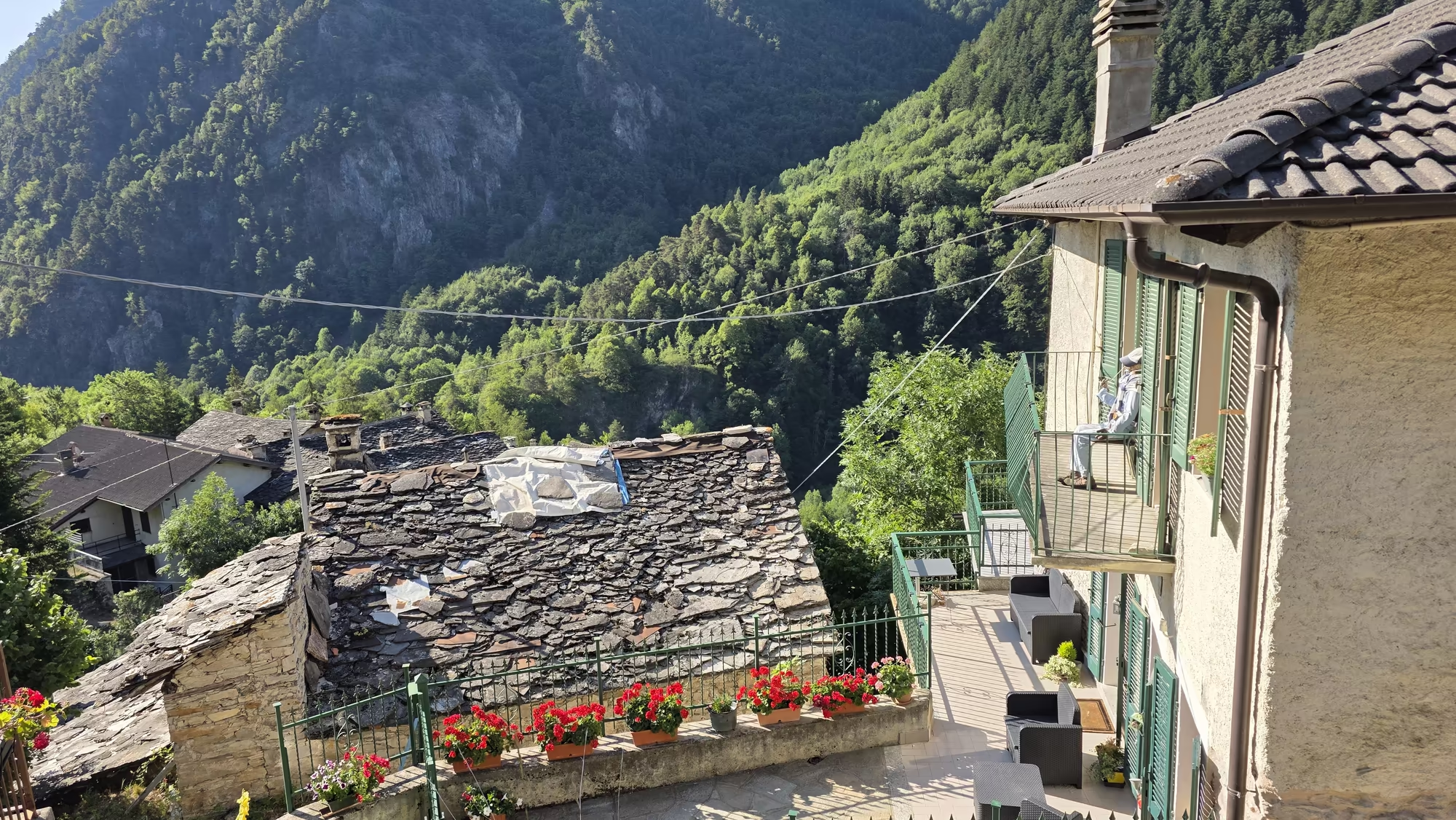
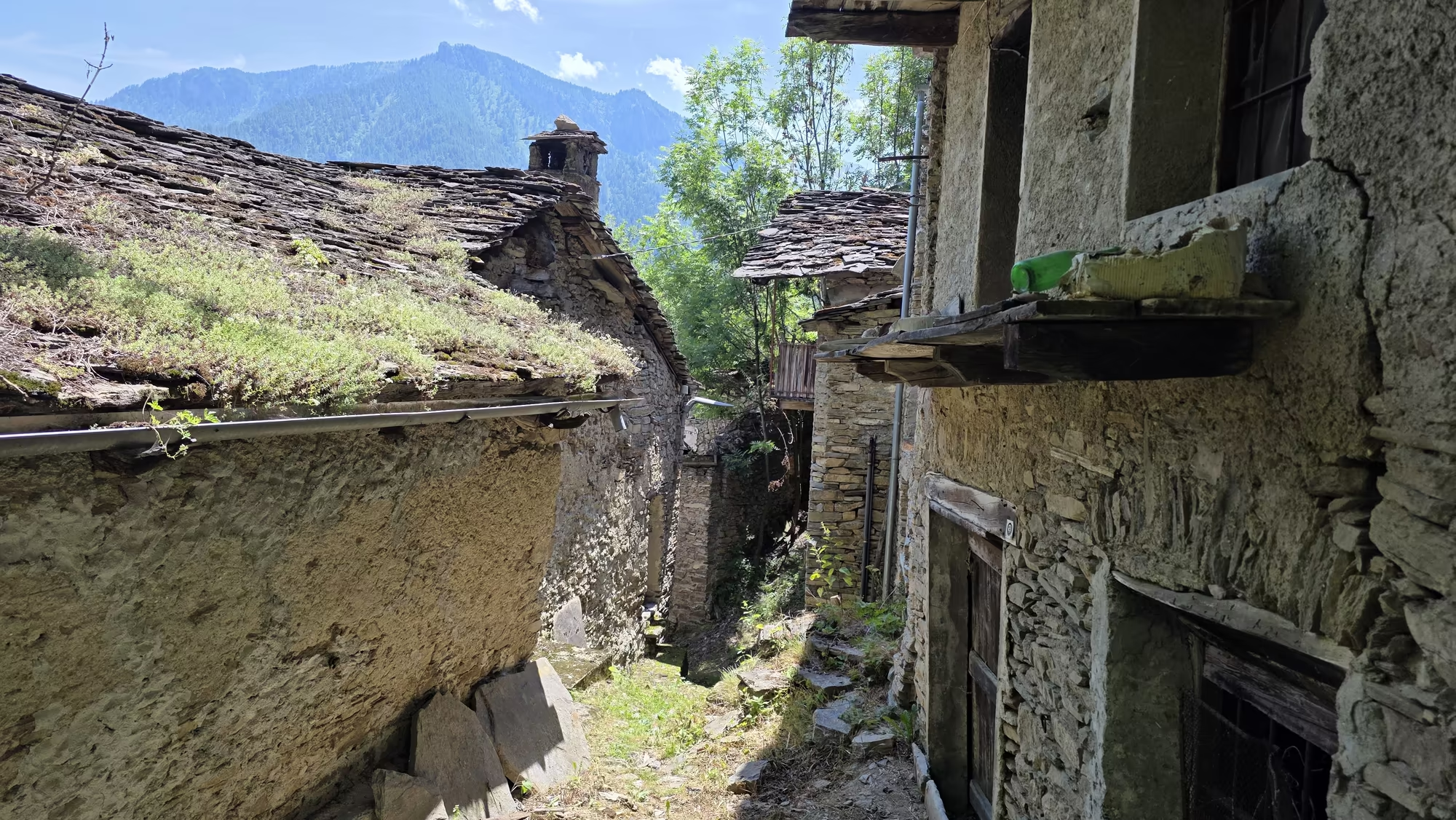
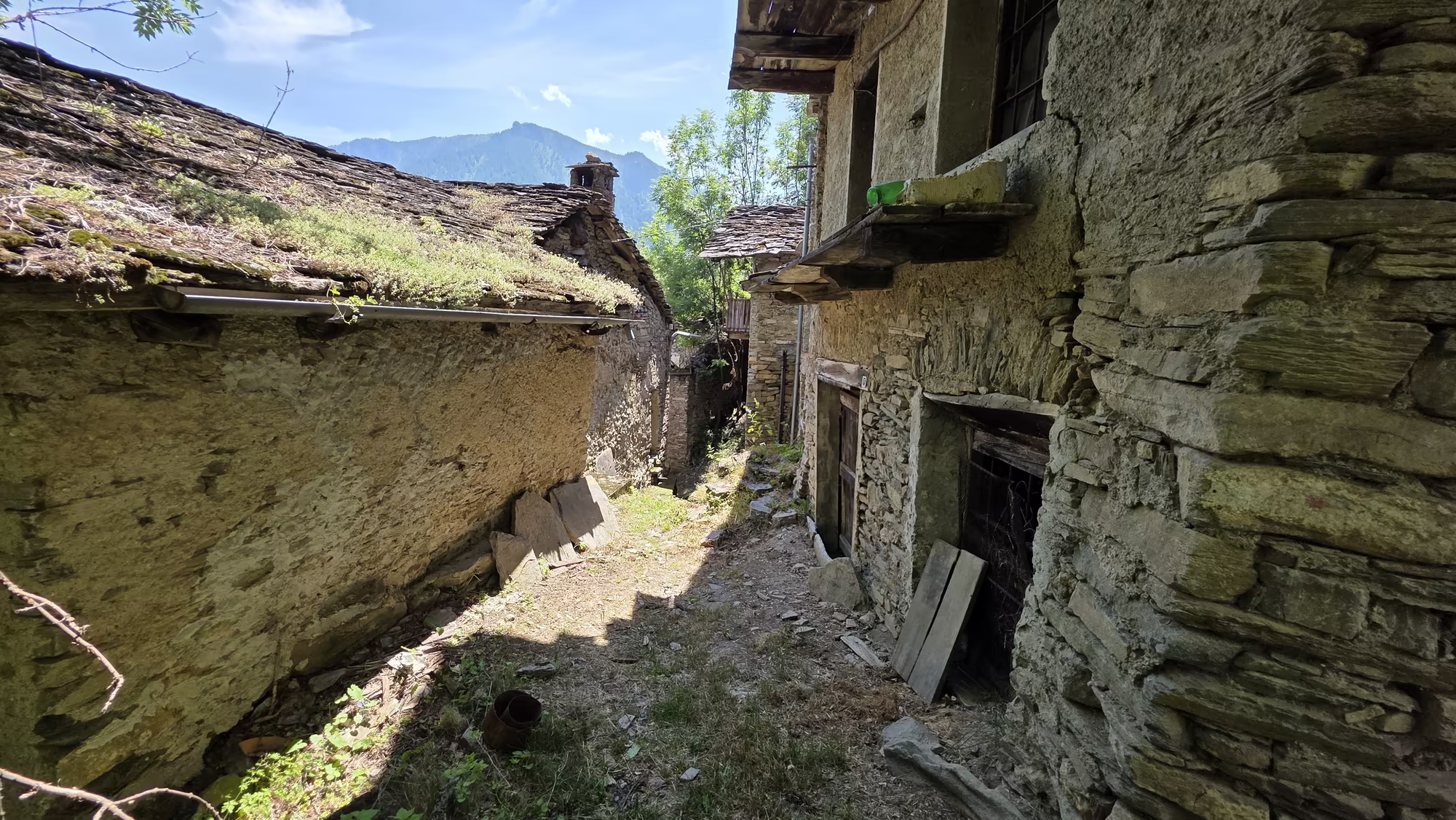
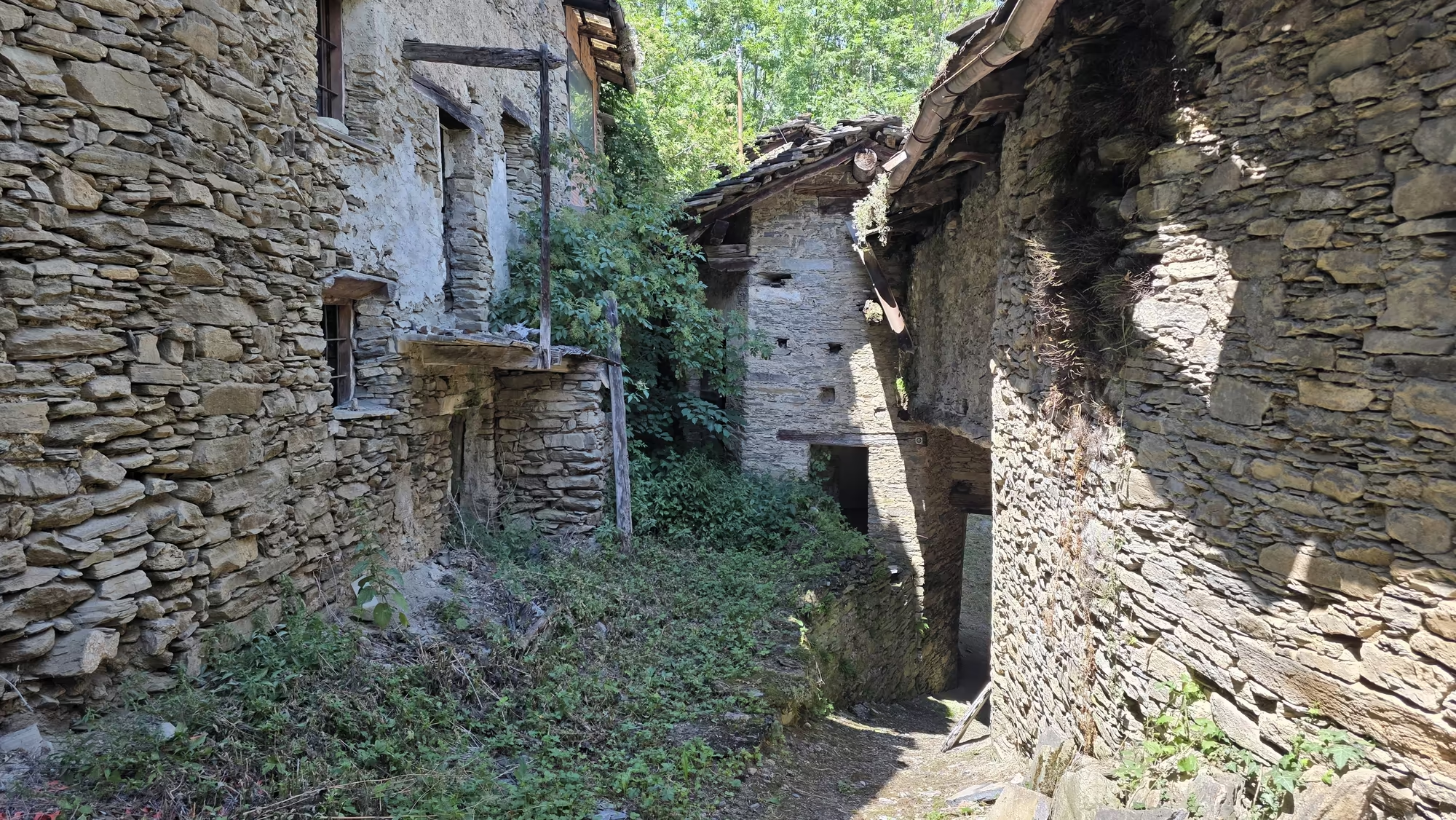
Then the inhabited part ends, and the rest is silence. Lanes run on between houses with no roofs, overgrown with grasses and valerian, their doorways dark. Stone-slab roofs have gone mossy and green, and in places the slabs have slid and let the weather in. Lavender grows tall beside a fence with no field behind it. On a warm wall a longhorn beetle shifts in the sun, its antennae longer than its body, and the whole lane stays empty. Albaretto is not a ghost village; a few doors are still painted and a few gardens are still dug. But it is a place where the number of houses and the number of households have long since stopped matching.
Frescoes on the Walls of Celle di Macra
Celle di Macra lies in the hills north-west of Cuneo and holds about eighty residents across thirty-one square kilometres, one of the emptiest communes of the valley. Its ground rises through every Alpine band: the old belt of cultivation, once rich in vines and terraces, now gone wild; the forest of fir, beech and larch above it; and, higher still, the open pastures among rock and rhododendron. The road arrives in narrow hairpins between the hamlets and finishes at the parish church.
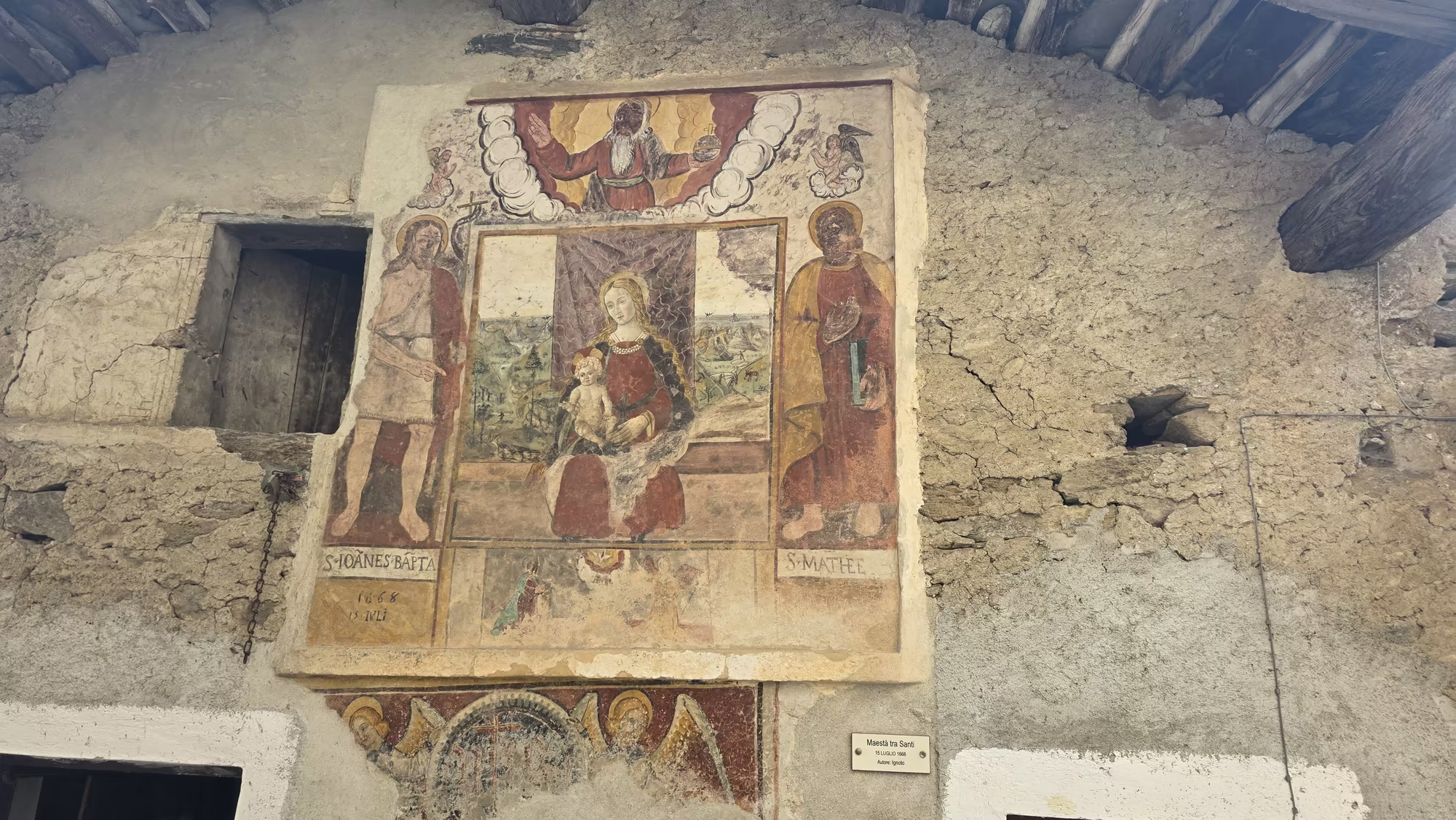
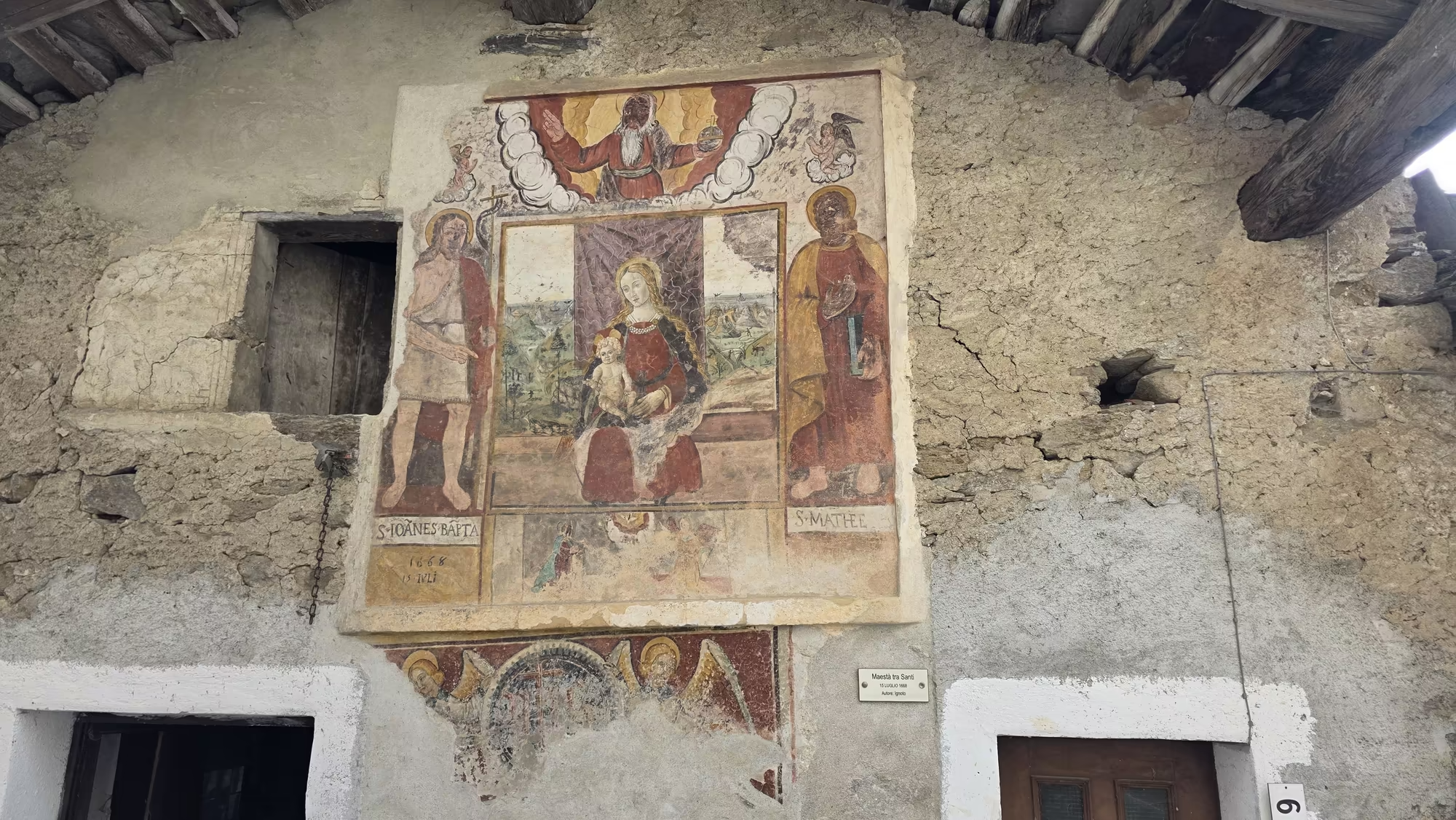
What makes this valley distinctive is the paint. On gable walls, on the plaster beside a door, inside courtyards, and on the small votive pillars that stand at the bends of the mule tracks, there are devotional paintings: the Madonna with the Child, a Crucifixion, a saint with a book or a sword. They are the work of itinerant painters who moved from hamlet to hamlet and across the passes, paid by a household or by the community. In the poorer times the painted scene was instruction for those who could not read; later it became a statement as well, a way of showing that the patron could afford a painter.
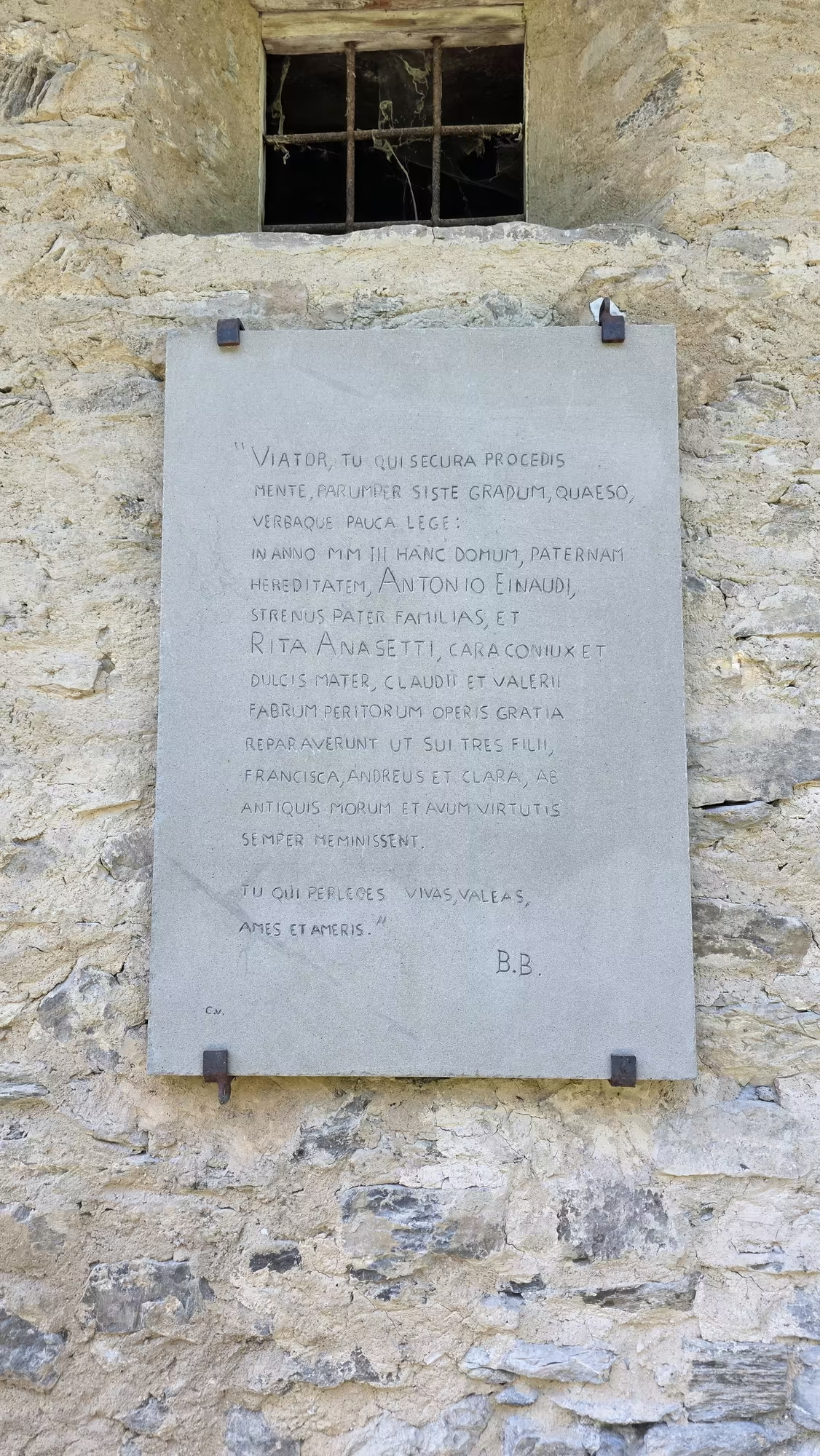
At Celle di Macra the paintings have faded into the stone rather than disappeared from it. A Latin plaque is set into a village wall, its letters still legible. On one house a shrine is frescoed directly onto the facade, a small painted architecture around a sacred figure, the plaster around it dropping away in patches. Elsewhere a Maesta survives in outline, the Virgin enthroned with saints at either hand, the detail gone and the composition clear. The parish church keeps a polyptych by a Flemish master who worked in these valleys, and the village museum gathers the tools of the trades that once left the valley every winter to find work.
Barns, High Pastures and the Return of the Wolf
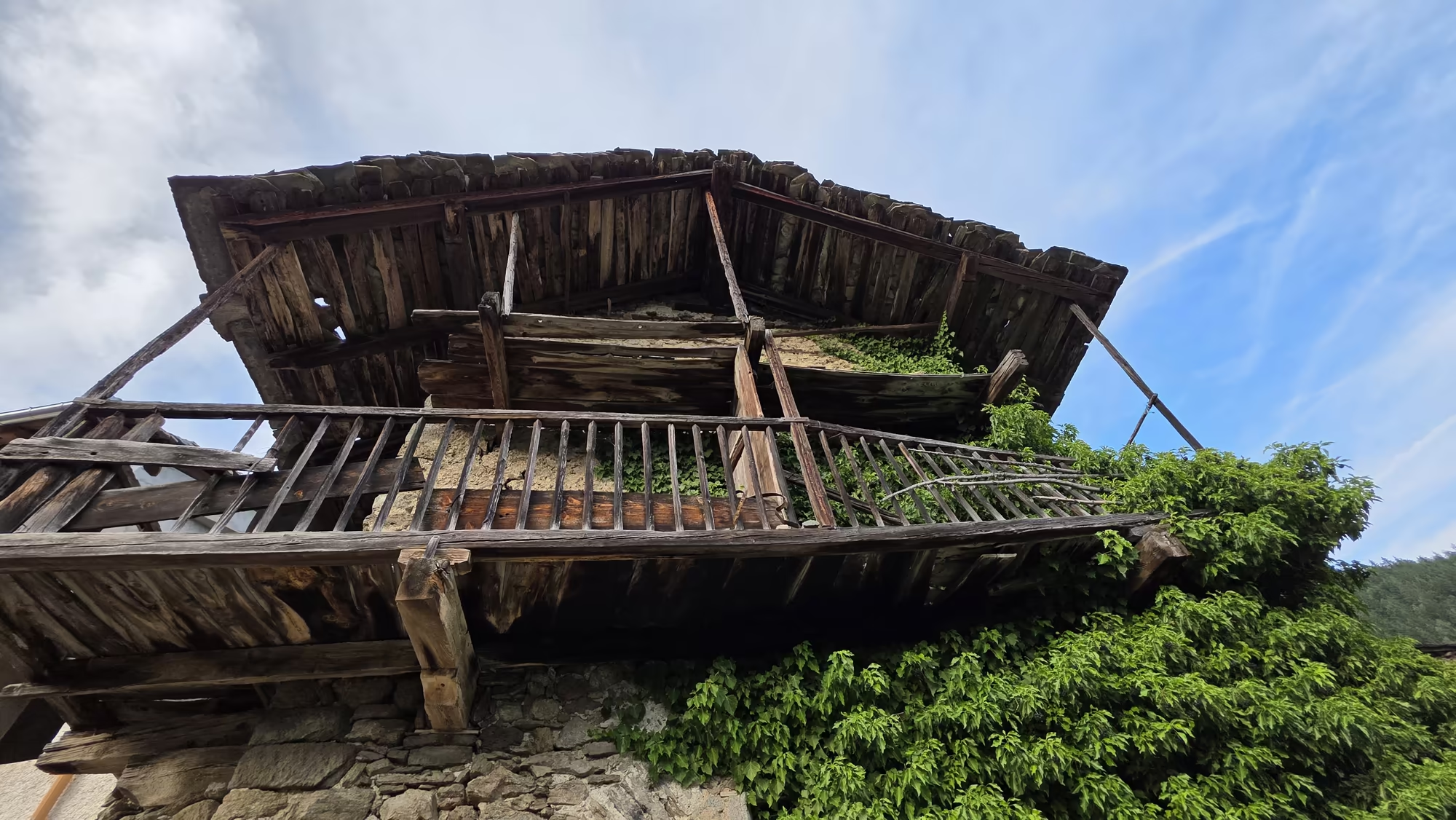
Above the last houses stand the timber barns, heavy roofs on stone bases, built for hay and for the animals kept indoors through the winter. In summer the whole economy moves uphill. The herds go to the alpeggi, the high summer pastures, and the bells carry across the slopes all day; the milk is turned into cheese in the huts; and the move between valley and pasture, the transumanza, is recognised as living heritage and still practised, though the first part of the climb is now often done by lorry and the animals walk the last stretch.
The high pastures are also where the old argument has returned. The wolf has come back to the Alps, moving along the ridges and through the woods, and the packs reach these valleys. For the shepherds who still take animals up, the losses are real and sometimes heavy: sheep taken in the night, a flock reduced, a season’s work undone. Guard dogs are kept, night pens are built, electric fencing is subsidised and compensation is claimed, and still some herders have abandoned the summer ascent altogether. The return of a large predator is spoken of here as a fact of the weather rather than a controversy: something powerful and beautiful that also costs money and grief.