2026 South East Europe 7 - Albania
8 September 2026



Journal Notes
General
Albania, the Republic of Albania, is a small country of south eastern Europe on the western side of the Balkan Peninsula, lying on the Adriatic and the Ionian seas within the Mediterranean. It is bounded by Montenegro to the north west, by Kosovo to the north east, by North Macedonia to the east and by Greece to the south, and it covers an area of about 28,750 square kilometres. The capital and largest city is Tirana, and the other great towns are Durrës, Vlorë and Shkodër.
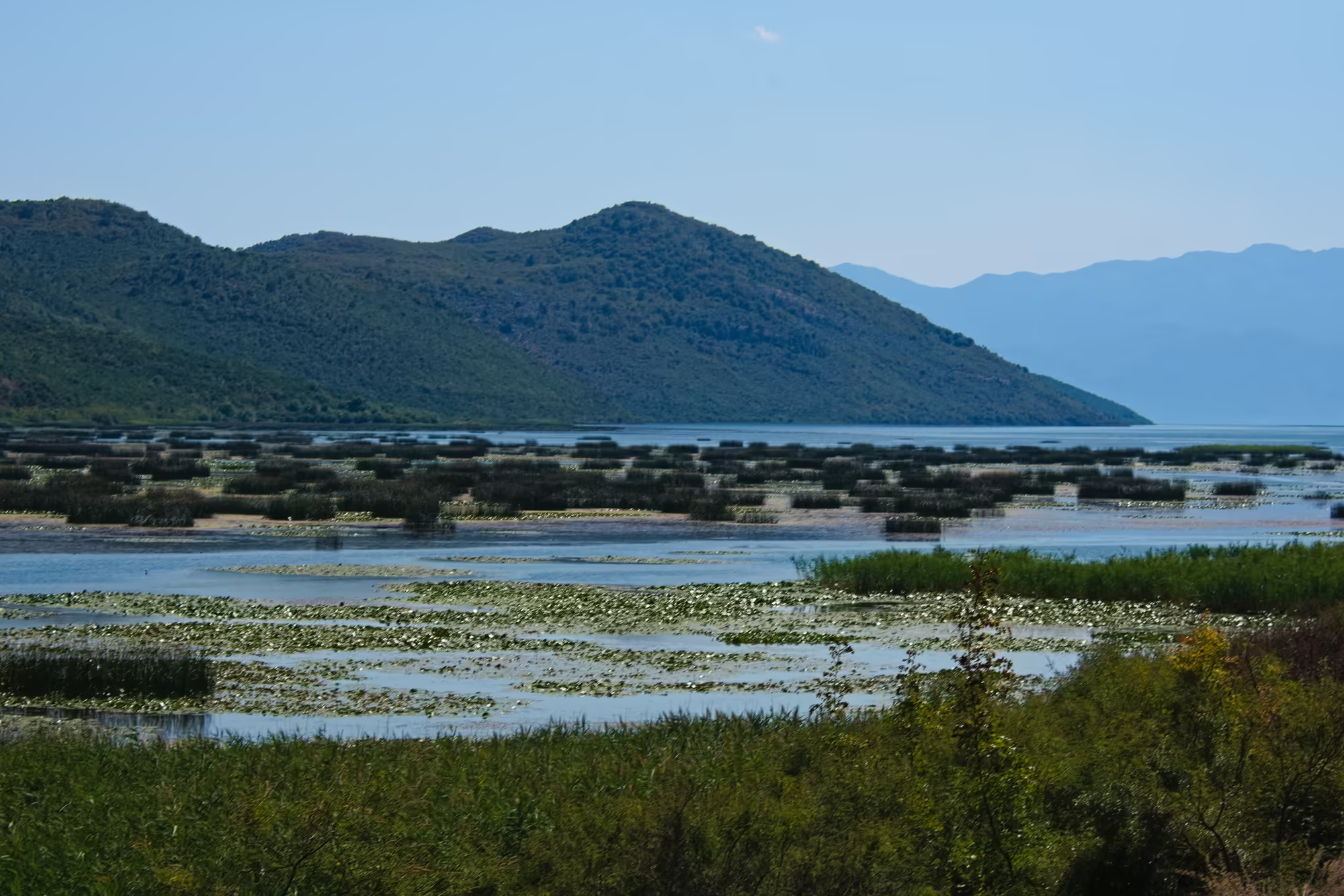
The population numbered about 2.8 million, and the official language is Albanian, an Indo-European tongue of its own branch. The country is a parliamentary republic, a member of NATO since 2009 and a candidate for membership of the European Union. It is a land of a rugged and varied nature, of high snow-capped mountains and of fertile lowland plains that run down to the two seas, and it holds the great Lake of Shkodër, the largest lake of south eastern Europe, on the border with Montenegro.
The towns of the country are few and small, and among them Tirana the capital and Durrës the second city, on the Adriatic, are the chief, with Vlorë on the south and Shkodër in the north. Durrës, among the oldest of the continuously inhabited towns of the Adriatic, has seen some two and a half thousand years of recorded history, and the ports and the towns of the coast have always looked out to sea, to trade with Italy and with the west.
The mountains are among the wilder of Europe, the Albanian Alps in the north and the ranges of the Korab, the Skanderbeg and the southern Ceraunian mountains, with river valleys and gorges between them. The coast is long and varied, from the shallow Adriatic shore with its salt and its lagoons to the deeper blue of the Ionian to the south, and the land is known for its olive groves, its chestnut and its vineyards and for the great flocks and herds of the high pastures.
The people are largely Albanians, and the land keeps the memory of the Illyrians, the ancient people of the country, and of the long centuries under the Ottoman Empire. The towns of the coast and of the interior mix the old with the communist building of the twentieth century, and the country is dotted with the strange concrete bunkers of that age, and with the monuments and the symbols that tell its story.
The road from the north drops over the mountains to the sea, and through the valleys and the passes the present journey crosses into the country, along the rivers and the shores that carry it to the Adriatic and the Ionian coasts.
History
The lands of Albania were inhabited from earliest times, and the country is held to be the home of the Illyrians, the ancient people of the western Balkans. Several Illyrian tribes lived there, among them the Ardiaei and the Taulantians, and the Greeks founded colonies on the coast, most notably at Apollonia and at Epidamnos. The Illyrians were the leading power of the region before the rise of Macedon, and after the Illyrian Wars the land fell under Rome and later under the Byzantine Empire.
In the Middle Ages the coast and the interior passed through the hands of many powers, the Bulgarians, the Byzantines, the Serbs and the Venetians among them. In the fifteenth century the country became a centre of resistance against the Ottoman advance under the leadership of Gjergj Kastrioti, known as Skanderbeg, whose campaigns held the Turks at bay for more than two decades, and whose name is still the great national hero of the land.
After the death of Skanderbeg the country fell to the Ottoman Empire, and for nearly five centuries the greater part of Albania remained within it, its people keeping their language and their identity. The Albanian national awakening of the nineteenth century, a movement of letters and of schools, prepared the way for independence, and when the empire was weakening in the wars of the Balkans Albania declared its independence in 1912.
The twentieth century was troubled, with a brief principality and then a monarchy, with foreign occupation in both world wars, and finally with a communist state under Enver Hoxha, which ruled the country in an isolation that was among the strictest of Europe. The bunkerization of those years, more than seven hundred thousand concrete bunkers, flecked the whole land. The communist regime fell in the early 1990s, and Albania has since moved toward democracy and toward Europe, joining NATO in 2009.
The monuments and the symbols of the land tell this story, the double-headed eagle of the flag, the memorials of the wars and of the resistance, and the strange bunkers that still stand in the fields and beside the roads, a reminder of the century that has passed.
Geology
Albania lies on the western side of the Balkan Peninsula, on the border of the Adriatic and the Ionian seas, in a country that is amongst the most mountainous of Europe. The land is built of young and folded rocks, part of the same Alpine belt that runs through the Balkans, with limestones and with the schists and the ophiolites of an older and a deeper sea.
The Albanian Alps in the north and the ranges of the Korab, the Skanderbeg and the southern mountains run in parallel bands from north west to south east, and between them lie the river valleys and the gorges that cut to the coast. The high peaks, some rising above 2,700 metres, are among the wilder of Europe, and the mountains are rich in the wildlife of the range, in the lynx and the bear and the golden eagle that is the symbol of the nation.
The south of the country, the coast of the Ionian and the southern ranges, shows the folded limestone of the Ceraunian and the great karst of the south. Along the coast the rivers and the sea have built plains and bays, and the shallow Adriatic shore is bordered by salt lagoons, among them the great lagoons near the coast that are so rich in birds, while the land rises behind them into the hills.
The country is varied in its nature, and this variety is reflected in a climate that is at once Mediterranean and more continental in the mountains, and in the rich soils of the plains. The earthquakes that are common on this border of the plates have shaped the land and its building, and the rivers, with their gorges and their falls, are among the great natural features of the country.
To the north the passes of the mountains lead from the interior down through the river valleys to the Adriatic and to the sea, and the shore of the country, with its bays and its lagoons and its rocky coasts, runs away to the south toward the Ionian.
Things to See
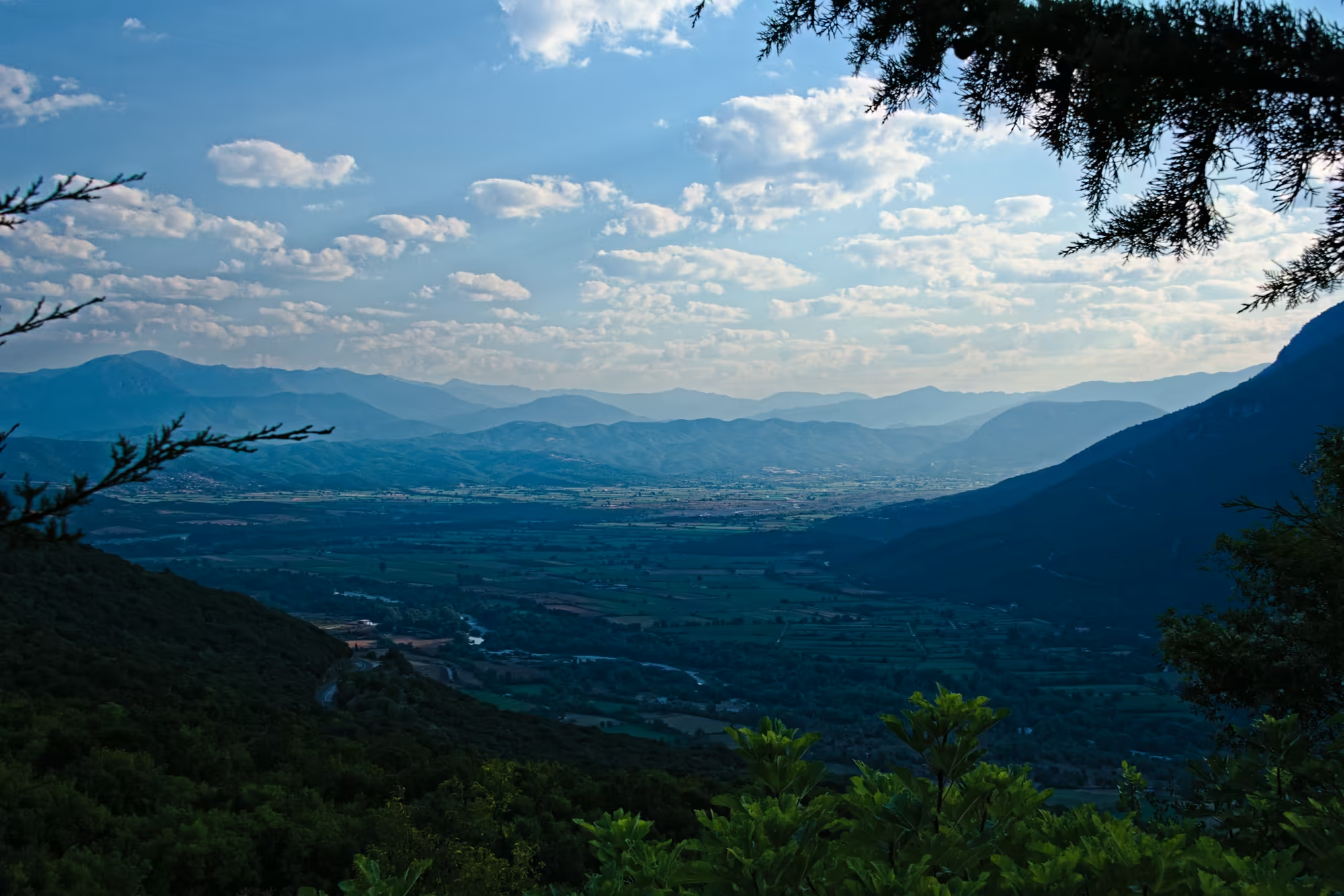
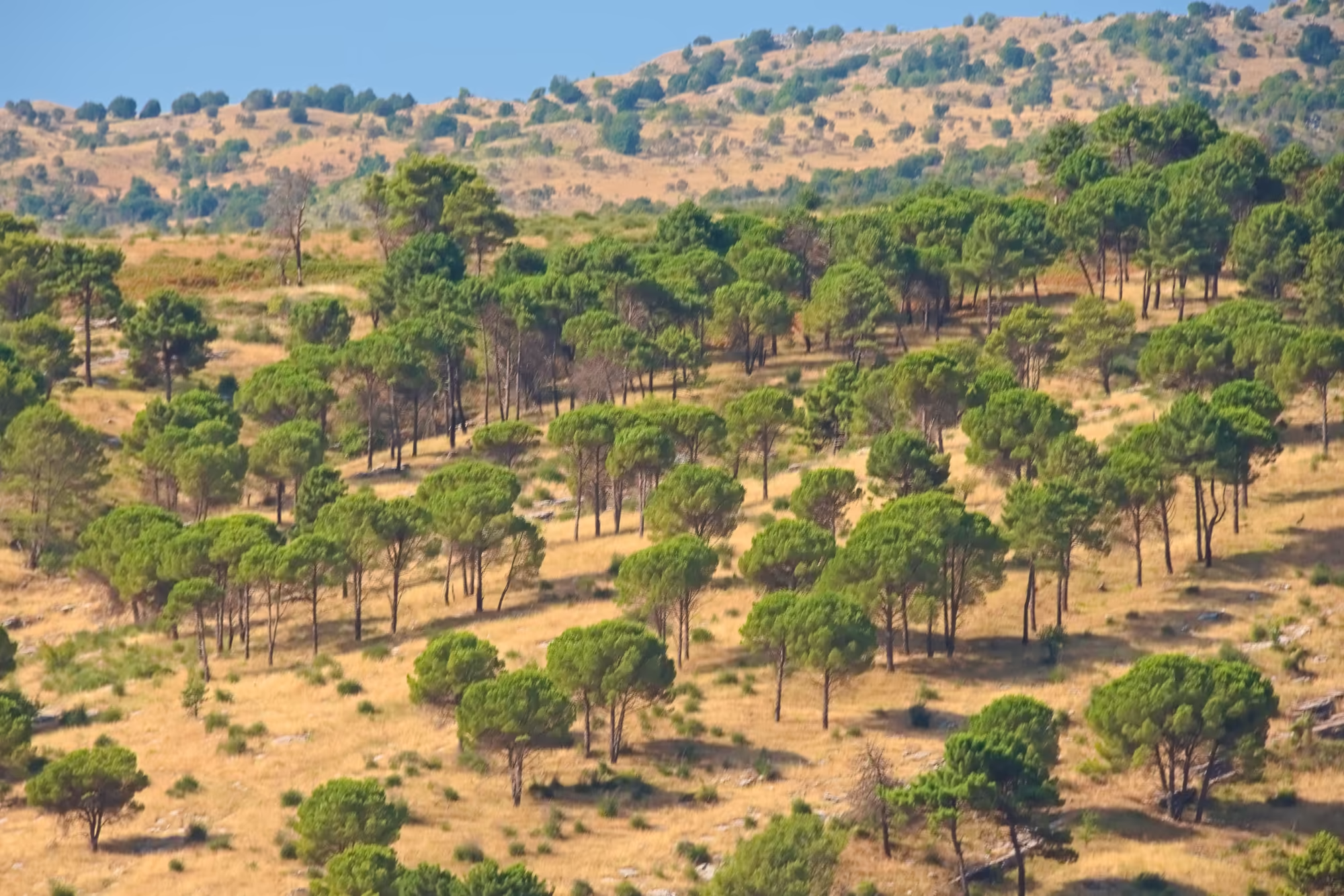
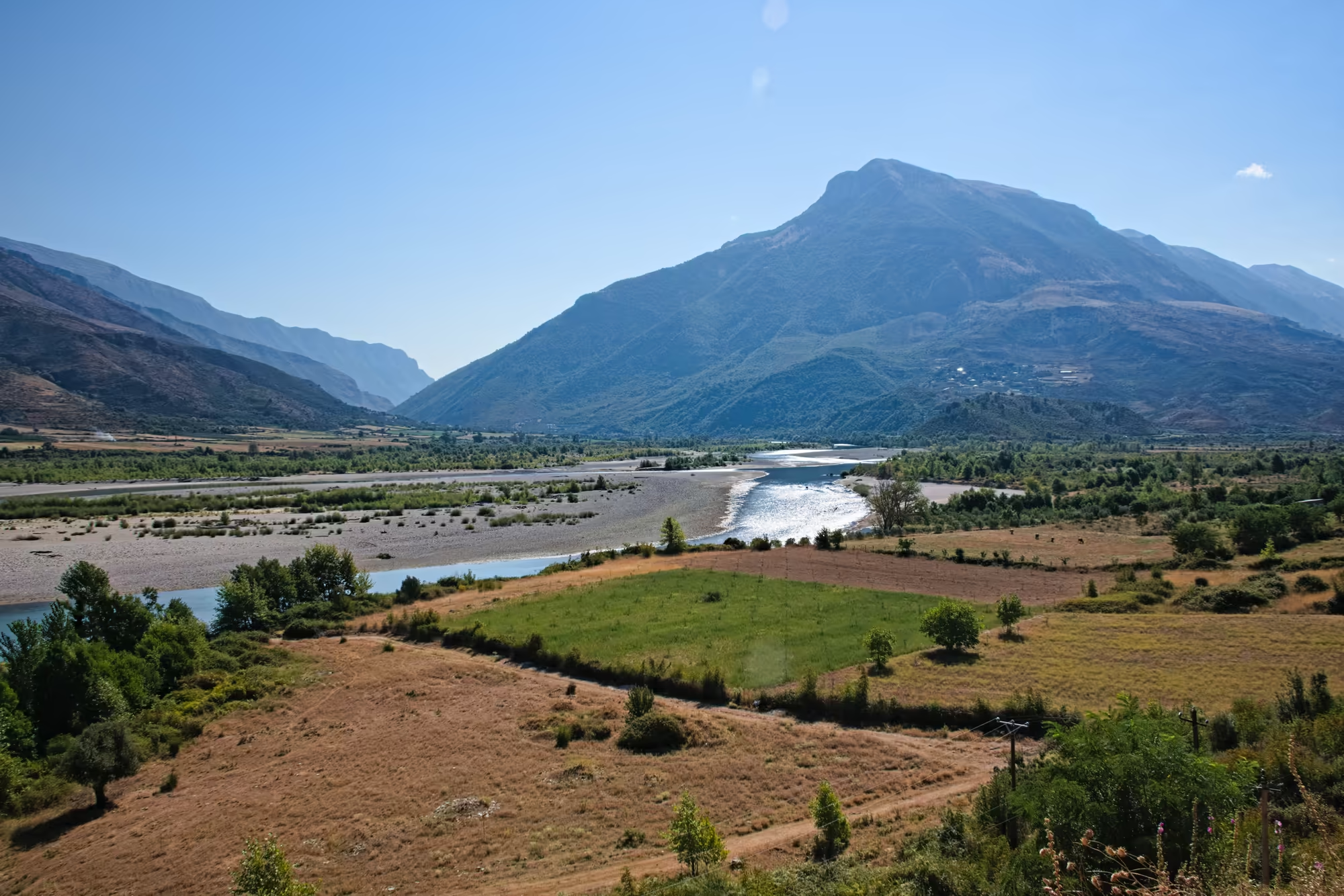
The road from the north drops through the mountains into Albania and comes down to the shore, and the country that the traveller meets is above all a land of high and wild scenery. The passes and the river valleys of the interior open to wide views over the ranges and the gorges, and the green slopes and the pine-covered hills of the south are among the loveliest of the Balkans.
The coast of Albania, on the Adriatic and the Ionian, is a long and varied shore, of sandy bays and of the salt lagoons of the northern plain, of the rocky headlands and the deep water of the south. The wetlands and the lagoons of the coast are rich in birds, the water of the bays clear and blue, and the shores of the Ionian, the coast known as the Albanian Riviera, are held to be among the finest of the Mediterranean, with the villages that cling to the rocks and the clear sea of a little touched shore.
At the far south of the coast lies the ancient Butrint, a Greek polis and a Roman city and the seat of an early Christian bishopric, set on a lagoon and surrounded by the marshes of the south. Its ruins, the walls, the theatre and the baptistery of the old city, stand in a landscape of water and of green, and the place is among the richest and the most evocative of the archaeological sites of the coast, listed as a World Heritage Site.
Inland the country is a land of high and wild scenery, and the river valleys of the Valbona and the passes of the mountains are among the finest of the range. The green slopes and the pine-covered hills of the south, and the great karst and the gorges of the interior, open to wide views over the ranges, and the quiet valley of a mountain river, with its spring by the road, is the reward of the way that climbs the passes.
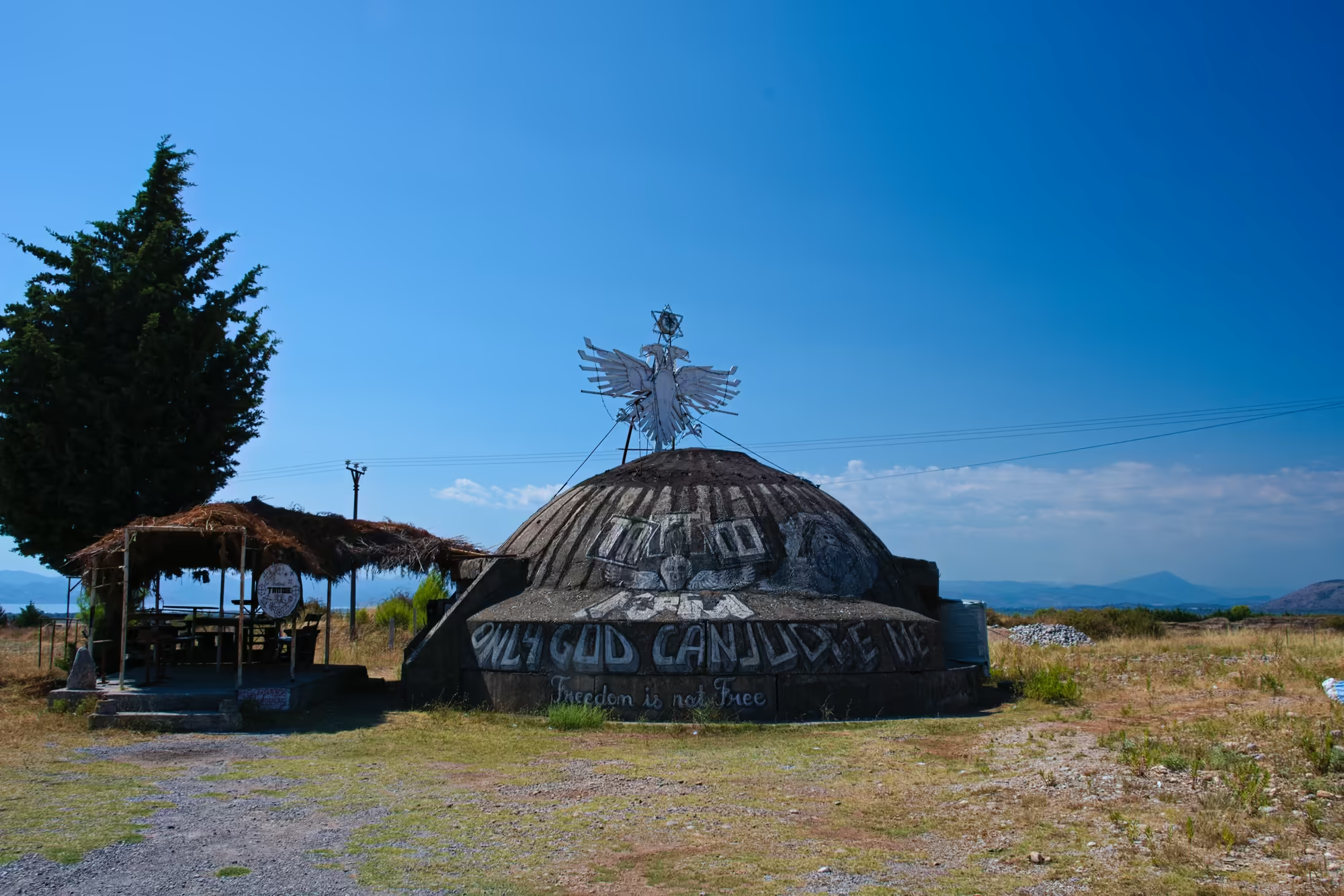
The country keeps the strange and legible marks of its twentieth century, and above all the concrete bunkers that Enver Hoxha set up across the whole land. More than seven hundred thousand of these little domed and pillbox shelters were built in the years from the 1960s to the 1980s, set in the fields, beside the roads and on the beaches, in the bunkerization of one of the most isolated states of Europe, and they stand today as a memory that is everywhere present.
The monuments and the symbols of the nation are another part of the scene, the memorials that honour the war dead and the resistance, and the eagle of the flag, the double-headed eagle that is the old symbol of the Albanians, appears on the monuments and the crests of the country. The domed and the figure-topped memorials that stand on the hilltops and beside the roads show the pride and the memory of a people whose history has been so often written in the struggle to survive.
The towns and the villages of the country mix the stone and the whitewashed houses of the old with the blocks of the communist years, and the mountain villages, the roadside springs and the quiet lanes give the land its everyday face. The clear rivers, the mountain springs that rise by the road, and the marsh and the water meadows of the lowlands by the lagoons, complete a country of a varied and a dramatic nature, at the meeting of the mountain and the sea.
References
The references on which this account rests are set out below, and they may be consulted at the links given.
- Wikipedia contributors (2026). Albania. en.wikipedia.org/wiki/Albania
- Wikipedia contributors (2026). History of Albania. en.wikipedia.org/wiki/History_of_Albania
- Wikipedia contributors (2026). Illyrians. en.wikipedia.org/wiki/Illyrians
- Wikipedia contributors (2026). Albanian Alps. en.wikipedia.org/wiki/Albanian_Alps
- Wikipedia contributors (2026). Adriatic Sea. en.wikipedia.org/wiki/Adriatic_Sea
- Wikipedia contributors (2026). Ionian Sea. en.wikipedia.org/wiki/Ionian_Sea
- Wikipedia contributors (2026). Enver Hoxha. en.wikipedia.org/wiki/Enver_Hoxha
- Wikipedia contributors (2026). Bunkers in Albania. en.wikipedia.org/wiki/Bunkers_in_Albania
- Wikipedia contributors (2026). Skanderbeg. en.wikipedia.org/wiki/Skanderbeg
- Wikipedia contributors (2026). Butrint. en.wikipedia.org/wiki/Butrint
- Wikipedia contributors (2026). Durrës. en.wikipedia.org/wiki/Durrës
- Wikipedia contributors (2026). Tirana. en.wikipedia.org/wiki/Tirana
- Wikipedia contributors (2026). Albanian language. en.wikipedia.org/wiki/Albanian_language
- Wikipedia contributors (2026). Korab. en.wikipedia.org/wiki/Korab
- Wikipedia contributors (2026). European Union. en.wikipedia.org/wiki/European_Union
- Wikipedia contributors (2026). Albanian nationalism. en.wikipedia.org/wiki/Albanian_nationalism