Day 2 - Shanghai / Suzhou
Journal Notes
General
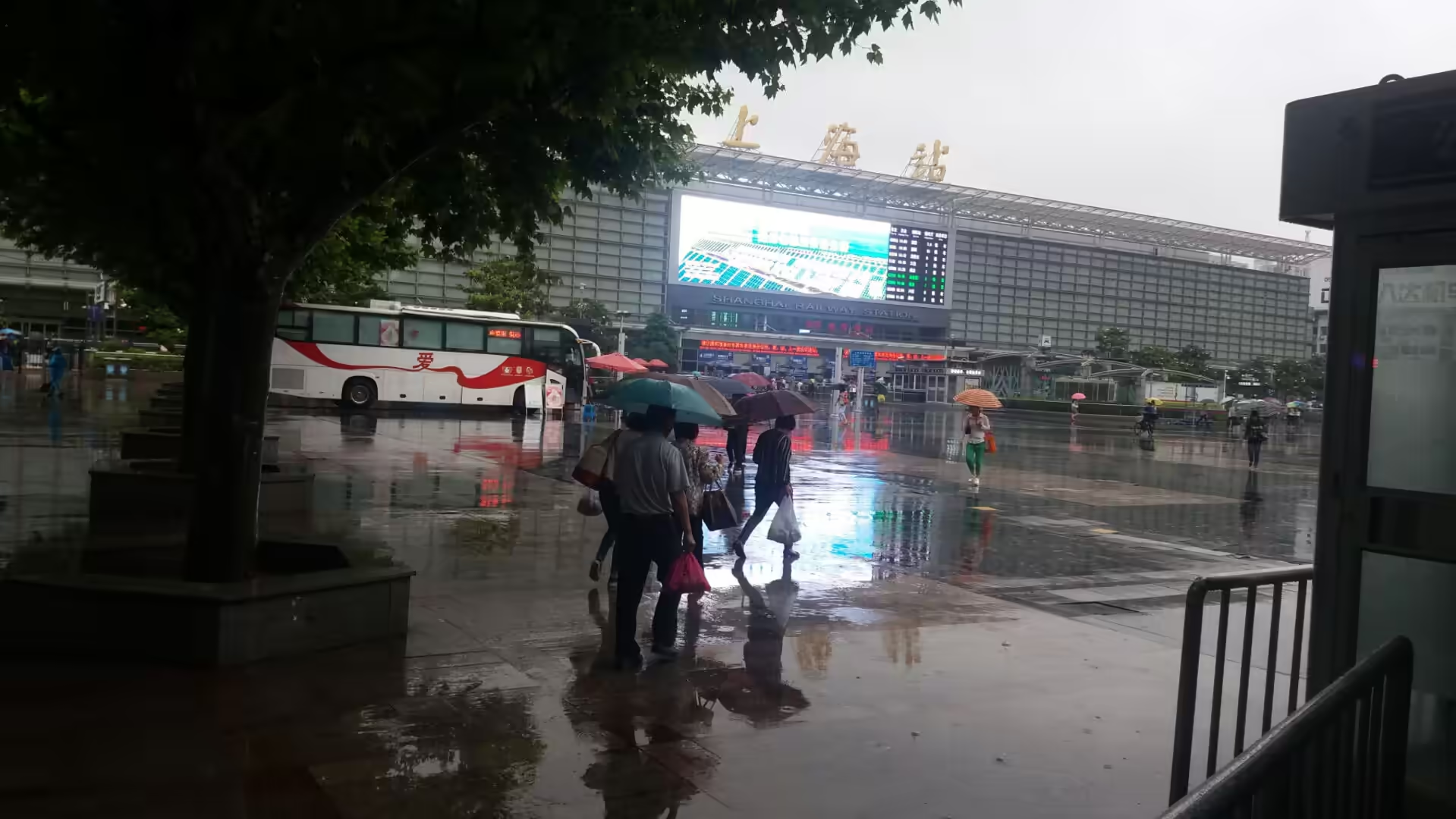
The second day began at Shanghai Railway Station in the rain and ended in Suzhou, about a hundred kilometres to the west. Shanghai has five major stations and this one, on Moling Road in the Jing’an district north of the centre, is the oldest of them and still one of the most important hubs of the national network. The Chinese railway system distinguishes classes of train by letter, and the difference matters: G trains are the high speed units that run up to 350 kilometres an hour between the largest cities, D trains are slower units for a wider range of destinations, and C trains are intercity services. The ride to Suzhou is short enough that the choice hardly matters, and the trains leave every few minutes.
What the journey shows is that the Yangtze Delta is not a region of cities separated by countryside but one continuous built up area. Between Shanghai and Suzhou the train passes industrial estates, housing blocks, fields and canals in rapid succession, and the two cities have grown towards each other to the point where the boundary is invisible from a train window. The delta holds more than 120 million people in one of the most heavily urbanised regions on earth, and this short ride is the best way to understand how that looks from the ground.
Suzhou itself is a prefecture level city in Jiangsu province and a major industrial and tourist destination, known for high end manufacturing and, above all, for its classical gardens. It is also, in Chinese terms, an old city: the cradle of Wu culture, a centre of trade, art and scholarship on the Grand Canal, and for centuries one of the wealthiest places in the country. The contrast between the wealth of its history and the industrial scale of its present is the same contrast that runs through the whole delta.
The day was mostly a matter of arriving: the station in the rain, the ride, and then the ordinary streets of a Chinese city, which are more informative than any monument. The commercial roads of a Jiangsu town show what the delta actually lives on, and the shops, the restaurants and the traffic say more about daily life than the gardens do.
History
Suzhou is one of the oldest cities in the region, and its prosperity was made by water and silk. It grew as a centre of the Wu culture and then as a hub of trade on the Grand Canal, the system of interconnected waterways that links the rivers and lakes of northern and eastern China, and it was along those canals that the rice, silk and taxes of the south travelled north to the capital. The canal is the longest artificial waterway in the world. Its present main stem, the Jing to Hang canal, runs some 1,776 kilometres from Beijing to Hangzhou, and the network was completed in 609, when the emperor Yang is said to have led a flotilla of boats a hundred kilometres long down to his southern capital.
The city walls of Suzhou, before their demolition, ran in a circuit of about sixteen kilometres with four large suburbs lying outside them, and the wealth inside supported gardens, academies and publishing. The gardens are the part of that inheritance that survives. They were built over a period of almost a thousand years, from the Northern Song to the late Qing dynasties, mostly by scholars and officials, and they established the vocabulary of the classical Chinese garden: constructed landscapes in which water, rock, plants and buildings are arranged to suggest a larger world in a small space. The Classical Gardens of Suzhou are on the UNESCO World Heritage List, and the finest of them, the Humble Administrator’s Garden, is at 5.2 hectares the largest garden in the city, begun in 1509 and finished sixteen years later.
The twentieth century was hard on all of it. The Japanese invasion of 1937 devastated many of the gardens, and the decades that followed brought war, upheaval and neglect before the gardens were restored and inscribed. The modern history of Suzhou is a different story altogether: after the reform and opening policy began in 1978 the city grew at rates of about fourteen per cent a year for thirty five years, and in 2023 it had five million registered residents. The Suzhou Industrial Park, established in February 1994 under an agreement between the Chinese and Singaporean governments, became the showcase for that growth, covering 278 square kilometres and supporting more than 800,000 permanent residents by 2019.
The park is worth a note because it shows how the delta works. It was planned as a demonstration of international standards in urban planning and public administration, drawing on Singapore’s experience, and it attracted foreign investment from the beginning. There were frictions as well: the Singaporean side reduced its stake from a majority to thirty five per cent in 1999, hoping to align local incentives with the success of the project. The result, in any case, is one of the most prominent industrial zones in the country, and it stands within sight of gardens that were laid out when the same land was the richest agricultural region in China.
Geology
The ground under Suzhou is the ground of the Yangtze Delta: a plain of river silt and lake deposits, so low and so flat that the whole region depends on its water management. The city sits in the basin of Lake Tai, which lies to its west and is the third largest freshwater lake in China, with an area of 2,250 square kilometres and an average depth of only two metres. About ninety islands rise from it, and its shallows and shores, together with the hills around Yixing, form the Taihu Scenic Area.
A lake two metres deep over that area is a body of water in a delicate balance. It receives the drainage of a large and intensively farmed and industrialised region, and the same shallowness that makes it warm quickly in summer leaves little room for the water to dilute what enters it. The historical consequence is the water town: because the plain is almost level and the water table is high, the traditional settlement pattern of the delta is a town built on canals, with houses on both sides of the water and boats doing the work that carts do elsewhere. Suzhou is the largest and most famous of those towns.
The Grand Canal is the engineering counterpart to the natural water. Its greatest height above sea level, 42 metres, is reached in the foothills of Shandong far to the north, which means that the canal is not a single channel but a system of levels, locks and feeders, drawing on rivers and lakes along its route. In this part of China it runs through the delta’s own waterways, and the distinction between canal, river and lake becomes one of administration rather than of geography. Suzhou Creek, which flows into the Huangpu in Shanghai, carries the city’s name for the same reason: the water network is the region.
The gardens of Suzhou are a geological subject as well. Their central feature is rock, and the rock most valued in them is the porous limestone that the region’s lakes produce, a stone riddled with holes by solution, which is set up in courtyards as miniature mountains. The point of the stone is that it is the product of water dissolving limestone over long periods, which is precisely the kind of process that gives the surrounding landscape its shape. A garden in Suzhou is a small essay about the geology of the delta, built from the material that geology provided.
Water also governs how the city is built, and not always comfortably. The plain subsides where groundwater is drawn down, the canals need dredging and managing, and the risk of summer flooding is a permanent feature of life in the delta. The modern city has grown up around those constraints rather than escaping them: the industrial parks and apartment blocks stand on piled foundations in the same silt, and the canals that once carried tax grain now carry storm water. The most visible difference between a Jiangsu town and a European one is not the buildings but the fact that everything is built at the edge of water.
What the canal means in practice is visible in the engineering: because the ground is almost level and the water has to be held at the right height for boats, the system relies on locks, sluices and regulators rather than on gravity alone. In the delta the canals and the rivers are managed as one network, and a canal in the middle of a town may be fed from a lake thirty kilometres away.
Things to See
The morning was about the station. The plaza outside Shanghai Railway Station was wet, full of people under umbrellas crossing towards the entrance, with a coach waiting and the illuminated station building behind them. Inside, the hall is what such halls are everywhere in China: large, crowded, efficient, with the departure boards and the security checkpoints that make a train journey here a matter of minutes rather than hours.
The ride west gave the best view of the delta. The train runs at speed through a landscape of low hills, canals, fields under polythene, industrial buildings and rows of apartment blocks, all of it continuous and none of it empty. In half an hour the country has changed visibly: the buildings are newer, the streets wider, the scale slightly smaller, and the cars parked along the kerbs are the small white and silver saloons that Chinese cities run on.
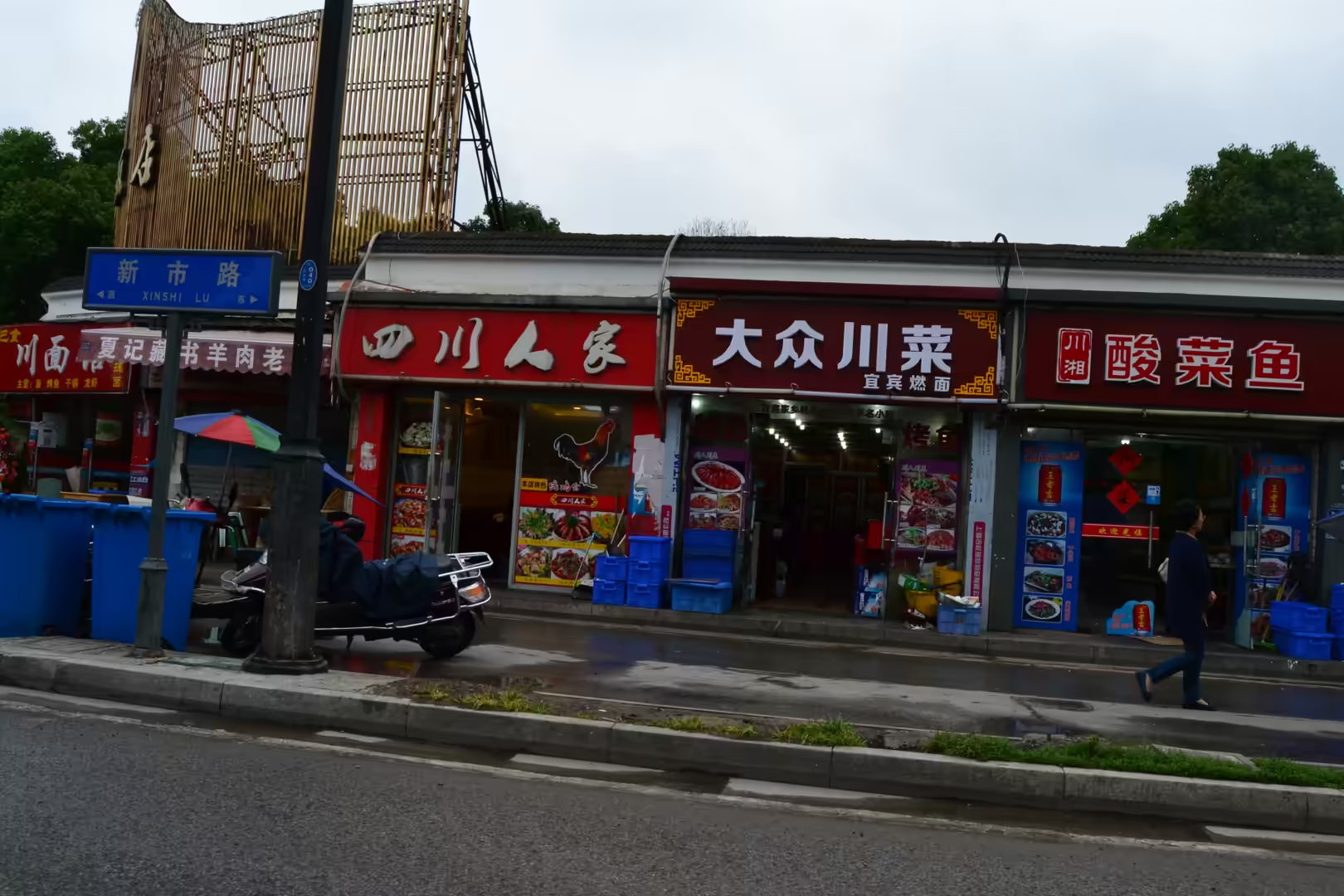
The first walk in Suzhou led along Xinshi Road, where the restaurants line up with red signs above their doors, a scooter parked in front of one of them and the pavement still wet from the rain. Such streets are the best introduction to a city in this part of China, because they are where people eat. The restaurant signs are almost the only decoration on a commercial building or an apartment block, and the quality of the cooking along a road like this one is generally high and the prices low.
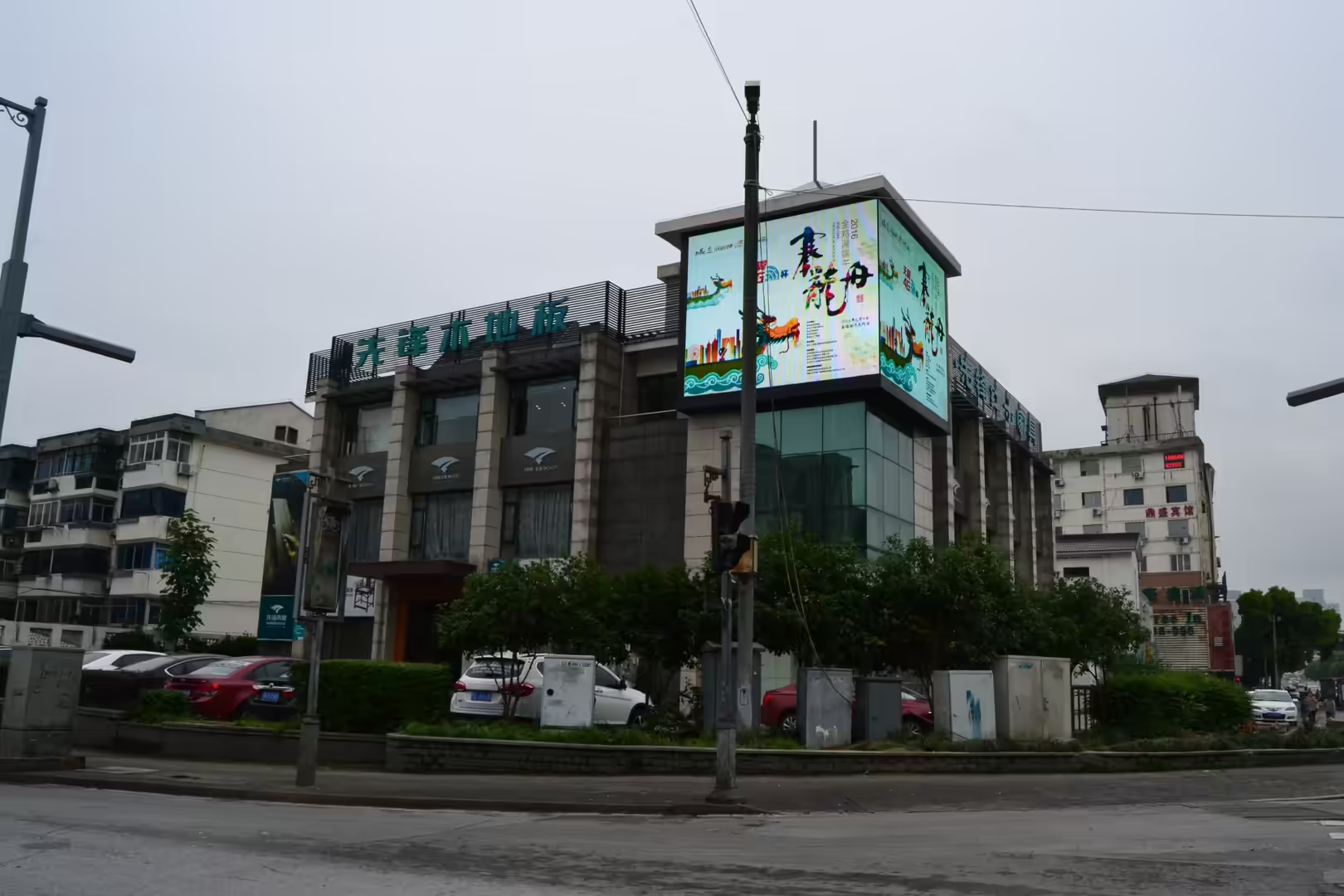
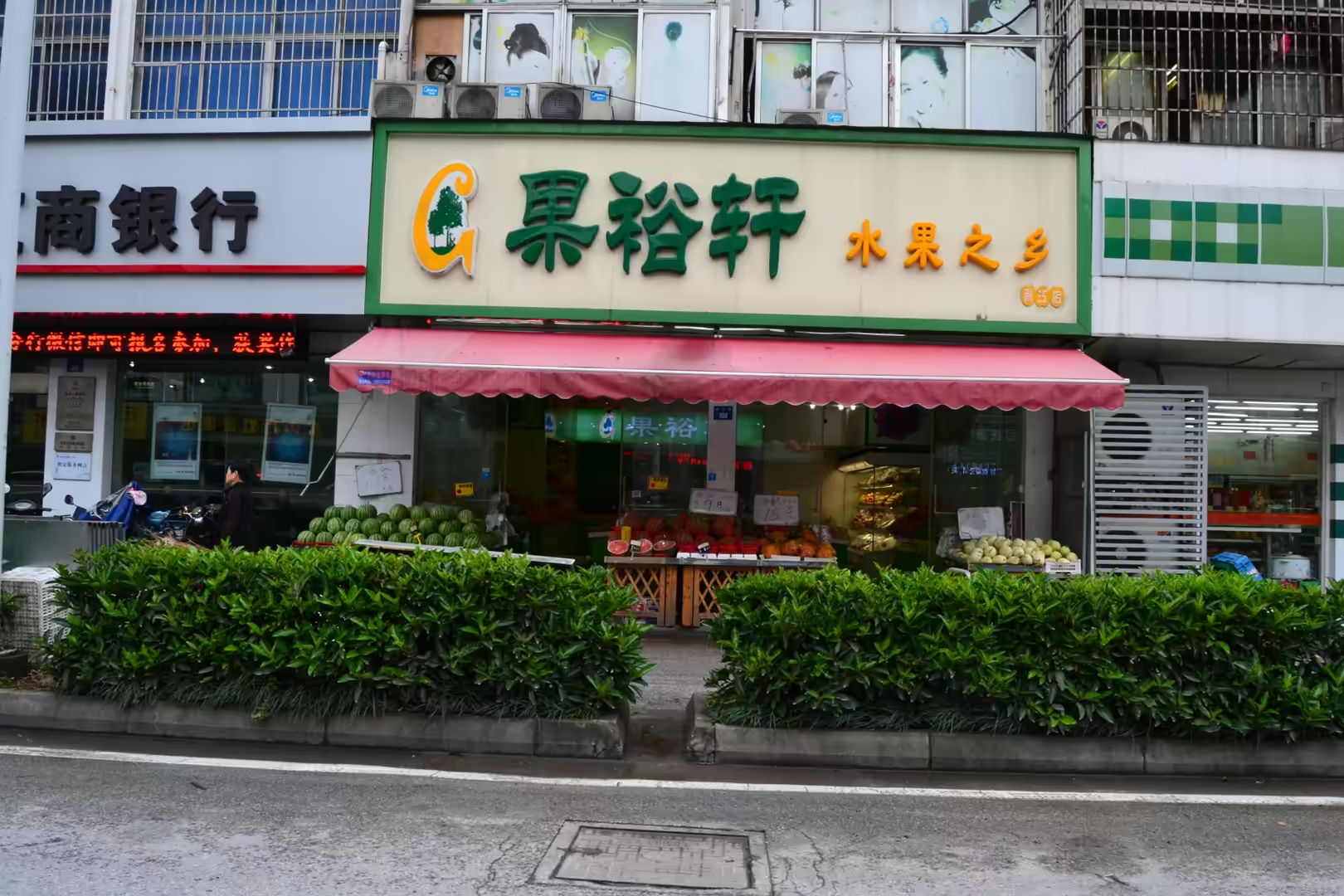
A little further on stood a modern commercial building with a large illuminated Chinese billboard on its side, facing a wet road under an overcast sky, and then a neighbourhood fruit shop, where watermelons, melons and other fruit were stacked under a pink awning beneath a big shop sign. Fruit shops of this kind are the most reliable indicator of the season in a Chinese city: in early summer they are full of melons, and the watermelons are sold whole or cut into halves for a single meal.
That was the whole of the day’s record: a station in the rain, a train, a road of restaurants and a fruit shop. Travel writing usually looks for more, but there is a case for recording the ordinary, because the ordinary is what a place is like when nobody is looking at it. The next day would be about work, and about a dinner that turned out to be the most memorable meal of the journey, so the quiet arrival in Suzhou served as a suitable preparation for both.
The rain had one advantage: it emptied the streets of ordinary traffic and left the pavements to pedestrians and umbrellas, which made the first walk slower and more informative than it would have been on a dry day.
References
- Wikipedia contributors (2026). Shanghai railway station. en.wikipedia.org/wiki/Shanghai_railway_station
- Wikipedia contributors (2026). Suzhou. en.wikipedia.org/wiki/Suzhou
- Wikipedia contributors (2026). Grand Canal (China). en.wikipedia.org/wiki/Grand_Canal_%28China%29
- Wikipedia contributors (2026). Yangtze Delta. en.wikipedia.org/wiki/Yangtze_Delta
- Wikipedia contributors (2026). Lake Tai. en.wikipedia.org/wiki/Lake_Tai
- Wikipedia contributors (2026). Chinese cuisine. en.wikipedia.org/wiki/Chinese_cuisine
- Wikipedia contributors (2026). Jiangsu cuisine. en.wikipedia.org/wiki/Jiangsu_cuisine
- Wikipedia contributors (2026). Shanghai. en.wikipedia.org/wiki/Shanghai
- Wikipedia contributors (2026). Suzhou Industrial Park. en.wikipedia.org/wiki/Suzhou_Industrial_Park
- Wikipedia contributors (2026). Classical Gardens of Suzhou. en.wikipedia.org/wiki/Classical_Gardens_of_Suzhou
- Wikipedia contributors (2026). Yangtze. en.wikipedia.org/wiki/Yangtze
- Wikipedia contributors (2026). Air China. en.wikipedia.org/wiki/Air_China
- Wikipedia contributors (2026). Shanghai Museum. en.wikipedia.org/wiki/Shanghai_Museum
- Wikipedia contributors (2026). Nanjing Road. en.wikipedia.org/wiki/Nanjing_Road
- Degli Angeli A. (2016) China’s Grand Canal. Strategies for Sustainable Urban Development in China. The Plan Journal. doi.org/10.15274/tpj.2016.01.01.04
- (ohne Angabe) (2013) Stone in the Gardens of Suzhou. The Gardens of Suzhou. 159-162. doi.org/10.9783/9780812207255.159