Stage 3 of 10
Day 3 - Suzhou






Journal Notes
General
The third day was a working day in Suzhou, which is how most visits to this part of China actually go. Suzhou is a prefecture level city in Jiangsu province with a population of five million registered residents, and it is an industrial hub specialising in high end manufacturing as much as it is a tourist destination. Factories, development zones and offices are the reason the city is wealthy, and a day spent indoors with colleagues and business partners is the ordinary experience of the place.
The working part of the day took place in a conference room, which is a universal room with local details: a long table, a row of flags, tea, and on this occasion a collection of sample packages and jars laid out for discussion. Business in China is done face to face, with long meetings and longer meals, and the meal is not a courtesy appended to the meeting but the place where the real conversation happens. The samples on the table and the dinner that followed it belong to the same day and the same negotiation.
Suzhou itself is a good place for that kind of day. It has been a trading city for more than two thousand years, it has been wealthy for most of that time, and its manners are those of a place that has been doing business with strangers since the Grand Canal brought them to its wharves. The gardens that made it famous were built by retired officials and scholars with money to spend, and the same instinct for display and hospitality produced both the gardens and the banquet.
The day also showed how quickly the city changes around its traditions. Between the office and the hotel there is modern Suzhou: wide roads, malls, apartment towers and the landscaped edges of the industrial park, all of it built in the last thirty years at growth rates that would be considered extraordinary anywhere else. The gardens, the canals and the old streets survive inside that city rather than beside it, which is the arrangement in most of the delta.
History
Suzhou is a city of silk and scholars. It grew as a centre of the Wu culture and then as a hub of trade, arts and intellectual life along the Grand Canal, and for centuries it helped shape the economic and cultural development of China. The canal carried its silk, its rice and its taxes north, and the wealth came back in the form of gardens, academies, temples and publishing houses. At its height the city was one of the largest and richest in the world.
The gardens are what the city is famous for now. They were laid out over almost a thousand years, from the Northern Song to the late Qing dynasties, most of them by scholars, and they standardised the key features of the classical Chinese garden: constructed landscapes in which water, rock, plants and buildings are combined so that a small walled space suggests a much larger world. They are on the UNESCO World Heritage List, and the largest of them, the Humble Administrator’s Garden at 5.2 hectares, was begun in 1509 and took sixteen years to complete. Its founder was an official who had fallen out of favour at court, and the garden he built is a statement about the world he had withdrawn from.
The twentieth century broke the sequence. The Japanese invasion of 1937 devastated many of the gardens, and the war, the civil war and the upheavals that followed left the city poor and its monuments neglected for decades. The restoration came later, and with it the inscription on the World Heritage List in 1997, which returned the gardens to the centre of the city’s idea of itself.
The recent history is entirely different in character. After the reform and opening policy began in 1978, Suzhou grew at about fourteen per cent a year for thirty five years and became one of the most productive manufacturing cities in the country. The Suzhou Industrial Park, established in February 1994 under a bilateral agreement between the Chinese and Singaporean governments, was designed as a showcase of international standards in planning, governance and investment, and it grew into a zone of 278 square kilometres with more than 800,000 permanent residents by 2019. In 1999, when the project was still settling down, Singapore reduced its stake from a majority holding to thirty five per cent.
What a visitor sees is therefore two cities at once: the garden city of the Ming and Qing, which is now carefully preserved and profitable, and the industrial city of the reform era, which is neither old nor particularly handsome and pays for everything. A day of meetings and a banquet in the evening belongs entirely to the second, and the gardens, visited in the morning on another day, belong to the first.
Silk deserves a sentence of its own, because it was the source of the city’s wealth. Suzhou was a centre of sericulture and silk weaving for centuries, and the trade ran through the canal to the north and through Shanghai to the world. Even today the region produces silk and the traditions of embroidery and weaving are maintained as crafts, though the industry that pays for the city now is manufacturing of a quite different kind.
Geology
Suzhou stands on the delta plain of the lower Yangtze, in the basin of Lake Tai, and the geology of the place is the geology of water and silt. Taihu is the third largest freshwater lake in China, with an area of 2,250 square kilometres and an average depth of only two metres, and about ninety islands rise from it. The lake and the rivers and canals around it drain a plain that is intensively farmed, densely populated and heavily industrialised, and the shallowness of the water leaves very little room for dilution.
The plain itself is alluvium, laid down by the Yangtze and its tributaries over the last few thousand years, and it is almost perfectly flat. That flatness is why the region is a network of canals rather than a province of roads in the older layers of its history: where the water table is a metre below the surface and the ground will not bear heavy construction without piling, moving goods and people by water is the practical solution. The water towns of the delta, of which Suzhou is the largest, are the result.
The Grand Canal runs through the same system. Its highest point, far to the north in Shandong, is only 42 metres above sea level, and the canal is therefore less a channel cut through a landscape than a managed connection between rivers and lakes, with locks and regulators to hold its levels. In the Suzhou region the canal and the natural water are effectively one body, and the distinction between them is administrative rather than geographical. Suzhou Creek, which flows through Shanghai into the Huangpu, takes its name from this city, which is a reminder of how closely the water network ties the delta together.
The region’s most famous stone is also a product of water. The rock used in the gardens is a porous limestone, riddled with holes and hollows produced by solution, which is set upright in courtyards as a miniature mountain. It comes from the lake district around Taihu, and its value lies precisely in the evidence it carries of water dissolving carbonate rock over long periods. A scholar’s garden with such a stone in it is an essay on the geology of its own region.
The modern city sits on the same soft ground and has the same problems to manage. Groundwater and subsidence are monitored, the canals are dredged and controlled, and summer floods are a recurring risk in the delta. Land in this part of China is not so much solid as drained, and every city in it, from Shanghai to Suzhou, is an engineering project as much as a settlement.
Things to See
The conference room was the first sight of the day: the long table, the flags, the tea, and the sample jars and packets set out in rows for discussion. It is worth recording that this is what a business visit to China looks like from the inside: not a sequence of meetings in offices, but one conversation carried across a table and then continued over food.
The meal in the evening was the event of the day, and it was a banquet in the Jiangsu manner. Jiangsu cuisine, also called Su cuisine, is one of the eight great traditions of Chinese cooking, and its characteristic is texture: dishes are cooked to be soft without falling apart, and the heating of each one is watched closely. On the table the principle is sharing. Everything arrives in the middle and everyone takes from it, so the sequence of dishes is the sequence of the evening.
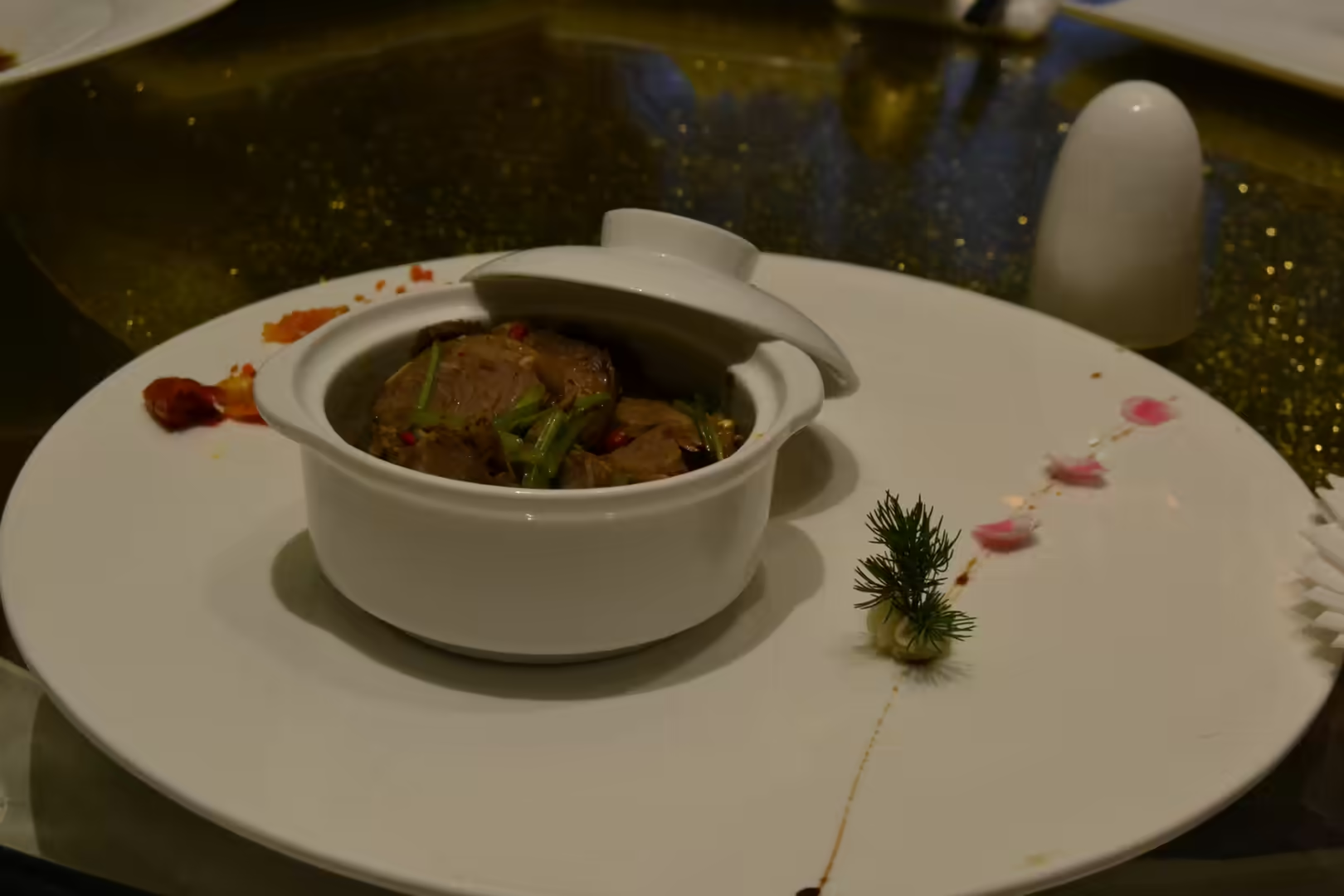
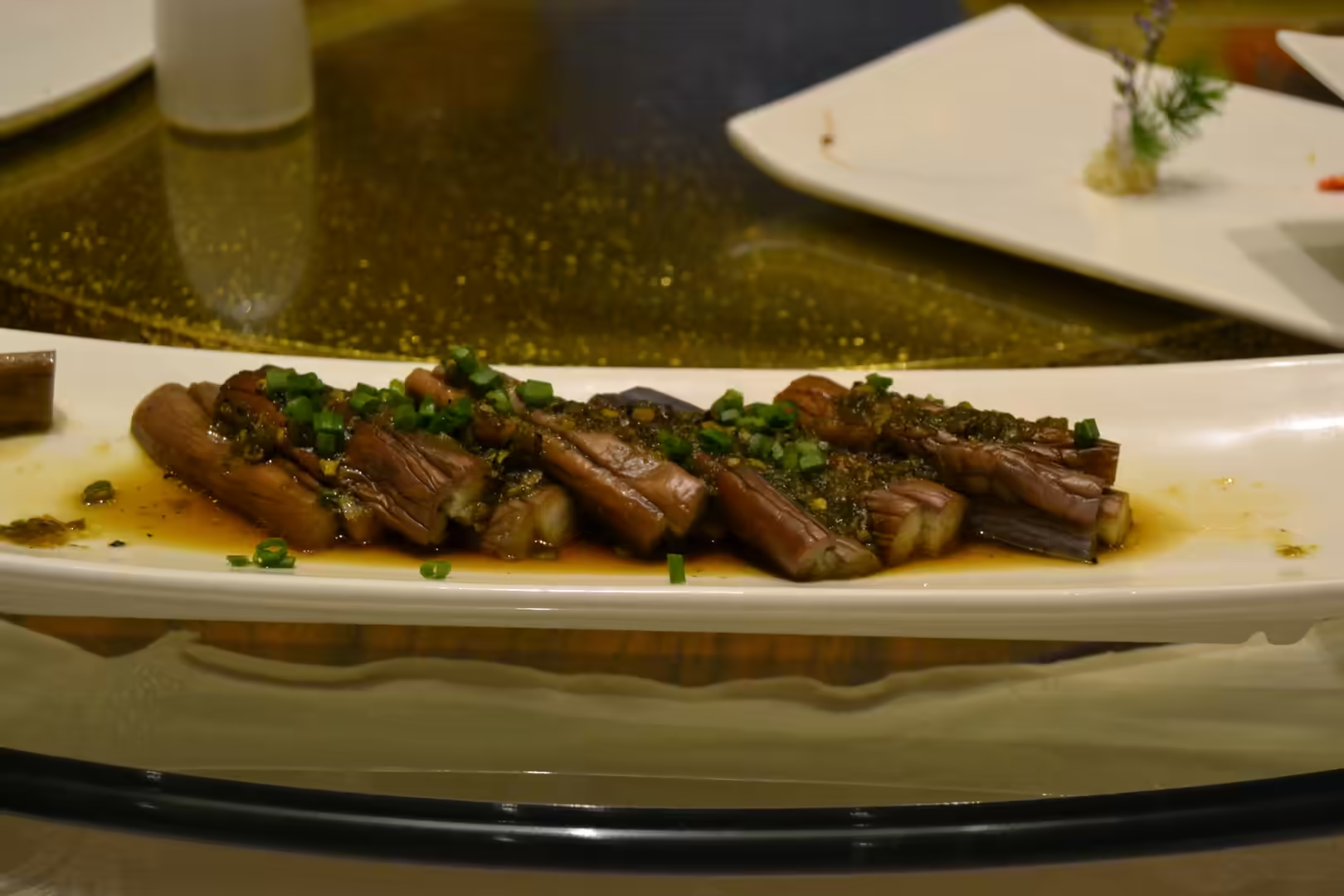
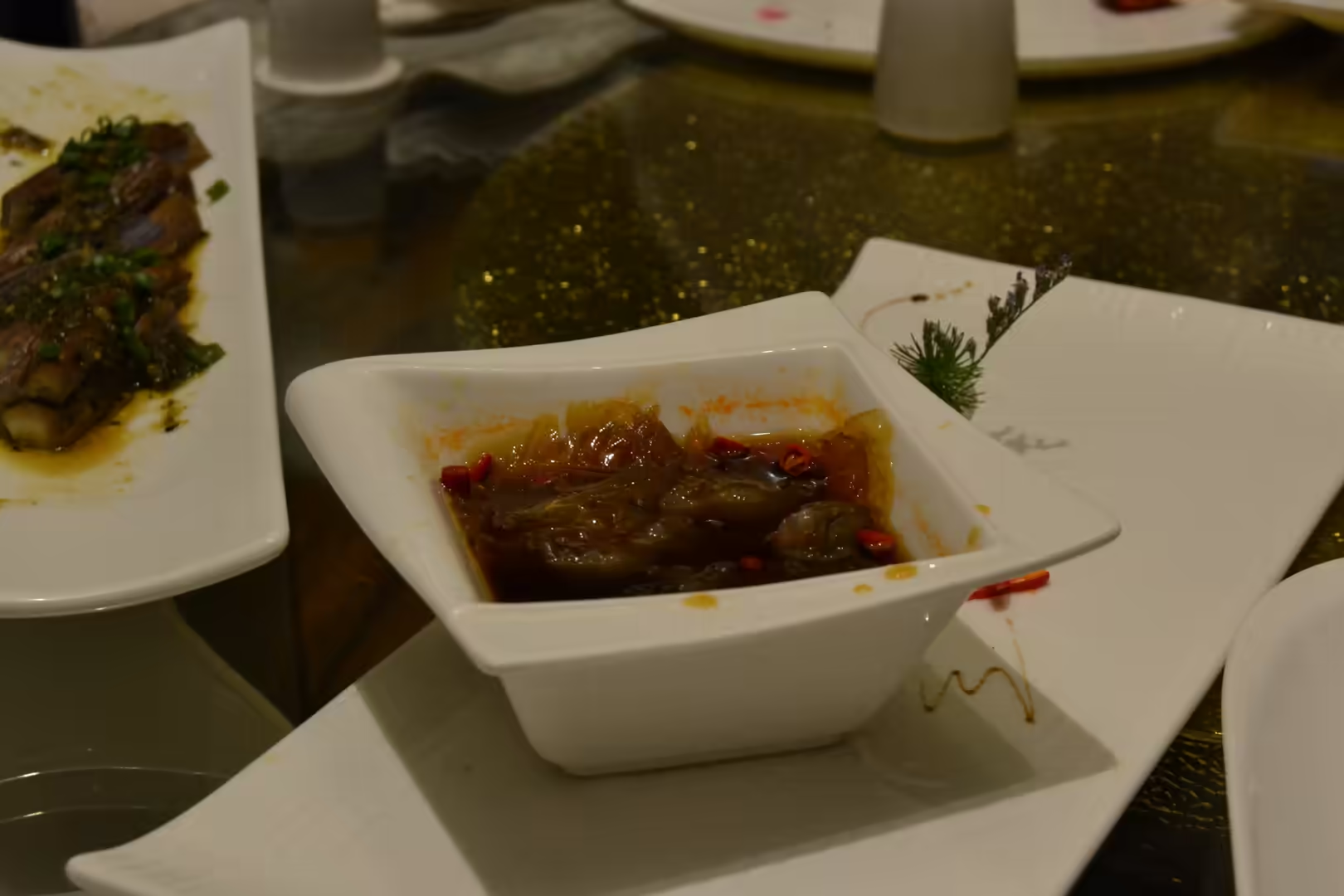
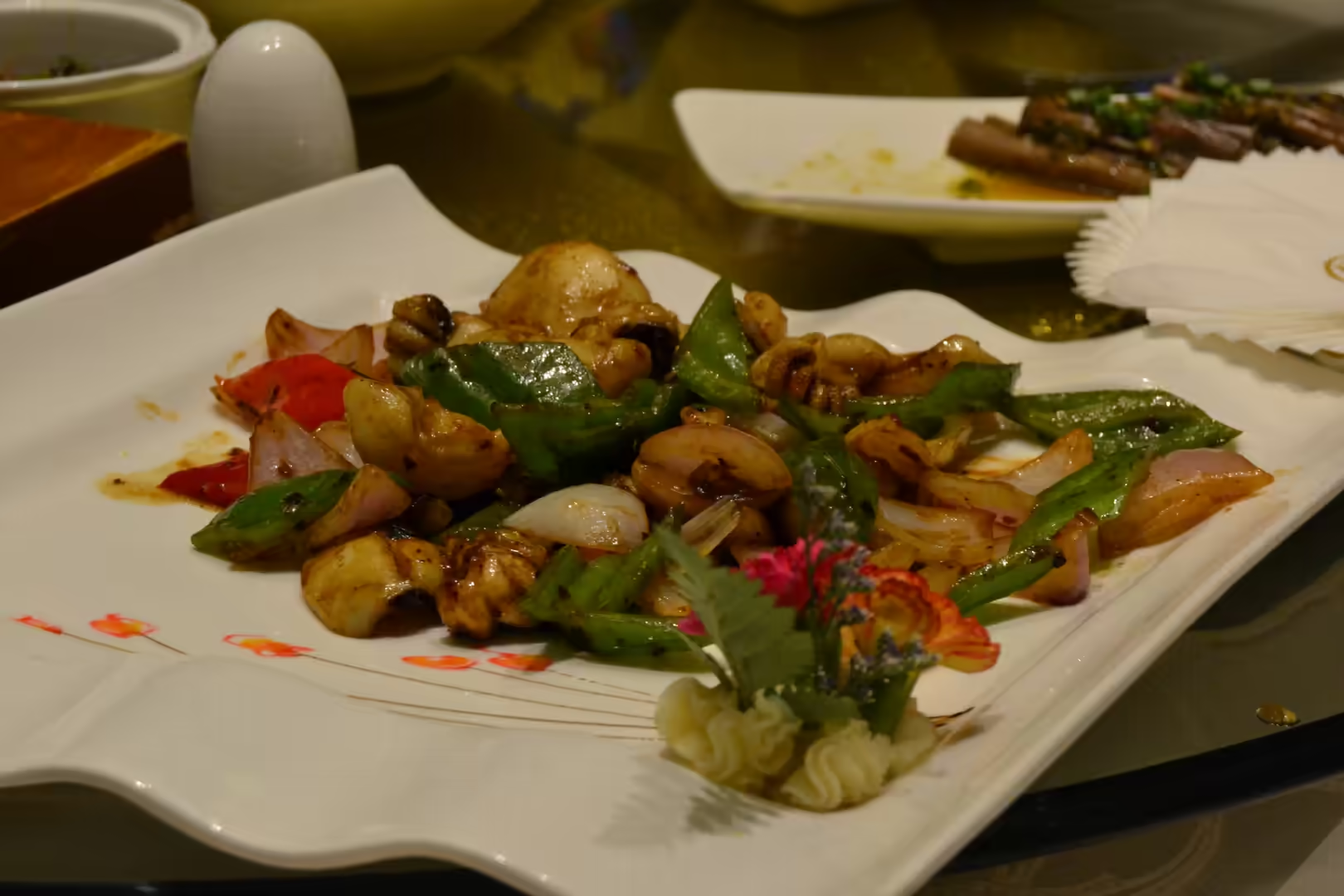
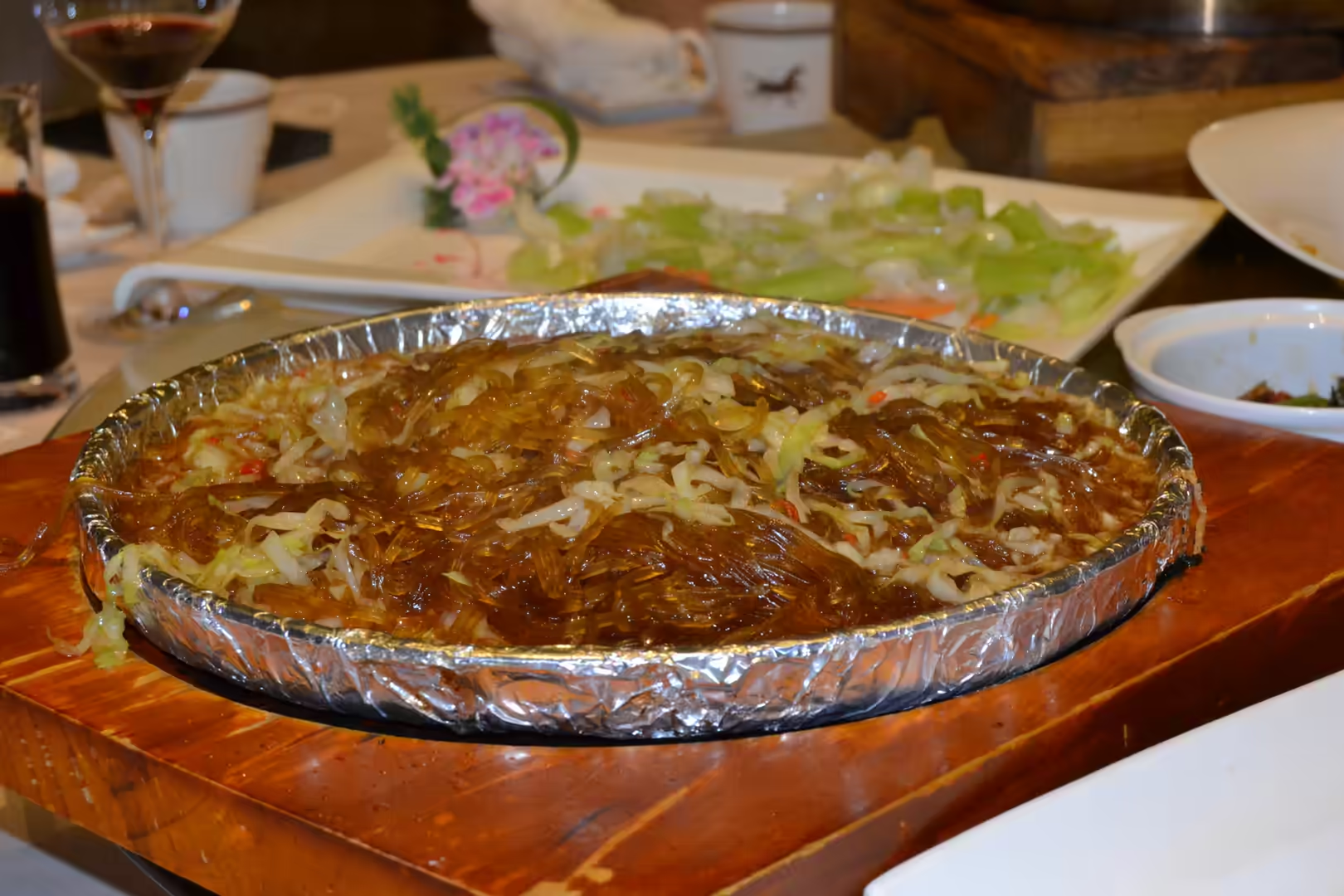
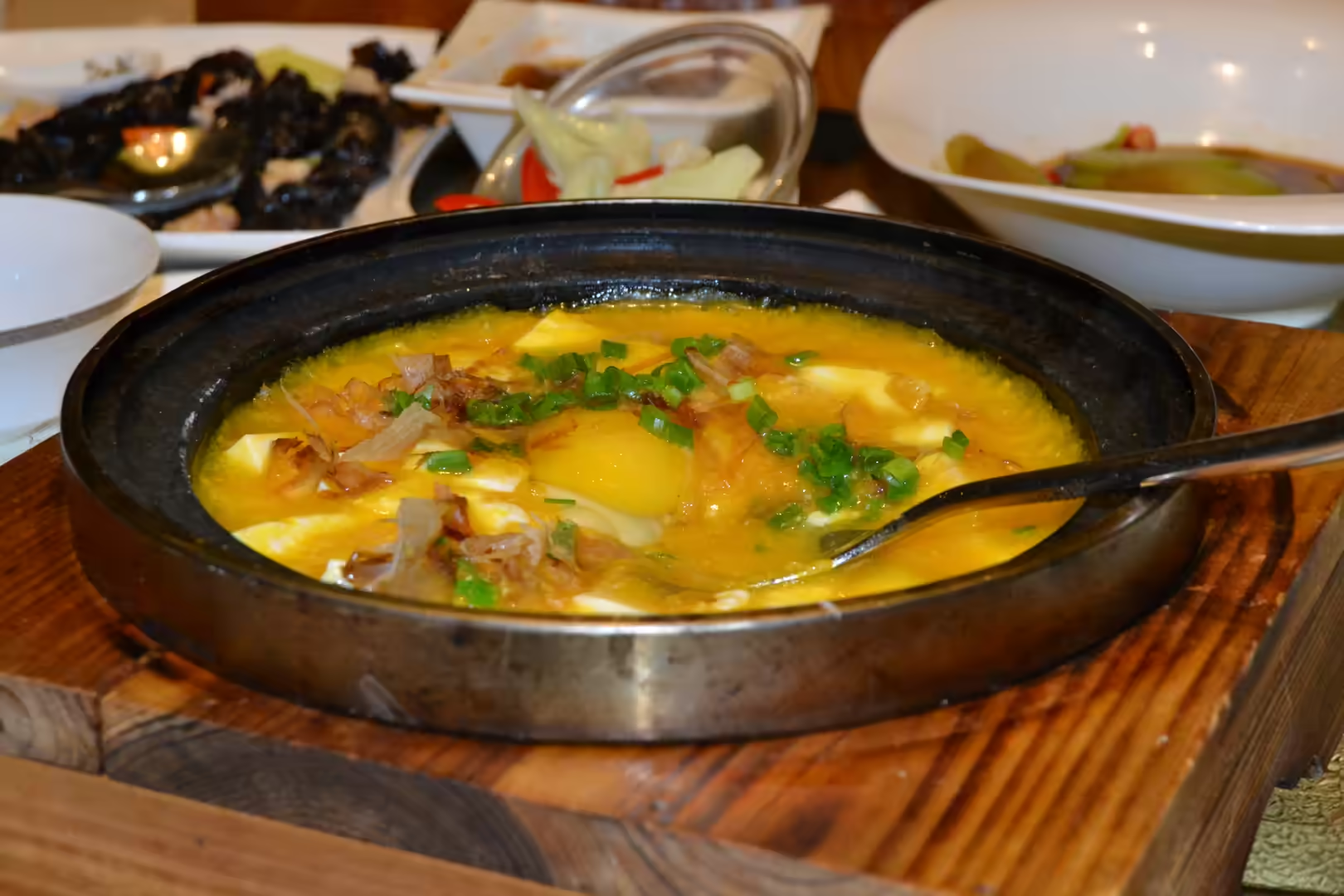
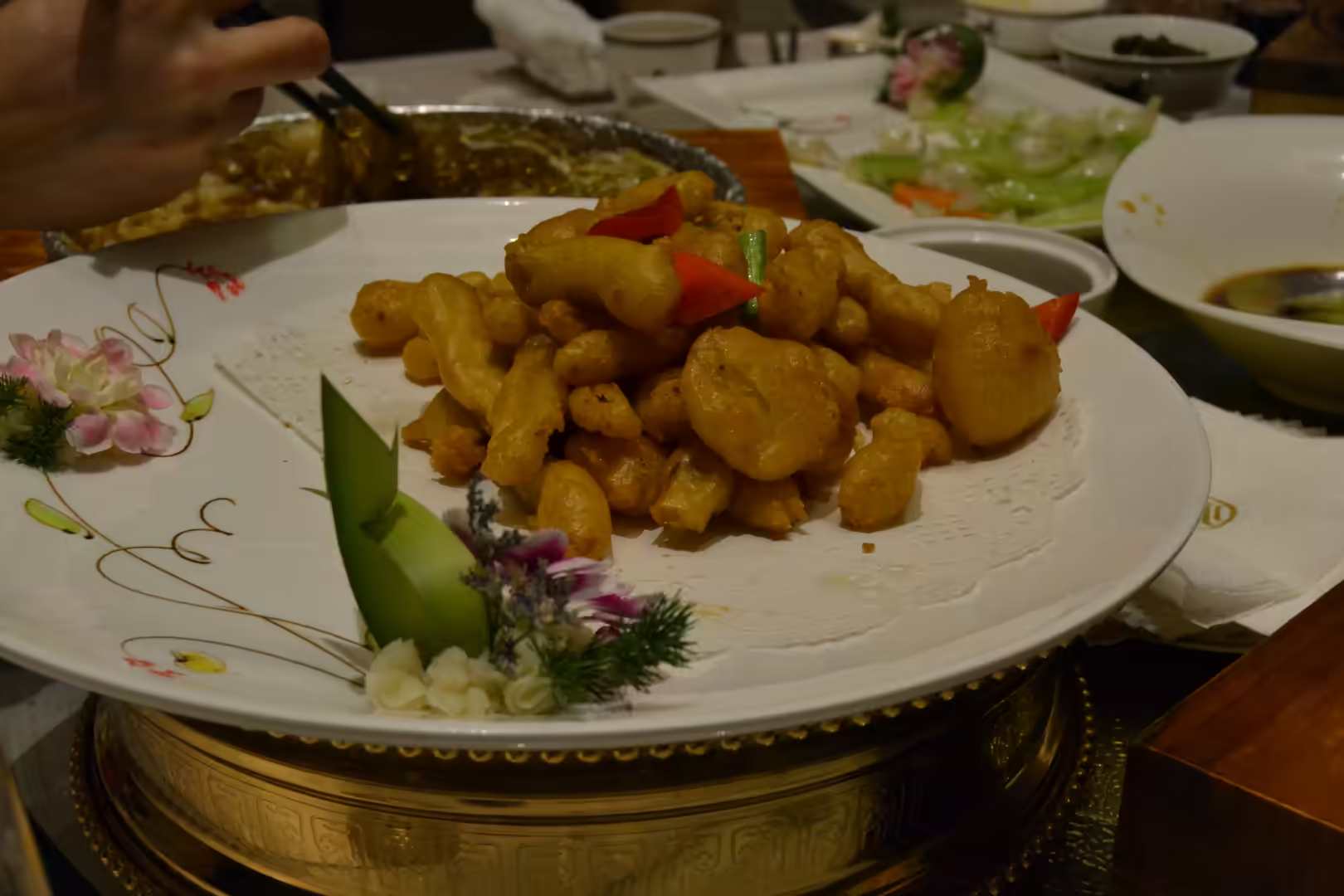
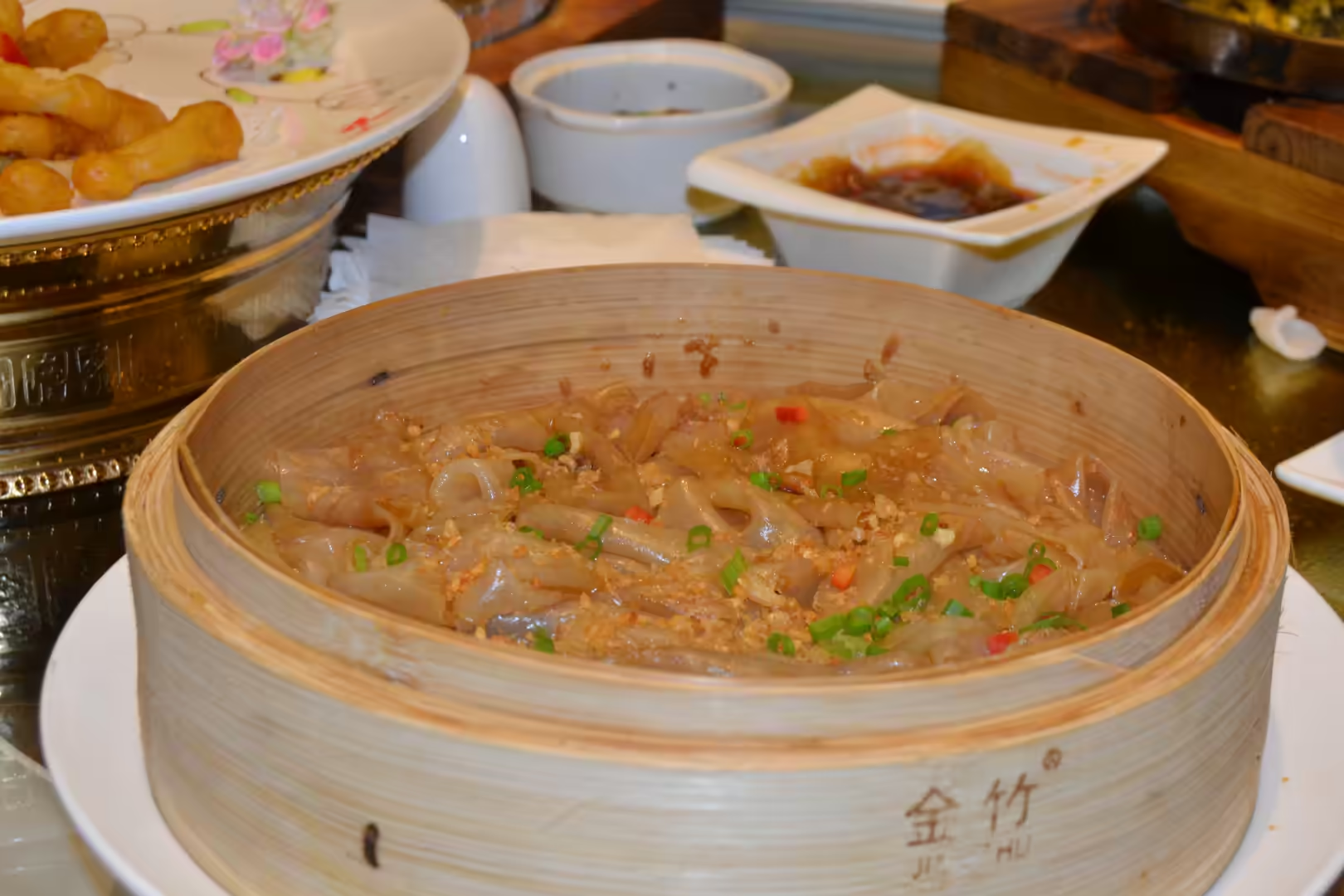
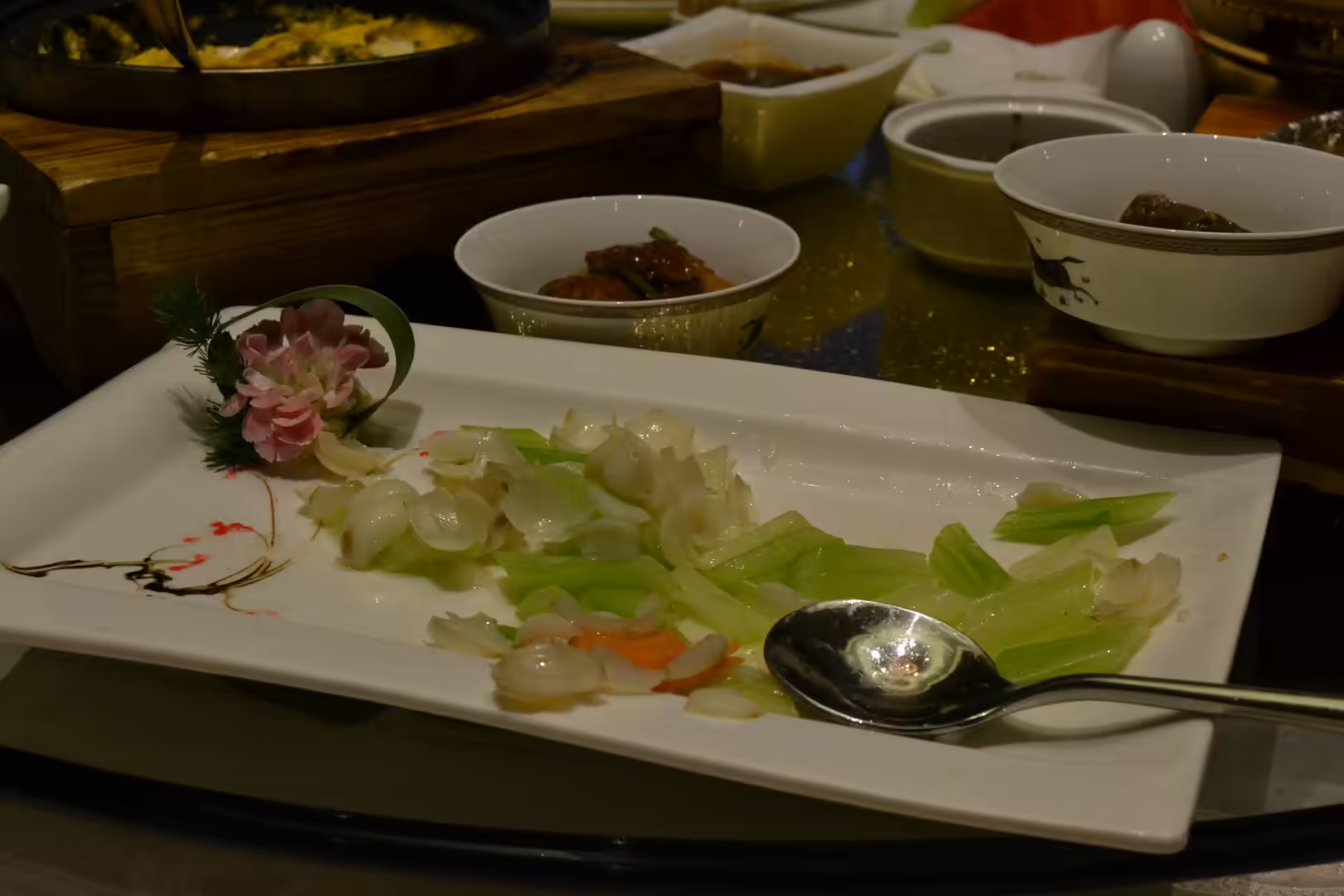
The dishes came one after another. Cold slices of dark braised meat were arranged on cucumber; thin slices of green vegetable were dressed in soy with red chilli; medallions of braised meat were served in small covered ceramic pots. There was aubergine braised in a savoury sauce with scallions, a bowl of translucent noodles in a dark spicy dressing, and a platter of mushrooms stir fried with green peppers, red peppers and onion. Glass noodles with shredded cabbage arrived still sizzling in a foil lined pan, followed by egg and tofu topped with scallions and fried shallots, and a second sizzling dish of tofu with green peppers. A large platter of golden fried pieces came with red pepper and flowers cut from vegetables, and then fried patties arranged in the shape of a fish, complete with the head and tail, which is a piece of kitchen theatre as much as a dish. A clear soup with noodles, pale meatballs and leafy greens closed the savoury part of the meal, and dishes of noodles with scallions and chilli arrived in bamboo steamers beside it.
What one remembers afterwards is not a single dish but the rhythm of it: the table filling up, the vegetables cut finely enough to eat with a spoon, the chilli used as a seasoning rather than a test, and the way a banquet is designed to go on for two hours without anyone noticing the time. The accompaniment is usually strong drink, and the host’s duty is to keep the glasses filled.
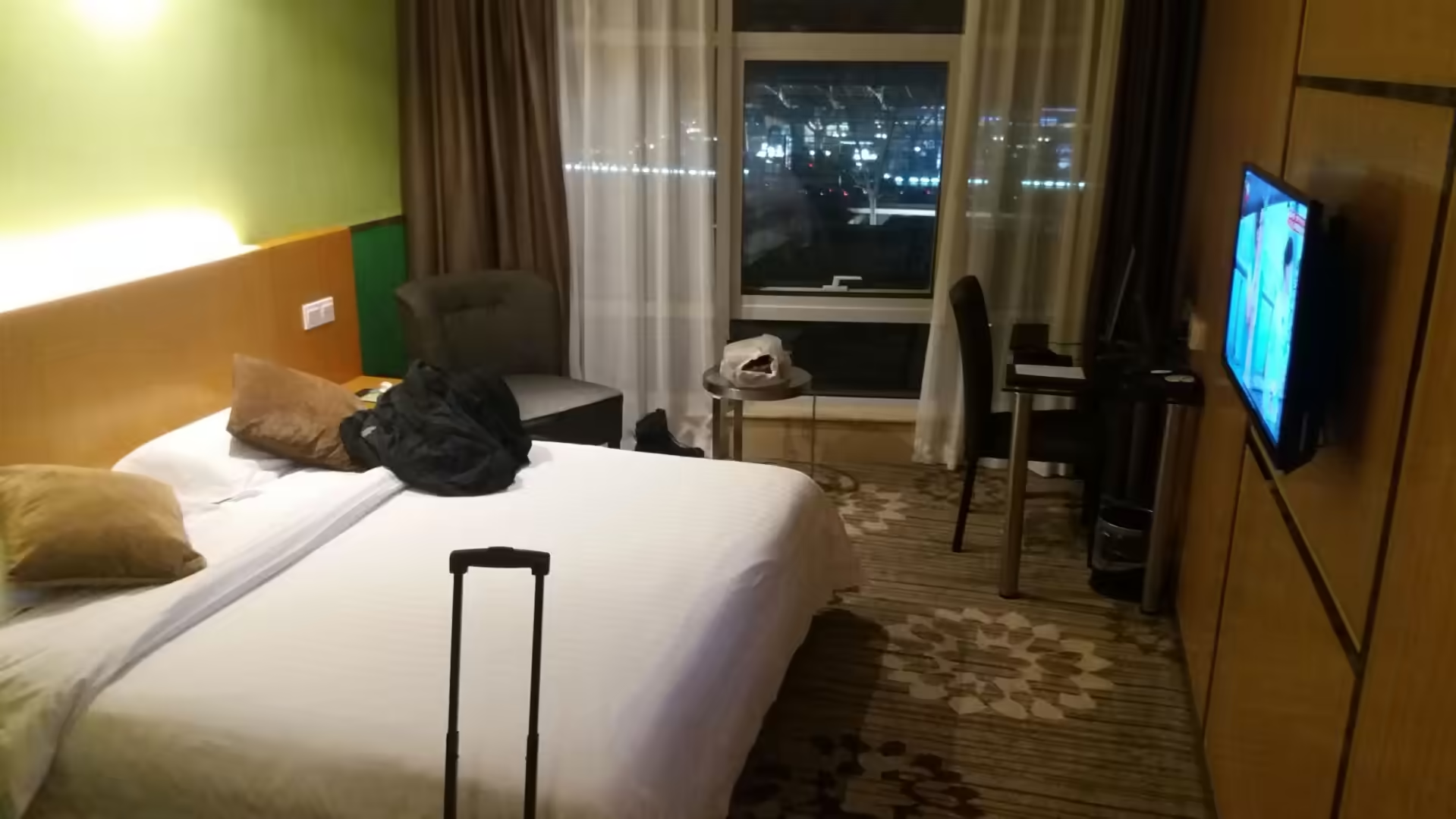
The day ended in a modern hotel room with a view over illuminated buildings, luggage by the wall, a desk, an armchair and a very large window. The following morning would mean the airport again, and a flight north to a city on a peninsula in the Yellow Sea, which is a change of landscape as complete as any in northeast Asia: from the rice and canal country of the delta to a coast of cold water, granite and seaweed.
Two details of the meal are worth setting down for anyone who eats this way. Tea is poured constantly and a neighbour fills your cup before their own, which is the local etiquette, and the dishes arrive in an order that has a shape: cold dishes first, then the substantial braised and fried dishes, then soup, then something sweet or a fruit to finish. A banquet is a sequence of small decisions rather than a menu, and the host’s judgement is what is being offered as much as the food.
References
- Wikipedia contributors (2026). Suzhou. en.wikipedia.org/wiki/Suzhou
- Wikipedia contributors (2026). Classical Gardens of Suzhou. en.wikipedia.org/wiki/Classical_Gardens_of_Suzhou
- Wikipedia contributors (2026). Humble Administrator’s Garden. en.wikipedia.org/wiki/Humble_Administrator’s_Garden
- Wikipedia contributors (2026). Grand Canal (China). en.wikipedia.org/wiki/Grand_Canal_%28China%29
- Wikipedia contributors (2026). Lake Tai. en.wikipedia.org/wiki/Lake_Tai
- Wikipedia contributors (2026). Suzhou Industrial Park. en.wikipedia.org/wiki/Suzhou_Industrial_Park
- Wikipedia contributors (2026). Chinese cuisine. en.wikipedia.org/wiki/Chinese_cuisine
- Wikipedia contributors (2026). Jiangsu cuisine. en.wikipedia.org/wiki/Jiangsu_cuisine
- Wikipedia contributors (2026). Shanghai. en.wikipedia.org/wiki/Shanghai
- Wikipedia contributors (2026). Yangtze. en.wikipedia.org/wiki/Yangtze
- Wikipedia contributors (2026). Shanghai railway station. en.wikipedia.org/wiki/Shanghai_railway_station
- Wikipedia contributors (2026). Chinese economic reform. en.wikipedia.org/wiki/Chinese_economic_reform
- Wikipedia contributors (2026). Shanghai Museum. en.wikipedia.org/wiki/Shanghai_Museum
- Wikipedia contributors (2026). Nanjing Road. en.wikipedia.org/wiki/Nanjing_Road
- Wikipedia contributors (2026). Shanghai French Concession. en.wikipedia.org/wiki/Shanghai_French_Concession
- Wikipedia contributors (2026). Yu Garden. en.wikipedia.org/wiki/Yu_Garden
- Huadong G. (2013) Classical Gardens of Suzhou. Atlas of Remote Sensing for World Heritage: China. 88-93. doi.org/10.1007/978-3-642-32823-7_11
- (ohne Angabe) (2013) Stone in the Gardens of Suzhou. The Gardens of Suzhou. 159-162. doi.org/10.9783/9780812207255.159
- Degli Angeli A. (2016) China’s Grand Canal. Strategies for Sustainable Urban Development in China. The Plan Journal. doi.org/10.15274/tpj.2016.01.01.04