Stage 6 of 10
Day 6 - Dalian








Journal Notes
General
The sixth day was spent on the coast of Dalian, which is the reason the city exists in its present form. The day followed the shoreline: a small urban beach in the morning, a promenade above the bay, a stretch of water crossed by a new suspension bridge, an abandoned leisure complex on the rocks, and in the afternoon fishermen, a bicycle and a bucket of live shellfish. It was a day of looking at water rather than at monuments.
The city is built around its bays. Dense high rise districts stand behind parkland and small beaches, the wooded hills of the peninsula rise behind them, and the promenades along the water are among the most used public spaces in the city. On a grey day the water is a flat silver and the hills behind it are dark green, and the whole waterfront has the slightly melancholy air of a seaside resort out of season, even in summer.
What makes the coast interesting is not just the scenery but the mixture of uses on it. Within a few kilometres one finds a bathing beach with changing huts and visitors, a working quay with fishing boats, a vast new bridge carrying traffic across the bay, a diving platform in open water, an unfinished amusement park, and fishermen standing on the rocks with rods. Chinese coastal cities concentrate their investment on the waterfront, and the results are sometimes spectacular and sometimes abandoned.
The weather on this occasion was overcast with a light haze, which is ordinary here: the same coastal haze that softens the edges of the city in the records of any of the ports on this sea. It is a good climate for walking, and the day was mostly spent doing exactly that, along the water, from one bay to the next.
The shape of the day is worth recording, because it is the shape of a coast like this one. Morning on a beach inside the city, where visitors sit along the shoreline with a tree lined promenade behind them; then a promenade above a larger bay, with the towers of the residential districts rising behind the water; then the long span of the bridge that now crosses the bay; and in the afternoon the working shoreline, where people fish from the rocks and shellfish are sold from containers of water.
History
The coast of Dalian has been a resort as well as a port for more than a century. The Russian planners gave the city its squares and its seafront, and the Japanese administration that followed developed the coast as a place of villas, hotels and promenades for the colonial elite. After 1949 the beaches became public and popular, and the modern city inherited both the habit of promenading and the habit of investing in the shore.
The industrial history of the peninsula is older than the tourist one, and both are visible on the same walk. Shipbuilding and machine building made the city’s fortune, and the fishing industry has been part of the economy since long before either of the colonial powers arrived. The shellfish in a market bucket and the container terminals on the horizon belong to the same economy, which is the extraction of things from cold water and their transport to cities.
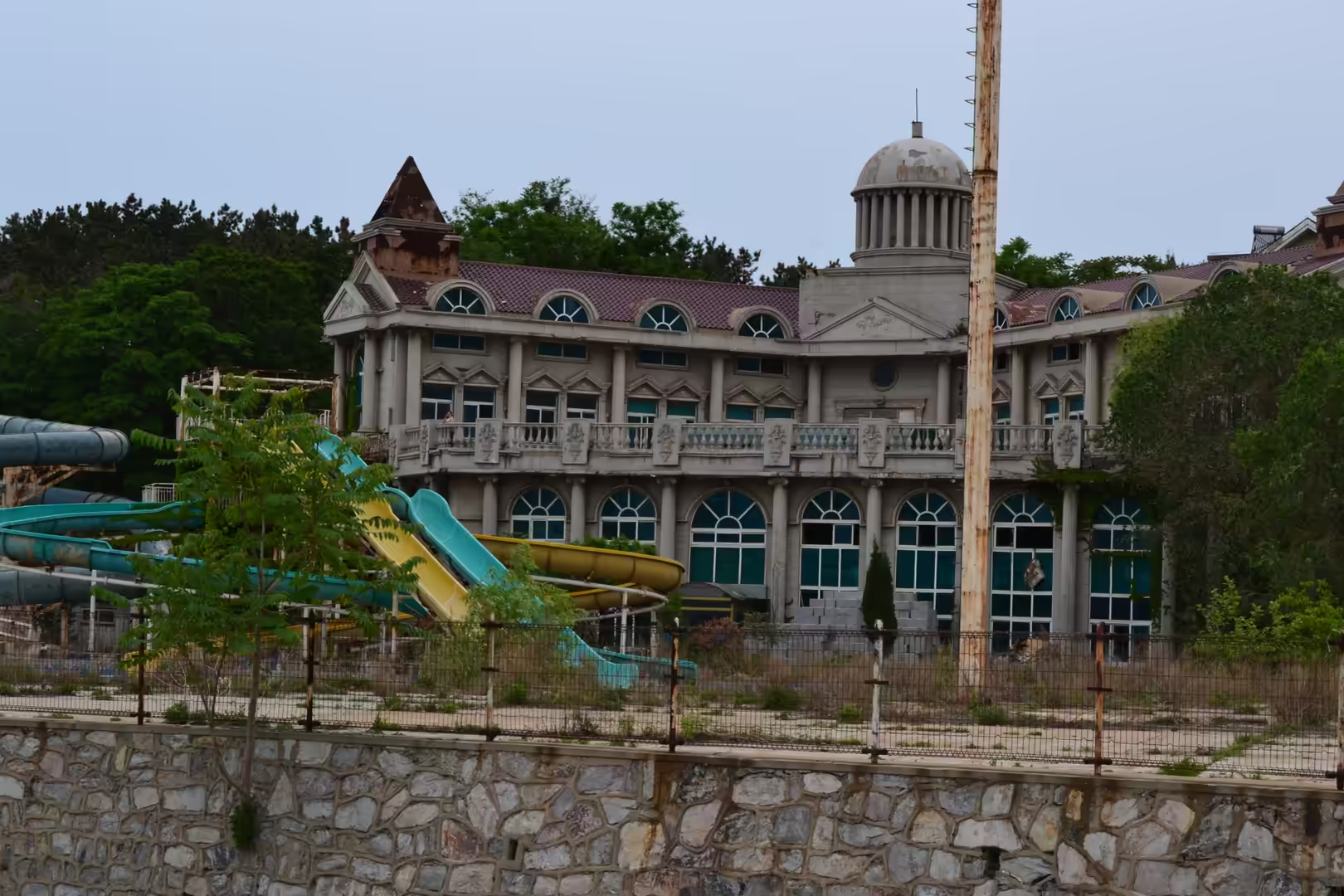
The abandoned leisure complex on the coast is a monument to a different phase of that history. In the 1990s and the early 2000s Chinese cities competed to build theme parks, water parks and resorts, and not all of them found enough visitors. What is left is a grand European style building standing above a set of water slides, with the basins dry and the concrete overgrown, while the sea continues to work on the rocks below. It is an unusually honest piece of urban history: an investment that stopped, next to a coast that did not.
The modern city has grown beyond both of those phases. Dalian now has 7.45 million inhabitants, a software industry, several universities and a reputation for planning that other Chinese cities have studied. Its waterfront is the showcase of that reputation, maintained and landscaped, with the new bridge across the bay as its most visible single structure. The same city also has to manage the consequences of rapid growth, which is why the coast is not only a place of leisure but also a place where the sea itself is monitored, cleaned and in places rebuilt.
For a visitor the day is a reminder that the attraction of a Chinese coastal city is not a single sight. It is the density of uses along the water and the fact that the entire population uses them: the families on the beach, the fishermen on the rocks, the cyclists on the promenade, the holidaymakers on the boat to the islands. In a country of this size the coast is not a luxury destination but ordinary public ground, and it is treated accordingly.
The port and the fishery are the older halves of that economy. Dalian has been a fishing harbour for far longer than it has been a resort, and the cold water of the Yellow Sea produces clams, scallops, oysters and sea cucumbers that are sold as delicacies across the country. The harbour that the Russians built and the Japanese expanded is now one of the largest in northern China, handling containers, bulk cargo and passengers, and the ships that cross the bay on the horizon are the visible part of the trade that pays for the promenades.
Geology
The coast of the Liaodong peninsula is a coastline of hard rock, shaped by waves rather than deposited by rivers, and it looks nothing like the muddy shores of the Yangtze Delta. The peninsula is built of Precambrian metamorphic and sedimentary rocks, folded and intruded over hundreds of millions of years, and it is these resistant rocks that give the shoreline its character: rocky points, cliffs, small sheltered bays and shallow rock platforms exposed at low tide.
The sea on this coast works in two directions. Waves, driven by the prevailing winds of the Yellow Sea and by the swell that enters it, erode the shore and carry the material away, which is why the beaches here are small and often artificial. Tides, which are strong in this part of the Yellow Sea, alternately flood and expose the rock platforms, and the daily cycle of wetting and drying is one of the main processes shaping the intertidal zone. The wave climate of the Bohai and Yellow Seas has been the subject of modelling work precisely because coastal engineering here needs to know what the sea will do.
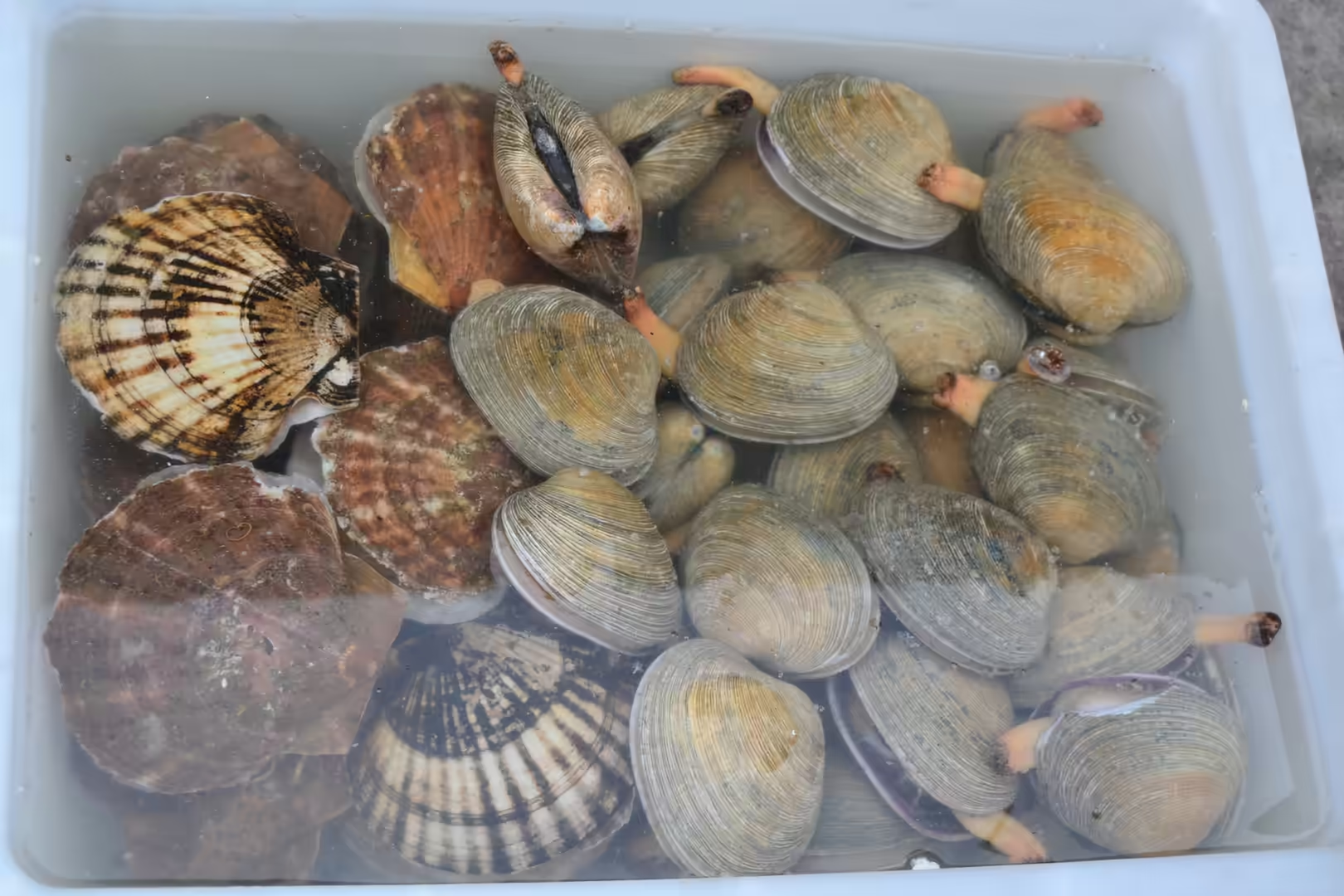
The shellfish on the quay are also a geological product, in a roundabout way. Cold, nutrient rich water supports the plankton that filter feeders live on, and the meeting of the colder Bohai water with the Yellow Sea produces a fishery of clams, scallops, oysters and sea cucumbers that is one of the reasons Dalian is known in China for its seafood. The city’s restaurants sell what the rocks and the cold water produce.
The two seas on either side of the peninsula are not the same. The Bohai Sea is shallow and semi enclosed, exchanging water with the Yellow Sea only through the narrow Bohai Strait, and it is consequently more turbid, more affected by river discharge and more prone to winter cooling. The Yellow Sea is deeper, clearer and more strongly tidal, and it is the sea that Dalian faces on its eastern and southern shores. A drive of an hour takes a visitor from one to the other, and the change in the water is visible.
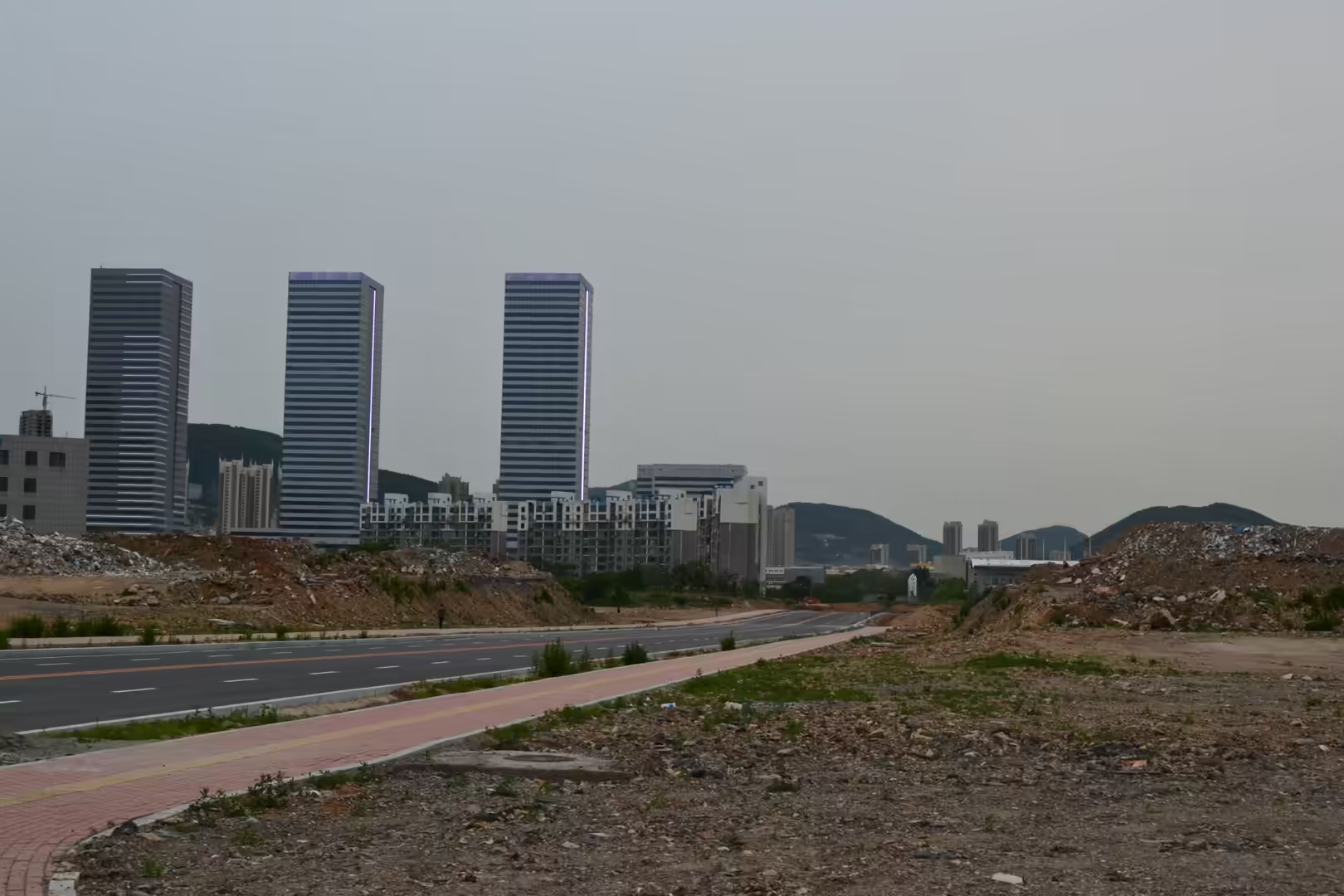
Engineered coasts complete the picture. The new suspension bridge stands on foundations placed in water of varying depth and rockhead, the promenades are built on retaining walls set into the slope, the beaches are replenished with imported sand, and the reclaimed land of the newer districts is an extension of the peninsula by human effort. In a city built of rock beside a cold sea, the shore is partly given and partly made, and the difference between the two is often invisible.
Things to See
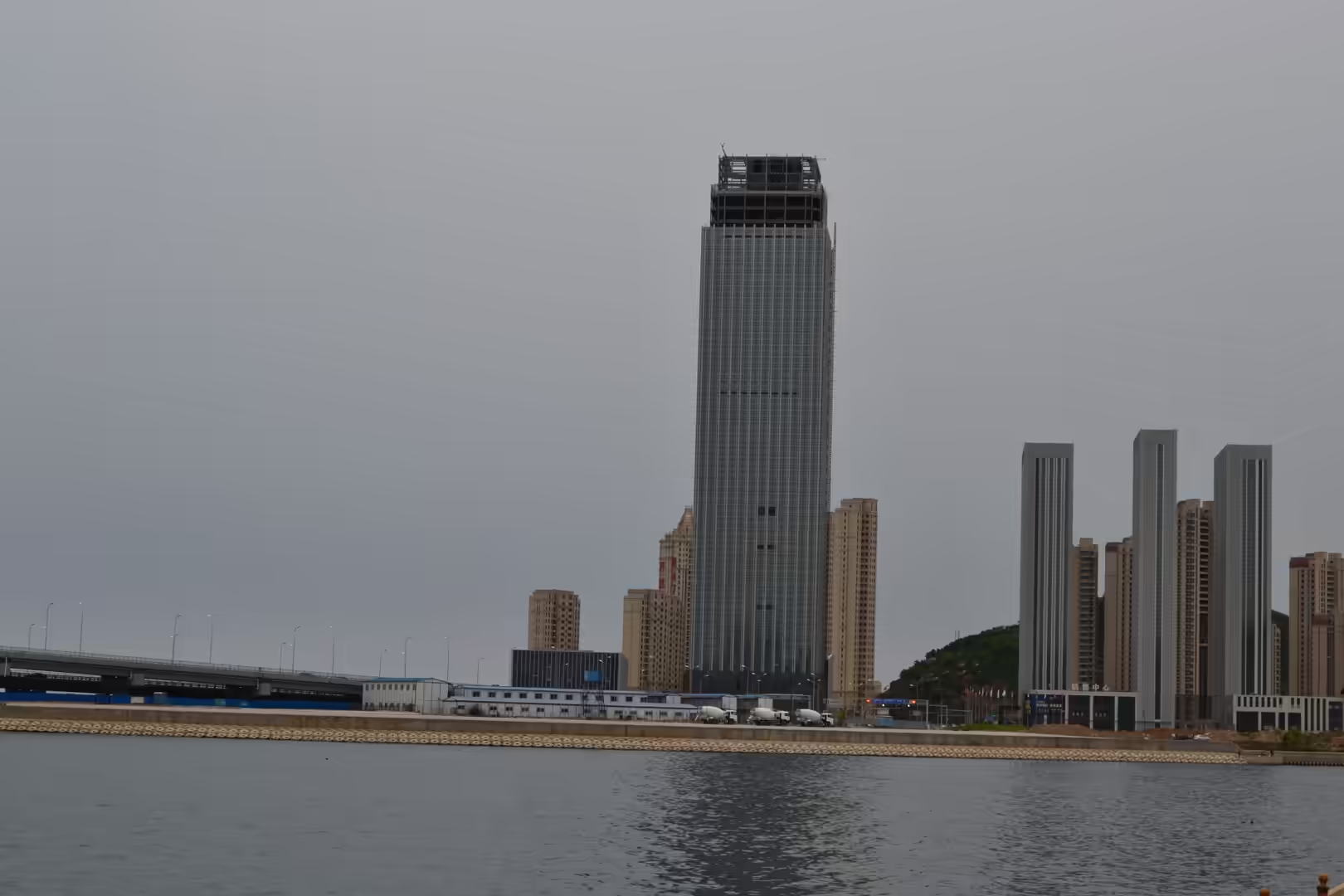
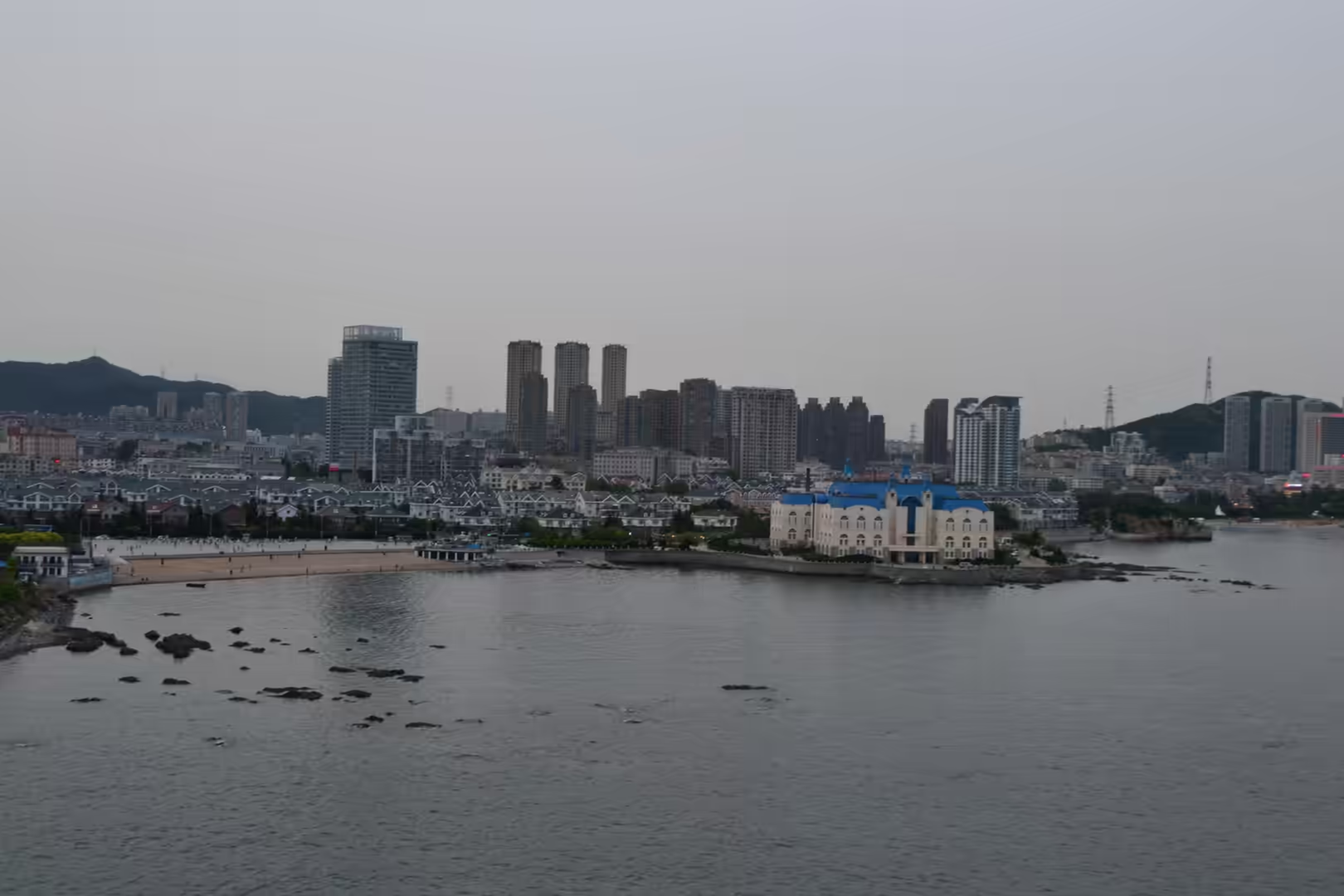
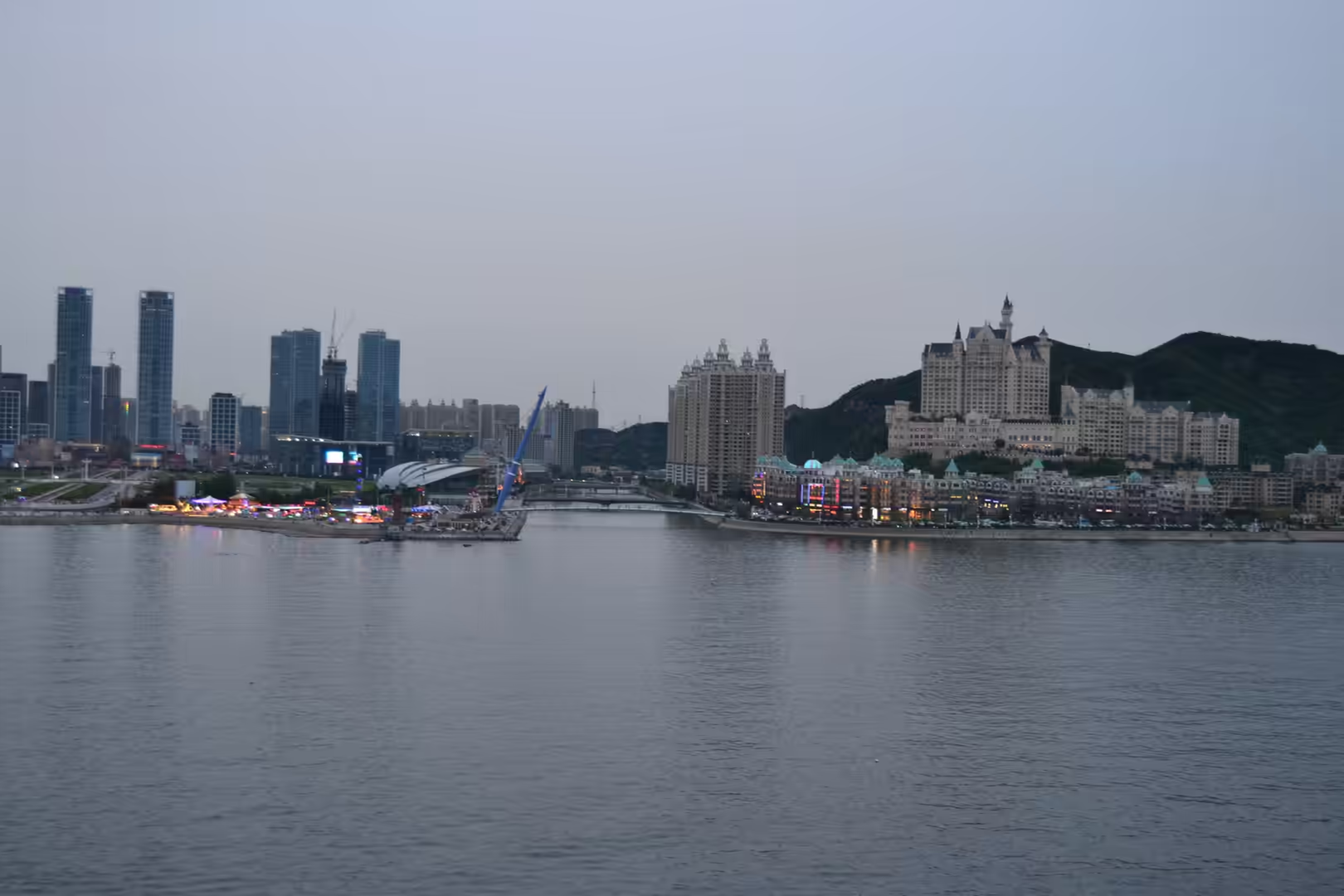
The day began at a small urban beach, where visitors were sitting along the shoreline with a tree lined promenade behind them, and it continued to a bigger bay with a waterfront promenade and a dense skyline of apartment towers rising behind it. These are the ordinary pleasures of the city: a place to swim, a place to walk, and a view of high rise buildings arranged along the water.
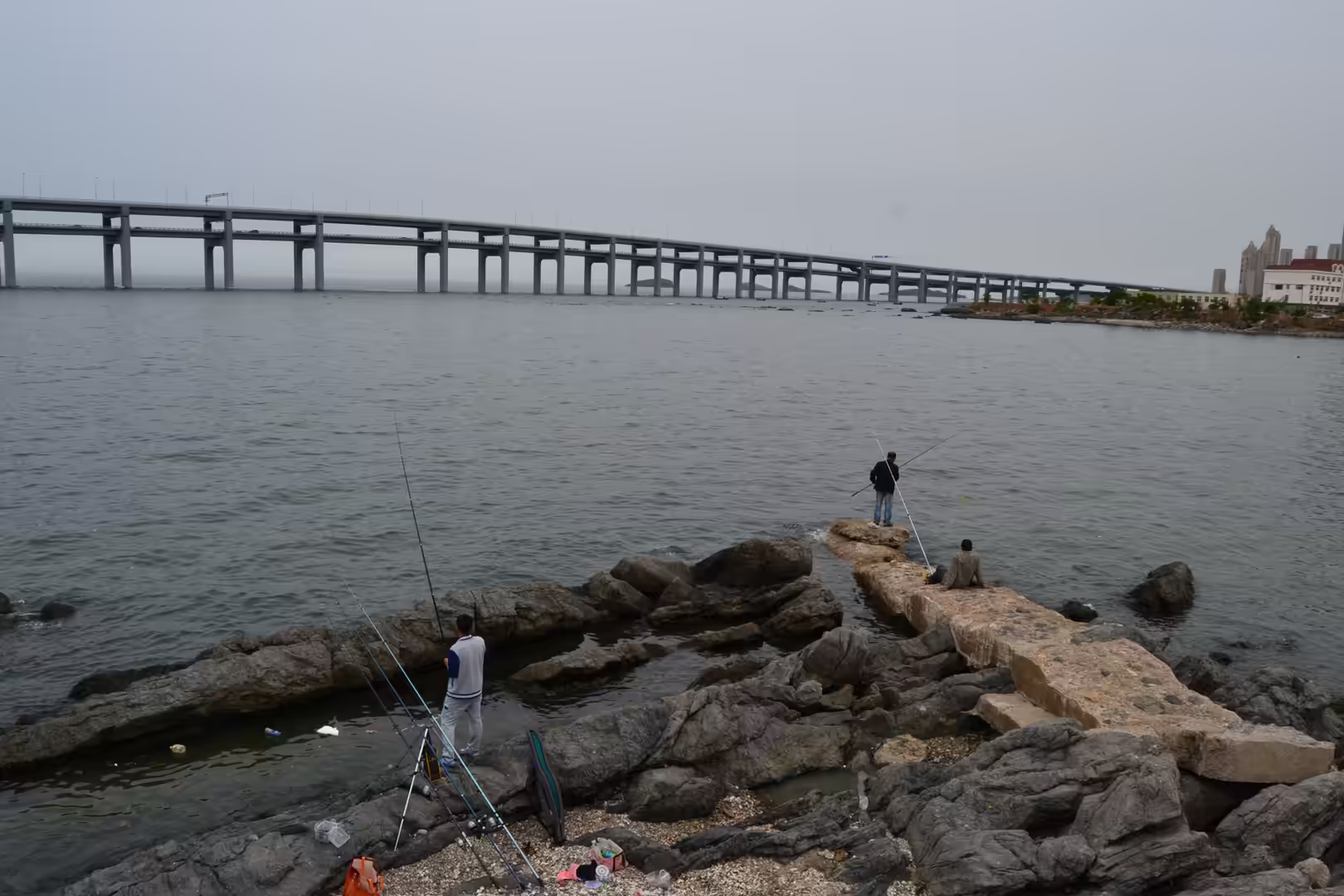
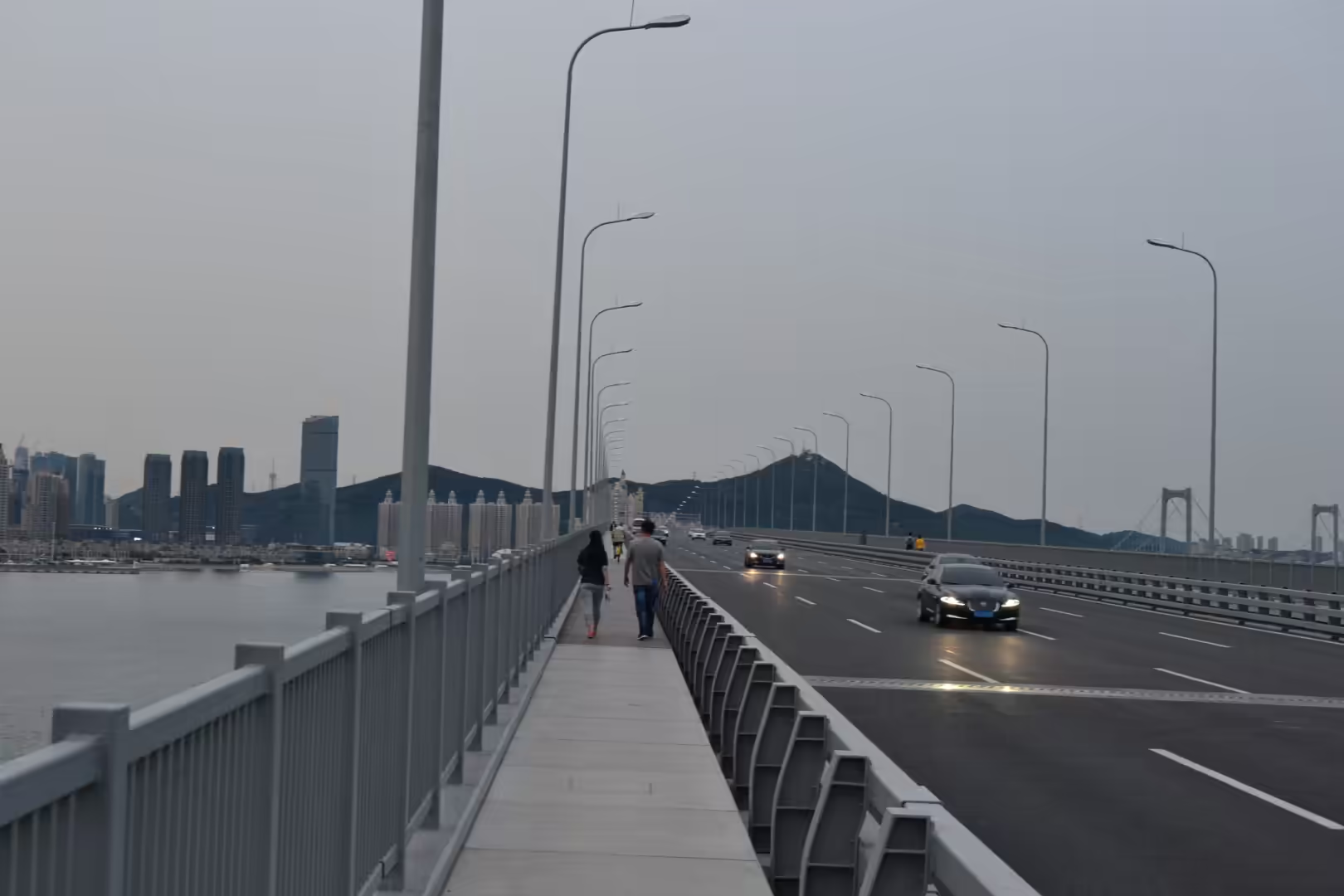
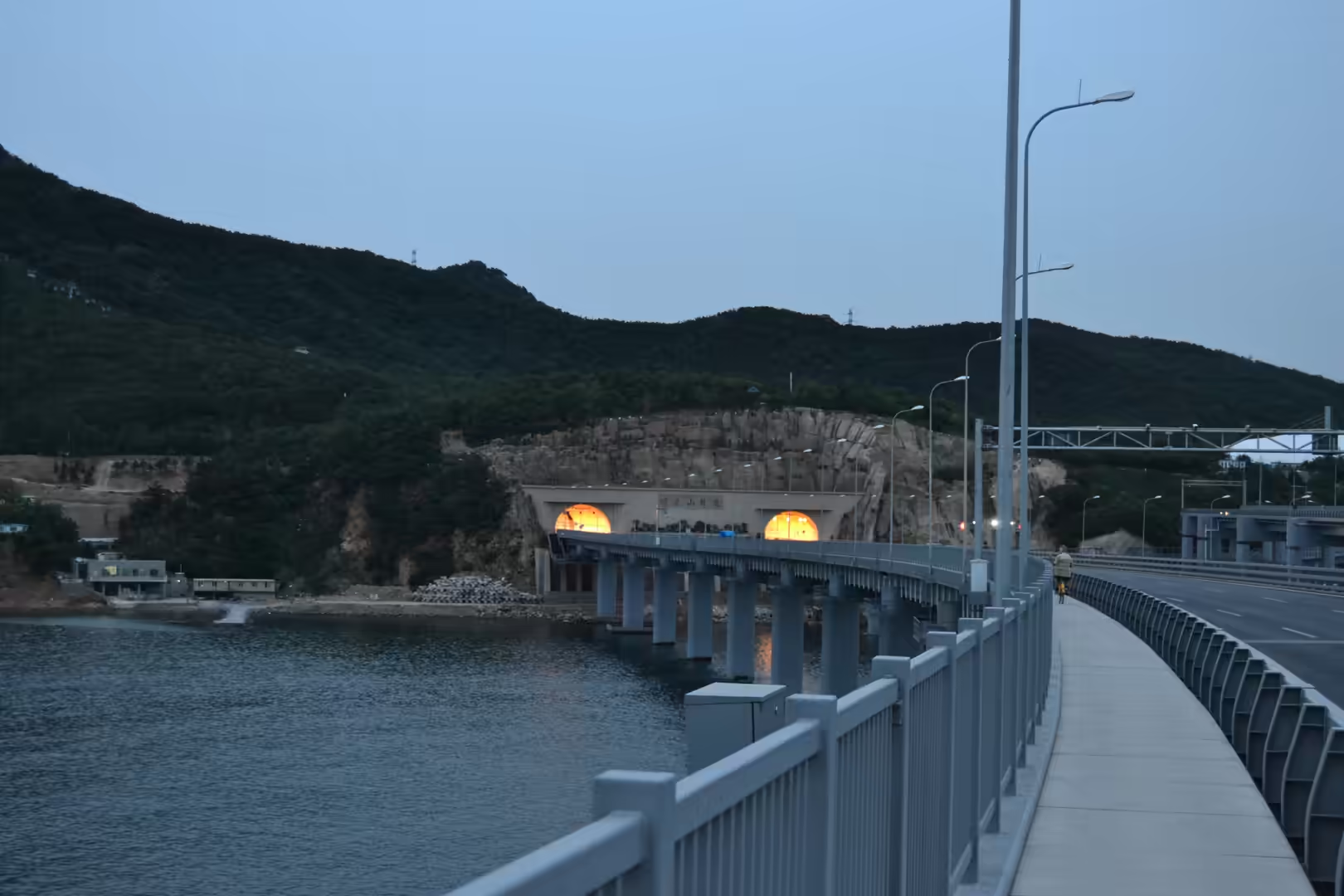
The largest single structure on that coast is the suspension bridge that spans the bay, a long deck on tapered pylons, crossing calm grey water under an overcast sky. Close to it stands a diving platform, a tall tower built out over the water for competitions, with the hills and the bridge behind it. Between them they define the modern waterfront: one structure for traffic and one for sport, both designed to be seen from the shore.
The abandoned leisure complex was the strangest sight of the day. A grand building in European style stands above a set of water slides whose basins are dry and overgrown, with the sea working on the rocks beneath. Nobody had demolished it and nobody was using it; it simply stood there, a reminder that in a fast growing economy some buildings outlive their business plans.
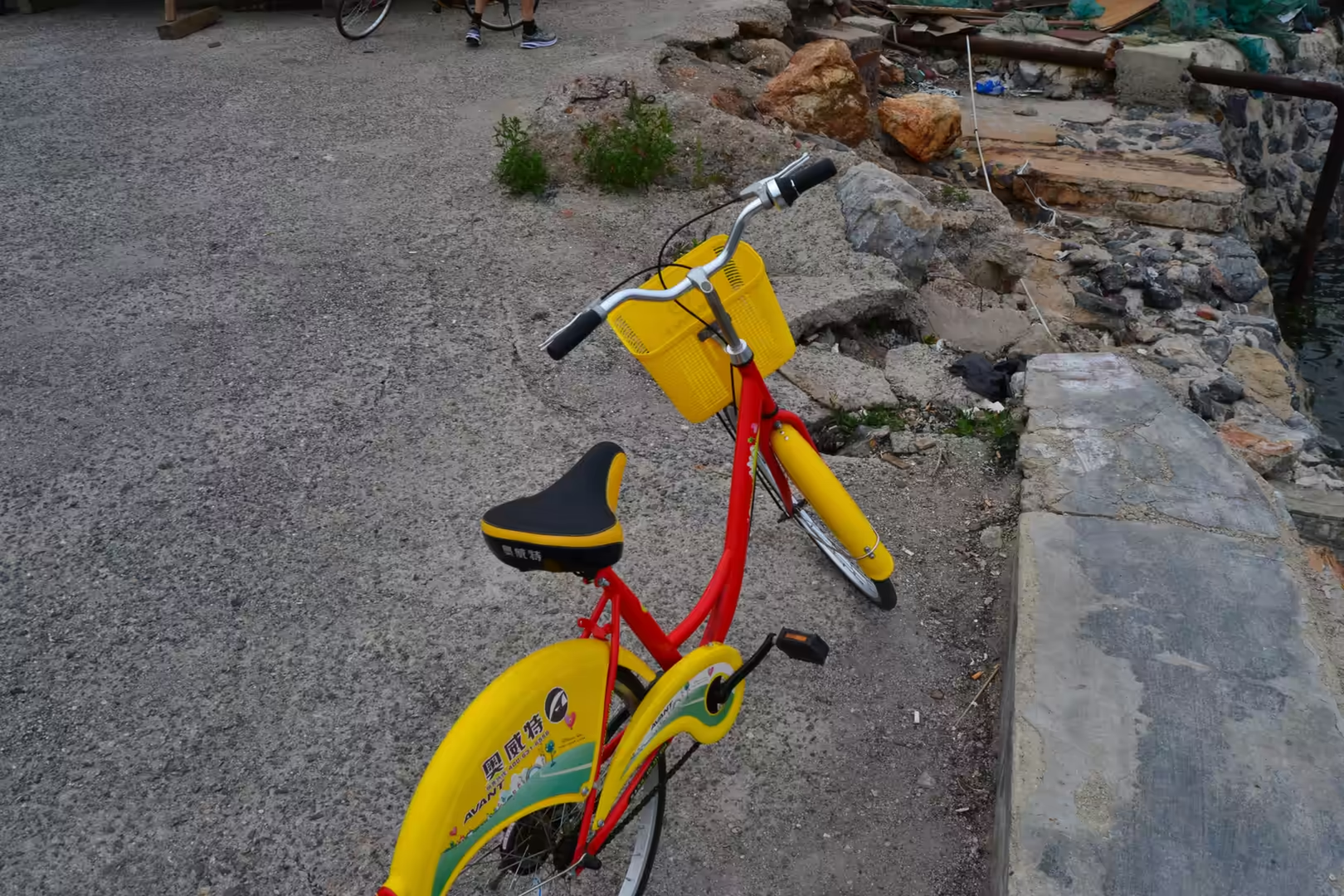
The afternoon belonged to the working part of the coast. People were fishing from a rocky shoreline with the long elevated bridge stretching across the water in the background, and a little further on a bright red and yellow public bicycle stood parked beside a rough path by the water, the kind of shared cycle that appears in every Chinese city now. On the quay, live shellfish were kept in water in a white container: large clams and scallops, still moving, sold by weight and taken away in bags.
That was the whole of a day without monuments, and it was one of the better days of the journey. The coast of Dalian shows what a Chinese city does with its waterfront when it has the money: promenades, bridges, bathing beaches, diving towers and parks, all of it public and all of it crowded. It also shows what happens when the money runs out of patience: a water park with no water, standing in the sun above the sea, quietly becoming a ruin in the middle of a city that has moved on.
The promenade is the heart of the city’s waterfront and is used the way such places are used everywhere: for walking, for sitting, for fishing and for looking at the water. Along it stand the hotels and apartment towers of the new districts, and behind them the wooded hills of the peninsula rise to the ridge. On a grey day the whole bay is silver and green, and the contrast between the sea and the towers is sharp enough that the city looks as if it had been placed on the coast rather than grown there.
References
- Wikipedia contributors (2026). Dalian. en.wikipedia.org/wiki/Dalian
- Wikipedia contributors (2026). Dalian Zhoushuizi International Airport. en.wikipedia.org/wiki/Dalian_Zhoushuizi_International_Airport
- Wikipedia contributors (2026). Liaodong Peninsula. en.wikipedia.org/wiki/Liaodong_Peninsula
- Wikipedia contributors (2026). Bohai Sea. en.wikipedia.org/wiki/Bohai_Sea
- Wikipedia contributors (2026). Yellow Sea. en.wikipedia.org/wiki/Yellow_Sea
- Wikipedia contributors (2026). Russian Dalian. en.wikipedia.org/wiki/Russian_Dalian
- Wikipedia contributors (2026). Lüshun. en.wikipedia.org/wiki/L%C3%BCshun
- Wikipedia contributors (2026). Port Arthur, China. en.wikipedia.org/wiki/Port_Arthur%2C_China
- Wikipedia contributors (2026). Xinghai Square. en.wikipedia.org/wiki/Xinghai_Square
- Wikipedia contributors (2026). Chinese Civil War. en.wikipedia.org/wiki/Chinese_Civil_War
- Wikipedia contributors (2026). North China Plain. en.wikipedia.org/wiki/North_China_Plain
- Wikipedia contributors (2026). Dalian Zhoushuizi International Airport. en.wikipedia.org/wiki/Dalian_Zhoushuizi_International_Airport
- Wikipedia contributors (2026). Chinese cuisine. en.wikipedia.org/wiki/Chinese_cuisine
- Wikipedia contributors (2026). Chinese economic reform. en.wikipedia.org/wiki/Chinese_economic_reform
- Shi W., Wang M. (2012) Satellite views of the Bohai Sea, Yellow Sea, and East China Sea. Progress in Oceanography. 104. 30-45. doi.org/10.1016/j.pocean.2012.05.001
- (ohne Angabe) (2014) Wave Climate Hindcasts for the Bohai Sea, Yellow Sea, and East China Sea. Journal of Coastal Research. 32. 172. doi.org/10.2112/jcoastres-d-14-00017.1
- Zhang P., Kou L., Zhao Y. (2021) Three periods of gold mineralization in the Liaodong Peninsula, North China Craton. International Geology Review. 64. 2922-2940. doi.org/10.1080/00206814.2021.2009046