Day 2 - Rome / Giarre



Journal Notes
General
The second day is a day of driving south and a crossing by water. The route leaves Rome on the motorway, runs through the hill country of central Italy, descends towards the south, follows the coast of Calabria to the port of Villa San Giovanni, and ends on the island of Sicily at Messina; from there the road runs along the Ionian coast to Giarre, where the rest of the journey is based. The pictures of the day move from the motorway, with its service areas and its lines of traffic, to the ferry deck in the open sea and finally to the harbour mouth on the other side.
Rome, the starting point, is the capital of Italy and of the Lazio region and has a population of about 2.7 million in a municipality of 1,287.36 square kilometres, with a metropolitan city of 5,363.28 square kilometres around it. It was founded, according to tradition, on 21 April 753 BCE and was the capital of the Roman Kingdom, the Republic and the Empire in succession; the Vatican City, the smallest state in the world, lies within its boundaries, and its historic centre has been a UNESCO World Heritage Site since 1980. Leaving it in the morning, the motorway passes the last of its suburbs within half an hour.
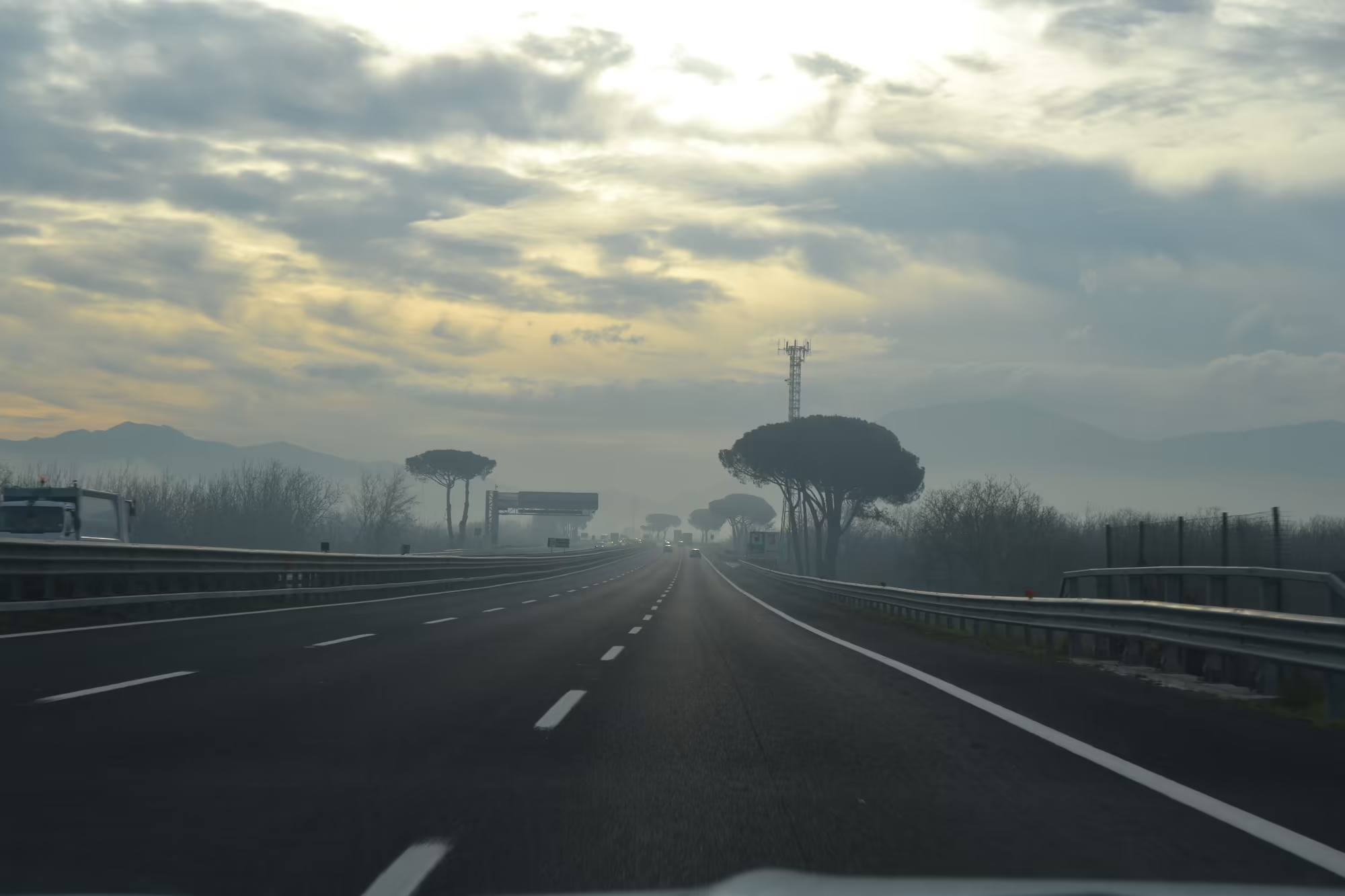
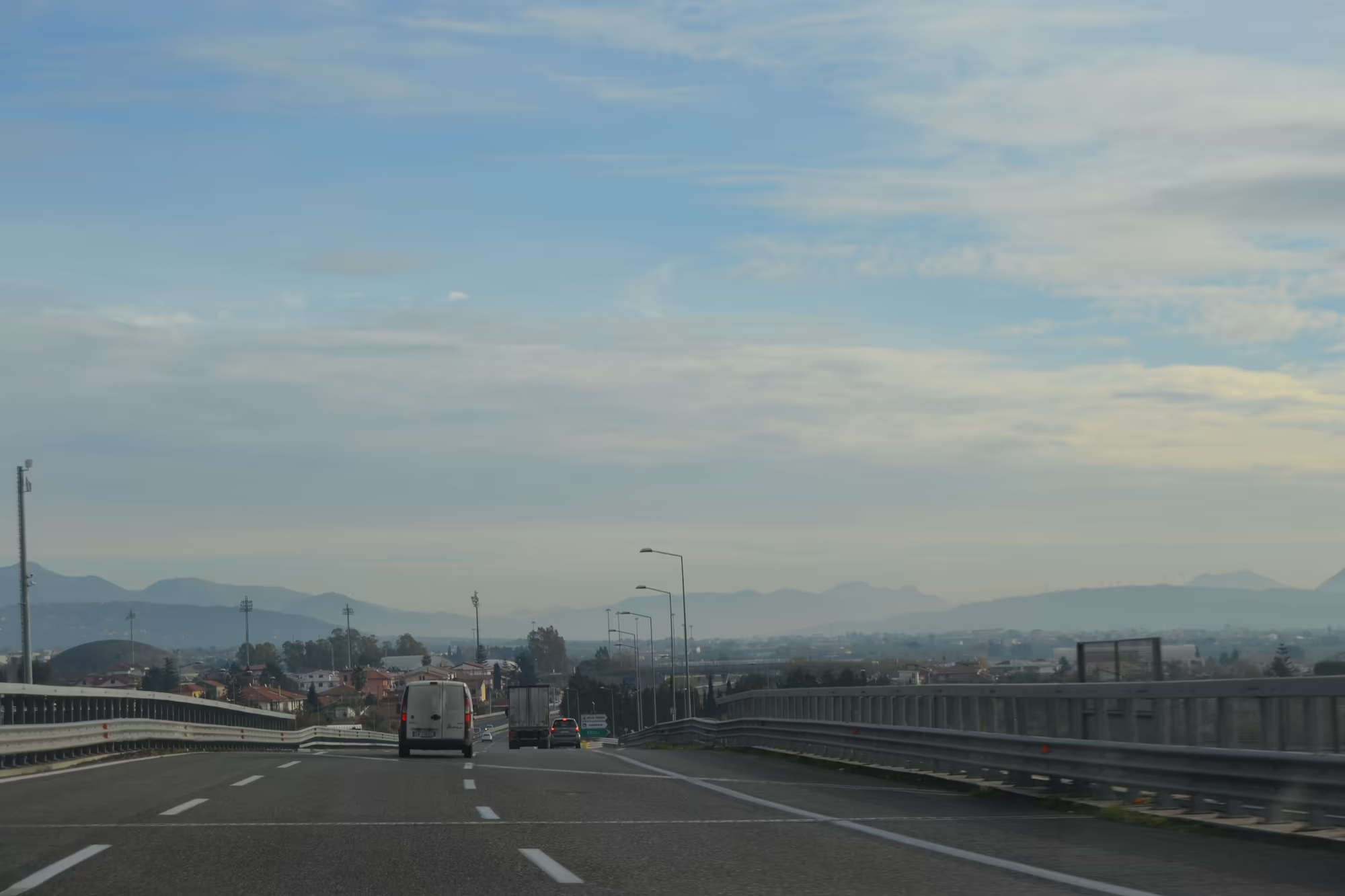
The middle of the day belongs to the long descent through the peninsula. The motorway crosses the Apennine foothills, passes towns built on the ridges with red tiled roofs below them, and runs under low cloud in the wide valleys of the south; umbrella pines and cypresses line the verges, service areas appear every thirty or forty kilometres, and the traffic is a mixture of cars, vans and heavy lorries making the same journey towards Calabria and Sicily.
The end of the day is nautical. The Strait of Messina is the narrow passage between Calabria and Sicily that separates the Tyrrhenian Sea from the Ionian Sea, and the crossing between Villa San Giovanni on the mainland and Messina on the island is made by ferry, which carries not only cars and passengers but the carriages of the main railway line. Messina is the third largest city of Sicily and the capital of its metropolitan city, with 217,033 inhabitants in the city proper, and in 2021 its harbour was the busiest passenger port in Europe.
The distances involved in this day are considerable. The drive from Rome to the ferry at Villa San Giovanni covers most of the length of the Italian peninsula, passing through Lazio, Campania, Basilicata and Calabria, and it takes a full day with stops; the crossing adds about twenty minutes, and the run up the Ionian coast from Messina to Giarre another hour. It is a journey measured in weather rather than in kilometres, because the conditions change from the cold hill country of the centre to the mild coast of the south within the same afternoon.
History
Rome’s own history is the reason the first half of the day feels like passing through a museum with the lights off. The city’s history spans twenty-eight centuries; it was first called the Eternal City by the poet Tibullus in the first century BCE, and successive emperors, popes and kings added to it until the modern city grew around the historic one. The Tiber valley, the Vatican and the historic centre are all part of the same continuous occupation, and the motorway that leaves it towards the south runs through country that was the agricultural hinterland of the Roman world.
The Strait of Messina has been a place of transit for just as long, for a simple geographic reason: it is the narrowest point between the Italian mainland and Sicily, and with its bottleneck shape it is a compulsory point of passage for anything moving from one to the other. The settlements on both shores, Messina, Villa San Giovanni, Reggio Calabria and Scilla, have lived from that traffic for millennia, and the ferry service that carries cars and railway carriages across it is the modern form of a crossing that has been made since antiquity.
Messina itself has been destroyed and rebuilt more than once. It was almost entirely destroyed by an earthquake and associated tsunami on the morning of 28 December 1908, which killed about 100,000 people; after that catastrophe the city was rebuilt along a regular grid of wide, straight north south streets, much of it in the Liberty style that was then current. In 1943, during the Allied invasion of Sicily, it was heavily bombed as a strategic target, hit by about 6,500 tons of explosives in roughly 2,800 air raids and four naval bombardments, and Winston Churchill visited the city after the bombing.
The crossing also has a mythological history, which the view from the deck does something to explain. The rock of Scilla in Calabria at the northern end of the strait and a natural whirlpool in the northern part of the passage were linked in ancient Greece to the legend of Scylla and Charybdis, the two monsters between which a sailor had to steer; the strait has strong tidal currents that create a distinctive marine ecosystem, and in certain conditions the mirage known as Fata Morgana can be seen when looking at Sicily from the Calabrian coast. A bridge across the strait has been proposed for decades, most recently as a structure of about 3.3 kilometres with two pylons of 382 metres, at an estimated cost of around 6.1 billion euros; it has not been built.
The political history of the two shores explains the traffic. Sicily was ruled for centuries as a separate kingdom and became part of Italy only in 1860, after the expedition led by Giuseppe Garibaldi and the plebiscite that followed; the Kingdom of the Two Sicilies, formed in 1816 from the union of the kingdom of Sicily with that of Naples, had its capital on the mainland, and the crossing of the strait was the link between its two halves even then. The ferry that carries railway carriages across today is the successor of a service that has been running since the nineteenth century.
Geology
The day crosses two different geological provinces. Central Italy is dominated by the Apennines, a fold and thrust belt built of sedimentary rocks that were pushed up as the Tyrrhenian Sea opened behind them, and the motorway follows its valleys and crosses its ridges in a series of tunnels and viaducts; southern Calabria is different again, an uplifted block of older, harder rock that has been above sea level for a very long time, which is why its mountains are steep and its coast is rocky.
The strait itself is a structural feature as much as a stretch of water. It is narrow, with the passage widening from the point between Torre Faro and Villa San Giovanni to a wider section at the city of Messina, and its maximum depth is about 250 metres; strong tidal currents run through it and mix the waters of the two seas, which is the reason for its unusual marine life. The rock at Scilla and the whirlpool in the north of the passage are both products of that constriction, one being hard rock that resisted the currents and the other the surface evidence of them.
Sicily, once reached, is a different country geologically as well as politically. The island is part of the same collision zone that built the Apennines, but its character is set by the volcanoes at its eastern end: Etna is an active stratovolcano on the east coast in the Metropolitan City of Catania, between Messina and Catania, standing above the convergent margin between the African and Eurasian plates, with a height of around 3,403 metres that changes with eruptions, and it is the highest ground in Italy south of the Alps. The whole eastern half of the island is volcanic or volcanic influenced.
Driving south from Messina along the Ionian coast, the geology is visible in the towns. Villages sit on headlands of hard rock, the beaches between them are dark pebbles rather than sand, and the terraced slopes above the road carry citrus and olives on ground that has been reworked by the mountain; Mount Etna appears first as a white summit above the haze and then, as the road approaches Giarre, as the dominant object on the landward side. The day ends with the mountain on one side and the sea on the other, which is the arrangement of the whole stay that follows.
The Apennines that the road crosses are an orogenic belt as well as a range of hills. They are usually described as the Apennine fold and thrust belt: the rock was formed during the Mesozoic era and deformed during the Neogene and Quaternary periods, and the chain runs for about 1,200 kilometres from north west to south east, with a width of up to 250 kilometres and a highest point at the Corno Grande of 2,912 metres. The southern end of the chain continues into Calabria and Sicily, which is why the country here is mountainous right up to the sea.
Things to See
The motorway is the first subject of the album, and it is more interesting than it sounds. A wide carriageway with several cars running ahead, tall umbrella pines beside it and the road surface shining with rain; a misty stretch with a lorry on the left and pines fading into the fog; a descent towards a town with red rooftops, street lamps coming on and a white van and a lorry on the road: these are the ordinary conditions of a winter drive south, and the pictures record them without apology.
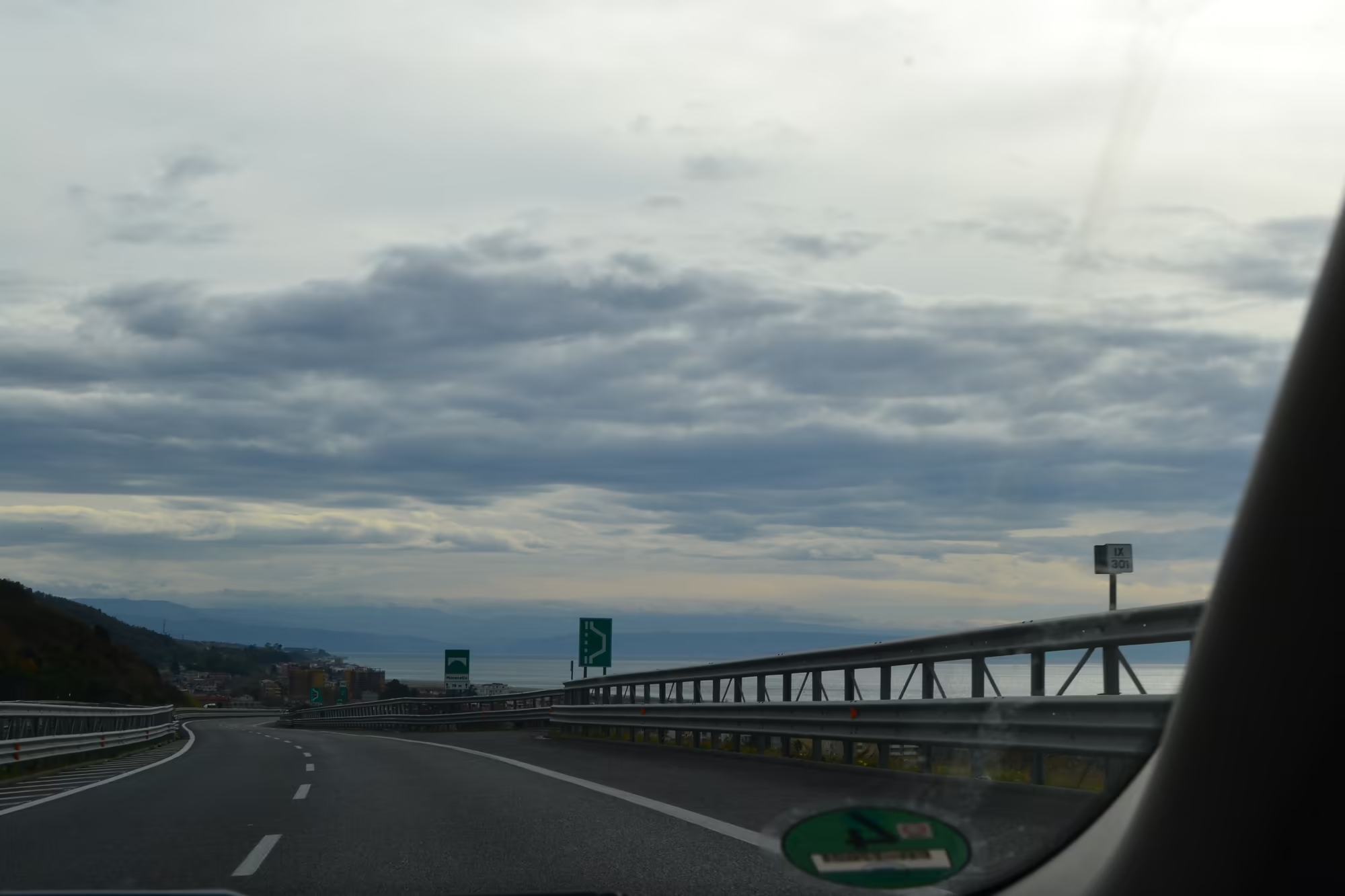
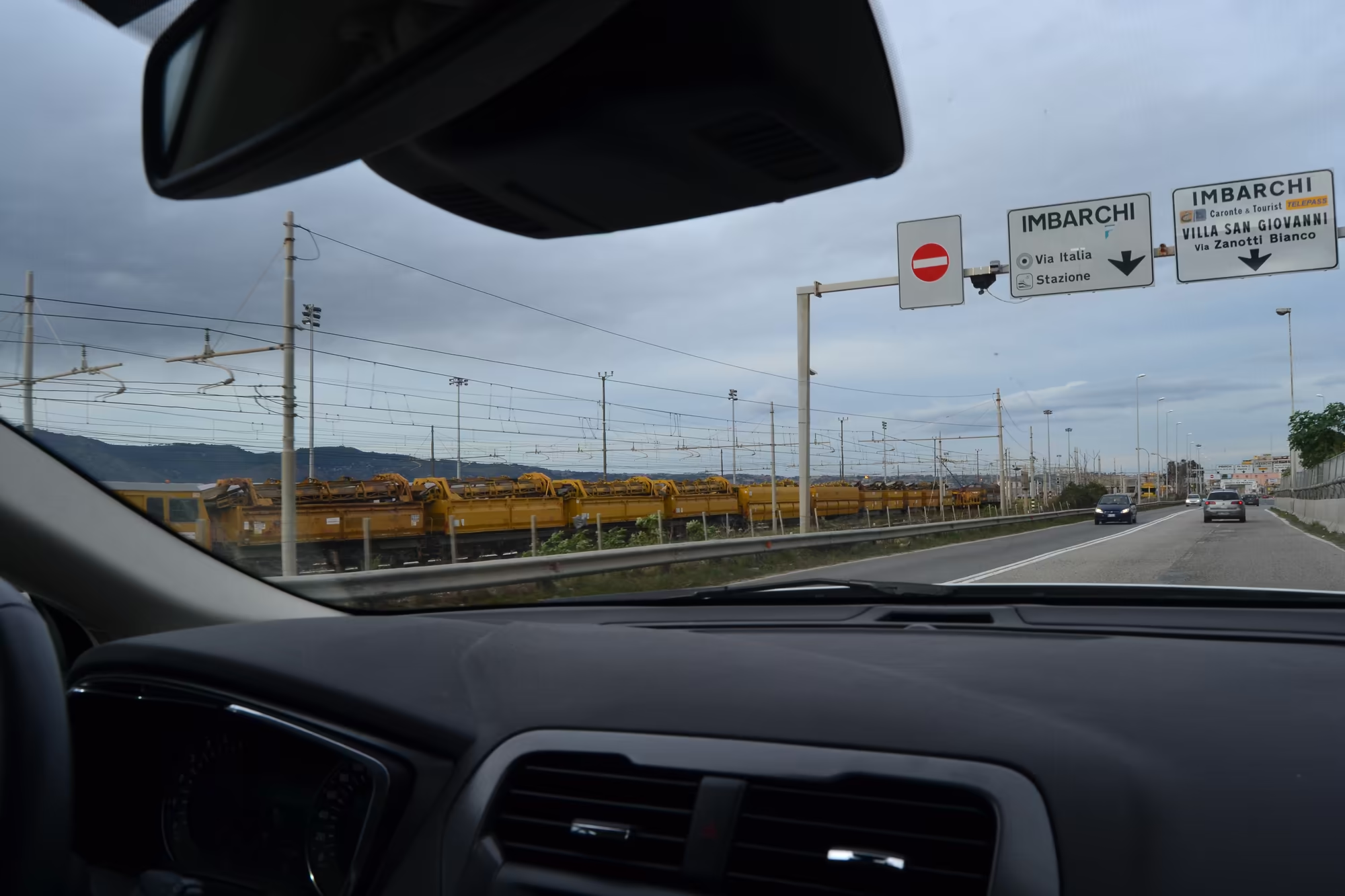
The approach to the coast and the port is the second part. The motorway curves along the shoreline with green direction signs and a guardrail, the sea visible beyond it; green signs reading Imbarchi and Villa San Giovanni direct drivers to the ferry boarding area, which is the point at which the road ends and the crossing begins. The port at Villa San Giovanni is a working place of lanes, barriers, waiting vehicles and officials, and the change from the fast road to the slow queue is abrupt.
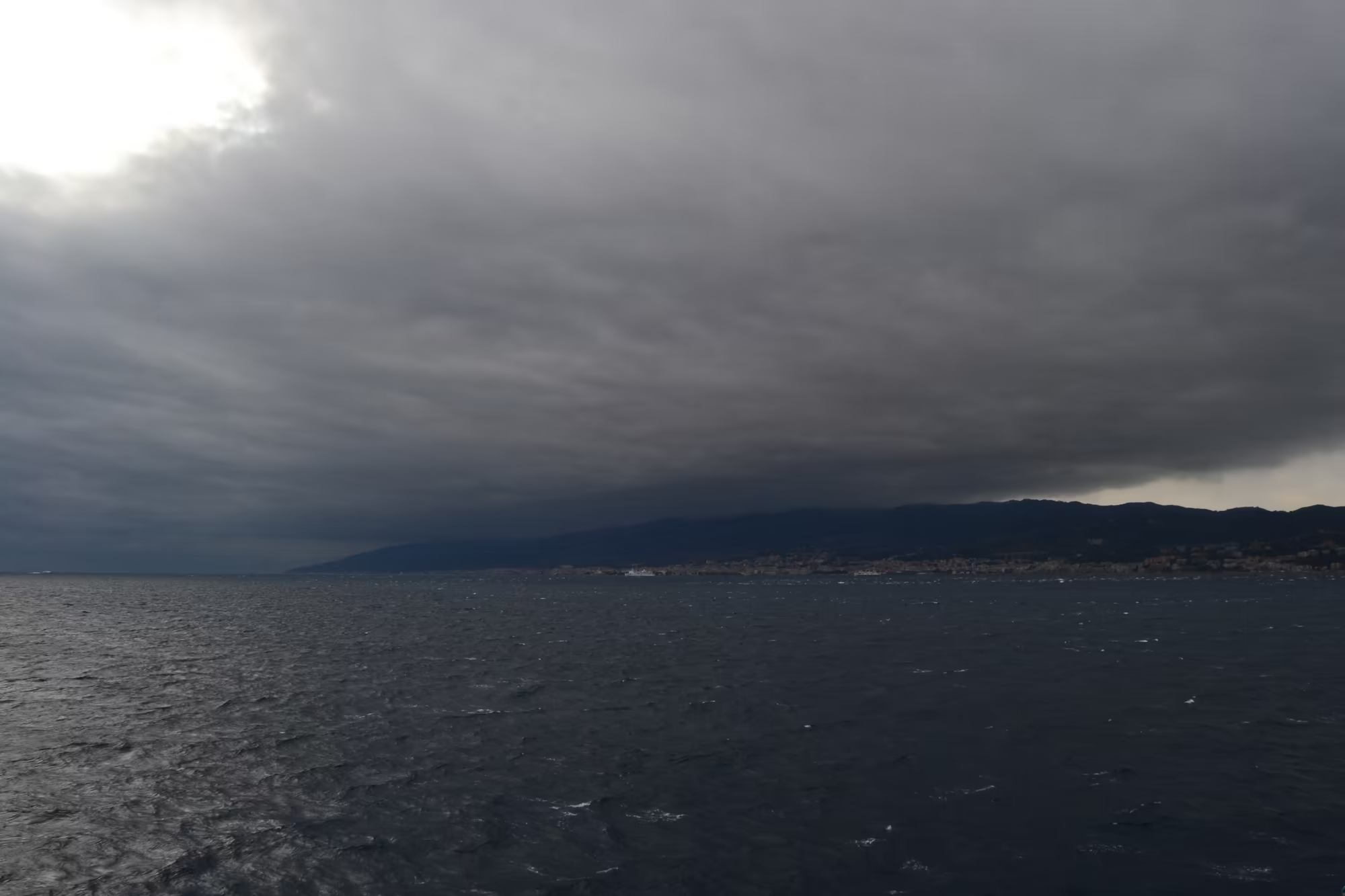
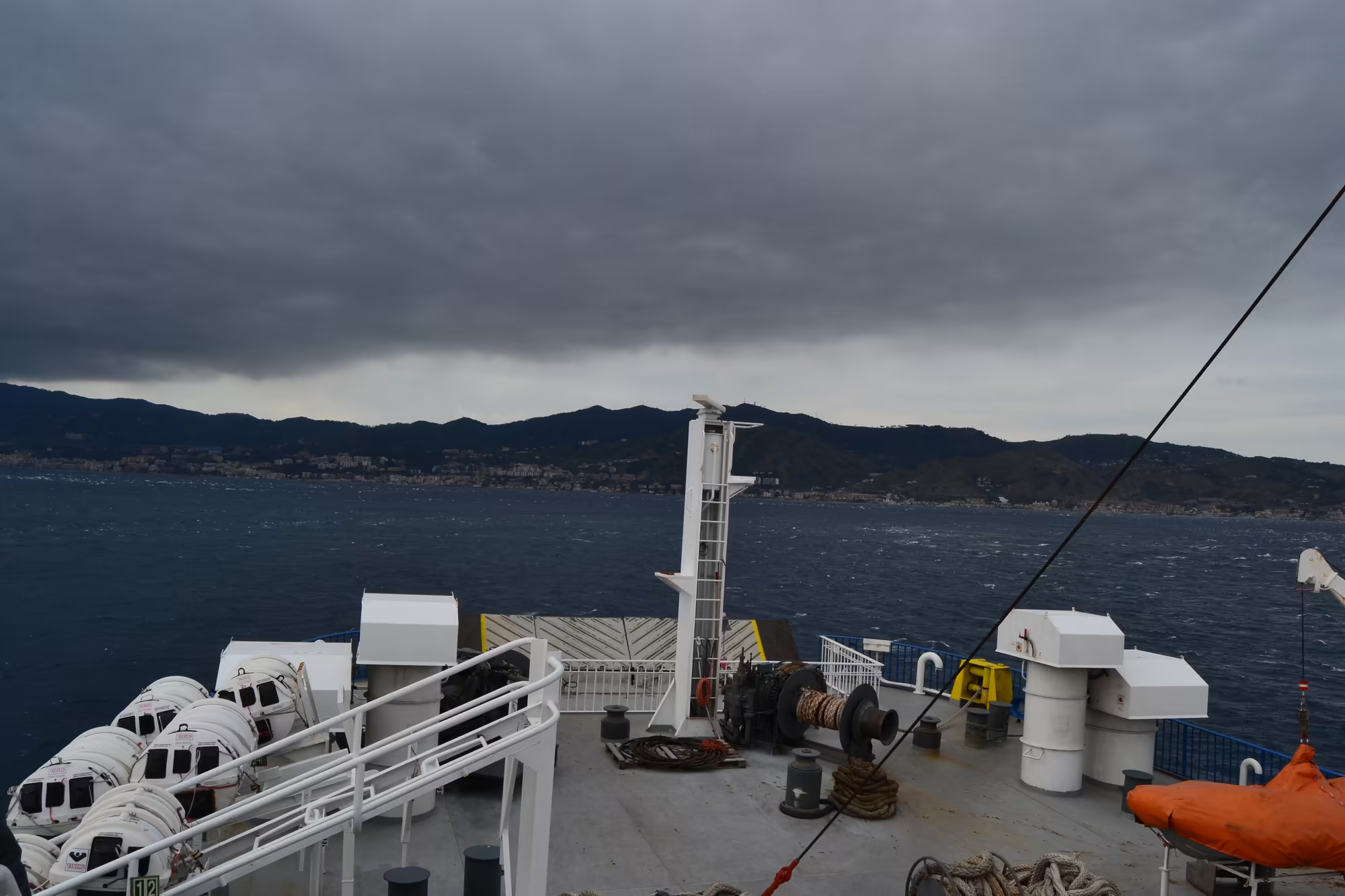
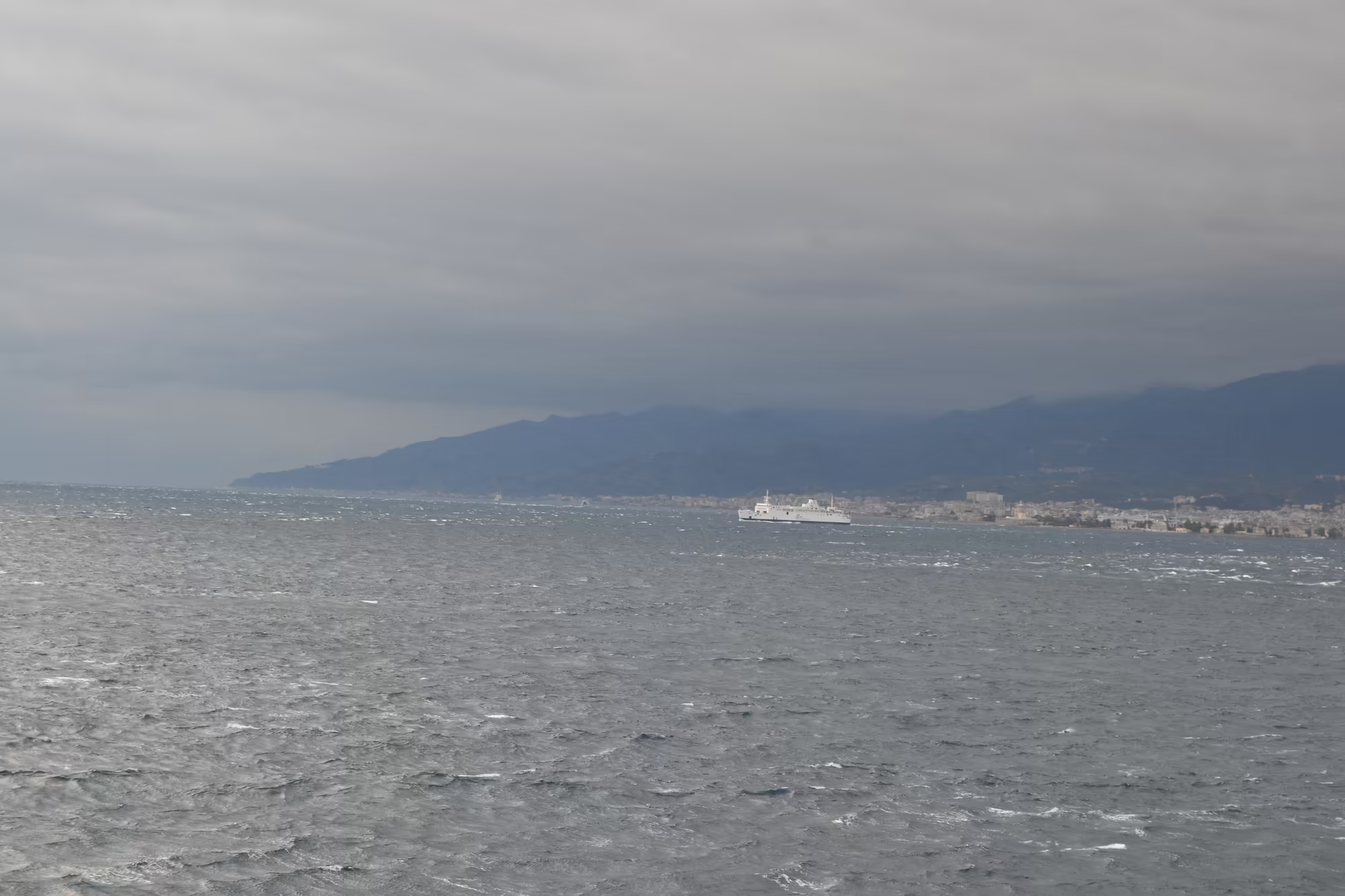
The crossing is the centre of the day. Heavy dark clouds fill the sky with a patch of sun breaking through above choppy sea and the harbour of Messina; the open deck of the ferry shows white lifeboats, a mast, a winch and coiled ropes; a blue railing frames a harbour with small boats and a town along the shore with mountains behind it, and two passengers stand at the rail beside an orange crane arm, looking towards the island. The crossing takes about twenty minutes, which is long enough to walk the deck and short enough to be over before the weather has changed.
Arrival on the island closes the day. The ferry berths in the port of Messina, the traffic leaves the ship and the road turns south along the Ionian coast; the sea stays on the left for the rest of the drive, the mountain is on the right, and the villages of the coast pass one after another. By evening the car has covered the whole length of the island’s eastern side, and the journey has arrived at the orange groves and the terraced slopes below Etna where it will stay for the next two weeks.
The weather is part of the album. A motorway under a low grey sky, a truck throwing spray on a wet surface, pine trees disappearing into the mist and a coast road with dark clouds over a moving sea are the record of a winter crossing of the strait, and the ferry deck scenes belong to the same conditions: ropes, winches, lifeboats and an orange crane arm against a sky that is clearing over the island. Nothing in these pictures is staged, and the day is more convincing for it.
References
- Wikipedia contributors (2026). Apennine Mountains. en.wikipedia.org/wiki/Apennine_Mountains
- Wikipedia contributors (2026). Charybdis. en.wikipedia.org/wiki/Charybdis
- Wikipedia contributors (2026). Corno Grande. en.wikipedia.org/wiki/Corno_Grande
- Wikipedia contributors (2026). Fata Morgana (mirage). en.wikipedia.org/wiki/Fata_Morgana_(mirage)
- Wikipedia contributors (2026). Ionian Sea. en.wikipedia.org/wiki/Ionian_Sea
- Wikipedia contributors (2026). Messina. en.wikipedia.org/wiki/Messina
- Wikipedia contributors (2026). Mount Etna. en.wikipedia.org/wiki/Mount_Etna
- Wikipedia contributors (2026). Reggio Calabria. en.wikipedia.org/wiki/Reggio_Calabria
- Wikipedia contributors (2026). Rome. en.wikipedia.org/wiki/Rome
- Wikipedia contributors (2026). Scilla, Calabria. en.wikipedia.org/wiki/Scilla,_Calabria
- Wikipedia contributors (2026). Scylla. en.wikipedia.org/wiki/Scylla
- Wikipedia contributors (2026). Sicily. en.wikipedia.org/wiki/Sicily
- Wikipedia contributors (2026). Strait of Messina. en.wikipedia.org/wiki/Strait_of_Messina
- Wikipedia contributors (2026). Villa San Giovanni. en.wikipedia.org/wiki/Villa_San_Giovanni