Day 5 - Syracuse
Journal Notes
General
Syracuse, Siracusa in Italian, is a city on the eastern coast of Sicily and the capital of its province, with a population of 115,636 as of 2025, which makes it the fourth most populous city on the island after Palermo, Catania and Messina. Its historic centre is on the small island of Ortygia, joined to the mainland by bridges, and the modern city spreads over the mainland behind it. The municipality covers 207.78 square kilometres and includes a long coastline of small settlements, from Arenella and Belvedere to Cassibile, Fontane Bianche and Plemmirio.
Ortygia is the part of the city that visitors see first, and it is dense with history. The name comes from the ancient Greek word for quail, and the island contains many of the oldest landmarks of the city, among them the Temple of Apollo, the Fountain of Arethusa and the cathedral, which was originally a Greek temple. In 2005 Ortygia was inscribed as part of the UNESCO World Heritage Site known as Syracuse and the Rocky Necropolis of Pantalica, and the island shows continuous layers of Greek, Roman, Byzantine, Arab and Norman influence in a space that can be crossed on foot in twenty minutes.
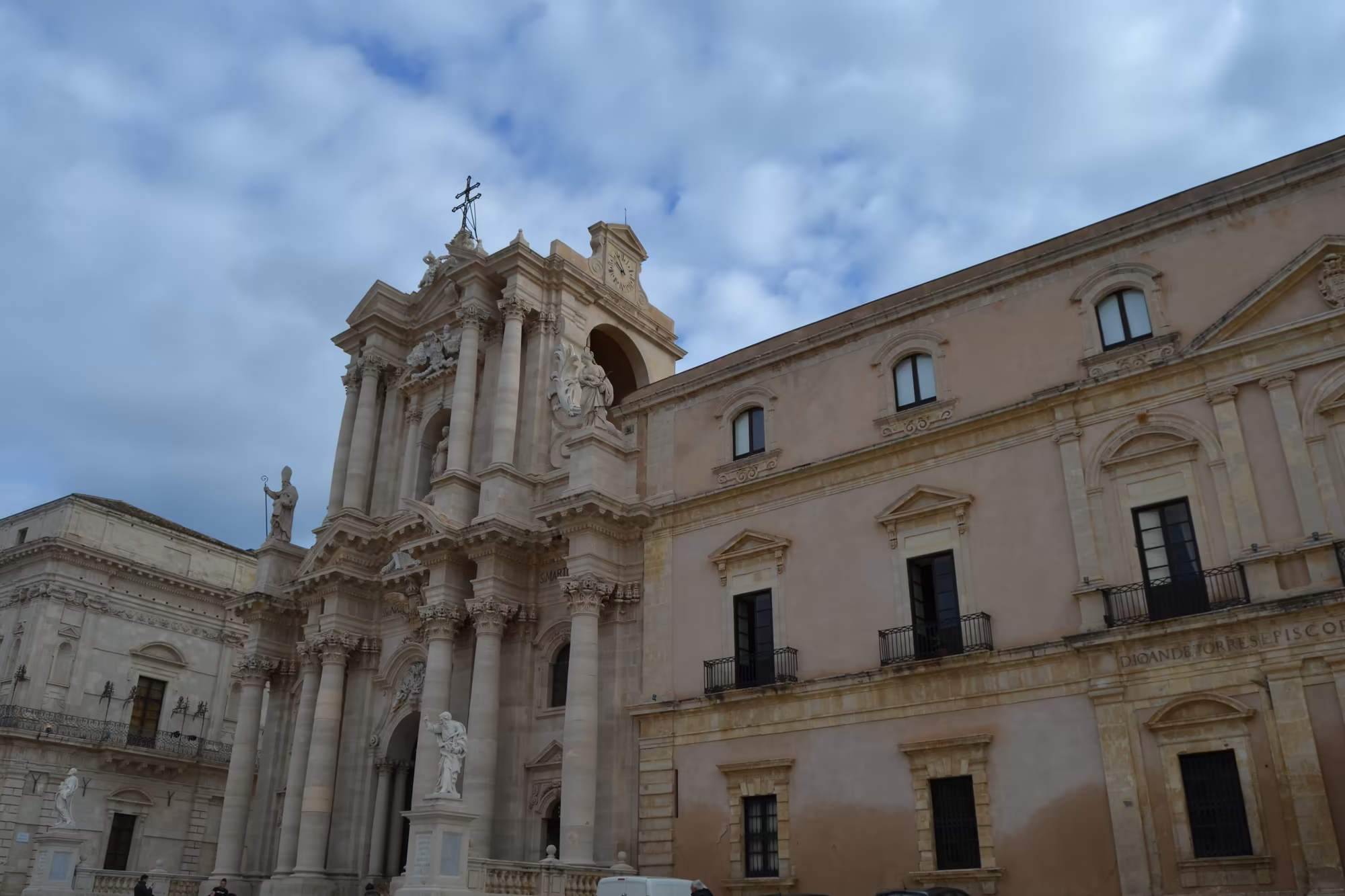
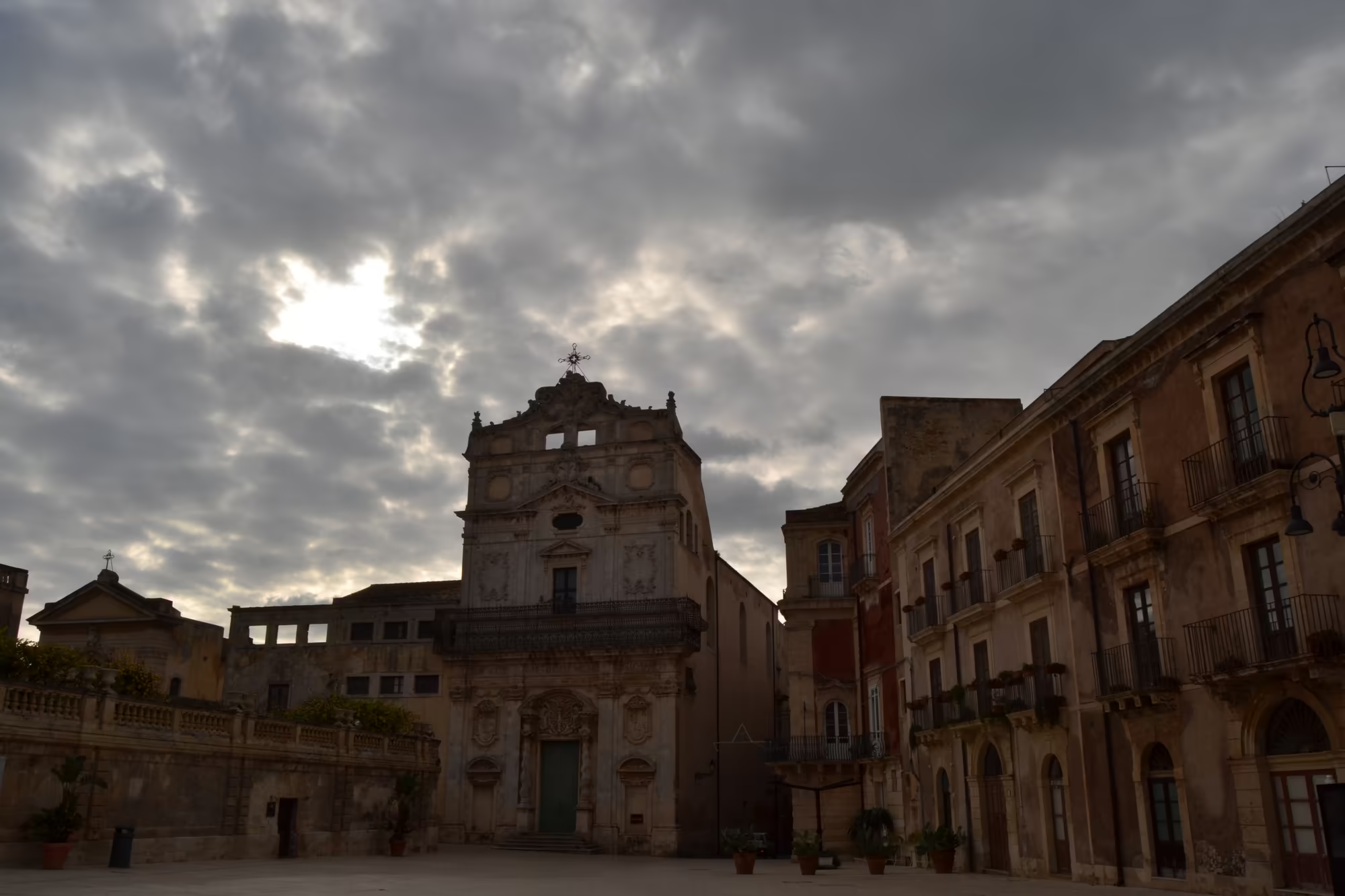
The day of this album is spent on the island and in its museums. The streets of Ortygia are paved, the buildings are of warm terracotta and pale stone, the cathedral facade is baroque with carved columns and statues, and the sea is present at the end of every lane, either as the open water of the Ionian Sea or as the sheltered basins of the old harbour. Beyond the promenade the ground is rocky, with low cliffs, an old fort and a long breakwater.
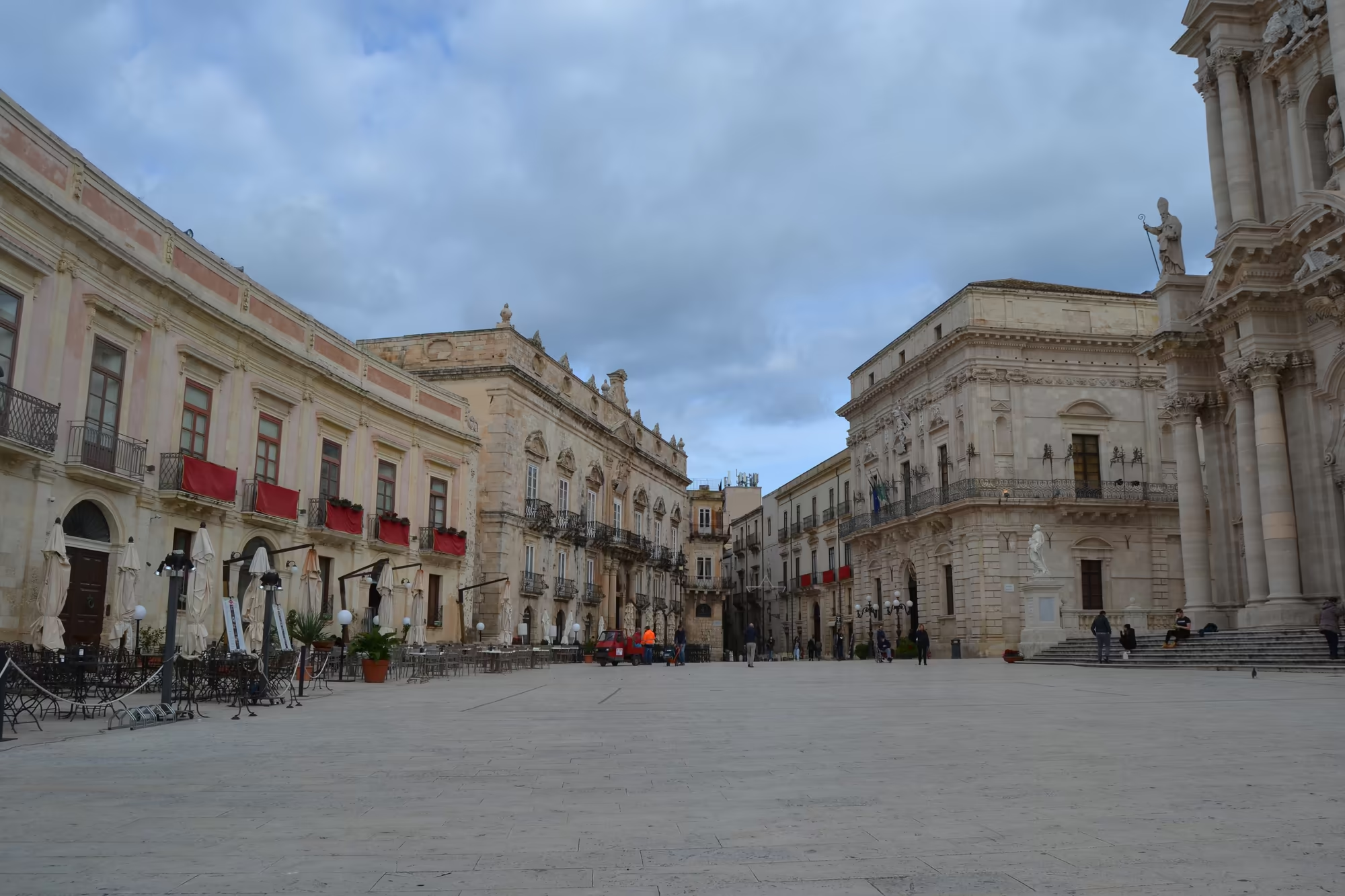
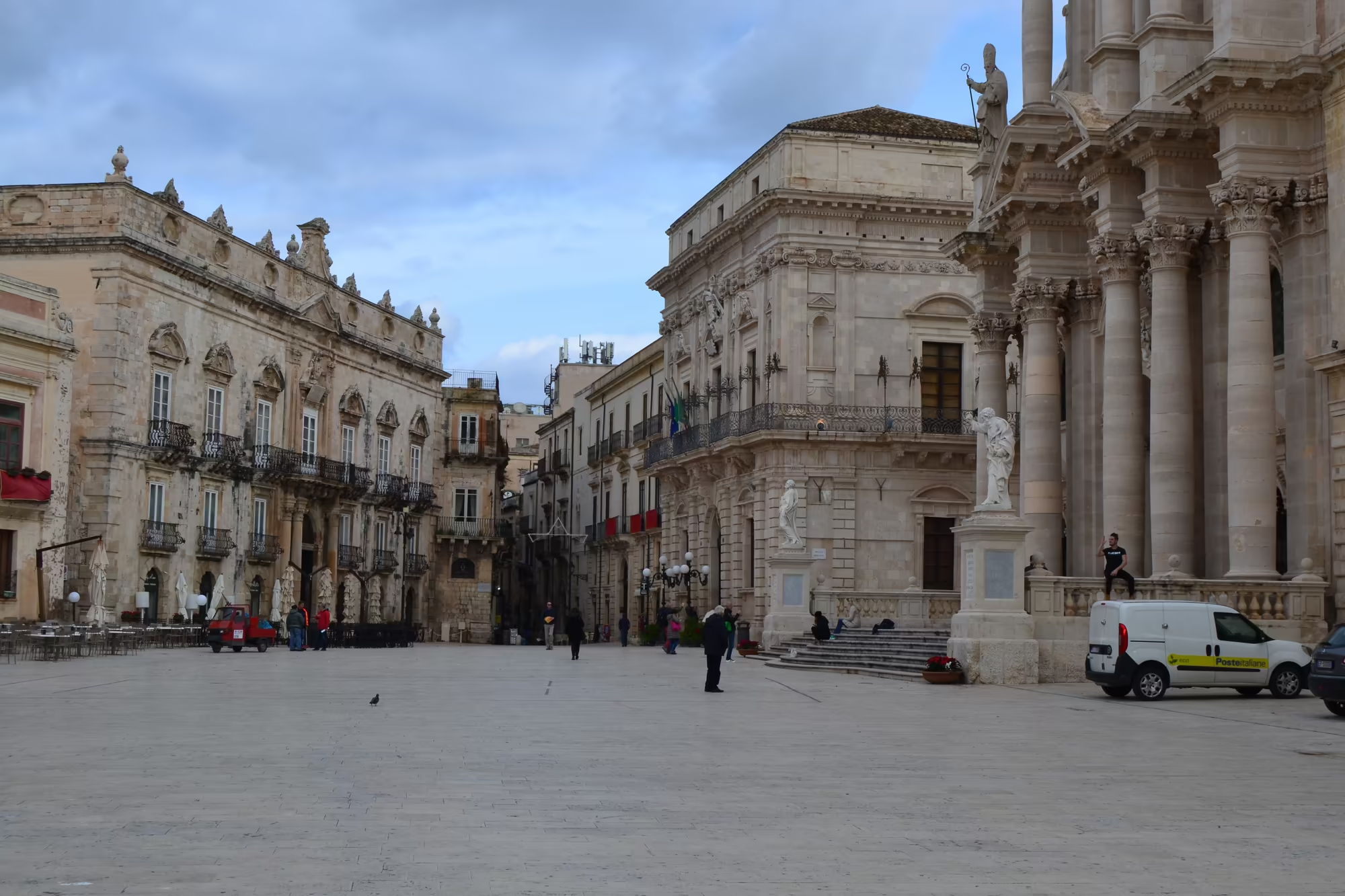
Winter is a good season for this city, because the crowds are absent and the light is clear. The sky on the day of the visit was heavily clouded with breaks of sun, which suits the baroque facades, and the plaza in front of the cathedral was nearly empty. Because Syracuse has been inhabited continuously for more than two and a half thousand years, the city is best visited slowly and in small pieces, and a single day here is a matter of choosing between the island, the archaeological park and the museums.
History
Syracuse was one of the great cities of the Greek world. It was founded on Ortygia in ancient Greek times and grew into the leading power of Magna Graecia, the Greek settlements of southern Italy and Sicily; in the fifth century BCE it was ruled by tyrants whose ambitions extended across the island, and it fought Carthage for control of it over centuries. Its most famous citizen was Archimedes, the mathematician and engineer, whose machines were used in the defence of the city, and its most famous ruler was Dionysius I, who made Syracuse the centre of a small empire.
The Roman conquest did not end its importance. Syracuse remained a substantial city under Roman rule and later under Byzantine government, and it kept its position through the centuries in which the island passed from one power to another. During the Spanish era it was transformed into a fortress, and after the devastating earthquake of 1693 the historic centre on Ortygia was rebuilt and took on the baroque appearance it has today, with the warm stone facades, the curved balconies and the churches that now define the island.
The modern history of the city includes one of the decisive moments of the Second World War in Italy. In 1943 the armistice that ended hostilities between the Kingdom of Italy and the Anglo-American allies was signed near Syracuse, and the city was occupied in the same period as the Allied advance moved north through Sicily. The town was damaged by bombing, and the reconstruction that followed shaped the city outside the island, where the modern quarters now stand.
The archaeology of the city has been studied for well over a century, and the museum that holds the results is one of the reasons to come. The Regional Archaeological Museum Paolo Orsi, named after the archaeologist who excavated much of the province, contains the material from the Greek and Roman city and from the prehistoric sites of the surrounding countryside, and its cases hold objects that range from black figure pottery and terracotta figures to bronze sculpture, glass and imported porcelain. The collection is arranged chronologically, and walking through it is the fastest way to understand how many layers of occupation lie under the streets outside.
The theatre in the archaeological park belongs to the same period of greatness. It was built in the fifth century BCE by Damocopos, rebuilt in the third century after 238 BCE and before the death of Hieron II in 215 BCE, and renovated again in the Roman period; Aeschylus is said to have staged The Aetnans there and perhaps also The Persians, and at the end of the fifth century or the beginning of the fourth the plays of Dionysius I were performed with those of the writers he kept at his court. The Spanish later quarried its stone for the fortifications of Ortygia, which destroyed the stage building and the upper seating.
Geology
Ortygia is an island of limestone, and the geology of the city is the reason it looks as it does. The rock is pale, fine grained and easily worked, and it has been quarried in and around the city for thousands of years, which is why so much of the historic architecture is built of the same material that the island is made of. The stone is also soluble, so the coast of the island and of the mainland behind it is full of caves, fissures and springs, and the groundwater of the region moves through conduits in the limestone rather than over the surface.
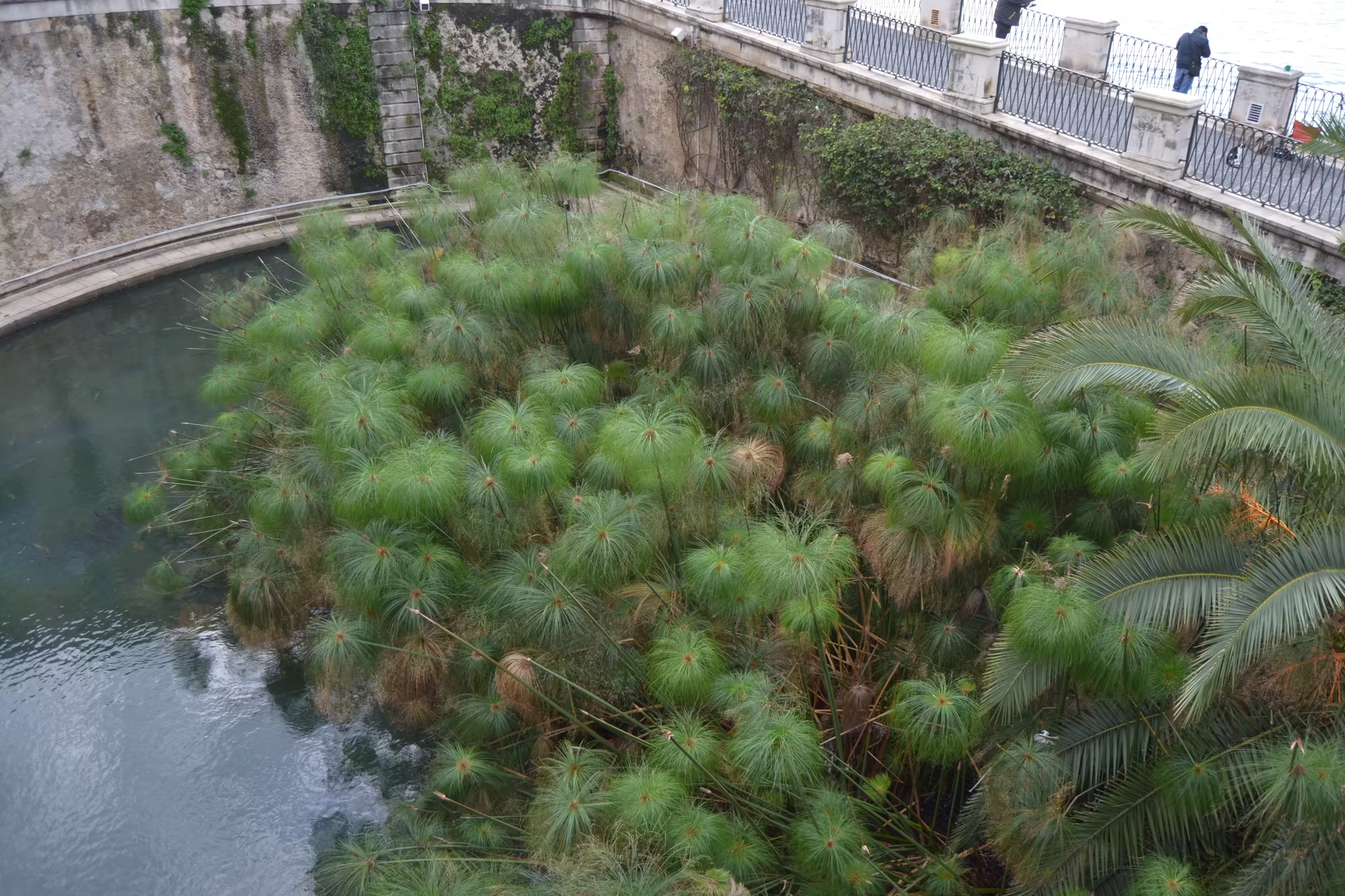
The most famous of those springs is the Fountain of Arethusa, a circular pool on the edge of the island close to the sea, planted with papyrus and fed by a spring that rises from below the water level. In Greek myth the nymph Arethusa was transformed into the spring by the goddess Artemis, and the pool has been a landmark of the city since antiquity; the papyrus that grows in it is one of the few places in Europe where the plant survives outside cultivation. The sea around the island is clear and shallow close in, with rocky bottoms that make the water green in the sun and grey under cloud.
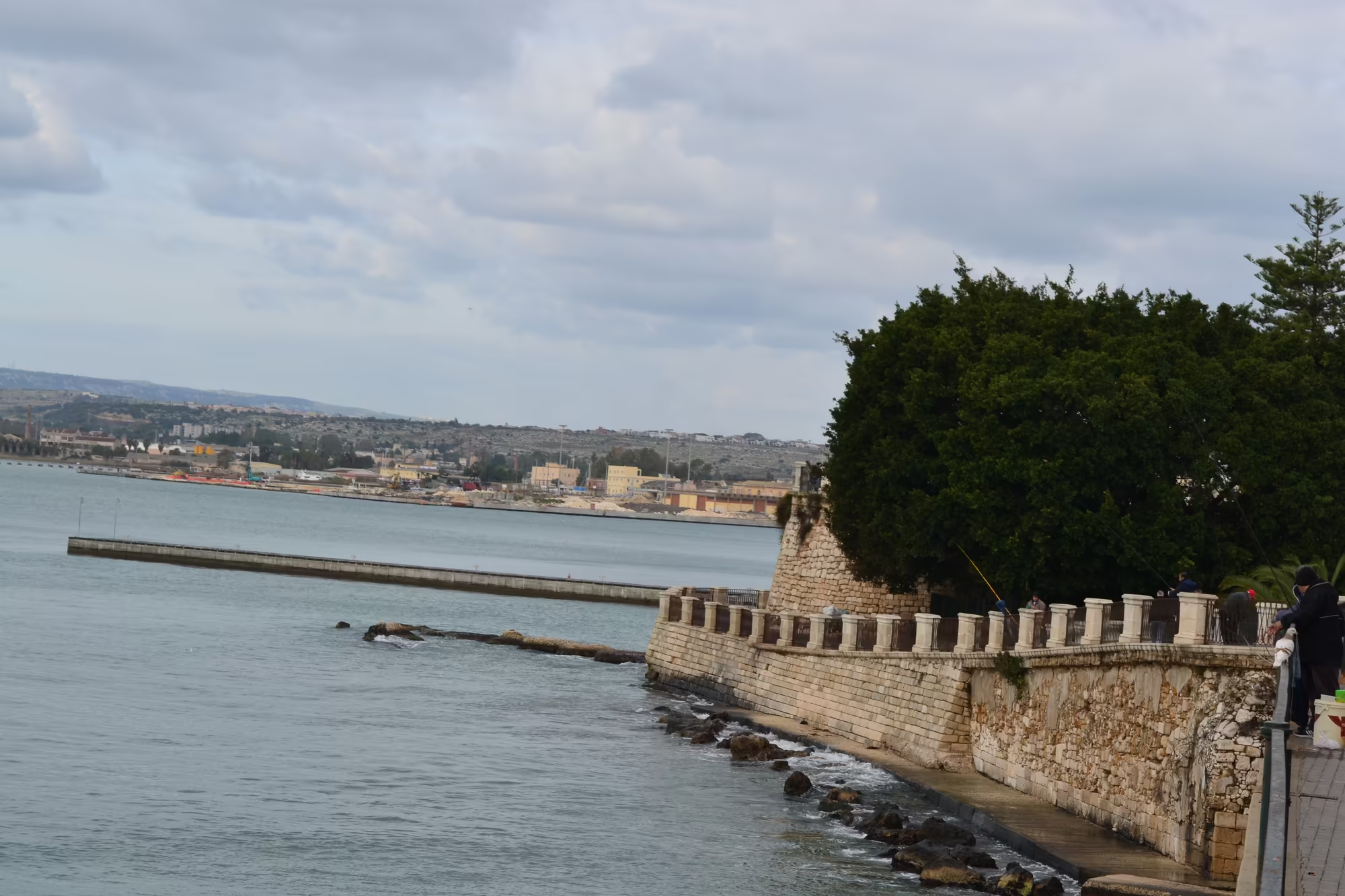
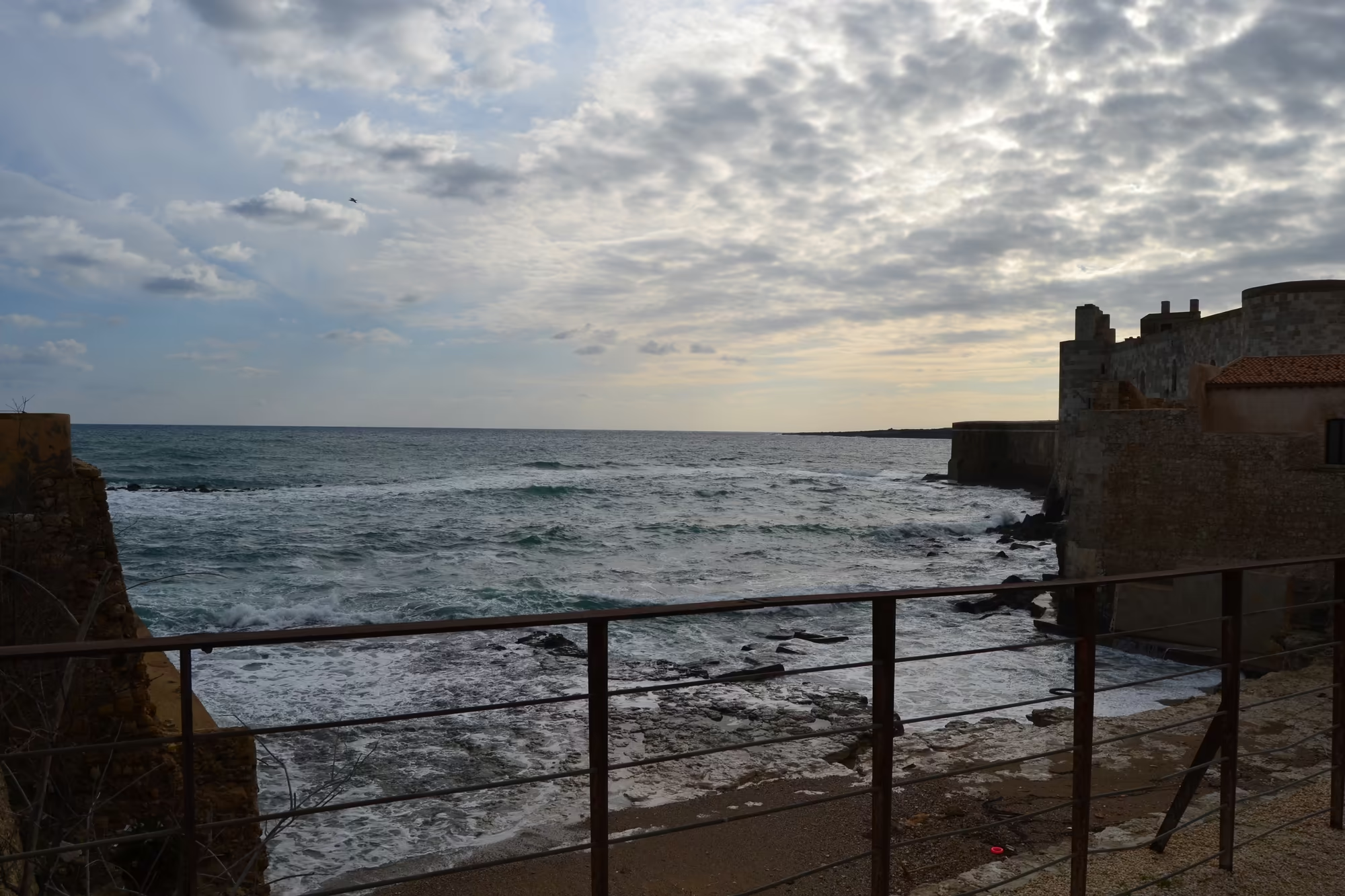
Beyond the island the coast is a mixture of rocky headland and small bay. The shoreline below the old fort is made of low cliffs and rough stone platforms where waves break and where the swell pushes through gaps in the rock, and a long breakwater protects the harbour to the north. Because the coast faces east, it receives the morning light directly, which is why the light on the seafront in this album has a hard, bright quality along the walls and deep shadow in the doorways.
Inland, the ground rises gently from the coastal plain into the limestone plateau of the Iblei mountains, cut by deep gorges and dry valleys. The same rock that forms the island continues under the whole of the surrounding country, and the quarries of Syracuse have left the city with a legacy of underground chambers and catacombs that are as extensive as the buildings above. For the visitor the practical consequence is that almost everything here is made of the same pale stone: the temple columns, the baroque facades, the paving and the sea walls.
The quarries beneath the city are part of the same geology. Because the limestone is soft when freshly cut and hardens on exposure, it has been worked here since antiquity, and the underground chambers left by the quarrymen, together with the catacombs cut into the same rock, extend for kilometres under the modern streets. The same material appears in every layer of the city above them: the Greek columns embedded in the cathedral walls, the baroque facades of Ortygia and the paving of the squares are all made of local stone.
Things to See
The cathedral is the first stop. An ornate baroque facade with carved columns, statues of saints and a cross on top stands beside the stairway and the statues of the cathedral, and the building behind it is the result of a Greek temple converted successively into a church and a mosque and back again, which is why its columns are embedded in its walls. The plaza in front of it is flanked by palazzi of terracotta and pale stone with cafes, and on a winter morning with a heavy sky it is one of the finest squares in Sicily.
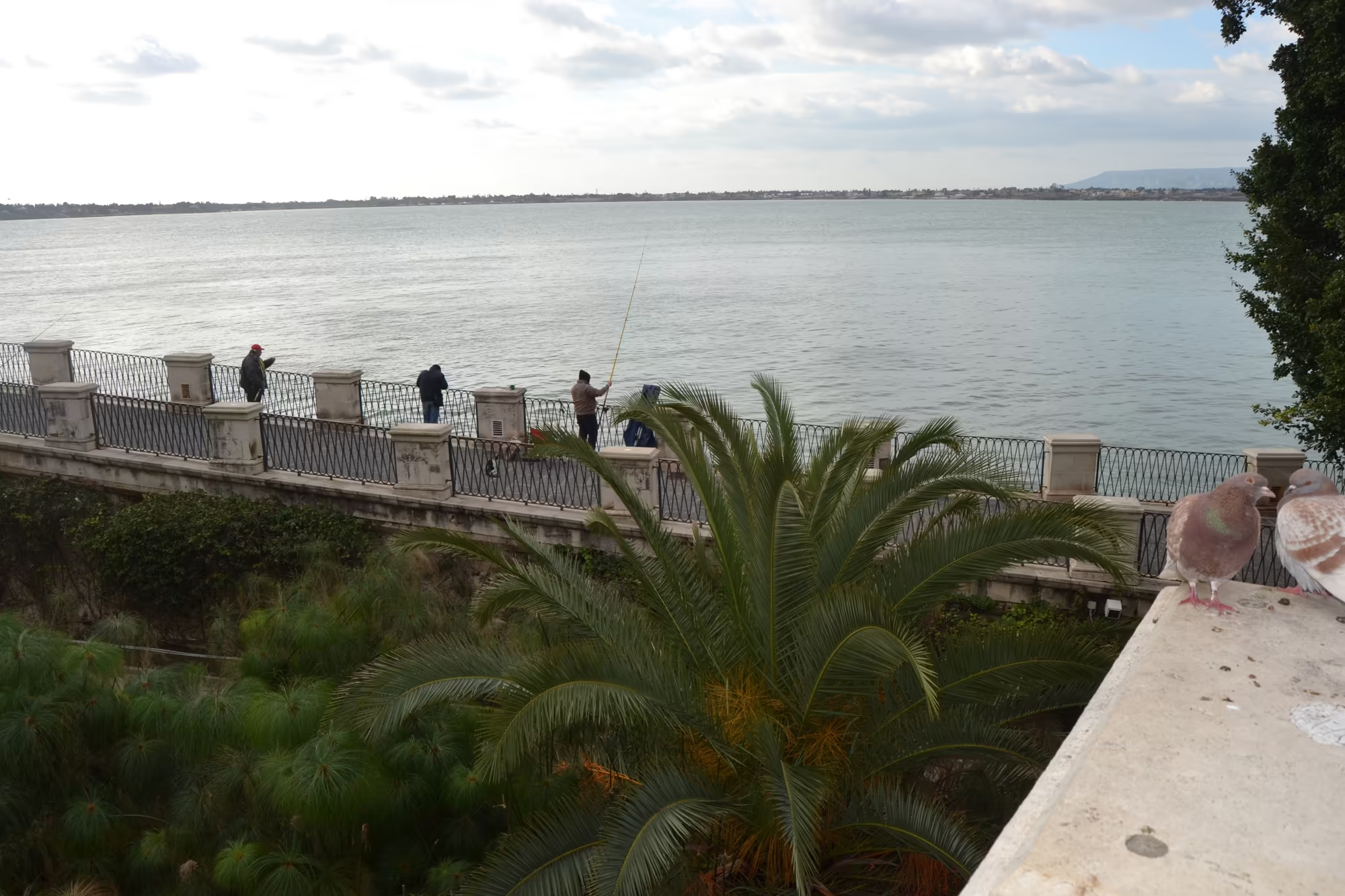
The Fountain of Arethusa is the second landmark, and it is a short walk from the cathedral along the edge of the island. The circular spring pool is packed with tall green papyrus, set below pale stone walls with the sea beyond, and beside it people fish with long rods from a stone balustrade on the promenade, with palm trees and old buildings behind. The pool and the fishing rods are the two faces of the same waterfront, and both are best seen in the middle of the day when the light reaches the bottom of the water.
The seafront and the fort are the third part of the day. Rocky shoreline below old stone walls and a small fort, a long breakwater jetty with a moored boat, and choppy waves breaking below weathered walls seen through a railing on a low promenade are the coastal face of Ortygia; the sea here is usually moving, even in good weather, because the position of the island exposes it to the swell from the east. Walking the perimeter of the island takes about an hour and passes all of it.
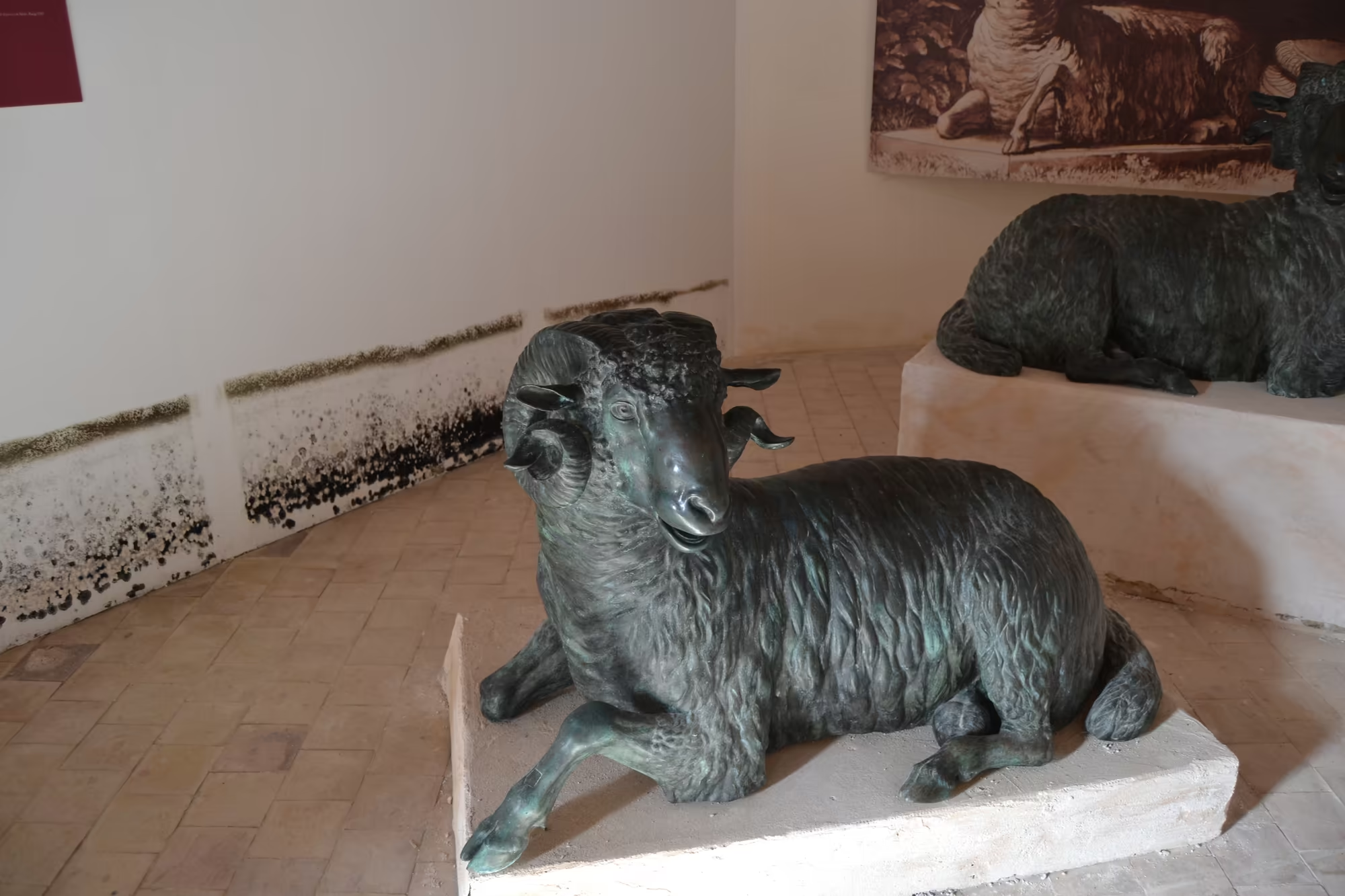
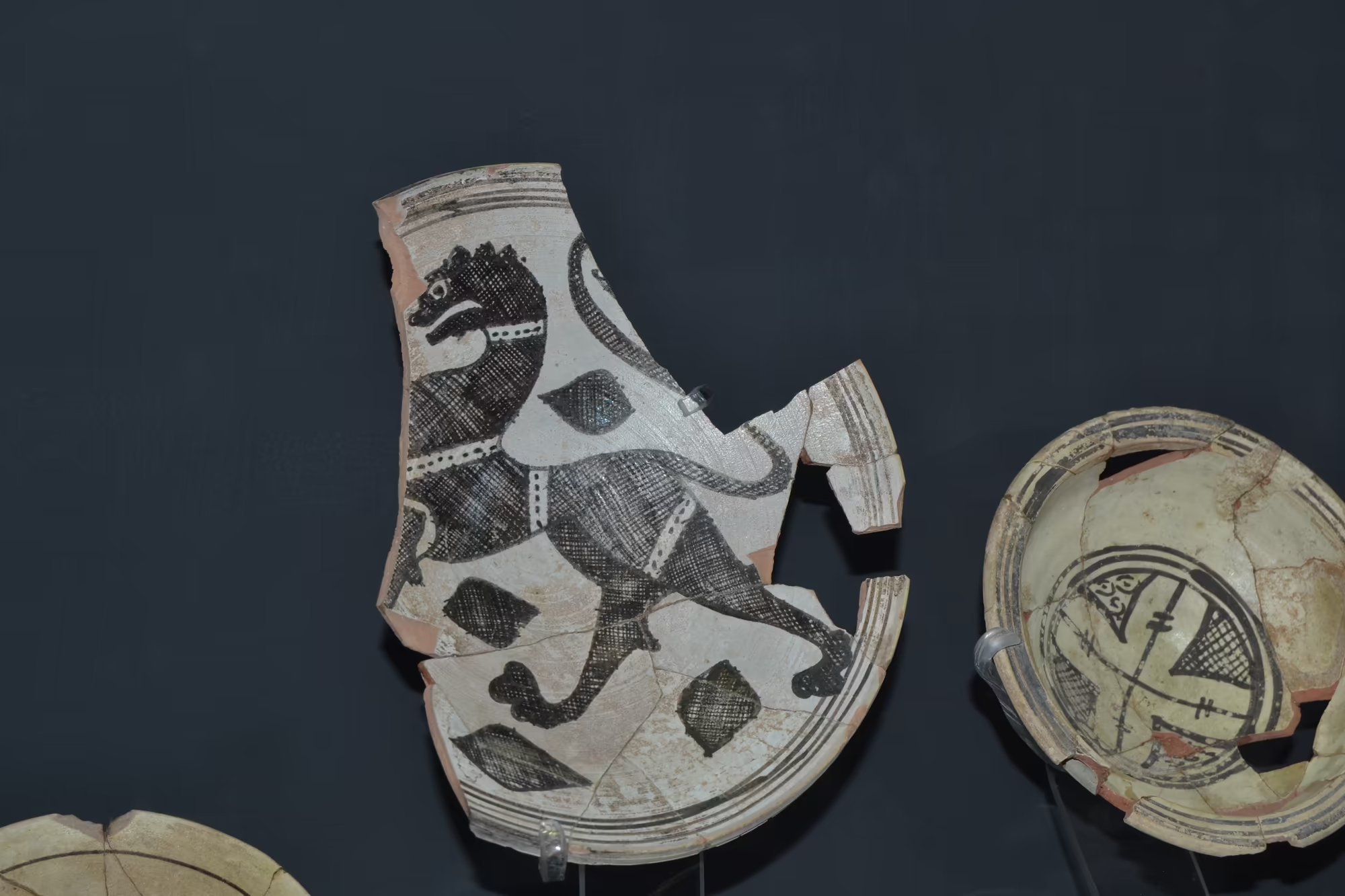
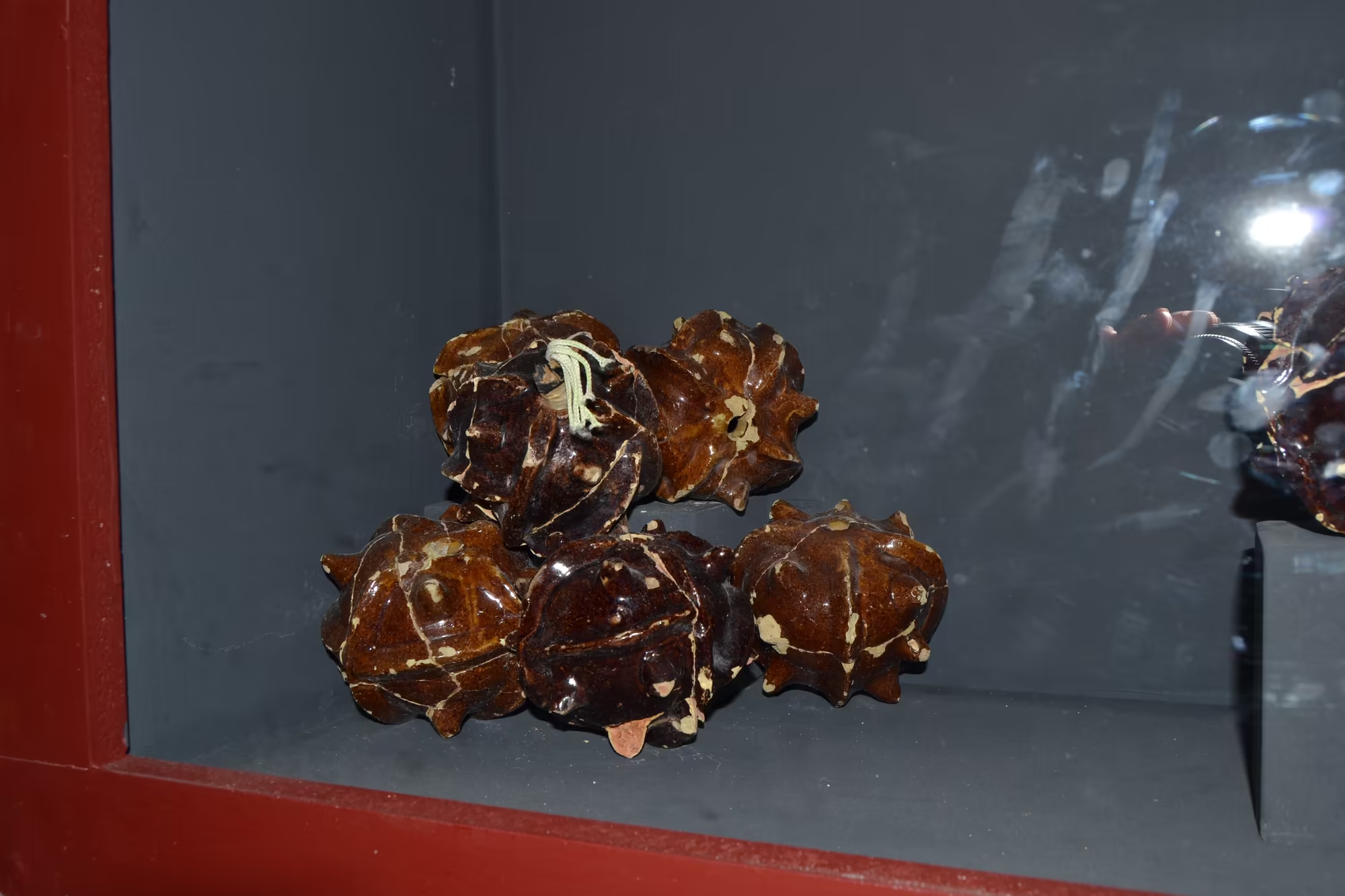
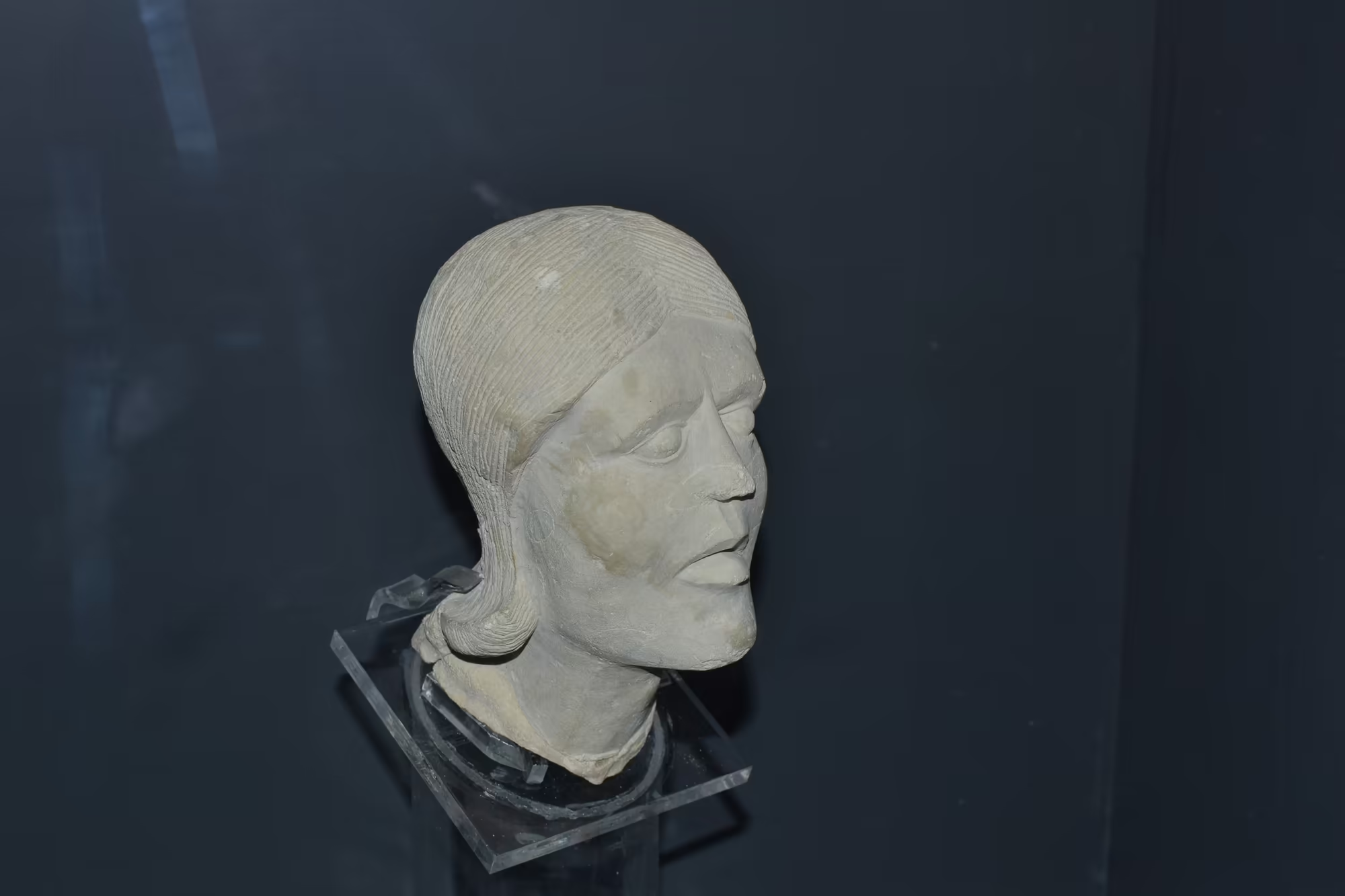
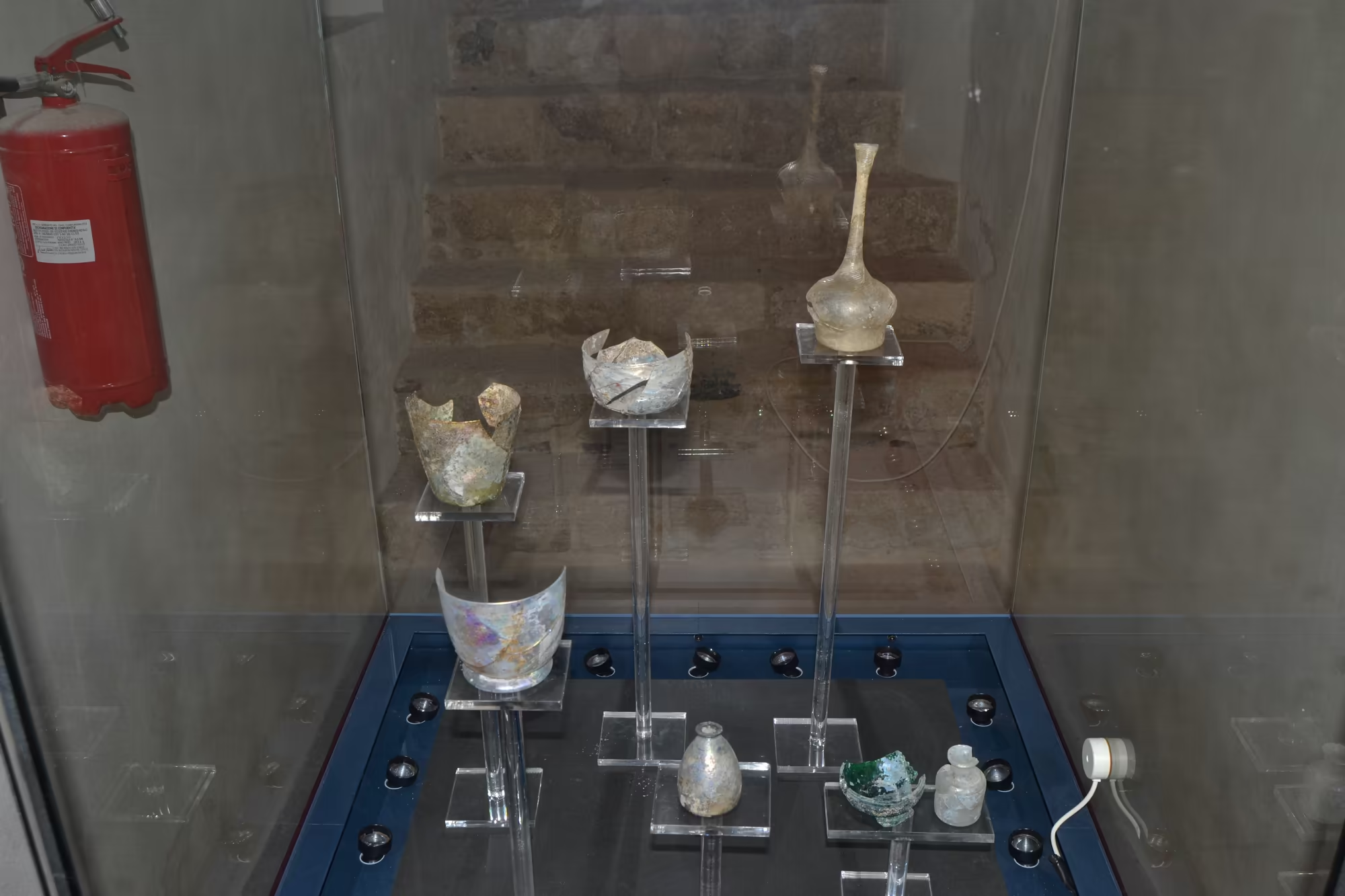
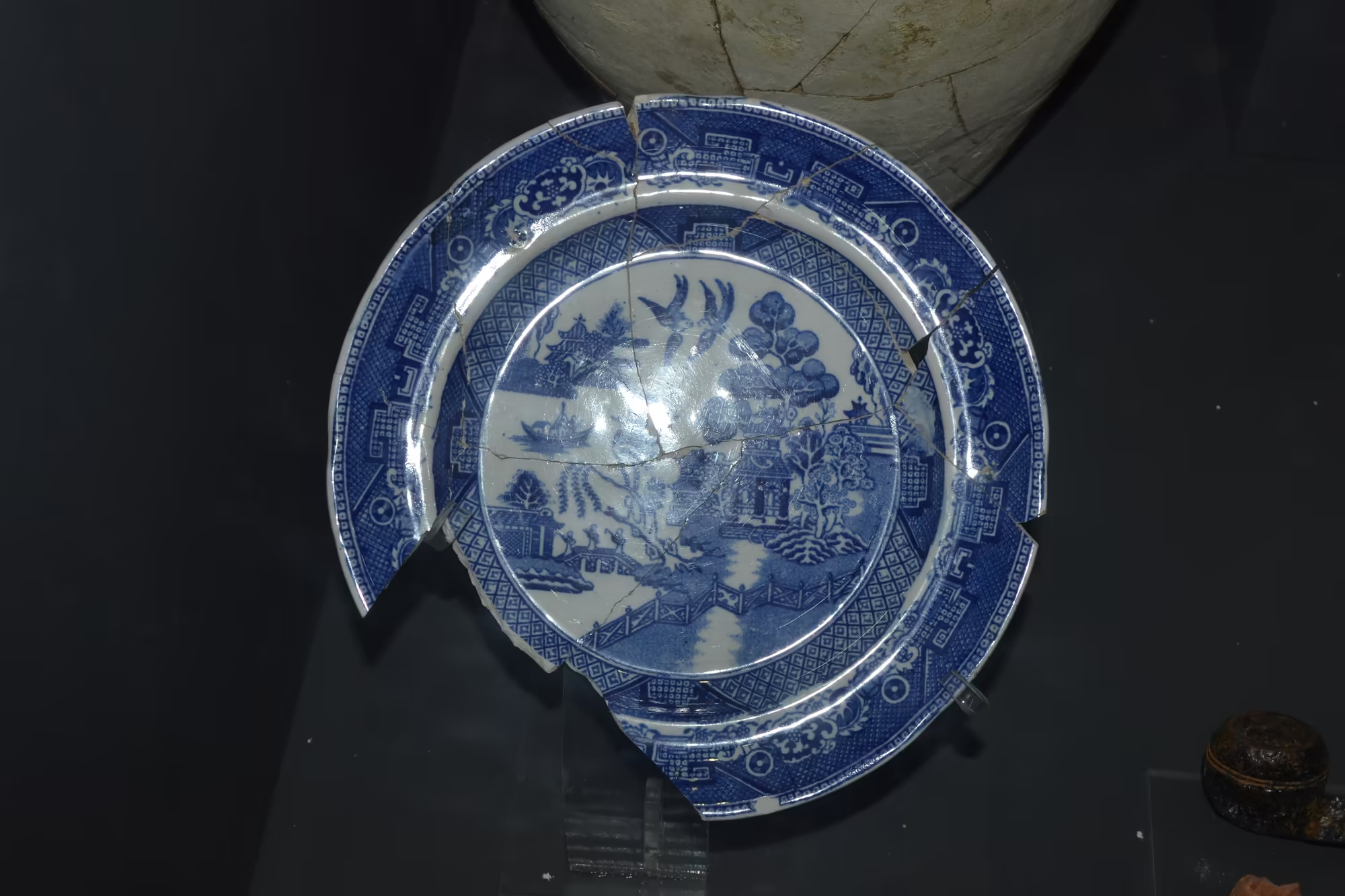
The museum is the last and slowest part of the visit. Two dark bronze ram statues rest on stone pedestals inside a case, their horns curled; black figure pottery shards are mounted on a dark wall, including a fragment painted with a figure; brown glazed ceramic objects shaped like pine cones stand together in a group; a weathered carved stone head is shown in profile on a support; broken ancient glass and ceramic vessels are displayed on clear stands; and a broken and repaired blue and white porcelain plate decorated with a landscape is shown among them. The range of the collection, from Greek sculpture to imported porcelain, is the clearest statement of how many different worlds have traded through this harbour.
One of the city’s sons explains its place in the history of science. Archimedes was born in Syracuse in about 287 BCE and died in 212 BCE during the Roman siege of the city, killed by a soldier despite orders that he should not be harmed; his screw pump, compound pulleys and defensive machines were used to protect it, and his tomb, surmounted by a sphere and a cylinder as he had asked, was visited and described by Cicero. Dionysius I, who ruled from 432 to 367 BCE, made the city the most powerful of the western Greek colonies, and the two of them together are the reason Syracuse is still remembered as a capital rather than a provincial town.
References
- Coin types and identity: Greek cities in Sicily (2000). In: Sicily from Aeneas to Augustus. doi.org/10.3366/edinburgh/9780748613670.003.0006
- Puleo, T. (2010). Baroque disruptions in Val di Noto, Sicily. Geographical Review 100, 476-492. doi.org/10.1111/j.1931-0846.2010.00054.x
- Tusa, S. (2019). Cultural and ethnic dynamics in Sicily during Greek colonization. In: Greek Colonization in Local Contexts. doi.org/10.2307/j.ctvh9w120.7
- Wikipedia contributors (2026). 1693 Sicily earthquake. en.wikipedia.org/wiki/1693_Sicily_earthquake
- Wikipedia contributors (2026). Archimedes. en.wikipedia.org/wiki/Archimedes
- Wikipedia contributors (2026). Dionysius I of Syracuse. en.wikipedia.org/wiki/Dionysius_I_of_Syracuse
- Wikipedia contributors (2026). Greek Theatre of Syracuse. en.wikipedia.org/wiki/Greek_Theatre_of_Syracuse
- Wikipedia contributors (2026). History of Sicily. en.wikipedia.org/wiki/History_of_Sicily
- Wikipedia contributors (2026). Magna Graecia. en.wikipedia.org/wiki/Magna_Graecia
- Wikipedia contributors (2026). Ortygia. en.wikipedia.org/wiki/Ortygia
- Wikipedia contributors (2026). Sicilian Baroque. en.wikipedia.org/wiki/Sicilian_Baroque
- Wikipedia contributors (2026). Sicily. en.wikipedia.org/wiki/Sicily
- Wikipedia contributors (2026). Syracuse, Sicily. en.wikipedia.org/wiki/Syracuse,_Sicily