Day 3 - Aosta Valley / Cinque Terre







Journal Notes
General
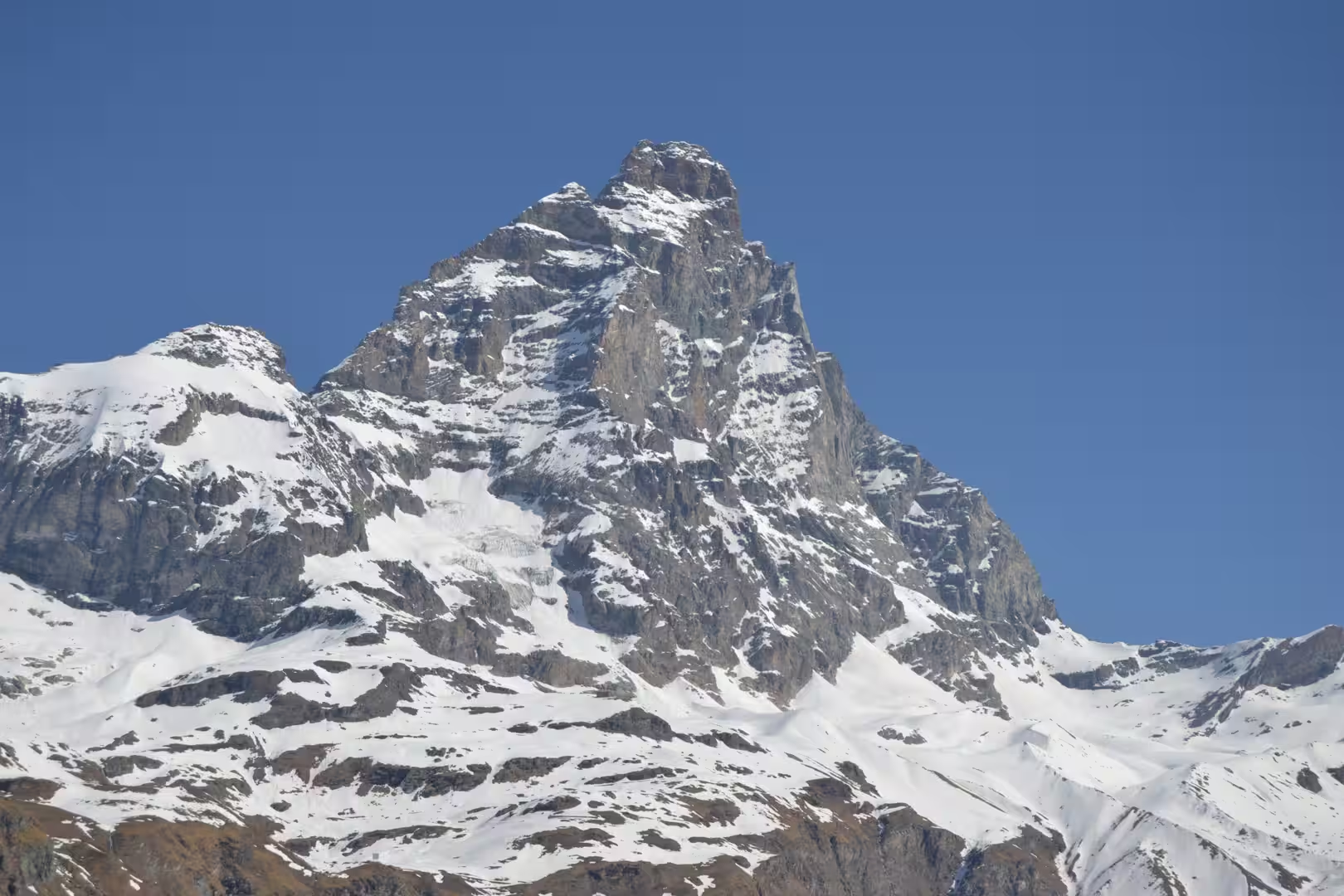
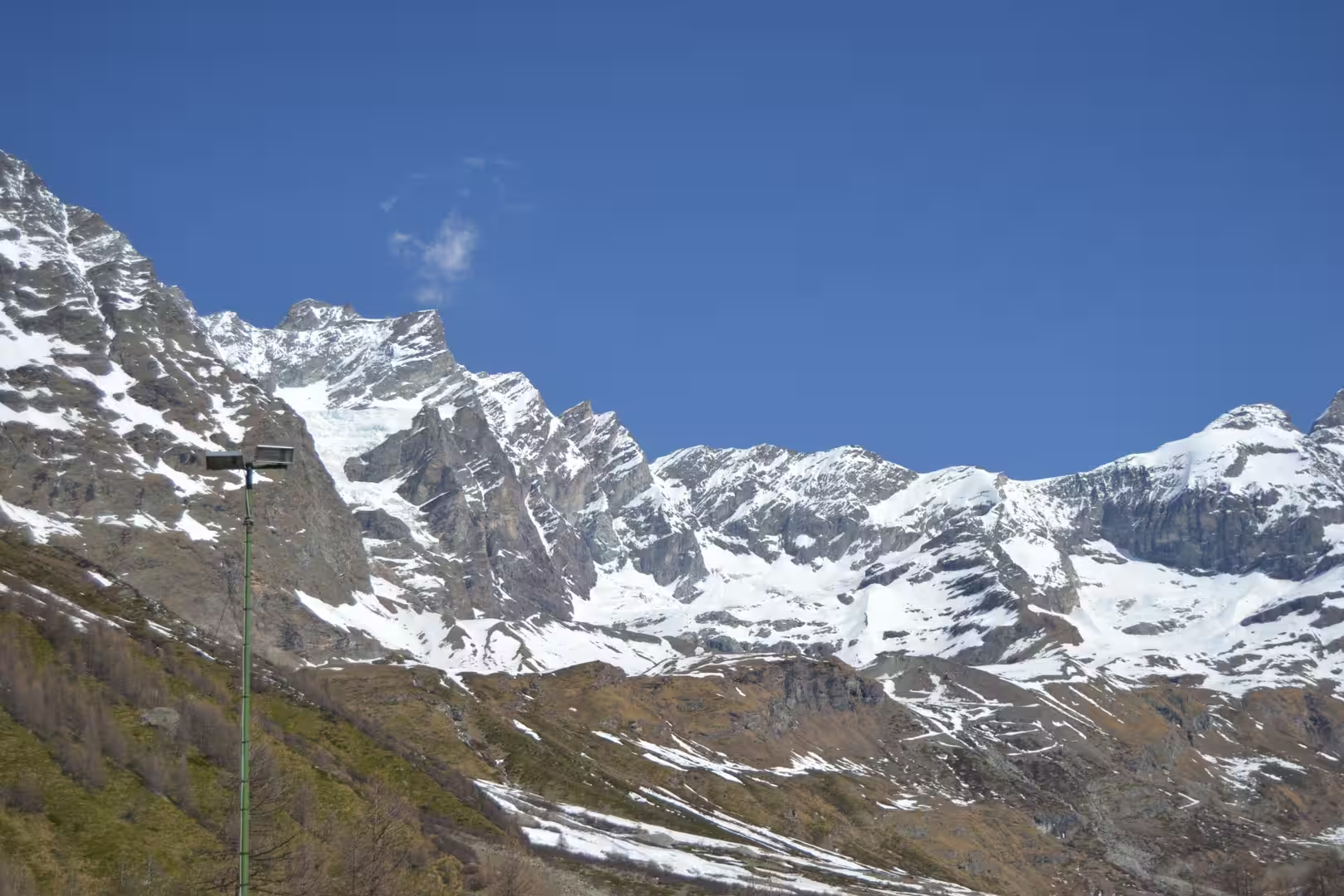
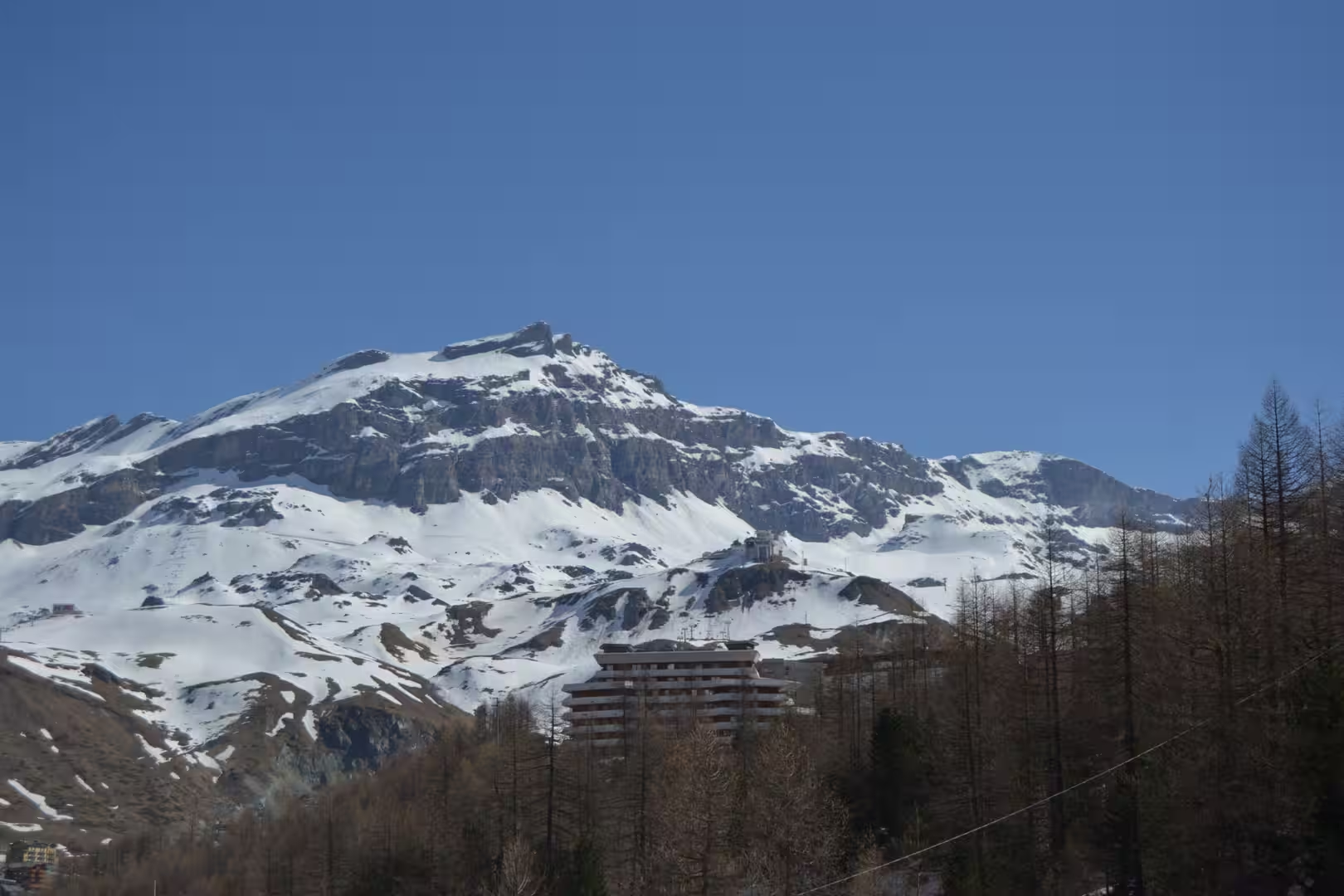
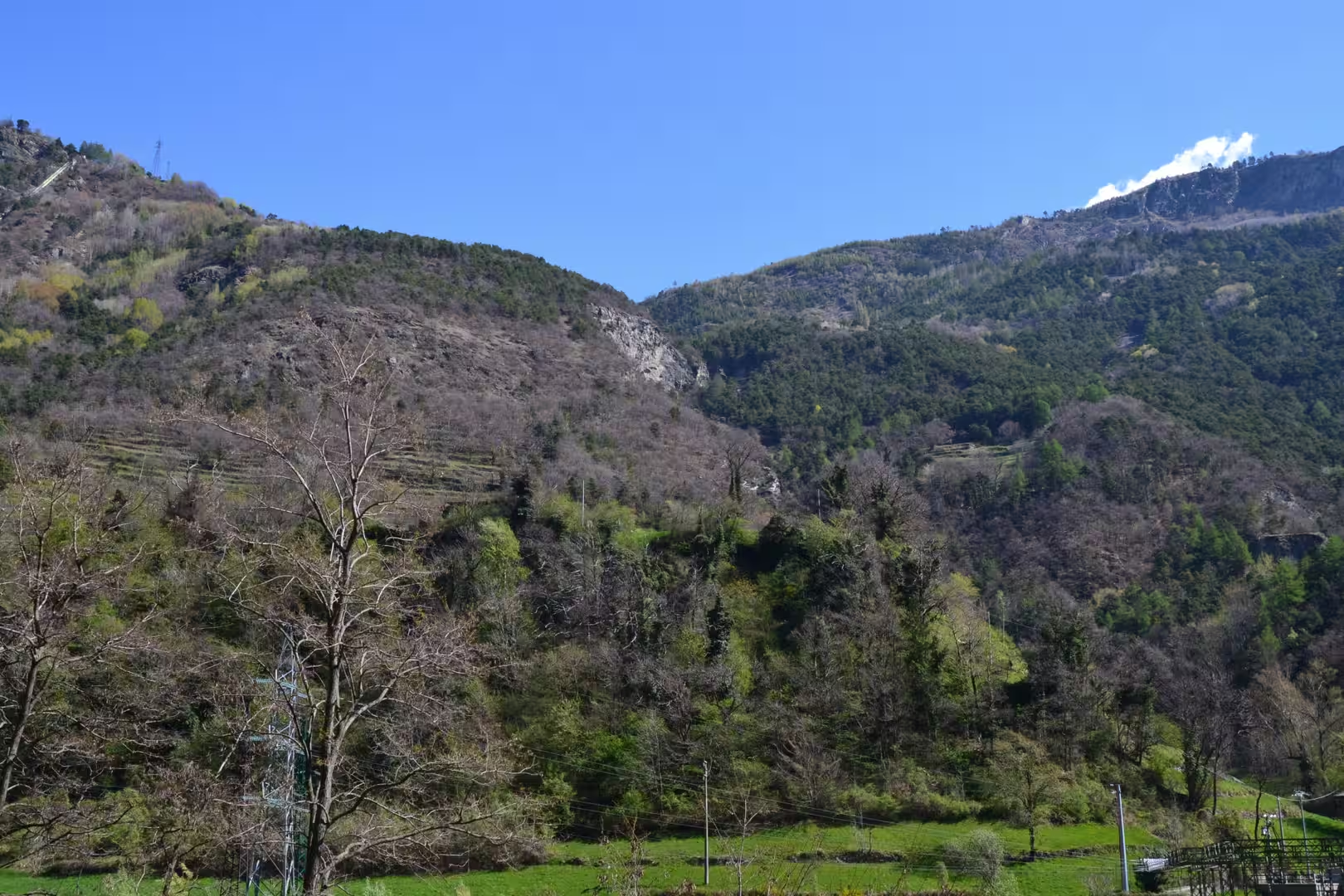
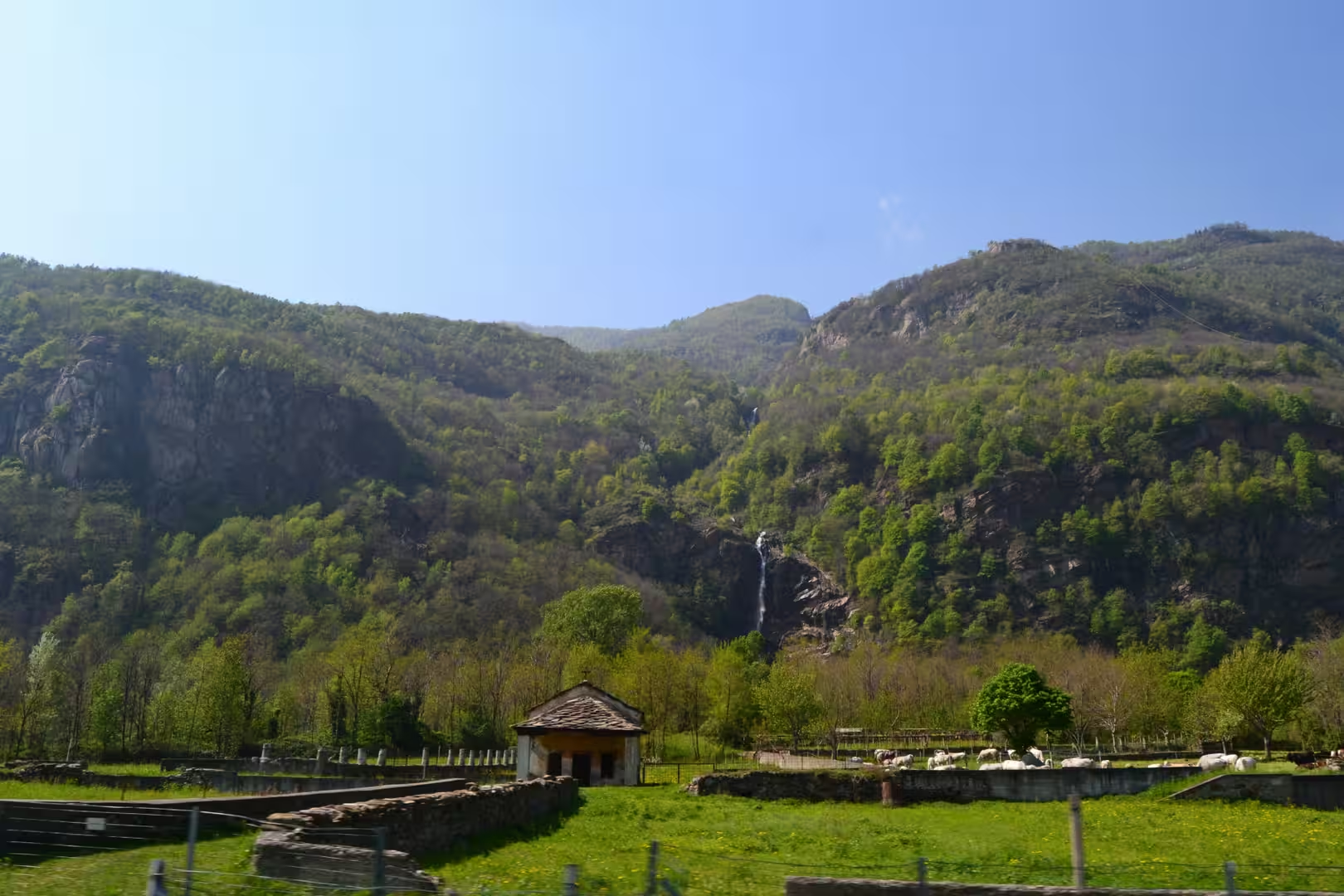
The third day was the day the journey changed its character. The morning was still alpine: the snowcapped peak above the town, the last of the winter in the forest, the chapels and the meadows of the valley. By the evening the car was on the Ligurian coast with the Mediterranean in front of it and the first of the five villages of the Cinque Terre packed onto its cliff above a harbour.
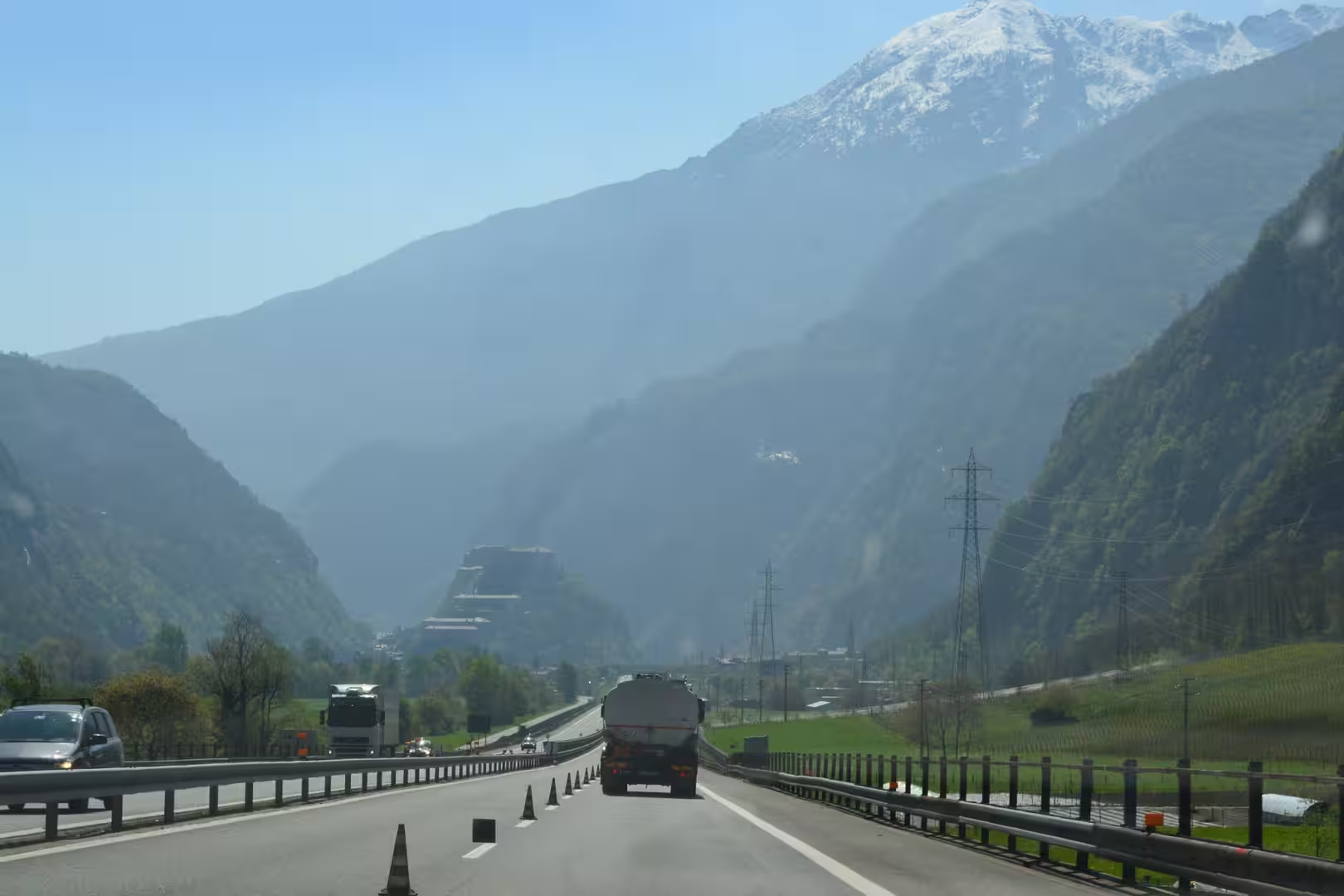
The drive is the point of the day. The road leaves the Aosta Valley and runs south and east, crosses the plain of the Po, and then begins to climb and fall again through the Apennines before it reaches the sea. The motorway through the mountains is a sequence of viaducts and tunnels, with the snowcapped peaks visible for the first hour and the green valleys closing in afterwards, and the transition from the granite of the Alps to the limestone and the pines of the coast happens over a hundred kilometres of driving.
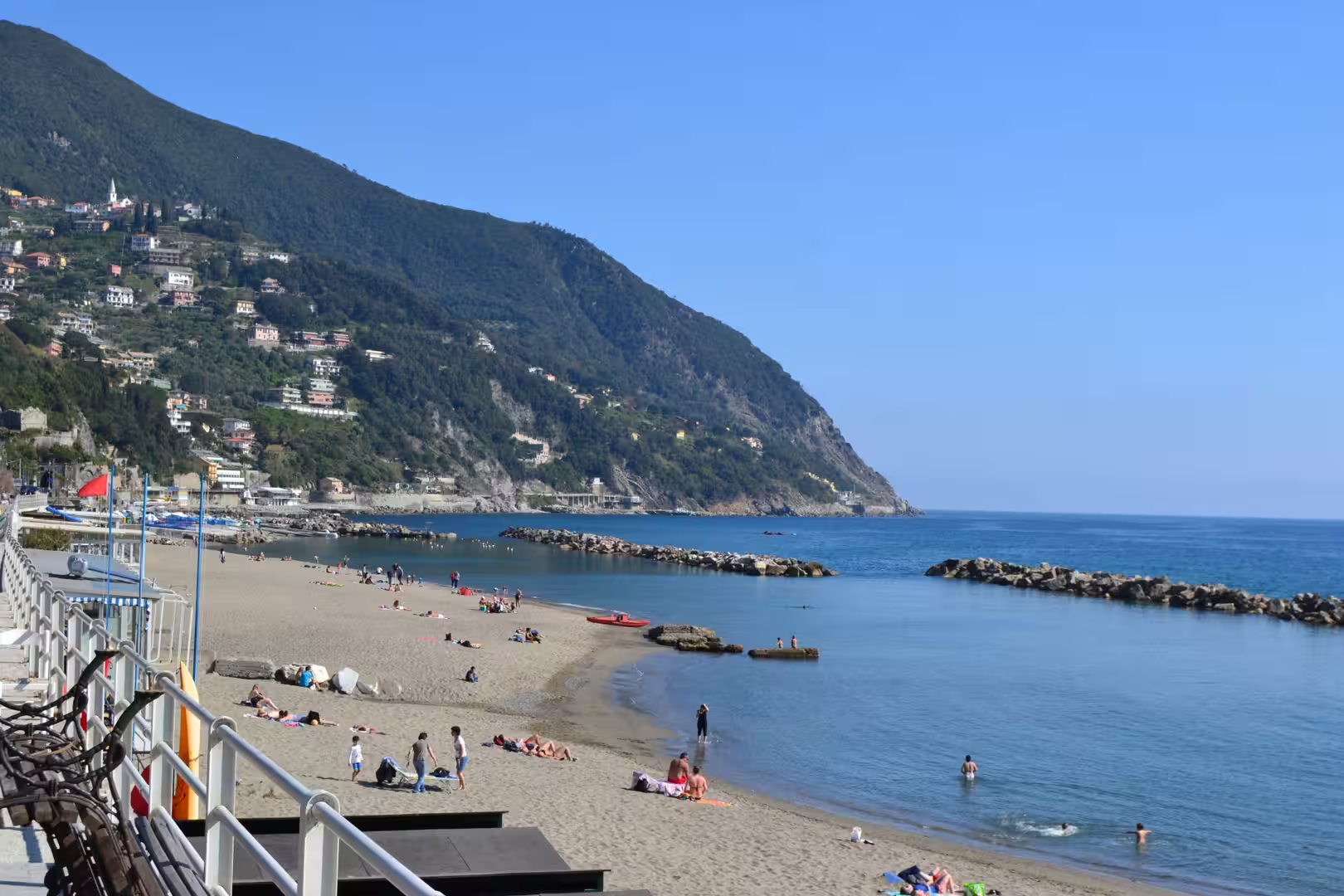
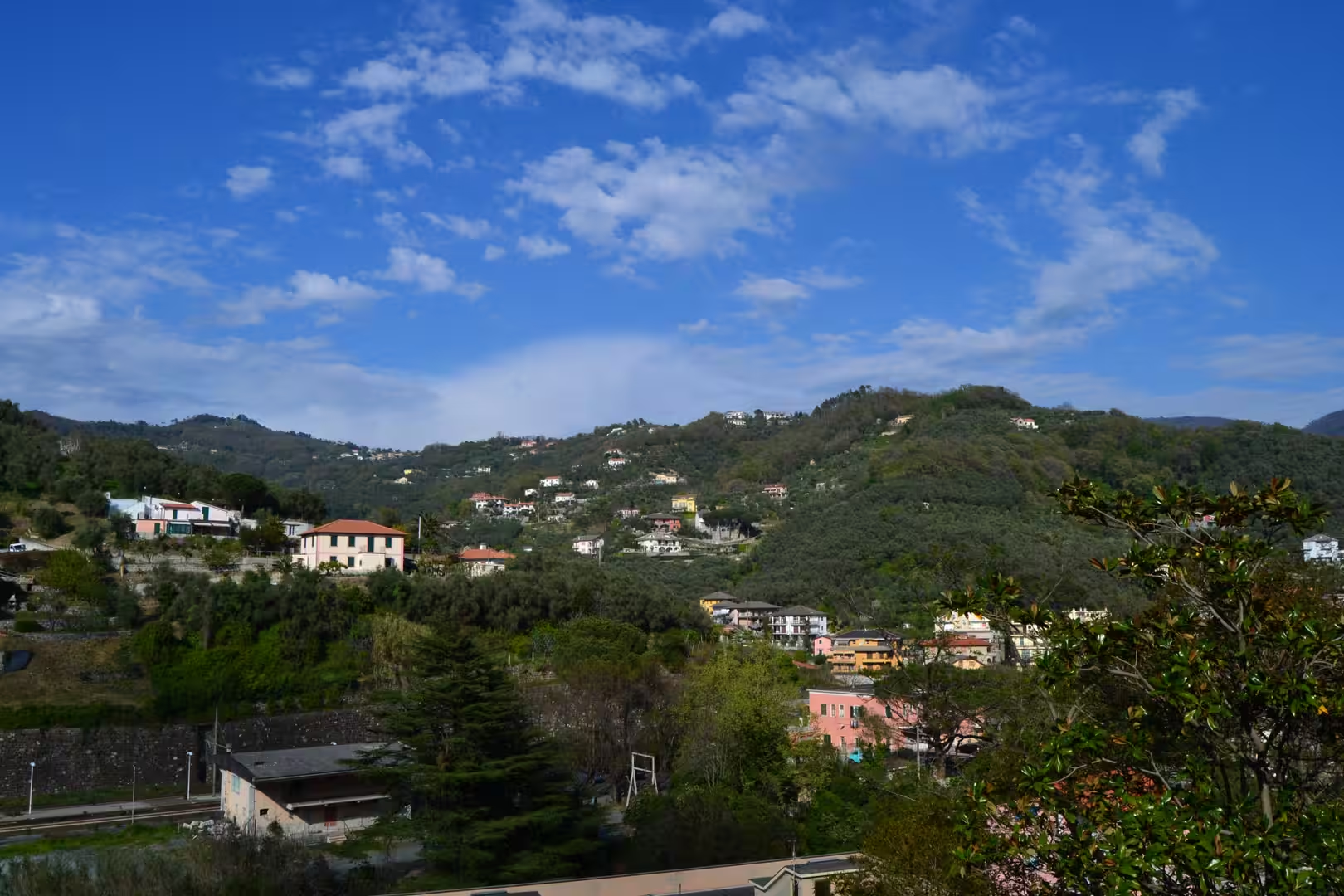
The first sight of the Mediterranean comes at the end of that descent. The coast of Liguria is a narrow strip of villages and terraced slopes between the mountains and the water, and the road along it passes from one to the next in a series of tunnels and bends with the sea below. The villages of the Cinque Terre are the best known of the sequence, and the first of them to appear is the largest, with a beach and a promenade and a harbour full of boats.
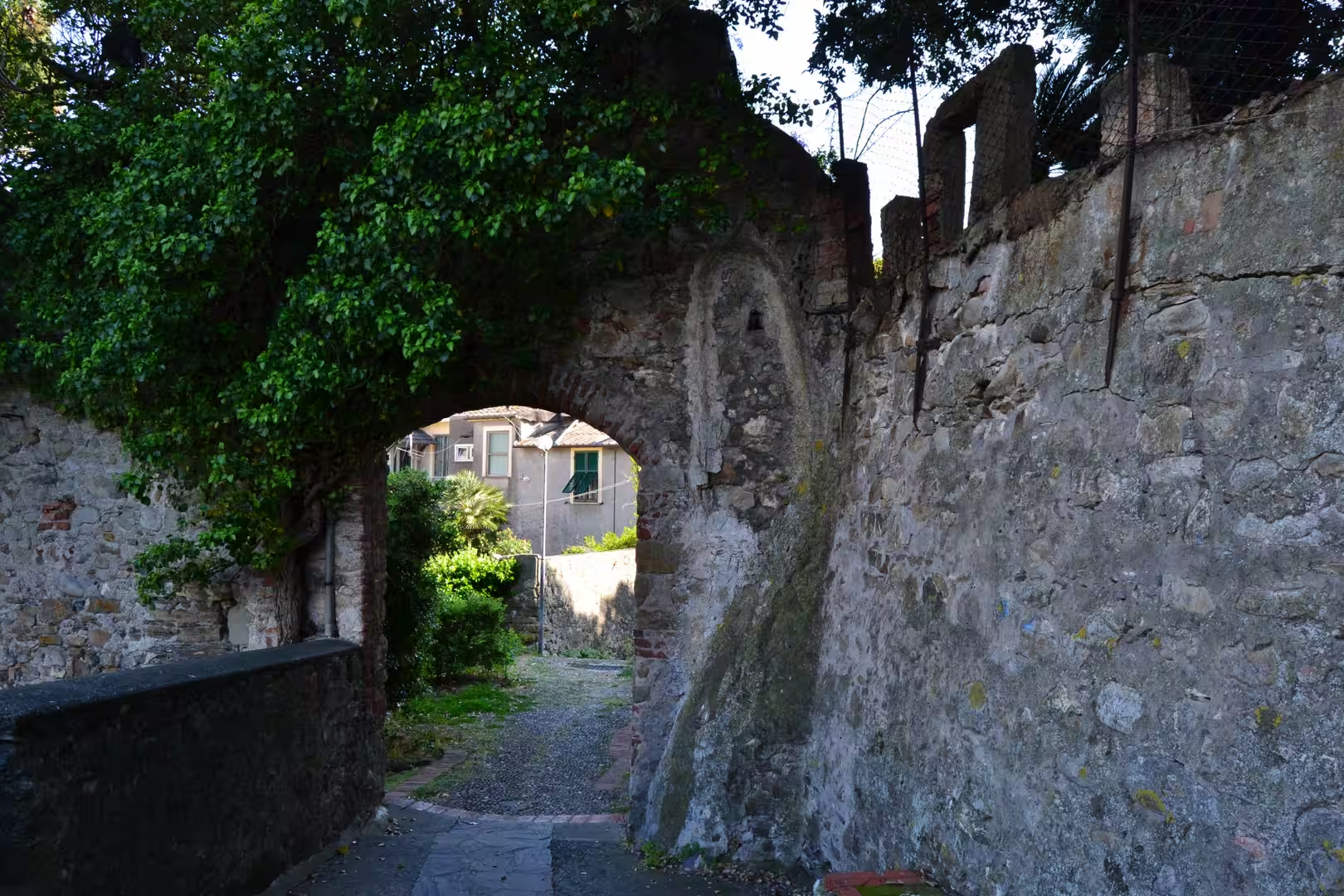
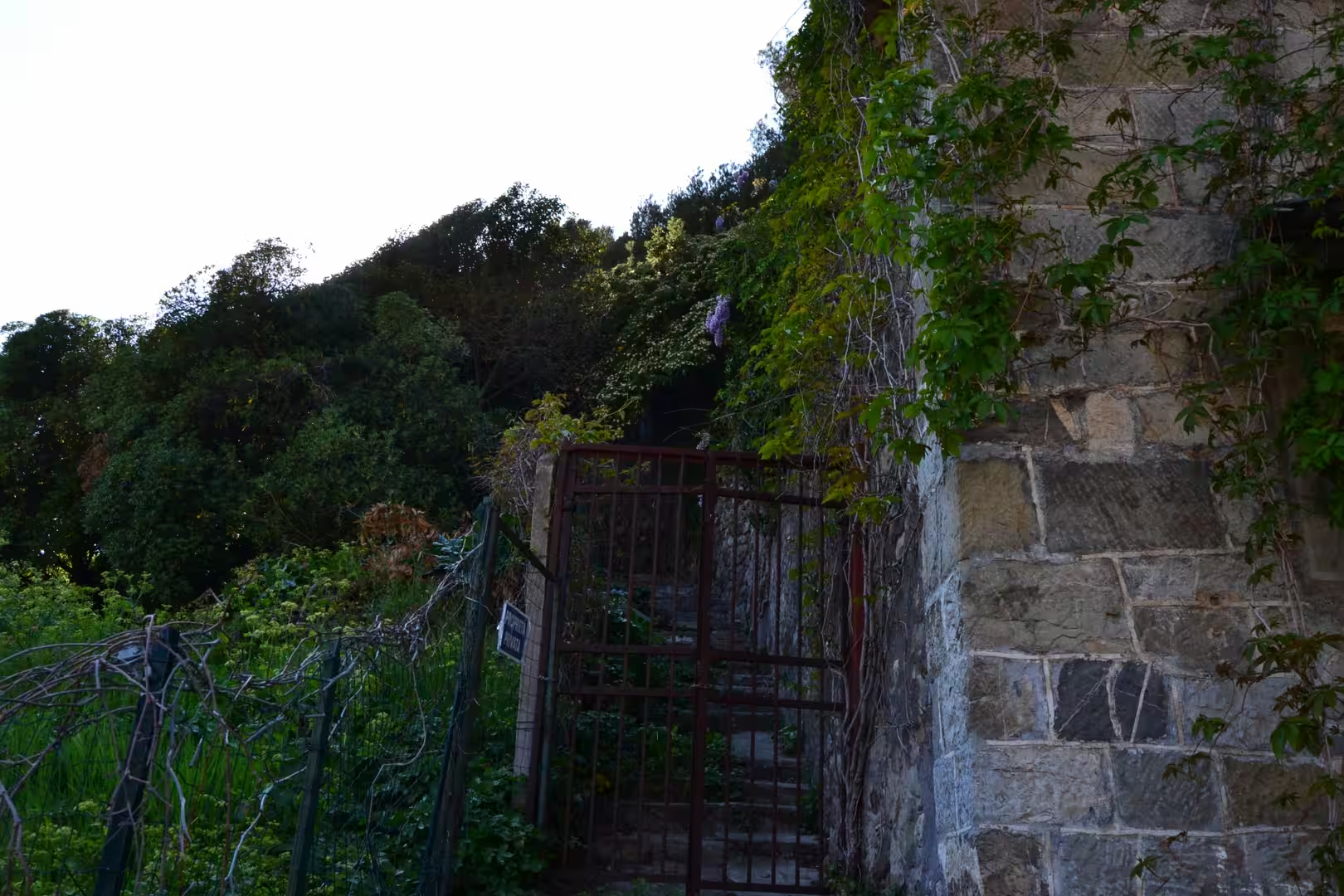
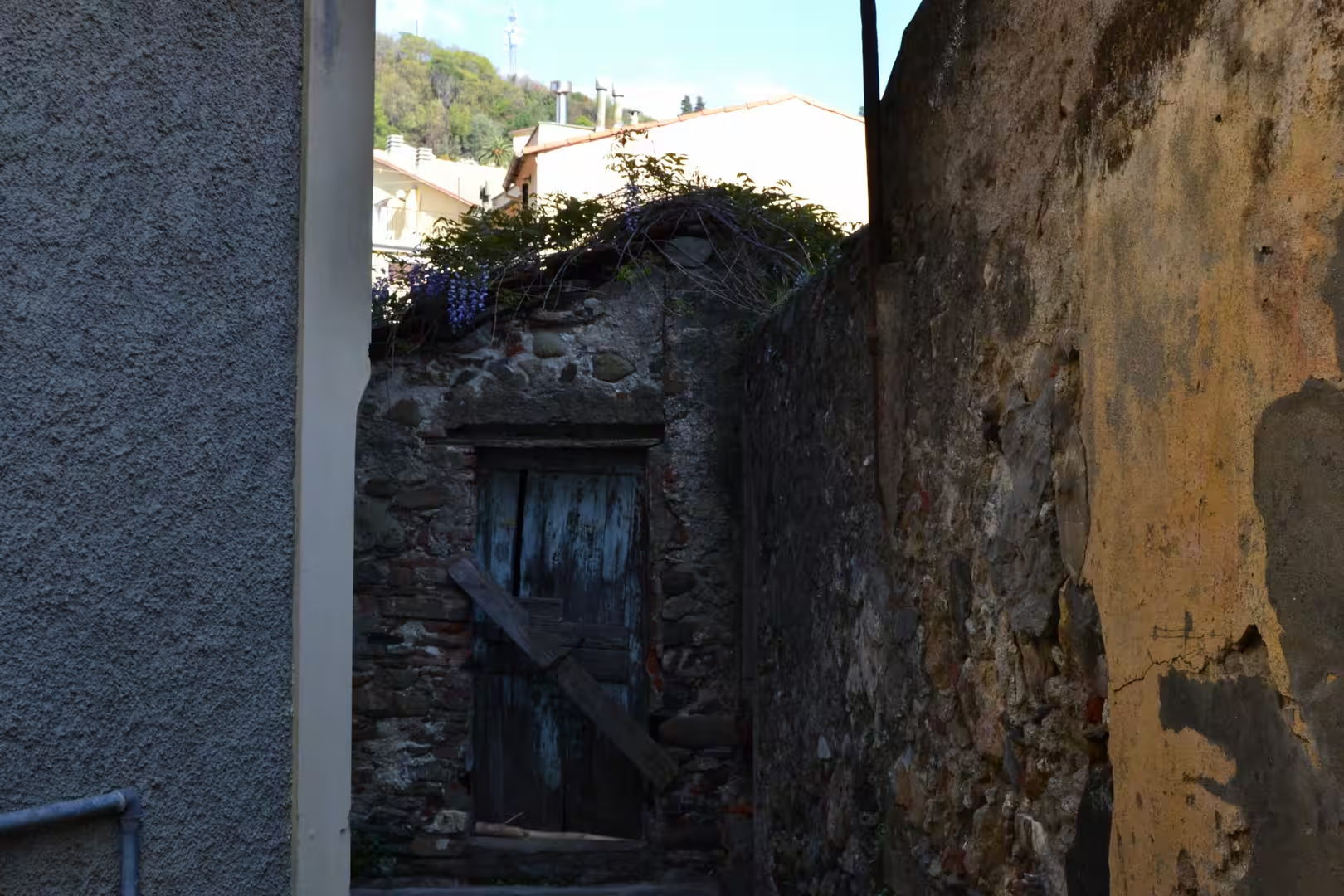
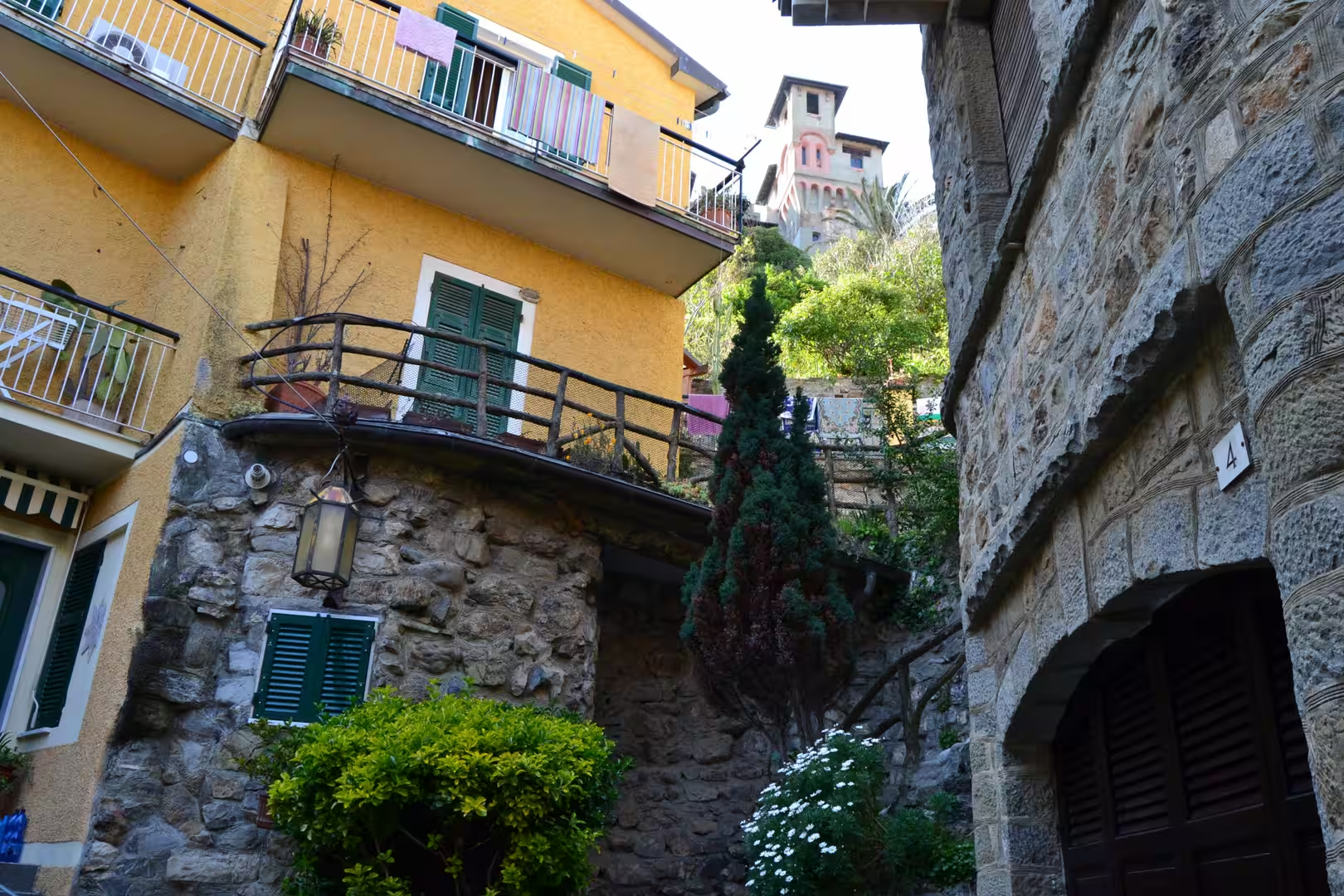
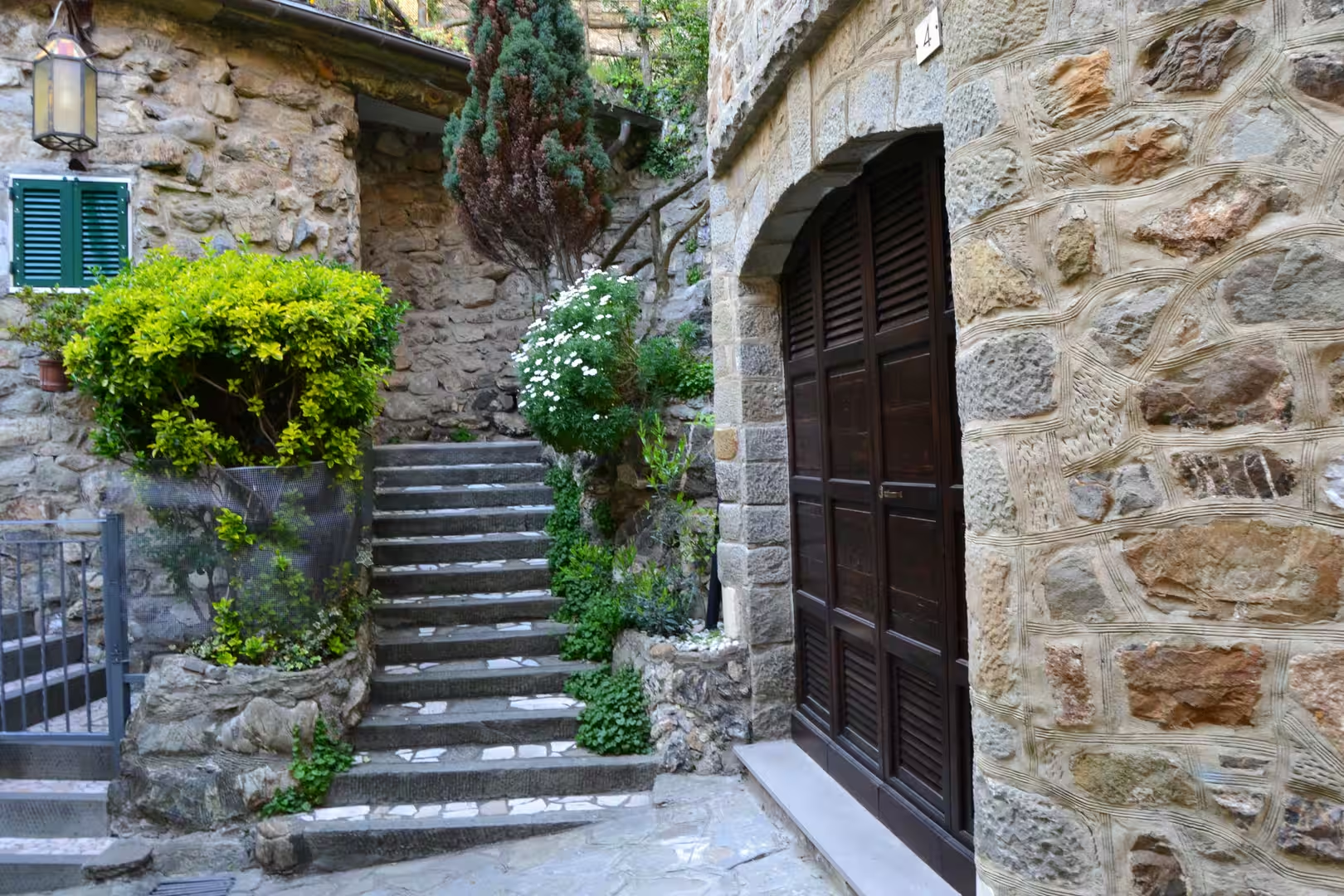
The afternoon was spent on foot in the village. The lanes are narrow, steep and paved with stone, the houses are painted in yellow and ochre and pink, the towers of the church and the castle stand above the roofs, and every view down a side street ends in the sea. The sound of the place at that hour is unremarkable and familiar at the same time: the clatter of a kitchen, the murmur of people in the square, the water on the rocks, and the bell of the church marking the end of the afternoon.
The journey between the two halves of the day is worth describing on its own account. Leaving the Alps in the morning means leaving a landscape of snow and larch and entering, within two hours, one of green fields, poplars and irrigation channels: the plain of the Po, the most productive farmland in Italy. The road crosses it on a straight line past factories and towns, and the Apennines rise on the far side like a wall. The coast beyond them is the last surprise of the day, and it arrives all at once at the exit of a tunnel.
History
The valley that was left behind in the morning and the coast that was reached in the evening have different histories and the same geography. Both are corridors between mountains and water, and both have been shaped by the traffic that passed through them. In the Aosta Valley the traffic went over the passes to France and Switzerland; on the Ligurian coast it went by sea, and the villages that grew on the cliffs lived from the sea: fishing, salt, olive oil, wine and the carrying trade of the Republic of Genoa.
The Cinque Terre were, for centuries, part of that republic. The villages aligned themselves with Genoa in the twelfth and thirteenth centuries, they built towers and forts to defend themselves against pirates and against the Turks in the sixteenth century, and they lived from the wine and the oil of the terraces above them. Their isolation was ended by the railway in the nineteenth century, which connected them to Genoa and La Spezia and, eventually, to the tourists who now arrive by train, by boat and on foot.
Liguria itself has a longer history than the villages. The coast was settled by the Ligurians before the Romans, it was fought over by the great powers of the Mediterranean for centuries, and the port of Genoa remains one of the largest in Italy. The region’s landscape is the product of that long use: the terraces, the olive groves, the pine woods planted for timber and the villages perched where the shore allowed a boat to land.
The Apennines that the road crosses are the spine of Italy, and they share a history with the Alps that the journey began in. Both chains were built by the same collision of Africa and Europe, both are made of the sediments and the ocean floor that the collision piled up, and both continue to move: the Apennines are still rising and the earthquakes that shake central Italy are the evidence. The traveller who crosses the ridge from the Po plain to the Ligurian coast crosses the same structure twice in one day in two different forms.
The railway along the coast is worth a paragraph of its own, because it made the modern Liguria. The line from Genoa to La Spezia was built in the second half of the nineteenth century, it runs through tunnels and along the cliffs from one village to the next, and it ended the isolation of communities that had previously been reachable only by sea or by mule track. The stations are small, the trip is short and the view from the window is one of the best in Europe.
Geology
The rocks of the two ends of the journey are different and their difference is instructive. The Alps are built of the deep crust and the sediments of an ocean that closed, and the granite of Mont Blanc and the schists of the internal zones are the material that was carried up from the roots of the chain. The Apennines and the Ligurian coast are built of a different stack of sheets, the remains of a younger ocean basin that was pushed over the edge of the continent, and the ophiolites that outcrop along the coast are the fragments of its floor.
The Ligurian coast itself is a mountain range that falls into the sea. There is no coastal plain to speak of: the slopes of the Apennines come down to the water, the valleys between them end in small bays, and the villages are built wherever there is a ledge of rock or a beach of pebbles. The sea has been cutting into the same slopes for as long as they have existed, and the cliffs, the headlands and the small coves are the result of that work.
The terraces are the human geology of the coast. On slopes too steep to plough, generations of farmers built walls of dry stone to hold the soil and planted vines and olives on the terraces behind them, and the system that resulted covers the hillsides from the waterline to the ridge. The walls have to be maintained: when they are neglected the terraces collapse in the first heavy rain, the slope slides, and the material ends up on the road or in the harbour below.
The weather of the Ligurian coast is a consequence of the same geography. The mountains intercept the moist air from the Mediterranean, the rain that falls is heavy and concentrated, and the storms of the autumn can drop in a day the water that a temperate country sees in a month. The villages have learned to live with the torrents and the landslips, and the channels, walls and bridges that carry the water through them are as characteristic of the place as the houses.
The marine side of the coast is part of the same story. The Ligurian Sea is deep close to the shore, the water is clear because there are few rivers to carry sediment into it, and the rocky bottom that drops away from the cliffs supports the sponges, corals and fish of a temperate Mediterranean community. The protected areas that have been established along the coast are the reason the fish are still there, and the villages that live from the visitors have an interest in keeping them.
Things to See
The first of the five villages is the best one to arrive in, because it is the only one that can be reached by car. Monterosso al Mare is divided into an old town and a newer one, it has the only extensive sand beach of the group, and its seafront promenade is the place where the visitors spend the first evening before they discover that the other four villages can only be reached on foot, by train or by boat.
The railway that connects the villages is one of the oddities of the place: the line runs through the hills above the sea in a sequence of tunnels, the stations are small, and the trip between the villages takes minutes. The trains are frequent, the tickets are sold at the stations, and the combination of the train, the boat and the footpath is the way the whole coast is organised. A car is a liability in the Cinque Terre, and the locals treat it as one.
The footpaths are the reason most people come, and they can be joined at any village. The classic route runs from Monterosso to Riomaggiore along the coast, in four sections which are graded by difficulty and which are sometimes closed after landslips, and the sections can be walked in either direction. The first and lowest is the easiest, the middle ones are steep, and the last is the famous path along the cliffs between Manarola and Riomaggiore.
The practicalities of the first evening are simple. The hotels are in the villages and the prices rise with the view, the restaurants serve the pasta of the region with pesto and the white wine of the terraces, and the local speciality is the sweet wine made from dried grapes that the villages have produced for centuries. The sunset over the sea is the one thing that every visitor stops for, and the place where it is best seen is the rocks at the end of the harbour wall.
The first evening in the Cinque Terre also disposes of a misconception. The villages are not a resort in the usual sense: they are inhabited places with schools, bakeries, fishing boats and an economy built first on wine and now on visitors, and the two are tangled together in a way that makes them interesting rather than lost. The best introduction is to walk the lanes after dinner, when the day trip boats have gone, the shops are shut and the squares fill with the people who live there.
A note on practicalities for the first day on this coast is worth having. The villages are on a railway line with frequent trains, the ferries run in the season, and the paths are the third option; the combination is what makes a stay here easy without a car. The hotels fill from spring onwards, the restaurants do not take bookings at the busiest times, and the local wine is sold by the glass in the bars of every village. The tourist information office in each village publishes the state of the paths, which changes after every storm.
References
- Wikipedia contributors (2026). Aosta Valley. en.wikipedia.org/wiki/Aosta%20Valley
- Wikipedia contributors (2026). Aosta. en.wikipedia.org/wiki/Aosta
- Wikipedia contributors (2026). Courmayeur. en.wikipedia.org/wiki/Courmayeur
- Wikipedia contributors (2026). Mont Blanc. en.wikipedia.org/wiki/Mont%20Blanc
- Wikipedia contributors (2026). Liguria. en.wikipedia.org/wiki/Liguria
- Wikipedia contributors (2026). Genoa. en.wikipedia.org/wiki/Genoa
- Wikipedia contributors (2026). Cinque Terre. en.wikipedia.org/wiki/Cinque%20Terre
- Wikipedia contributors (2026). La Spezia. en.wikipedia.org/wiki/La%20Spezia
- Wikipedia contributors (2026). Ligurian Sea. en.wikipedia.org/wiki/Ligurian%20Sea
- Wikipedia contributors (2026). Mediterranean Sea. en.wikipedia.org/wiki/Mediterranean%20Sea
- Wikipedia contributors (2026). Alps. en.wikipedia.org/wiki/Alps
- Wikipedia contributors (2026). Glacier. en.wikipedia.org/wiki/Glacier
- Wikipedia contributors (2026). Portofino. en.wikipedia.org/wiki/Portofino
- Brandolini P. (2017) The Outstanding Terraced Landscape of the Cinque Terre Coastal Slopes (Eastern Liguria). World Geomorphological Landscapes. 235-244. doi.org/10.1007/978-3-319-26194-2_20
- Guillon H., Mugnier J., Buoncristiani J. (2018) Proglacial sediment dynamics from daily to seasonal scales in a glaciated Alpine catchment (Bossons glacier, Mont Blanc massif, France). Earth Surface Processes and Landforms. 43. 1478-1495. doi.org/10.1002/esp.4333
- Schaltegger U., Gebauer D., von Quadt A. (2002) The mafic-ultramafic rock association of Loderio-Biasca (lower Pennine nappes, Ticino, Switzerland): Cambrian oceanic magmatism and its bearing on early Paleozoic paleogeography. Chemical Geology. 186. 265-279. doi.org/10.1016/s0009-2541(02)00005-0