Day 7 - Namib Desert / Duwisib Castle
2 June 2019
Journal Notes
General
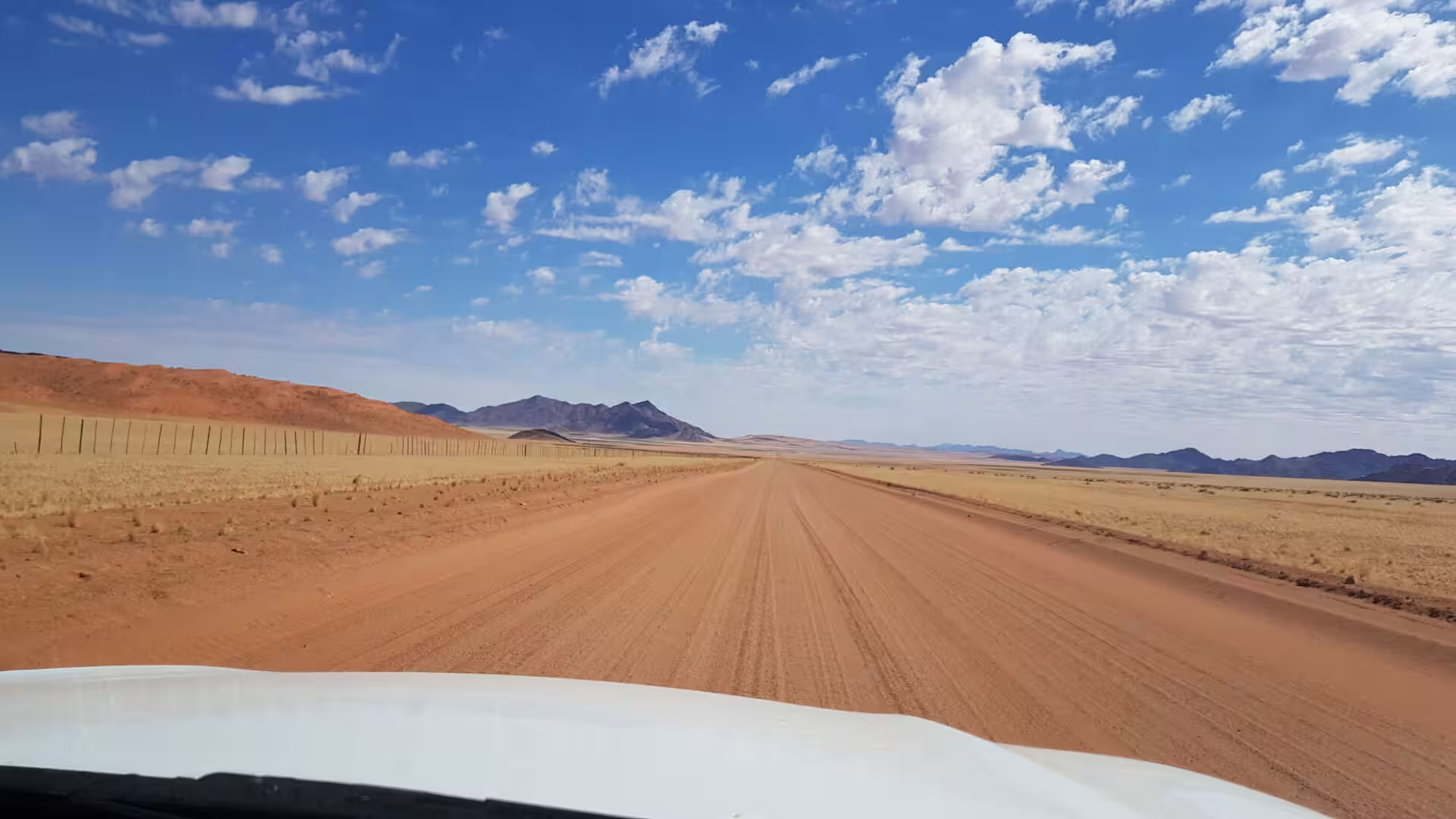
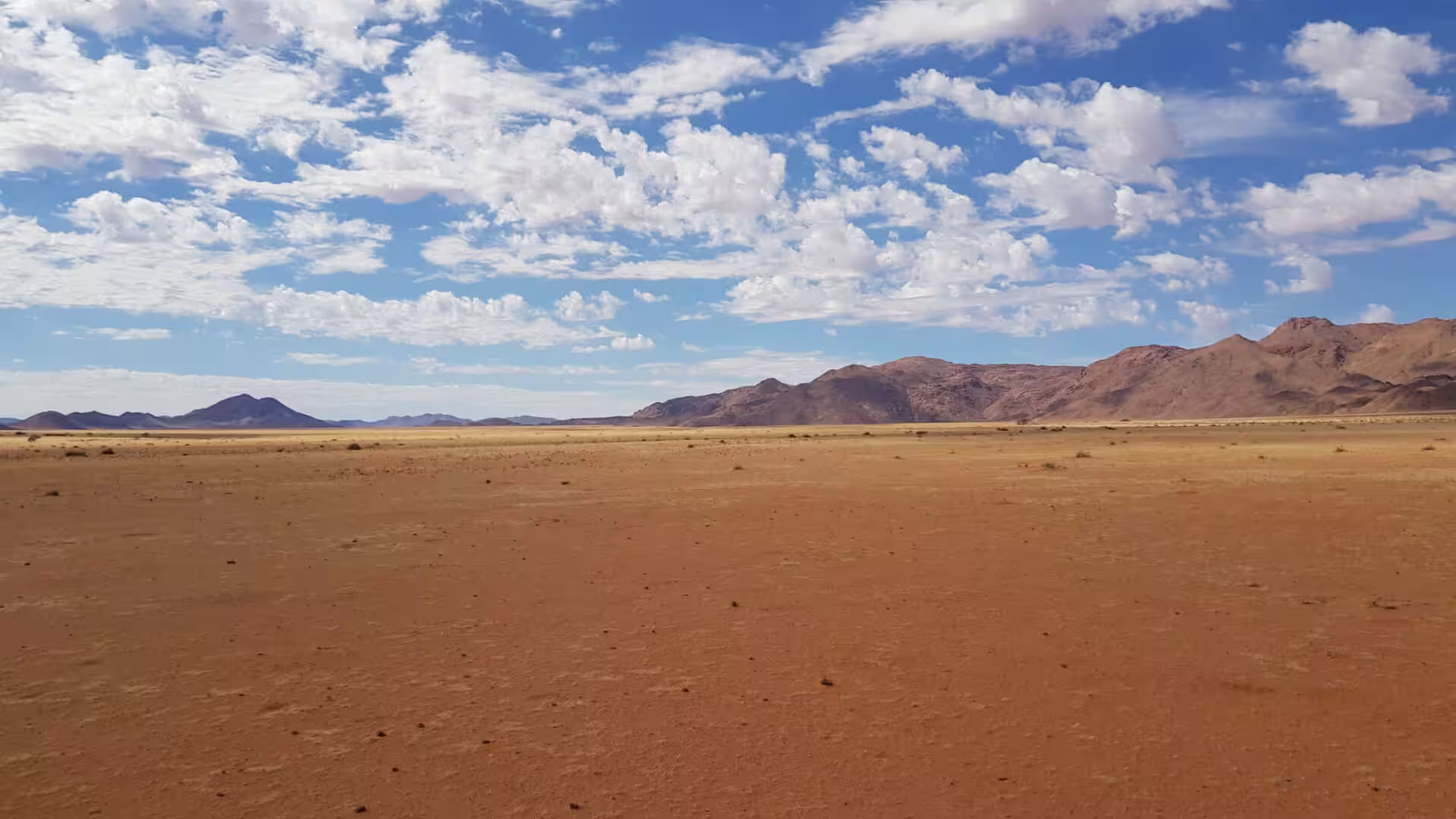
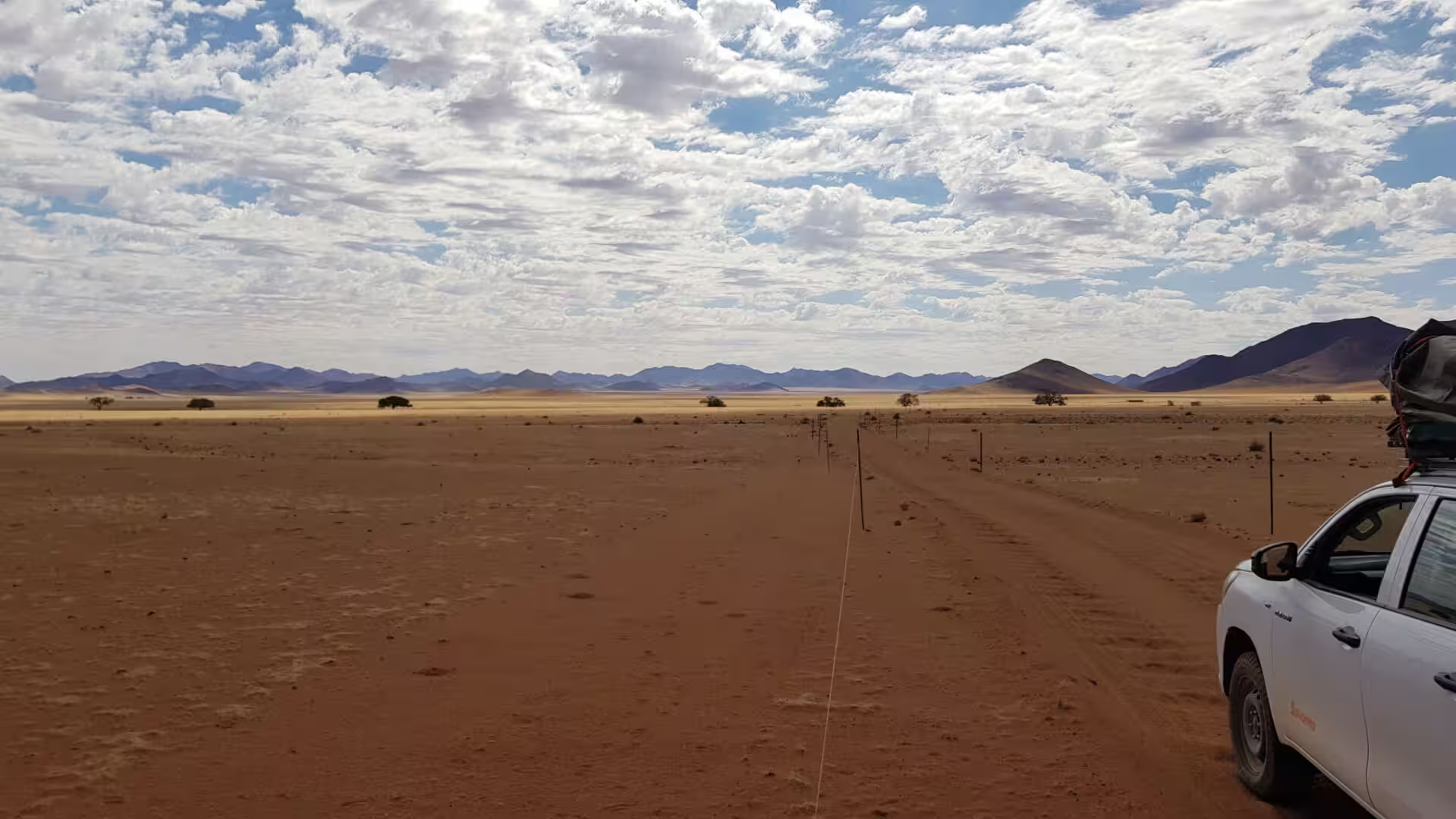
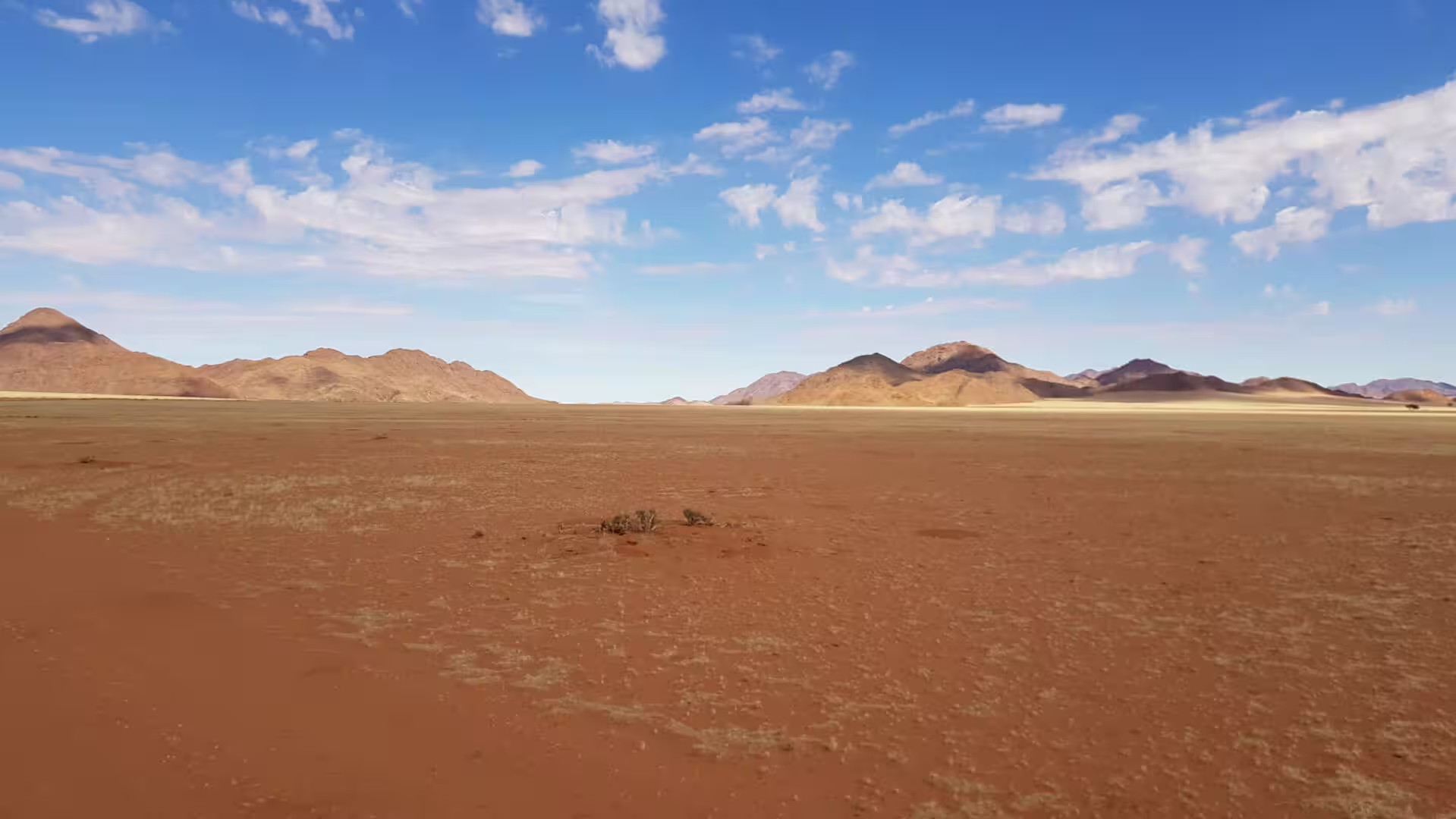
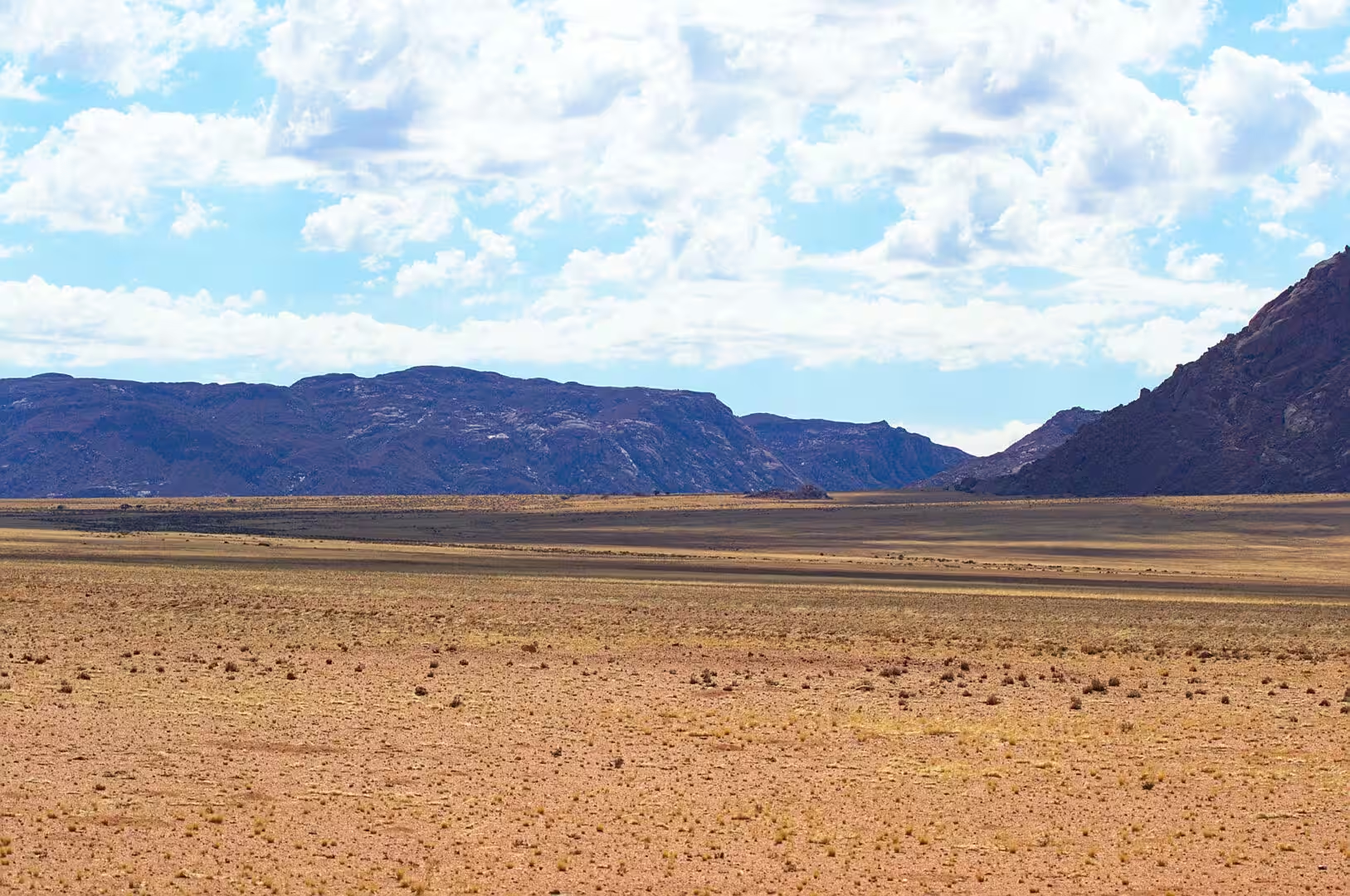
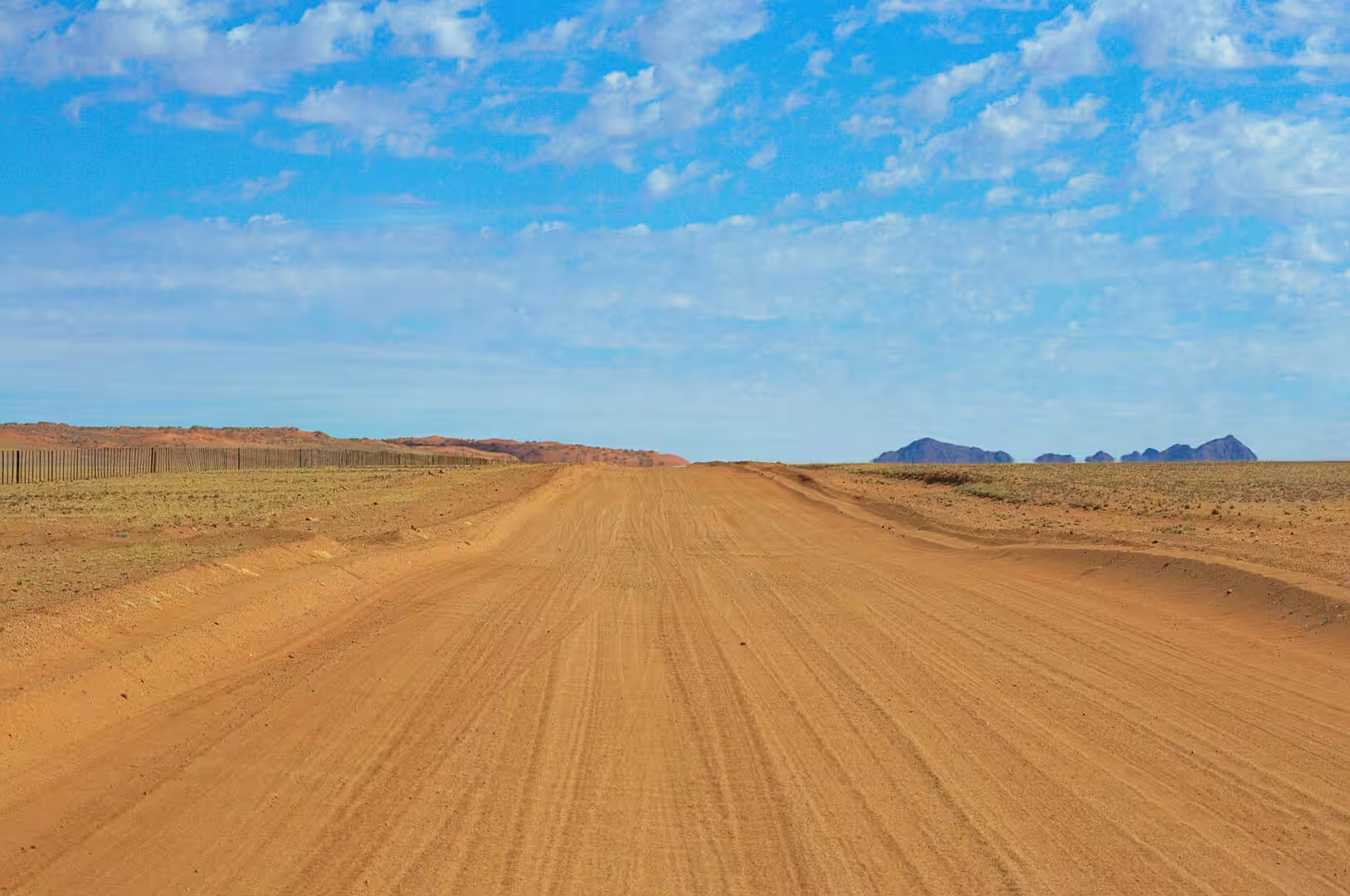
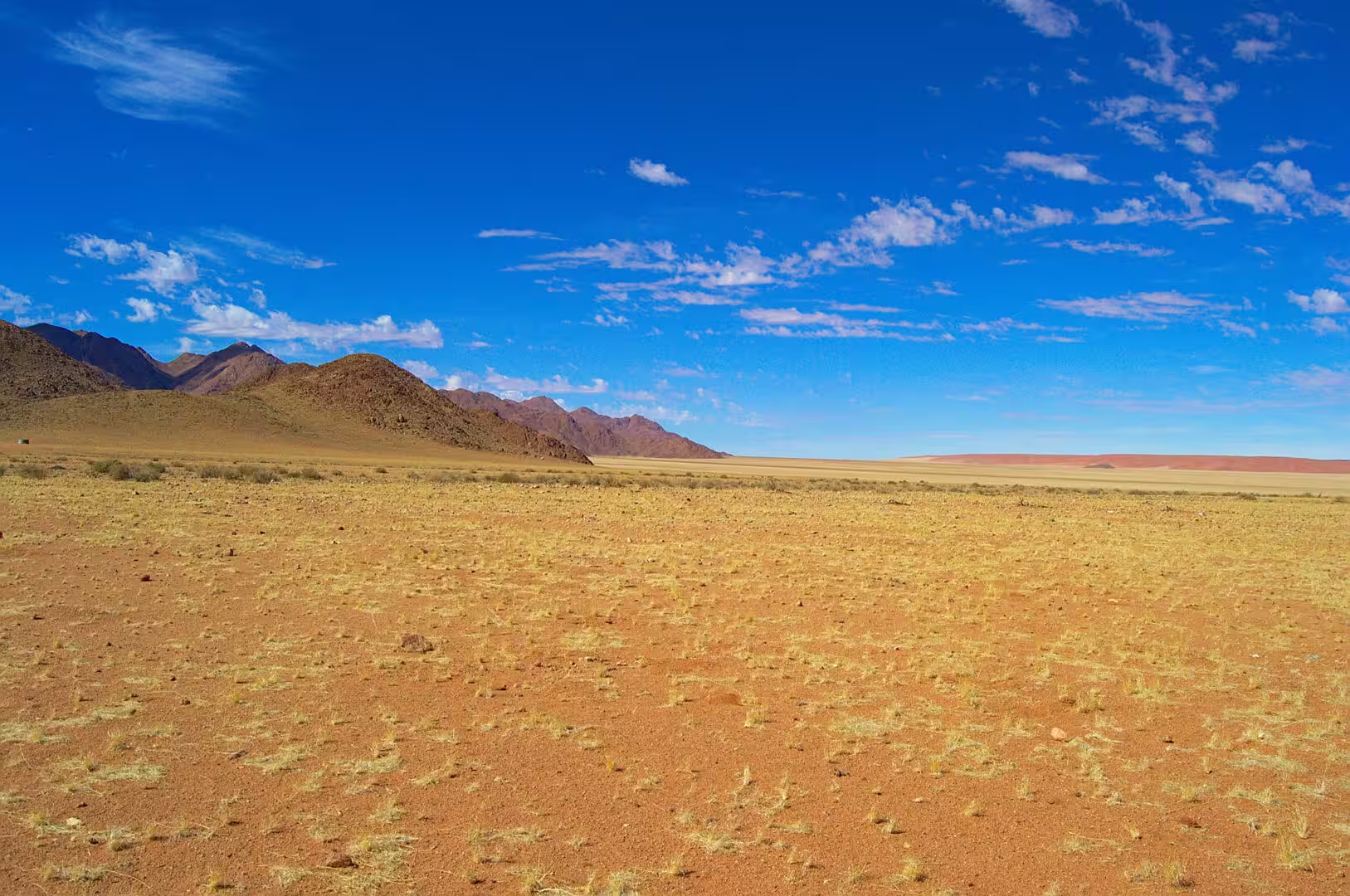
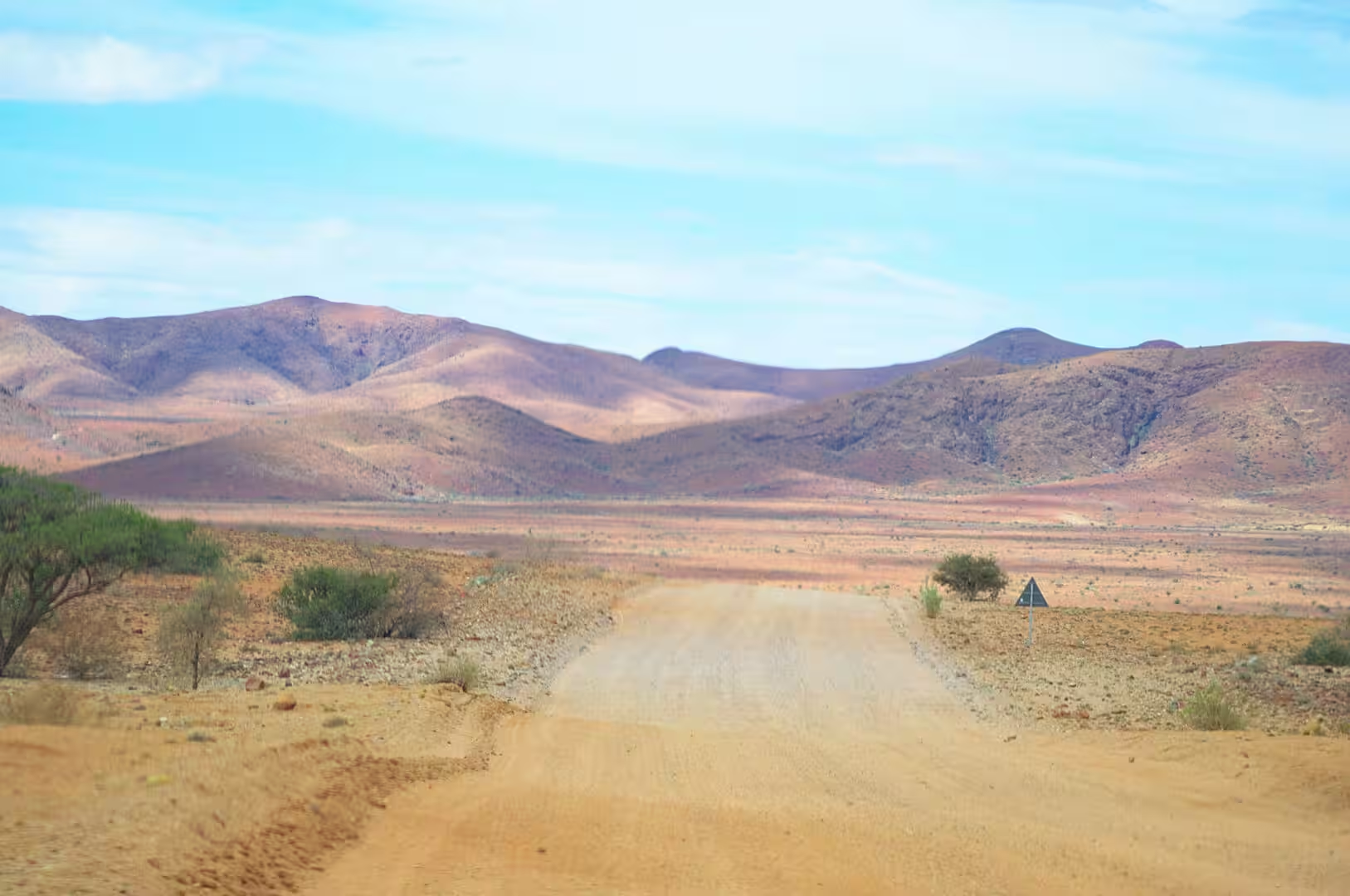
The seventh day crossed the escarpment into the Namib proper. The road from the lodge climbs through the hills and then drops into a country that is different in every way from the one before it: red plains without a single tree, ranges of dark mountains on the horizon, a blue of an intensity that the eye cannot record, and a gravel road that runs straight for twenty kilometres at a time towards nothing at all.
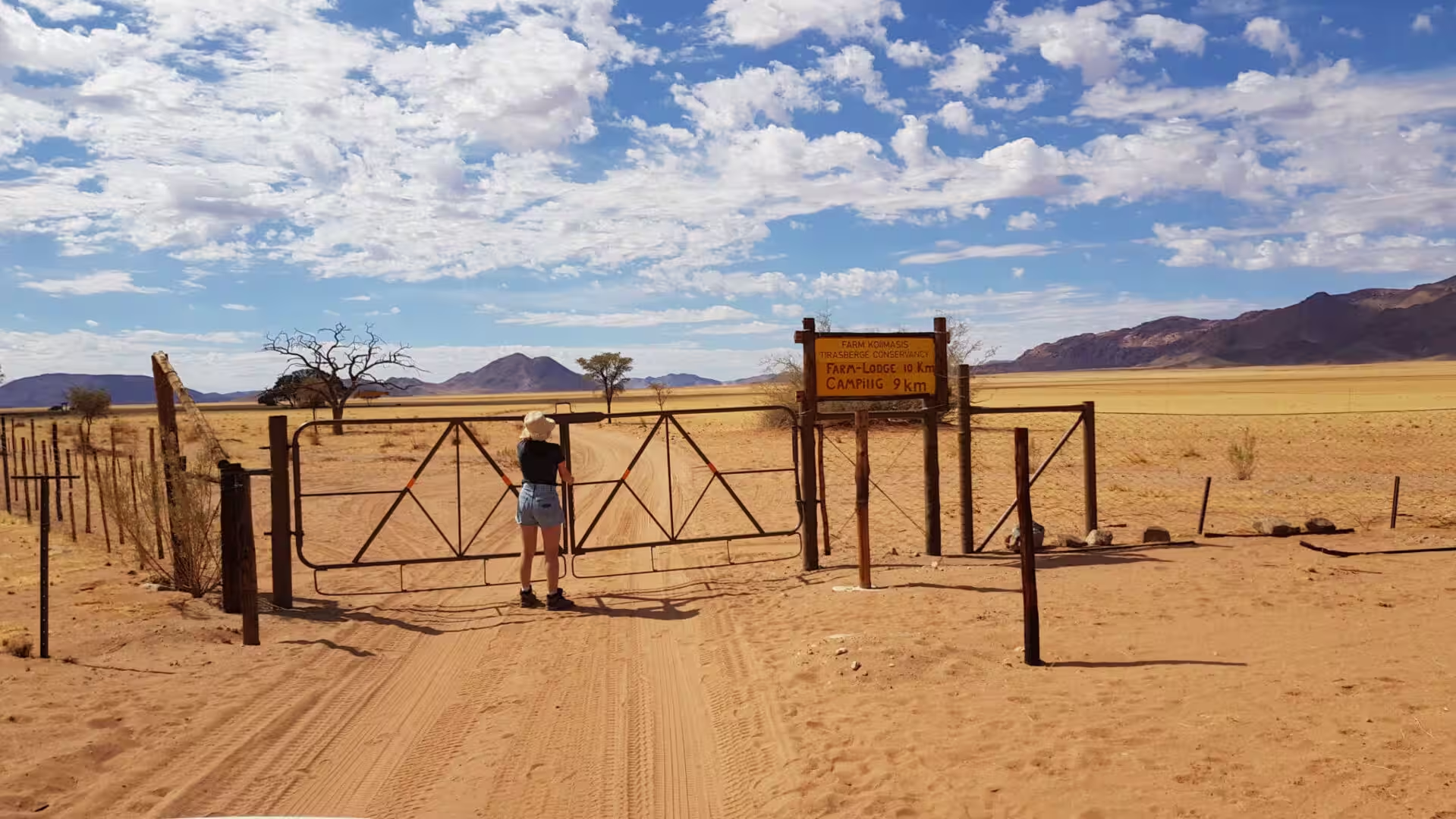
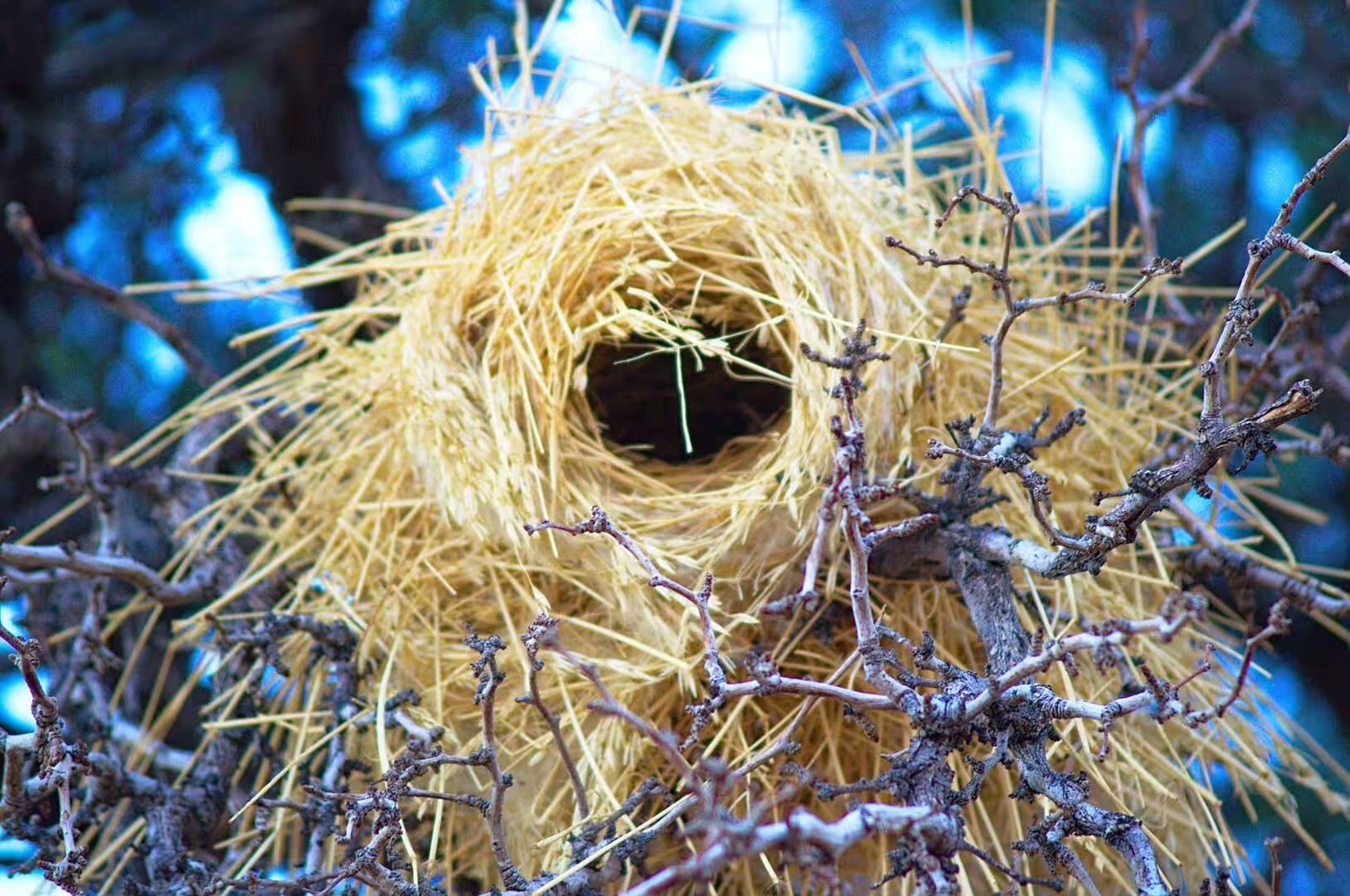
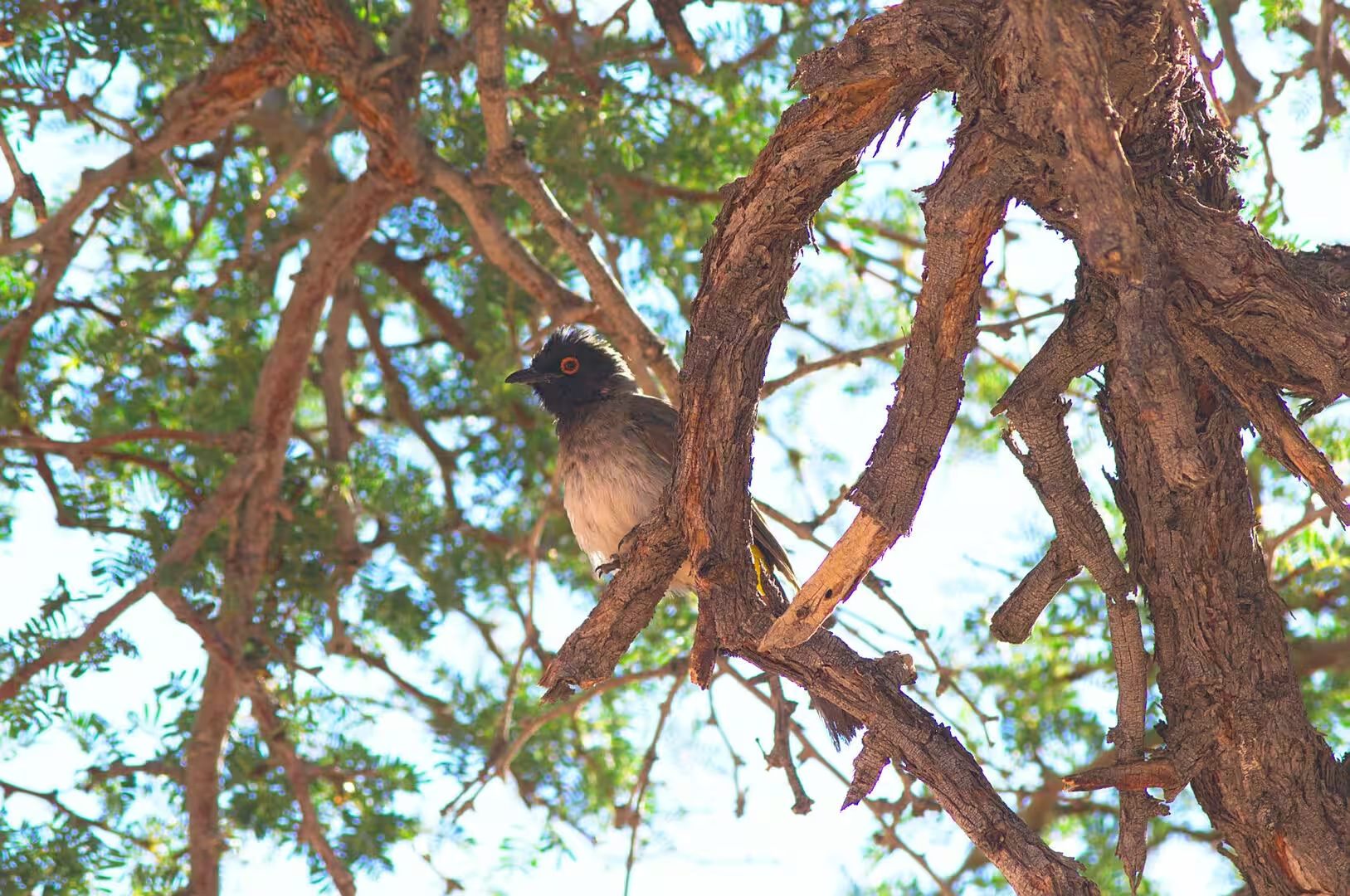
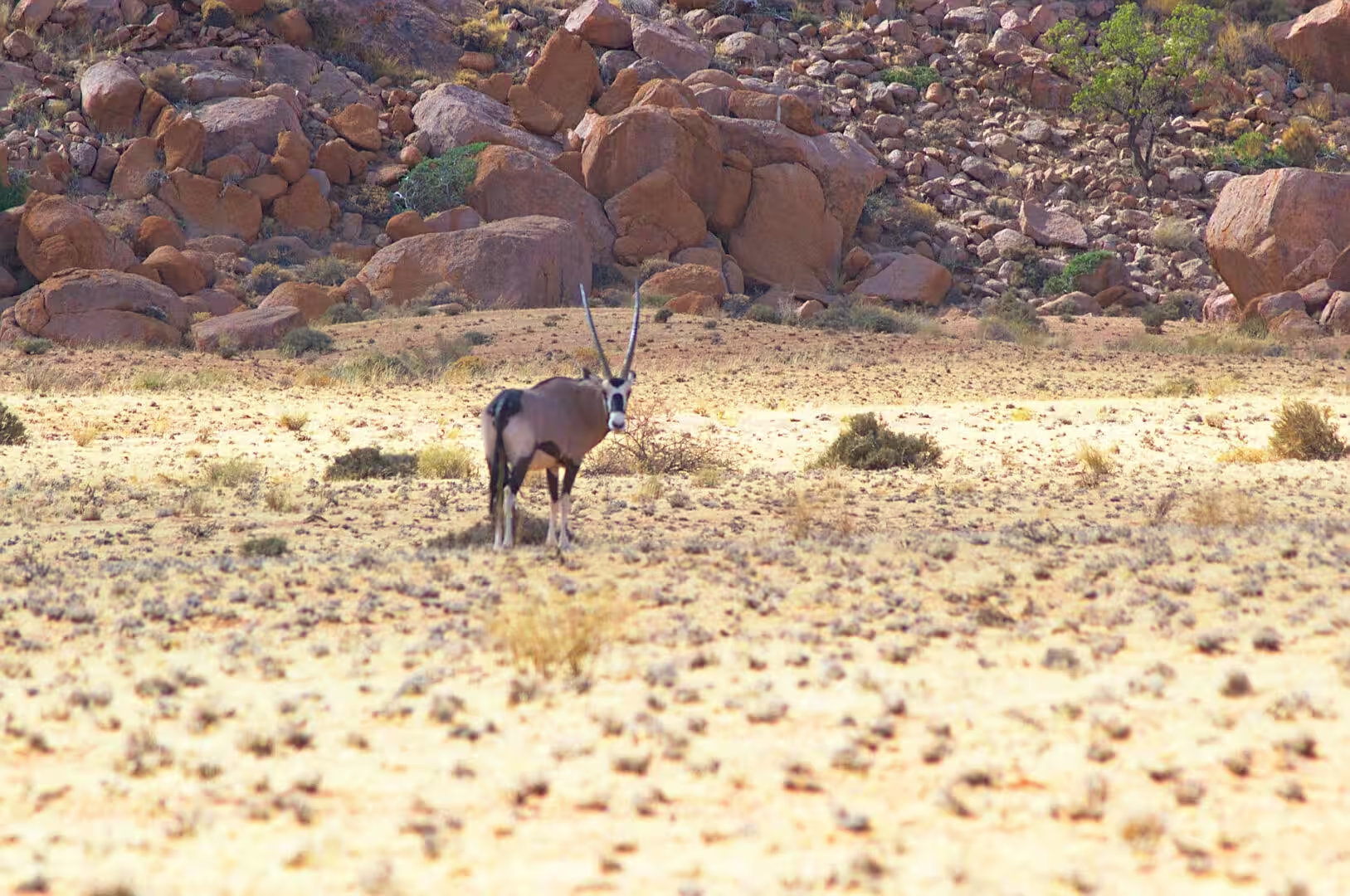
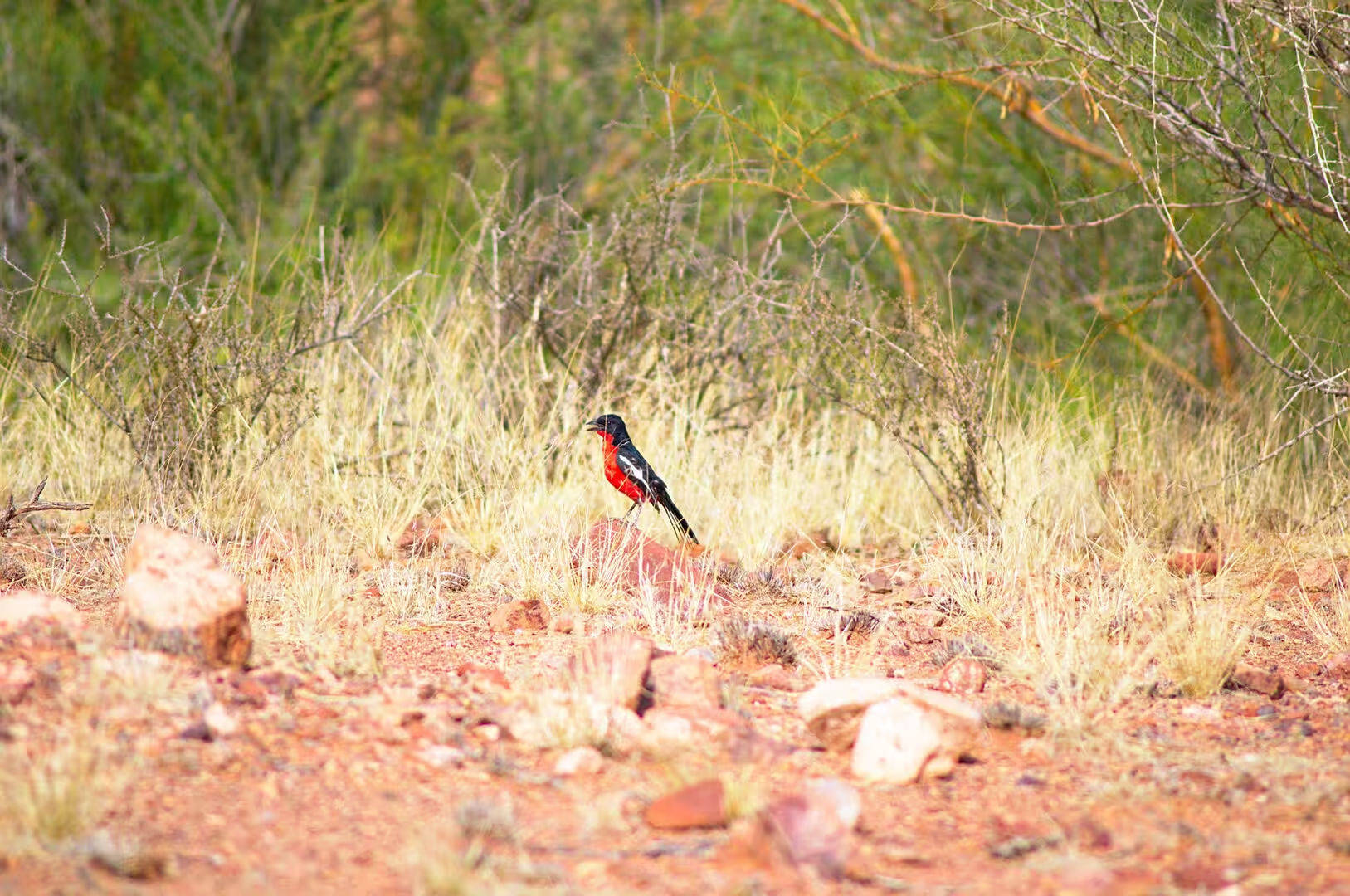
The day was spent on that road. The vehicle, the wire gates of the farms, the signs that name the lodges and the reserves, and the game that appears at the side of the track are the whole content of the landscape: a gemsbok standing alone in front of a pile of red-brown boulders, a pair of ostriches on the skyline, a small bird with crimson and black plumage on a rock, and the nests of the weavers in the camelthorn trees along the dry watercourses.
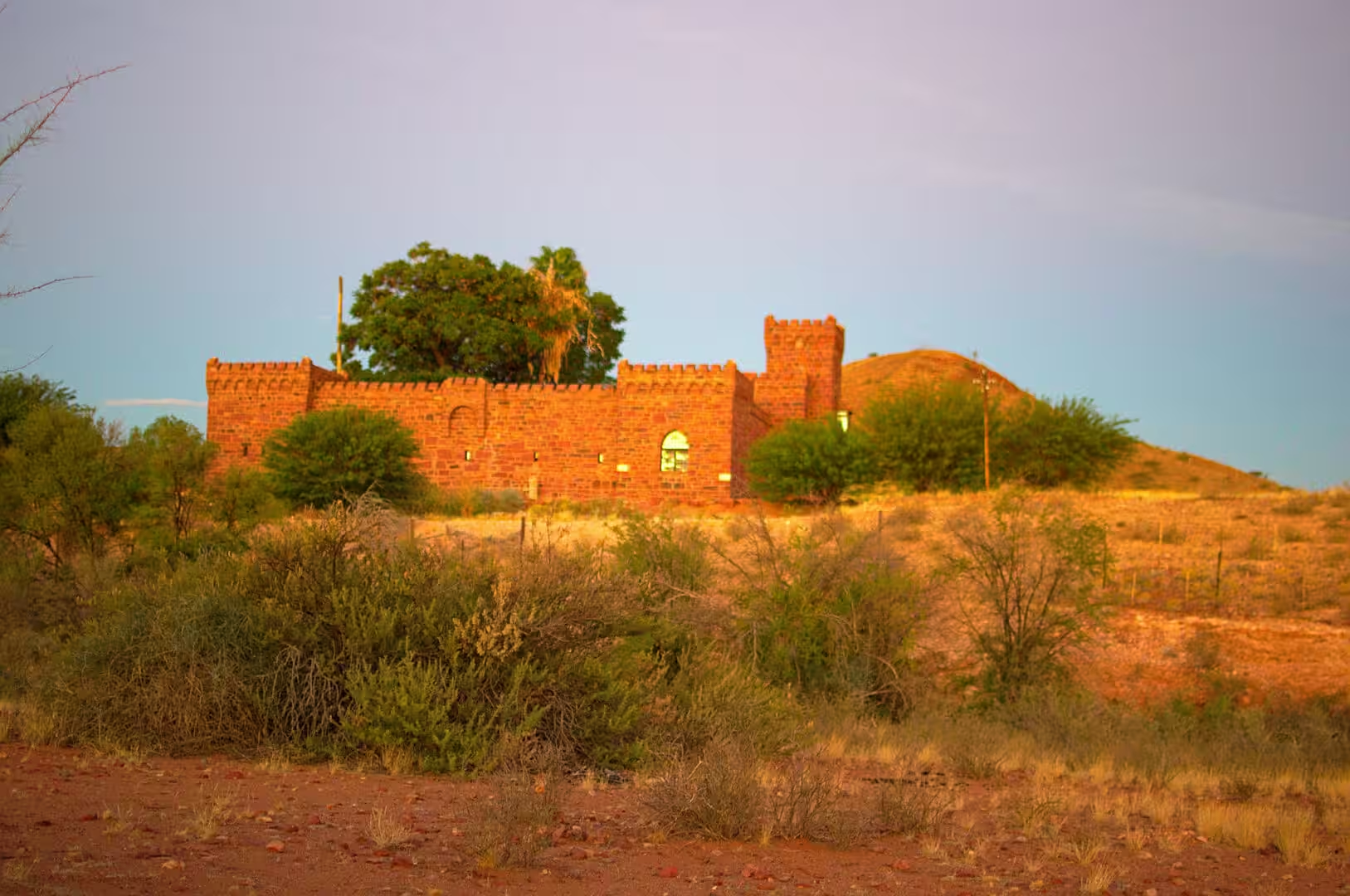
The destination was the castle. It appears as a surprise in the middle of the day: a sandstone building with towers and battlements standing on a ridge above the plain, visible for kilometres before the road reaches it, completely alone in a country that has nothing else like it. The approach through the gate and up the track is part of the experience, and the building itself is open to visitors.
The evening was at another farm camp, this time on the edge of the NamibRand. The sun went down behind a line of dunes and dark mountains, the fire was lit, and the day ended with the sky doing the display that makes the camps of this country worth the drive: orange, then red, then a black sky with the Milky Way standing over it, and the silence of a landscape with no towns in it for a hundred kilometres.
History
The castle of the day is the most personal monument of the German colonial period in Namibia. Duwisib was built in 1909 by Hansheinrich von Wolf, a Saxon artillery officer who had served in the colonial army in the war against the Nama, had returned to Germany, and had married Jayta Humphreys, the stepdaughter of the American consul in Dresden. The couple decided to settle in the colony, bought a farm of enormous size, and commissioned a building that would not have been out of place on the Rhine.
The story of the castle is the story of the colonial dream at its most extravagant. The sandstone was quarried and carried for kilometres, the building was fitted out with the furniture and the fittings of a European house, and the estate around it was stocked with horses and cattle on land that had belonged to the Nama and was never suited to the farming they attempted. Von Wolf was killed at the front in France in 1916, his widow left the country, and the castle stood empty for decades before the government bought it in 1979.
The land around the castle carries the older history alongside the new. The farms of the NamibRand and the Naukluft were carved out of the grazing that the Nama and their herds had used, the waterholes of the region were the points around which the first farms were granted, and the names on the gates are a mixture of German, Afrikaans and Khoekhoe. The road that the visitor drives today is a tourist route, but the pattern of the farms it passes through was set in the first decade of the twentieth century.
The nature reserves that now cover much of the region are the third layer of that history. The NamibRand was created in the 1980s by a group of farmers who gave up their stock and joined their land into a private reserve, the Namib-Naukluft National Park next to it was expanded at the same time, and the combination has turned a piece of overgrazed desert into one of the most successful conservation areas of southern Africa. The visitor who sees a gemsbok on the plain of the day is seeing the result of an economic decision made by farmers.
The castle is also a monument to a road. The track that leads to it was laid out by von Wolf and his neighbours to connect the farms of the southern Namib, and the route that the visitors follow today is the same one: the wire gates, the cattle grids, the wind pumps and the camelthorns of the watercourses are the furniture of a farming country that became a tourist route without ever ceasing to be farmland. The travellers who open the gates by hand are doing what the post riders of the colony did a century ago.
Geology
The country that the day crossed is the escarpment and the inner Namib, and it is a textbook of desert geology. The red plains are the surfaces of old rock covered with gravel and with the red sand that the wind has brought from the coast, the dark ranges are the hard quartzites and granites of the interior, and the flats between them are the beds of the rivers that flowed here when the climate was wetter and that now carry water only in the flash floods of a rare storm. The whole surface is a record of the wind and the water of a hundred million years, with the softer material removed and the harder left standing.
The line of the NamibRand on the southern edge of the day’s drive is where the dunes begin. The sand of the desert has been travelling from the coast towards the interior since the climate dried out, and its eastern edge is a ragged line of red dunes and sand sheets that moves with the seasons and the decades. The belts of orange sand running between the dark hills at the end of the day are the first fingers of that system, and further west it becomes the great sand sea that the journey was to visit next.
The water of the region is the reason the land is empty. The rain that falls on the escarpment runs east into the interior, the rivers of the west stop at the dunes, and the only permanent water between the plateau and the coast is the underground water of the riverbeds and the springs. The farms of the region live from boreholes, the reserves have drilled for the game, and the waterholes that the animals use are as often as not made of concrete and steel. The traveller who fills a bottle at a camp tap in this country is drinking water that has travelled up a pipe from a hundred metres below the desert.
The sky of the Namib is a geological agent as well. The wind that drives the dunes also carries the dust of the desert out over the Atlantic and as far as South America, the fog that rolls in from the cold current waters the lichens and the beetles of the coastal strip, and the sunlight that falls on the rock all day is what breaks it into the gravel and the sand of the plains. In a landscape without vegetation, the forces that in Europe only work on the high mountains are at work over thousands of square kilometres, and the results are on show from the car.
The mineral wealth of the interior is part of the same geology and worth a note. The rocks of the escarpment carry the copper, the lead and the zinc that the first mines of the colony worked, the pegmatites of the region hold the semi precious stones that the small miners still dig for, and the marble and the granite of the interior are quarried for the building trade. Namibia is a country on a block of old and mineral rich rock, and the farms of the NamibRand sit between the old shafts of that history.
Things to See
Duwisib Castle is the sight of the day and the only building of its kind in the country. The castle is open for visits on the days when it is staffed, the rooms with their original furniture and their portraits can be seen, and the courtyard and the towers can be walked. The story of the couple who built it is told in the rooms, and the setting, a fortress of the Rhine standing alone in the desert of the southern Namib, is worth the drive on its own.
The drive itself is the other attraction. The road from the escarpment to the castle and on towards the NamibRand crosses some of the emptiest country in Namibia, the gates are opened by hand, and the game of the farms and the reserves is visible from the track: the gemsboks, the ostriches, the springboks, the kudus in the riverbeds and the small predators that follow them. The traveller who drives slowly and stops often will see ten times what the one in a hurry does.
The birdlife of the desert farms is worth a chapter of its own. The weavers build their straw nests in the camelthorns of the dry riverbeds, the crimson-breasted shrike, a bird of black, white and scarlet, sits on the rocks and the fence posts, the larks and the chats of the open plains are everywhere, and the raptors hunt from the poles of the telephone line that runs along the road. Two species of bird name the day for anyone who watches: the shrike of the red and black plumage and the small weavers of the straw nests.
The camps of the region are the base for the dunes and the Naukluft that come next. They are farms that have added pitches and rooms to their yards, the facilities are simple and clean, and the evenings are spent around the fire with the other travellers of the road. The distances between them are long, the water is precious, and the stars are the entertainment. It is the least luxurious and the most memorable way to travel in the country.
The practical advice for the day is about time. The distances on the map are real, the gravel roads are slower than they look, and the gates and the reception desks of the farms close in the late afternoon, so the day should be planned from the start with the arrival in mind. The fuel is in the towns of the interior, the water is at the camps, and the animals on the road are the real danger after dark. The traveller who arrives with the light still in the sky has time to walk, to look and to sit down before dinner, which is the whole point of being there.
The drive of the day also passes the gates of the NamibRand, and the reserve deserves a stop even if the night is spent elsewhere. The land is privately held and managed for the game, the animals are visible from the road at almost any hour, and the reserve runs the trails and the drives that show the transition from the gravel plains to the dunes. The visitor who stays inside it sleeps without electricity and watches the sun come up over the sand, which is the experience that the reputation of the place is built on.
References
- Wikipedia contributors (2026). Duwisib Castle. en.wikipedia.org/wiki/Duwisib%20Castle
- Wikipedia contributors (2026). Namib. en.wikipedia.org/wiki/Namib
- Wikipedia contributors (2026). NamibRand Nature Reserve. en.wikipedia.org/wiki/NamibRand%20Nature%20Reserve
- Wikipedia contributors (2026). Maltahöhe. en.wikipedia.org/wiki/Maltah%C3%B6he
- Wikipedia contributors (2026). Hardap Region. en.wikipedia.org/wiki/Hardap%20Region
- Wikipedia contributors (2026). Namib-Naukluft National Park. en.wikipedia.org/wiki/Namib-Naukluft%20National%20Park
- Wikipedia contributors (2026). Sossusvlei. en.wikipedia.org/wiki/Sossusvlei
- Wikipedia contributors (2026). Sesriem. en.wikipedia.org/wiki/Sesriem
- Wikipedia contributors (2026). Namibia. en.wikipedia.org/wiki/Namibia
- Wikipedia contributors (2026). Greater kudu. en.wikipedia.org/wiki/Greater%20kudu
- Wikipedia contributors (2026). Oryx. en.wikipedia.org/wiki/Oryx
- Wikipedia contributors (2026). Skeleton Coast. en.wikipedia.org/wiki/Skeleton%20Coast
- Wikipedia contributors (2026). Kalahari Desert. en.wikipedia.org/wiki/Kalahari%20Desert
- Lancaster N. (2026) Dune Sediments. The Namib Sand Sea. 47-80. doi.org/10.1201/9781003763185-4
- Nørgaard T., Dacke M. (2010) Fog-basking behaviour and water collection efficiency in Namib Desert Darkling beetles. Frontiers in Zoology. 7. 23. doi.org/10.1186/1742-9994-7-23