Day 9 - Namib Desert / Valley Of A Thousand Hills Campsite
31 May 2019




Journal Notes
General
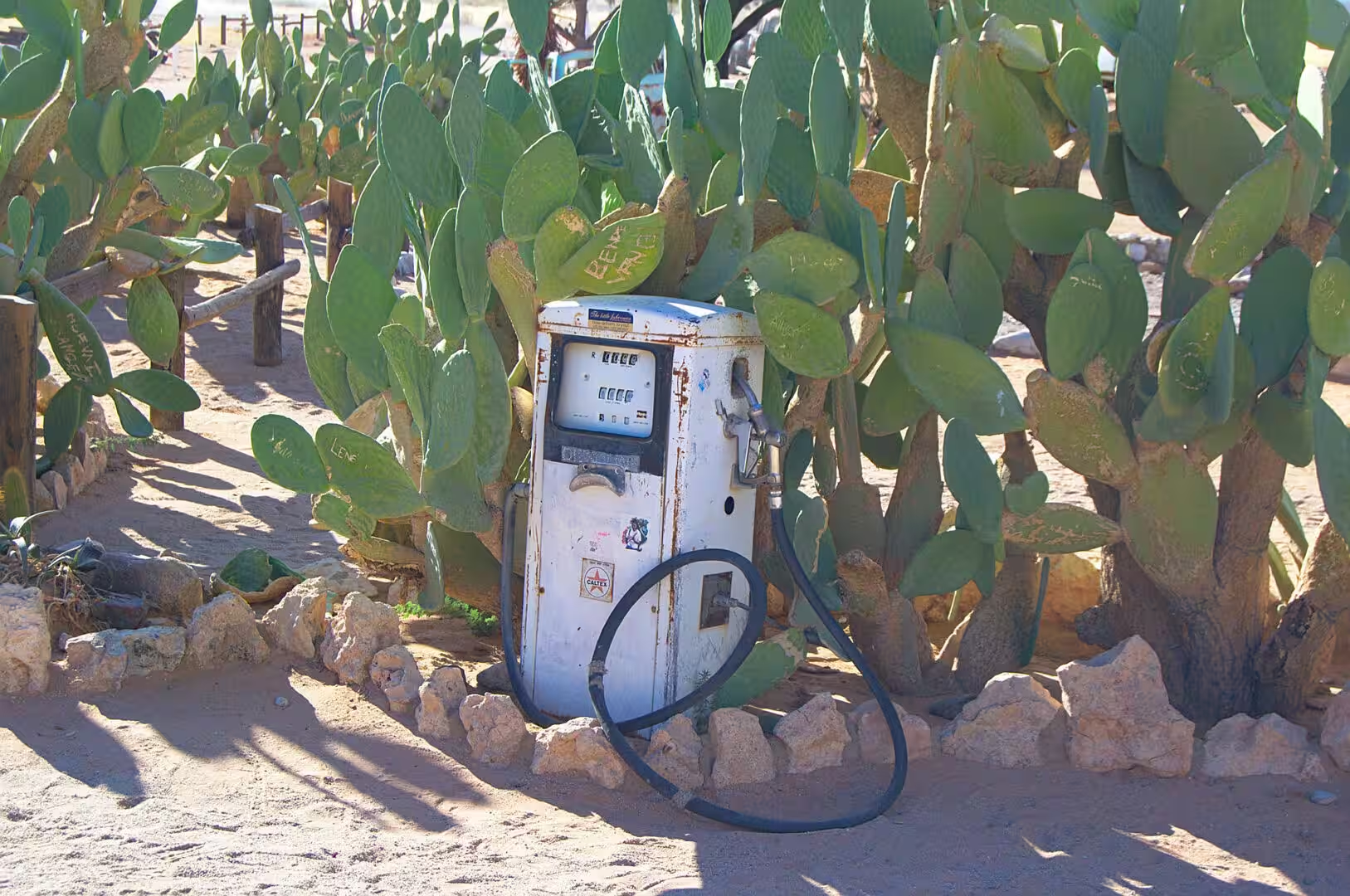
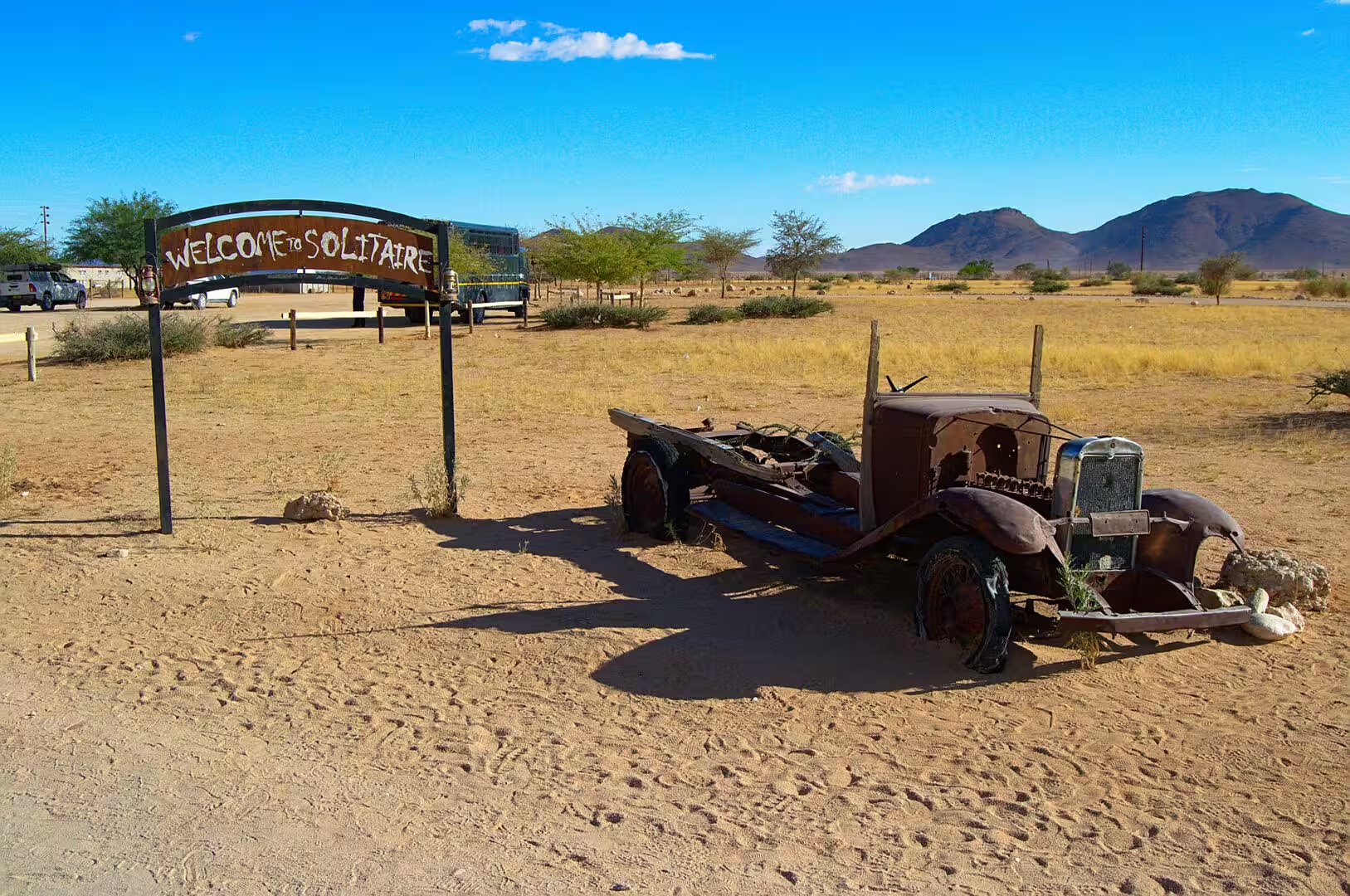
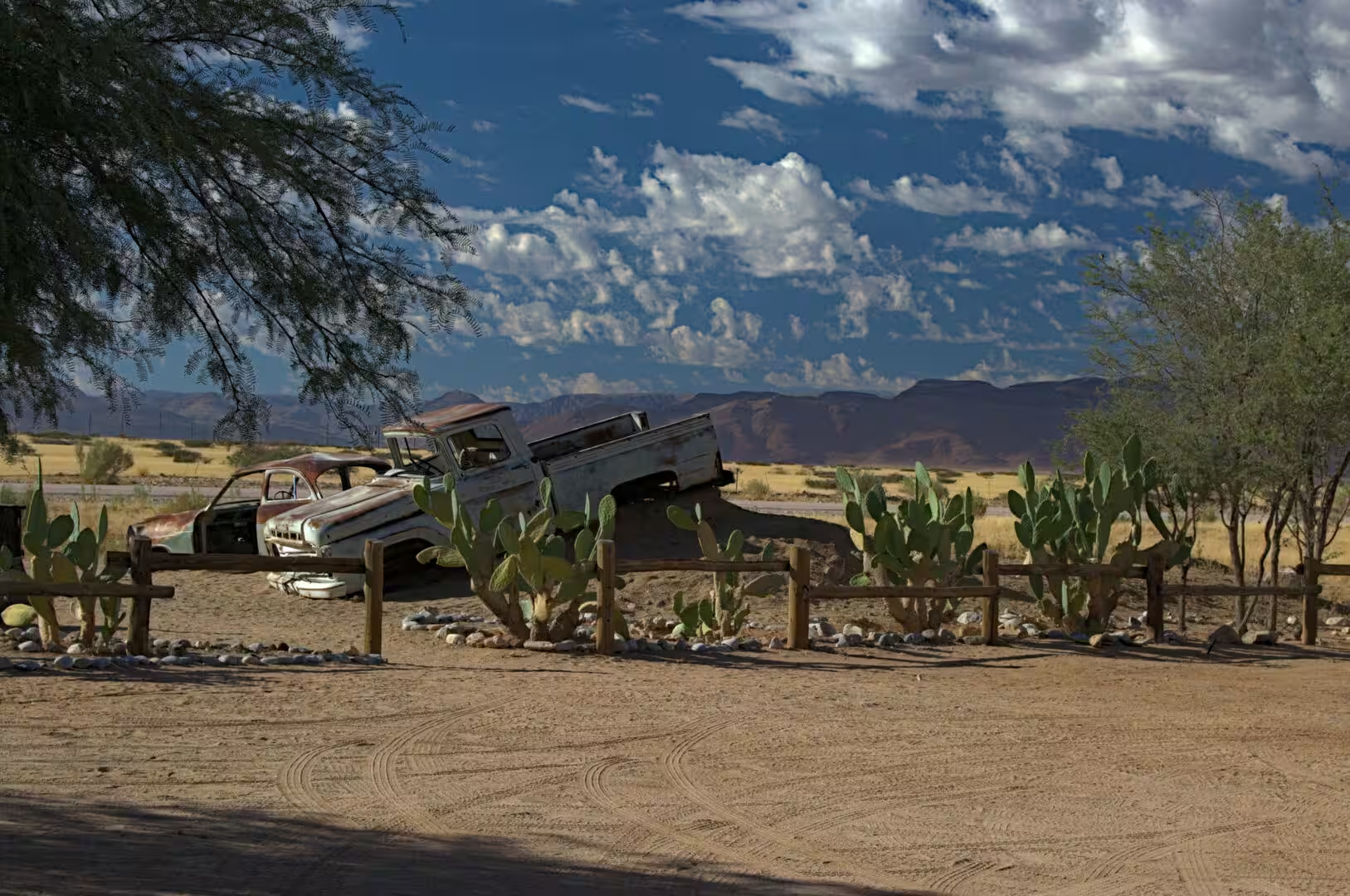
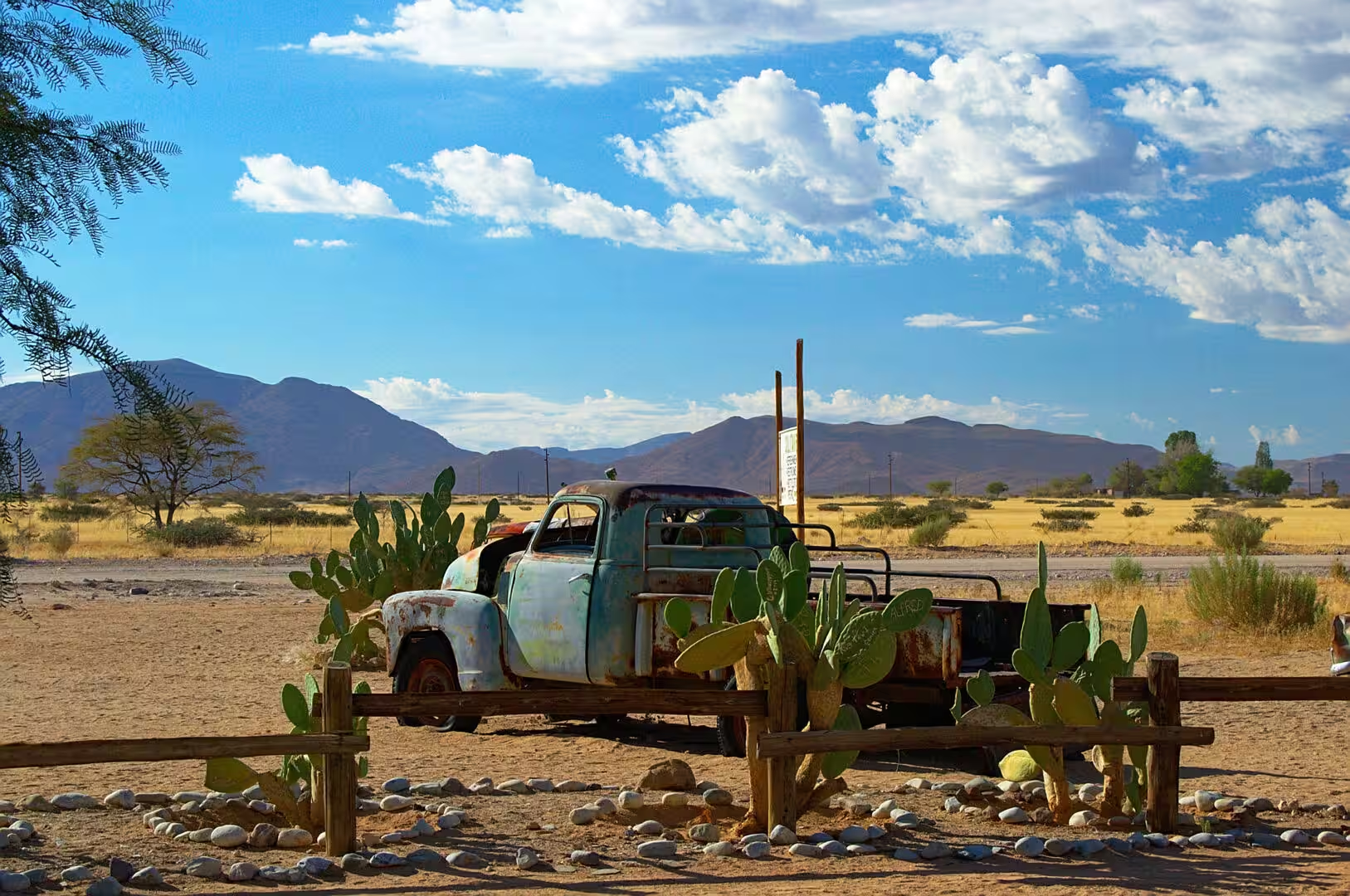
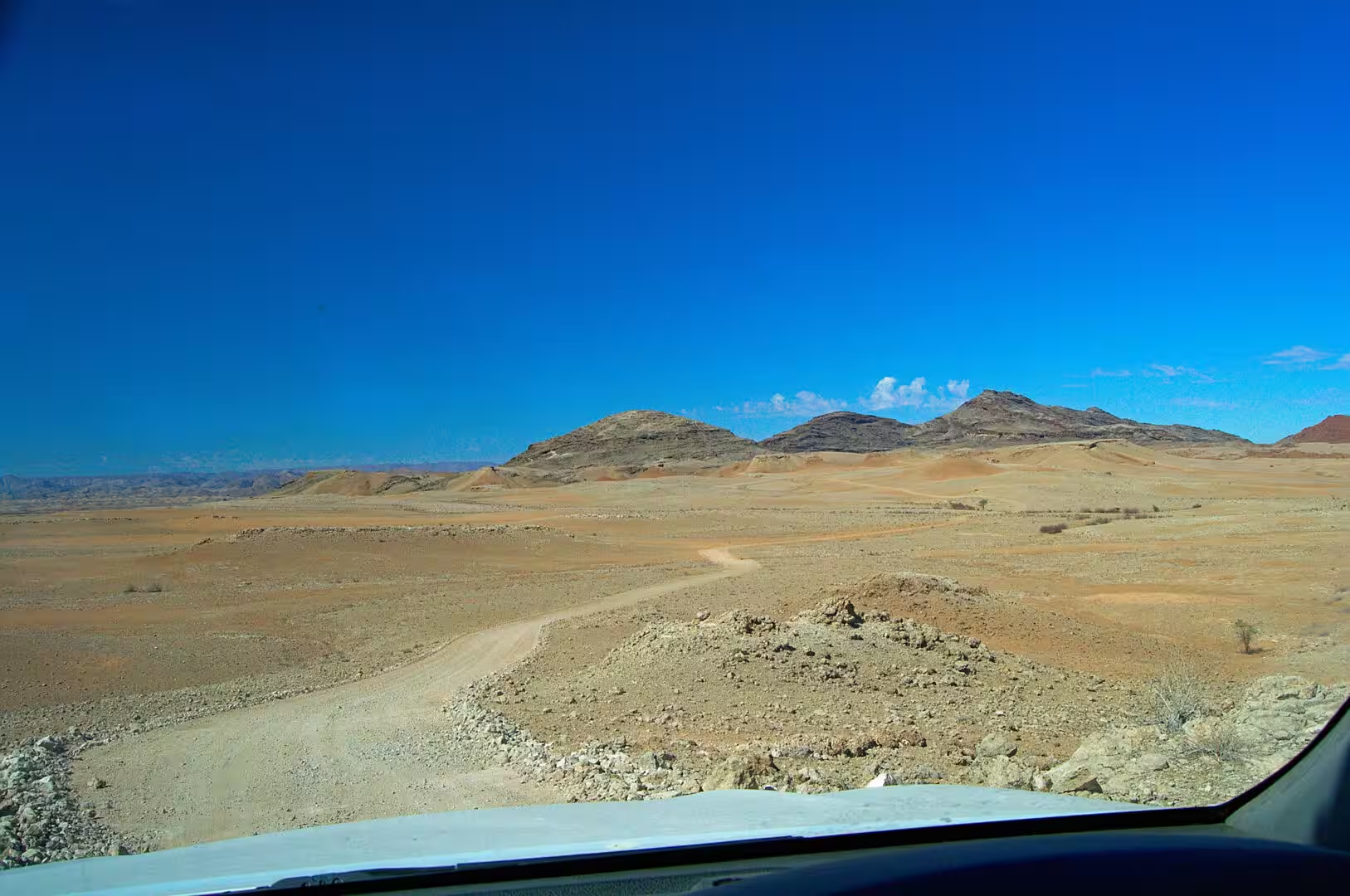
The ninth day crossed the Namib to Solitaire, the settlement that is the only place of any kind between the dunes of Sossusvlei and the coast. The road from the camp runs north west across the gravel plains, the dunes appear on the left in long orange ridges, the mountains stand on the right, and after two hours of driving through country with nothing in it the settlement arrives: a few buildings, a fuel pump, a shop, a bakery and a collection of very old cars standing in the sand.
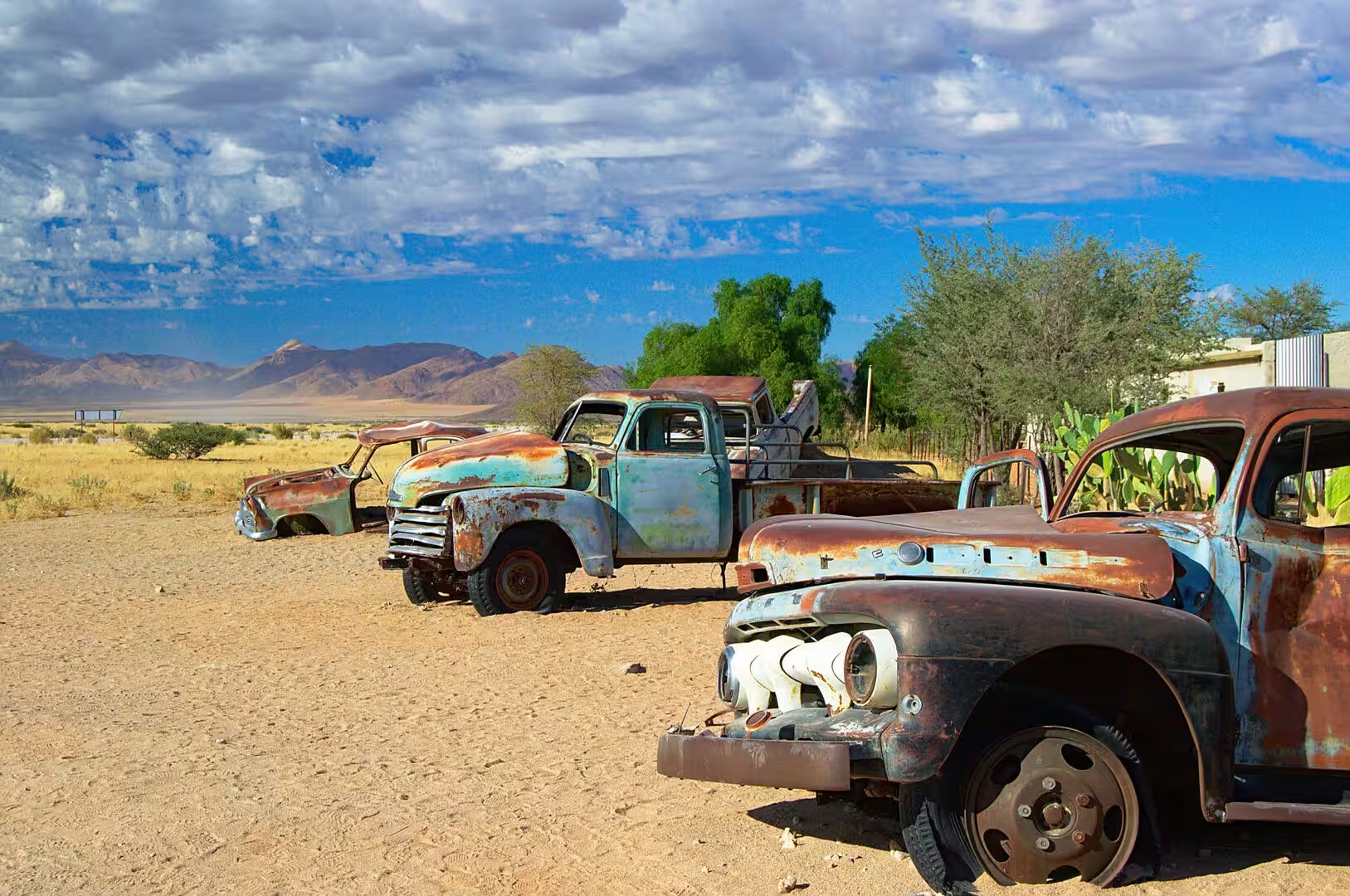
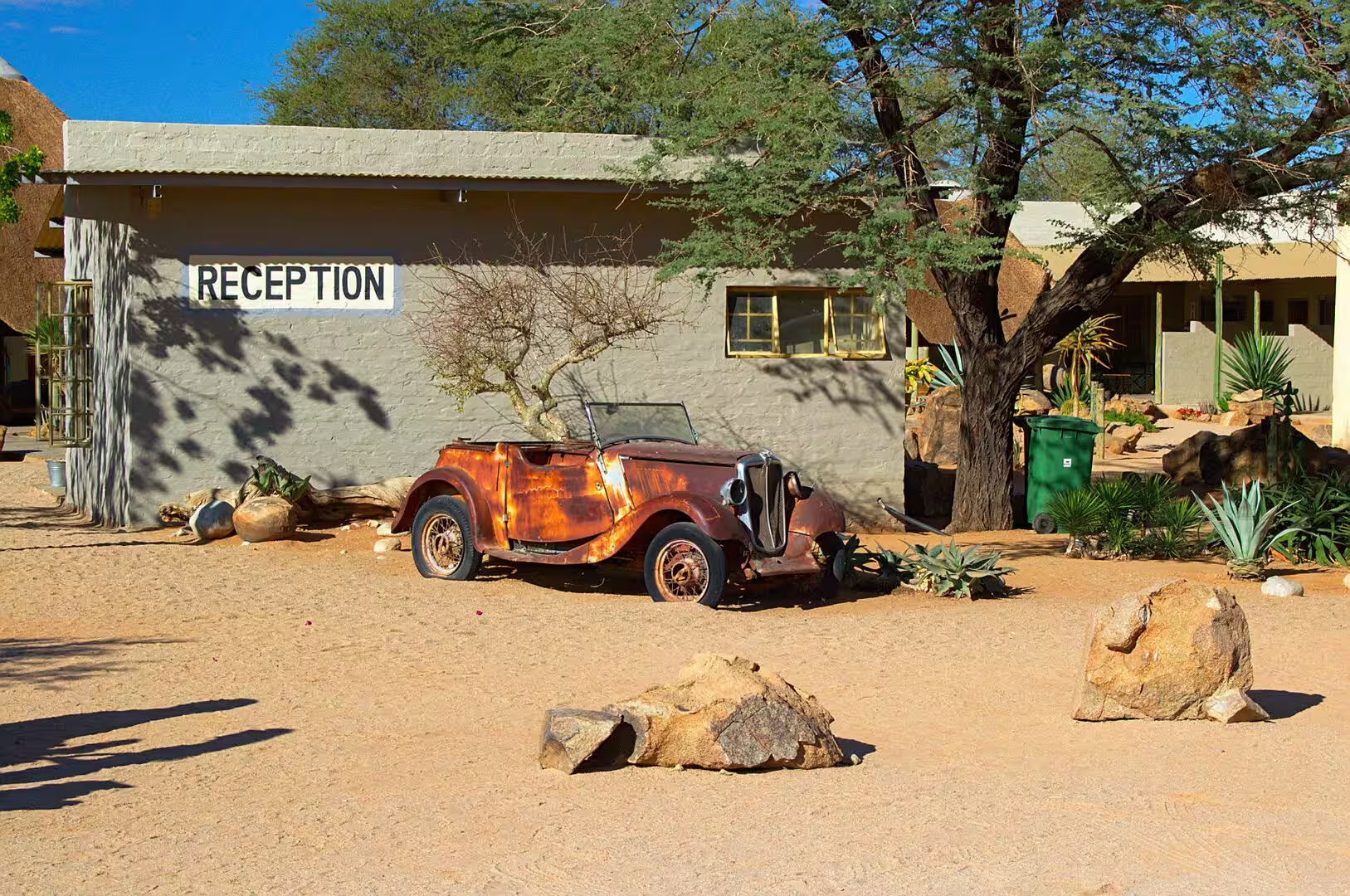
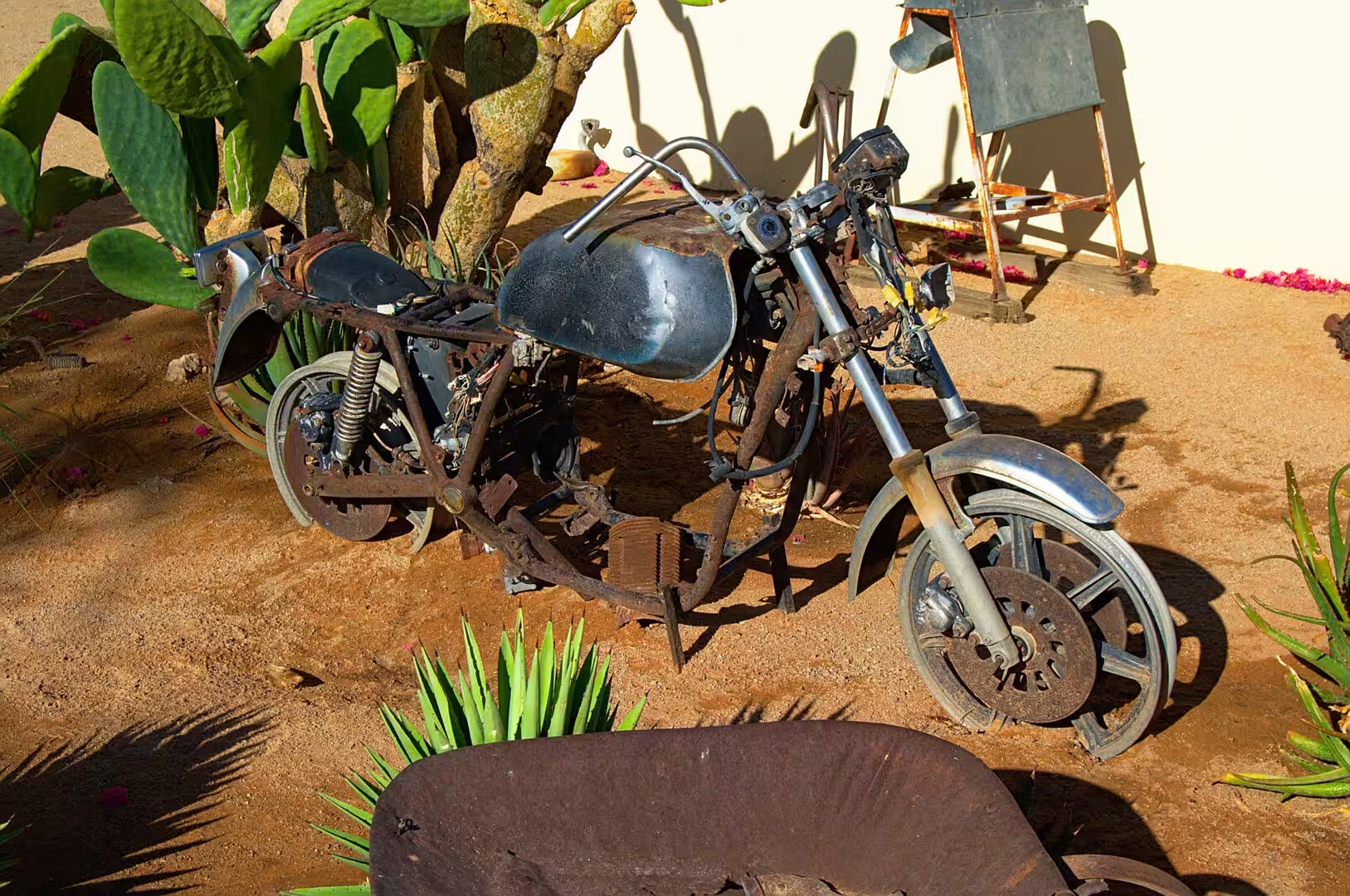
Solitaire is a place that the travellers of the desert talk about on the road, and it earns the reputation. The fuel station is the only one for hundreds of kilometres in any direction, the bakery sells the apple pie that the whole country knows about, and the yard of the lodge behind the shop is full of the rusted wrecks of the cars that the owners have collected over the decades: a tractor on a pile of stones, a convertible from the 1950s, a line of trucks and pickups half buried in the sand.
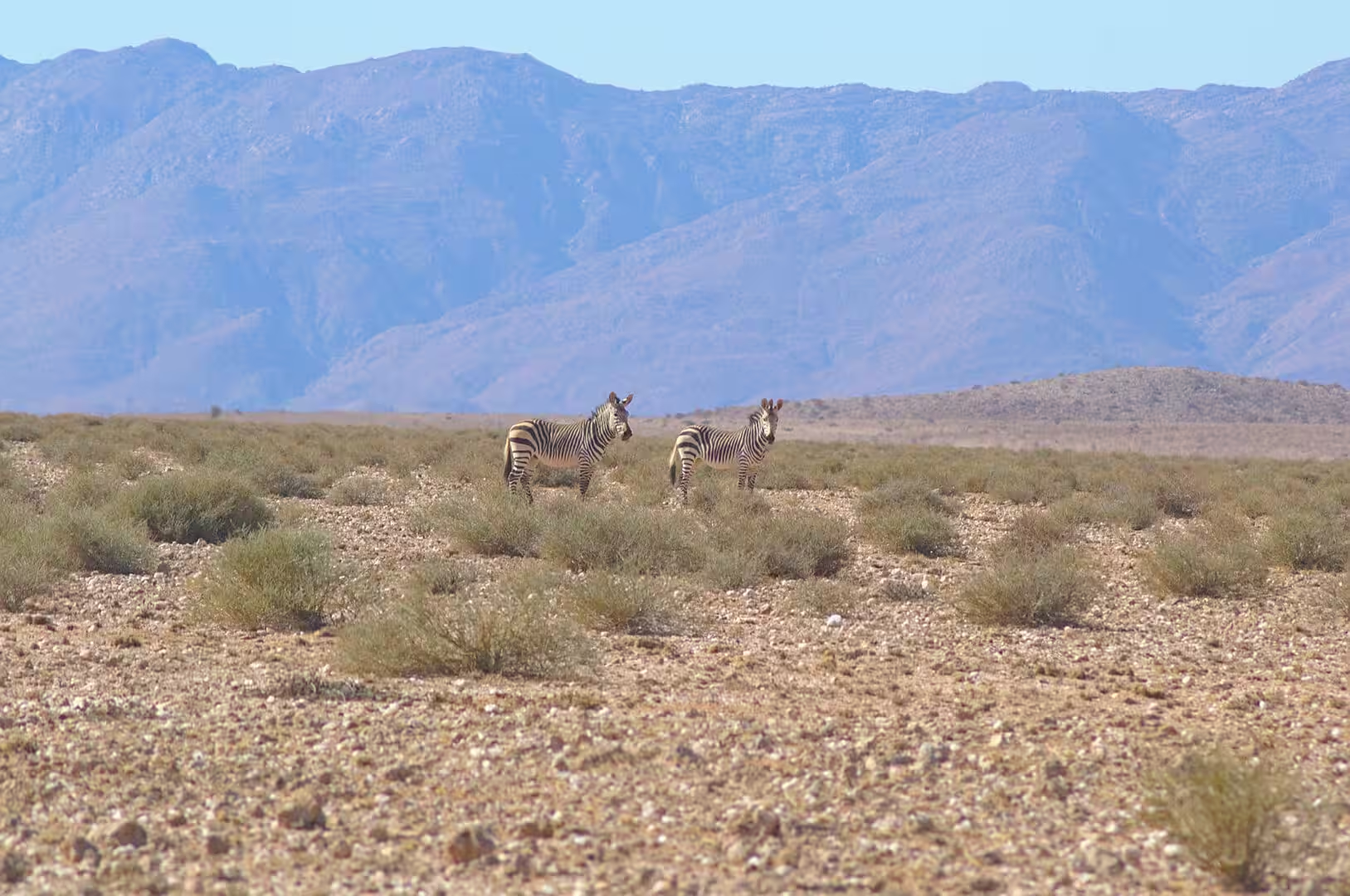
The day also produced the zebras. They were grazing on the stony plain in the middle of the afternoon, close enough to the road to be seen without binoculars, and they are the mountain zebra of the Namib: narrow striped, white bellied, and the only wild horse of the desert that the visitor is likely to meet in numbers. In a country of enormous landscapes, the sight of a herd of zebras on a stony plain is the sight that people come for.
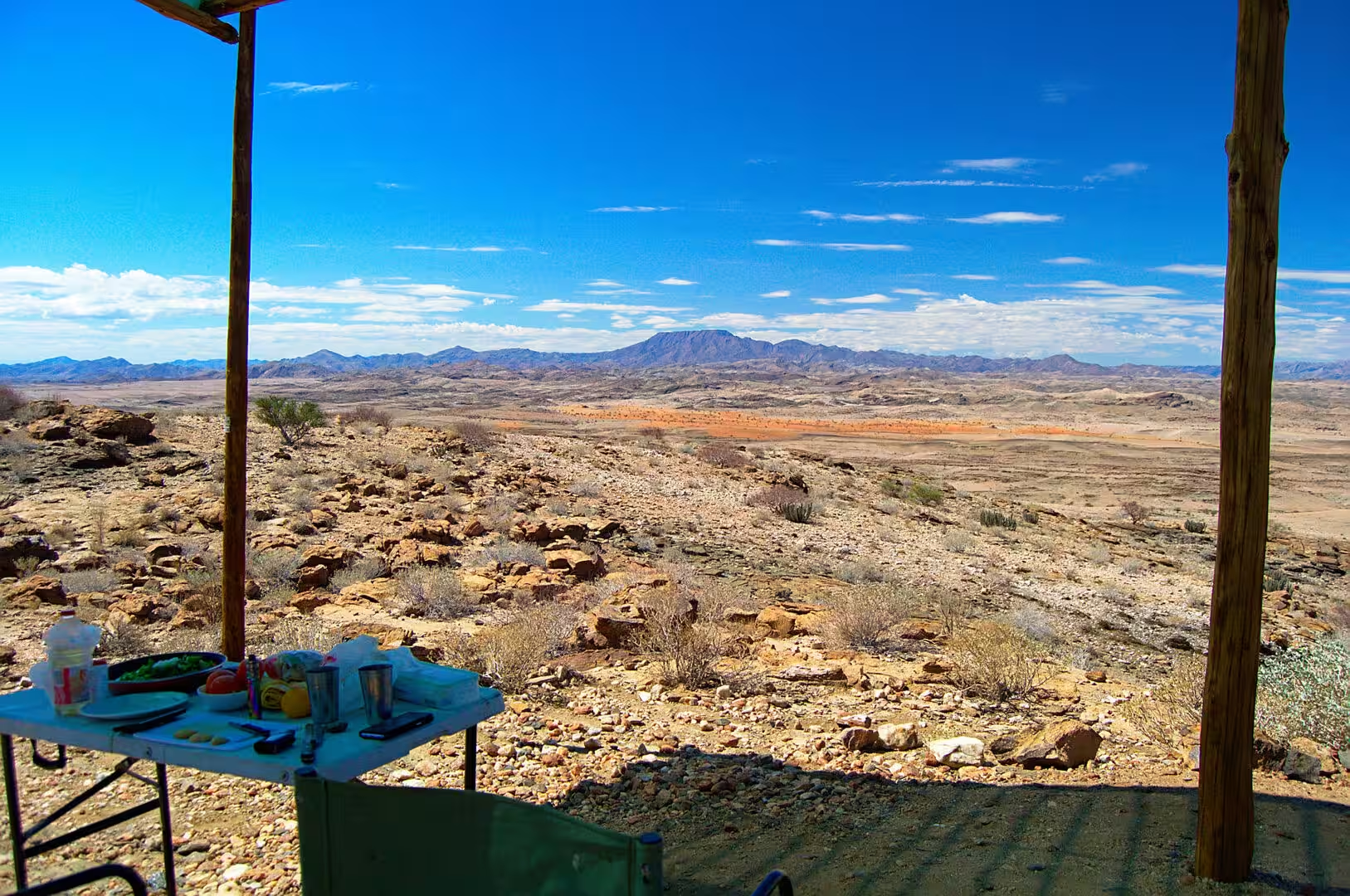
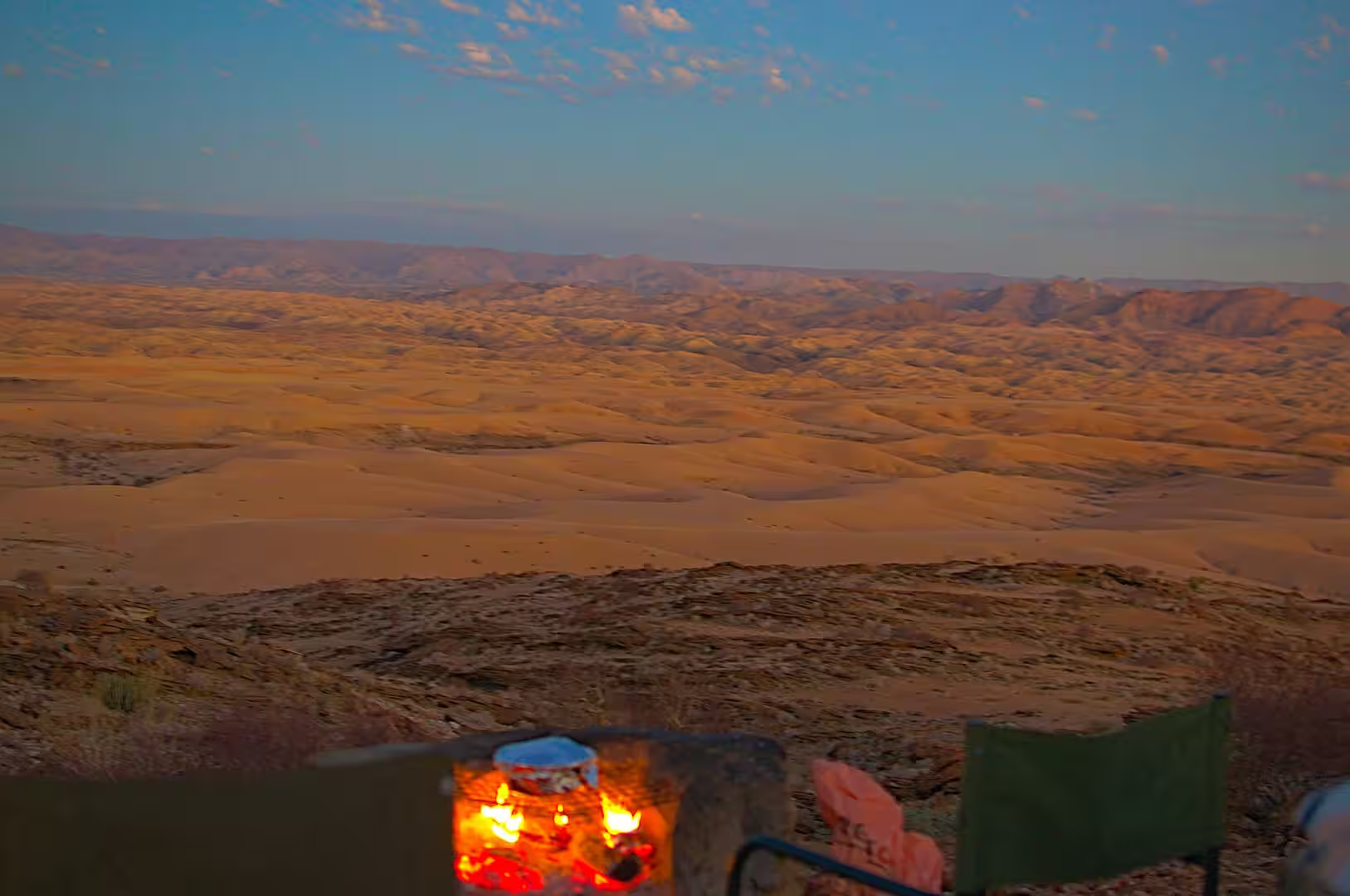
The night was spent at a lodge on the edge of the valley that the travellers call the Valley of a Thousand Hills. The evening was the ritual of the journey: a picnic on the terrace facing the plain, the sun going down behind the dunes, the fire in the brazier, and the sky after dark so full of stars that the shapes of the constellations are lost in them. The temperature fell, the jackals called in the distance, and the day ended in the middle of a country that has no lights in it at all.
History
Solitaire has been a place on the map for less than a century. It began as a farm in the dry interior of the Khomas Region, it became a stopping point on the road from the interior to the coast, and it grew into the institution it is today when the traffic to the dunes of Sossusvlei and the Naukluft began to use that road in numbers. The fuel station, the shop, the bakery and the lodge are the whole of the settlement, and the people who run them are the reason the middle of the Namib is passable at all.
The name of the place is the last thing about it that is colonial. It was given by the farmer who settled the waterhole in the 1940s, and the travellers who arrive expecting a town find the joke: a lone settlement in a landscape of enormous distances, called Solitaire. The book that a Dutch author wrote about his stay there made the place famous in Europe, and the visitors who come today for the pie and the petrol are the heirs of that publicity.
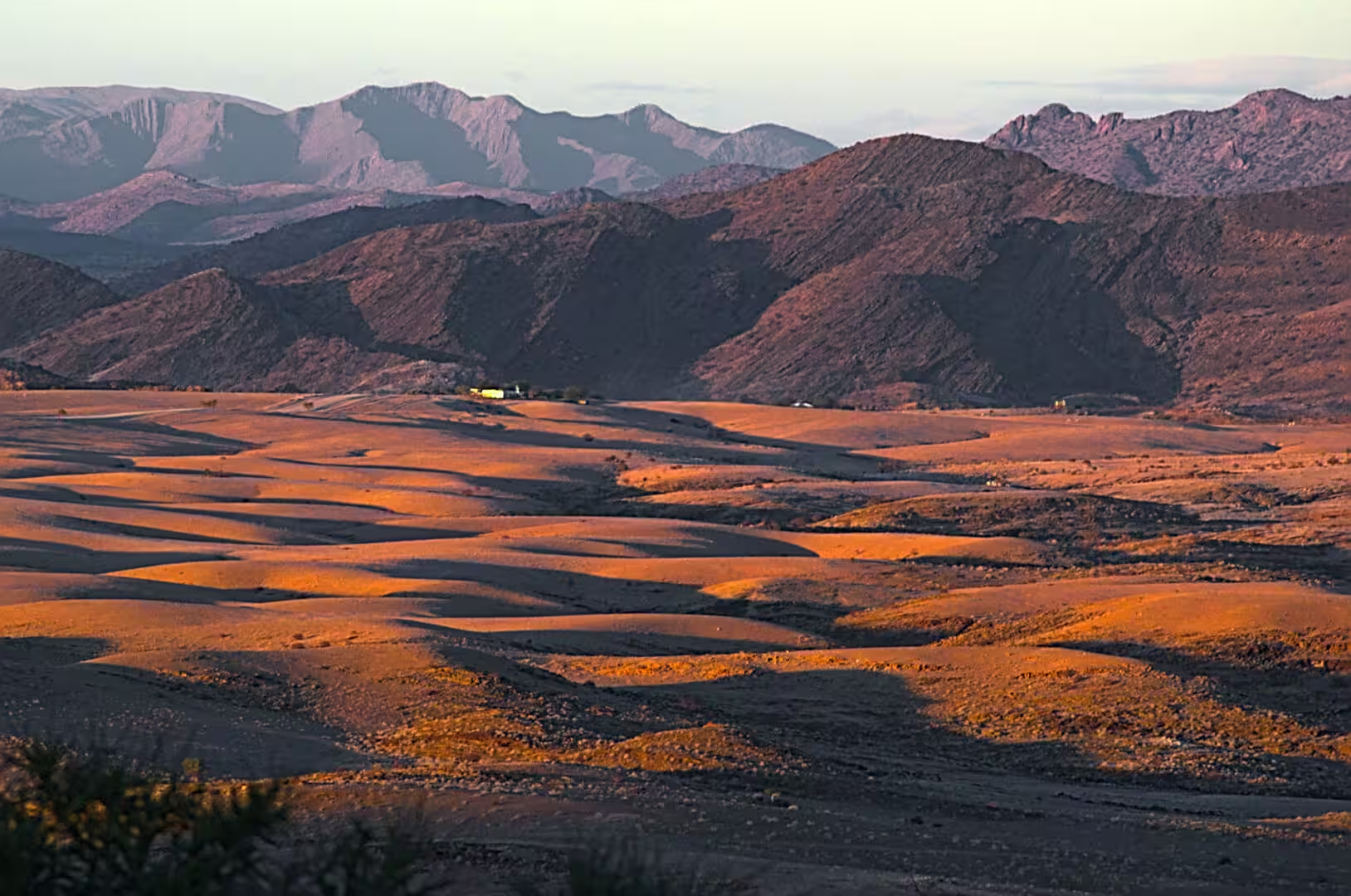
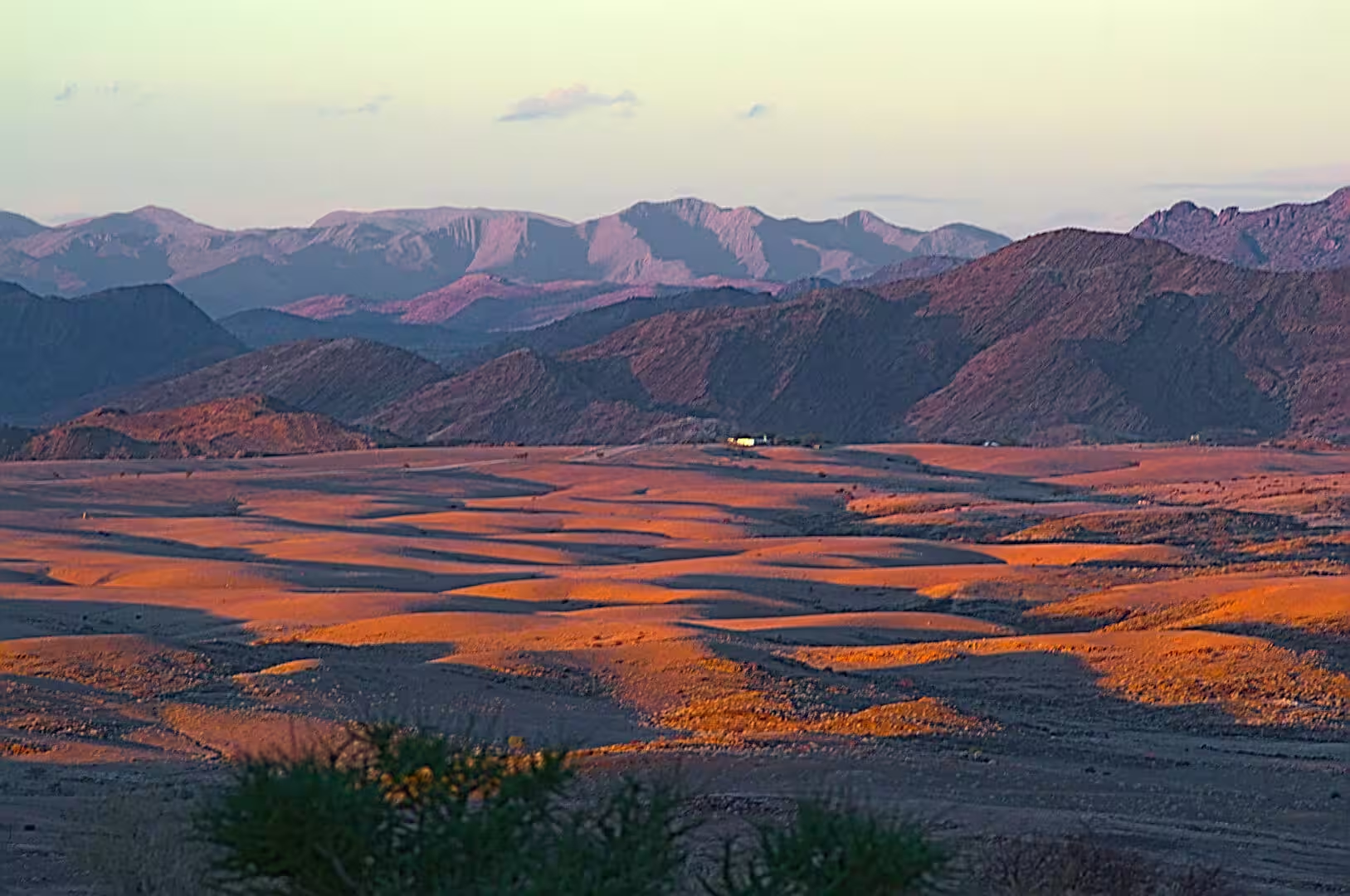
The valley that the camp of the night looks over has a name that is more romance than geography. The Valley of a Thousand Hills is the name the tourism of the region has given to the country between the Naukluft Mountains and the dunes, a landscape of low rocky hills, sand belts and dry basins that the traveller crosses on the road to Sossusvlei. The name is an invention of the brochures rather than the map, and the landscape it describes is as empty as the rest of the Namib.
The park next to it has a longer history. The Namib-Naukluft National Park was proclaimed in the 1970s by joining the reserves of the Namib and the Naukluft, and it is today one of the largest protected areas in Africa: a piece of the oldest desert in the world, the mountains of the Naukluft, the lagoon of Sandwich Harbour on the coast and the clay pan of Sossusvlei within a single administration. The settlement of Solitaire stands at its edge and lives from the visitors who cross it.
The road that passes through Solitaire has a history that explains why a single fuel station matters so much. The route from the interior to the coast was a track for ox wagons and later a gravel road for the cars of the farmers and the officials, and it crossed a country in which the next water was a day away. The waterhole at Solitaire became a stopping point for that reason, the farm that grew around it supplied the travellers, and the fuel pump that stands there today is the modern version of the same service. In the desert, the provision of water and fuel is the whole economy.
Geology
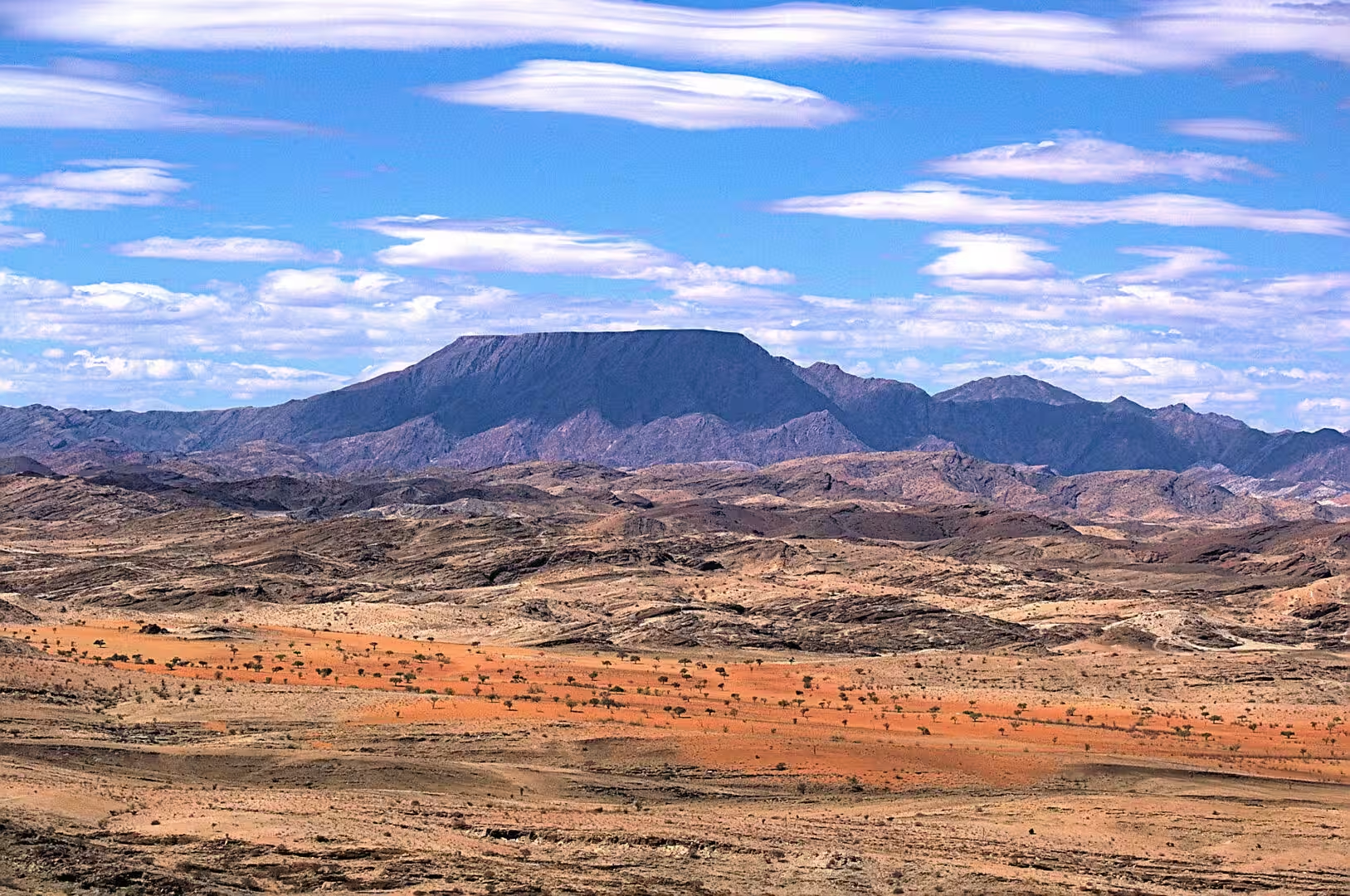
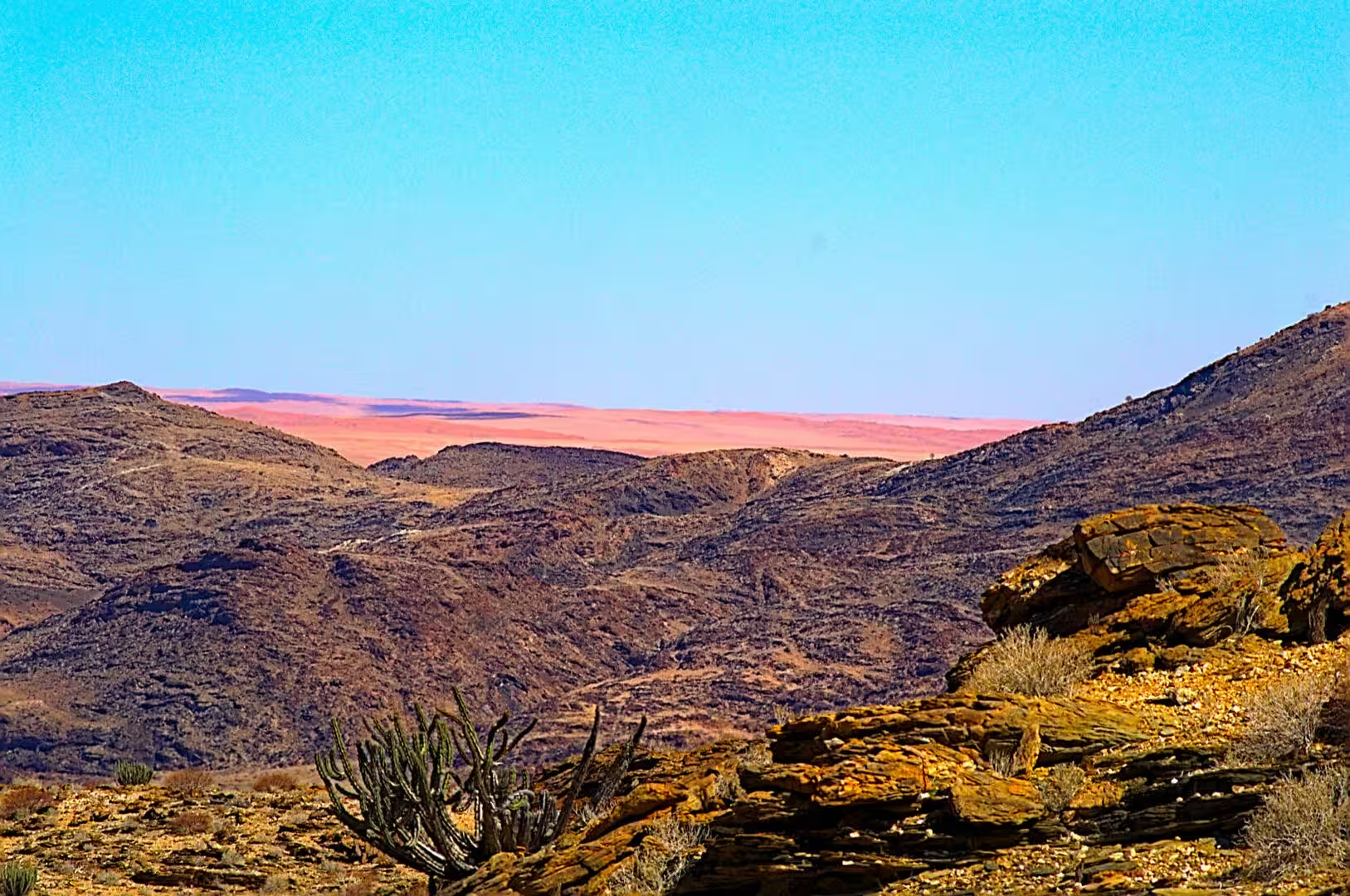
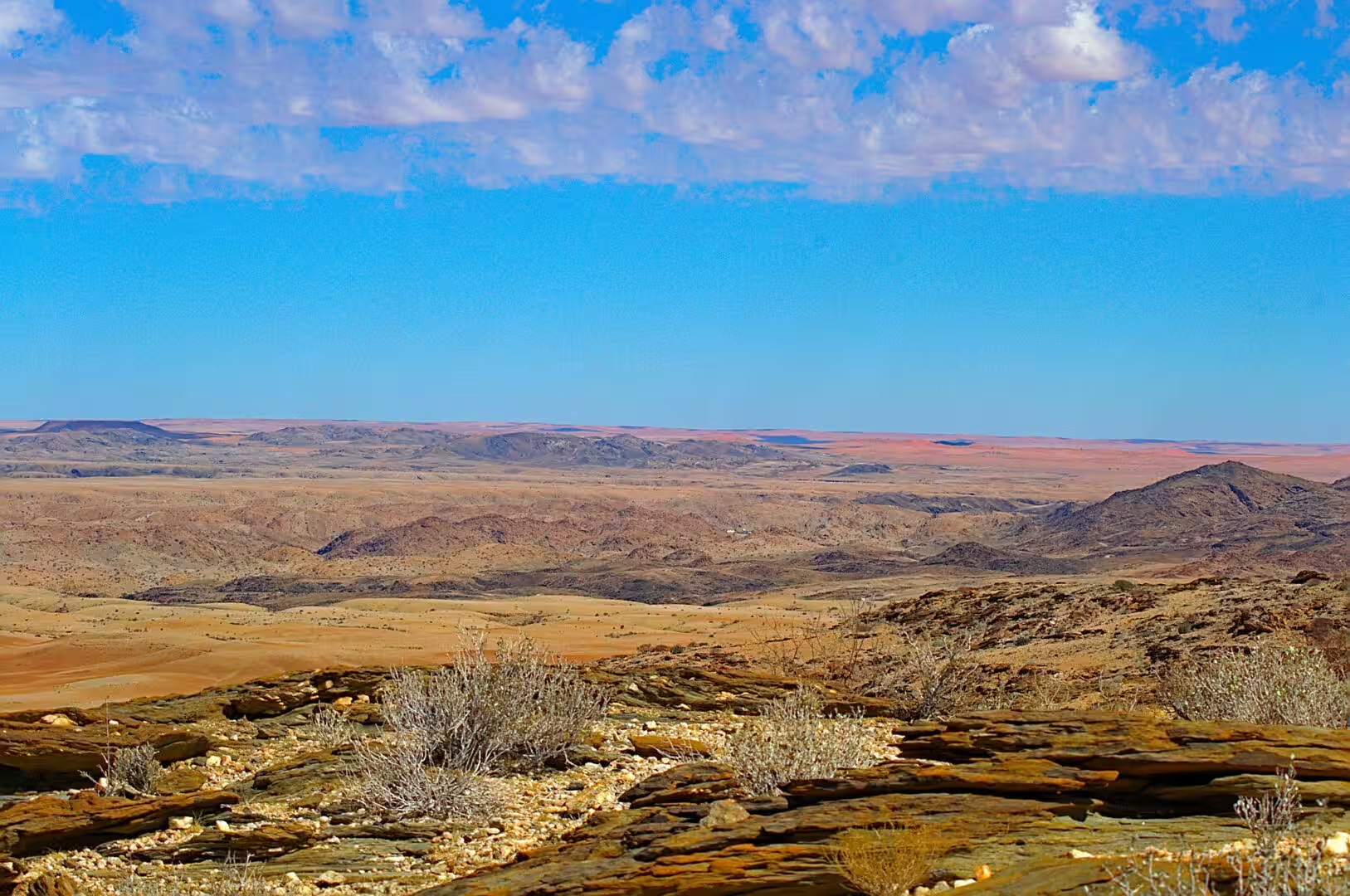
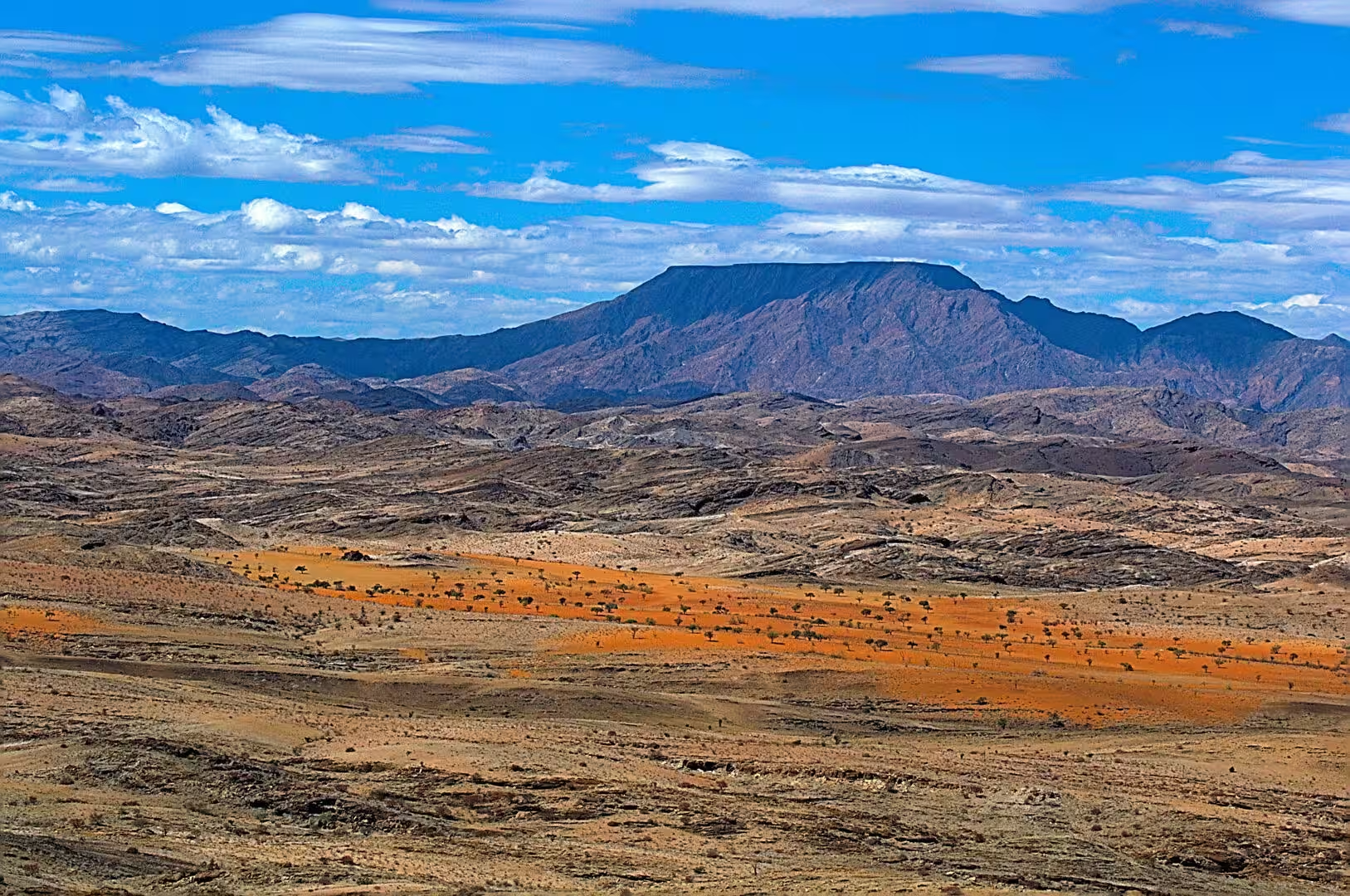
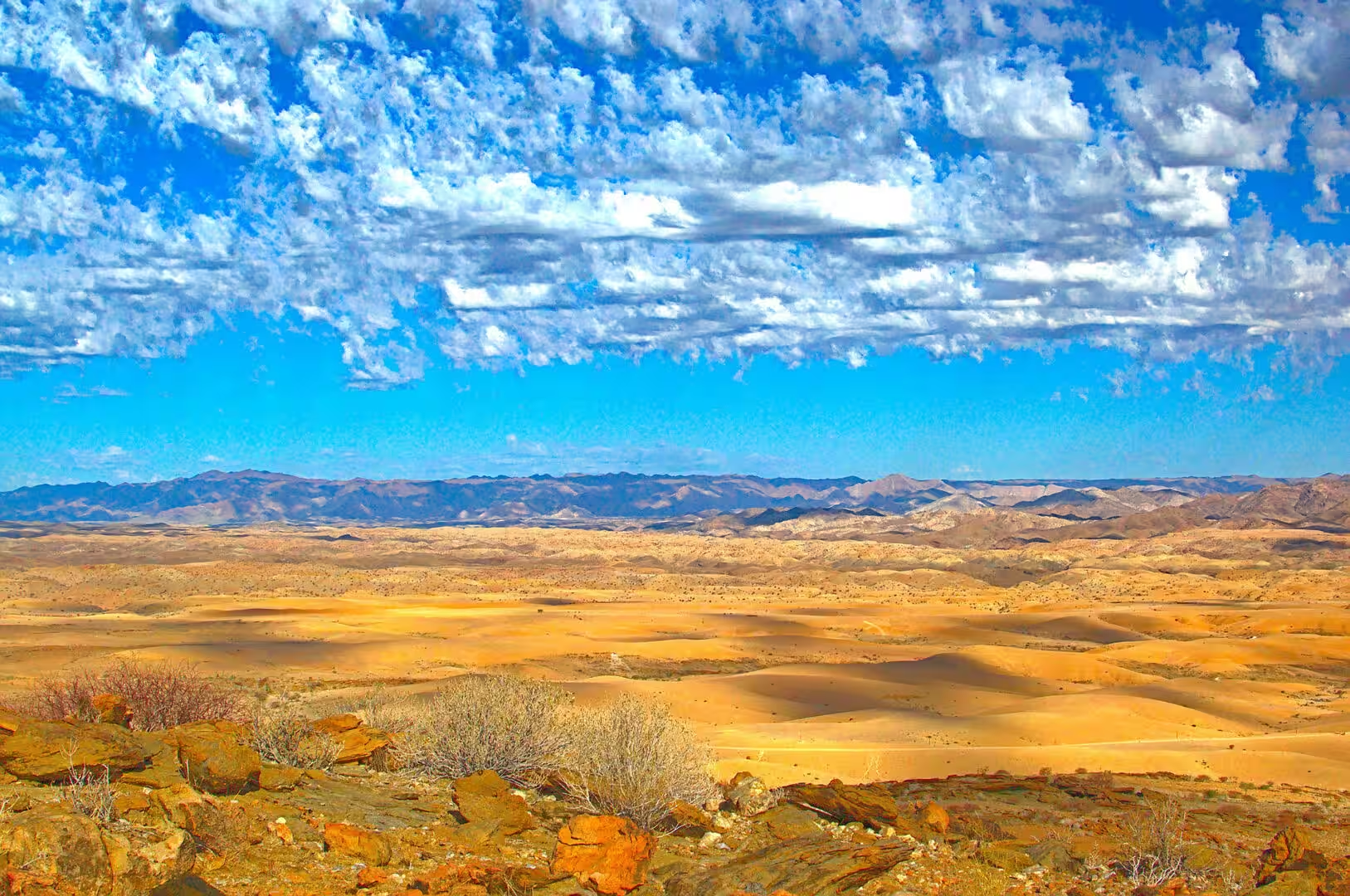
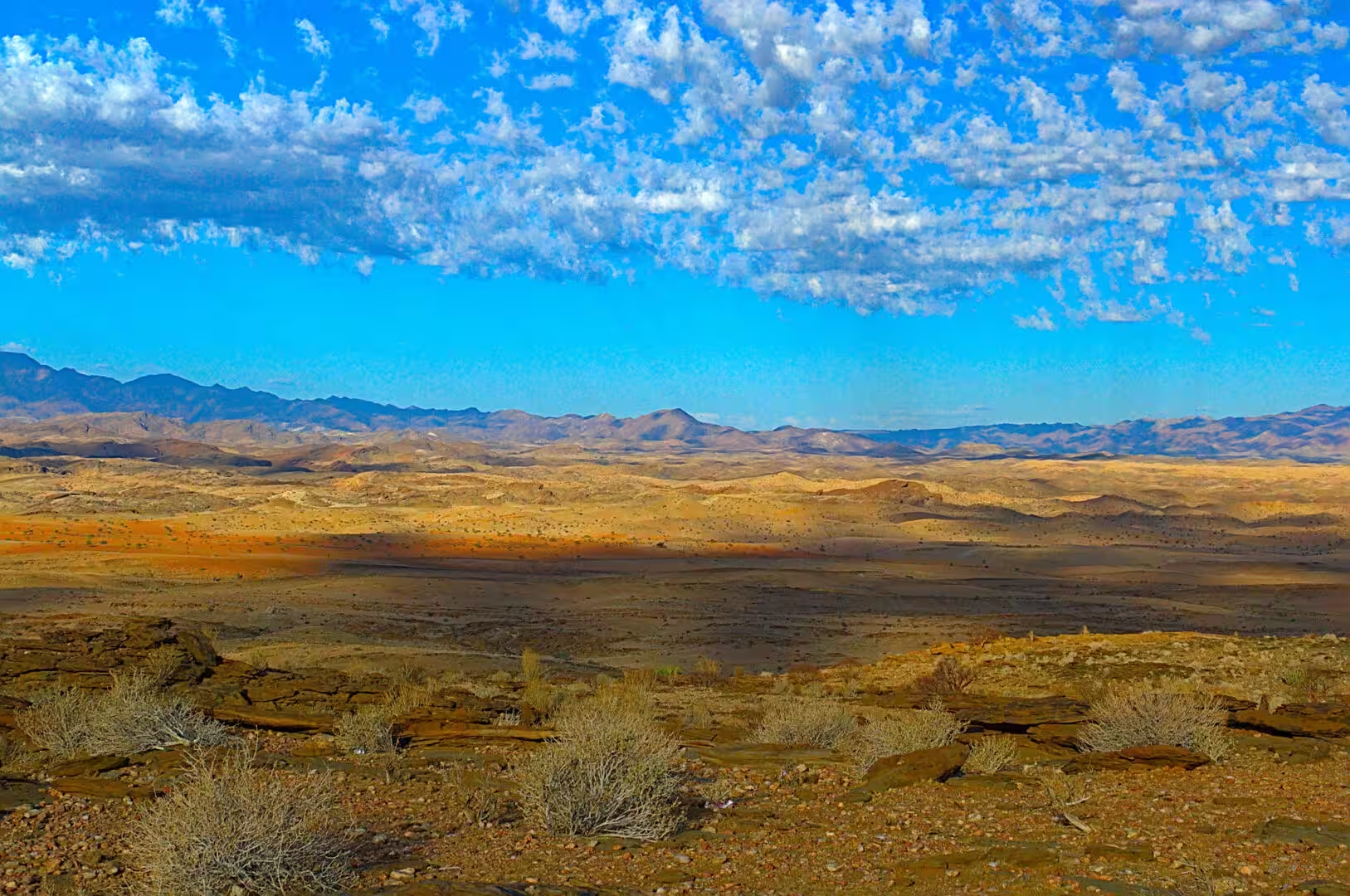
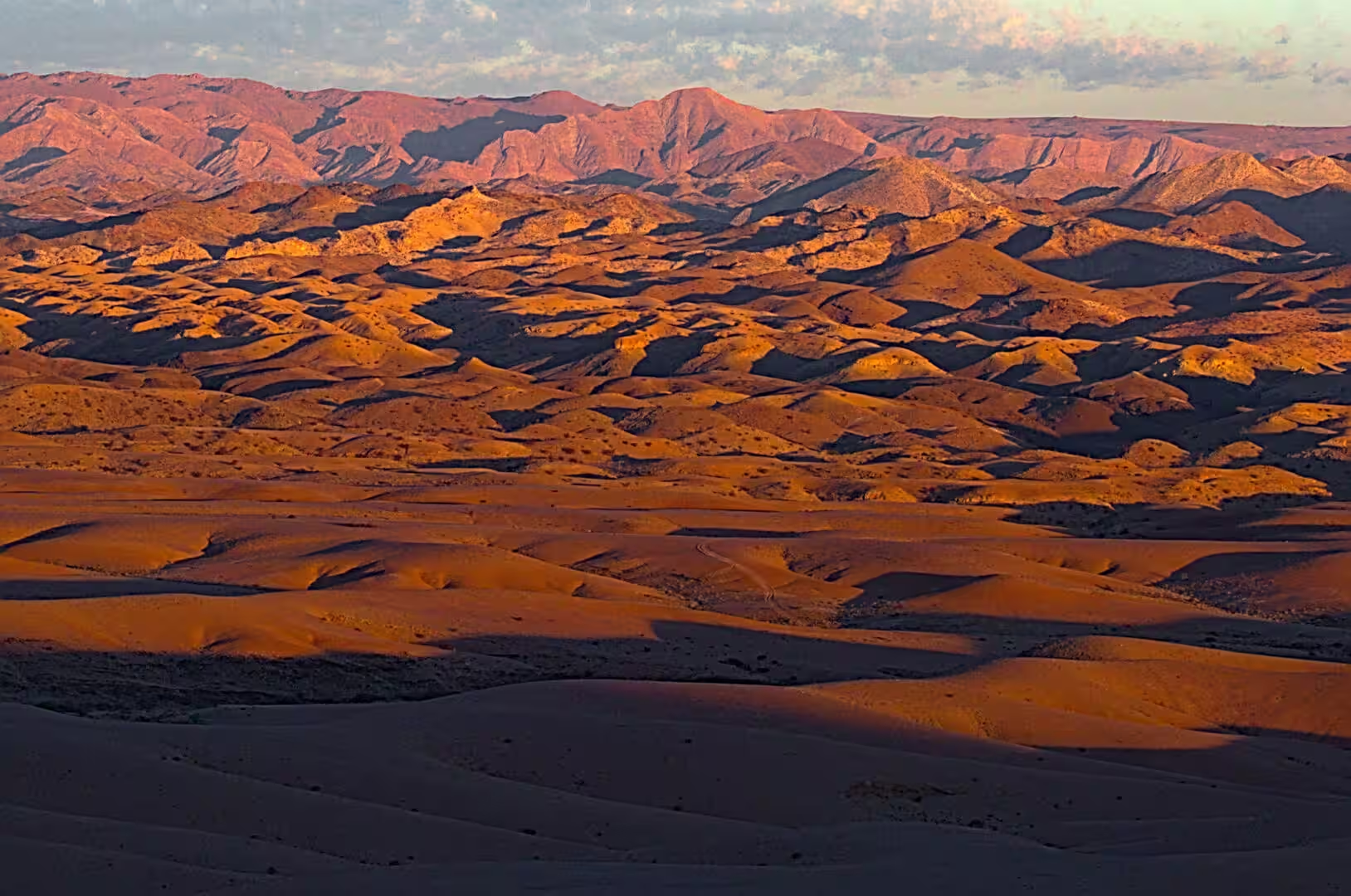
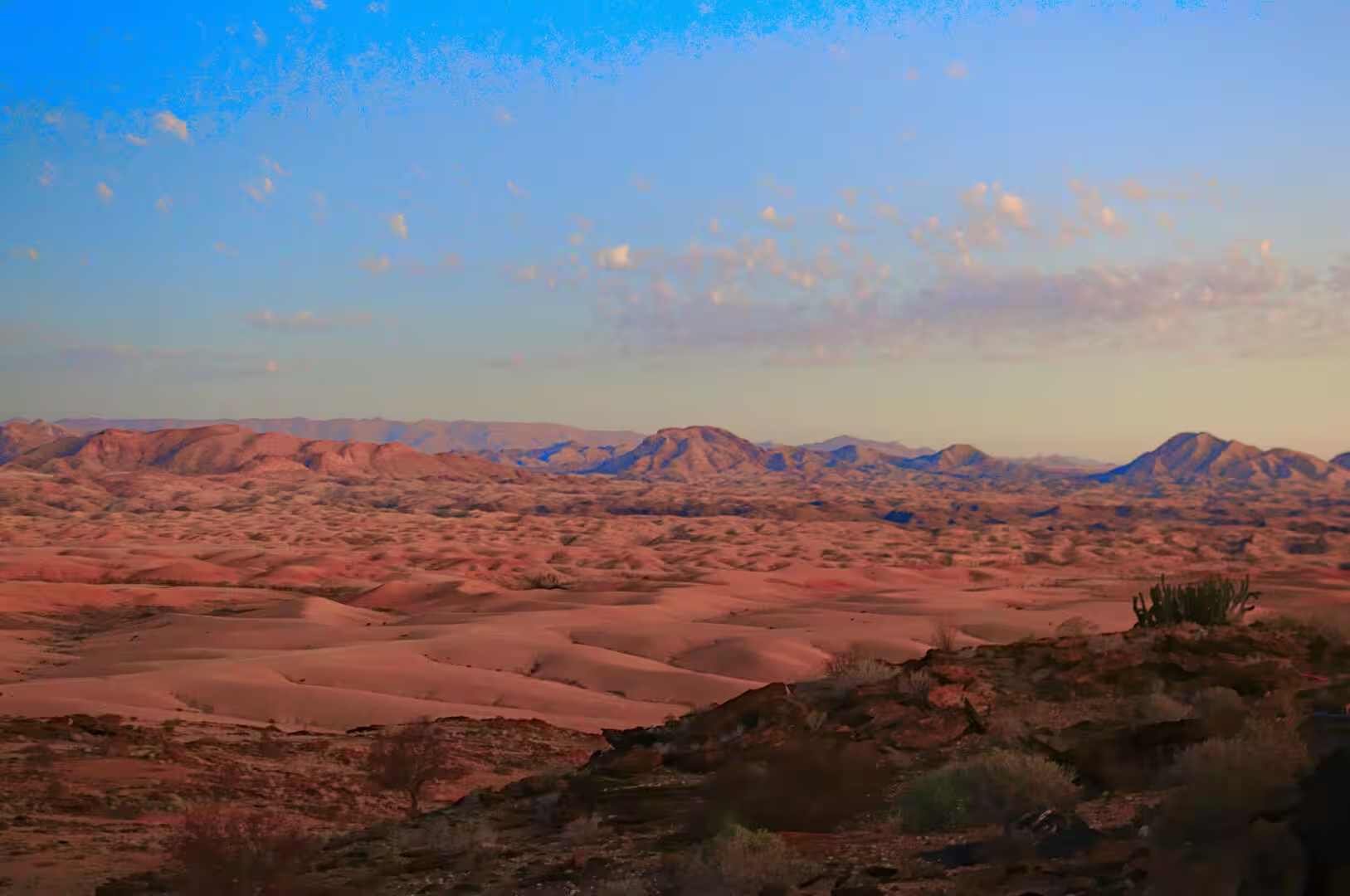
The country of the day is the sand sea and its edges. The dunes of the Namib run in long ridges parallel to the coast, driven by the wind of the Atlantic, and the belts of red sand that the road crosses on the eastern edge of the desert are the fingers of that system: sand that has been carried inland by the wind and trapped between the rocky hills of the interior. The interlocking ridges and the sharp crests of the dunes are the work of the wind, and the contrast between the red of the sand and the pale gravel of the plains is the signature of the landscape.
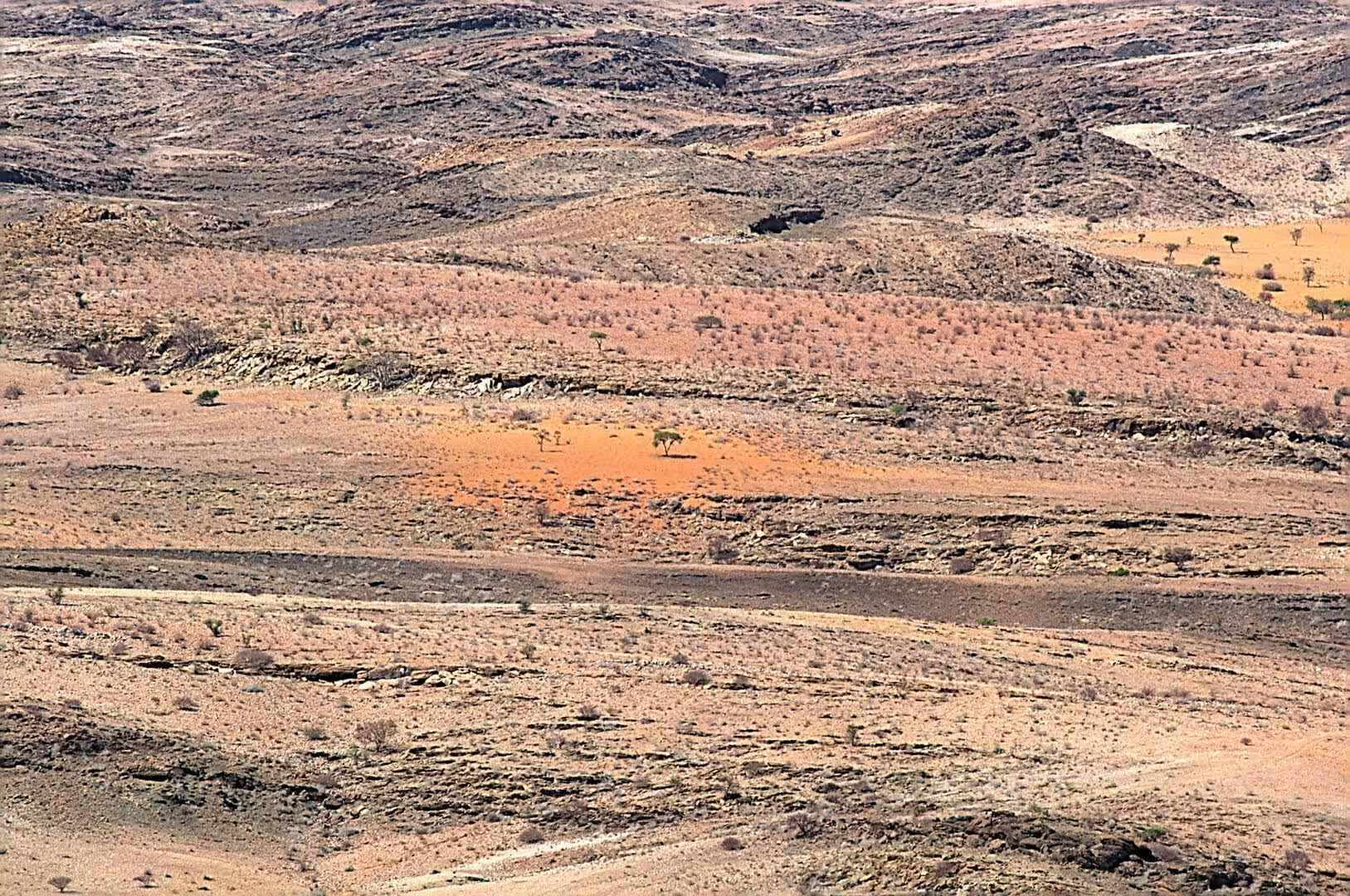
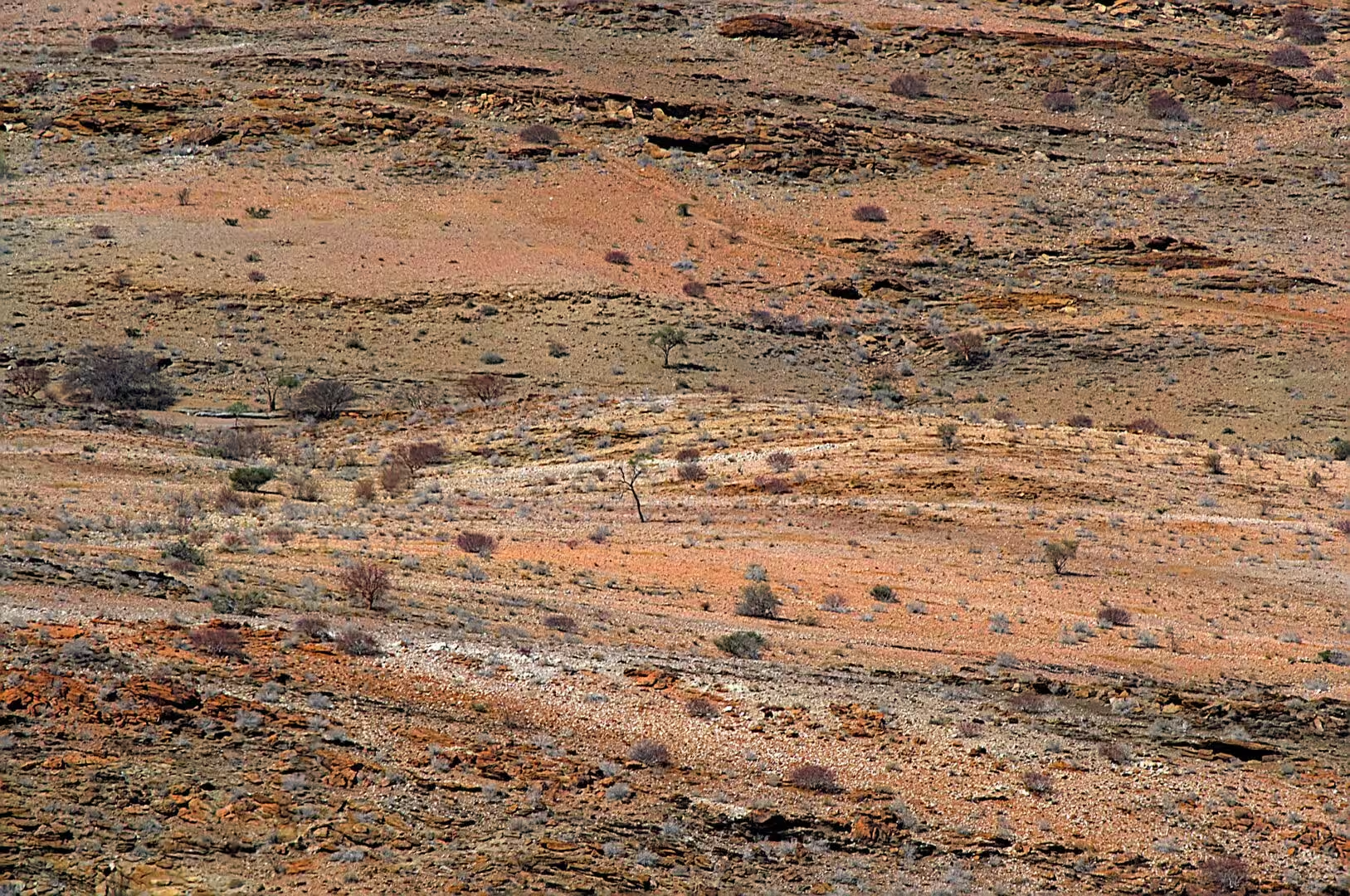
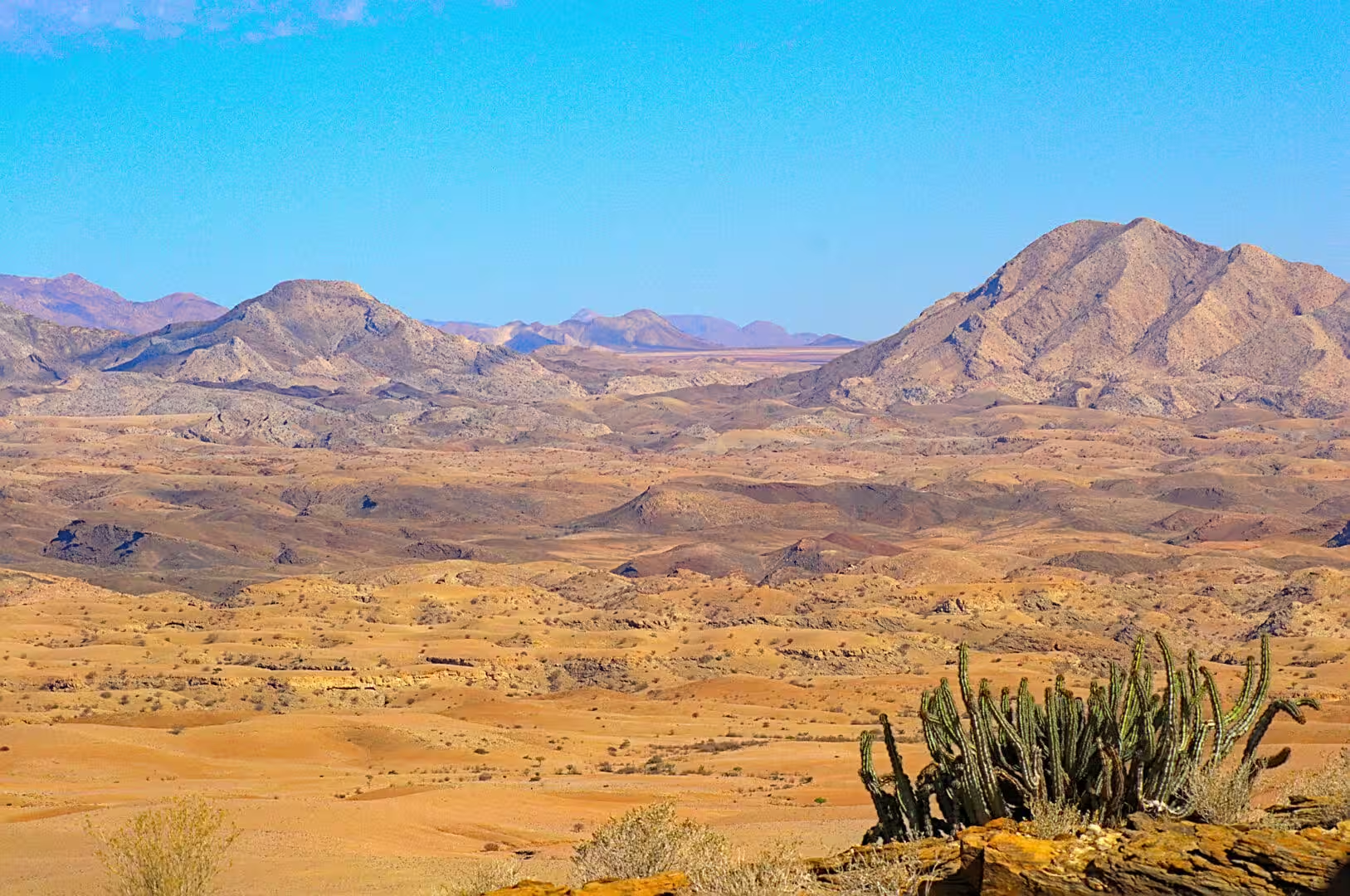
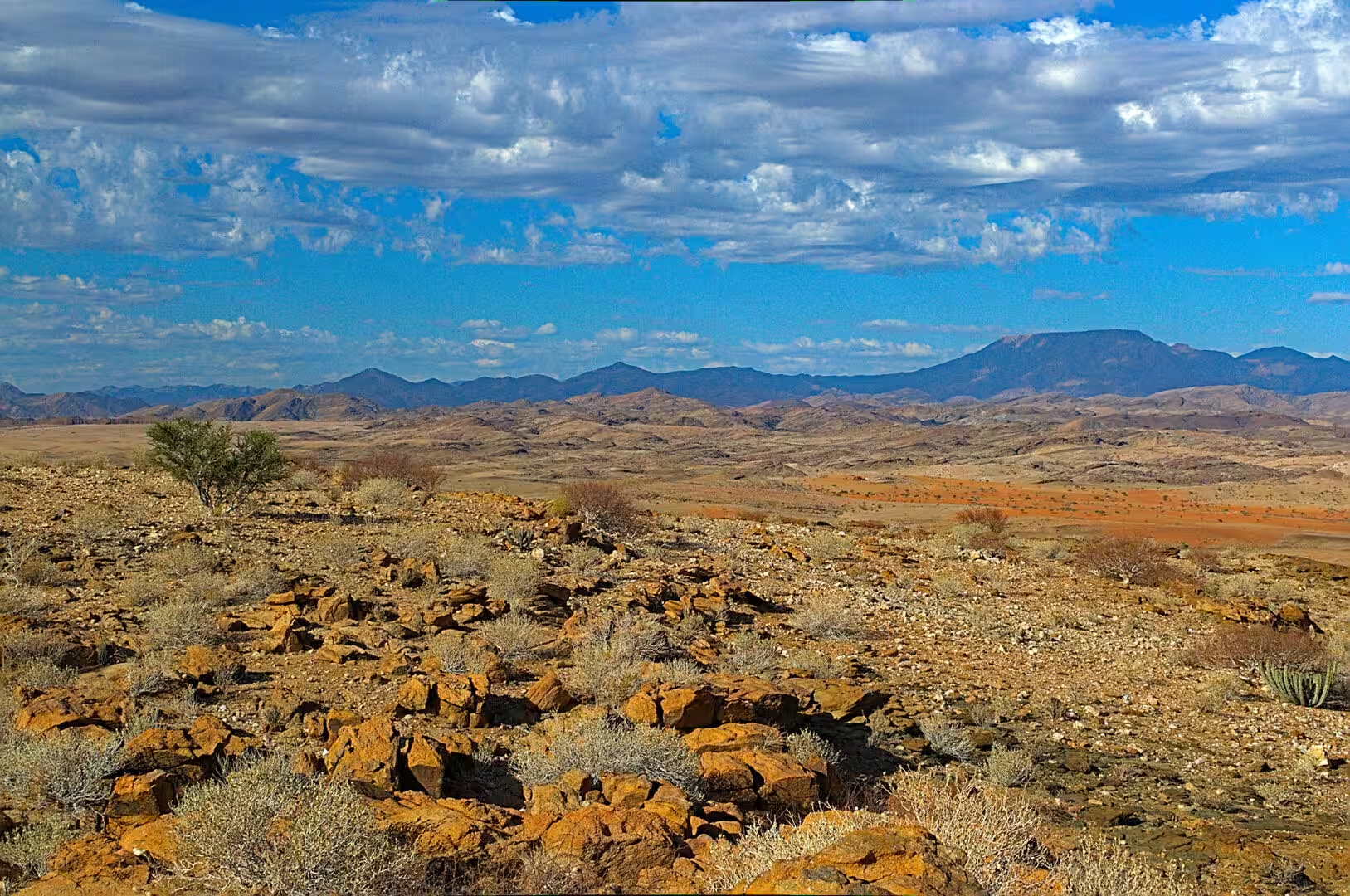
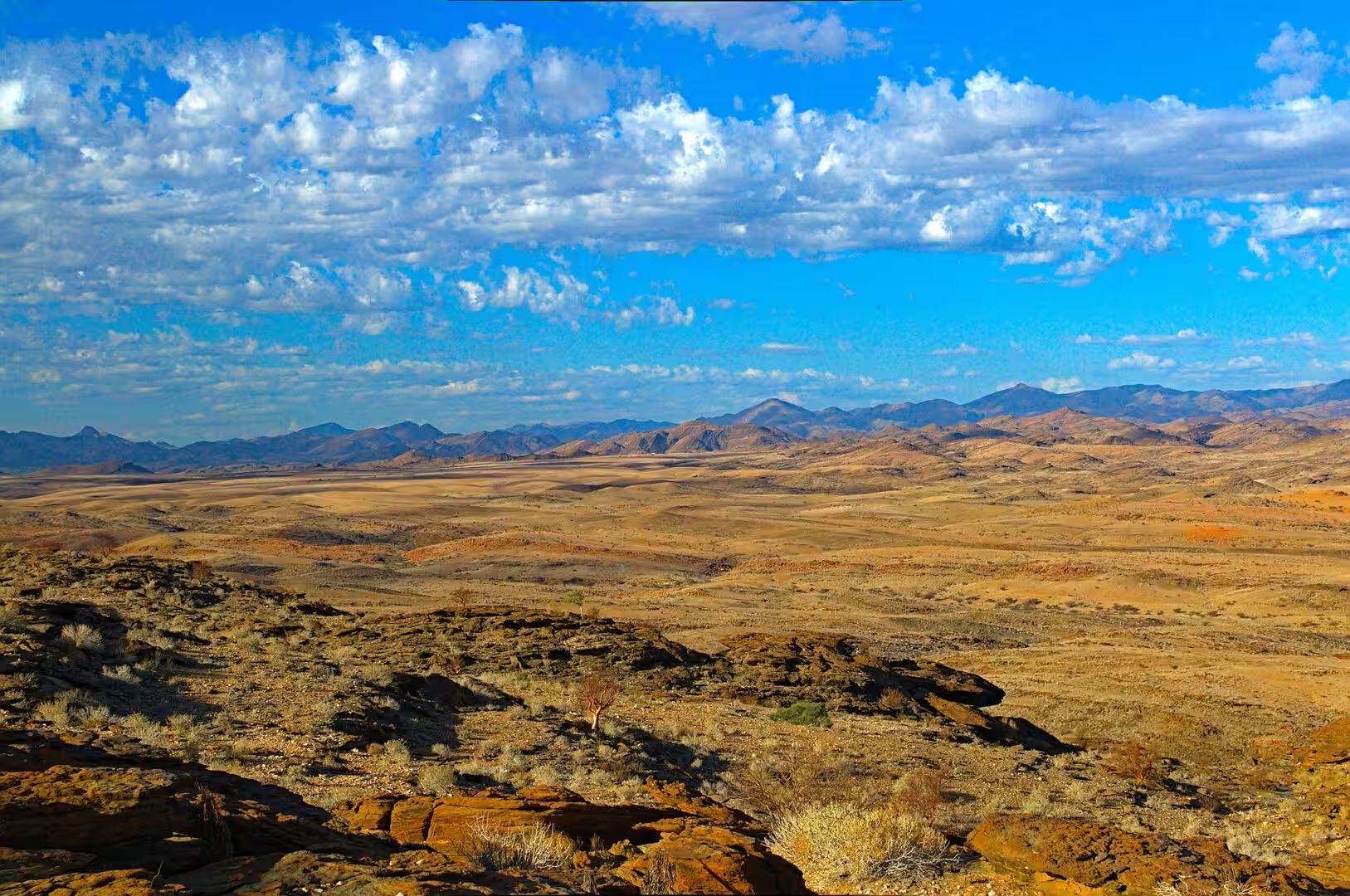
The plains between the dunes are the other half of the desert. They are surfaces of gravel and stone, polished by the wind, covered with a thin crust of pebbles that the geologists call desert pavement, and almost bare of vegetation except along the dry watercourses where the camelthorns and the grasses of the flash floods stand. The plains are the older surface, the dunes are the younger cover, and the roads of the region run on the first between the second.
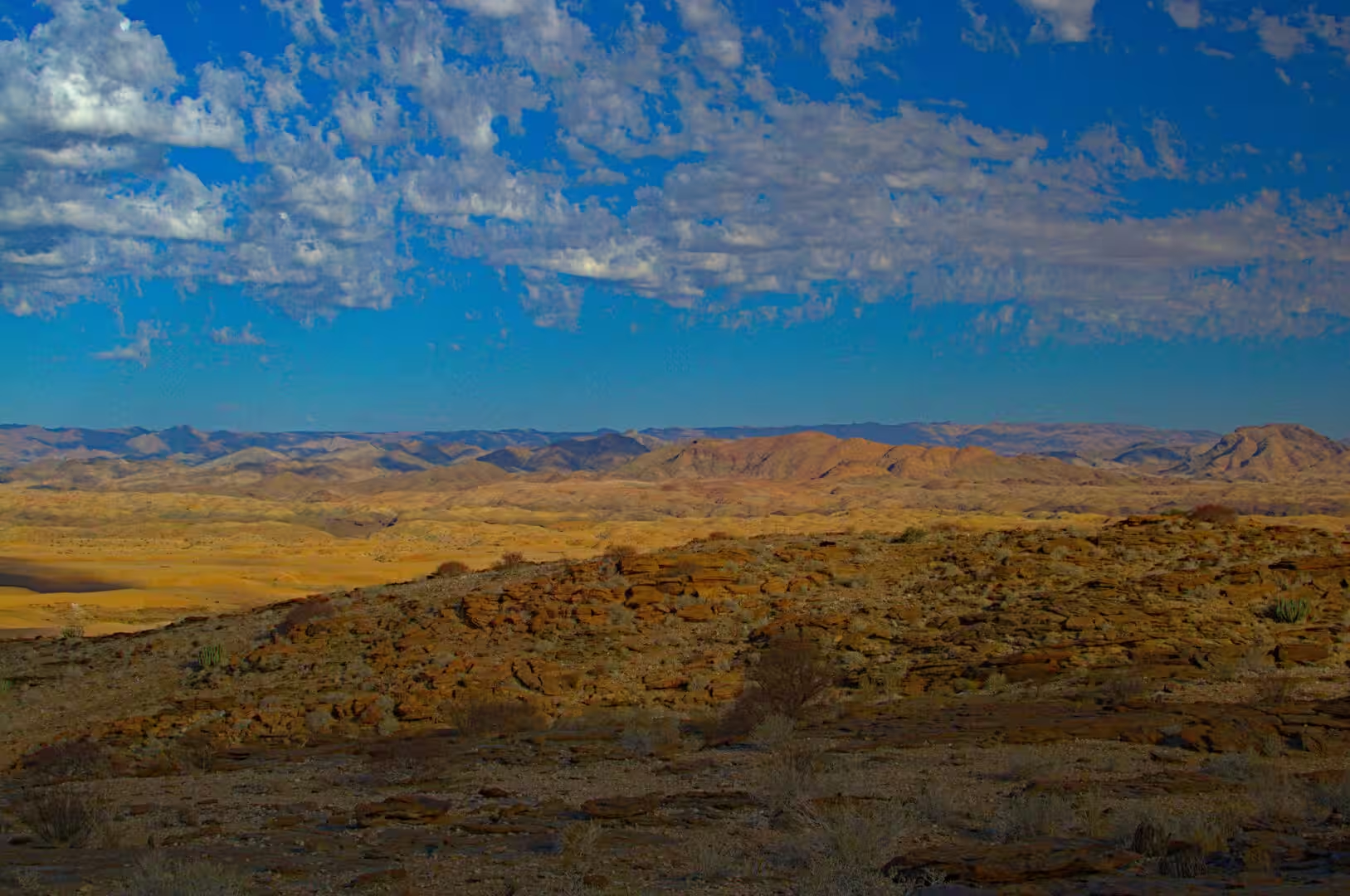
The mountains that close the view are the inselbergs of the interior. They are blocks of granite and of the older metamorphic rocks that have survived the erosion of everything around them, and the light at the end of the day turns them from grey to pink to purple. Between them and the dunes lie the dry rivers of the desert, the Tsondab and the Koichab and the others, whose beds carry water once in a decade and whose sands are the corridors that the animals and the travellers use.
The water of the region is the reason it is so empty. The rain that falls on the interior evaporates, the rivers of the west die in the sand, and the whole of the central Namib is a desert without surface water except for the flash floods of the mountains. The farms and the lodges of the region live from the groundwater of the riverbeds, the animals of the desert from the moisture of the plants and the fog that reaches the coast, and the travellers from the water that they carry in their tanks. It is the most convincing lesson in the value of water that a journey offers.
Things to See
Solitaire itself is the stop of the day and should be made the most of. The fuel station fills the tanks of the desert, the shop sells everything from water to tyre repair kits, the bakery behind the counter makes the cakes and the pies that the travellers queue for, and the lodge has the only restaurant between the dunes and the coast. The yard with the old cars is free to walk through, and the ritual of the stop people take beside the rusted wrecks are the proof that they were there.
The zebras are the wildlife of the day and the reason to drive slowly on the plains. The mountain zebras of the Namib are found nowhere else in the same numbers, they graze in the early morning and the late afternoon, and they cross the roads of the region in herds that can be twenty animals strong. The visitor who sees a white-bellied zebra with the narrow stripes of the mountain race on a stony plain beside the dunes will understand why the place is on the itinerary of every traveller in the country.
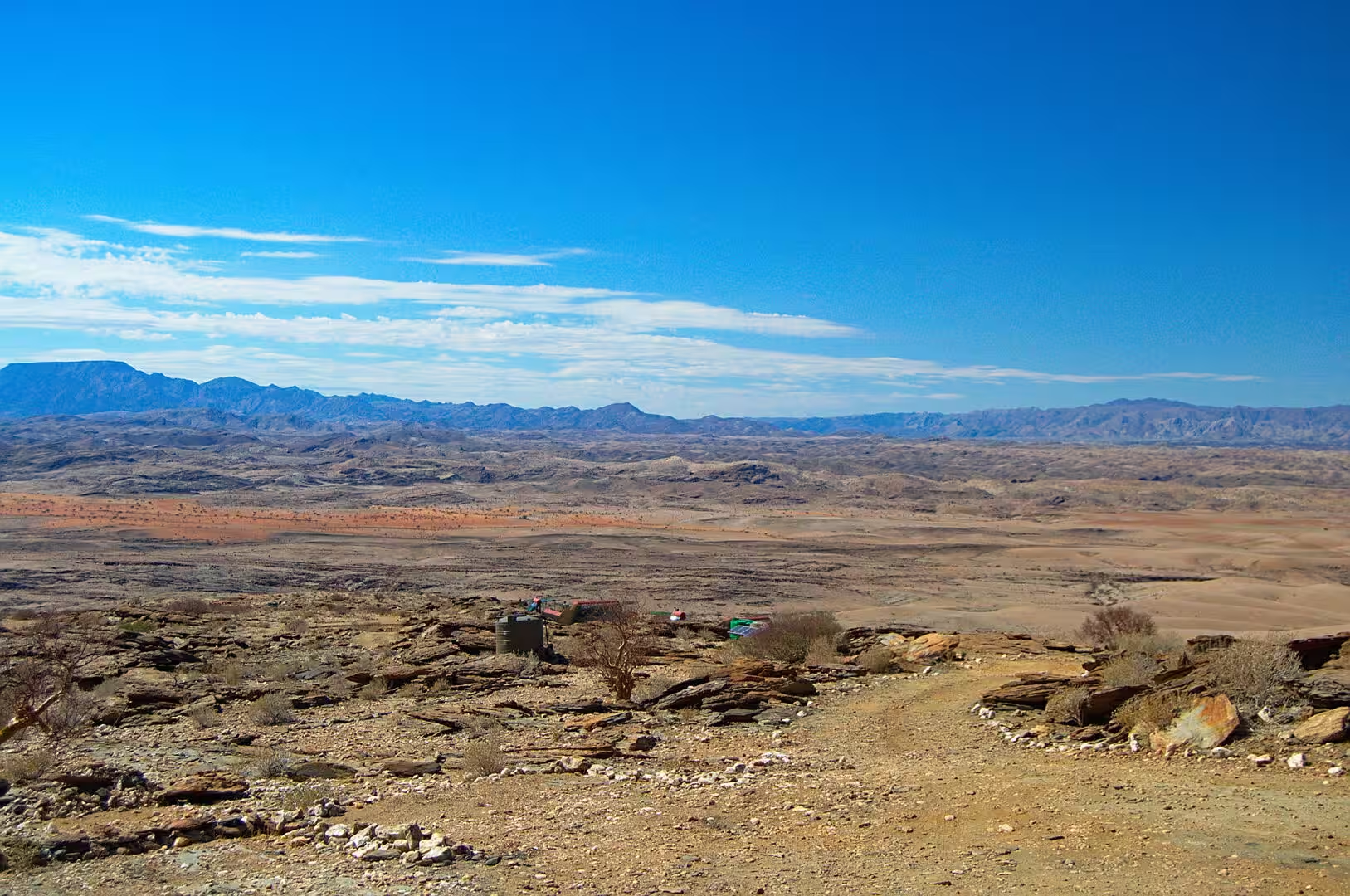
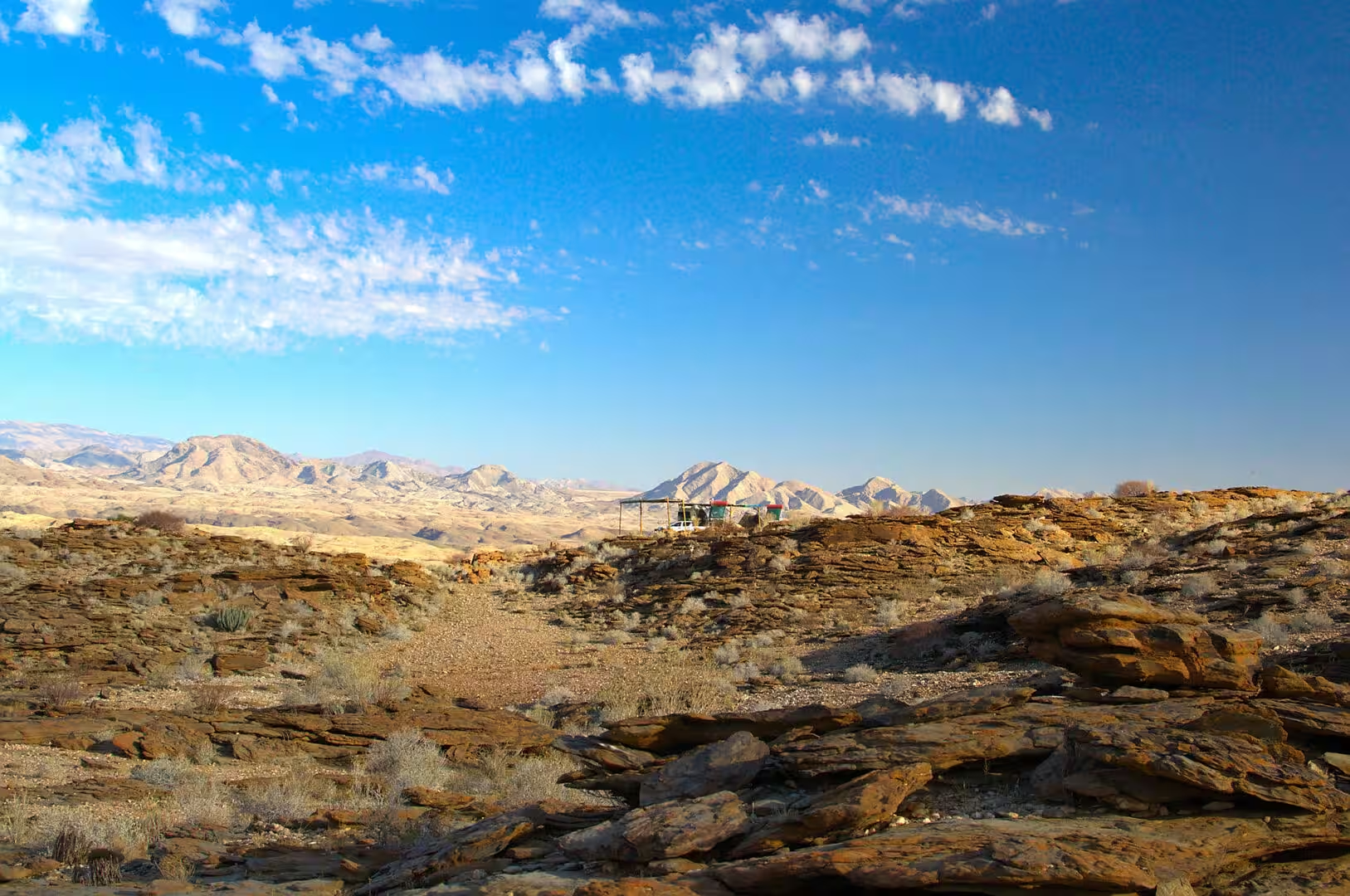
The viewpoint over the valley is the other stop of the day. The lodge and the camp of the night look over a landscape of low hills, sand belts and dry basins that stretches for thirty kilometres to the mountains, and the light of the late afternoon turns the whole of it orange and shadow. The picnic tables on the terrace face the sunset, the pool is welcome in the middle of the day, and the walker can follow the tracks of the farm into the hills behind the camp.
The stars are the attraction of the night and the reason to stay rather than drive on. The sky over the valley has no light pollution within a hundred kilometres, the Milky Way stands across it in a band that covers half the sky, and the Magellanic Clouds and the dark Coalsack are visible with the naked eye. The traveller who takes a chair out after dinner and waits for the eyes to adapt will see satellites, meteors and the changing colours of the stars of the southern sky, and will understand why the reserves of the region have been recognised for the darkness of their nights.
The practicalities of the day are the practicalities of every day in the Namib. The distances are long and the services are rare, the fuel at Solitaire should be taken even if the tank is half full, the water cans should be topped up whenever there is a tap, and the animals on the road are the danger at dusk. The roads are gravel, the corrugations shake the vehicle to pieces if they are taken quickly, and the dust gets into everything. The traveller who accepts that and slows down will arrive at the camp relaxed, which is the only way to arrive in the desert.
The camp of the valley deserves a word of its own because it is the kind of place that the self drive travellers of southern Africa build their journeys around. The pitches are set in the trees along the dry riverbed, the ablutions are clean and the water is hot, the pool faces the dunes, and the restaurant serves the kind of food that a day in the desert earns. The owners and the staff know the roads and the conditions, they will fill the water cans and check the tyres, and the information that they give at breakfast is worth more than any guidebook.
References
- Wikipedia contributors (2026). Solitaire, Namibia. en.wikipedia.org/wiki/Solitaire%2C%20Namibia
- Wikipedia contributors (2026). Namib-Naukluft National Park. en.wikipedia.org/wiki/Namib-Naukluft%20National%20Park
- Wikipedia contributors (2026). Namib. en.wikipedia.org/wiki/Namib
- Wikipedia contributors (2026). Sossusvlei. en.wikipedia.org/wiki/Sossusvlei
- Wikipedia contributors (2026). Sesriem. en.wikipedia.org/wiki/Sesriem
- Wikipedia contributors (2026). Naukluft Mountains. en.wikipedia.org/wiki/Naukluft%20Mountains
- Wikipedia contributors (2026). NamibRand Nature Reserve. en.wikipedia.org/wiki/NamibRand%20Nature%20Reserve
- Wikipedia contributors (2026). Hardap Region. en.wikipedia.org/wiki/Hardap%20Region
- Wikipedia contributors (2026). Springbok. en.wikipedia.org/wiki/Springbok
- Wikipedia contributors (2026). Oryx. en.wikipedia.org/wiki/Oryx
- Wikipedia contributors (2026). Common ostrich. en.wikipedia.org/wiki/Common%20ostrich
- Wikipedia contributors (2026). Namibia. en.wikipedia.org/wiki/Namibia
- Lancaster N. (2026) Dune Sediments. The Namib Sand Sea. 47-80. doi.org/10.1201/9781003763185-4
- Nørgaard T., Dacke M. (2010) Fog-basking behaviour and water collection efficiency in Namib Desert Darkling beetles. Frontiers in Zoology. 7. 23. doi.org/10.1186/1742-9994-7-23
- Seely M., Lewis C., O’Brien K., Suttle A. (1983) Fog response of tenebrionid beetles in the Namib Desert. Journal of Arid Environments. 6. 135-143. doi.org/10.1016/s0140-1963(18)31526-x