2021 Italy - Omegna
15 September 2021













Journal Notes
General
Omegna sits at the northernmost point of Lake Orta, about a hundred kilometres northeast of Turin and thirteen kilometres southwest of Verbania, and it is a town cut in two by water. The lake ends here and leaves the basin as the Nigoglia, the short river that crosses the whole built-up area on its way north, and the Strona comes down from the mountains to meet it. Omegna belongs to the province of Verbano-Cusio-Ossola, has a Thursday market along the lakeside boulevard and a daily ferry service that links it with the villages on the other shores.
The lake has carried the name of a saint for most of its recorded history. Until the sixteenth century it was called Lago di San Giulio after Julius of Novara, the evangelist of the fourth century who gave the island in the middle of the water its name, and the older name of the whole basin is Cusio. Lake Orta lies west of Lake Maggiore and about thirty-five kilometres northwest of Novara, its shores belong to Omegna in the north, Orta San Giulio in the east, Pettenasco and Pella, and the first European rowing championships were rowed on it in 1893.
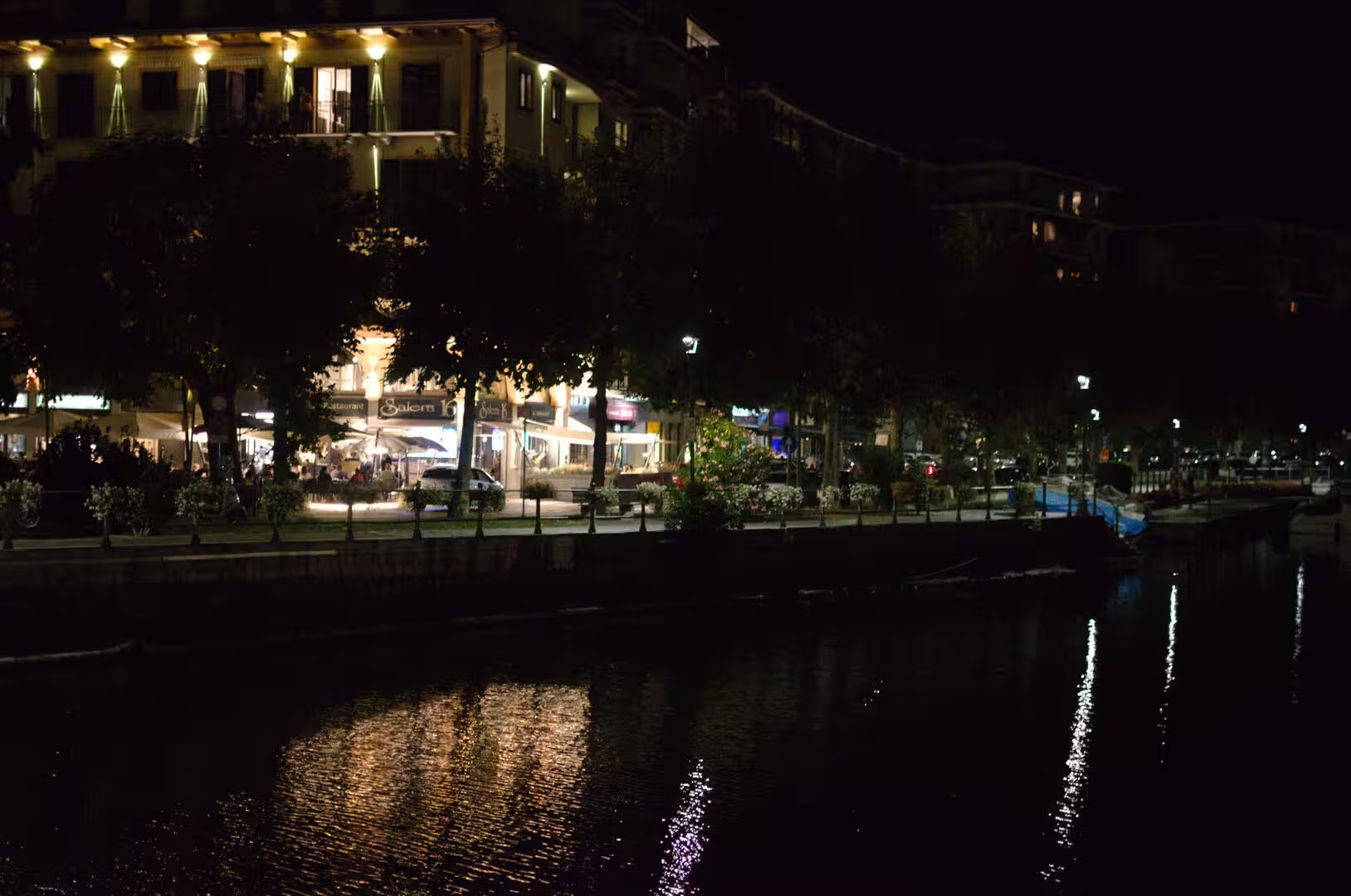
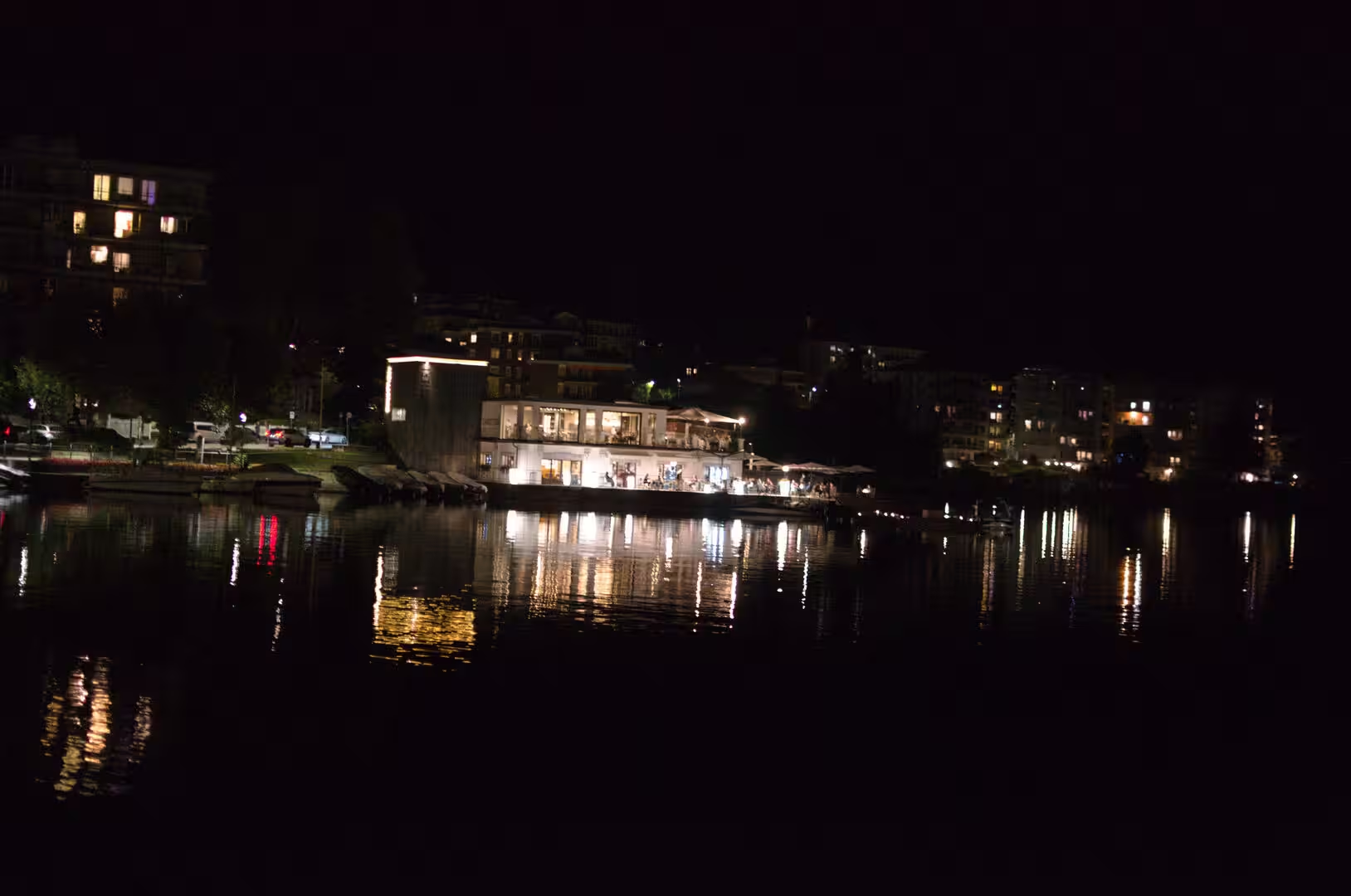
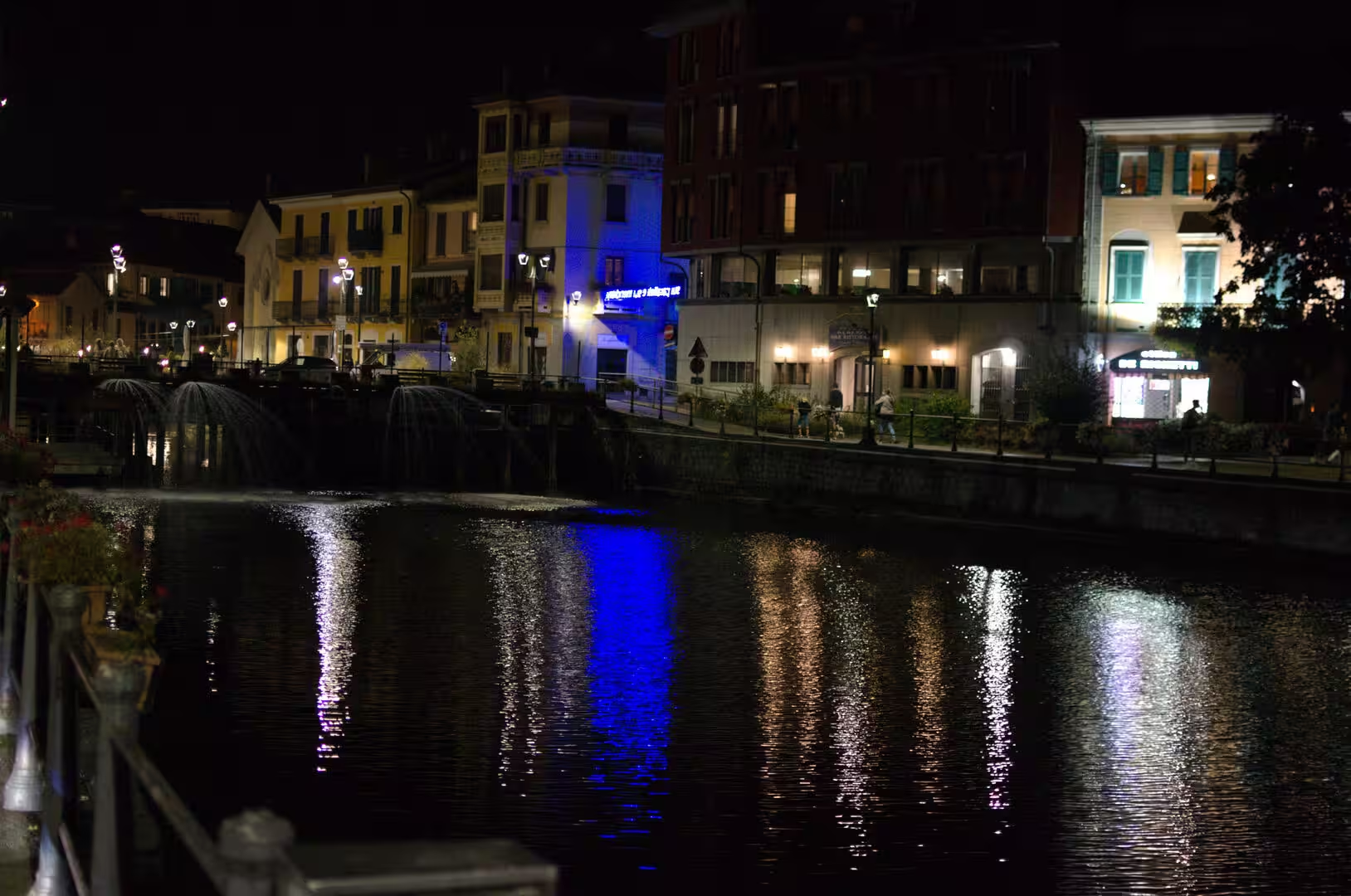
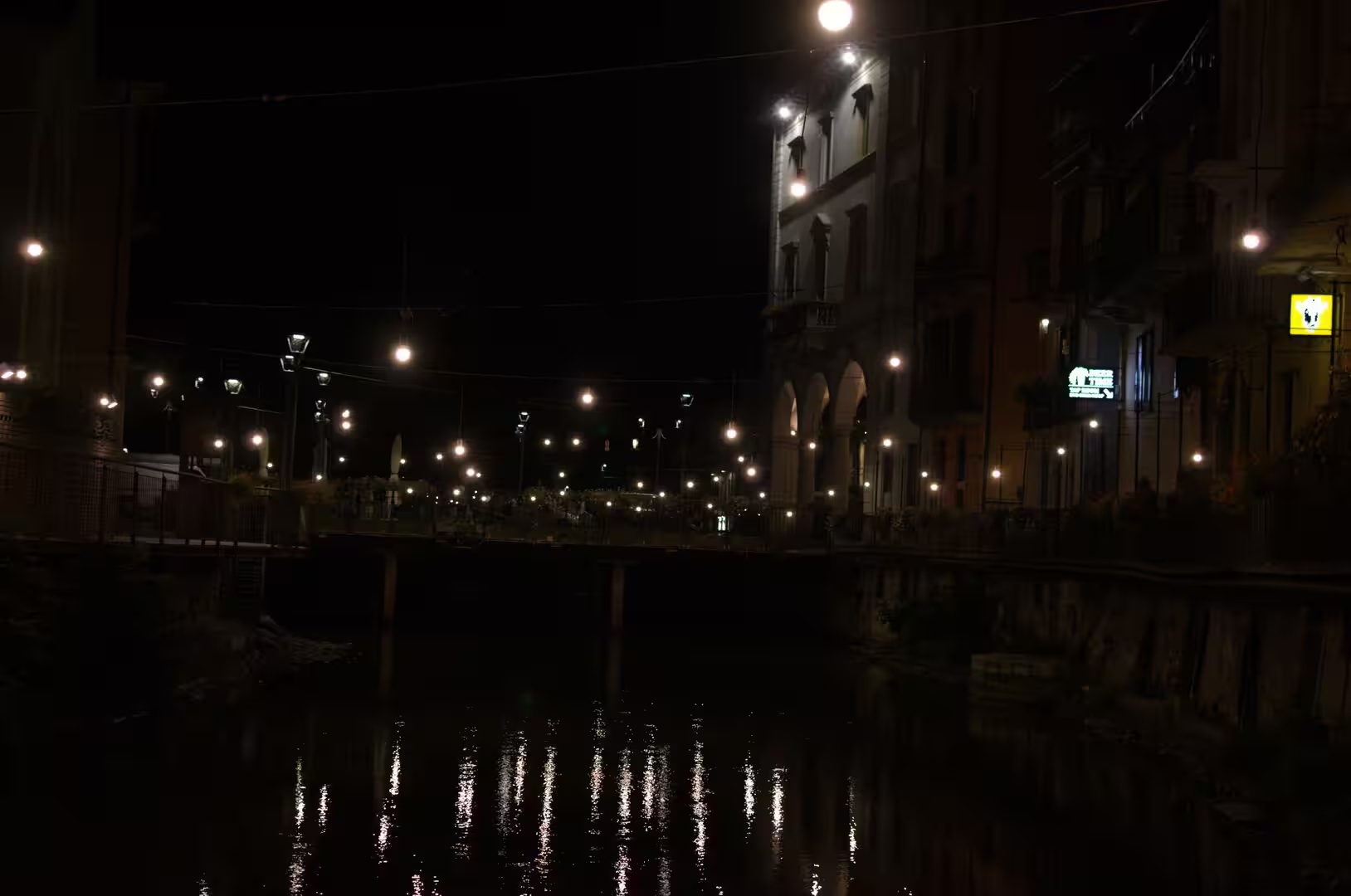
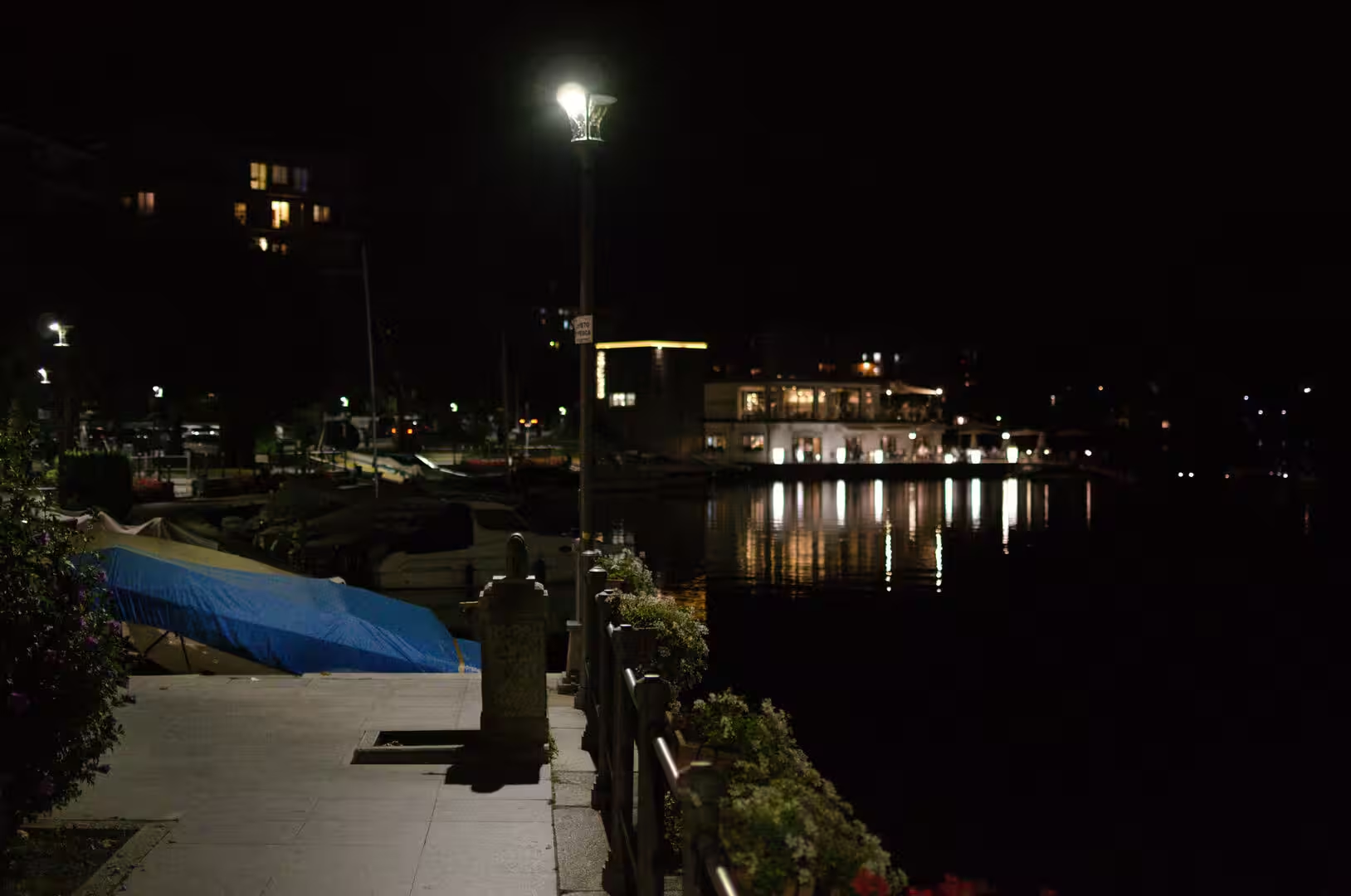
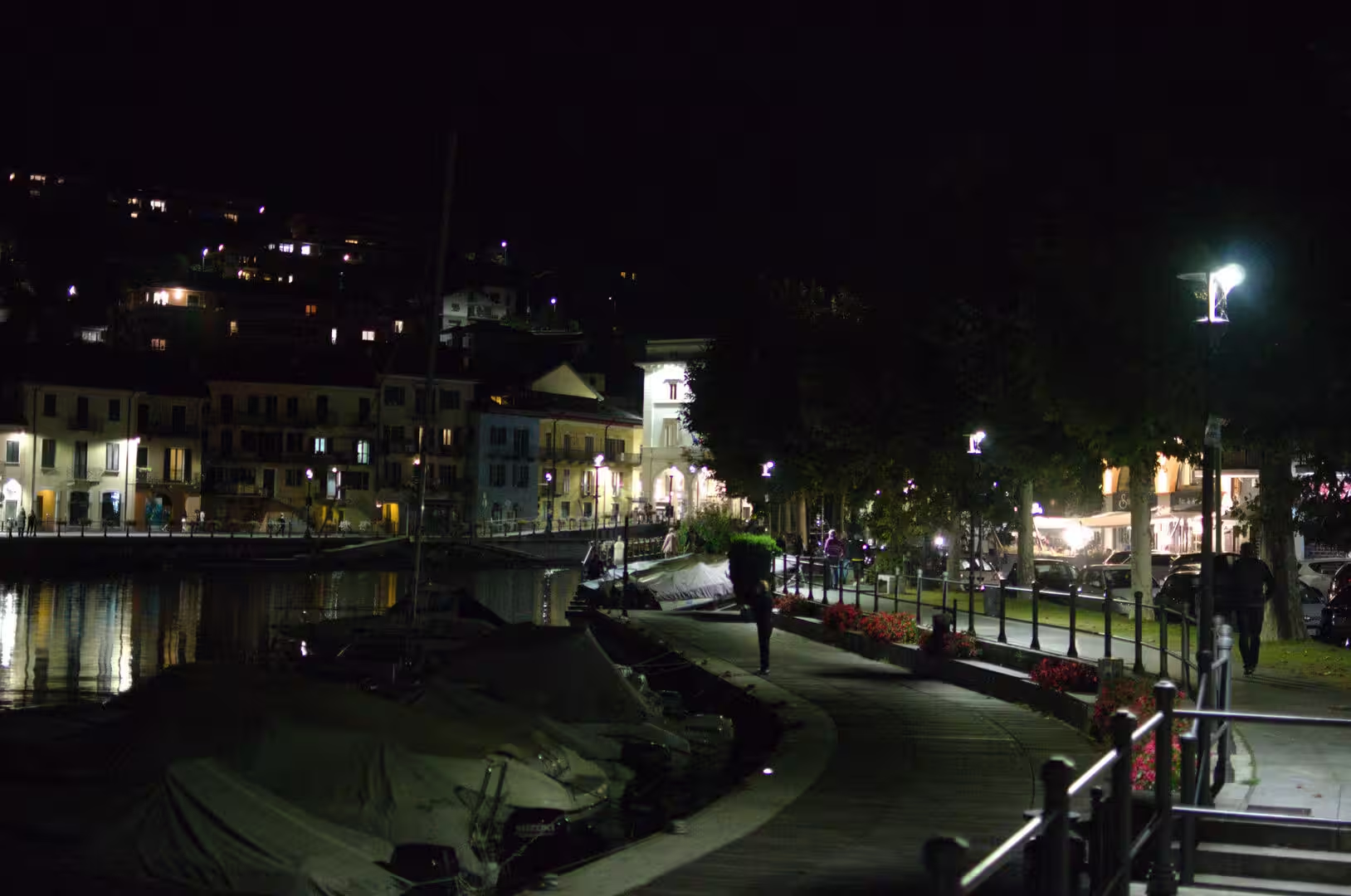
In the evening the town turns towards its own water. The boulevard fills with people, the awnings and the cafe tables along the quay light up, and their reflections spread over the surface until the lake looks like a second town lying on its side. The boats moored at the piers rock under their covers, the lamps are still on, and the far shore is a thin line of lights under the dark of the mountains. It is the hour in which Omegna is at its best and the one the day’s walking is usually planned around.
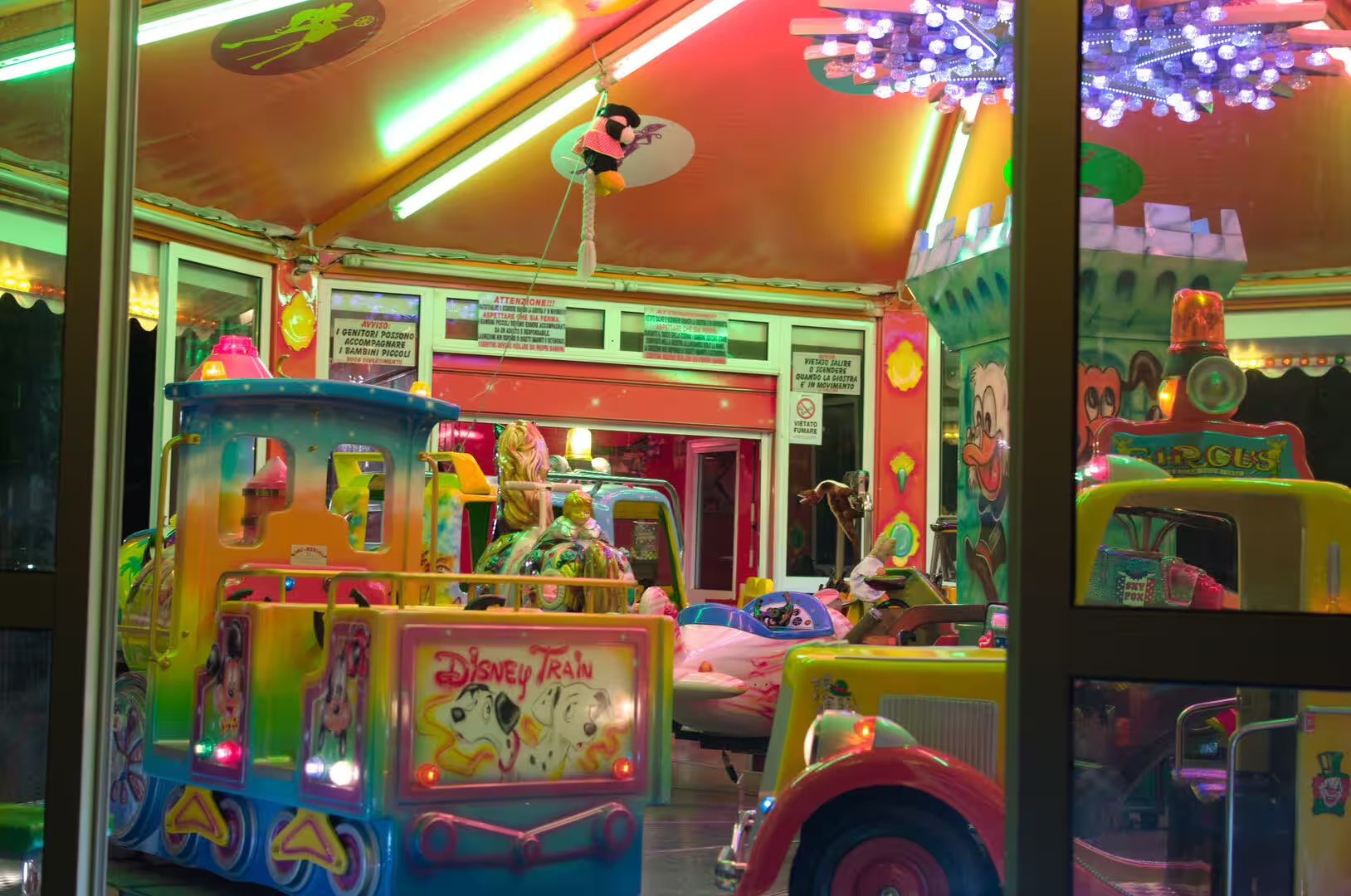
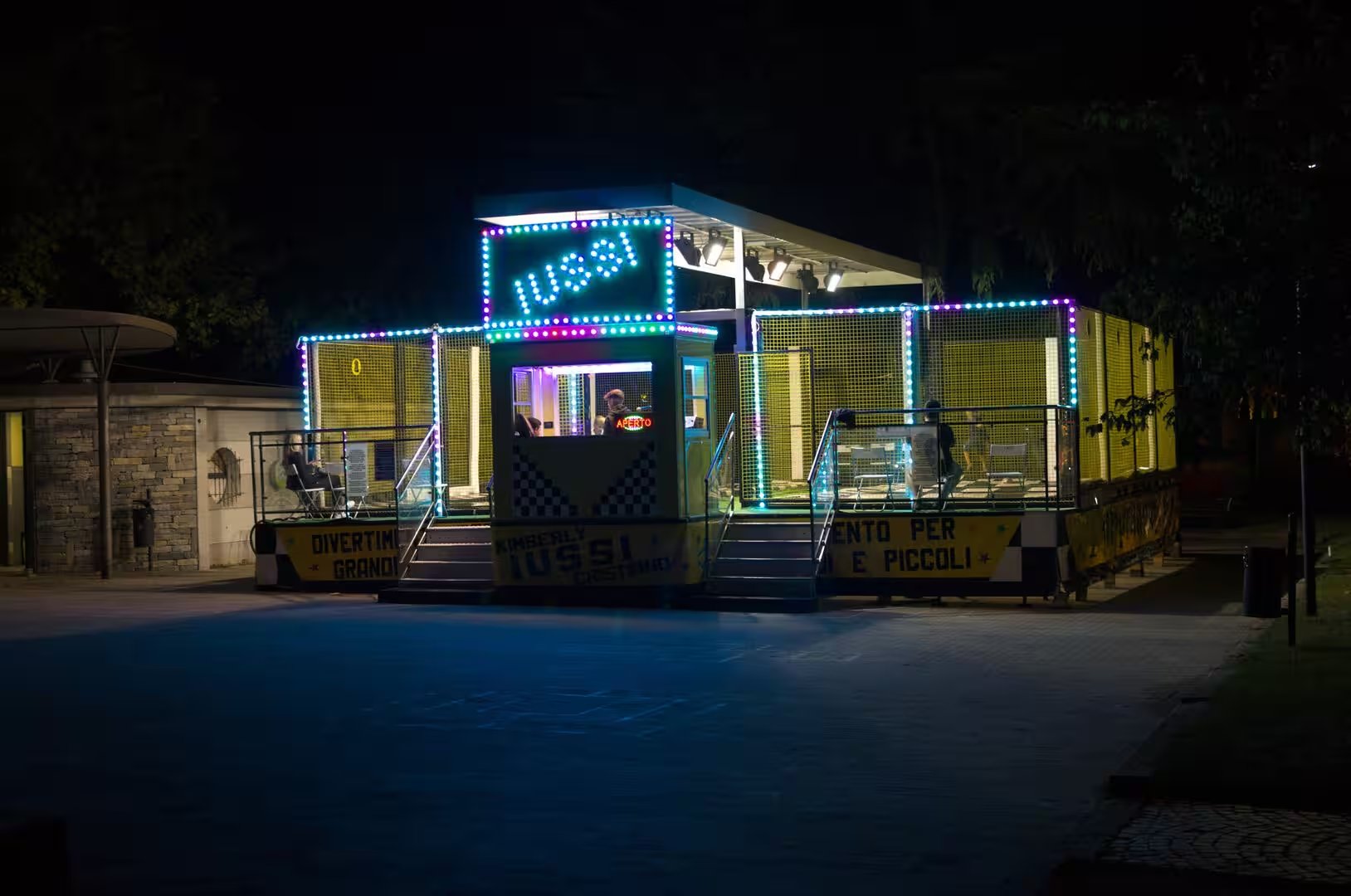
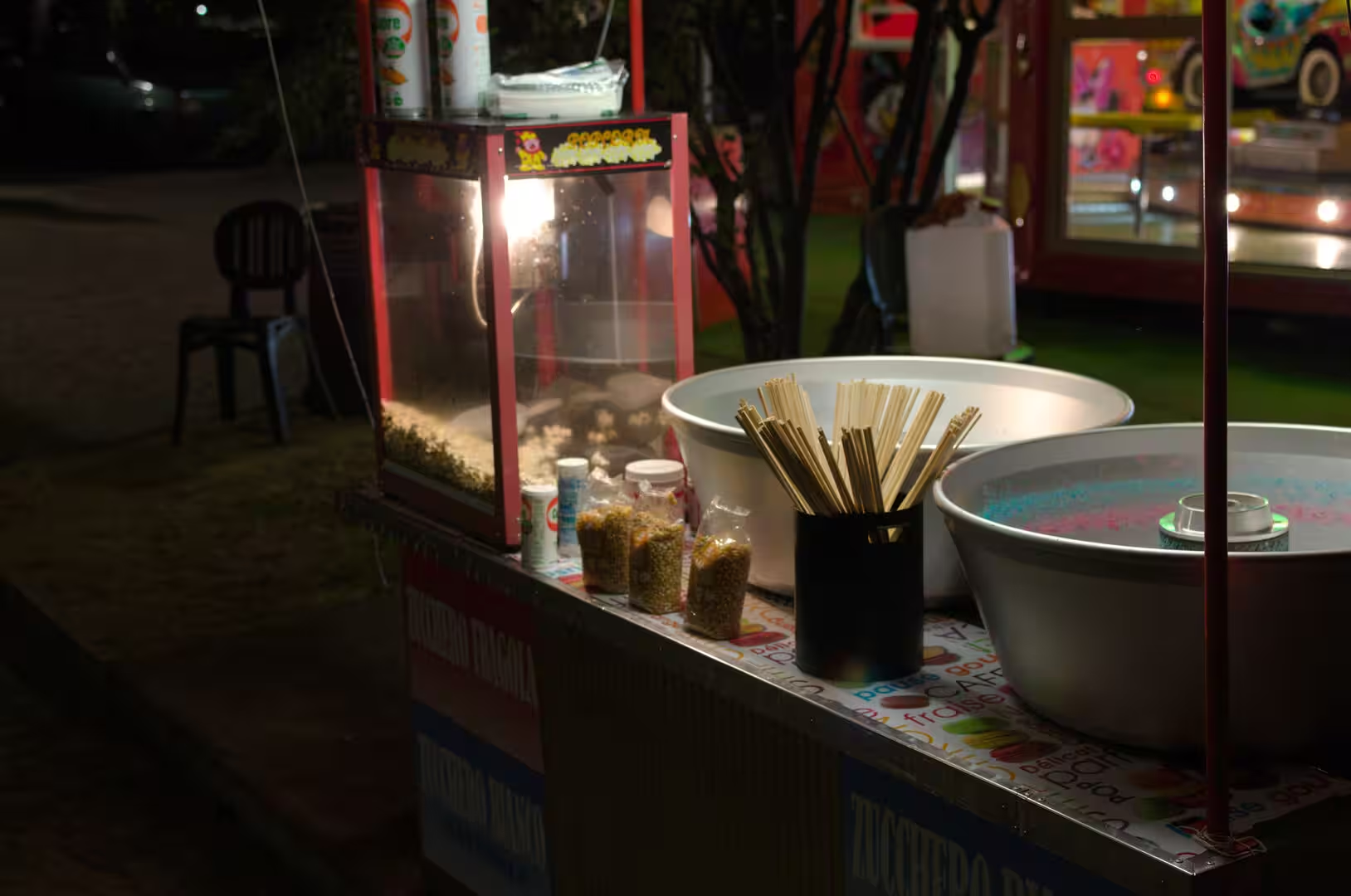
Summers in an Italian town of this size are also fairground summers. A travelling fair sets up near the water with children’s rides, a carousel, a train that glows in the dark, food carts with boiling pots and a machine that spins sugar into cotton, and stands selling candied nuts and sticks. Families come after dinner, the children queue twice for the same ride, and the noise of the fair mixes with the splash of the lake against the quay. Nothing about it is grand, and it is exactly the ritual that a lakeside community keeps.
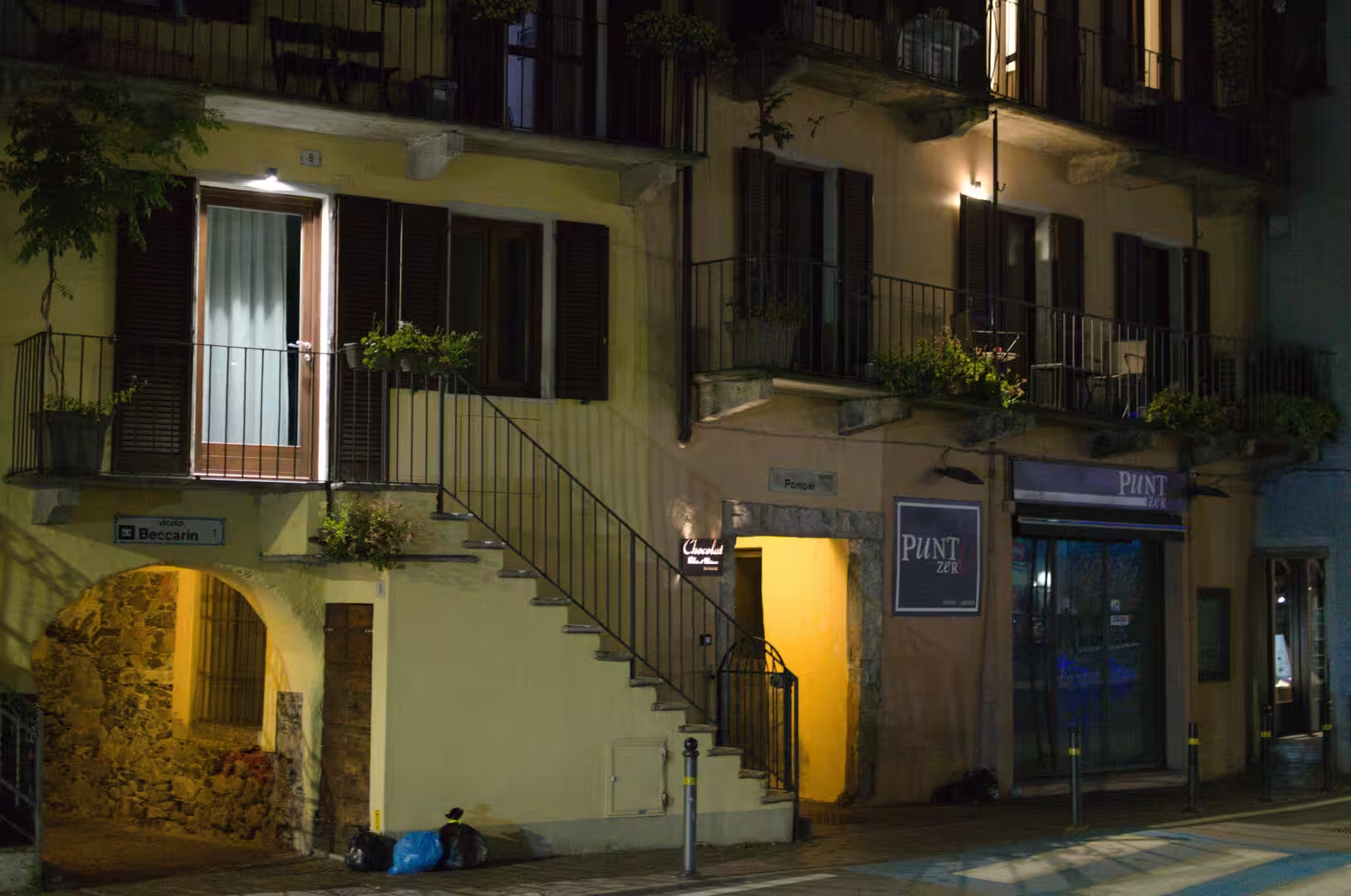
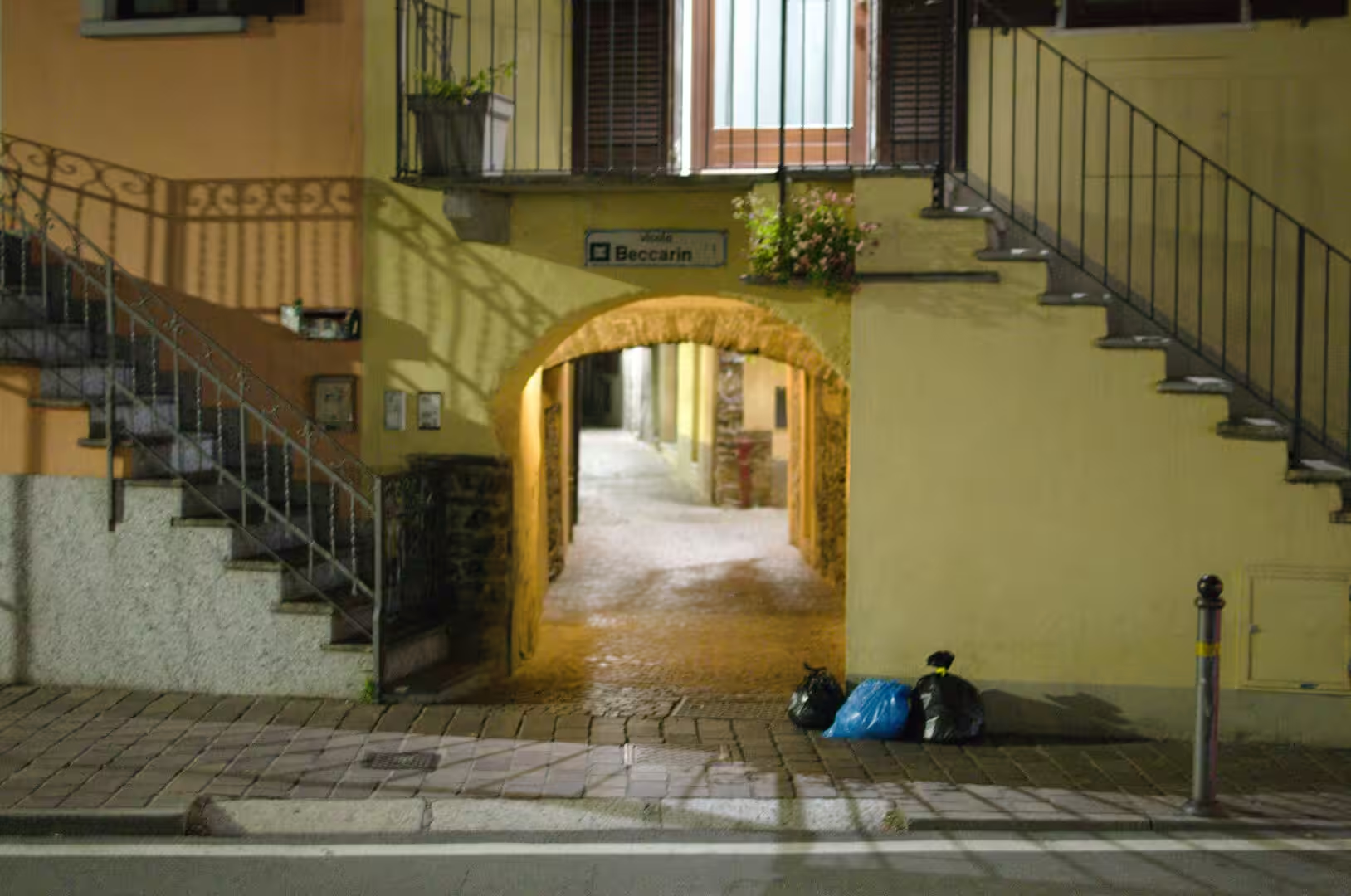
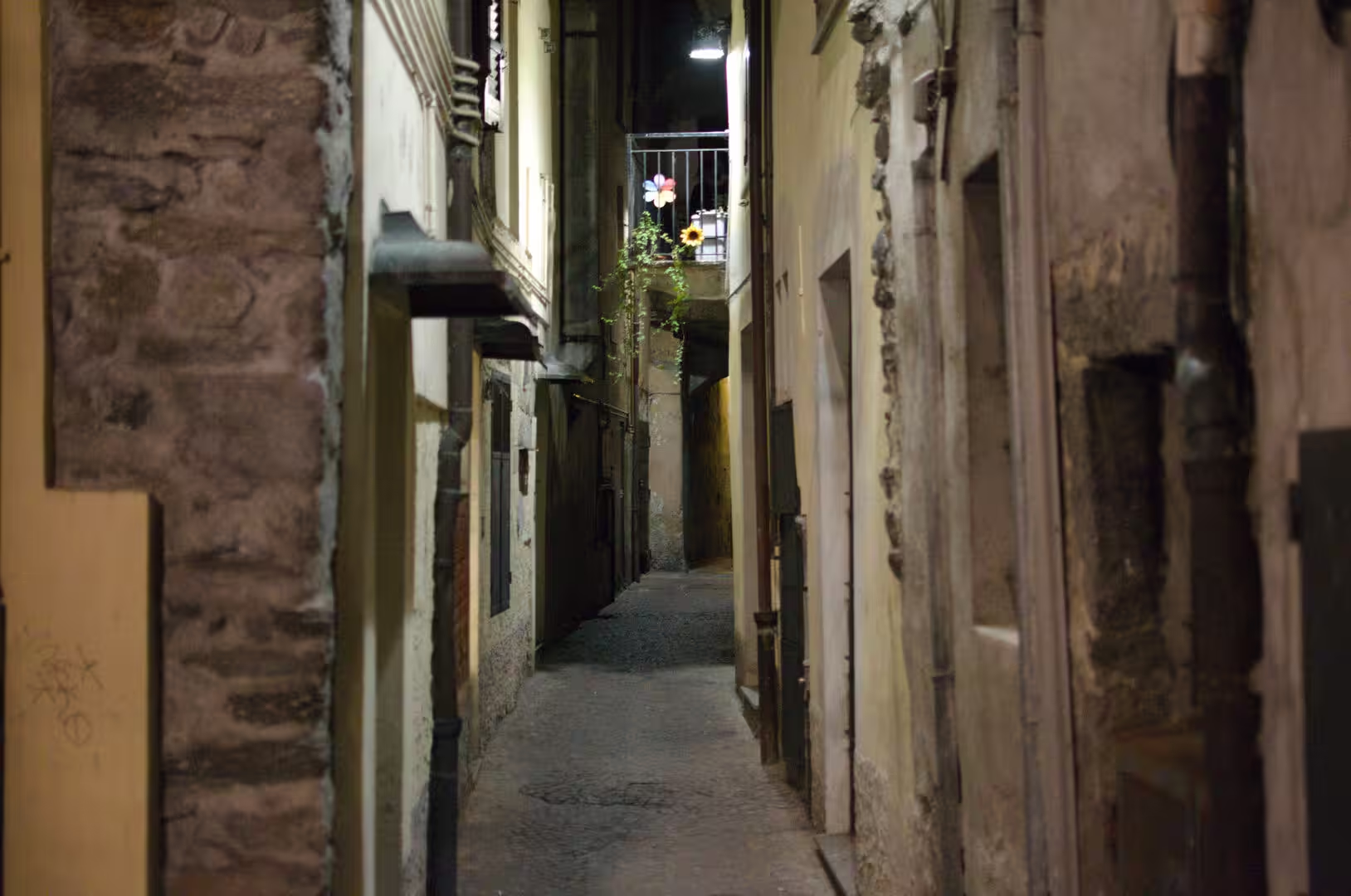
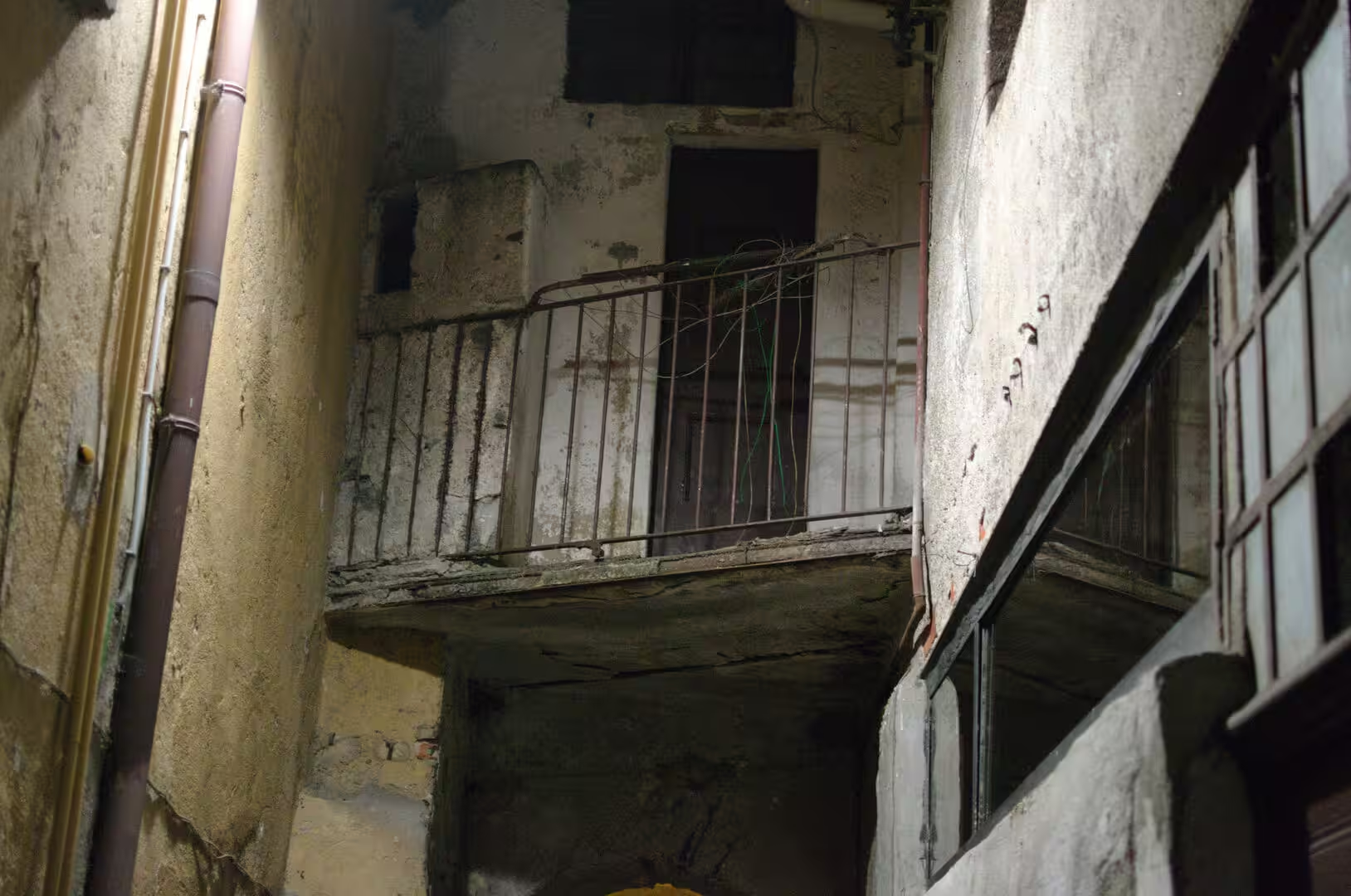
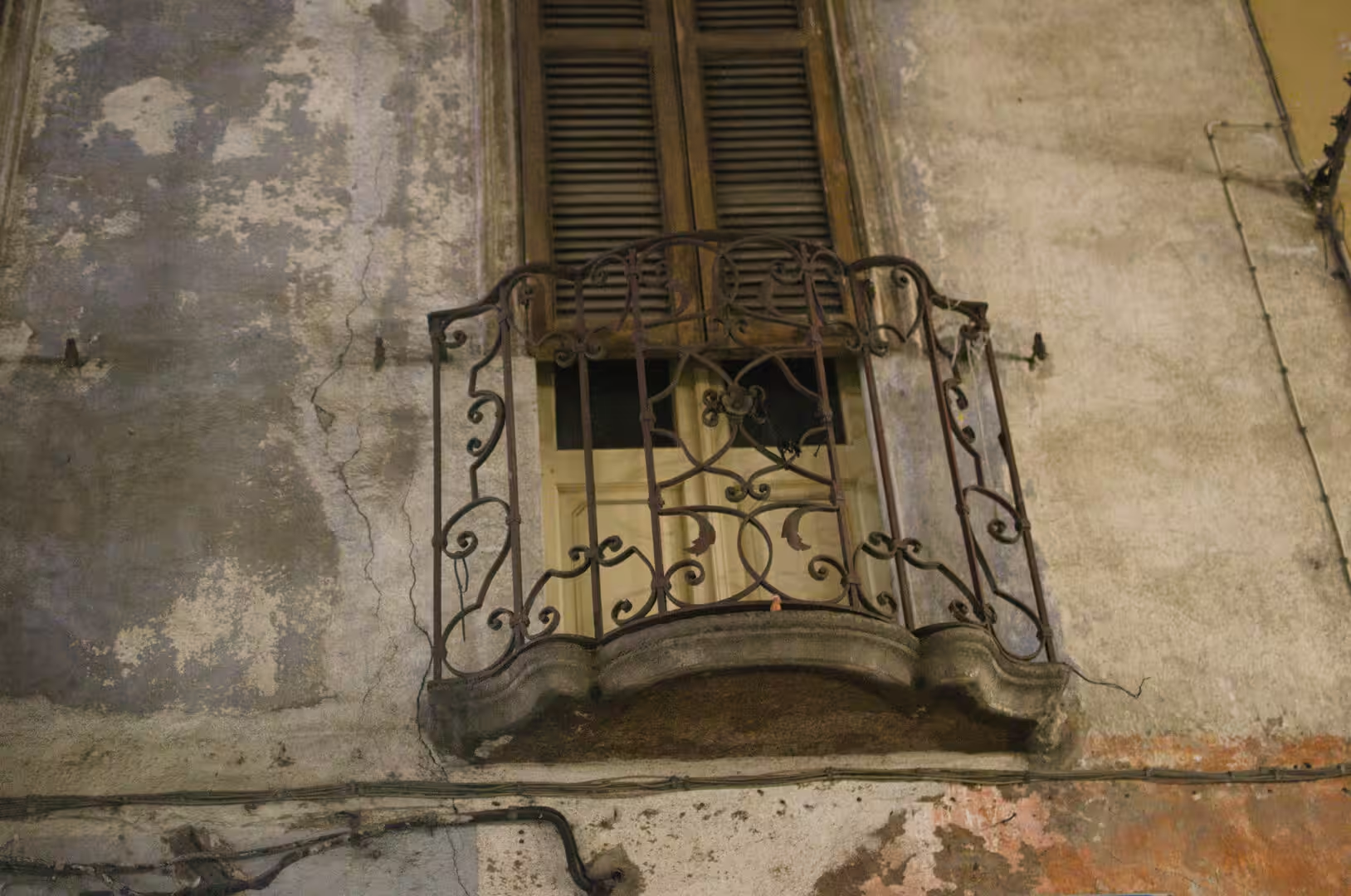
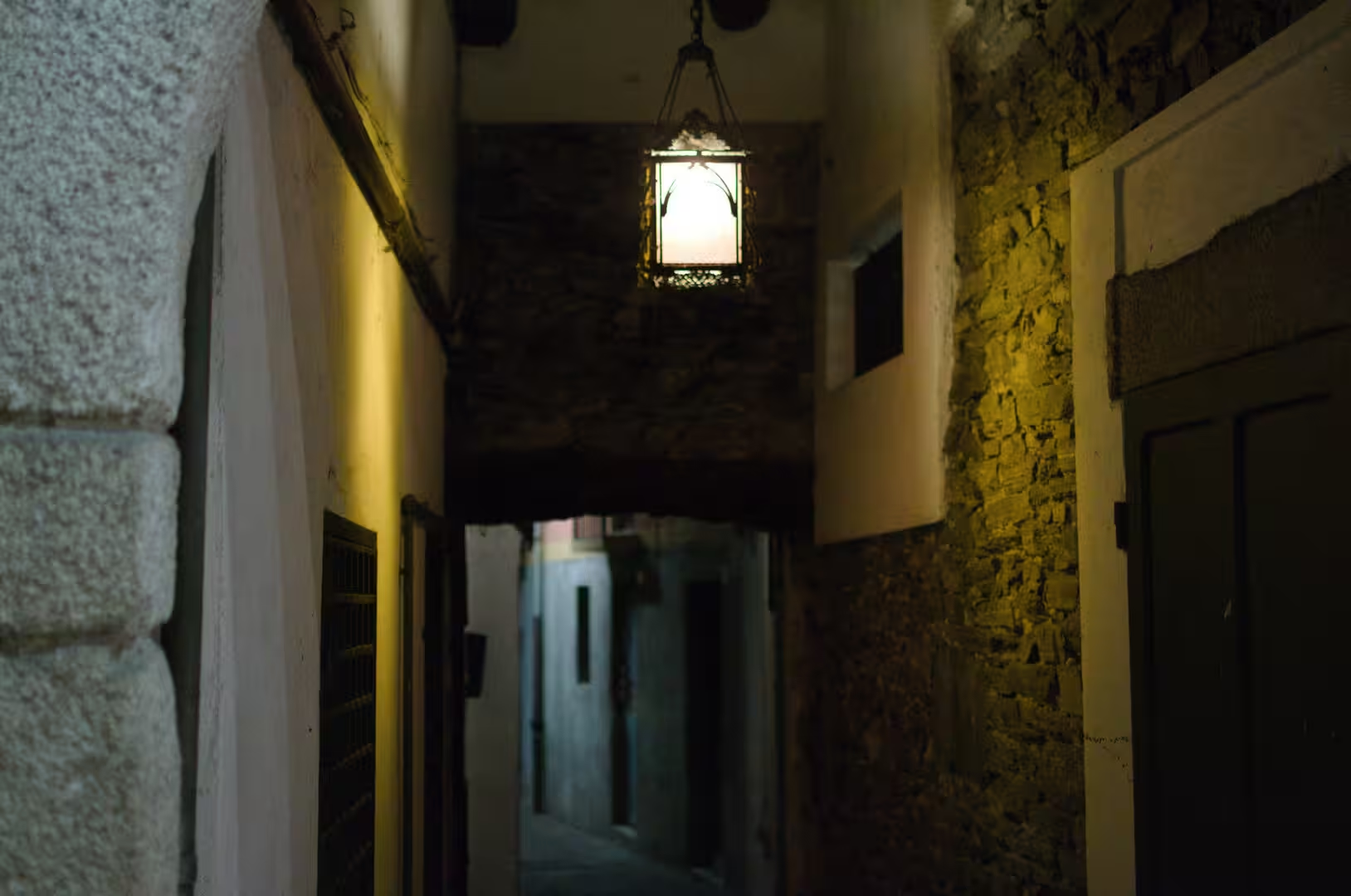
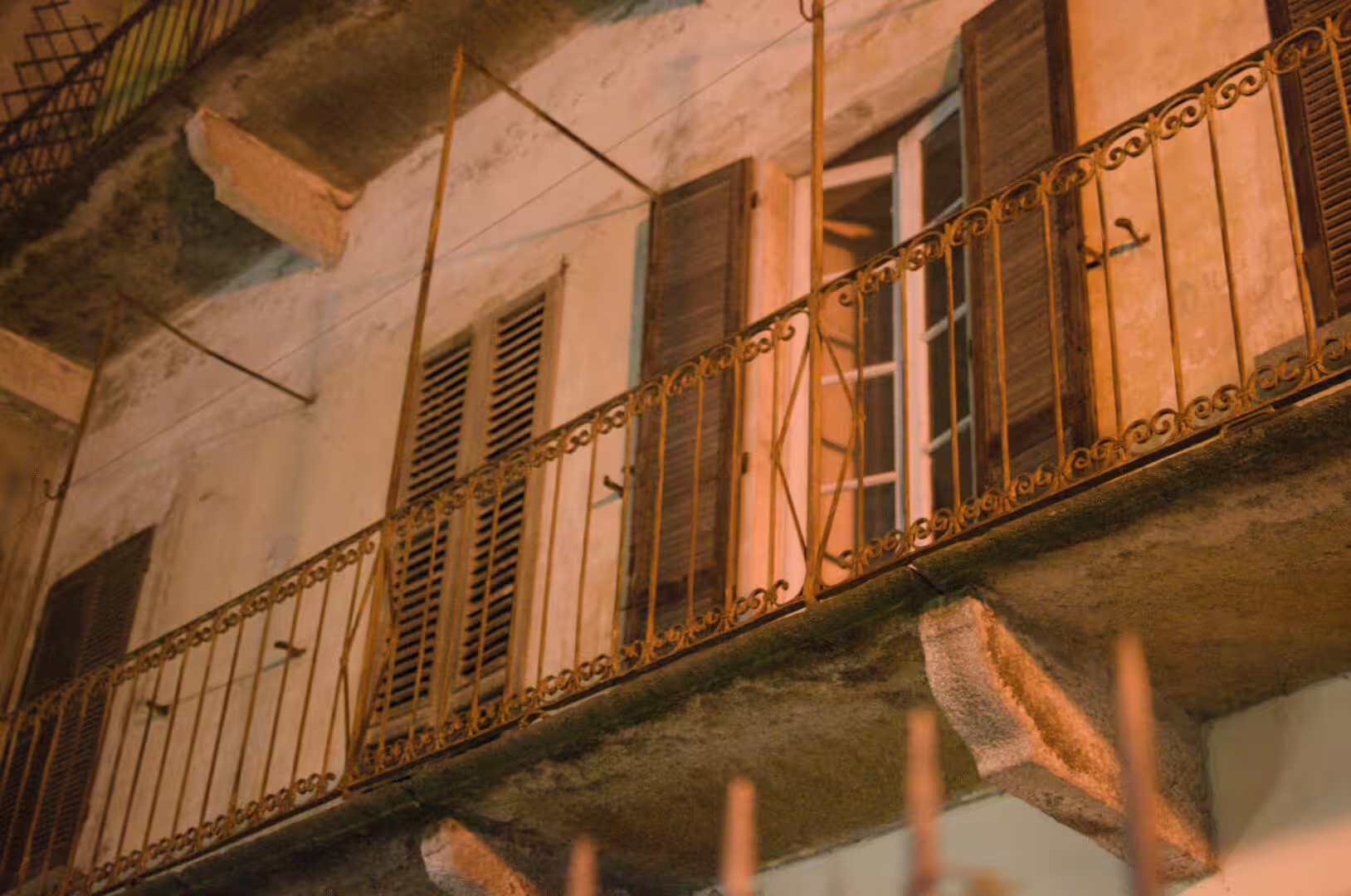
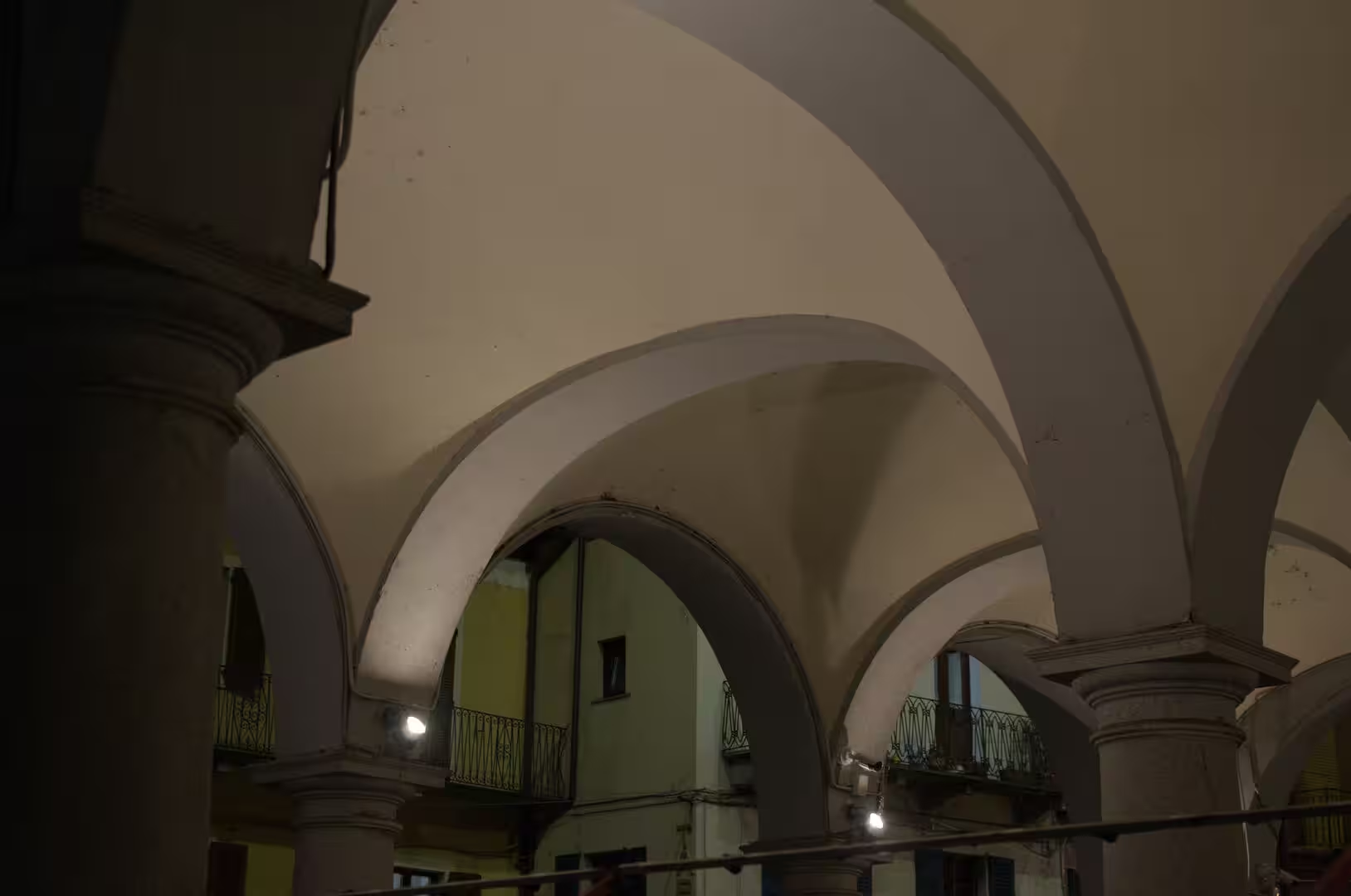
Behind the waterfront the town is a maze of alleys that were not built for visitors. Lanes climb between plaster walls that have been repaired many times, with balconies of iron and wooden shutters, stone staircases that lead up to an arched passage and lamps that light only a few metres of the way. Some of the arches belong to old porticoes, and under them the street becomes a room. Omegna is small enough to be crossed in twenty minutes and dense enough that the crossing takes an evening.
History
The ground under the town has been lived on for a long time. Excavations in the hamlet of Cireggio have brought up finds from the late Bronze and the Iron Age, and Omegna is first mentioned in documents in 1221, when its population swore allegiance to the commune of Novara. Of the five medieval gates that once closed the town only the Porta della Valle has survived, a structure of about 1100 that is also called the Roman gate, and the Ponte Antico has carried the road over the Strona since the fifteenth century.
The church of Sant’Ambrogio is the oldest monument of the town: a late-Romanesque building with a nave and two aisles, side chapels and a bell tower that is still largely medieval, though the interior was redecorated in the Baroque period. It keeps an altarpiece painted by Fermo Stella da Caravaggio in 1547 and the urn with the relics of Saint Vith, the patron of Omegna. The religious year of the town still runs through this building, and its position above the old centre is the reason the alleys below it are as narrow as they are.
Industry arrived in the nineteenth century and changed the town for good. Omegna developed into Italy’s principal centre for pots and small household appliances, a district of foundries and workshops that later became known for its coffee makers and its cookware, and the population grew quickly with workers arriving from the surrounding valleys; in 1913 an electric tramway connected the town with Pallanza, and in 1939 Omegna was declared a city. The craftsmen of the district worked metal with methods the valley had used for generations, and the warehouses on the water are the visible remains of that period.
The twentieth century also left a darker record in the lake. Lake Orta became one of the most heavily polluted lakes in Europe in the course of industrialisation, and the recovery that followed, with the closing of the discharges and the liming of the water, is one of the best documented lake restorations on the continent. Omegna and its neighbours now present the lake as clean water again, and the memory of the damage is part of the local story: a town that lived from the industry that spoiled its lake and then spent decades repairing it.
Omegna was a centre of the partisan resistance during the German occupation, in the mountains between the lake and the Ossola valleys where the partisans held a republic of their own in 1944. In 1920 the writer Gianni Rodari was born in the town, the son of a baker who died when the boy was eight; Rodari trained as a teacher, worked as a journalist and became the most important Italian children’s author of the century, honoured with the Hans Christian Andersen Medal in 1970. His story of Baron Lamberto ends with the motto of the Nigoglia, the river of his birthplace, and the town has kept the connection.
Geology
Lake Orta is a glacial basin, and the water that fills it is the last remnant of a much larger body. Before the ice retreated, the basin carried the river Toce southwards towards Novara; as the glaciers shrank the flow diminished and was diverted into Lake Maggiore, and what remained behind the moraines became the Cusio as it is today. The northern end, where Omegna stands, is the outflow, and the shape of the shore still follows the lines that the ice left in the rock.
The rocks around the lake are old and hard. Granite, gneiss and porphyry of the southern Alps rise in the hills behind the town, the Mottarone above them is the first real mountain of the chain, and the valleys that open towards the Ossola lead into the higher ranges within a day’s walk. The soil between these rocks is thin, which is why the slopes above the lake carry chestnut woods and terraces rather than fields, and why the water of the basin is as clear as it is when the vegetation on the banks holds the ground.
The Strona, which joins the Nigoglia inside Omegna, is a mountain torrent in the proper sense. It rises near Monte Capezzone at about 2,100 metres, runs the length of the Valle Strona past Valstrona, Massiola, Quarna Sopra, Loreglia and Germagno, and reaches the Toce below Gravellona Toce. Torrents of this kind carry gravel and wood in a single storm, they cut their beds after heavy rain, and the bridges that cross them are built with that in mind. The valley that gave the town its metalworkers is the same valley that supplies its water.
The lake keeps a record of everything that has happened around it. Sediments accumulate in the deep basins, layer on layer, and the limnology of Lake Orta has been read from them and from the water itself for decades; the same principle applies all over the subalpine lake district, where cores of mud preserve the history of erosion, of industry and of the vegetation on the slopes. The water is transparent because the basin is deep and the catchment is small, and the mountains that surround it decide how much of what reaches the lake.
Weather and water set the rhythm of the place. The lake district receives some of the highest rainfall in Italy, cloud collects against the mountains in the afternoon, and the level of the lake depends on snow and rain in the valleys above. Floods on the Strona and on the Nigoglia have damaged the lower town more than once, and the drainage that crosses the centre is not decoration but infrastructure. On the water itself the wind is the only traffic rule that matters to a boat.
Things to See
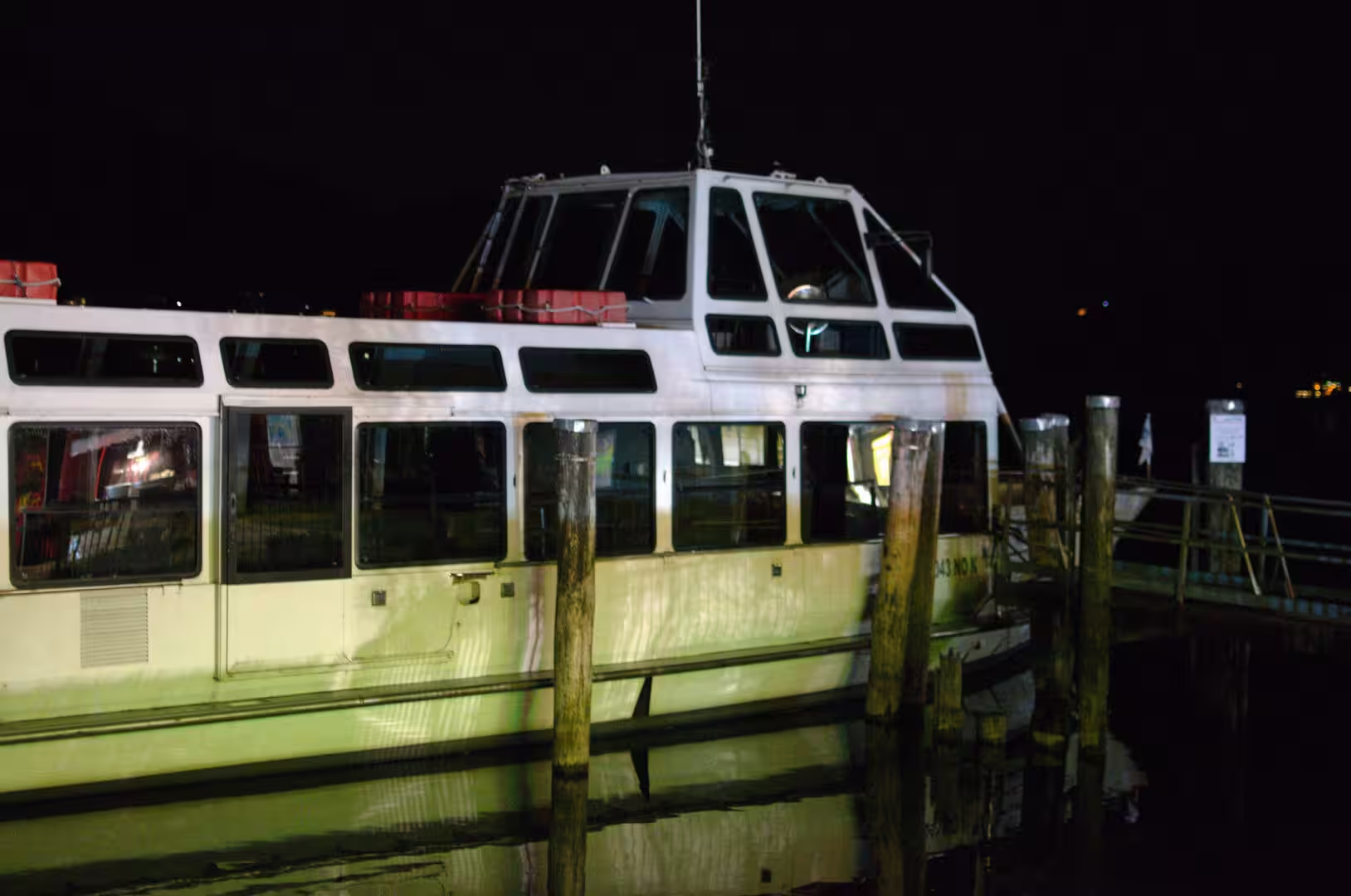
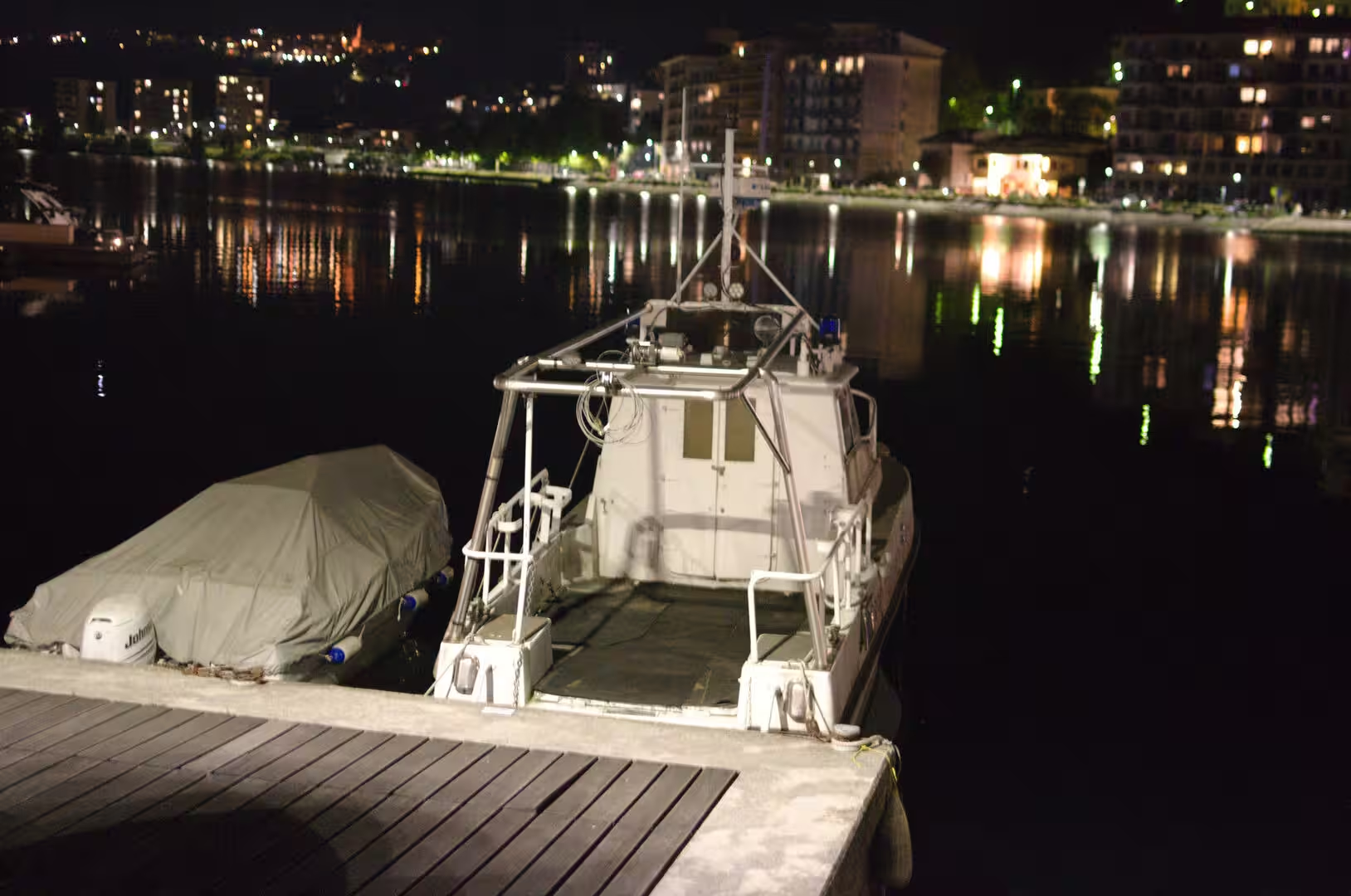
The lakeside boulevard is where the evening begins. The quay runs along the northern shore with the town houses above it, cafes and restaurants open their awnings to the water, and the lamps come on while the last boats return to the piers. The passenger boats that link Omegna with the villages around the lake sleep at the wooden pilings, the quay fills with people who have come for nothing more than a walk, and the reflections do the rest of the work.
The fair is set up beside the water in the warm months. Children’s rides turn with their lights on, a vintage car sits on a carousel stage, an arcade glows with the colours of a fairground, and the food stands boil their pots beside a machine that spins sugar. A concession stand sells candied nuts and sticks, the cashier’s bowls are steel and crowded, and the smell of frying and sugar stays in the air after the rides have stopped. For an evening or two this is the centre of the town.
The old town begins a few steps behind the shore. A lane climbs past balconies and a stone staircase towards an arched passage, external stairs stand on both sides of the way, and the walls change colour with every house: yellow plaster, worn stone, a balcony of coloured pinwheels under a single lamp, iron railings with a pigeon on the ledge. Some of these alleys are so narrow that a single street lamp lights them from end to end, and one of them is a stone passage with two oval lamps on the walls.
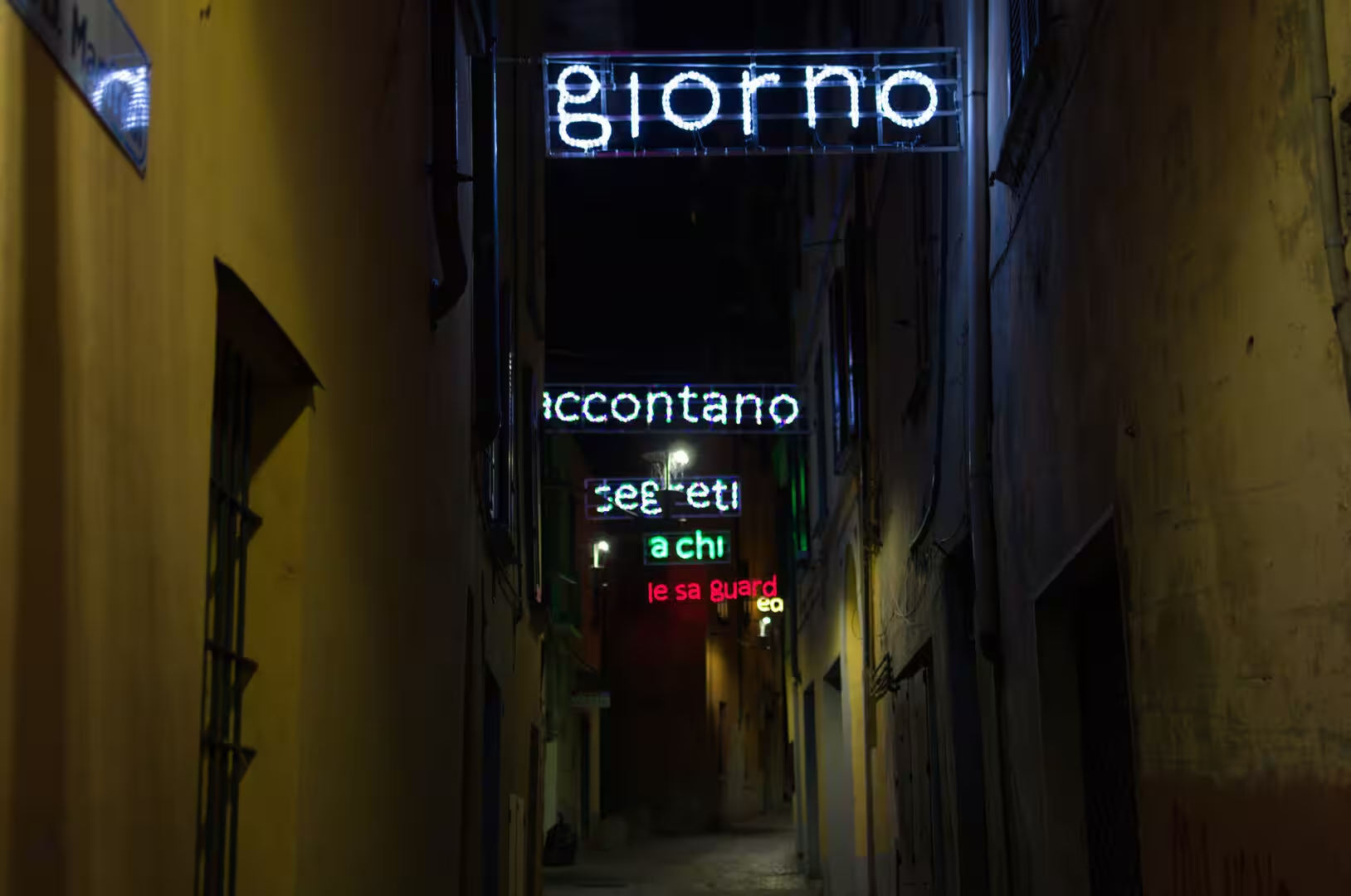
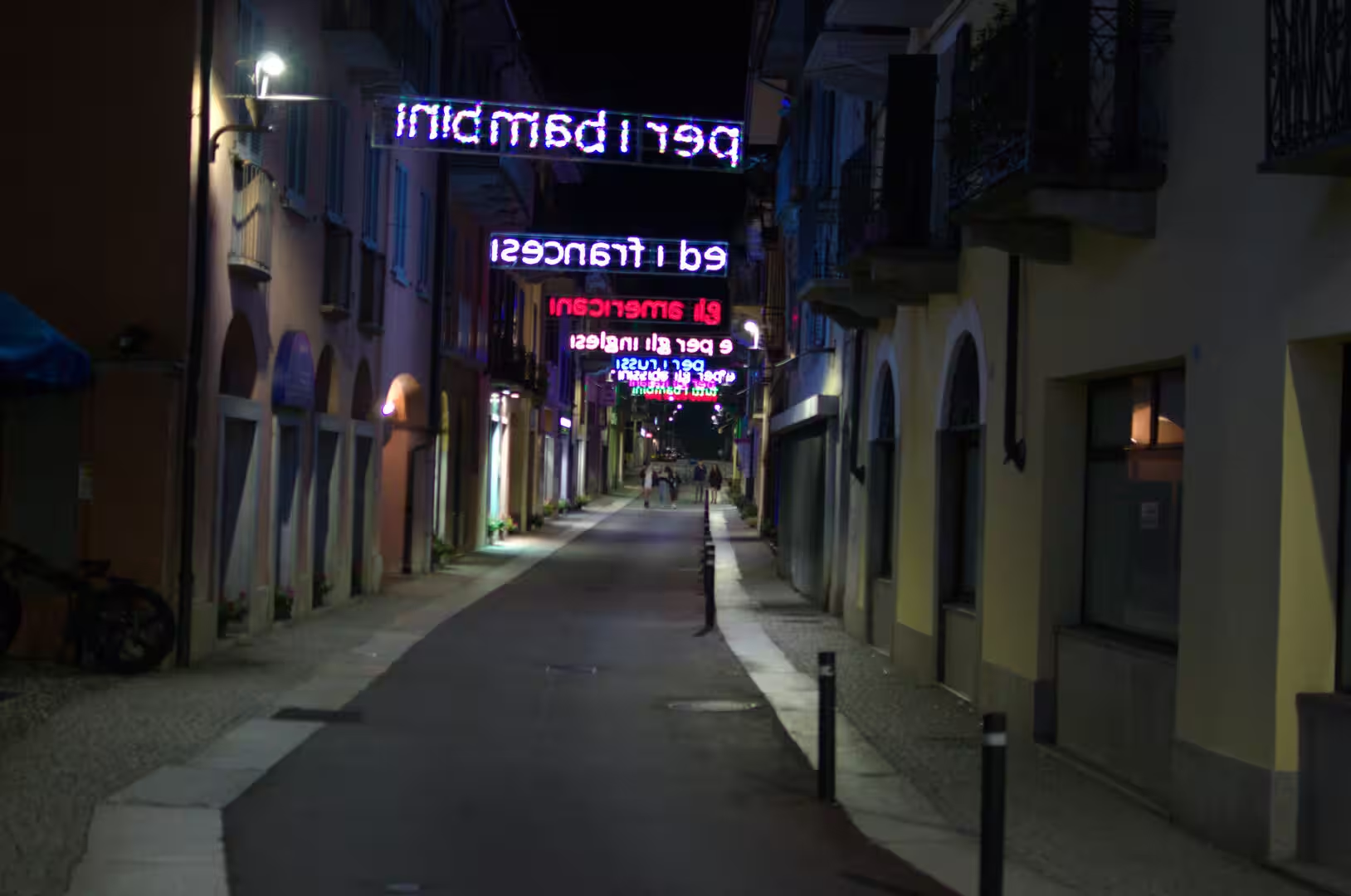
Then come the arches. A covered colonnade of stone arches runs the length of a cobbled street with fairy lights strung along it, a lantern burns above a stone stairway, and a wall of neon Italian words hangs in sequence over a dark alley, the kind of shop sign that turns a service street into a stage. At the corner a yellow house with shuttered balconies carries a bar sign, and under the arches of the neighbouring buildings guests sit at tables outside until late.
The water is never far away, even in the middle of the town. A weir on the canal reflects the warm windows above it together with one blue light, the bridge carries a row of lamps whose reflections glitter in the channel below, and a narrow walkway beside the canal glows under its own lamps. Boats lie under blue covers on the quay while the far shore burns along the horizon, a white cabin cruiser rests at a timber pier, and people ride home along the promenade beside water that has gone completely black.
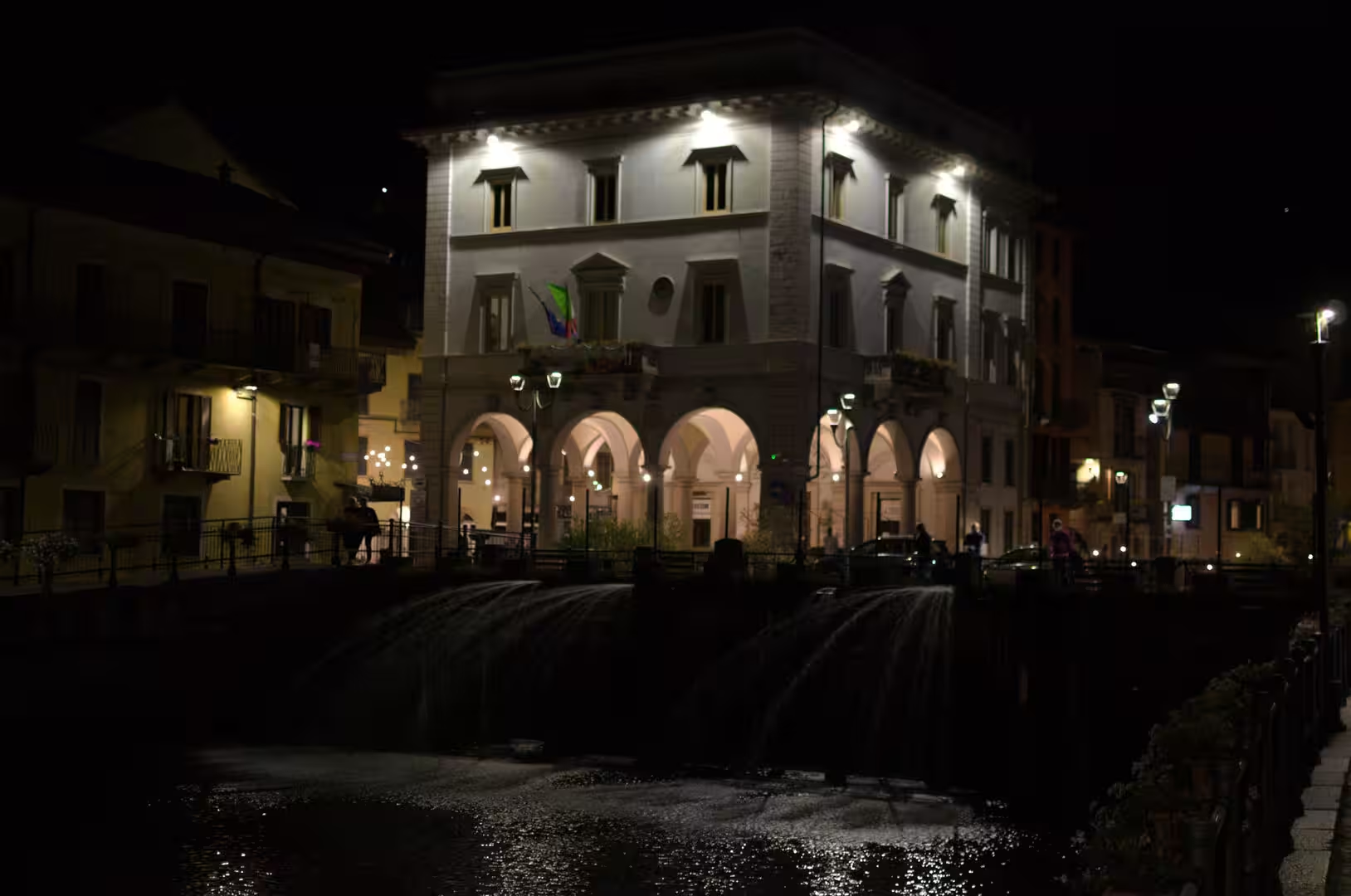
Two monuments stand above the water in the northern part of the town. The Ponte Antico, the fifteenth century bridge, carries the road over the Strona, and beside it a floodlit palace with a row of arches rises above a small waterfall where the Nigoglia leaves the lake and drops on its way out. The Porta della Valle, the last of the medieval gates, is a few steps away, and the church of Sant’Ambrogio stands above the old centre with its medieval bell tower. Between them lies the whole history of the place in a few hundred metres.
The lake itself is the other half of any stay. San Giulio island measures 275 metres by 140 and holds the basilica of the saint and a monumental seminary of the 1840s that has been a Benedictine monastery since 1976, with a handful of permanent residents and many holiday houses. Orta San Giulio on the opposite shore is built on a promontory that juts into the water and is counted among the most beautiful villages of Italy, and above it the Sacro Monte, begun in 1583 with twenty of a planned thirty-six chapels, has been a UNESCO World Heritage Site since 2003.
Practical notes for an evening in Omegna. The Thursday market on the boulevard is the fixed date of the week, the ferries run all day and take bicycles, and the lakeside path towards Pettenasco can be walked in either direction for as long as the light lasts. The restaurants serve fish from the lake and the cheese and cured meats of the Ossola, and the summer fair stays for as long as the season allows. Bring a light jacket: the water cools the air after sunset, and the alleys behind the shore are dark long before the sky is.
References
- Wikipedia contributors (2026). Omegna. en.wikipedia.org/wiki/Omegna
- Wikipedia contributors (2026). Lake Orta. en.wikipedia.org/wiki/Lake_Orta
- Wikipedia contributors (2026). Nigoglia. en.wikipedia.org/wiki/Nigoglia
- Wikipedia contributors (2026). Strona (river). en.wikipedia.org/wiki/Strona_%28river%29
- Wikipedia contributors (2026). Orta San Giulio. en.wikipedia.org/wiki/Orta_San_Giulio
- Wikipedia contributors (2026). San Giulio Island. en.wikipedia.org/wiki/San_Giulio_Island
- Wikipedia contributors (2026). Sacro Monte di Orta. en.wikipedia.org/wiki/Sacro_Monte_di_Orta
- Wikipedia contributors (2026). Sacri Monti. en.wikipedia.org/wiki/Sacri_Monti
- Wikipedia contributors (2026). Gianni Rodari. en.wikipedia.org/wiki/Gianni_Rodari
- Wikipedia contributors (2026). Mottarone. en.wikipedia.org/wiki/Mottarone
- Wikipedia contributors (2026). Province of Verbano-Cusio-Ossola. en.wikipedia.org/wiki/Province_of_Verbano-Cusio-Ossola
- Wikipedia contributors (2026). Ossola. en.wikipedia.org/wiki/Ossola
- Wikipedia contributors (2026). Piedmont. en.wikipedia.org/wiki/Piedmont
- Baudo R. (2002) Pollution and recovery of Lake Orta (Italy): Resilience at work?. Aquatic Ecosystem Health & Management. 5. 71-78. doi.org/10.1080/14634980260199972
- Mosello R., Calderoni A. (2020) Pollution and Recovery of Lake Orta (Northern Italy). Sediments:. 349-363. doi.org/10.1201/9780367810894-10
- Moss B. The art and science of lake restoration. Developments in Hydrobiology. 15-24. doi.org/10.1007/978-1-4020-6158-5_3
- Vantarakis A. (2021) Eutrophication and Public Health. Chemical Lake Restoration. 23-47. doi.org/10.1007/978-3-030-76380-0_2
- FROST W. (2004) A Hidden Giant:. Tourism, Mobility and Second Homes. 162-173. doi.org/10.2307/jj.27195510.15
- Frost W. (2004) 11. A Hidden Giant: Second Homes and Coastal Tourism in South- Eastern Australia. Tourism, Mobility and Second Homes. 162-173. doi.org/10.21832/9781873150825-013