Stage 3 of 6
2024 Italy - Liguria




Journal Notes
General
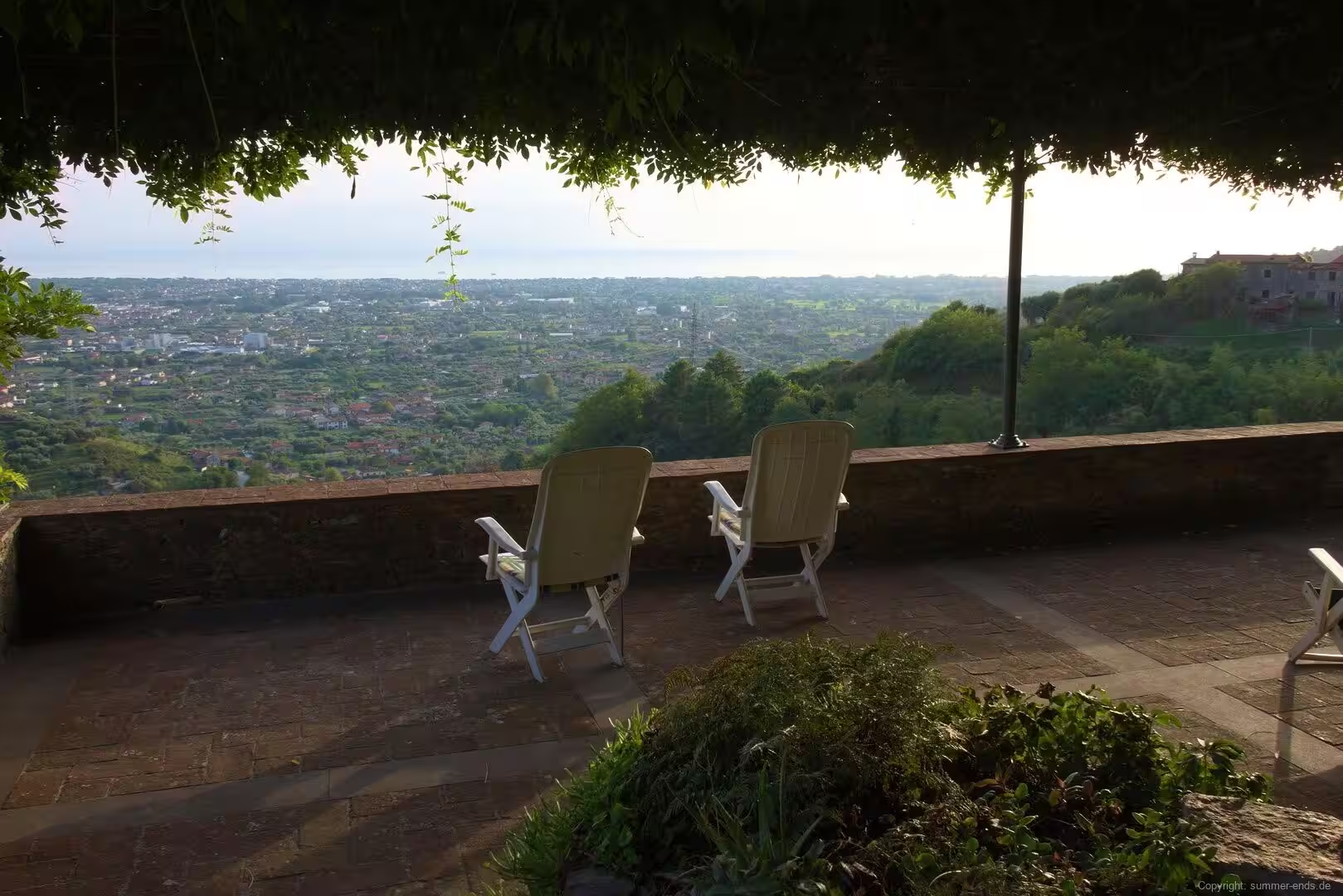
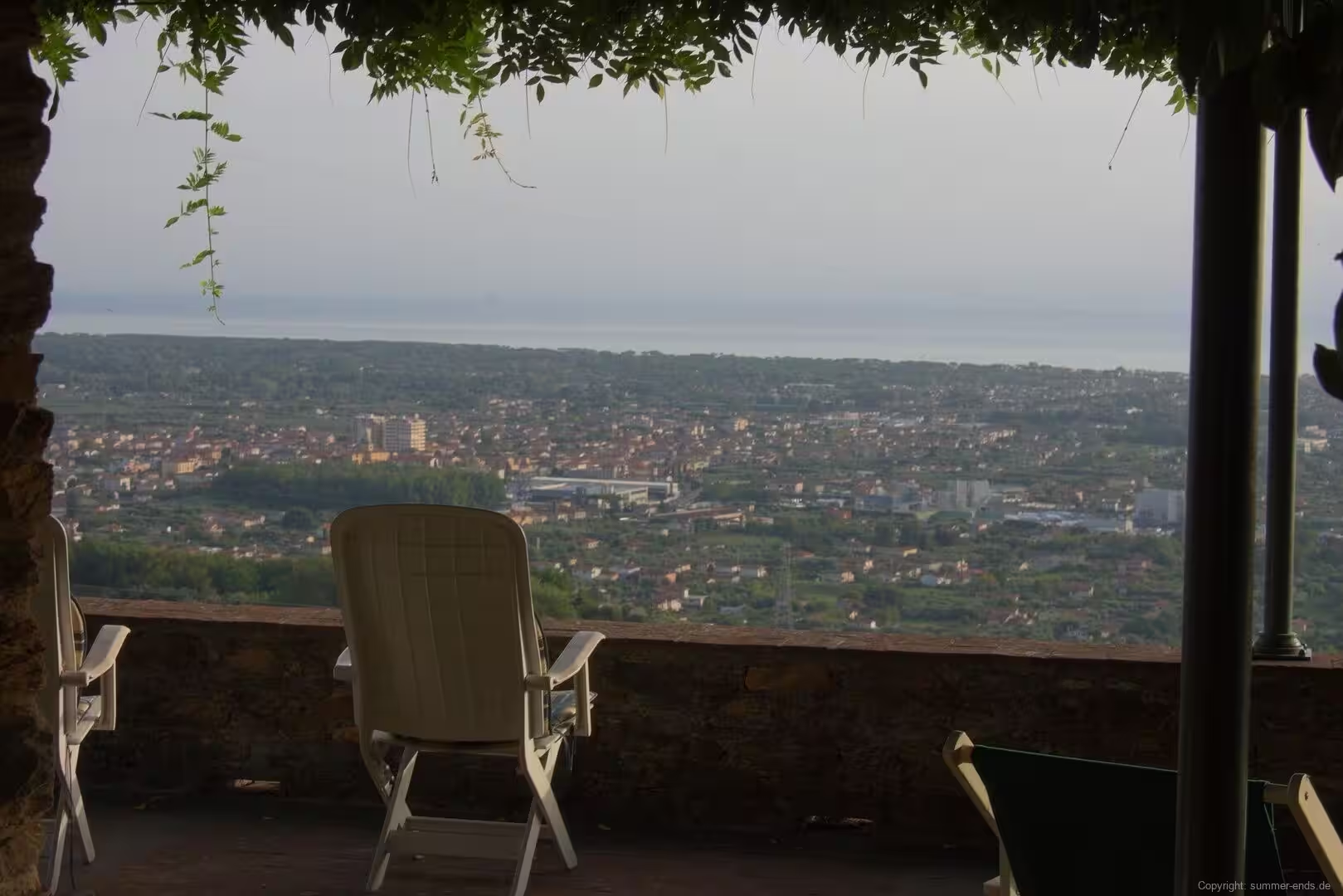
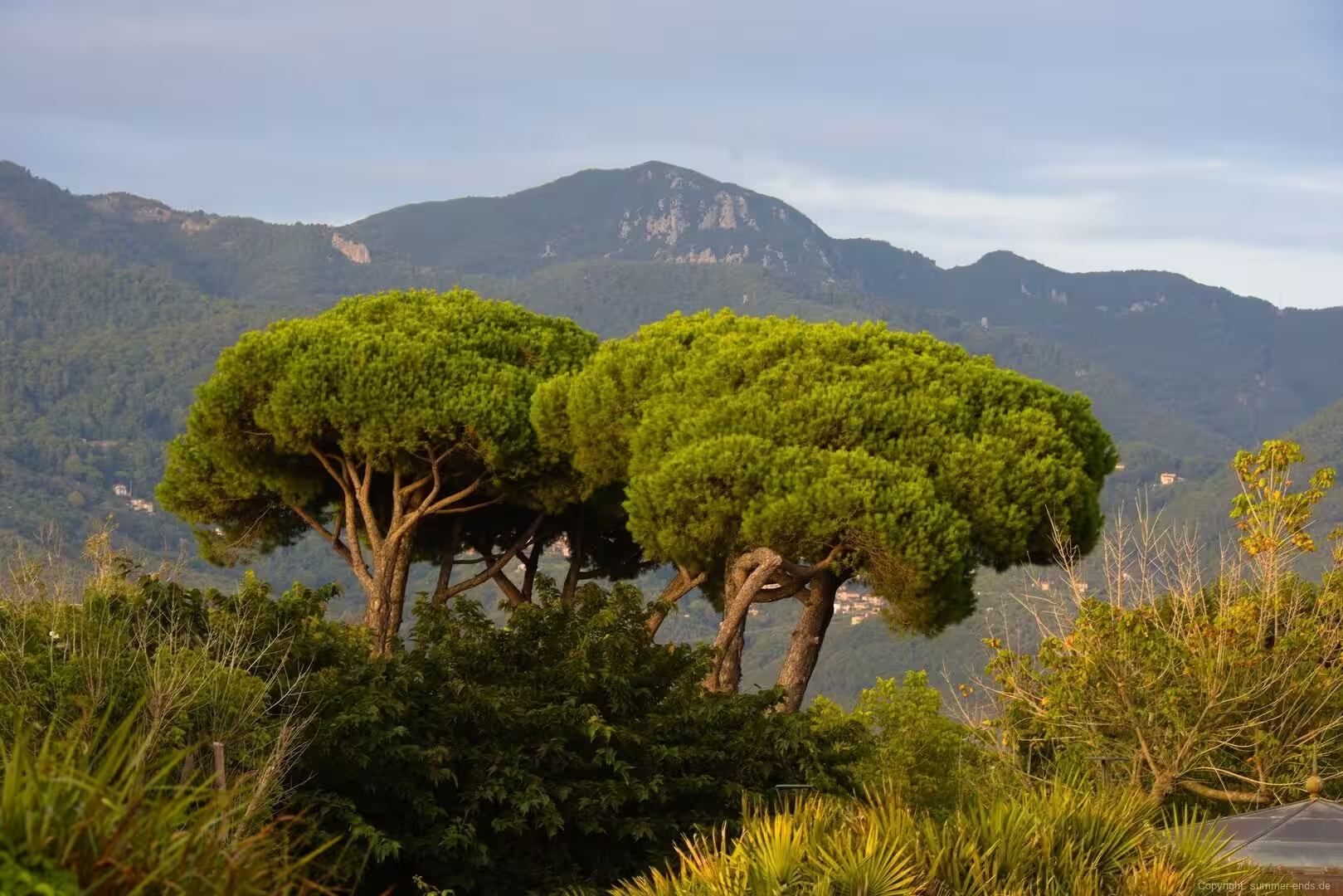
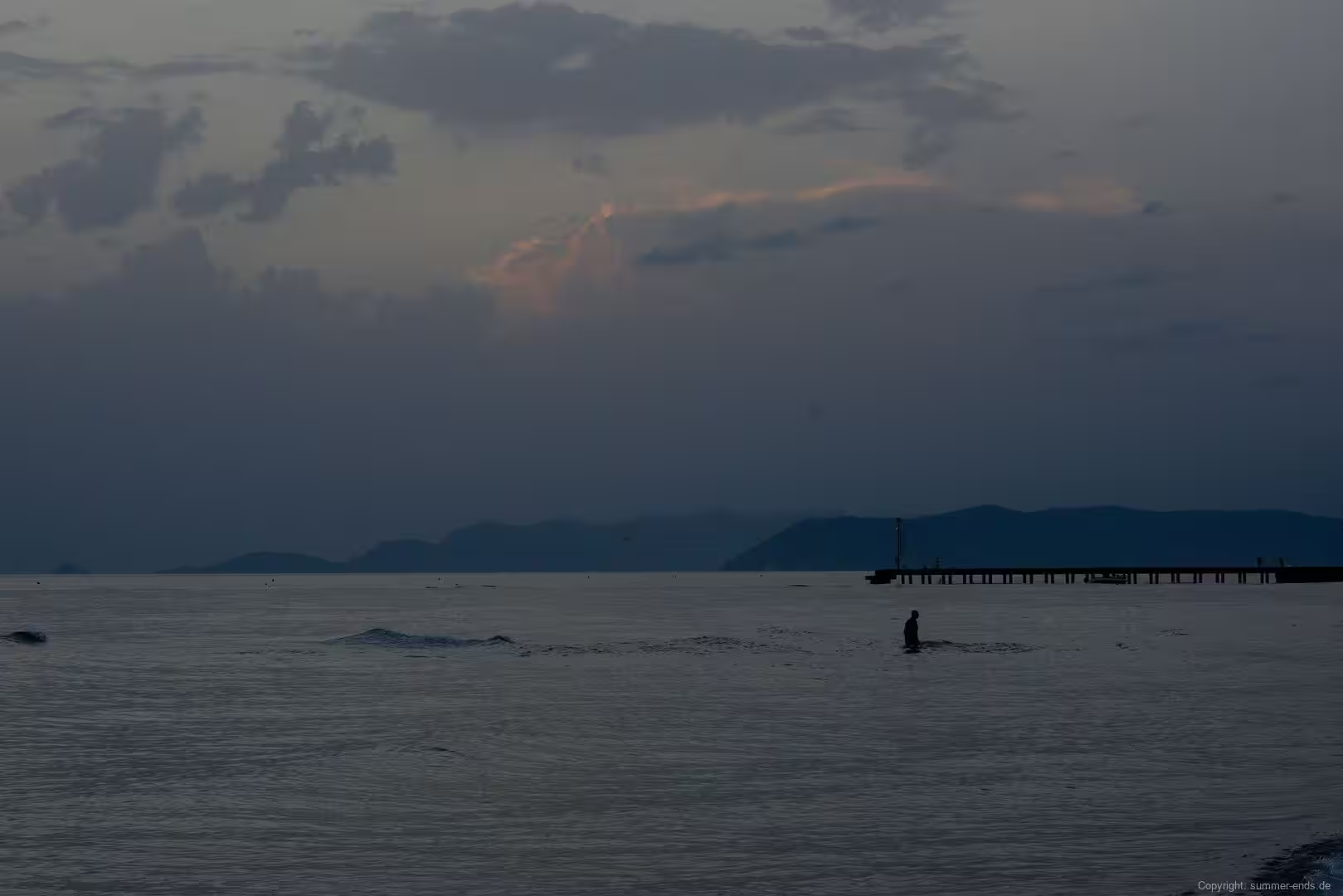
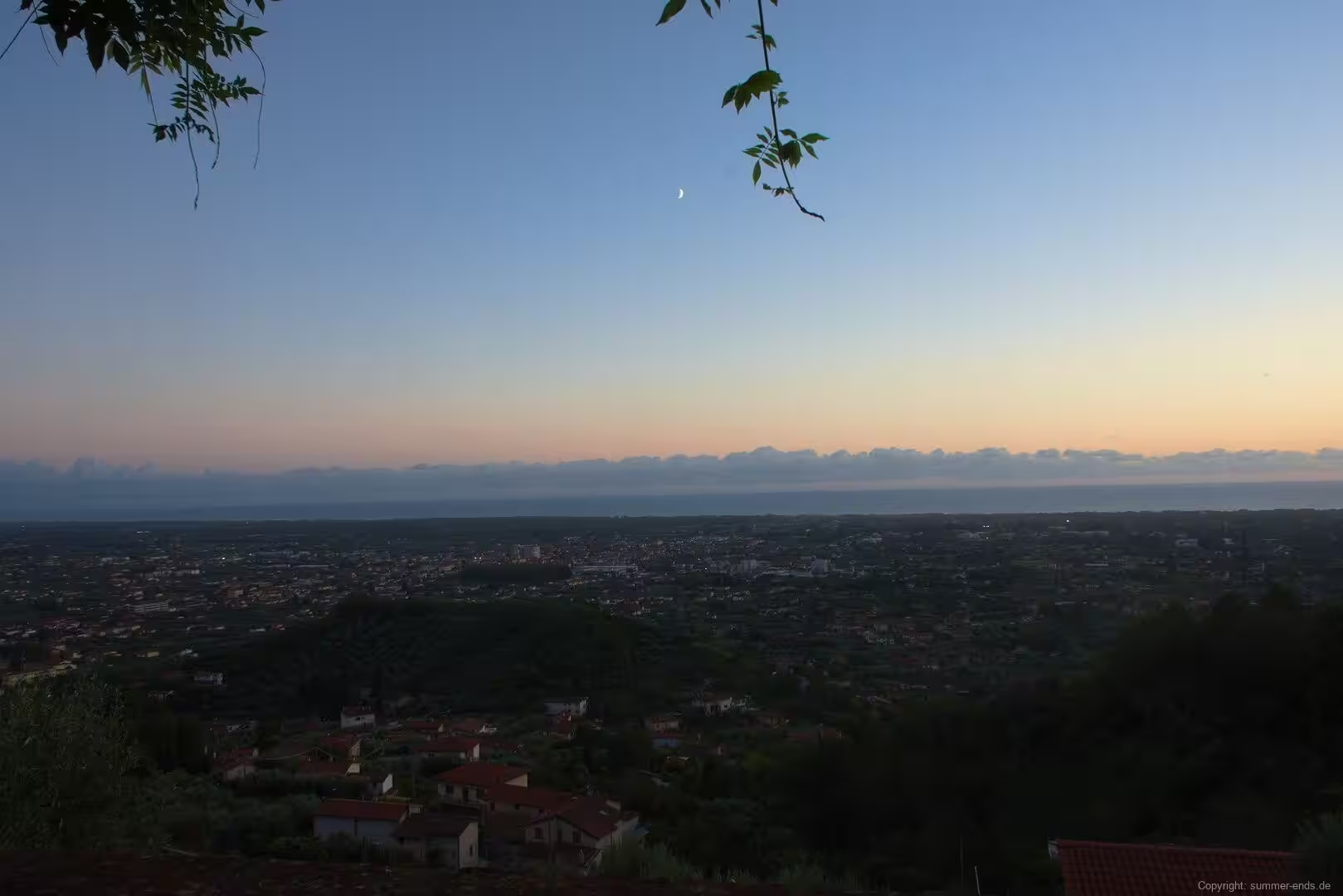
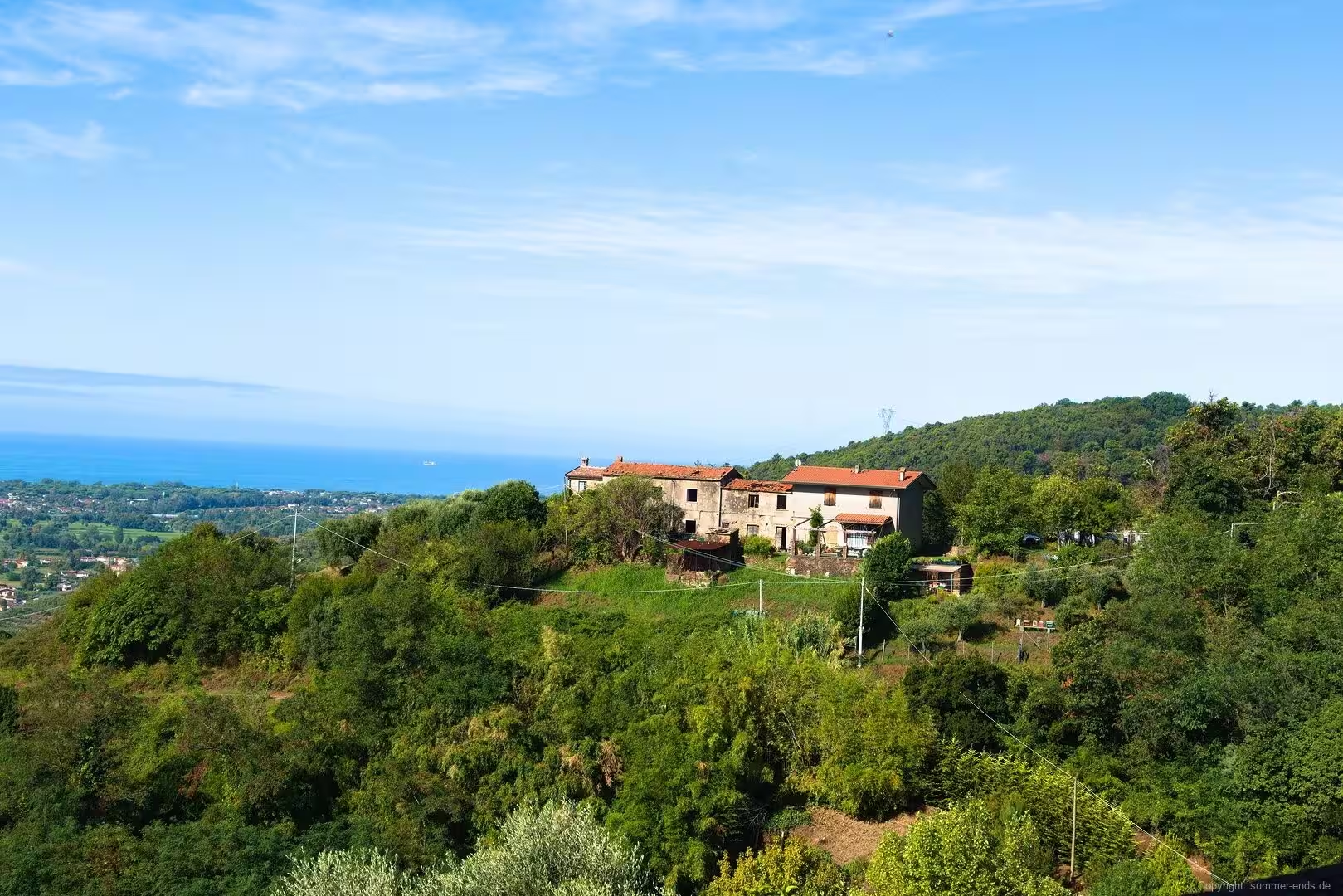
Liguria is a coastal region of northwestern Italy, a narrow crescent of land that runs along the Ligurian Sea from the French border in the west toward the Tuscan border in the east. The region is a strip seldom more than a few tens of kilometres deep, where the steep slopes of the Maritime Alps and the Ligurian Apennines fall directly to the sea, leaving only a thin band of level ground along the coast and in the wider river valleys such as those of the Polcevera, the Bisagno and the Centa. Genoa, the regional capital and a historic sea power, stands at the centre of the arc, flanked by the Riviera di Ponente to the west and the Riviera di Levante to the east.
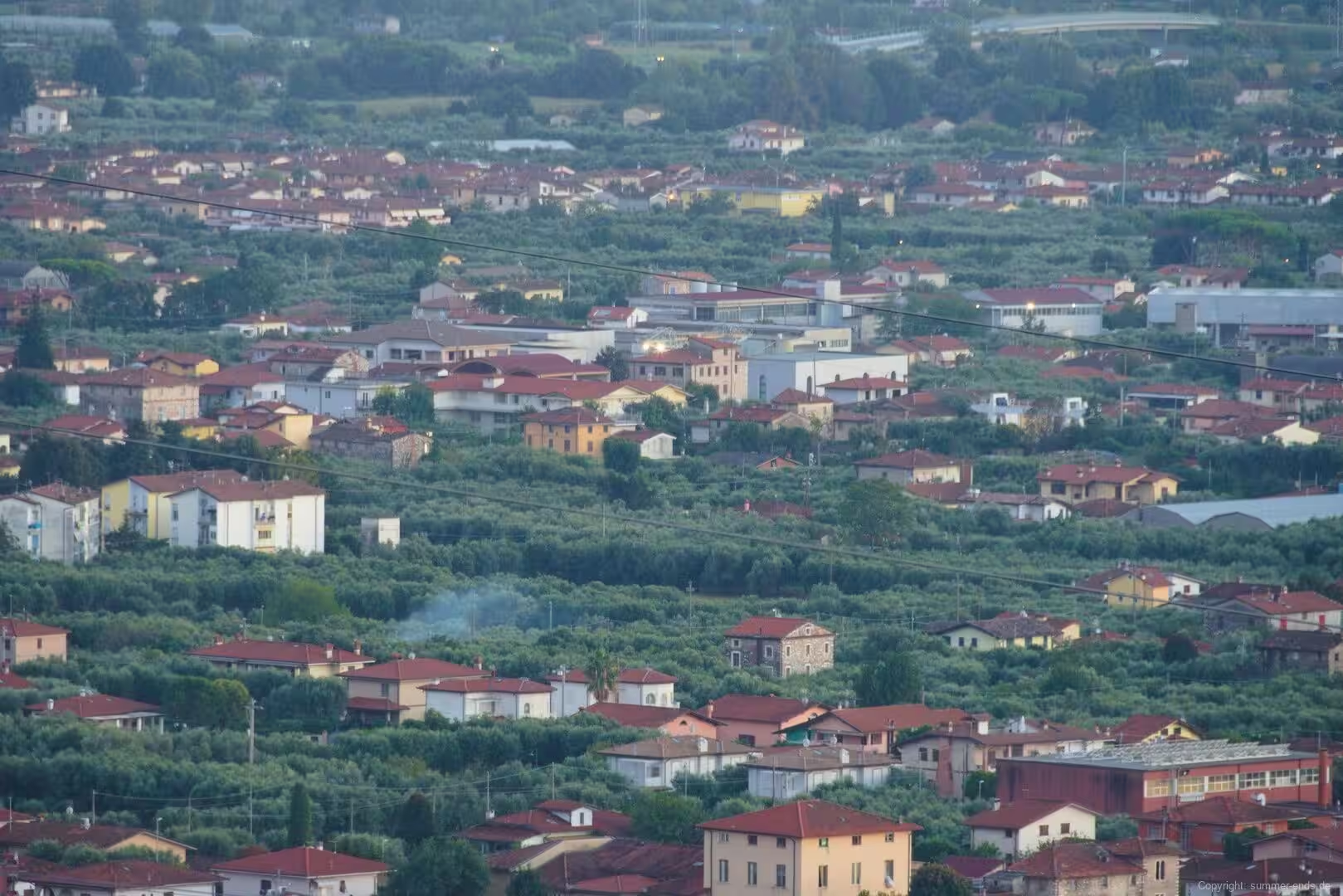
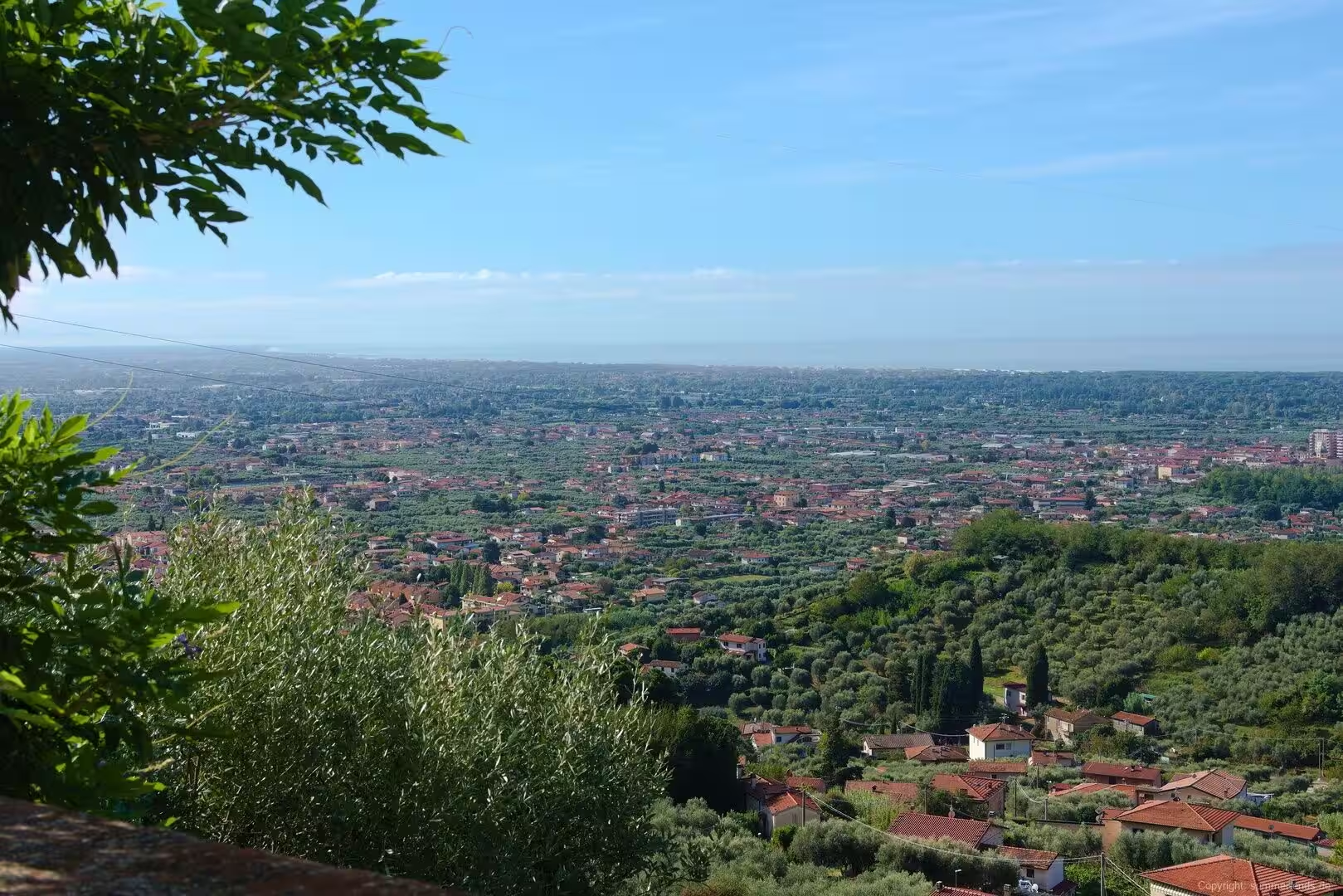
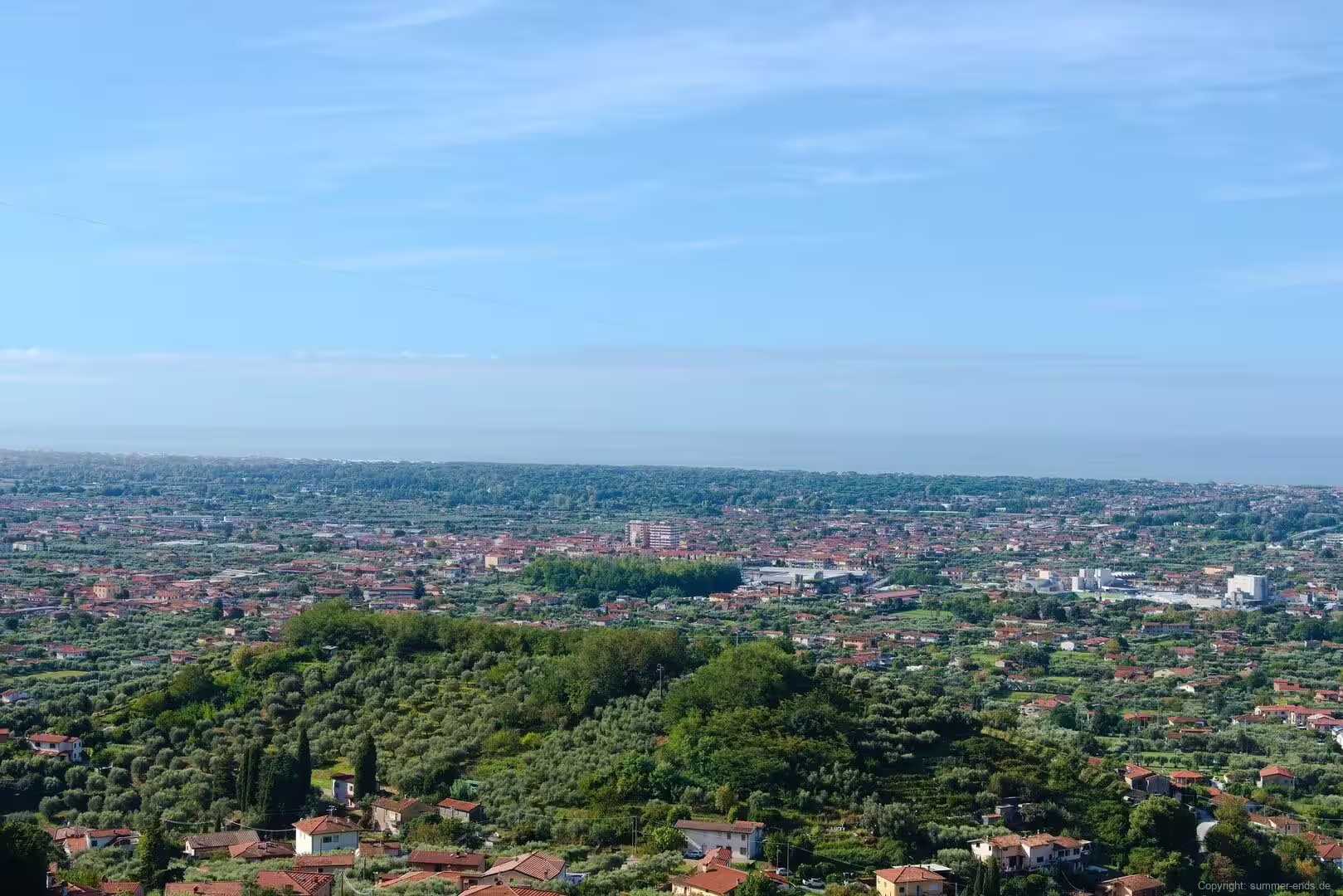
The region has a population of about 1.5 million, concentrated in the city of Genoa and the coastal towns, while the interior is thinly settled and given over to terraced agriculture, chestnut woods and scattered hill villages. Genoa itself has a population of about 570,000 and is the largest city and port of the region. Liguria is defined by its Mediterranean climate, its rocky headlands, coves and steeply terraced slopes, and by a transport corridor that runs along the coast, cut through by tunnels into the mountains. The coastline of some 300 kilometres is celebrated for its scenery and is now oriented toward tourism, while the productive core of the region lies in the port of Genoa, in the specialised agriculture of the terraces and in the industries of the inland valleys.
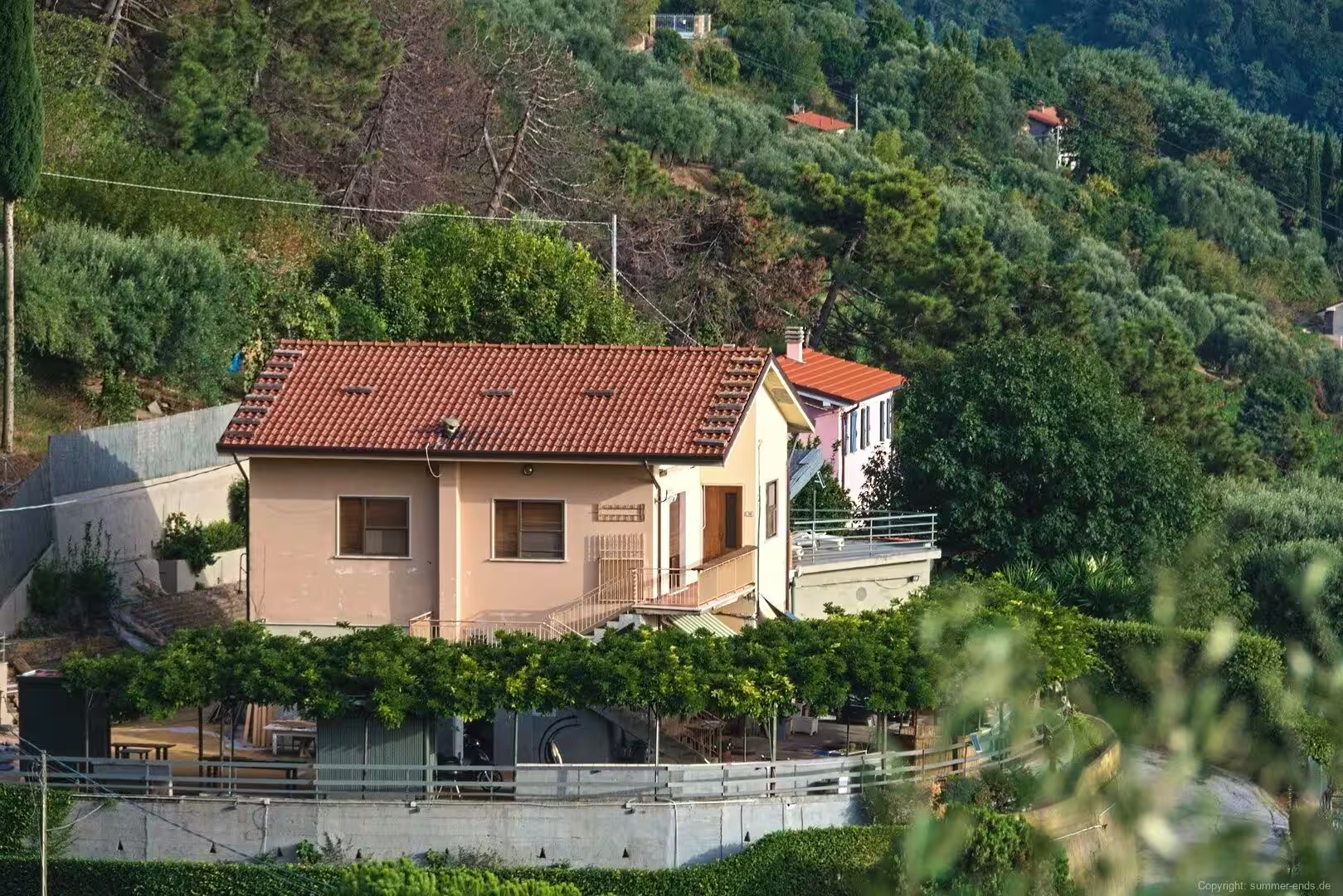
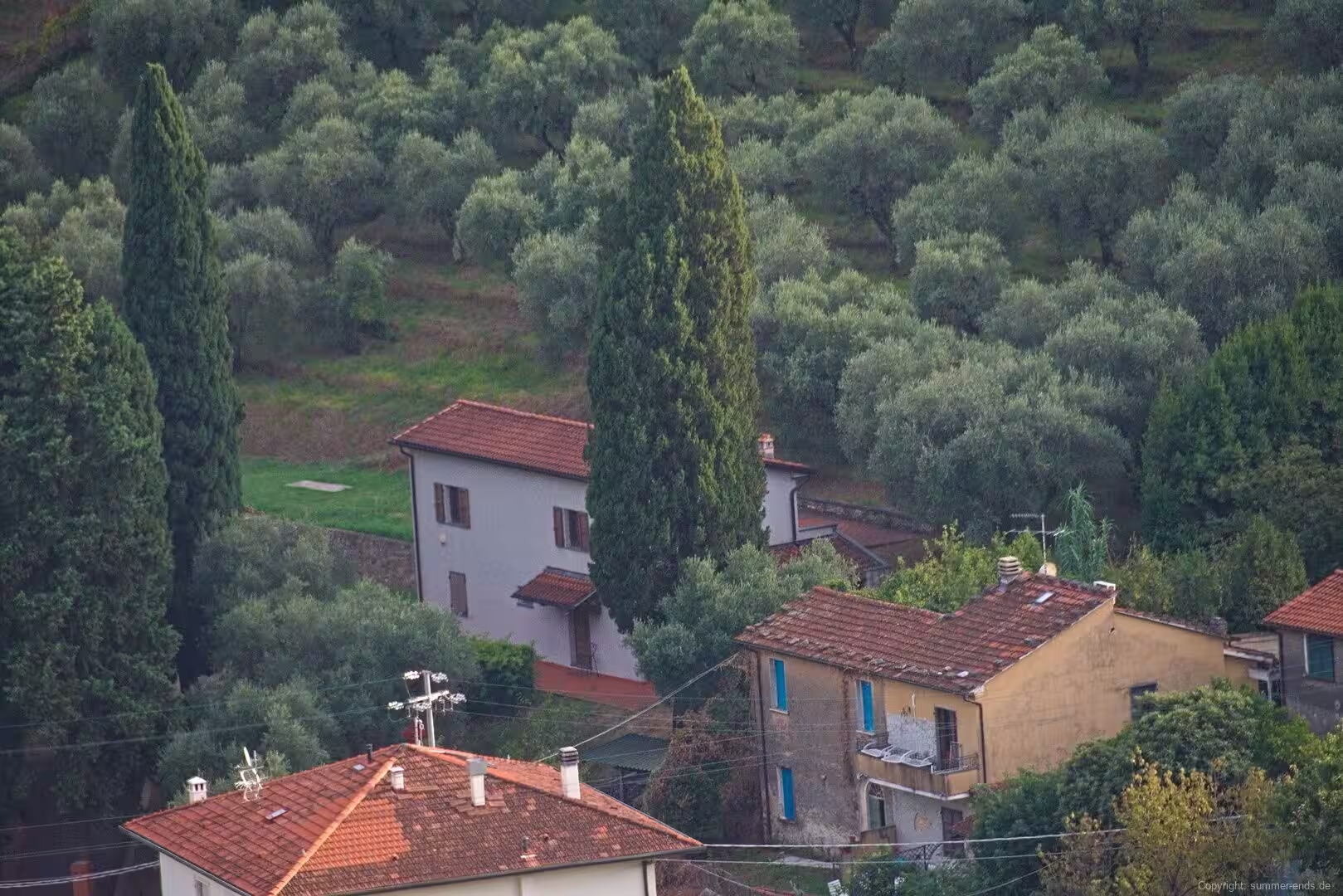
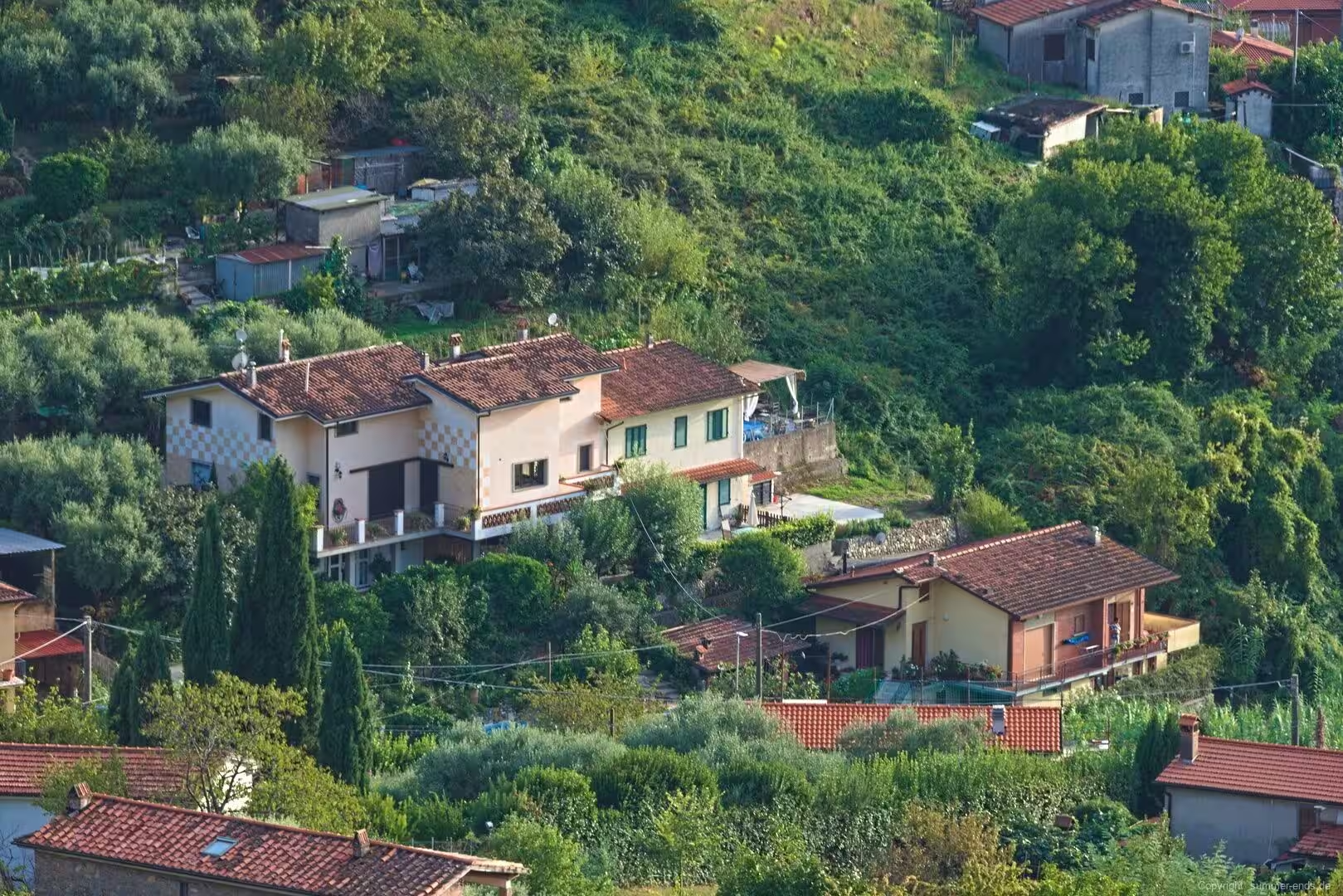
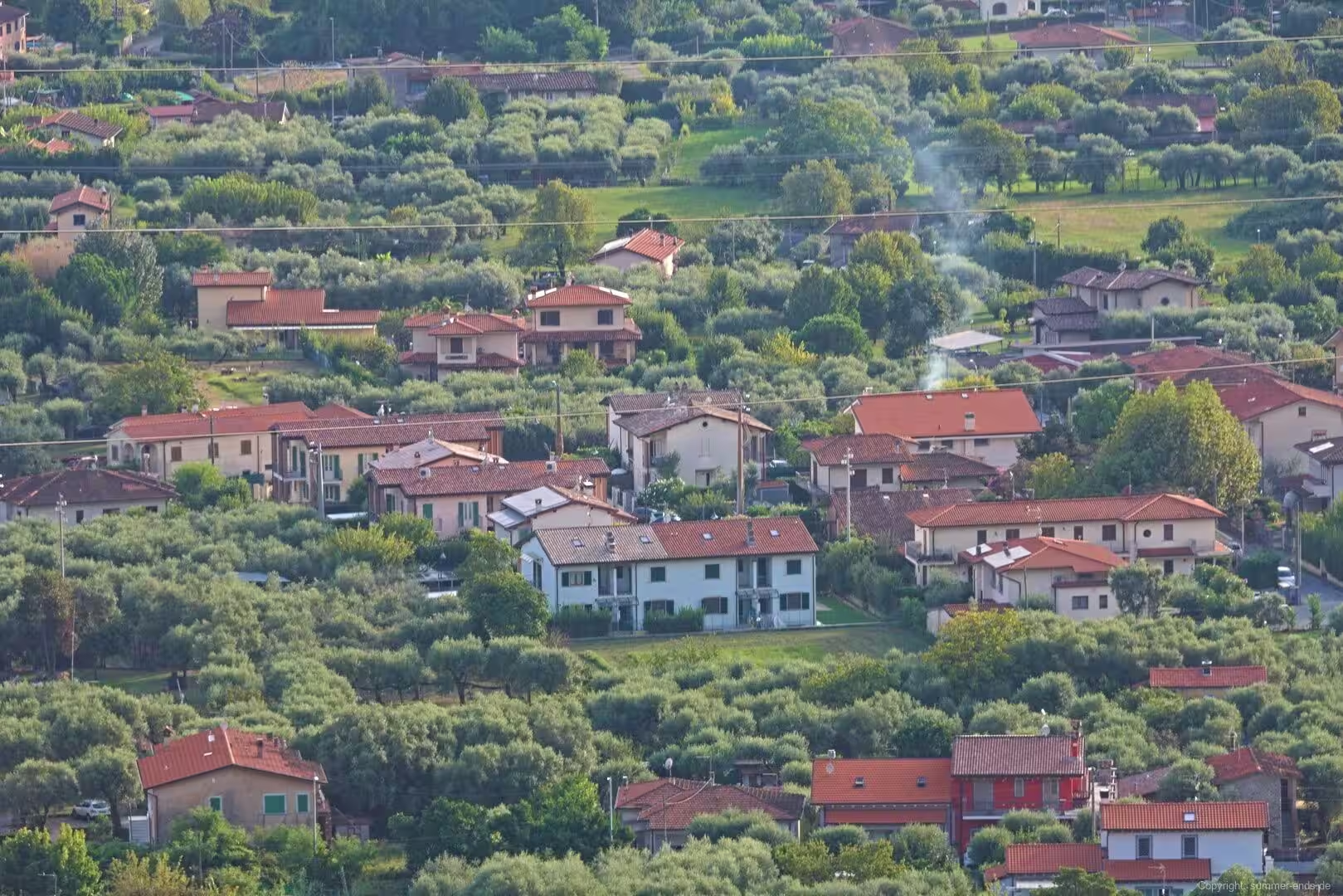
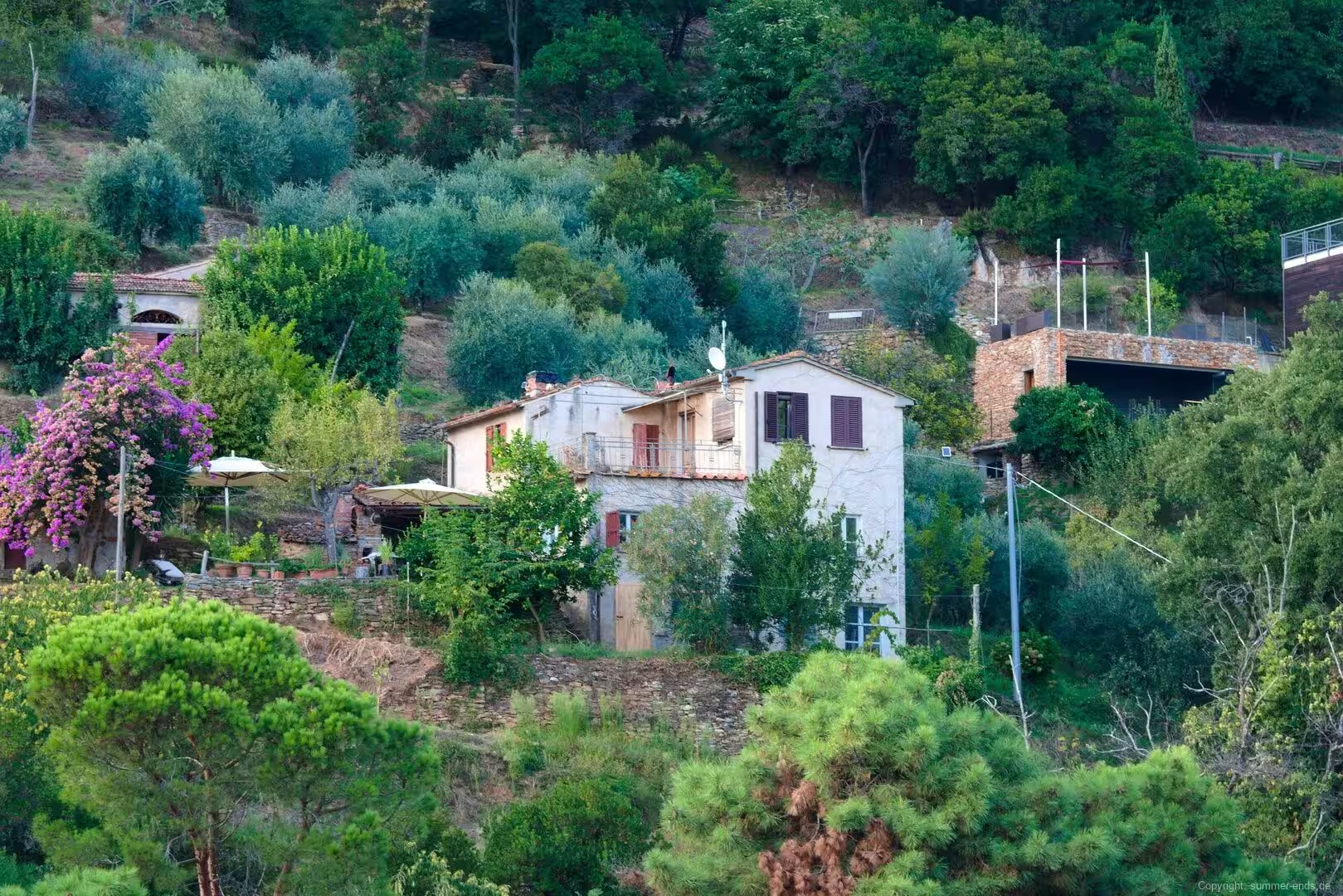
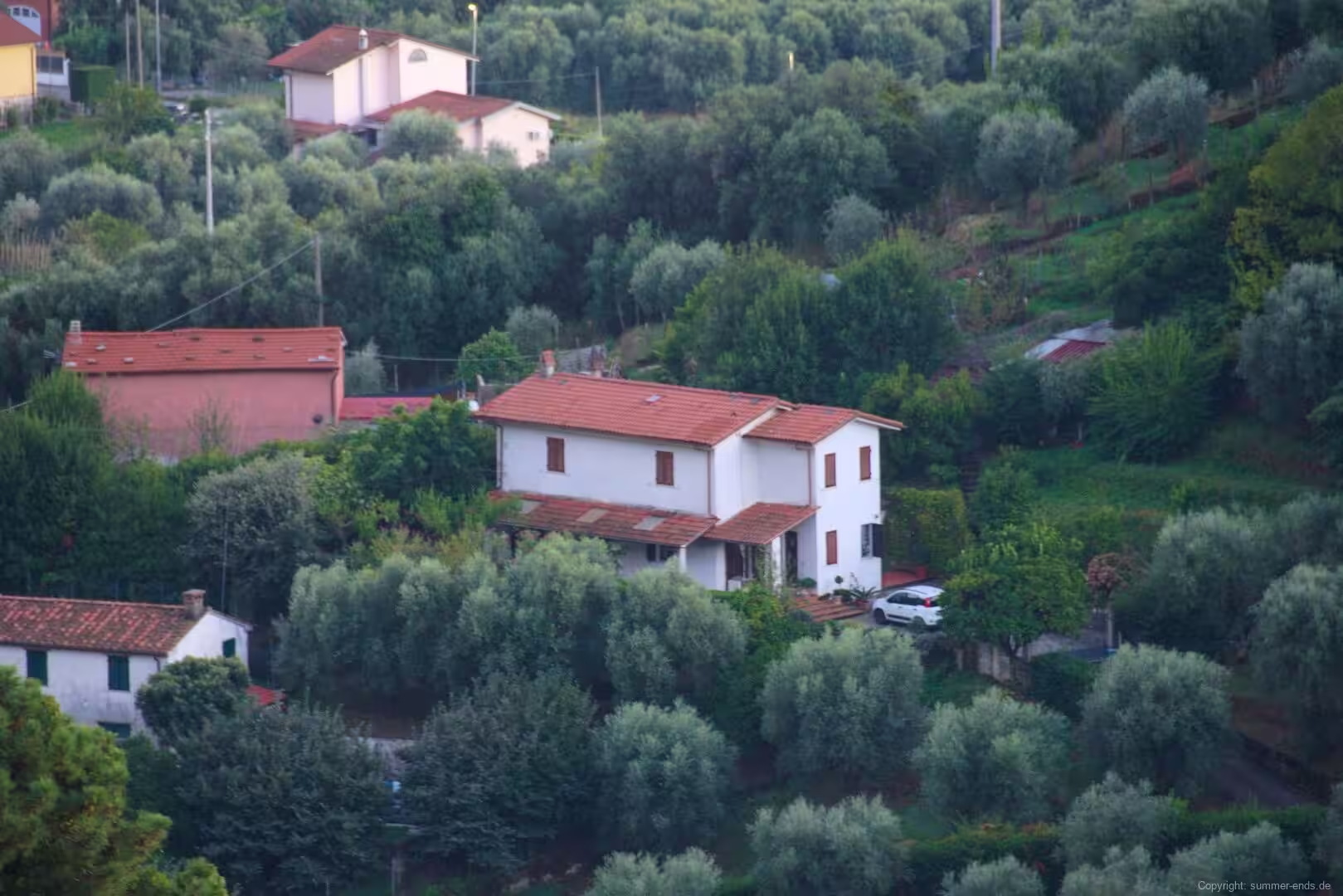
For centuries this narrow geography forced the Ligurians to look to the sea, shaping a culture, an economy and a pattern of settlement that are inseparable from the coast and the waterborne trade that connected the region to the wider Mediterranean. The same terrain created a strong regional identity of independent hill communities and of trade. The terracing of the slopes, built with drystone walls to hold the soil, remains the most distinctive feature of the cultivated landscape, and the cultivation of olives, vines, fruit and flowers, together with the production of olive oil and the wines of the coastal hills, is closely tied to the region’s mild climate and steep relief. Administratively the region is divided into the four provinces of Genoa, Imperia, Savona and La Spezia, and its cultural output, from the Genoese dialect and culinary tradition to the seafaring quarter of the coast, reflects both the maritime past and the communities of the valleys.
History
Liguria has been inhabited since prehistoric times, and in antiquity the region was home to the Ligurian tribes from whom it takes its name. These peoples traded with the Etruscans and the Greeks and later with the Romans, who incorporated the area into the Republic and the Empire and built roads and ports that made Liguria a strategic corridor between the Italian peninsula and southern Gaul. The Roman port of Genua, a small settlement on a natural harbour, already served as a trading post, and the Roman road system tied the coast and the interior together; the eastern border of the region, between Liguria and the Tuscan coast, was fixed in antiquity and has remained broadly unchanged since.
During the Middle Ages Liguria gained prominence through the rise of maritime city-states, above all Genoa. The Republic of Genoa became one of the great naval and commercial powers of the Mediterranean between the eleventh and fifteenth centuries, controlling trade routes, establishing colonies and trading posts across the eastern Mediterranean, the Aegean and the Black Sea, and building a network of banks, fleets and merchant families that made the city a rival of Venice. The city’s wealth financed its dense historic centre, its palaces and its churches, and Genoese naval power and commercial reach left a lasting mark on the ports of the wider Mediterranean. The rivalries and alliances of the Italian maritime republics, and the Genoese campaigns against the Muslims and in the Crusades, shaped the region’s place in the medieval world.
In the early modern period Liguria’s maritime dominance declined as trade shifted toward the Atlantic, and the region passed under the influence of more powerful states, eventually becoming the Republic of Genoa, then the Ligurian Republic under French control, and in 1815 the Kingdom of Sardinia. In the nineteenth century the region joined the unified Kingdom of Italy, and Genoa grew into one of the country’s principal industrial and port cities, while emigration and the expansion of the port shaped the modern population; the port became a gateway for the great emigration from Italy to the Americas in the late nineteenth and early twentieth centuries. Today Liguria combines port and industrial activity with tourism, specialised agriculture and a strong cultural identity rooted in its long maritime history and its close relationship with the sea.
Geology
Geologically, Liguria occupies a complex tectonic zone at the boundary between the Alps and the Apennines, reflecting several phases of mountain building, ocean closure and crustal deformation associated with the Alpine and Apennine orogenies. The region’s bedrock includes a diverse assemblage of sedimentary, metamorphic and ophiolitic rocks. The west, behind the Riviera di Ponente, is given over to the Ligurian Alps, while the inland zone to the east belongs to the Ligurian Apennines, and the two ranges meet near the coast, giving the area its steep and varied relief. The boundary between the ranges, and the structure of the fold-and-thrust belt, is one of the classic subjects of Italian structural geology.
The Ligurian Alps and the Ligurian Apennines consist of folded and faulted limestone, sandstone, shale and metamorphic units, often steeply inclined, with limestone and sandstone ridges cut by valleys. In the central and eastern areas, remnants of ancient oceanic crust and mantle are exposed as ophiolite complexes of European significance, the remains of the ancient Ligurian-Piedmontese ocean that closed during the Alpine collision. These serpentinites and peridotites mark the zones of former ocean floor, and their ultramafic soils support distinct and often sparse vegetation, while the high-pressure metamorphic rocks of the range record the subduction and exhumation that accompanied the formation of the mountains.
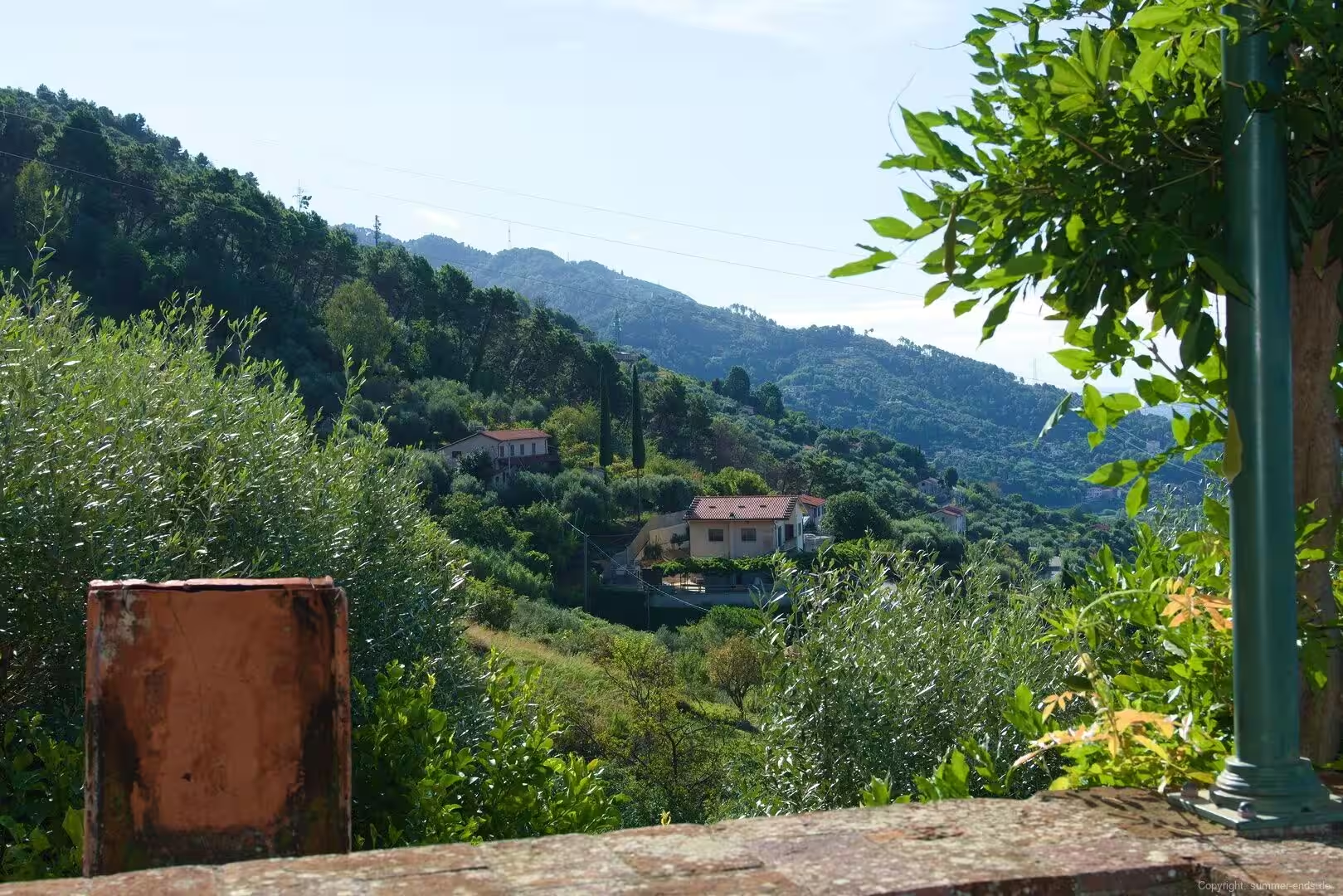
The narrow coastal zone is shaped by marine erosion, landslides and alluvial deposition, while the inland valleys reflect fluvial erosion and structural control. Steep slopes, thin soils and active geomorphological processes carry the risk of landslides and flash flooding, a recurring hazard in the region. The same steep terrain made terracing widespread, with stone walls built to stabilise the slopes and create level ground for vines, olives and citrus, so that the terraced hillsides, planted with drystone walls, have become one of the defining cultural landscapes of Liguria. The relationship between the steep relief, the thin soils and the need to control erosion explains the region’s characteristic agricultural terracing and its exposure to the geomorphic processes of the Mediterranean mountains. Around Genoa the city climbs the surrounding hills and valleys in a way that displays this geology directly, with the built-up slopes cut by the parallel valleys of the Bisagno and Polcevera and by the fortified ridges where the old walls and the harbour meet the mountains.
Things to See
Genoa, the regional capital, holds one of the largest historic centres in Europe, a dense labyrinth of narrow carruggi, medieval lanes and arched passageways that climb the hill behind the port. The city was declared a UNESCO World Heritage Site for its sixteenth- and seventeenth-century Le Strade Nuove and the system of the Palazzi dei Rolli, the grand palaces built along the new streets that once hosted visiting dignitaries. Beside them stand the Romanesque San Lorenzo cathedral, with its black-and-white striped facade, the Loggia della Mercanzia, and the shops, palazzi and churches of the old town. The port, rebuilt for the 1992 Expo, fronts the vast Aquarium of Genoa, one of the largest in Europe, and the modern waterfront of the Old Port with its panoramic lift and the harbour that still links the city to the sea.
The Riviera di Levante, east of Genoa, carries the most celebrated stretch of the Ligurian coast. The Cinque Terre, a group of five villages, Monterosso al Mare, Vernazza, Corniglia, Manarola and Riomaggiore, cling to the rocky hillsides above the sea, reached by a coastal railway, by the famous paths that link them, and by the boats that run between the harbours. Their houses, drystone terraces and vineyards form part of the Cinque Terre National Park, inscribed by UNESCO in 1997 together with Portovenere and the islands of Palmaria, Tino and Tinetto, and the terraced vineyards that climb the cliffs are among the most distinctive agricultural landscapes in Italy. The railway line along the coast, and the network of footpaths known as the Sentiero Azzurro, carry the visitors and the residents between the villages.
The Portofino promontory, a wooded headland above the Gulf of Tigullio, combines rugged cliffs, Mediterranean vegetation and sheltered bays, with the village of Portofino along its small harbour; the hills above are protected as a regional park, and the coastal towns of Santa Margherita Ligure and Camogli lie to either side. West of Genoa, the Riviera di Ponente opens toward the French border, with the seaside resort of Sanremo, famous for its flower market and its casino, and the olive and flower terraces of the inland hills. Inland, the Ligurian Alps and the Apennines provide mountain landscapes, stone villages, hermitages and protected parks that contrast sharply with the dense coast; scenic coastal roads, hiking trails and viewpoints reveal the close juxtaposition of sea and mountains that defines the character of Liguria. The terraced olive groves, the vines and the citrus of the slopes, together with the regional food and wine, complete the picture of a region where the land, the sea and the mountains meet within a short distance of one another.
References
- Wikipedia. Liguria. en.wikipedia.org/wiki/Liguria
- Wikipedia. Republic of Genoa. en.wikipedia.org/wiki/Republic_of_Genoa
- Wikipedia. Genoa. en.wikipedia.org/wiki/Genoa
- Wikipedia. Genoa Cathedral. en.wikipedia.org/wiki/Genoa_Cathedral
- Wikipedia. Genoa: Le Strade Nuove and the Palazzi dei Rolli. en.wikipedia.org/wiki/Genoa:_Le_Strade_Nuove_and_the_system_of_the_Palazzi_dei_Rolli
- Wikipedia. Aquarium of Genoa. en.wikipedia.org/wiki/Aquarium_of_Genoa
- Wikipedia. Cinque Terre. en.wikipedia.org/wiki/Cinque_Terre
- Wikipedia. Cinque Terre National Park. en.wikipedia.org/wiki/Cinque_Terre_National_Park
- Wikipedia. Monterosso al Mare. en.wikipedia.org/wiki/Monterosso_al_Mare
- Wikipedia. Vernazza. en.wikipedia.org/wiki/Vernazza
- Wikipedia. Portofino. en.wikipedia.org/wiki/Portofino
- Wikipedia. Portovenere. en.wikipedia.org/wiki/Portovenere
- Wikipedia. Sanremo. en.wikipedia.org/wiki/Sanremo
- Wikipedia. Santa Margherita Ligure. en.wikipedia.org/wiki/Santa_Margherita_Ligure
- Wikipedia. Camogli. en.wikipedia.org/wiki/Camogli
- Wikipedia. Ligurian Sea. en.wikipedia.org/wiki/Ligurian_Sea
- Wikipedia. Ligurian Alps. en.wikipedia.org/wiki/Ligurian_Alps
- Wikipedia. Ligurian Apennines. en.wikipedia.org/wiki/Ligurian_Apennines