Day 15 - Assuan - Philae Temple







Journal Notes
General
Philae is the Greek name of one of the most celebrated sanctuaries of the ancient Nile valley: the island temple complex of the goddess Isis, which for over a millennium guarded the southern frontier of Egypt immediately above the First Cataract near Aswan (ancient Syene). The original island, a granite outcrop only about 380 metres long and 120 metres broad, bore an ancient Egyptian name meaning “the boundary” and carried the garrison of the frontier. Since the early twentieth century it has lain beneath the waters of the Aswan reservoir; the temples now stand on the neighbouring island of Agilkia, some 500 metres away, to which the whole complex was moved stone by stone between 1972 and 1980.
The buildings of the ensemble were raised over more than six centuries, from the last native pharaohs of the Thirtieth Dynasty to the Roman emperors of the second century AD. The dominant monument is the great temple of Isis with its two pylons, its colonnaded courts, its hypostyle hall and its dark sanctuary, surrounded by the small temple of Hathor, the mammisi or birth house, the kiosk of Nectanebo I, the gate of Hadrian and, at the water’s edge, the open pavilion known as the kiosk of Trajan. On the neighbouring island of Bigeh lay the Abaton, the “untrodden place” where the tomb of Osiris was said to hold his remains. In 1979 the complex was inscribed on the World Heritage List as part of the serial property “Nubian Monuments from Abu Simbel to Philae” (ref. 88), under cultural criteria i, iii and vi.
Philae was the last stronghold of the old religion of Egypt. Long after the temples of the valley had been closed, the cult of Isis survived here into the sixth century, and the sanctuary was converted into a church only in about AD 537. Its monuments, largely of Ptolemaic and Roman date, are among the most complete in Egypt, their warm sandstone walls still covered with relief, so that the visitor sees a temple of the Ptolemies and the Caesars: the last great monument of pharaonic civilisation.
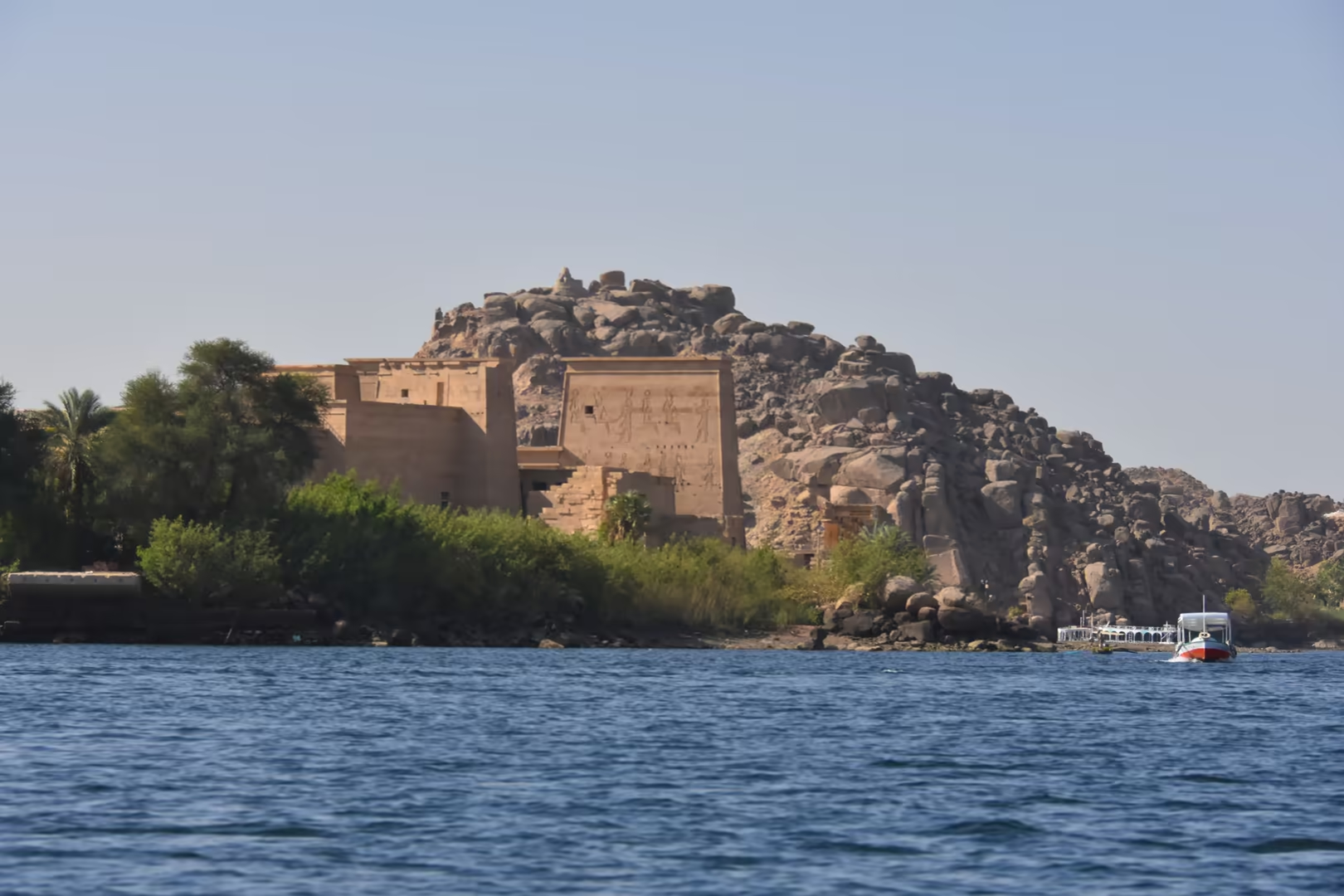
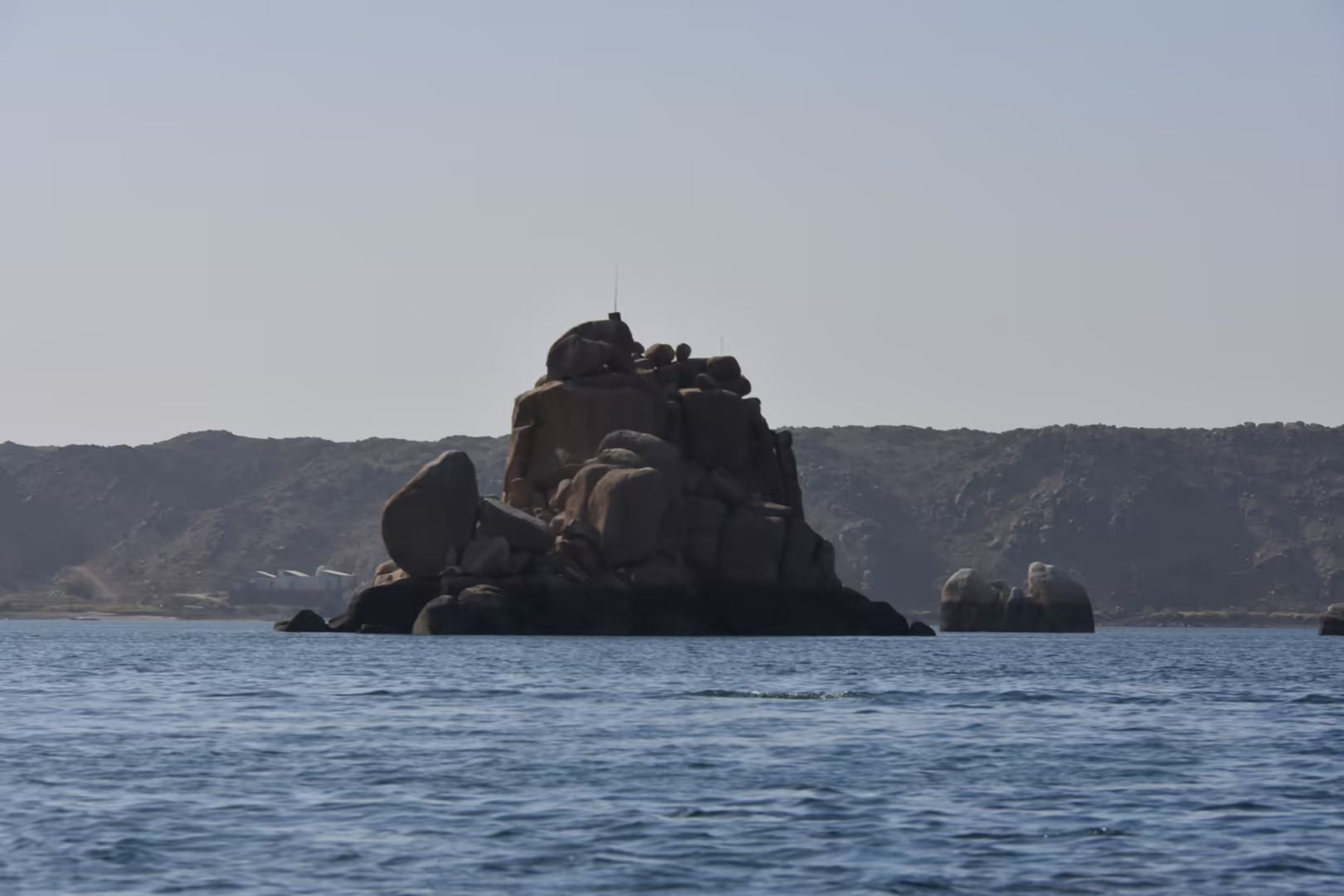
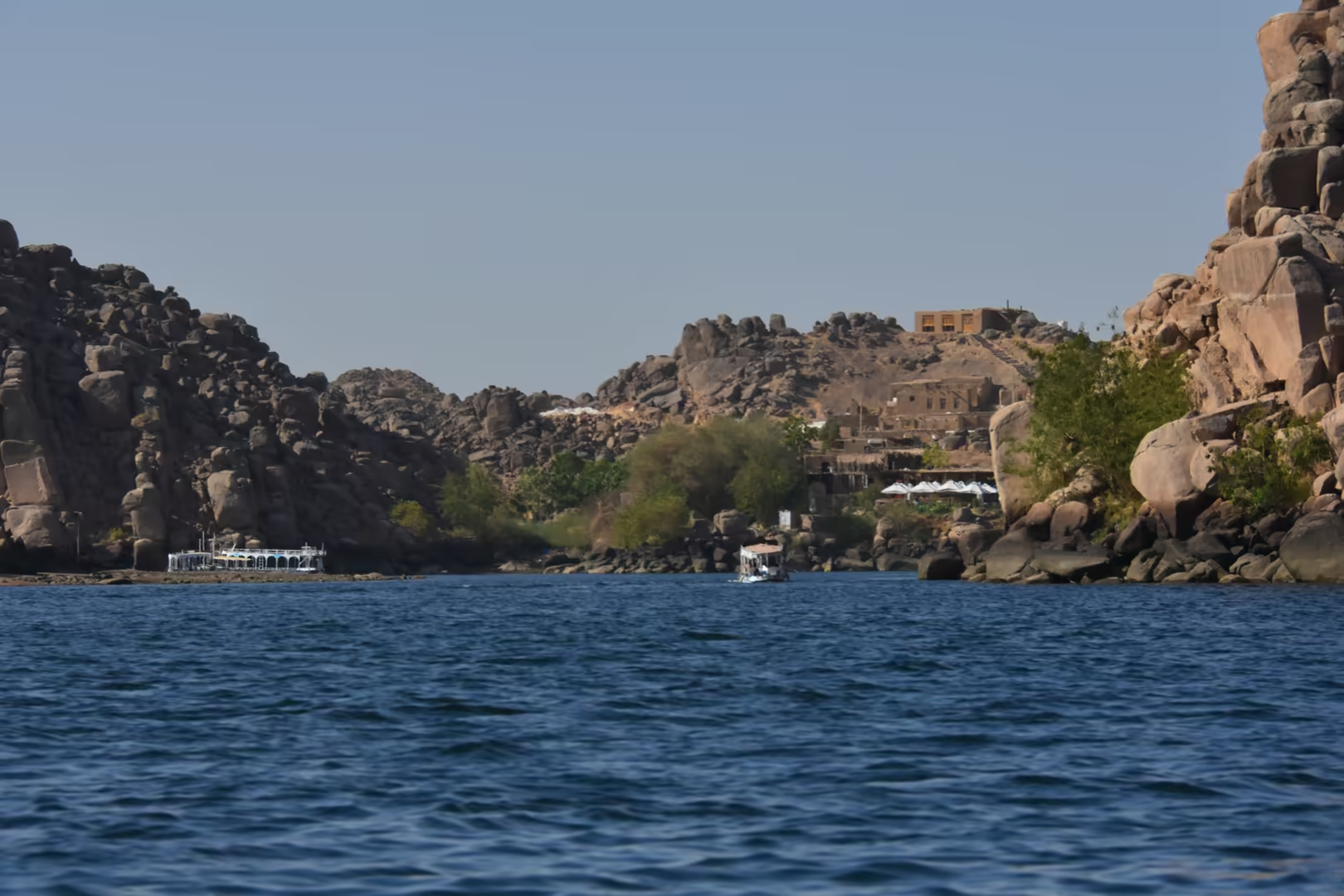
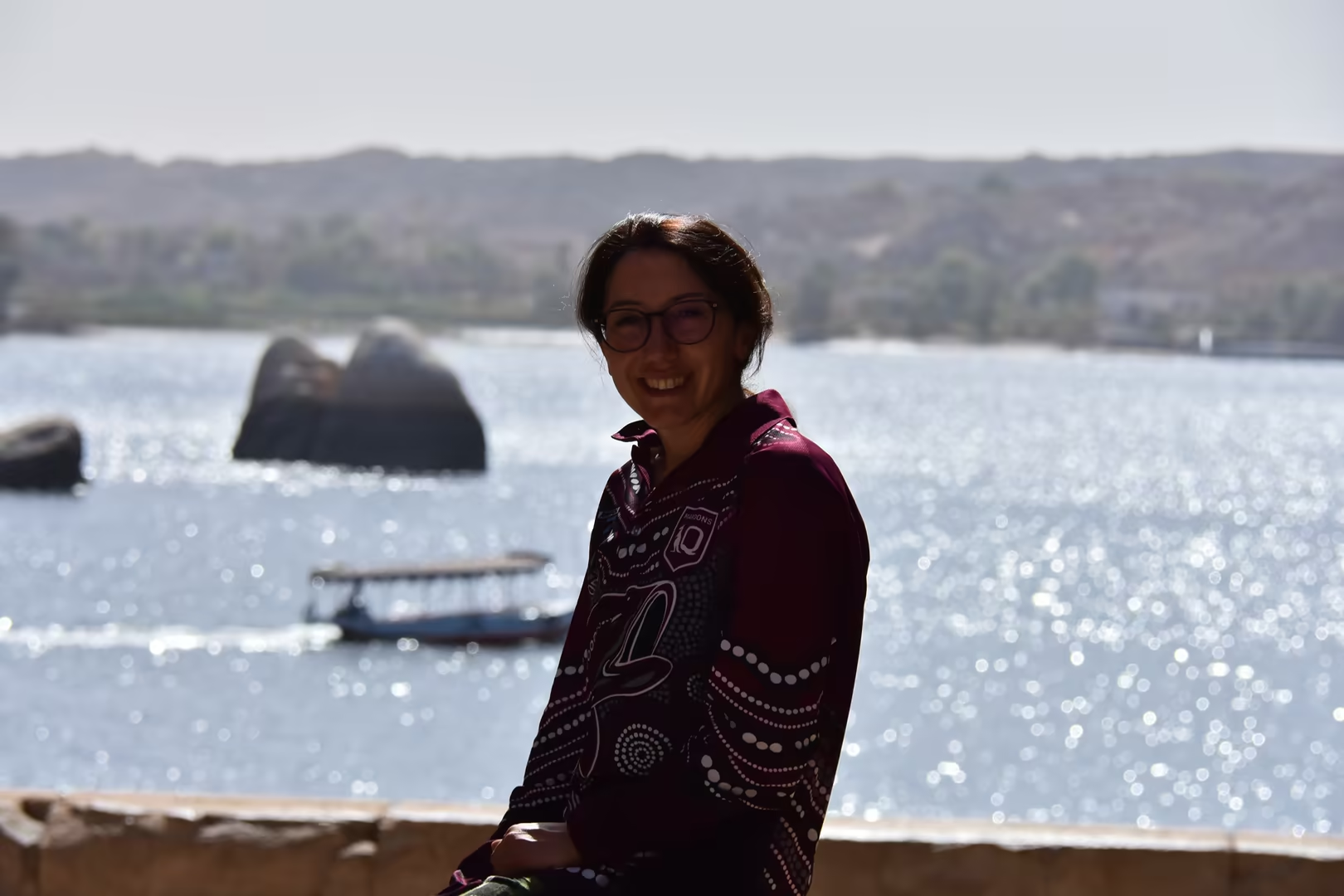
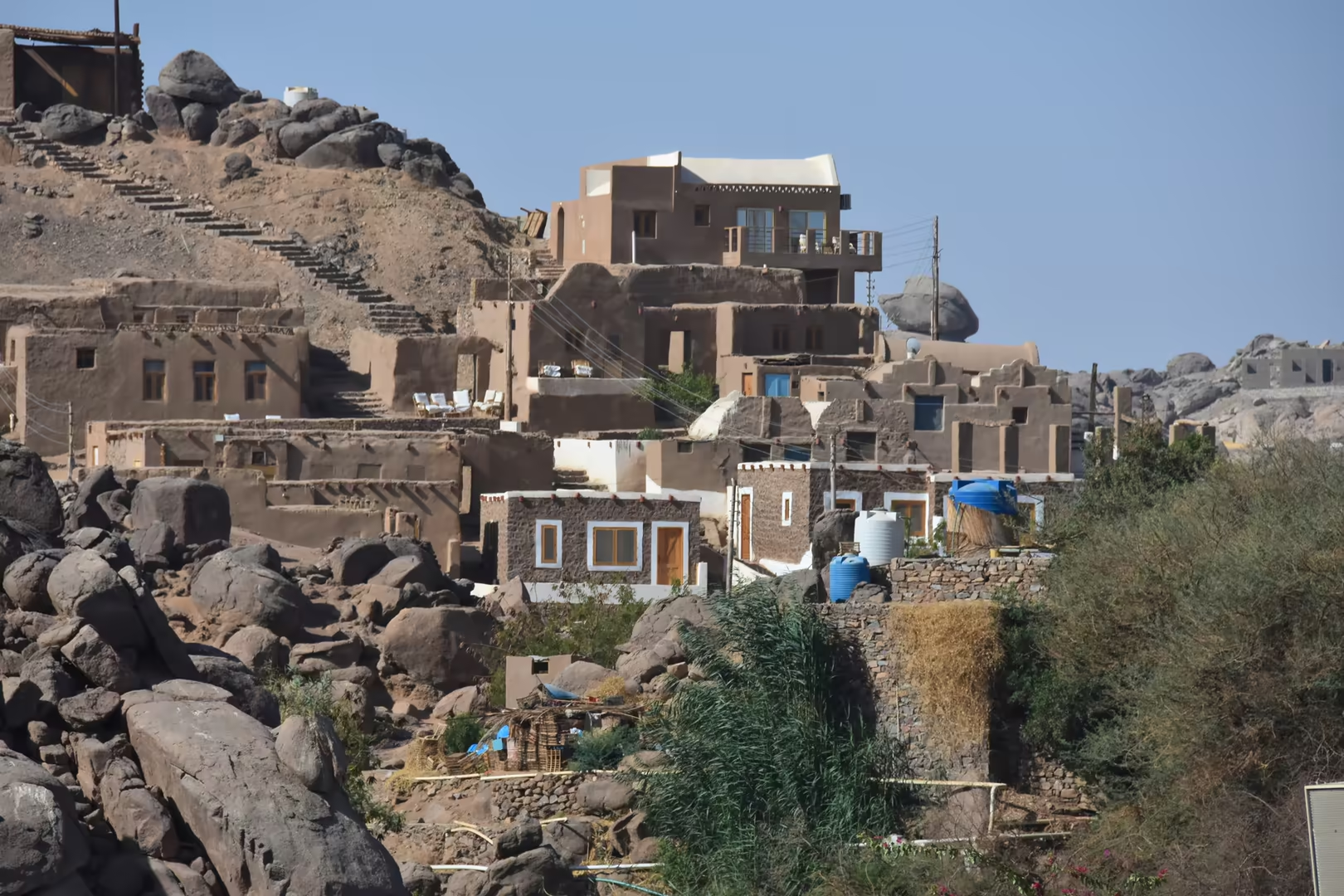
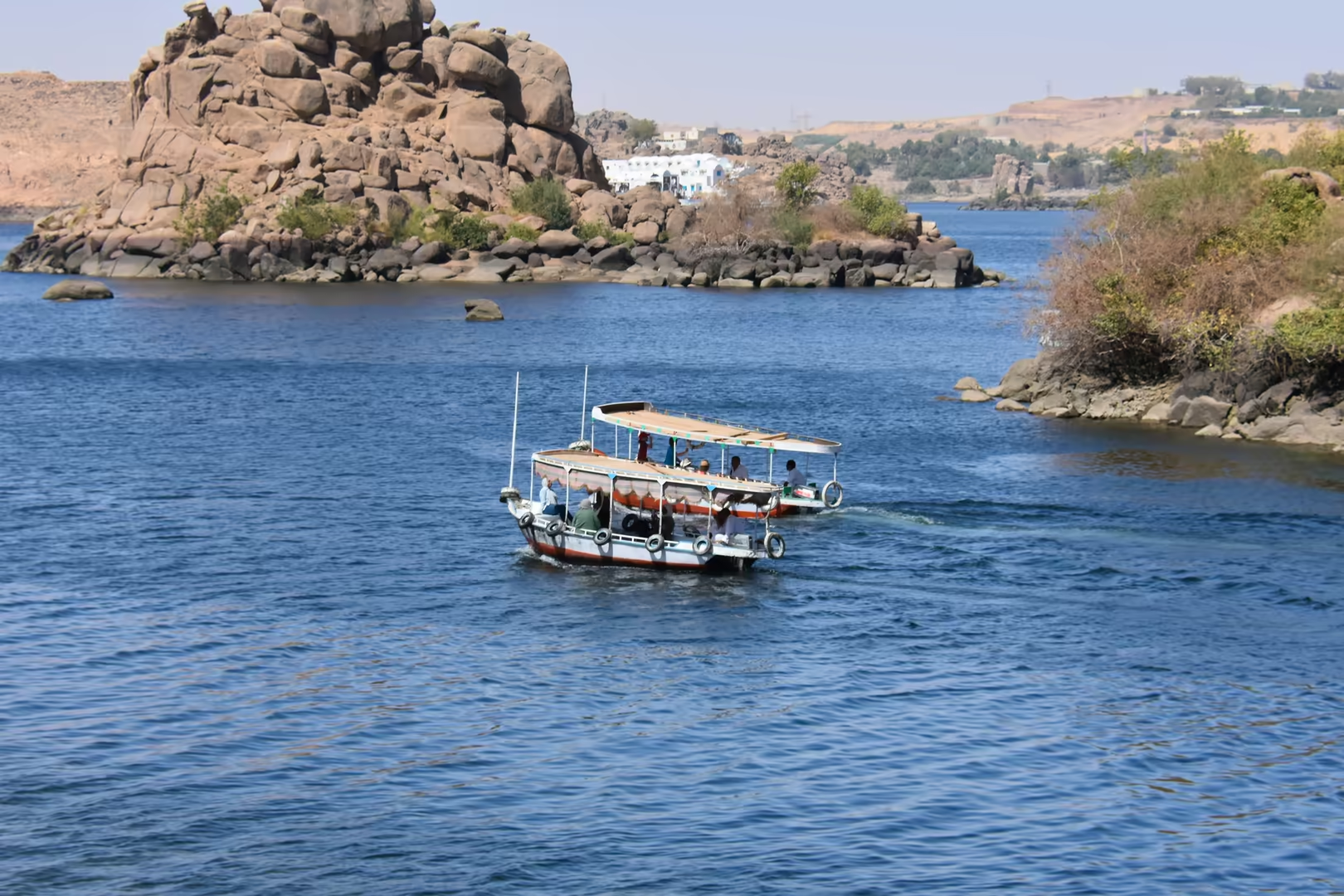
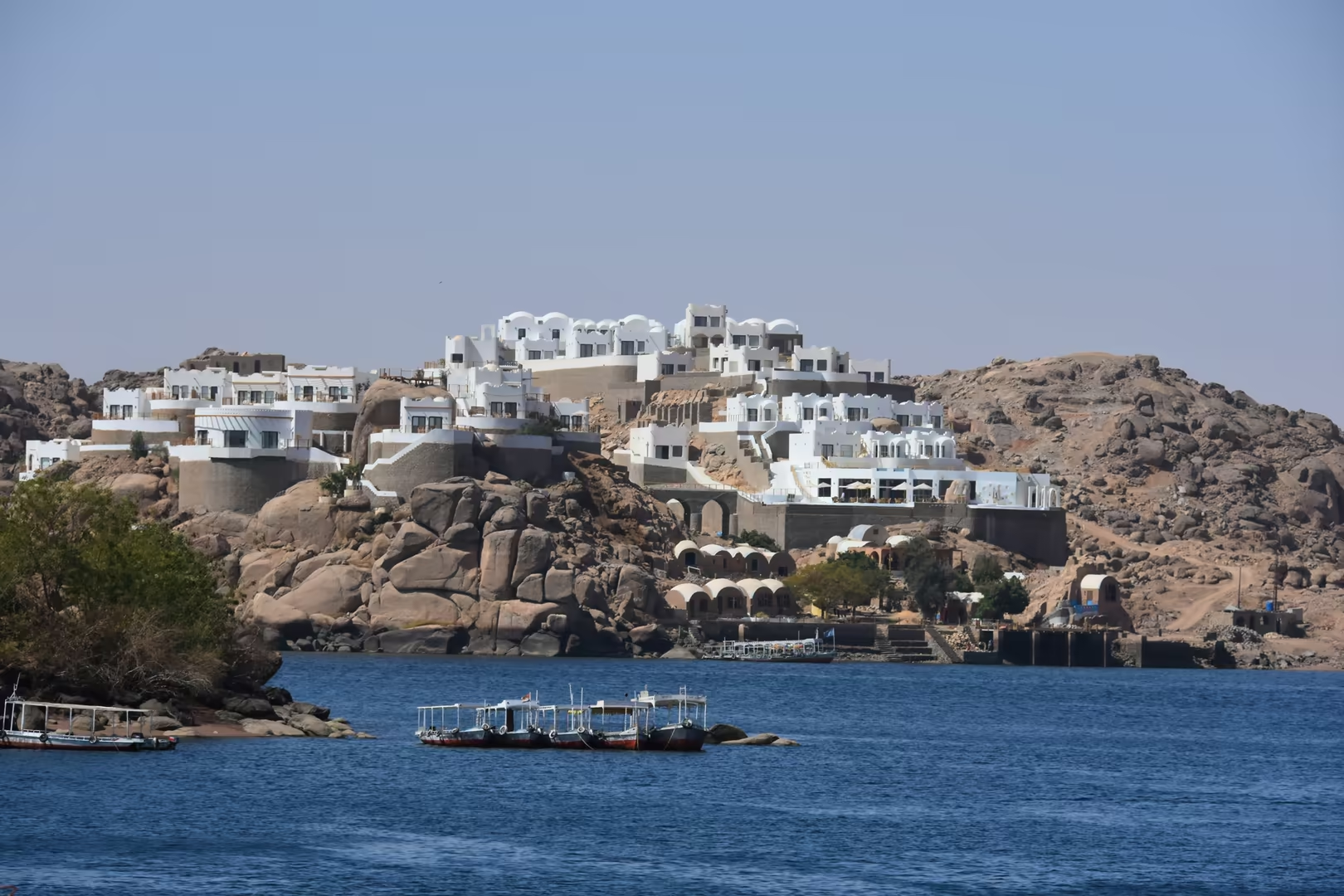
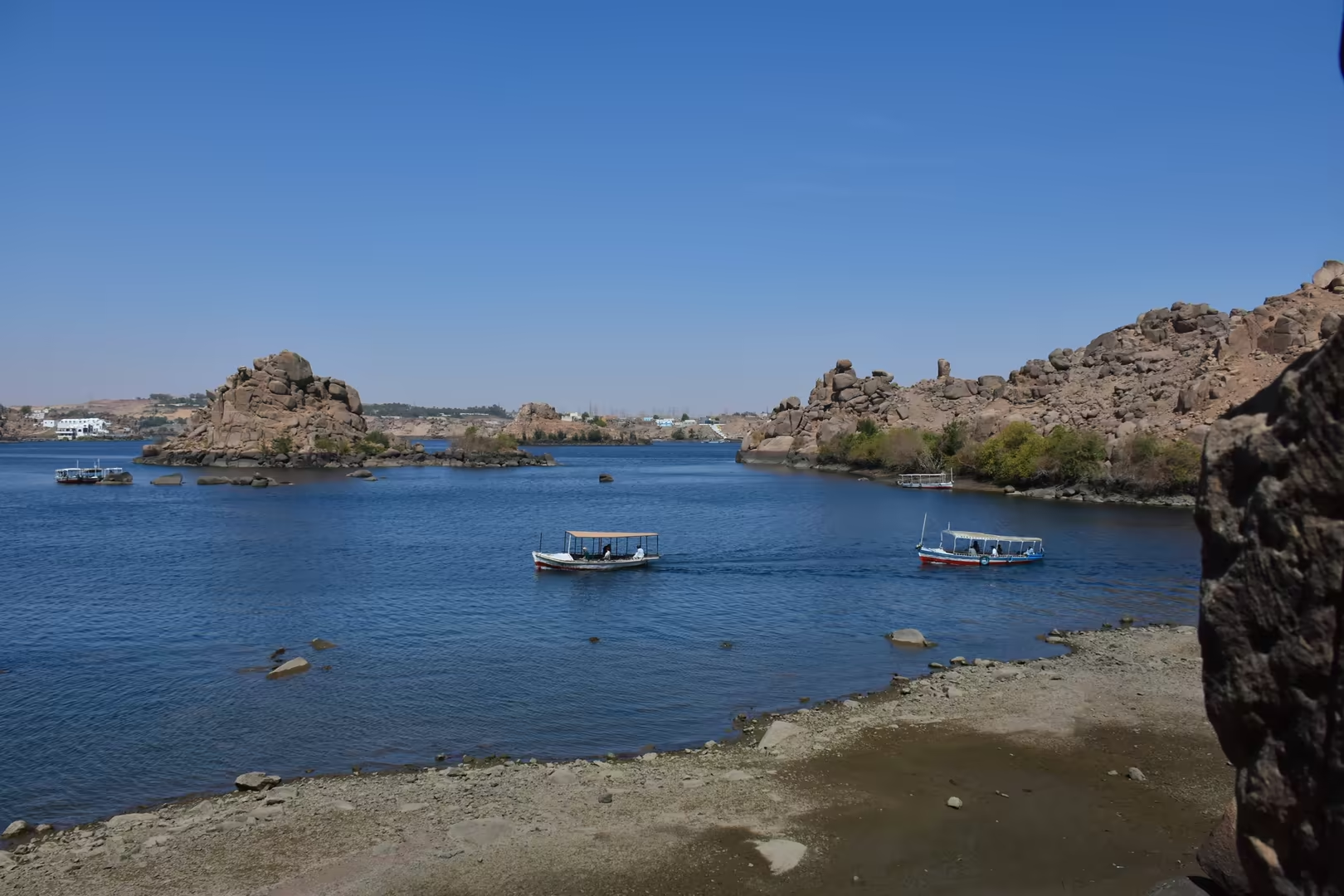
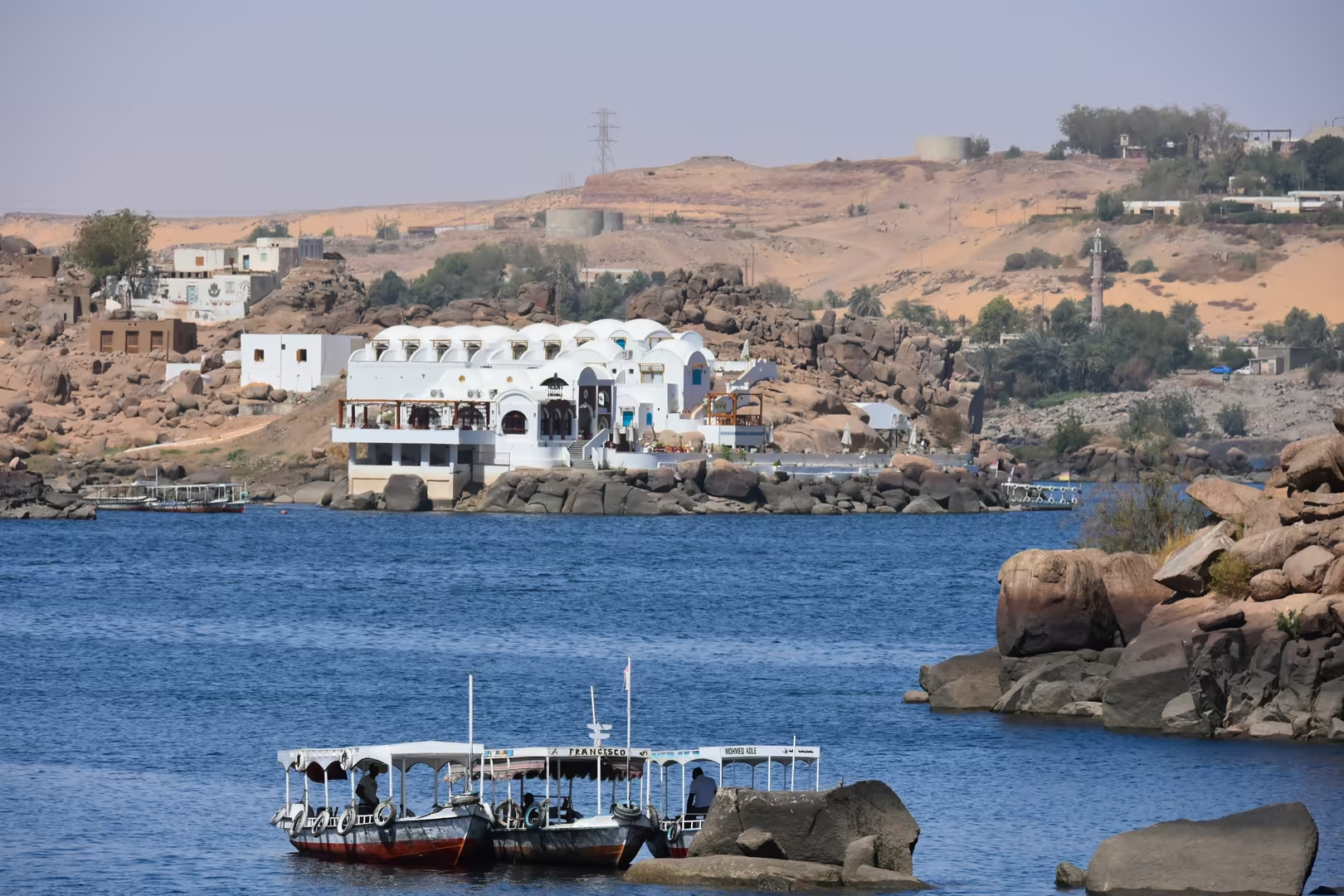
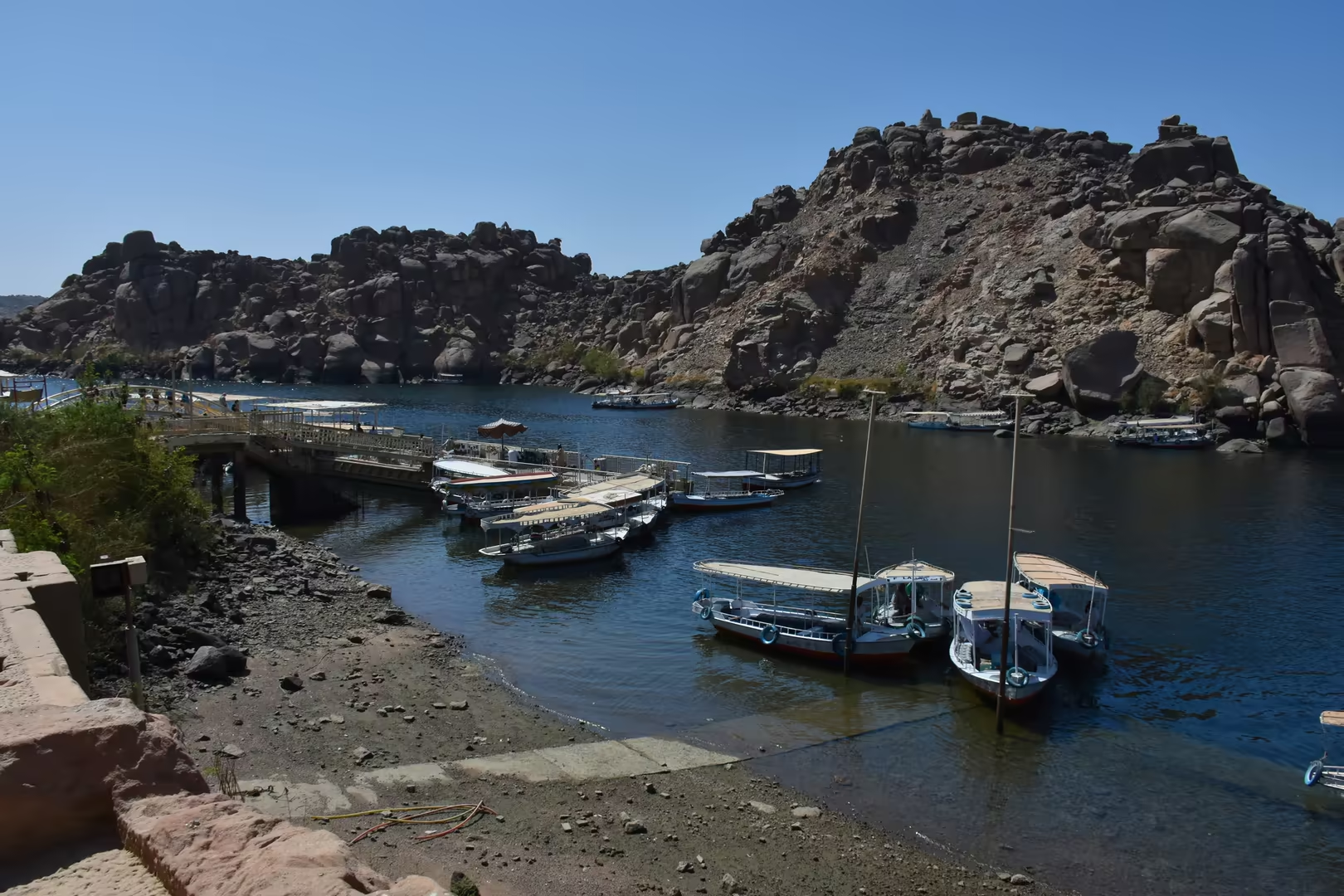
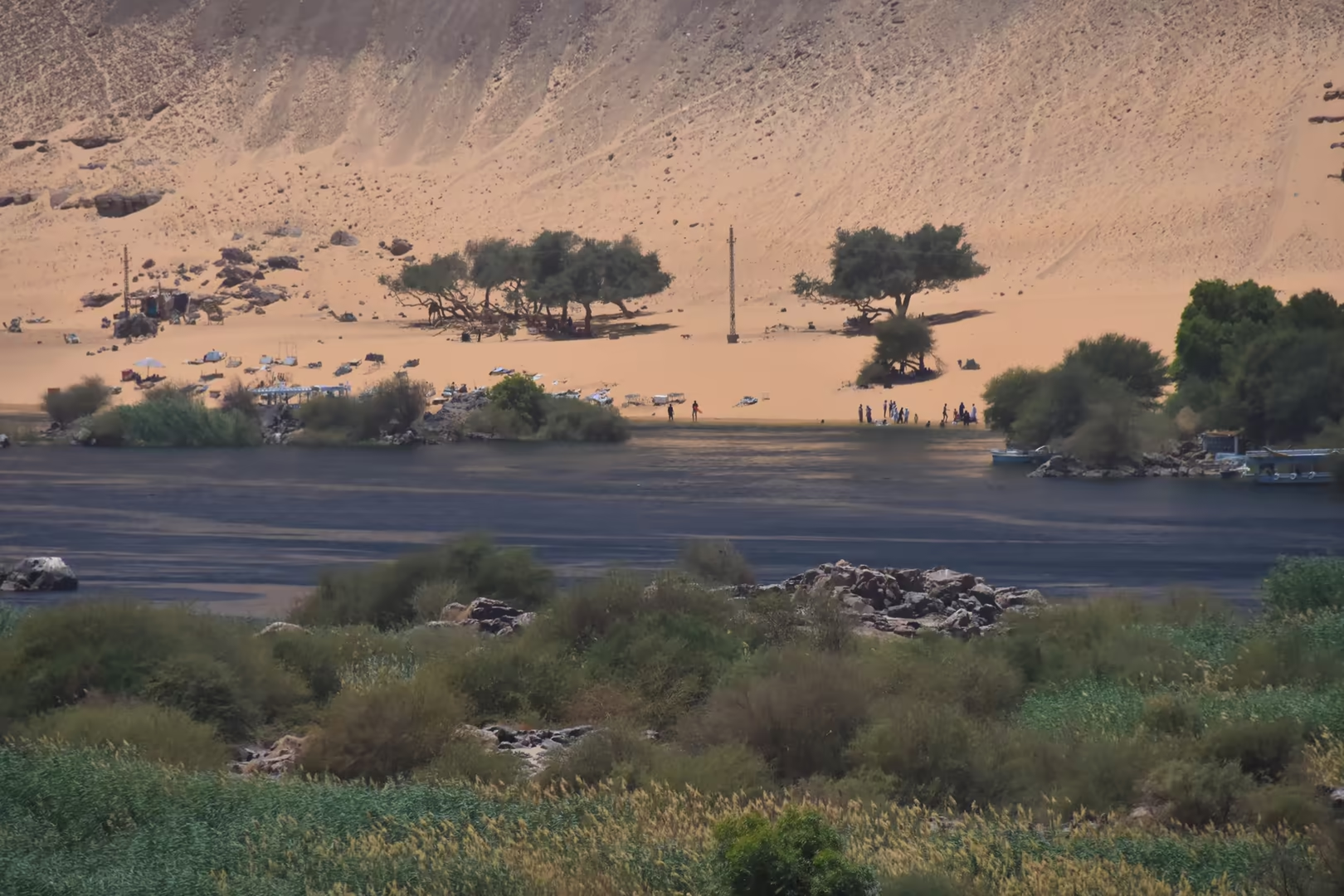
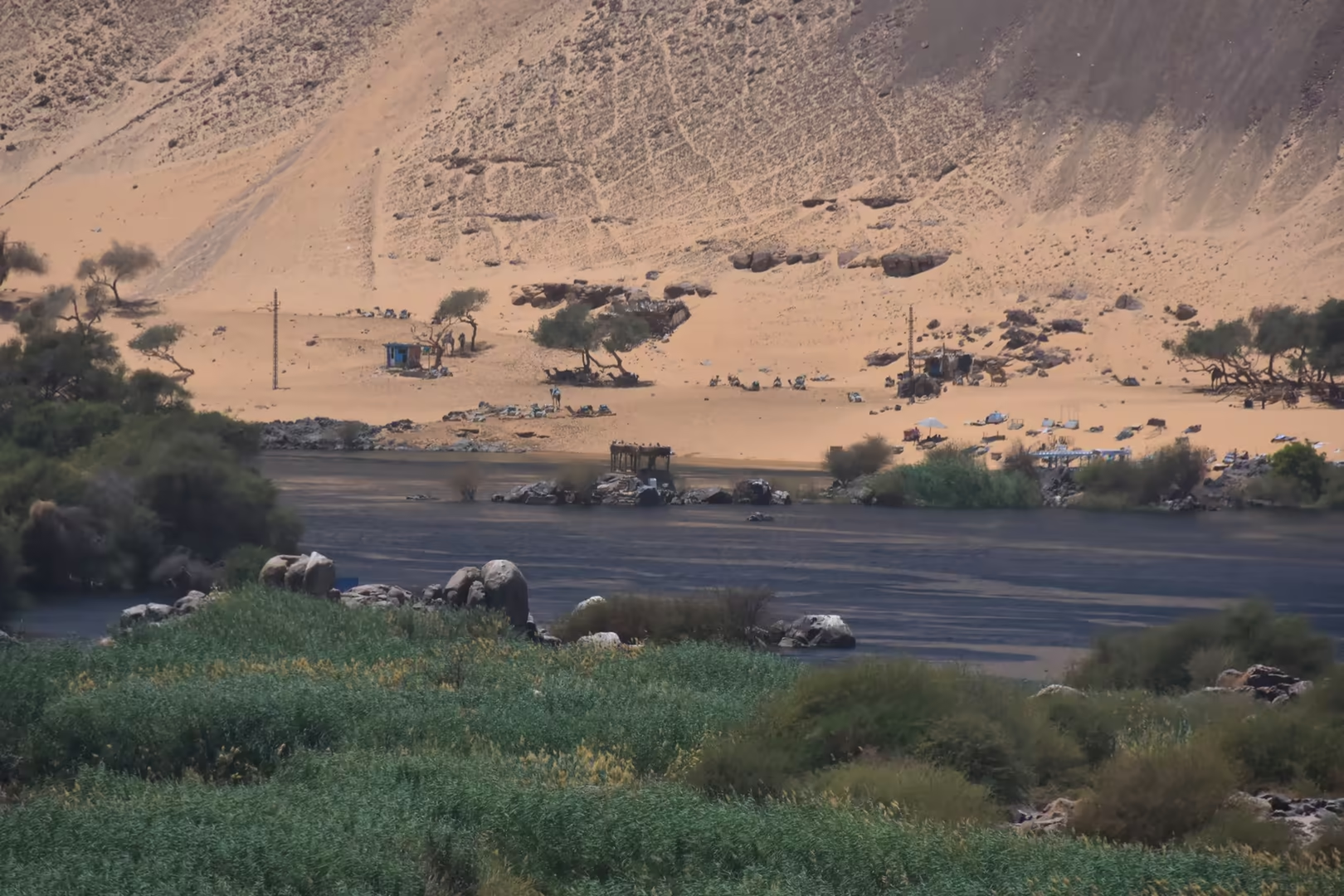
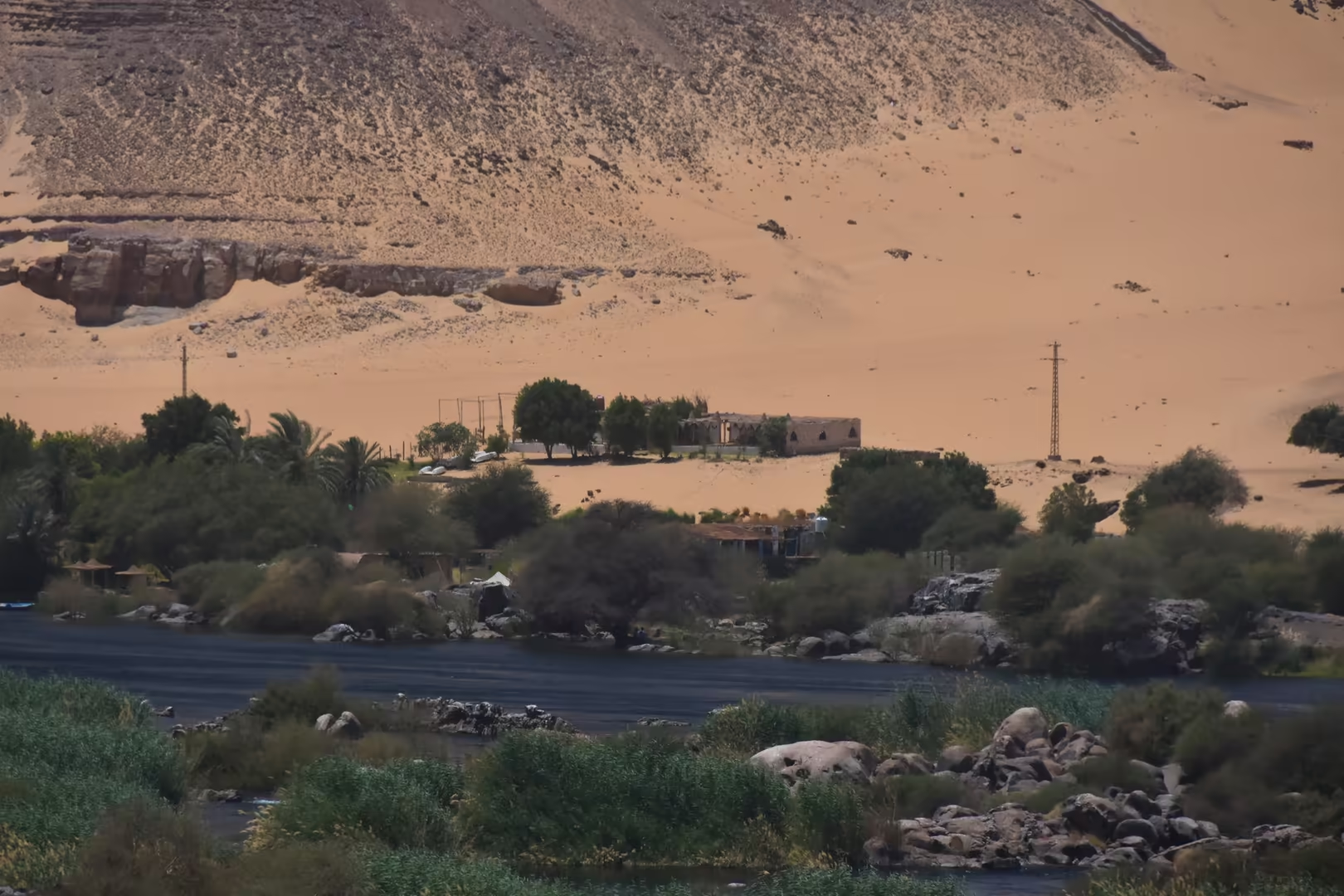
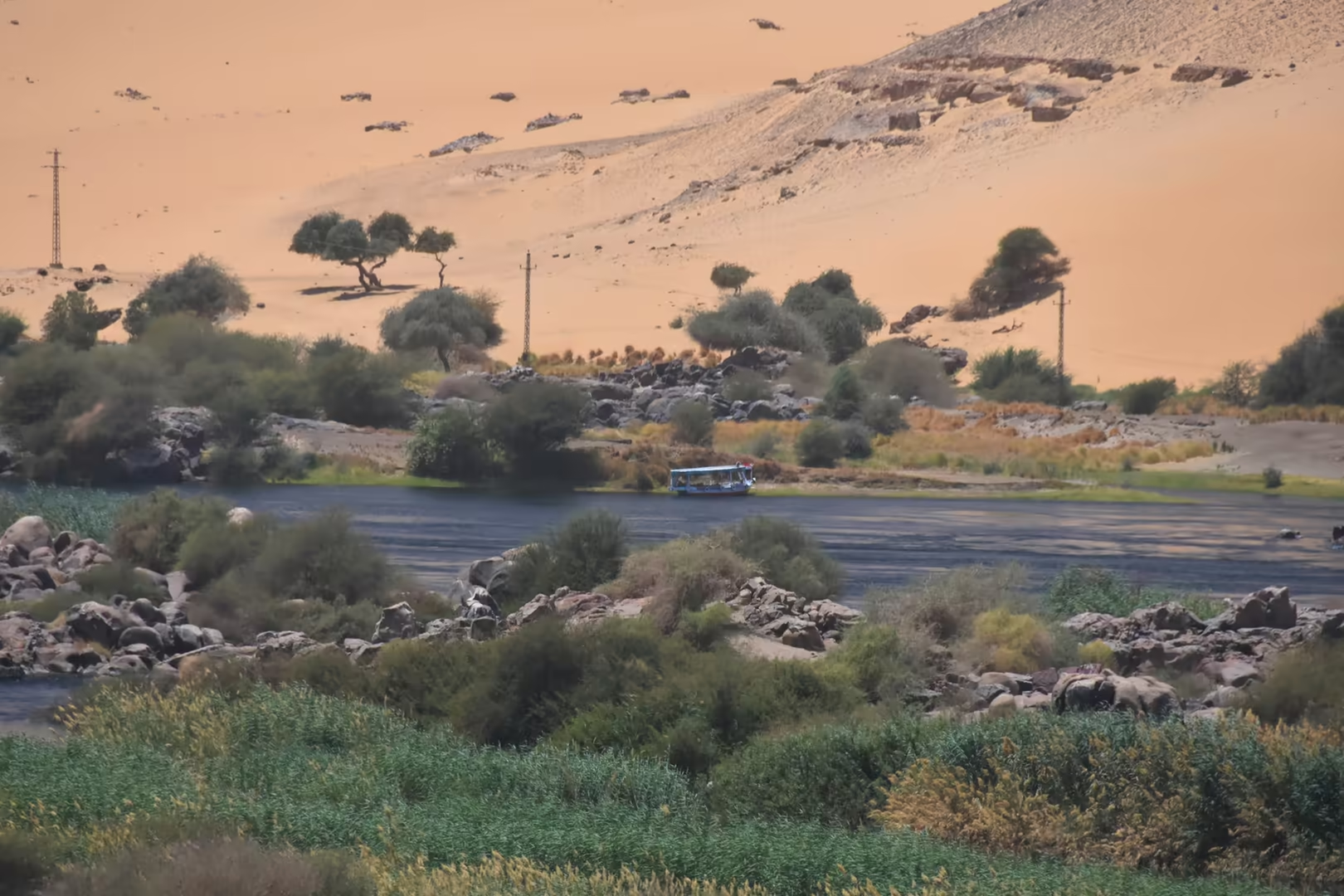
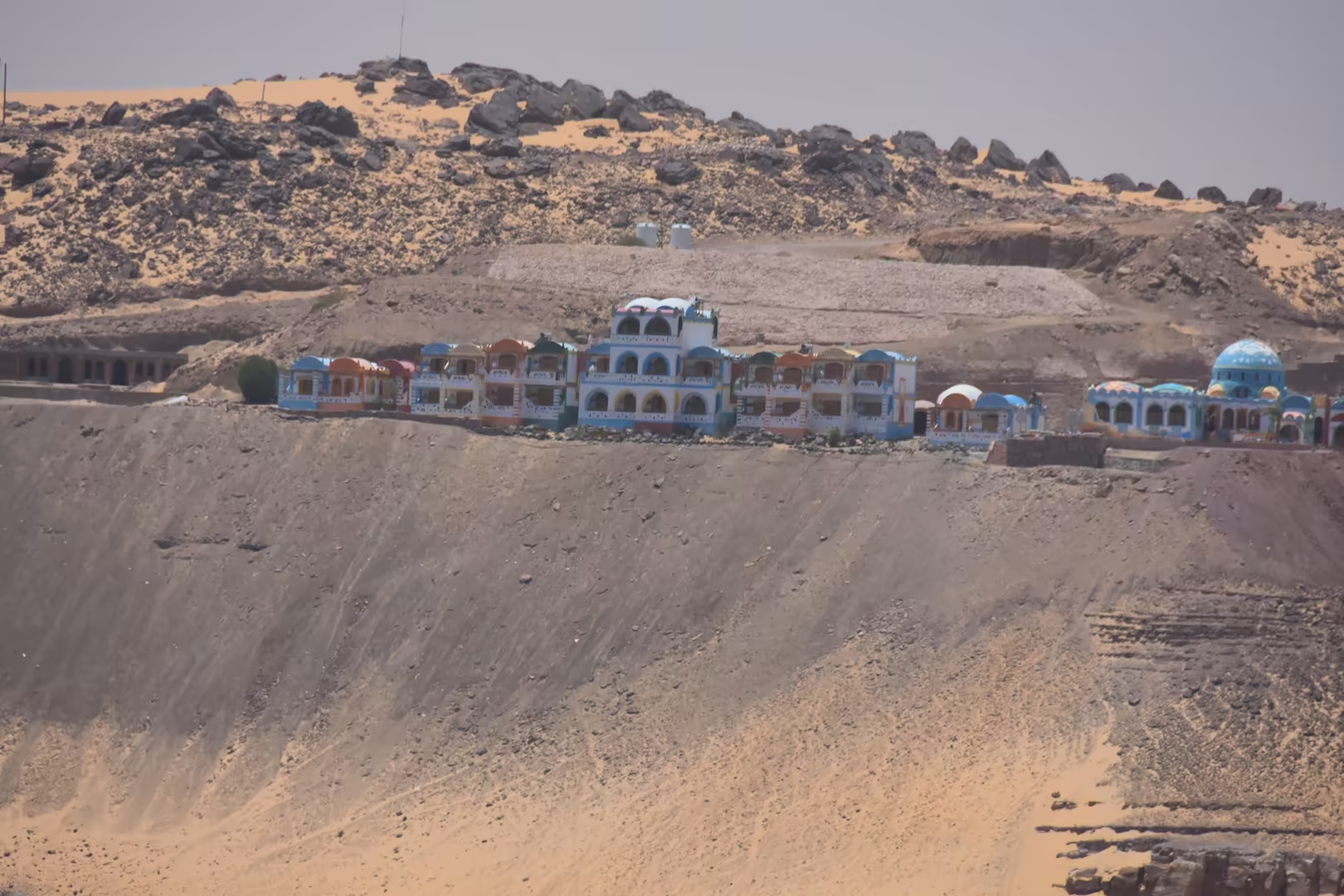
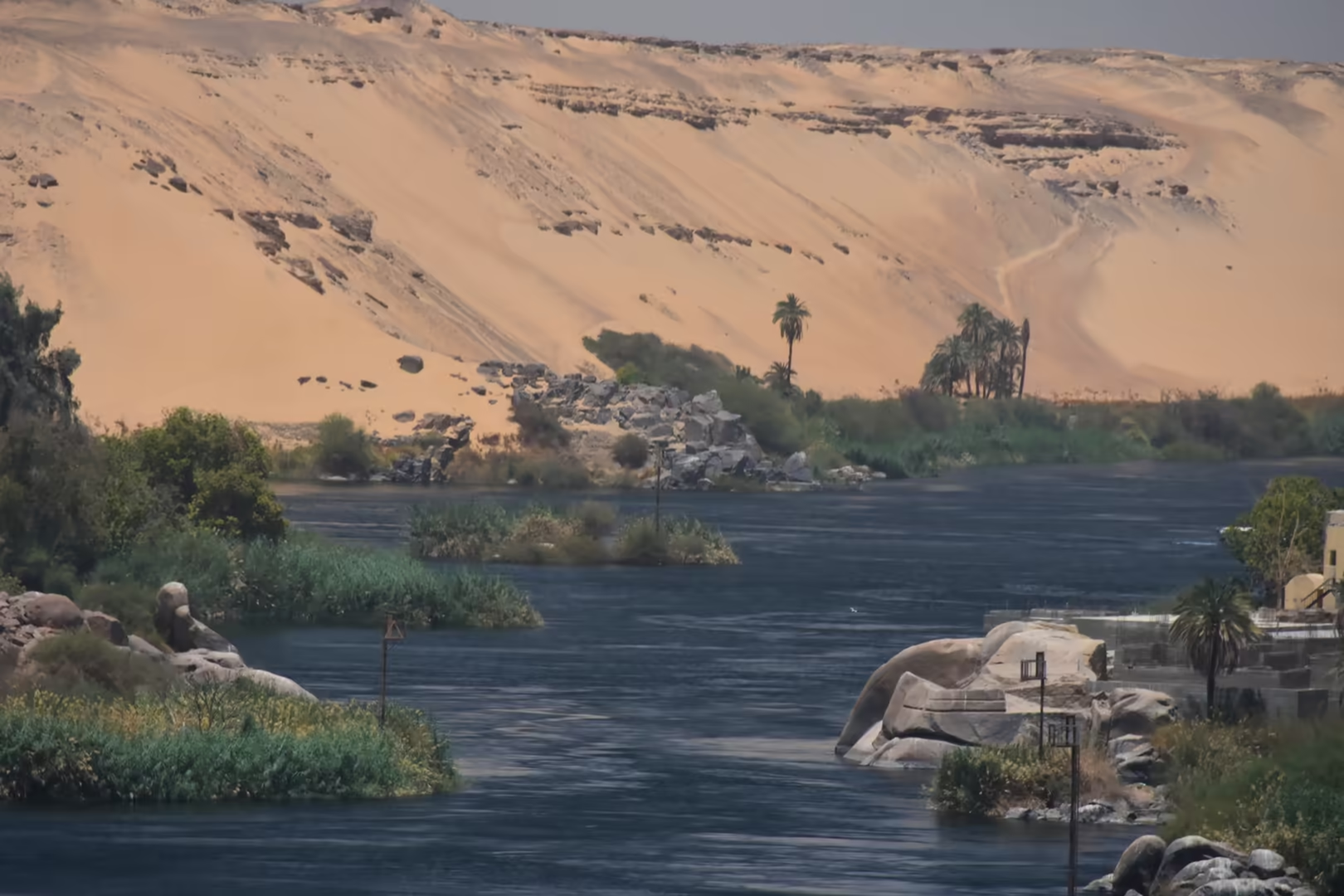
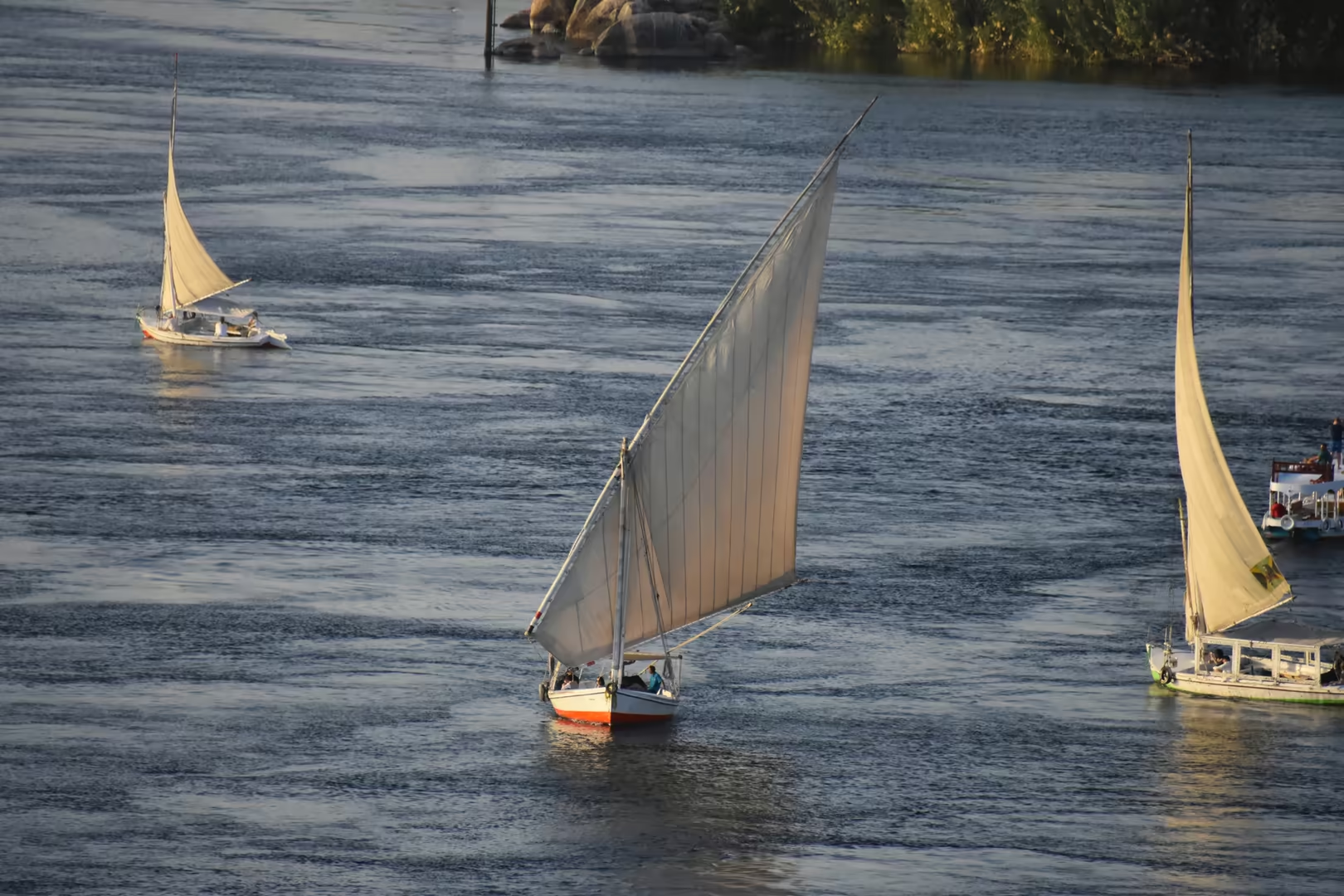
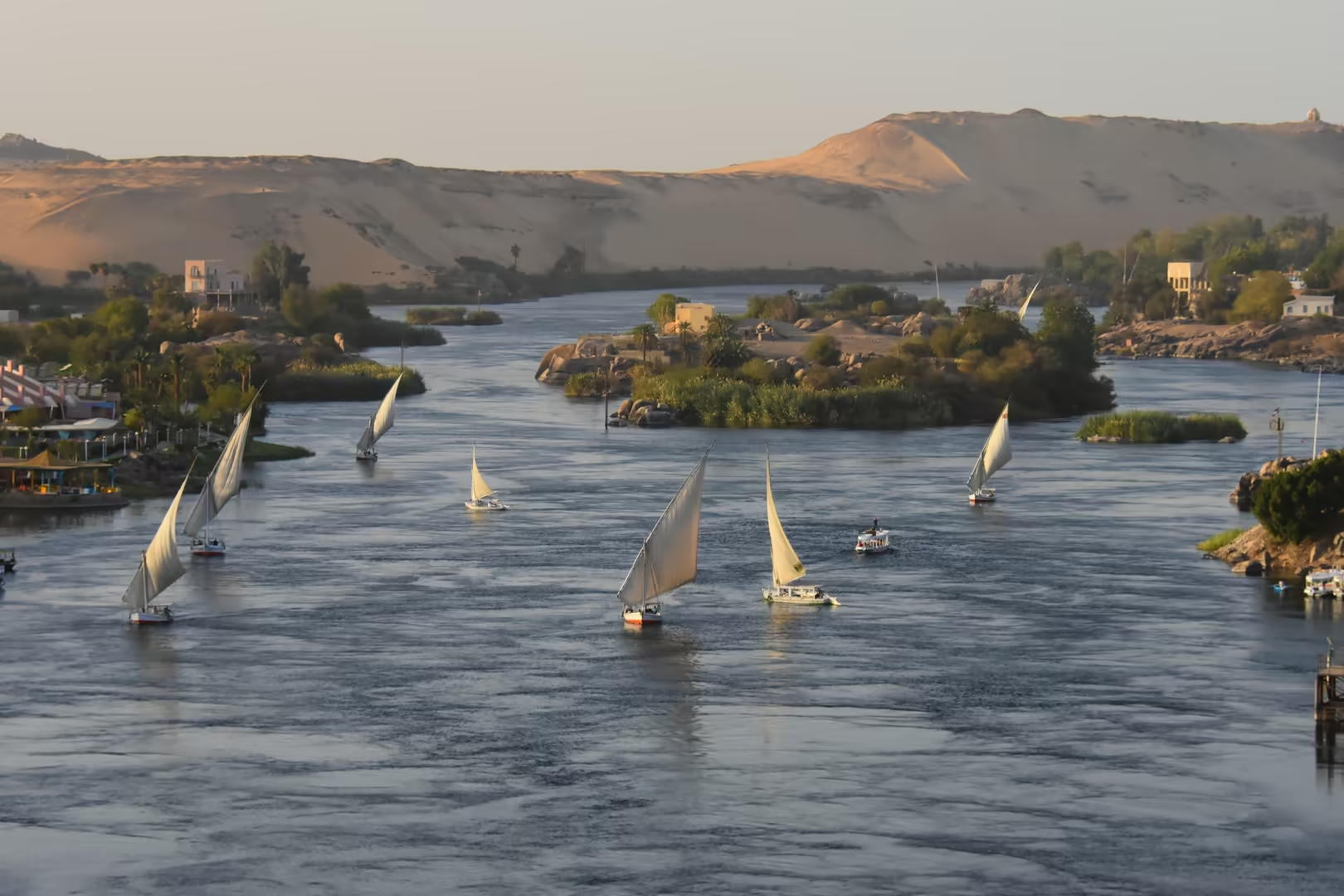
Agilkia is reached by motorboat or felucca from a landing below the old Aswan Dam. The island rises from the open water of the reservoir, surrounded by the dark granite islets of the drowned First Cataract, while on the western bank Nubian villages with painted houses climb the rocky slopes above the palms. The climate is hyper-arid, with almost no rainfall and summer temperatures regularly above 40°C; the island, once half drowned, now stands dry in a desert light of extraordinary clarity.
History
The religious history of Philae begins in the late Pharaonic period. The earliest certain trace of the cult of Isis is a small kiosk built by Psamtik II of the Twenty-sixth Dynasty; a shrine of the Kushite pharaoh Taharqa of the Twenty-fifth Dynasty is known only from reused blocks, though a red granite altar bearing his name still stands in the forecourt. The first great temple of Isis was built by Nectanebo I (380-362 BC), founder of the Thirtieth and last native dynasty, and approached from the river through a double colonnade; of his work survive a kiosk and a gateway later built into the first pylon. The island also grew rich on the southern trade, for the cataract stopped shipping for much of the year and the goods exchanged between Memphis and Meroë were landed here.
More than two thirds of the surviving structures are Ptolemaic, the period in which Philae overtook Elephantine as the chief sanctuary of southern Egypt. The temple was enlarged under Ptolemy II Philadelphus, Ptolemy V Epiphanes and Ptolemy VI Philometor, and the great court rose around the first pylon, begun under Ptolemy II and finished under Ptolemy III. Pilgrims came from Egypt, Nubia and the Greek world, leaving the votive inscriptions known as proskynemata on the walls; the oldest Latin inscriptions known from Egypt, scratched by three Romans in the summer of 116 BC, are found on the first pylon. The priests were powerful enough to petition Ptolemy VIII Physcon against the burden of resident officials; the petition, engraved on the obelisk that William John Bankes carried to England in 1819, later aided the decipherment of hieroglyphs alongside the Rosetta Stone. Even the kings of Meroë contributed, among them Arqamani, who added to the temple of Arensnuphis and to the mammisi.
The Roman emperors continued the work. Most additions date from the Julio-Claudian dynasty, though gifts continued into the second century: Hadrian built the handsome gateway on the west side that faces the Abaton, and Trajan gave his name to the kiosk at the water’s edge, although it may be older than his reign. In AD 298 Diocletian withdrew the Roman frontier from Lower Nubia to the neighbourhood of Philae, and the cult passed increasingly into the keeping of the southern peoples: the Nobades, the Kushites and the Blemmyes of the Eastern Desert. This Nubian patronage kept the old religion alive here for two centuries after it had died elsewhere in Egypt.
Philae mattered because of the myth it embodied. When Osiris was murdered and dismembered by his brother Set, his wife Isis and her sister Nephthys gathered the scattered pieces of his body and buried them with due rites; many shrines of Egypt claimed the honour of holding one of his tombs. Philae and its neighbour Bigeh claimed the greatest prize: here, it was believed, lay the tomb of Osiris himself, in the Abaton, the “untrodden place” that only the priests might enter, approached in festival processions across the water. The Greek writer Plutarch, who dedicated his account of the myth to a priestess of Isis, preserved this tradition for the classical world; partly through Philae, Isis became the great goddess of the Greco-Roman world.
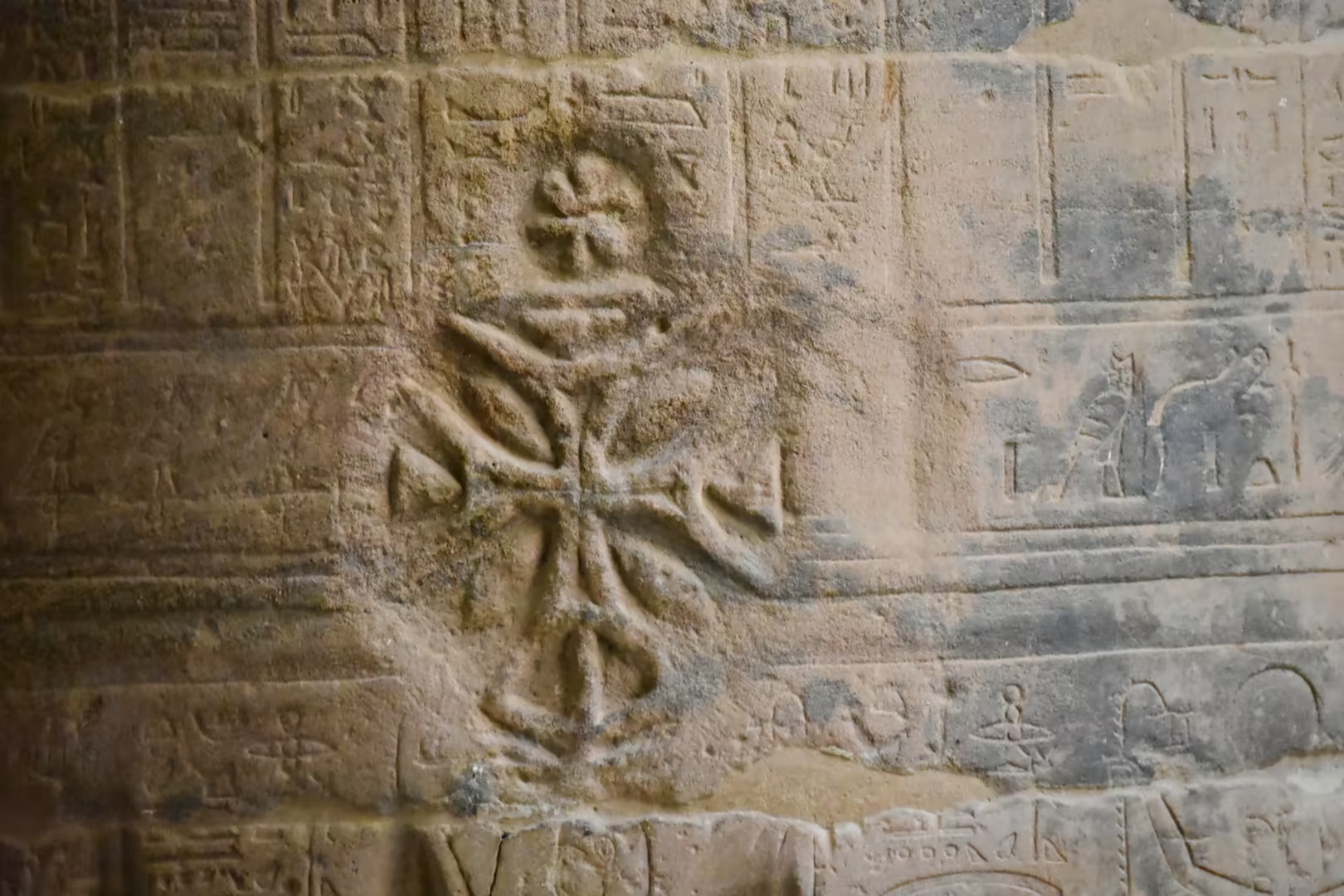
The end came slowly. The edicts of Theodosius closed the temples of Egypt at the end of the fourth century, but Philae lay beyond the imperial administration, and its priests went on writing. The last dated hieroglyphic inscription in the world was carved here on 24 August AD 394: the graffito of the priest Nesmeterakhem, better known as Esmet-Akhom, cut beside a figure of the Nubian god Mandulis on Hadrian’s gate. Demotic survived longest: the latest demotic graffito at Philae dates from December 452, and a treaty of that year between Rome and the Blemmyes and Nobades still guaranteed access to the cult image of Isis. In about AD 537 the general Narses, acting for the emperor Justinian, closed the temple, imprisoned its priests and sent its statues to Constantinople, conventionally the end of the ancient Egyptian religion, and its halls were converted into a church of Saint Stephen.
Geology
Philae and Agilkia stand on the geological frontier of Egypt. At Aswan the Nile crosses the hard crystalline basement of the Arabian-Nubian Shield, the pink and grey granites and gneisses of Precambrian age that form the bed of the river and the bare hills of both deserts; the older writers called this rock syenite, after the ancient city of Syene. The First Cataract is the river breaking over shelves and boulders of this resistant granite, and the islands among which the temple stood, Philae and Bigeh among them, are summits of the same drowned ridge. North of Aswan the Nile leaves the shield and flows for more than 1,200 kilometres through the sedimentary lowland, so that the cataract marks the change from a rocky, youthful river to the alluvial stream of the valley, a contrast still visible from the water where granite islets give way downstream to sandstone bluffs.
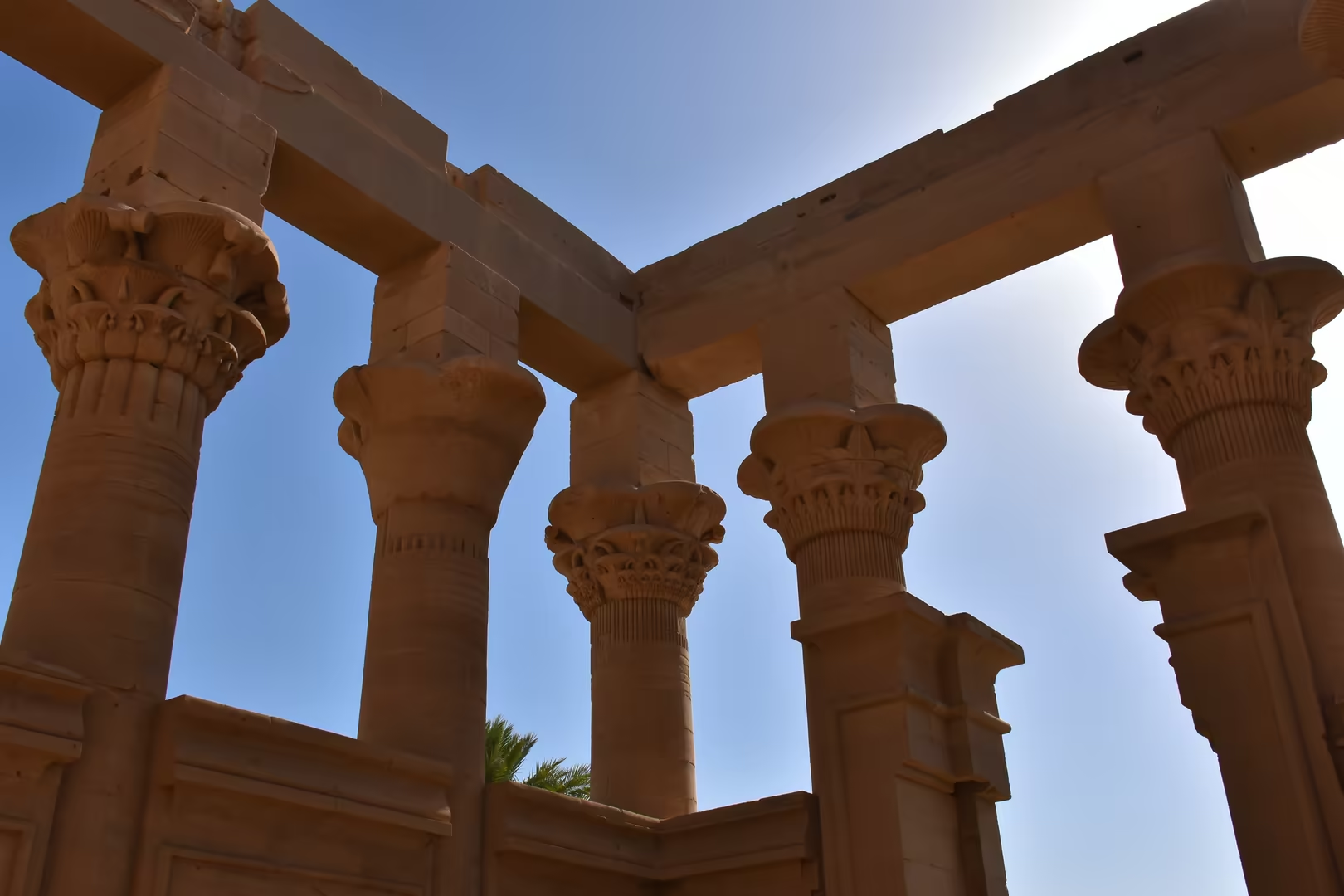
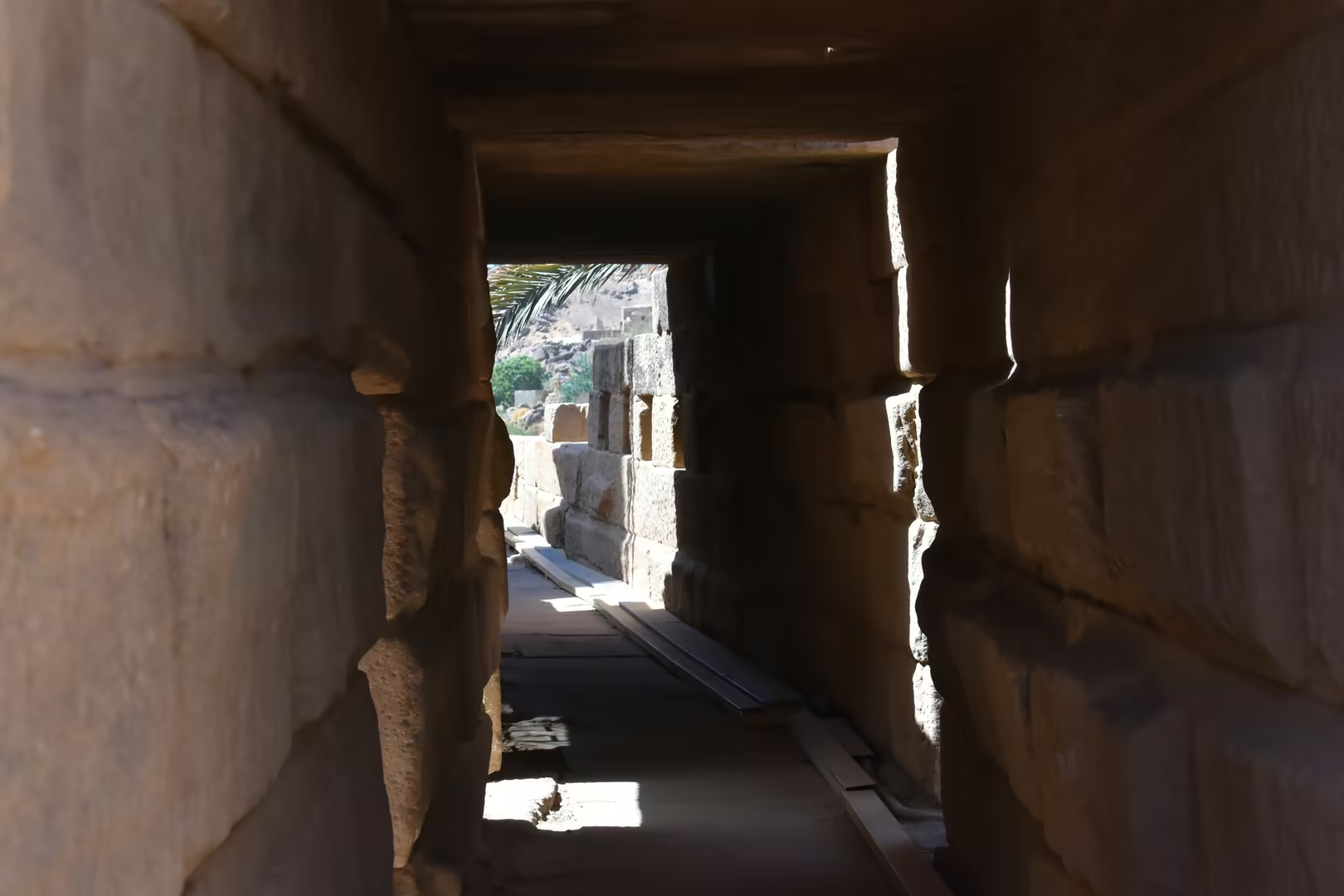
The temples are built of the two stones of this frontier. Walls, columns and pylons are of the warm, iron-stained sandstone of the Nubian sandstone belt, the brownish stone of the Greco-Roman temples of Upper Egypt, carved into the dense sunken reliefs that cover every surface; the kiosk of Trajan and the colonnades show its full colour range, from pale gold to deep ochre. Granite from the Aswan quarries was reserved for the cult and the approach: the monolithic shrines, the altars and the doorways, and in antiquity two granite lions and a pair of thirteen-metre obelisks before the propylaea. The two rocks are the two chapters of the local geology: the ancient shield, more than half a billion years old, and the Cretaceous sandstones laid down across its weathered surface.
Water has shaped the fate of these monuments more than any other force. In antiquity the low island was flooded every summer by the natural inundation, and the builders founded the western walls of the great temple on the granite bed of the river. The completion of the old Aswan Dam in 1902, and its heightening in 1907-1912 and 1929-1933, turned the seasonal flood into a permanent reservoir: for nine months of every year the whole complex stood under water, emerging only when the sluices were opened between July and October. The effects were destructive and cumulative: silt-laden water scoured the soft sandstone and left it encrusted with mud; repeated wetting and drying drew salts into the stone, whose crystallisation prised the surfaces apart; and the colours of the reliefs, preserved for two thousand years by desert dryness, were washed away within decades. By the 1960s the lower third of the buildings stood permanently submerged.
The rescue of the monuments was an exercise in engineering geology as much as in archaeology. A great cofferdam (two rows of steel sheet piles filled with a million cubic metres of sand) was built around the island and the water within it pumped away. The buildings were recorded by photogrammetry, cut into some 40,000 blocks of between two and twenty-five tons, and ferried the short distance to Agilkia, whose granite summit had been levelled to reproduce the contours of the old island. There the blocks were set on new foundations above the reach of the reservoir and reassembled between 1977 and 1980. The original Philae now lies beneath the water, while its temples stand dry on Agilkia, guarded henceforth not by the inundation but by the desert aridity that once preserved their colour.
Things to See
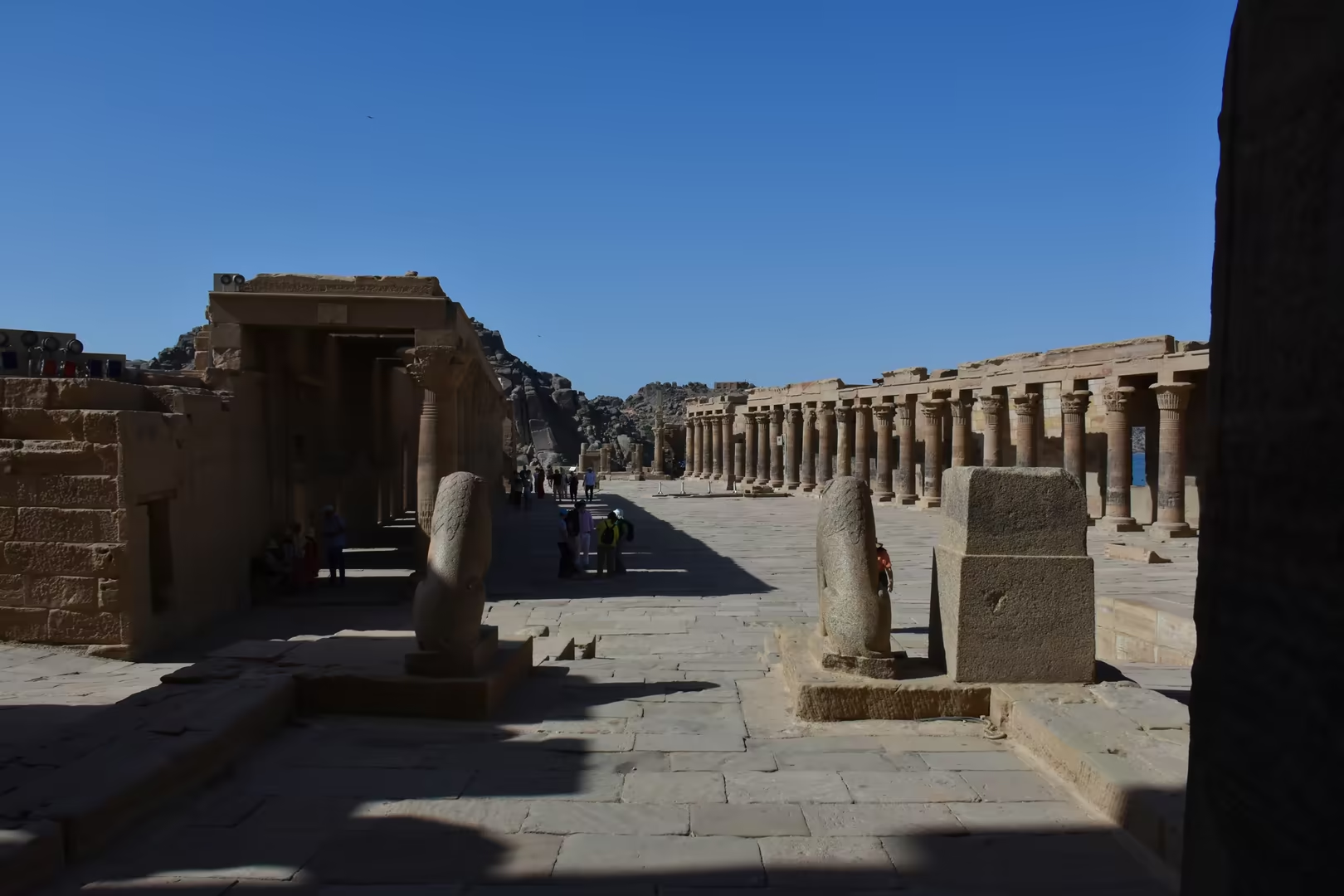
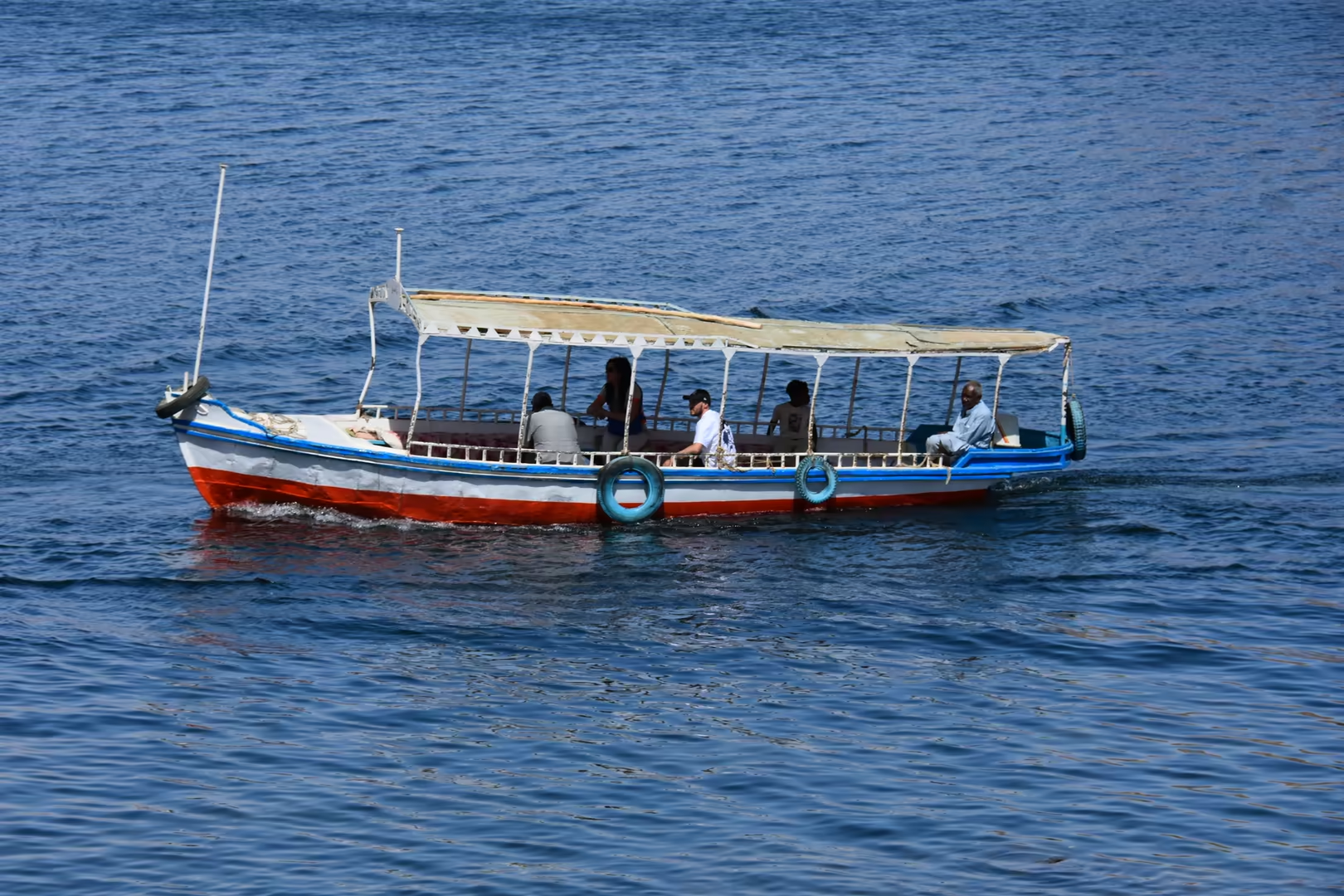
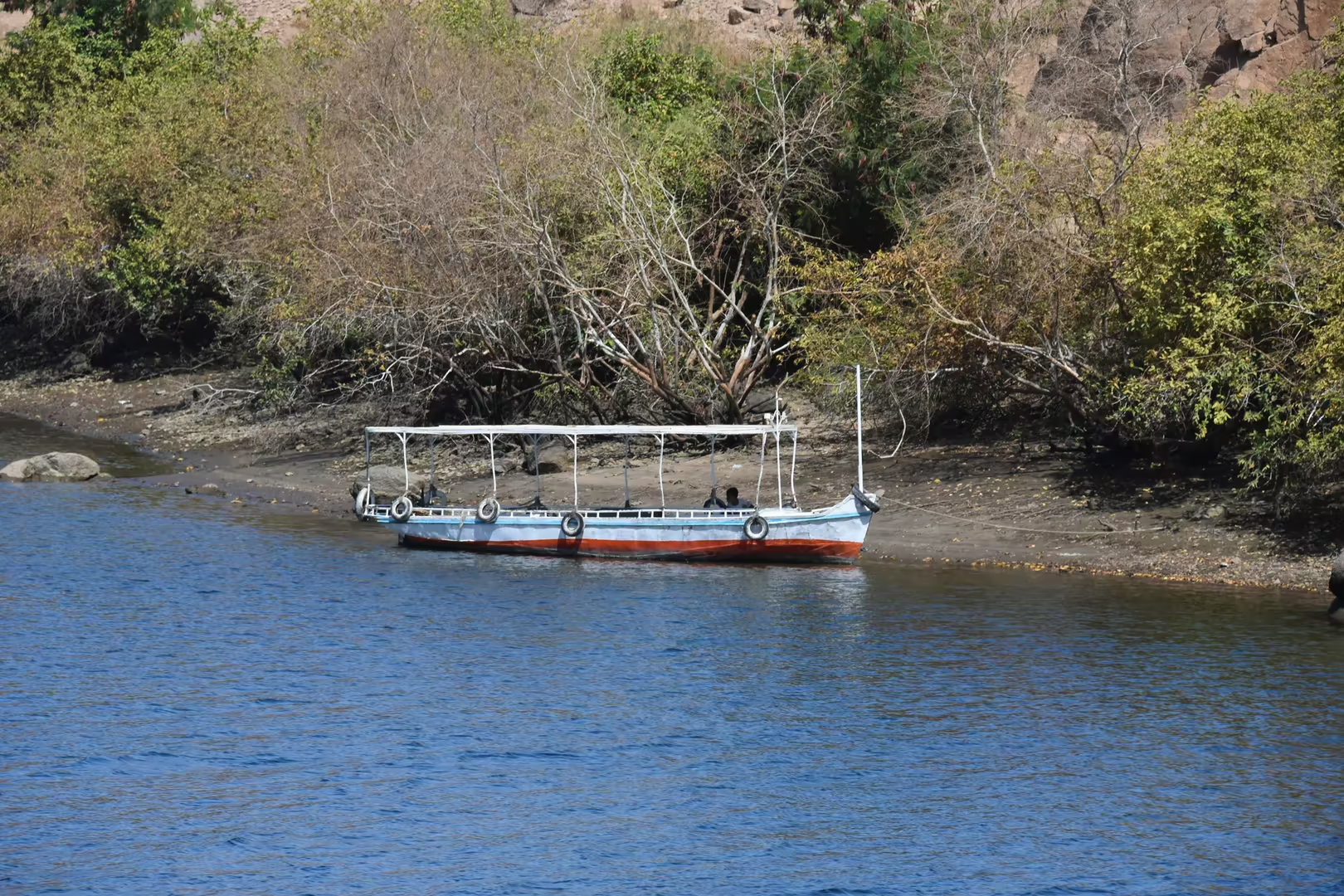
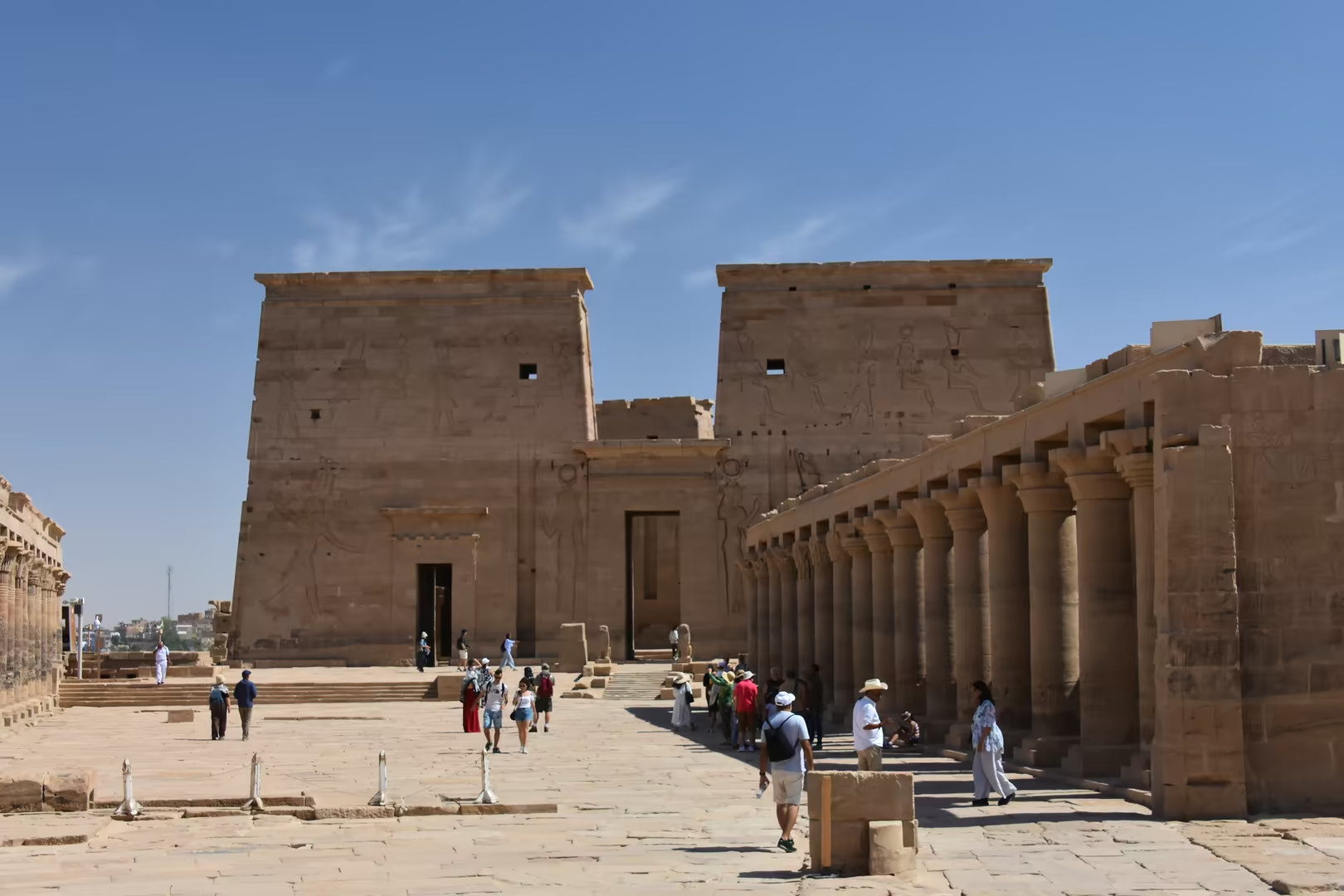
The temple complex of Philae occupies the greater part of Agilkia and is arranged as it was on the original island, with the great temple of Isis at its centre facing the river. Motorboats and feluccas run to the island throughout the day from a landing below the old Aswan Dam, crossing the open water of the reservoir between the granite islets of the drowned First Cataract. The boats put in on the eastern shore, where the outer colonnades of the sanctuary meet the water, and the principal monuments rise in a compact group inland: the pylon and courts of the temple of Isis, the small shrines grouped beside it, and the kiosk of Trajan close to the water’s edge.
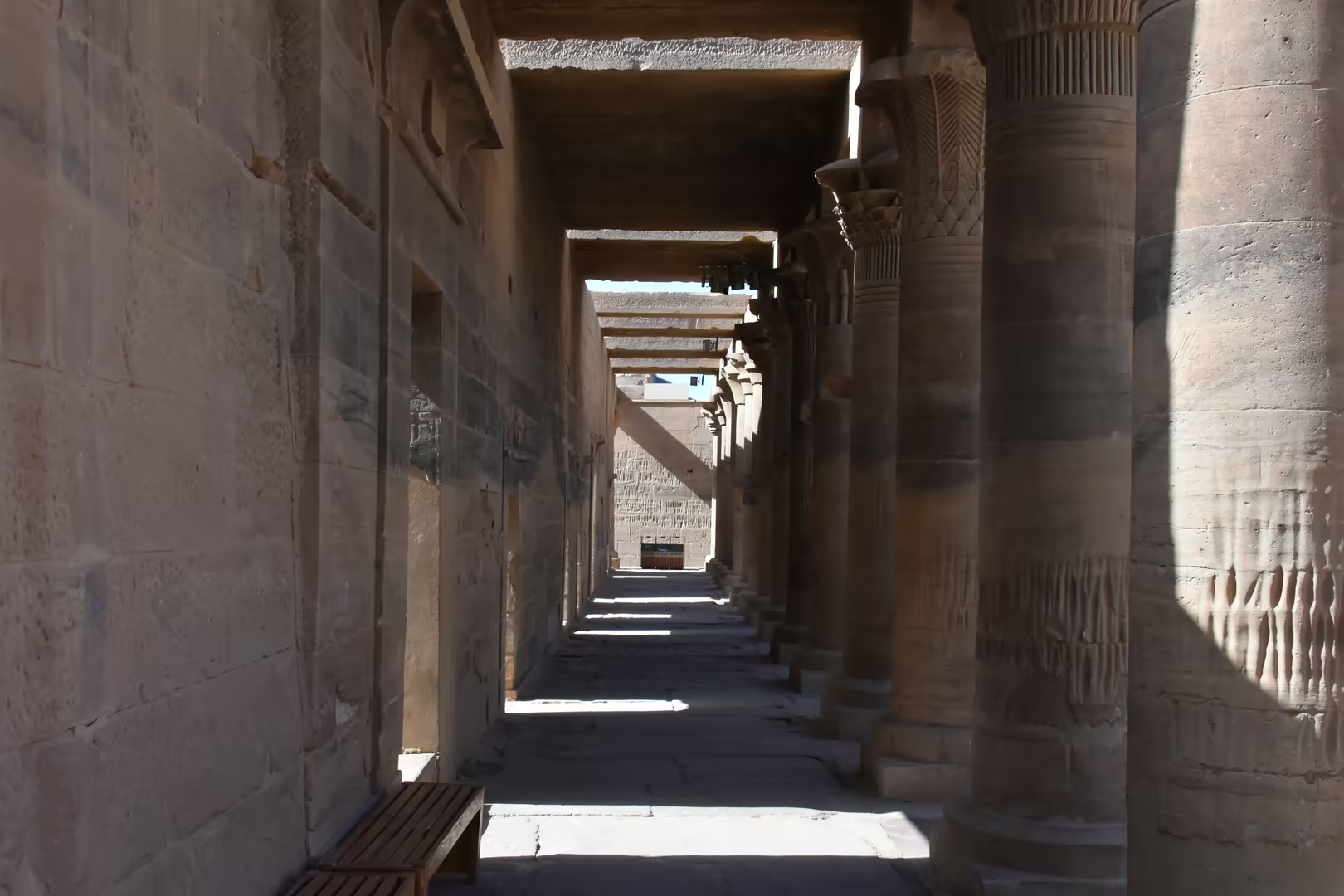
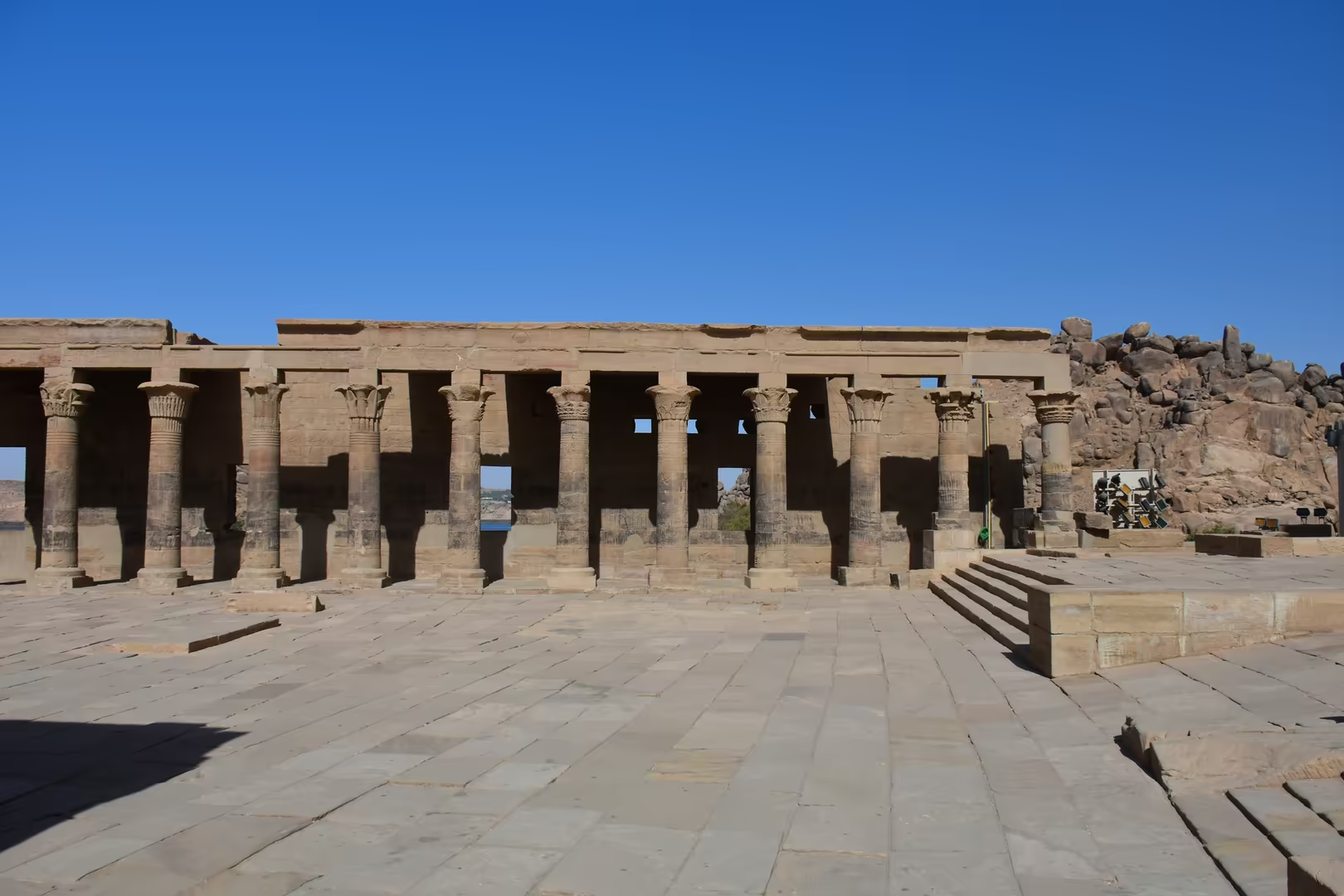
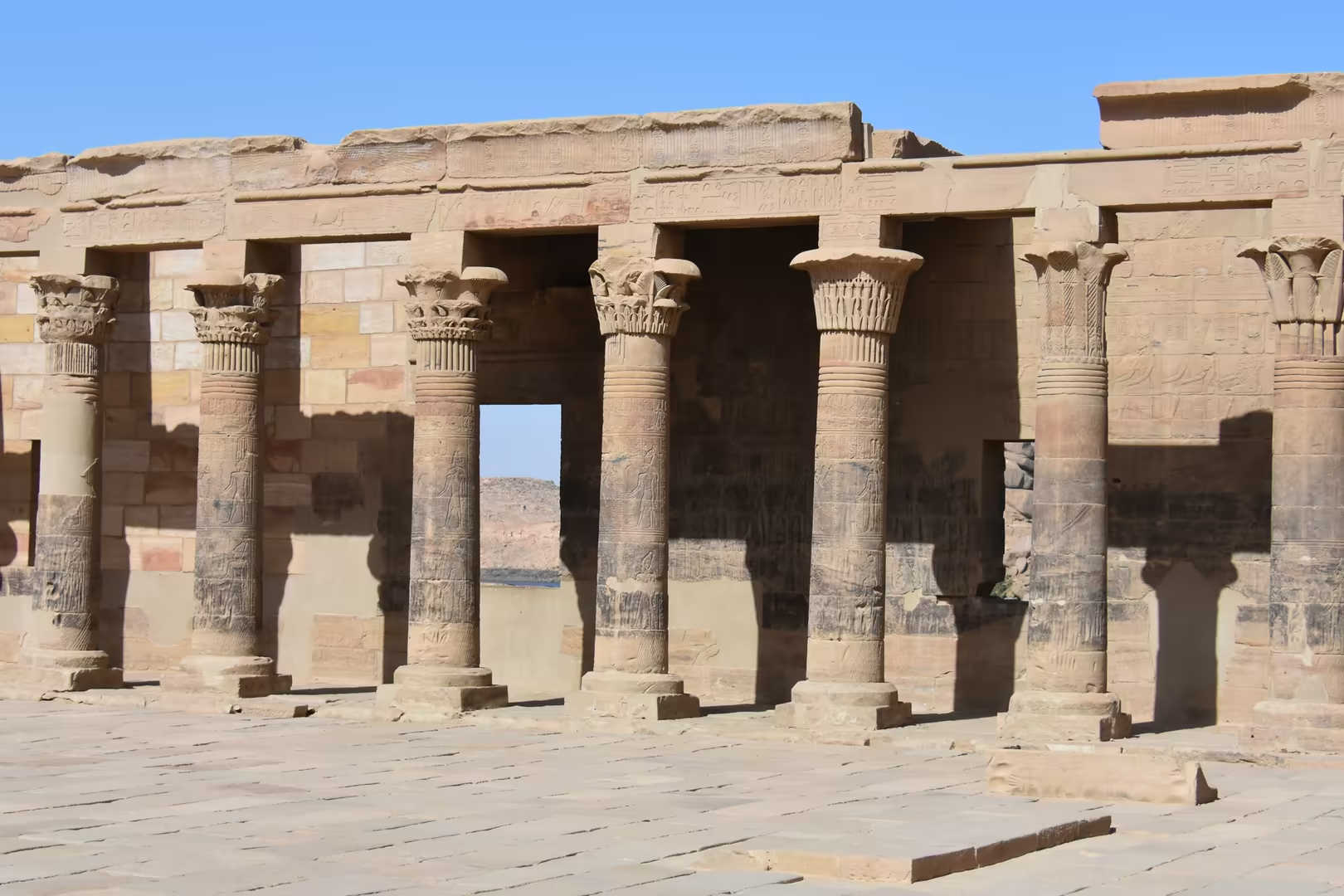
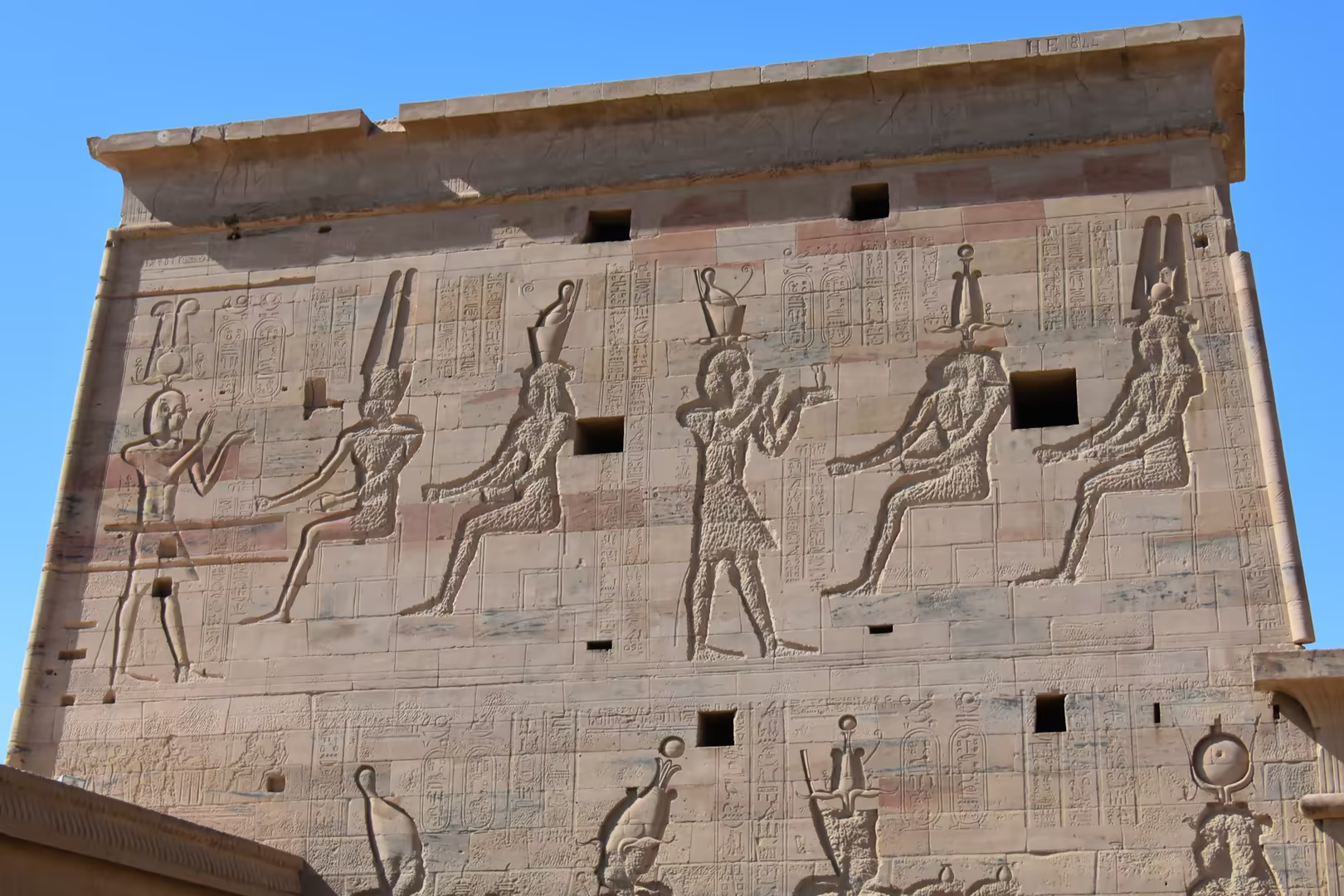
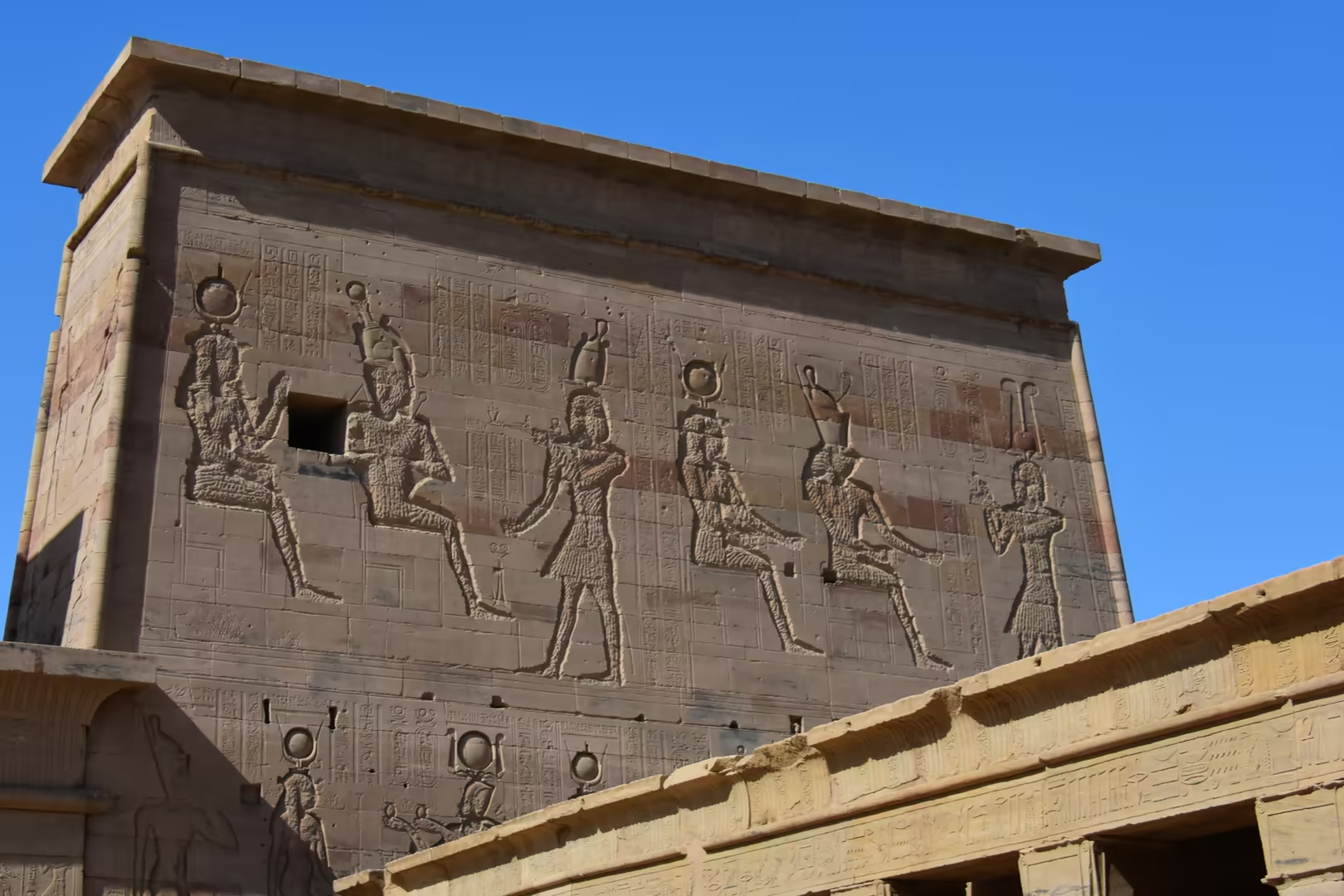
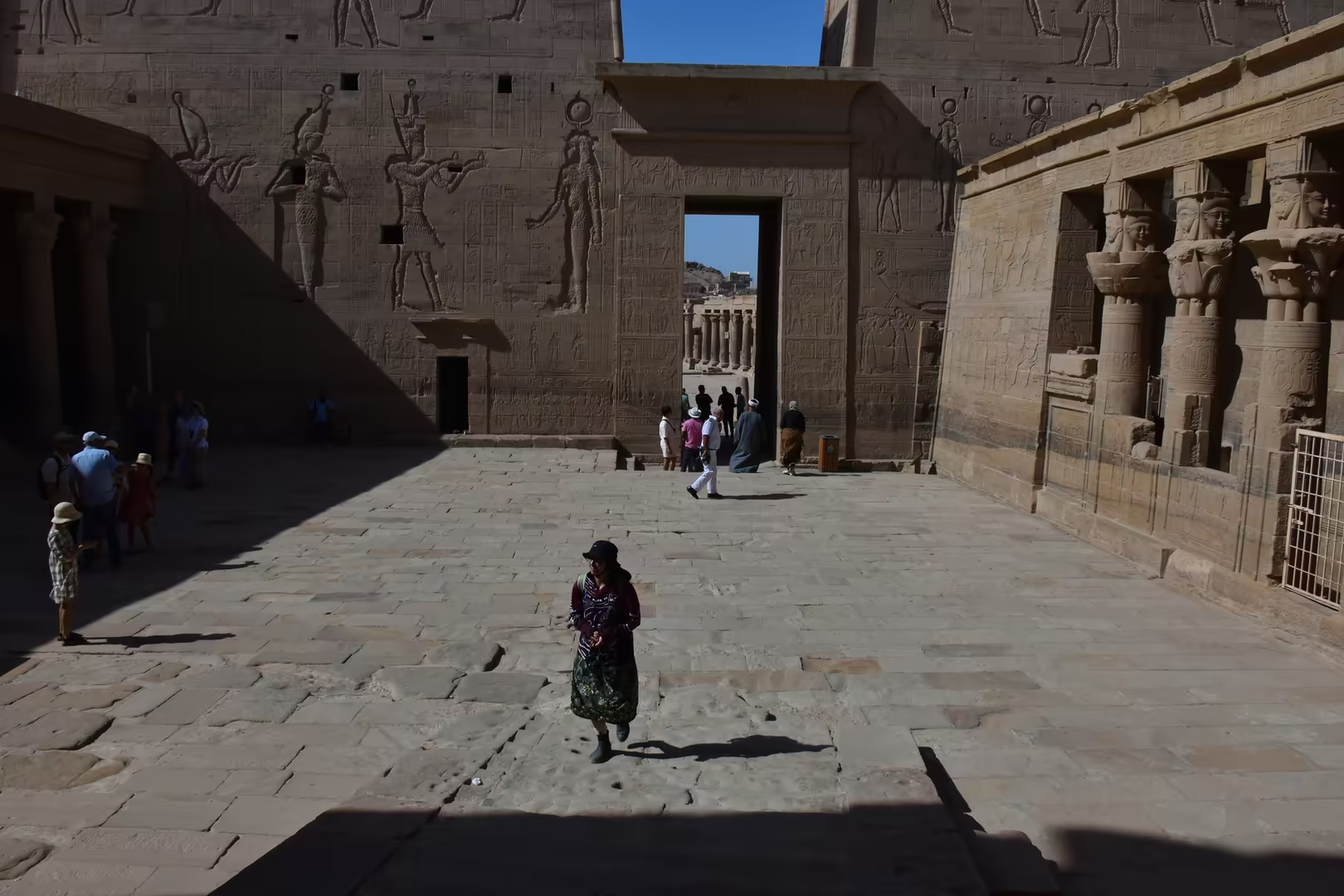
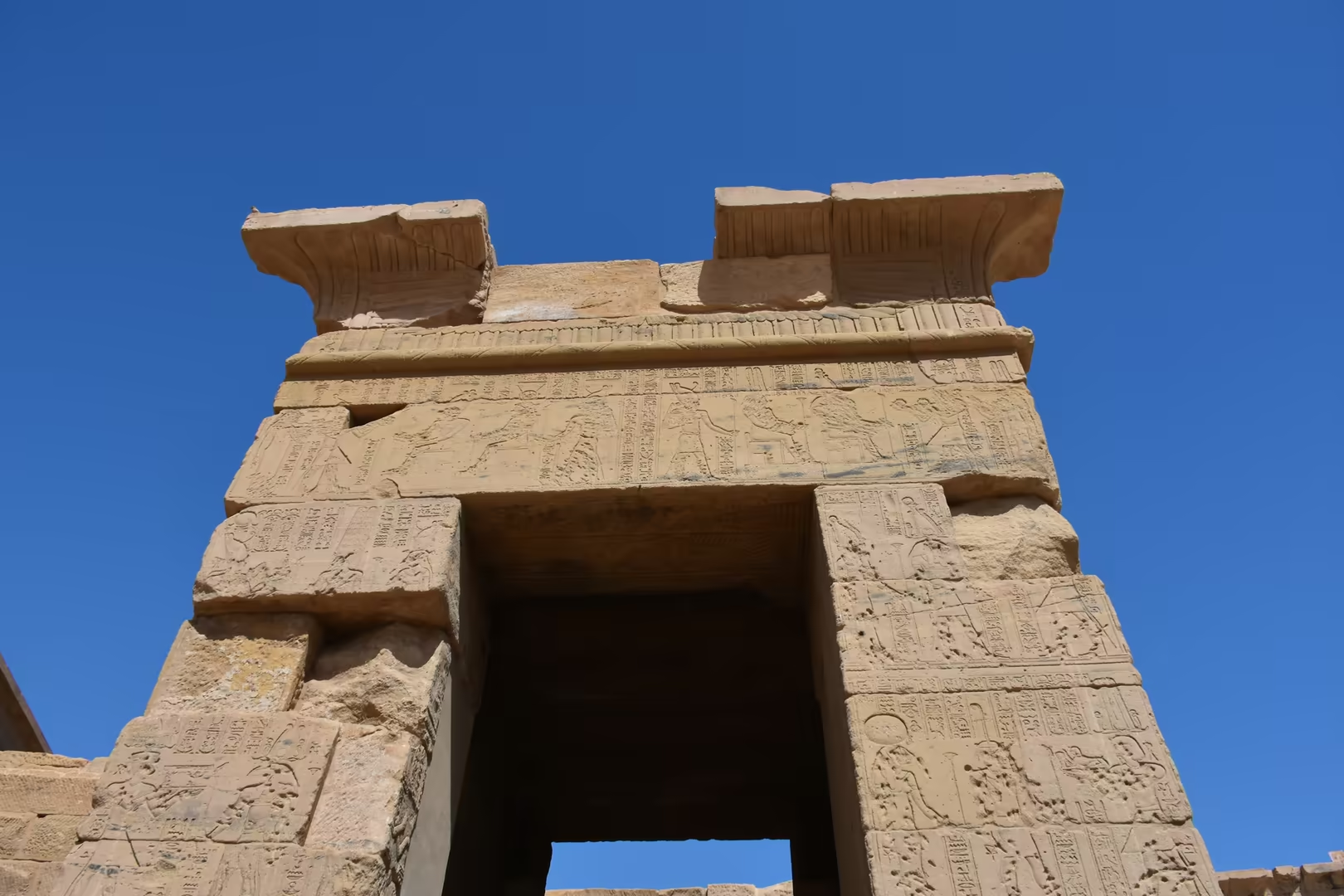
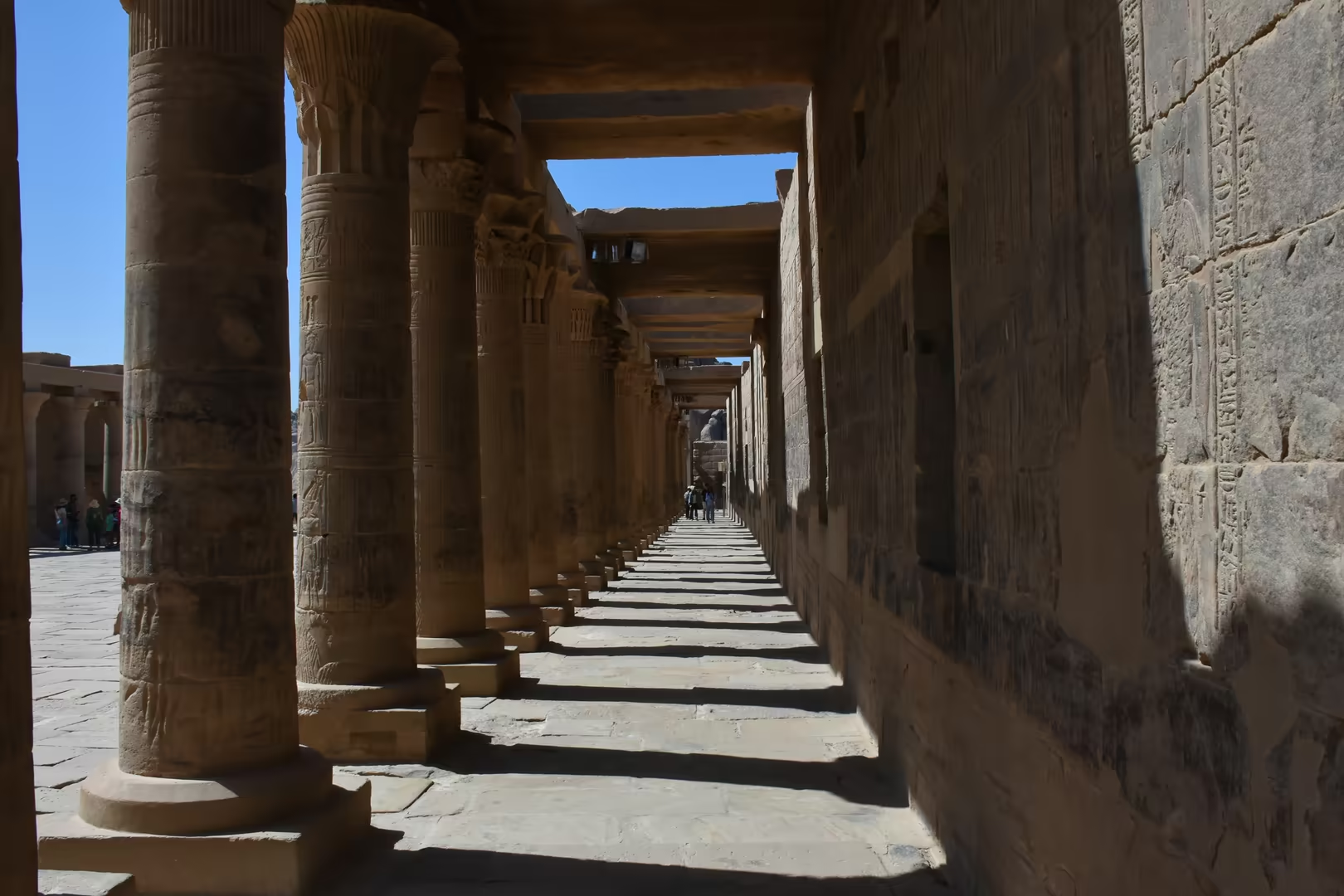
The great temple of Isis is entered through the towering first pylon, whose walls carry some of the most colossal reliefs of the Greco-Roman repertoire. On the outer face of the eastern tower Ptolemy XII Neos Dionysos, father of Cleopatra VII, grasps a band of enemies by the hair and raises his weapon to smite them, while Isis, the falcon-headed Horus of Edfu and Hathor look on; above the gateway he offers incense to Isis and the child Horus, and the deep grooves that held the great flag poles of the cult still flank the portal. Beyond the pylon lies the great court, bordered by colonnades with papyrus and palm capitals, where two weathered sphinxes keep guard beside the processional way.
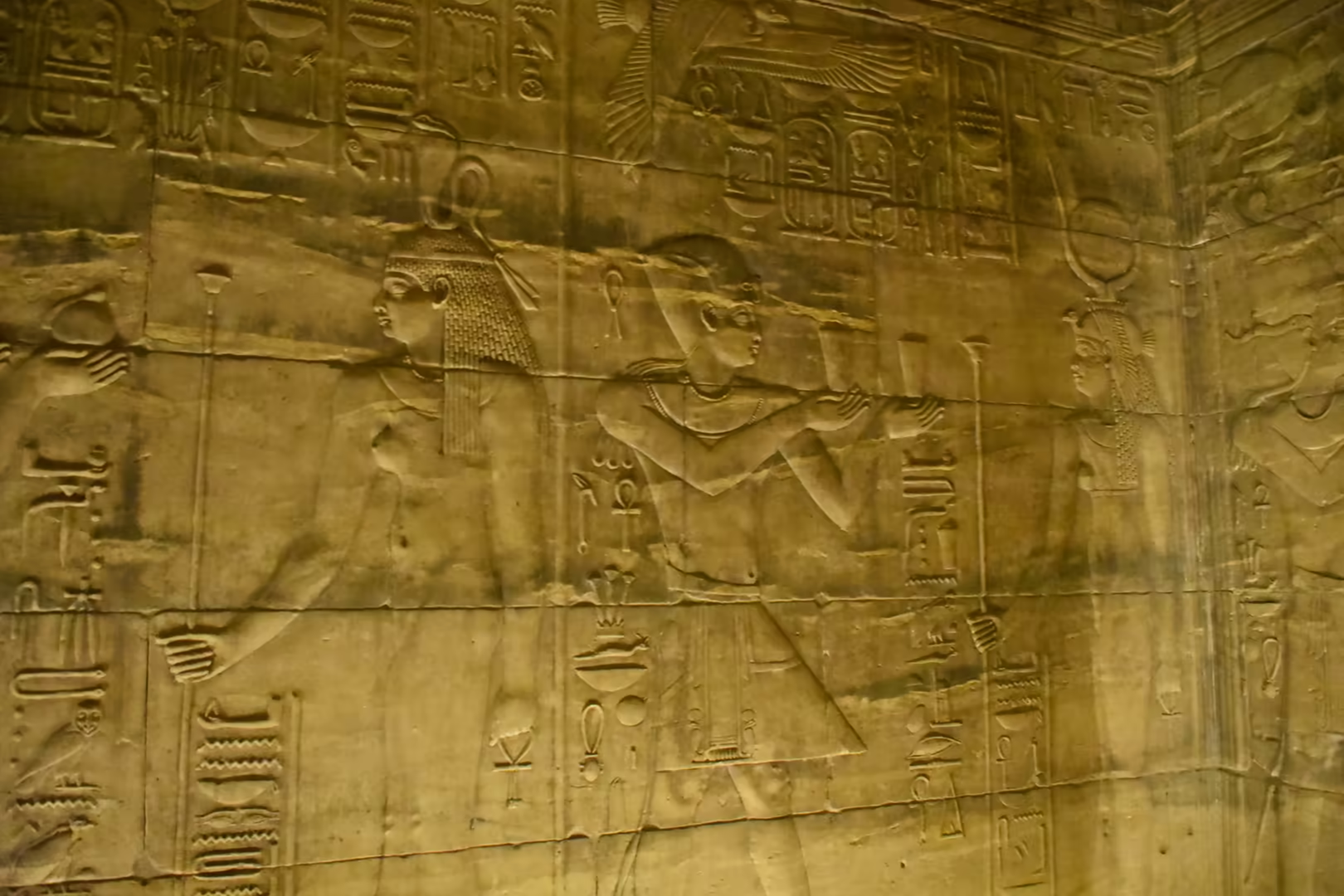
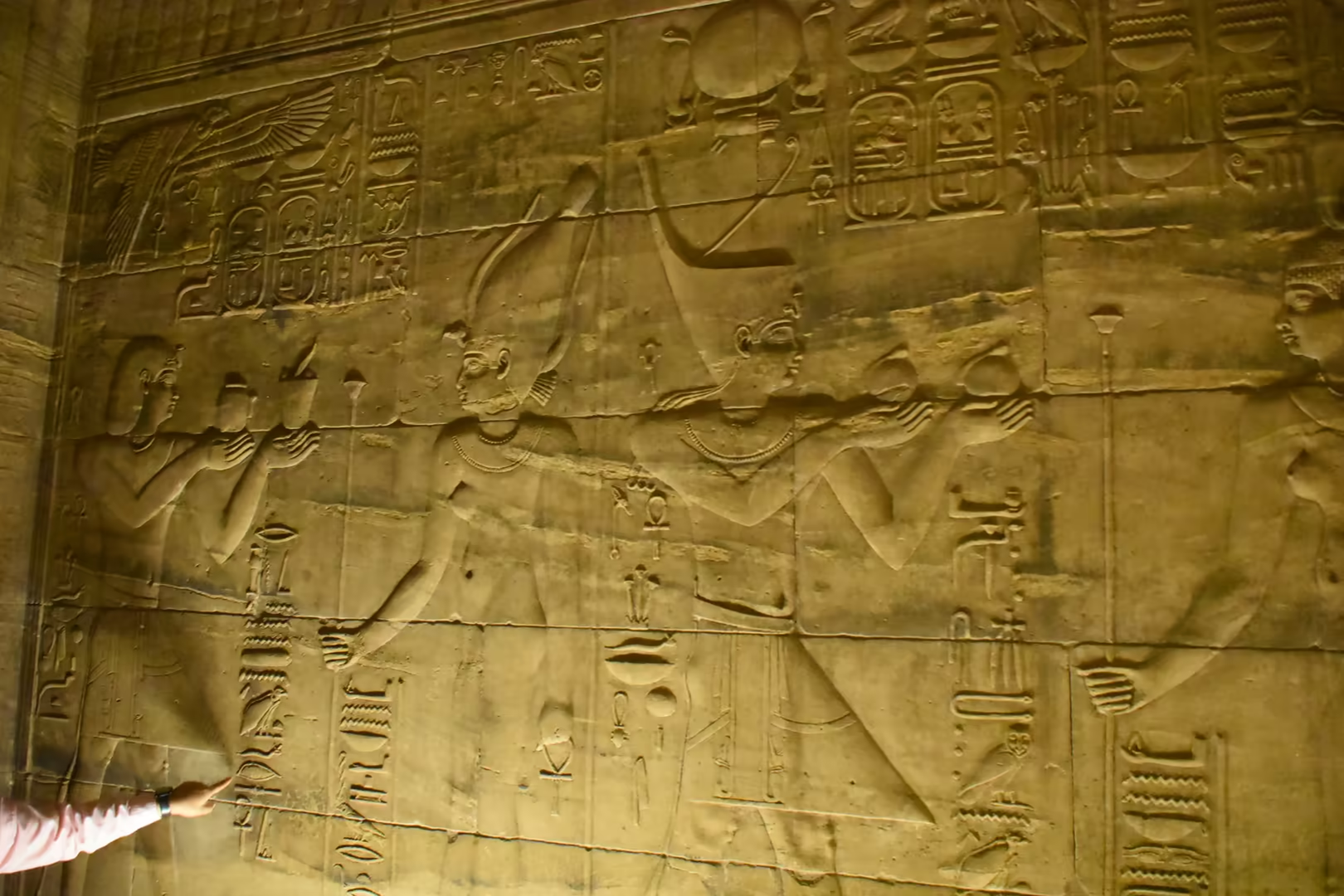
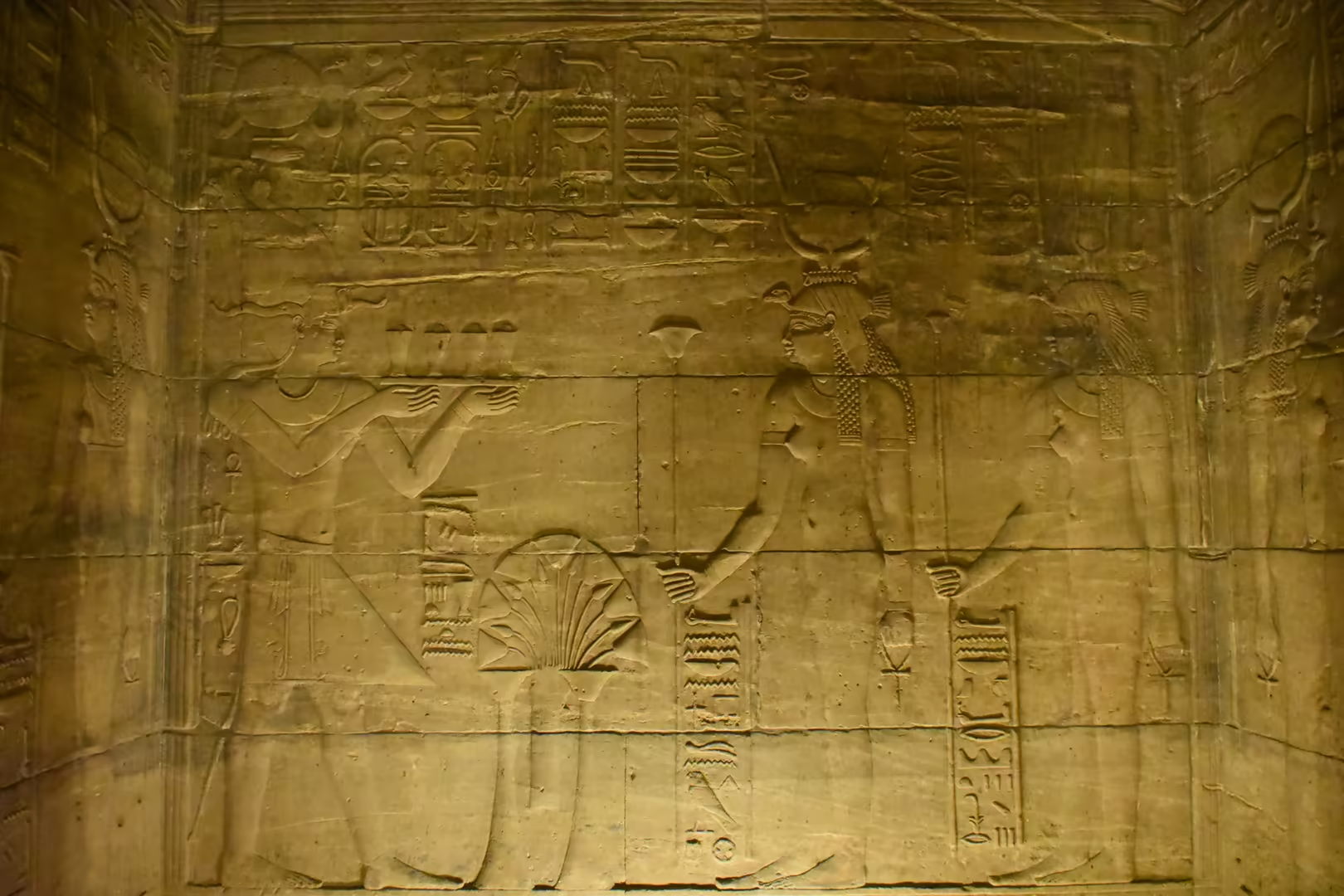
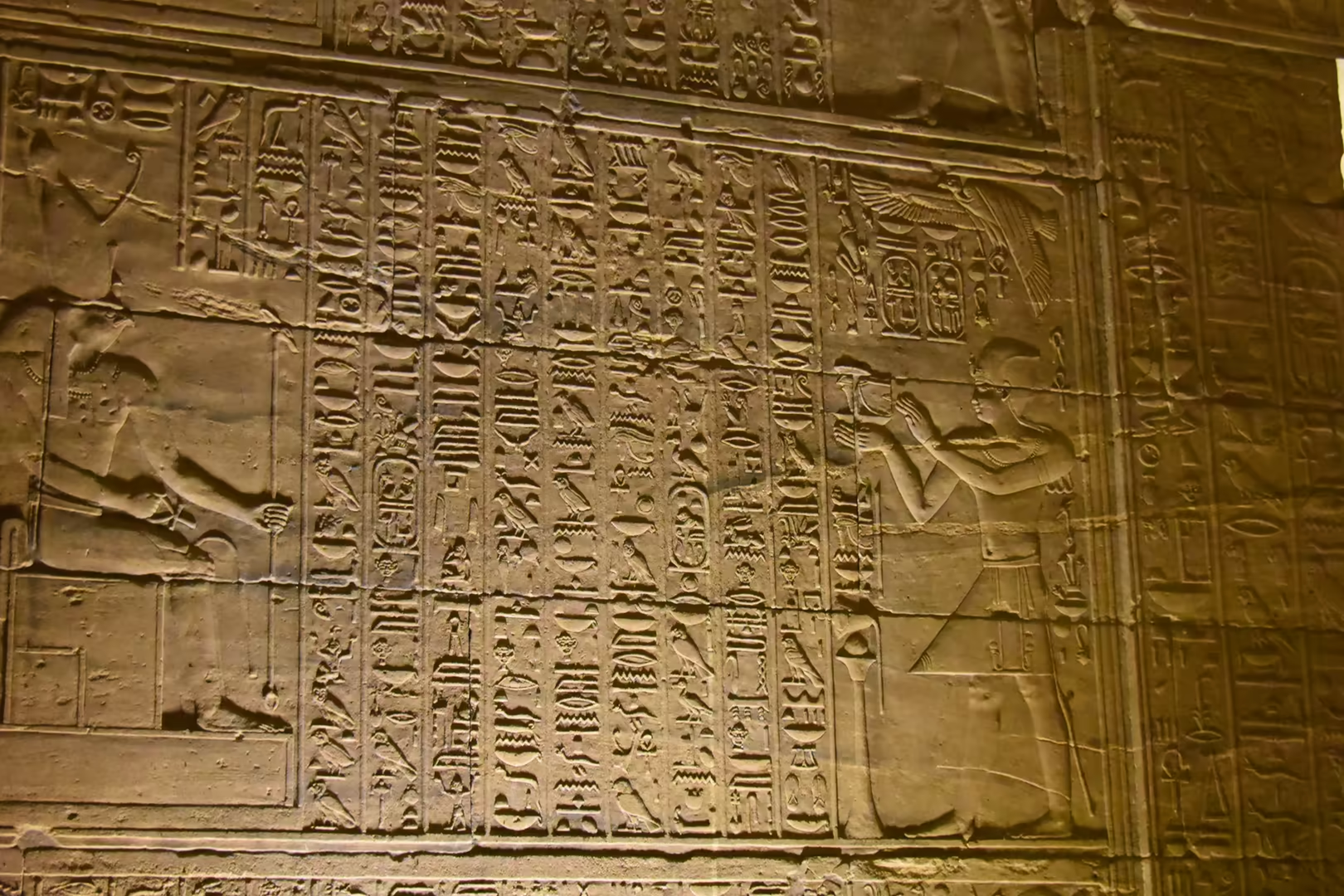
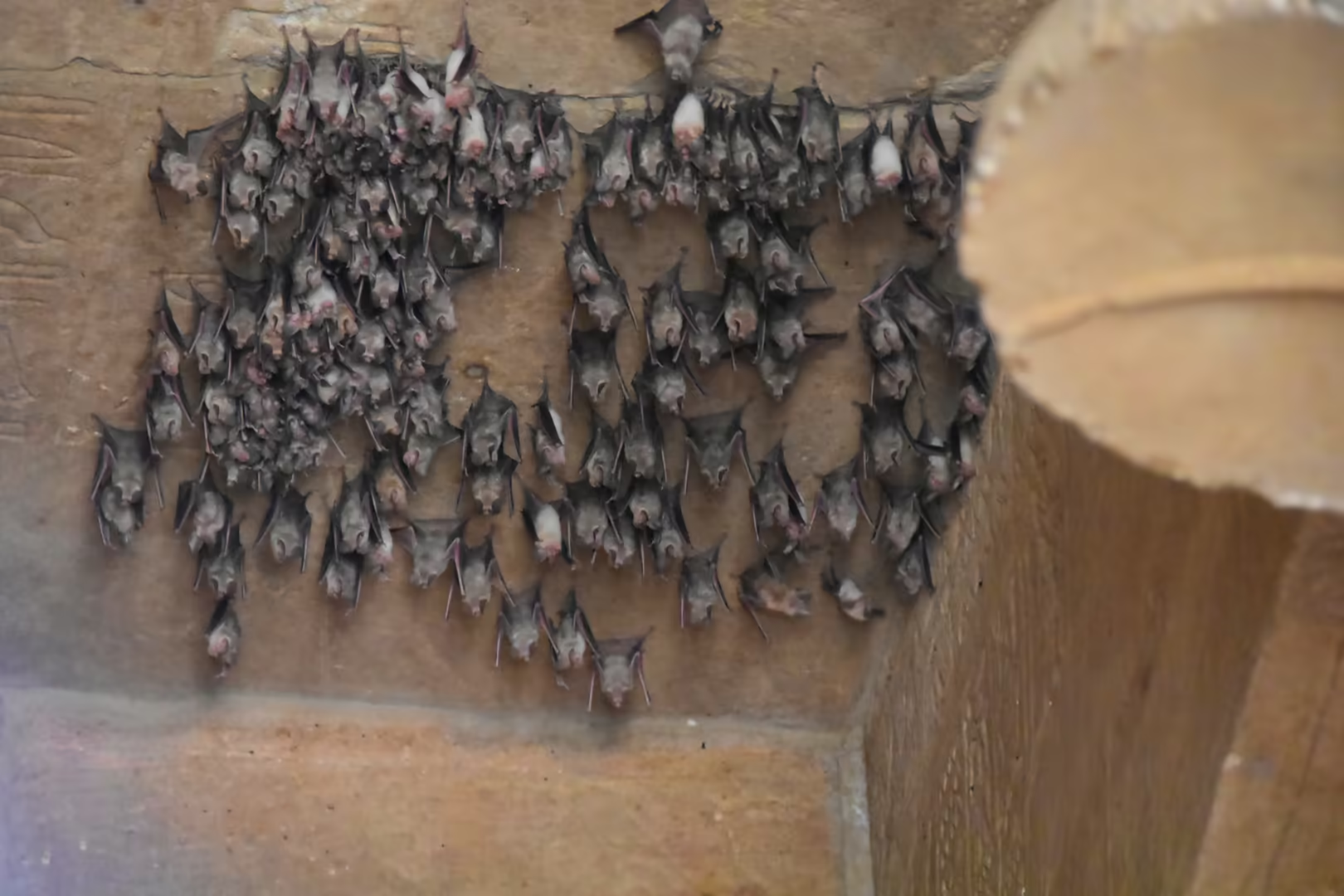
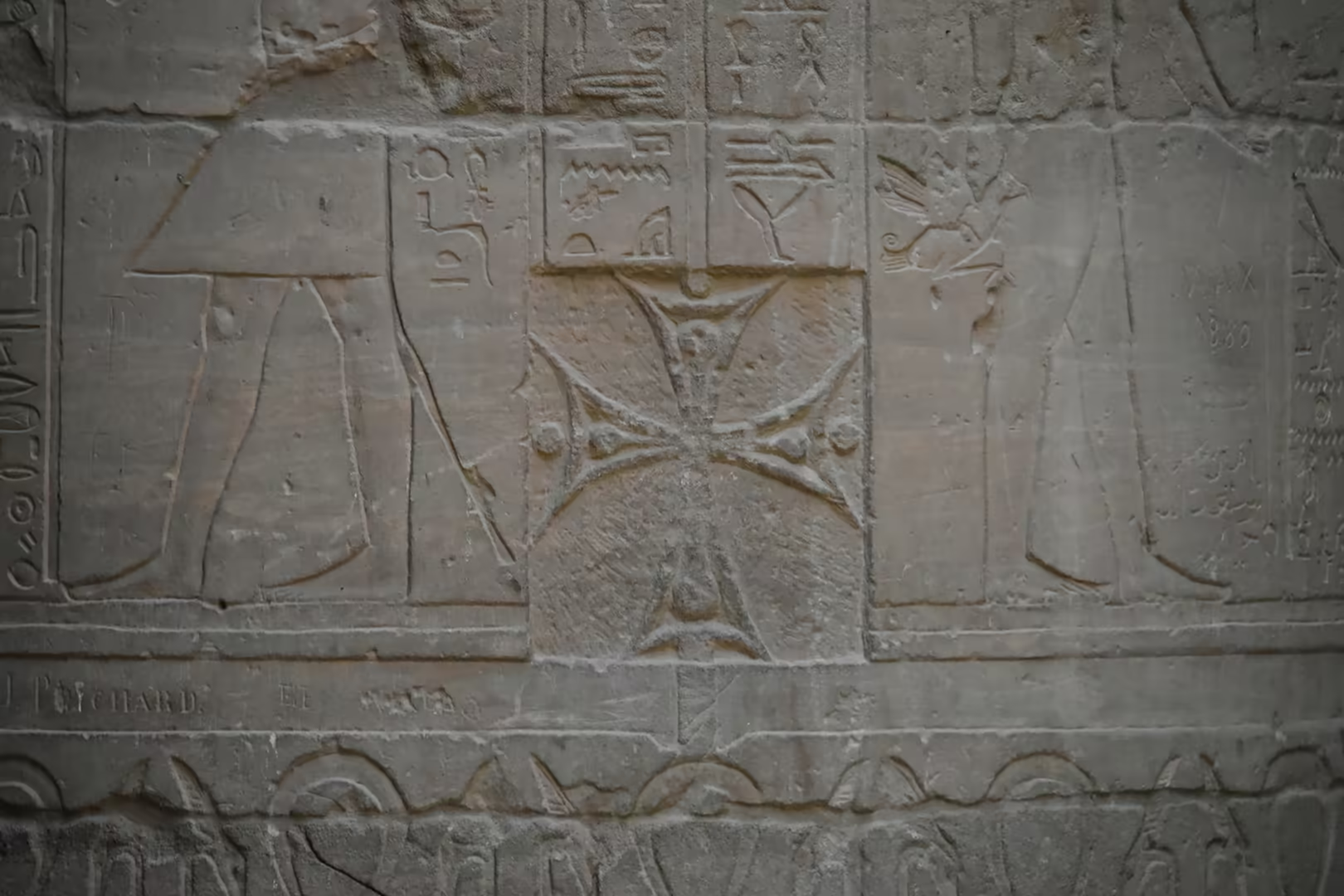
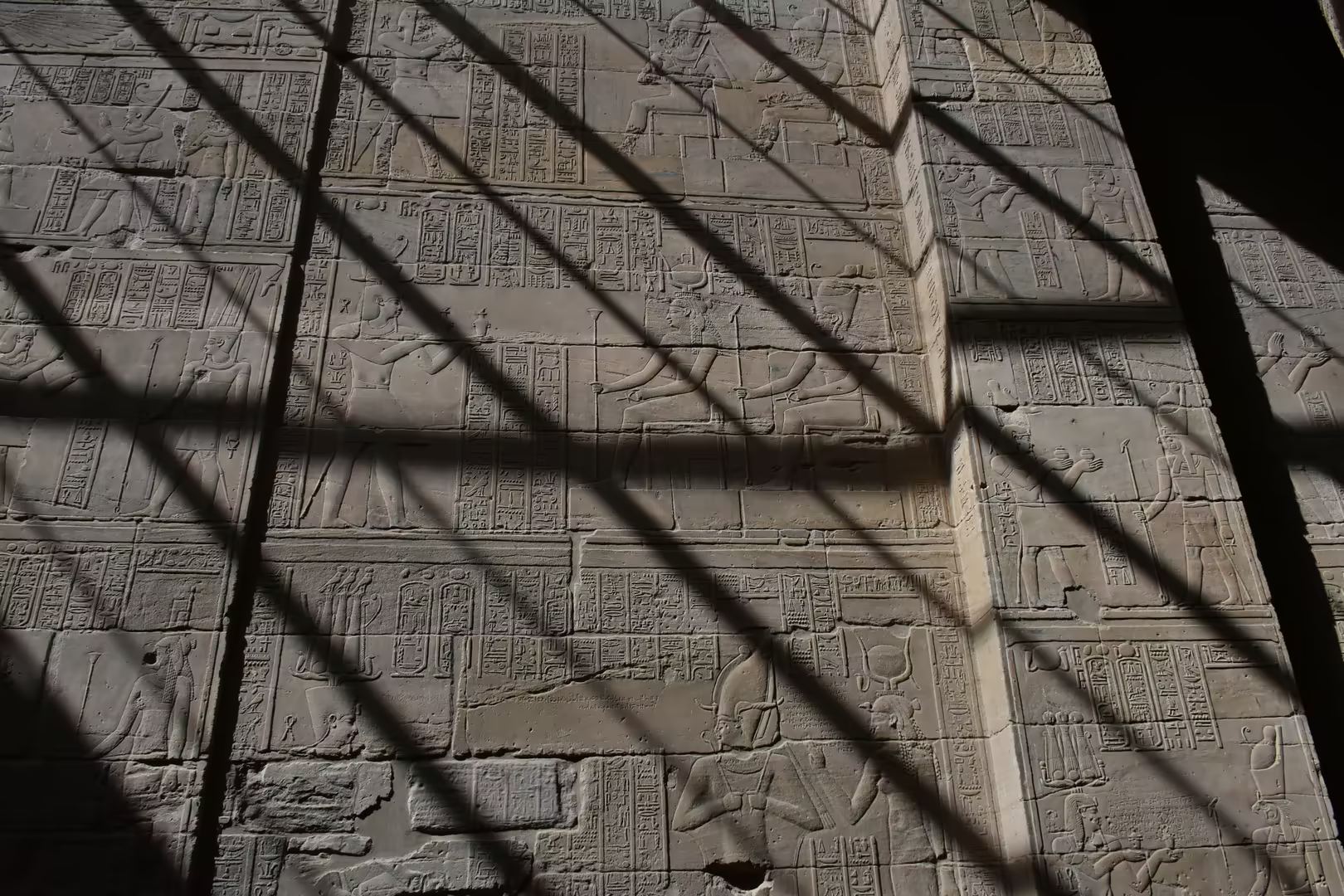
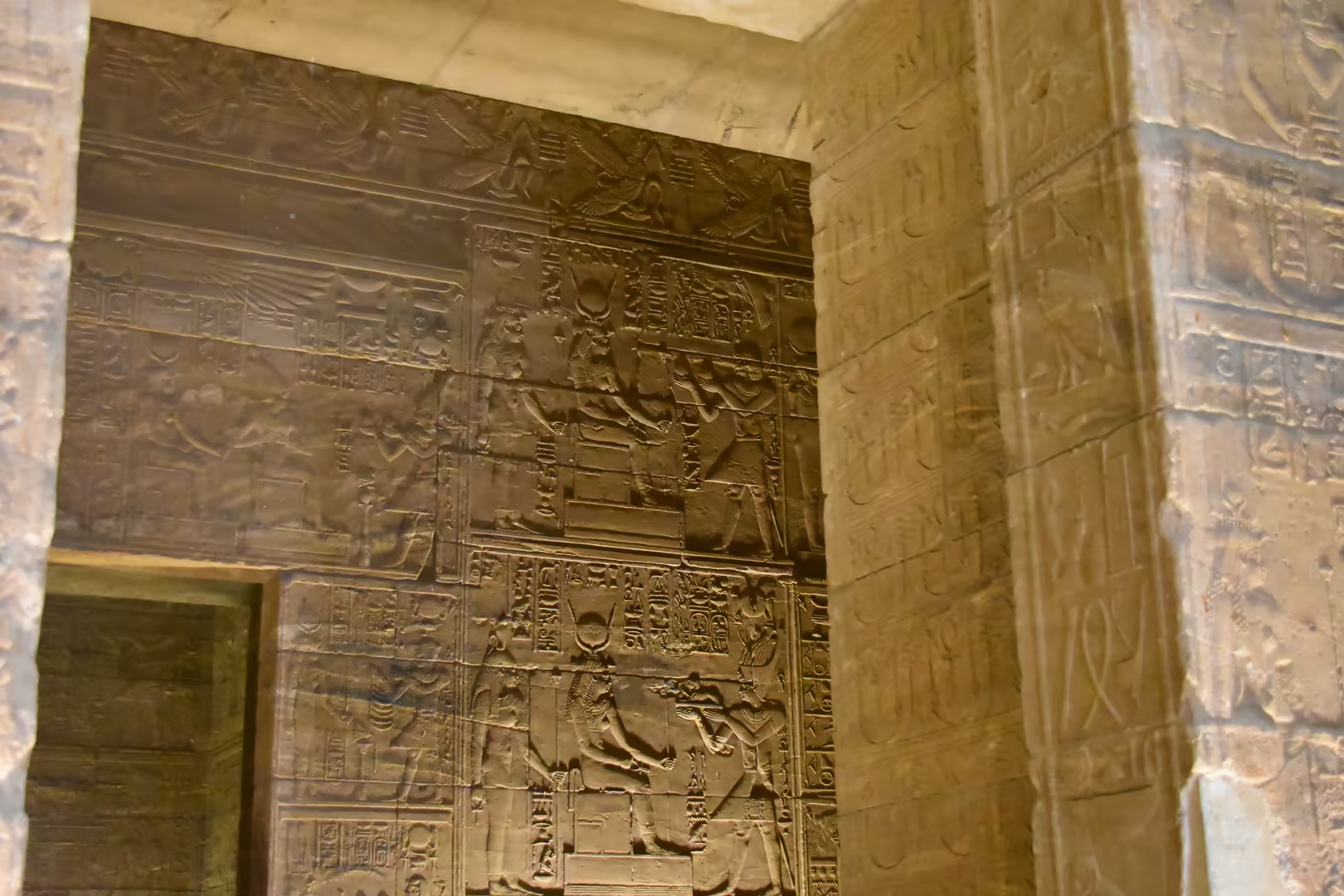
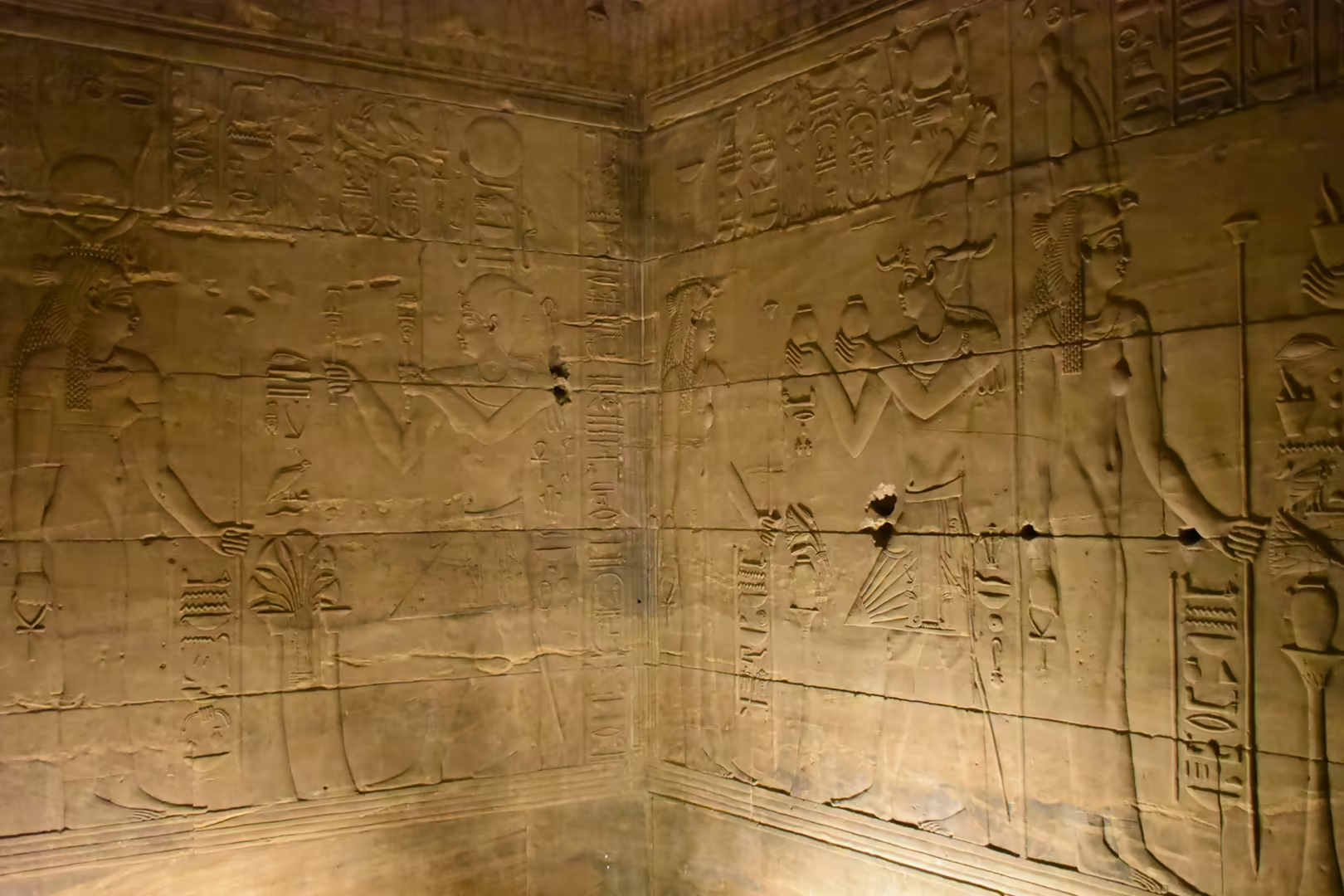
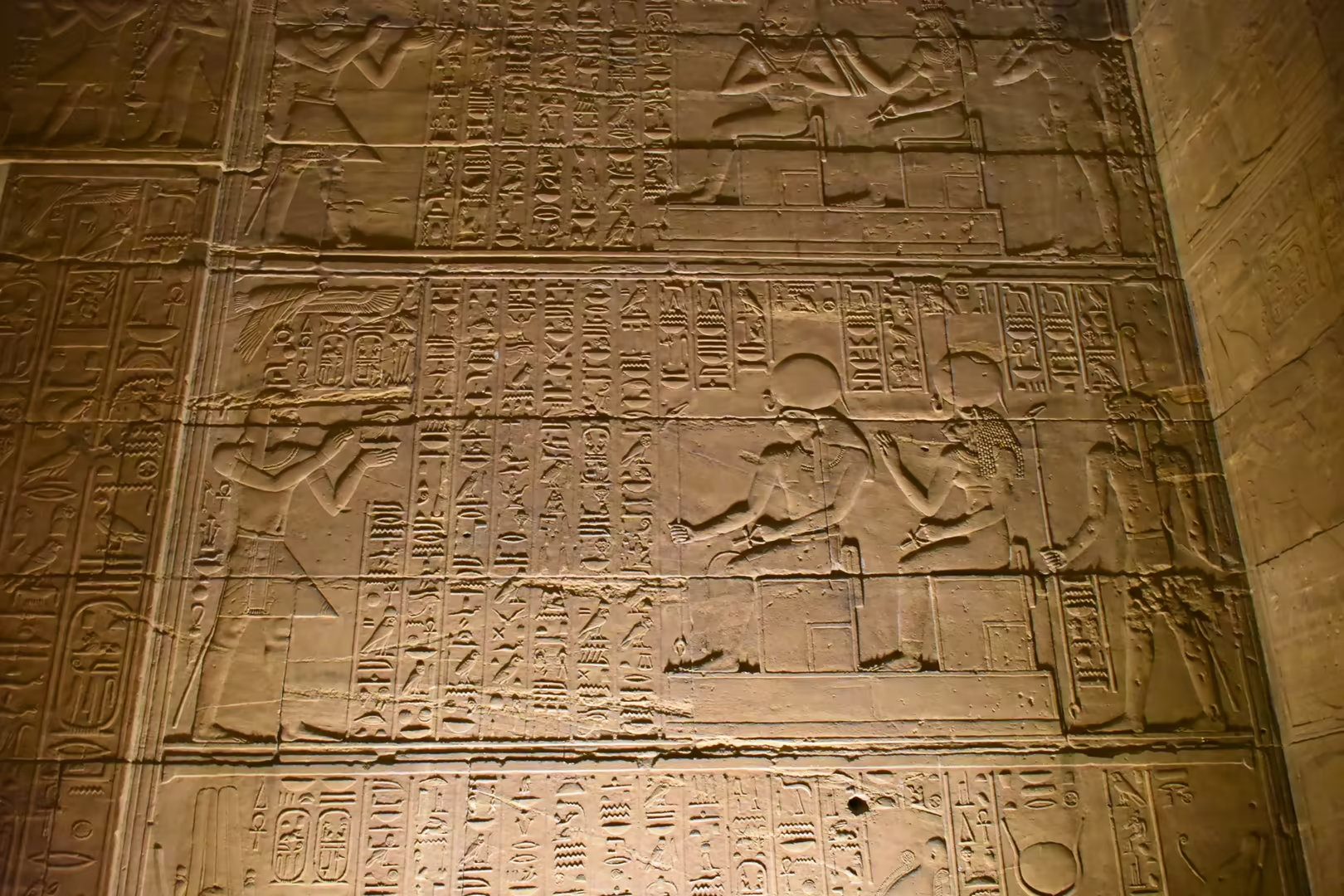
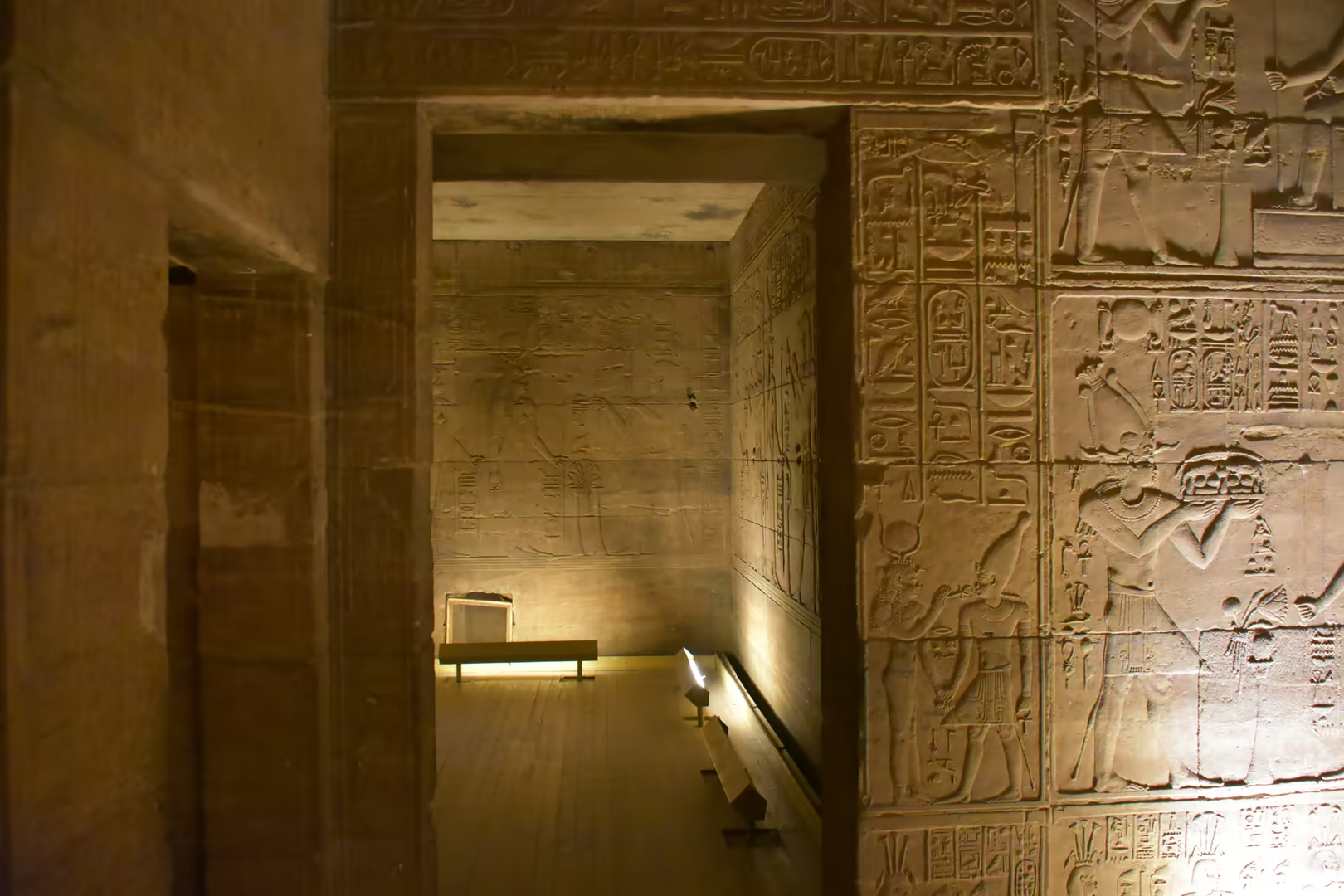
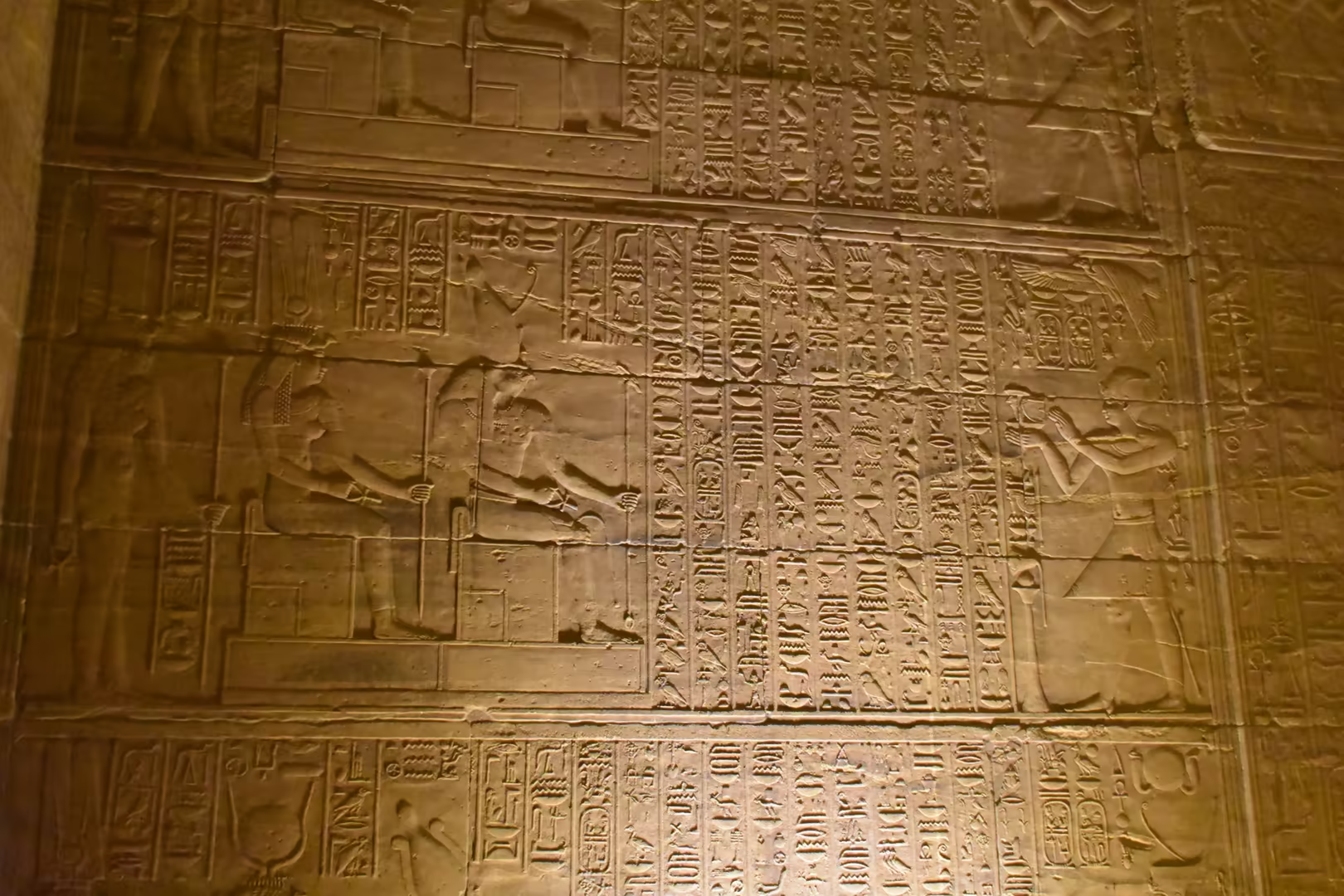
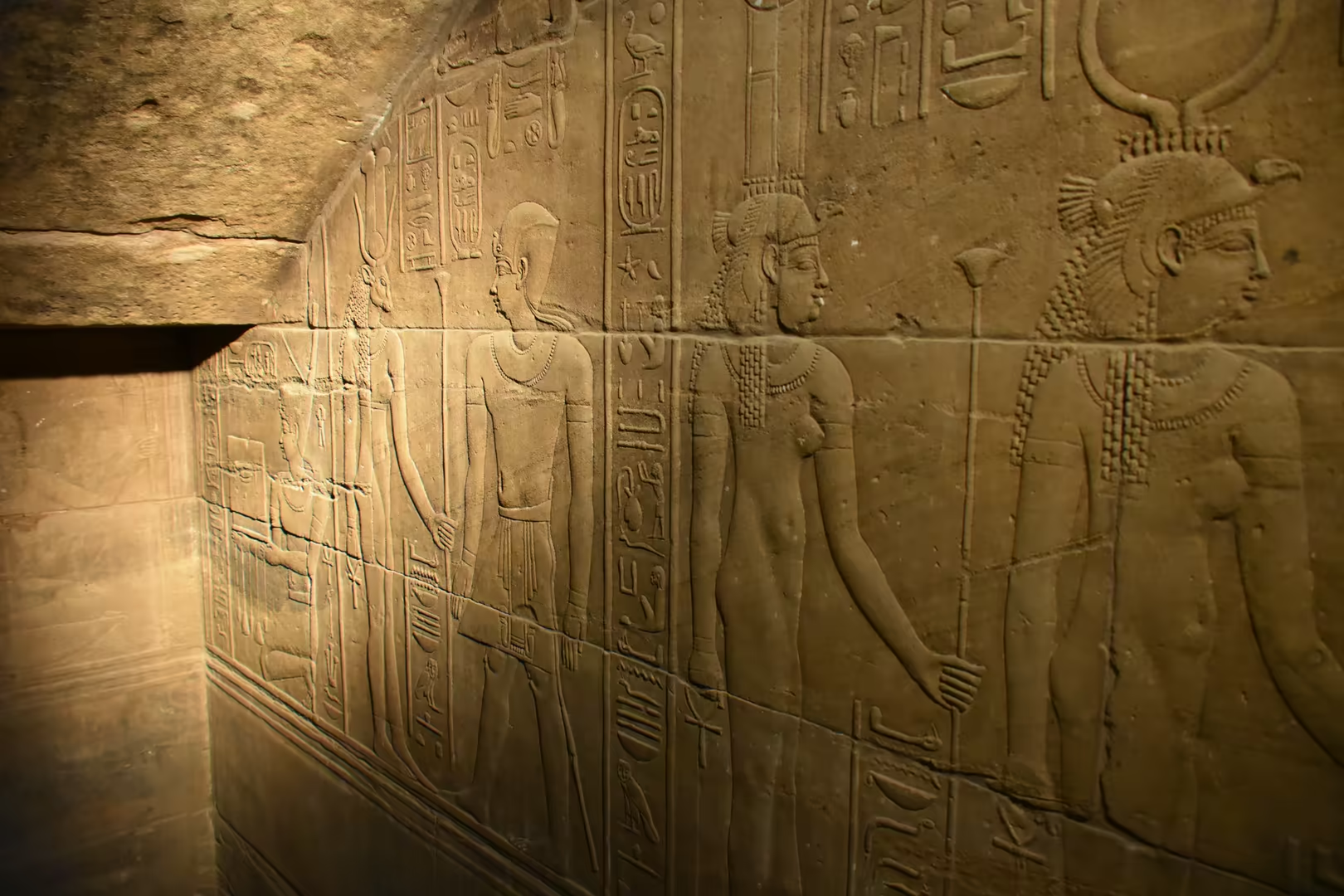
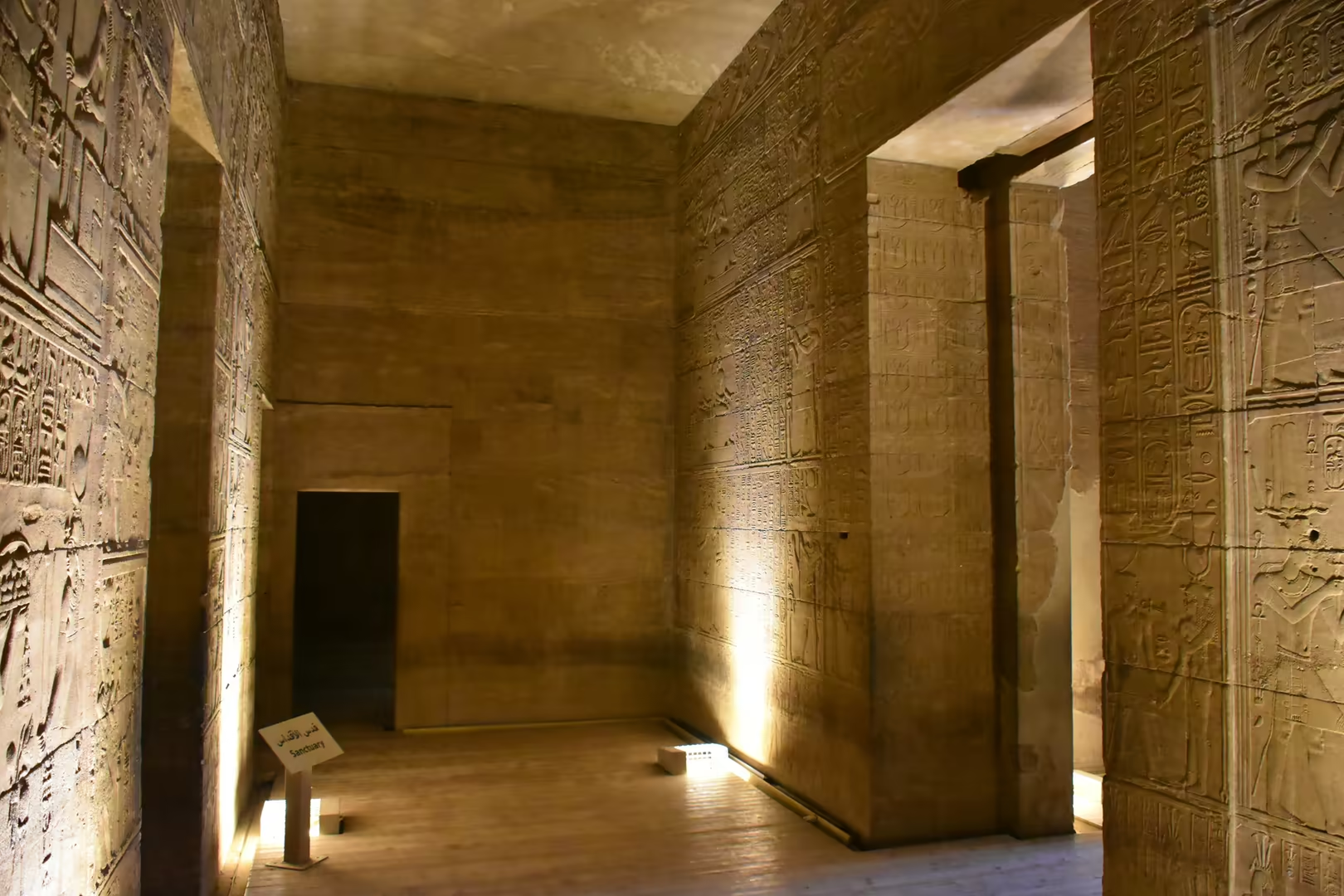
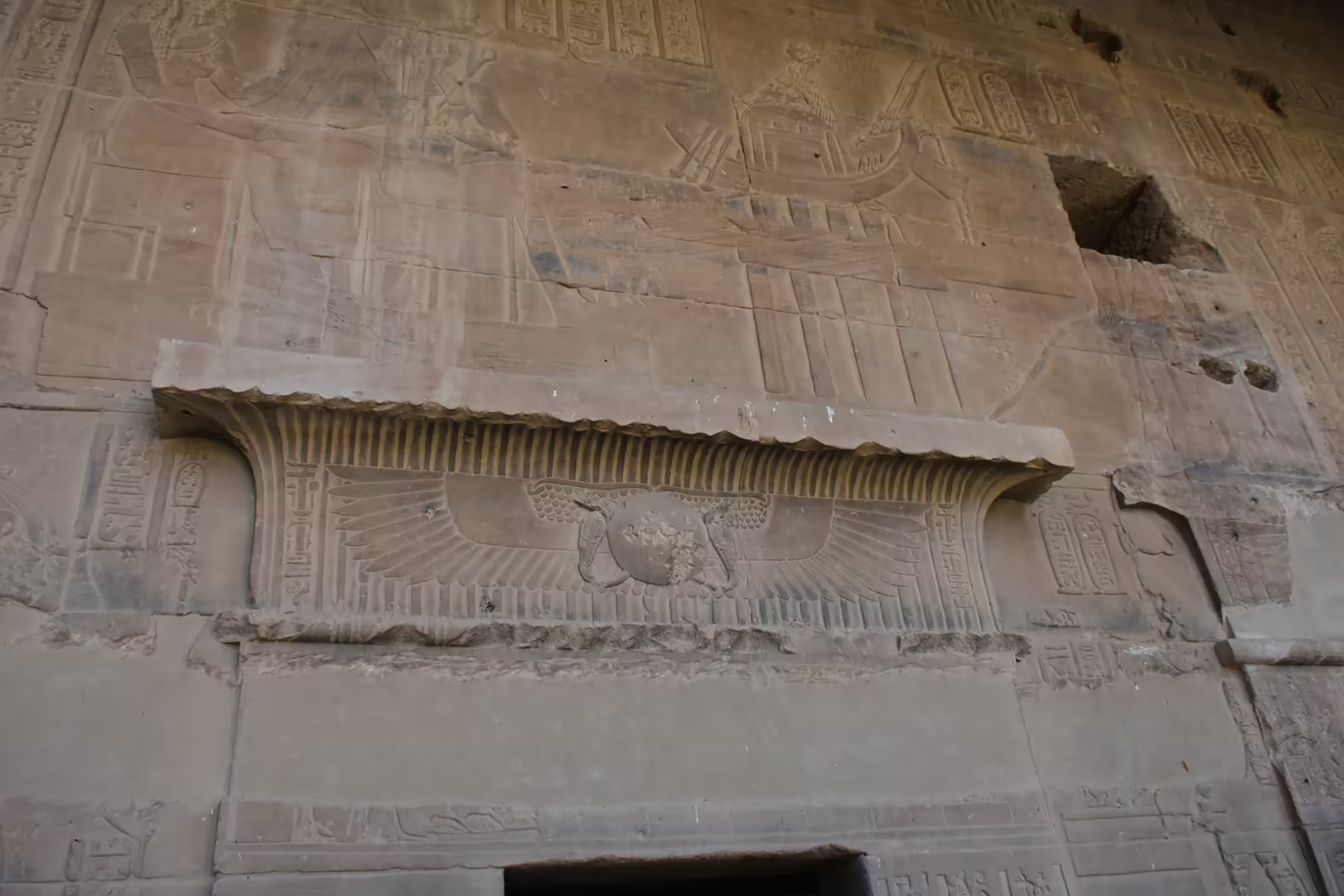
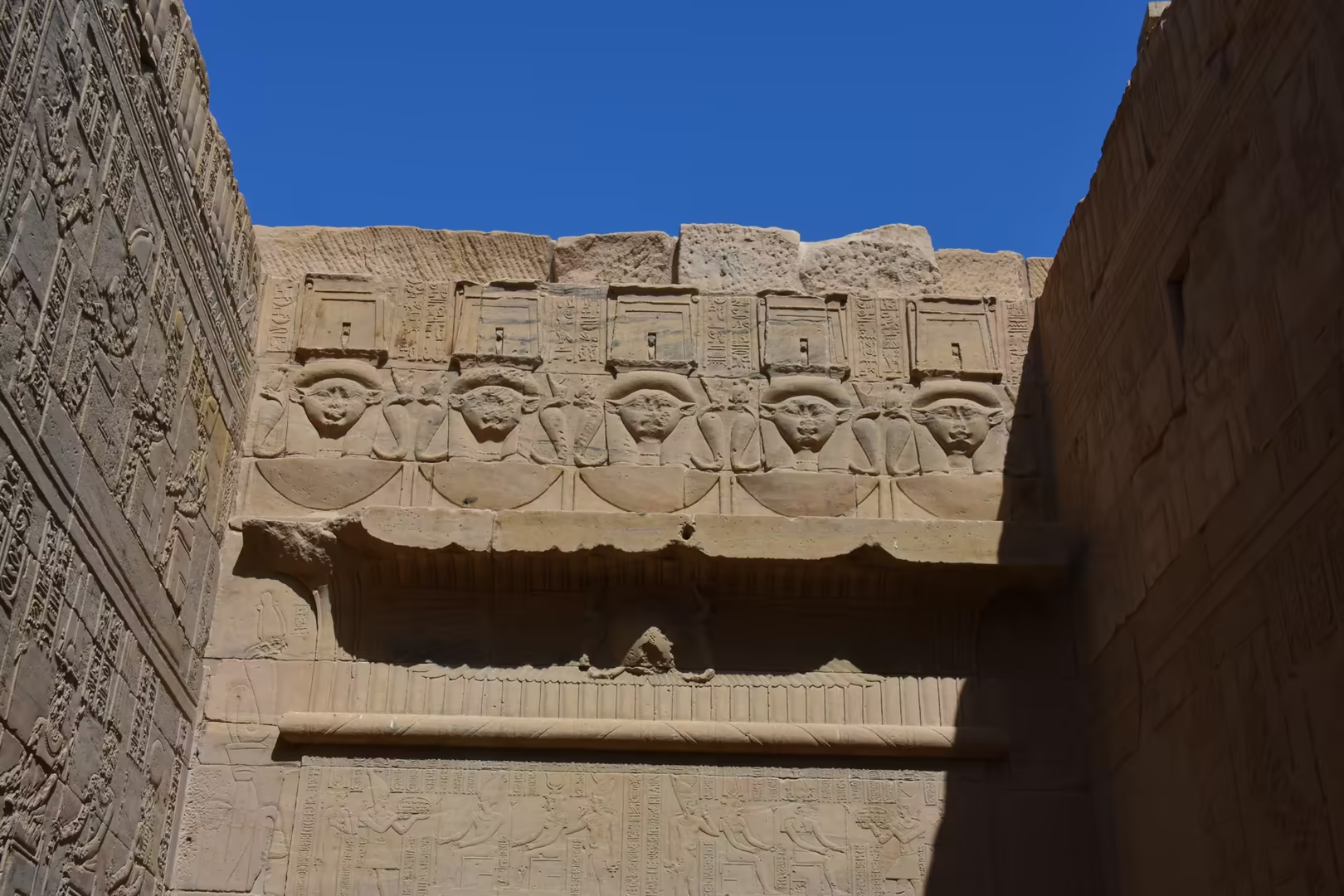
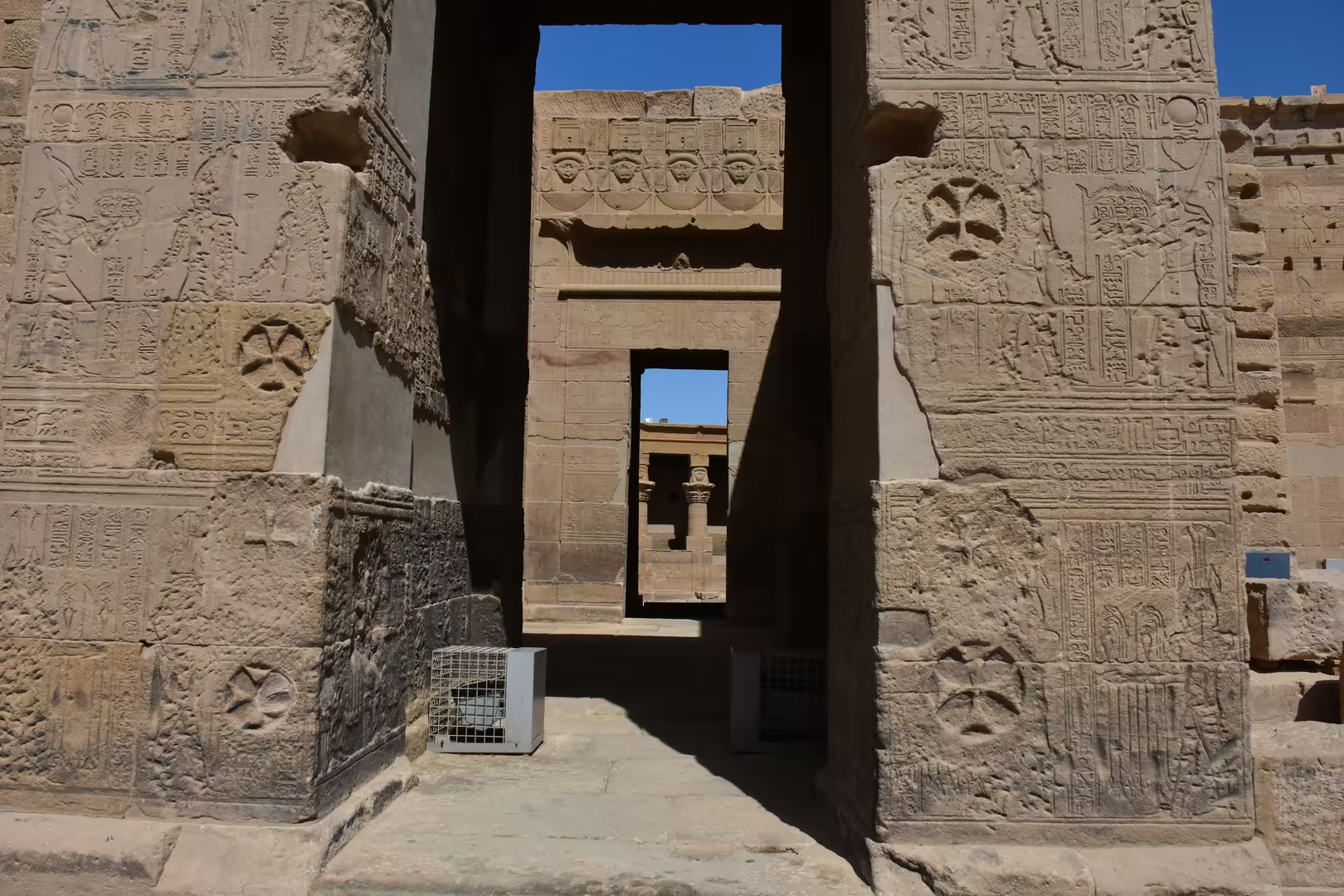
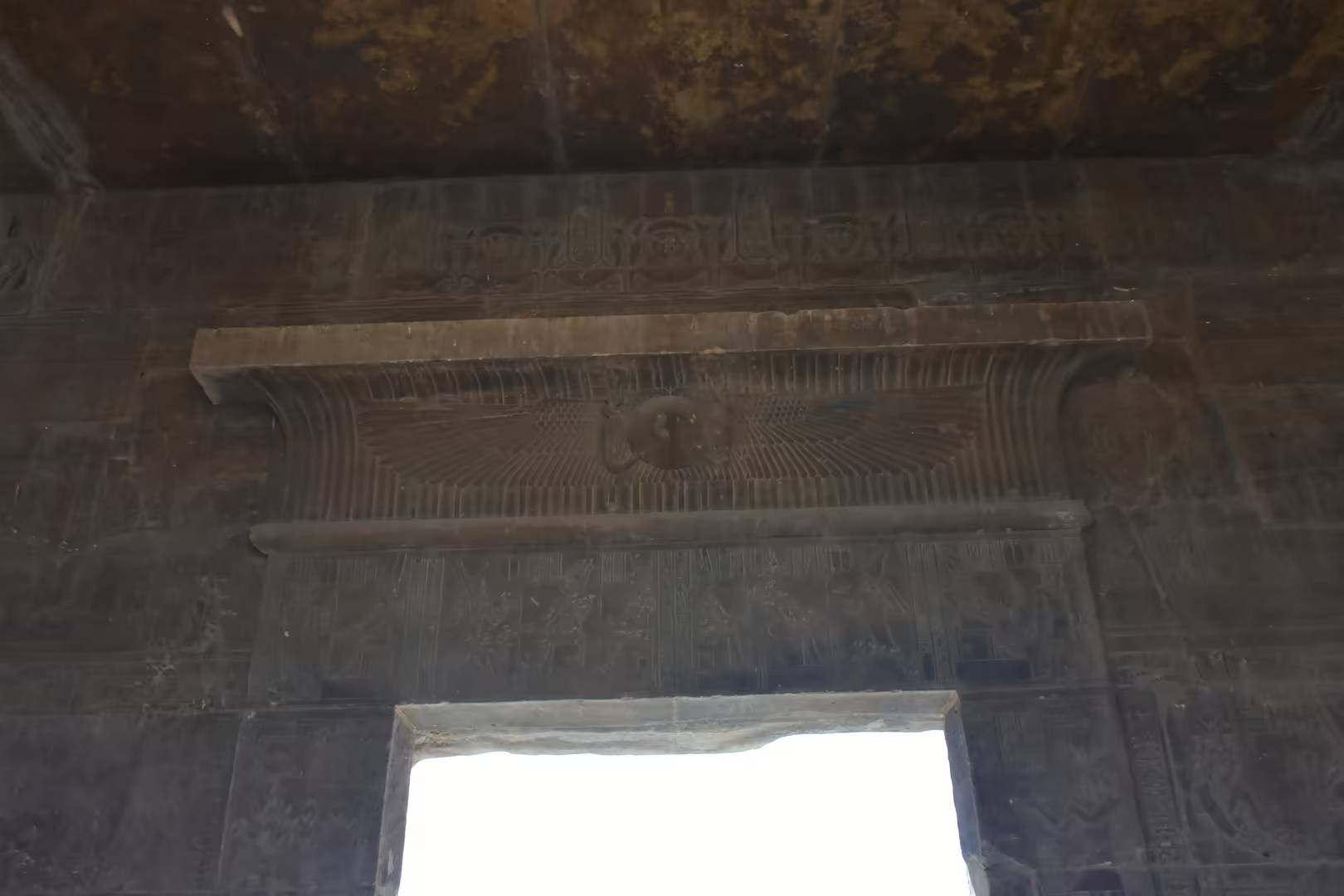
The walls of the court and of the inner temple are covered with sunken relief cut deep into the warm sandstone: kings before the seated goddess, the cow-horned headdress of Hathor, dense columns of hieroglyphs, and winged sun disks on ceilings and lintels. The reliefs also record the later life of the sanctuary. Early Christian worshippers chiselled out the figures of the pagan gods after the halls were converted into a church in about AD 537, and among the ancient carving are the scratched names of later centuries, including an engraved panel of names and survey figures left by French scholars of the Napoleonic age. In the inner chambers, where the daylight fails, a pillared hall gives onto the dark sanctuary; traces of painted relief survive in the deepest rooms, where bats roost among the ancient stone.
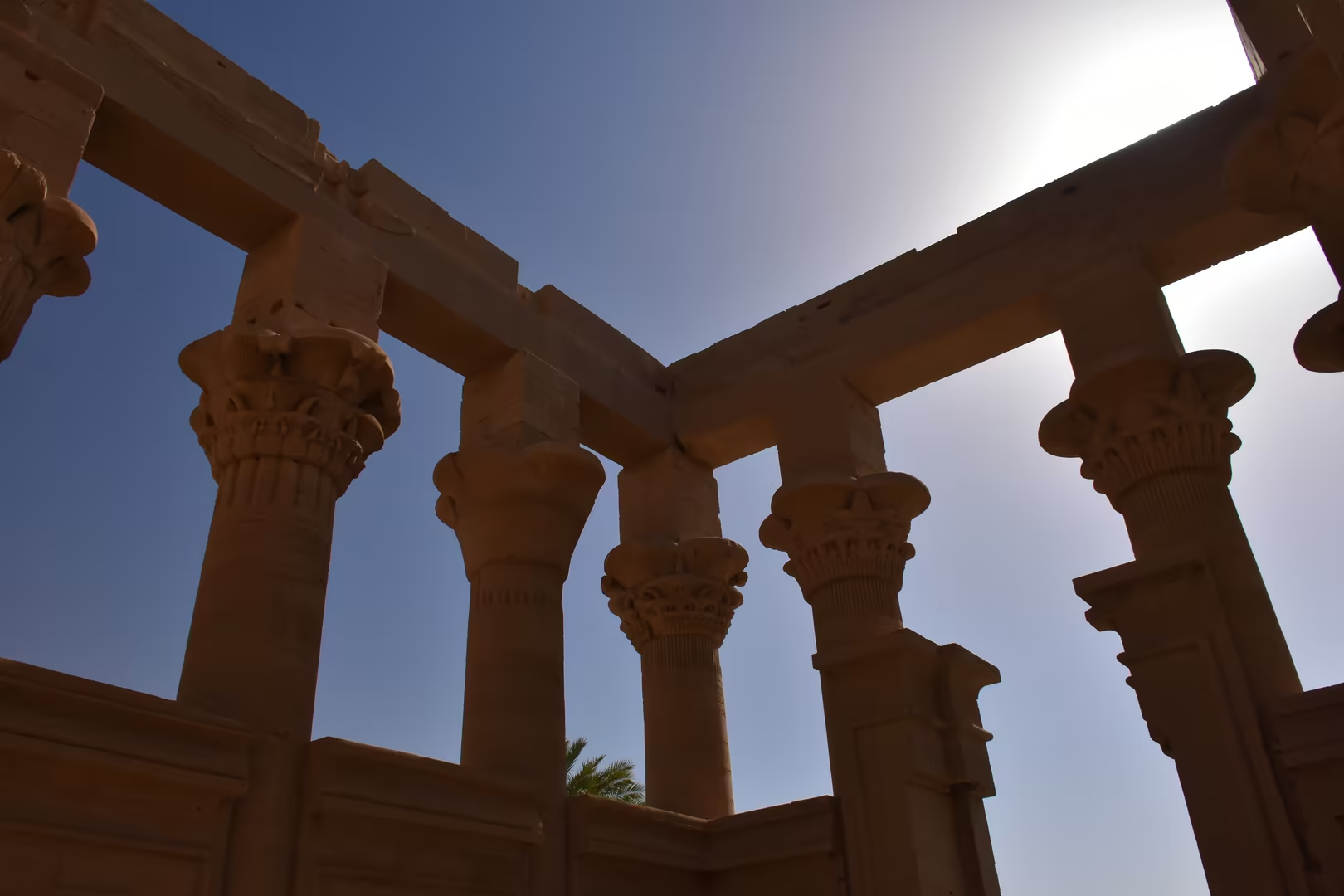
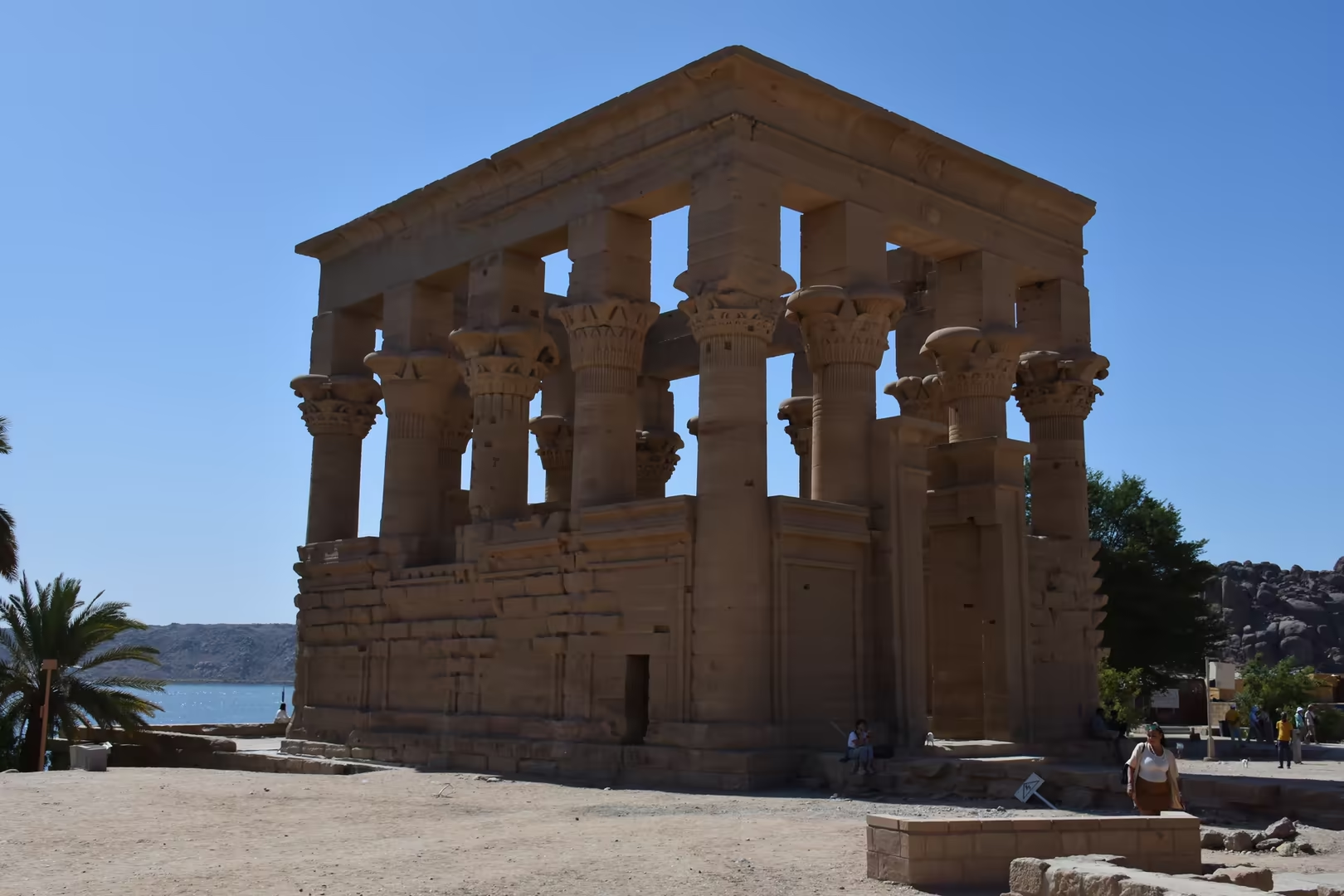
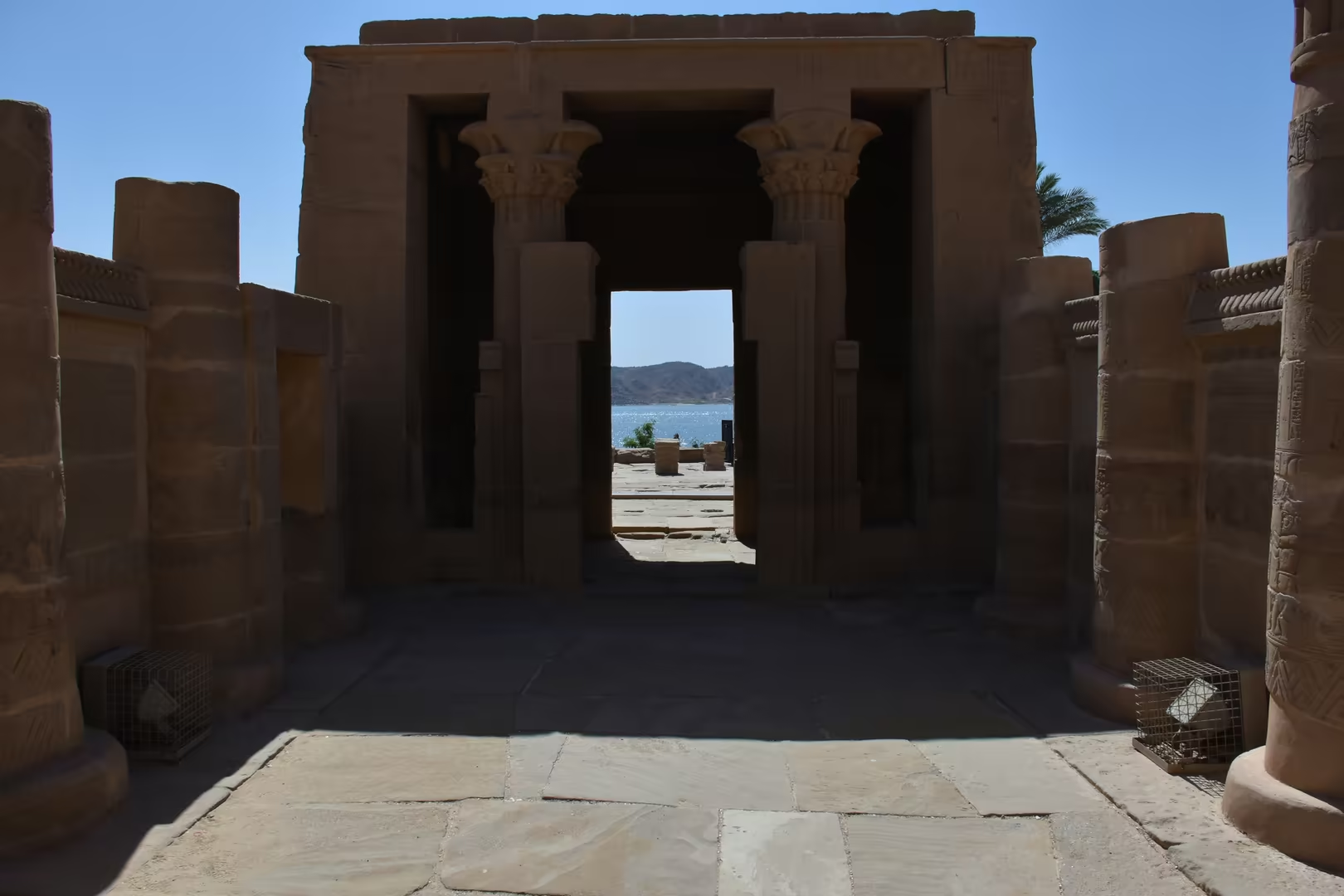
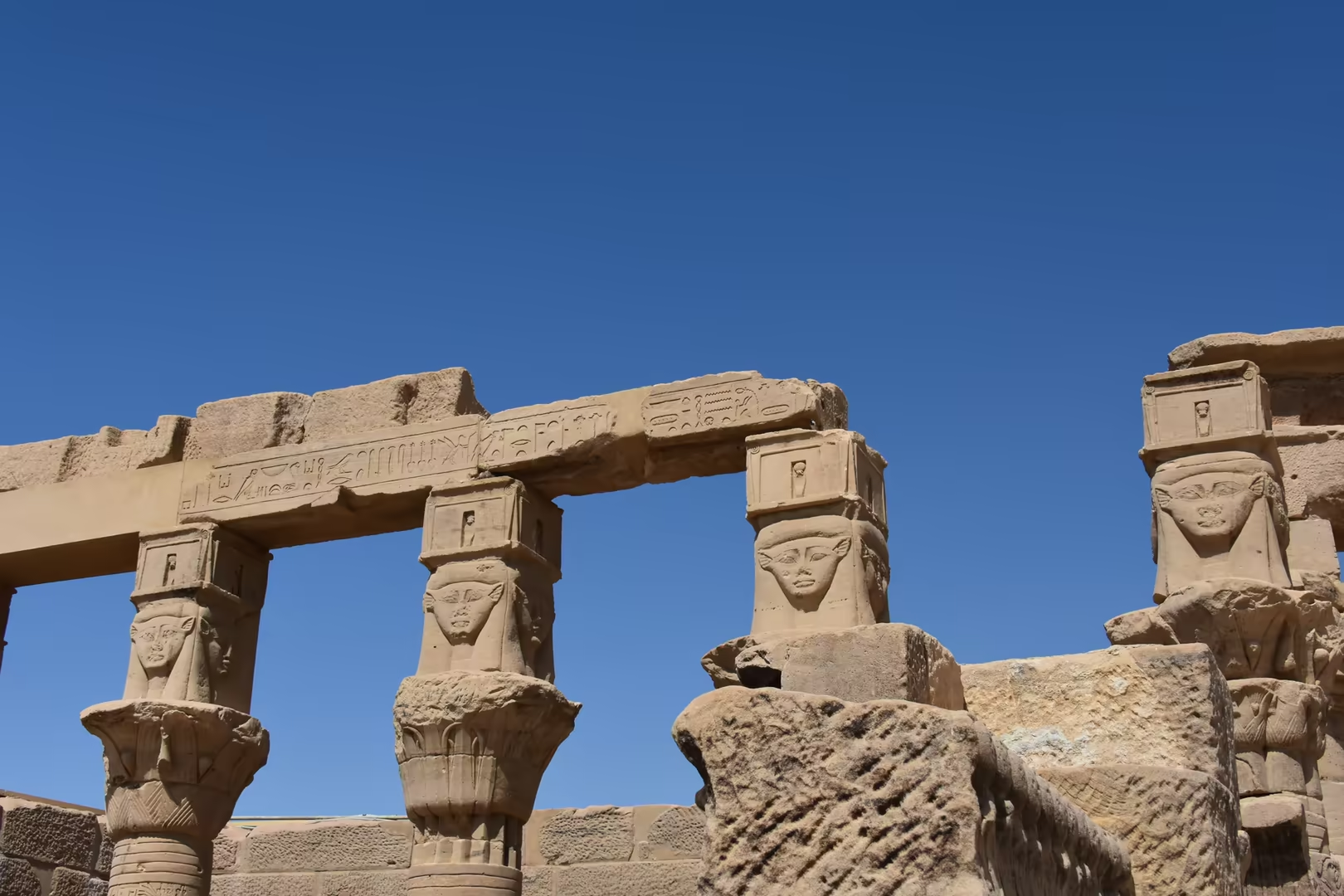
The mammisi, or birth house, commemorates the birth of the child god Harpocrates and is surrounded by an ambulatory of columns crowned with sistrum capitals bearing the serene face of Hathor. Nearby stands the small temple of Hathor, built by Ptolemy VI and Ptolemy VIII, which repeats the motifs of the great temple in miniature. At the water’s edge, on the side of the island that faces the river approach, stands the kiosk of Trajan, known to the boatmen as Pharaoh’s Bed: an open, roofless pavilion of about 15 by 20 metres rising almost 16 metres high, its fourteen columns carrying lavishly carved composite capitals and linked by screen walls pierced by entrances in the east and west facades. The kiosk was never finished, for the piers above the capitals were intended to be carved into figures of the god Bes; it sheltered the sacred bark of Isis when the goddess put in at the river and served as the water-gate of the whole sanctuary.
The western side of the island is closed by the gate of Hadrian, a Roman gateway facing the neighbouring island of Bigeh, where the Abaton, the untrodden place of the god’s burial, lies across the water; only the priests might set foot on it. A path follows the shore past the western colonnades and the ruined gates, and the view over the reservoir takes in the granite islets of the cataract and the dunes of the western bank. The felucca and motorboat circuit of the island, from which the pylons and the kiosk of Trajan stand out against the open water, is a standard part of the excursion and shows the sanctuary as it was approached by water before the dam was built.
References
- Arnold, D. (1999). Temples of the Last Pharaohs. New York: Oxford University Press.
- Vassilika, E. (1989). Ptolemaic Philae. Leuven: Peeters.
- Dijkstra, J. H. F. (2008). Philae and the End of Ancient Egyptian Religion: A Regional Study of Religious Transformation (298-642 CE). Leuven: Peeters.
- Säve-Söderbergh, T. (ed.) (1987). Temples and Tombs of Ancient Nubia: The International Rescue Campaign at Abu Simbel, Philae and Other Sites. London: Thames and Hudson; Paris: UNESCO.
- UNESCO World Heritage Centre (1979). Nubian Monuments from Abu Simbel to Philae. World Heritage List, ref. 88. whc.unesco.org/en/list/88/
- Wikipedia contributors (2026). Philae temple complex. en.wikipedia.org/wiki/Philae_temple_complex
- Wikipedia contributors (2026). Agilkia Island. en.wikipedia.org/wiki/Agilkia_Island
- Wikipedia contributors (2026). Trajan’s Kiosk. en.wikipedia.org/wiki/Trajan%27s_Kiosk
- Wikipedia contributors (2026). Mammisi. en.wikipedia.org/wiki/Mammisi
- Wikipedia contributors (2026). Bigeh. en.wikipedia.org/wiki/Bigeh
- Wikipedia contributors (2026). Isis. en.wikipedia.org/wiki/Isis
- Wikipedia contributors (2026). Osiris myth. en.wikipedia.org/wiki/Osiris_myth
- Wikipedia contributors (2026). Aswan. en.wikipedia.org/wiki/Aswan
- Wikipedia contributors (2026). Aswan Low Dam. en.wikipedia.org/wiki/Aswan_Low_Dam
- Wikipedia contributors (2026). International Campaign to Save the Monuments of Nubia. en.wikipedia.org/wiki/International_Campaign_to_Save_the_Monuments_of_Nubia
- Wikipedia contributors (2026). Graffito of Esmet-Akhom. en.wikipedia.org/wiki/Graffito_of_Esmet-Akhom