Stage 15 of 19
Day 16 - Abydos



































Journal Notes
General
Abydos lies on the western bank of the Nile in Middle Egypt, about eleven kilometres from the river, at the point where the green floodplain of the Sohag stretch gives way to the low desert. In antiquity the city, called Abedju in Egyptian, was the principal town of the eighth nome of Upper Egypt; its modern successors are the riverine town of El-Balyana and the village of El-Araba el-Madfuna, which now covers part of the ancient settlement. The name Abydos itself is Greek, transferred by Hellenistic geographers from an unrelated city of the same name on the Hellespont.
To the ancient Egyptians Abydos was the holiest ground in the land: from the Old Kingdom it was the great cult centre of Osiris, god of the dead, and from the Middle Kingdom the goal of a national pilgrimage. Men and women of every rank wished to be buried beside the god, or at least to set up a stela there, and kings buried elsewhere raised cenotaphs at Abydos so that their spirits might share in his festivals. The focus of this sanctity lay far out in the desert at Umm el-Qa’ab, the royal necropolis of the first dynasties, where a tradition as old as the Middle Kingdom identified the very tomb of Osiris; the modern name of the place, the Mother of Pots, records the millions of votive sherds left by the pilgrims who came to honour him.
The standing monuments are dominated by the great memorial temple of Seti I, with its seven chapels, its celebrated king list and the subterranean cenotaph of the Osireion behind it, while a smaller temple of Ramesses II stands nearby. Across the desert fringe lie the vast mud-brick enclosure of Shunet el-Zebib, built for King Khasekhemwy in the twenty-seventh century BC, and the low mounds of Kom el-Sultan, where the successive temples of Osiris rose one above another from the first dynasties to the Thirtieth. Because of this exceptional importance the Egyptian state has placed Abydos on its tentative list for the UNESCO World Heritage Convention, under the name the city of pilgrimage of the Pharaohs.
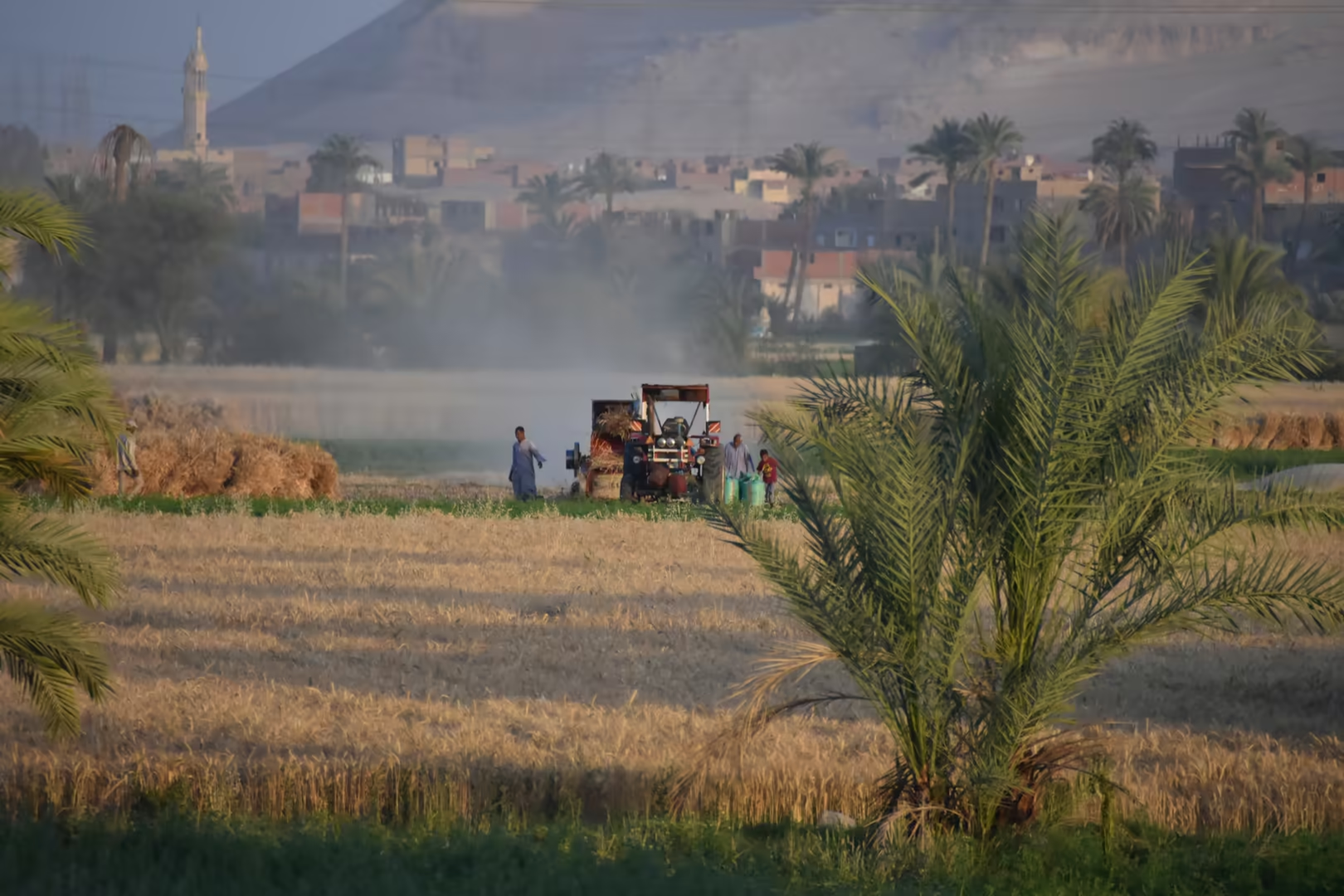
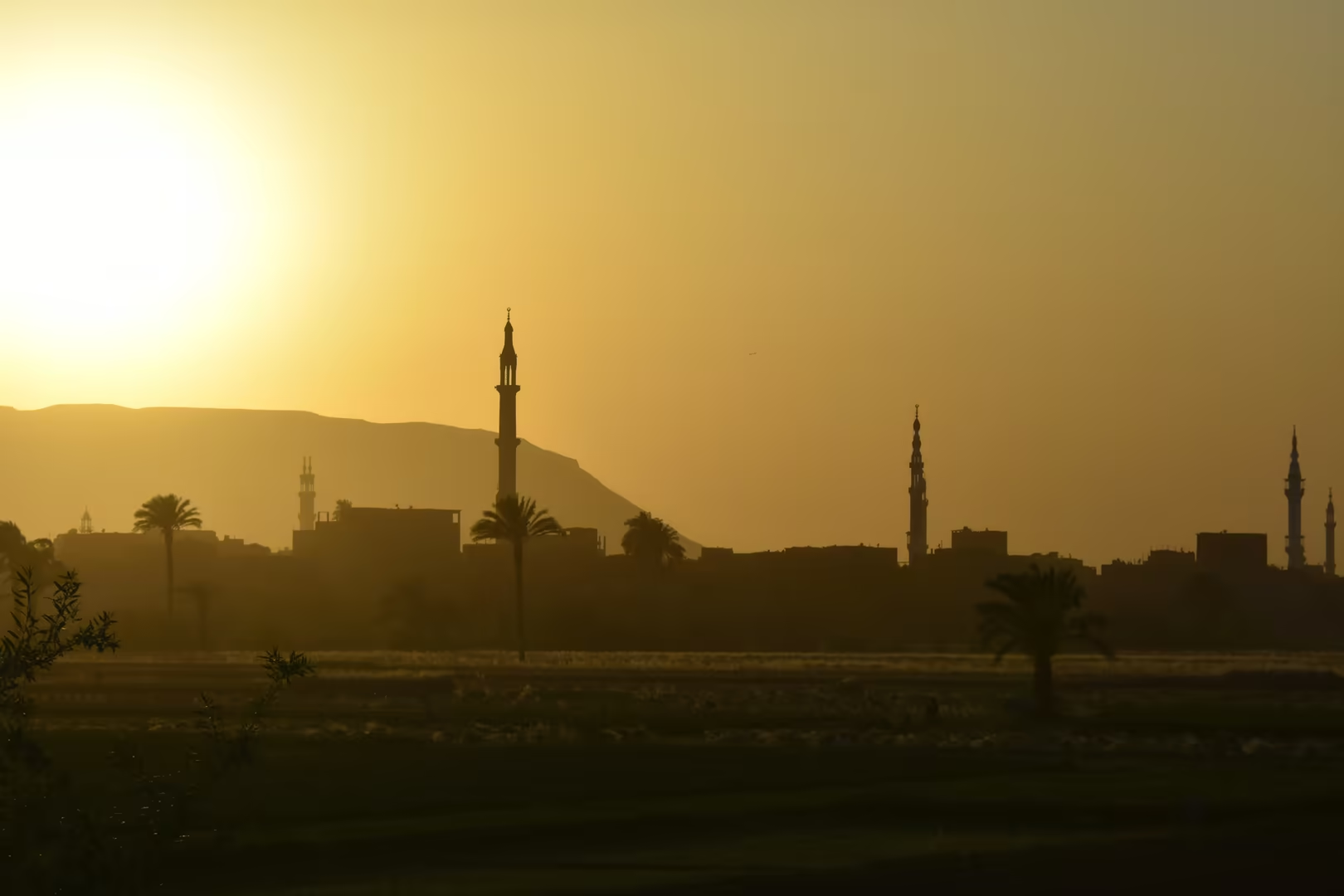
The site today is a place of open desert light and long silence, rarely crowded even in the high season: the visitor walks from the sand-choked courts of Seti’s temple into its painted halls, and out again across broken ground towards the trenches of the archaeologists (the German Archaeological Institute and the University of Pennsylvania among them) who have worked here for generations. The climate is that of the desert fringe, hot and dry for most of the year, with the dust haze of the valley to the east and the bare limestone plateau rising beyond the tombs of the earliest kings.
History
Abydos holds the oldest royal cemetery of pharaonic Egypt. At Umm el-Qa’ab the graves of the proto-kings of the Naqada III period (c. 3200-3000 BC) number some seven hundred; among them tomb U-j, dated to about 3300 BC, whose twelve chambers contained hundreds of imported Canaanite wine jars, obsidian and cedar, and more than 180 small ivory labels inscribed with the earliest known Egyptian writing, and which is generally attributed, on uncertain evidence, to a ruler nicknamed Scorpion I. Narmer, the first king of the First Dynasty, and his successors were buried in the same ground in brick-lined tombs ringed by the graves of sacrificed retainers; and beside the enclosure of Khasekhemwy, excavations have uncovered fourteen boat burials of about 3000 BC, the oldest planked vessels yet discovered, in which the dead kings were to sail with the sun god.
Two kings of the Second Dynasty, Peribsen and Khasekhemwy, returned to Abydos for burial and built on the desert behind the town the great niched enclosures long mistaken for forts, of which the Shunet el-Zebib of Khasekhemwy (c. 2700 BC) survives as the oldest standing mud-brick monument of Egypt. Such enclosures, houses of the king’s ka, are now recognised as the forerunners of the step-pyramid complex of Djoser at Saqqara. After the court moved north to Memphis the royal tombs were looted and burnt, but the sanctity of the place only grew: in the Old Kingdom the local jackal god Khenti-Amentiu, Foremost of the Westerners, watched over the necropolis, and from the Fifth Dynasty he was ever more closely identified with Osiris, whose temple grew out of a chapel of Pepi I at Kom el-Sultan.
It was in the Middle Kingdom that Abydos became the national cult centre of Osiris. The tomb of the First Dynasty king Djer was reinterpreted as the burial place of the god himself, and an annual festival at the time of the inundation re-enacted his death and resurrection in a great public drama: the stela of the treasurer Ikhernofret, set up under Senusret III (c. 1878-1839 BC), describes the procession of Wepwawet, the battle against the enemies of the god, the mourning, and the triumphant return of the image from Umm el-Qa’ab to the temple. Senusret III himself built a rock-cut tomb and cenotaph in the desert with the attendant town of Wah-Sut; kings of the Thirteenth Dynasty and of the shadowy Abydos dynasty of the Second Intermediate Period were buried in his shadow; and in the Eighteenth Dynasty Ahmose I raised the only pyramid of the site.
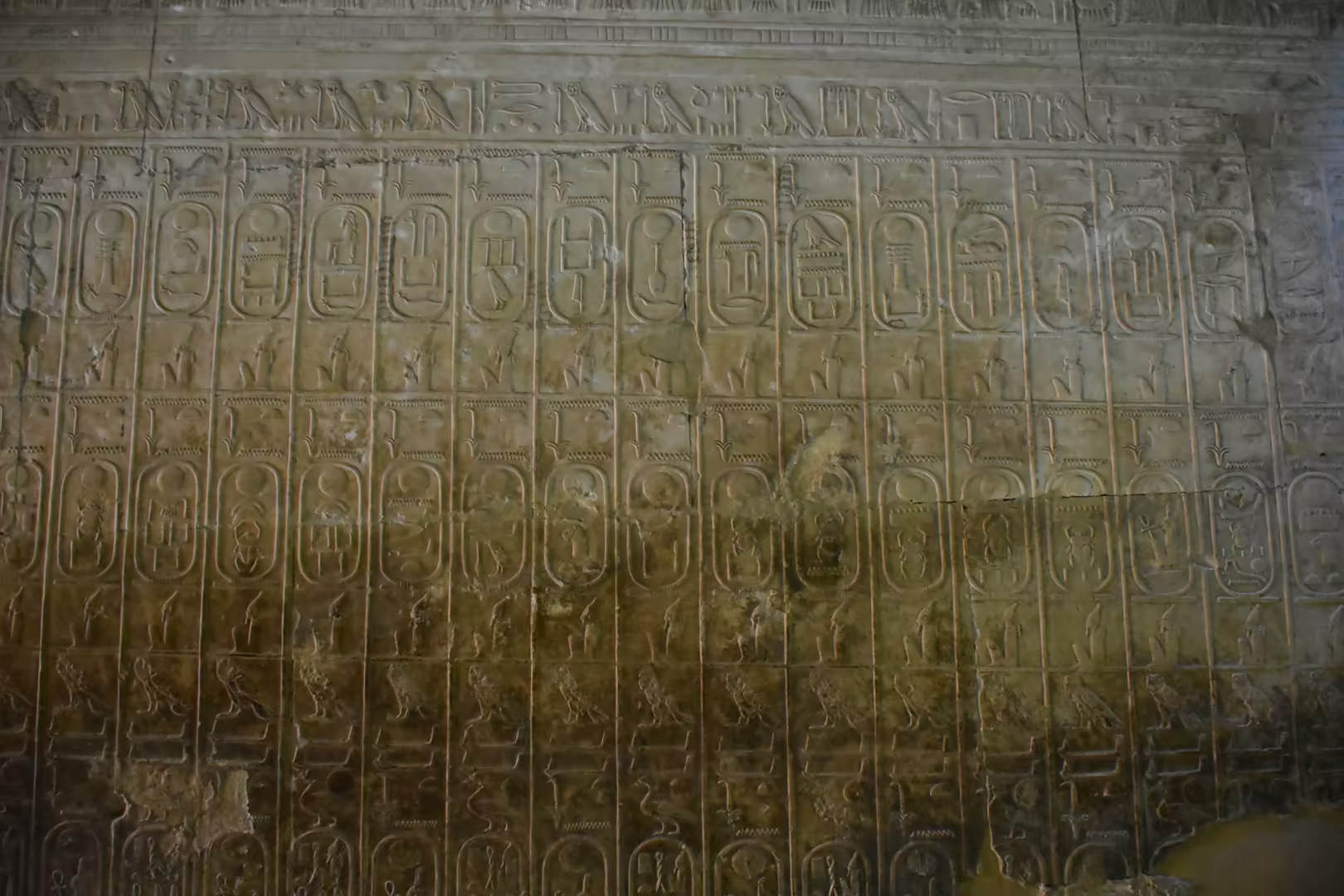
The greatest of the surviving buildings is the memorial temple of Seti I (c. 1290-1279 BC), erected on new ground south of the old town and completed after his death by Ramesses II. Built of fine limestone with a pylon, two courts and two hypostyle halls, it houses the seven chapels of the principal gods and of the deified king, and in its southern wing the Gallery of the Kings, whose wall carries the famous Abydos King List: the cartouches of seventy-six legitimate predecessors, from Menes to Seti himself, deliberately omitting the Hyksos, the rulers of the Amarna age and the female pharaohs. Ramesses II decorated the first hypostyle hall, built a smaller temple of his own to the north, and behind his father’s sanctuary the Osireion was laid out as a subterranean cenotaph of the king united with Osiris, its passages decorated under his grandson Merenptah.
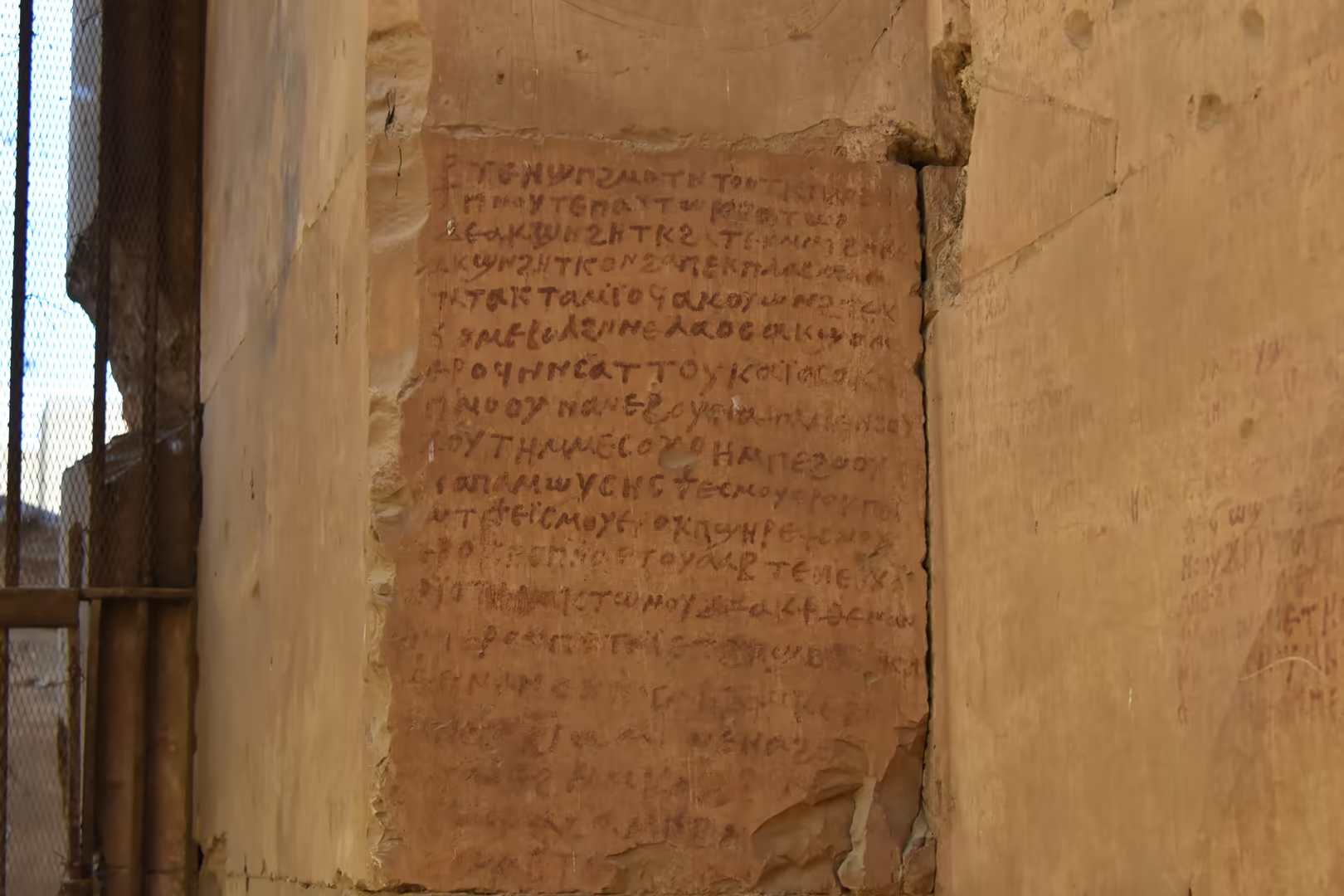
The cult of Osiris outlived the pharaohs by a thousand years: Greek, Carian, Phoenician and Aramaic graffiti on the walls of Seti’s temple record the pilgrims of the Ptolemaic and Roman periods, when the building was already known to Strabo as the Memnonium, and its ruins served finally as an oracle of the god Bes. Modern exploration began with William John Bankes’s discovery of the king list in 1818 and Mariette’s clearance of the temple in 1863; Amélineau and Petrie excavated the royal tombs and the Osireion around 1900, Frankfort published the cenotaph in 1933, and the German Archaeological Institute has worked at Umm el-Qa’ab since 1977.
Geology
Geologically, Abydos occupies the desert fringe of the Nile valley in the Sohag stretch, a landscape that the geologist Rushdi Said divided into three components: the structural limestone plateau bordering the valley, rising to 200-375 metres; the intermediate terraces of sand and gravel, 70-140 metres above sea level, which are remnants of older alluvial plains; and the flat floodplain of the present Nile, built of silt and clay at about 55-65 metres. The ancient town and its temples stand on the lowest of these terraces, just above the cultivation, while the royal cemetery of Umm el-Qa’ab climbs the gravelly rise behind; the plateau edge west of the site is cut by dry wadis that have poured fans of gravel and sand down across the necropolis through the Quaternary.
The shallow geology records a vanished river system. A thick succession of Pliocene and Pleistocene sediments, resting unconformably on the Esna Shale of Palaeocene age, fills an ancient channel cut deep into the shale by a north-flowing river that preceded the present Nile: the permeable Qena Sands, more than seventy metres thick beneath the temple and reaching a hundred metres near Qena, are its channel fill, laid down in the late Pliocene and early Pleistocene. Above them lie gravels whose pebbles show affinities with the rocks of the Red Sea hills, the silt lenses of a later transverse stream, and the recent deposits of the Ghawanim and Dandara formations. The modern Nile has incised its channel into this older fill and covered its floodplain with the dark silts that make the fields of El-Balyana; the desert surface itself is mantled by the wadi deposits of gravel, sand and silt on which the temples were founded.
The building stones of Abydos were drawn from every part of this geology. The memorial temple of Seti I is of fine white limestone, quarried largely on the spot and supplemented, like much Ramesside work, with sandstone floated down from Gebel Silsila far to the south; the Osireion was built in deliberate archaism of cyclopean blocks, its limestone core faced with sandstone and roofed with beams of red Aswan granite; and the great enclosures, from the Shunet el-Zebib to the town walls, were raised of mud-brick made from the Nile alluvium itself. The contrast is a lesson in Egyptian construction: stone for the eternal cult, brick for the enclosure, each material chosen for availability and role.
Water is the quiet enemy of Abydos. The channel around the island of the Osireion, known to the first excavators as Strabo’s well, is fed by groundwater held in the Qena Sands, a body of largely fossil water recharged by the desert wadis in wetter millennia and flowing today from west to east towards the valley. Since the construction of the Aswan High Dam and the spread of perennial irrigation the water table has risen, flooding the deepest chambers of the cenotaph and lifting salts into its sandstone, so that the monument is now kept dry by a ring of pumping wells; the same rising damp attacks the temple foundations, while wind, rare desert rain and the burrows of hornets and jackals erode the ancient mud-brick of the Shunet el-Zebib, whose conservation has become a permanent labour.
Things to See
The principal monument of Abydos is the memorial temple of Seti I, raised on new ground south of the old town during his reign (c. 1290-1279 BC) and completed after his death by Ramesses II. The visitor enters from the east through a ruined pylon into the first of two open courts, past walls of battle scenes and ceremonial reliefs of the Ramesside kings. The fabric is fine white limestone, supplemented with sandstone brought down the Nile from Gebel Silsila, and the whole follows the L-shaped plan of the period, with the sanctuary wing running back towards the desert. The outer walls now stand bare above the sand, stripped of their mud-brick casing, and give the building its long, low silhouette against the desert edge.
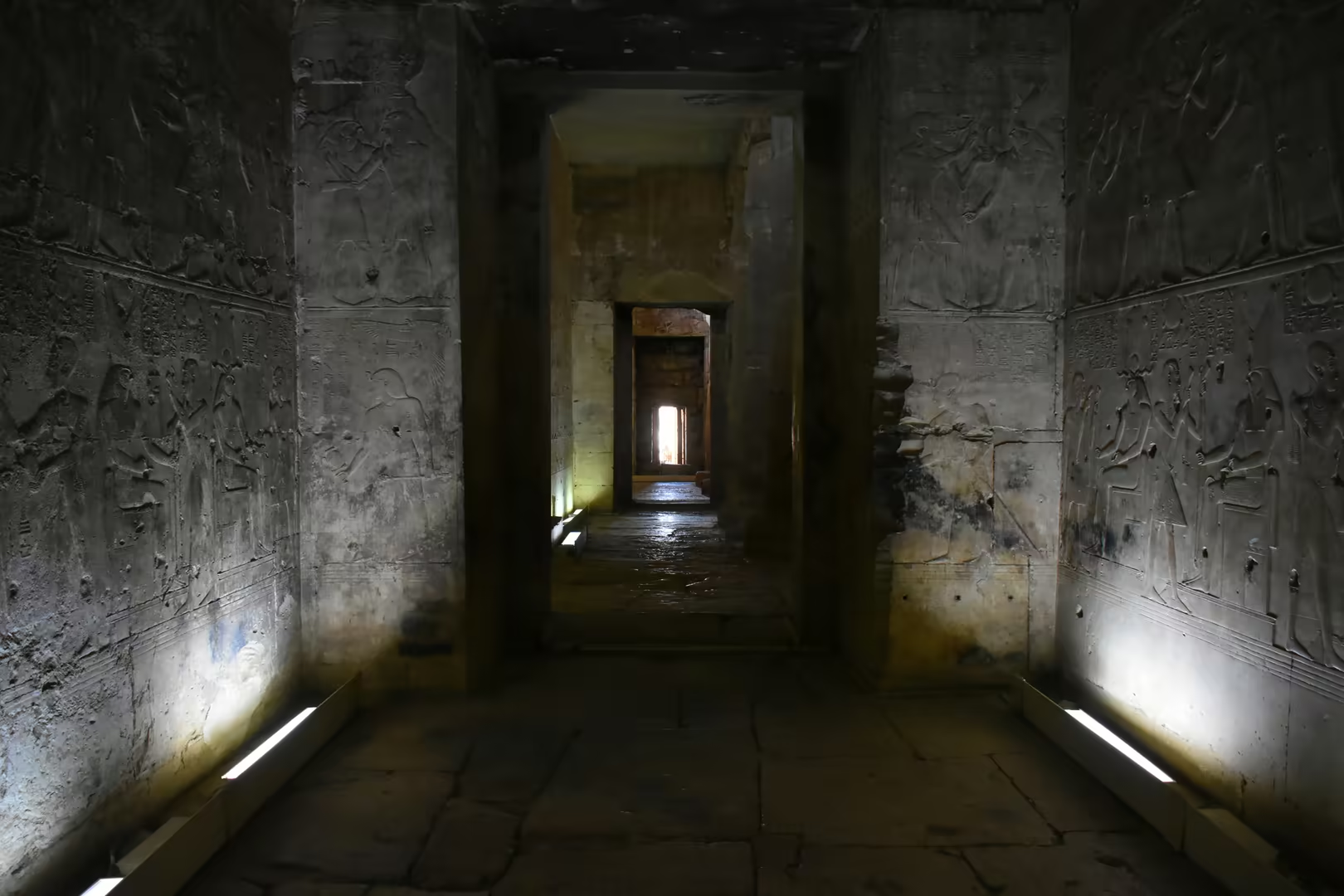
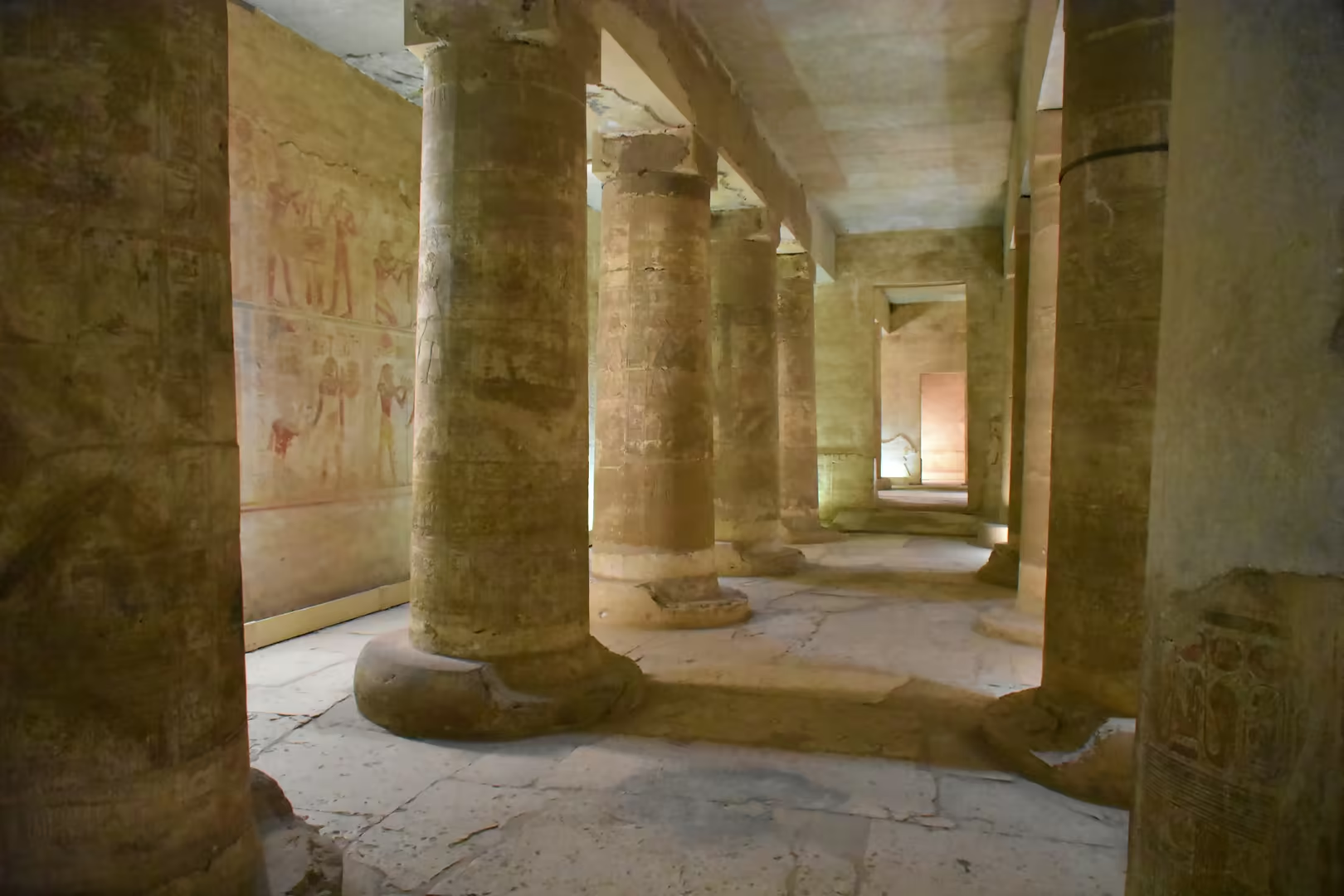
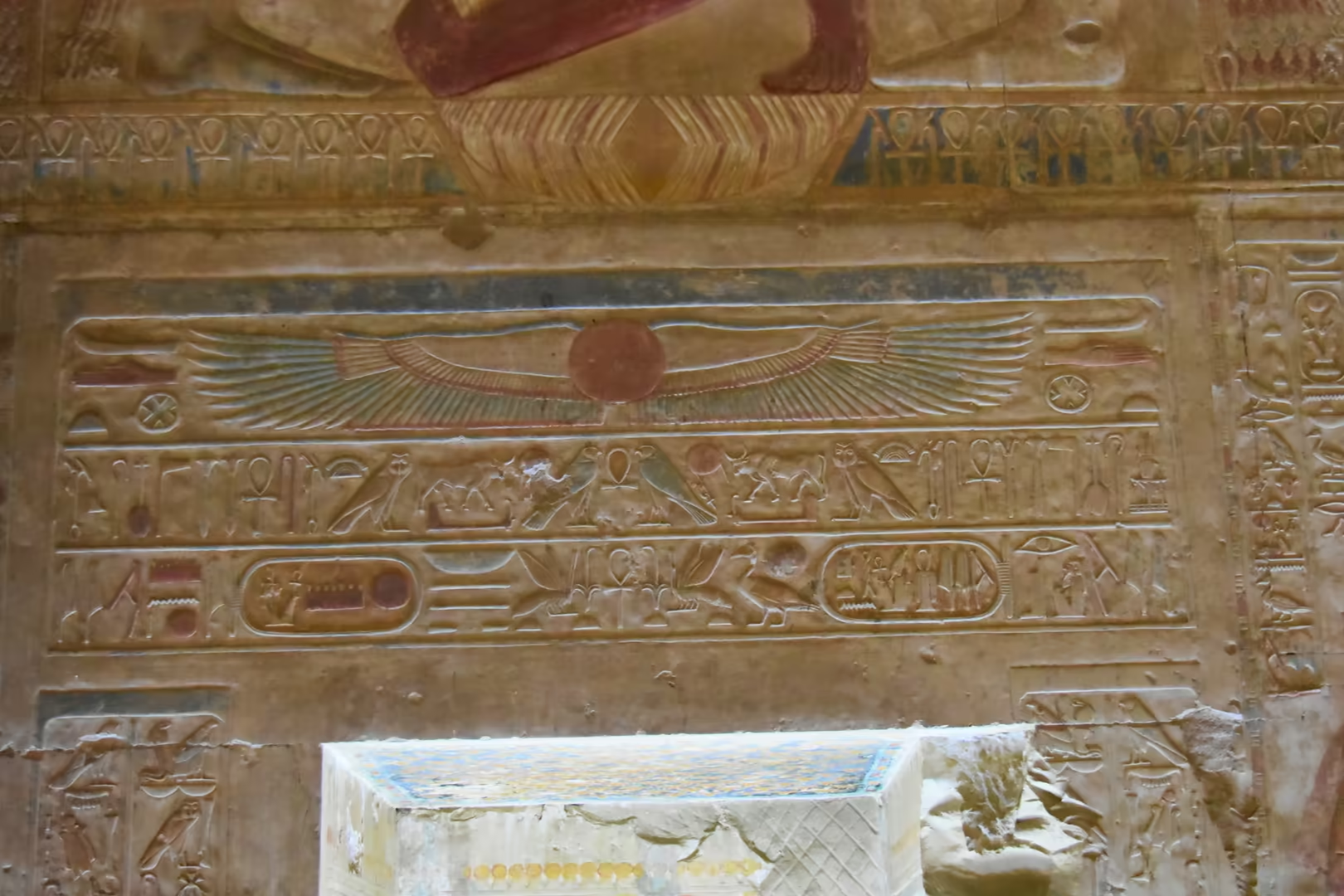
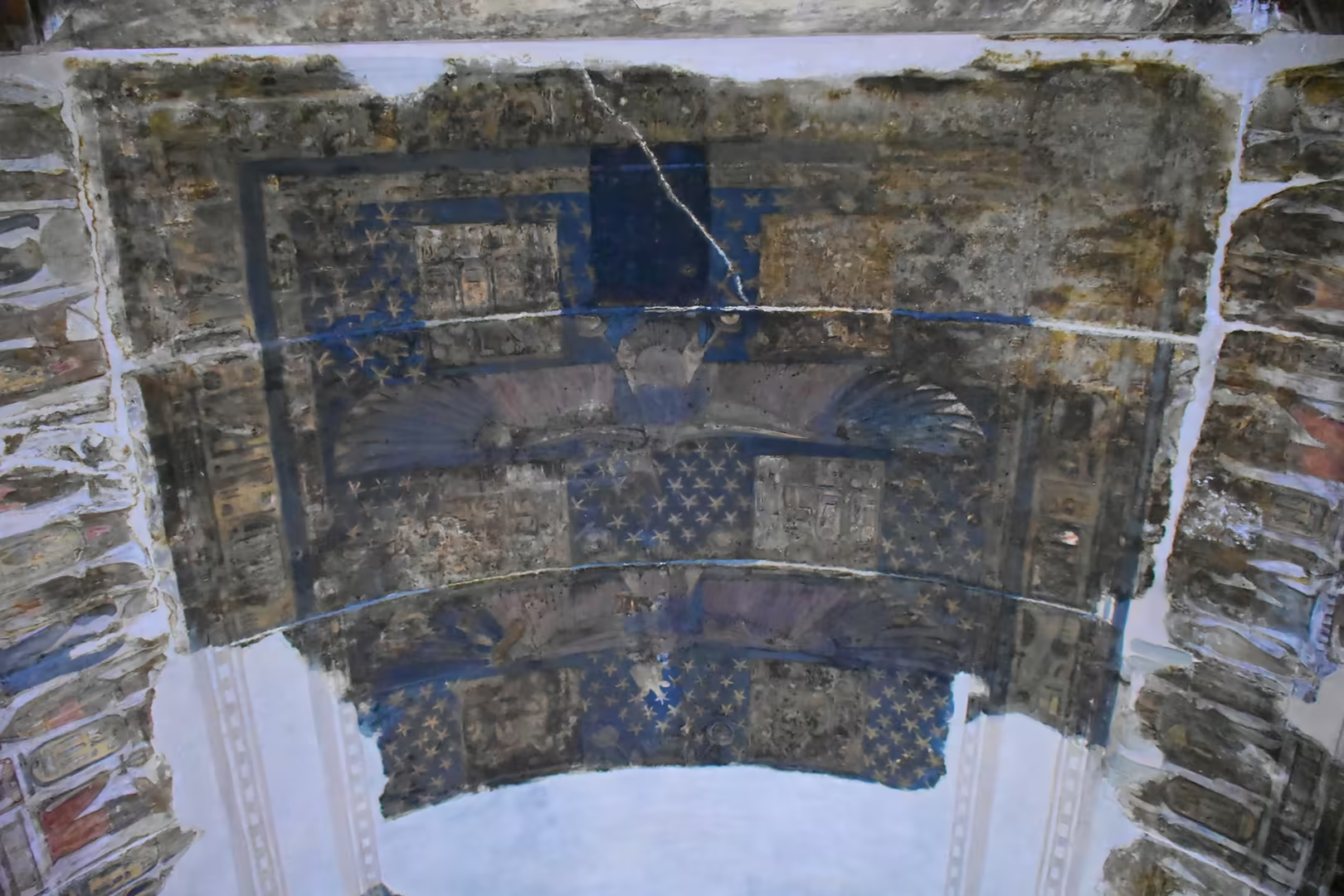
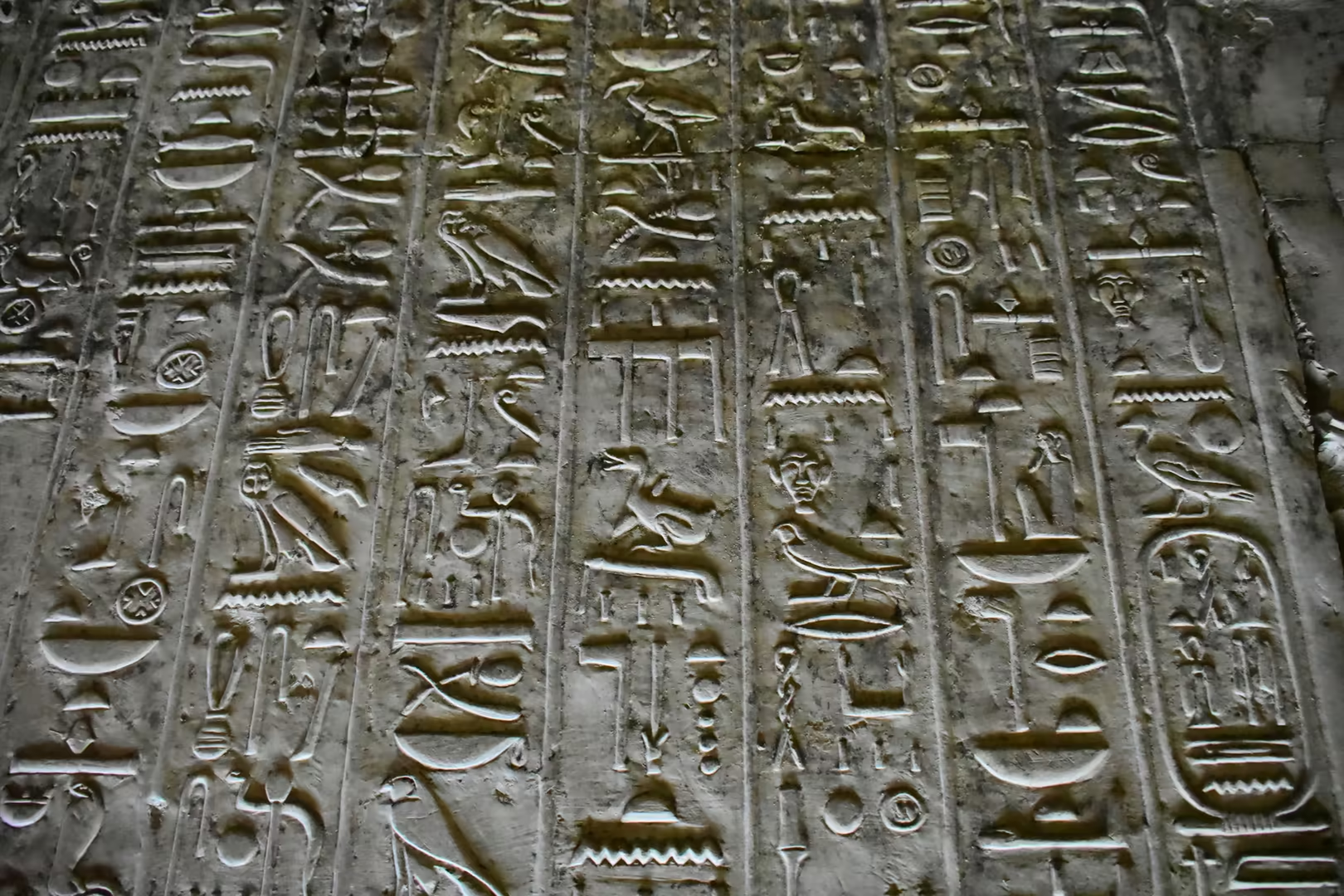
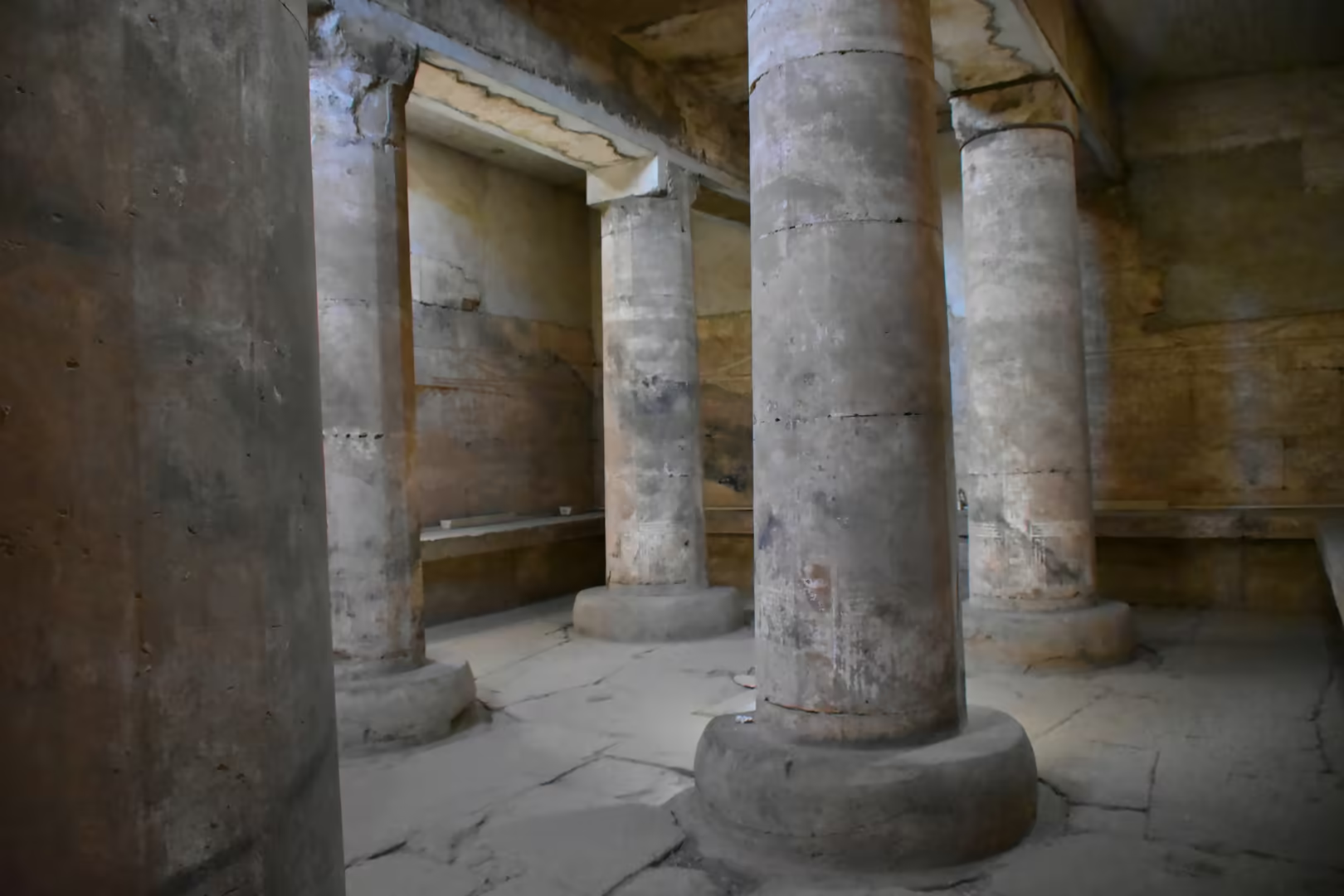
From the courts two hypostyle halls open one behind the other. In the outer hall the reliefs are the work of Ramesses II, who completed the temple after the death of his father. Rows of columns carry the roof, their shafts covered with registers of sunk relief and hieroglyphs, and the architraves bear the winged sun disk. The light falls from the doorways in long shafts across the stone and travels down the colonnades towards the sanctuary, where the ceilings are painted deep blue and spangled with stars or filled with the celestial figures of the night sky. Because the building lay for centuries half buried in sand, these colours survive to a degree matched by few other monuments of the New Kingdom.
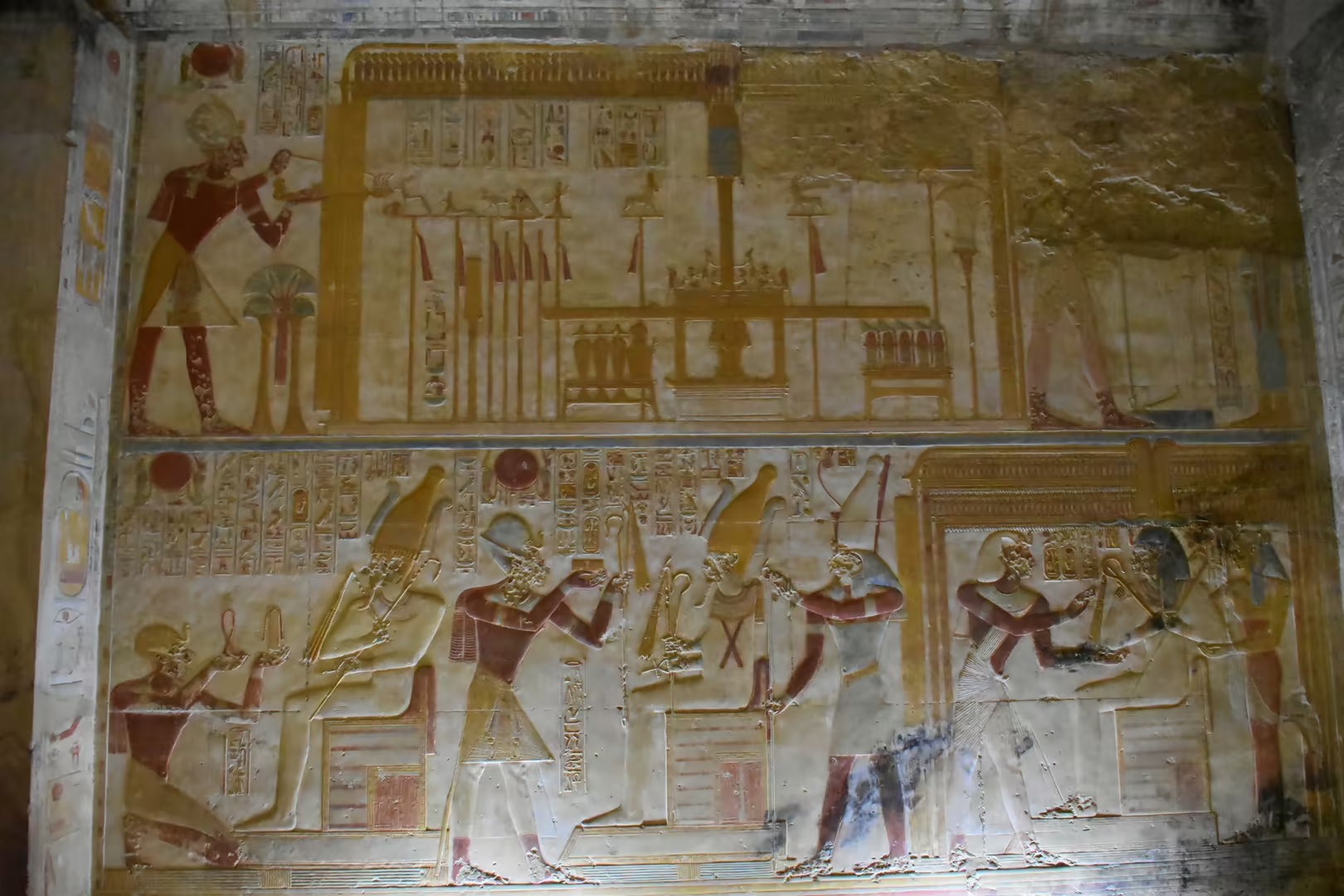
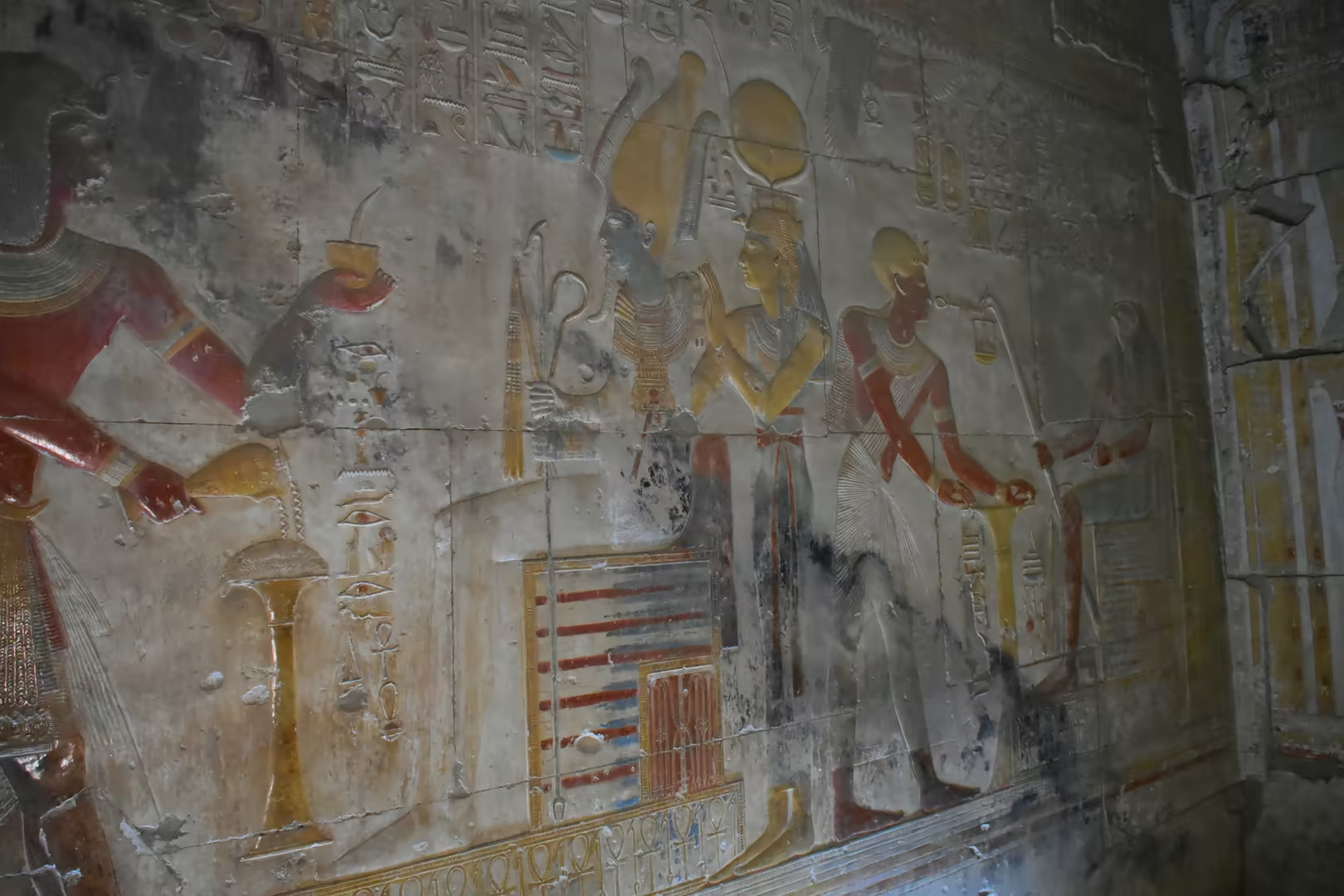
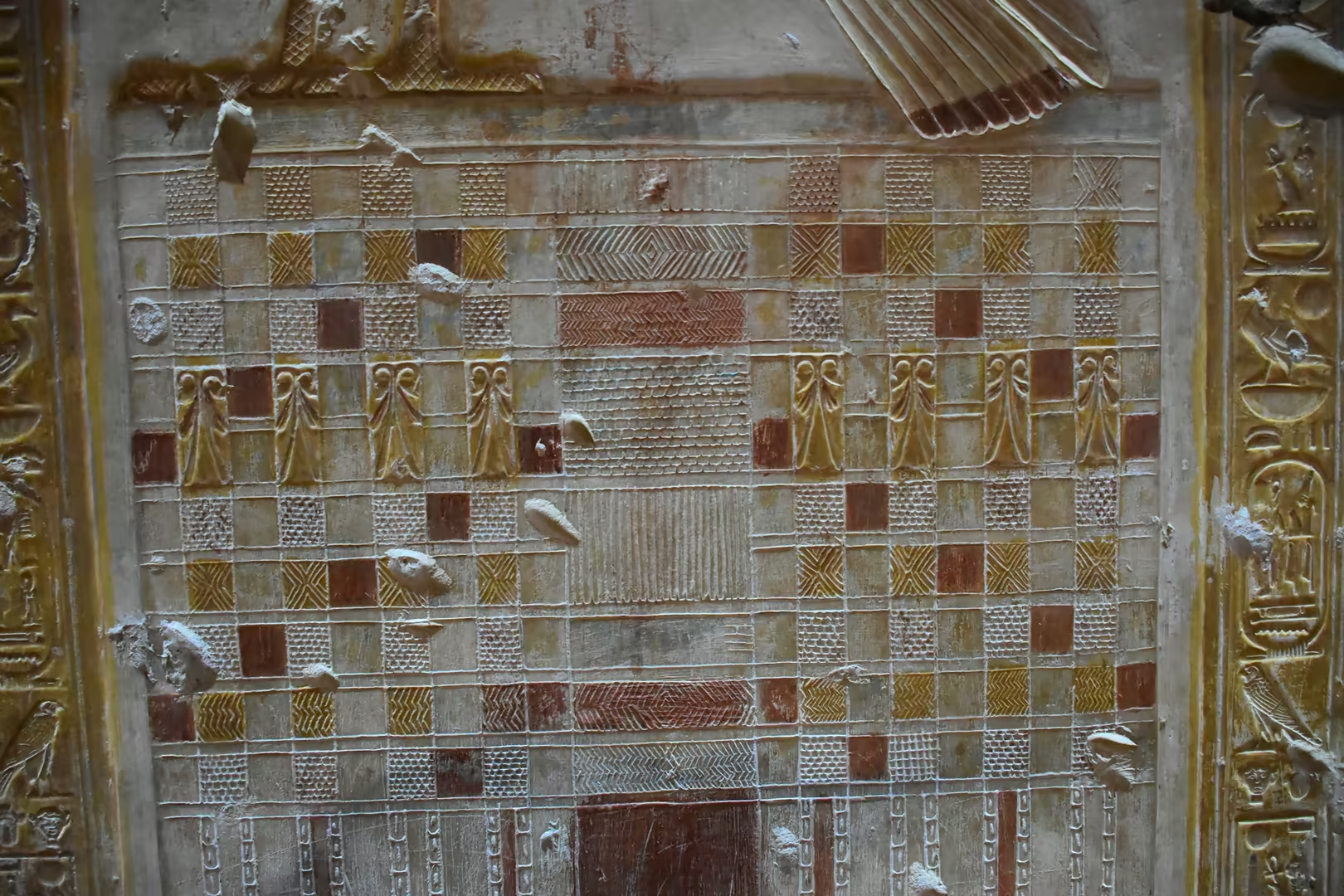
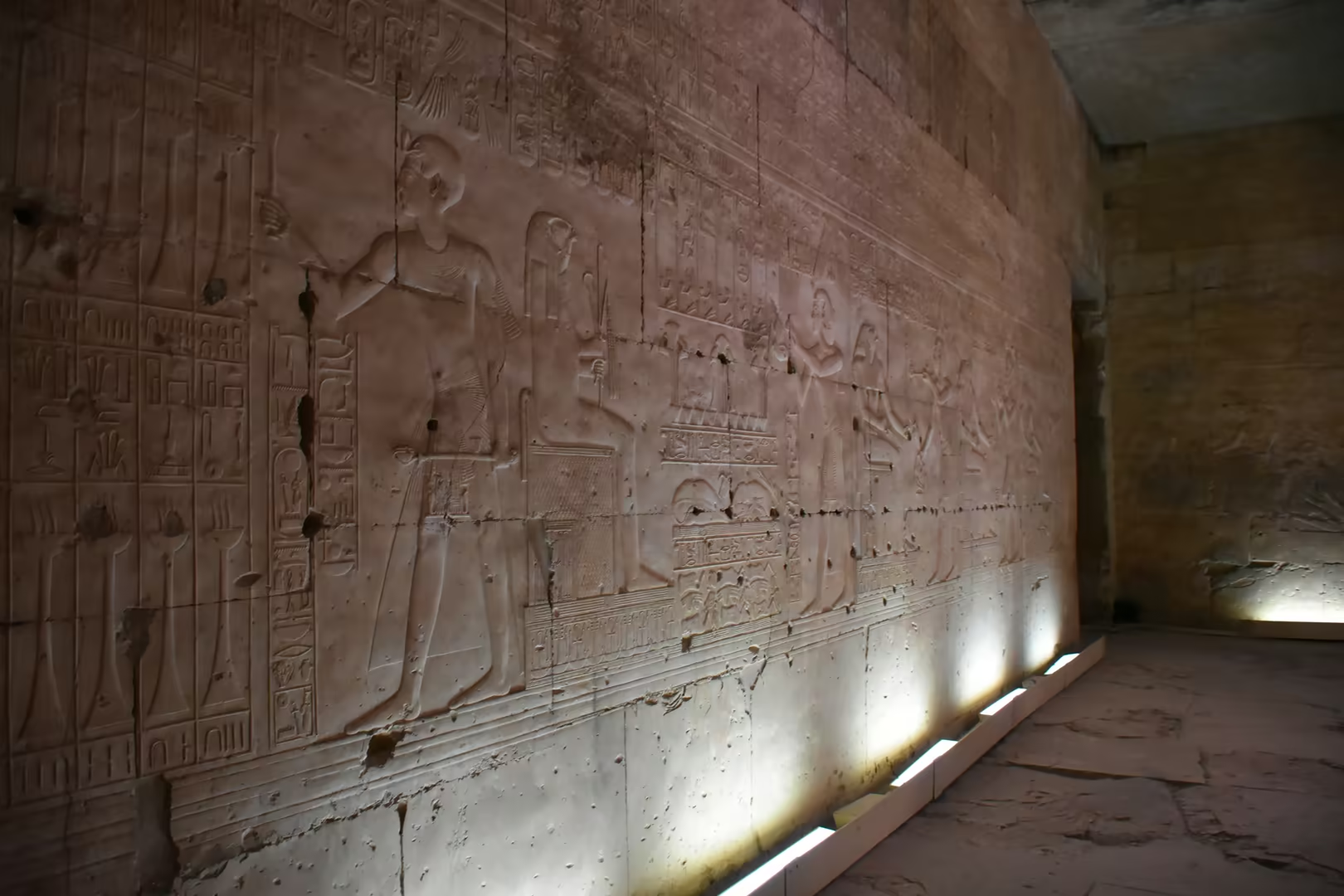
At the rear of the temple the sanctuary consists of seven chapels standing in a row, dedicated to the principal gods of Abydos, Osiris, Isis and Horus among them, and to the deified king himself. Their walls carry some of the most refined relief to survive from ancient Egypt: processions of offering bearers, the king kneeling before the gods with lotus and wine, the pharaoh presenting a necklace to the falcon-headed Horus or standing before seated deities with tall plumed crowns. Painted registers set barques and crowns above rows of hieroglyphs, offering tables are heaped with round loaves and fowl, banquets of seated figures run along the lower walls, birds flutter through papyrus marshes and cattle are led to sacrifice. The carving is a deep-cut sunk relief whose edges catch the light, and even where a block has been fractured and reset, its red sun disk remains bright.
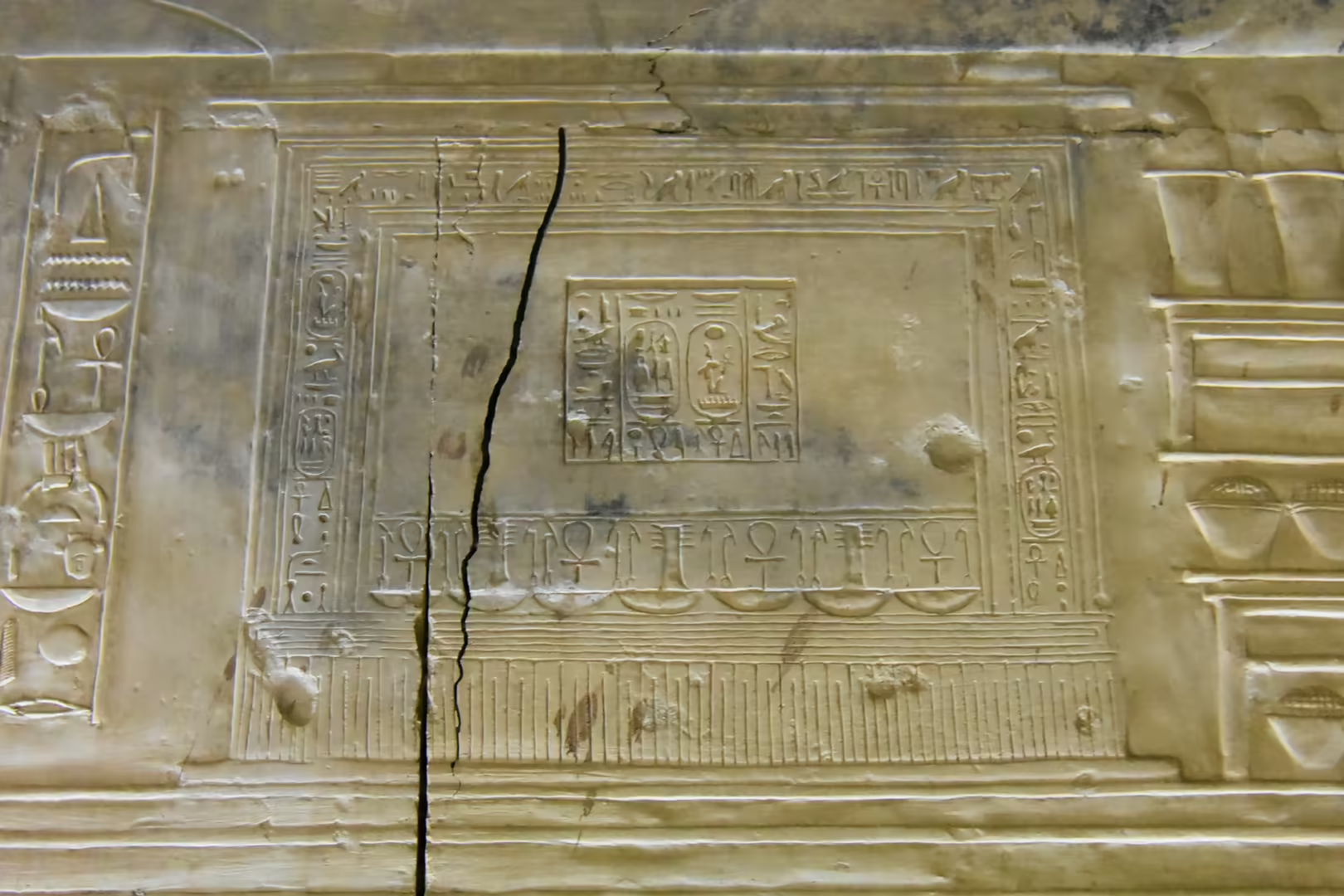
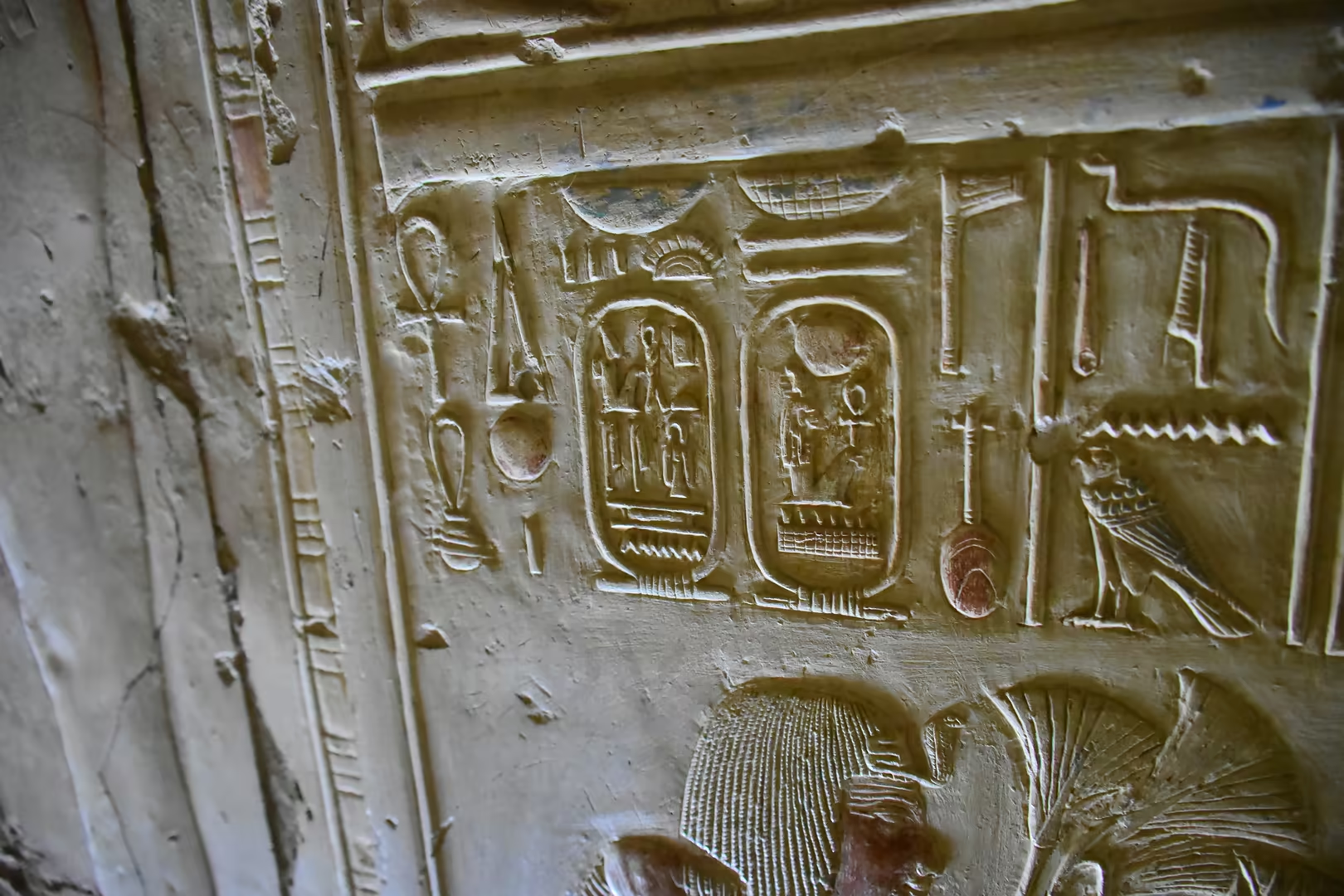
The southern wing of the temple contains the Gallery of the Kings, where the famous Abydos King List covers one wall in orderly rows of oval cartouches. The seventy-six names run from Menes to Seti himself, and the scene shows the king with the young Ramesses making offering before his ancestors. The omissions speak as clearly as the list itself: the Hyksos, the rulers of the Amarna age and the female pharaohs are absent, and the sequence serves as a backbone of modern chronology for the early dynasties. On the surrounding walls the later life of the temple is written in stone: Greek, Carian, Phoenician and Aramaic names and invocations cut by the pilgrims of the Ptolemaic and Roman periods, when the building was already a monument of antiquity.
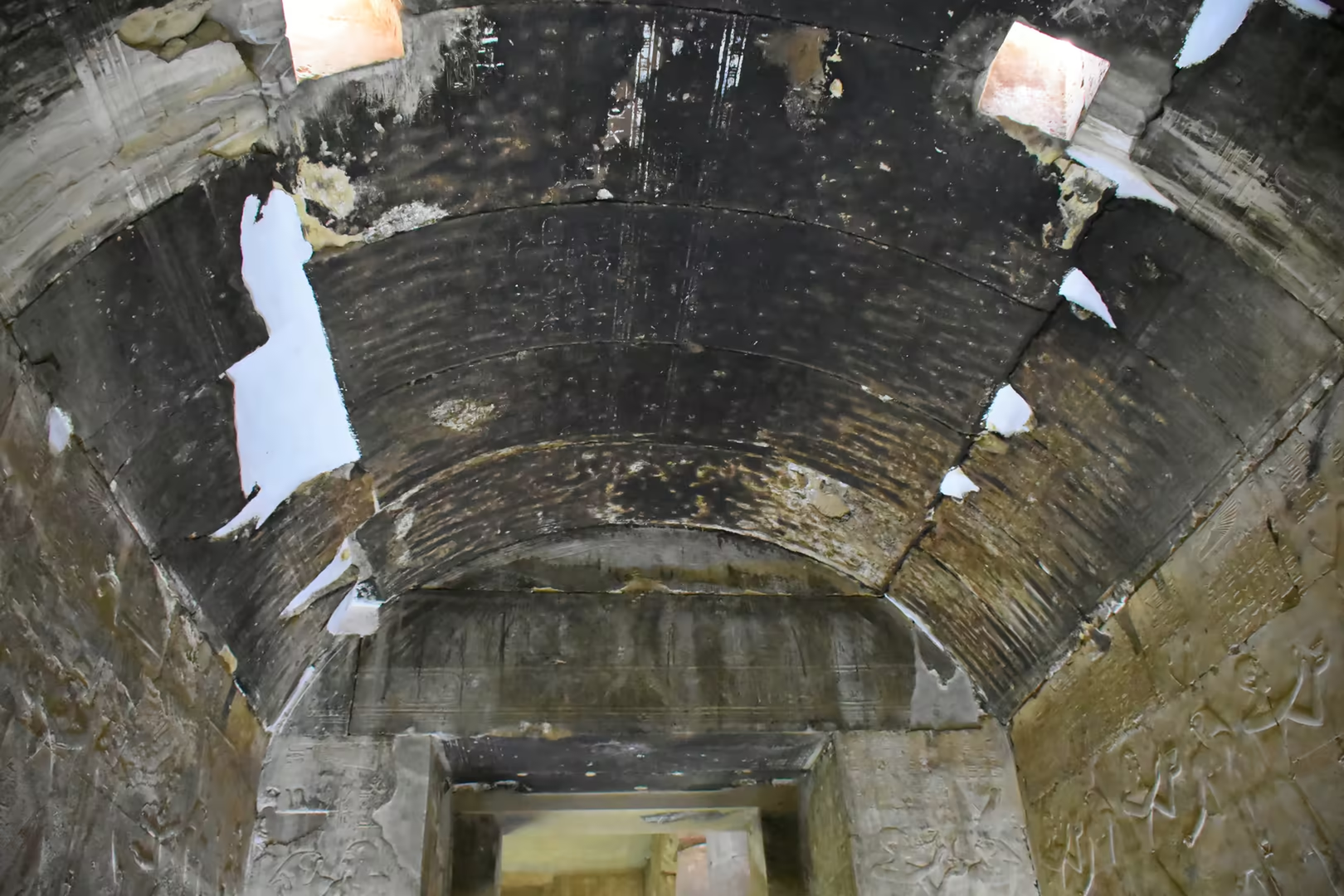
Behind the temple the ground falls away to the Osireion, the subterranean cenotaph that Seti laid out in union with the god Osiris and whose passages received their decoration under his grandson Merenptah. A long entrance passage leads down into vaulted galleries of dark stone, where barrel ceilings curve low over walls of carved relief and where priests of the Twenty-first and Twenty-second Dynasties left graffiti naming the structure the hidden place of the underworld. The heart of the monument is a great hall raised in deliberate archaism of cyclopean blocks, its limestone core faced with sandstone and roofed with beams of red Aswan granite, and set about an island surrounded by a channel of groundwater that the first excavators knew as Strabo’s well. Since the building of the Aswan High Dam raised the water table of the region, the lowest chambers have stood flooded and are kept dry only by pumping.
References
- O’Connor, D. (2009). Abydos: Egypt’s First Pharaohs and the Cult of Osiris. New York: Thames & Hudson.
- Calverley, A. M. & Broome, M. F. (1933-1958). The Temple of King Sethos I at Abydos, I-IV. London: Egypt Exploration Society.
- Frankfort, H. (1933). The Cenotaph of Seti I at Abydos. London: Egypt Exploration Society.
- Said, R. (1990). The Geology of Egypt. Rotterdam: A. A. Balkema.
- UNESCO World Heritage Centre (2003). Abydos, city of pilgrimage of the Pharaohs. Tentative Lists, ref. 1823. whc.unesco.org/en/tentativelists/1823/
- American Research Center in Egypt. The Temple of Seti I at Abydos. arce.org/temple-seti-i-abydos/
- Wikipedia contributors (2026). Abydos, Egypt. en.wikipedia.org/wiki/Abydos,_Egypt
- Wikipedia contributors (2026). Umm El Qa’ab. en.wikipedia.org/wiki/Umm_El_Qa%27ab
- Wikipedia contributors (2026). Temple of Seti I (Abydos). en.wikipedia.org/wiki/Temple_of_Seti_I_(Abydos)
- Wikipedia contributors (2026). Osireion. en.wikipedia.org/wiki/Osireion
- Wikipedia contributors (2026). Shunet El Zebib. en.wikipedia.org/wiki/Shunet_El_Zebib
- Wikipedia contributors (2026). Abydos King List. en.wikipedia.org/wiki/Abydos_King_List
- Wikipedia contributors (2026). Osiris. en.wikipedia.org/wiki/Osiris
- Wikipedia contributors (2026). Khasekhemwy. en.wikipedia.org/wiki/Khasekhemwy
- Wikipedia contributors (2026). Khenti-Amentiu. en.wikipedia.org/wiki/Khenti-Amentiu
- Wikipedia contributors (2026). Mysteries of Osiris. en.wikipedia.org/wiki/Mysteries_of_Osiris