2021 Italy - Carrara Marble Mines
5 October 2021
















Journal Notes
General
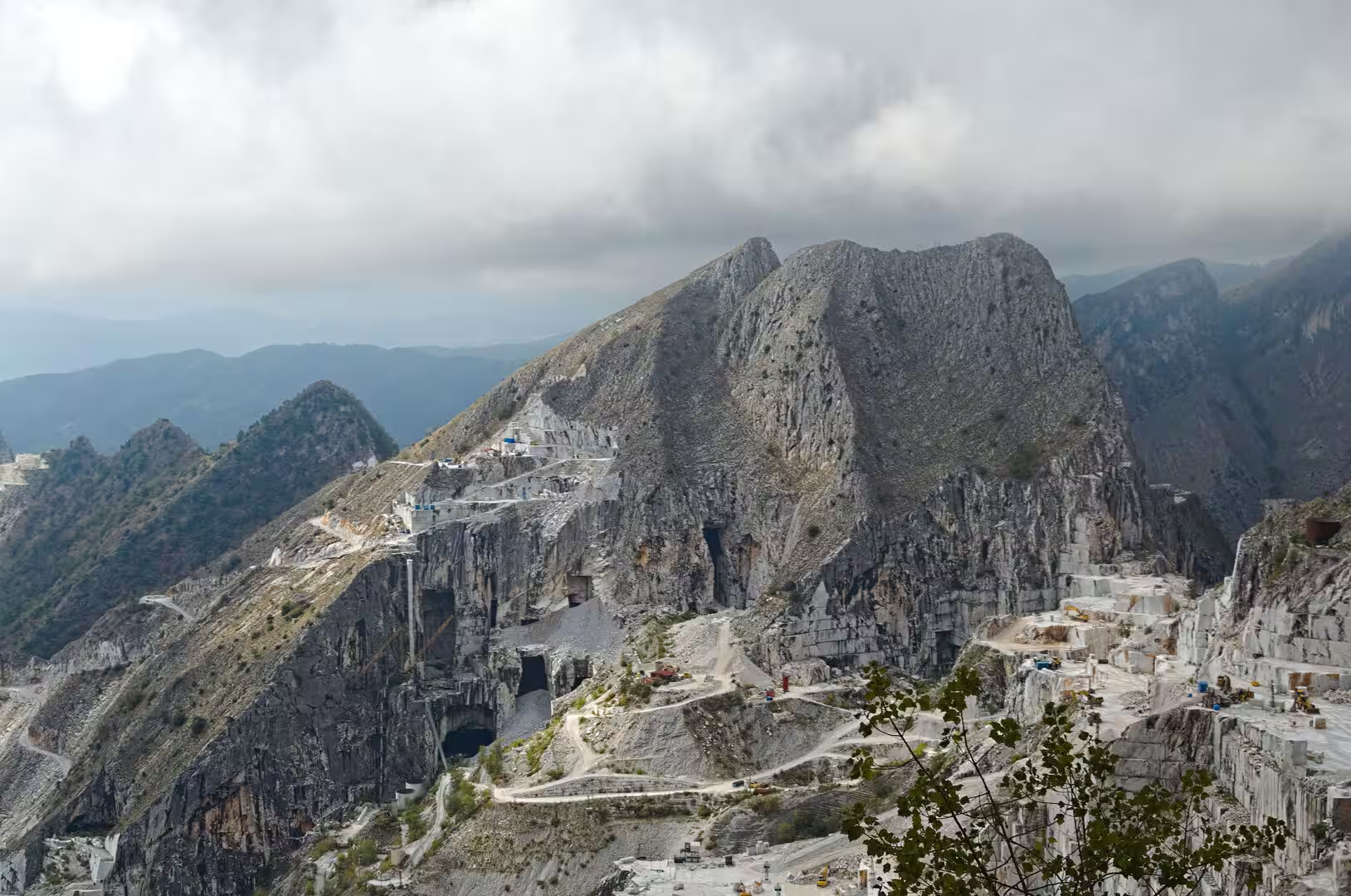
Carrara lies at the northern tip of Tuscany, in the province of Massa and Carrara, on the plain between the Apuan Alps and the Ligurian coast, about fifteen kilometres from the sea. The town is the centre of the marble district that covers the western slopes of the range above it, and most of its working life faces the mountain. The quarries stand in three basins, at Torano, Miseglia and Colonnata, and the roads that serve them climb from the streets of the town into a landscape of white terraces, gravel yards and sheds.
The stone of these slopes is Carrara marble, known to the Romans as marmor lunense after the colony of Luna near the mouth of the Magra. It is a white or blue-grey marble that takes a high polish and holds fine detail, and its purest grade, statuario, has been the material of monumental sculpture since antiquity. More marble has been taken from the quarries around Carrara than from any other place on earth, and more than six hundred and fifty quarry sites have been recorded on the mountain, of which about half are abandoned or worked out.
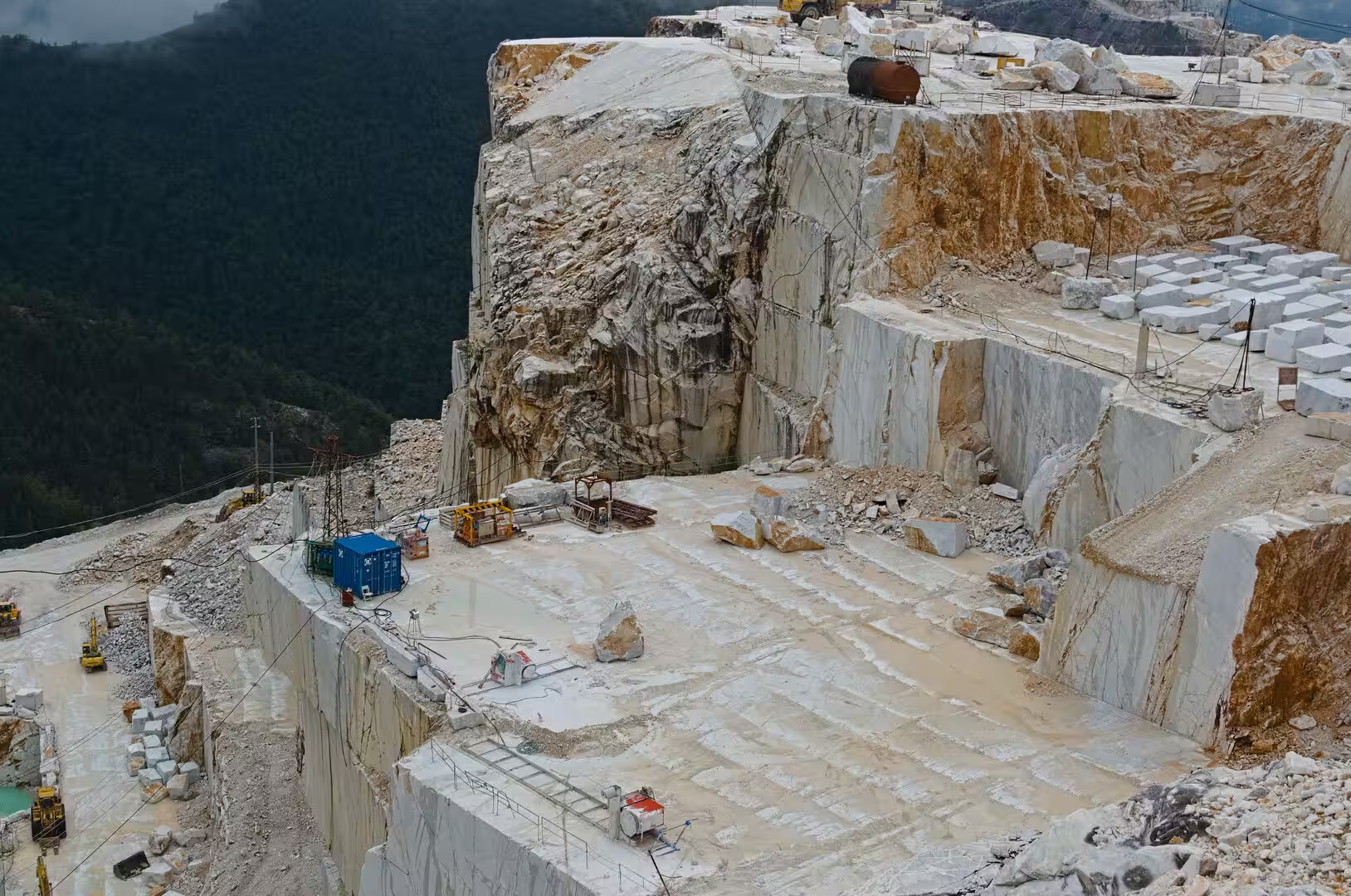
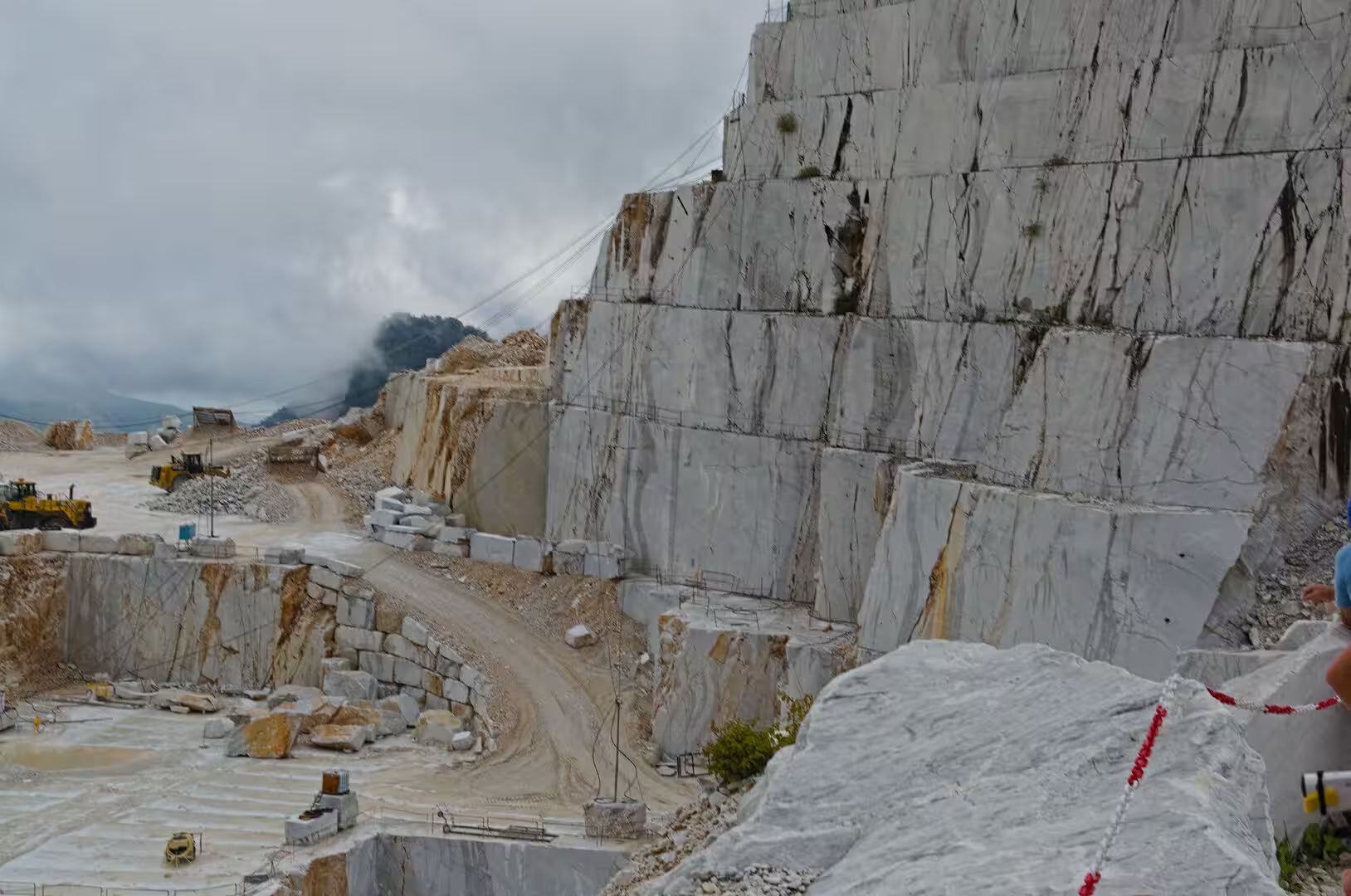
The district is an industrial landscape in the proper sense. Cutting follows the natural fractures of the rock: a channel is opened along the line of a quarry face, wire saws and drills free a block, and the block is split and lifted onto a lorry for the road down to the coast. Terraces of sawn benches climb the mountainside, gravel roads switch back between them, and the yards hold stacked blocks, loaders, cranes and the low sheds of the workshops. In dry weather everything is covered with fine white dust.
A visit begins in Carrara and climbs. The road to Colonnata passes through Vezzala and Bedizzano, the branch to Miseglia and Torano leaves the valley further north, and higher up a connecting road follows the Vara between the basins. The quarries are worked at heights between a few hundred and more than a thousand metres, and the weather of the range decides the day: cloud collects against the ridge, rain turns the dust into a pale slurry, and on some mornings the upper terraces stand in fog that opens only for an hour.
The quarries, the old transport routes and the village of Colonnata are treated as one heritage. Since 2003 the stations of the marble railway, several quarries and the bridges over the Vara belong to the Archaeological Park of the Apuan Alps, and Carrara marble has been designated a Global Heritage Stone Resource by the International Union of Geological Sciences. The district is also a place of work that continues, and the argument about its extension, about the damage to the mountain and about the future of the trade is part of the landscape a visitor walks through.
History
The mountain has been quarried for a very long time. Traces of working from the sixth century BC have been found at Fossa Carbonera in the Fantiscritti basin, and the Romans opened the district on a large scale when they replaced imported Greek marble with the stone of Luna. Colonnata was settled around 40 BC to house the workers of the quarries, and its name is usually read as a derivation of the Latin columna, the column that was cut there for Rome. The largest Roman quarrying site yet discovered lies one kilometre south of the village, at Fossacava.
In the Middle Ages the quarries were owned by the Malaspina and rented out to families of Carrara masters who organised both the extraction and the transport. The Maffioli worked quarries north of the town, in the Torano area, and from 1474 the Maffioli and later the Buffa supplied the marble for the facade of the Certosa di Pavia, shipping it around Italy and up the Po and the Ticino to the building site. From the sixteenth century Genoese stonecutters and merchants entered a trade that already reached markets far beyond Tuscany.
The Duchy of Massa and Carrara gave the industry its administration. The Cybo and Malaspina families created the Office of Marble in 1564 to regulate the trade, Massa was rebuilt in the seventeenth and eighteenth centuries with new roads and squares, and the cathedral of the town and the old ducal palace were both furnished in the local stone. After the family died out the state passed to the House of Austria-Este, and the management of the quarries rested with the rulers of the duchy until the political map of Italy changed.
The nineteenth century brought machines and dispute. A private marble railway, the Marmifera, was projected in 1866, opened in 1876 and extended to the quarries of Gioia, Ravaccione and Colonnata in 1890, running from the mountainside through Miseglia, Torano and Carrara to the port at Marina di Carrara. It carried marble until 1964 and was dismantled after the road took over the traffic. The quarrymen were also known for their radical politics: Carrara was a centre of Italian anarchism, and the Lunigiana revolt of January 1894 was carried by the workers of the marble yards.
Accidents have marked the district as well. In September 1911 a collapsing cliff face at the Bettogli quarry killed ten men who were on their lunch break under a precipice, and the trade has remained dangerous in spite of modern machinery. The varieties that the market asks for today are the same families that were cut in earlier centuries: Bianco Carrara, Venatino and Statuarietto, the veined Arabescato, the darker Bardiglio and the costly Calacatta. Marble from these quarries is still specified for buildings and for sculpture, and the environmental movement No Cav campaigns for the closure of the pits.
Geology
The Apuan Alps are a block of the northern Apennines with a history of their own. Their sediments were laid down in the sea in the middle Triassic, earlier than much of the surrounding chain, and hardened into limestone, dolomite, sandstone and shale. About twenty-five million years ago pressure and heat transformed part of the limestone into marble, and later uplift and erosion exposed the massif with its present jagged crest. The highest summit, Monte Pisanino, reaches 1,946 metres, and the marble lies in lenses and banks within the metamorphic core of the range.
Carrara marble is a metamorphic rock of calcite. Its crystals grew under pressure from the original limestone, and their size and arrangement give the stone its texture and its behaviour under the saw. Pure beds are white; grey and blue tones and the dark veins of the Arabescato come from graphite, pyrite and silicate minerals that were present in the sediment or introduced during deformation. The quarries work the sounder banks and leave the fractured zones alone, and the geologists who survey them read the same fracture pattern that the quarrymen follow when they plan a cut.
What a visitor sees on the mountain is geology at work. The benches of a quarry follow a face at an angle, the vertical channels mark the lines of the block to be freed, and the waste of decades lies below in long talus slopes of white rubble. Where the cover of rock above a marble body is too thick, the quarry moves underground, and a number of the pits of the district are worked as chambers with pillars left standing. The marble dust that the saws produce, the marmettola, is carried down by water and settles in basins and along the roadsides.
Marble dissolves in water, and the massif is a karst landscape because of it. Rain and snowmelt take carbon dioxide from the air and from the soil, sink through fissures and enlarge them into shafts, galleries and caves; the Apuan Alps hold more than a thousand known cavities, and the groundwater that gathers in them supplies the springs of the valleys below. Quarrying cuts into the same fissures, and the water that leaves a working face carries fine sediment with it, so that drainage, dust control and the protection of the springs belong to the daily management of a pit.
The climate of the range is wet and changeable. The mountains stand close to the coast and take the humid air that comes off the sea, so that rainfall is high and concentrated in spring and autumn, and cloud builds against the ridge within hours. Frost and thaw work on the exposed faces, widening joints and bringing down slabs that the cutting left unsupported. On the abandoned terraces the vegetation returns slowly, first the pioneer species that tolerate lime and drought, then grasses, shrubs and scattered trees, and the restoration of these slopes is studied as a problem of its own.
Things to See
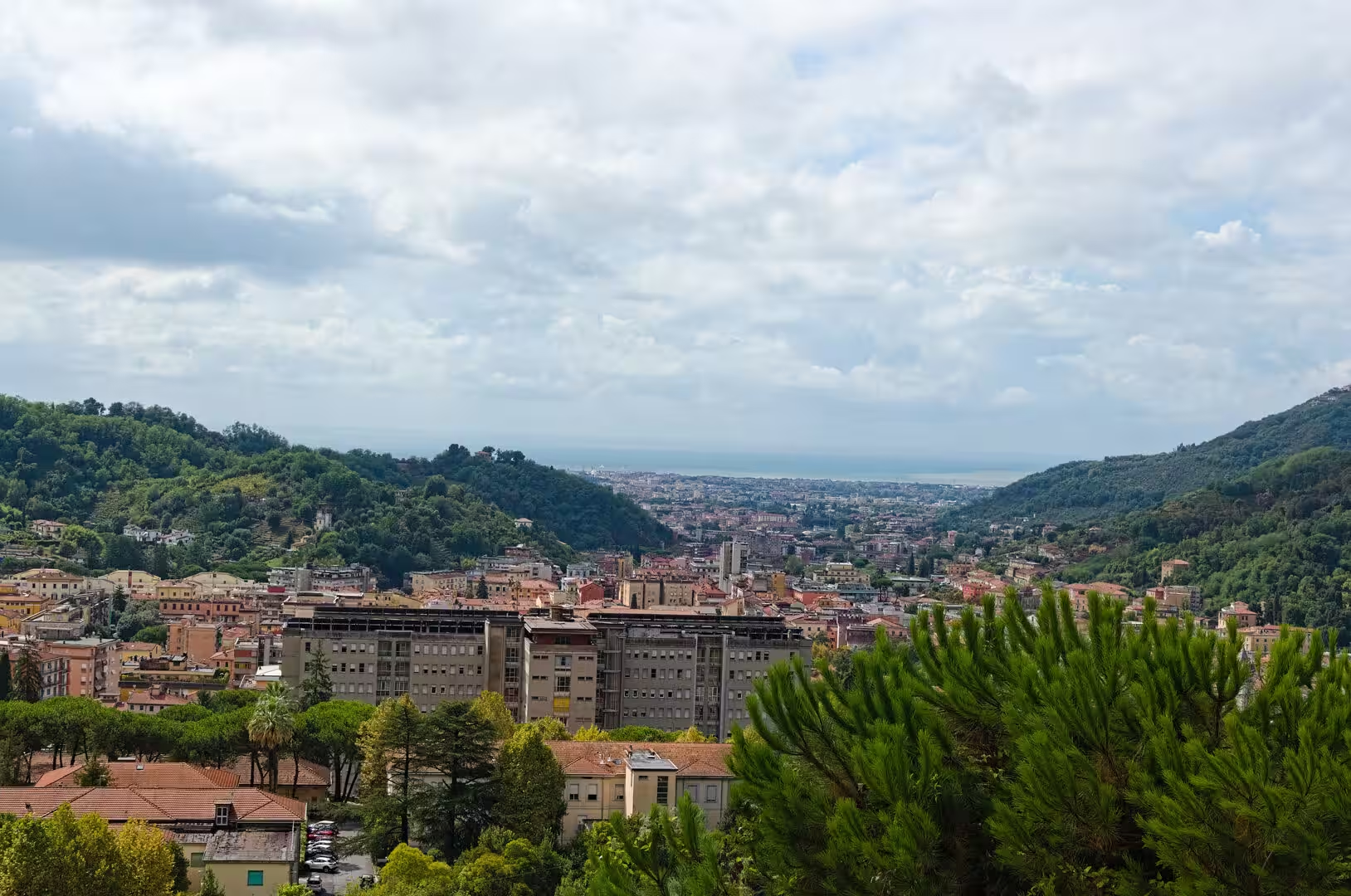
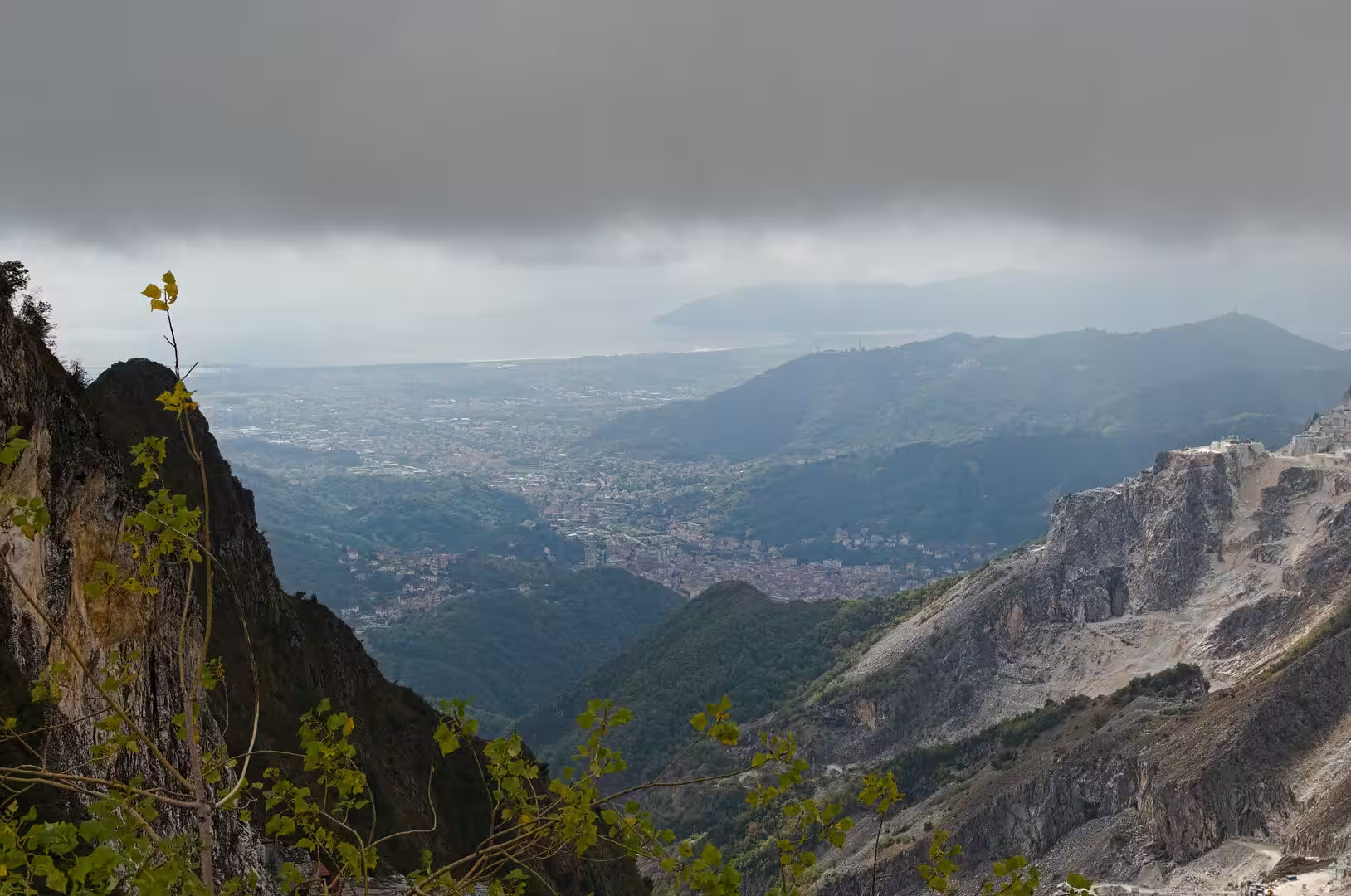
The road up from Carrara gives the view that explains the district. The town spreads below with its terracotta roofs, the plain runs towards the coast, and the sea lies as a grey band on the horizon; above, the white terraces of the quarries cut into the green flank of the mountain. The higher the road climbs, the more the town turns into a map of itself, and the quarry yards become the nearest thing in sight, with their stacks of blocks and their roads of pale gravel.
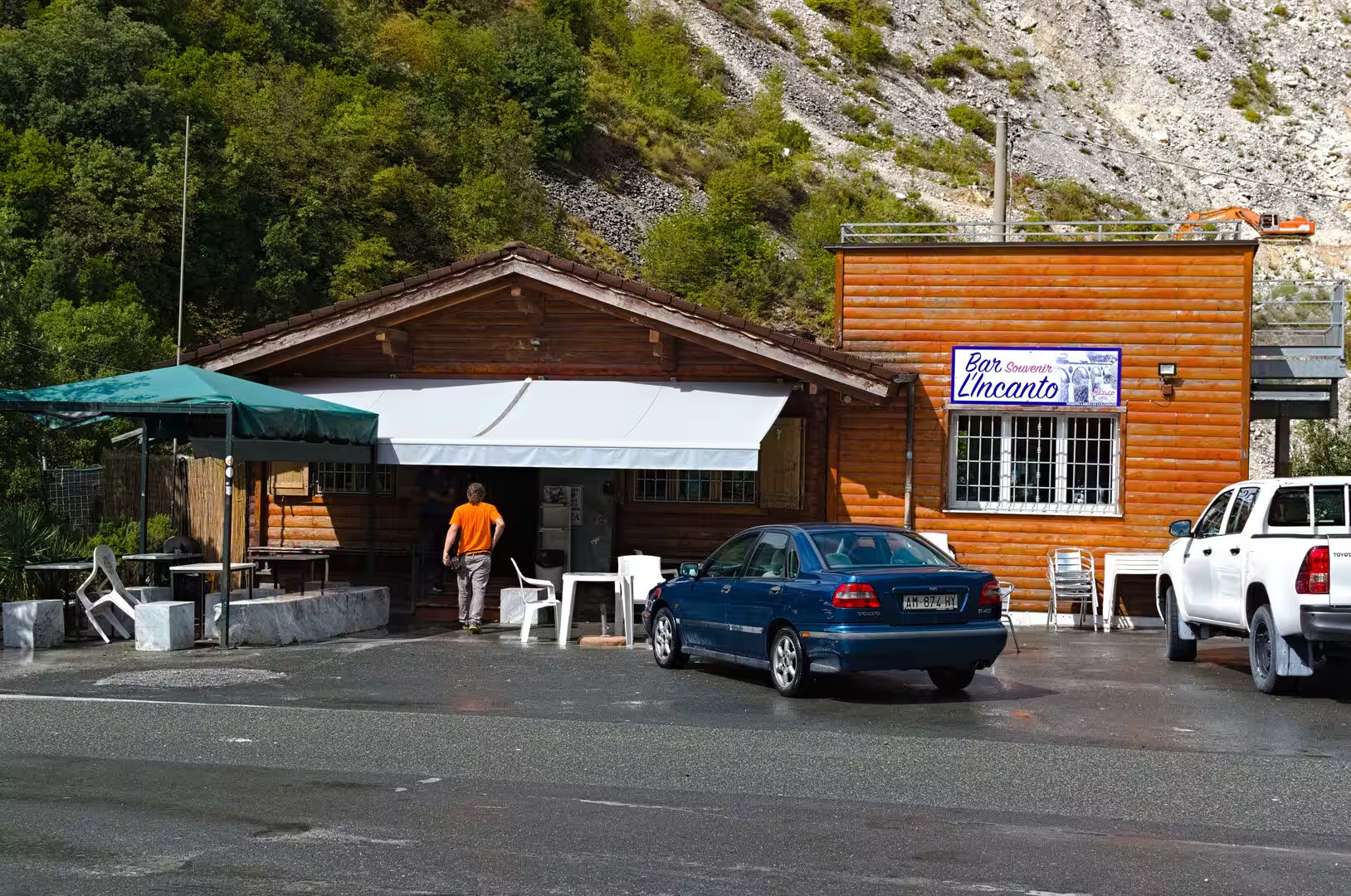
The villages of the mountain live from the stone. Above the last houses of Carrara the road passes Vezzala and Bedizzano on the way to Colonnata, and a second branch climbs towards Miseglia and Torano, where the yards and the workshops stand beside the lanes. In the middle of the day the roadside trattorie fill with quarrymen and drivers, and a wooden restaurant set into a green slope, with a few cars parked outside and shutters against the wind, belongs to the same working landscape.
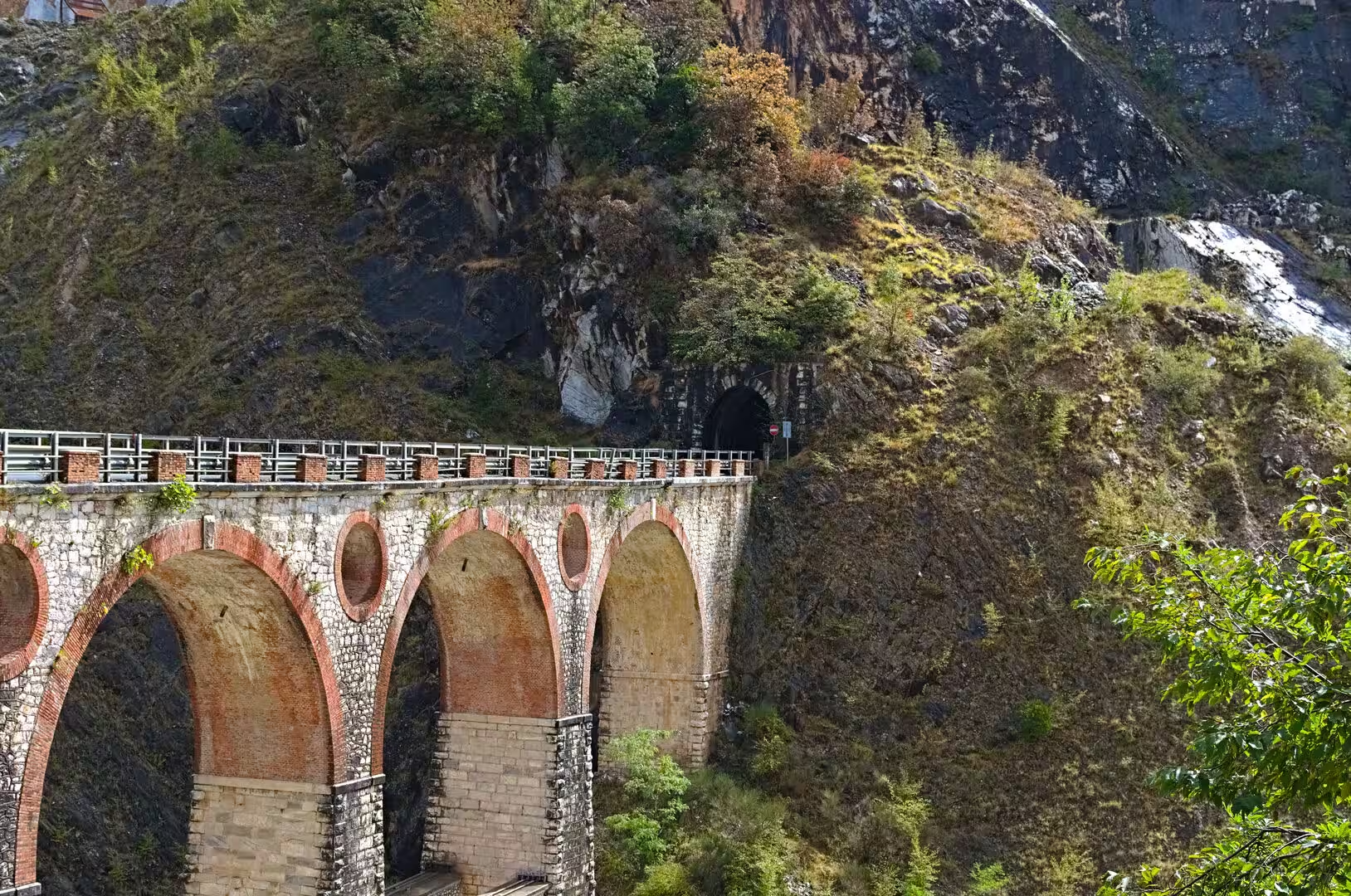
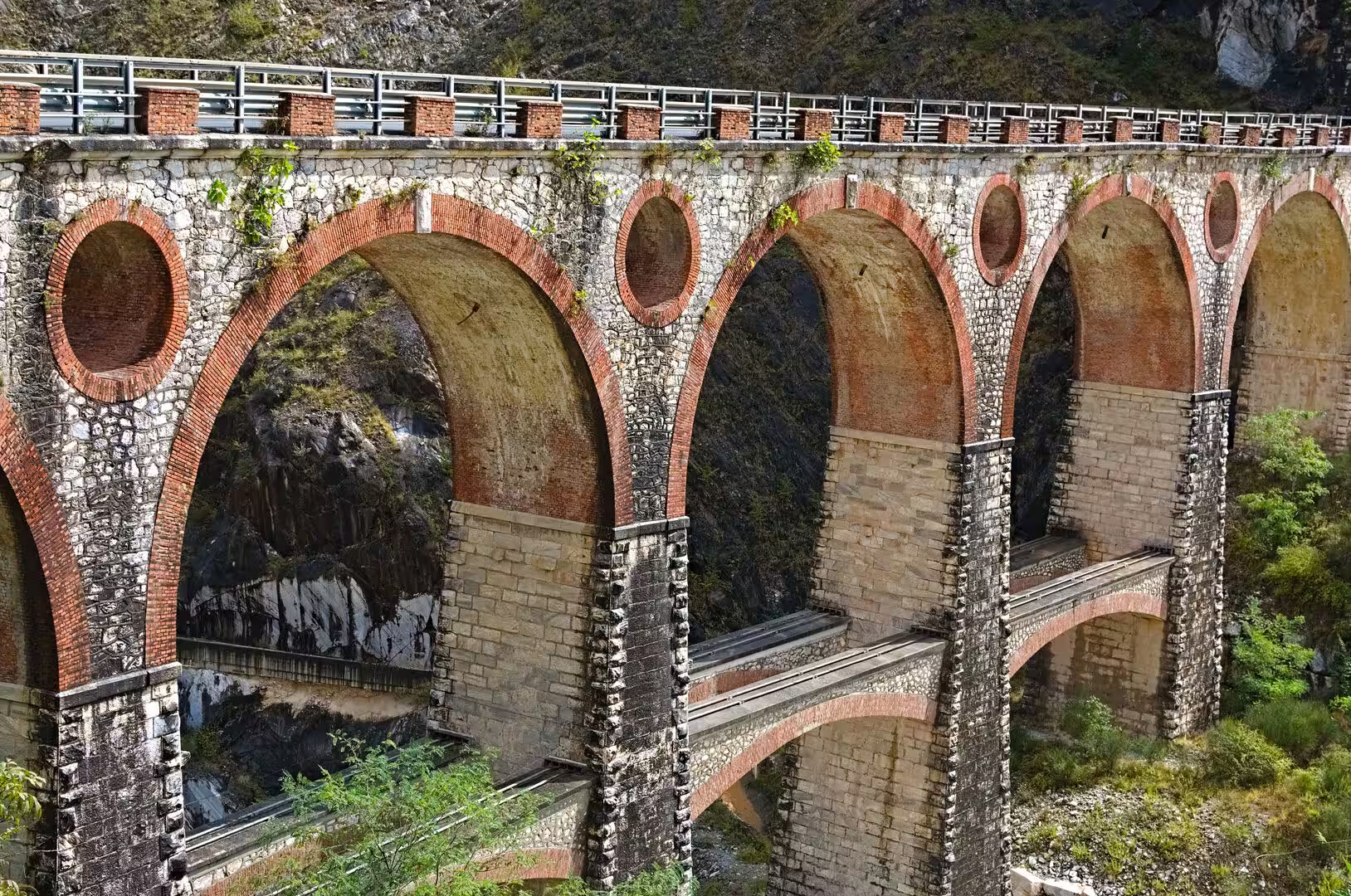
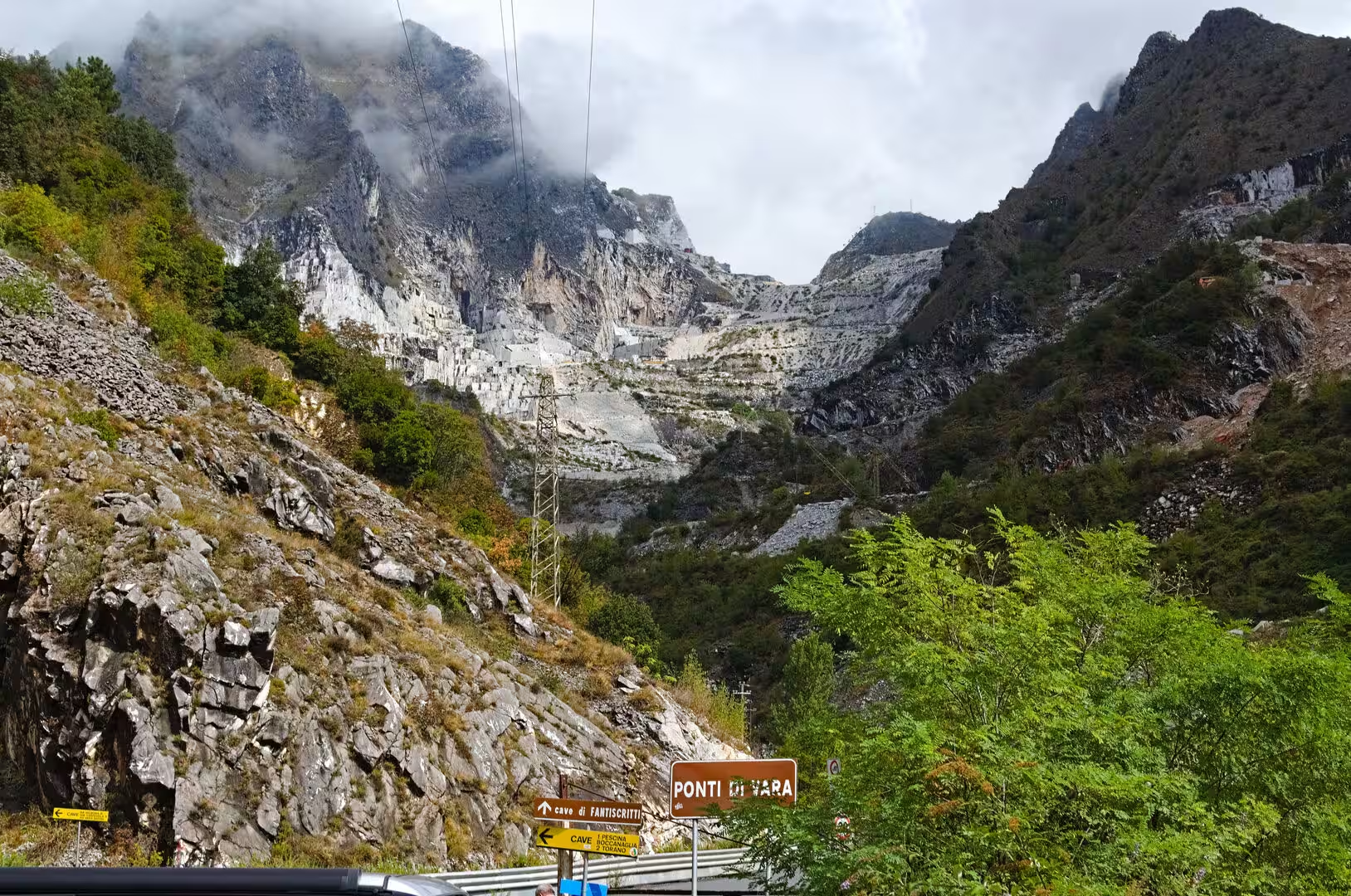
At Vara the old railway has left its most visible monument. A two-level bridge of stone and red brick crosses the stream on arches that are now laced with climbing plants, and beside it a sign marks the Ponti di Vara. Further up a narrower bridge of stone leads the line towards a tunnel cut into the rock, its mouth black against the pale stone of the gorge. The bridges were damaged during the war and repaired, and the structure that stands today is the one the quarry traffic used until the line closed.
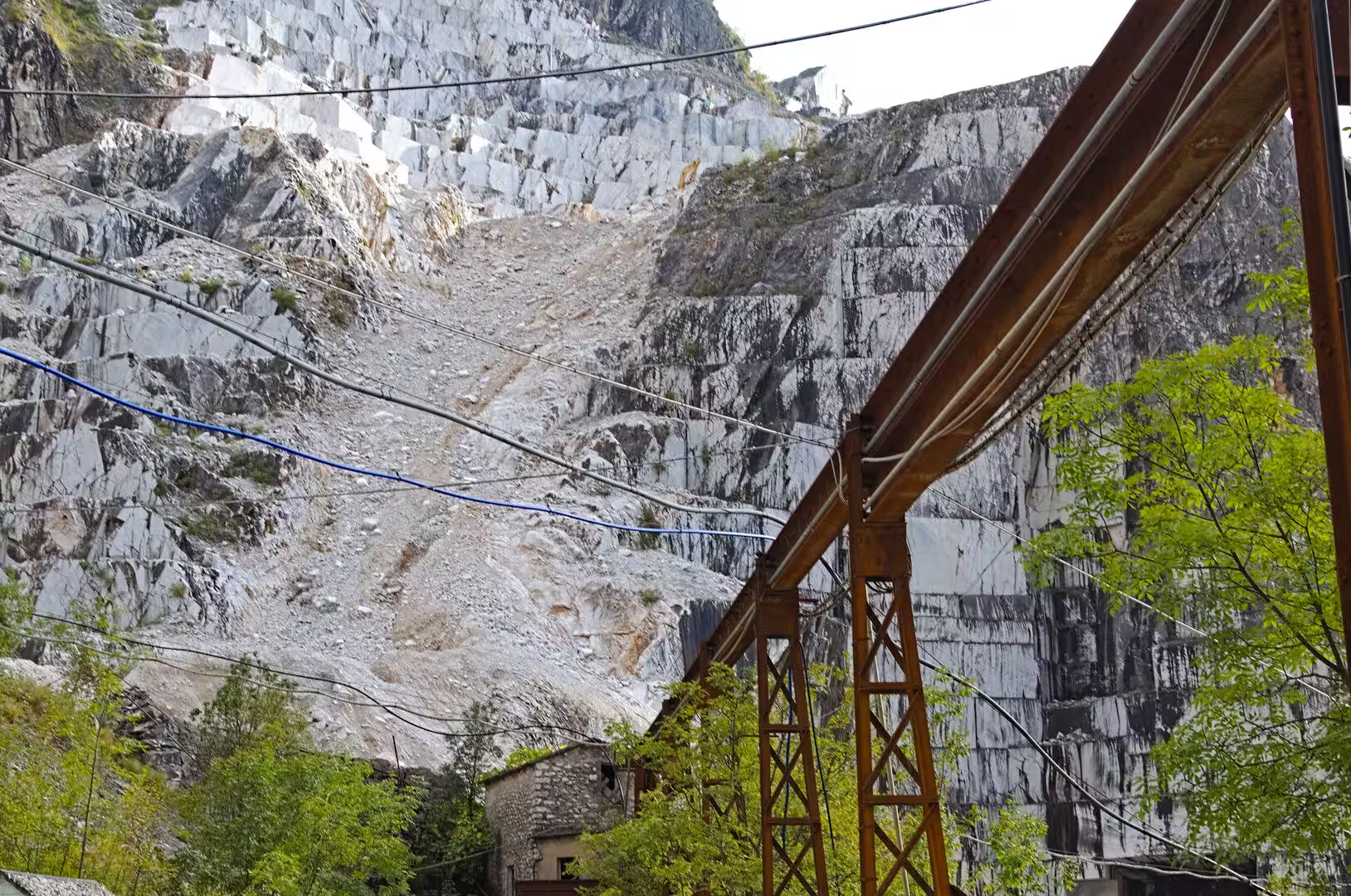
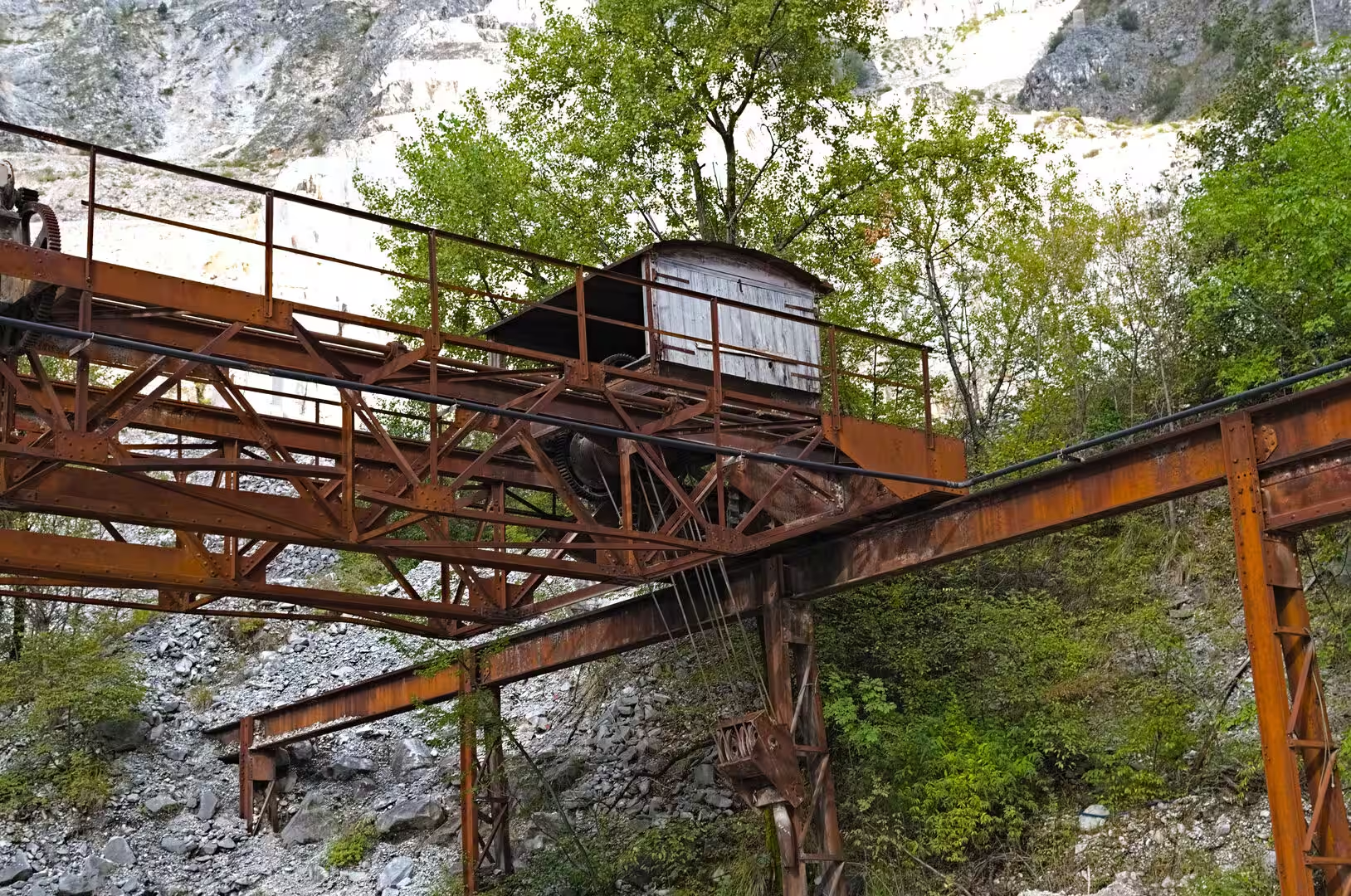
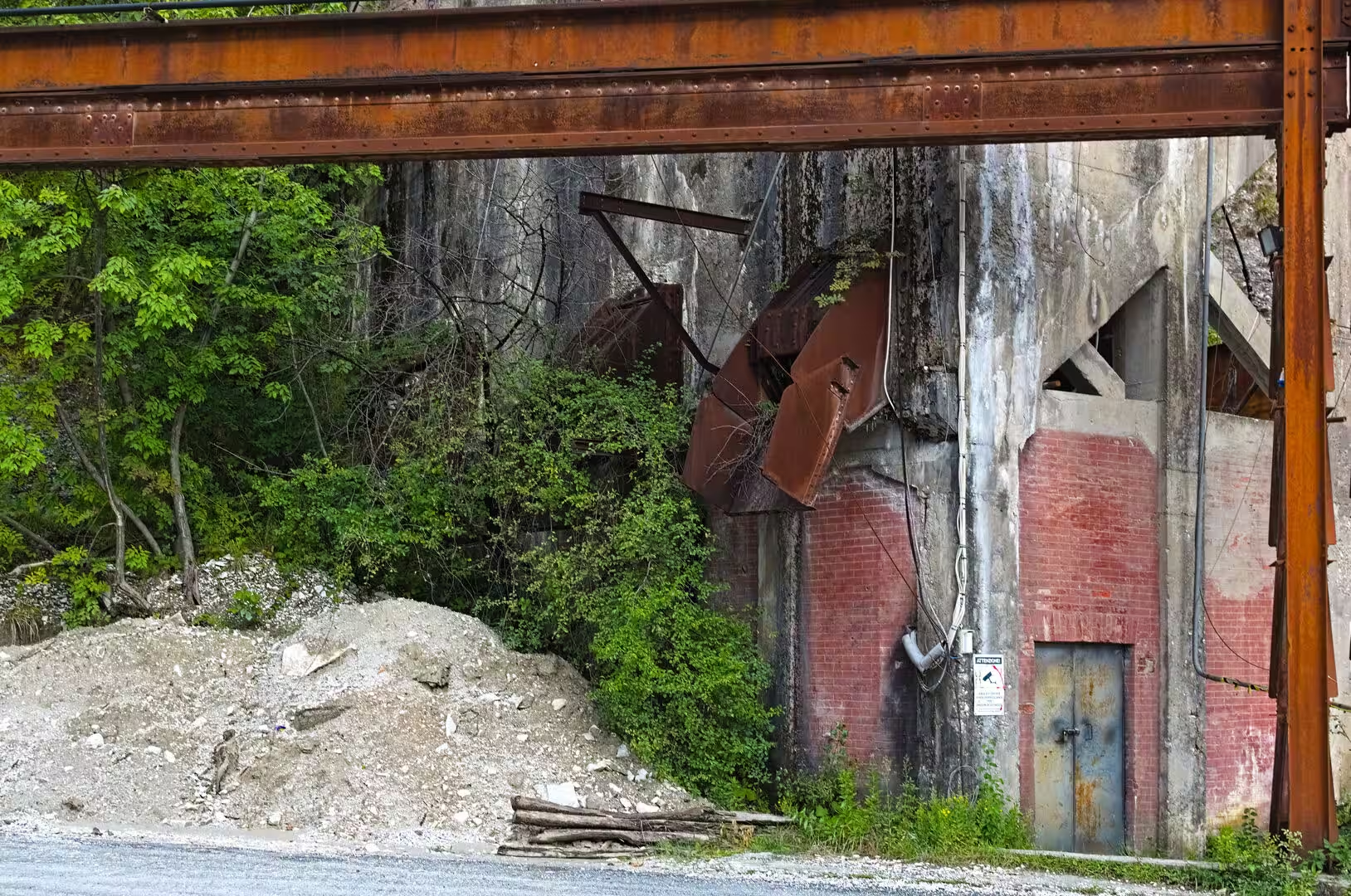
Other remains of the marble traffic stand along the faces. A steel trestle spans a quarry wall, a rusted trolley wagon rests on a high tracked platform, and a steel bridge crosses a ravine below the cliffs, its paint gone and its rivets intact. In the walls themselves metal loading chutes jut from the stone under a steel span, the chutes through which the cut blocks were tipped into the wagons of the Marmifera. The line was closed for marble in 1964 because the road was cheaper, and the structures have been left where they stand.
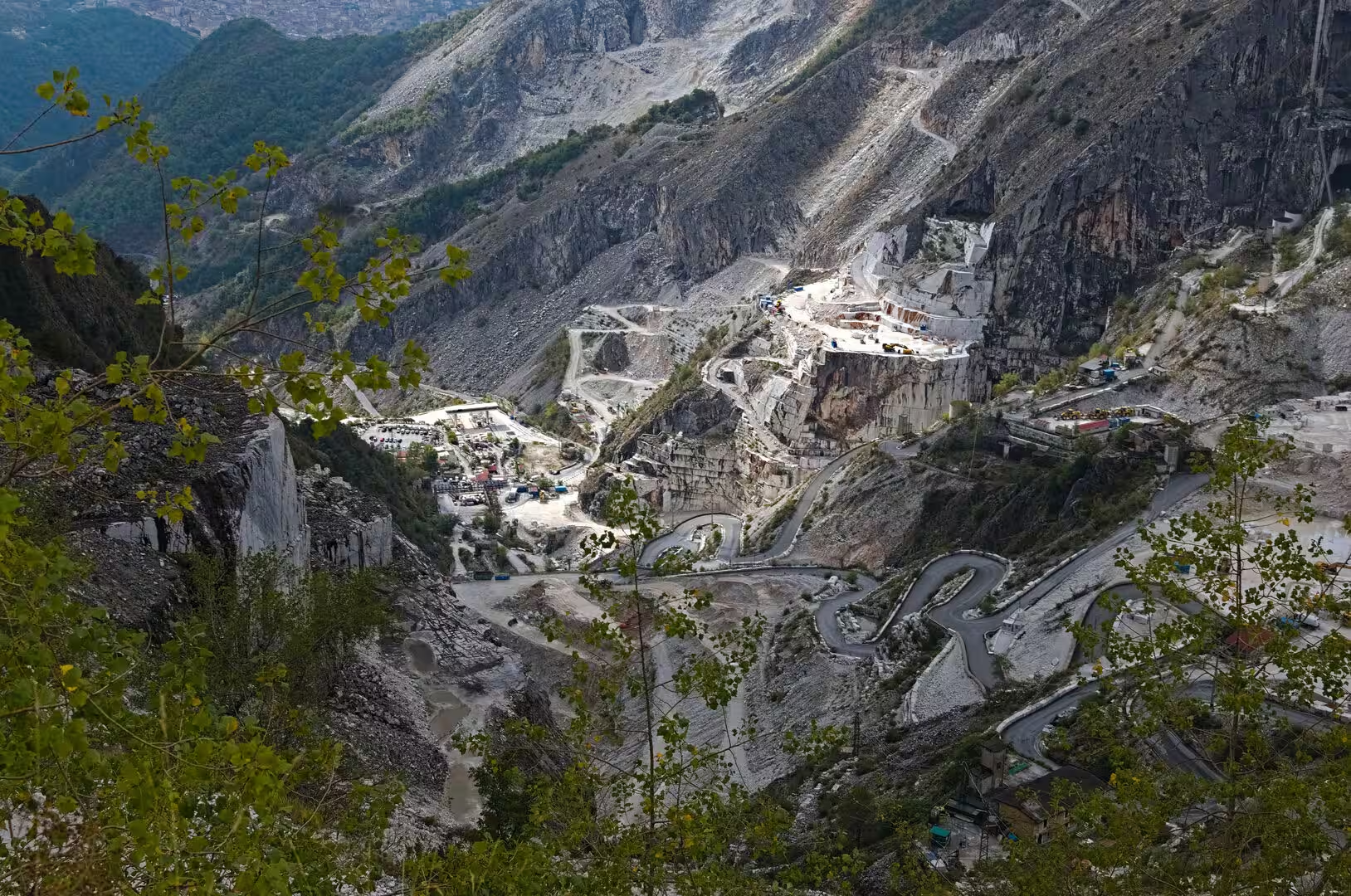
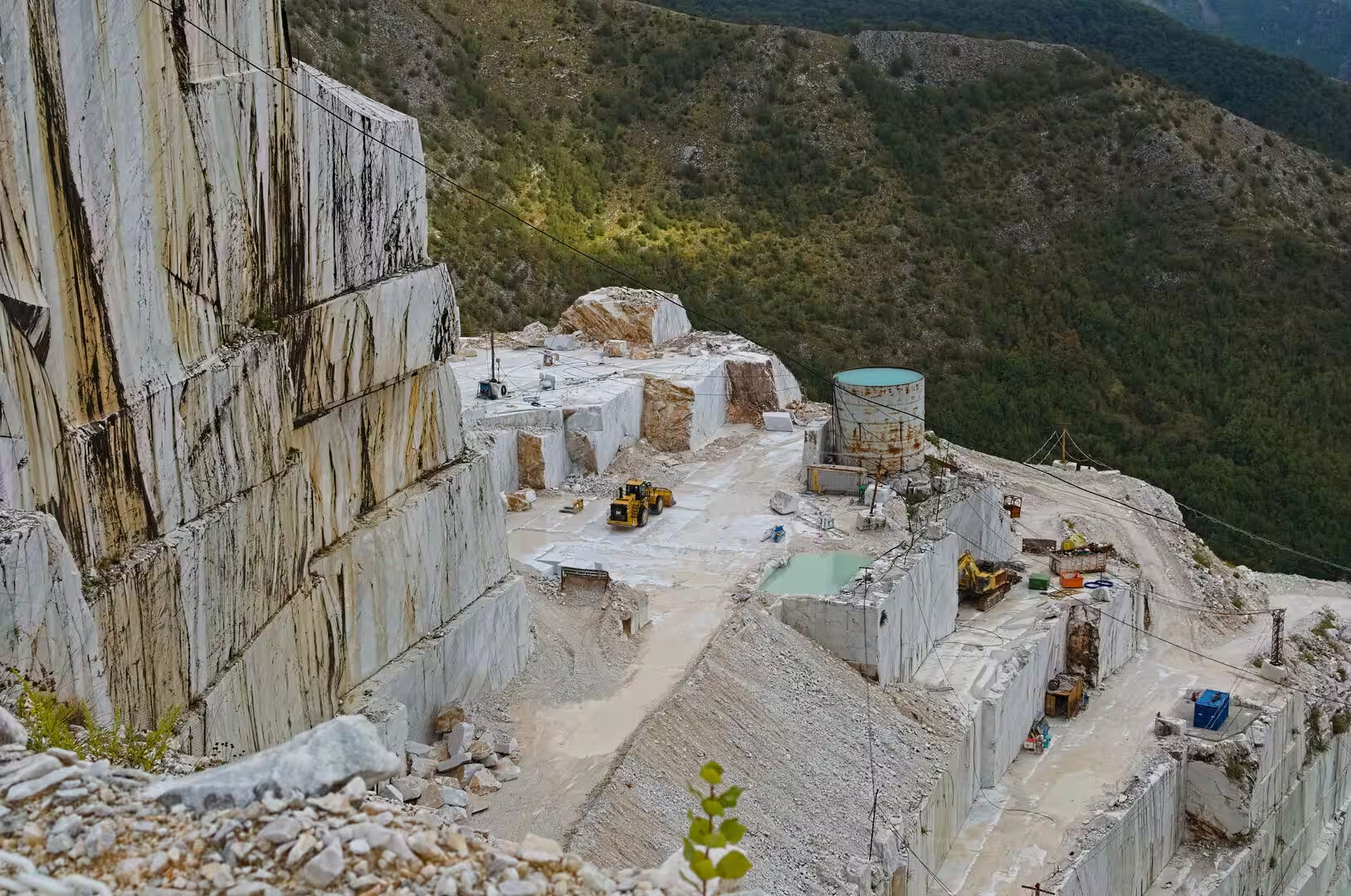
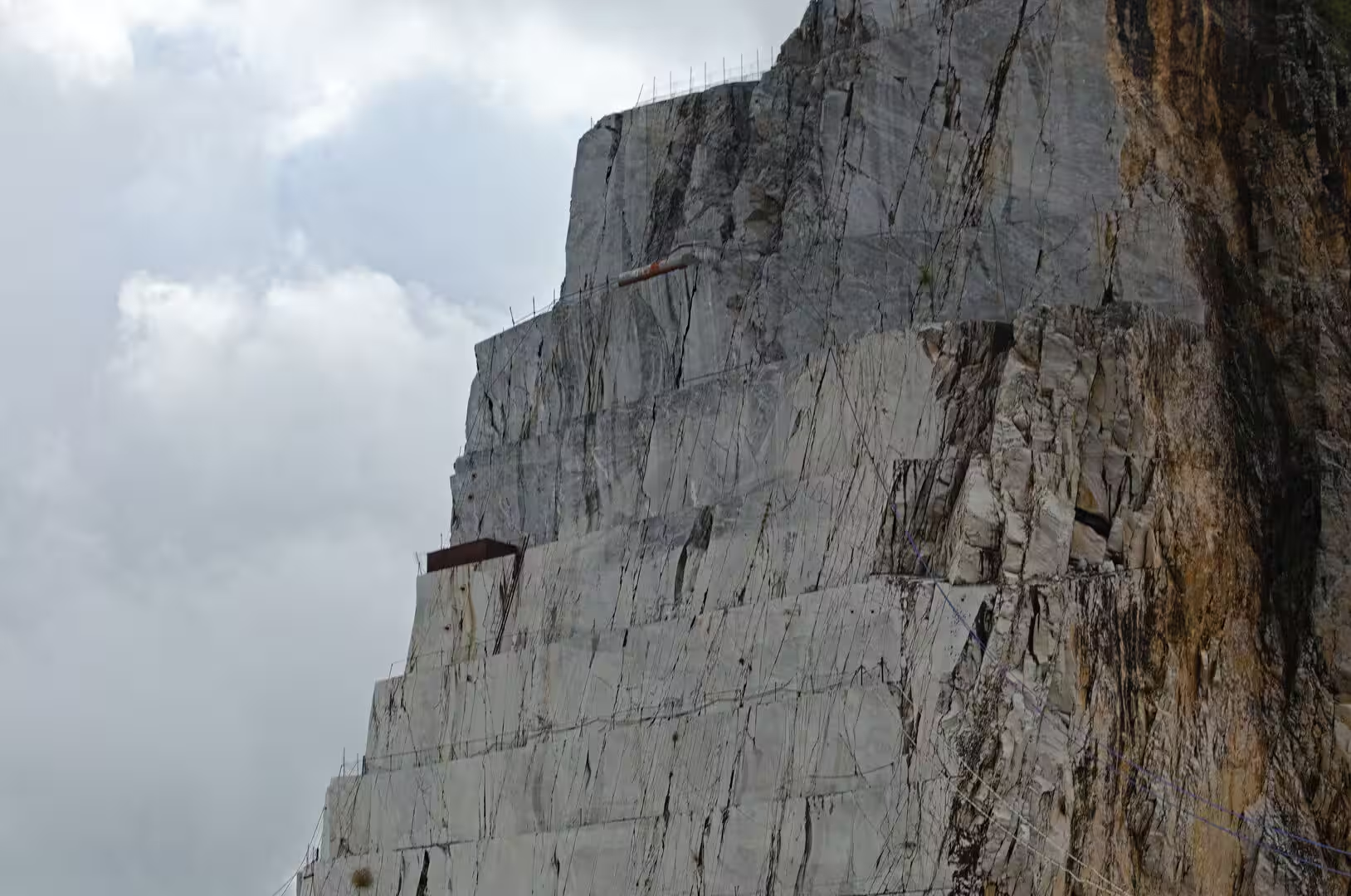
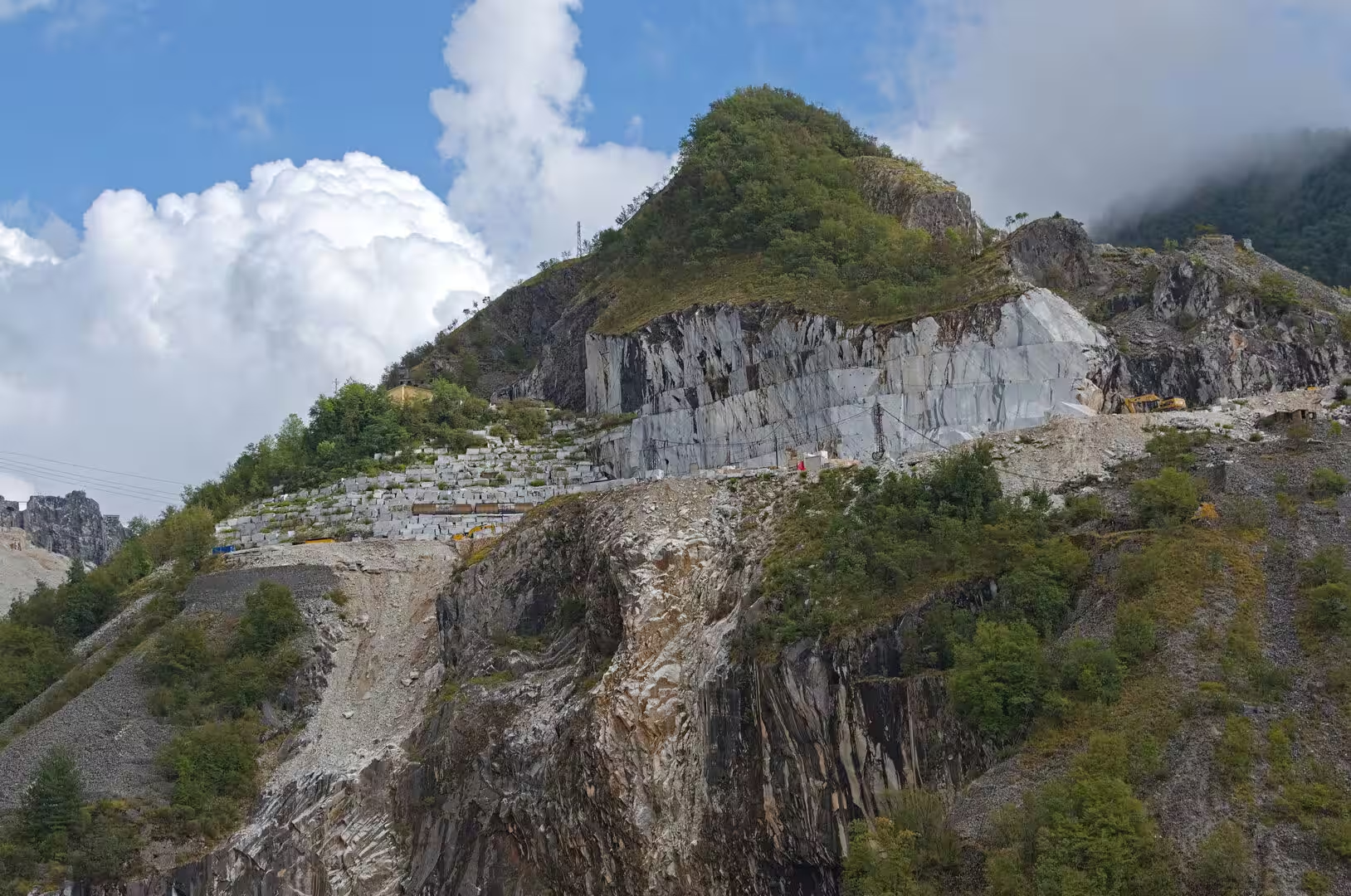
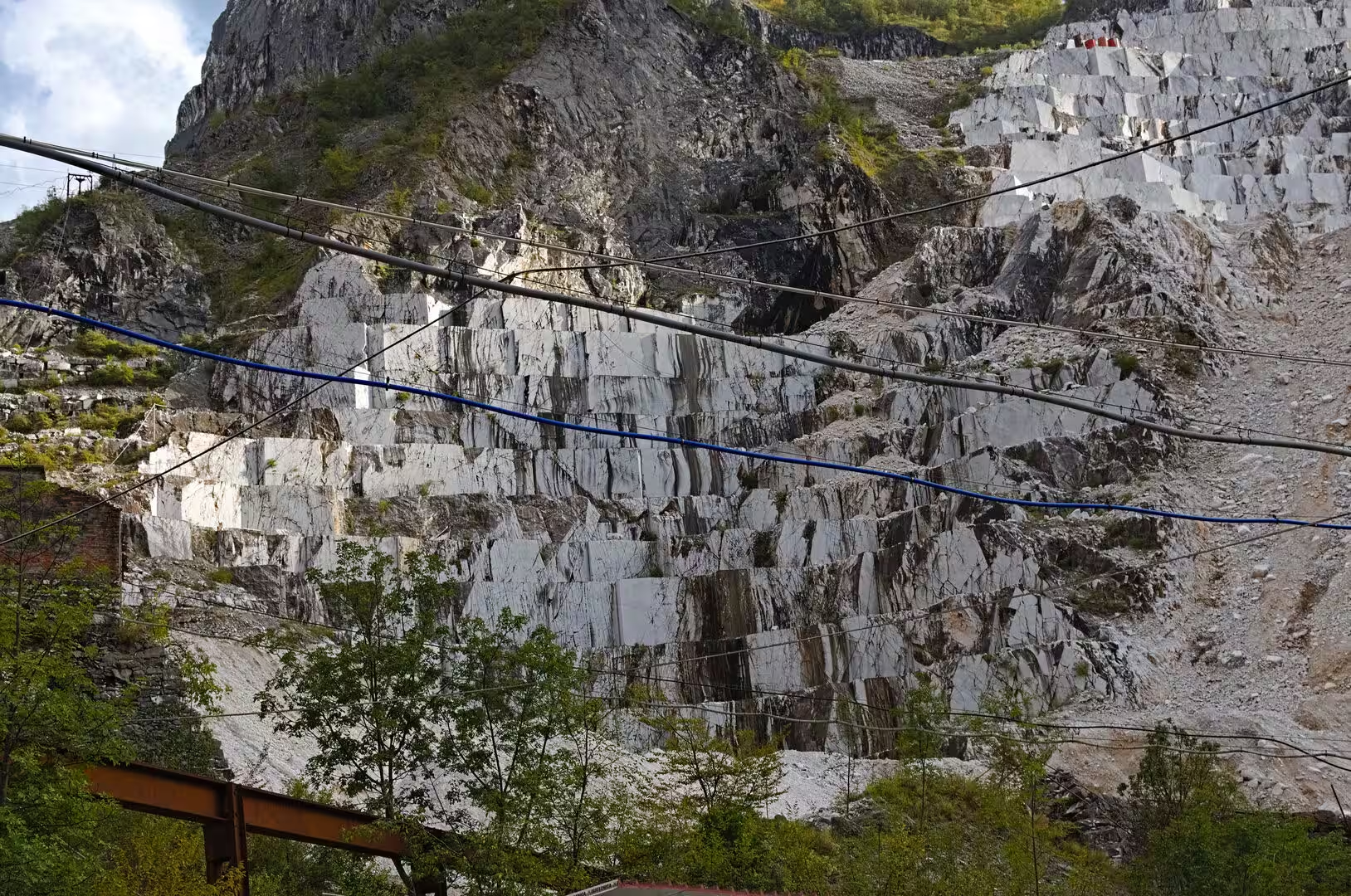
The basins themselves are the main sight. Stepped floors of white rock climb the mountainside, huge bowls have been cut into the slope, and the faces carry adits and working levels at different heights. Gravel roads switch back between the terraces, sheds and containers stand on the ledges, and vehicles move between them. A mint-green pool gathers at the bottom of one deep pit, fed by rain and by drainage, and above the yards the grey or white cliff rises to the trees that mark the top of the worked ground.
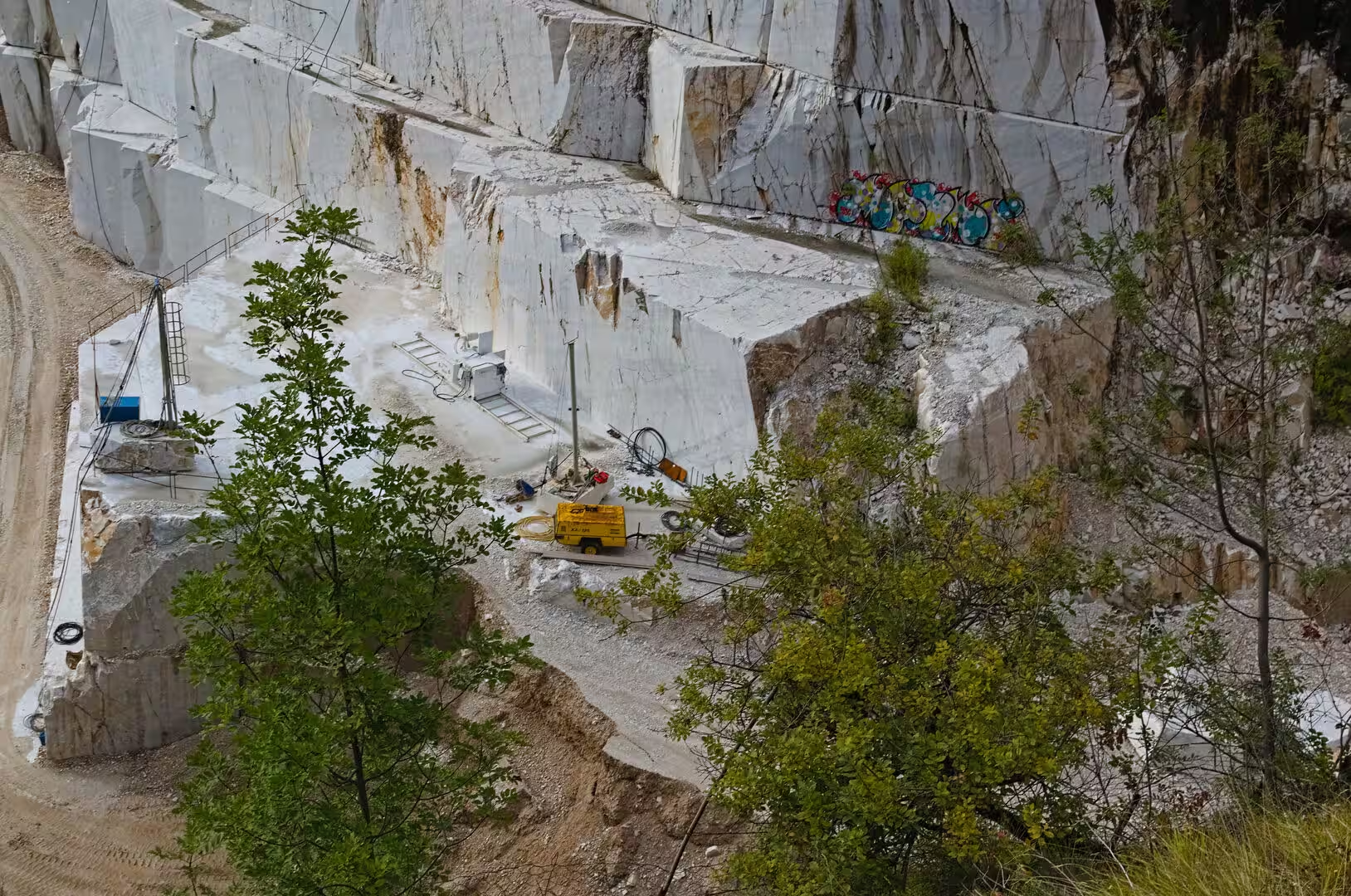
In a working quarry the process can be followed from the face to the yard. Excavators and yellow loaders clear the rubble of the last cut, the sawn walls show the grain of the marble, and the blocks are measured and stacked in rows ready for the lorry. Some faces are white with a fine gold veining, others are grey with a dark pattern, and a single cut kerb stone lying in the grass by the roadside shows how plain the material looks before it is polished.
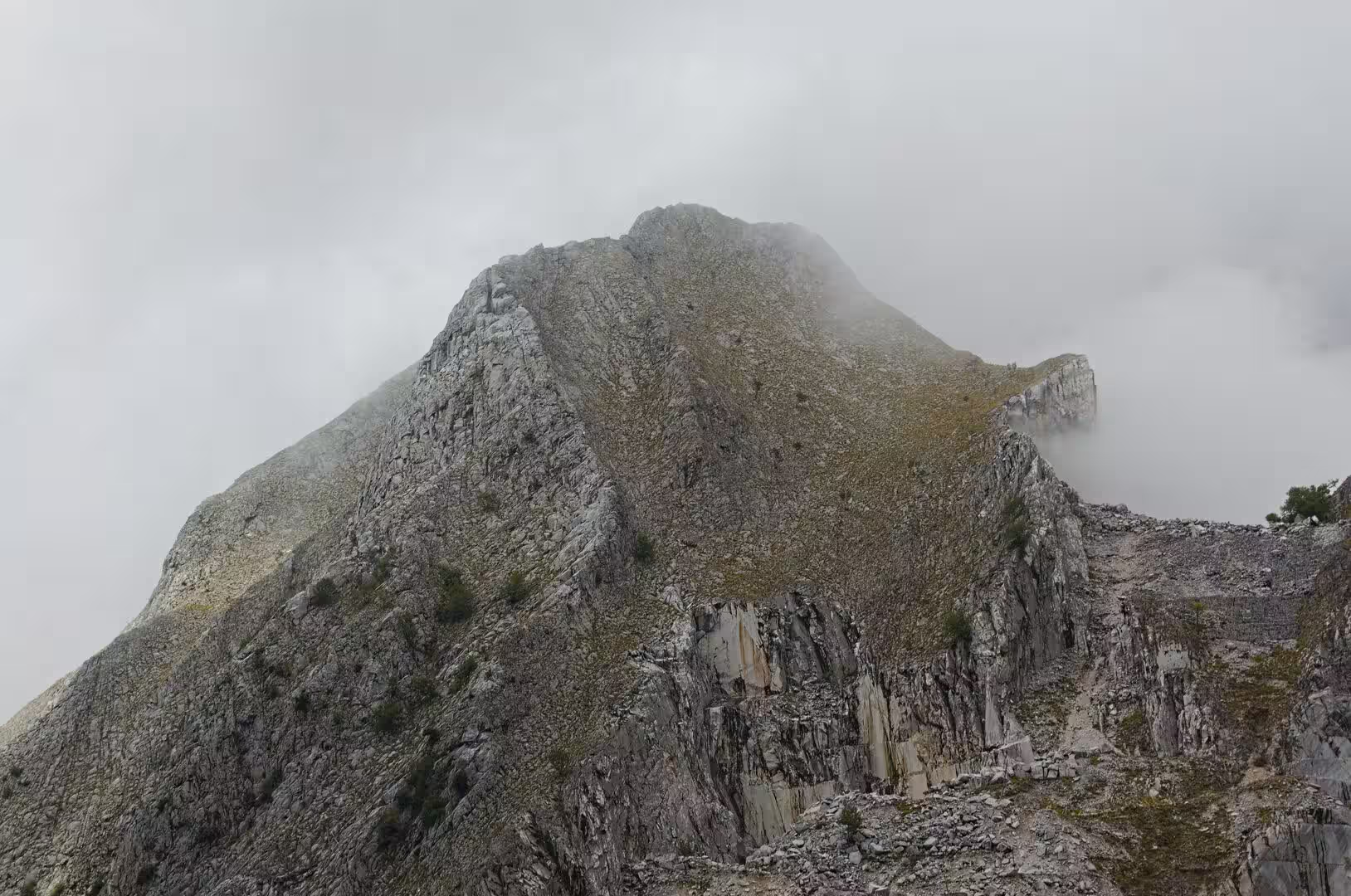
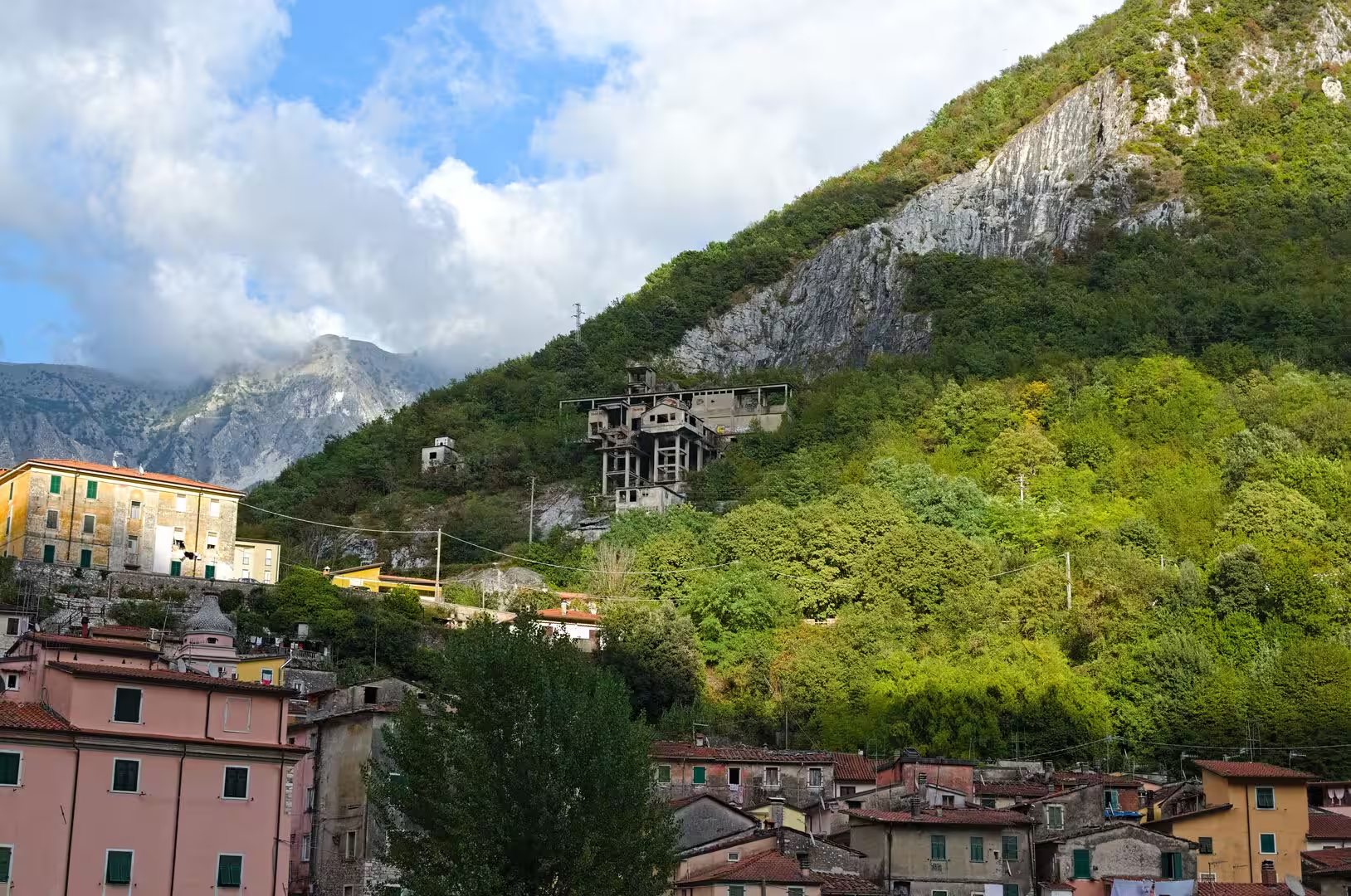
The high ground belongs to the weather. White cliffs stand against a sky of cloud, a summit disappears into fog and low cloud within minutes, and the terraces on the upper slopes take on the flat light of a mountain that is often in the middle of a cloud. Where the working has stopped, a scarred ridge rises behind trees, ruined buildings cling to the slope, and a rusted steel hoist stands abandoned in front of jagged dark cliffs. The marble here is still in place, and the quarry has simply been left.
The village of Colonnata closes the circle. Its houses stand in pastel colours below a rocky summit, the church of San Bartolomeo has a marble interior with a main altar and a seventeenth-century crucifix attributed to a pupil of Michelangelo, and the lanes keep their marble doorways and the north gate of the vanished walls. Lardo is cured here in marble basins, and the quarrymen still eat it on bread. Below the terraces near Fantiscritti a passage under the road has been painted with a long mural, the newest layer on a mountain that has been worked for two thousand years.
References
- Wikipedia contributors (2026). Carrara marble. en.wikipedia.org/wiki/Carrara_marble
- Wikipedia contributors (2026). Carrara. en.wikipedia.org/wiki/Carrara
- Wikipedia contributors (2026). Apuan Alps. en.wikipedia.org/wiki/Apuan_Alps
- Wikipedia contributors (2026). Colonnata. en.wikipedia.org/wiki/Colonnata
- Wikipedia contributors (2026). Marmifera di Carrara railway. en.wikipedia.org/wiki/Marmifera_di_Carrara_railway
- Wikipedia contributors (2026). Lizza di Piastreta. en.wikipedia.org/wiki/Lizza_di_Piastreta
- Wikipedia contributors (2026). Quarry. en.wikipedia.org/wiki/Quarry
- Wikipedia contributors (2026). Marble. en.wikipedia.org/wiki/Marble
- Wikipedia contributors (2026). Michelangelo. en.wikipedia.org/wiki/Michelangelo
- Wikipedia contributors (2026). David (Michelangelo). en.wikipedia.org/wiki/David_%28Michelangelo%29
- Wikipedia contributors (2026). Forte dei Marmi. en.wikipedia.org/wiki/Forte_dei_Marmi
- Wikipedia contributors (2026). Versilia. en.wikipedia.org/wiki/Versilia
- Wikipedia contributors (2026). Tuscany. en.wikipedia.org/wiki/Tuscany
- Preller C.D.R. (1916) The Carrara Marble District (Apuan Alps). Geological Magazine. 3. 92-92. doi.org/10.1017/s0016756800191289
- Sorbo E., Chiuso M., Capra D., Tonello S. (2024) “AL VERSO E AL CONTRO”: the marble quarries of Carrara-new perspectives for the cultural and environmental heritage of quarrying in the Apuan Alps. Rendiconti Lincei. Scienze Fisiche e Naturali. 35. 837-851. doi.org/10.1007/s12210-024-01281-6
- Coli M., Criscuolo A. (2021) The Carrara Marble: geology, geomechanics and quarrying. IOP Conference Series: Earth and Environmental Science. 833. 012120. doi.org/10.1088/1755-1315/833/1/012120
- Di Bartolo S., Salvini R. (2019) Multitemporal Terrestrial Laser Scanning for Marble Extraction Assessment in an Underground Quarry of the Apuan Alps (Italy). Sensors. 19. 450. doi.org/10.3390/s19030450
- Gentili R., Sgorbati S., Baroni C. (2011) Plant Species Patterns and Restoration Perspectives in the Highly Disturbed Environment of the Carrara Marble Quarries (Apuan Alps, Italy). Restoration Ecology. 19. 32-42. doi.org/10.1111/j.1526-100x.2010.00712.x
- Orlandi P., Biagioni C., Moëlo Y., Bonaccorsi E. (2014) Lead-antimony sulfosalts from Tuscany (Italy). XIV. Disulfodadsonite, Pb11Sb13S30(S2)0.5, a new mineral from the Ceragiola marble quarry, Apuan Alps: occurrence and crystal structure. European Journal of Mineralogy. 25. 1005-1016. doi.org/10.1127/0935-1221/2013/0025-2330