2021 Italy - Lucca
3 October 2021












Journal Notes
General
Lucca lies on the river Serchio in a fertile plain of northern Tuscany, about twenty kilometres inland from the coast at Viareggio and roughly the same distance to the north east of Pisa. It has some ninety thousand inhabitants and is the capital of its province, and the old town stands almost entirely inside a ring of Renaissance walls that has never been broken. The centre is small enough to cross on foot in half an hour, its streets follow the grid of a Roman colony, and the stone of its churches and towers is the grey and white limestone of the surrounding hills.
The Romans knew the place as Luca, and the modern name is explained in several ways: from lucus, a sacred grove, from lucare, to cut, or from a word for a luminous clearing, the open ground in the middle of woods on a gravel island of the Serchio. Whatever its origin, the town became a Roman colony in 180 before Christ and a municipium in 89 before Christ, and the rectangular plan of that foundation is still legible in the streets. The forum lies under Piazza San Michele and the amphitheatre under Piazza dell’Anfiteatro.
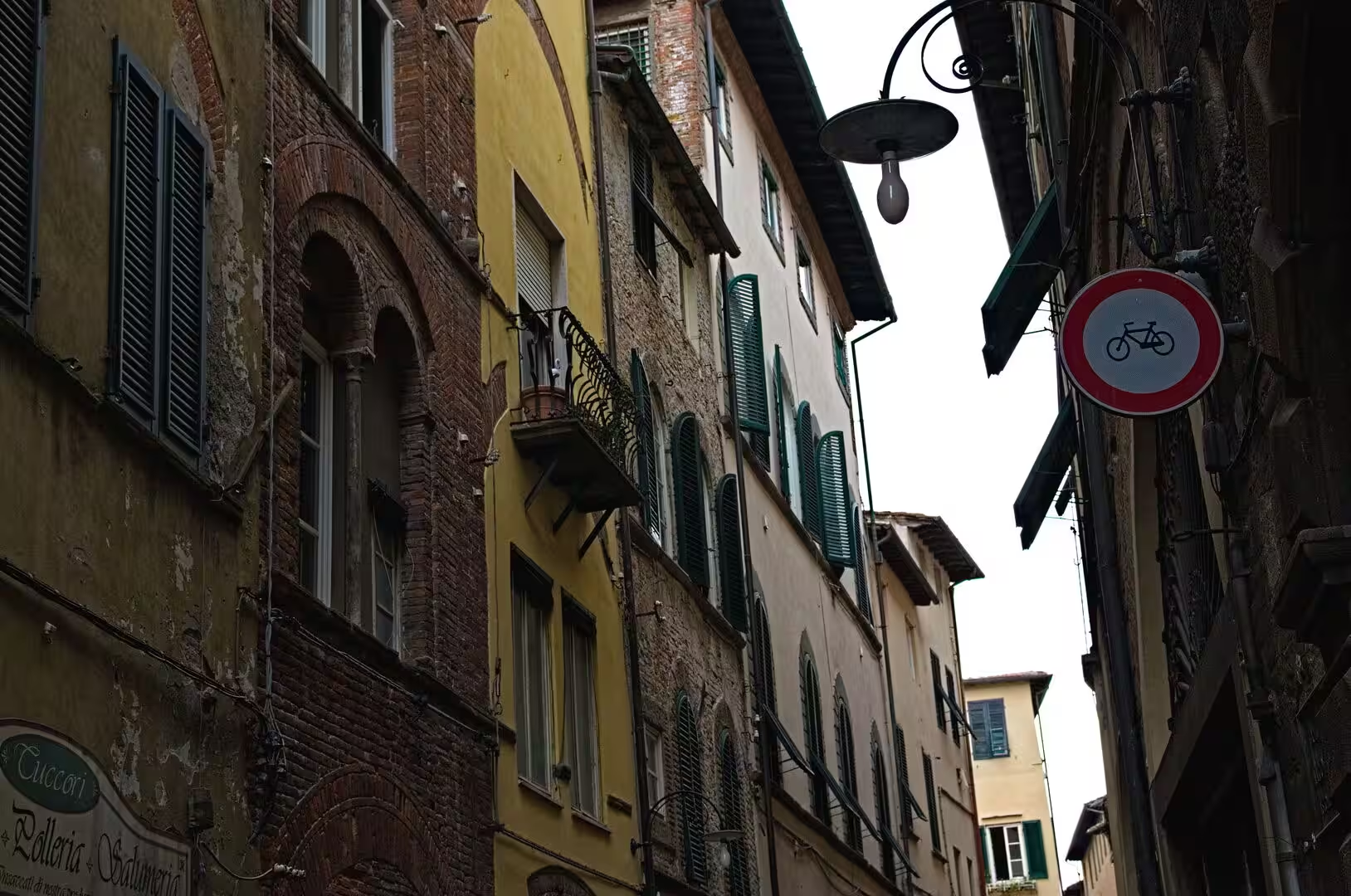
Lucca is a city of bicycles and shutters. Traffic is limited inside the walls, so the ring path on top of them, the Passeggiata delle Mura, belongs to cyclists, runners and families, and each of its four sides is planted with a different species of tree. Below the walls the lanes are narrow and shaded, cars stand where they can, and the ground floors hold bakeries, delicatessens, workshops and small hotels. The town is busy with residents in the morning and with visitors in the afternoon, and the walls are in use from sunrise to midnight.
For nearly five hundred years Lucca governed itself. It became an independent commune with a charter in 1160 and kept its independence alongside Venice and Genoa, painting the word Libertas on its banner, and it was the second largest Italian city state with a republican constitution after Venice. The wealth that paid for the churches and the walls came from silk: cloth woven in the eleventh century with gold and silver thread and sold as far away as Byzantium. After 1628 an oligarchy of leading families ran the republic, and the office holders came from that same narrow group until the end.
Lucca is a musical town. Giacomo Puccini was born here in 1858, and Luigi Boccherini and Alfredo Catalani came from the same streets; there is a museum in the house where Puccini grew up, and his operas are performed every summer at Torre del Lago, on the lake where he lived and worked. The annual Lucca Summer Festival fills Piazza Napoleone with concerts, and in autumn the city hosts Lucca Comics and Games, the largest festival of its kind in Europe, which takes over the squares and the walls for several days. Between them the calendar is rarely empty.
History
The Etruscans held this stretch of the plain, and traces of an older Ligurian presence have been found beneath their layers. With the Romans it became a proper town at the crossing of roads towards the coast: at the conference held here in 56 before Christ, Caesar, Pompey and Crassus renewed the alliance known as the first triumvirate. In the sixth century the Irish monk Frediano was bishop of the city, Narses besieged it in 553, and from 576 to 797 the Lombards made it the capital of a duchy that covered most of Tuscany and minted its own coins.
The relic that made Lucca famous arrived in 742. The Holy Face is a crucifix carved in wood, more than two metres high, which tradition attributes to Nicodemus, and pilgrims came to see it from far away. Together with the relics of Saint Frediano and other local saints it made the town one of the main stops on the Via Francigena, the road to Rome from the north, and the traffic of pilgrims helped to pay for the churches. Lucca cloth, a silk woven with gold or silver threads, was sold throughout Europe in the same centuries, and the profits of that trade built much of the medieval city.
In the fourteenth century the republic had to survive its neighbours. In 1314 internal discord allowed Uguccione della Faggiuola of Pisa to make himself lord of the city; two years later the Lucchesi threw him out and handed the government to Castruccio Castracani, under whom Lucca became one of the leading states of central Italy and a rival of Florence. On two days in September 1325 he defeated the Florentine Guelphs at Altopascio, and Louis the Bavarian made him duke of Lucca for it. He died in 1328, and Machiavelli wrote his biography as a study in political rule.
The end of the republic came slowly and then quickly. French and Austrian armies fought over the city in 1799 and 1800, and in 1801 the French granted it a democratic constitution; in 1805 Napoleon turned the republic into a monarchy and installed his sister Elisa Bonaparte as Princess of Lucca. From 1815 to 1847 the Congress of Vienna gave the town a Bourbon duchy under Maria Luisa of Spain and her son Charles, and in 1847 it lost its independence altogether and was annexed to the Grand Duchy of Tuscany. It joined the kingdom of Sardinia in 1860 and Italy in 1861.
The present walls are a work of the sixteenth and seventeenth centuries. In 1491 the republic decided that the medieval defences could not resist cannon, and in 1504 it created an office of fortifications that managed the project until 1801. Building began in 1504 with the demolition of every house within a radius of about seventeen hundred metres, continued under engineers from Urbino and from Flanders, and was finished in 1648 by Paolo Lipparelli. The city was never besieged, so the walls were never put to the test in war.
Geology
The Serchio is the third longest river of Tuscany and the second by volume of water. It rises on the slopes of Monte Sillano in the Apennines, crosses the Garfagnana from north to south, takes in its largest tributary the Lima, and reaches the plain at Borgo a Mozzano. From there it turns west, passes through the narrow gap of Filettole, and enters the province of Pisa to reach the sea north of that city in the flat land behind the coast. Its course decides the shape of the plain that carries Lucca, and the town has always had to live with its floods.
The plain of Lucca is an alluvial basin, built up over thousands of years by sediment carried down from the Apennines and the Apuan Alps and spread out where the valley opens. In summer it is hot and humid, and the heat is broken in the afternoon by a sea breeze that travels inland from the Tyrrhenian coast through the valleys of the Serchio and the Arno. Autumn is the wettest season, when Atlantic weather meets the mountains and drops its rain on the plain, and the level of the water table rises with it.
To the north west the plain ends against the Apuan Alps, a mountain range built from sediments laid down in the middle of the Triassic period as sea floor. Those layers became limestone, dolomite and sandstone, and pressure about twenty five million years ago turned part of the limestone into the marble for which the range is famous. Erosion has since cut the softer rock into sharp ridges and deep hollows, and the quarries above Carrara have removed whole flanks of the mountains.
The geology of the plain is visible in the way the town is built. The Roman and medieval walls were erected with a core of stones and waste set in mortar between carefully squared blocks on the outside and cheaper brick within, a method that later centuries called sack work. The Renaissance walls were built differently, as a mass of pressed earth and dried plant material faced with brick and stone, a technique in which living vegetation and trees were used deliberately: the trees were planted as a reserve of timber in case of a siege, and they also drained the ground and spread the weight of the rampart.
Water runs under and around the old city. Moats accompanied both the medieval and the modern walls, partly as defences and partly to control the drainage of the plain, and the channels that fed them still trace the edge of the centre. The Serchio itself was diverted more than once: the church of San Frediano preserves a fresco of the saint stopping a flood and turning the river aside, and the flood of 1812 was severe enough to test the new walls, when the citizens bolted the gates and sealed them with mattresses.
Things to See
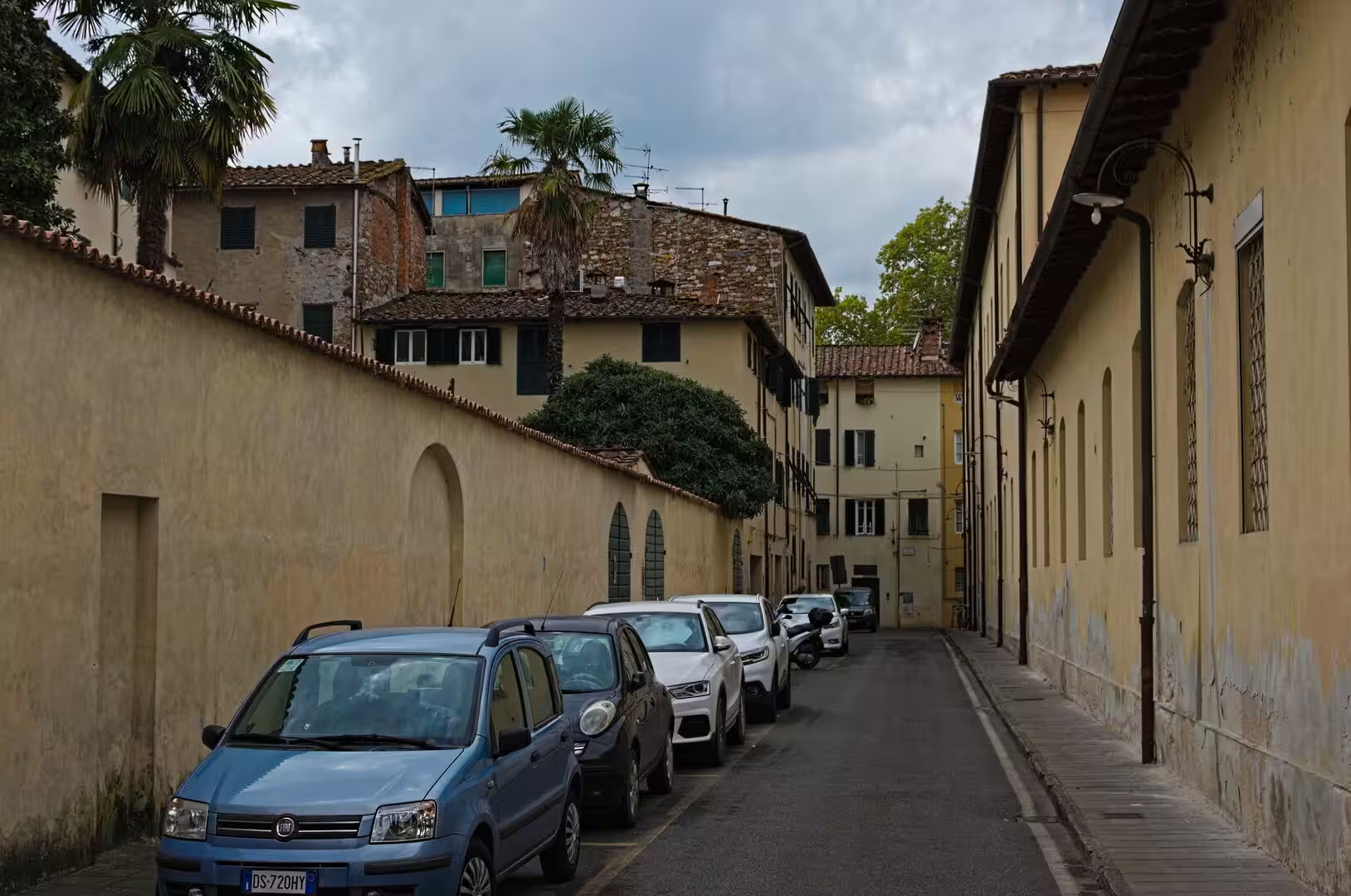
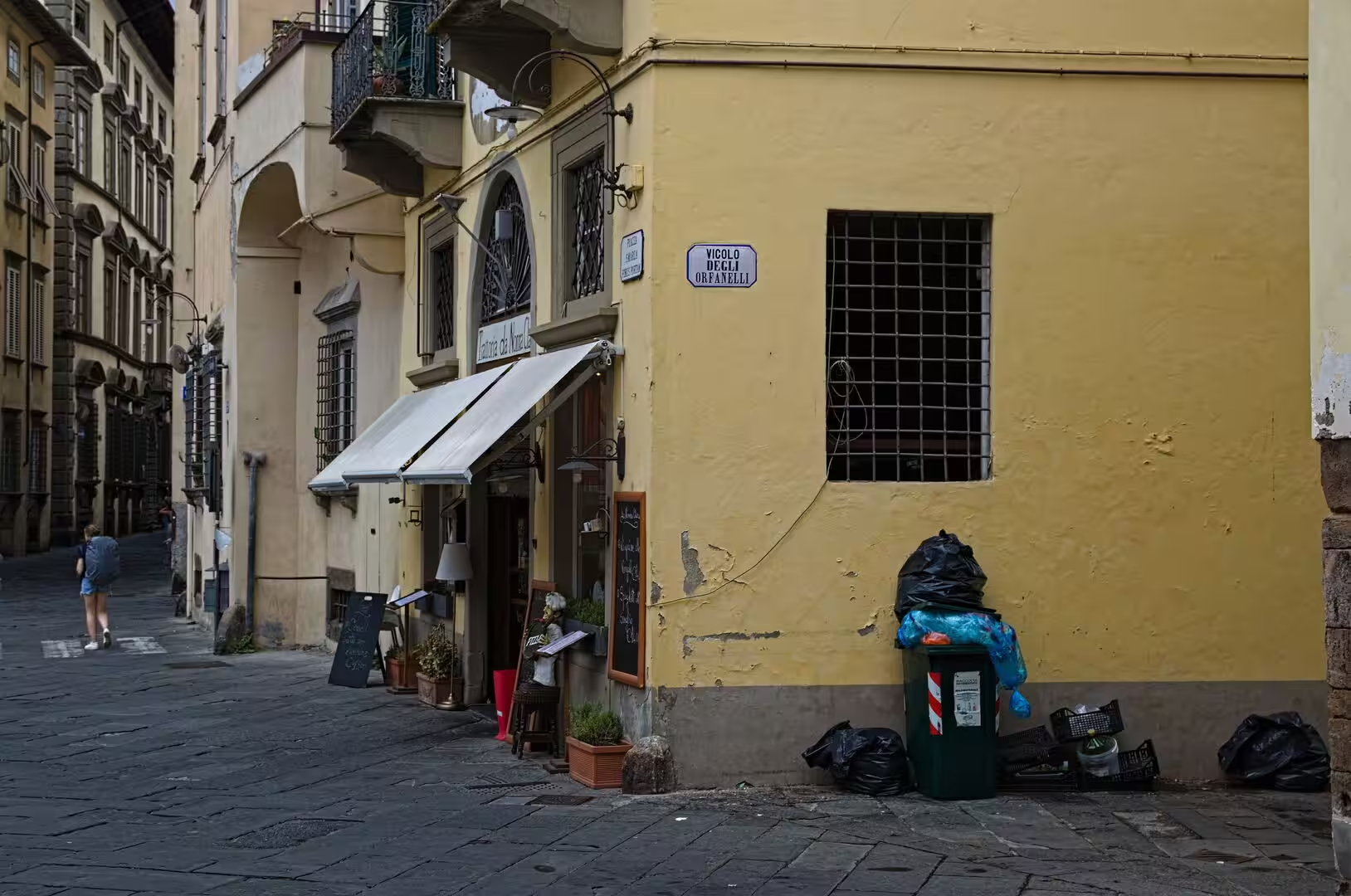
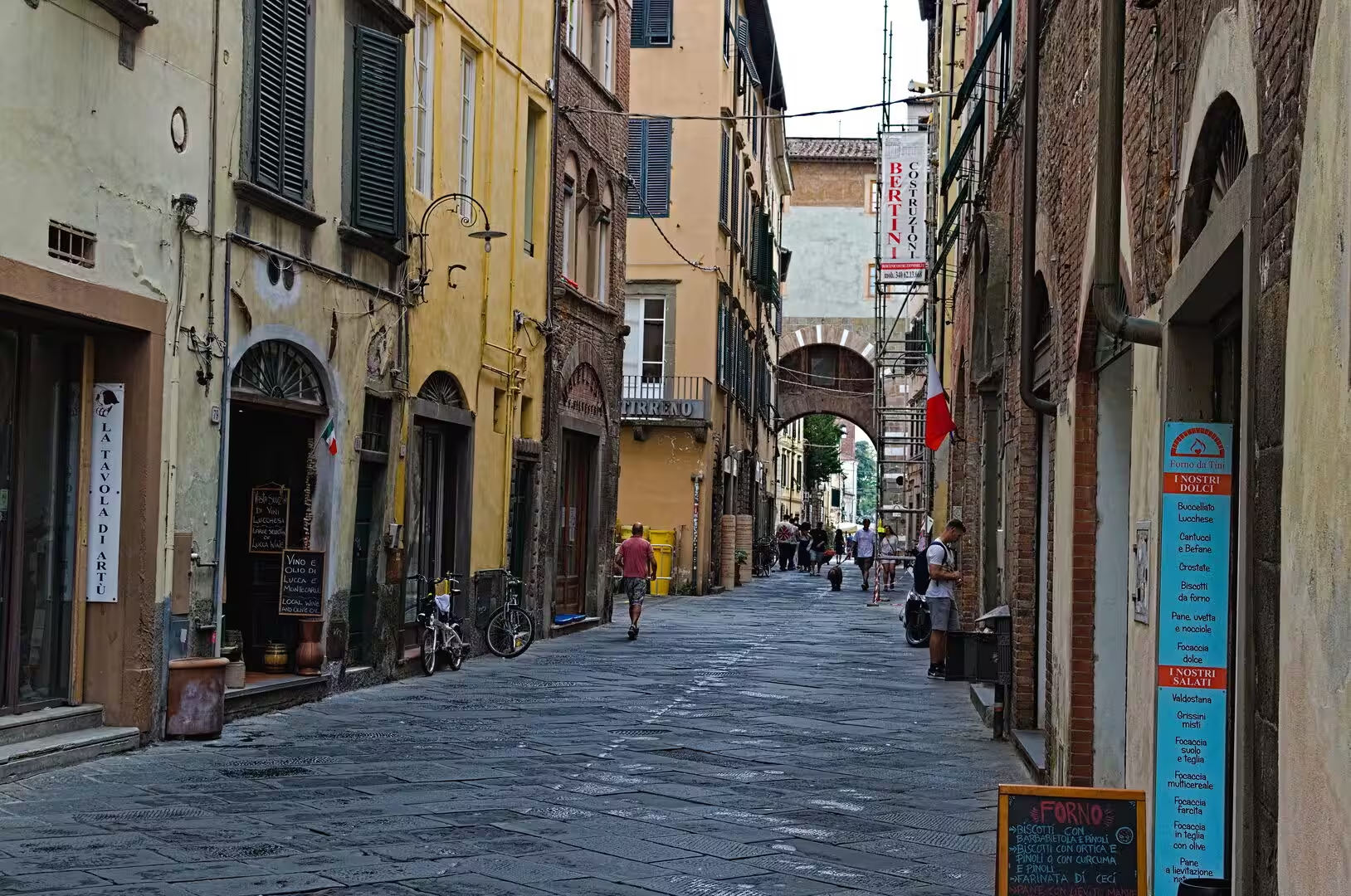
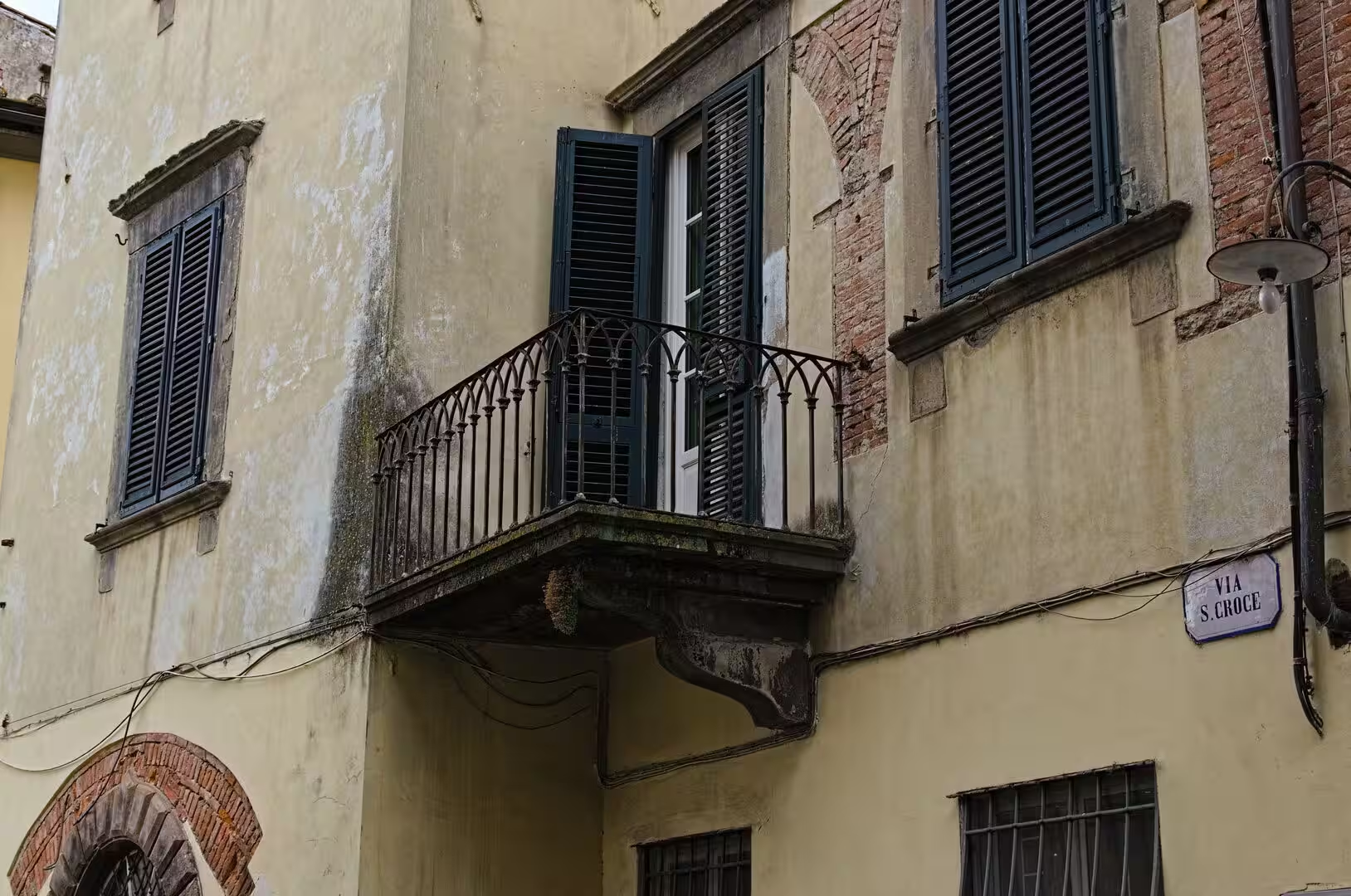
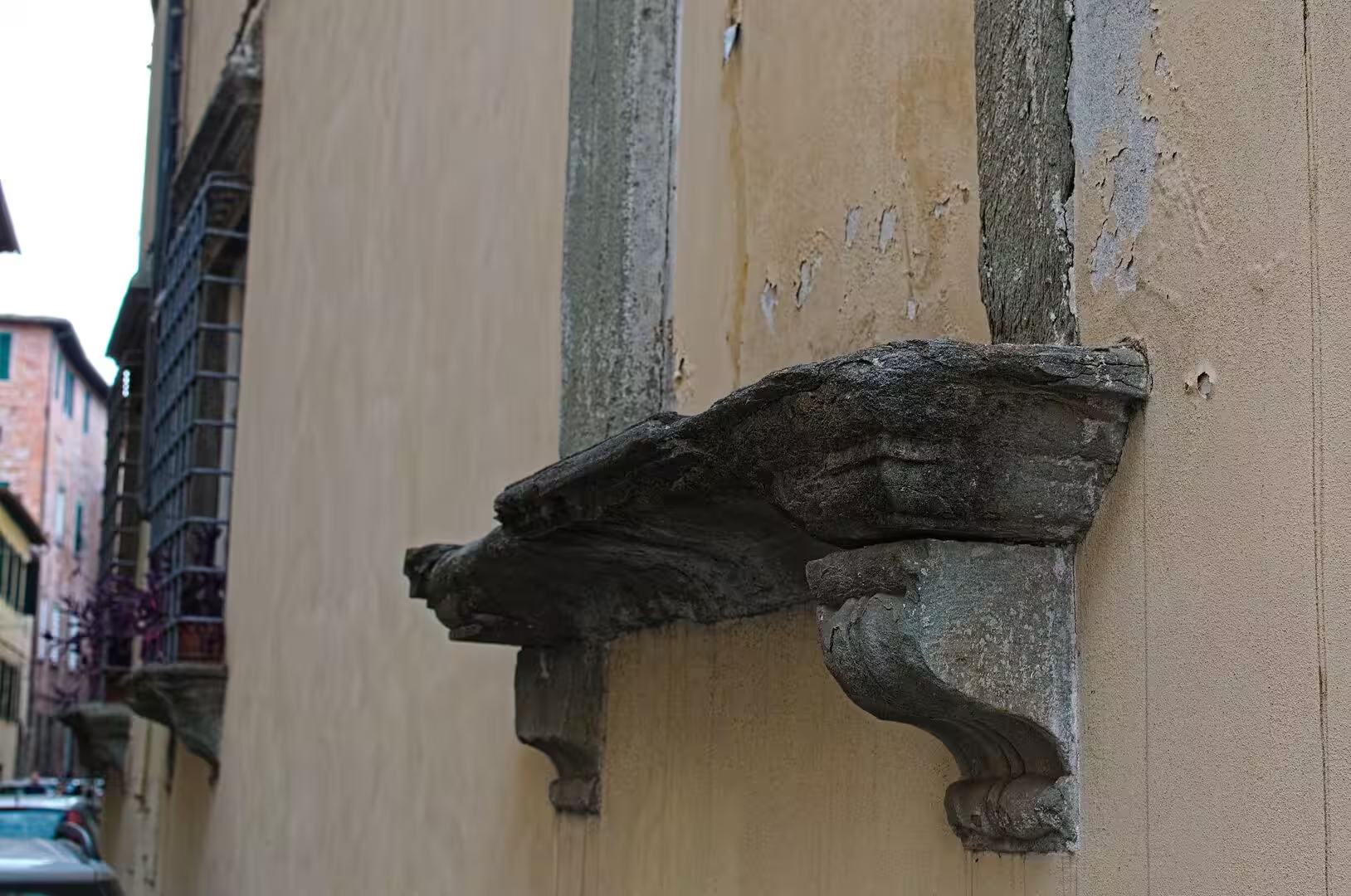
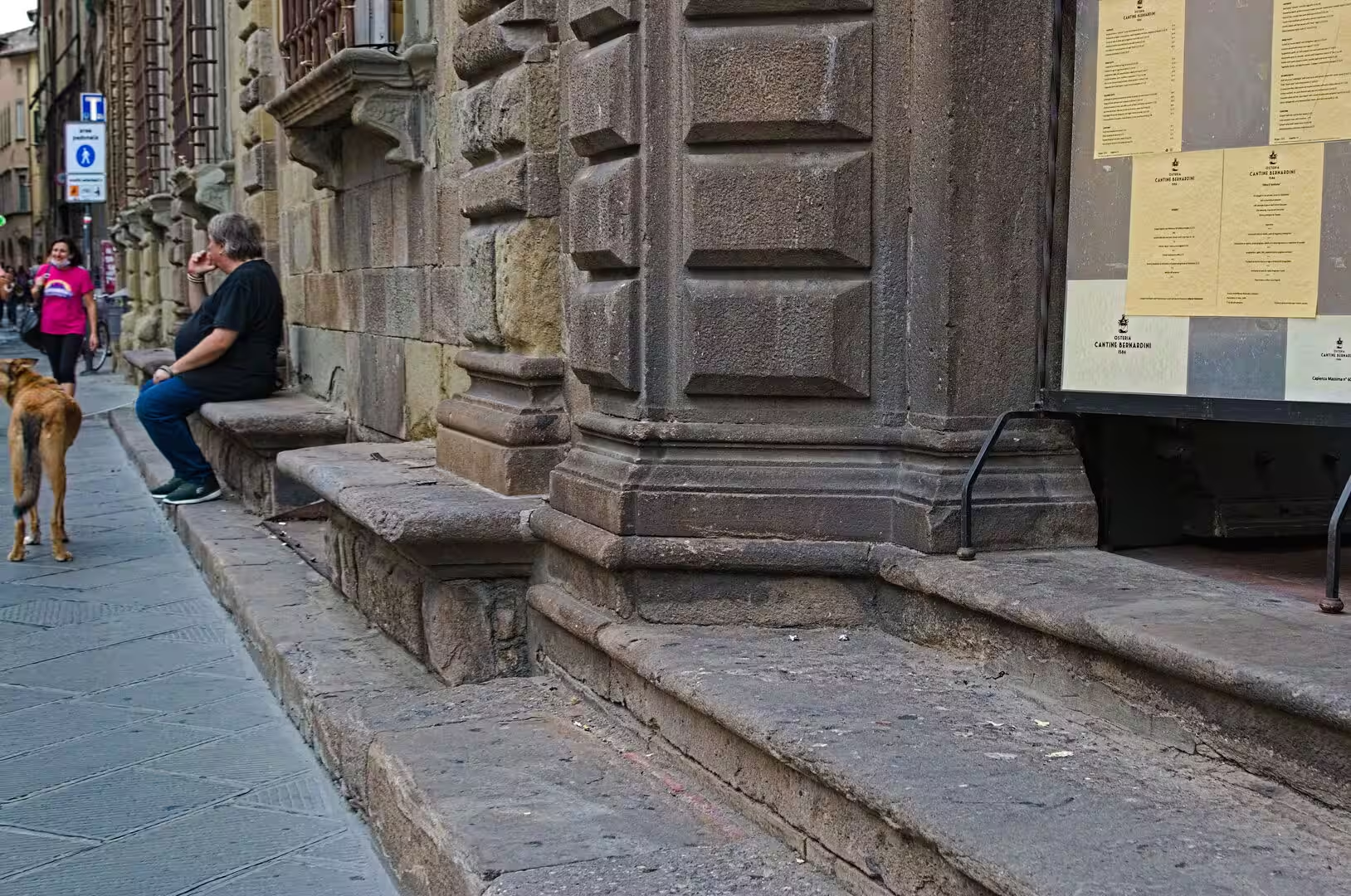
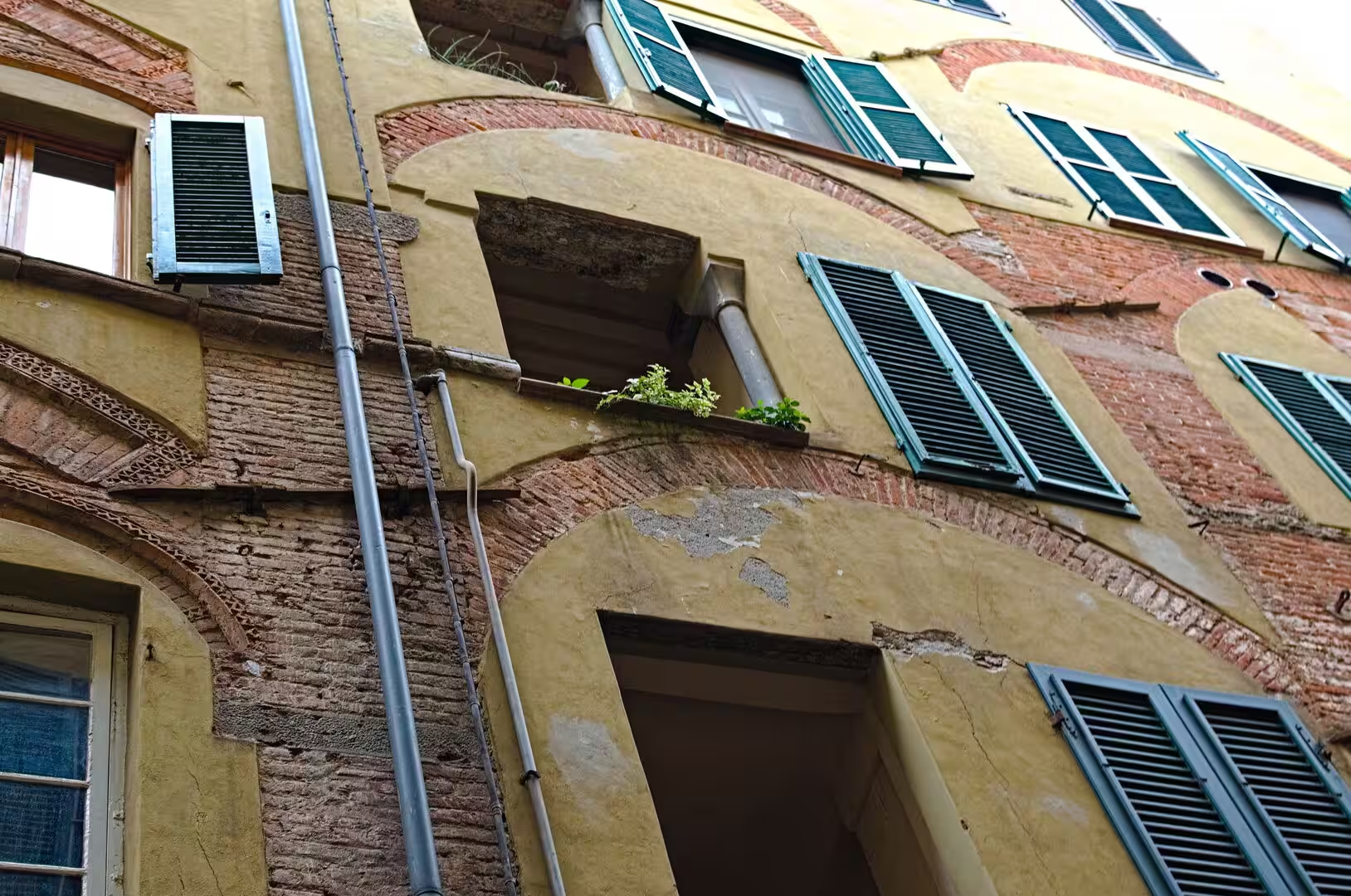
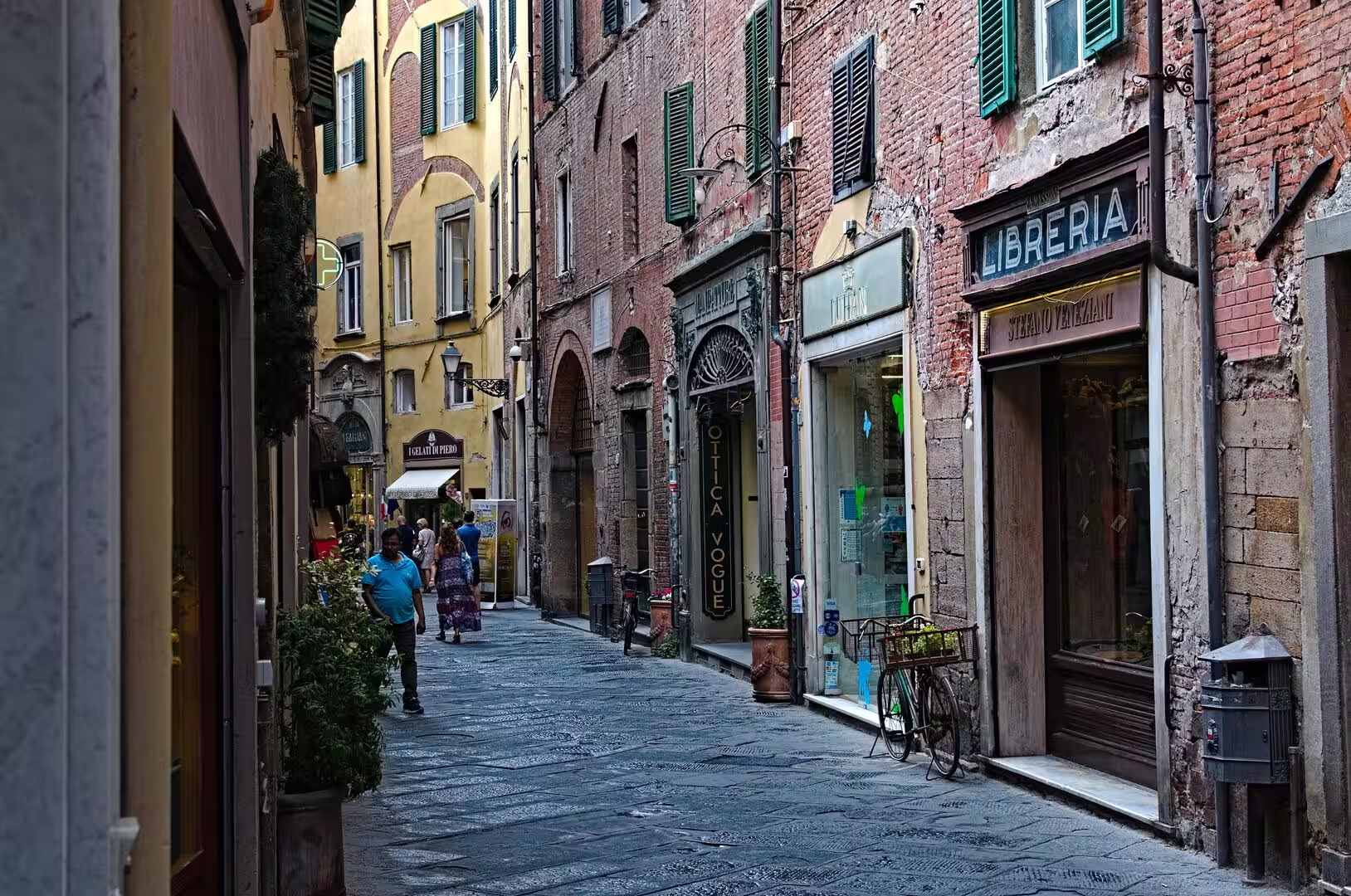
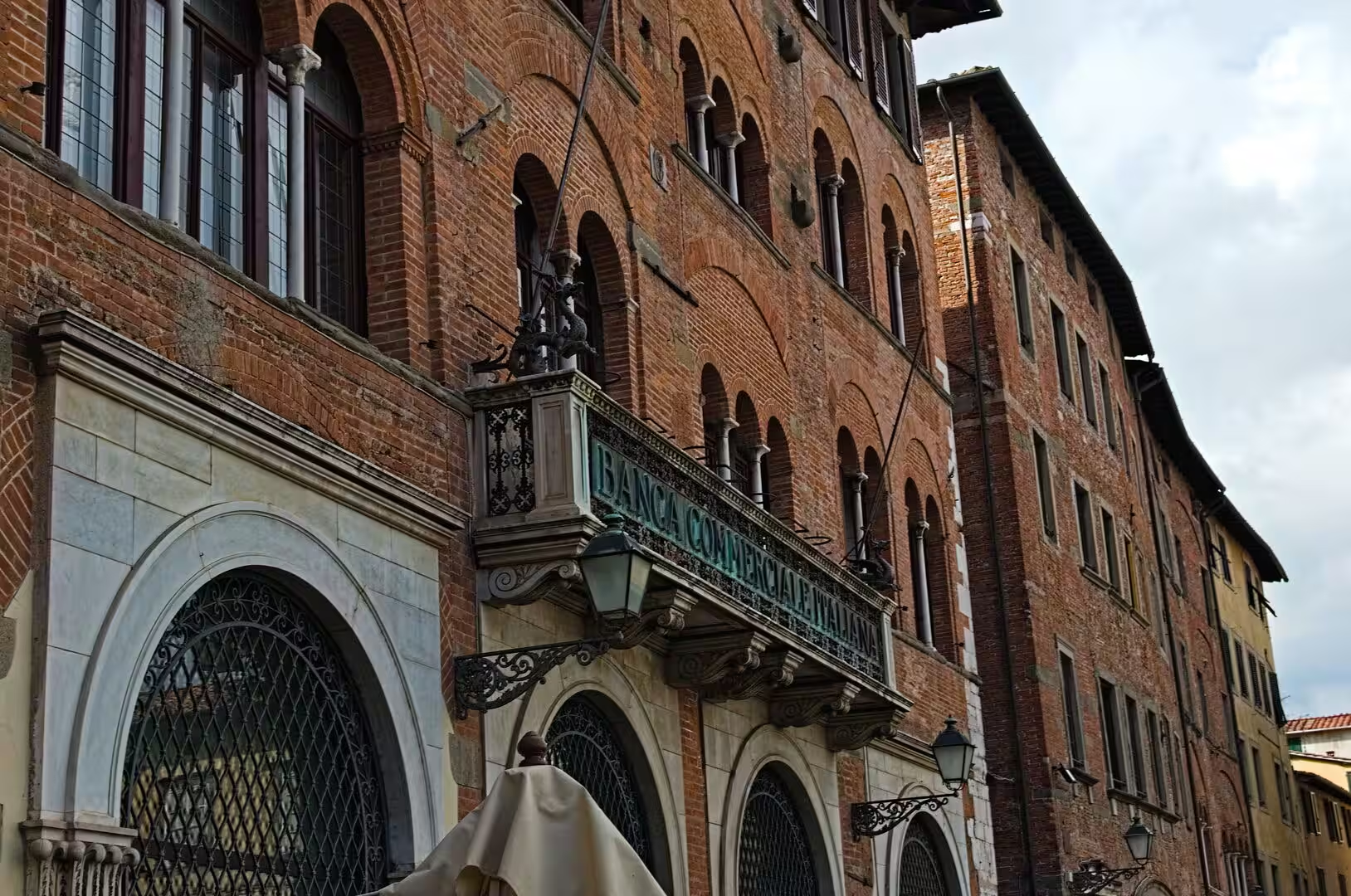
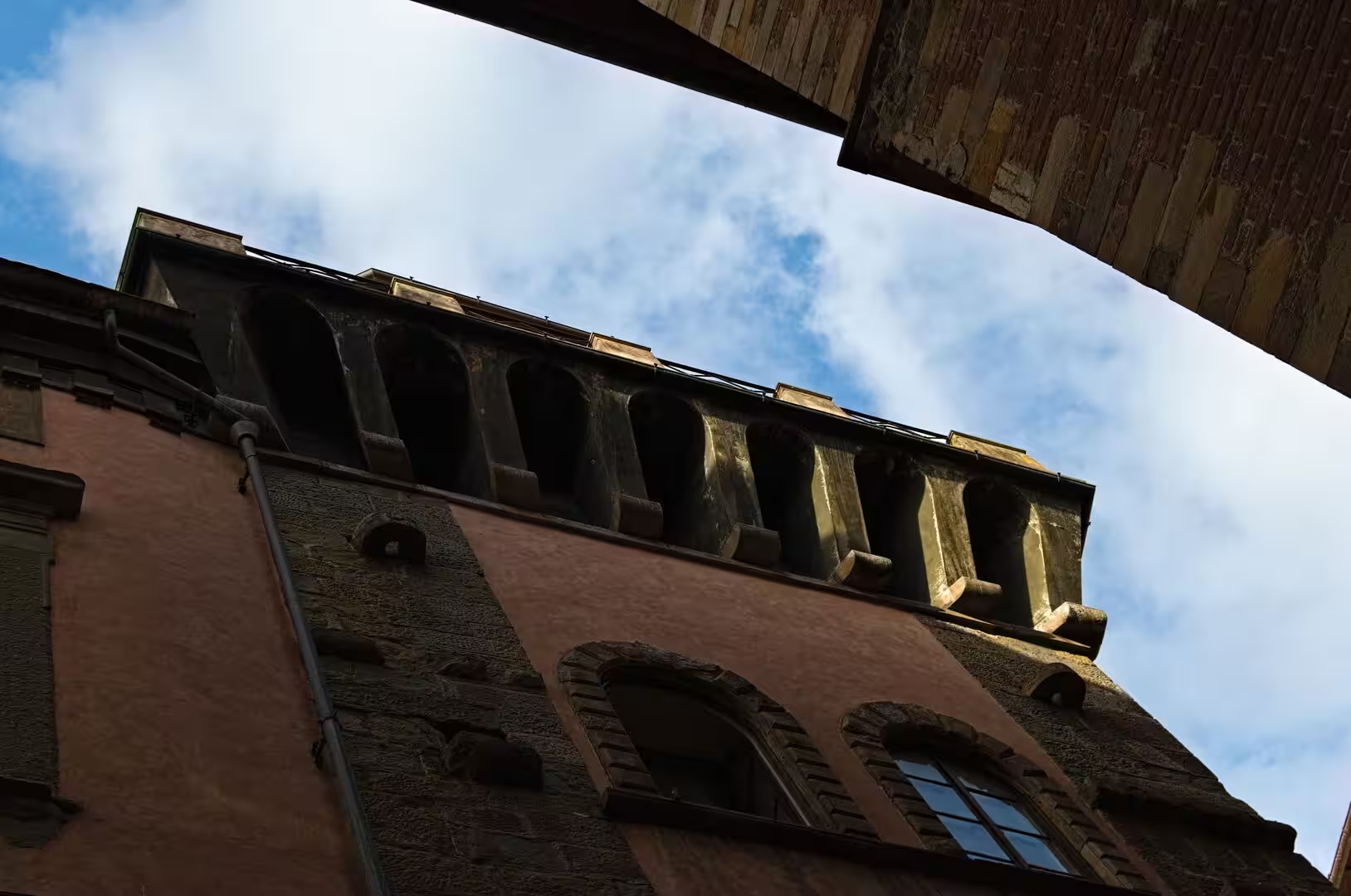
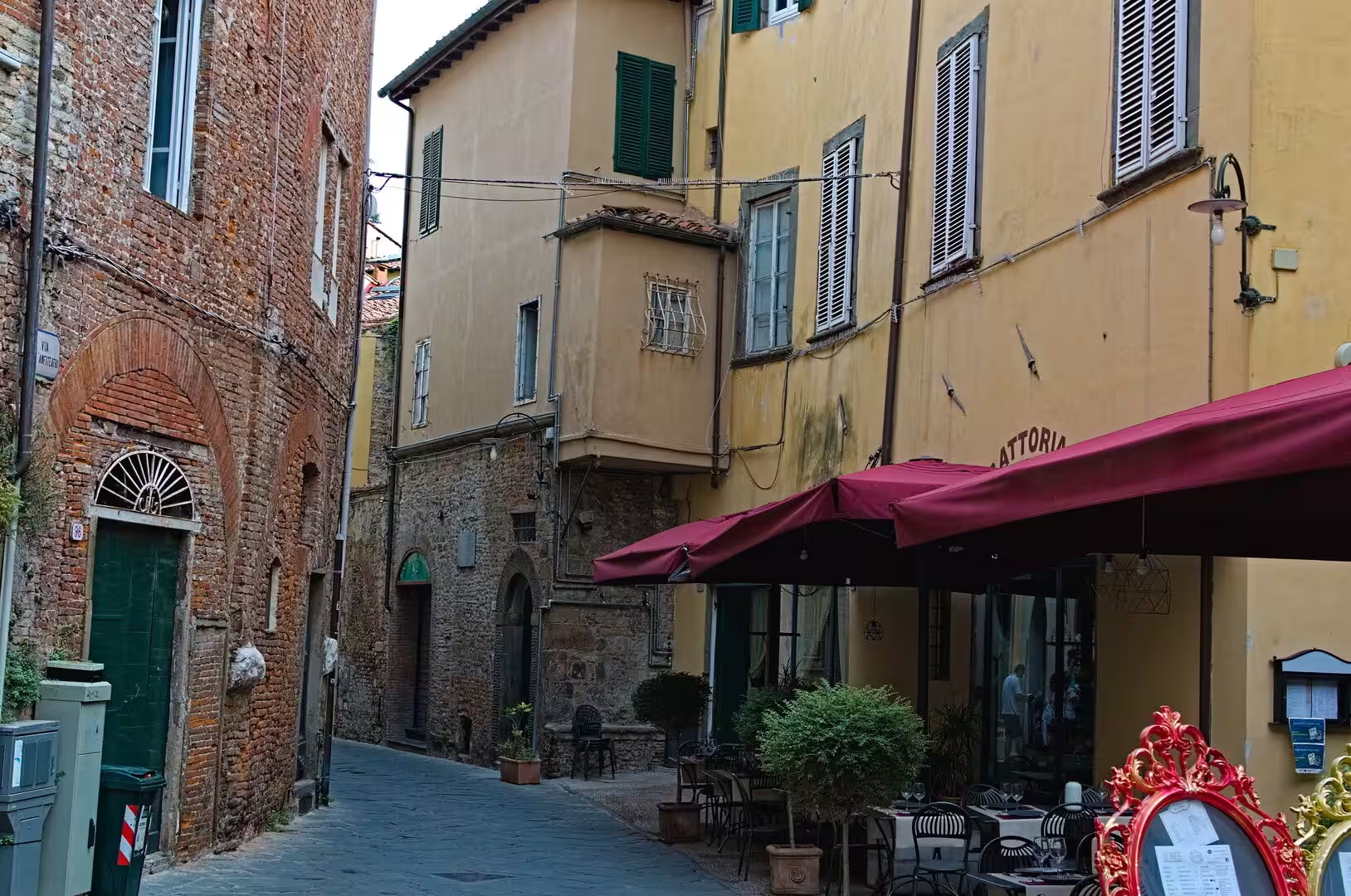
The town is best entered on foot, without a plan, through the lanes that run behind the main streets. They are narrow enough that two cars cannot pass, they curve where the medieval plots demanded it, and their walls are patched with stucco and brick in ochre, cream and pink. A cafe occupies a corner terrace under an awning, bicycles lean against the shopfronts, and a small car stands where the lane widens. Street lamps hang from cables across the way, and the sound of the town comes through open windows.
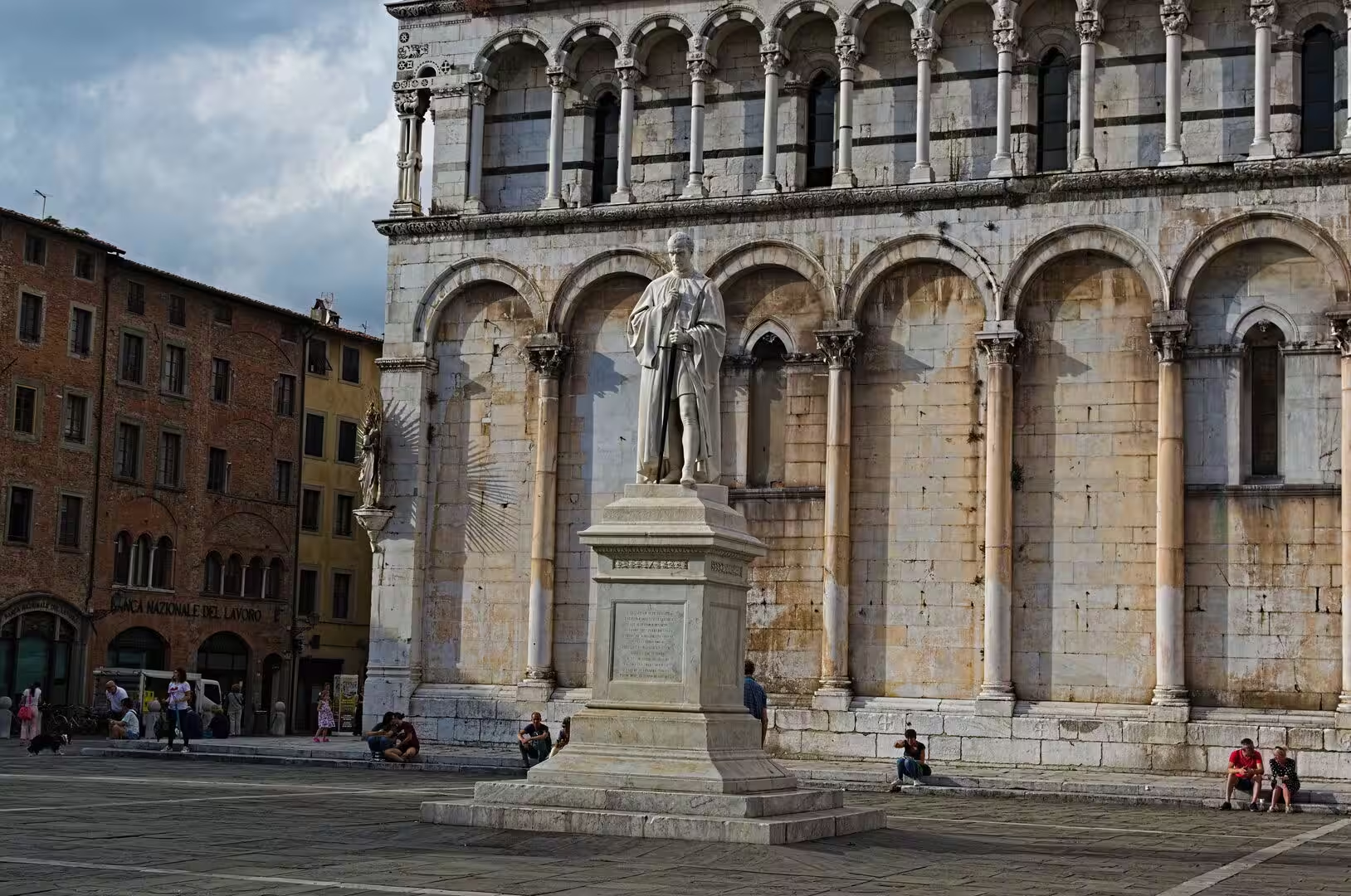
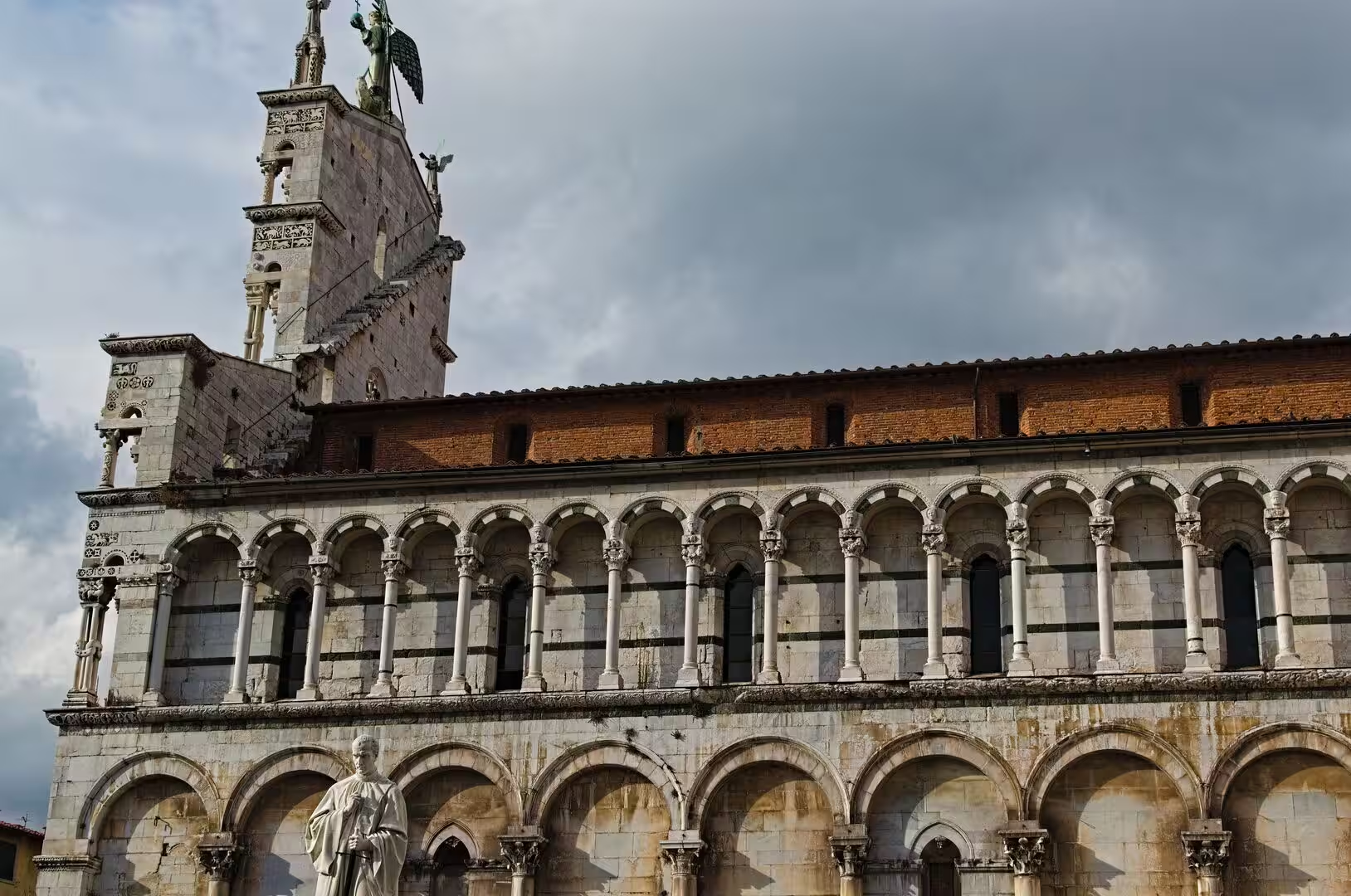
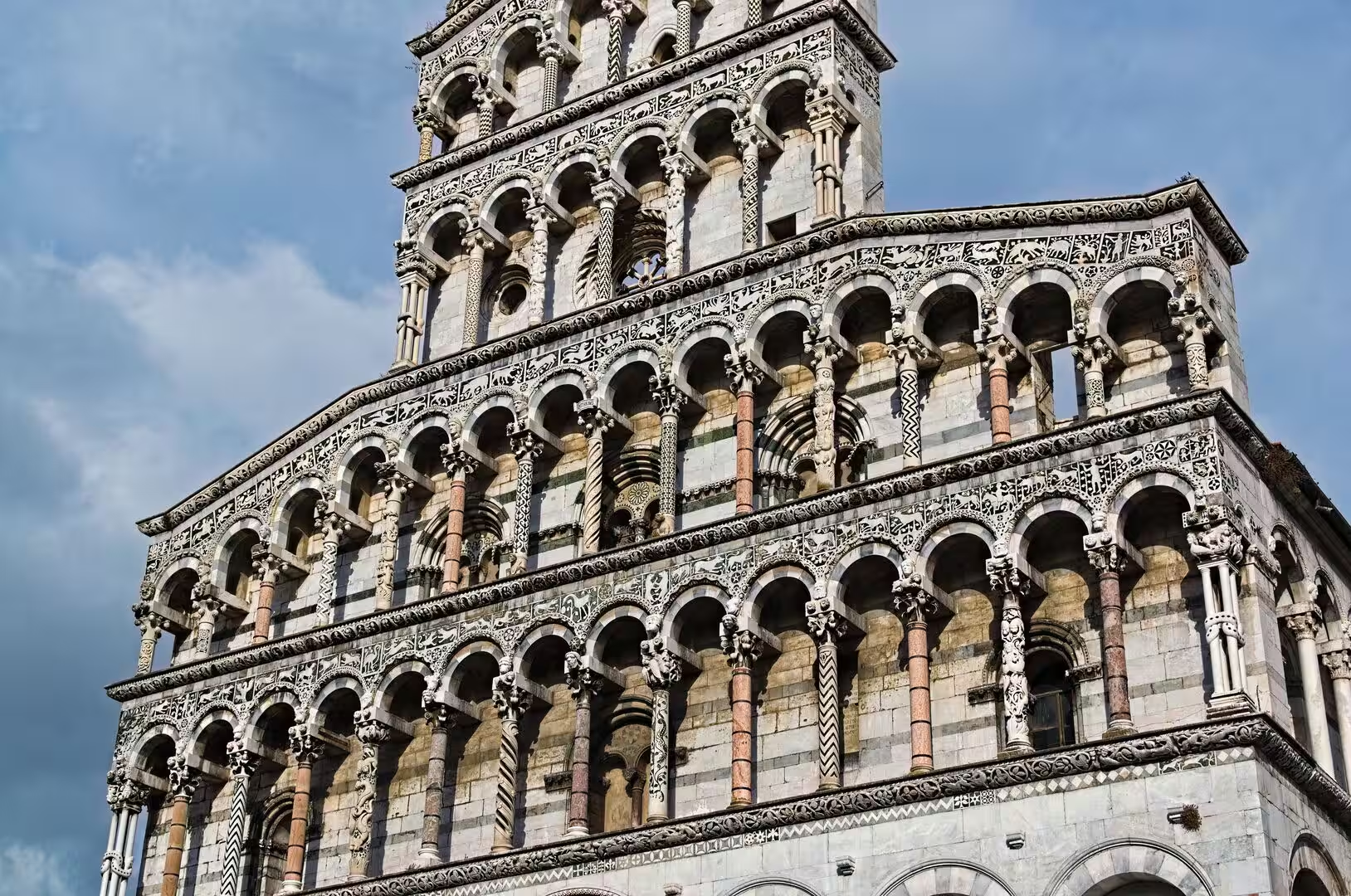
San Michele in Foro stands on the site of the Roman forum, where the two main streets of the colony cross. The church is mentioned as early as 795, was rebuilt after 1070 at the wish of Pope Alexander II, and until 1370 housed the major council of the commune. Its thirteenth century front is the most elaborate in the city: a lower order of blind arcades with the central portal, above them four galleries of small loggias built with iron reinforcements against the wind, and on the summit the four metre statue of the archangel Michael with two angels beside him.
The basilica of San Frediano takes its name from the Irish bishop Fridianus, who had a church built on this ground in the sixth century and was buried in it. The present building took shape between 1112 and 1147 as a plain early Christian basilica with a nave and two aisles, and its facade carries a large golden mosaic of the ascension, designed in the thirteenth century by Berlinghiero Berlinghieri, which can be seen from the far end of the square. Inside, the twelfth century baptismal font stands on pillars under a small temple, with panels carved by Master Roberto.
The cathedral of San Martino is the largest church of the city. Building began in 1060 under bishop Anselm, later Pope Alexander II, and the church was consecrated in 1070; the west front followed in 1204, with a portico of three arches and three ranges of open galleries above it, and the nave and transepts were rebuilt in Gothic style in the fourteenth century. In the right pier of the portico a labyrinth is cut into the stone with an inscription about Dedalus and Ariadne, and inside, in a chapel of 1484 by Matteo Civitali, stands the Holy Face.
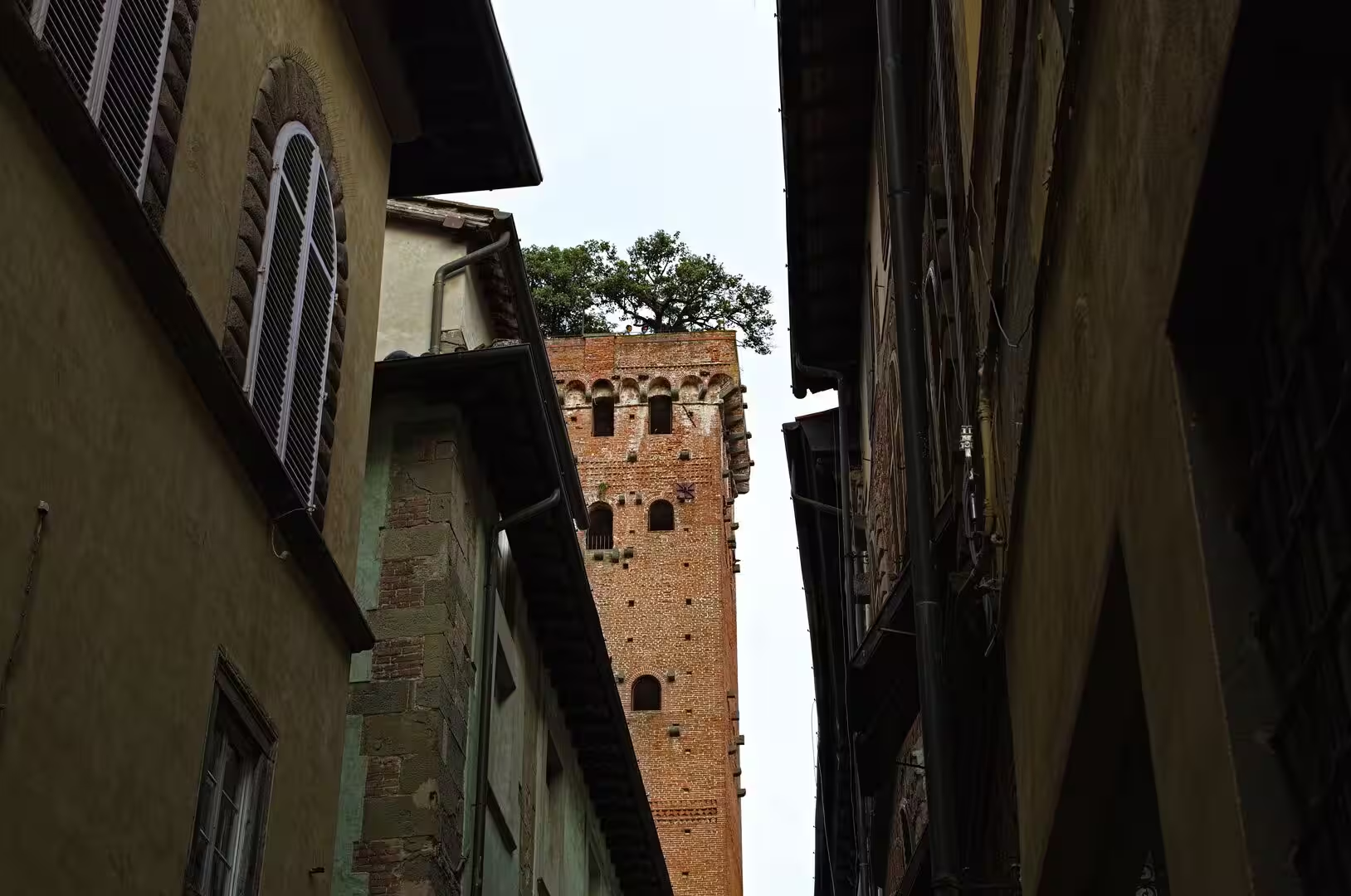
Two towers still rise above the roofs. The Guinigi Tower was built in the second half of the fourteenth century by a family of merchants and bankers who used height as a sign of standing, and it is one of the few such towers left in the city; seven holm oaks grow on its summit, and a stair of two hundred and thirty steps leads up to them. The Torre delle Ore, the clock tower, is the tallest in Lucca and has kept the time for the town since the Middle Ages.
Squares open between the lanes without warning. Piazza dell’Anfiteatro is the strangest of them: an oval market place whose ring of houses follows the line of the Roman amphitheatre that stood here in the first or second century, when some ten thousand spectators filled its rows of seats. Four gateways break the ellipse at its corners, and the base of the amphitheatre now lies about three metres below the pavement. The square was cleared in 1830 by the architect Lorenzo Nottolini to serve as a market.
The walls themselves are the great sight of Lucca. Their circuit measures four kilometres and two hundred and twenty three metres, which makes them the second largest surviving example of a completely walled Renaissance city in Europe, and they were begun in 1504 and finished in 1648. Eleven bastions project from the curtain, six gates and a number of former posterns give access, and the broad top carries a promenade lined with trees and lawns. A cafe stands on one of the bastions, and the basement of another holds remains of the Roman wall.
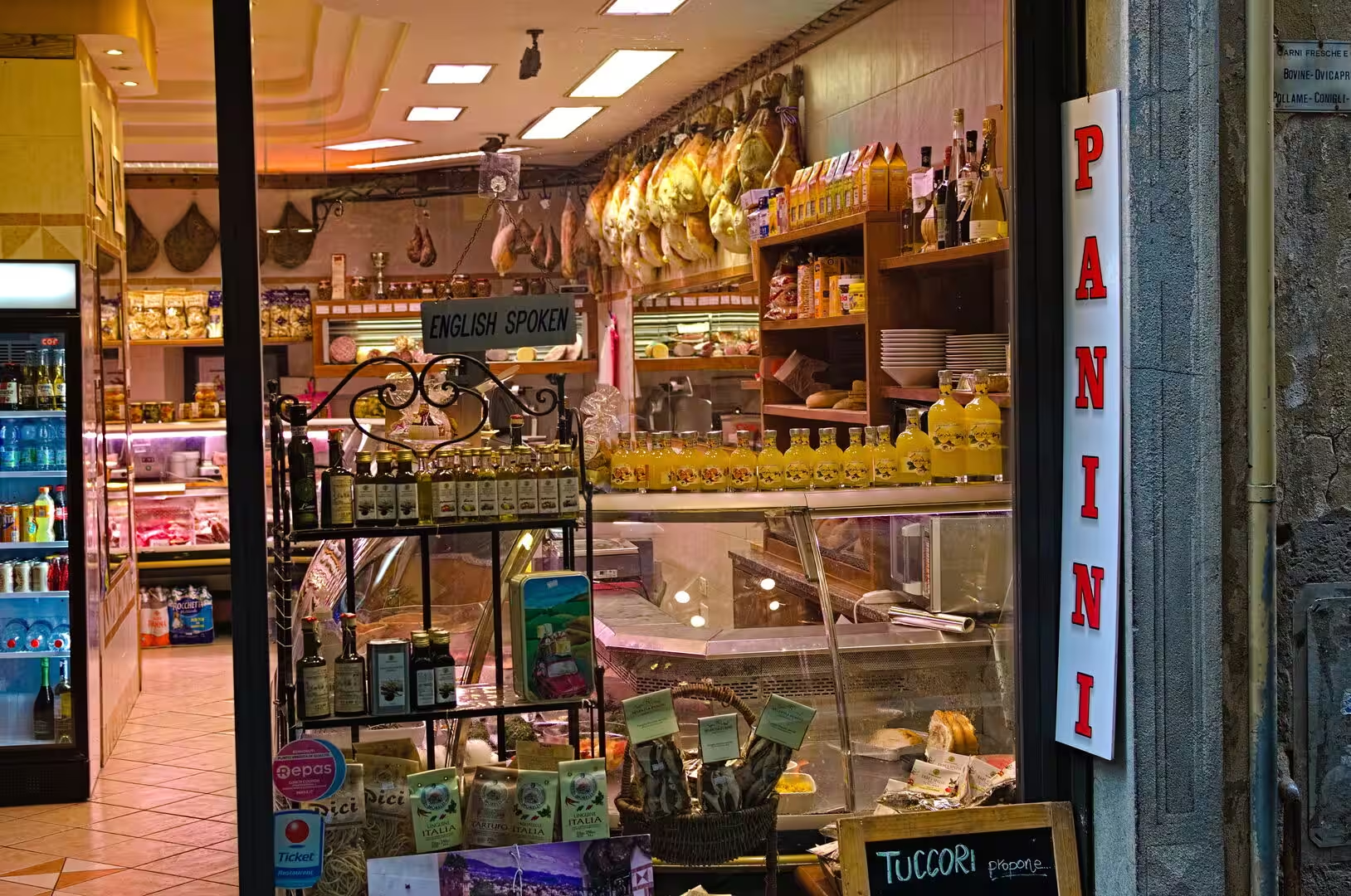
Eating in Lucca is a matter of small places. Delicatessens hang their hams and bottles of oil in the window beside a hand painted sign offering panini, and the restaurants serve the dishes of the plain and the hills: farro soup, tortelli filled with herbs and ricotta, cured meats from the Garfagnana, and the sweet bread called buccellato. The best hours for the walls are early morning and late afternoon, and bicycles can be hired at several points. Trains from the station outside Porta San Pietro reach Viareggio in twenty minutes.
References
- Wikipedia contributors (2026). Lucca. en.wikipedia.org/wiki/Lucca
- Wikipedia contributors (2026). Walls of Lucca. en.wikipedia.org/wiki/Walls_of_Lucca
- Wikipedia contributors (2026). Guinigi Tower. en.wikipedia.org/wiki/Guinigi_Tower
- Wikipedia contributors (2026). Piazza dell’Anfiteatro. en.wikipedia.org/wiki/Piazza_dell’Anfiteatro
- Wikipedia contributors (2026). Lucca Cathedral. en.wikipedia.org/wiki/Lucca_Cathedral
- Wikipedia contributors (2026). Basilica of San Frediano. en.wikipedia.org/wiki/Basilica_of_San_Frediano
- Wikipedia contributors (2026). San Michele in Foro. en.wikipedia.org/wiki/San_Michele_in_Foro
- Wikipedia contributors (2026). Republic of Lucca. en.wikipedia.org/wiki/Republic_of_Lucca
- Wikipedia contributors (2026). Duchy of Lucca. en.wikipedia.org/wiki/Duchy_of_Lucca
- Wikipedia contributors (2026). Giacomo Puccini. en.wikipedia.org/wiki/Giacomo_Puccini
- Wikipedia contributors (2026). Serchio. en.wikipedia.org/wiki/Serchio
- Wikipedia contributors (2026). Via Francigena. en.wikipedia.org/wiki/Via_Francigena
- Wikipedia contributors (2026). Holy Face (Lucca). en.wikipedia.org/wiki/Holy_Face_%28Lucca%29
- Wikipedia contributors (2026). Bastion fort. en.wikipedia.org/wiki/Bastion_fort
- Wikipedia contributors (2026). Elisa Bonaparte. en.wikipedia.org/wiki/Elisa_Bonaparte
- Wikipedia contributors (2026). Tuscany. en.wikipedia.org/wiki/Tuscany
- Wikipedia contributors (2026). Province of Lucca. en.wikipedia.org/wiki/Province_of_Lucca
- Wikipedia contributors (2026). Lucca Comics & Games. en.wikipedia.org/wiki/Lucca_Comics_%26_Games
- Broglia F. (2026) Urban walls and castles within bastioned fortifications: a contrastive analysis. PROCEEDINGS of the International Conference on Fortifications of the Mediterranean Coast FORTMED 2026. Vol. 22. doi.org/10.4995/fortmed2026.2026.21377
- Frederiksen R. (2011) Types of Fortification. Greek City Walls of the Archaic Period, 900-480 BC. 8-19. doi.org/10.1093/acprof:osobl/9780199578122.003.0002
- Herlihy D., Meek C. (1979) Lucca, 1369-1400: Politics and Society in an Early Renaissance City-State. The American Historical Review. 84. 1422. doi.org/10.2307/1861599
- Dimelli D. (2024) Historic Centers and Overtourism: Opportunities and Threats for Three Historic European Cities. Current Approaches, Solutions and Practices in Conservation of Cultural Heritage. 135-154. doi.org/10.26650/b/aa9ps34.2024.006.007