2021 Italy - Mine I
26 September 2021




















Journal Notes
General
Levigliani is a hamlet of the comune of Stazzema in the Versilia, the north-western corner of Tuscany that is made up of Forte dei Marmi, Pietrasanta, Seravezza and Stazzema. It is one of the seventeen hamlets of the municipality, and the road to it leaves the coast at Pietrasanta and climbs past the villages and the quarries of the valley. The village stands on the western flank of the Apuan Alps, above the marble workings and below the ridge of Monte Corchia, and its lanes are the last houses before the road turns into the forest and the mountain. From the coast the massif appears as a white wall; from Levigliani the sea is a strip of light between the trees.
The Antro del Corchia is one of the largest karst systems in Europe. It lies in the marble heart of Monte Corchia, a mountain of 1,678 metres, and its galleries, shafts and chambers have been surveyed for more than sixty kilometres, with more than twenty entrances at different heights on the flanks of the massif. The cave is connected with the Farolfi and the Fighiera caves, and together they form one of the longest karst systems in Italy. Its vertical extent is given as 1,187 metres.
The name of the cave is usually explained as Buca d’Eolo, the hole of Aeolus, because of the air that moves through it. The many entrances at different altitudes act as a chimney: in summer cold air flows out of the lower opening, in winter the movement reverses, and the draught at the door of the tourist gallery is strong enough to be the first thing a visitor notices. Inside, the temperature stays near 7.6 degrees all year and the air is permanently damp, and the galleries keep the same conditions in summer and in winter.
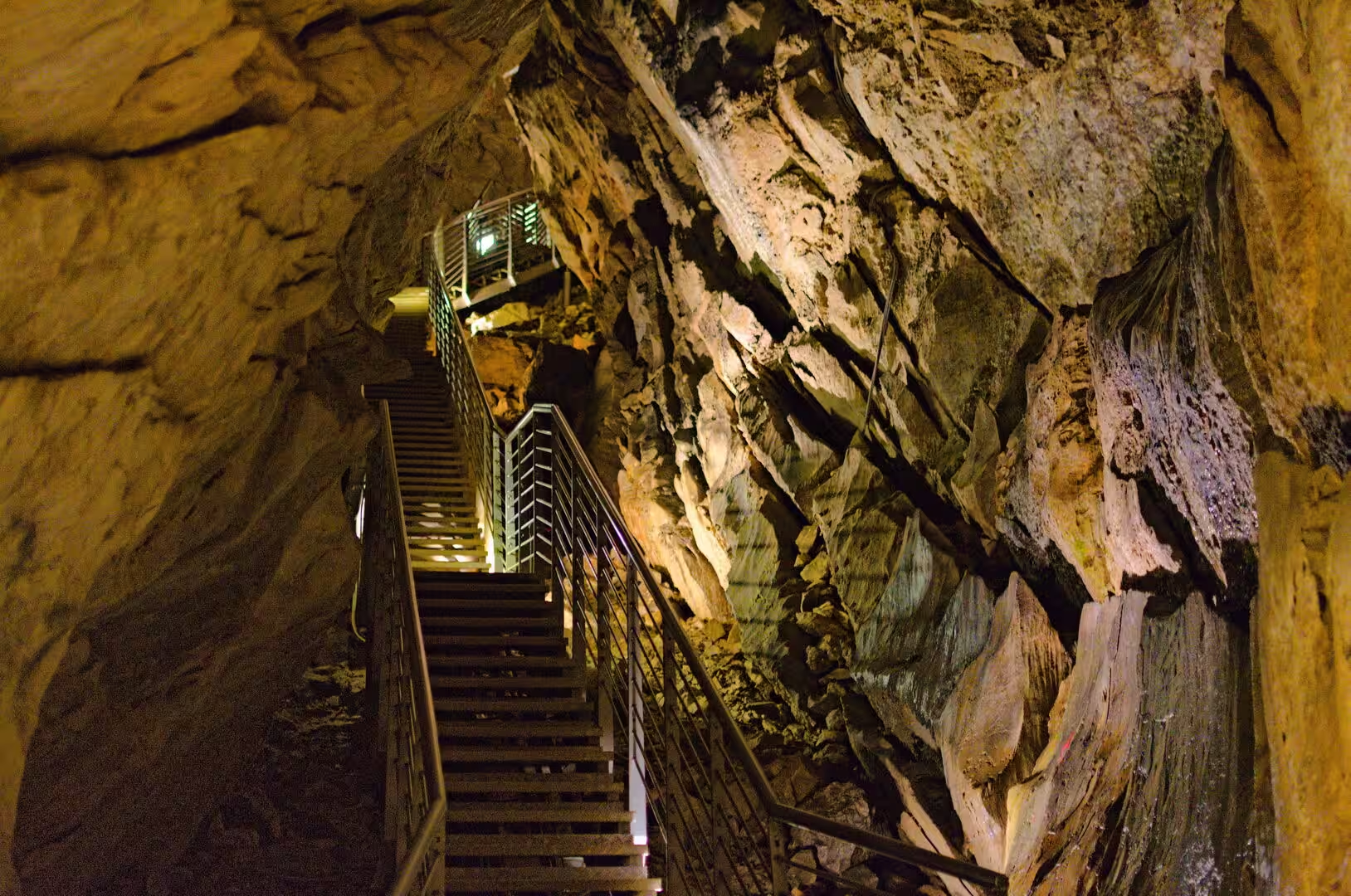
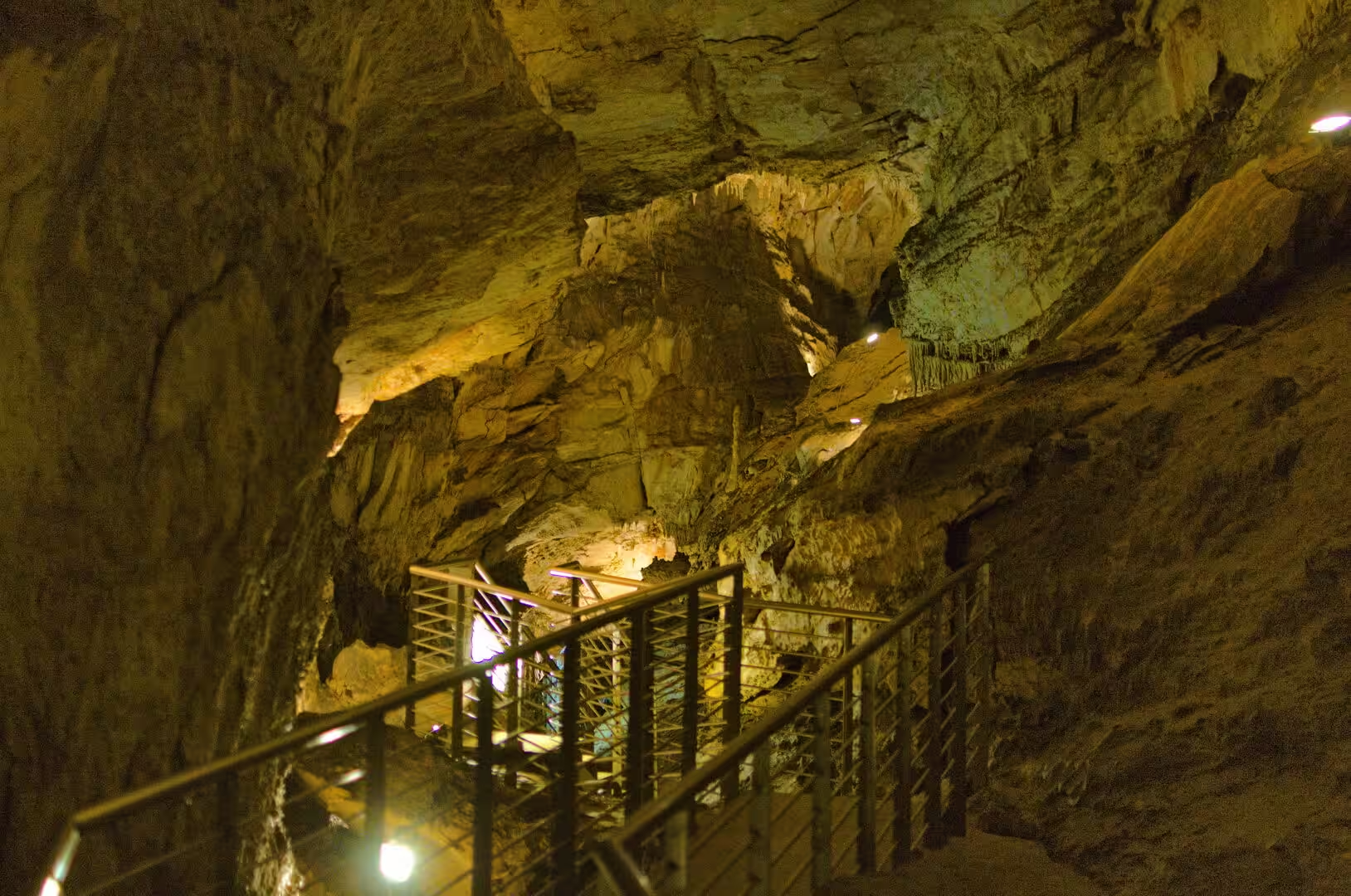
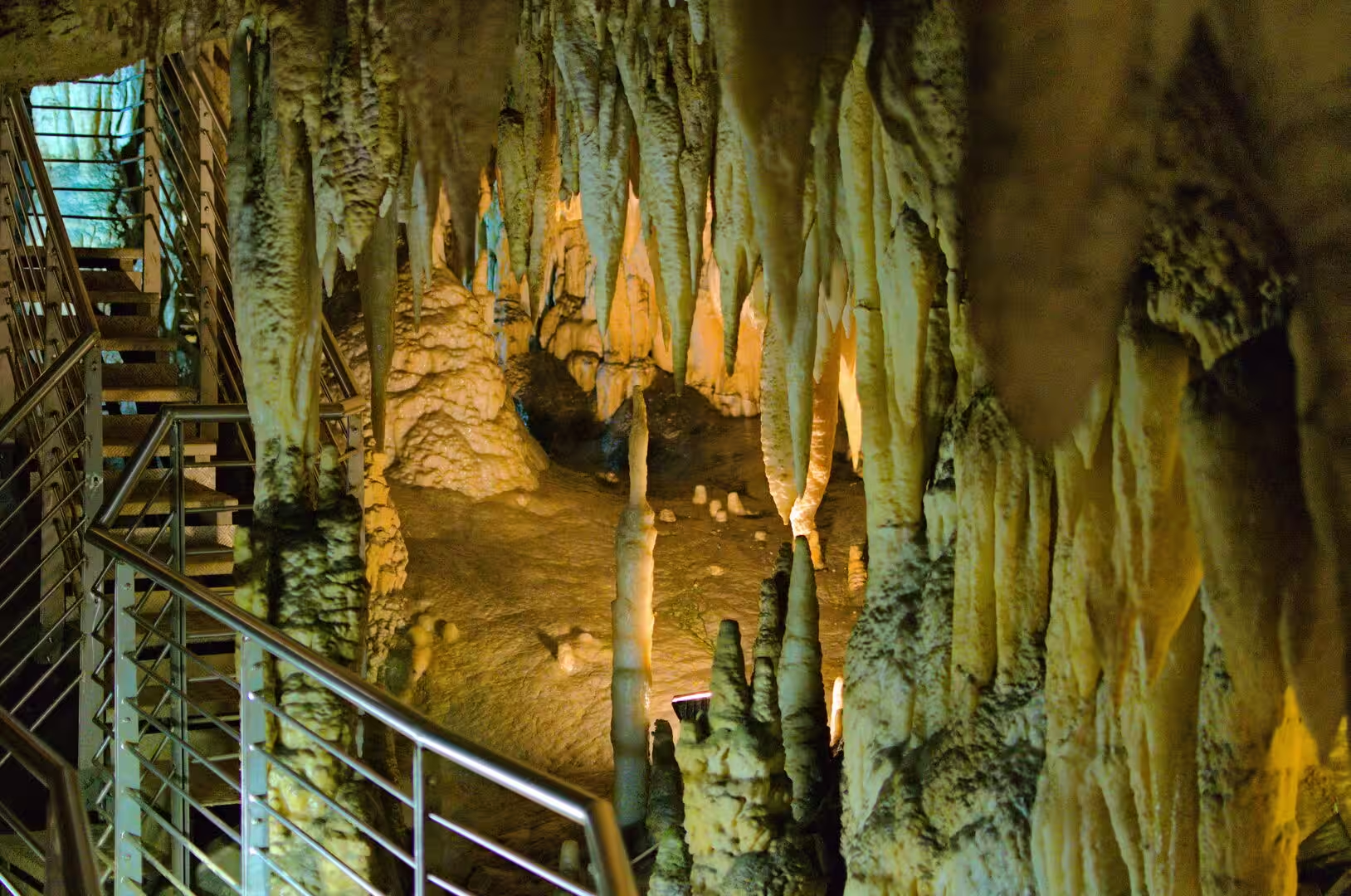
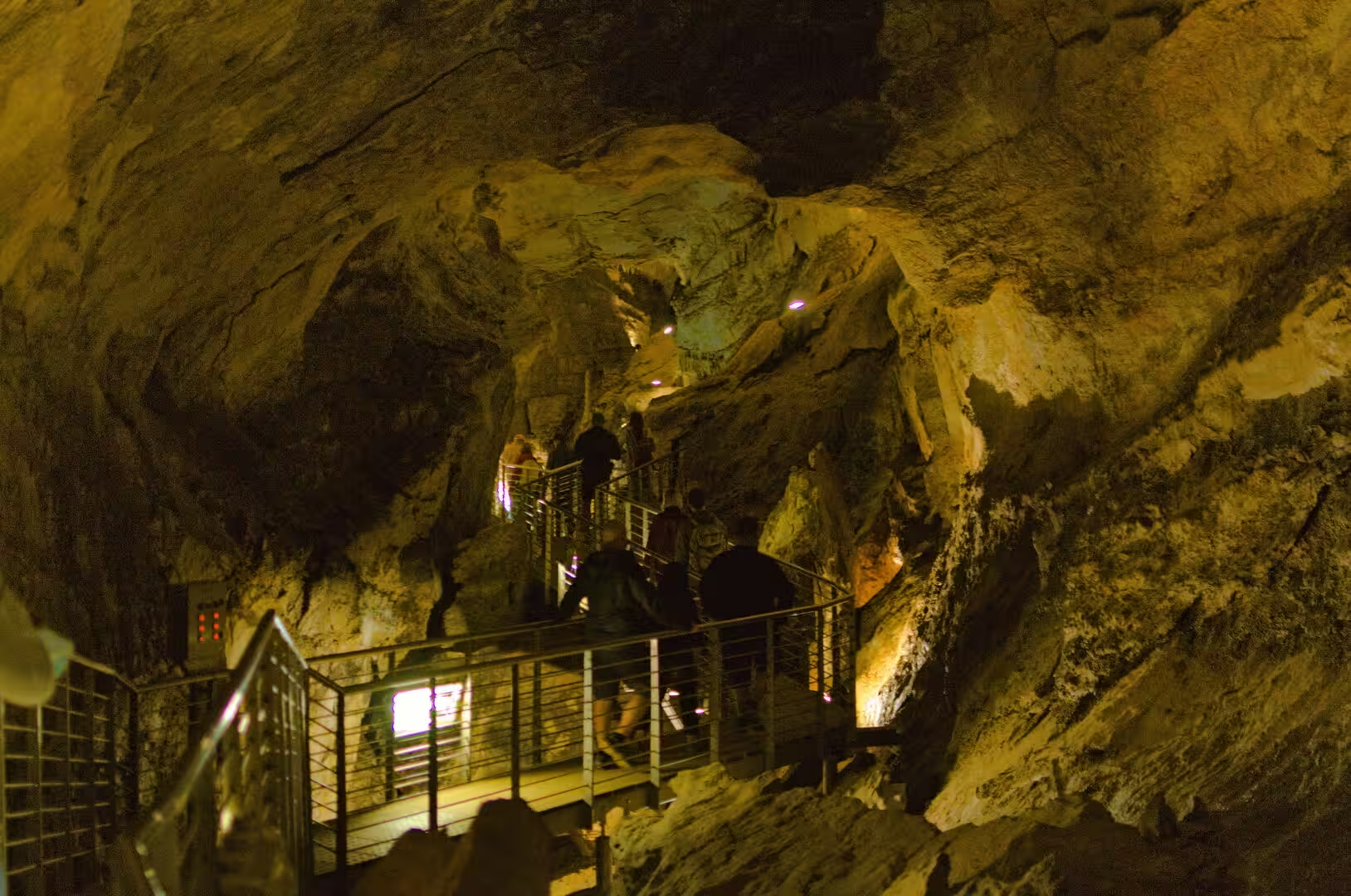
The cave is shown on a guided tour of about two hours and roughly two kilometres. Visitors enter through a tunnel of 170 metres that was driven into the rock in a disused marble quarry at 860 metres, and the route beyond it follows a steel walkway through canyons and halls. The walkway was installed for the opening of the cave to the public in 2001; it weighs 52 tonnes, and it was built in such a way that it can be taken out again without damage to the cave if that decision is ever taken.
The village around the entrance has attractions of its own. The park administration runs visits to the old mercury mines of Levigliani and a walk to the marble quarries above the village, and it keeps a small path through the forest that is lined with animals carved in wood, squirrels and deer and porcupines and butterflies, on the way to the Zeppolino spring. Fog is common in the village in autumn, and on a wet morning the wooden figures on the path and the roofs of the houses disappear into it within a few steps.
History
Levigliani is an old mining village. The workings below the houses are the oldest mining site of upper Tuscany, first mentioned in a document of the municipality of Pisa in 1153, and cinnabar, the red mineral of mercury, was extracted here in the Middle Ages for the pigment that the workshops of Florence used. The same ore later carried the economy of the valley, because mercury was needed in the extraction of gold and silver and in the making of felt hats.
The mines were worked on an industrial scale from the early twentieth century. A second site was opened with the first pneumatic hammers and equipped with a rail system for the carts, and the cinnabar was distilled into mercury in ovens on the spot, machinery and equipment that can still be seen. Mining stopped in the 1970s. From the 2000s the workings were restored for visitors, for teaching and for research: the old galleries are one of the few places where drops of native mercury can be watched seeping out of the rock, and the mineralogy of the deposit is unusually rich.
The cave was found before the mines were modernised. In 1840 the entrance was discovered by Emilio Simi, the son of the mayor of Stazzema, and the first descriptions of the galleries followed in the same century. Exploration went on in campaigns by speleological groups from several countries; British cavers were the first to work in the part of the system that now carries the visitor route, and in the 1980s expeditions that entered from different openings met inside the mountain and recognised that they had been exploring a single system.
The connection with the neighbouring Farolfi cave was made in 1980, about a year after that entrance itself was found, and the picture of the massif changed with it. The tourist route was opened in 2001 after two years of work, and the cooperative that runs it also looks after the mines, the quarries and the paths of the village. The cave remains a frontier for speleologists: new chambers are still being surveyed, and the length of the known galleries has grown with almost every campaign.
The comune of Stazzema carries a harder memory as well. On 12 August 1944, in the course of an operation against the Italian resistance, soldiers of the Waffen-SS, helped by the Italian Black Brigades, murdered about 560 villagers and refugees in the hamlet of Sant’Anna, among them more than a hundred children, and burned the village. The church was rebuilt after the war, and a National Park of Peace, a charnel house and a museum of the resistance now stand at the site. Stazzema was awarded the Gold Medal for Military Valour.
Geology
The Apuan Alps are built of sediments that were deposited in the sea in the upper Triassic and later folded and buried in the collision that raised the northern Apennines. Heat and pressure turned part of the limestone into marble, and the range was lifted and cut by erosion into the jagged crest of today. The massif is a stack of metamorphic and sedimentary units with marble at its core, and Monte Corchia, at 1,678 metres, is the mountain above Levigliani in which the cave system has developed.
The Antro del Corchia is a karst cave, and its shape follows the water that made it. Rain and snowmelt take carbon dioxide from the air and from the soil, seep through joints in the marble and dissolve the rock along them; over time the fissures become shafts and galleries, and the water that flows through them cuts canyons tens of metres deep. The Apuan Alps hold more than a thousand known cavities, and the Corchia system is the largest of them. The known system extends some sixty kilometres of passages and about 1,187 metres of vertical range, and the oldest parts are estimated to be roughly two million years old.
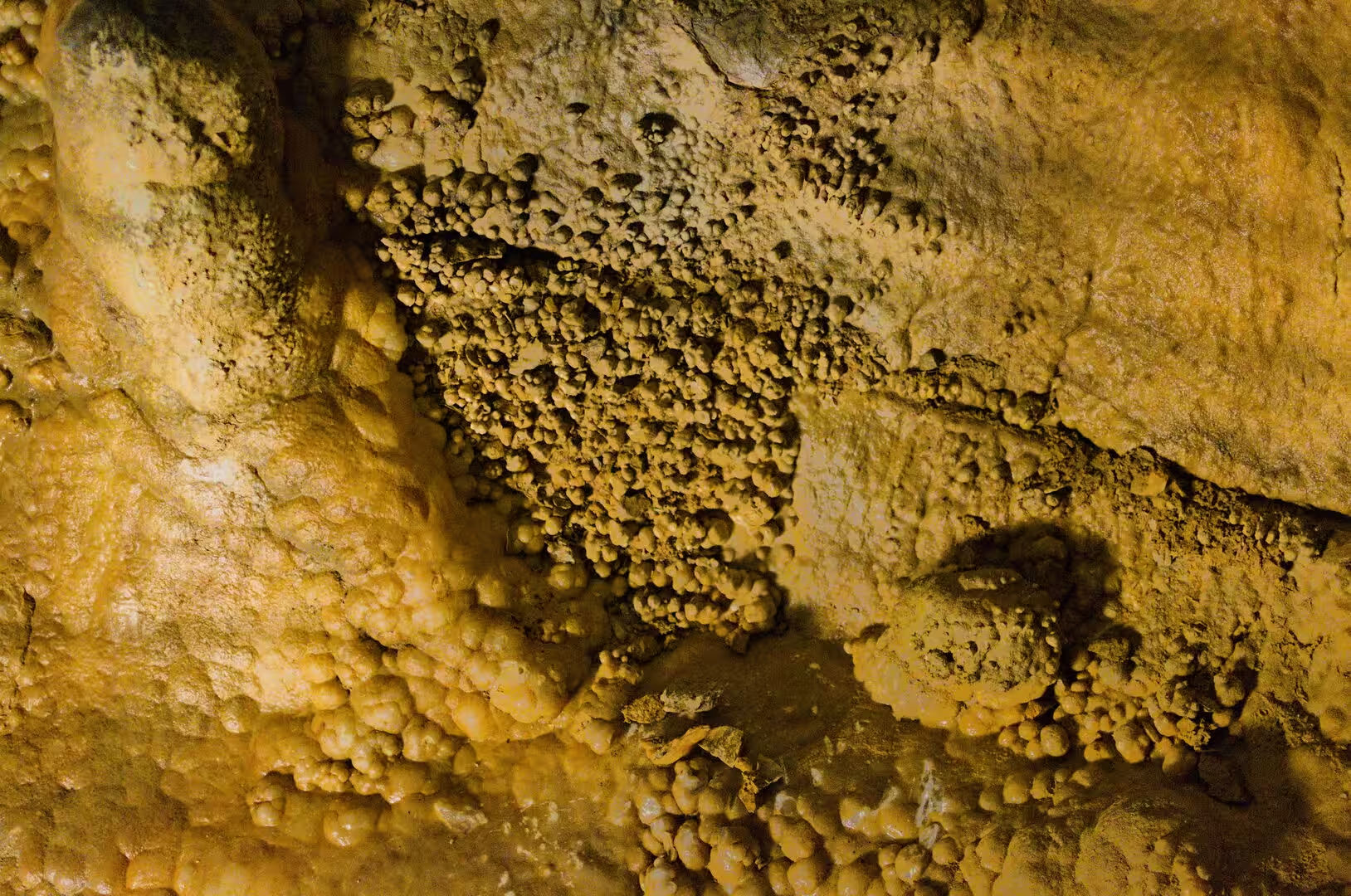
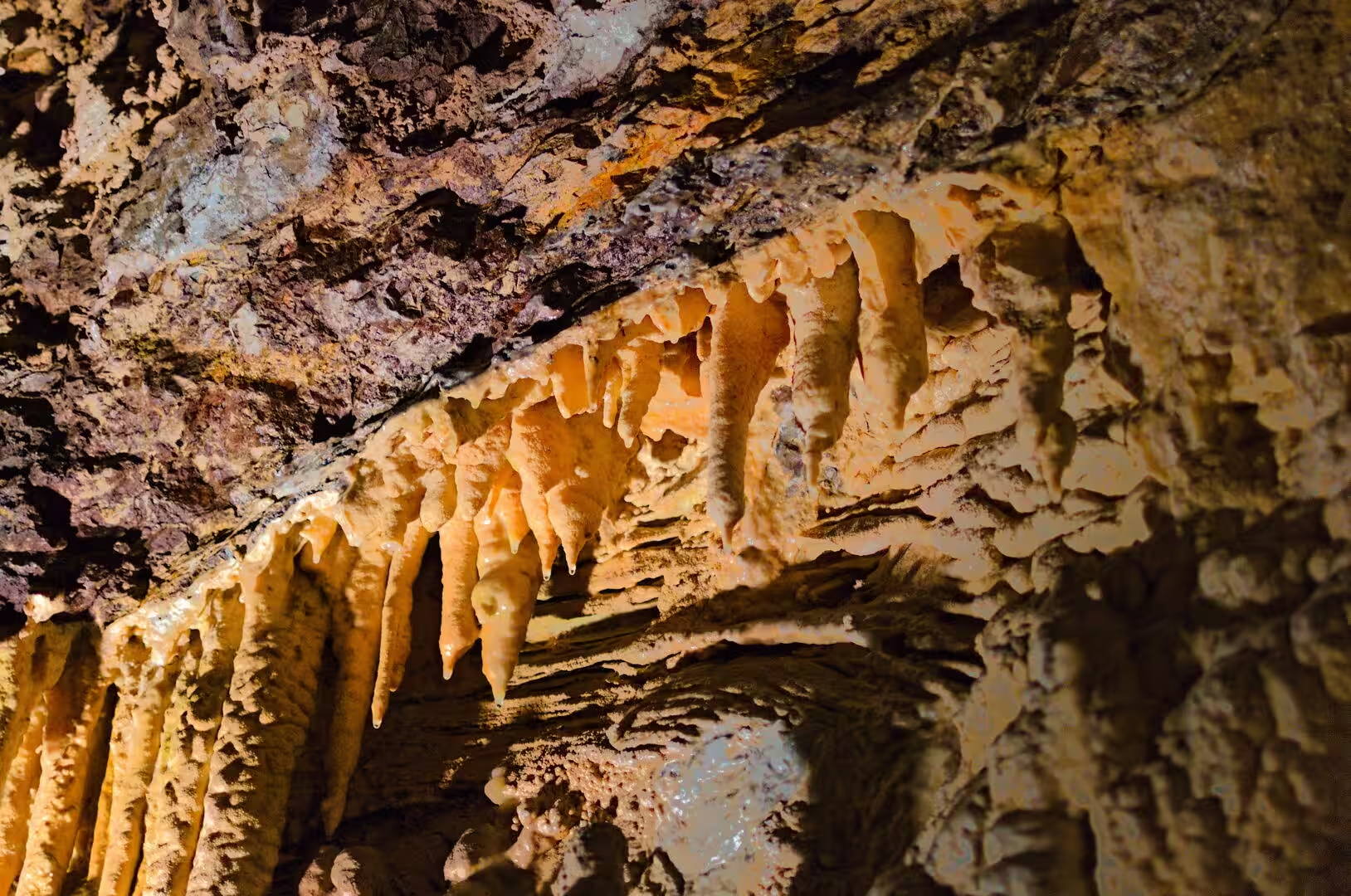
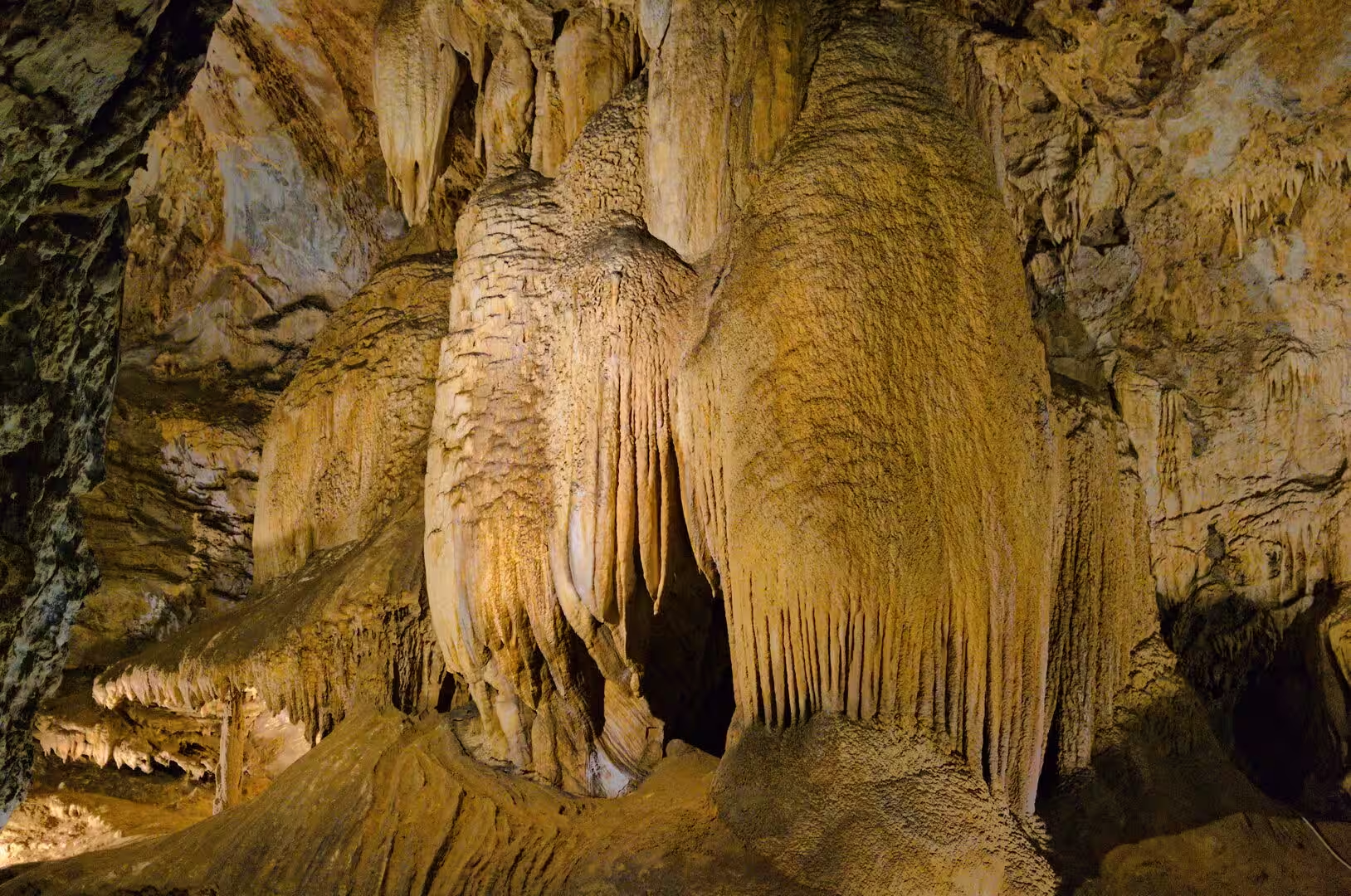
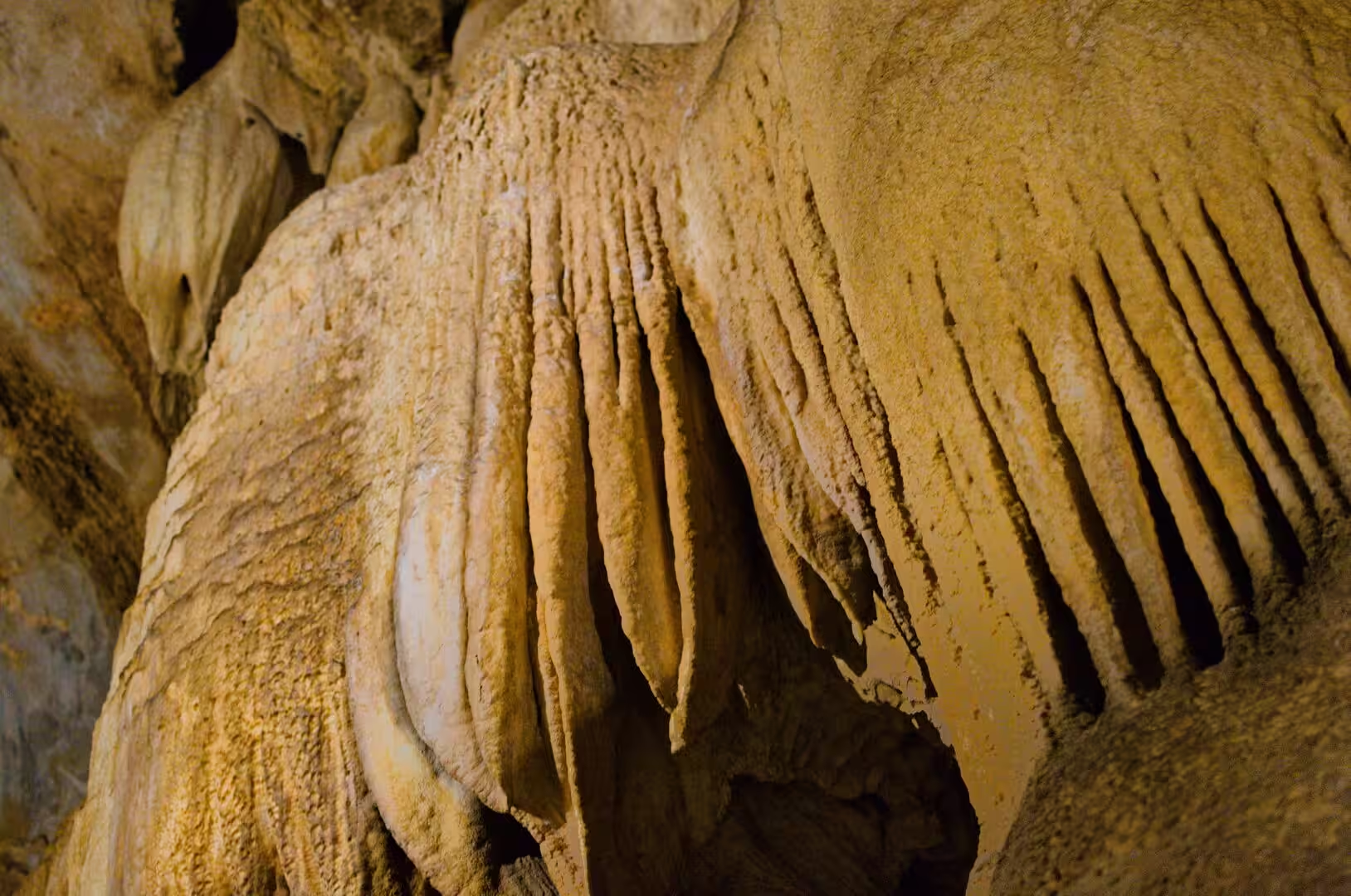
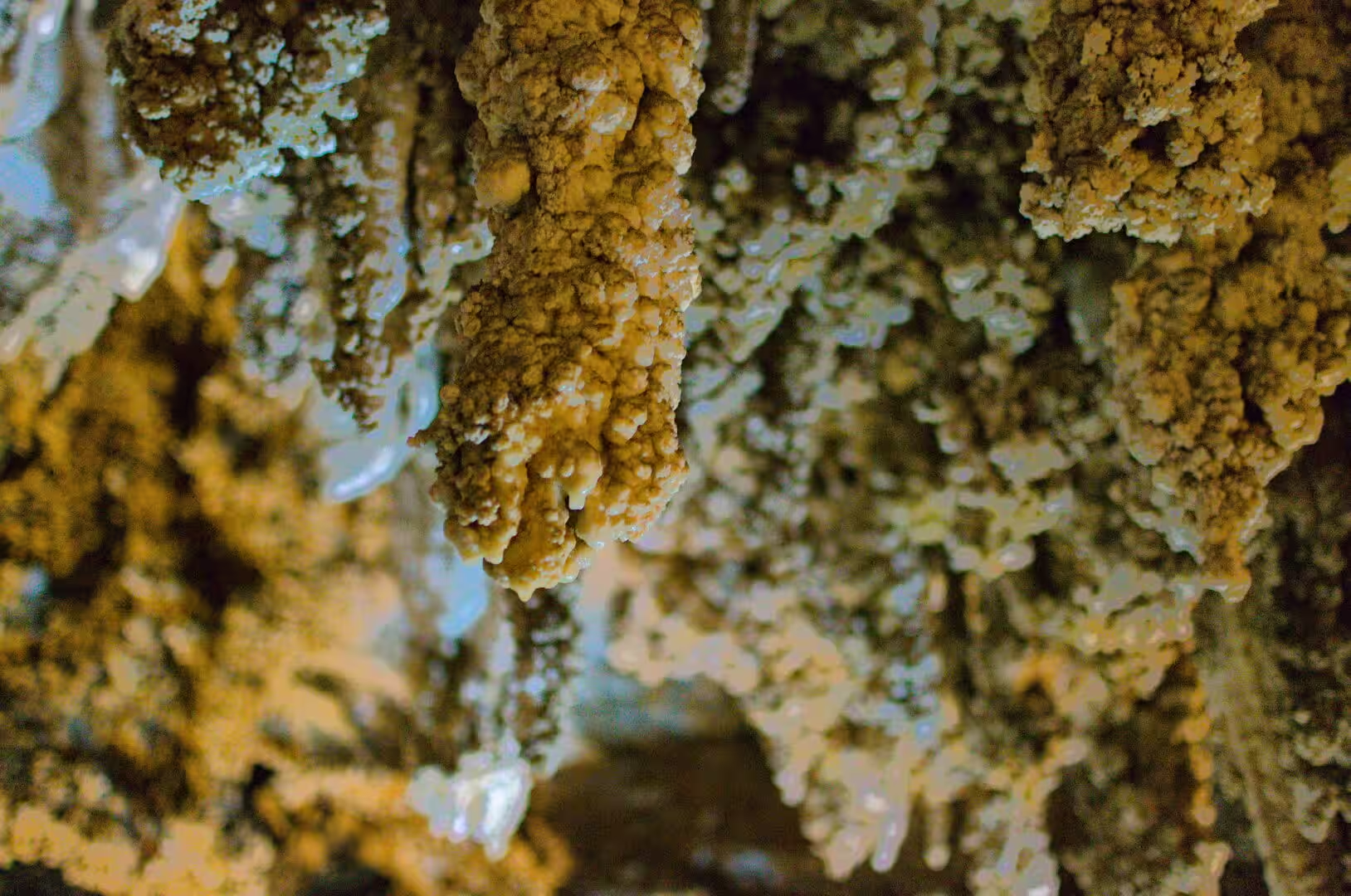
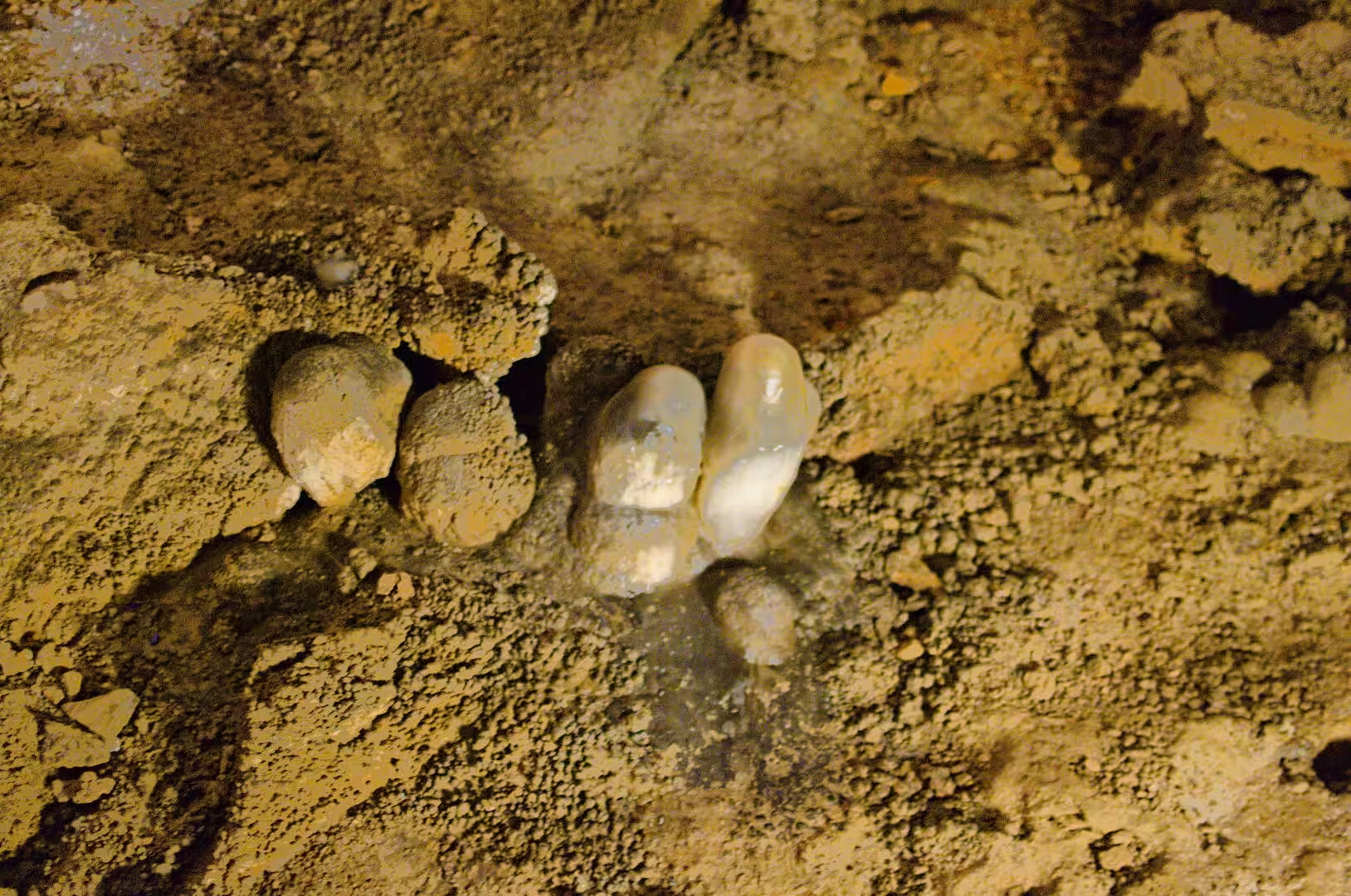
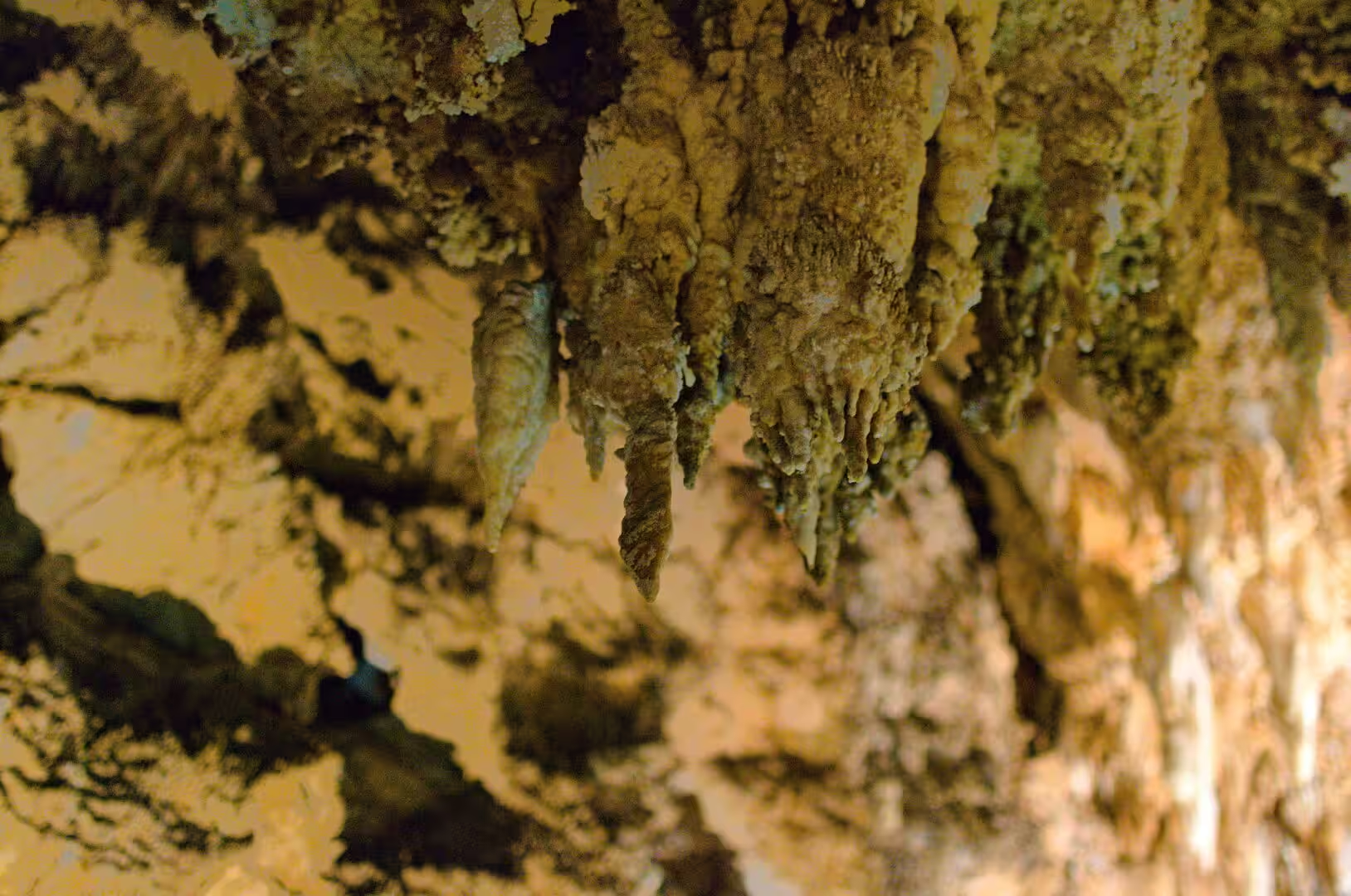
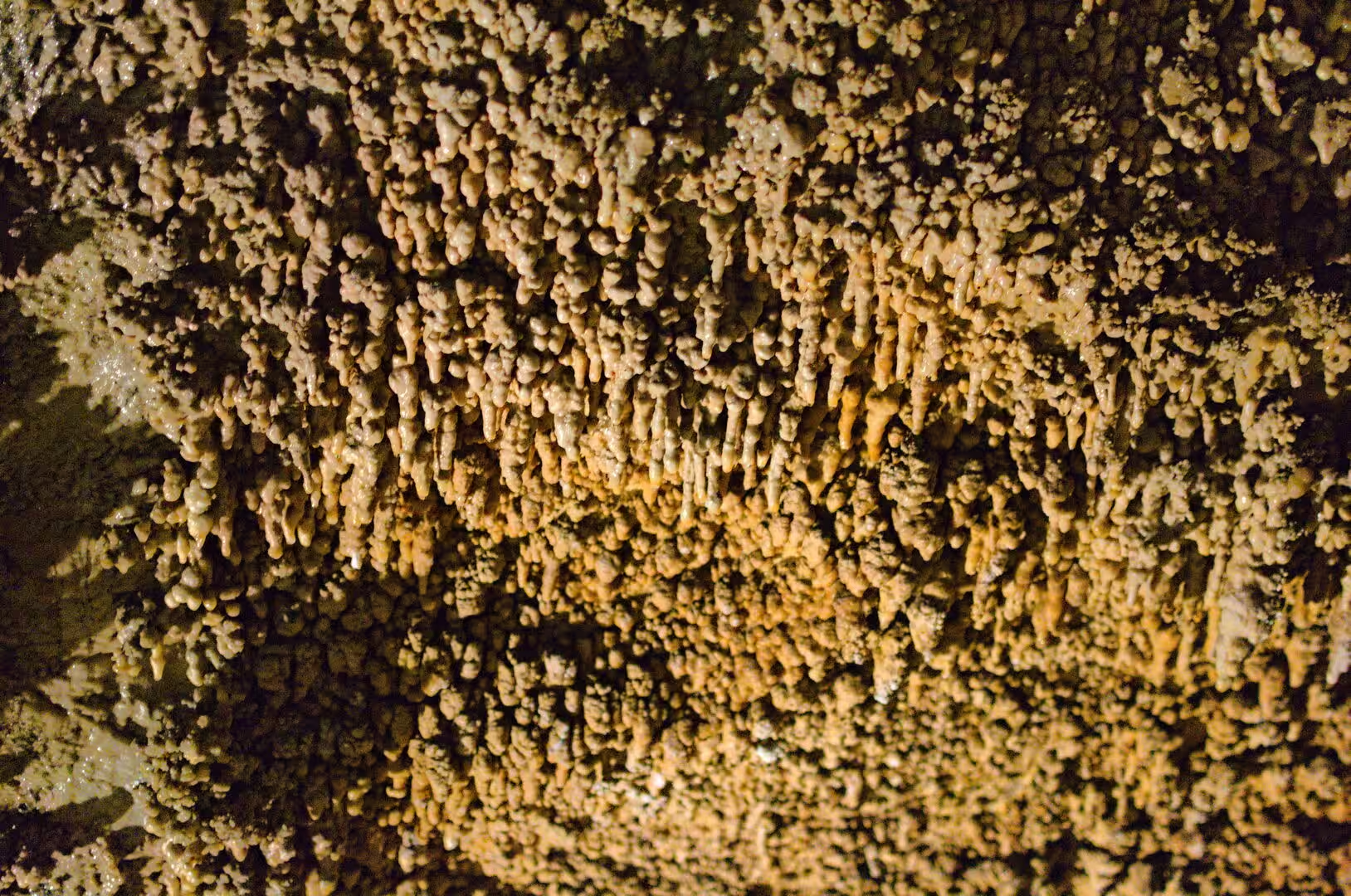
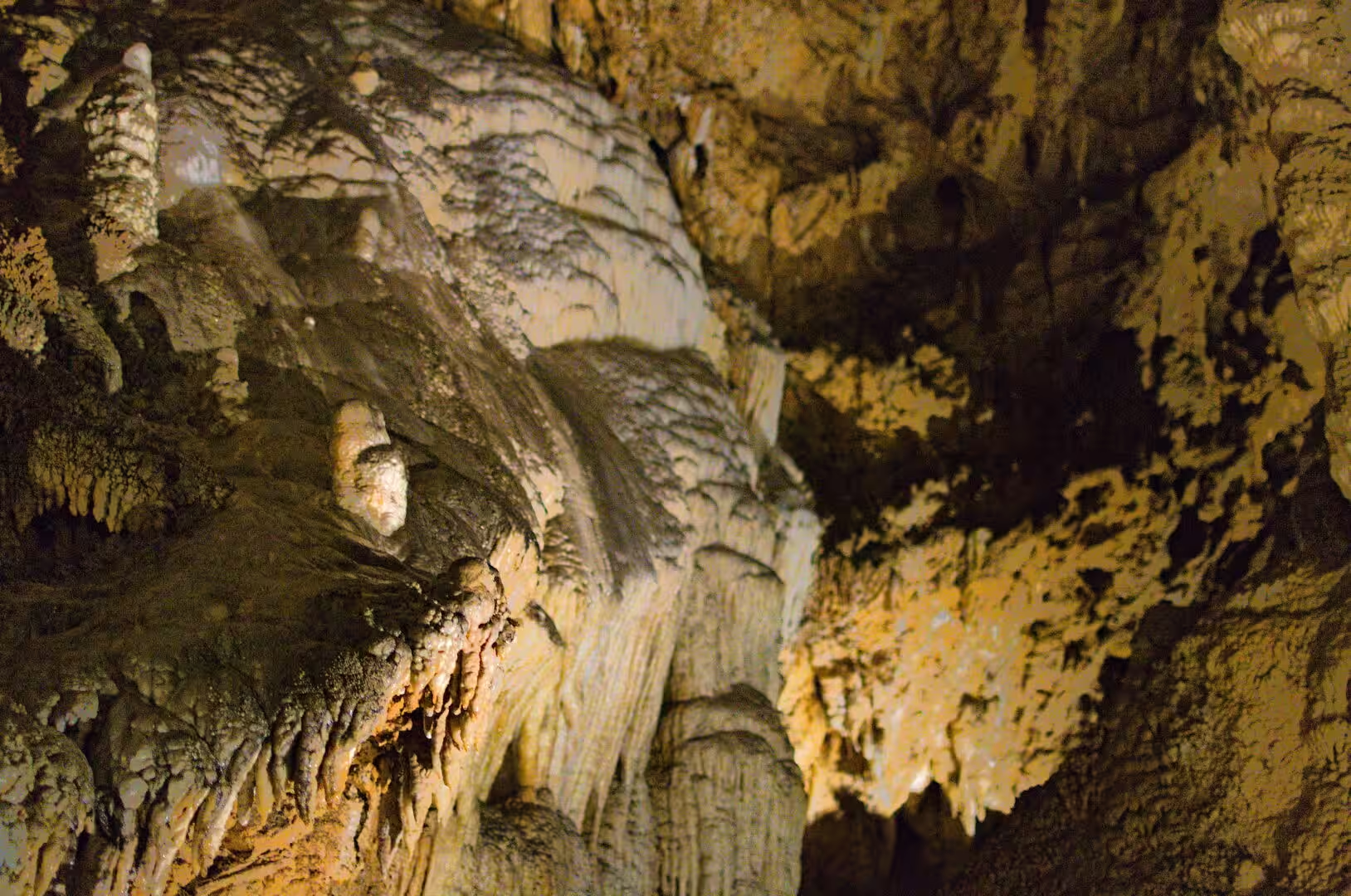
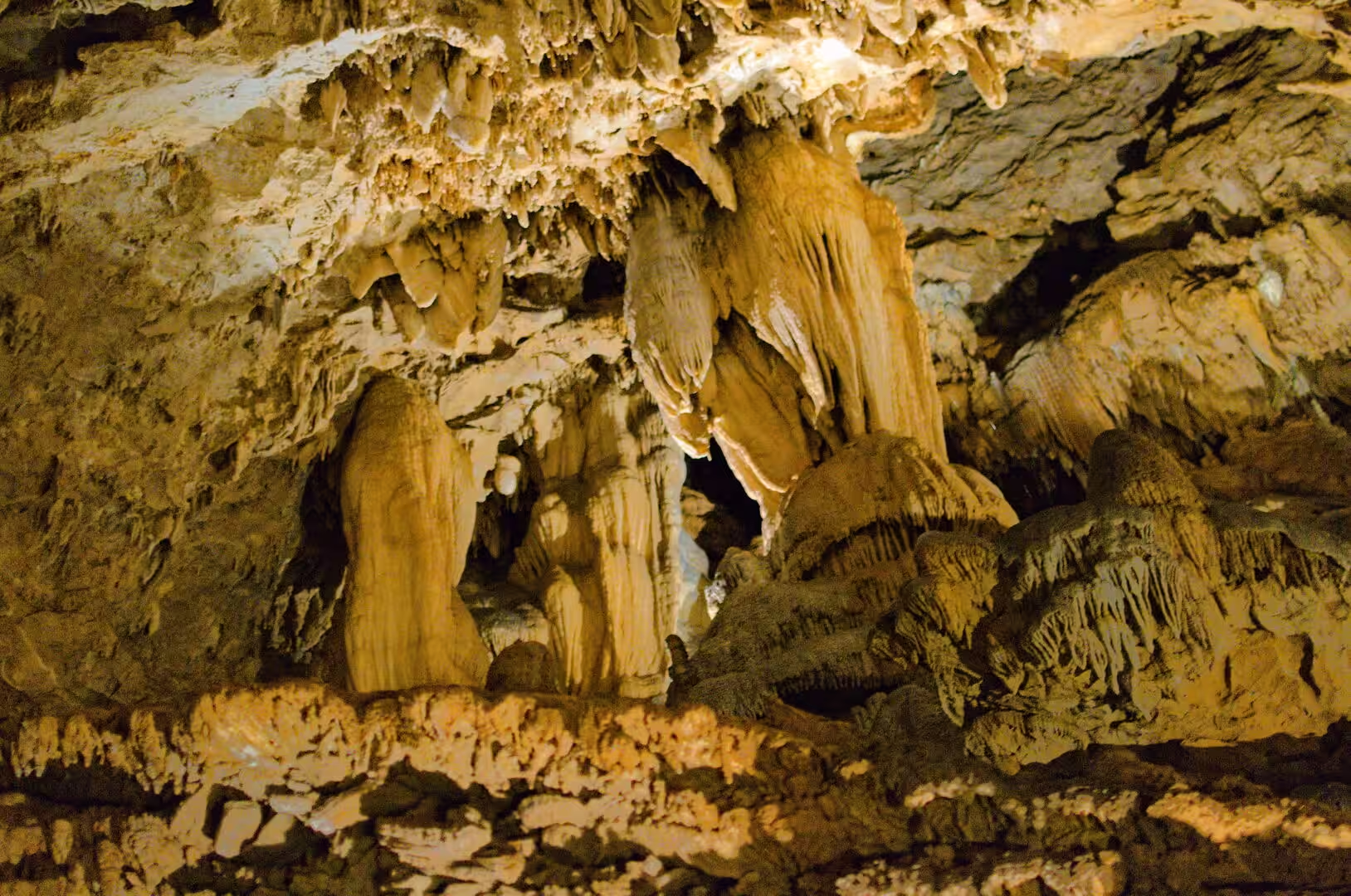
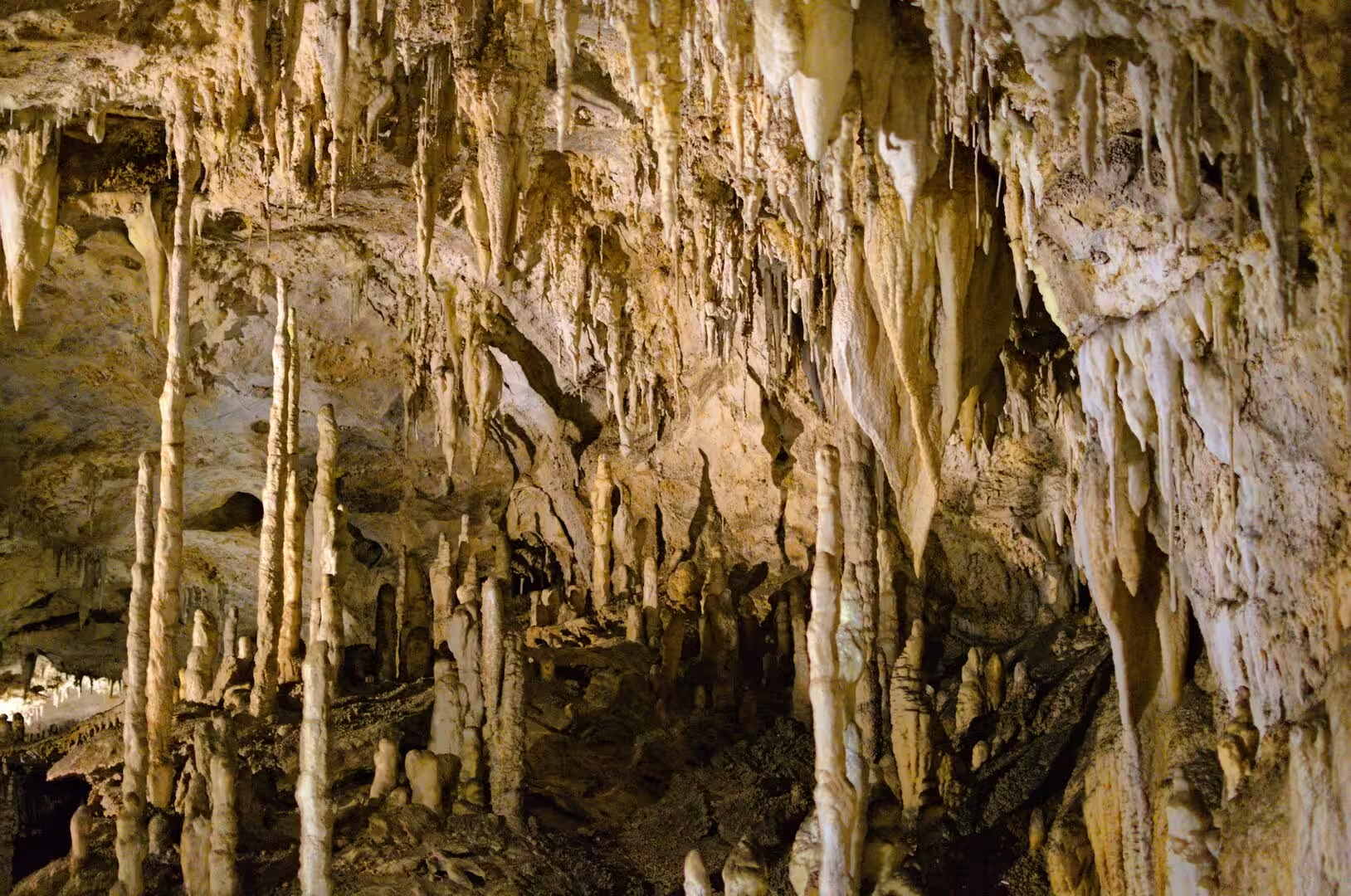
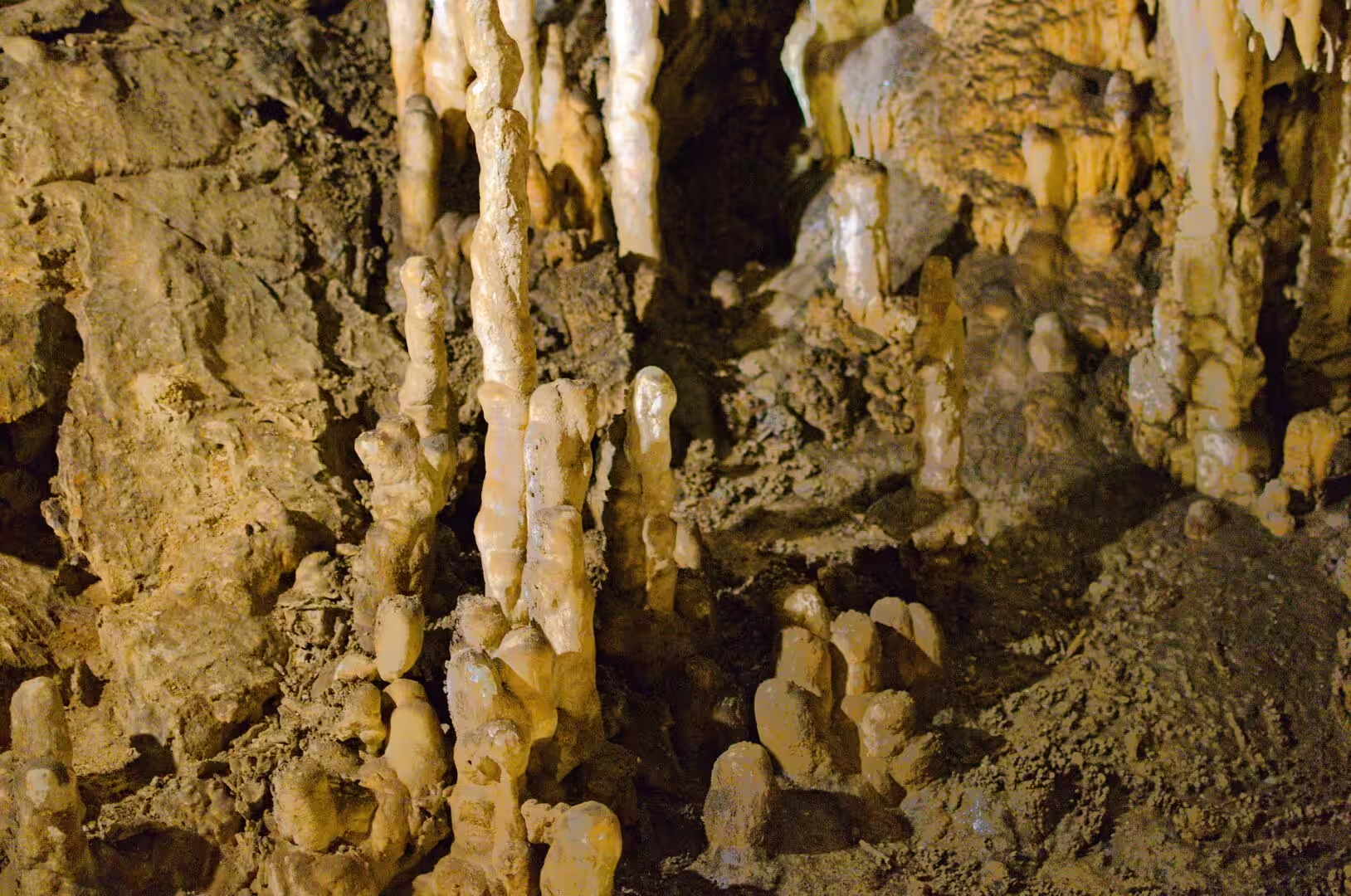
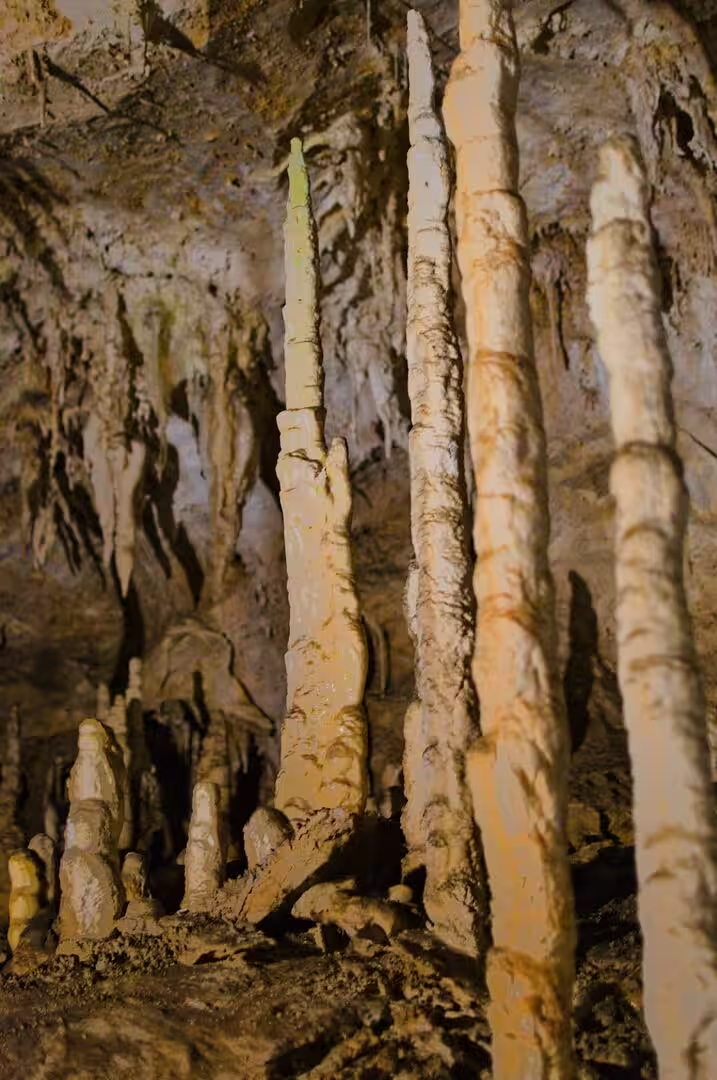
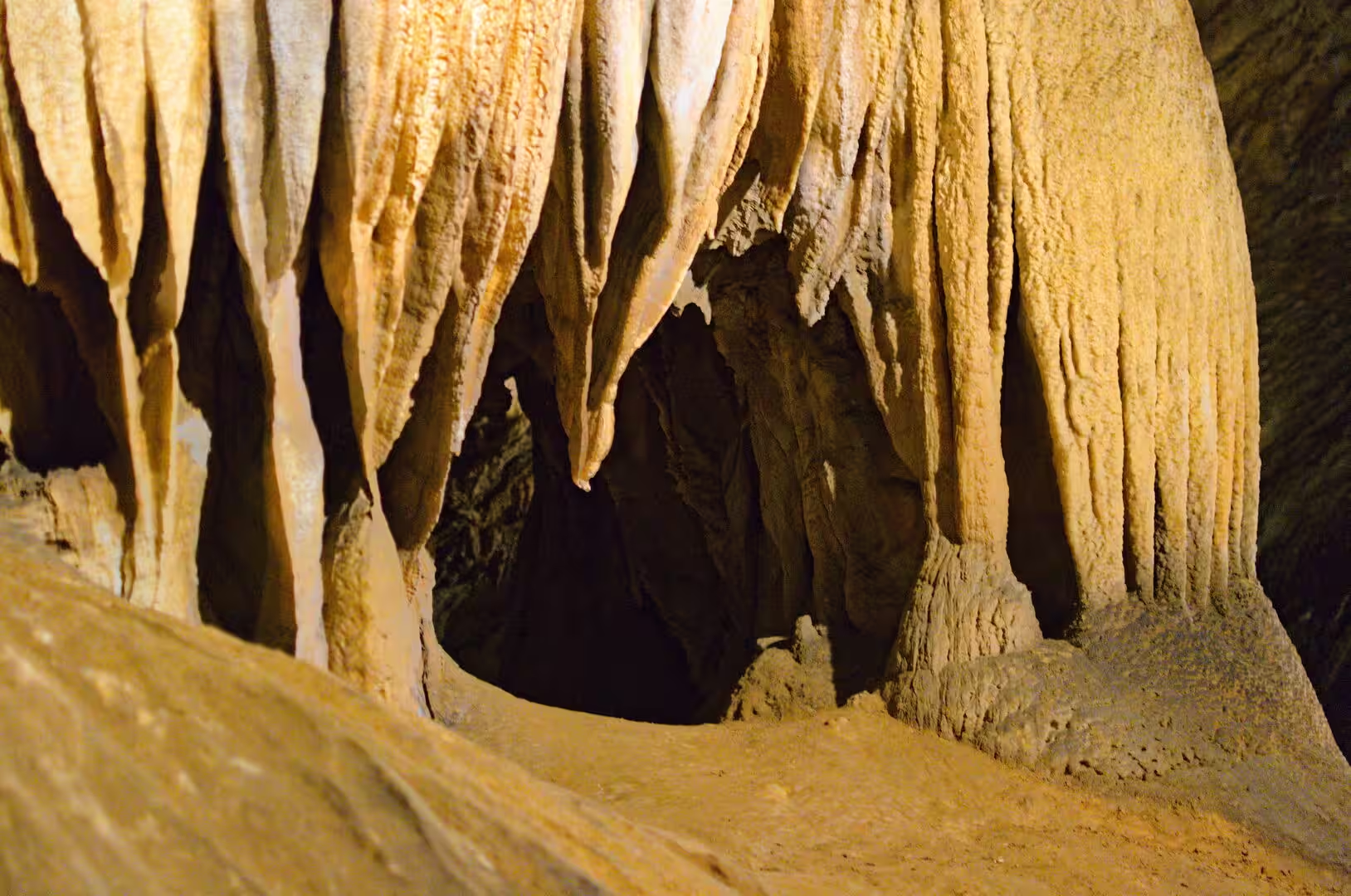
The interior is a record of that water. Where it dripped, calcite was deposited as stalactites, stalagmites and columns; where it ran down a wall, it left flowstone and drapery, sheets of stone that hang in folds. Small round forms grow in pools as cave pearls, thin straws hang from the ceilings, and the knobbly crusts known as cave popcorn cover whole surfaces. The mineral content of the rock shows in the colours of the formations, and the sulphides of the Levigliani deposit appear in some of the walls.
Because the calcite of a stalagmite grows in layers, it can be read as a calendar, and the Corchia cave has become one of the most important archives of the Mediterranean climate. Samples from its formations have been dated with high precision and analysed for trace elements and for the isotopes of oxygen and carbon, which reflect rainfall, temperature and the vegetation above the cave. The records reach back beyond the last glacial period and into the Holocene, and they are used to test the climate models that are built for the region.
The mountain above the cave is a working landscape as well, and the two are connected by water. Marble was quarried above Levigliani until 1970, and the faces and spoil slopes of the district still shed fine sediment into the streams that cross the karst. The aquifer of the Apuan Alps is one of the largest in Tuscany and feeds the springs of the Versilia and of the Frigido valley; water that disappears into a shaft on the slope can come out of a spring far below, which is why the study of the underground drainage of the massif matters for the villages and for the coast.
Things to See
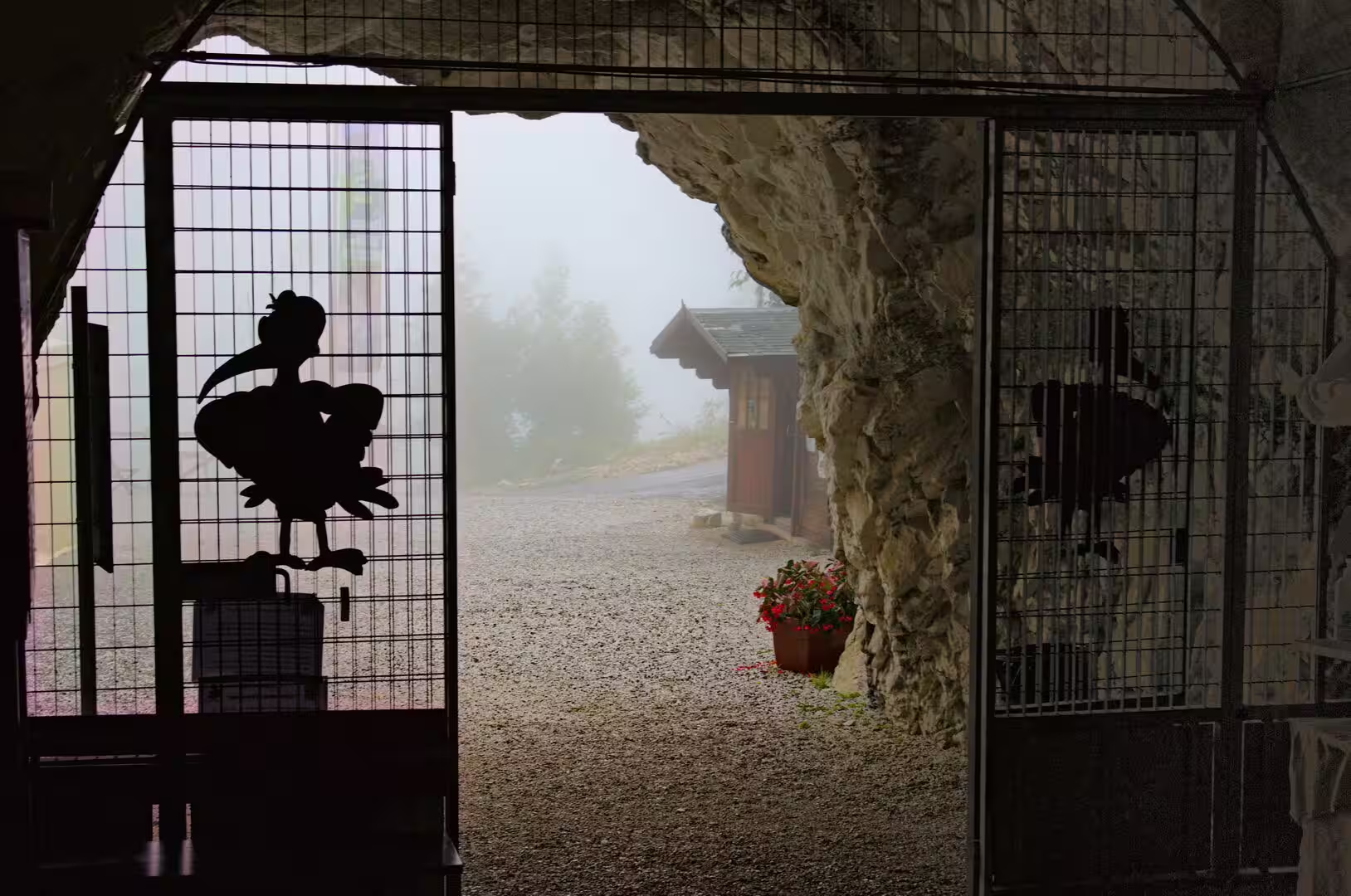
The visit begins at the quarry above the village. The entrance to the cave lies in an old marble working at 860 metres, reached by a shuttle road from Levigliani, with a gate in the rock, a small wooden hut at the mouth and a yard of gravel that is often in cloud. Beyond the gate an artificial tunnel of 170 metres runs into the mountain with a door at its end, and the first thing a visitor feels inside is the air that moves through the system and gives the cave its other name.
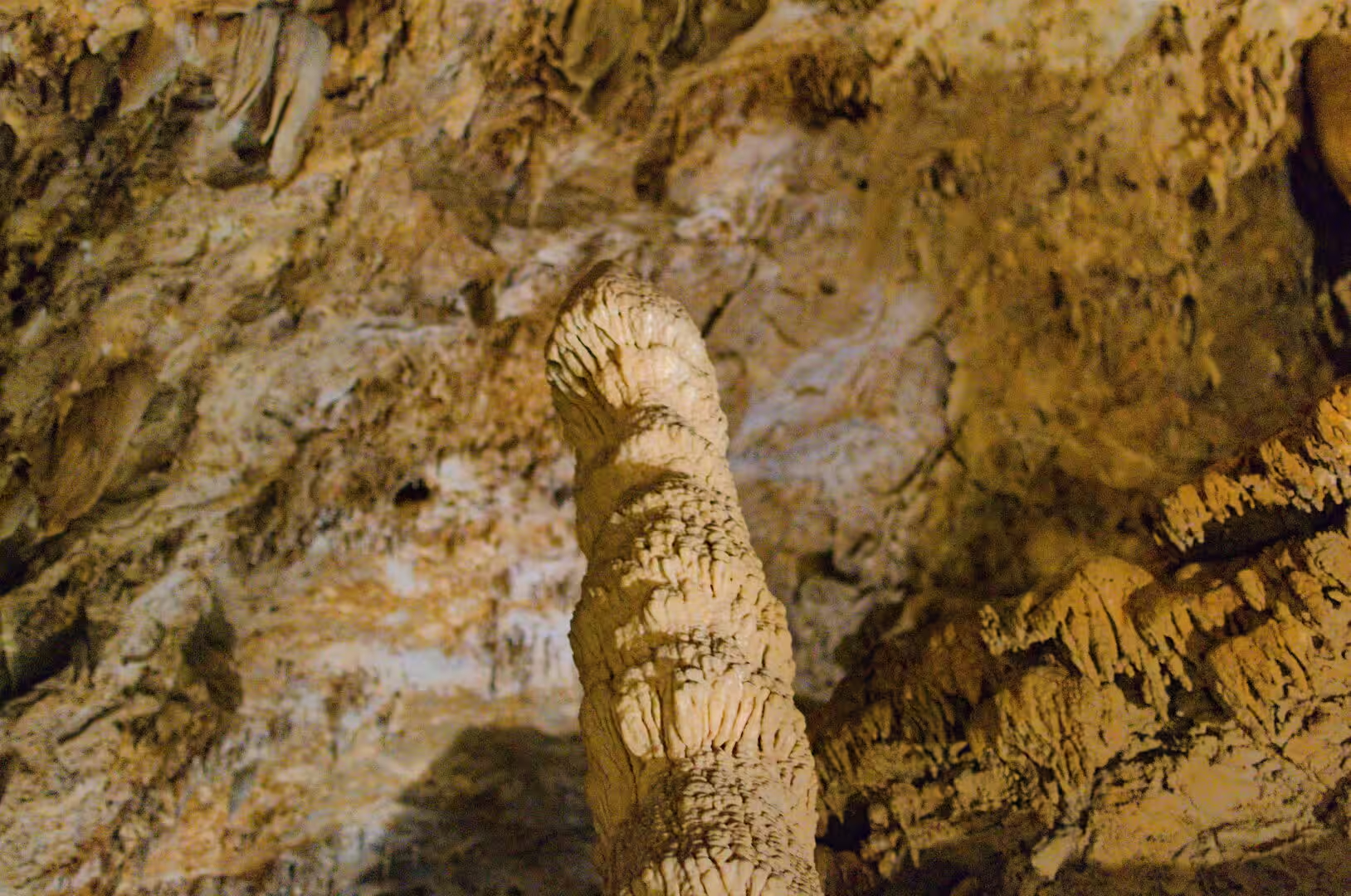
The tunnel opens into the Franosa gallery, a canyon cut into the marble. Its walls rise tens of metres above the walkway that runs along the base, and the route follows them into the dark with steel staircases climbing where the floor is broken. Near the entrance stands the Gendarme, a squat cone-shaped stalagmite that guards the way, and above the walkway the rock is banded and stained in the grey and cream of the marble.
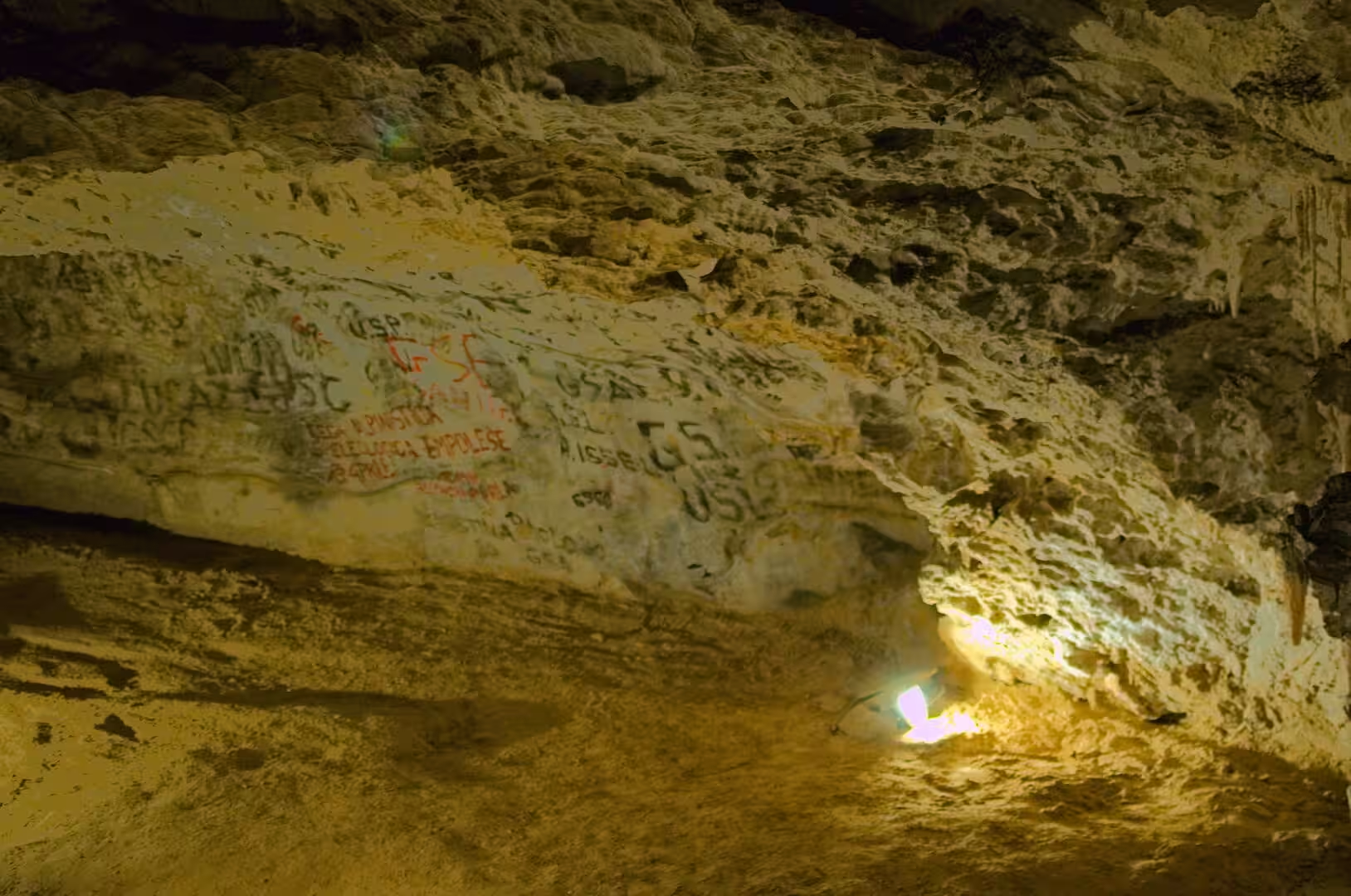
The next gallery is the one the cavers named after themselves. The British explorers who worked here in the 1960s gave it the name Galleria degli Inglesi, and before that it was called the Galleria Dipinta, the painted gallery, for the colours of its mineral formations: red, white and brown on the walls and the ceilings. The first of the giant formations stand here, and a fossil underground lake lies beside the route, its bed dry and its outline marked by terraces of flowstone.
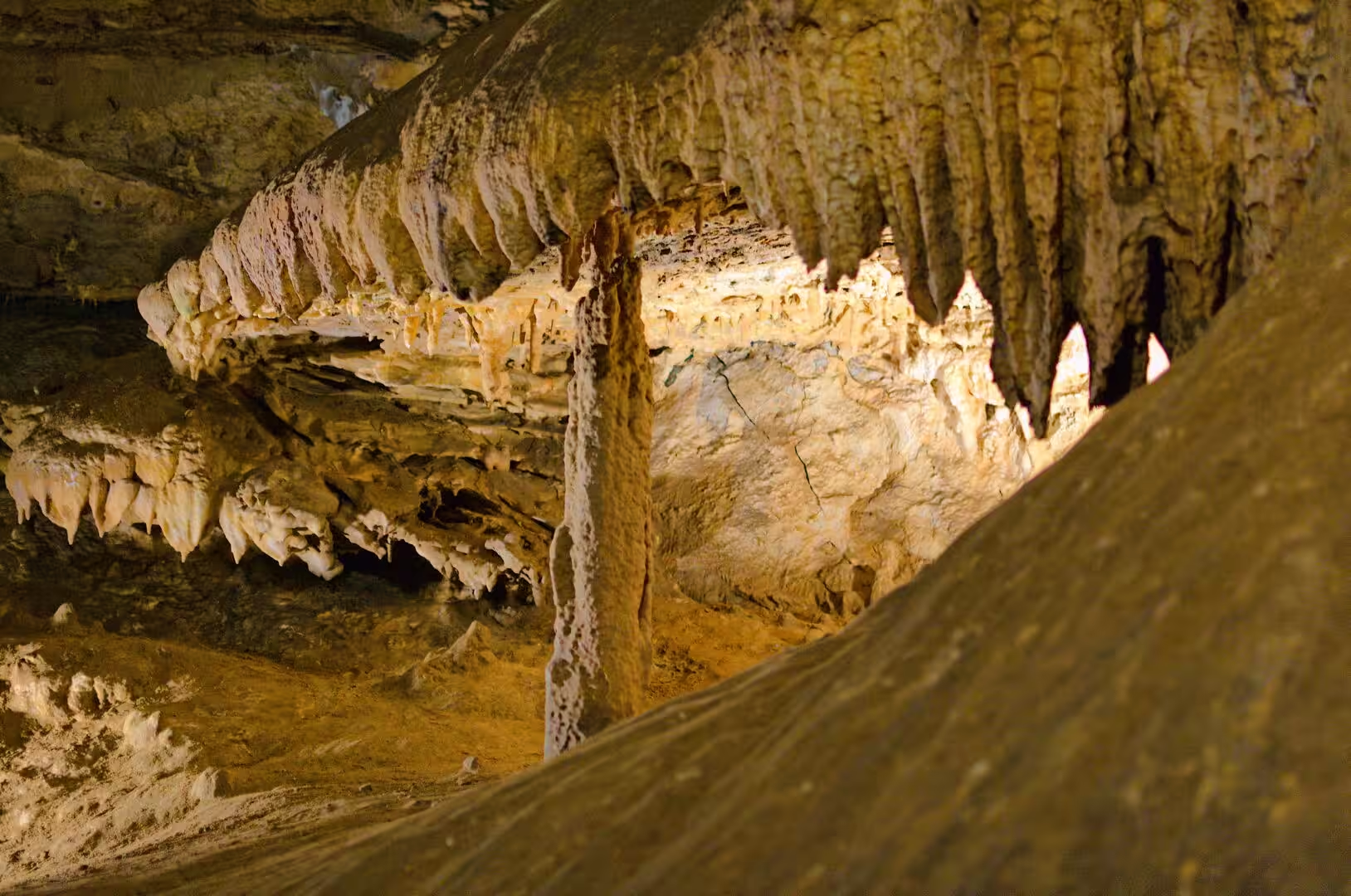
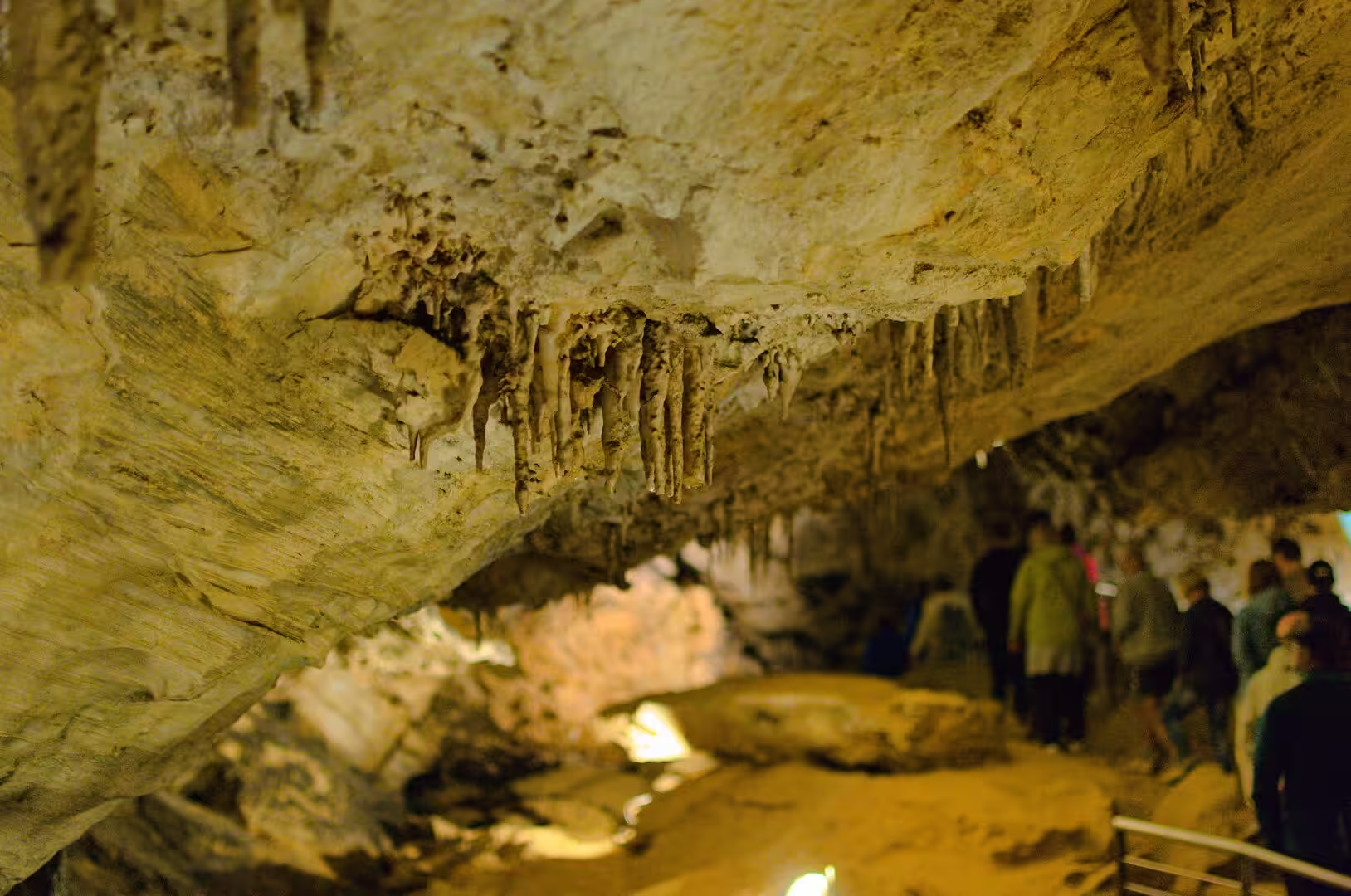
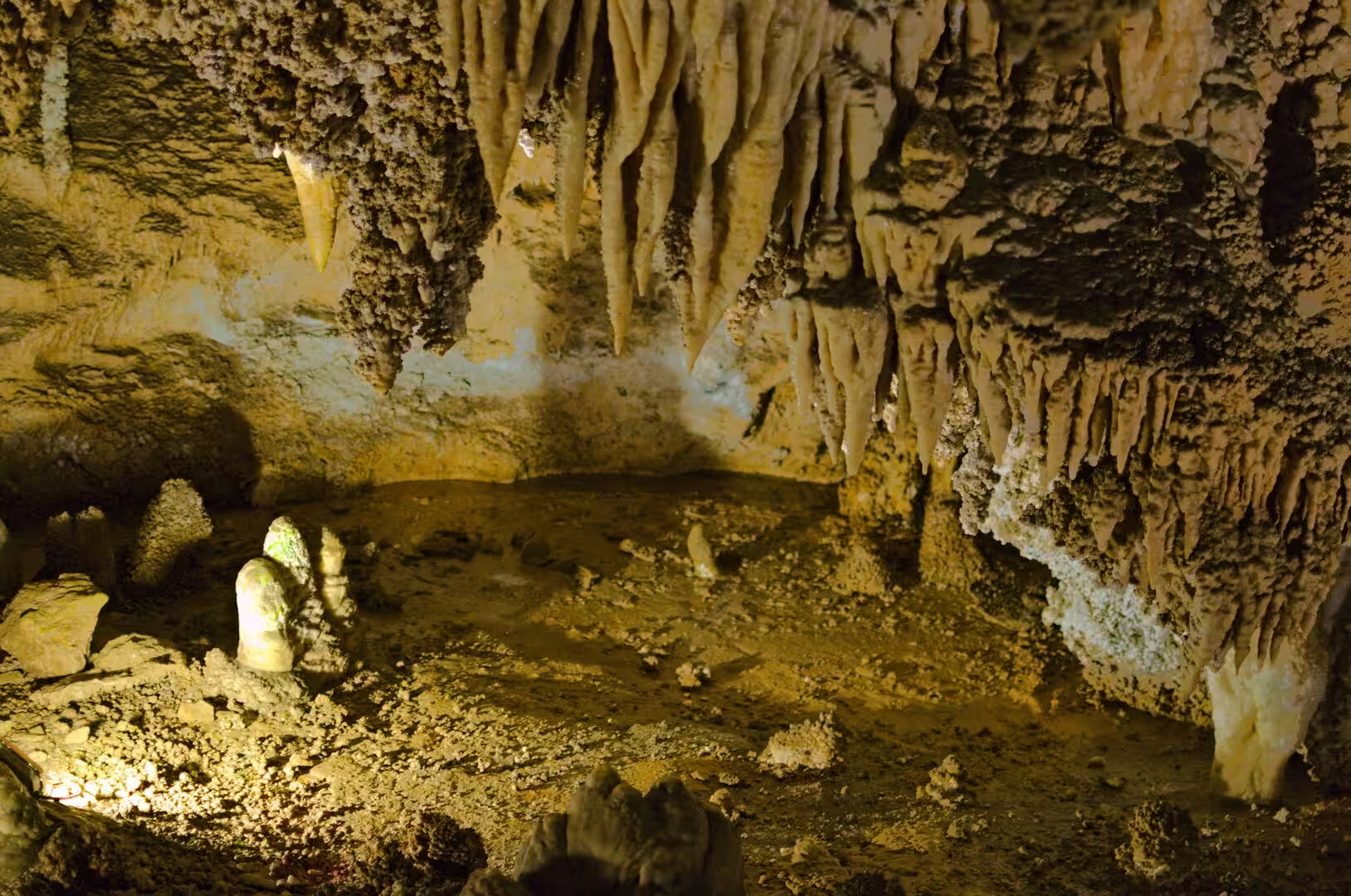
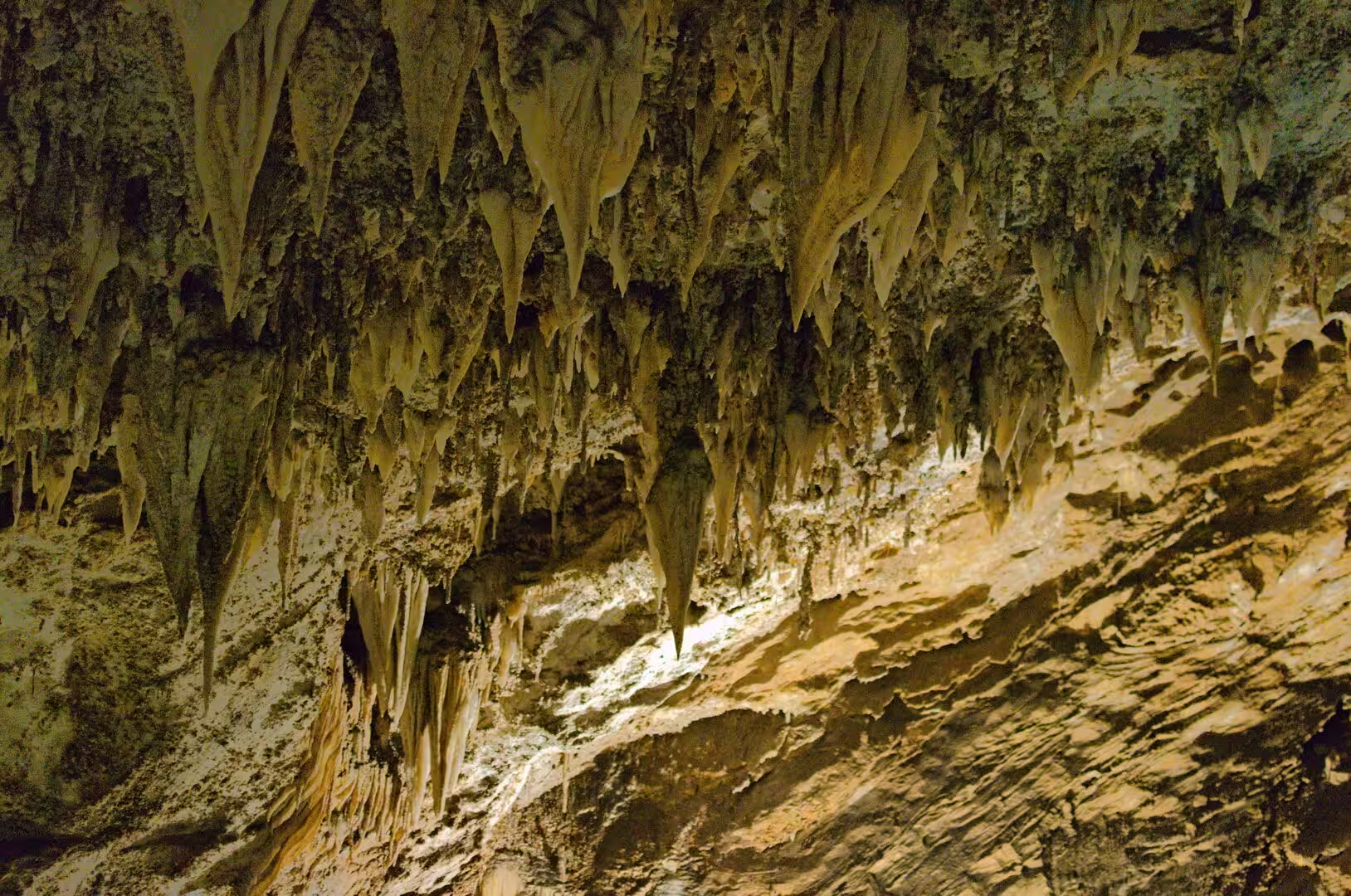
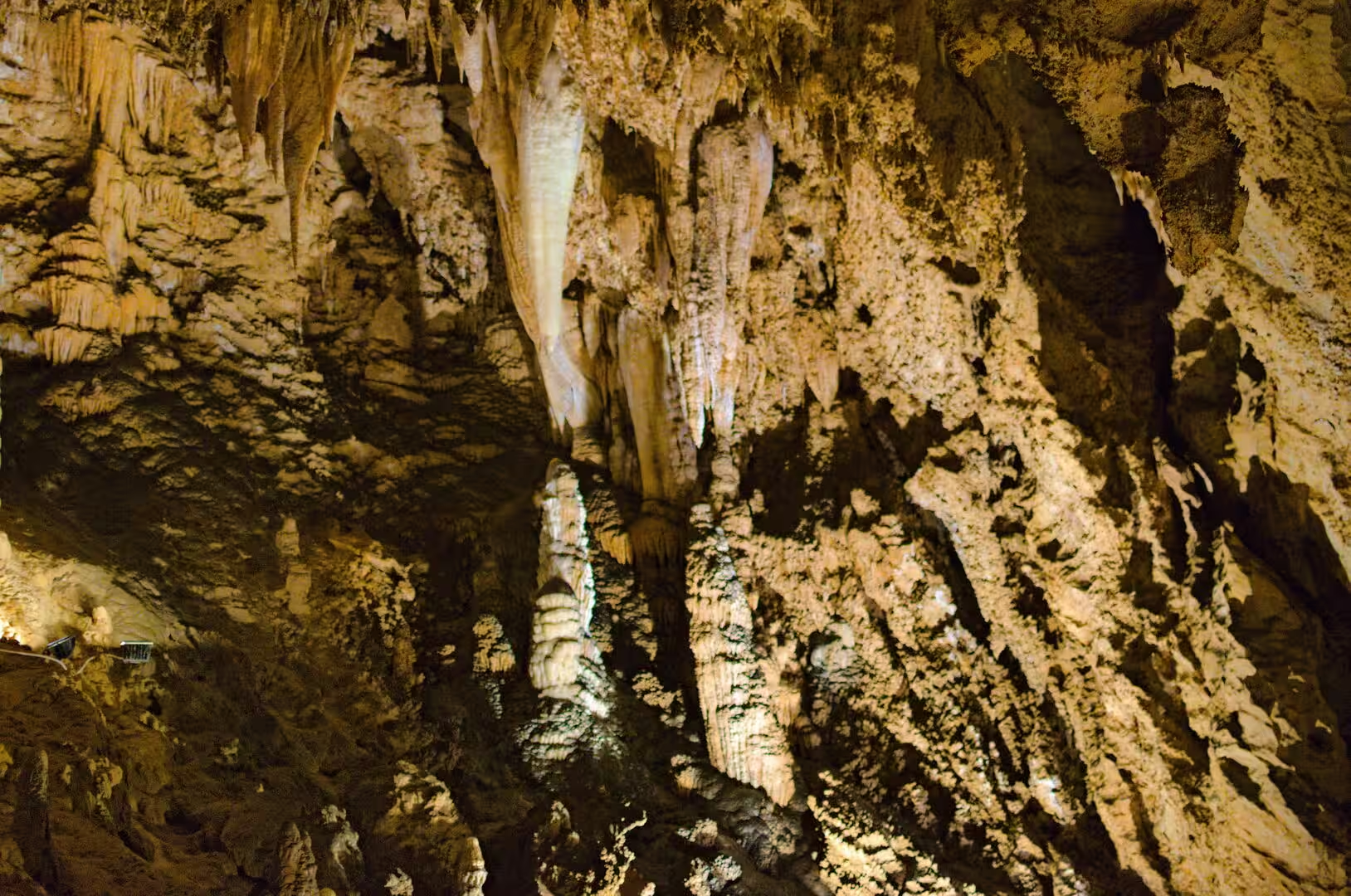
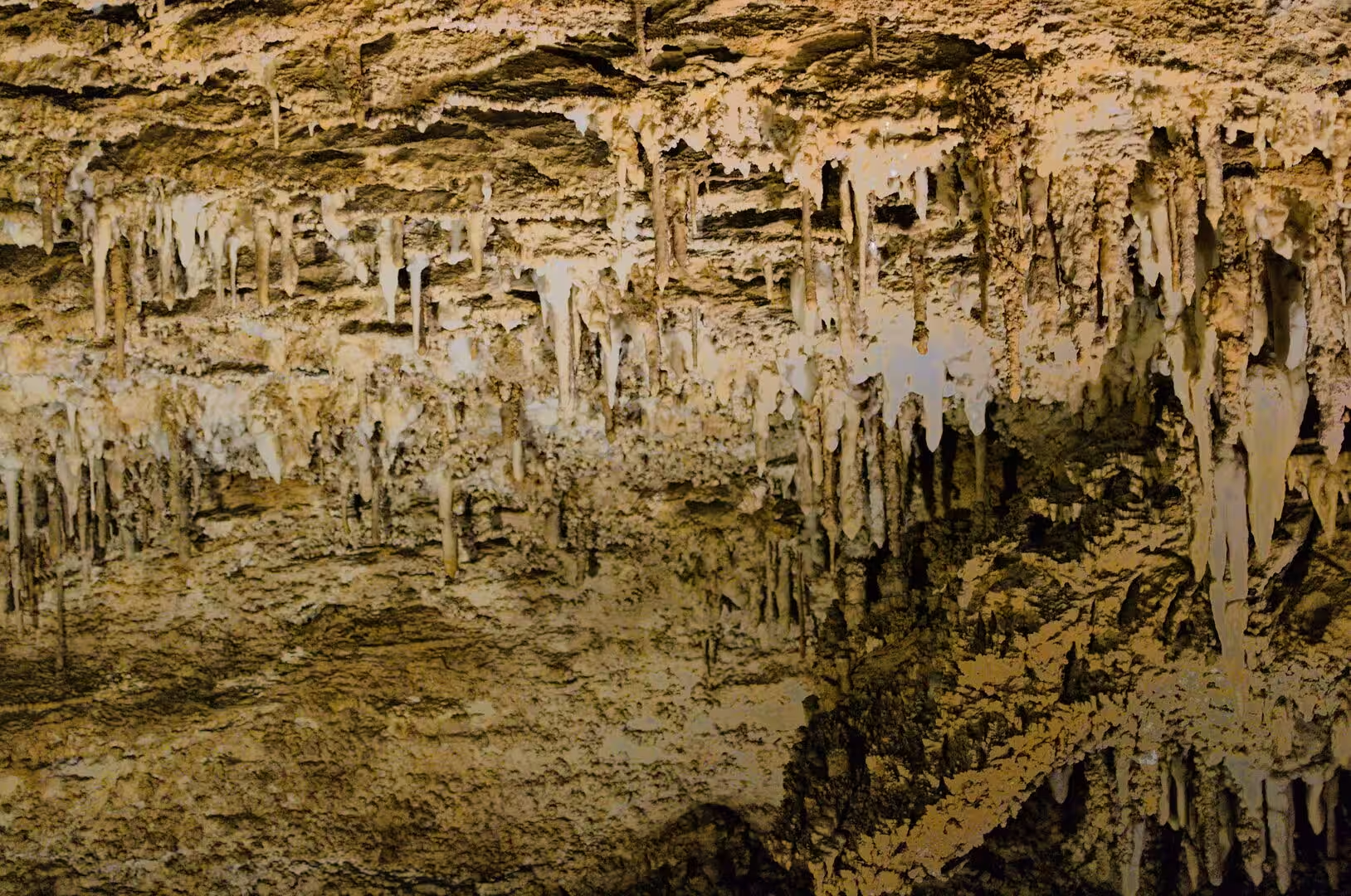
The heart of the route is a forest of stalactites. Slender forms hang in rows from the ceilings, thick columns reach from the floor to the roof, and the walkway passes beneath packs of stone that seem to have been poured from above. The lighting is warm and low, so that the surfaces read as cream, amber and pale grey, and the size of the halls is hard to judge until a lamp shows a figure on the path far ahead and small beneath the roof.
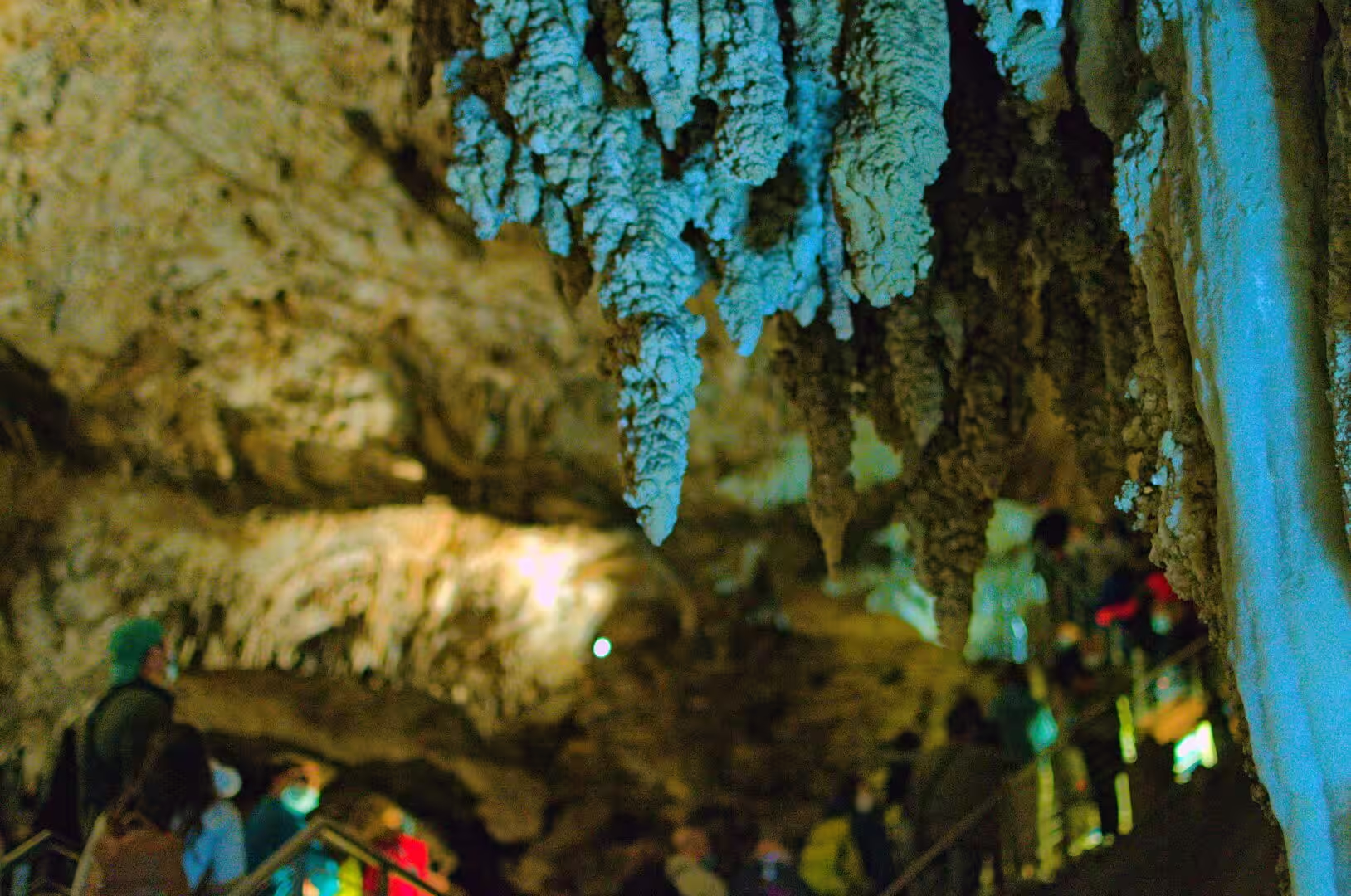
The fine detail of the cave rewards a slower look. Cave popcorn covers ceilings in clusters of small knobs, thin soda straws hang in hundreds where water seeps through a joint, and the twisted threads of helictites grow sideways out of the walls against gravity. Draperies hang in folds like cloth, wet stalactites meet the stalagmites below them and grow with them into columns, and shallow pools hold the only still surfaces in the cave, doubling the rows of stone above them.
The route ends with the loop, a circular passage through the largest chambers of the system. Halls open on the walkway without warning, their roofs invisible in the dark, and stairways zigzag up the walls to reach the next level. Everything on the way is the work of water and time: the terraces of flowstone, the rounded basins, and the sections where an older river bed is preserved in a hard crust of calcite above the present floor. The tour leaves the cave through the same tunnel by which it entered.
The village and its surroundings are the second half of the day. The lanes of Levigliani keep their stone houses and their chapel, the park office arranges visits to the mercury mine and to the marble quarries above, and the forest path beside the village is lined with animals carved in wood, so that a walk to the spring becomes a slow passage between figures that appear and disappear in the fog. In autumn the cloud often lies in the valley while the ridge above it stands clear. Above the village the old marble workings can be reached on foot, and the small museums of the village keep the memory of the quarrymen and the miners who lived from the mountain.
The coast below belongs to the same story. Marble from the quarries of the Apuan Alps was carried down to the sea at Marina di Carrara and loaded for Rome and for the churches of Europe, and the marble railway that linked the pits with the port is an industrial monument today. Between the mountains and the sea lie Pietrasanta with its workshops and Forte dei Marmi with its waterfront, and the Versilia keeps the memory of the stone in the sculptures that stand in its squares.
References
- Wikipedia contributors (2026). Apuan Alps. en.wikipedia.org/wiki/Apuan_Alps
- Wikipedia contributors (2026). Stazzema. en.wikipedia.org/wiki/Stazzema
- Wikipedia contributors (2026). Versilia. en.wikipedia.org/wiki/Versilia
- Wikipedia contributors (2026). Carrara marble. en.wikipedia.org/wiki/Carrara_marble
- Wikipedia contributors (2026). Marble. en.wikipedia.org/wiki/Marble
- Wikipedia contributors (2026). Karst. en.wikipedia.org/wiki/Karst
- Wikipedia contributors (2026). Cave. en.wikipedia.org/wiki/Cave
- Wikipedia contributors (2026). Show cave. en.wikipedia.org/wiki/Show_cave
- Wikipedia contributors (2026). Show mine. en.wikipedia.org/wiki/Show_mine
- Wikipedia contributors (2026). Speleothem. en.wikipedia.org/wiki/Speleothem
- Wikipedia contributors (2026). Cinnabar. en.wikipedia.org/wiki/Cinnabar
- Wikipedia contributors (2026). Seravezza. en.wikipedia.org/wiki/Seravezza
- Wikipedia contributors (2026). Sant’Anna di Stazzema massacre. en.wikipedia.org/wiki/Sant’Anna_di_Stazzema_massacre
- REGATTIERI E., ZANCHETTA G., DRYSDALE R.N., ISOLA I., et al. (2014) Lateglacial to Holocene trace element record (Ba, Mg, Sr) from Corchia Cave (Apuan Alps, central Italy): paleoenvironmental implications. Journal of Quaternary Science. 29. 381-392. doi.org/10.1002/jqs.2712
- Bajo P., Drysdale R., Woodhead J., Hellstrom J., et al. (2012) High-resolution U-Pb dating of an Early Pleistocene stalagmite from Corchia Cave (central Italy). Quaternary Geochronology. 14. 5-17. doi.org/10.1016/j.quageo.2012.10.005
- Dini A., Benvenuti M., Costagliola P., Lattanzi P. (2001) Mercury deposits in metamorphic settings: the example of Levigliani and Ripa mines, Apuane Alps (Tuscany, Italy). Ore Geology Reviews. 18. 149-167. doi.org/10.1016/s0169-1368(01)00026-9
- Dini A., Benvenuti M., Lattanzi P., Tanelli G. (1995) Mineral assemblages in the Hg-Zn-(Fe)-S system at Levigliani, Tuscany, Italy. European Journal of Mineralogy. 7. 417-428. doi.org/10.1127/ejm/7/2/0417
- Nannoni A., Piccini L. (2022) Mixed Recharge and Epikarst Role in a Complex Metamorphic Karst Aquifer: The Pollaccia System, Apuan Alps (Tuscany, Italy). Hydrology. 9. 83. doi.org/10.3390/hydrology9050083
- Di Pasquale C. (2012) Massacre, Trial and ‘Choral Memory’ in Sant’Anna di Stazzema, Italy (1944-2005). International Journal of Transitional Justice. 6. 486-501. doi.org/10.1093/ijtj/ijs025