2021 Italy - Siena
18 September 2021













Journal Notes
General
Siena is a hill town in the centre of Tuscany and the capital of its province, with 53,180 inhabitants the twelfth largest city in the region. It stands at 322 metres above sea level in the middle of a wide hilly landscape, between the valley of the Arbia to the south, the Merse to the south-west, the Elsa to the north, the hills of Chianti to the north-east, the Montagnola Senese to the west and the Crete Senesi to the south-east. The historic centre is a UNESCO World Heritage Site.
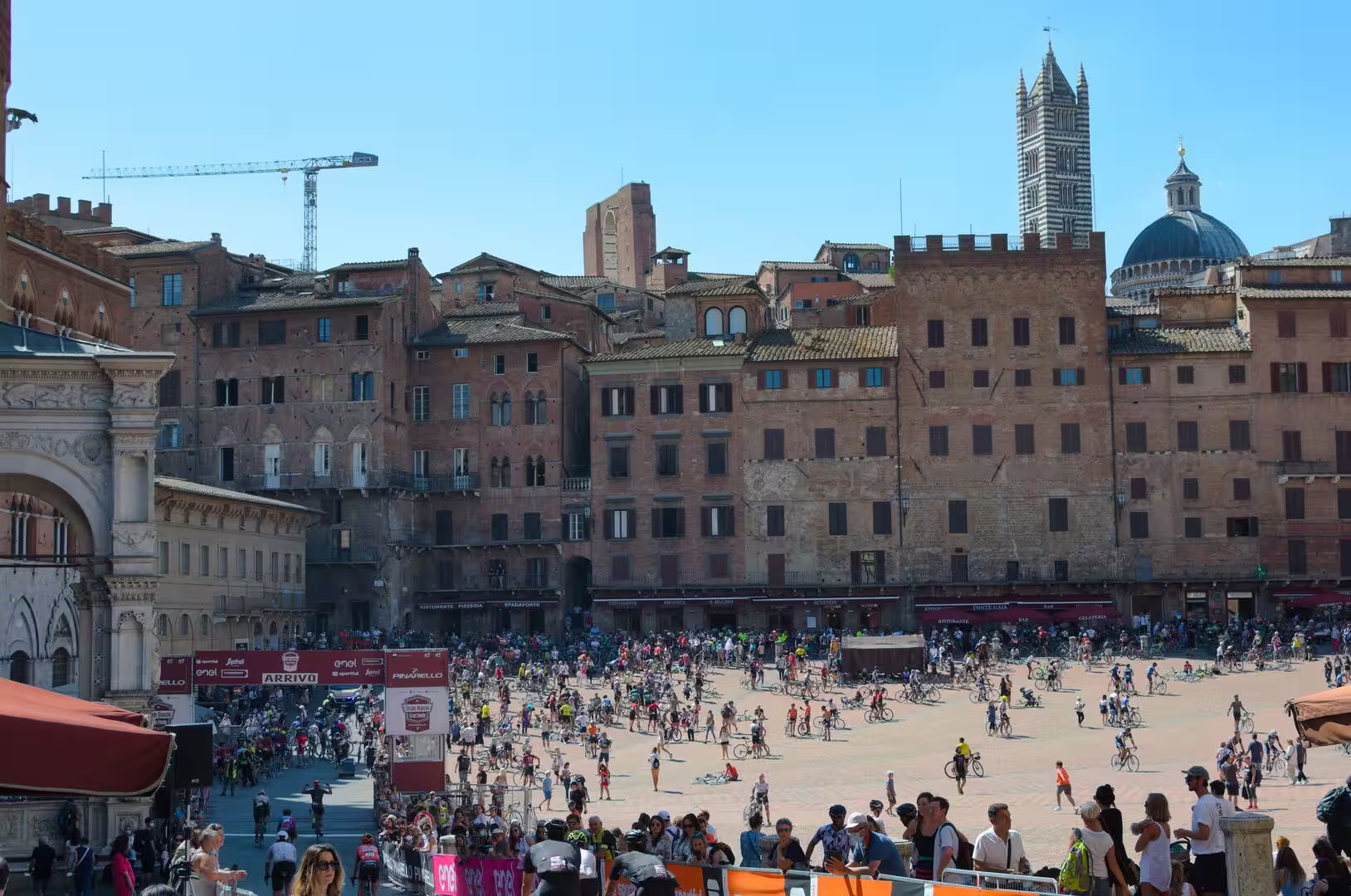
The city is built where several ridges meet, and its shape is easy to read. From the shell-shaped Piazza del Campo with the Palazzo Pubblico and the Torre del Mangia, the streets follow the high ground in two directions, and the cathedral occupies the highest point of the town with its tower of black and white marble. Three districts, the Terzi of Città, San Martino and Camollia, divide the walled area between them, and these are made up in turn of seventeen contrade, each with its own church, fountain, colours and museum.
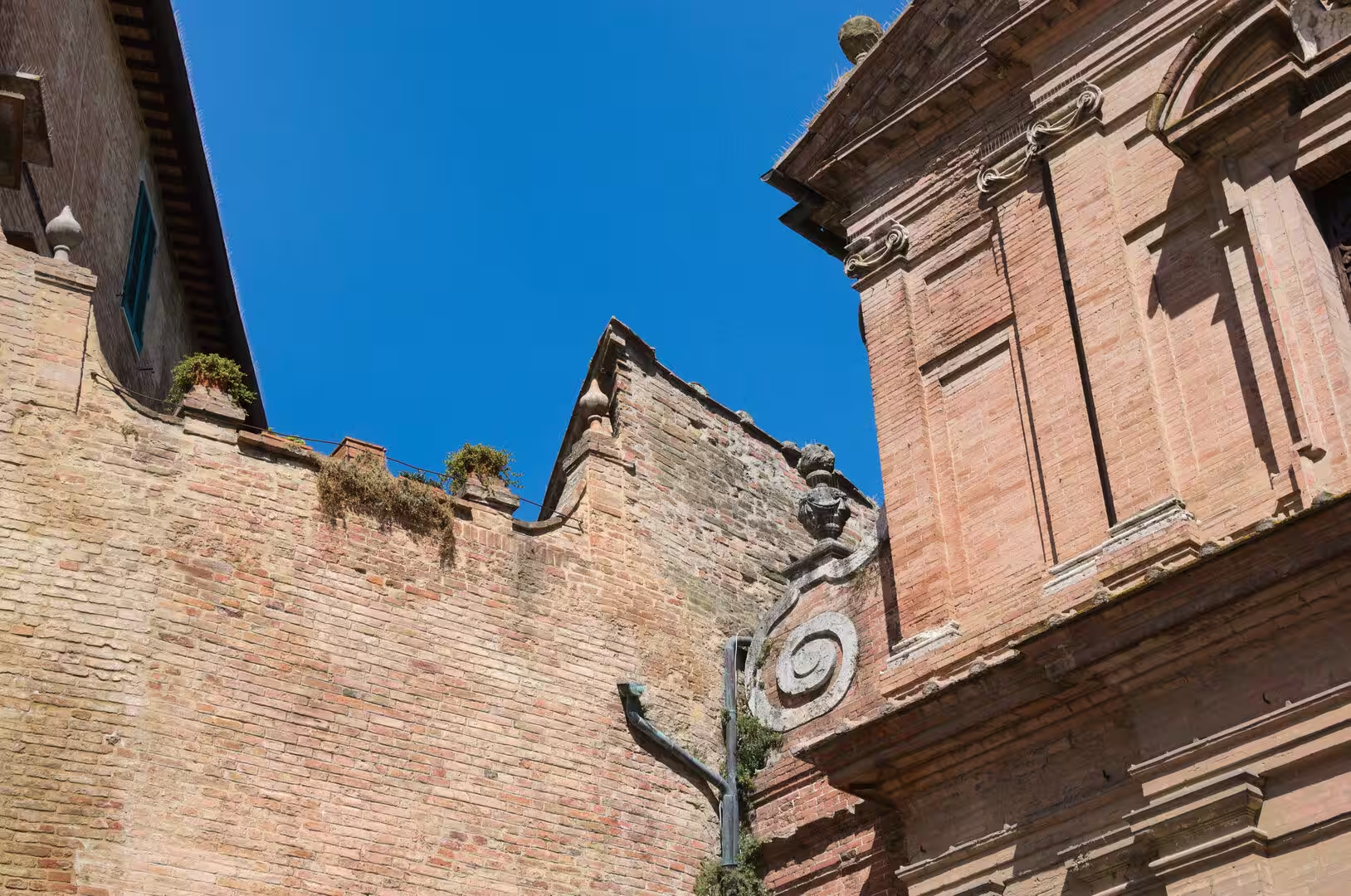
Siena is a city of brick. The hills carry clay rather than good building stone, so the houses, palaces and churches are built of brick fired from the local earth, which gives the whole town its warm terracotta colour and makes a Sienese street look of one piece. The roofs are covered with curved tiles of the same material, the gates and the towers are brick, and the pale surfaces that stand out are marble brought from farther away. In 1966 Siena became the first city in Europe to close its main square to cars.
The city lives from its past and from its students. The University of Siena was founded as the Studium Senese in 1240 and is one of the oldest in continuous operation, the Monte dei Paschi has been a bank since 1472 and has its seat in the Palazzo Salimbeni, and the Accademia Musicale Chigiana in the Palazzo Chigi-Saracini is one of the most respected music schools in the country. Museums, the old hospital of Santa Maria della Scala among them, occupy whole blocks of the medieval town.
The rhythm of the year is set by the contrade and by the Palio, the horse race run twice each summer in the Piazza del Campo, on 2 July and on 16 August, with horses representing the districts of the city under the eyes of a crowd that fills the square to its edges. The rest of the summer belongs to visitors, who come for the art and stay for the evenings on the Campo. Siena is small enough to be walked completely, steep enough that the walking is real work, and rich enough that a week does not exhaust it.
History
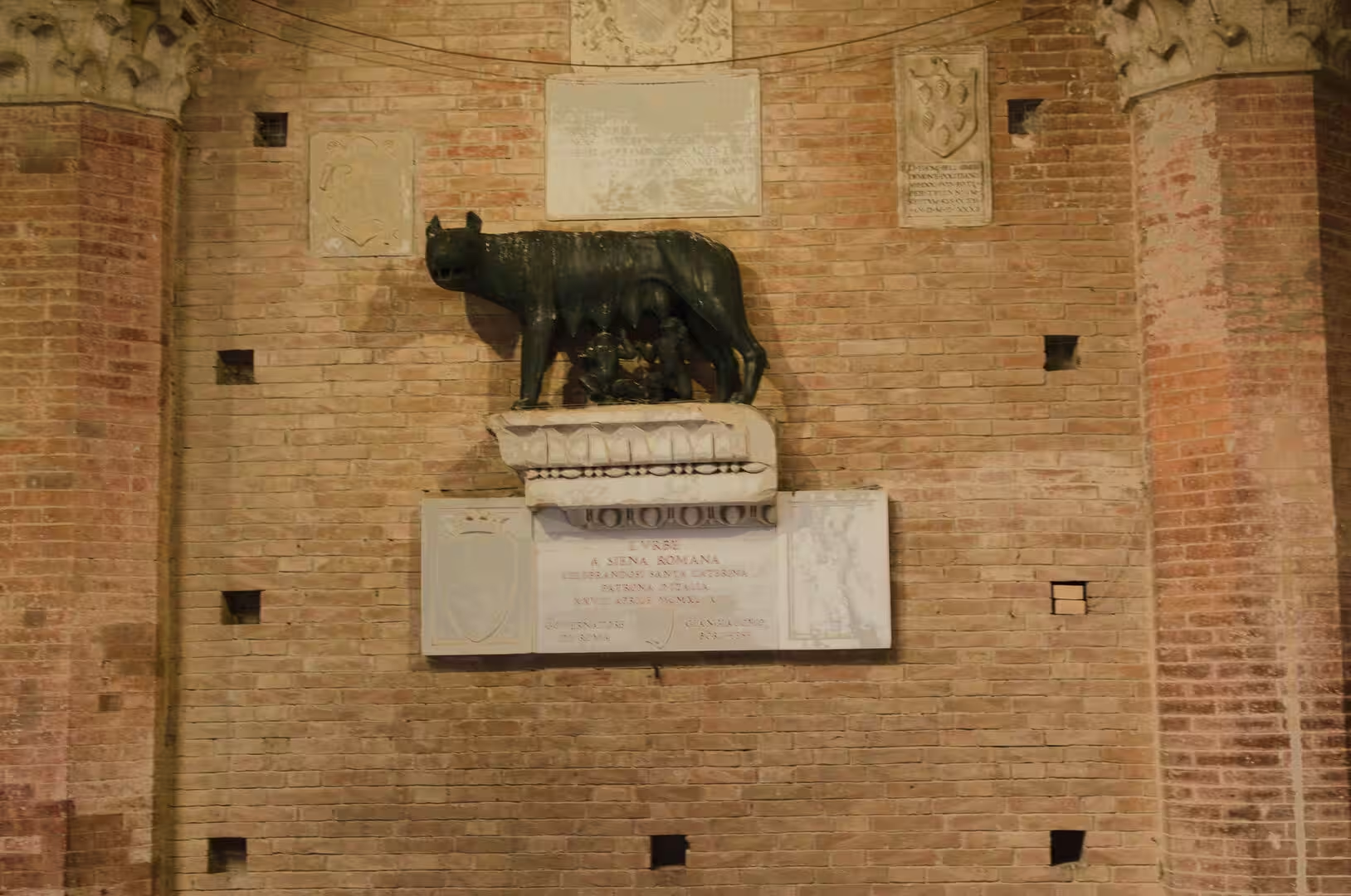
Siena was settled in Etruscan times, when a tribe called the Saina lived on the hill, and a Roman town named Saena Iulia followed in the age of Augustus. Local legend tells a different story: the city was founded by Senius and Aschius, sons of Remus, who fled Rome after their father was killed and brought with them the statue of the she-wolf suckling the twins. The white and black of the horses they rode gave Siena its coat of arms, the Balzana, and the she-wolf appears all over the town to this day.
The first document of the community is a complaint sent to Rome in 70 AD, in which a Roman senator reported that he had been mocked with a fake funeral during an official visit to the colony. The city was christianised by Sant’Ansano, later its patron, and his feast day still opens the year of the contrade. Feudal power faded with the death of Matilda of Canossa in 1115, and the March of Tuscany broke up into independent territories. Out of that confusion the Republic of Siena grew in the twelfth century, a city-state that lived from wool and from banking.
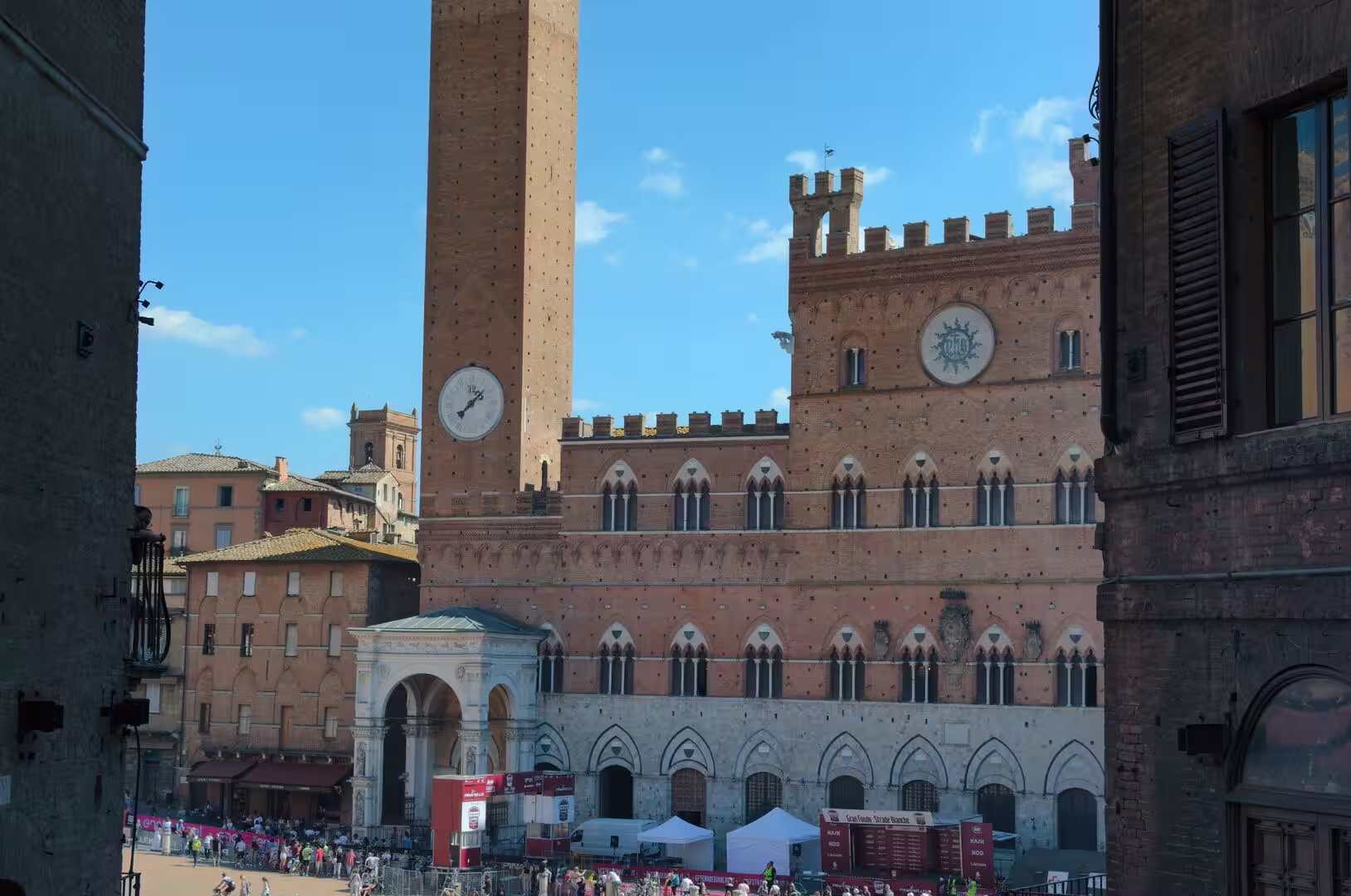
The golden age of the republic came late in the thirteenth century. In 1260 the Sienese Ghibellines defeated the Florentine Guelphs at Montaperti, and in the generations that followed the government of the Nine, in office from 1287 to 1355, gave the city its greatest buildings: the Palazzo Pubblico with Ambrogio Lorenzetti’s frescoes of good and bad government, the Torre del Mangia, the walls, and the fountain of the Fonte Gaia on the Campo. Before the plague the city held some fifty thousand people.
The Black Death of 1348 killed about half of them, and the republic never recovered its strength. Factional fighting, war with Florence and the rise of larger powers wore it down. From 1547 the city was governed by a Spanish governor, Diego Hurtado de Mendoza, until a Sienese revolt expelled him, and in the war of 1551 to 1559 Florence and the Spanish crown besieged Siena. After eighteen months of resistance the republic surrendered on 17 April 1555. A remnant held out in Montalcino until 1559, when the Peace of Cateau-Cambrésis gave Siena to the Medici.
Under the Medici and then the Habsburg-Lorraine the city became the capital of a province and slowly lost its importance, although its banks and its nobility kept it alive. In 1859 Siena was the first city in Tuscany to vote for annexation to the Kingdom of Italy. The twentieth century brought the university, tourism and the protection of the centre, which UNESCO listed as a World Heritage Site in 1995. The Palio went on being run through all of it, through wars and occupations, and it remains the fixed point of the Sienese year.
Geology
The landscape around Siena is made of soft ground. The city stands in a basin filled with marine sediments laid down when this part of Tuscany lay under water a few million years ago, sand, clay and gravel that erode easily and pass slowly into the bare hills of the Crete Senesi. To the west the Montagnola Senese is different rock altogether, older, harder and folded, and it carries the marble and the metal ores that the medieval city used. The hills around are worked land, with wheat, vines and olives.
Clay explains both the look of the city and the look of the country. Because good building stone was scarce, Siena was built of bricks fired from its own earth, together with a soft sandy limestone that the local builders call tufo. The same clay produces the pale grey and ochre hills of the Crete to the south-east, where rain has cut gullies and ridges into the slopes, and where the white gravel roads run that give the Strade Bianche cycling race its name and the riders their dust in spring.
Water was the harder problem. Siena has no river on its hill, so from the thirteenth century the city dug the Bottini, a system of underground channels that brings water from the surrounding hills into the town. The tunnels, about twenty-five kilometres of them, still run below the streets and feed the medieval fountains: the Fonte Gaia on the Piazza del Campo, the Fontebranda below the house of Saint Catherine, and the fountain of Ovile. The upkeep of the Bottini was among the most serious tasks of the republic.
The position of the city was chosen for defence rather than for comfort. Siena occupies a ridge between the valley of the Arbia and its smaller neighbours, and the walls follow the edge of the plateau, which is why the streets climb and fall as much as they do and why the town has so many steep lanes and steps. The roads that made the city rich, above all the Via Francigena, the pilgrim route to Rome, had to cross these hills, and the traffic of pilgrims, mules and merchants paid for the palaces.
The climate is Mediterranean but inland, and the difference from the coast sixty kilometres away is easy to feel. Rain falls mainly between autumn and spring, with a maximum in November and a minimum in July; the average winter temperature is 6.4 degrees and the average in August 24.4, with a record of 39.6 degrees in the summer of 2017 and about ten days a year above 34. The nights are cooler than on the coast, fog lies in the valleys in autumn, and snow is occasional rather than rare.
Things to See
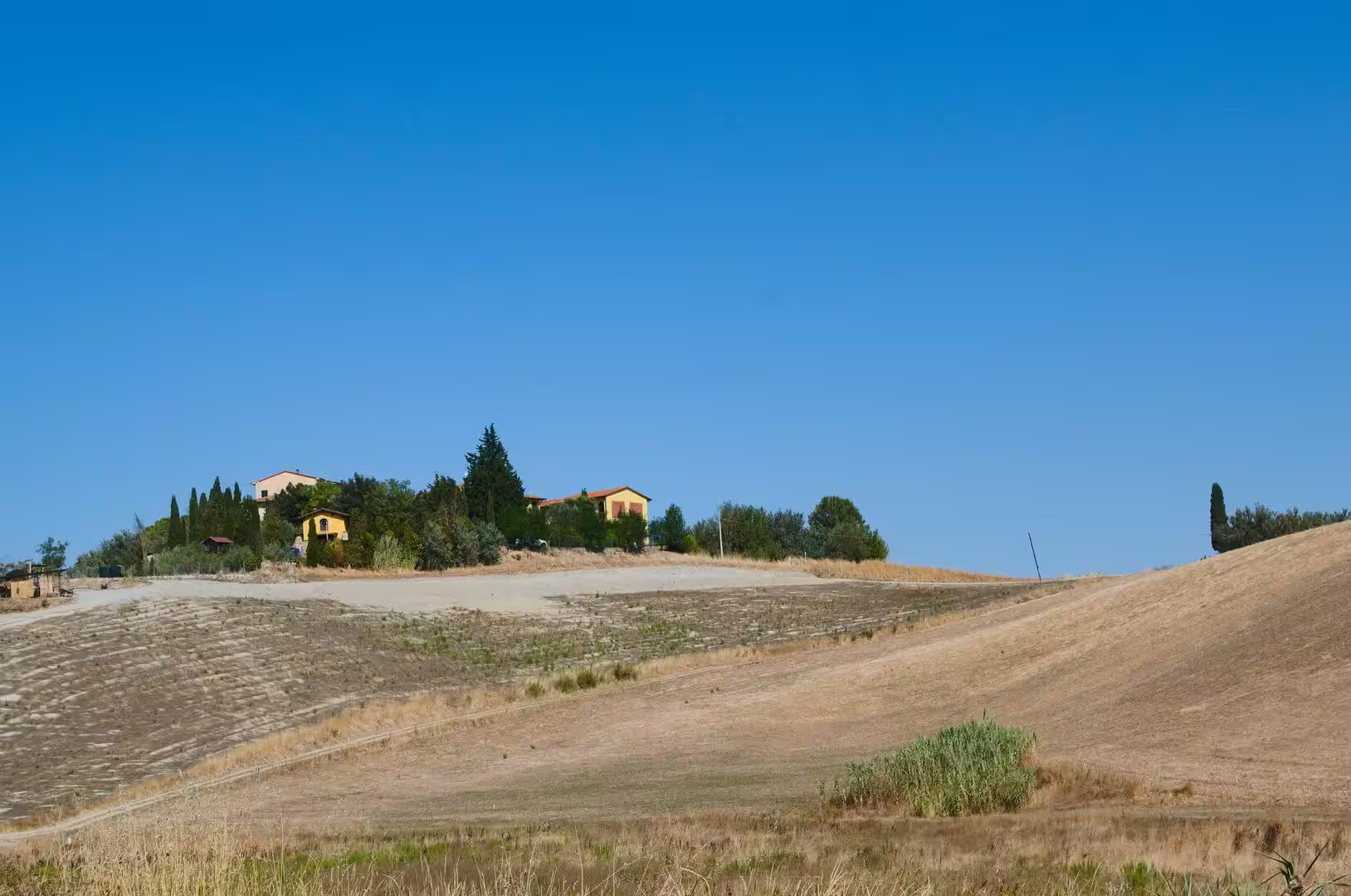
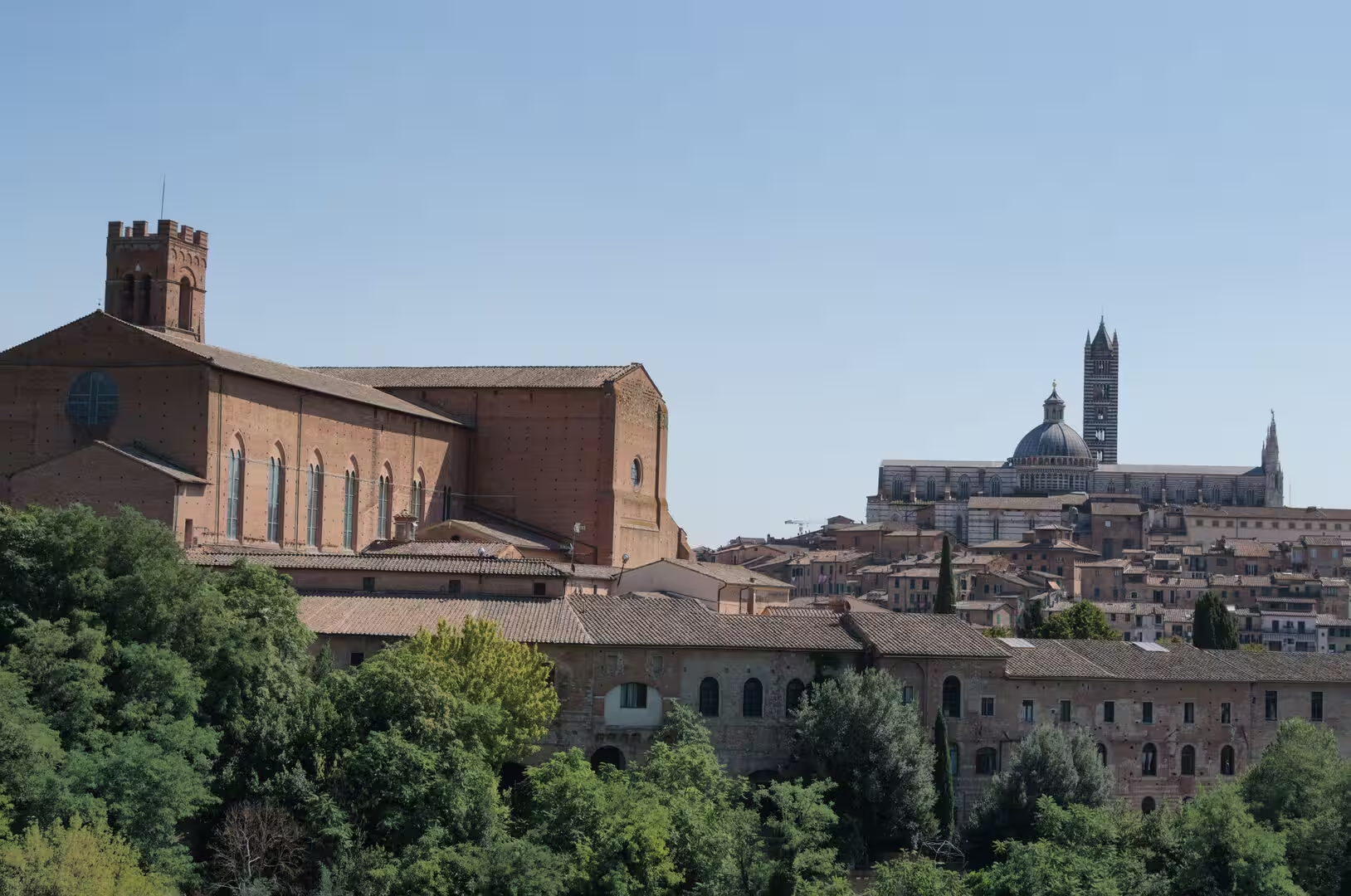
The approach to Siena is part of the visit. The road climbs out of the valley through country of dry rolling hills, with farmhouses on the crests and cypresses along the ridges, and in late summer the fields are the colour of straw. Then the city appears on its green hill. The first building to show above the roofs from the north-west is the brick basilica of San Domenico among the trees, and behind it the bulk of the cathedral with its striped bell tower. Nothing prepares a visitor for how dense the town looks from below.
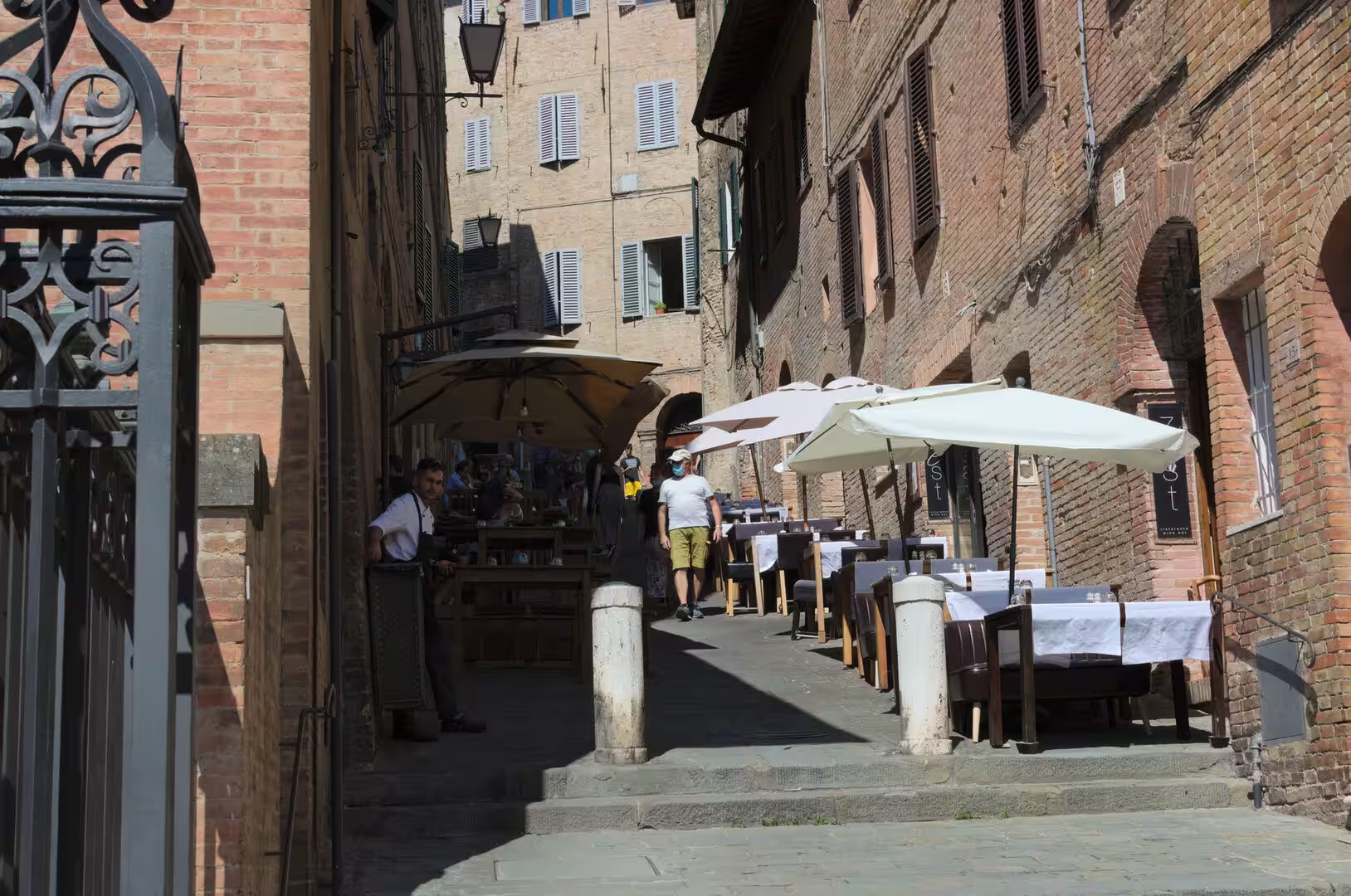
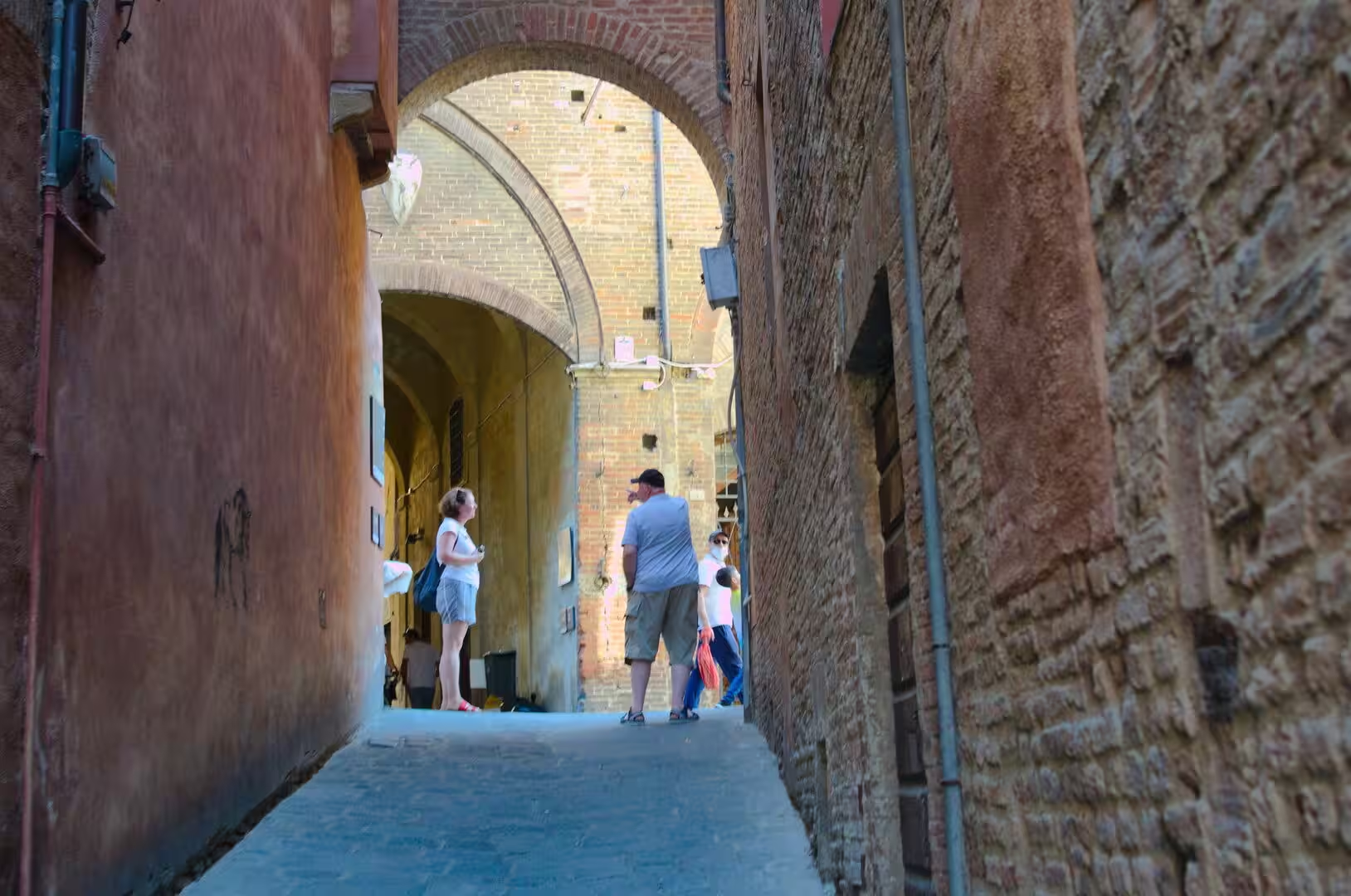
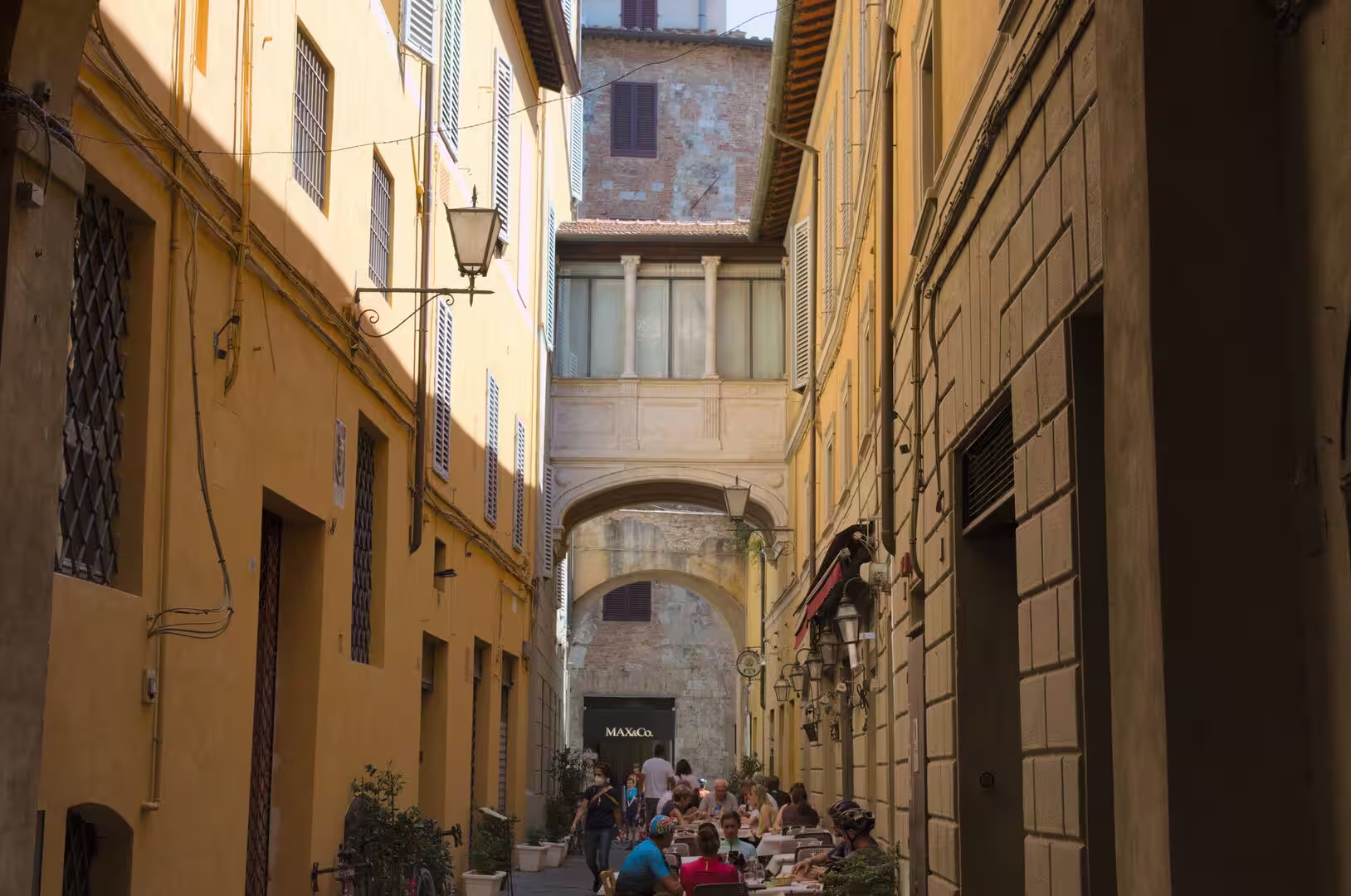
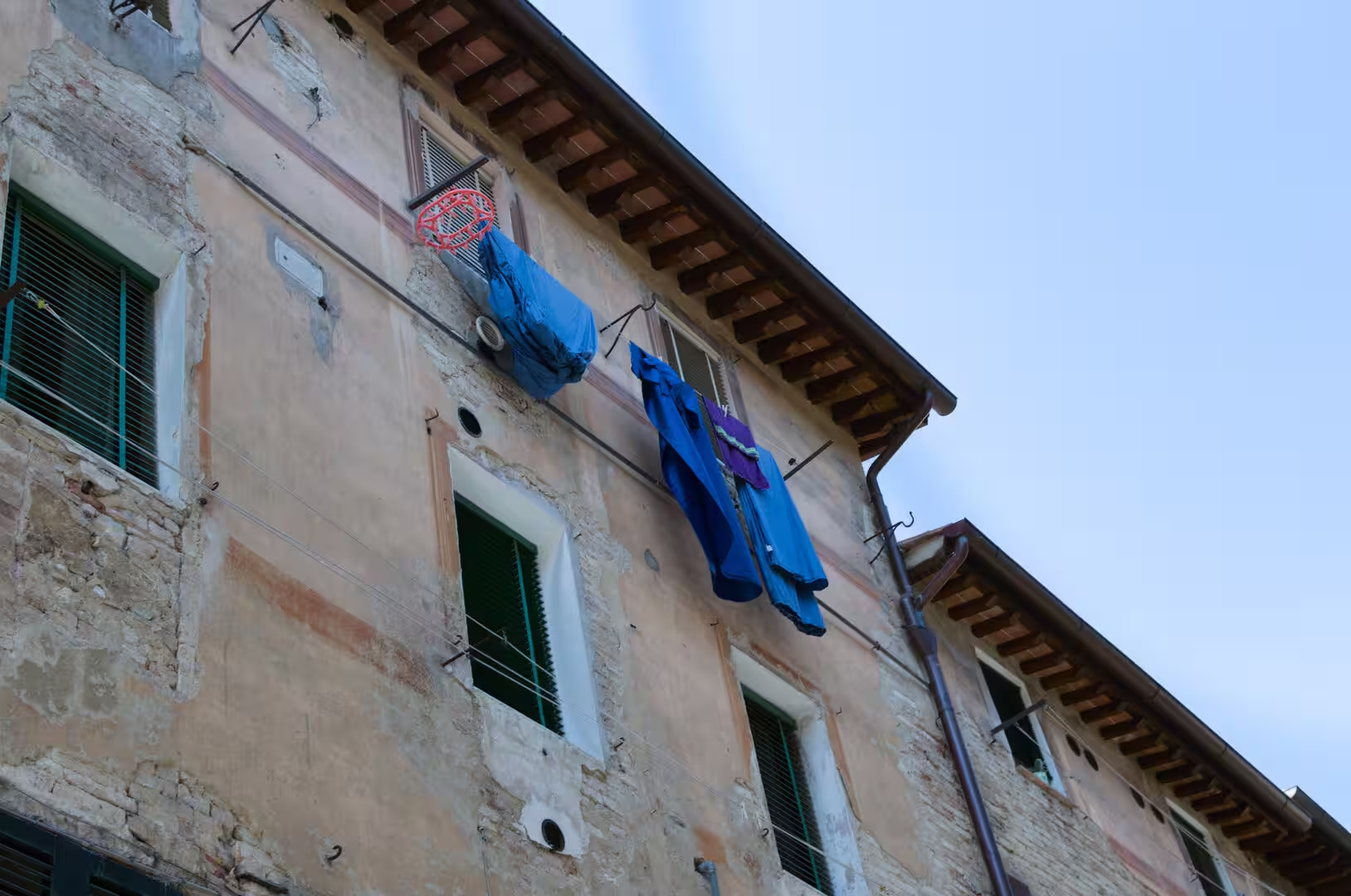
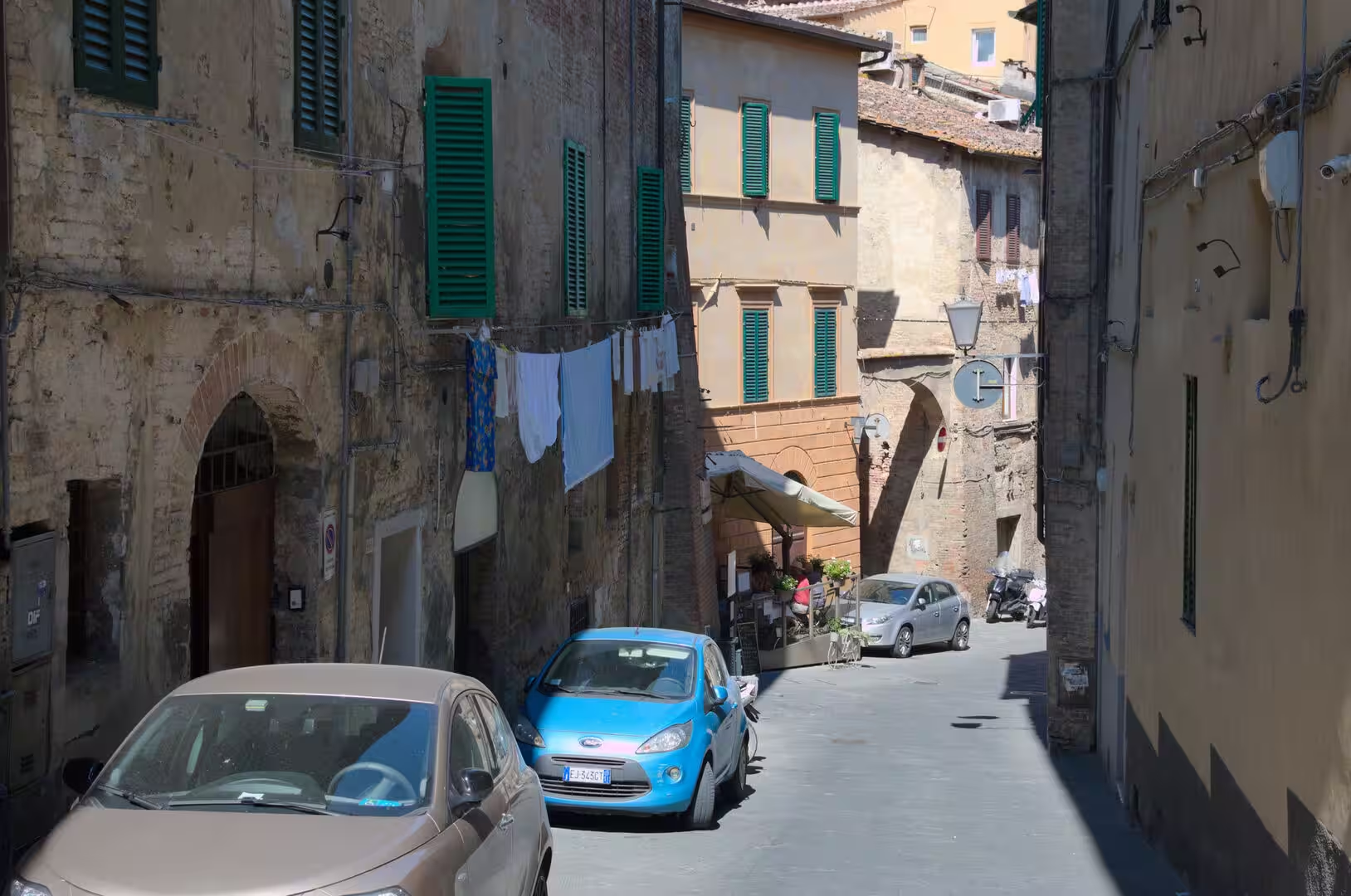
Inside the gates the streets are narrow and the houses tall. They are four and five storeys of brick with shuttered windows, laundry hangs from lines strung across the lanes, and the paving is cobbled with slabs worn smooth. Every few steps a gap opens between the buildings and shows the roofs of a lower part of the city, tiled and crowded together on the slope. A cyclist coming down one of the steeper lanes travels faster than the cars dare to, and a scooter is heard long before it arrives.
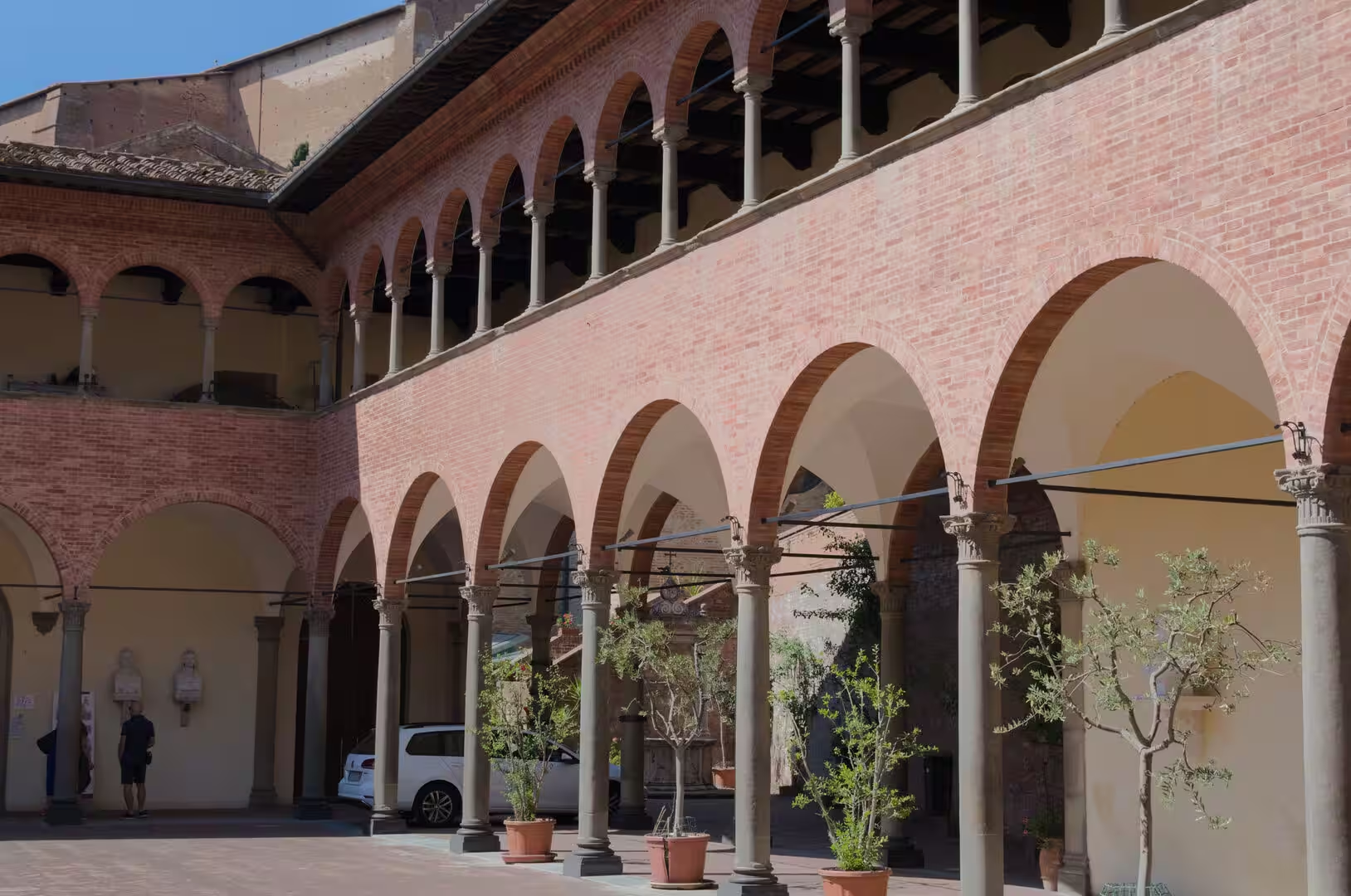
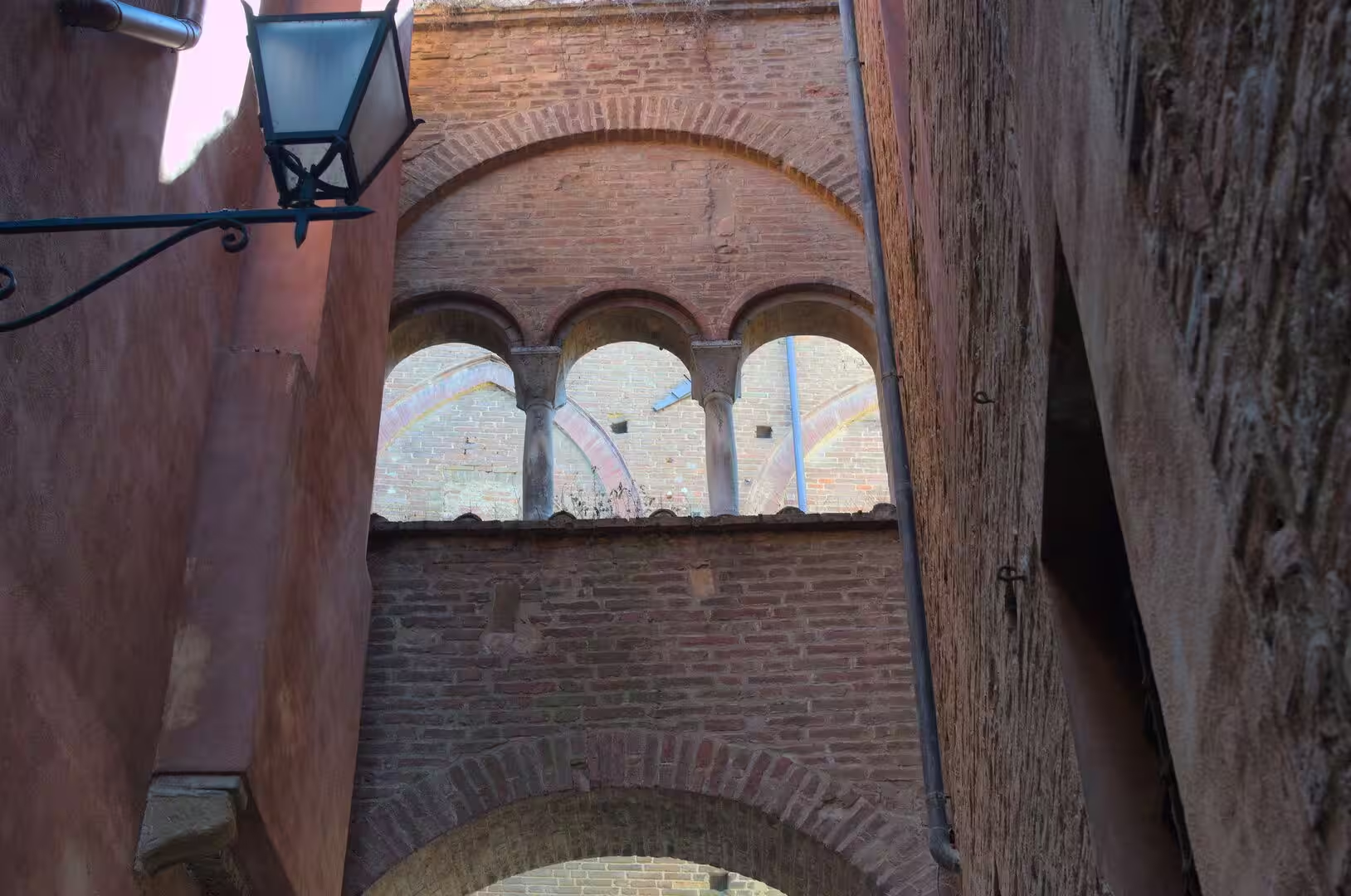
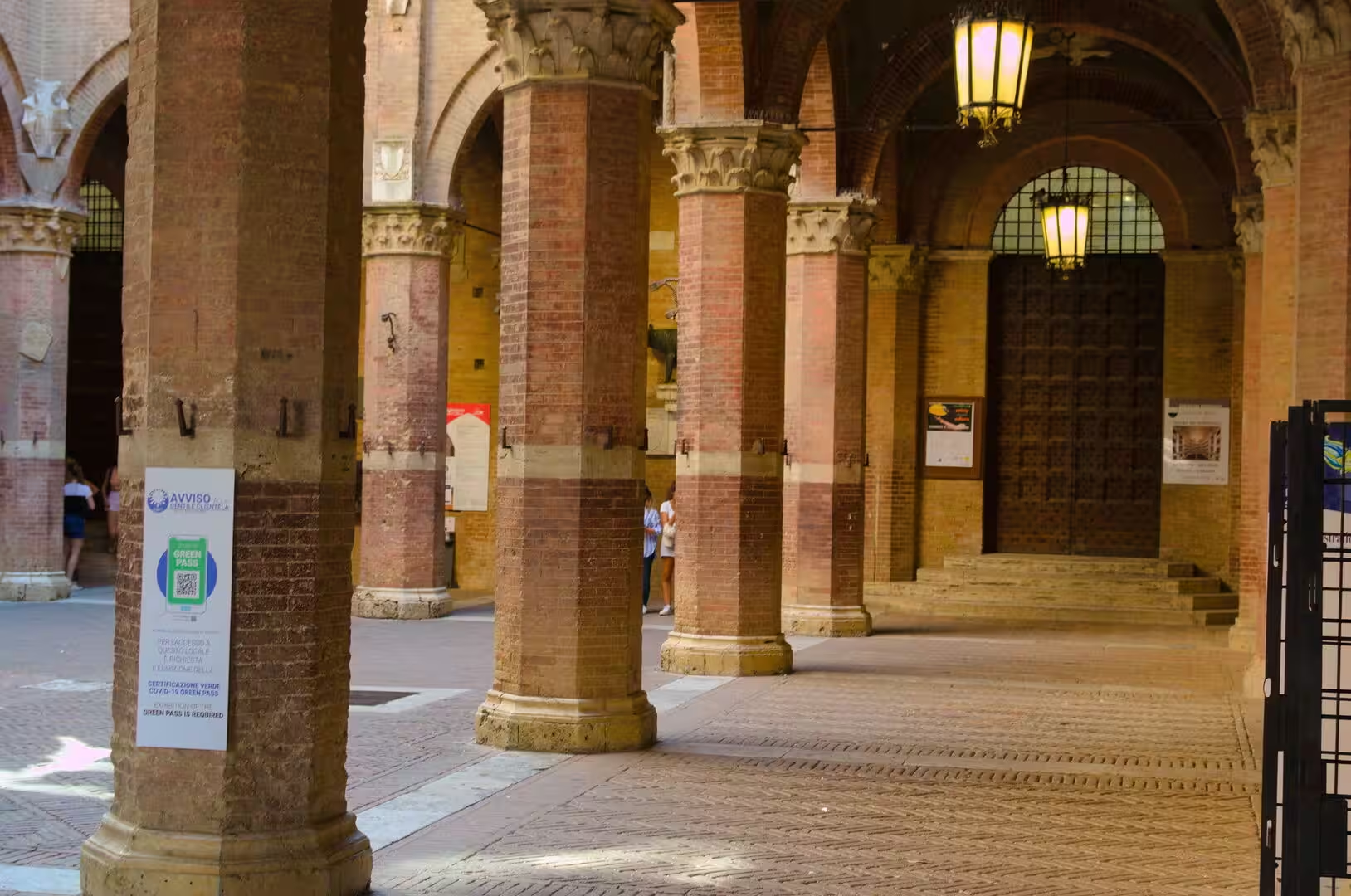
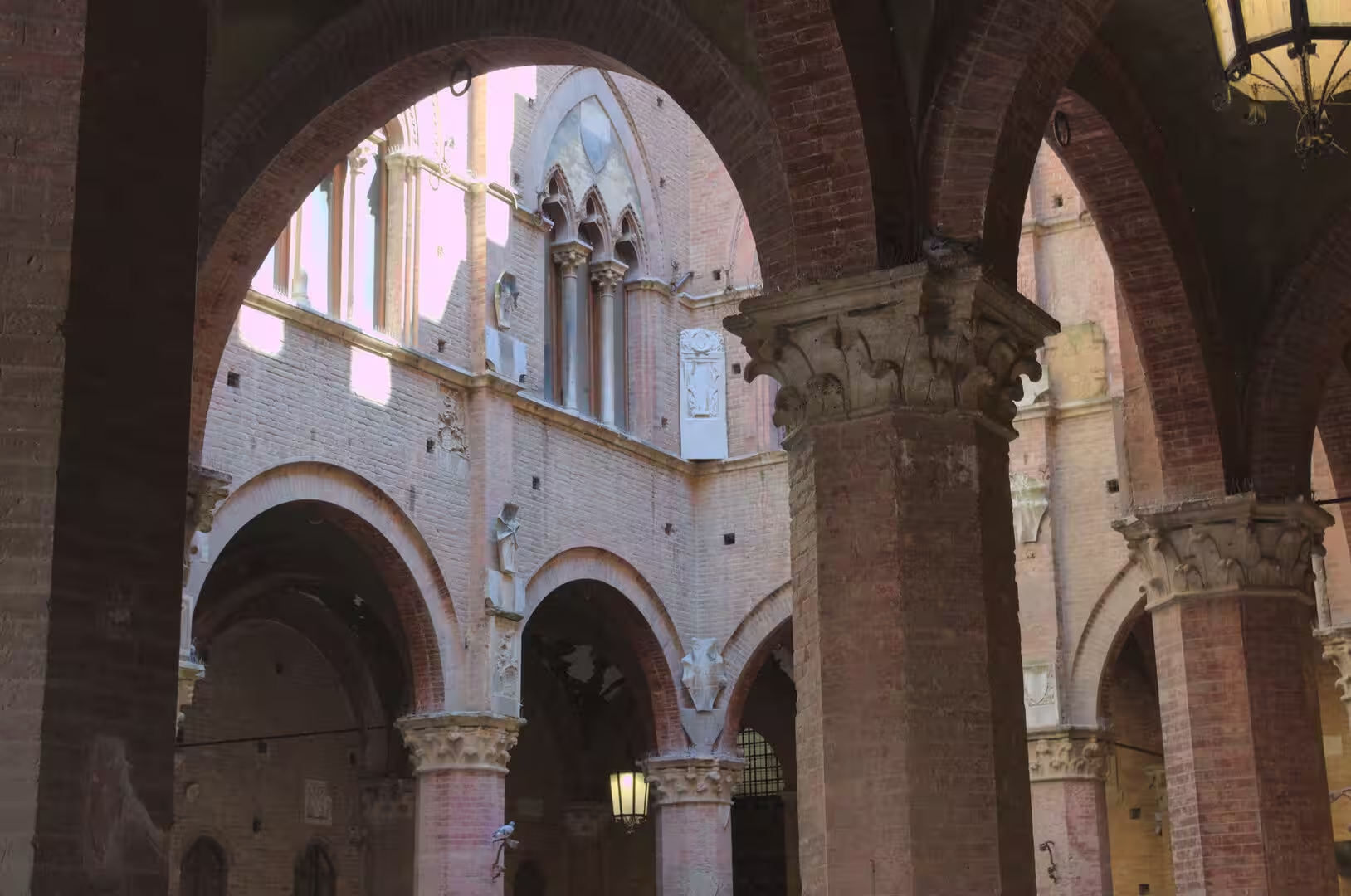
Much of the town is covered rather than open. Arched passages carry the upper floors of houses across the lanes, so that a walk through the centre often passes through a series of dim brick tunnels with a bright rectangle of daylight at the far end. Loggias and colonnades run along the ground floors of the palaces, with slender columns, carved capitals and lanterns under the vaults, and cloisters with tiers of arches on columns open off the churches of San Domenico and San Francesco and off the old hospital of Santa Maria della Scala.
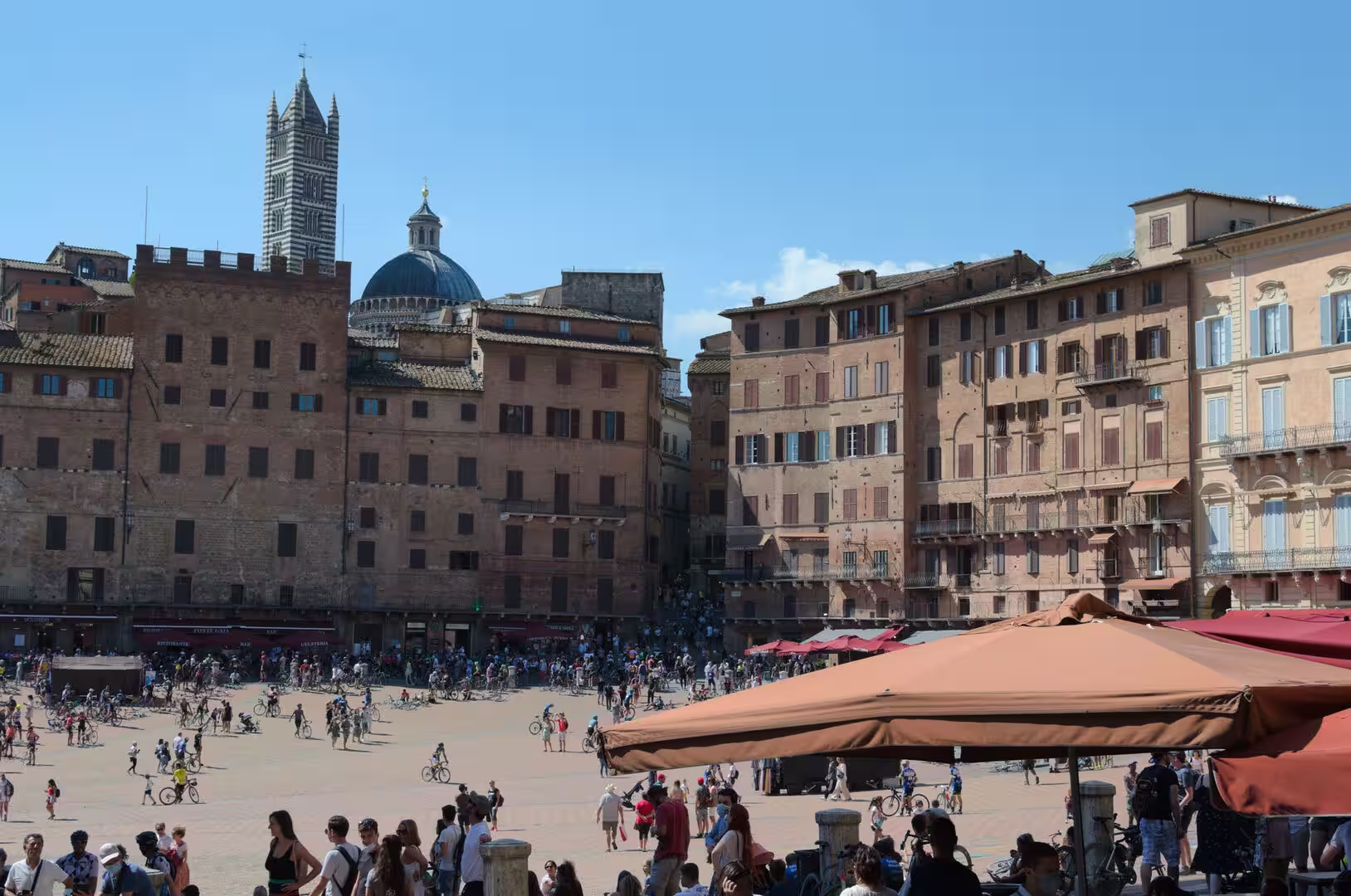
The Piazza del Campo is the centre of everything, a shell-shaped space of red brick, paved in bands that radiate from a central line, ringed by palaces and sloping down towards the Palazzo Pubblico and the Torre del Mangia. On the morning of the Palio it fills with people hours before the race; for the three laps of the track laid around the square the horses run without saddles, and the winning contrada receives a painted banner. For the rest of the year the Campo belongs to those who sit on its stones until late.
The contrade are visible everywhere. Striped banners hang over the lanes in the colours of the district, heraldic animals are painted on walls and lamps, and several palaces fly the flags of the contrade that have won the Palio in recent years. Each district keeps a small museum, a church and a fountain of its own, and the Sienese say that a child belongs to the contrada in which it was baptised rather than to the town. The bronze she-wolf nursing Romulus and Remus stands above an inscription in one of the squares.
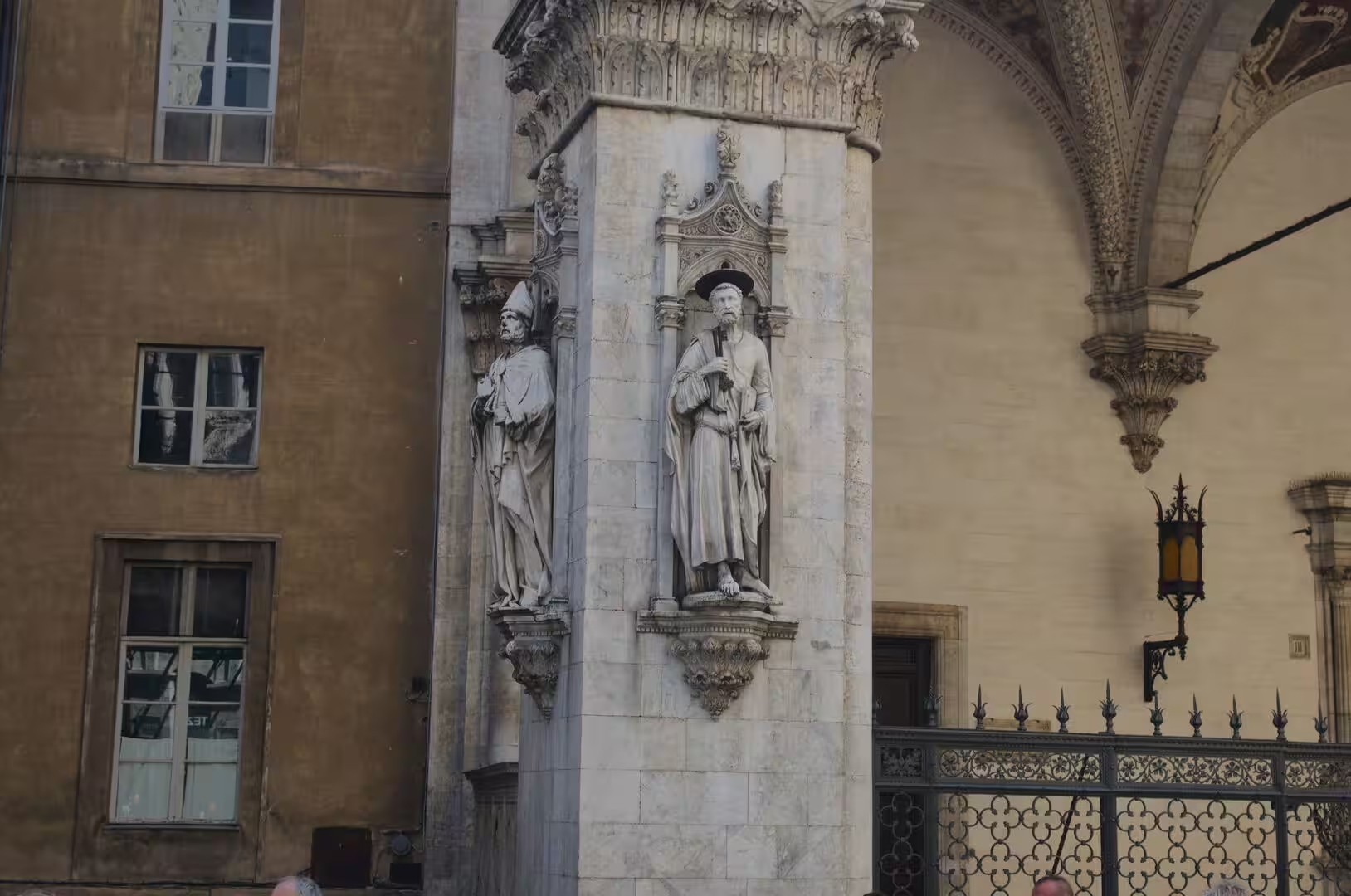
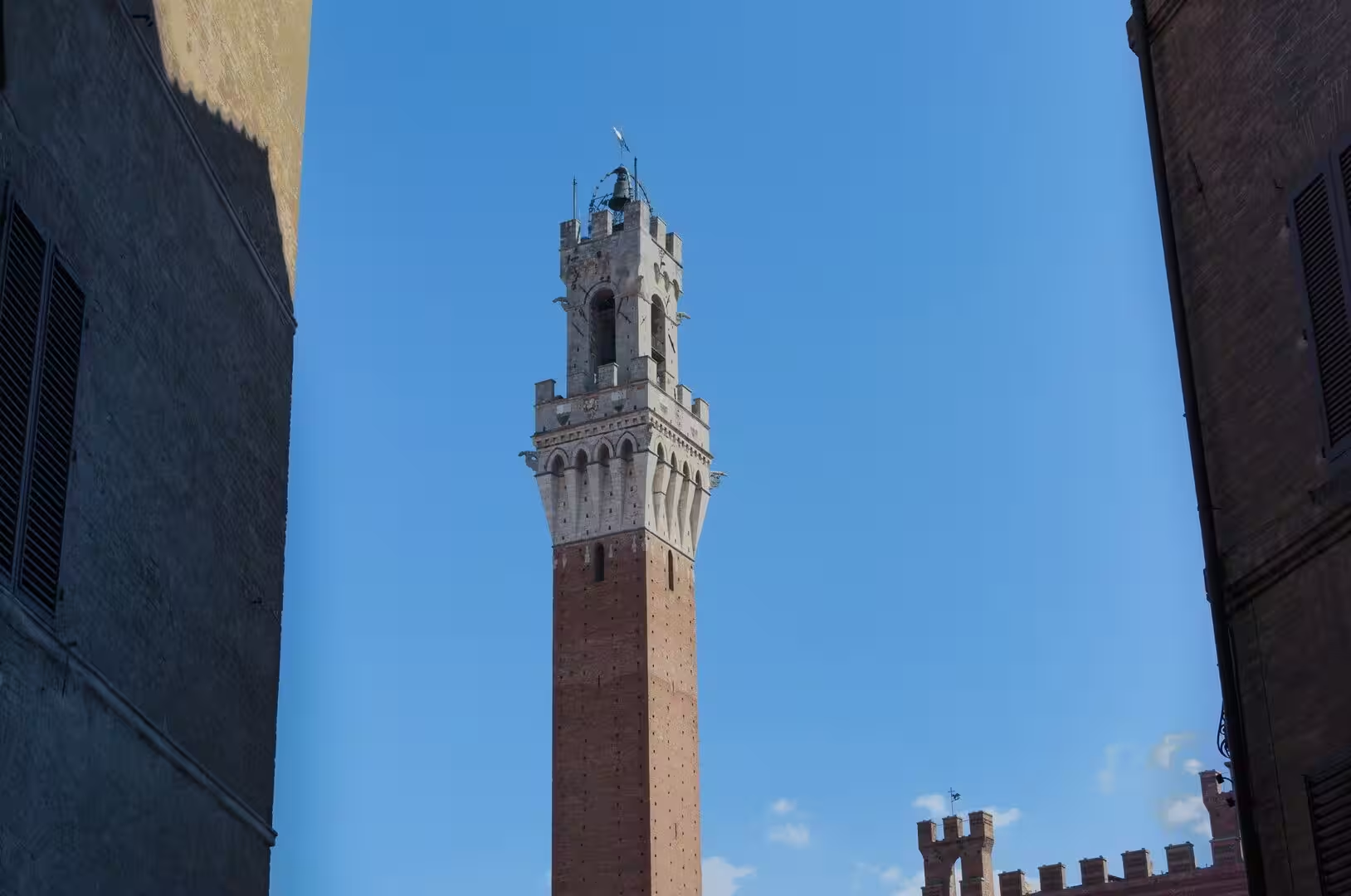
The towers and the churches stand above the roofs. The Torre del Mangia rises over the Campo to a height of about a hundred metres, its brick shaft crowned with stone battlements and the bell called Sunto, and a slender medieval tower of the same family stands a little farther off above a lane of shuttered houses. The cathedral is faced in black and white marble, with figures of prophets and philosophers in its niches, and in courtyards and corners a visitor still meets weathered stone, a headless figure on its pedestal among them.
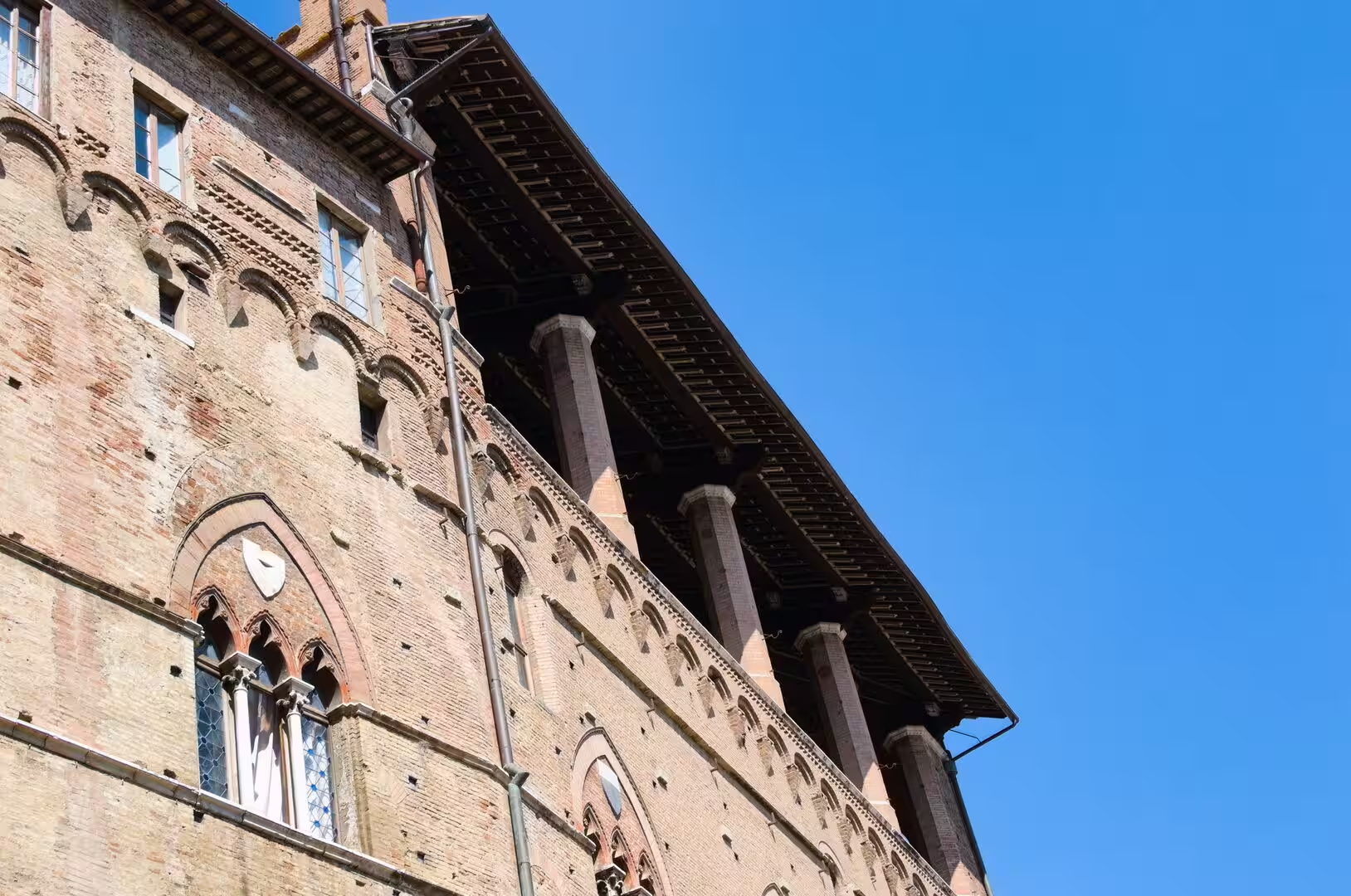
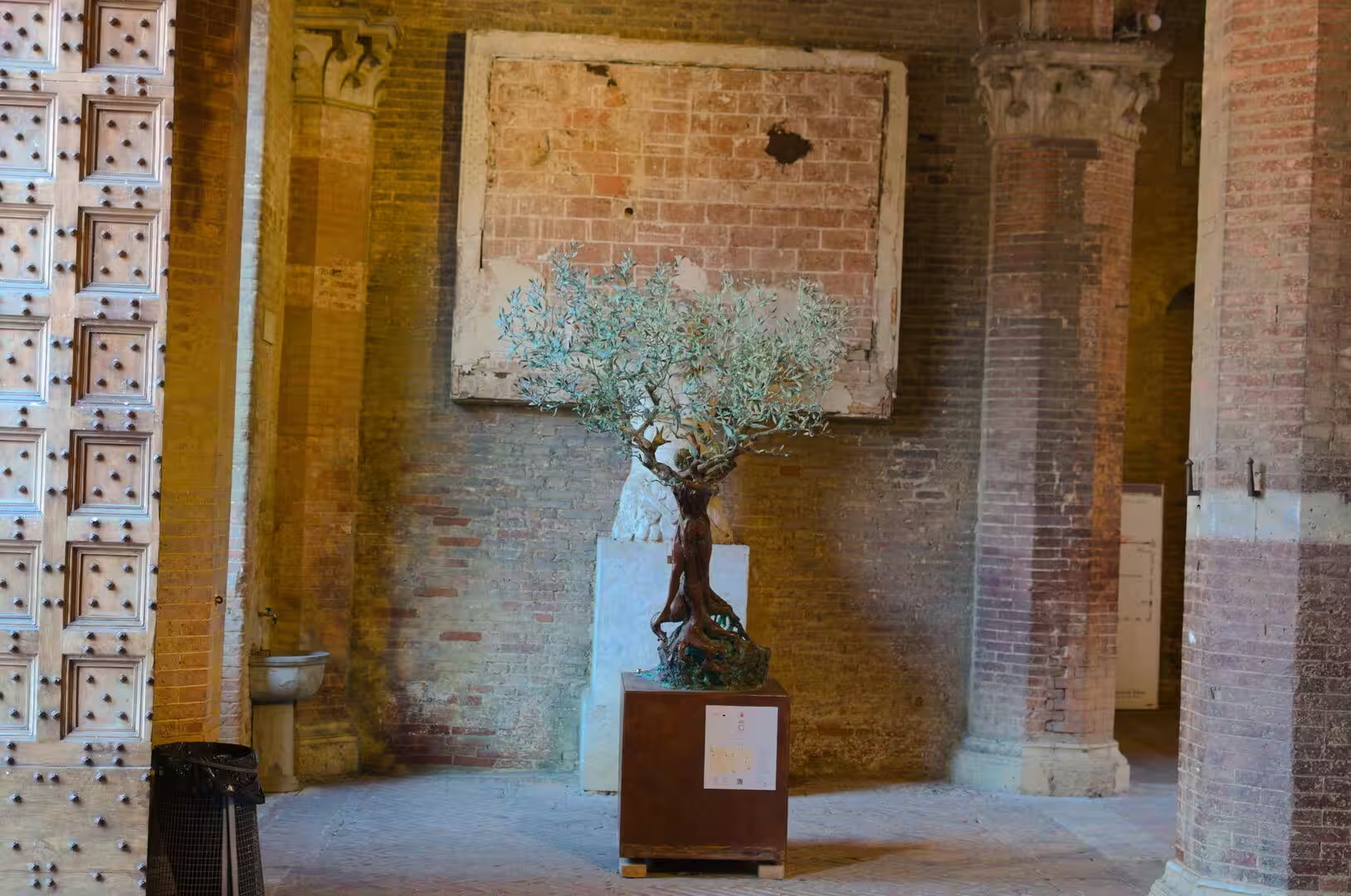
Museums occupy the buildings that made the city rich. The Palazzo Chigi-Saracini on Via di Città is a Gothic palace with mullioned windows and a heavy timber roof, and it houses the Accademia Musicale Chigiana. Santa Maria della Scala, the hospital that served pilgrims for centuries, is now a museum complex of brick halls and courtyards, with arcades and Gothic windows around a quiet square, and in one of its columned halls a single olive tree stands on a plinth. The Museo dell’Opera del Duomo keeps Duccio’s great altarpiece of 1308 to 1311.
Outside the walls the Medici fortress closes the town on the north, a crenellated brick stronghold above a square that fills with markets and rows of pitched tents, and the summers bring jazz courses into its courtyards. Farther out, on a hill above a wooded valley, the abbey of Monte Oliveto Maggiore shows its tower over a large brick complex begun in 1313 for the Olivetan order. A weathered iron fitting, mounted long ago on a wall of porous stone, is the kind of detail that ends a walk in Siena. The Palio is run on 2 July and 16 August, and everything else in the city bends around those two dates.
References
- Wikipedia contributors (2026). Siena. en.wikipedia.org/wiki/Siena
- Wikipedia contributors (2026). Piazza del Campo. en.wikipedia.org/wiki/Piazza_del_Campo
- Wikipedia contributors (2026). Palio di Siena. en.wikipedia.org/wiki/Palio_di_Siena
- Wikipedia contributors (2026). Contrade of Siena. en.wikipedia.org/wiki/Contrade_of_Siena
- Wikipedia contributors (2026). Siena Cathedral. en.wikipedia.org/wiki/Siena_Cathedral
- Wikipedia contributors (2026). Basilica of San Domenico (Siena). en.wikipedia.org/wiki/Basilica_of_San_Domenico_%28Siena%29
- Wikipedia contributors (2026). Torre del Mangia. en.wikipedia.org/wiki/Torre_del_Mangia
- Wikipedia contributors (2026). Palazzo Pubblico. en.wikipedia.org/wiki/Palazzo_Pubblico
- Wikipedia contributors (2026). Santa Maria della Scala, Siena. en.wikipedia.org/wiki/Santa_Maria_della_Scala%2C_Siena
- Wikipedia contributors (2026). Palazzo Salimbeni. en.wikipedia.org/wiki/Palazzo_Salimbeni
- Wikipedia contributors (2026). Catherine of Siena. en.wikipedia.org/wiki/Catherine_of_Siena
- Wikipedia contributors (2026). Republic of Siena. en.wikipedia.org/wiki/Republic_of_Siena
- Wikipedia contributors (2026). Battle of Montaperti. en.wikipedia.org/wiki/Battle_of_Montaperti
- Wikipedia contributors (2026). Fonte Gaia. en.wikipedia.org/wiki/Fonte_Gaia
- Wikipedia contributors (2026). Monte Oliveto Maggiore. en.wikipedia.org/wiki/Monte_Oliveto_Maggiore
- Wikipedia contributors (2026). Accademia Musicale Chigiana. en.wikipedia.org/wiki/Accademia_Musicale_Chigiana
- Wikipedia contributors (2026). Palazzo Chigi-Saracini. en.wikipedia.org/wiki/Palazzo_Chigi-Saracini
- Wikipedia contributors (2026). Crete Senesi. en.wikipedia.org/wiki/Crete_Senesi
- Wikipedia contributors (2026). Tuscany. en.wikipedia.org/wiki/Tuscany
- Drechsler W. (2006) THE CONTRADE, THE PALIO, AND THE BEN COMUNE: LESSONS FROM SIENA. Trames. Journal of the Humanities and Social Sciences. 10. 99-125. doi.org/10.3176/tr.2006.2.01
- Moscarelli R. (2023) Planning a Pilgrimage Route: Public Policies and Actors to Develop the Via Francigena in Italy. Springer Geography. 281-295. doi.org/10.1007/978-3-031-32209-9_13