2021 Italy - Mountain Village
6 October 2021




Journal Notes
General
The village stands on the first ridge of hills behind the Tyrrhenian coast, a few kilometres inland from the shore. Its houses occupy a shelf of ground high enough to catch the evening breeze and low enough for olives and vines to grow on the terraces around them. The road that reaches it leaves the plain in a series of long bends, and from the last of those bends the whole coast opens out: the flat land, the line of the shore and, on a clear day, the islands on the horizon.
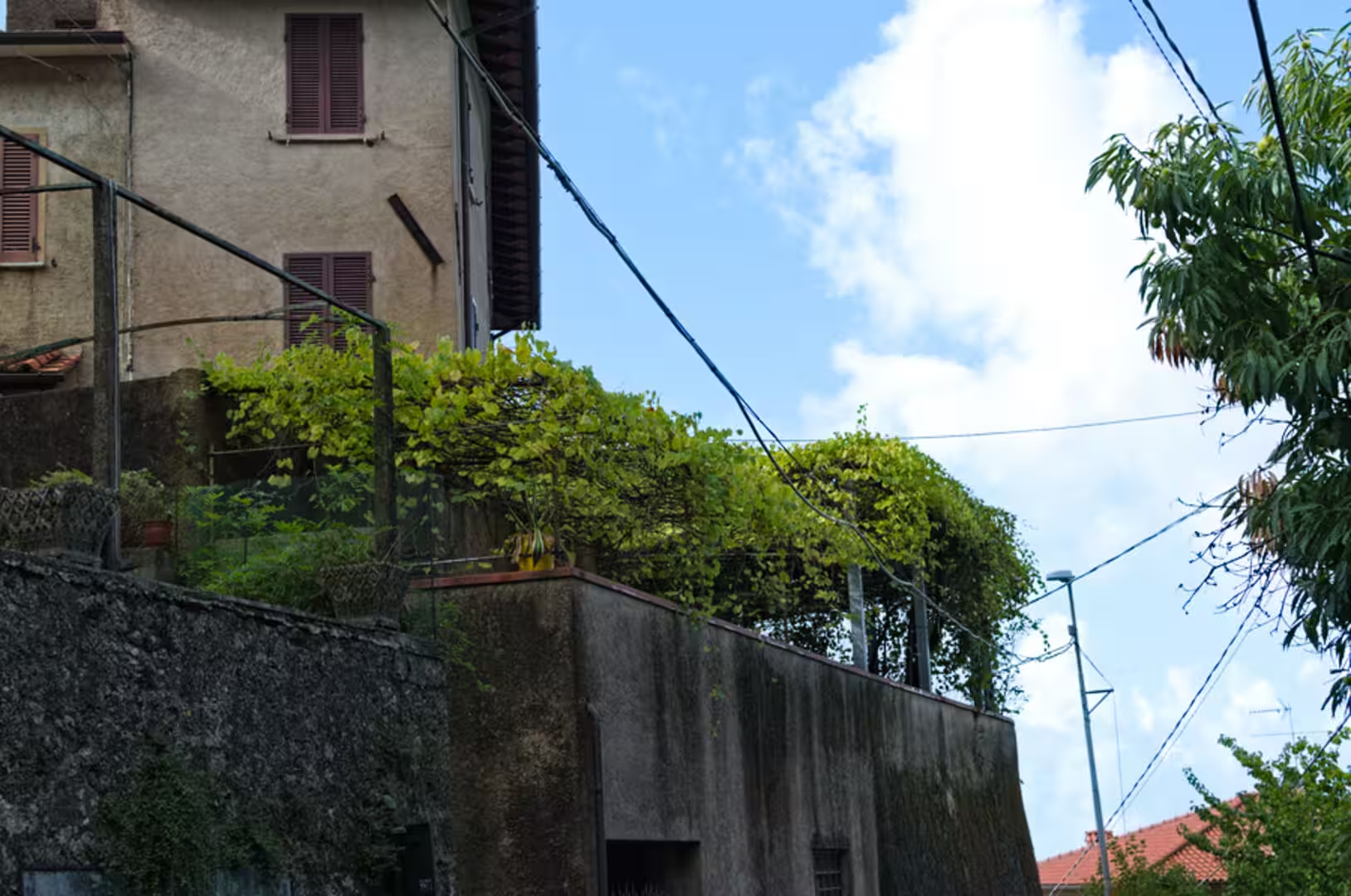
The plan of the place follows the slope rather than any design. Houses are built against the hillside, one roof at the level of the floor above it, so that a lane may run along the front of one house and over the terrace of the next. Stone and plaster alternate in the walls, cables cross the gaps between the roofs, and the paving is whatever the last repair left behind. The main lane carries the traffic of a village of a few hundred inhabitants, and the steps take over where the lane stops.
Agriculture shaped the ground and still does. Olives grow on the terraces above the village and on the slopes that face the sea, vines occupy the lower fields, and chestnuts grow on the higher, cooler ground where the soil turns acid. In recent decades kiwifruit has become a regular crop on the irrigated plots, and the small orchards behind the houses supply figs, lemons and plums for the table rather than for the market. Almost every family has a piece of land on the slope and a cellar for oil and wine.
The view is the reason the site was chosen and the reason visitors come. Below the houses the plain stretches to the shore, with the built-up strip along the sand and the pine woods that hide the main road, and beyond them the water is pale blue in the morning and almost white in the glare of the afternoon. To the north the nearest peaks of the Apuan Alps close the horizon, and to the south the coast continues towards the Maremma. On the clearest days the profile of the islands can be made out against the sky.
Daily life runs on a small scale. There is a bar and a grocery, a church whose bells mark the hours between seven and ten, a pharmacy that opens three mornings a week, and a bus that connects the village with the town in the plain. In summer the population doubles with the families who keep a second house here, and the parking area at the entrance to the centre fills after six in the evening. In winter the lanes are quiet, the shutters are closed, and the lights of the coast show through the gaps between the houses.
History
The hills have been settled since prehistory, and the villages that stand on them now occupy sites chosen long before any of the present buildings were raised. The coast below was marsh and lagoon for much of antiquity, while the inland settlements sat where water was available and the ground was defensible. Roman land division left its mark on the plain, where some of the roads still follow the lines of the centuriation, and the medieval charters of the region record these hill places from the tenth century onwards as fortified sites with a church and a small garrison.
The medieval village was a castle first and a settlement second. A wall, usually following the natural edge of the ridge, enclosed the houses that stood under the protection of a tower, and the church stood either inside the circuit or immediately outside it. The bell tower that survives in most of these villages is the oldest standing structure and was often the tower of the castle itself. What remains today is a fragment: a gate, a stretch of wall built into a house, the base of a tower, and a street plan that still follows the shape of the defences.
The hill villages were contested ground in the long struggle between the city republics of the region. Pisa, Lucca and Florence fought for the control of the coastal strip and the roads that crossed it, and the lords of the castles changed allegiance as the balance shifted. After the establishment of the grand ducal state in the sixteenth century the coast was reorganised for defence against raids from the sea, and a chain of watch towers was built within sight of one another along the shoreline, several of which still stand above the rocks.
For four centuries the rural economy of the region rested on sharecropping, the system under which a family worked a farm belonging to an owner and divided the produce with him. Wheat, olives, wine, mulberries and chestnuts came out of the hillside plots, and the villages were the homes of the labour rather than of the owners, whose residences stood in the towns and the cities. The system was dissolved in the twenty years after the Second World War, when the land was bought by the families who farmed it or abandoned as the younger generation moved away.
The twentieth century emptied the hills. The war years brought the front through the region in 1944, with the German occupation, the Allied advance and the partisan bands operating in the woods, and the reconstruction afterwards drew people to the coast and to the industrial towns. Over the following decades the villages lost population steadily, schools closed, and many houses stood empty until they were bought again as holiday homes or restored by families whose grandparents had left. The census figures are stable now, but the winter population is a fraction of what it was in 1950.
Geology
The hills belong to the northern Apennines and to the part of them that geologists treat separately as the Tuscan Sub-Apennines. The chain was built in the Apennine orogeny, which began in the early Neogene some twenty million years ago and continues today, as the Adriatic side of the peninsula is thrust under the mountains. The western side is different: there the crust is being stretched, and the ranges are fault blocks raised and lowered along roughly parallel lines. The hills behind the coast are of this second kind, which is why their ridges are short and steep sided.
The rocks themselves are a compressed pile of very different kinds. Sandstone and shale from deep water, limestone from the shelves of the ancient sea, and the scaly clays that weather into the badlands of the interior all appear within a few kilometres of one another, stacked in sheets that the orogeny pushed inland. Where the limestone lies near the surface, springs break out along the contact with the clays below, and the older villages were placed close to those springs. Every slope here is a section through that pile, and the walls of the hills follow the grain of it.
The Apuan Alps to the north are the exception in this landscape and the reason for much of its trade. They are built of Triassic sea sediments that hardened into limestone, dolomite, sandstone and shale, and some twenty five million years of pressure turned part of that limestone into the marble quarried at Carrara. The range rises to the Pisanino at about 1,950 metres, a karst landscape of bare ridges and closed hollows, and its marble was already being shipped to Rome in antiquity for temples and statues. The quarries remain the loudest industry of the region.
The plain below the village is recent ground. It was formed by the rivers of the region, which dropped their sediment where the valleys opened out, and by the sea, which left beach ridges and lagoons behind as the shoreline moved. For most of historic time it was marsh, useful for fishing, hunting and the salt works and difficult for everything else, and the drainage canals that cross it now are the work of the eighteenth, nineteenth and twentieth centuries. The land is fertile but low, and parts of it lie close enough to the water table that a wet winter shows in the fields.
The shape of the coast is a record of movement rather than a fixed line. Marine terraces, the flat shoulders that step up the hillside where the land has been raised, mark shorelines that now stand fifty or a hundred metres above the sea, and the deposits in the caves of the headlands record faunas that lived when the water was somewhere else. Erosion works in the other direction on the cliffs of the Maremma and of the Livorno hills, where the sea cuts into rock that the rivers no longer replace with sediment. The beaches of this coast depend on what those rivers carry.
Things to See
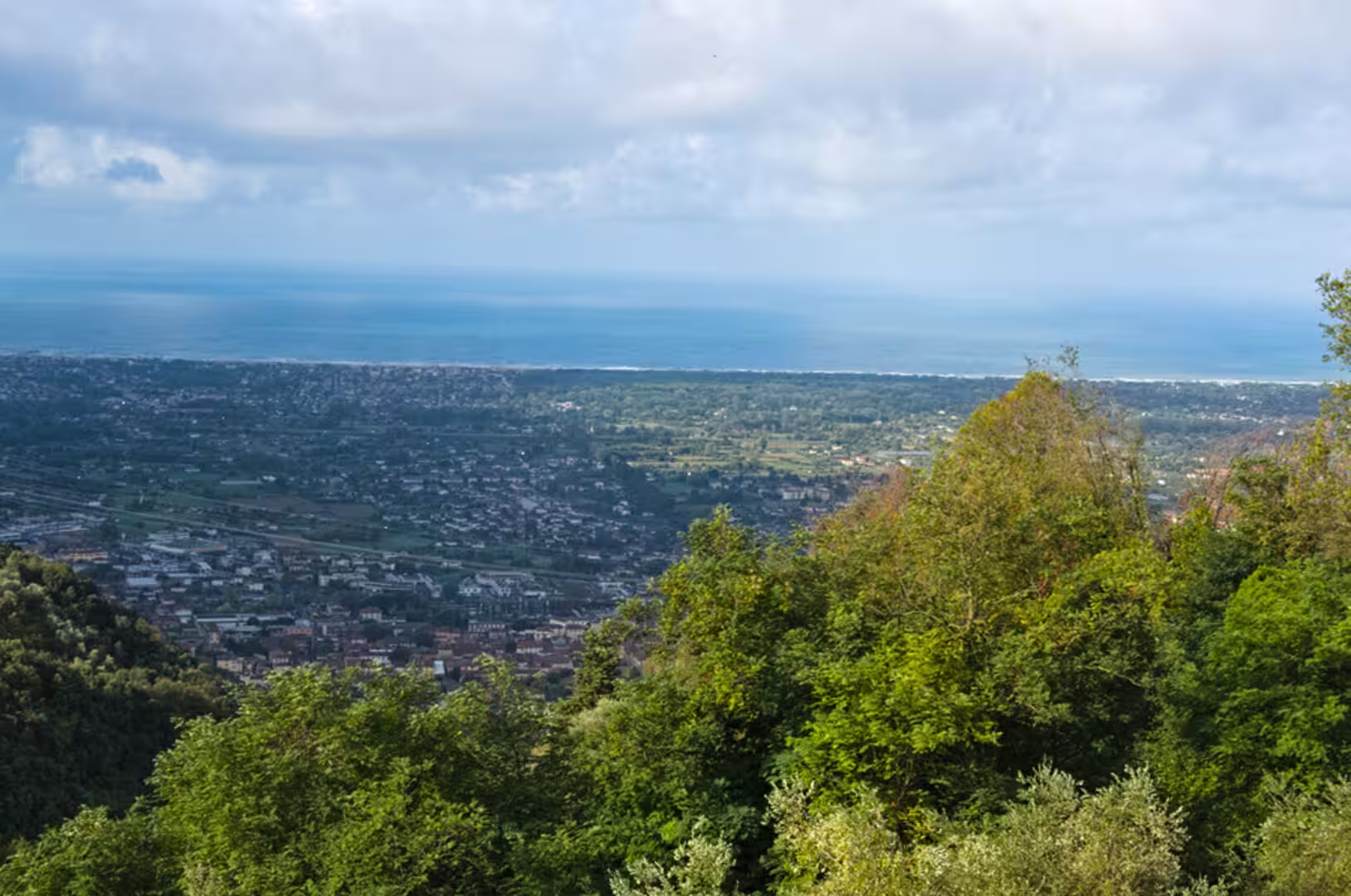
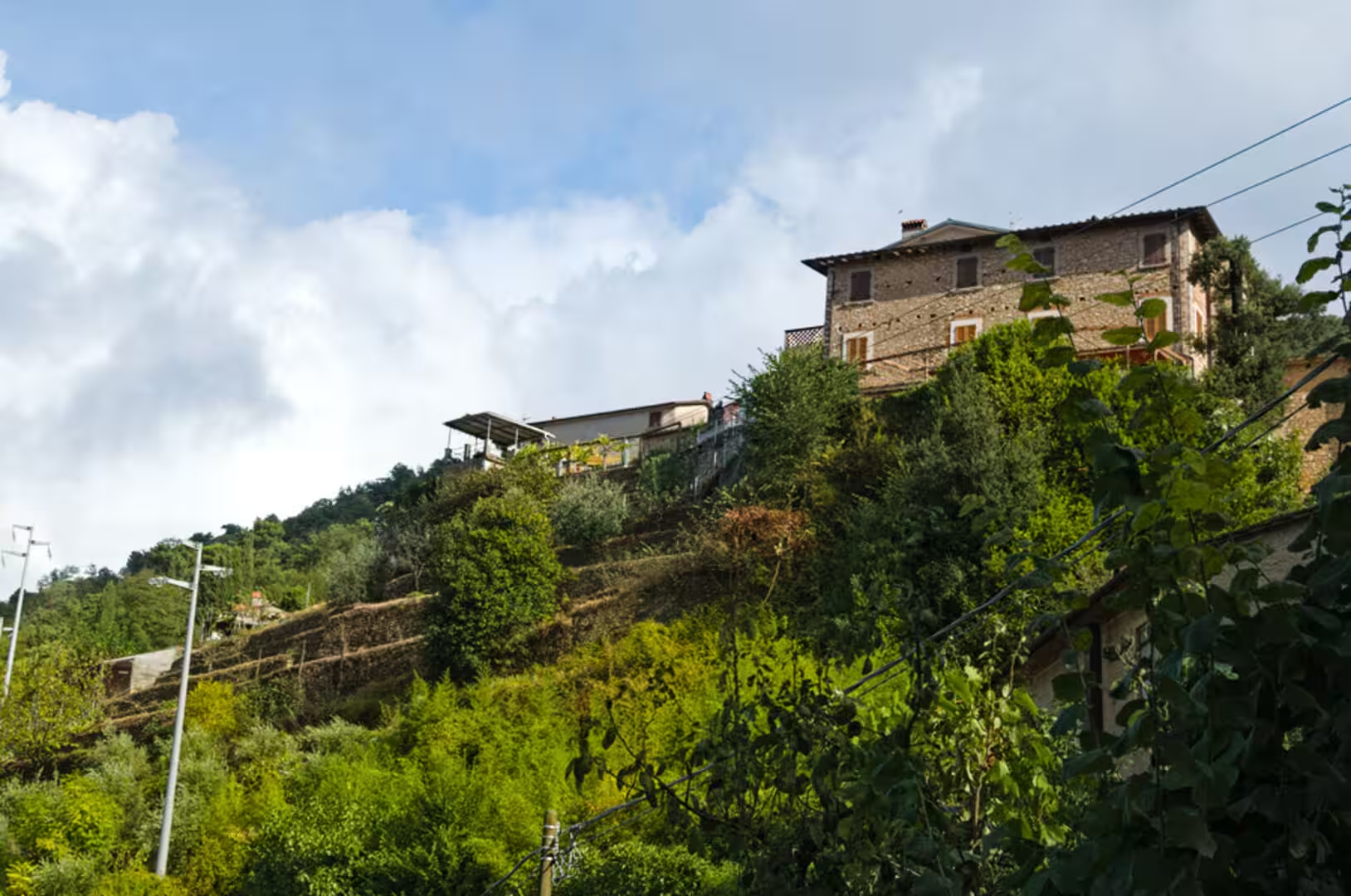
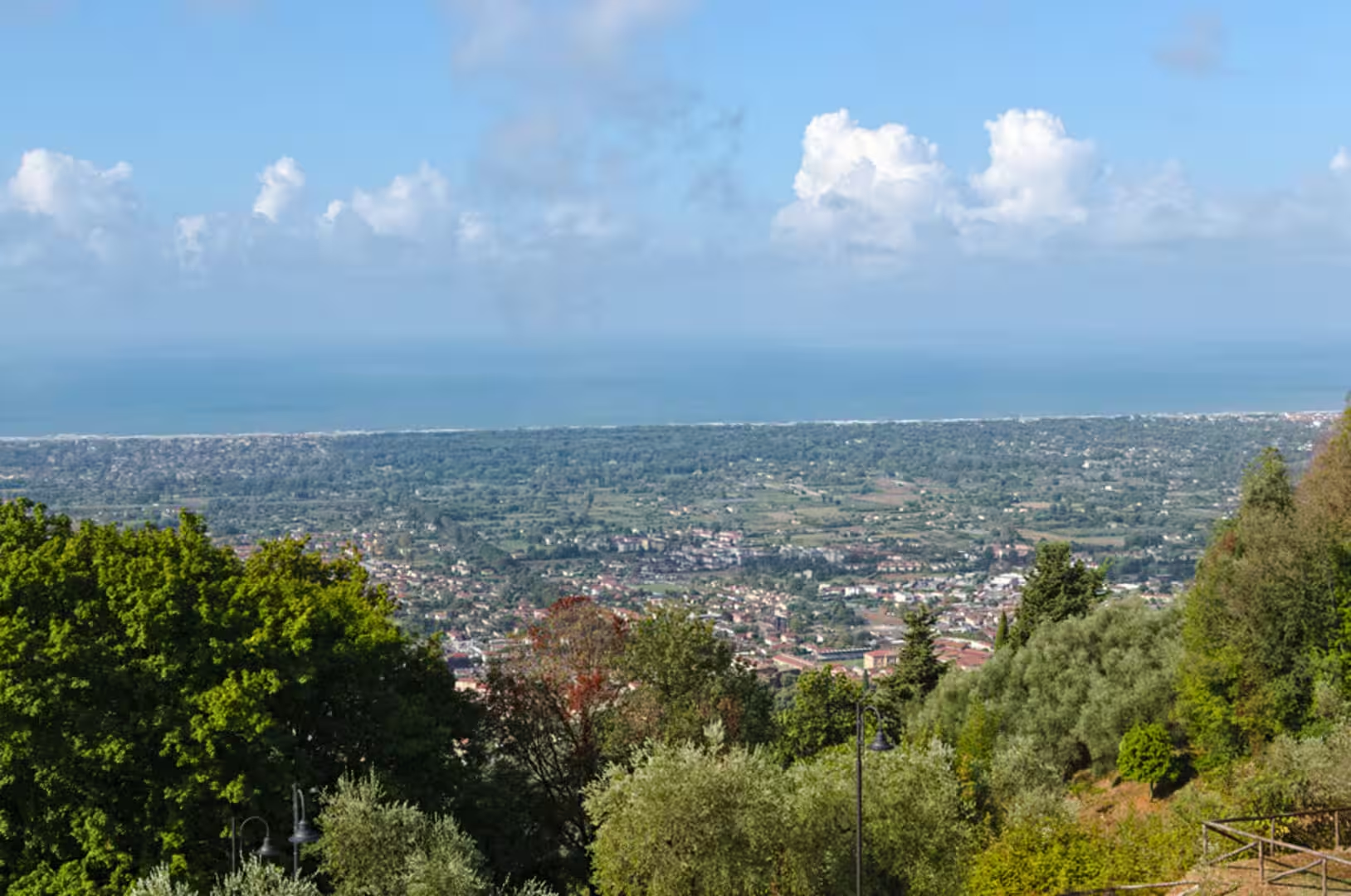
The approach to the village is a climb, and the first thing the climb gives is the extent of the plain. From the last bend of the road the land below lies flat and green, with the town spread across it, the strip of buildings along the beach and the sea beyond the line of the shore. On the wooded slope in the foreground the trees are close enough to hide the lower terraces, and the view opens and closes as the road turns. Drivers stop at the first wide place they find, where the old mule track begins its descent.
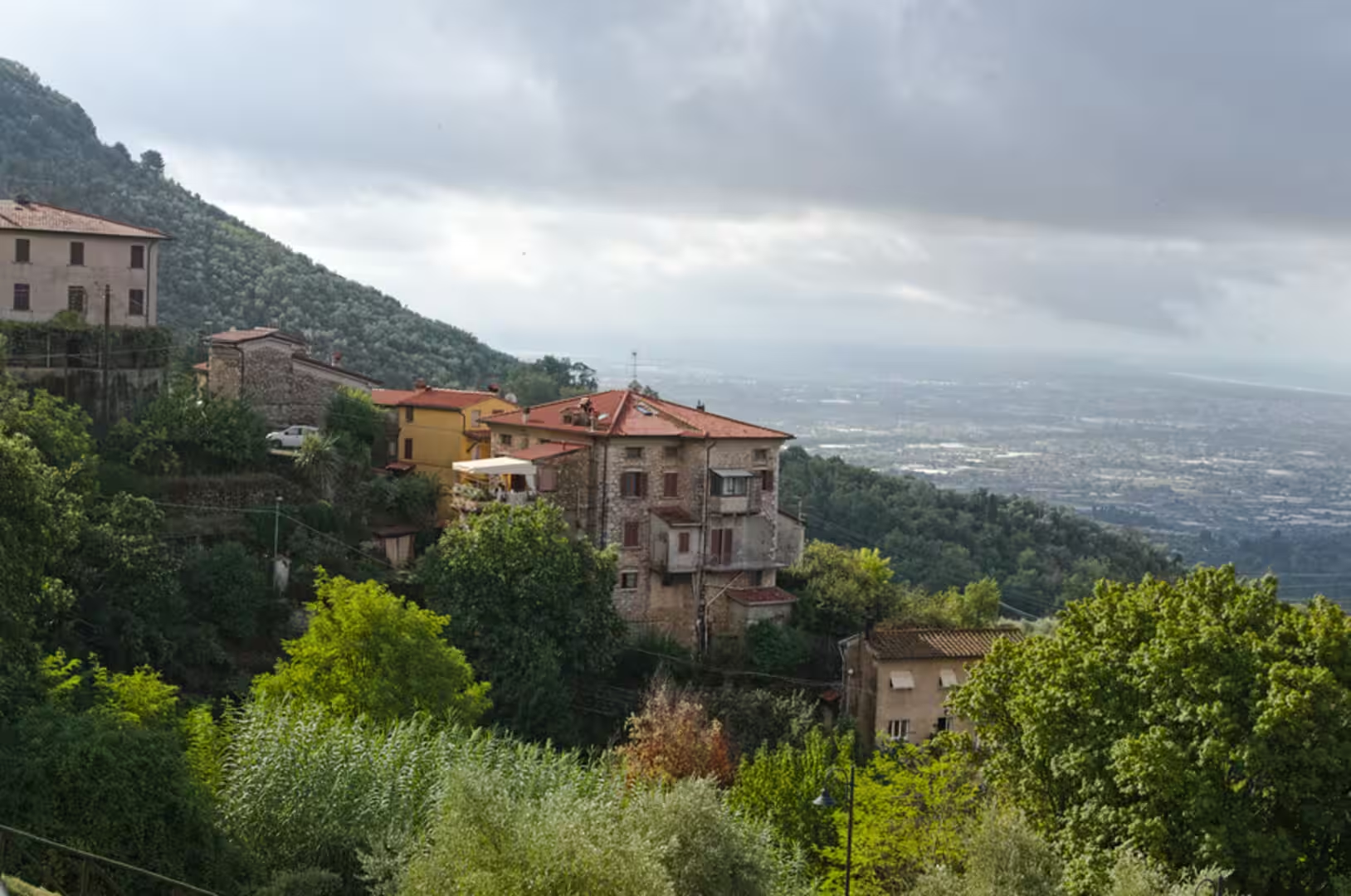
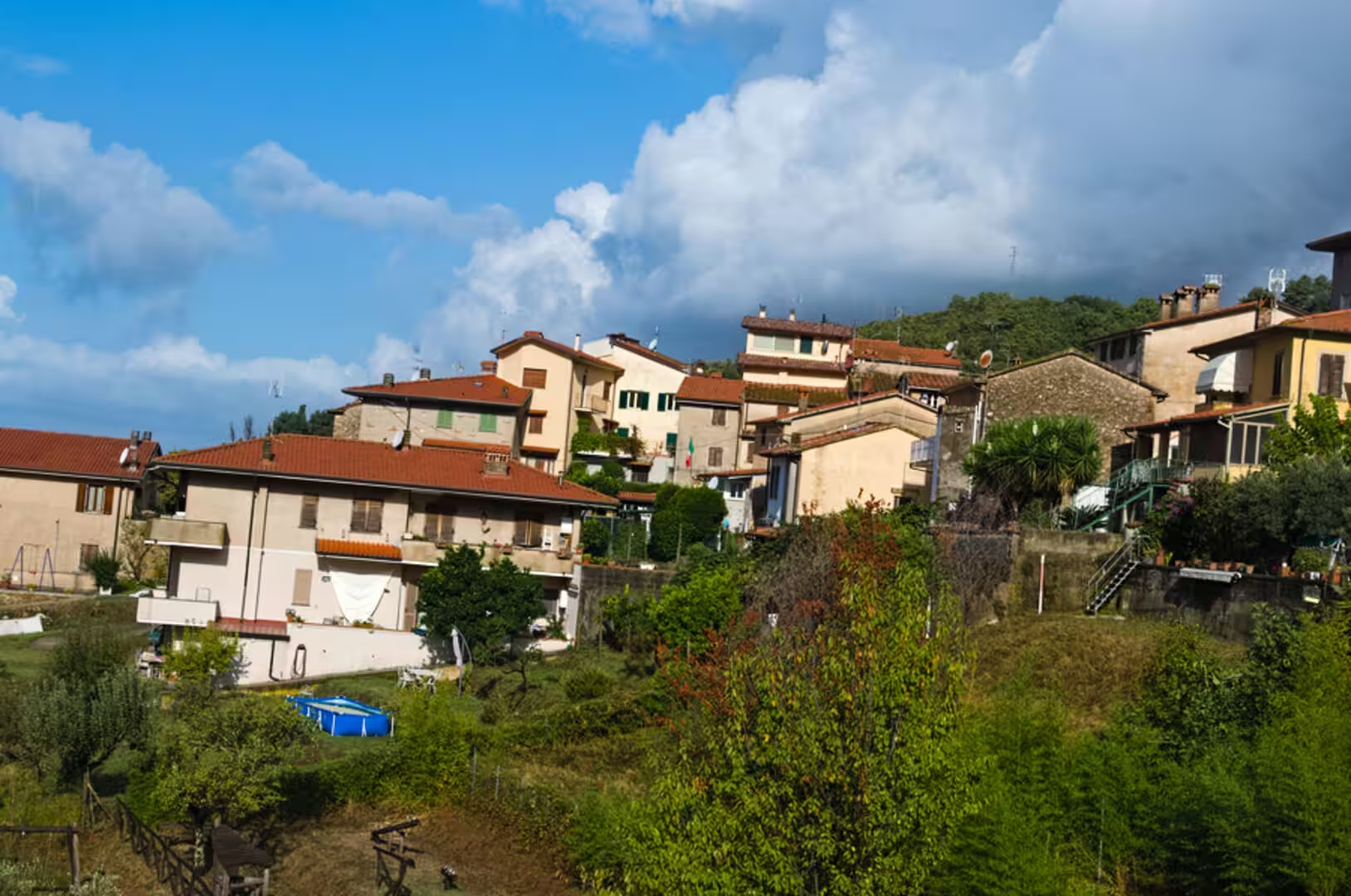
The houses of the village stand in rows on the mountainside, and their roofs are the most visible thing about them. Tiled, patched and uneven, they step down the slope with chimneys of different shapes and sizes, and between them there are terraces, gardens and the occasional palm. In the walled courtyard of one house, terracotta pots stand in a line along the shaded stone wall, and there is room for a table and a bench. Above the roofs, on the upper edge of the village, the stone houses continue into the vegetation of the slope.
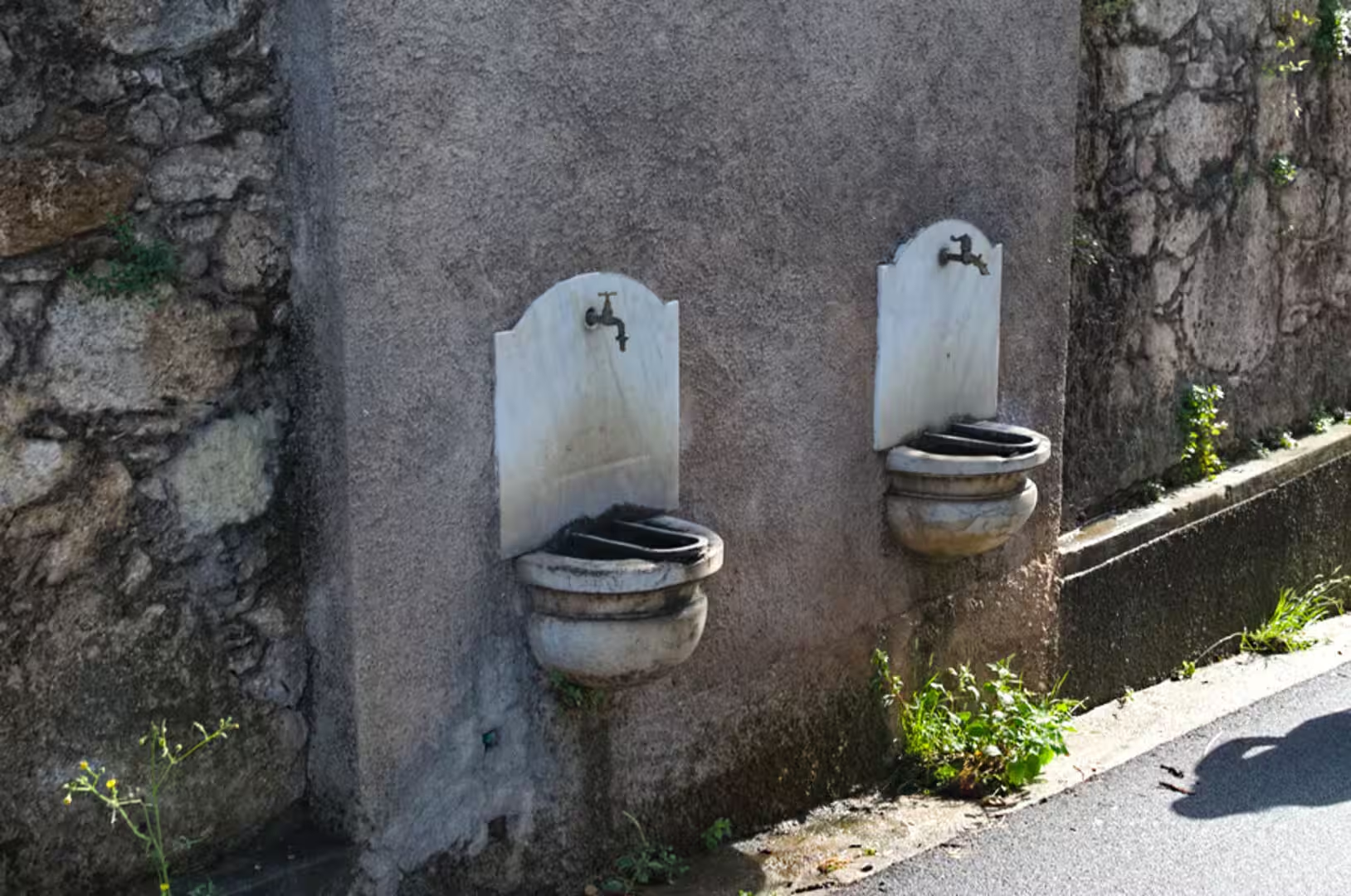
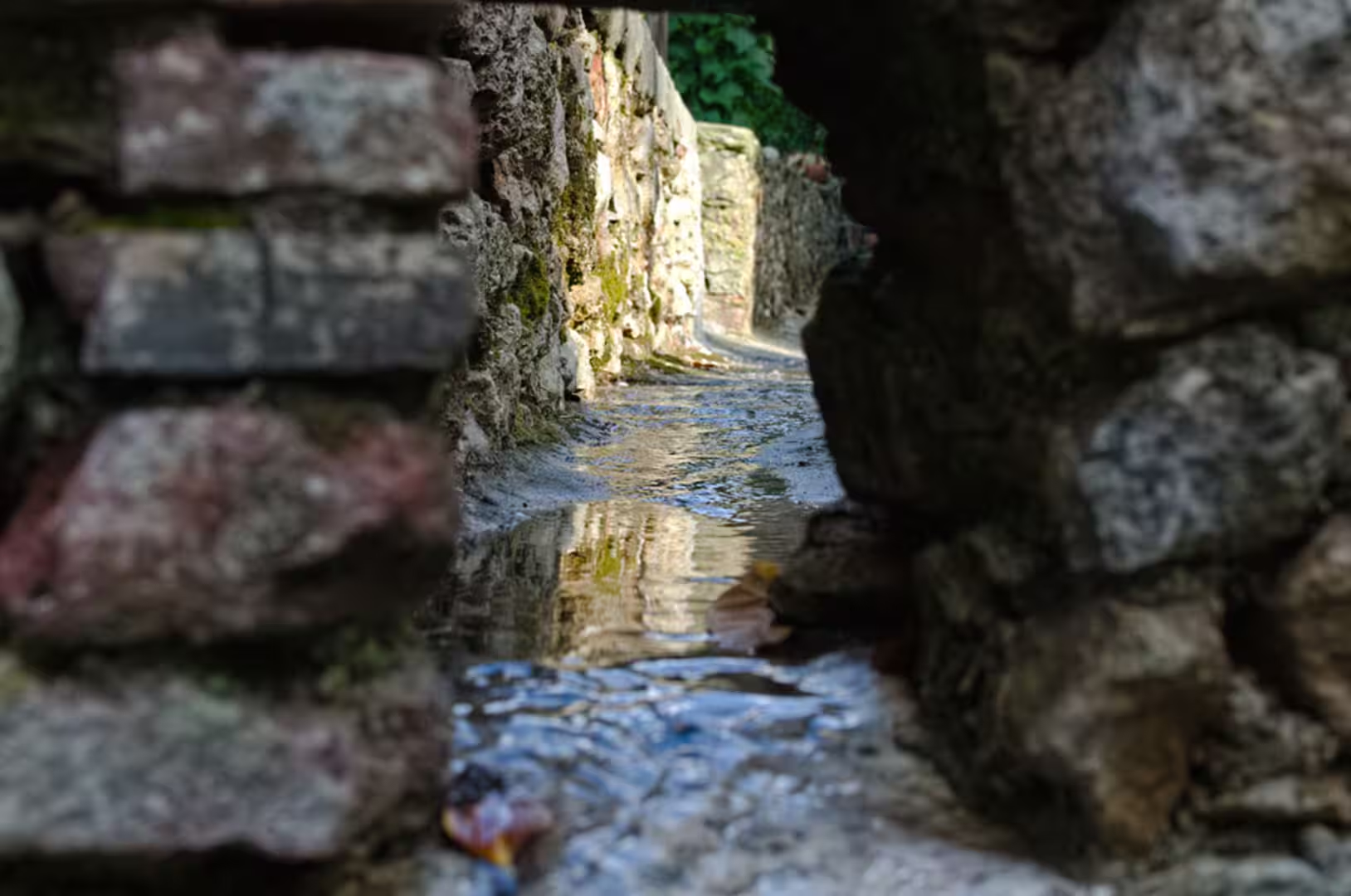
At a street corner in the lower part of the village stand two basins set into a wall of rough grey stone. They are of white marble, each with a brass tap, and they are the public wash house of the place, fed by a spring captured above the centre and piped down to this point. Grass grows at the foot of the basins and the road passes directly in front of them, so that the water is both a utility and a meeting point. It is the kind of small infrastructure that such villages kept in use long after the houses were connected to the mains.
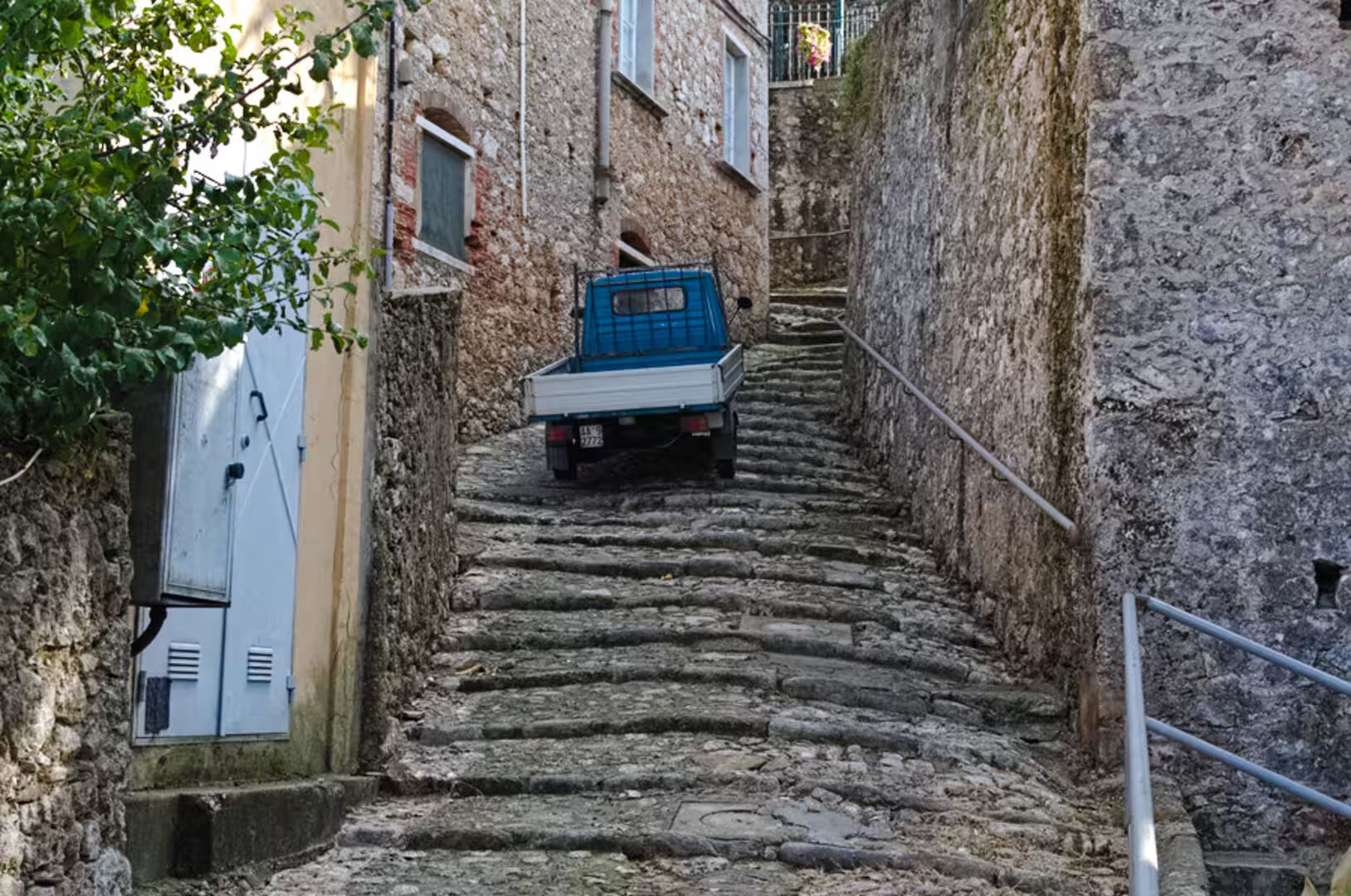
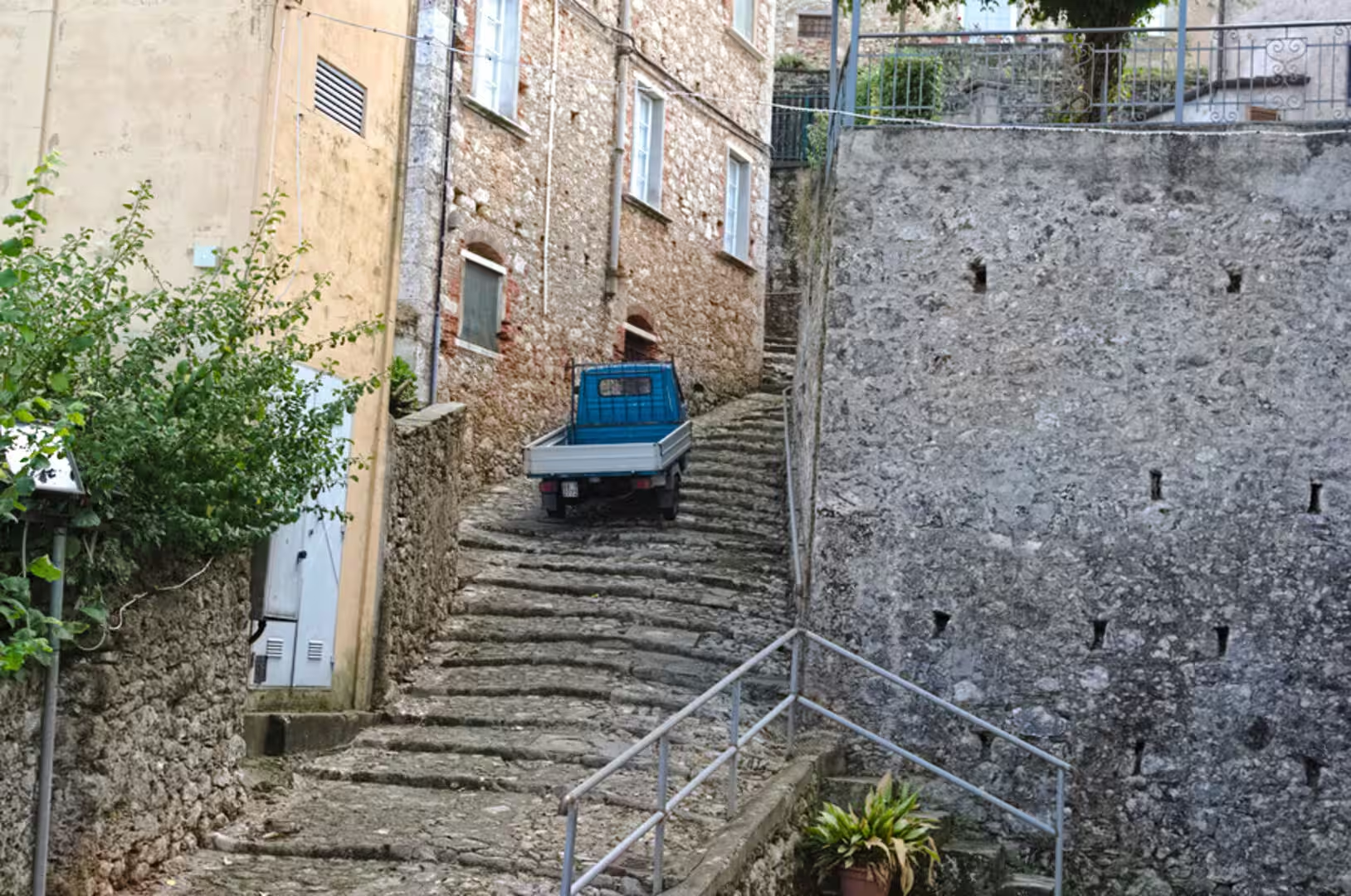
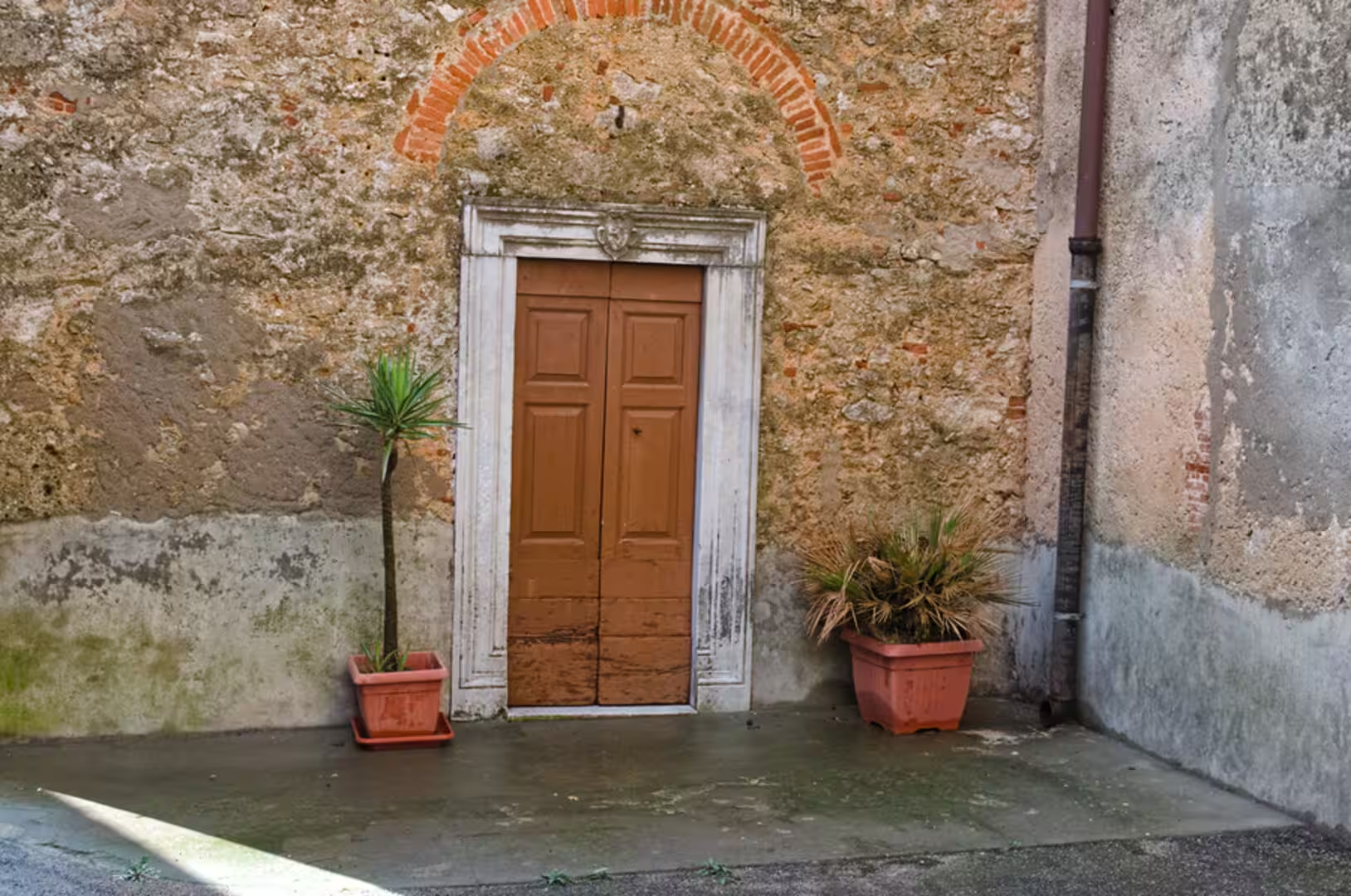
The lanes of the centre are too narrow for cars and too steep for comfort, which is the reason they are worth walking. Worn stone steps climb between high walls, a handrail follows one side, and the surface in the shadow of the buildings stays damp enough to shine. In one lane a little blue flatbed truck of a type built for these streets stands halfway up the steps, and a wooden double door, grey with age, faces the passage from the opposite wall.
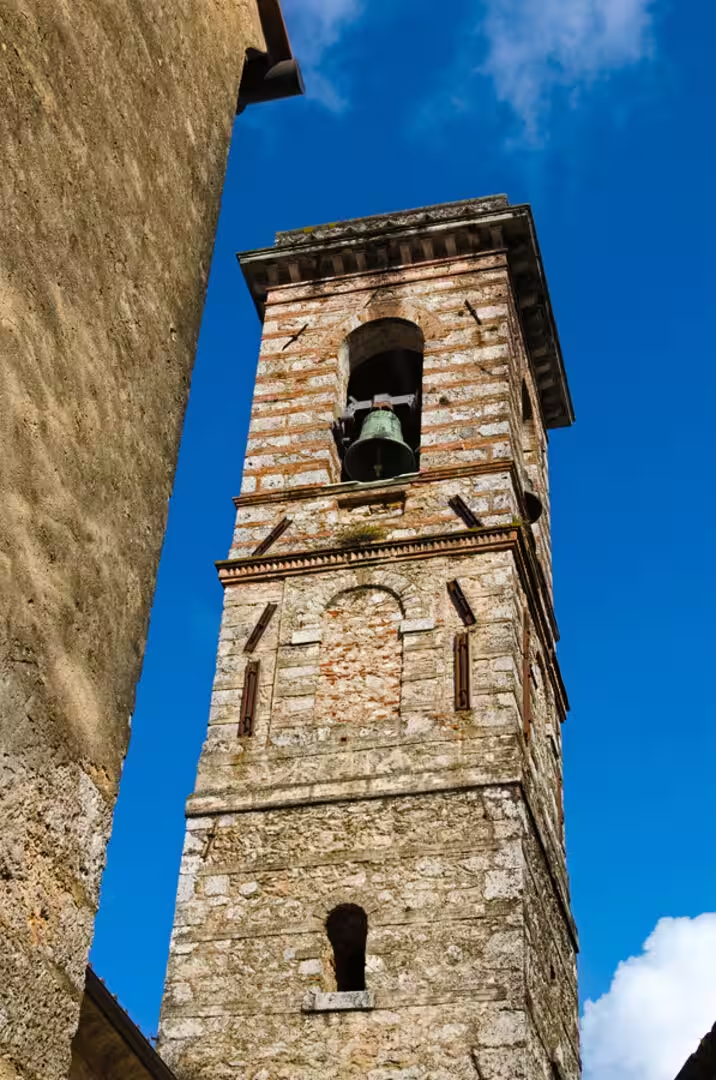
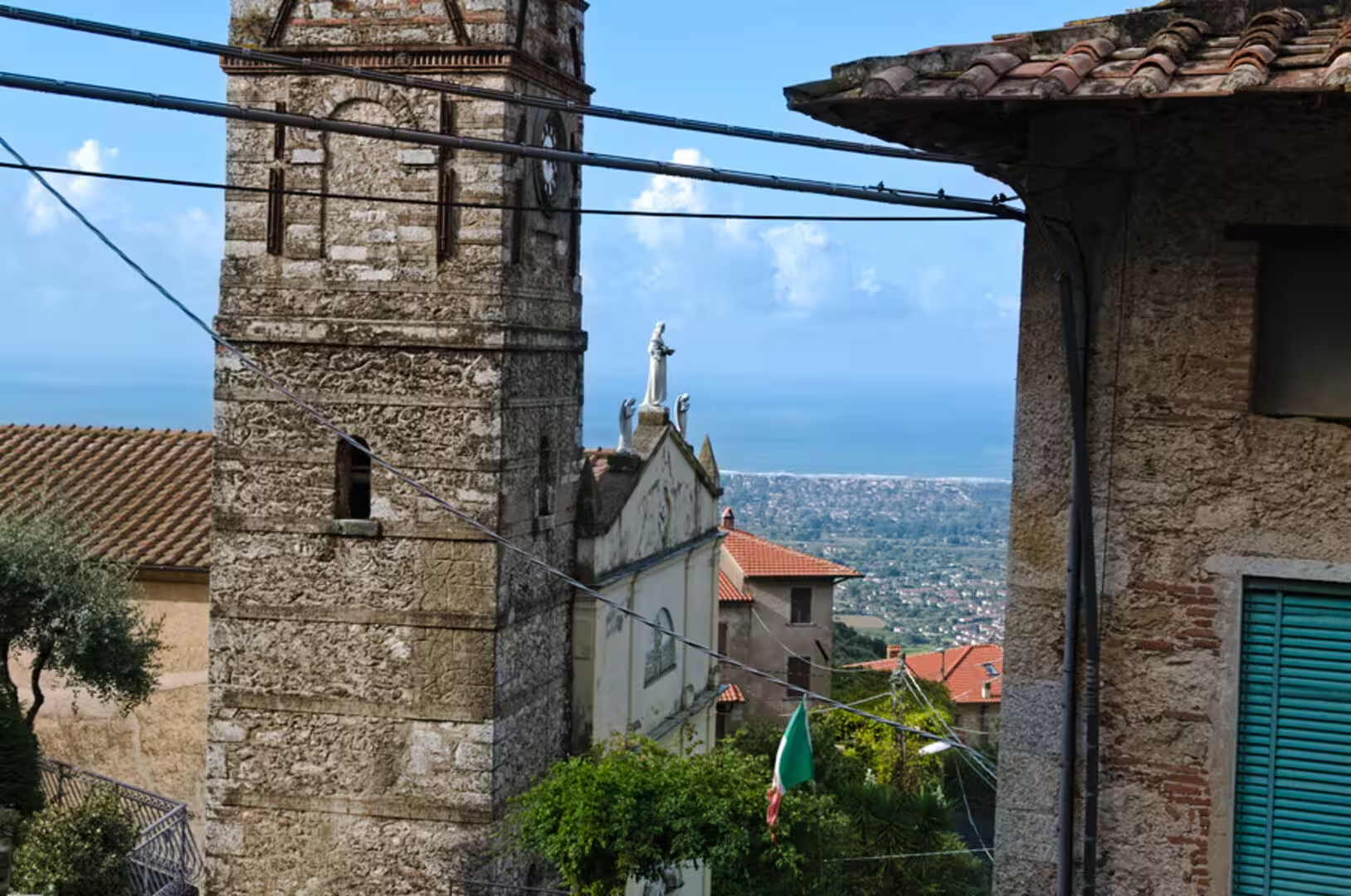
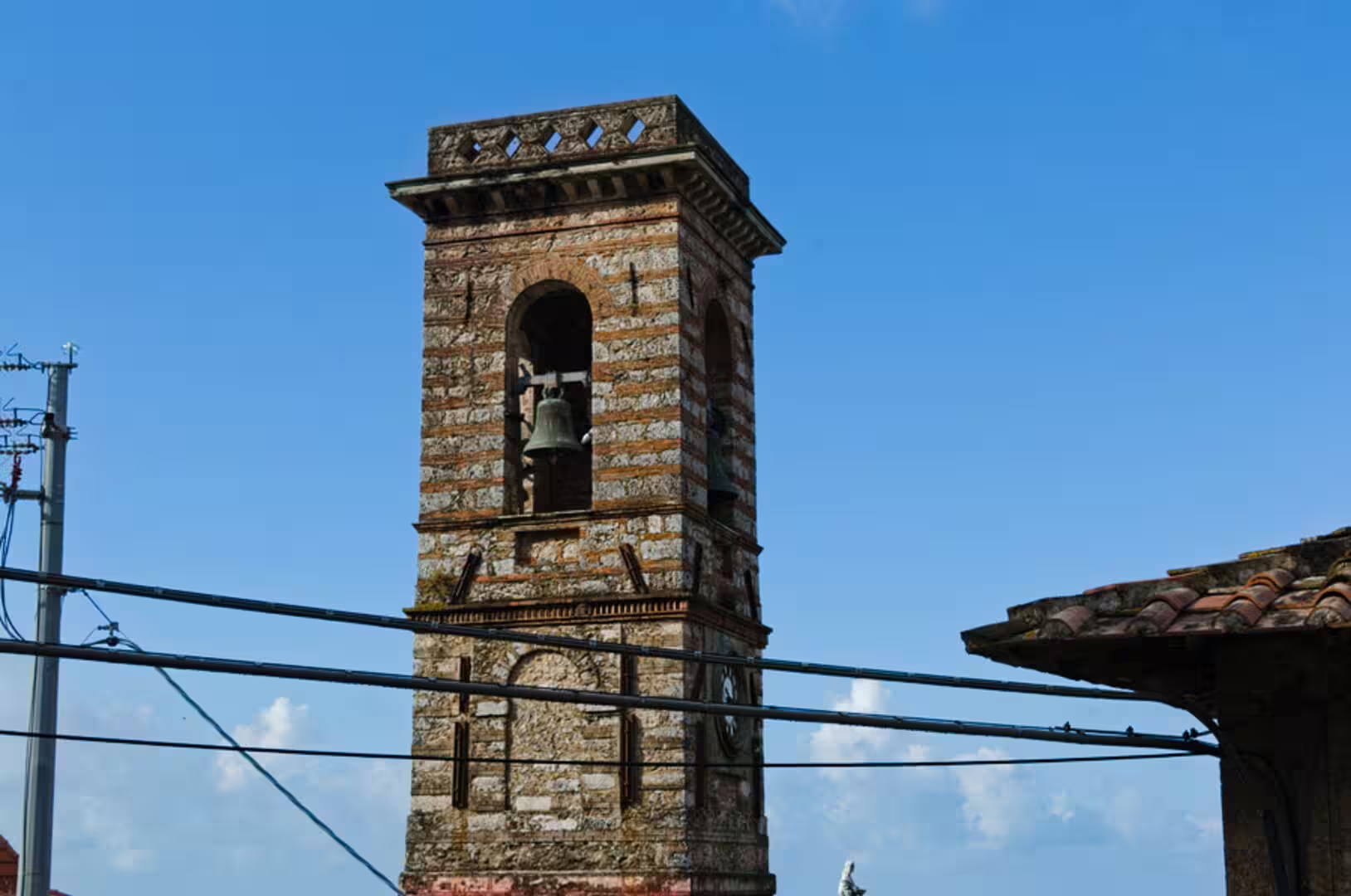
The church and its bell tower occupy the highest point of the built-up area. The tower is of stone with brick courses, square in plan, with an open belfry at the top in which a bronze bell hangs against the sky, and it is the element by which the village is identified from the plain below. The church beside it is plainer and has been rebuilt more than once, and its terrace is the second best viewpoint in the village after the road. Services are held on Sundays and on the feast of the patron saint.
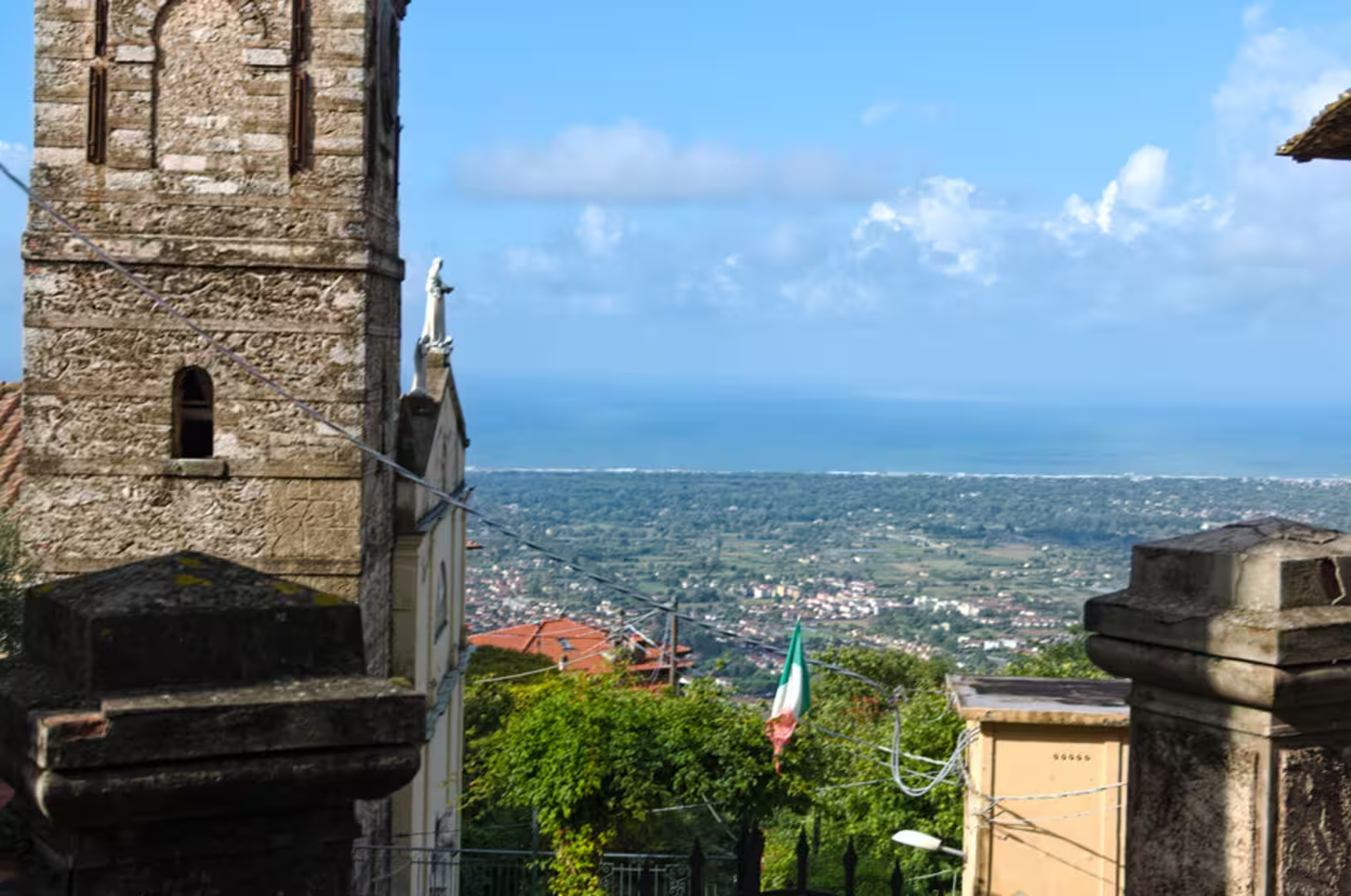
Beyond the church a stone tower and a pair of pillars frame the descent of the rooftops towards the coast. The tower is the surviving part of the older defences, and the flag that flies from it in summer is the only bright colour on the ridge. From this point the whole lower village is visible in one view, with the tiled roofs, the gardens between them and the plain beyond, and the lowlands carry the eye to the water. It is also the place where the swallows gather in the evening.
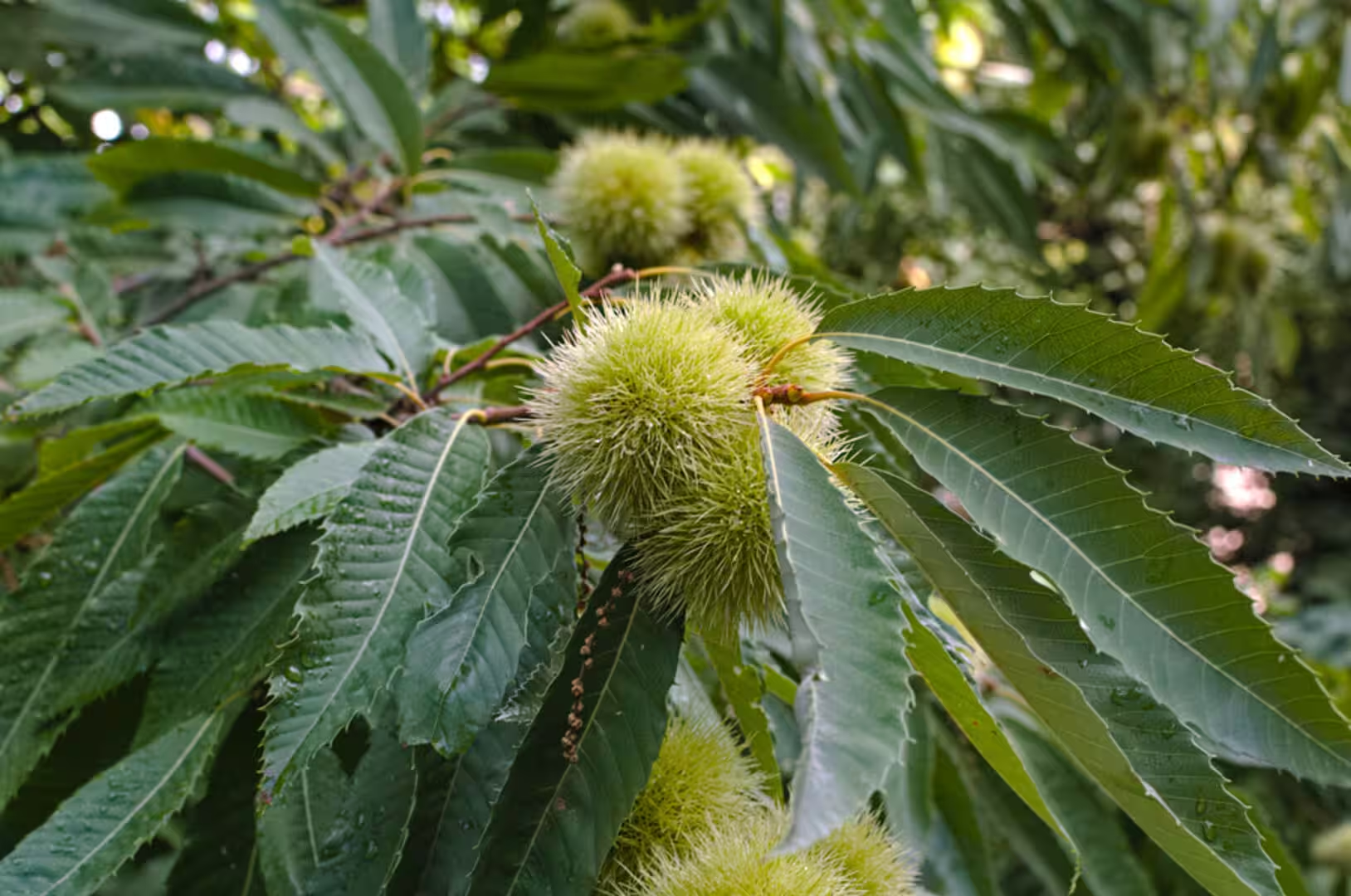
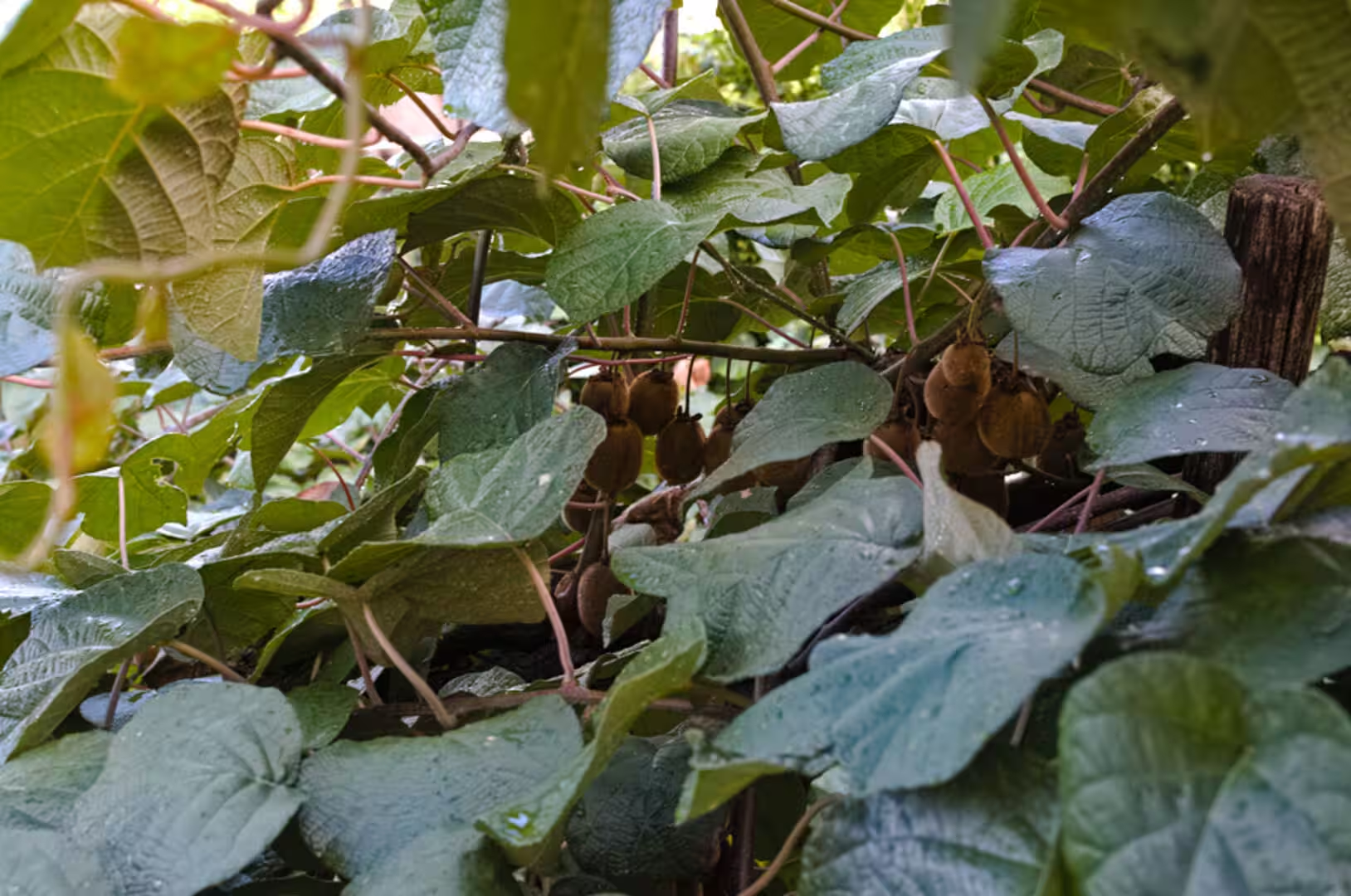
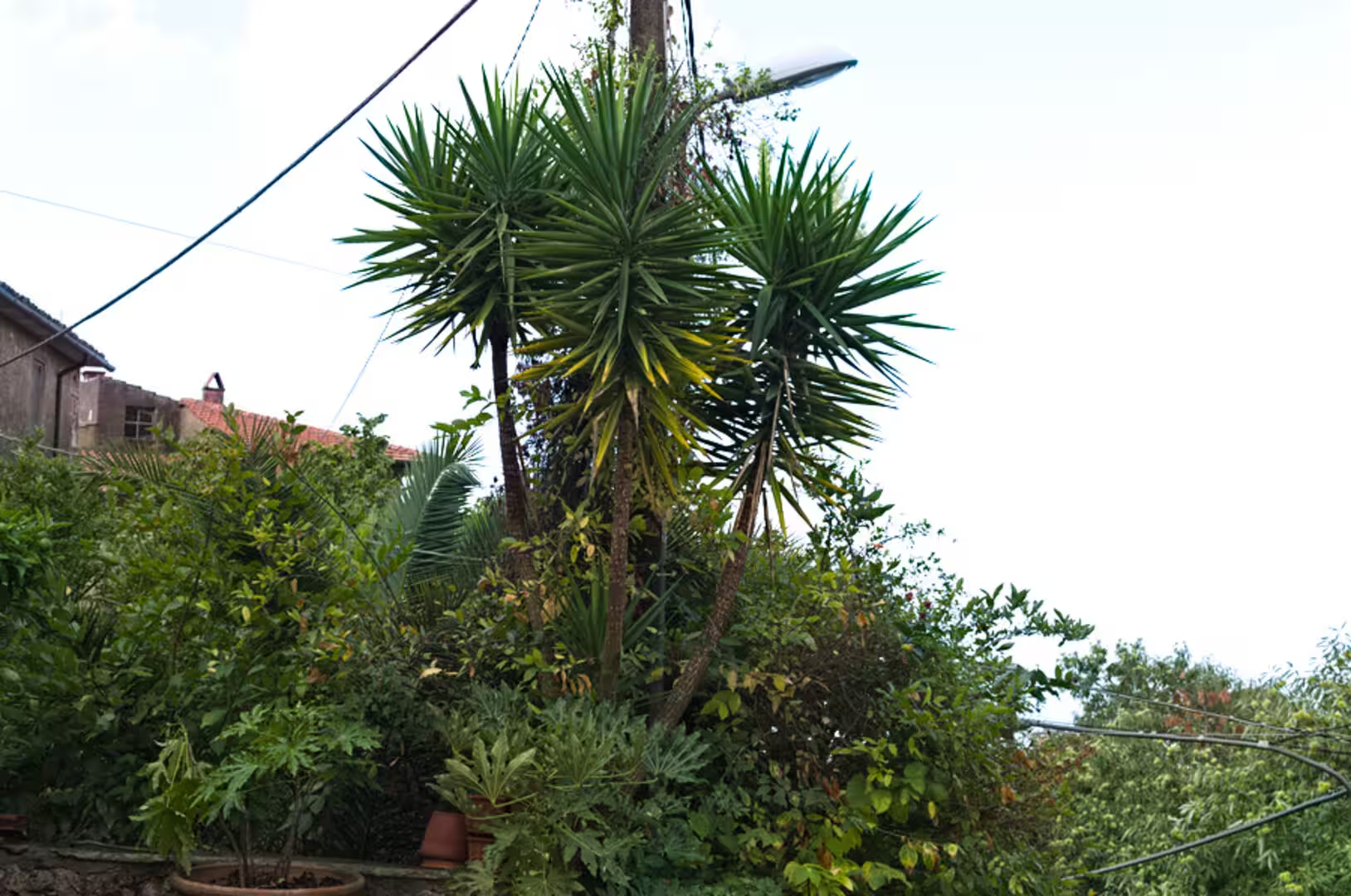
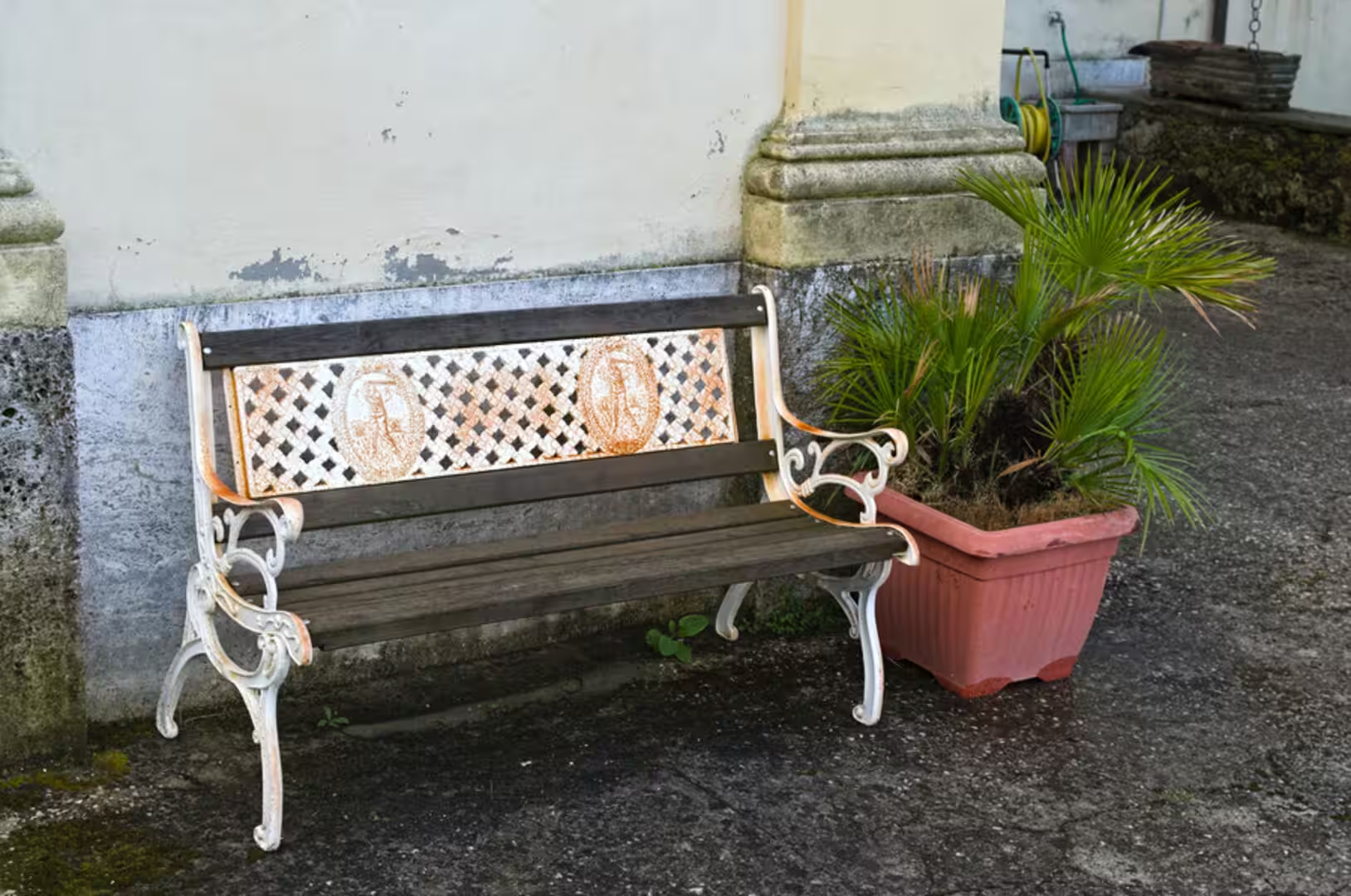
The gardens and the small orchards are worked in the gaps between the houses and on the terraces below them. On the slope the kiwifruit vines climb their frames, the chestnut husks hang unripe and green among the serrated leaves in late summer, and the fig and the olive grow wherever a wall holds the soil. In one courtyard a white iron bench stands beside a pink planter under a fan palm, and the tall spikes of a cordyline rise over the pots lined against the wall. Nothing here is ornamental for its own sake.
Practical notes for a visit. The village is reached by road from the plain in about twenty minutes, and the only parking is at the entrance to the centre, because the lanes above the first bend are pedestrian. Water is available from the fountain at the corner, the bar near the church opens in the morning and again in the evening, and the small shop keeps irregular hours. The best light on the coast comes in the last two hours before sunset, and a jacket is useful after dark, since the ridge catches the wind.
References
- Wikipedia contributors (2026). Tuscany. en.wikipedia.org/wiki/Tuscany
- Wikipedia contributors (2026). Apennine Mountains. en.wikipedia.org/wiki/Apennine_Mountains
- Wikipedia contributors (2026). Apuan Alps. en.wikipedia.org/wiki/Apuan_Alps
- Wikipedia contributors (2026). Versilia. en.wikipedia.org/wiki/Versilia
- Wikipedia contributors (2026). Maremma. en.wikipedia.org/wiki/Maremma
- Wikipedia contributors (2026). Olive oil. en.wikipedia.org/wiki/Olive_oil
- Wikipedia contributors (2026). Chestnut. en.wikipedia.org/wiki/Chestnut
- Wikipedia contributors (2026). Kiwifruit. en.wikipedia.org/wiki/Kiwifruit
- Wikipedia contributors (2026). Sharecropping. en.wikipedia.org/wiki/Sharecropping
- Wikipedia contributors (2026). Italian resistance movement. en.wikipedia.org/wiki/Italian_resistance_movement
- Wikipedia contributors (2026). Marine terrace. en.wikipedia.org/wiki/Marine_terrace
- Wikipedia contributors (2026). Mediterranean climate. en.wikipedia.org/wiki/Mediterranean_climate
- Wikipedia contributors (2026). Etruscan civilization. en.wikipedia.org/wiki/Etruscan_civilization
- Wikipedia contributors (2026). Barbary pirates. en.wikipedia.org/wiki/Barbary_pirates
- Wikipedia contributors (2026). Tyrrhenian Sea. en.wikipedia.org/wiki/Tyrrhenian_Sea
- Romano B. (1995) National Parks Policy and Mountain Depopulation: A Case Study in the Abruzzo Region of the Central Apennines, Italy. Mountain Research and Development. 15. 121. doi.org/10.2307/3673876
- Lucchetti R., Morettini G. (2024) Depopulation in the Central Apennines in the Twentieth Century: An Empirical Investigation. Italian Economic Journal. 11. 1179-1210. doi.org/10.1007/s40797-024-00295-1
- Versari D., Ghiadoni L., Taddei S. (2008) Long life to olive oil and wine! Long life with olive oil and wine?. Journal of Hypertension. 26. 186-187. doi.org/10.1097/hjh.0b013e3282f4a631
- Zyw L., David E. (2025) Tuscan Cold Pressed Extra Virgin Olive Oil. Petits Propos Culinaires. 8-12. doi.org/10.1558/ppc.29604