2021 Italy - Livorno
17 September 2021



Journal Notes
General
Livorno is a port city on the Tyrrhenian coast of Tuscany and the capital of the province of the same name, with about 152,000 inhabitants the twenty-fifth largest city in Italy. English speakers knew it for centuries as Leghorn, a name that travelled through Genoese into the northern languages. The sea here is not a view but the reason the city exists: the harbour opened onto the whole Mediterranean, and the merchant houses that grew up behind it were kept by families from half of Europe and from the Ottoman coast as well.
The old city is small, dense and easy to cross on foot. In 1577 Bernardo Buontalenti laid out a pentagonal plan that still holds the centre together, a shape the citizens simply call the Pentagono. Around it runs the Fosso Reale, a canal dug as a moat and used later as a waterway, and to the north the district of Venezia Nuova was built on ground taken from the sea, cut through by canals and crossed by small stone bridges between the two fortresses. The comparison with Venice came by itself.
The waterfront is the long room of the city. Viale Italia runs south from the harbour for several kilometres, past the aquarium, the piers of the sailing clubs and the pavilions of the bathing establishments, as far as Ardenza and Antignano. In the evening the whole town walks there, on bicycles, with children, with ice cream, beside water that has gone dark and calm, and the lighthouse at the end of the harbour mole stands over all of it. It is the hour when Livorno is most itself.
Livorno is also a working port and makes no secret of it. Ferries leave for Sardinia, Corsica, Capraia, Barcelona and Tangier, container ships and car carriers come and go at the docks behind the breakwater, the shipyard that once built ocean liners now belongs to a yacht group, and a refinery and a torpedo factory occupy the northern edge of the town. The fish market, the covered market hall of 1894 and the fishing fleet keep the older trade alive in the middle of it.
The character of the city follows from its history as a free port. Livorno was open to merchants of any religion when most of Italy was not, and the English, Dutch, Greeks, Armenians and Sephardic Jews who settled here left churches, cemeteries and a habit of doing business with strangers. The city is known for its left-wing politics, its football club and its food from the sea, and it is the harbour from which most visitors reach the islands of the Tuscan archipelago. Very little here is arranged for display.
History
The place was inhabited long before it was a city. Worked bones, copper and pottery from a cave in the hills between Ardenza and Montenero go back to the Neolithic, the Etruscans left a settlement called Labro, and the Romans used the natural cove whose name, Liburna, comes from the light warship of the Liburnians; Cicero mentions the bay as Labrone in a letter to his brother. The Via Aurelia ran along this coast, and the place appears in documents in 1017 as a small coastal village with a port and the remains of a Roman tower.
For three centuries Livorno belonged to others. Matilda of Tuscany built a tower here in 1077, the Republic of Pisa held the village from 1103 and fortified the port with the Quadratura dei Pisani, and when the Pisan fleet was destroyed at Meloria in 1284 the old harbour of Porto Pisano began to silt up and lose its trade. Pisa sold the place to the Visconti of Milan in 1399, Genoa bought it in 1405, and Florence acquired it on 28 August 1421. The census of 1427 counted 118 families, 423 people in all.
The Medici turned a fortress into a city. The Fortezza Vecchia was built between 1518 and 1534 around the medieval remains, and in 1577 Buontalenti drew the pentagonal plan of the new town. Ferdinando I declared Livorno a free port in the late 1580s, so that goods traded inside its boundaries carried no duty, and the Leggi Livornine of 1593 regulated commerce while offering freedom of religion and amnesty to anyone who came to trade. Turks, Persians, Greeks, Armenians and Jews answered the invitation. On 19 March 1606 Ferdinando raised Livorno to the rank of city.
The seventeenth century gave the city its shape and its canals. Under Ferdinando II, from 1629, the district of Venezia Nuova was laid out by Giovanni Battista Santi on land reclaimed between the two fortresses, with warehouses, houses and a network of navigable canals so that goods could be moved by water inside the town. New walls and a second fortress followed, Pisa had by then lost its harbour for good, and Livorno took over as the principal port of Tuscany. By 1745 the population had reached 32,534, and in 1653 the naval battle of Leghorn was fought off this coast.
The nineteenth and twentieth centuries brought changes of every kind. The free port ended when Livorno joined the Kingdom of Italy in 1860 and the city lost much of its commercial privilege, the naval academy was founded in 1881, and the shipyard of the Orlando brothers built liners and warships before the industry of the twentieth century arrived. Livorno suffered heavy Allied bombing in the Second World War, which destroyed the cathedral and the synagogue among many other buildings. The Italian Communist Party was founded here in 1921, and the cathedral was inaugurated again in 1949.
Geology
The city stands on a coastal plain between two very different landscapes. To the north the flat land of the Arno and the reclaimed marshes reach towards Pisa, and to the south and east the hills of Livorno rise out of the plain, a low range of sandstone, sand and clay that belongs to the Tuscan succession of the Apennine foothills. The hills are wooded, cut by small valleys and full of springs, and they supply the stone that gives the older parts of the town their grey and ochre colour.
The shoreline changes character within a few kilometres. South of the Arno the long sandy beaches of Marina di Pisa, Calambrone and Tirrenia run behind dunes and pine woods, built from sediment carried down by the river. Beyond Antignano the sand gives way to cliffs, and the coast becomes a rocky shore of limestone, with white slabs falling into water of a deep turquoise, small bays, and the road to Quercianella running above the sea on the old Via Aurelia. This is the stretch that gives the coast its reputation for clear water.
The beaches on this coast are carbonate beaches in the strict sense. Their sand consists largely of fragments of shells, sea urchins and calcareous algae rather than of quartz or feldspar, and white beaches of this kind are studied all over the Mediterranean because their sediment budget depends on the life of the shore itself. Between Livorno and the Cecina the discharge of calcium carbonate from industrial plants has whitened the sand further, and the same coastal stretch is a textbook case of erosion, groynes and expensive beach replenishment.
The harbour is a work of engineering as much as of geology. The Medici mole and the later breakwater were built out into the open sea to shelter the roadstead, and the basin behind them has to be dredged continuously because the current carries fine sediment along the coast. Storms from the south-west, the Libeccio, drive waves against the moles and move sand along the shore, which is why the beaches south of the city are refilled every few years. The lighthouse at the head of the mole is the fixed point of the whole coastline.
The climate is a hot-summer Mediterranean one, classified as Csa, and the sea moderates it in both directions. Summers are warm and dry, the nights stay warm enough that the season passes the subtropical threshold, and the water keeps bathers in the sea until late September. Winters are mild for the latitude, rain falls mainly between autumn and spring, and the wind decides the character of a day: the Libeccio brings surf and cloud, the Scirocco heat and haze, and the Tramontana clears the air until the islands appear on the horizon.
Things to See
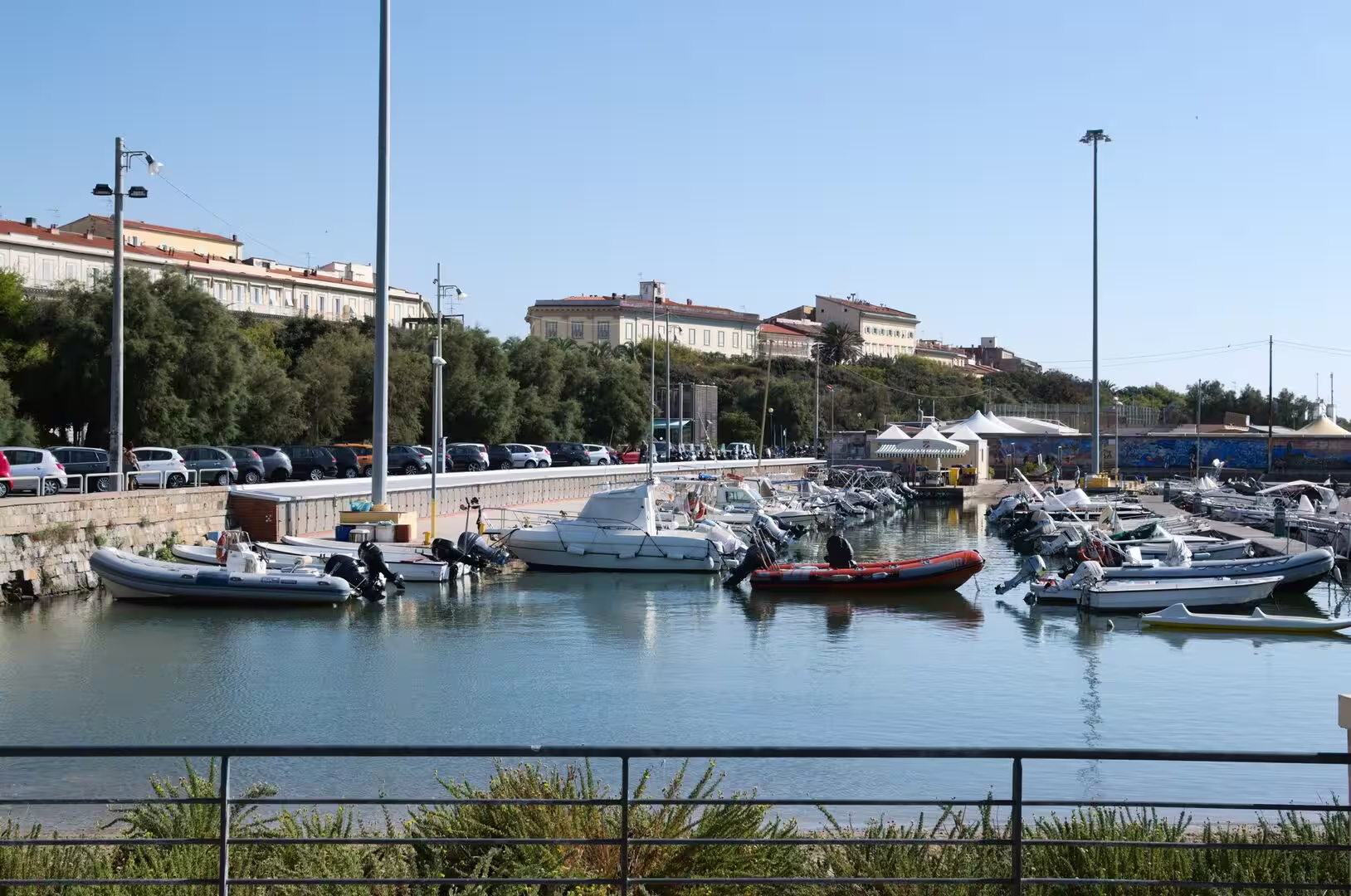
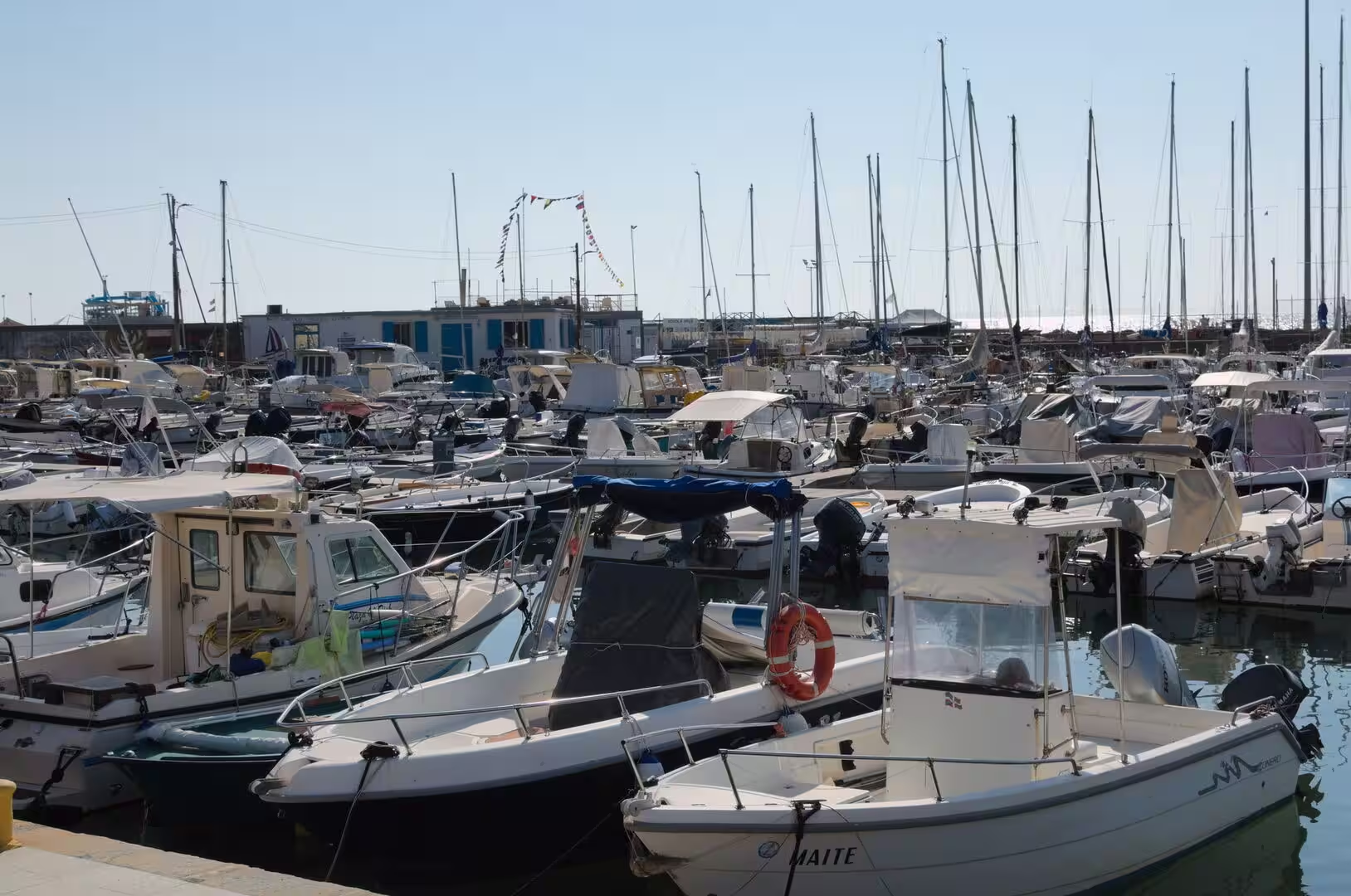
The old harbour is the natural starting point. Below the walls of the Fortezza Vecchia the fishing boats and dinghies lie packed against the stone quay in clusters so tight that their gunwales touch, and behind them the masts of larger craft rise in rows over the roofs. This is still a working corner: nets are mended on the stones, the catch is sold a few steps away, and the old fortress above, raised on the medieval core of the town, keeps the whole inlet in its shadow.
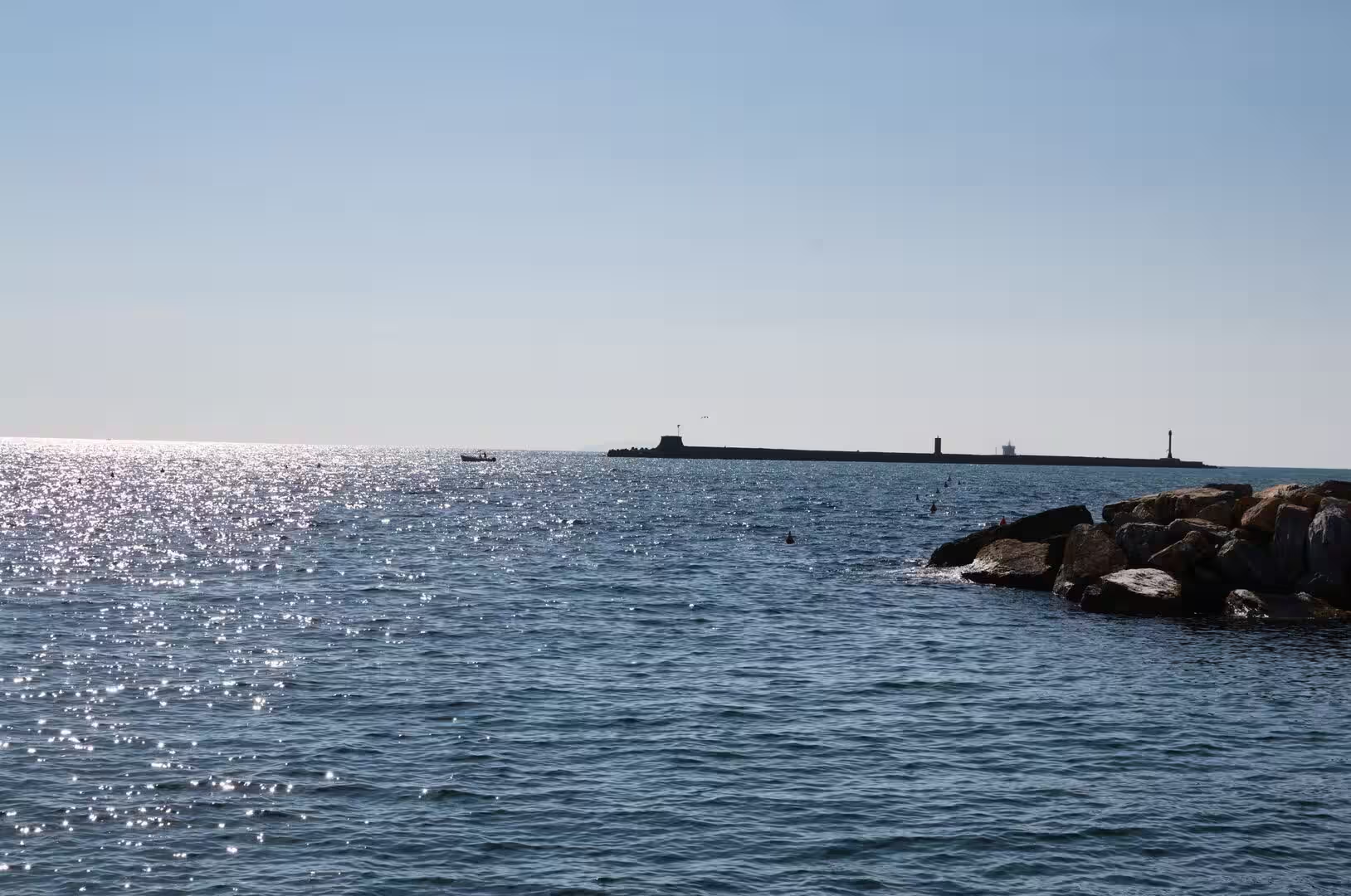
A few hundred metres out, the Medici mole and the long outer breakwater close the bay against the open sea. Inside that shelter the water is almost flat on a summer morning and the sunlight lies across it in broad bands all the way to the line of stone, where the lighthouse stands. Ships pass behind the line on their way to the docks, ferries leave for the islands, and the horizon is a hard blue edge with nothing above it but sky.
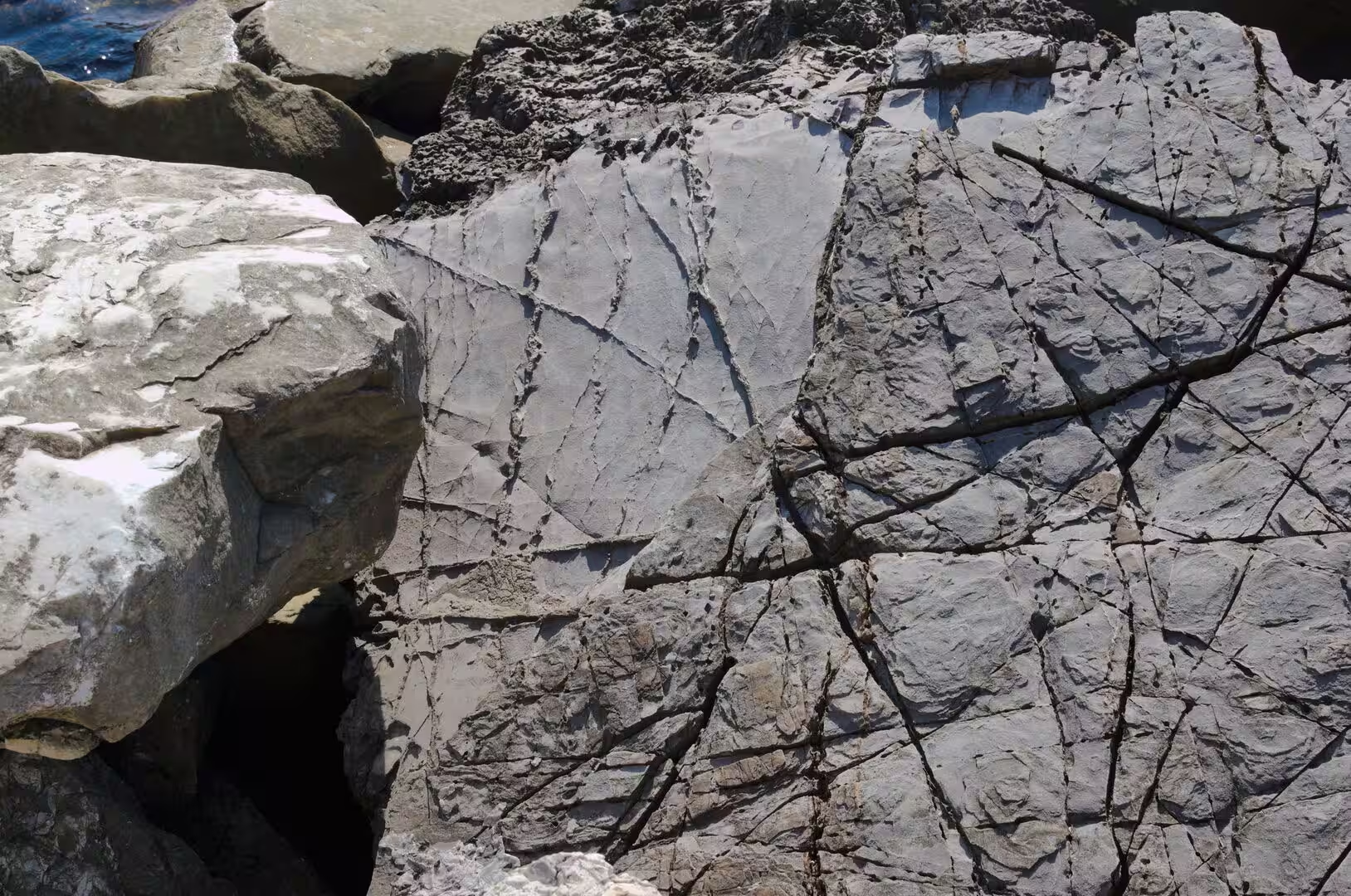
Livorno builds in stone wherever it can. The quays, the ramparts of the fortresses, the banks of the canals and the pavement of the promenade are made of thick slabs of local sandstone and limestone, laid in courses and greyed by salt and sun. The stone is quarried in these hills, soft enough to cut into blocks and hard enough to last centuries, and in the heat of midday the joints and cracks between the slabs draw a fine map across the ground of the squares.
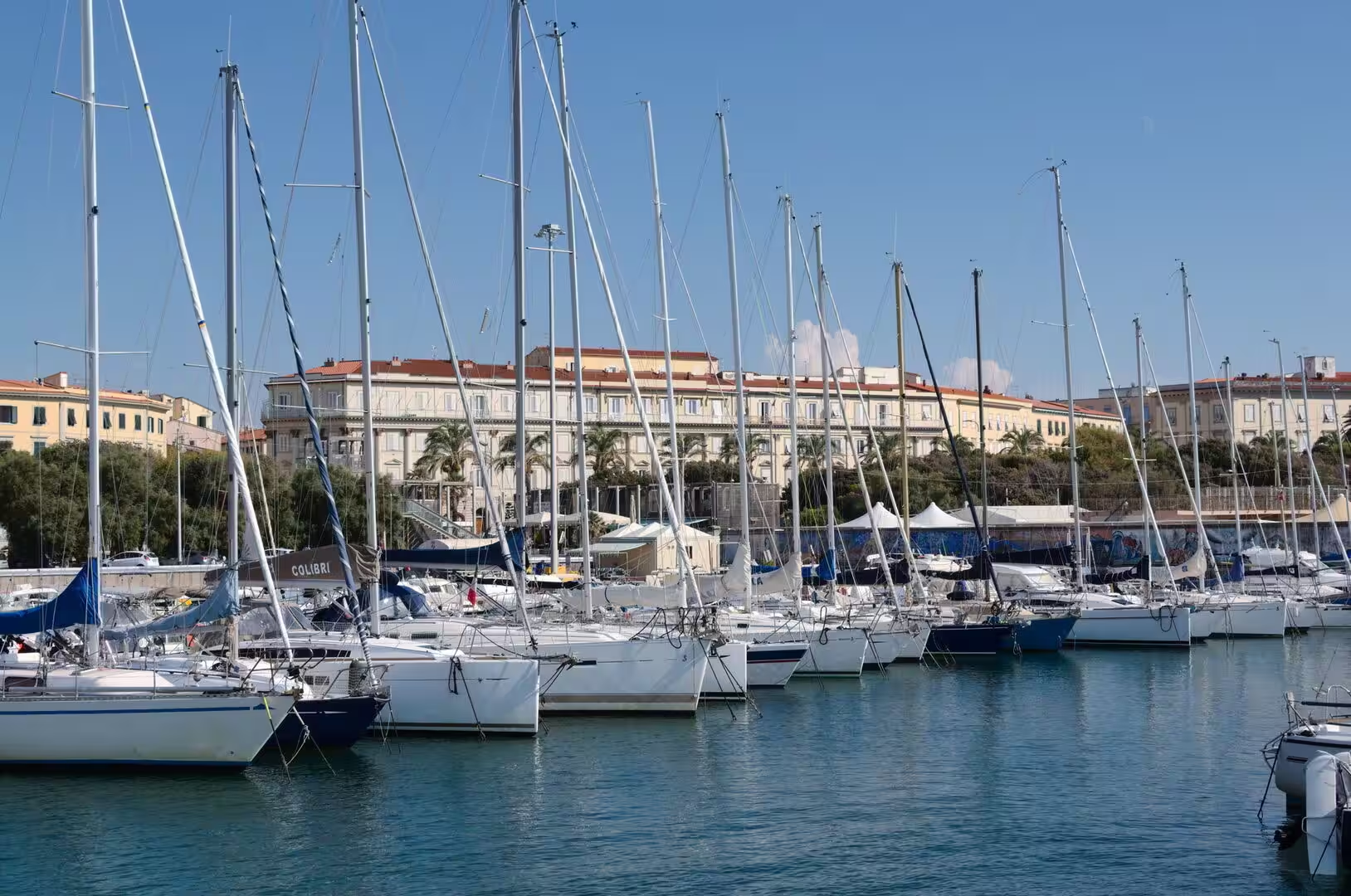
The yacht harbour lies between the old town and the sea, filled with white sailboats whose masts form a small forest in front of palm trees and the pale fronts of the houses. Livorno has a long sailing tradition and several clubs here, and on a summer weekend the boats leave early and come back in the evening, when the crews sit on deck and the lights of the bars come on along the quay behind them. In the inner basin the hulls stand so close together that a person could step from one deck to the next.
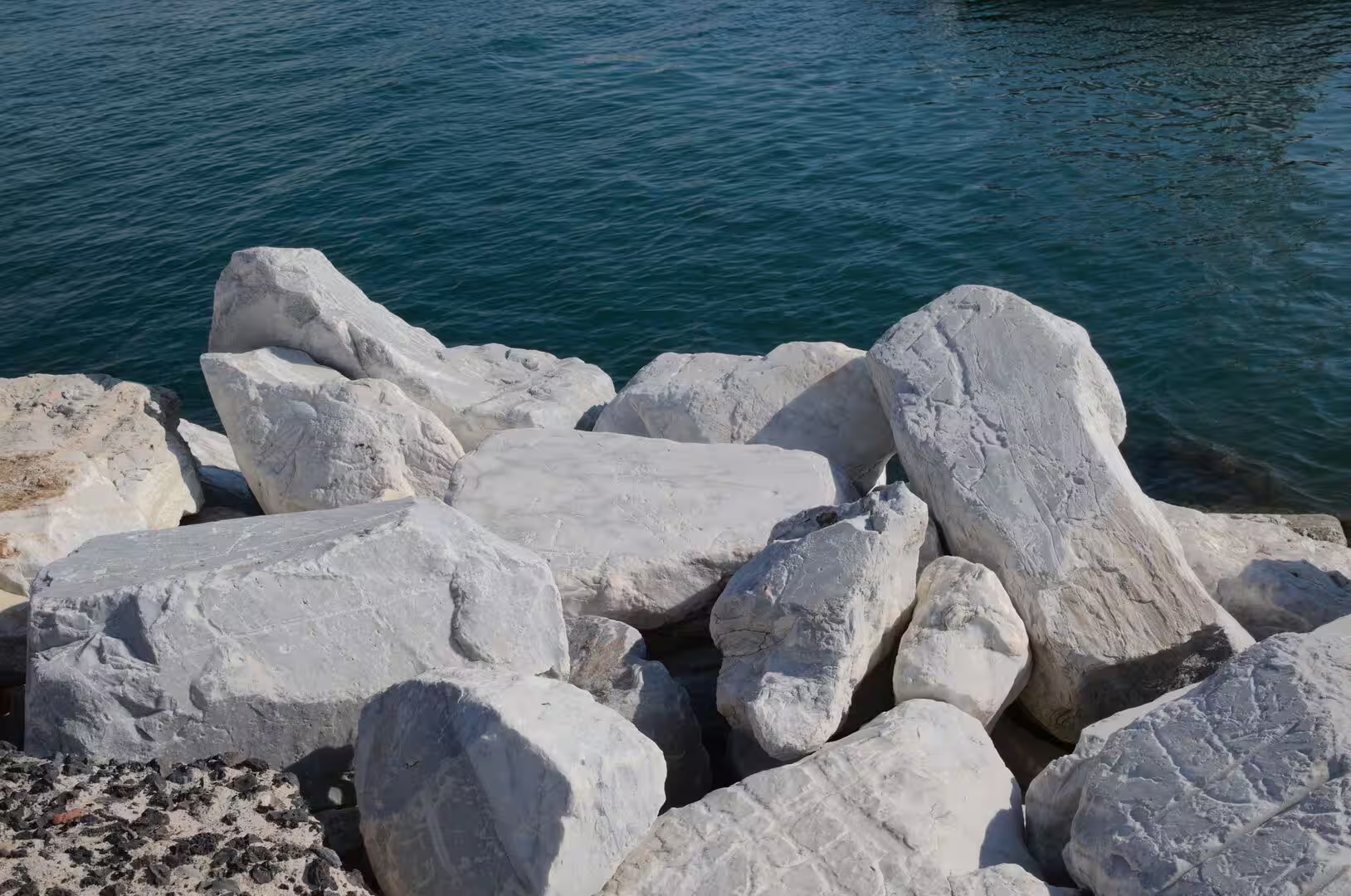
South of the city the shore turns to rock. Flat white slabs of limestone lie in terraces at the waterline, split by deep joints, and the water in the pools between them is a turquoise that turns to blue within a few metres. People spread towels directly on the stone, swim from the ledges and look for shells and small fish in the shallow basins where the rock has weathered into steps. This is the coast of Calafuria and Quercianella, reached along the old Aurelia road above the sea.
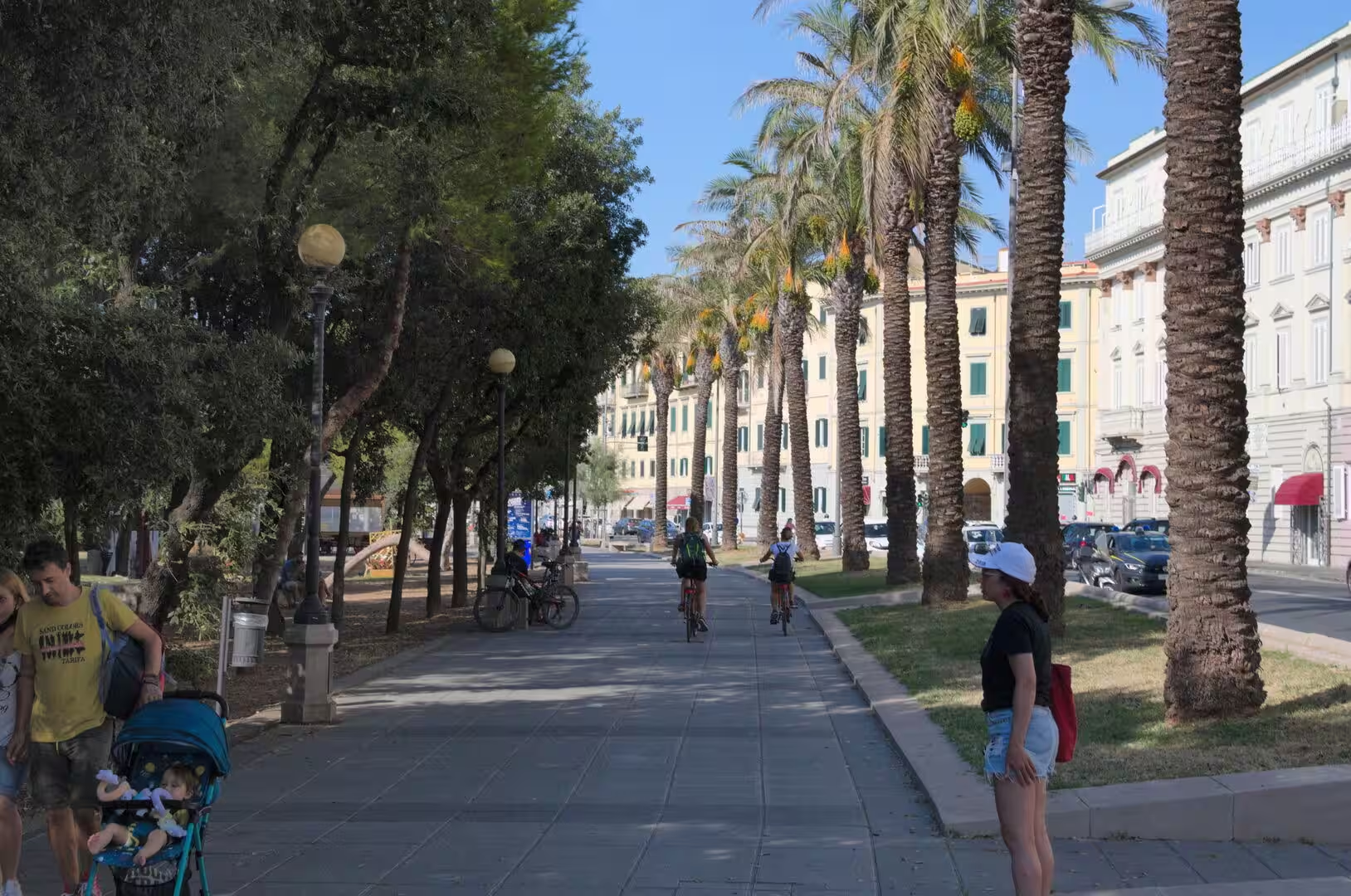
The seafront promenade is the parade ground of the city. Lamp posts stand along the edge of Viale Italia at regular intervals, the windows of the bathing establishments face the water, and yachts swing at their moorings a short distance off. At the point of the promontory the lighthouse of the harbour stands white against the sky, the boulevard carries palms, cyclists and walkers in both directions, and the Terrazza Mascagni opens above the sea with its black and white chequered paving and the aquarium beside it.
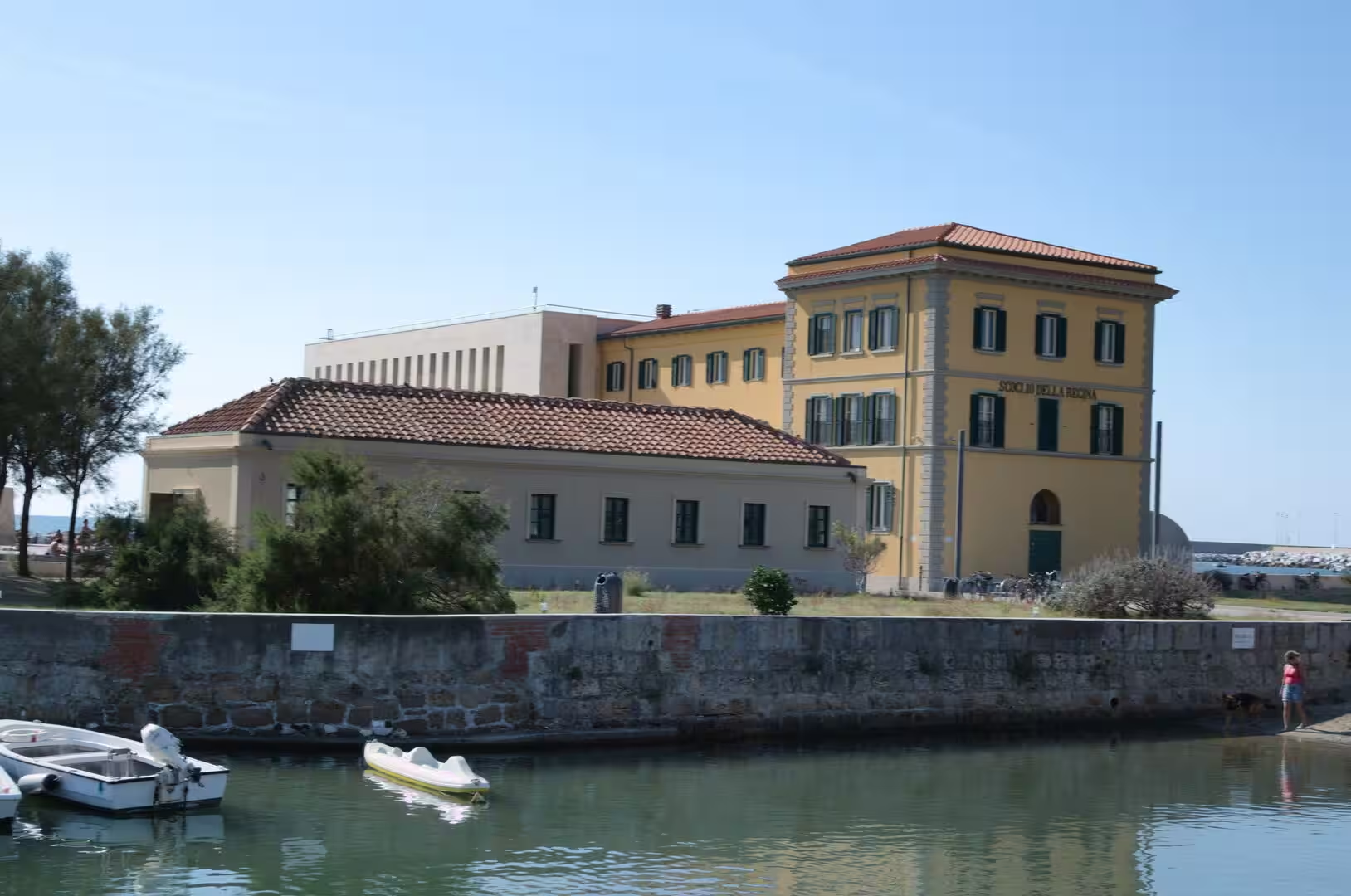
At the southern end of the bay the naval academy occupies a promontory of its own, a great complex of yellow plaster, green shutters and red tiled roofs behind a wall on the water. The Accademia Navale has trained officers of the Italian navy since 1881, and its own flag flies beside the national one over the courtyard. Visitors cannot walk inside, but the building and its long quay belong to the view of the bay from every part of the waterfront.
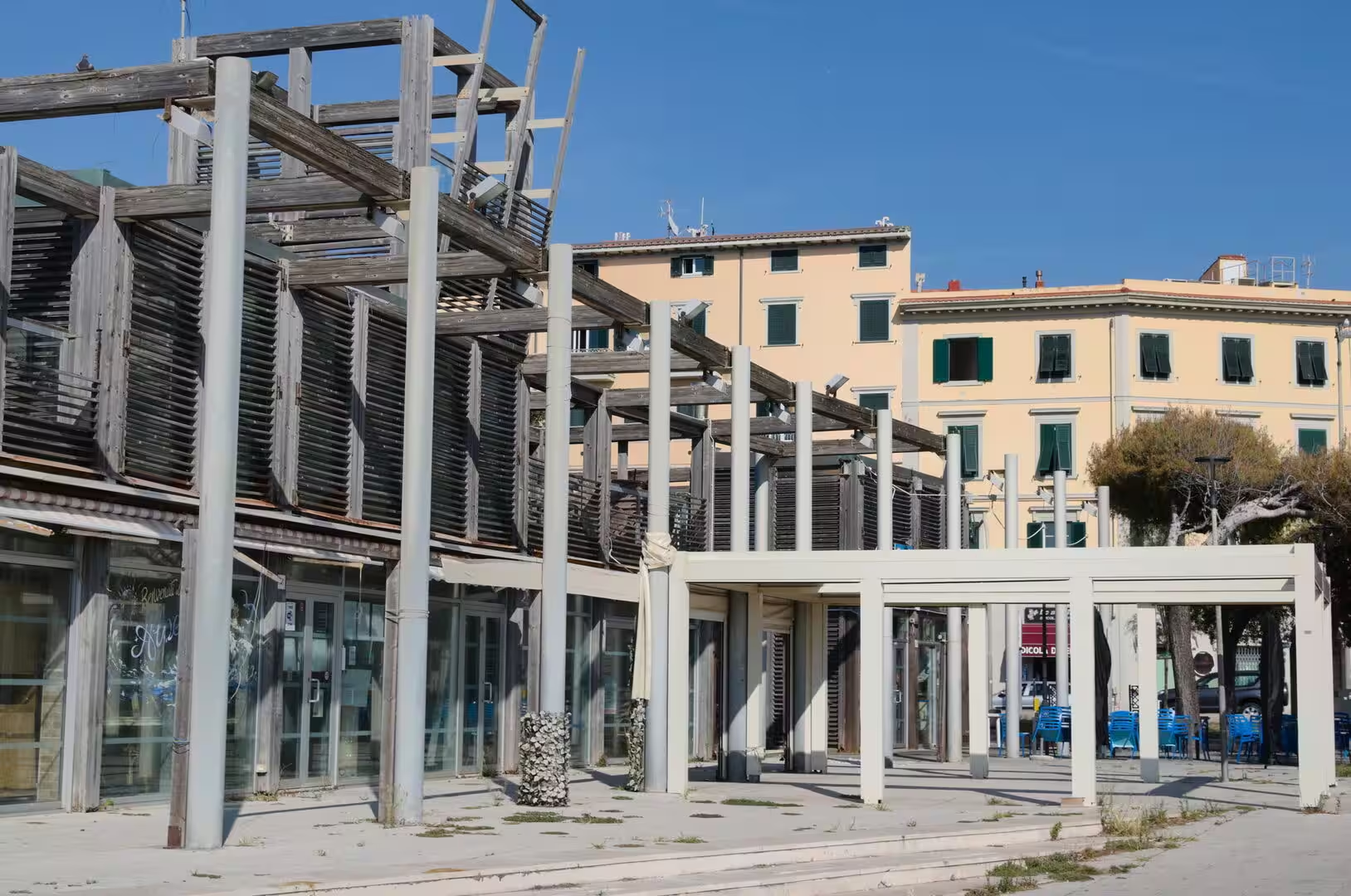
Behind the shore the old town keeps its own scale. Lanes open into small squares framed by ochre facades with green shutters, and a wooden trellis pavilion on white columns turns one corner into a covered room. Blue cafe chairs stand on a boardwalk of timber beside a modern pavilion of the same material, a seated marble figure on a tall pedestal honours a grand duke in a sunny square, and an aged palazzo with green doors and marble plaques closes a quiet corner. Ferries leave all day for the islands, cacciucco is the dish of the town, and a ponce at the end of the evening belongs to Livorno as much as the harbour does.
References
- Wikipedia contributors (2026). Livorno. en.wikipedia.org/wiki/Livorno
- Wikipedia contributors (2026). Province of Livorno. en.wikipedia.org/wiki/Province_of_Livorno
- Wikipedia contributors (2026). Port of Livorno. en.wikipedia.org/wiki/Port_of_Livorno
- Wikipedia contributors (2026). Livorno Hills. en.wikipedia.org/wiki/Livorno_Hills
- Wikipedia contributors (2026). History of the Jews in Livorno. en.wikipedia.org/wiki/History_of_the_Jews_in_Livorno
- Wikipedia contributors (2026). Monumento dei Quattro Mori. en.wikipedia.org/wiki/Monumento_dei_Quattro_Mori
- Wikipedia contributors (2026). Leghorn chicken. en.wikipedia.org/wiki/Leghorn_chicken
- Wikipedia contributors (2026). Grand Duchy of Tuscany. en.wikipedia.org/wiki/Grand_Duchy_of_Tuscany
- Wikipedia contributors (2026). Ferdinando I de’ Medici, Grand Duke of Tuscany. en.wikipedia.org/wiki/Ferdinando_I_de’_Medici%2C_Grand_Duke_of_Tuscany
- Wikipedia contributors (2026). Italian Communist Party. en.wikipedia.org/wiki/Italian_Communist_Party
- Wikipedia contributors (2026). Canale dei Navicelli. en.wikipedia.org/wiki/Canale_dei_Navicelli
- Wikipedia contributors (2026). Old English Cemetery, Livorno. en.wikipedia.org/wiki/Old_English_Cemetery%2C_Livorno
- Wikipedia contributors (2026). Tuscan Archipelago. en.wikipedia.org/wiki/Tuscan_Archipelago
- Wikipedia contributors (2026). Tuscany. en.wikipedia.org/wiki/Tuscany
- Wikipedia contributors (2026). Arno. en.wikipedia.org/wiki/Arno
- Wikipedia contributors (2026). Republic of Pisa. en.wikipedia.org/wiki/Republic_of_Pisa
- Wikipedia contributors (2026). Battle of Meloria. en.wikipedia.org/wiki/Battle_of_Meloria
- Tazzara C. (2017) Livorno and the Science of Commerce in Enlightenment Tuscany. Oxford Scholarship Online. doi.org/10.1093/oso/9780198791584.003.0008
- Mitchell S., Khan S., Maharaj R., Robinson E. (2002) Carbonate Beach Sediment Composition at a Tourist Beach, Negril, Jamaica. Carbonate Beaches 2000. 204-217. doi.org/10.1061/40640(305)16
- Saengsupavanich C. (2019) Willingness to restore jetty-created erosion at a famous tourism beach. Ocean & Coastal Management. 178. 104817. doi.org/10.1016/j.ocecoaman.2019.104817
- Alexandrakis G., Manasakis C., Kampanis N.A. (2015) Valuating the effects of beach erosion to tourism revenue. A management perspective. Ocean & Coastal Management. 111. 1-11. doi.org/10.1016/j.ocecoaman.2015.04.001
- Dimelli D. (2024) Historic Centers and Overtourism: Opportunities and Threats for Three Historic European Cities. Current Approaches, Solutions and Practices in Conservation of Cultural Heritage. 135-154. doi.org/10.26650/b/aa9ps34.2024.006.007