2021 Italy - Viareggio at night
18 September 2021



Journal Notes
General
Viareggio lies on the coast of northern Tuscany, on the Ligurian Sea that is usually called the Tyrrhenian here, and it is the second largest city of the province of Lucca after Lucca itself. The built-up area runs for about ten kilometres along a sandy shore, six of them occupied by bathing establishments and four left open to the public. More than sixty thousand people live in the town, whose only outlying settlement is Torre del Lago Puccini, a village of eleven thousand on the lake a few kilometres inland.
The name of the place is usually derived from the Latin Via Regis, the kings’ road, which linked a small fortification on the beach with Lucca, and a second explanation prefers Vicus Regius, a royal village of imperial times. The first record belongs to 1169, when a wooden tower stood on the shore, and a military building called Turris de Via Regia followed in 1172. In the sixteenth century the settlement became the only sea port of the Republic of Lucca, and the square tower that still carries the name Torre Matilde was raised in 1541 to keep corsairs away from the harbour.
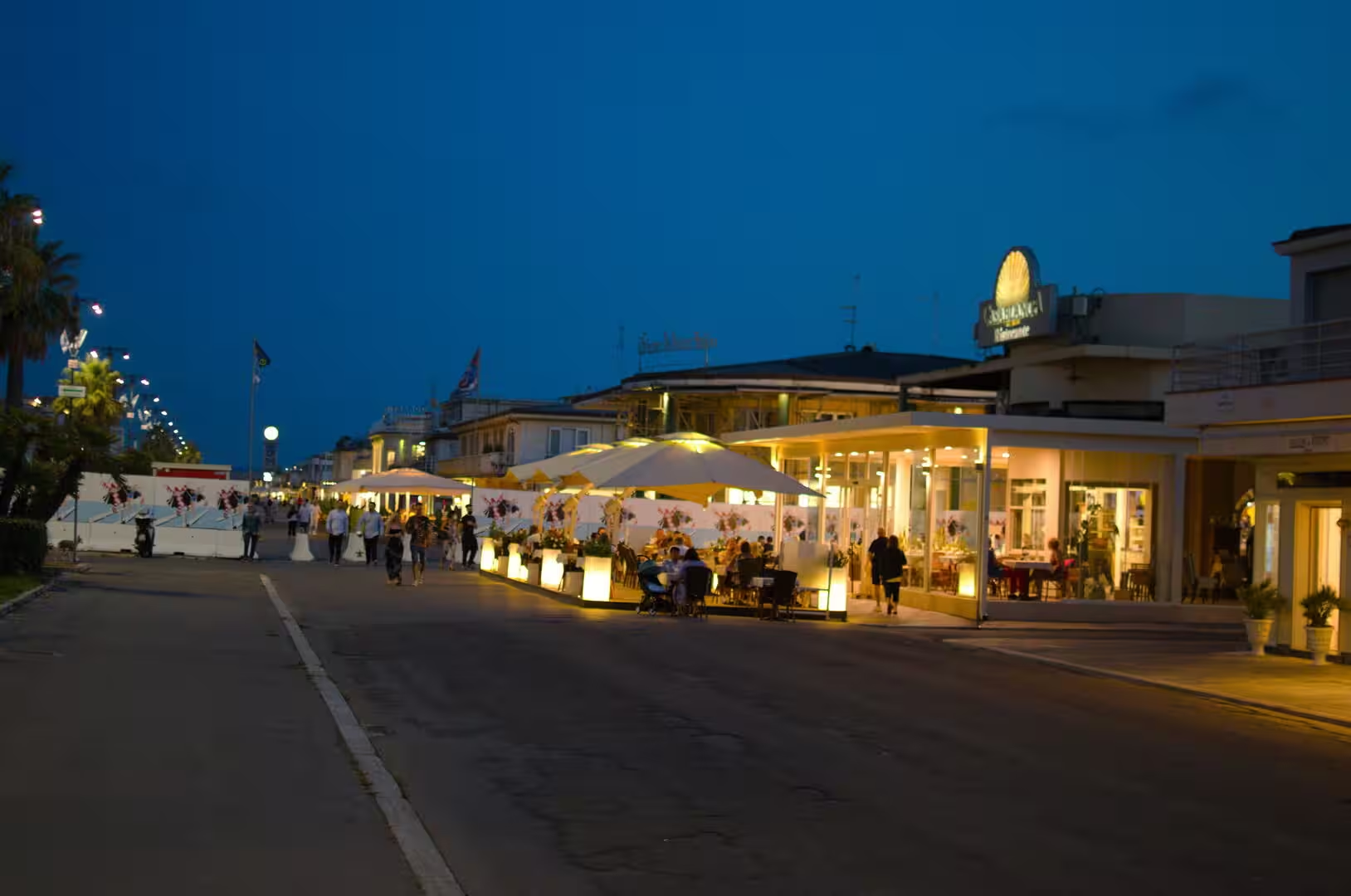
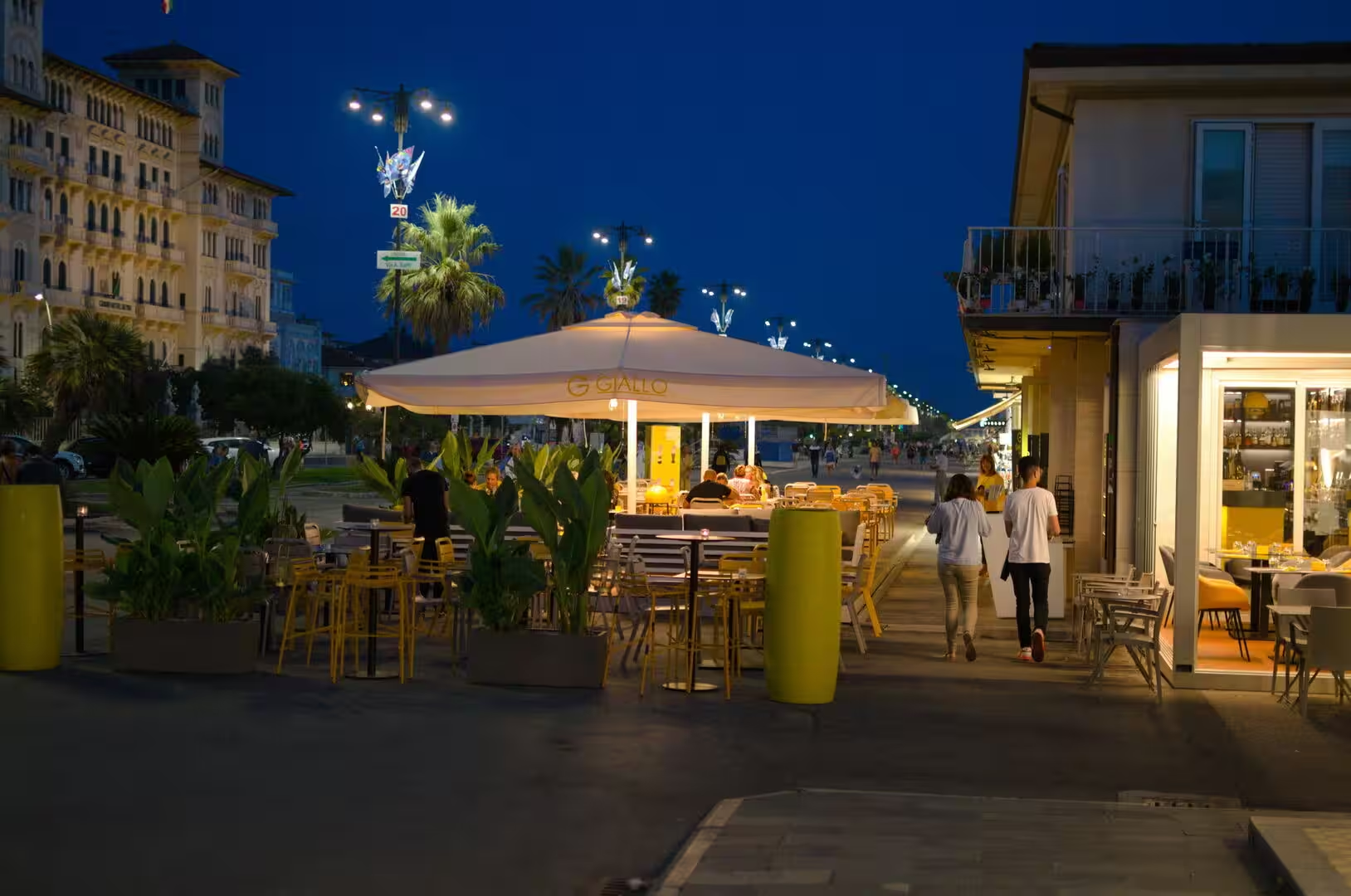
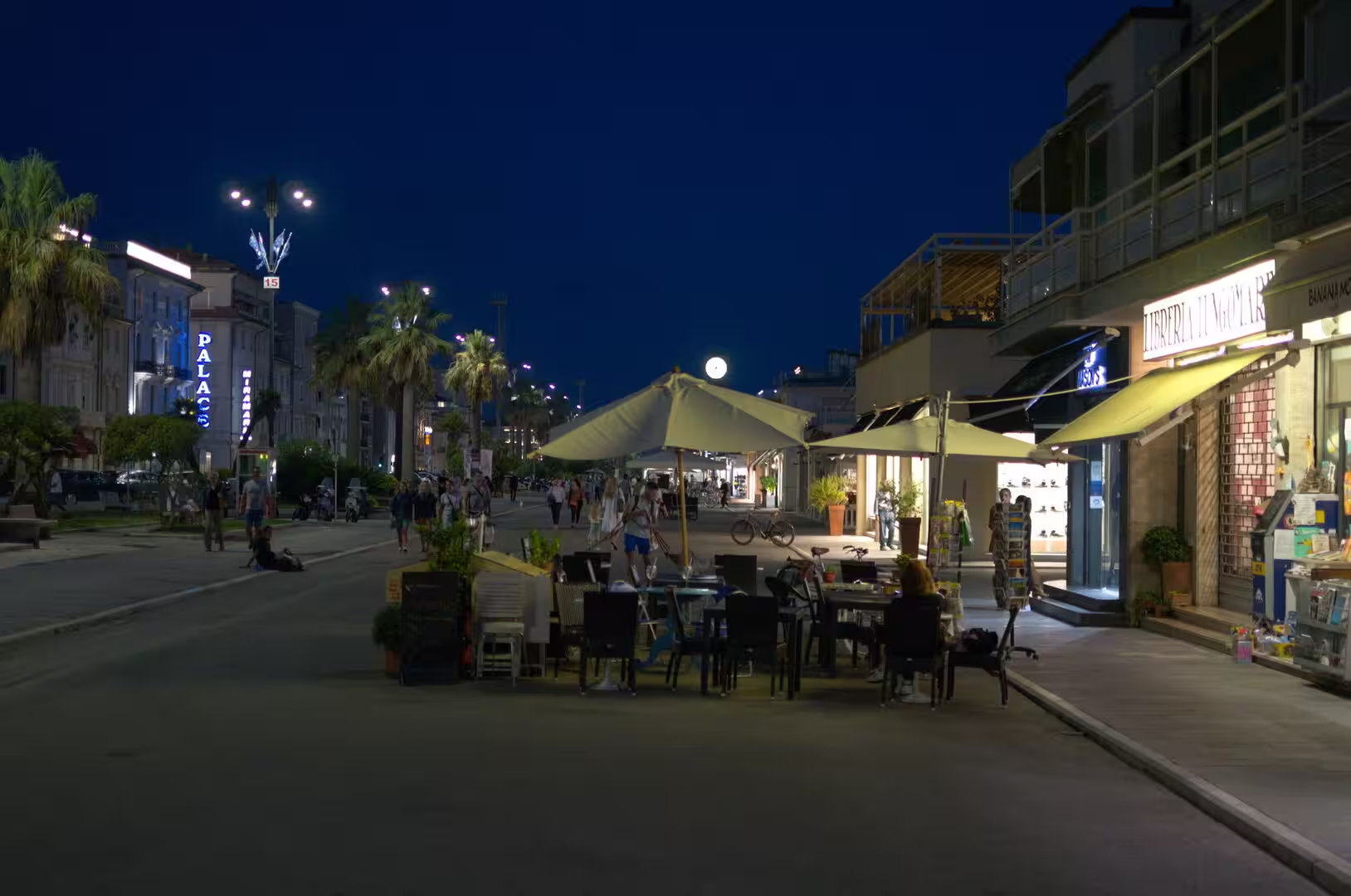
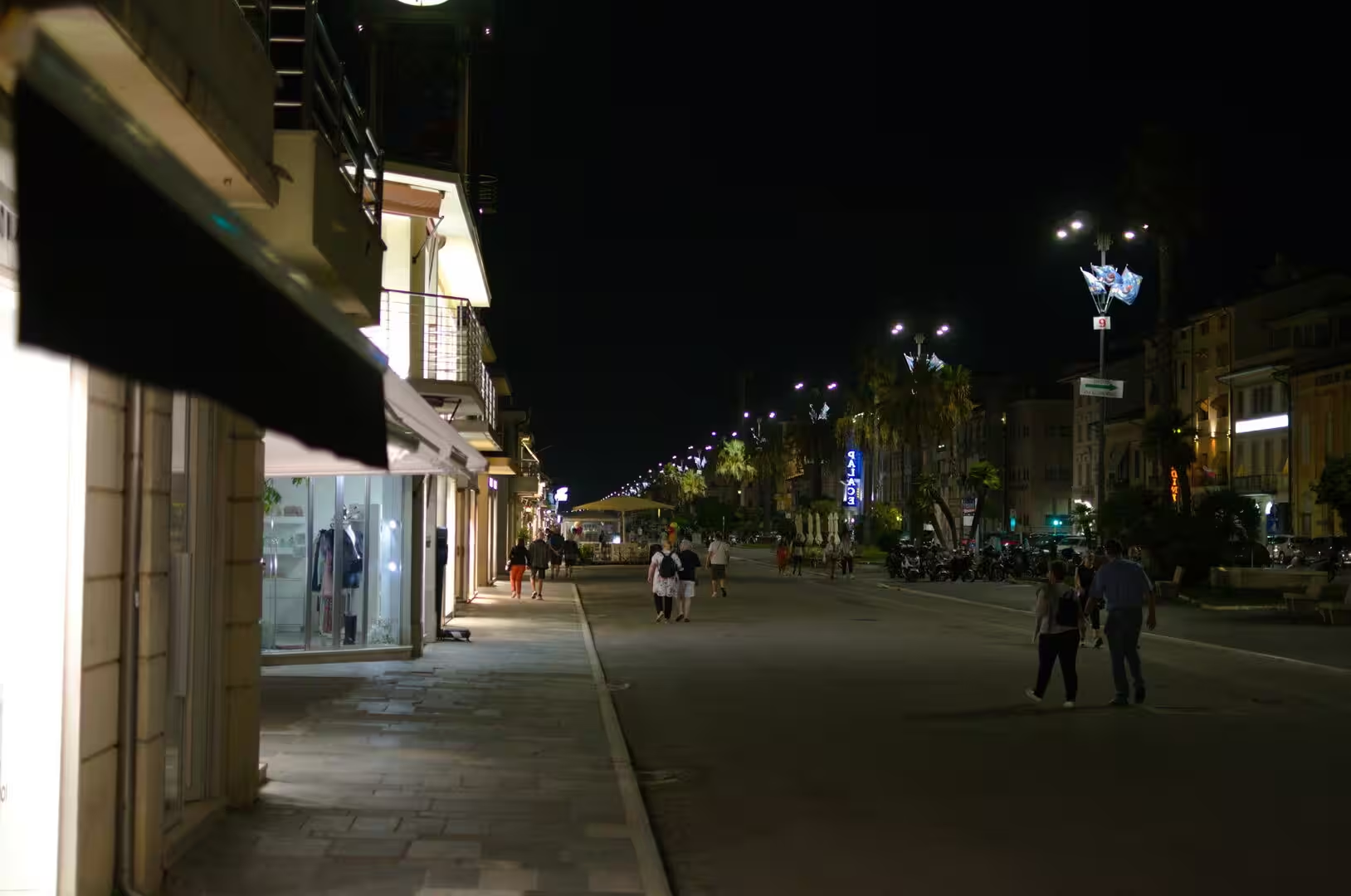
An evening in Viareggio begins when the shops on the promenade switch their lights on. The passeggiata is the one long room of the city: hotels, ice cream parlours, restaurants and bars line it for kilometres, and after dinner the whole town walks there in both directions, slowly and dressed for the occasion. Beyond the wall of buildings the beach lies dark and empty, the bathing huts closed, the water black, and the only movement on the sand comes from the last swimmers of the day. This is the hour the town was built for, and it lasts until well after midnight.
Viareggio earns its living from three trades at once. The shipyards along the Burlamacca canal build and refit large yachts whose names are known far beyond Tuscany, while the fishing fleet still lands its catch at the same quays and the nurseries of the plain grow the flowers of Versilia for the markets of Europe. Tourism, commerce and services run beside them, so that the resort and the working town share the same streets. Fishing boats, cranes and hotel awnings are visible within a single walk of a few hundred metres.
The climate is humid and mild. Relative humidity in summer lies between sixty and eighty per cent, most rain falls in spring and autumn, and the Apuan Alps behind the town draw the clouds against the coast. Two winds, the Libeccio and the Ponente, blow in from the sea for days at a time and bring heavy weather with them. Summer afternoons reach thirty degrees and hold their heat into the night, the season peaks in August, while February belongs to the carnival, whose parades fill the same promenade in daylight.
History
The plain was inhabited long before the town existed. Ligurian tribes had pushed down the coast in the third century before Christ, and in 180 before Christ the Romans defeated them and began to colonise the Versilia, the country between the sea and the mountains. In the Middle Ages several villages grew on the hills, while the ground where Viareggio now stands remained marsh and forest. Around the year 1000 Lucca and Pisa began a long quarrel over this coast, and both cities built watchtowers where the shoreline approaches the plain.
In 1513 Pope Leo X removed the port of Motrone from the control of Lucca, and from that year the republic concentrated its efforts on Viareggio. A square tower for the protection of the harbour followed in 1534, the Torre Matilde in 1541, and houses began to appear around the landing place. The seventeenth century was the hardest period of the settlement, whose three hundred inhabitants lived by fishing and farming under malaria and other fevers, while Lucca paid for drainage works and encouraged families to move to the coast.
Viareggio became a comune in 1701. In 1739 the hydraulic engineer Bernardino Zendrini completed the drainage of the marshes, and noble families of Lucca began to build their houses here at the edge of the water. Under Napoleon the state of Lucca was turned into a principality, and real power lay with Elisa Bonaparte, the emperor’s sister, who became its princess. After the Congress of Vienna the new Duchy of Lucca received its first marina from Maria Luisa of Spain, and her son Charles Louis built a church, a casino and two bathing resorts, the first of their kind in the town.
The twentieth century made Viareggio a resort. The passeggiata took its present form, with cafes and shops in low buildings of wood, and the town was called the pearl of the Tyrrhenian Sea. In 1917 a large part of it burned down in a single night, and only in the following decades were the wooden houses replaced by masonry. Bombing in the Second World War destroyed whole suburbs, and the reconstruction changed the appearance of the centre for good.
The carnival is the other face of the city. Its first parade was held in 1873, and in 1925 the sculptor Antonio d’Arliano built the first float on a scaffold of iron and wood covered with papier mache, a technique that has defined the event ever since. Burlamacco, the painted figure in red and white who presides over it, was drawn by Uberto Bonetti at the beginning of the 1930s, and since 2001 the floats have been made in the Cittadella del Carnevale, a compound of sixteen workshops behind the town. More than half a million visitors come for the parades.
Geology
The coast that carries the town is a plain of sediment laid down between the sea and the mountains. Rivers coming out of the Apuan Alps and the Serchio have carried sand, silt and gravel towards the shore for thousands of years, and the same process built the belt of dunes and pine woods behind the beach. The water table lies close to the surface, which is why the plain was a swamp for most of its history and why drainage, not irrigation, has always been the great public work of this coast.
The mountains behind Viareggio are the Apuan Alps, a short range that rises almost straight out of the plain. They are named after the Apuani, the Ligurian tribe that held them in antiquity, and their rocks go back to the middle of the Triassic period, when this ground was sea floor; the layers hardened into limestone, dolomite, sandstone and shale. About twenty five million years ago pressure deep in the crust turned part of the limestone into the white marble of Carrara, and erosion carved the rest into a jagged landscape of ridges and hollows. The peaks stay visible above the roofs of the town.
Marble has been taken out of these valleys since Roman times, cut in terraces that climb the slopes above Carrara. The same stone appears in the churches, the staircases and the door surrounds of the towns along the coast, and it is one of the reasons the architecture here looks as bright as it does. The quarries have also left scars on the mountains and enormous fields of debris, and an environmental movement called No Cav campaigns for their closure. From the sea, on a clear morning, the white flanks of the Apuan Alps are the last thing before the sky.
Water shaped the settlement in a more direct way. The Burlamacca canal carries the lake of Massaciuccoli to the sea and cuts right through Viareggio, and four smaller channels drain the surrounding plain, two of them extended as early as 1577. In 1740 a water gate built to Zendrini’s design stopped the tide from pushing salt water up into the lake, and the marina followed in the nineteenth century. The lake is the largest remaining piece of the marsh that once covered this coast, a shallow basin of about seven square kilometres, protected by the Ramsar convention and troubled by eutrophication.
The sea in front of the town is the Ligurian Sea, an arm of the Mediterranean whose northern coast runs from Tuscany into Liguria and towards France. Its waters reach great depth a short way offshore, and the currents that pass between Corsica and the mainland keep the surface cool in summer. The beach is not stable: storms from the Libeccio take sand away, breakwaters and groynes hold what is left, and the shoreline has been reinforced along much of this coast. The wind decides whether the evening walk happens along the water or under the arcades.
Things to See
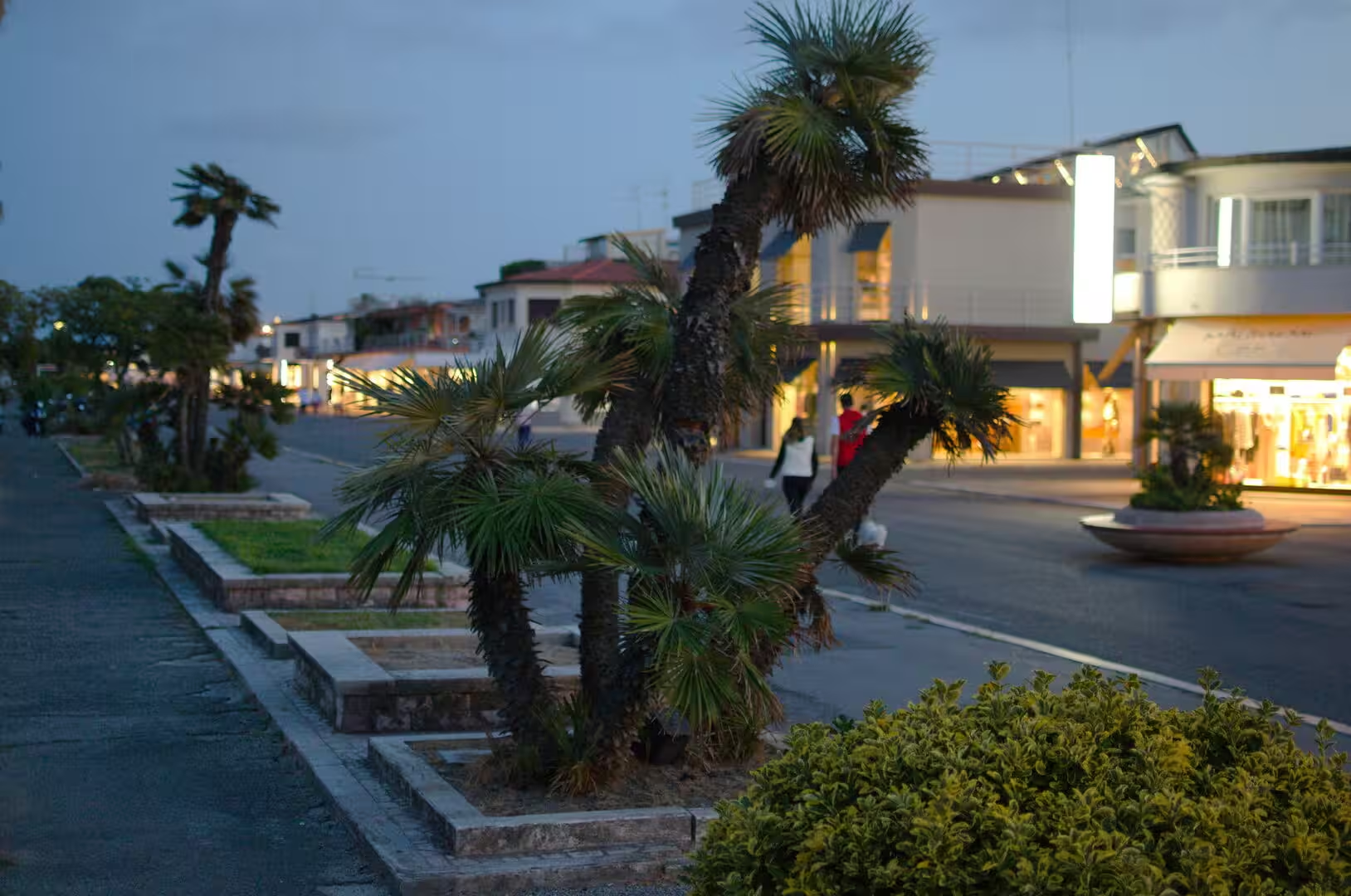
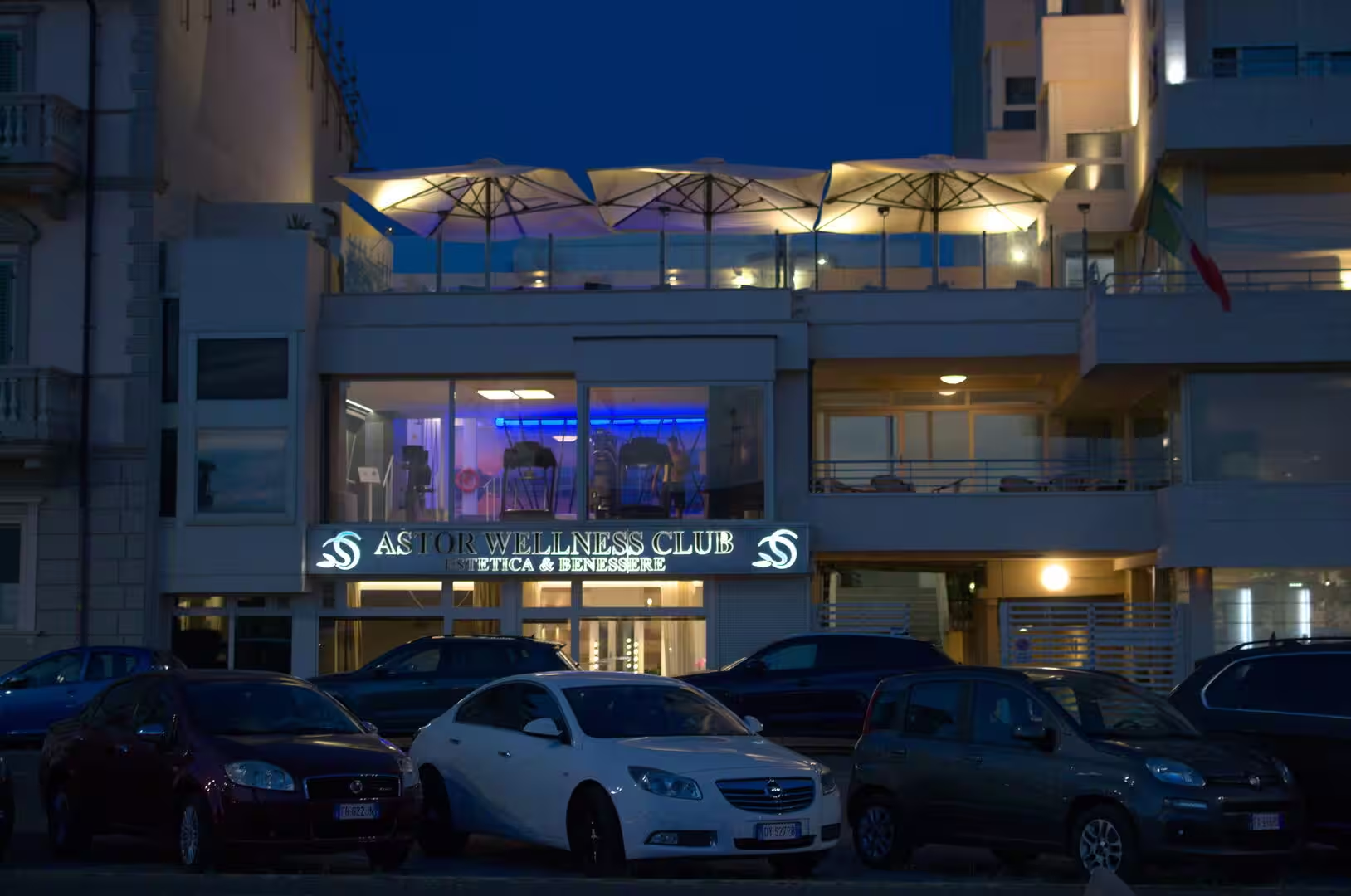
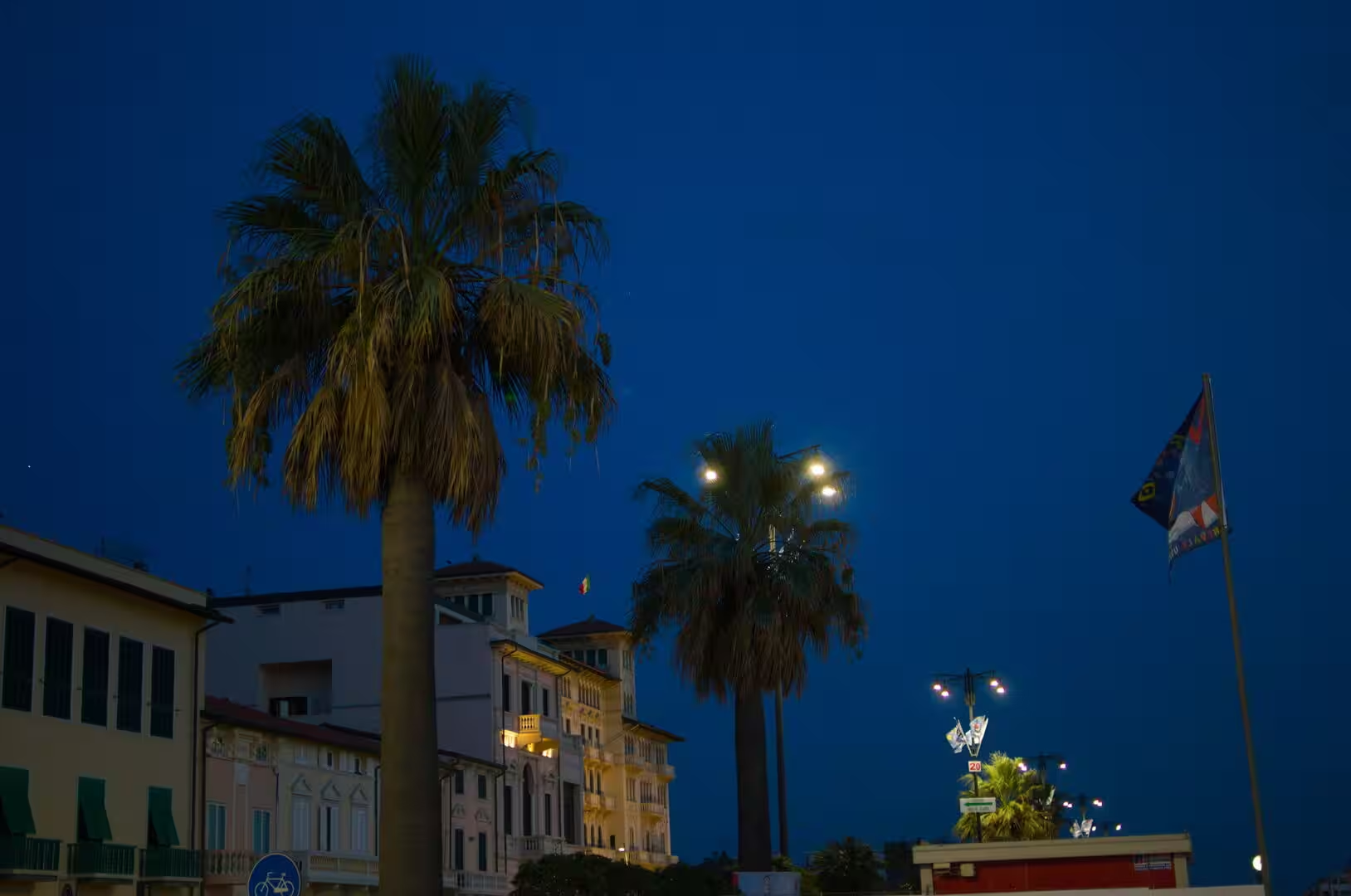
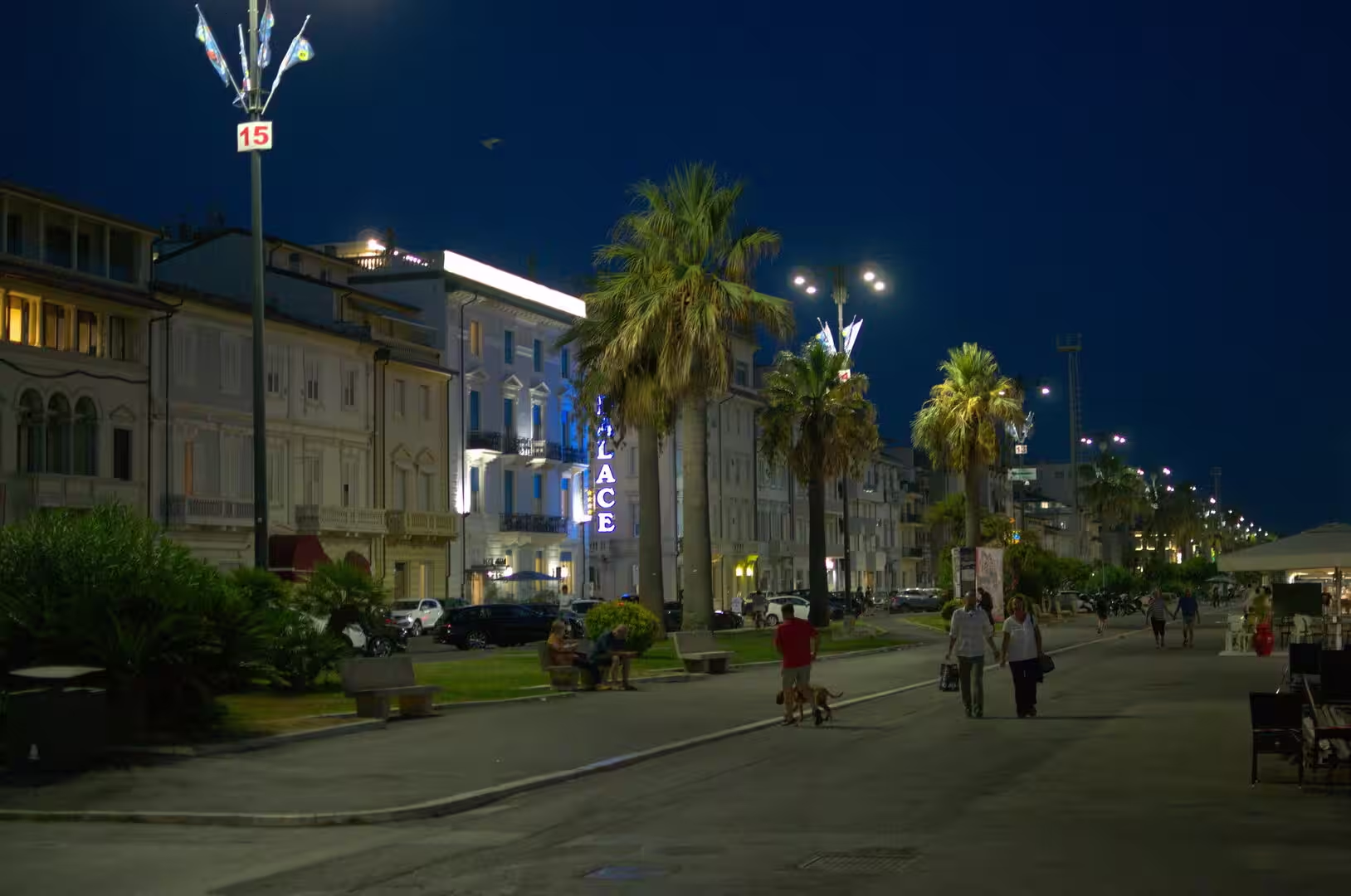
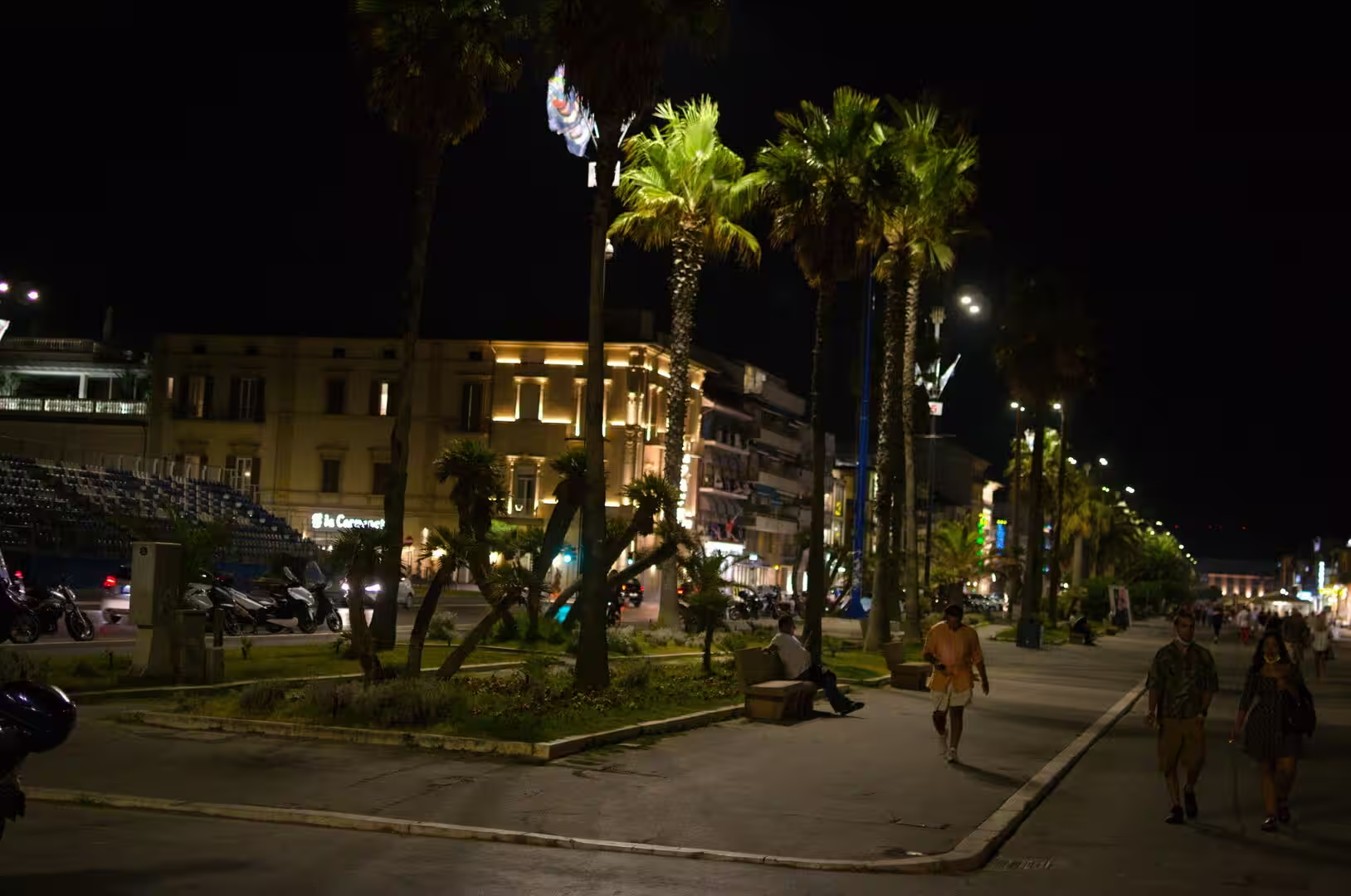
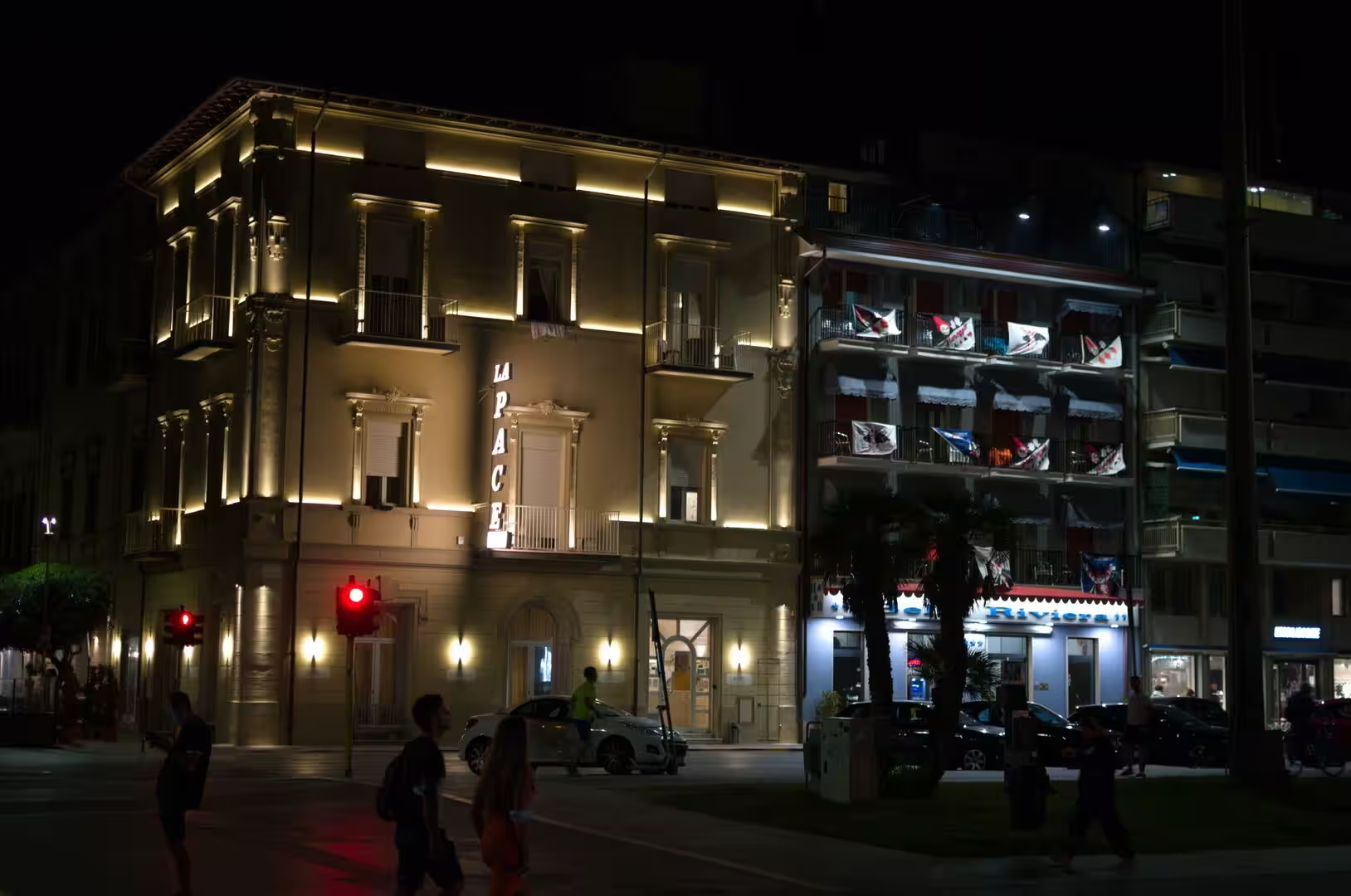
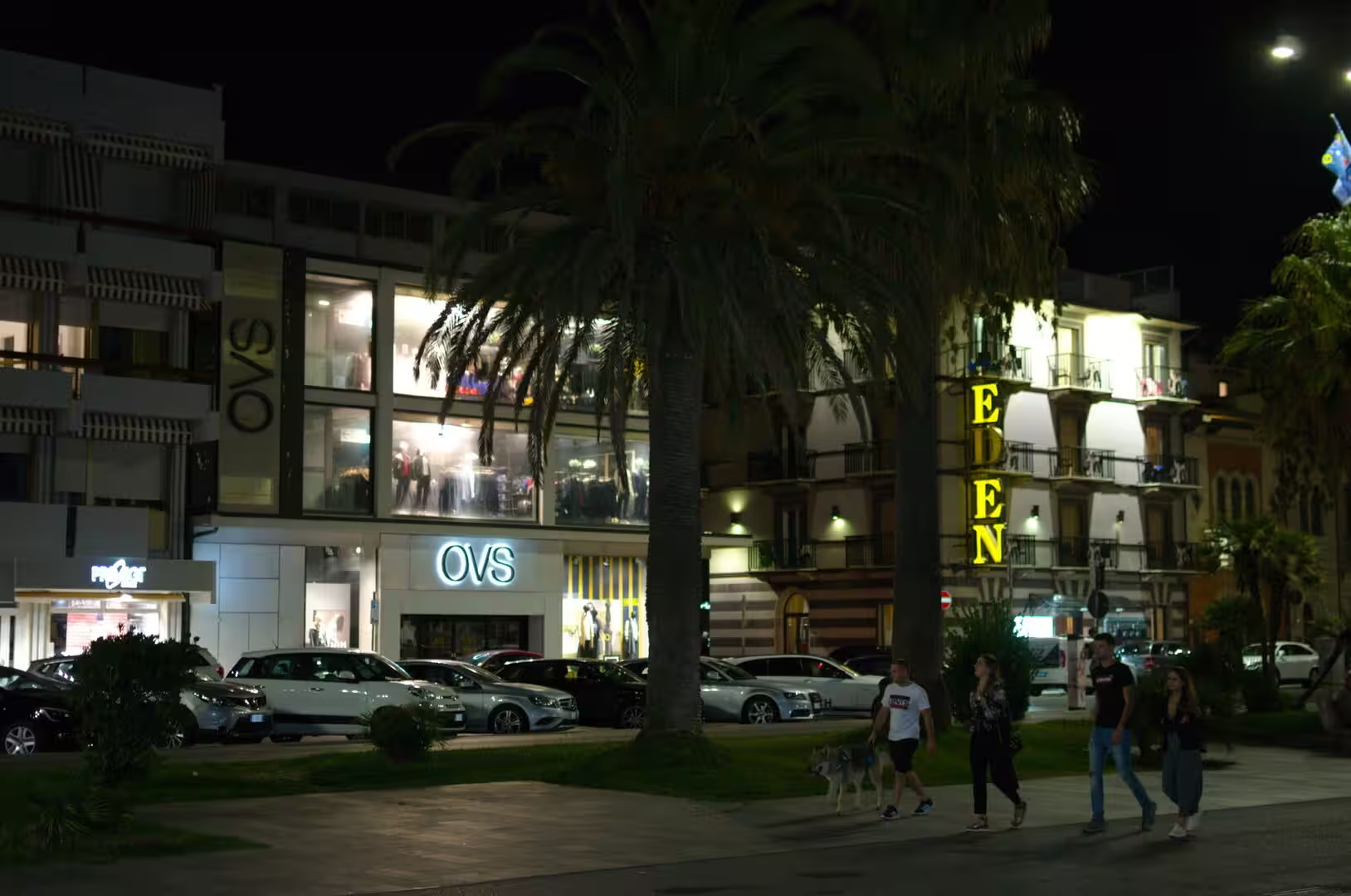
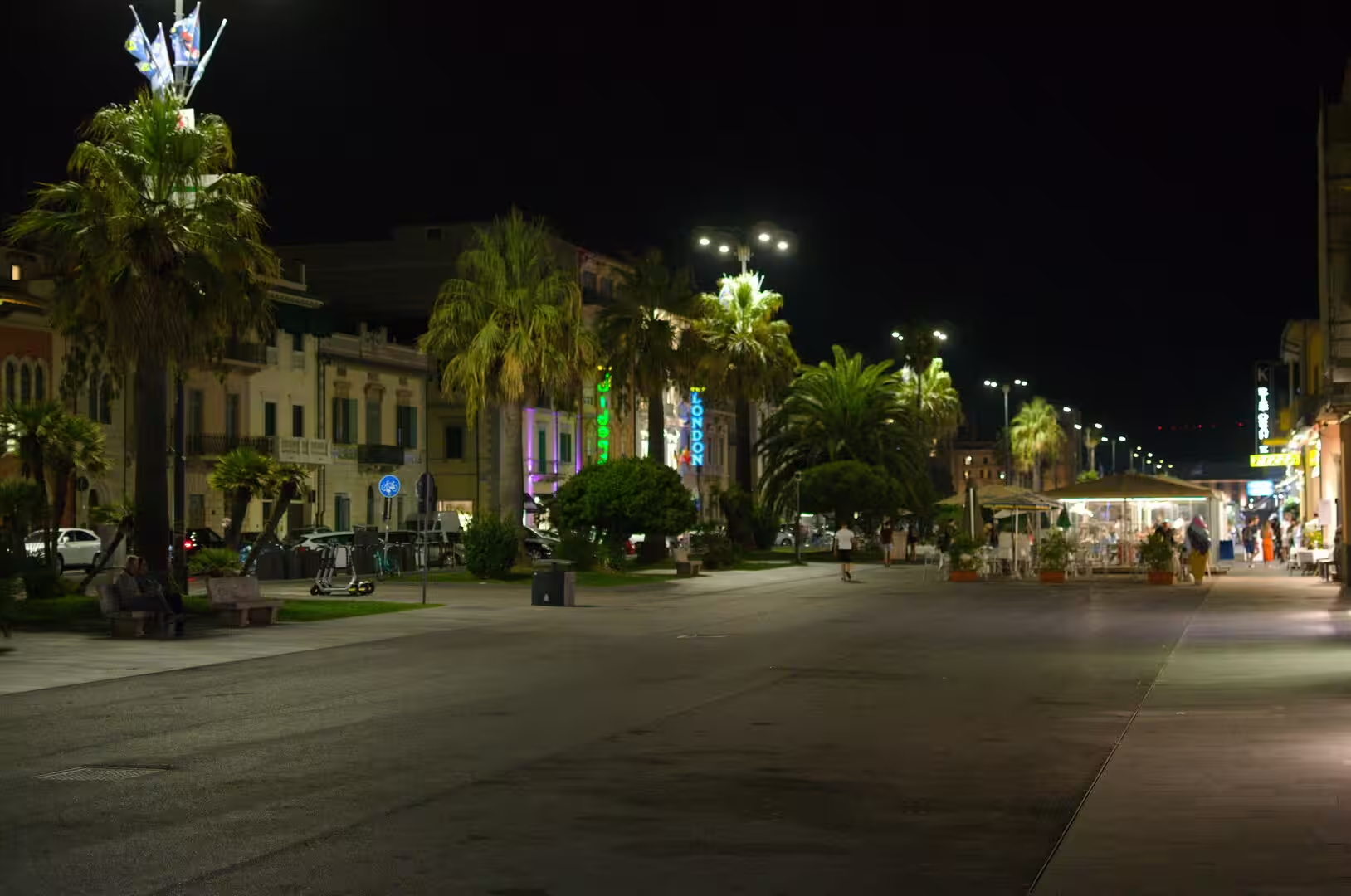
The passeggiata is where the evening is spent. Palms stand in stone planters along the kerb, their fronds blown about against the lit shopfronts, and the buildings on the sea side carry terraces of awnings and parasols. Nothing here is left unlit: window displays, bar signs, hotel porticoes and street lamps all add their light to a street that is far brighter than the beach beside it. The town keeps this promenade for walking, for looking and for being looked at, and on summer nights it is full from one end to the other.
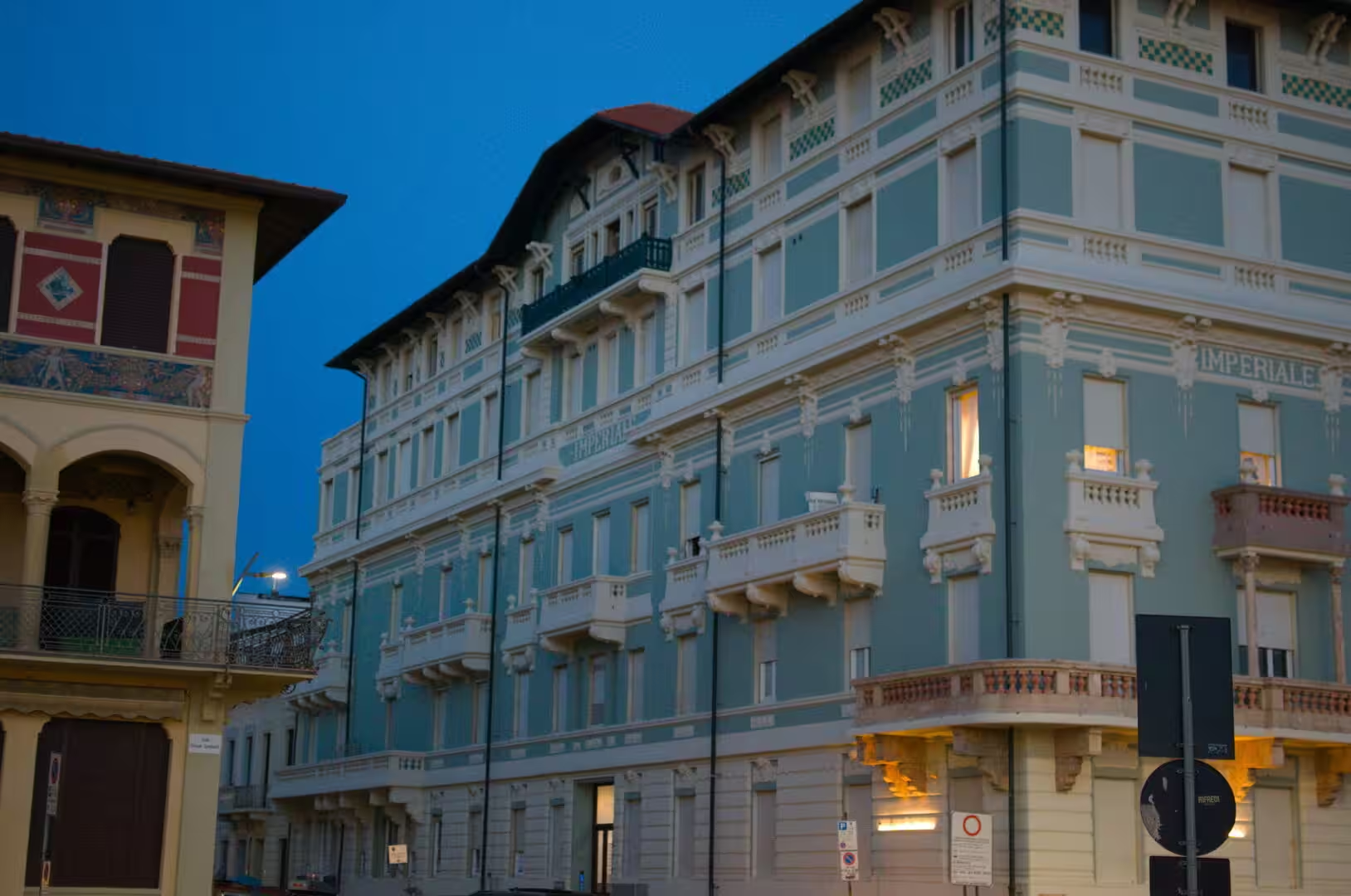
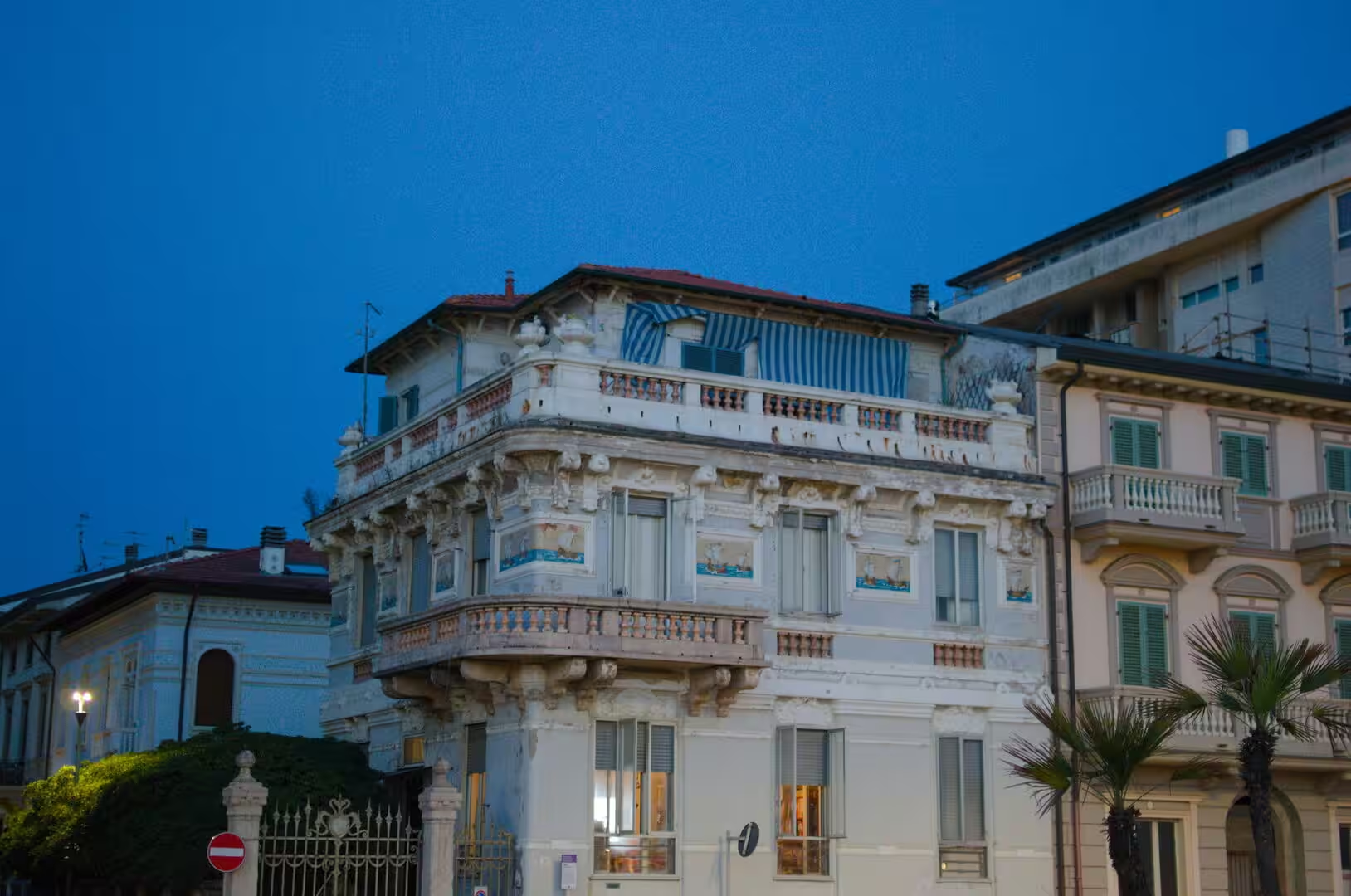
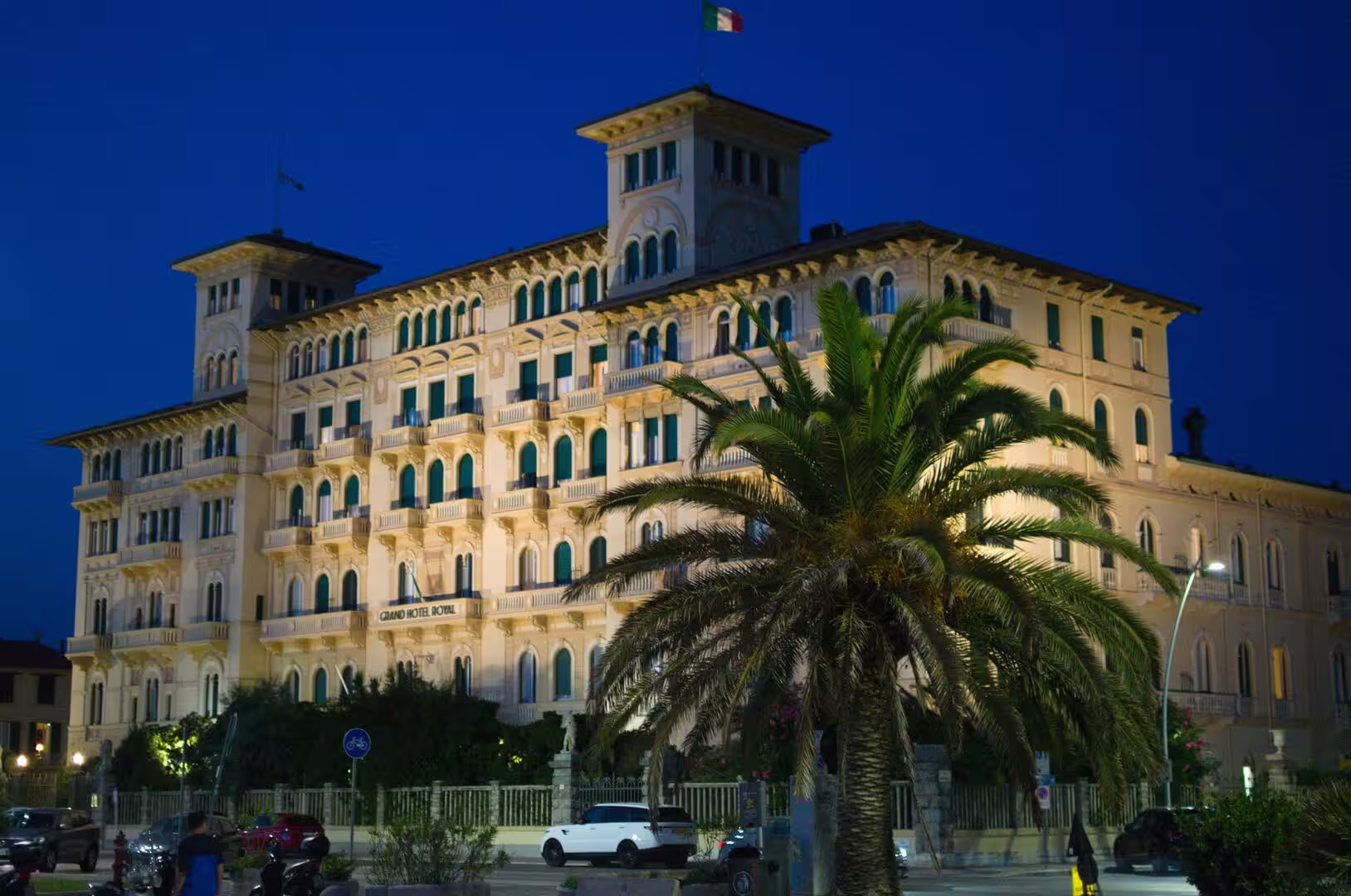
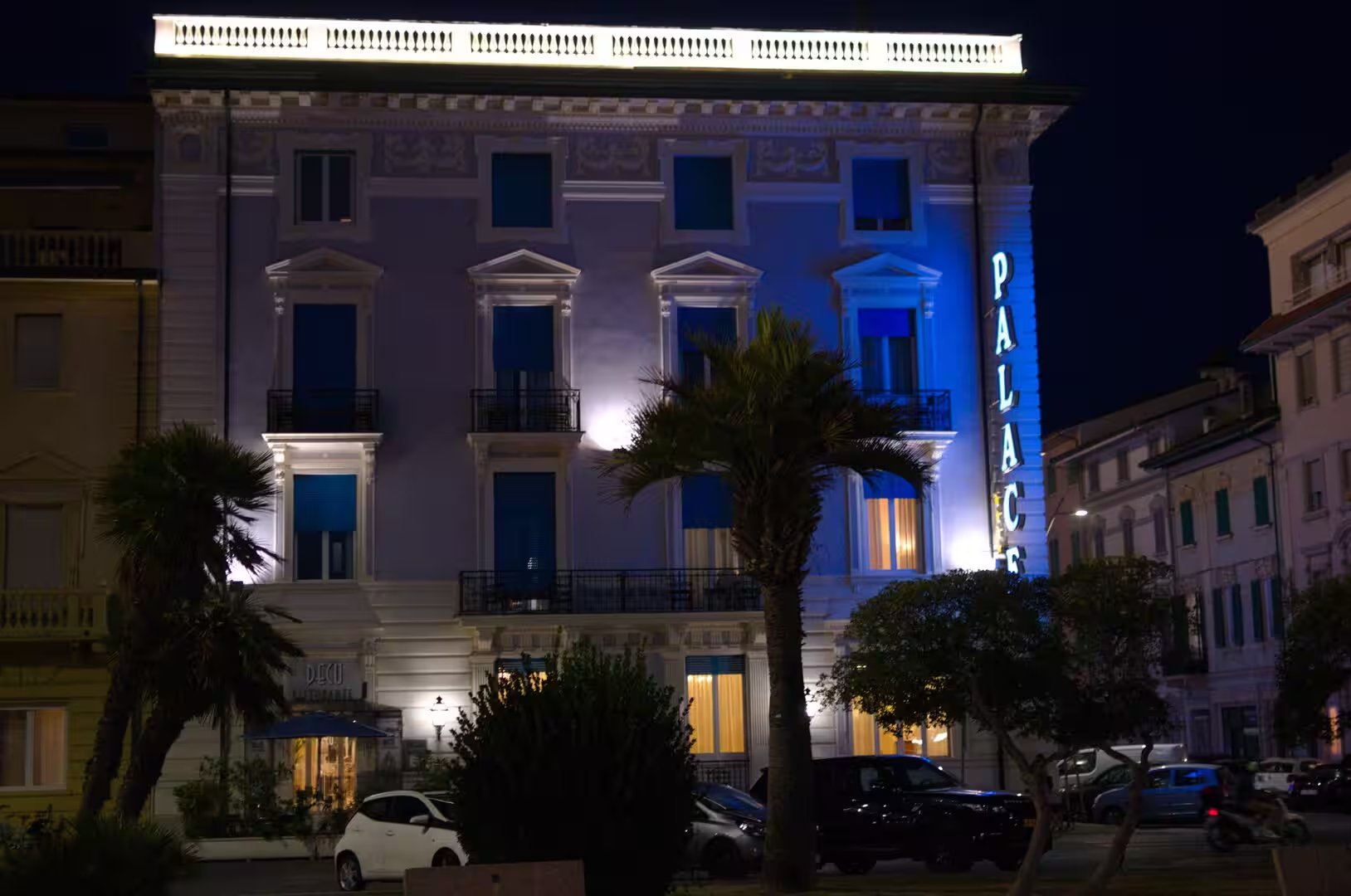
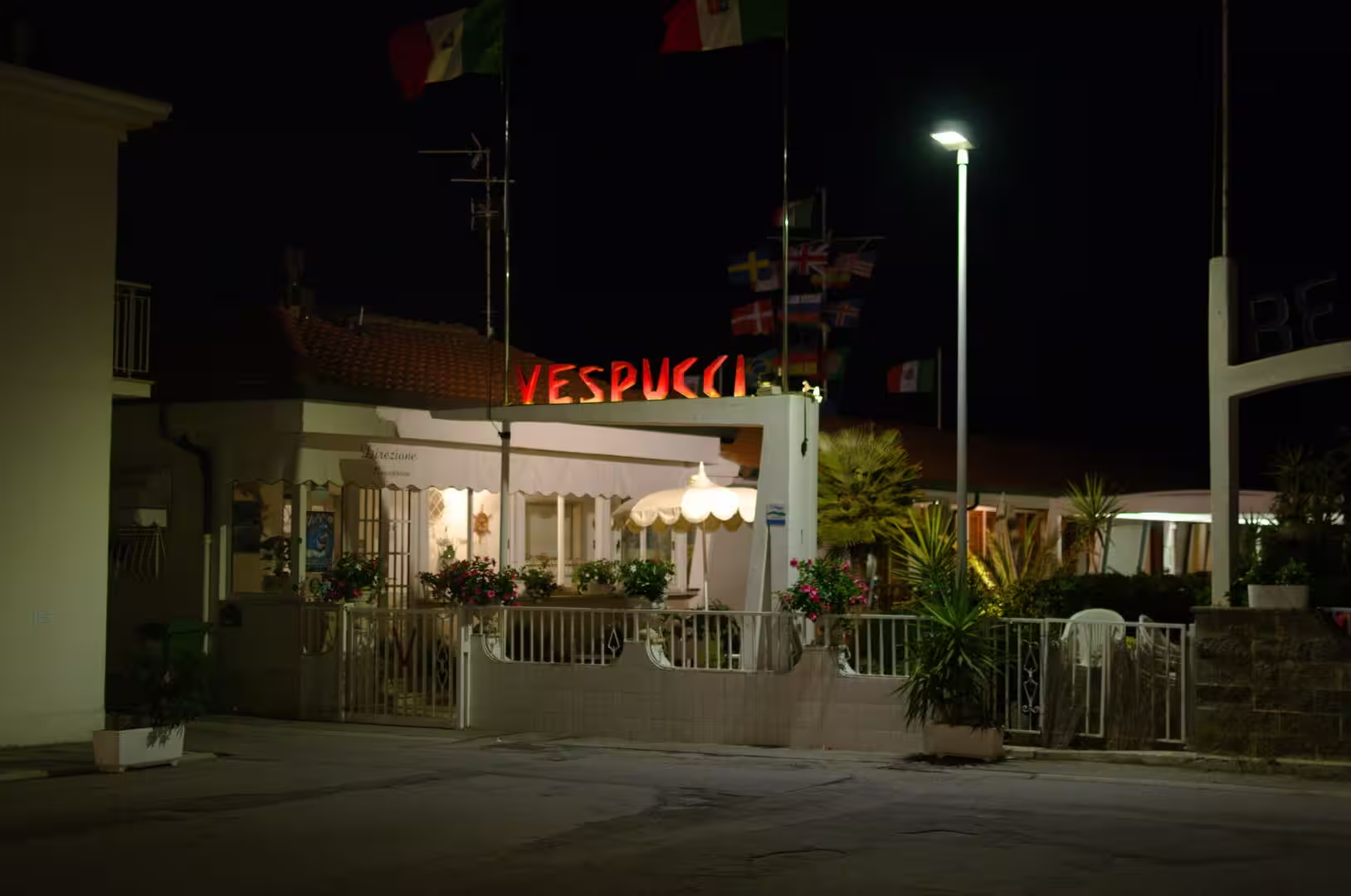
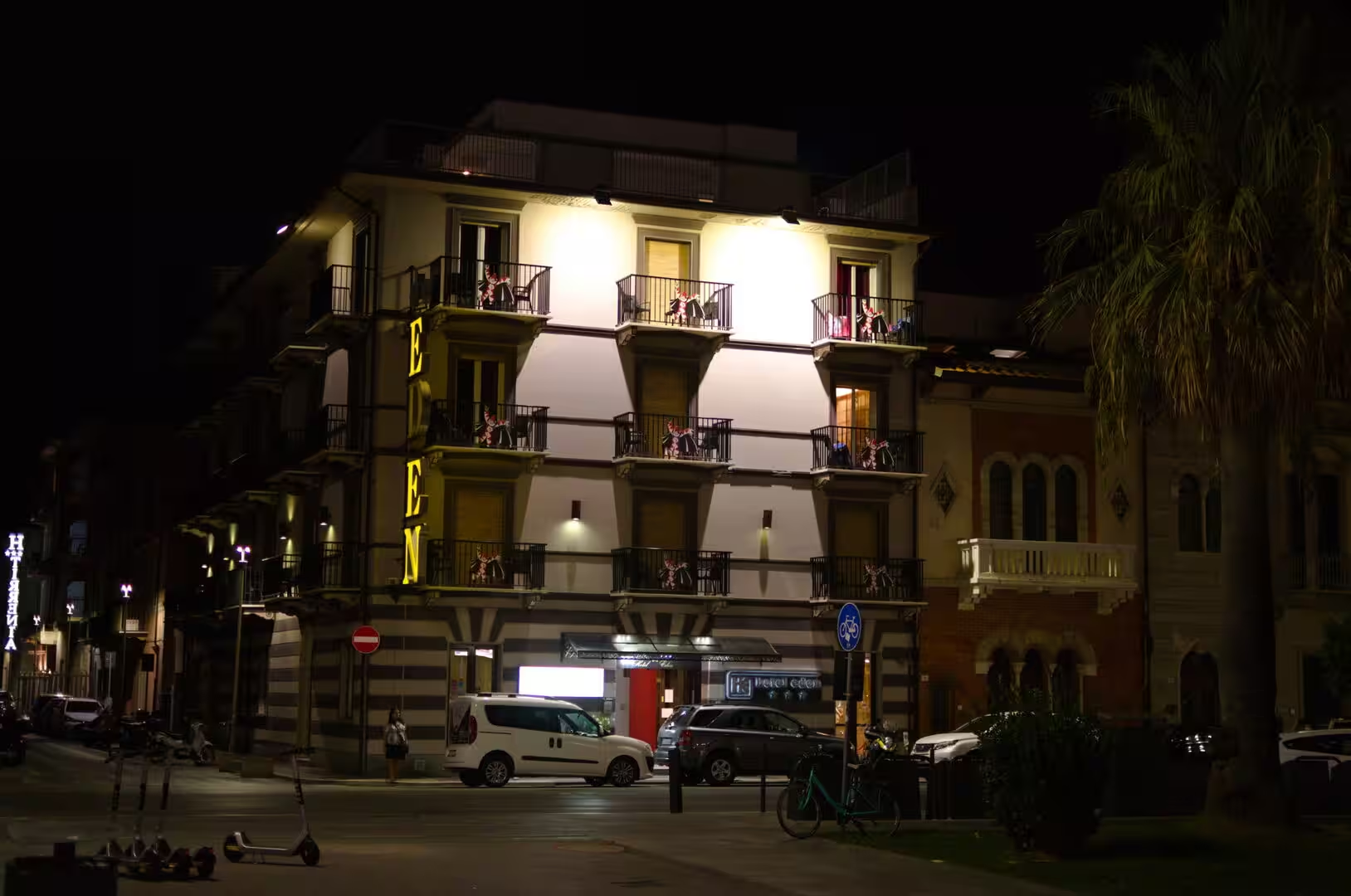
The grand hotels of the resort belong to the years before the First World War. Their facades are painted in pale yellows, blues and rose tones, with frescoed panels, iron balconies, glazed verandas and balustrades on the roofline, and several of them carry their names in neon above the entrance. The names on the street are an index of the century: Imperiale, Palace, President, Vespucci, La Pace. Most of the buildings stand on plots no wider than a large house, so their height and their colour give the promenade a rhythm of its own after dark.
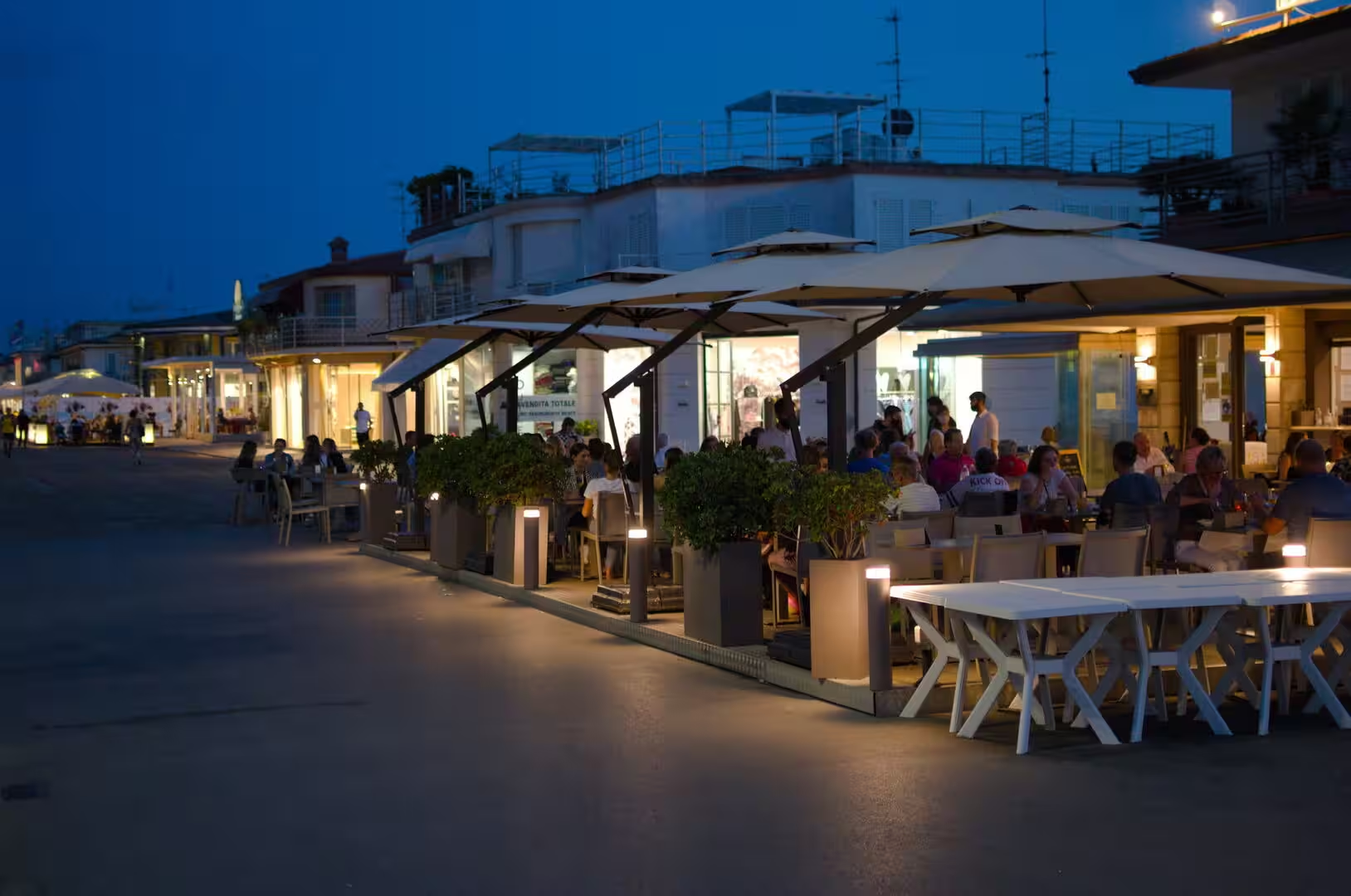
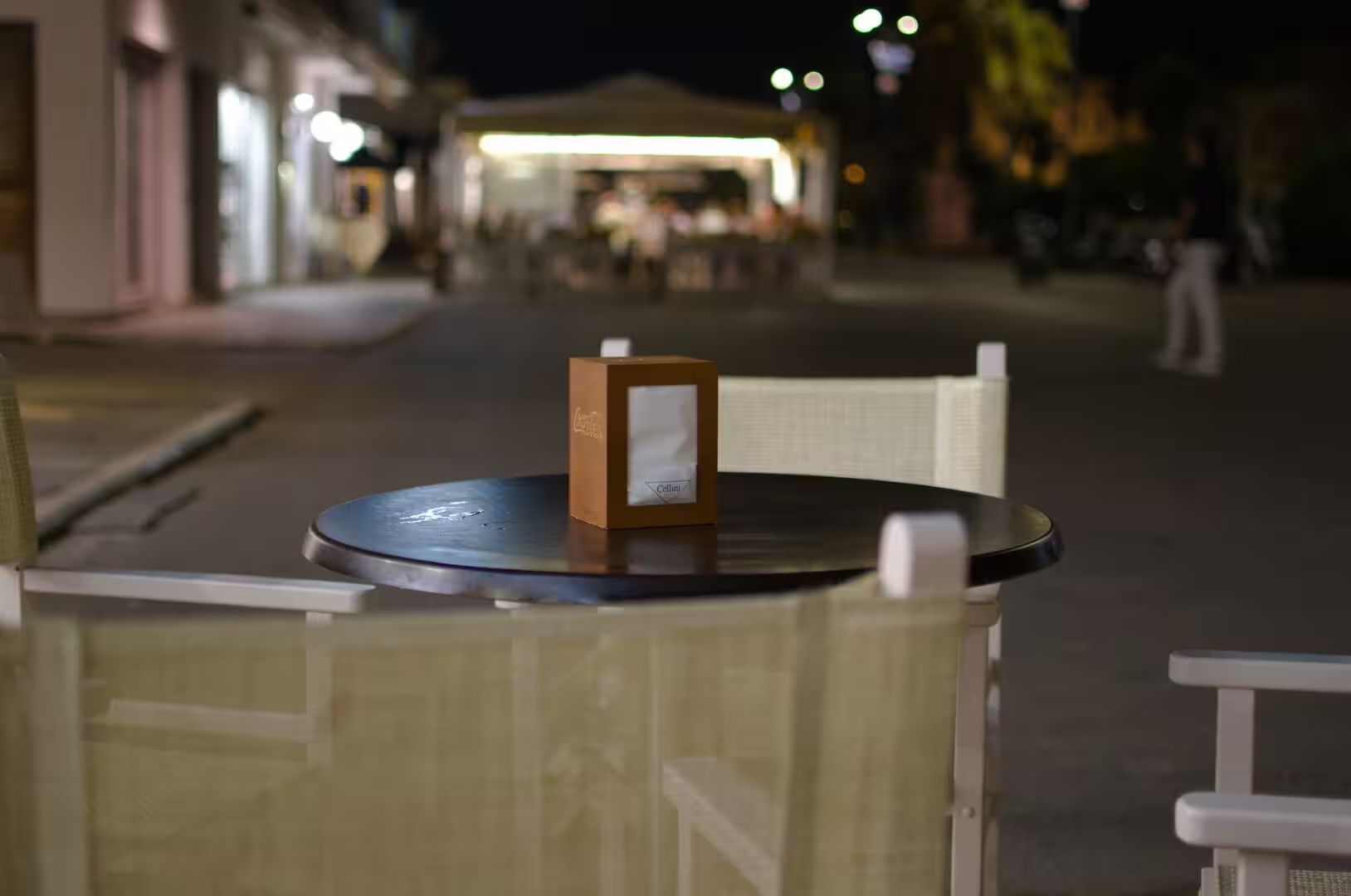
Eating at the water’s edge is the ritual of the season. Restaurants lay their tables on wooden decks and on the sand itself, sheltered by umbrella roofs, and they stay open long after the walkers have gone home; the smell of grilled fish and fried vegetables hangs over the whole front. Menus follow the catch of the day: cacciucco, the fish stew that belongs to this coast as much as to Livorno, in which five different fish stand for the five c of the name, or a plate of spaghetti with clams. Ice cream, cakes and coffee finish the evening.
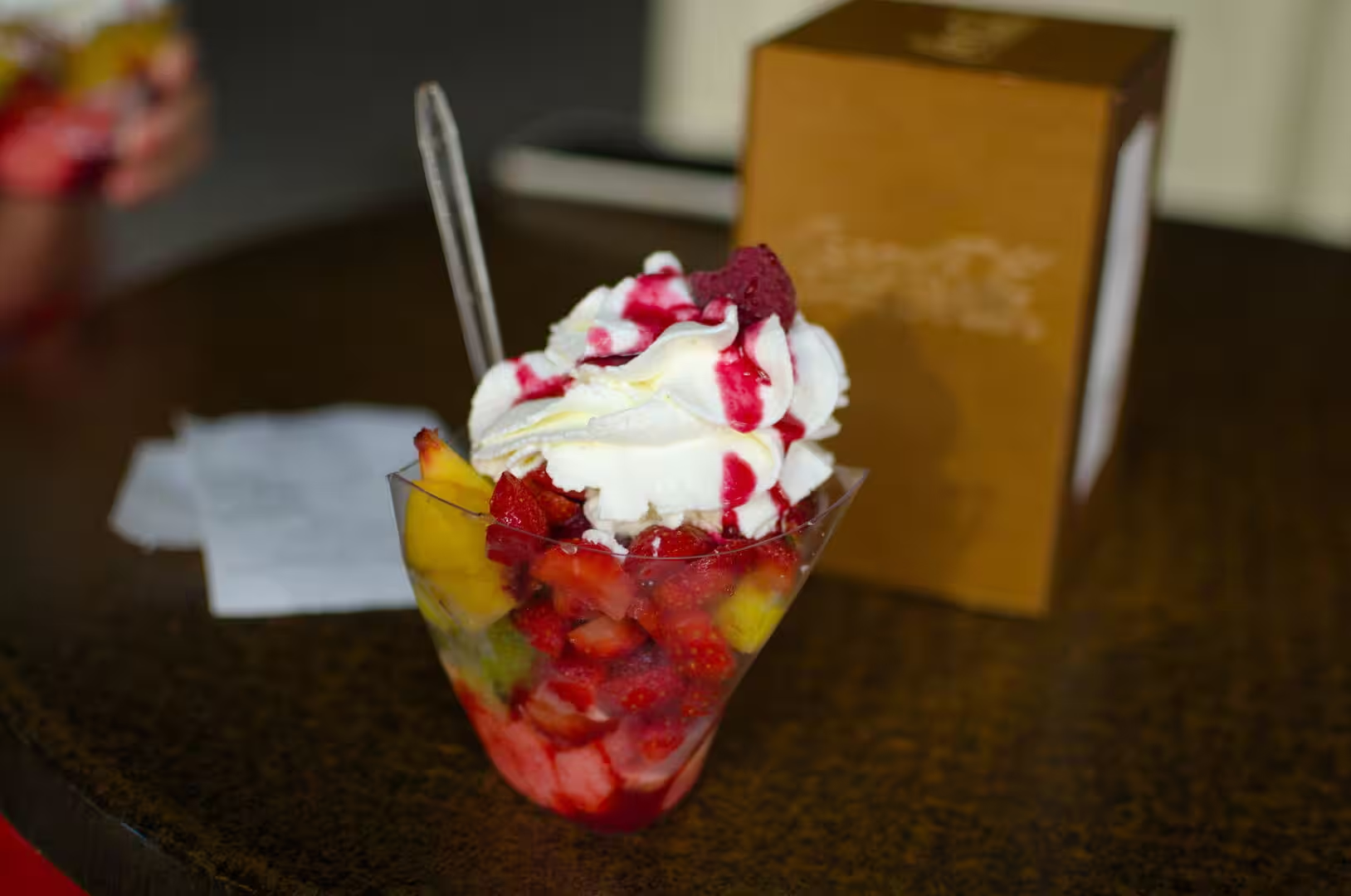
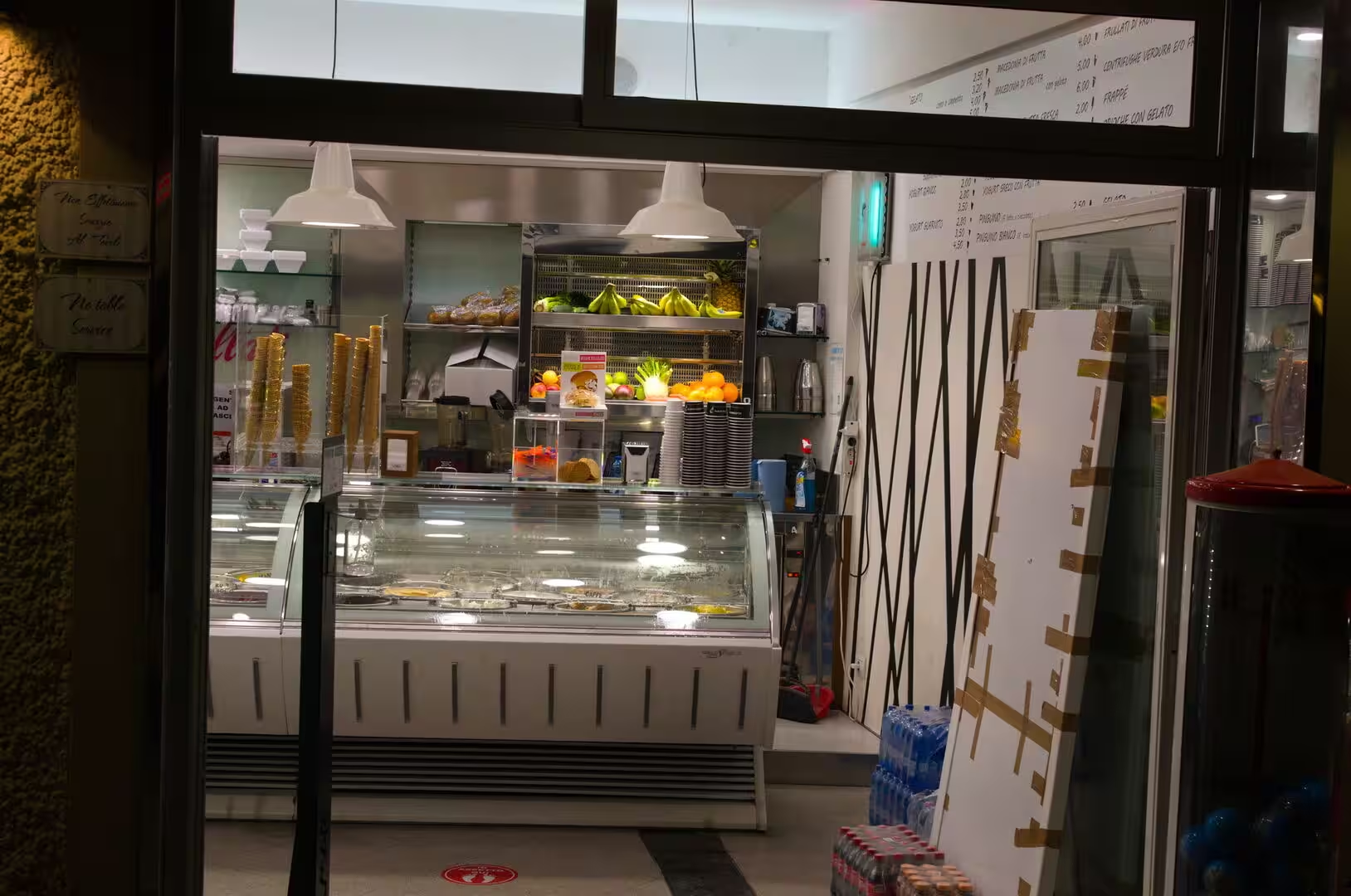
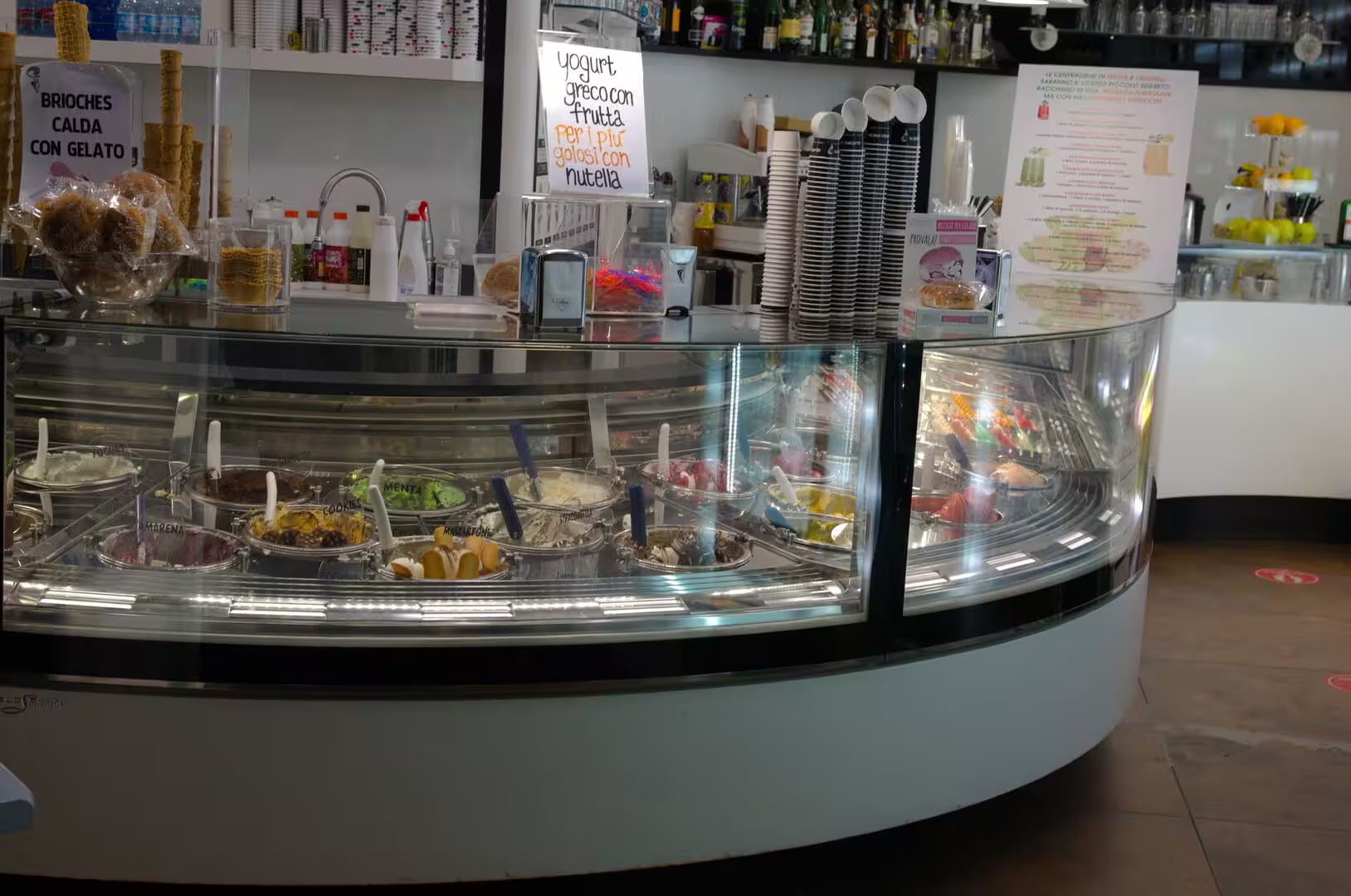
Where the evening takes its sweet course is easy to find. Gelaterie keep their counters lit behind glass, with the trays in rows and shelves of cones stacked behind them, and customers queue on the pavement in shorts and evening dress at the same time. Next to them come the pastry shops with their gift boxes, the stands with candied nuts, and the carts that make cotton candy for the children. The city has been a holiday town for a century and a half and knows what a person wants between dinner and midnight.
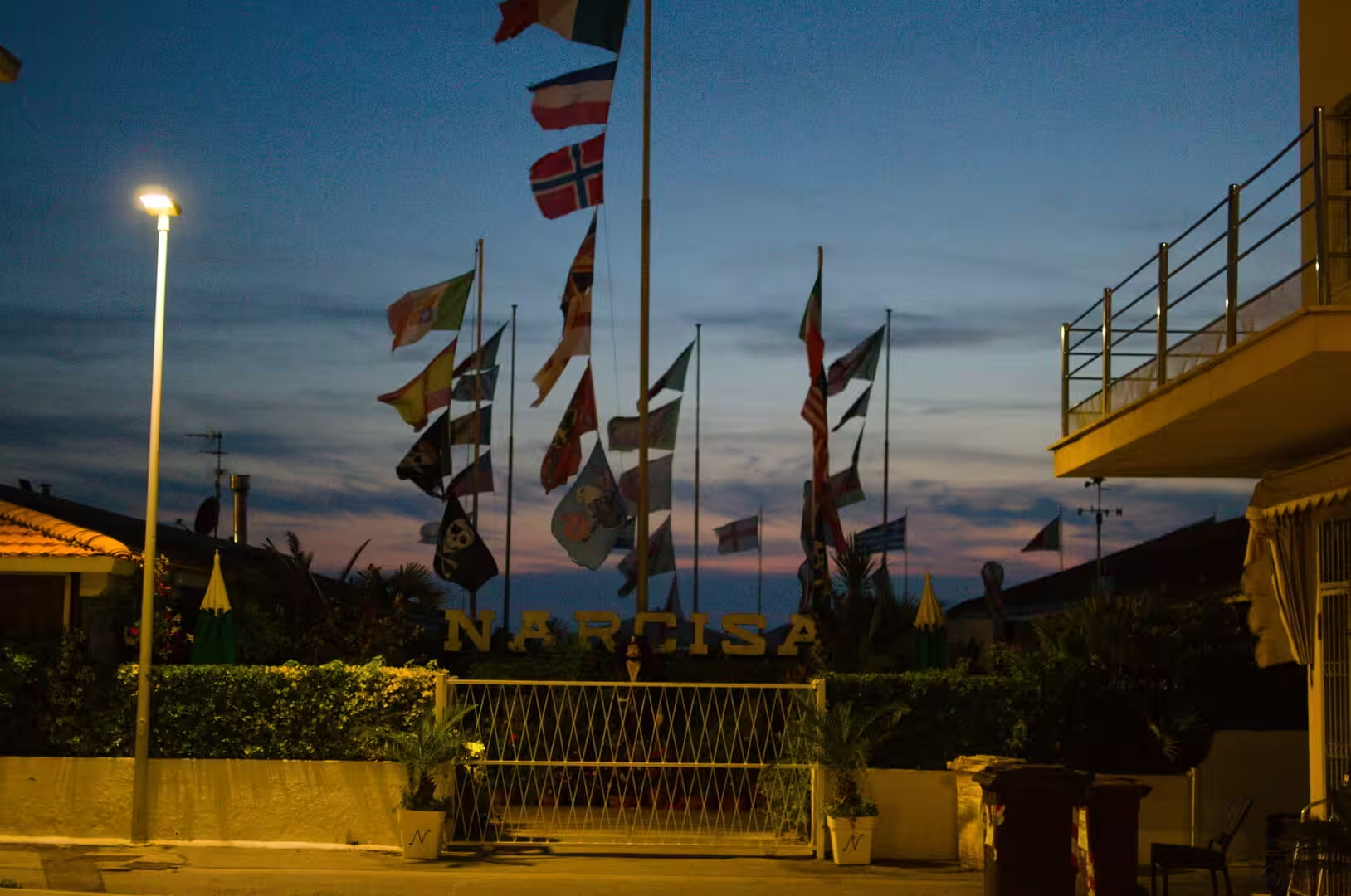
The beach is divided into private clubs, and their entrances are a genre of their own. Gates with names, flags and painted signs stand at the end of every street, each one opening onto a grid of cabins, showers and rows of sun beds that are folded away and chained at night. The clubs keep their own kitchens and bars, and during the day they are small villages on the sand with their own rules and their own regulars. After dark the flags still move in the wind while everything below them stands empty and locked.
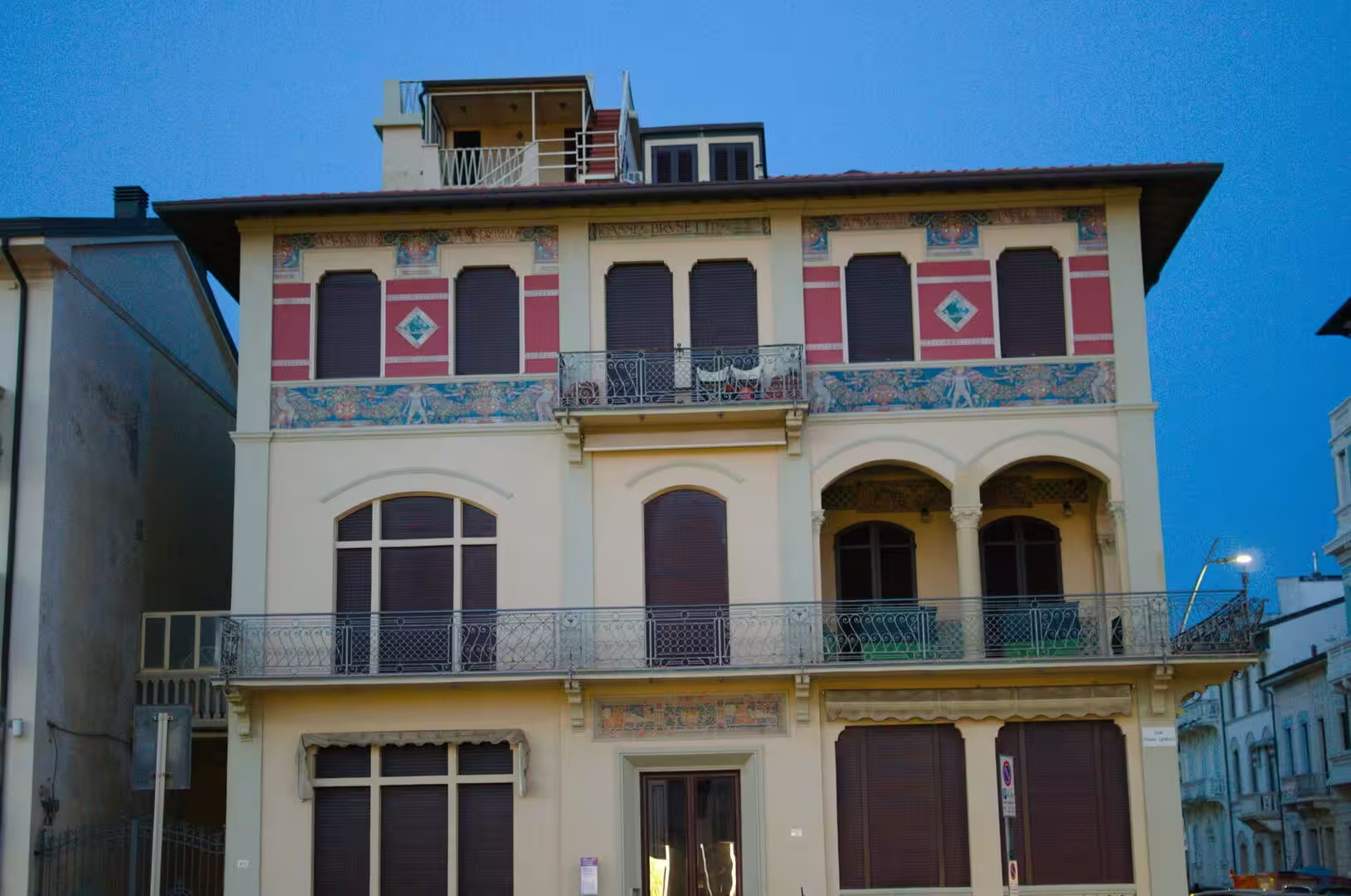
Away from the water the town shows a second, quieter face. Behind the first row of hotels the streets narrow, front gardens disappear, and villas with frescoed walls and iron gates stand among pine trees and oleander. This is where people live all year, with bakeries, chemists, bicycle repair shops and the small workshops of the floriculture trade. The architecture mixes the holiday style of the promenade with ordinary Tuscan building: shutters, terracotta, plaster that has been repainted many times.
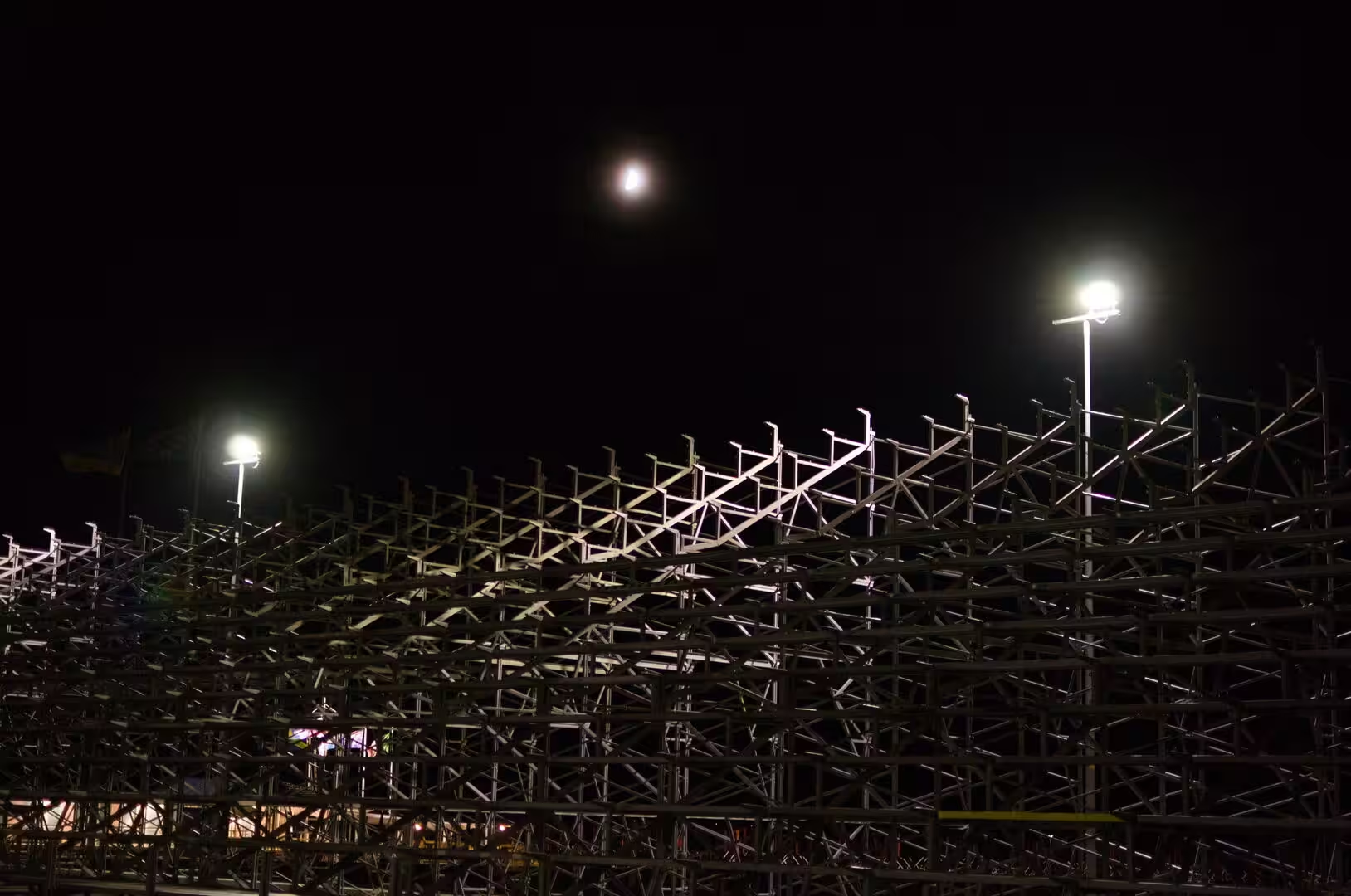
Building never stops in a town that lives from its houses. Scaffolding stands around entire blocks for months, in pale lattices that glow under the street lamps at night, and behind it the walls are taken down to the brick, repaired and painted again. The same skill goes into the wooden hulls and the steel yachts in the yards across the canal, where the trades of joiner, welder, sailmaker and painter have been handed down for generations. The town sees scaffolding as the ordinary condition of a place that must look new every summer.
Practical notes for a night in Viareggio. The promenade is best walked after nine, from the Burlamacca canal towards the northern end, and the beach can be reached at any point through the clubs or the public entries. Bicycles are the fastest way to cover the whole front, the railway station is ten minutes from the sea, and the trains north to Massa and south to Pisa run late in summer. Bakeries open early and bars stay open late, and a light jacket is worth carrying, because the wind off the water makes the hours after midnight cooler than they look.
References
- Wikipedia contributors (2026). Viareggio. en.wikipedia.org/wiki/Viareggio
- Wikipedia contributors (2026). Carnival of Viareggio. en.wikipedia.org/wiki/Carnival_of_Viareggio
- Wikipedia contributors (2026). Versilia. en.wikipedia.org/wiki/Versilia
- Wikipedia contributors (2026). Torre del Lago. en.wikipedia.org/wiki/Torre_del_Lago
- Wikipedia contributors (2026). Giacomo Puccini. en.wikipedia.org/wiki/Giacomo_Puccini
- Wikipedia contributors (2026). Galileo Chini. en.wikipedia.org/wiki/Galileo_Chini
- Wikipedia contributors (2026). Art Nouveau. en.wikipedia.org/wiki/Art_Nouveau
- Wikipedia contributors (2026). Cacciucco. en.wikipedia.org/wiki/Cacciucco
- Wikipedia contributors (2026). Province of Lucca. en.wikipedia.org/wiki/Province_of_Lucca
- Wikipedia contributors (2026). Tuscany. en.wikipedia.org/wiki/Tuscany
- Wikipedia contributors (2026). Tyrrhenian Sea. en.wikipedia.org/wiki/Tyrrhenian_Sea
- Wikipedia contributors (2026). Apuan Alps. en.wikipedia.org/wiki/Apuan_Alps
- Wikipedia contributors (2026). Lake Massaciuccoli. en.wikipedia.org/wiki/Lake_Massaciuccoli
- Wikipedia contributors (2026). Ligurian Sea. en.wikipedia.org/wiki/Ligurian_Sea
- Wikipedia contributors (2026). Festival Puccini. en.wikipedia.org/wiki/Festival_Puccini
- Wikipedia contributors (2026). Pauline Bonaparte. en.wikipedia.org/wiki/Pauline_Bonaparte
- Wikipedia contributors (2026). Percy Bysshe Shelley. en.wikipedia.org/wiki/Percy_Bysshe_Shelley
- Zoppi M. (2015) Versilia: il paesaggio del turismo. Ri-Vista. Research for landscape architecture. 10. 187-192. doi.org/10.13128/rv-17278
- Mestrinho L.C. (2026) Sea bathing, architecture and law: an overview of 200 years of intersections at the seaside. Revista de História da Sociedade e da Cultura. 26. 115-142. doi.org/10.14195/1645-2259_26-1_5
- Frost W. (2004) 11. A Hidden Giant: Second Homes and Coastal Tourism in South- Eastern Australia. Tourism, Mobility and Second Homes. 162-173. doi.org/10.21832/9781873150825-013
- Dimelli D. (2024) Historic Centers and Overtourism: Opportunities and Threats for Three Historic European Cities. Current Approaches, Solutions and Practices in Conservation of Cultural Heritage. 135-154. doi.org/10.26650/b/aa9ps34.2024.006.007