Stage 10 of 19
Day 10 - Temple of Hatshepsut




































































Journal Notes
General
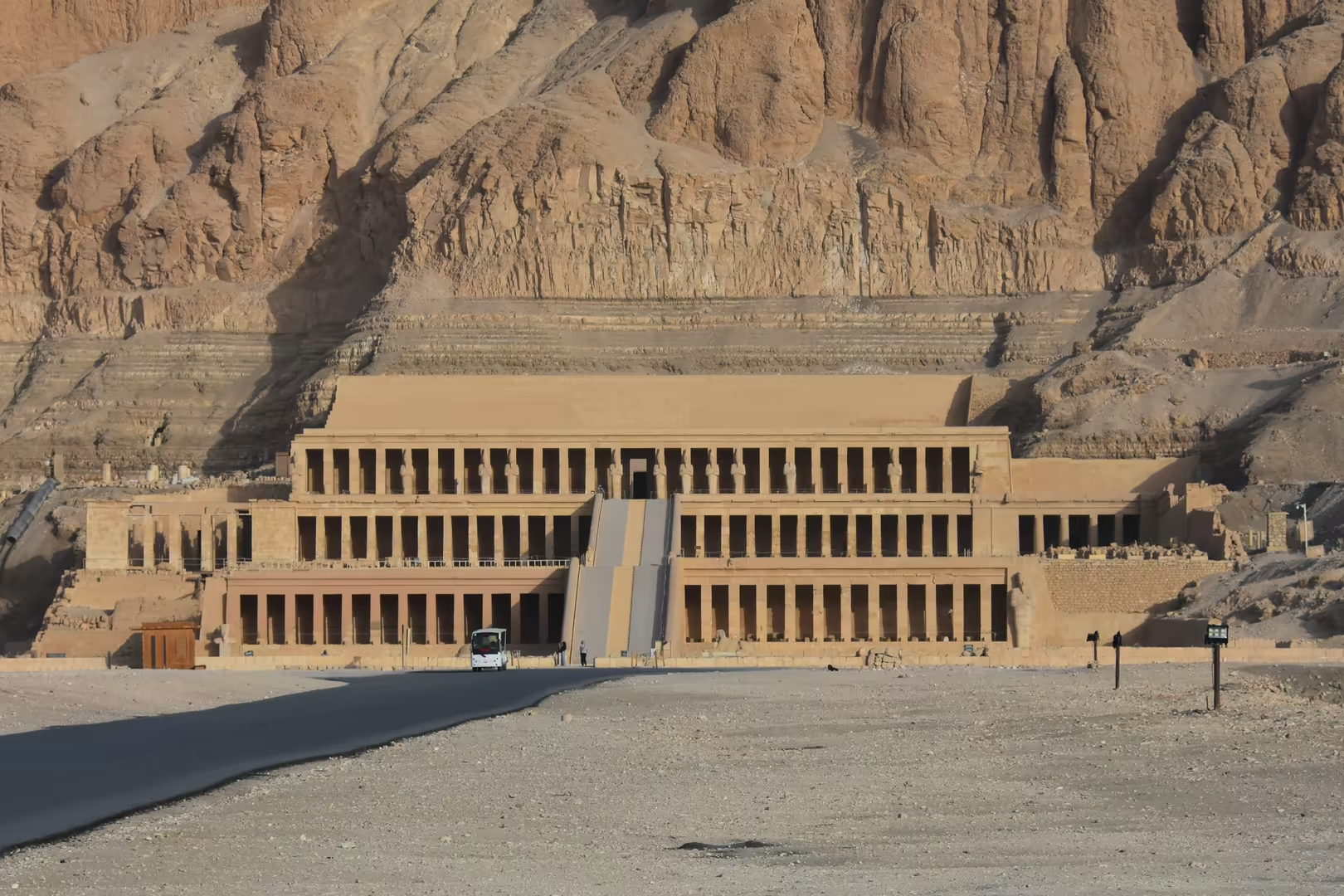
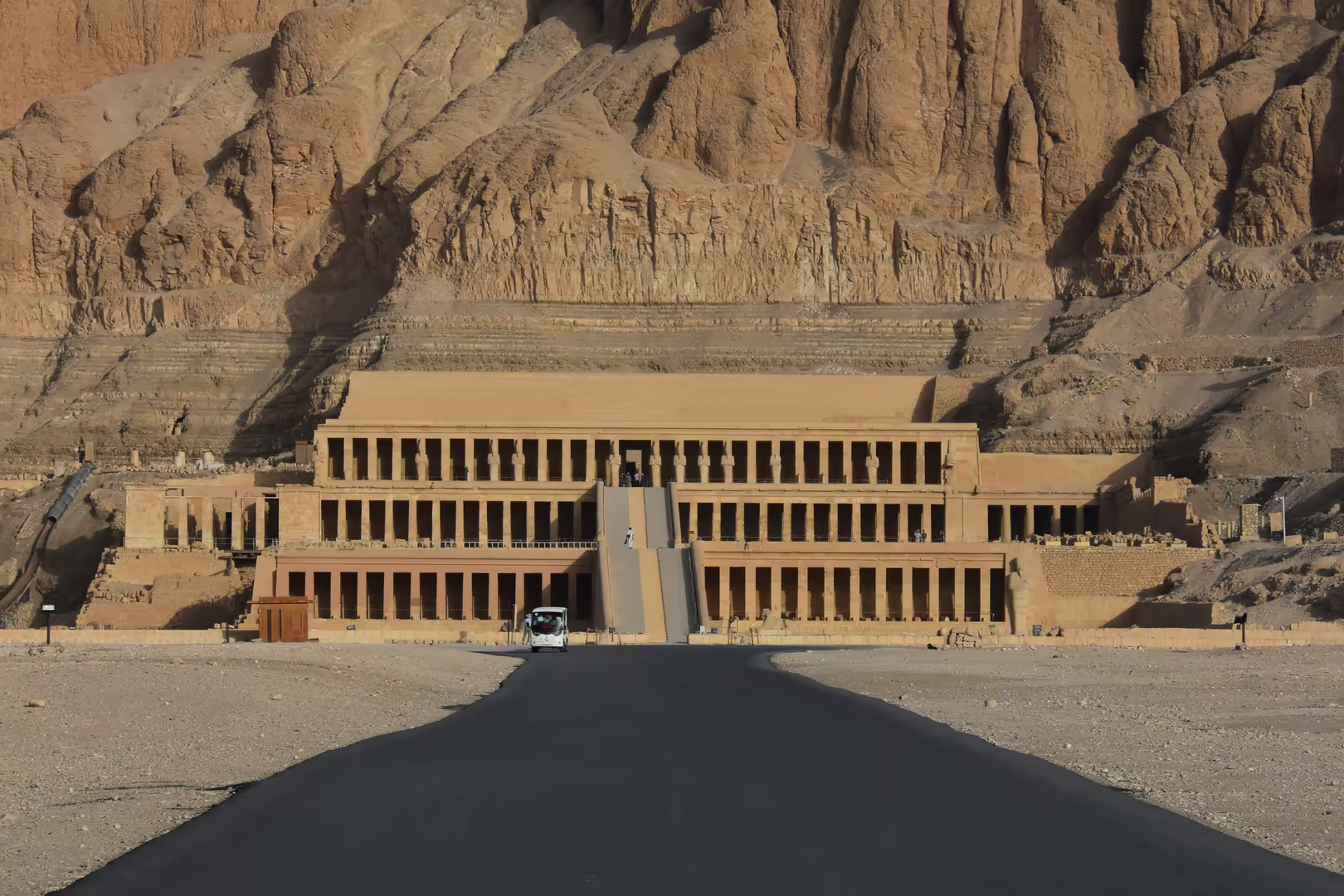
The mortuary temple of Hatshepsut, Djeser-Djeseru (“the Holy of Holies”, the “house of millions of years” of the female king Maatkare Hatshepsut), stands in the bay of Deir el-Bahri on the west bank of the Nile at ancient Thebes, opposite modern Luxor, hugging the foot of the great limestone cliff beneath the pyramidal peak of el-Qurn, the highest summit of the Theban hills. Its axis points eastwards across the river to the eighth pylon of Karnak; immediately to the south stands the older terraced temple of Mentuhotep II, and behind the massif, invisible from the forecourt, lies the Valley of the Kings.
The building rises in three great terraces, joined by ramps that split the colonnaded porticoes, from a walled lower court at the desert edge to the sanctuary set against the cliff at the head of the upper terrace. Almost the whole fabric is limestone, with accents of red granite and sandstone, and the design has no true parallel in Egyptian temple architecture. The work is traditionally ascribed to Senenmut, the royal steward who oversaw the king’s works, although Egyptologists note that the evidence for a single architect is circumstantial. Construction occupied roughly the seventh to the twentieth regnal years of her reign, and the finished complex is counted among the masterpieces of ancient architecture.
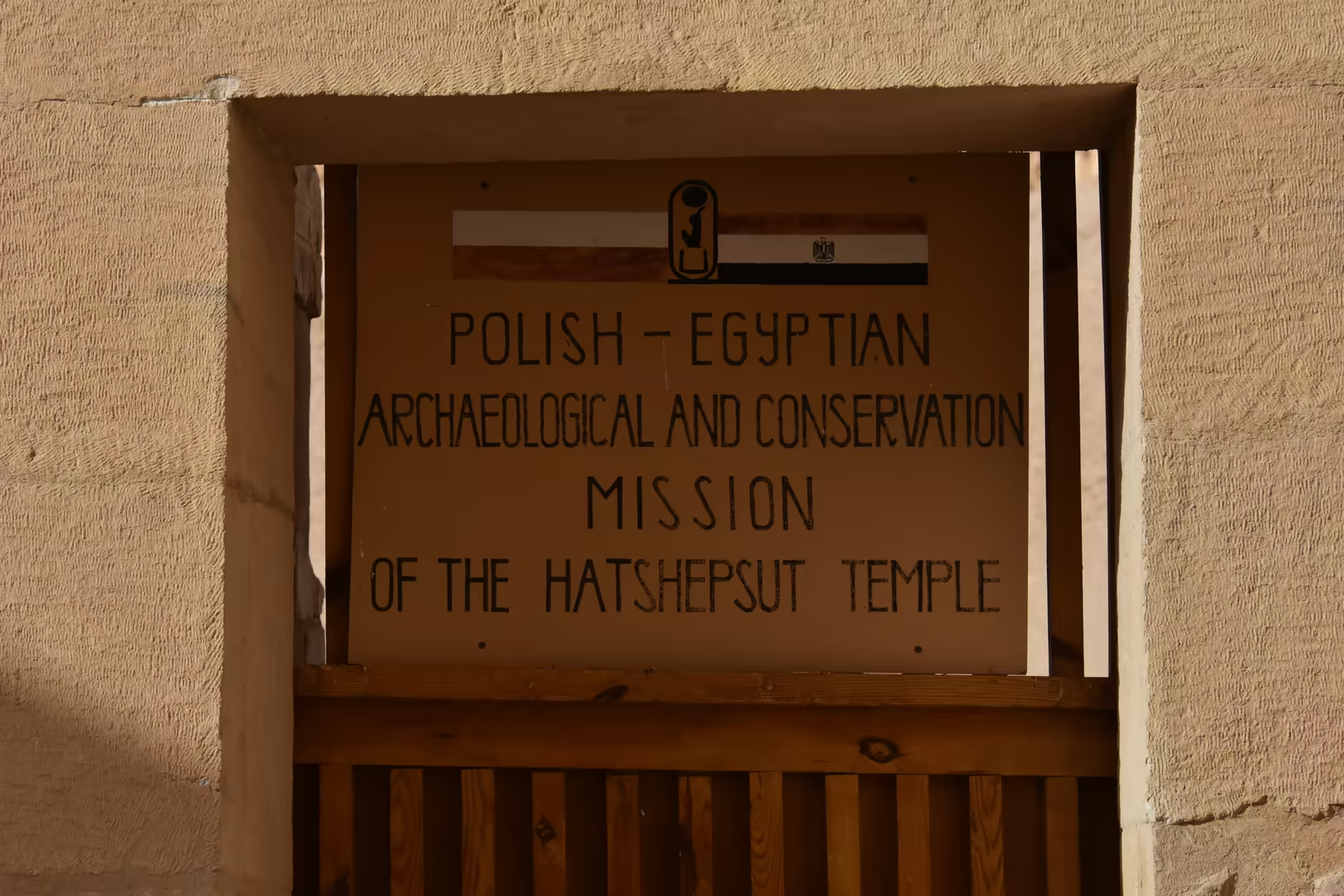
The temple served the cult of Amun-Re, to whom Hatshepsut dedicated it as “a garden for my father Amun”, together with Hathor, Anubis and the mortuary cults of the king and of her father Thutmose I. Ruined and buried for centuries, the monument has been rebuilt in stages since the nineteenth century, and since 1961 the Polish-Egyptian mission of the Polish Centre of Mediterranean Archaeology has consolidated and restored its terraces. In 1979 the whole of ancient Thebes, the temples of Karnak and Luxor on the east bank and the great necropolis of the west bank, was inscribed on the UNESCO World Heritage List as “Ancient Thebes with its Necropolis” (ref. 87).
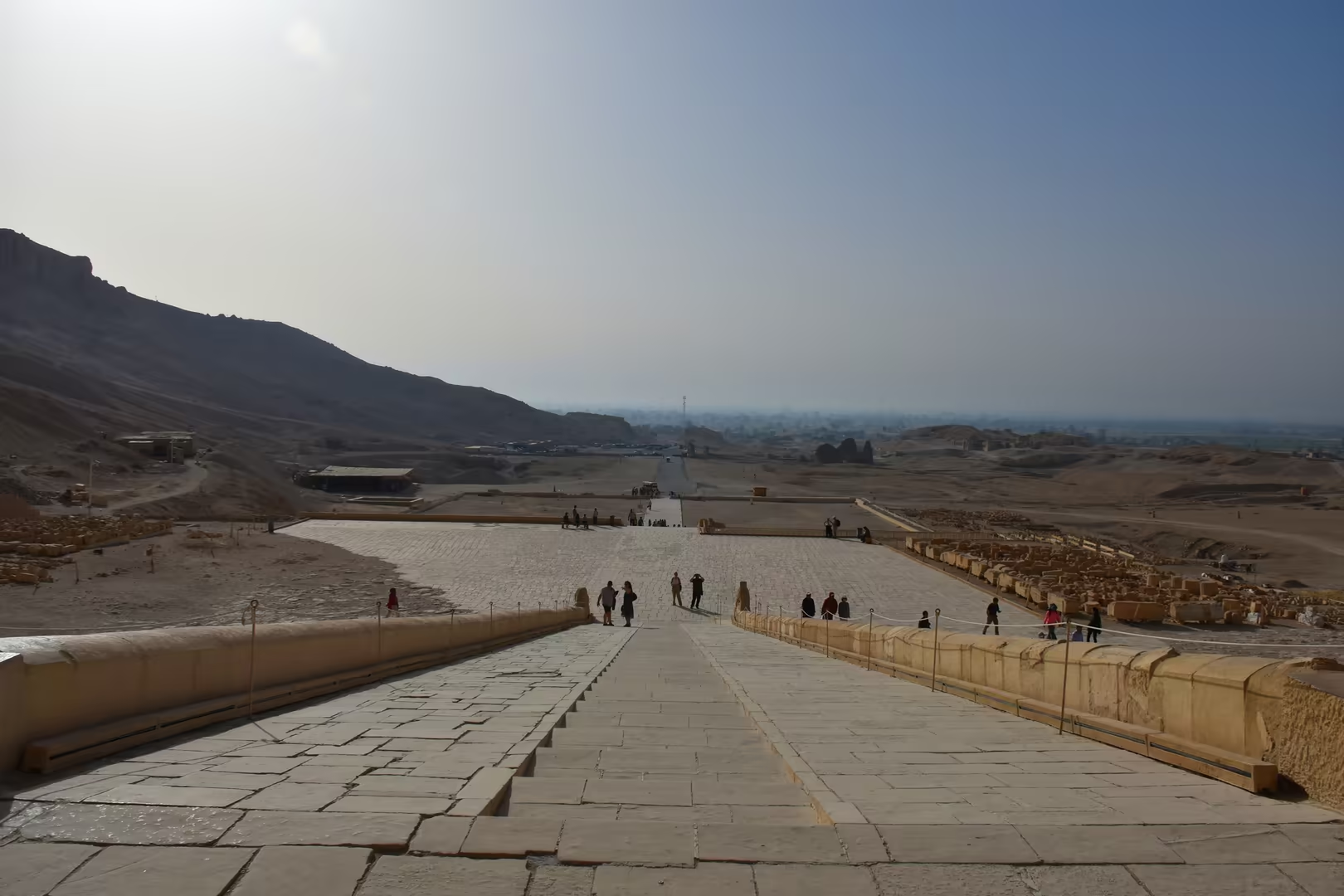
For the visitor the temple is above all a matter of light: it faces the sunrise, and its pale terraces warm through the morning while the great cliff behind remains in shadow. The bay opens eastwards onto the cultivated plain and the Nile, while to the west the massif hides the Valley of the Kings behind the ridge. A road links the monuments of the desert edge with the cultivation and the river crossing at Luxor, and the Ramesseum of Ramesses II lies further south along the same route; the band of cliffs and plain from the terraced temples to the tomb-filled hills forms the archaeological landscape of the Theban west bank.
History
When he died in the early fifteenth century BC leaving only a young son by a lesser wife, she governed first as regent for Thutmose III and then, within a few years, assumed the full titles of a king of Upper and Lower Egypt, an unprecedented role for a royal woman. Her reign of roughly two decades (c. 1479-1458 BC) was remembered for peace, for the trading expedition to the Land of Punt, and for intense building at Thebes: above all at Karnak, where she raised the eighth pylon and pairs of obelisks, and on the west bank, where the terraced temple of Deir el-Bahri was her most personal monument.
The bay was sacred ground long before Hatshepsut: its cliffs were a cult place of the cow goddess Hathor, mistress of the western necropolis. In the Eleventh Dynasty King Mentuhotep II (c. 2061-2010 BC), who reunited Egypt after the First Intermediate Period, built his own terraced mortuary temple there, Akh-sut Nebhepetre, with his tomb cut into the rock behind it. That complex, immediately south of Hatshepsut’s, was her direct model (the cliffside temple of terraces, colonnades and ramps was Mentuhotep’s invention); Thutmose III later added a third temple, Djeser-Akhet, above hers.
The complex recalled the pyramid complexes of the Old Kingdom: a valley temple at the edge of the cultivation joined to the temple proper by a causeway about a kilometre long, with a barque station on the way and sphinxes (several bearing the king’s head) lining the upper path, the oldest attested sphinx avenue in Egypt. Within, the central axis belonged to Amun-Re, whose sanctuary cut against the cliff received the barque of the god each year; the king’s mortuary cult occupied the south side of the festival court, the solar cult court lay to the north, and shrines to Hathor and Anubis stood at the ends of the middle terrace. Her own tomb, KV20, was driven into the massif beneath el-Qurn in echo of the pyramid age.
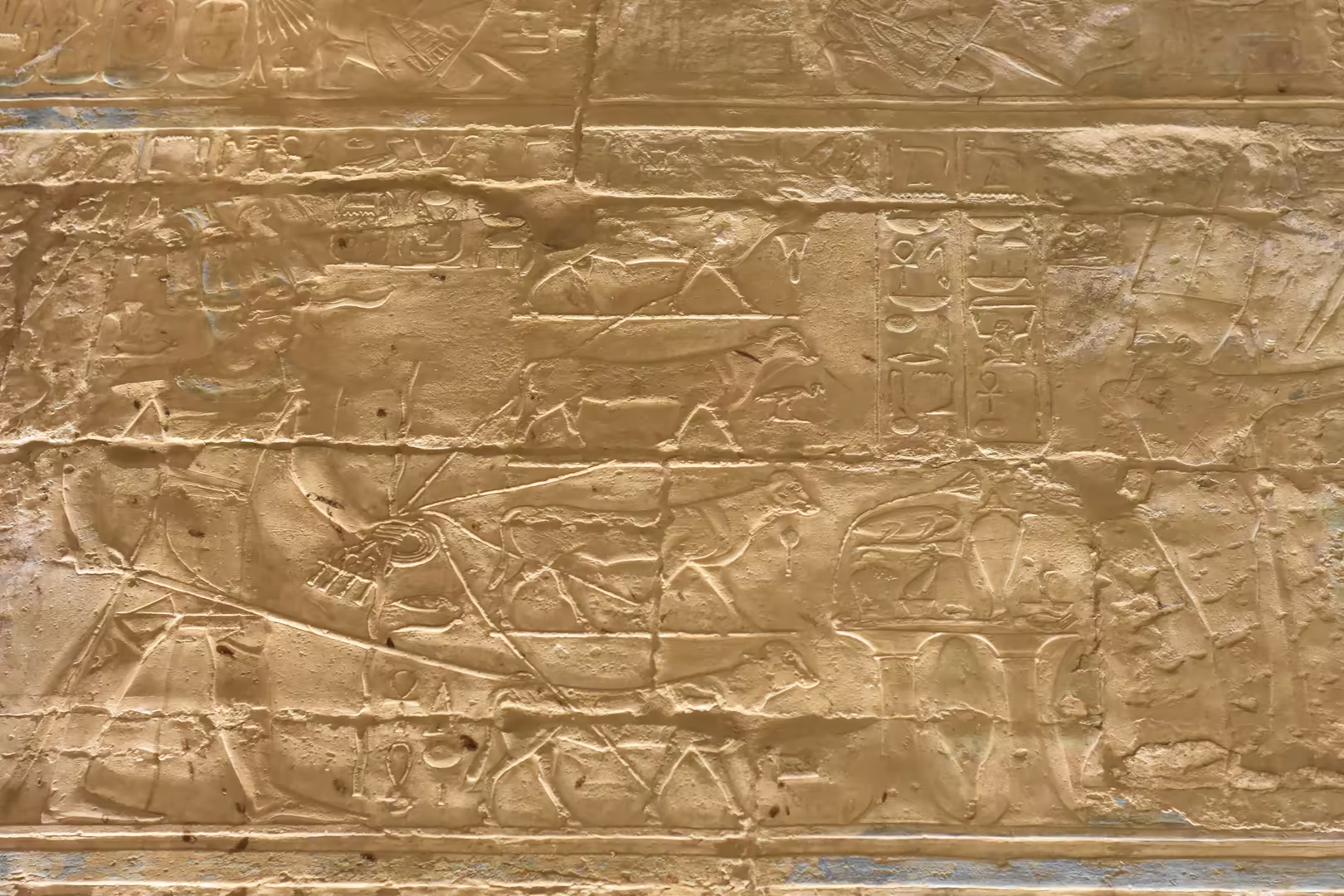
The walls carried some of the most extensive relief cycles of the period. On the middle terrace the south-west portico depicted the expedition to Punt of the ninth regnal year (the ships and wonders of the incense country, with living myrrh trees carried home in baskets to be planted on the temple terraces), while the north-west portico showed the king’s divine birth, the oldest known scene of its kind, in which Amun-Re visits her mother Ahmose and the gods preside over her creation, legitimising her rule. Below, the porticoes recorded the transport of the obelisks to Karnak and the king as a sphinx crushing her enemies. In the Beautiful Festival of the Valley the barque of Amun-Re crossed from the eighth pylon of Karnak each year and rested overnight in the sanctuary.
The temple’s later history was violent. About two decades after Hatshepsut’s death, in the reign of Thutmose III, her images and names were systematically erased and her statues smashed and dumped in quarry pits; the campaign was abandoned within a few years, and its motives are still debated. In the Amarna period the figures of Amun and other gods were defaced, to be restored under Tutankhamun, Horemheb and Ramesses II. An earthquake in the ninth century BC damaged the fabric; priests of Amun and Montu were buried within the temple, and the cache of royal mummies hidden in the cliffs to the south (TT320) was found only in 1881. Under the Ptolemies the sanctuary became a healing chapel of the deified architects Amenhotep son of Hapu and Imhotep, and from the sixth to the eighth century AD a Coptic monastery of Saint Phoibammon occupied the terraces; hence the modern name Deir el-Bahri, “the northern monastery”. Rediscovered in the eighteenth century, excavated by Mariette, by Naville’s Egypt Exploration Fund expedition of 1893-1906 (on whose staff the young Howard Carter served) and by the Metropolitan Museum under Winlock, the temple has been restored by the Polish mission since 1961.
Geology
Thebes lies where the Nile, swinging eastwards against the desert, has cut its valley into the Eocene limestone plateau of Upper Egypt. The west-bank massif is built of the Theban Limestone Formation (early Eocene marine limestones, about forty-eight million years old, forming a stepped escarpment up to some 340 metres thick with chalky beds and horizons of black chert). Its highest summit, el-Qurn (450 metres; in antiquity Ta Dehent, “the peak”), rises above Deir el-Bahri in an almost perfect natural pyramid, one reason why, some Egyptologists believe, the Valley of the Kings was laid out at its foot on the far side of the massif.
Deir el-Bahri occupies a natural amphitheatre in the foot of that escarpment: a bay, opening to the south-east, about 200 metres wide and cut some 140 metres into the hillside, backed by a near-vertical cliff about 100 metres high. The bay is the work of water and gravity: fluvial erosion along an ancient wadi, rockfall and sliding along the fractures of the limestone, and millennia of desert rainfall rounding the rock into the concave circus that frames the temple. The terraces follow the natural ledges of the hill, the rear chambers were partly cut into the living rock, and the mountain itself plays the part of the pyramid.
Three successive rock formations underlie the temple. Lowest lies the Tarawan Chalk of Palaeocene age, a soft white chalk buried beneath the plain and visible in the excavations of the neighbouring Asasif. Above it comes the Esna Shale of the late Palaeocene and early Eocene, up to about 60 metres of grey-green shales with streaks of gypsum, which outcrops at the foot of the cliff and forms the floor of the bay, the very ground on which the temple stands. The cliff itself is the lowest member of the Theban Limestone, roughly 90 metres of thin-bedded, argillaceous and nodular limestones with pinkish marls, heavily fractured. The whole stack is what engineering geologists call a brittle-on-weak structure: a competent, jointed limestone riding upon a soft, clay-rich shale, a configuration that predisposes the hillside to slow creep and to sudden failure.
The builders had to come to terms with that geology. The temple was built almost entirely of limestone, much of it quarried in the immediate neighbourhood, where the soft beds furnished an easily worked stone that hardens on exposure; red granite and sandstone were brought in for doorways, columns and shrines, and a single architrave is of violet sandstone said to have come from the temple of Mentuhotep II. The ground, however, has never been still: vertical joints in four directions and normal faults related to the opening of the Red Sea divide the cliff into towers and chimneys that shed stones onto the bay; the swelling clays of the Esna Shale, which can expand by about a tenth of their volume when wetted, have pushed and buckled the ancient walls (as recently as 1986 a reconstructed casing wall of the upper court collapsed), and the earthquake of the ninth century BC shows how old the seismic risk is. The stability of the cliff is today monitored by the Polish mission with laser scanning and vibration instruments, a dialogue with the geology of the site that began with the builders themselves.
Things to See
Hot-air balloons lift from the desert edge of the Theban west bank at sunrise and drift across the necropolis. From the air the bay of Deir el-Bahri opens below the cliff of el-Qurn, the pale terraces of the temple stand out against the dark rock, and the cultivated plain with the Nile beyond sets the monument within the wider landscape of ancient Thebes.
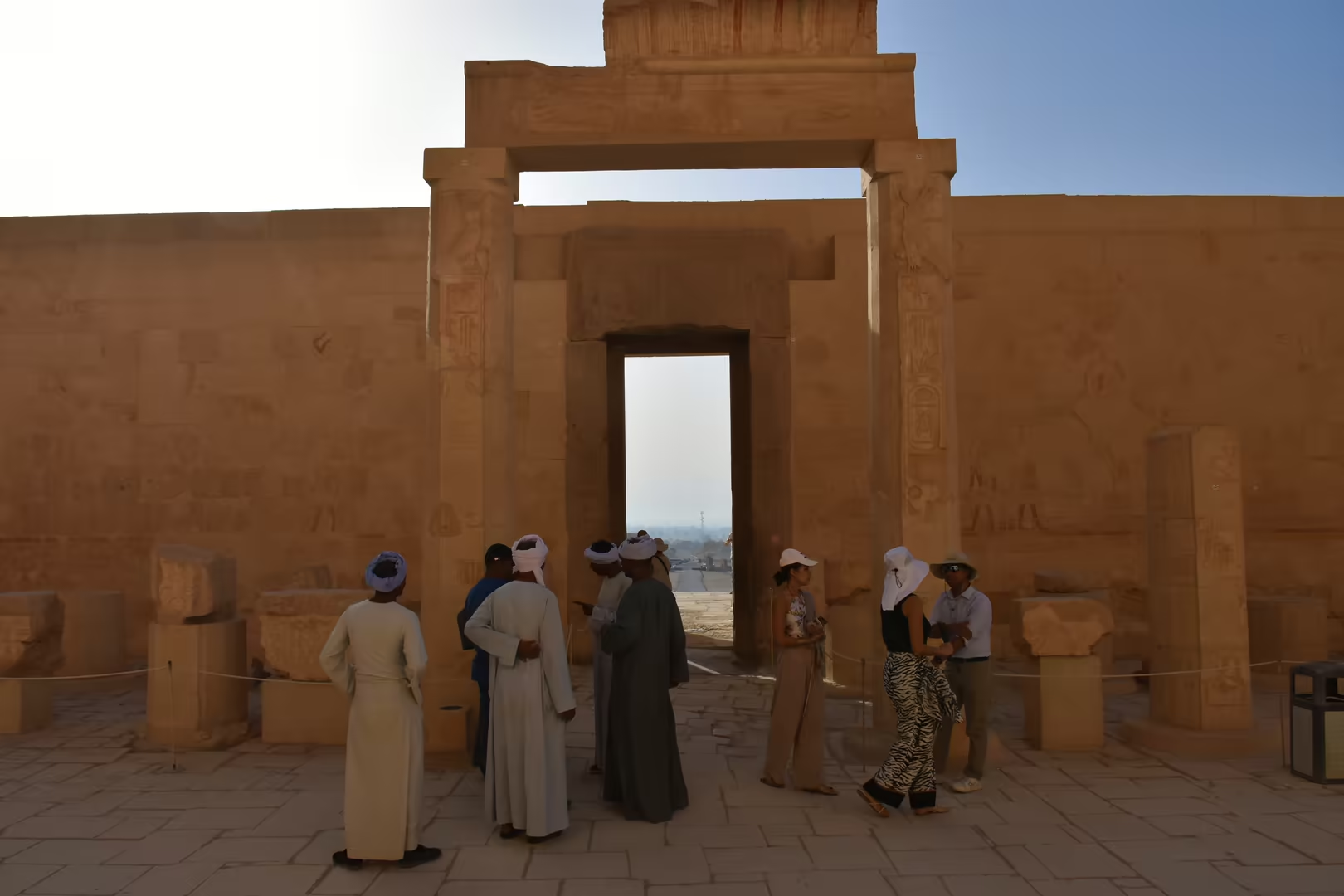
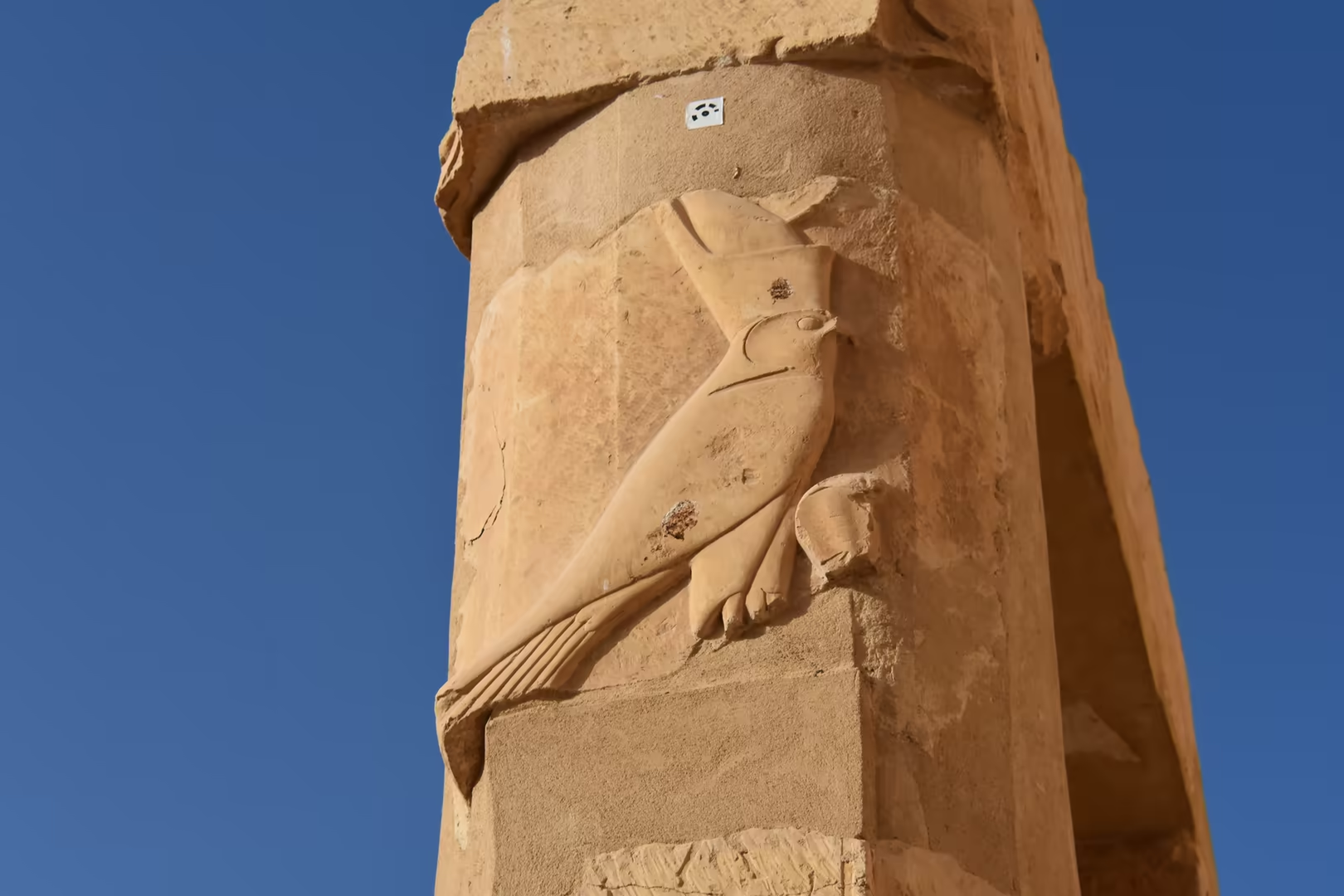
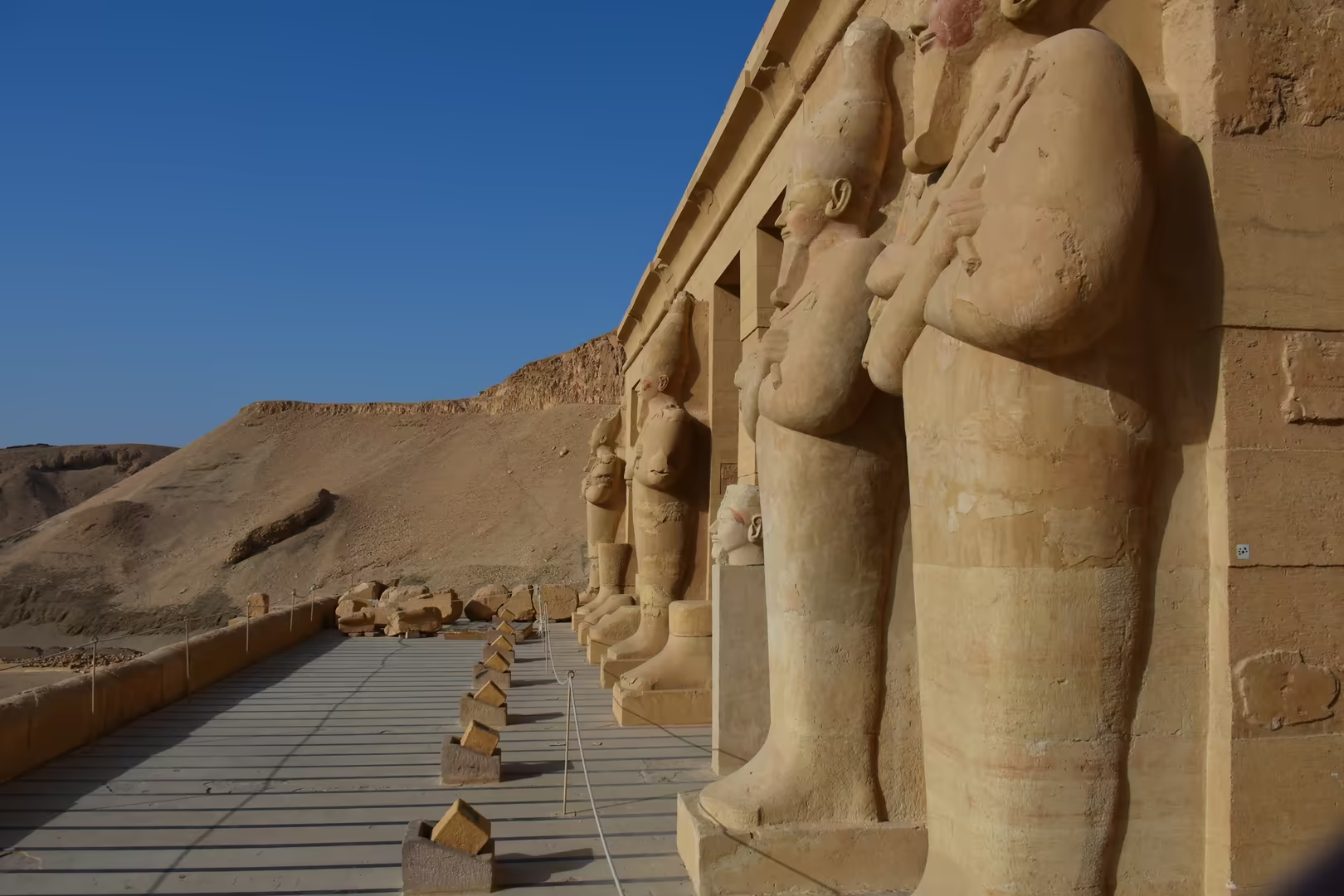
The visitor crosses the floor of the bay to the eastern front of the temple, where the walled lower court gives onto the first terrace. A central ramp climbs between the colonnaded porticoes; sandstone falcons of the ramps still show traces of red paint, and colossal standing statues with crossed arms flank the dark openings of the colonnade. Beside the entrance a board of the Polish-Egyptian mission records the restoration of the terraces carried out since 1961.
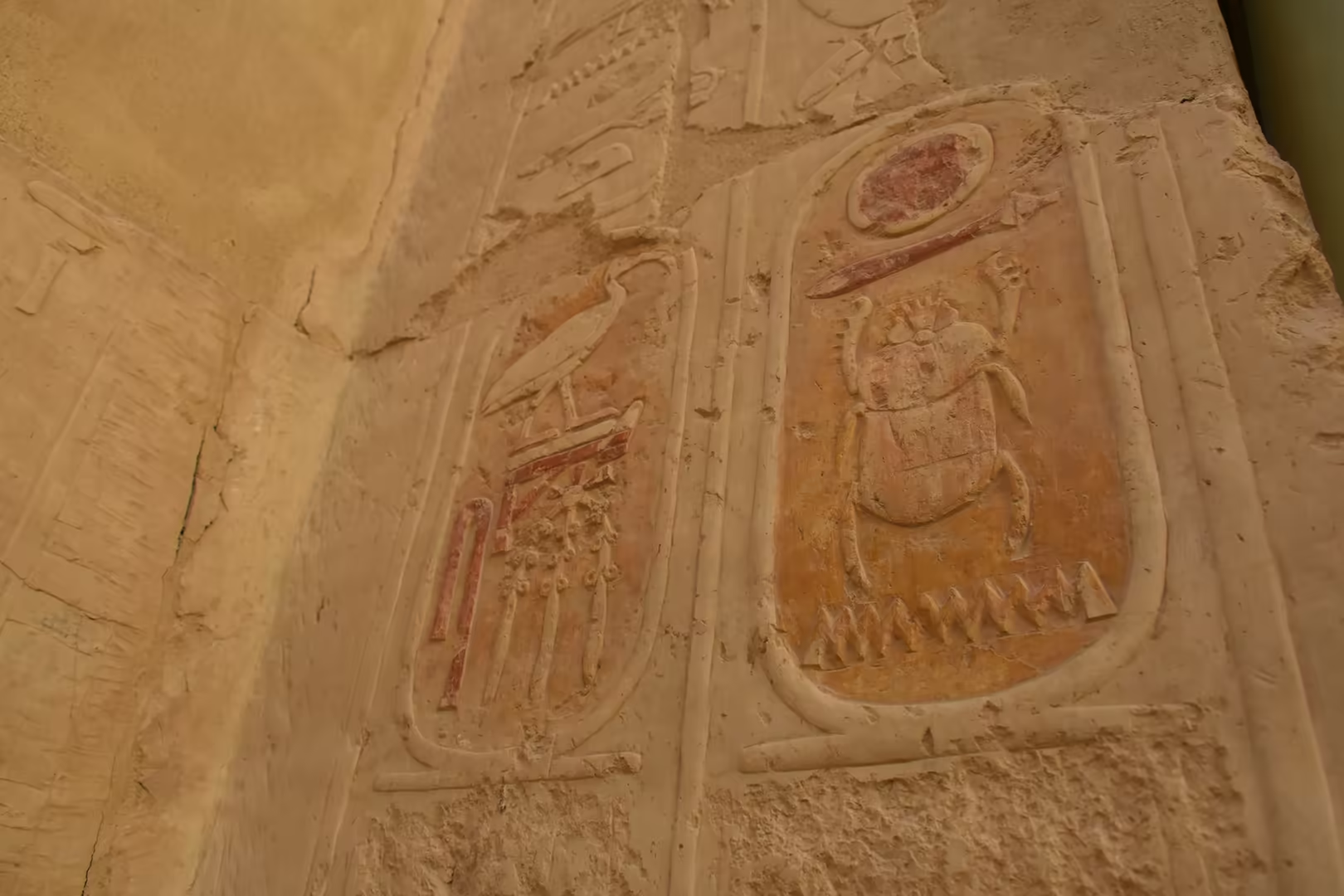
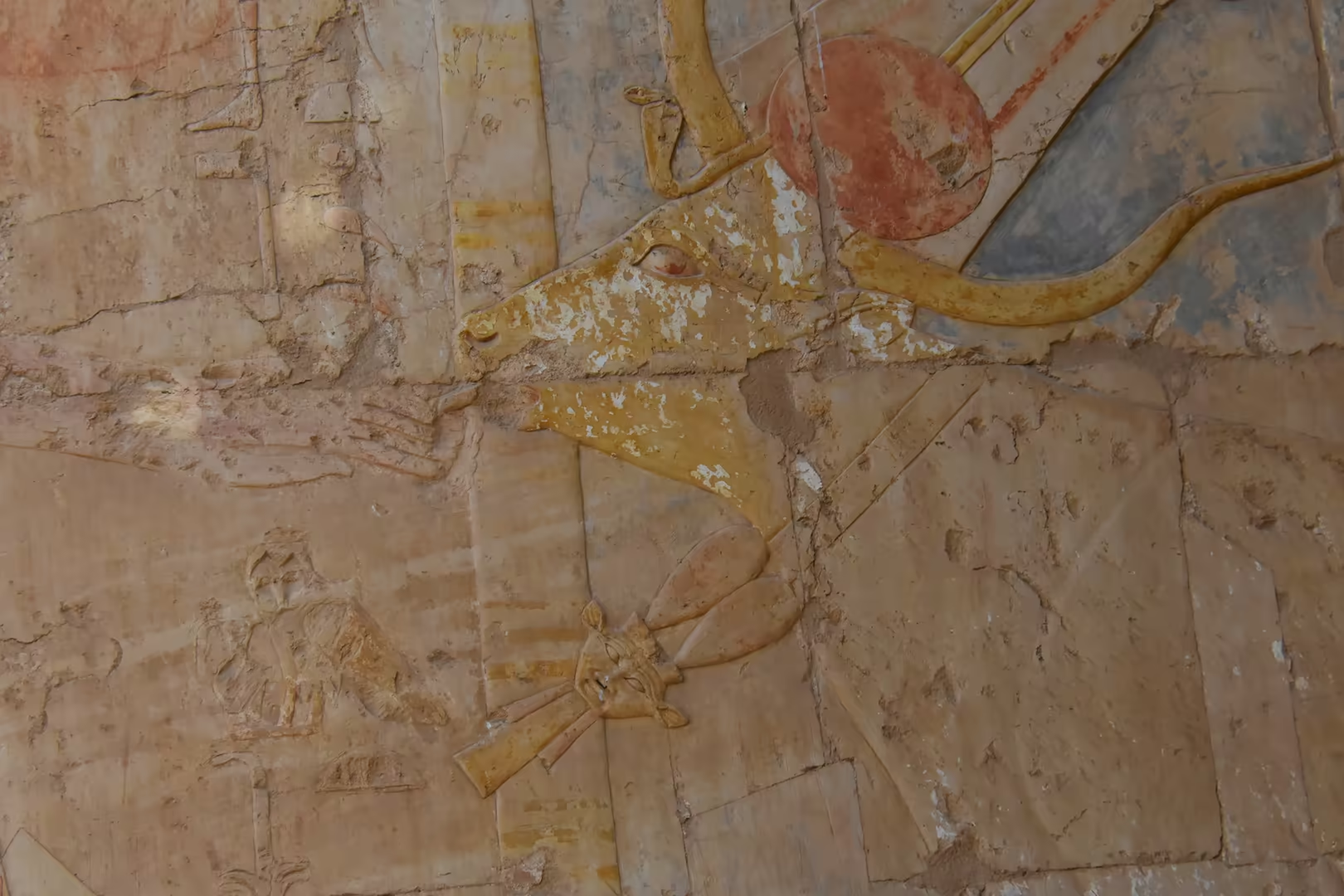
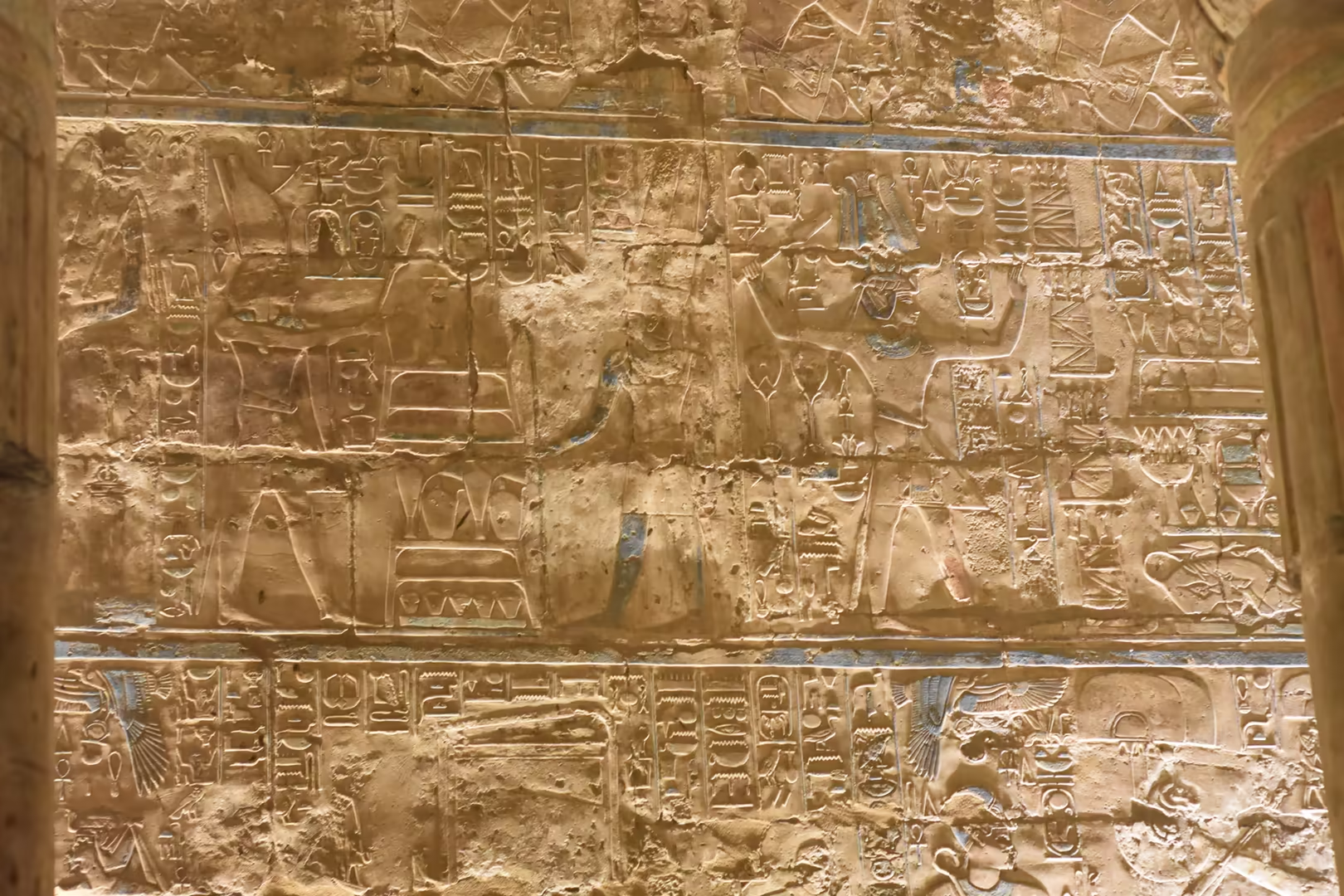
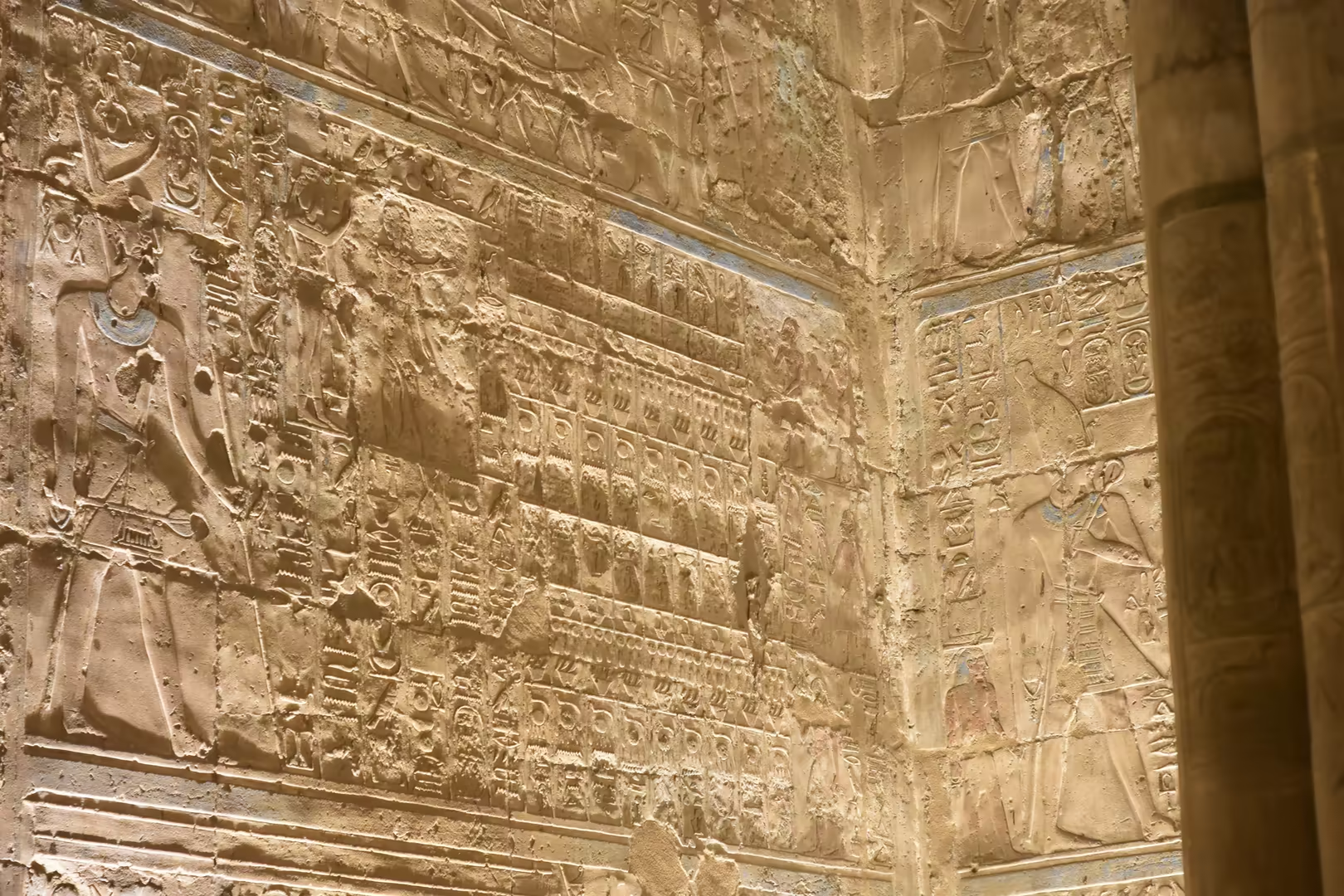
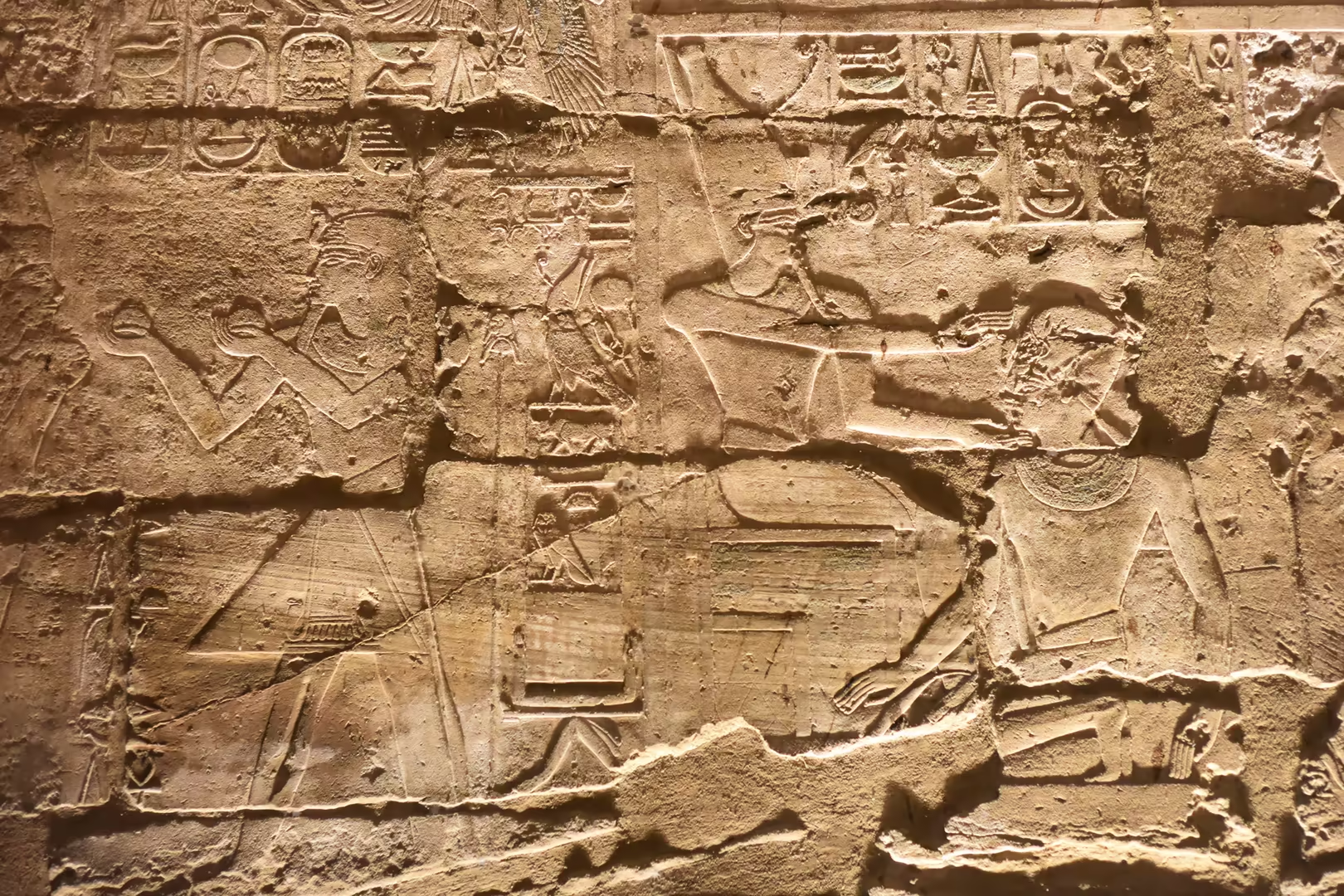
The middle terrace is the richest part of the temple. Its long porticoes carry the great relief cycles in close-set sunken relief: the expedition to Punt of the ninth regnal year occupies the south-west portico, with its ships, the wonders of the incense country and living myrrh trees carried home in baskets, while the north-west portico shows the divine birth of the king, the oldest known scene of its kind. Traces of the original colouring survive on many walls, with red ochre on carved faces and winged sun-discs. Chapels of Hathor and Anubis close the two ends of the terrace, and the columns of the Hathor chapel carry capitals carved with the cow-eared face of the goddess.
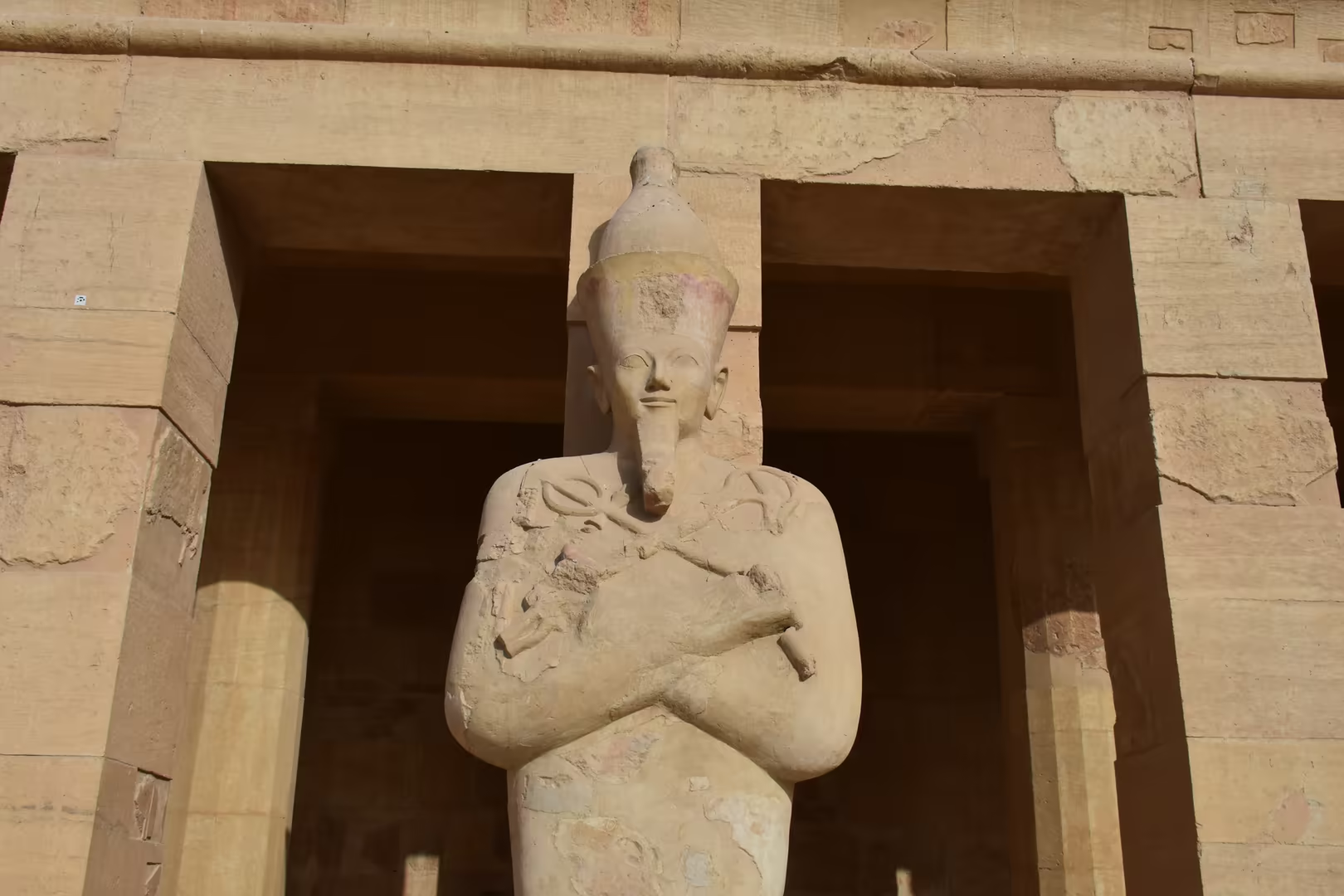
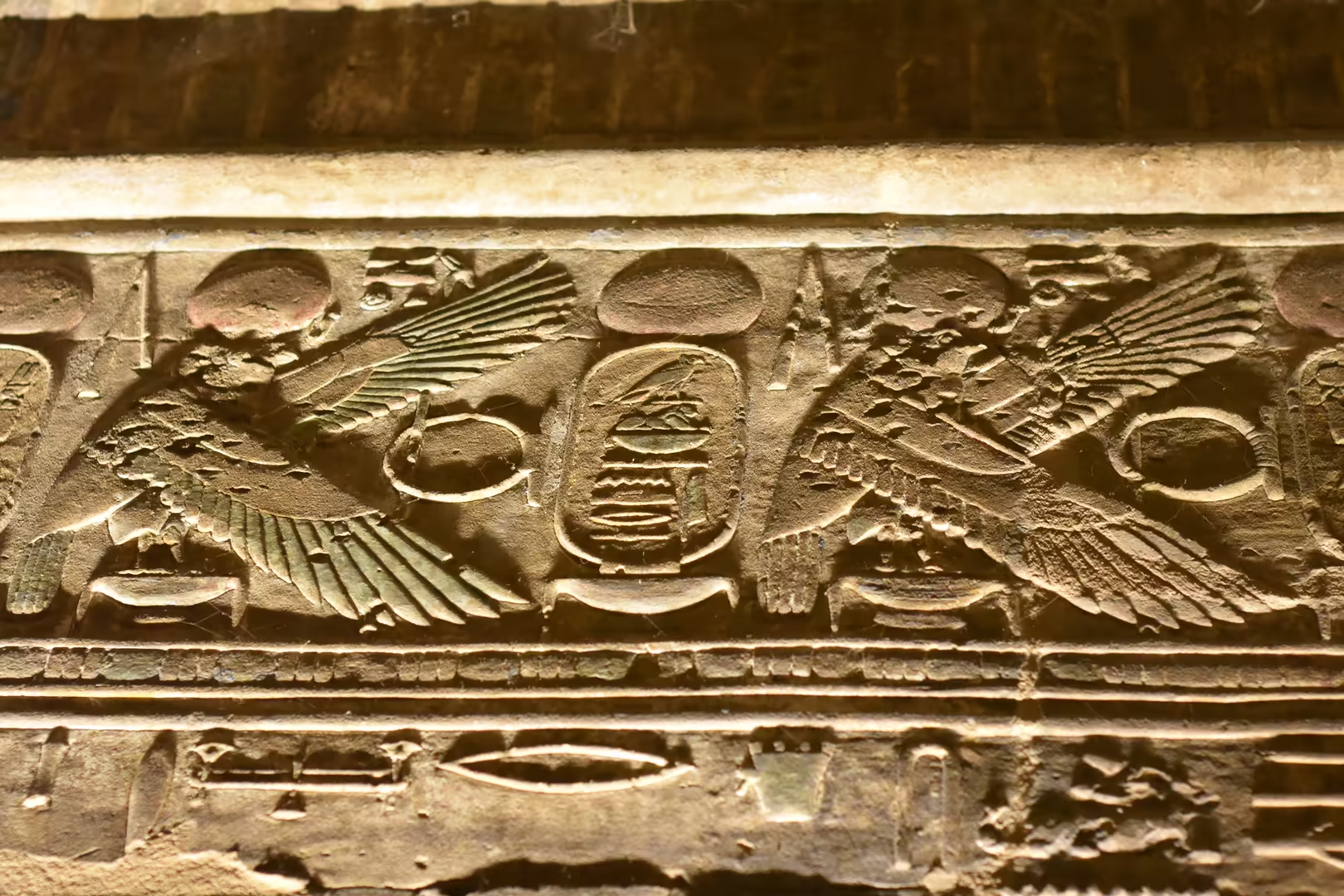
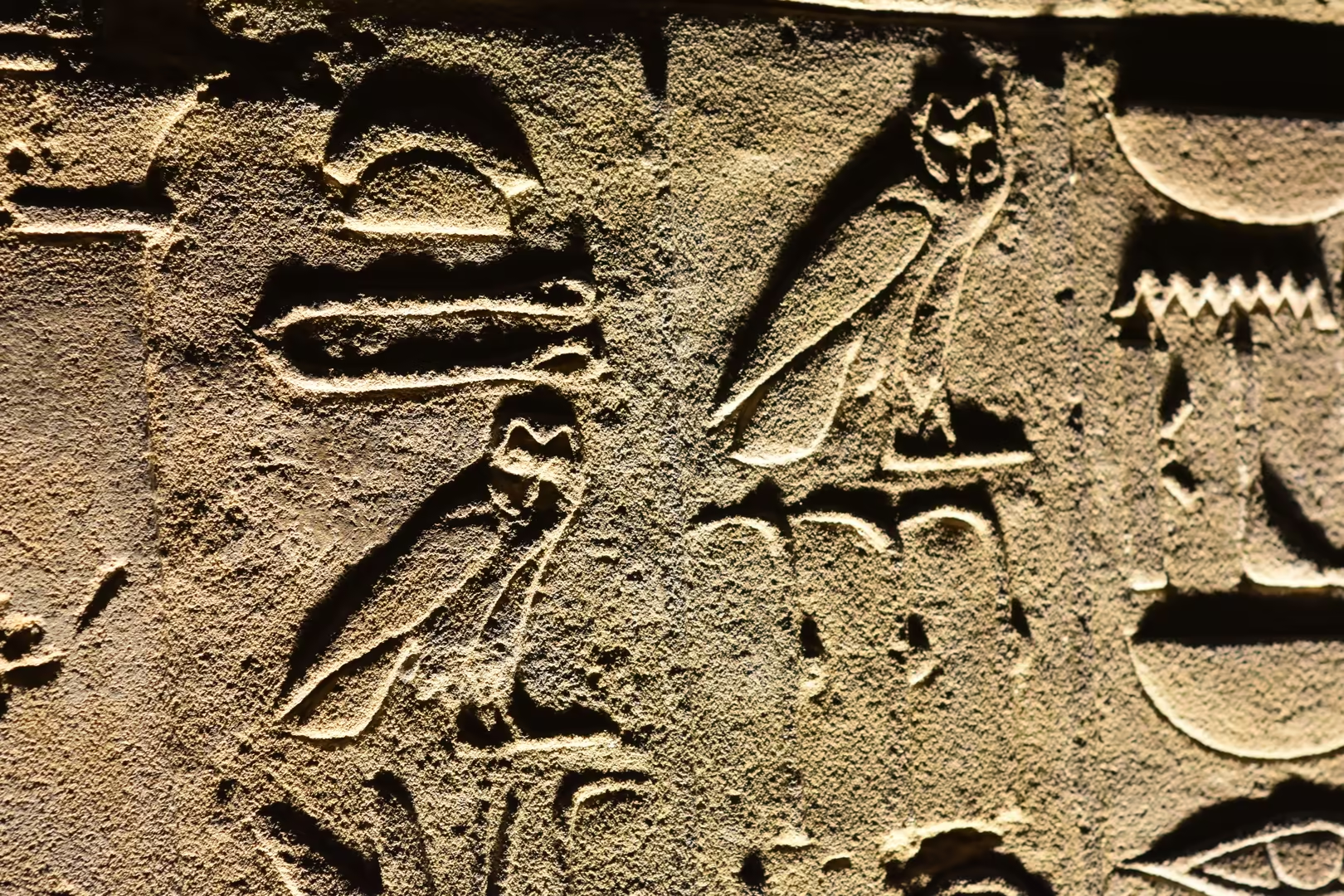
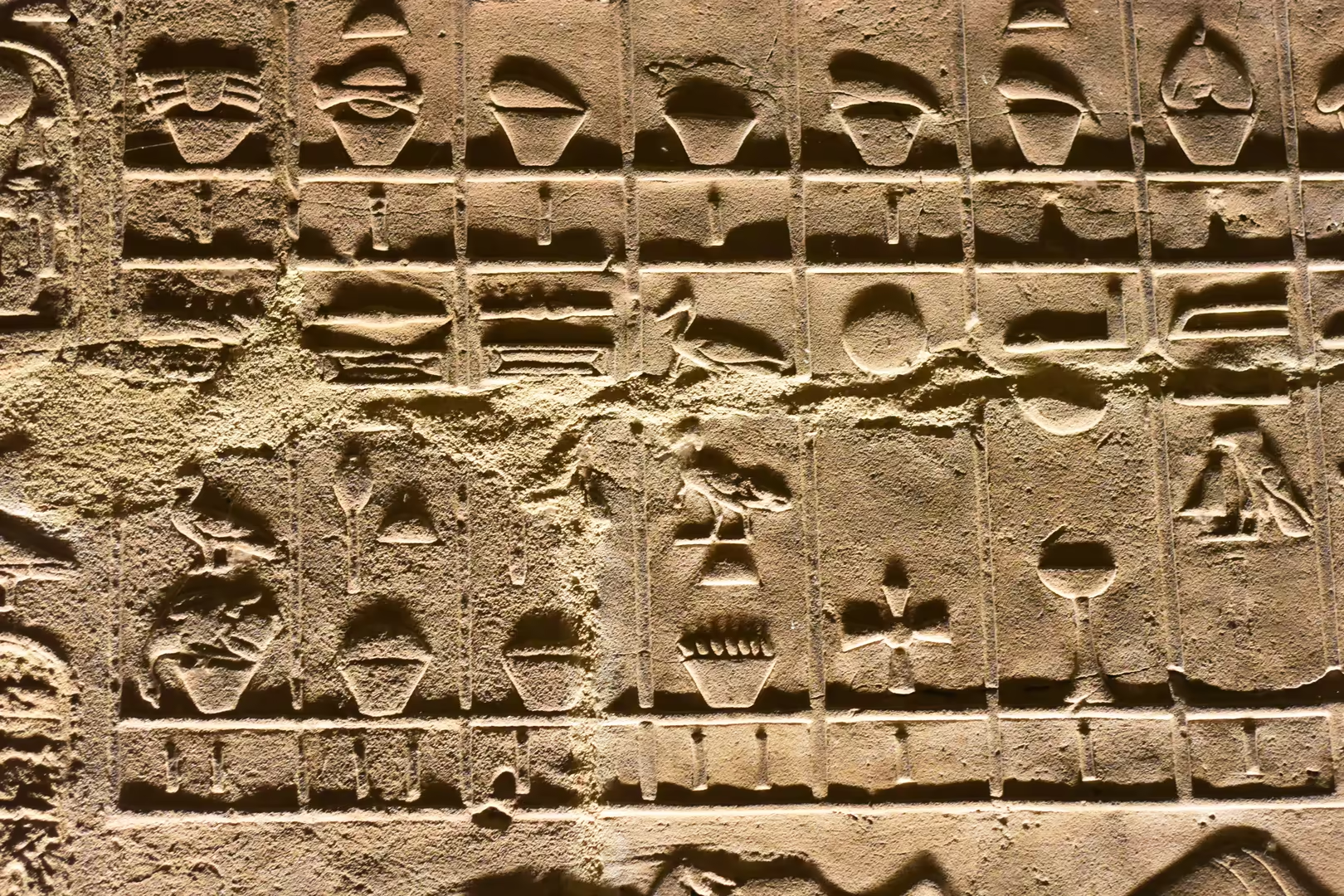
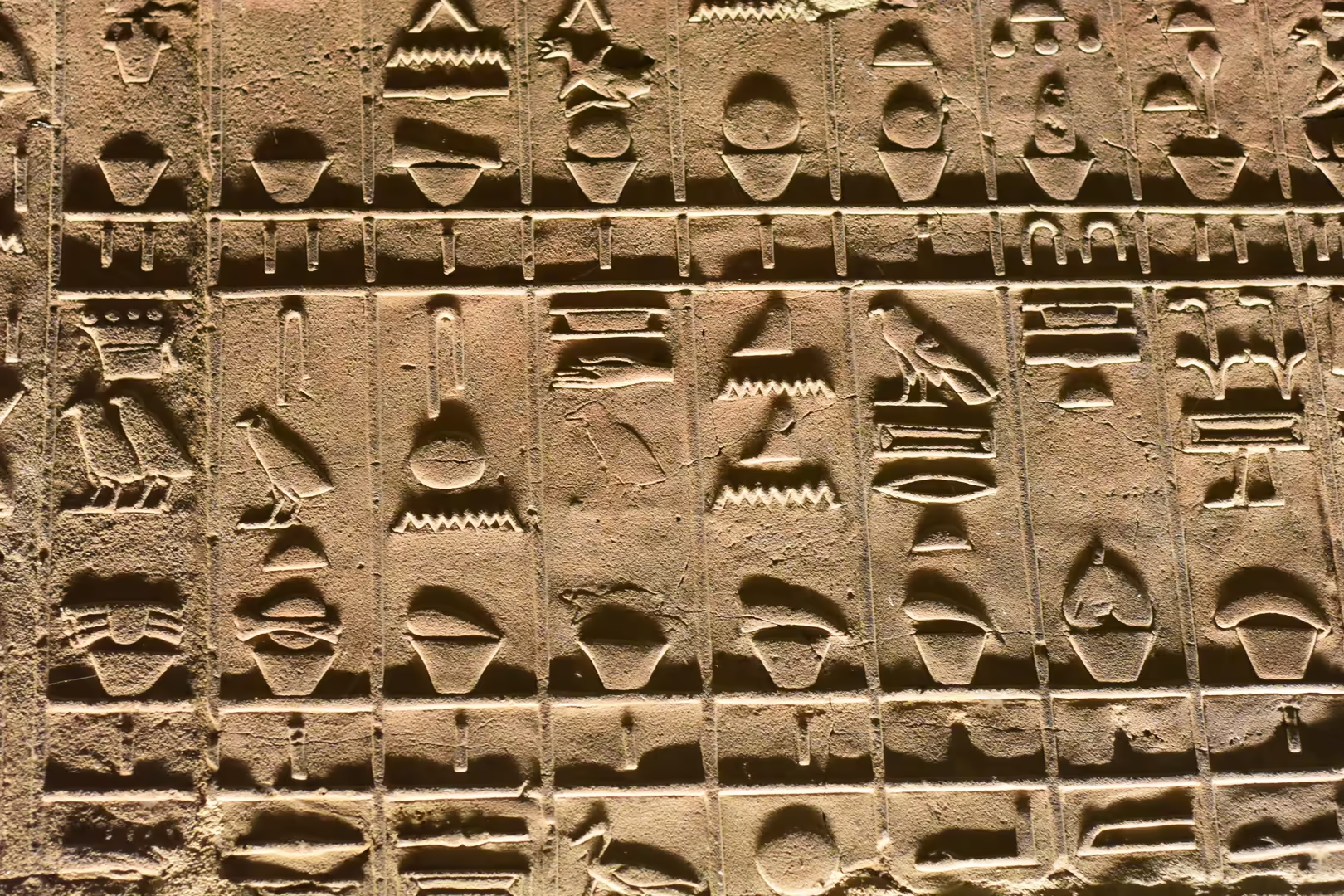
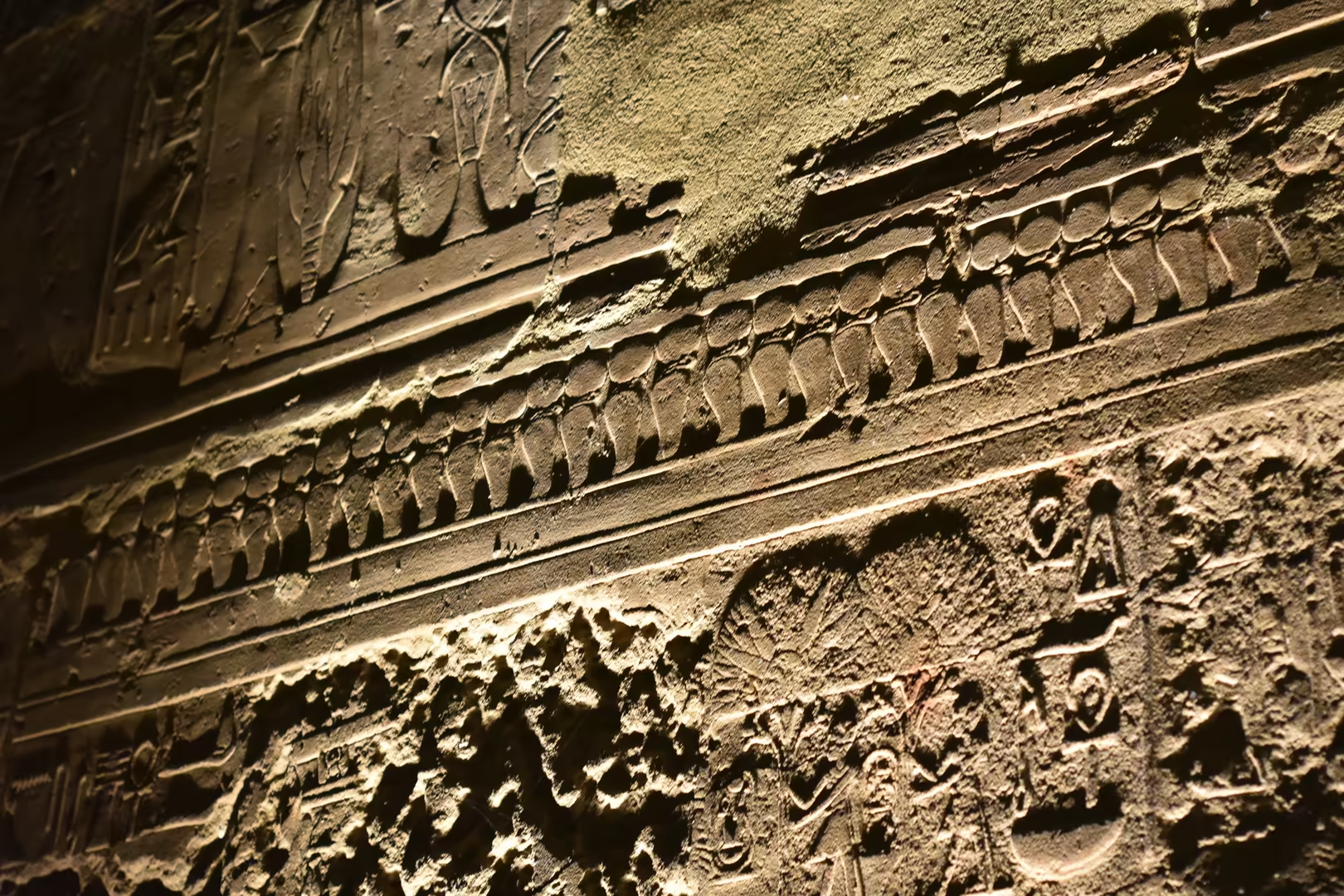
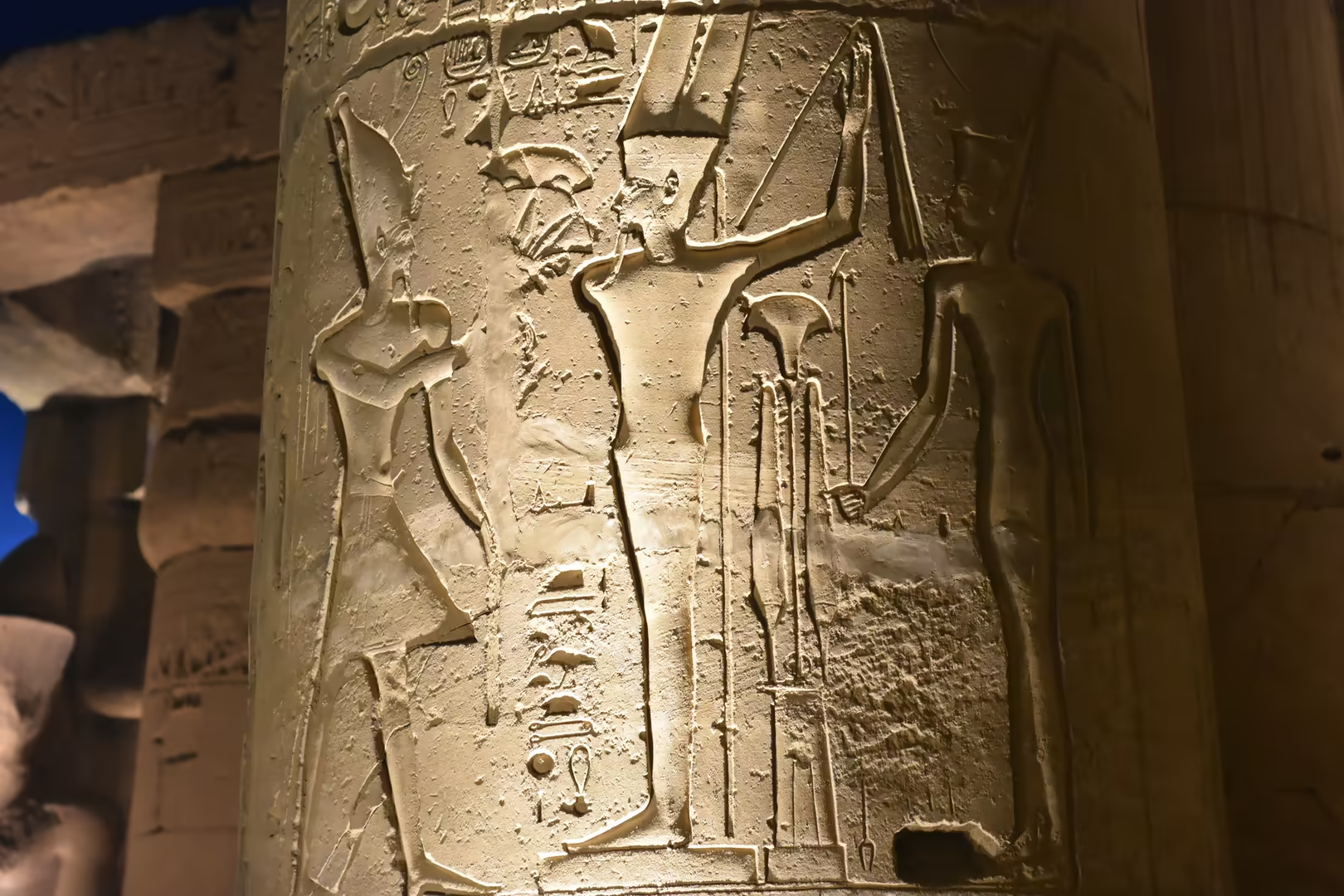
A further ramp leads up to the upper terrace, the innermost part of the temple, set directly against the cliff. The upper colonnade is lined with colossal Osiride statues, mummiform images of the king with the crook and flail crossed upon the breast, several of them still tinted with red pigment on face and crown. On the main axis the sanctuary of Amun-Re, cut into the foot of the cliff, received the barque of the god in the Beautiful Festival of the Valley; the rooms around the court are painted rather than carved, with vaulted ceilings scattered with stars on a deep blue ground, winged falcons and vultures above the doors, friezes of cobras and columns covered with hieroglyphs.
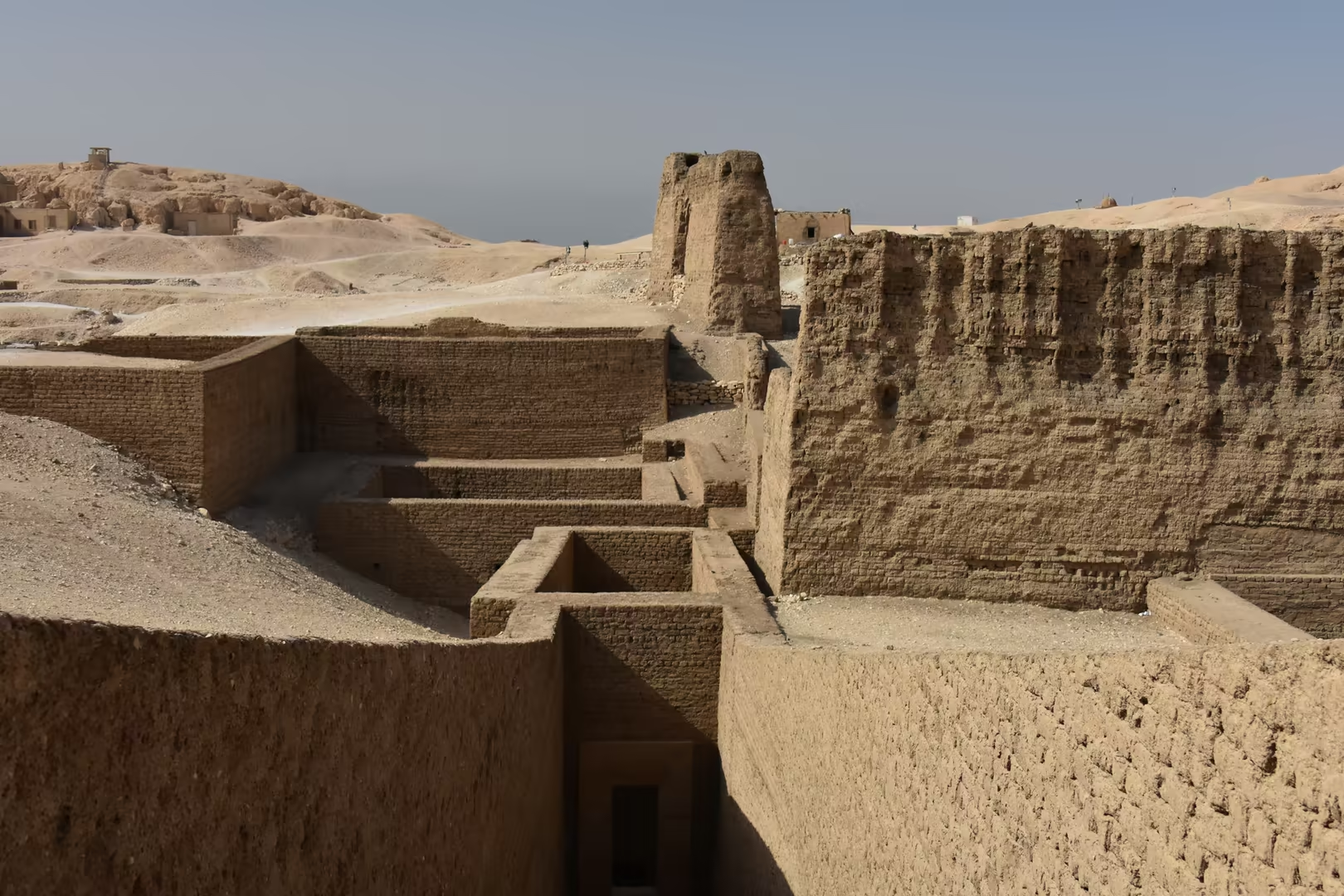
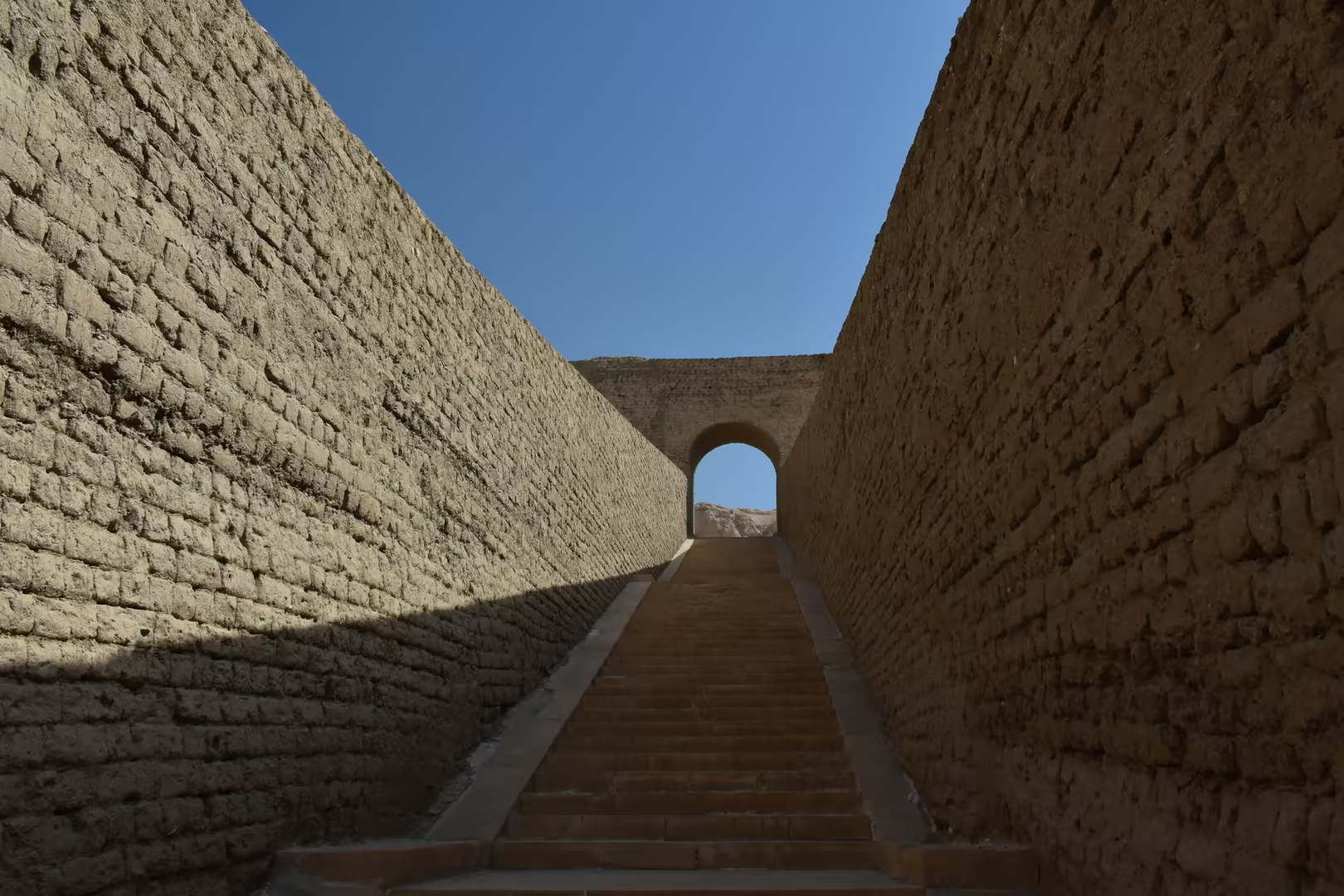
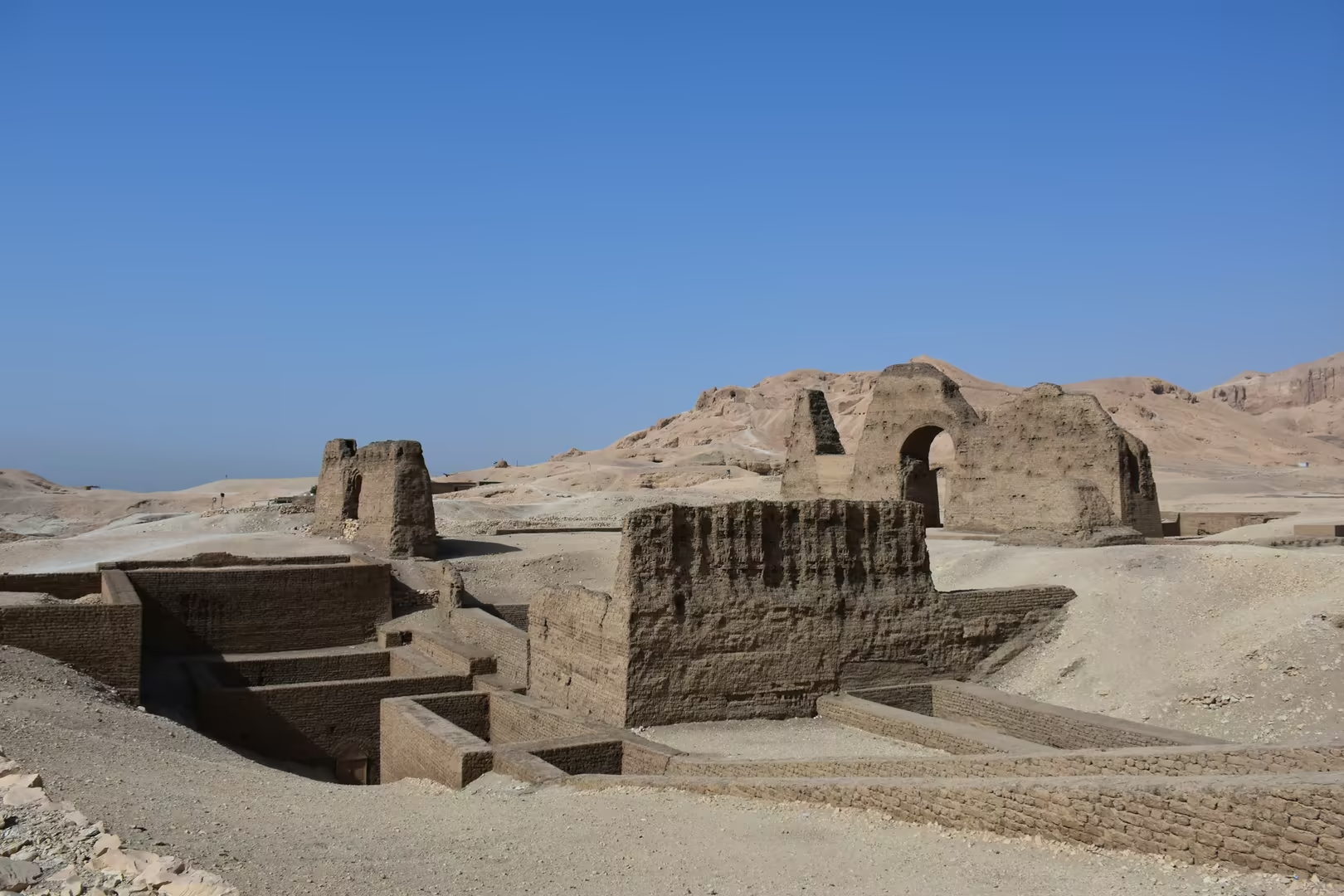
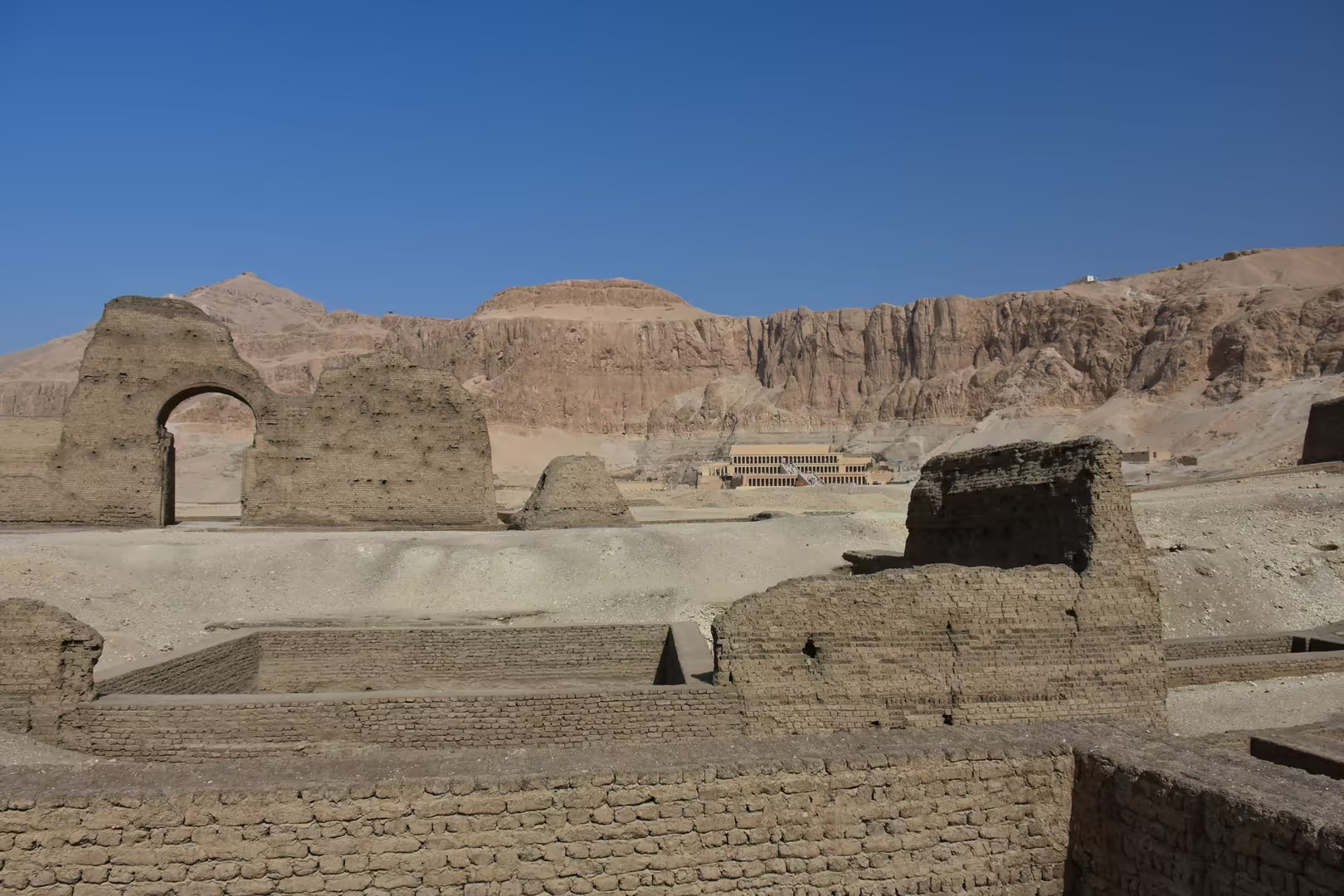
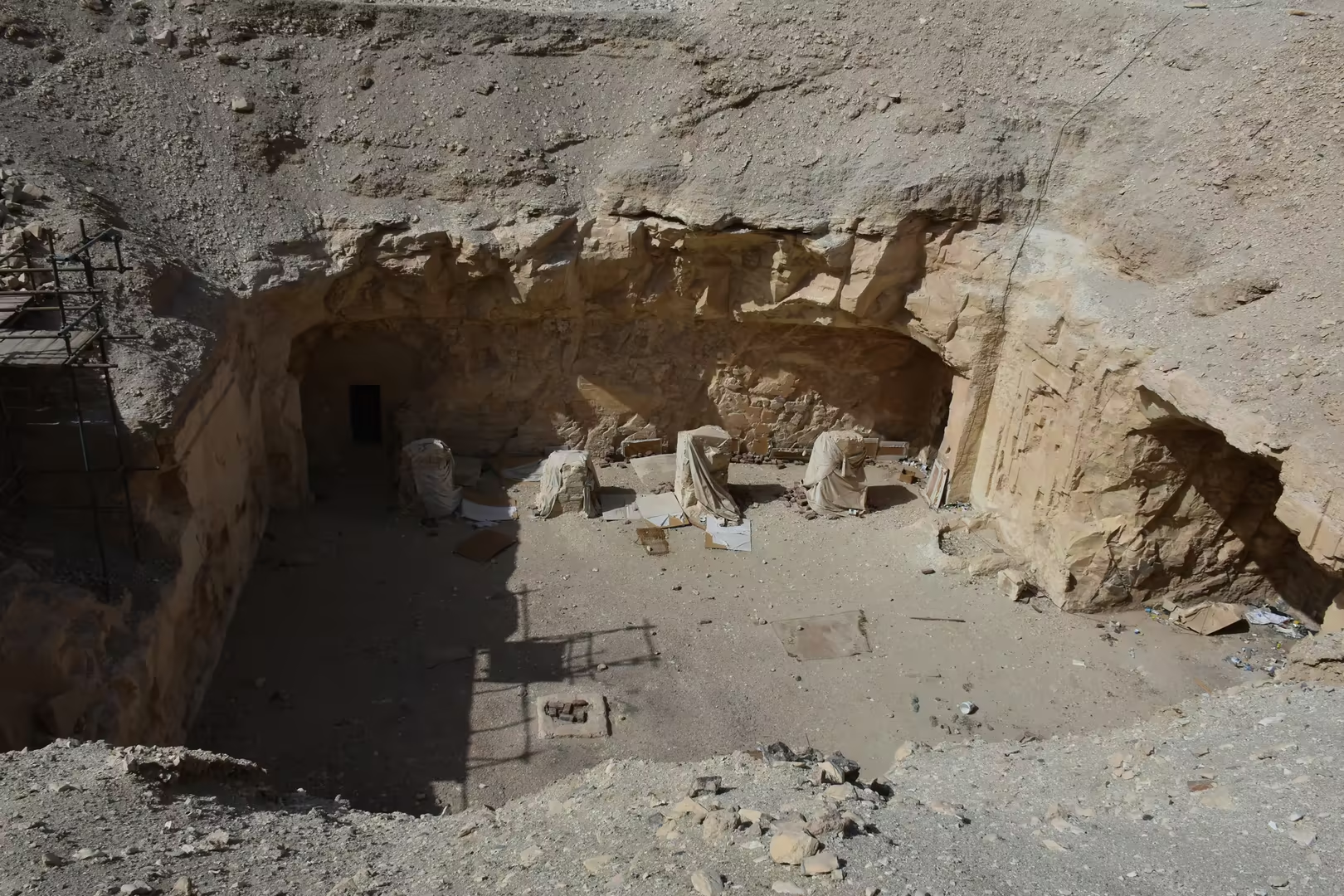
Immediately south of the Hatshepsut temple stands the older terraced temple of Mentuhotep II of the Eleventh Dynasty, whose colonnades and ramps provided the direct model for the later building. Around the two temples the bay opens onto the surrounding necropolis: the slopes of the facing hills are honeycombed with the entrances of rock-cut tombs, the low domes and crumbling arches of mud-brick tombs and old village houses rise from the plain, and open excavations in the neighbouring Asasif continue to expose the cemetery ground. Beyond the ridge to the west, out of sight from the terraces, lies the Valley of the Kings.
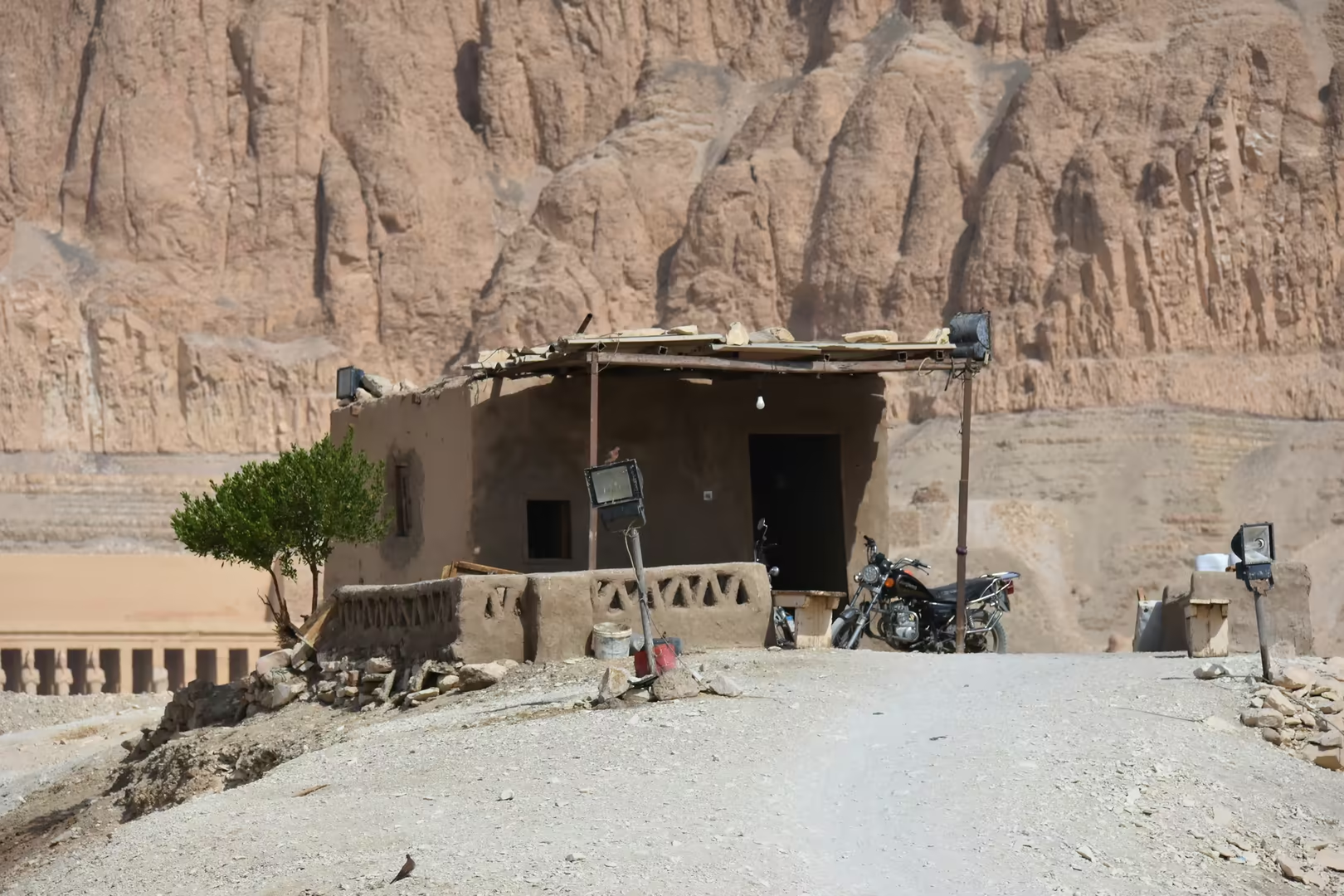
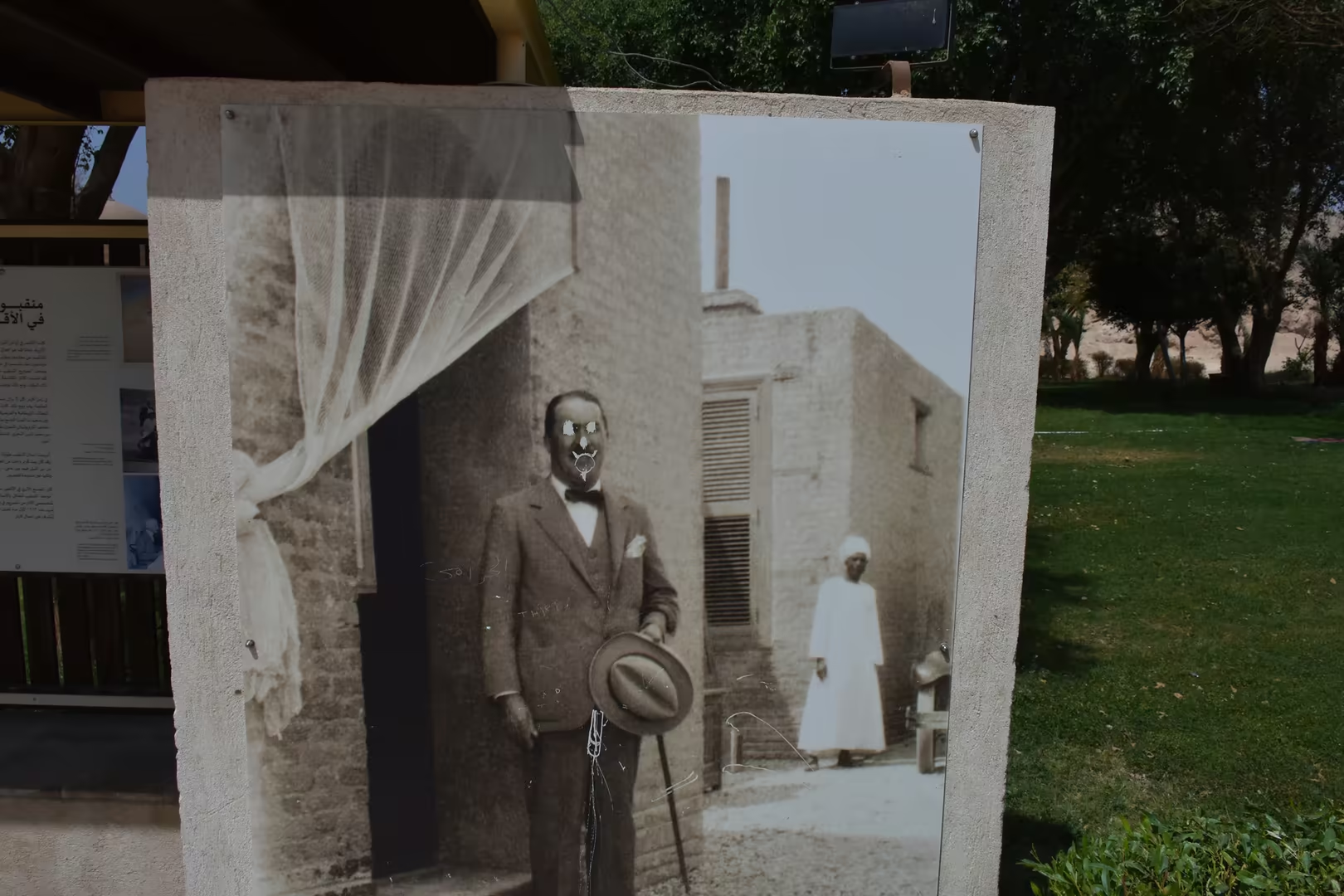
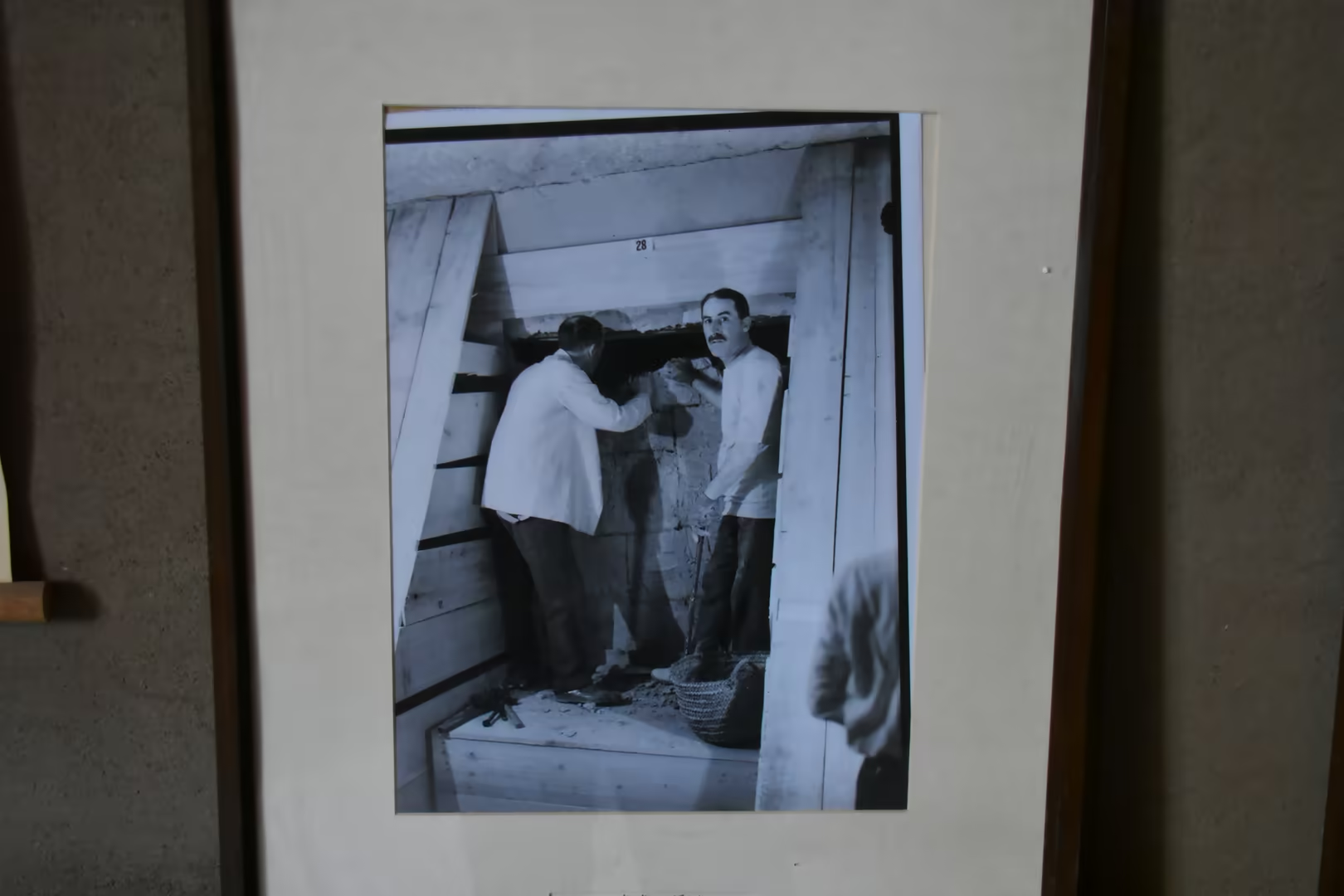
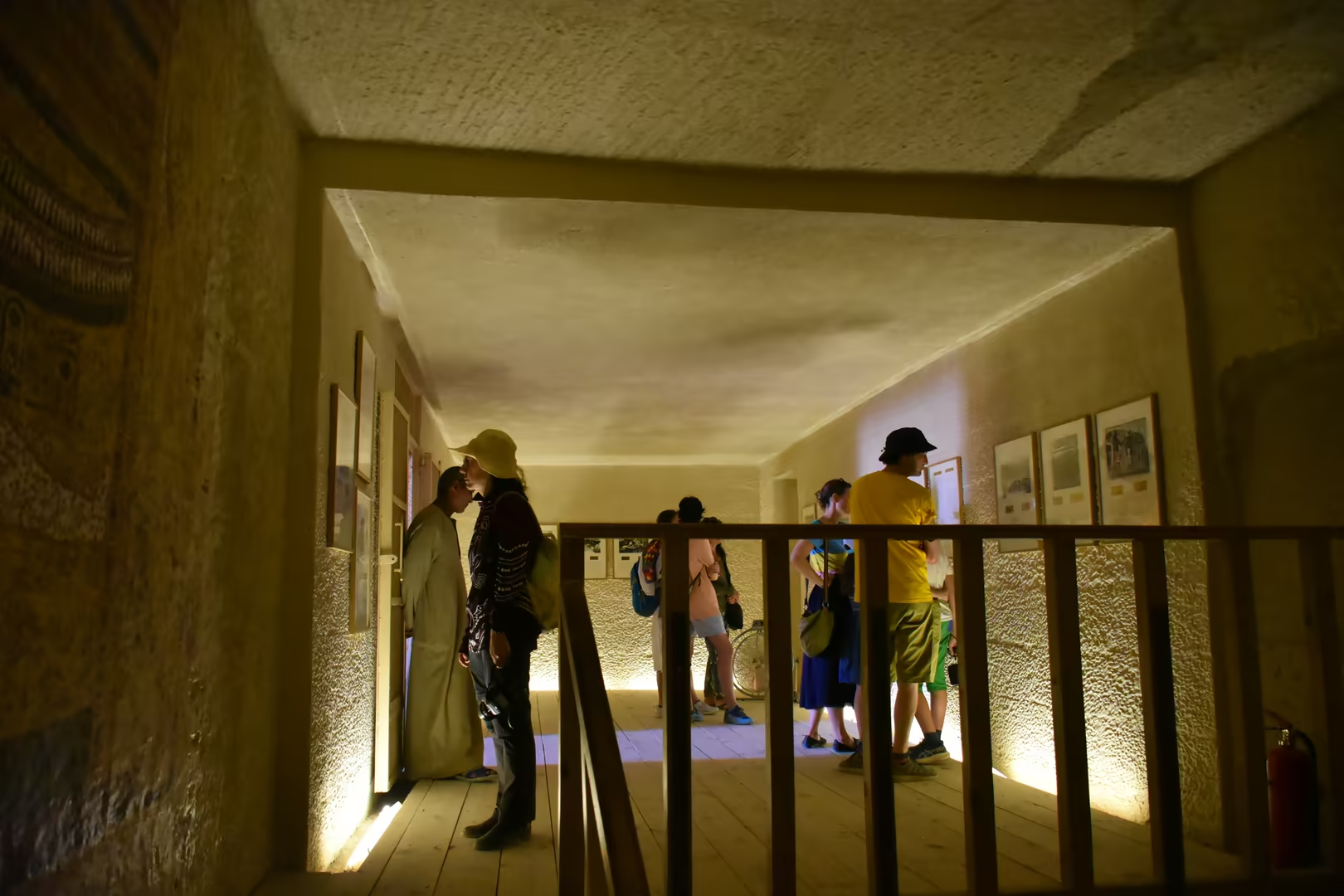
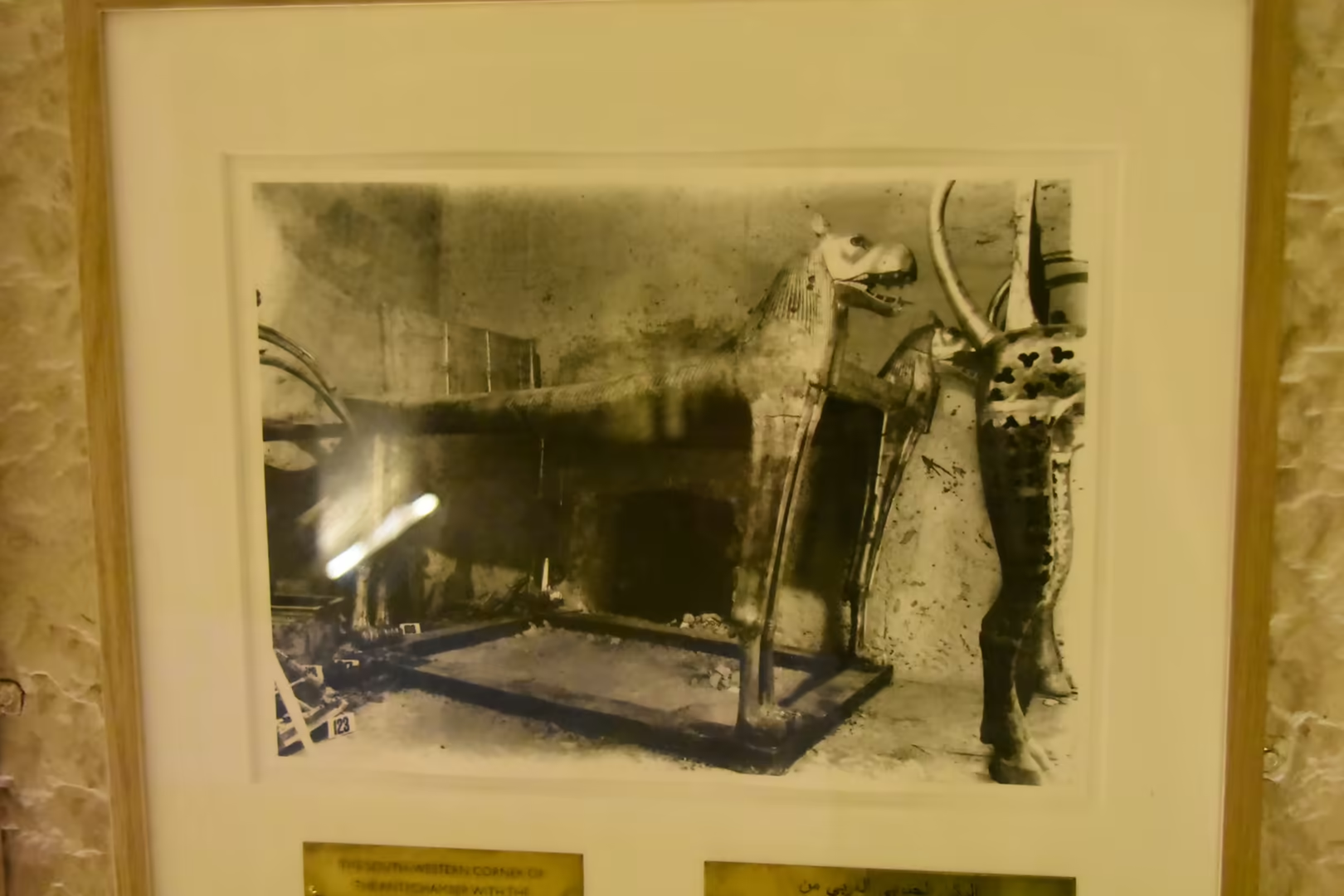
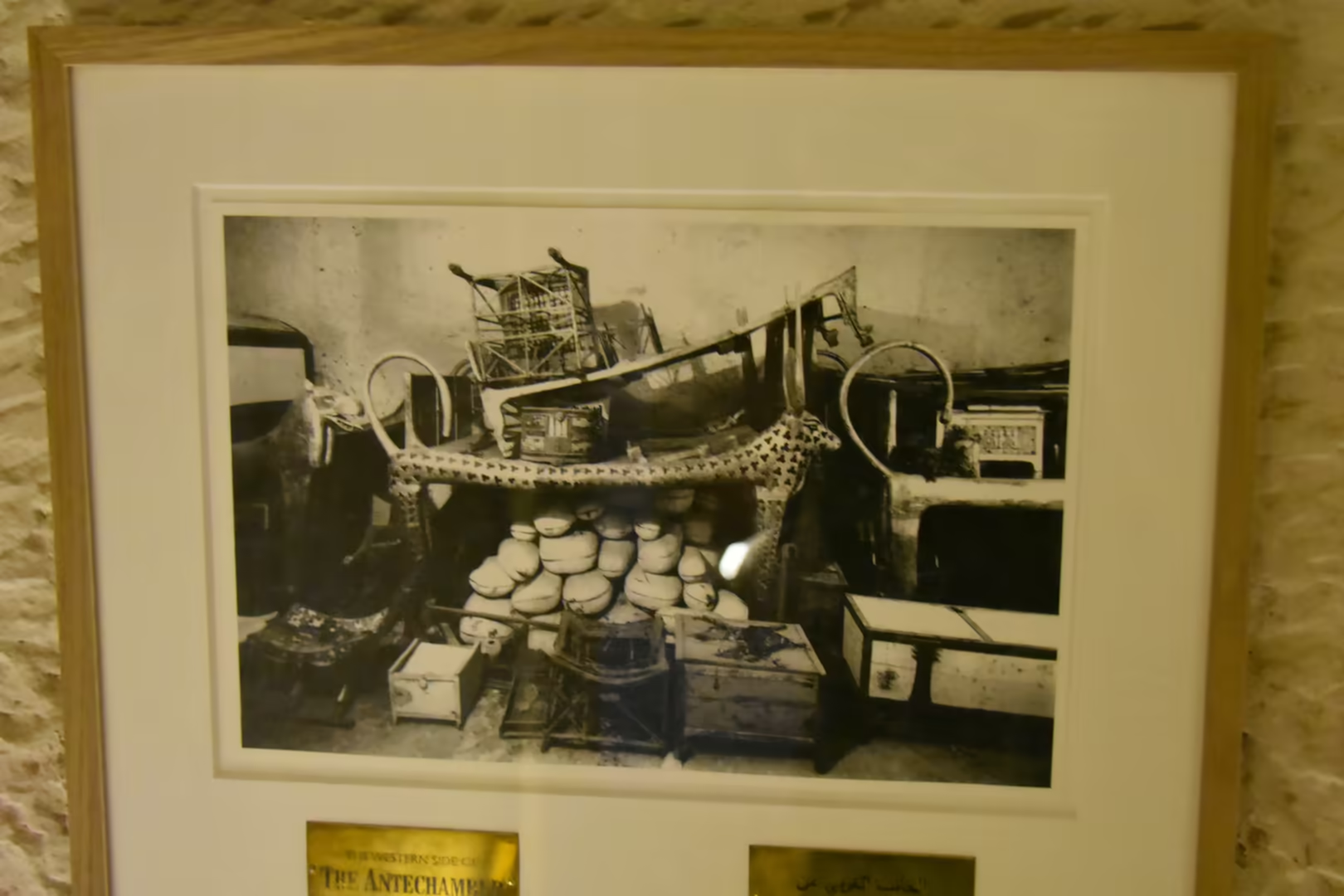
At the edge of the cultivation, a short distance from the temple, stands the restored expedition house of Howard Carter, where the discoverer of the tomb of Tutankhamun lived during his seasons of excavation in the 1920s. The interior is arranged as a museum of the discovery: the study preserves its desk, typewriter and the map of the Qurna district, and wall displays recall the excavation of KV62, from Lord Carnarvon at rest and Mace and Callender at work over a golden object to the antechamber heaped with treasure, the gilded shrine of Anubis with its guardian jackal, the dismantled chariots and the king’s mummy in its opened coffin. A memorial plaque outside the house honours Carter himself.
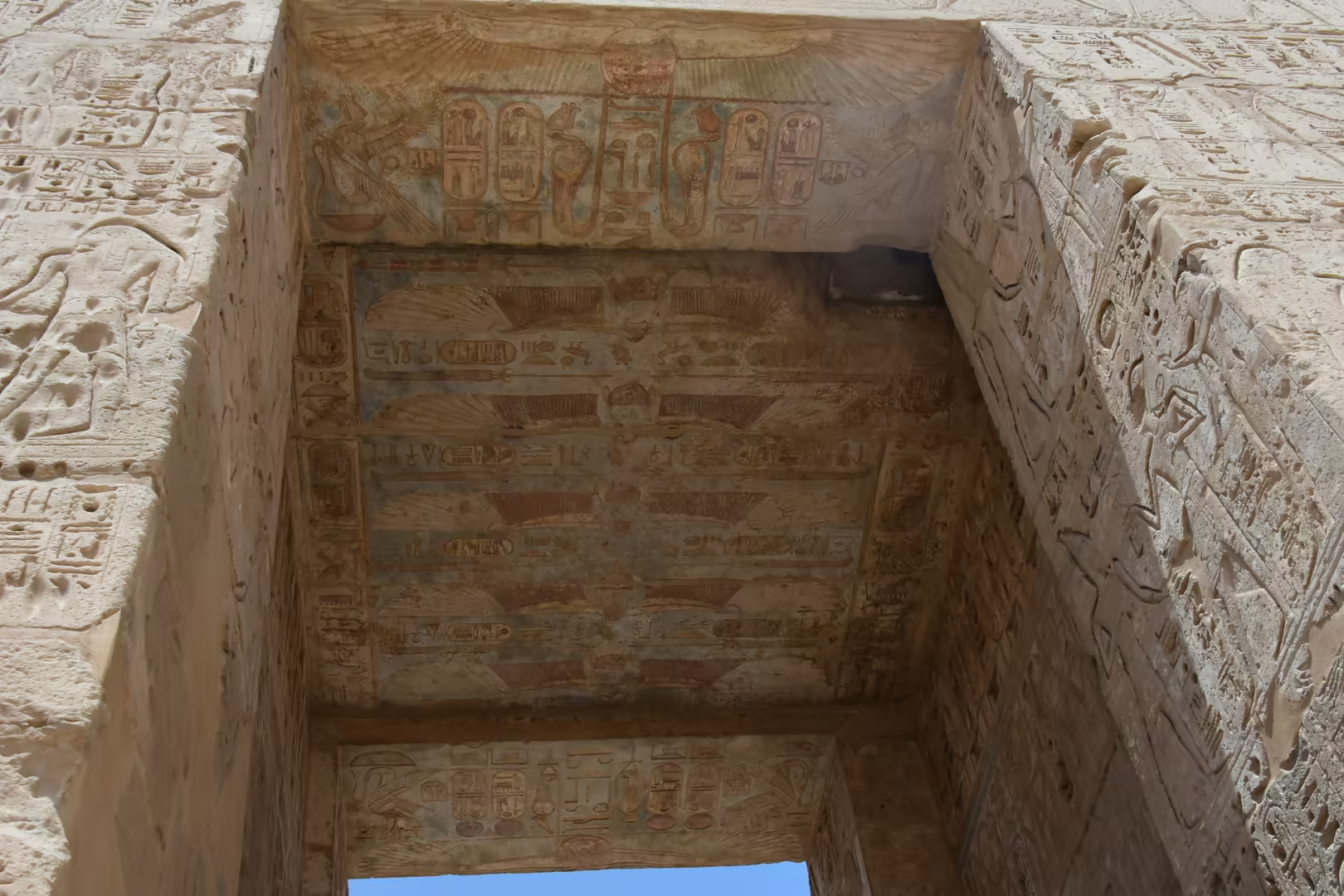
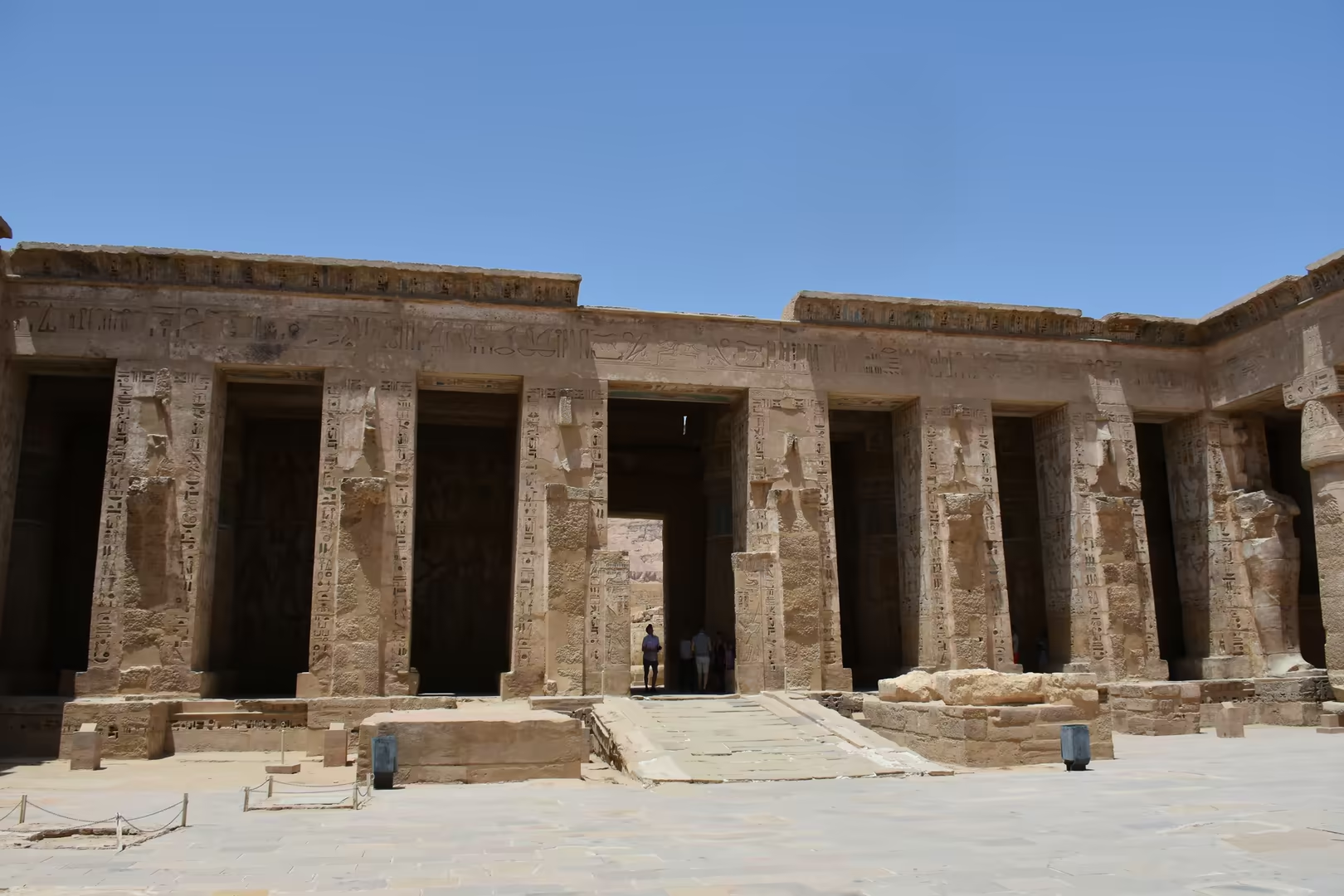
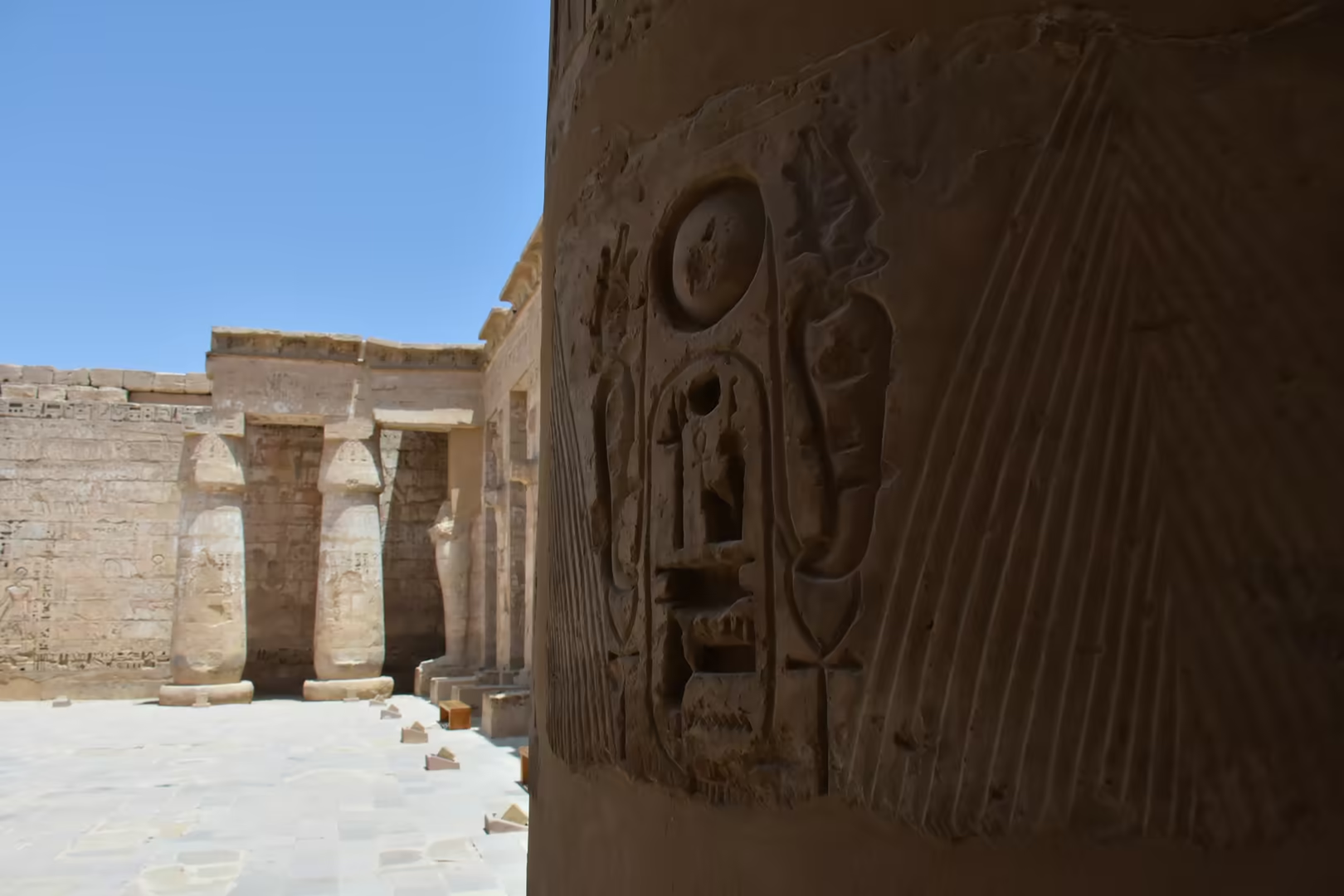
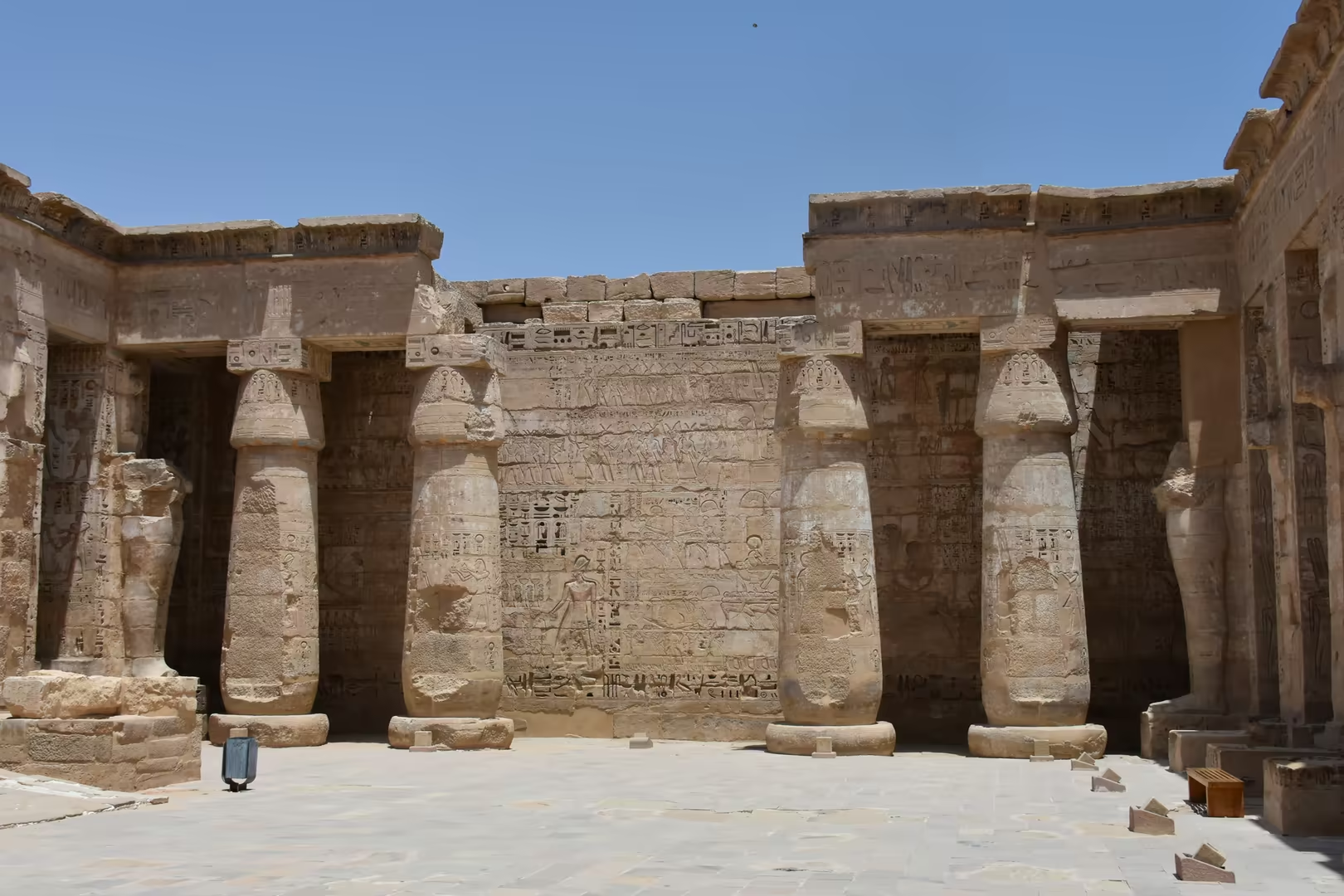
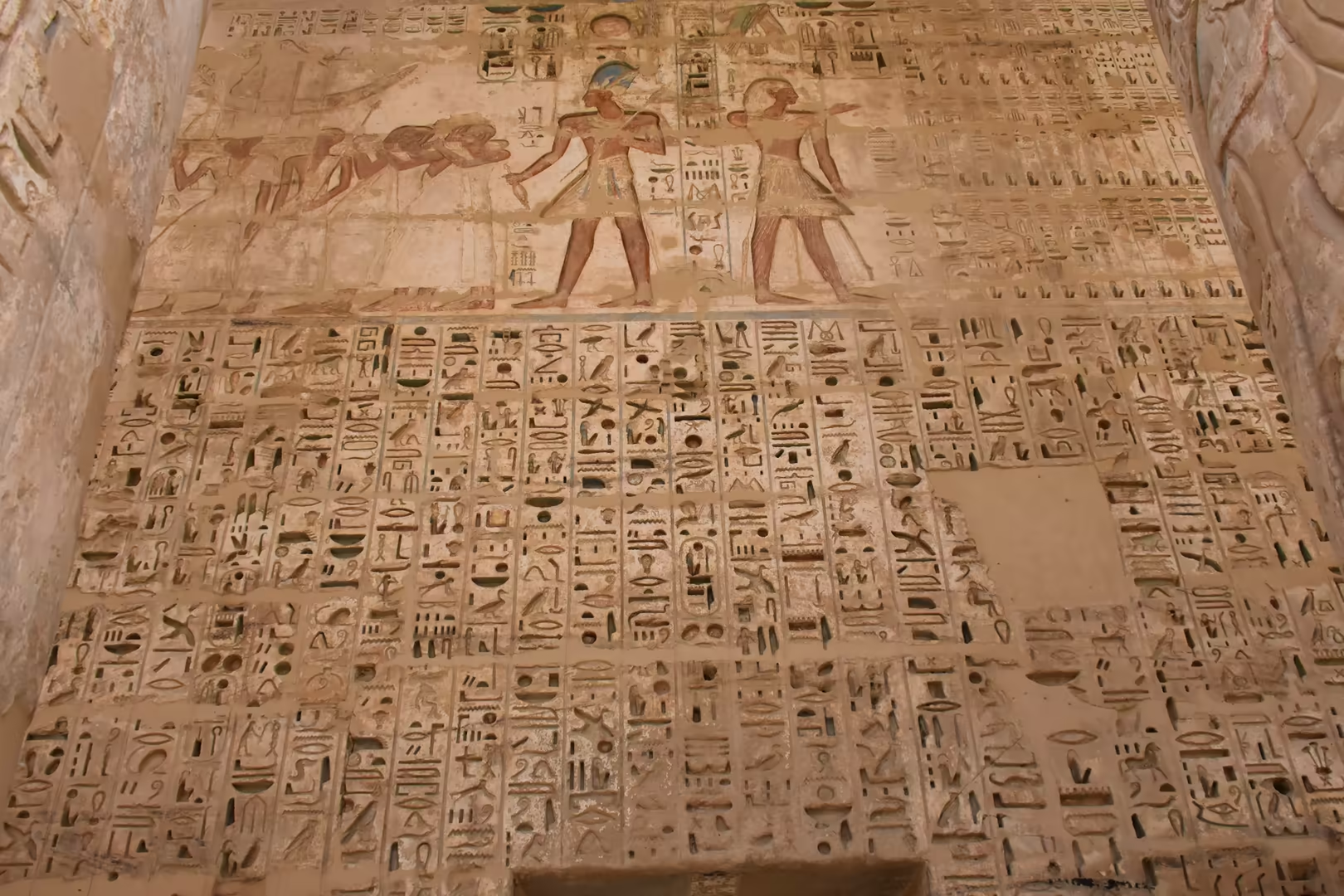
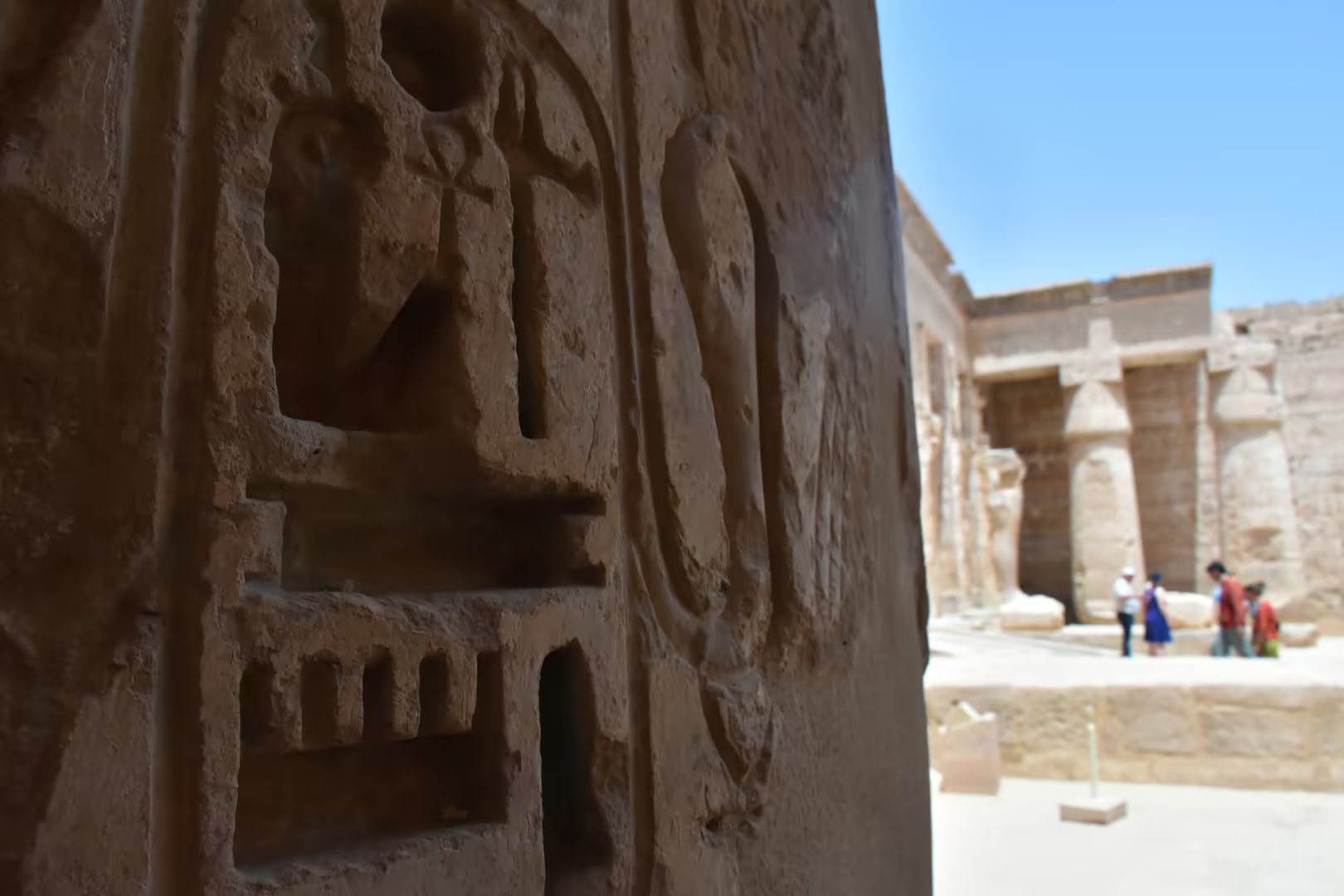
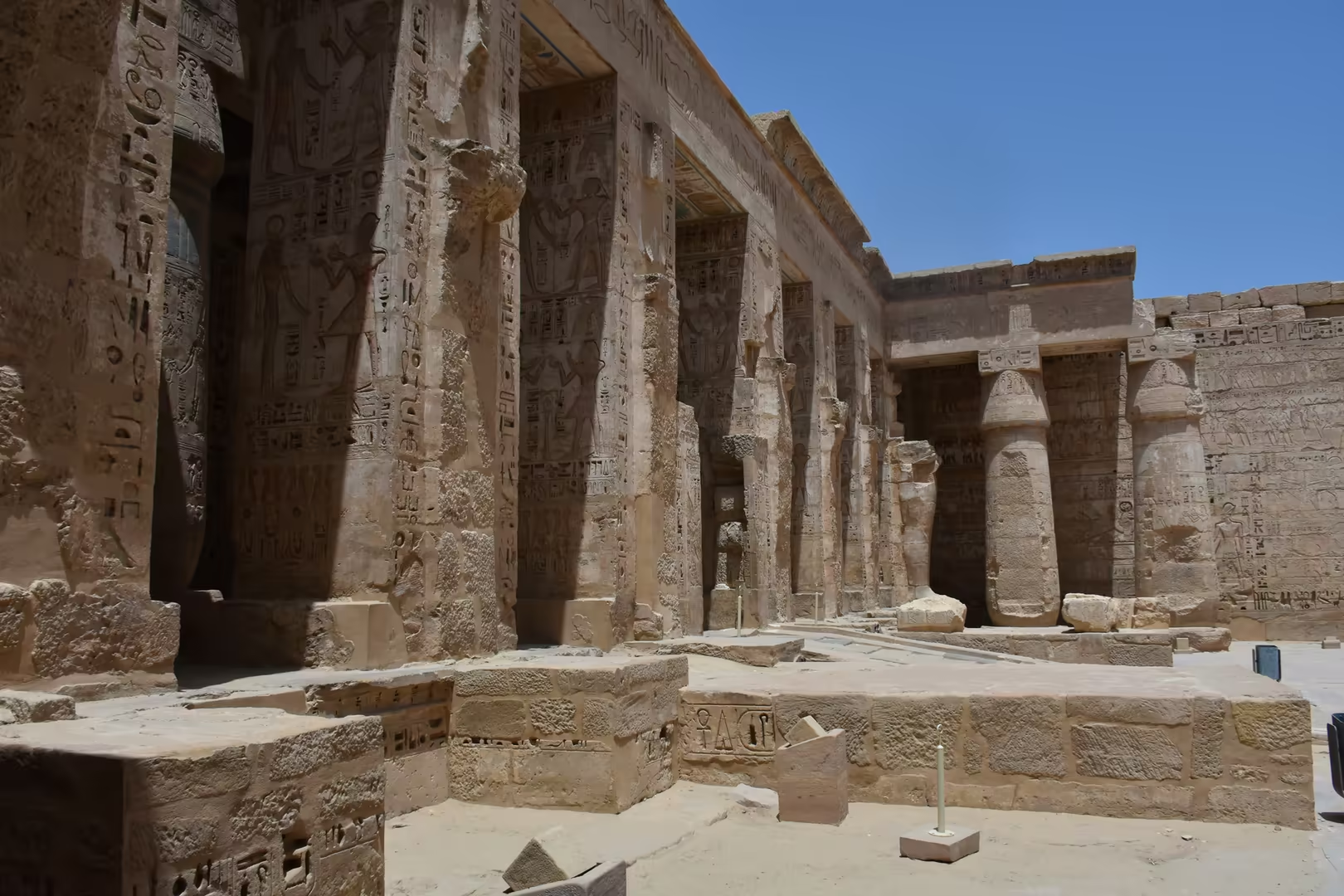
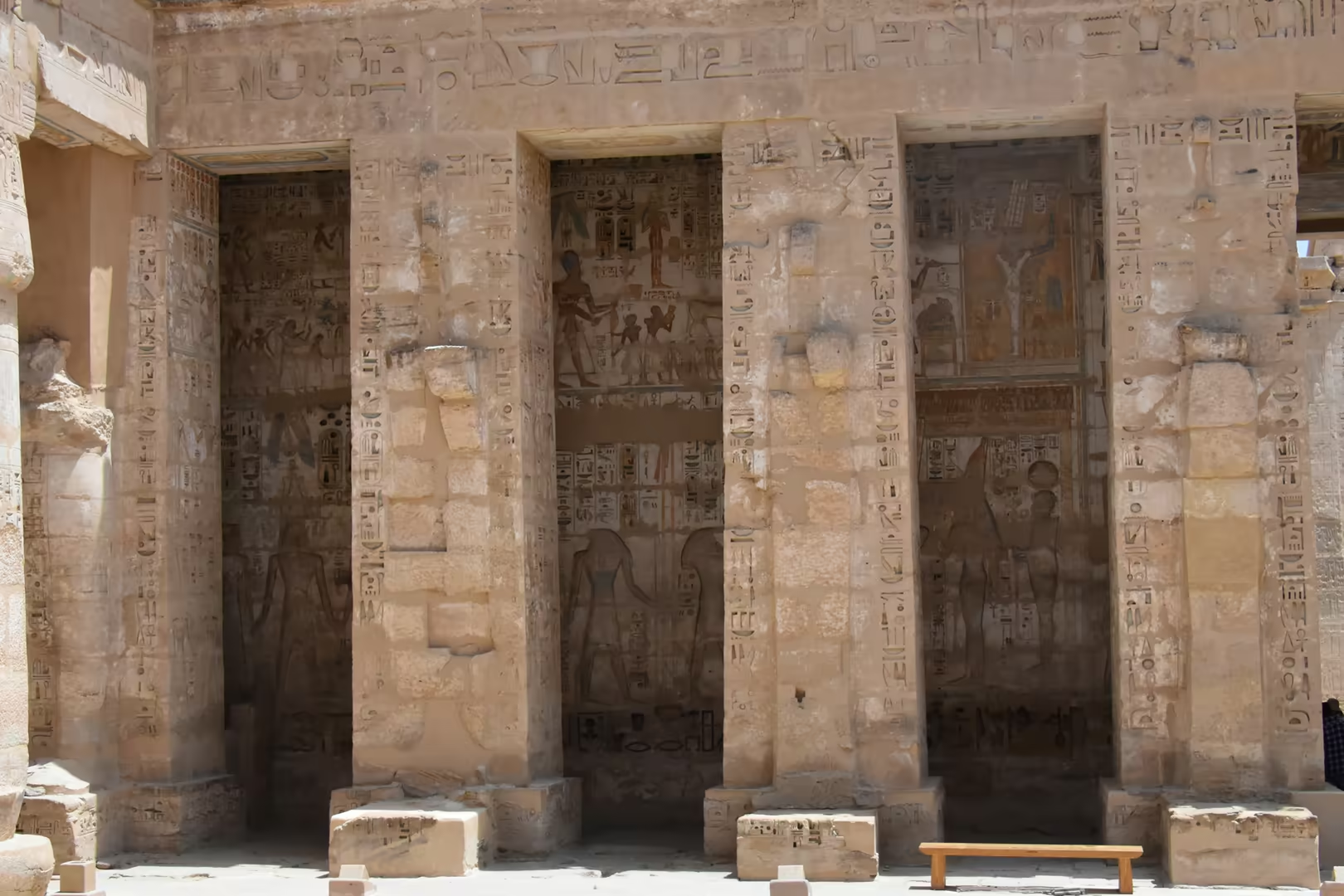
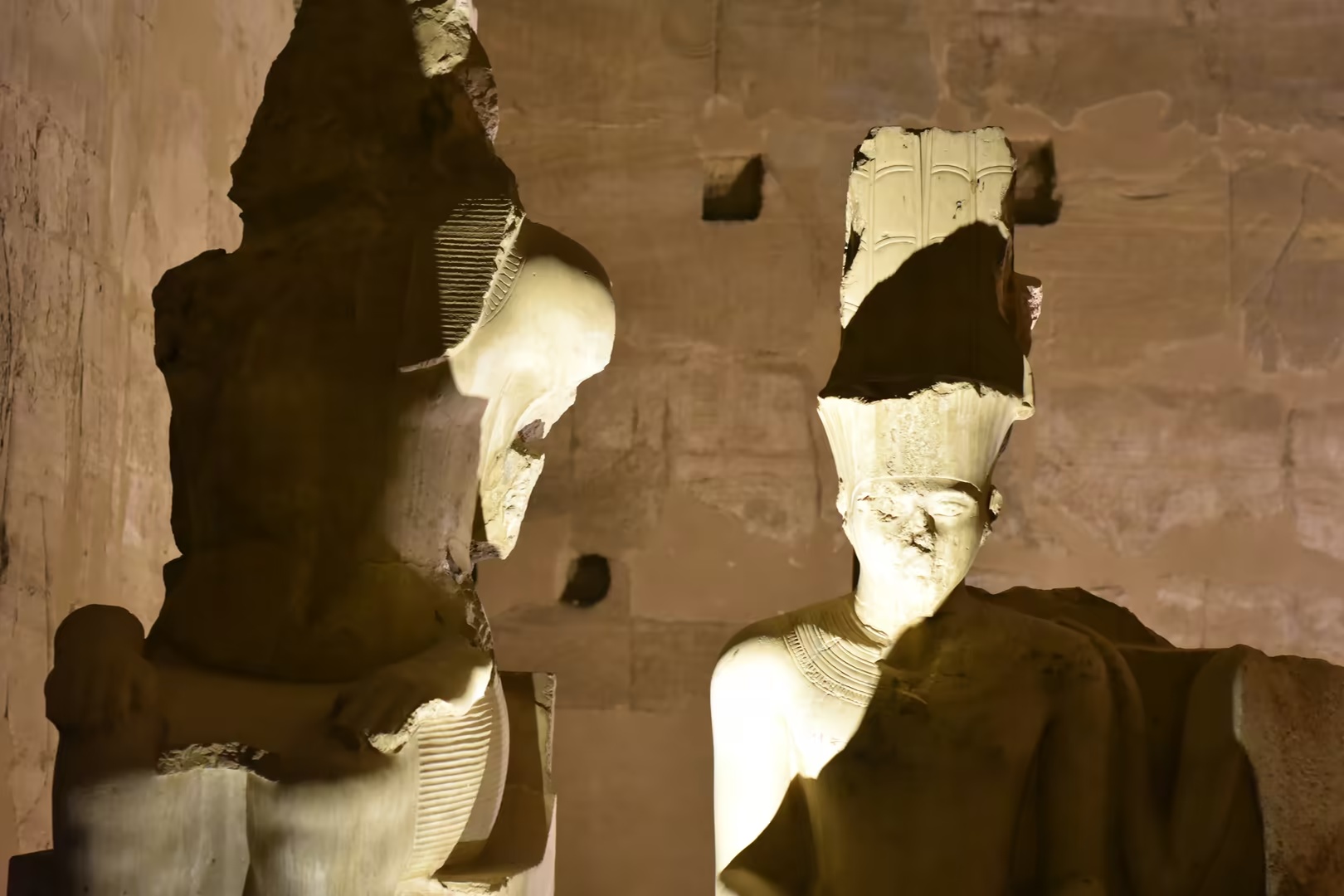
Further south along the desert edge stands the ruined memorial temple of Ramesses II, the Ramesseum. Its sandstone pylon still towers above the plain; the courts are lined with colossal Osiride statues of the king and ranks of columns, and the great hypostyle hall preserves papyrus columns bearing painted figures of the king before the gods, with traces of a starred blue ceiling. A seated figure of the lion-headed goddess Sekhmet keeps its place among the ruins, and the walls carry the battle and smiting scenes of royal propaganda in deep sunken relief, faded but legible.
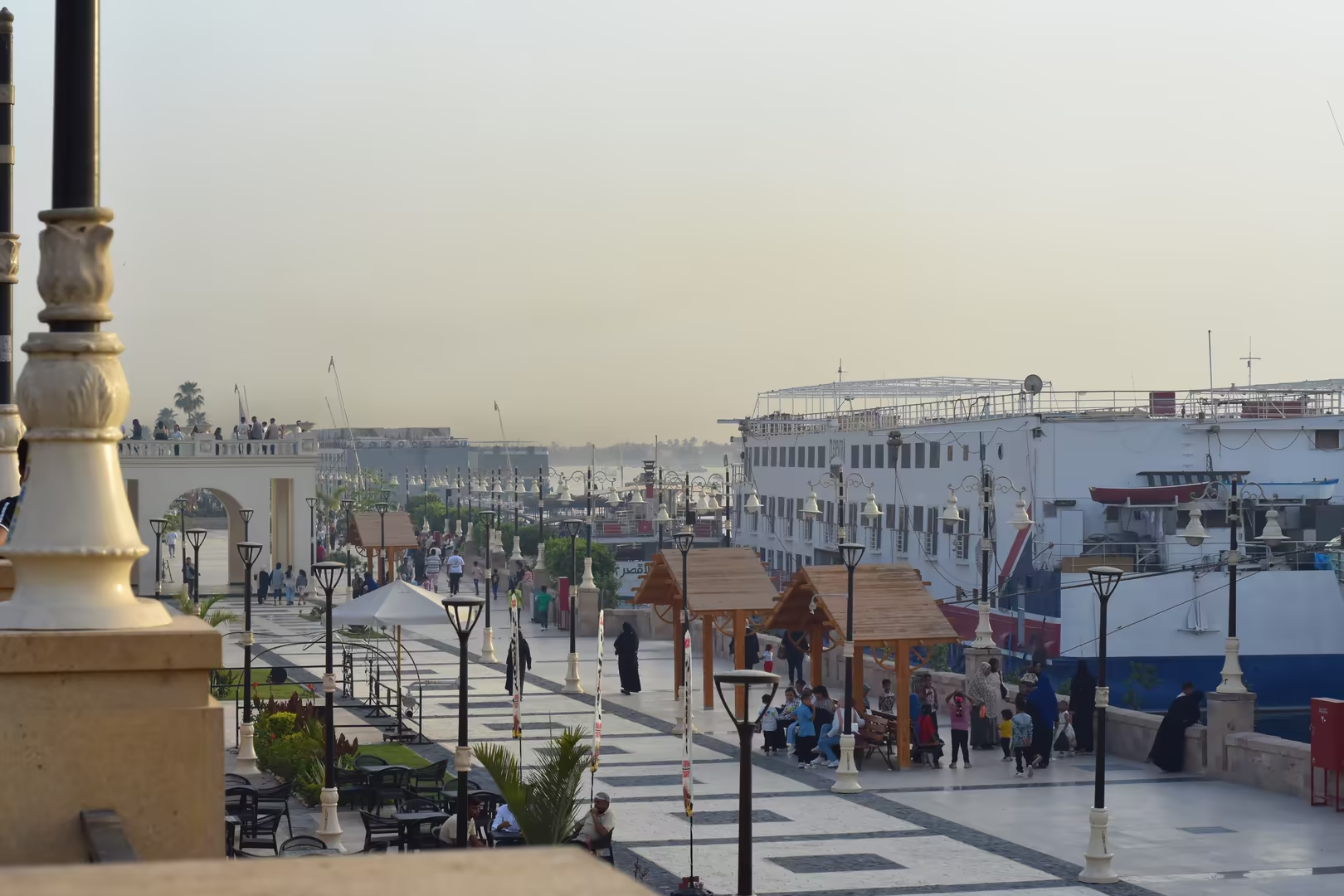
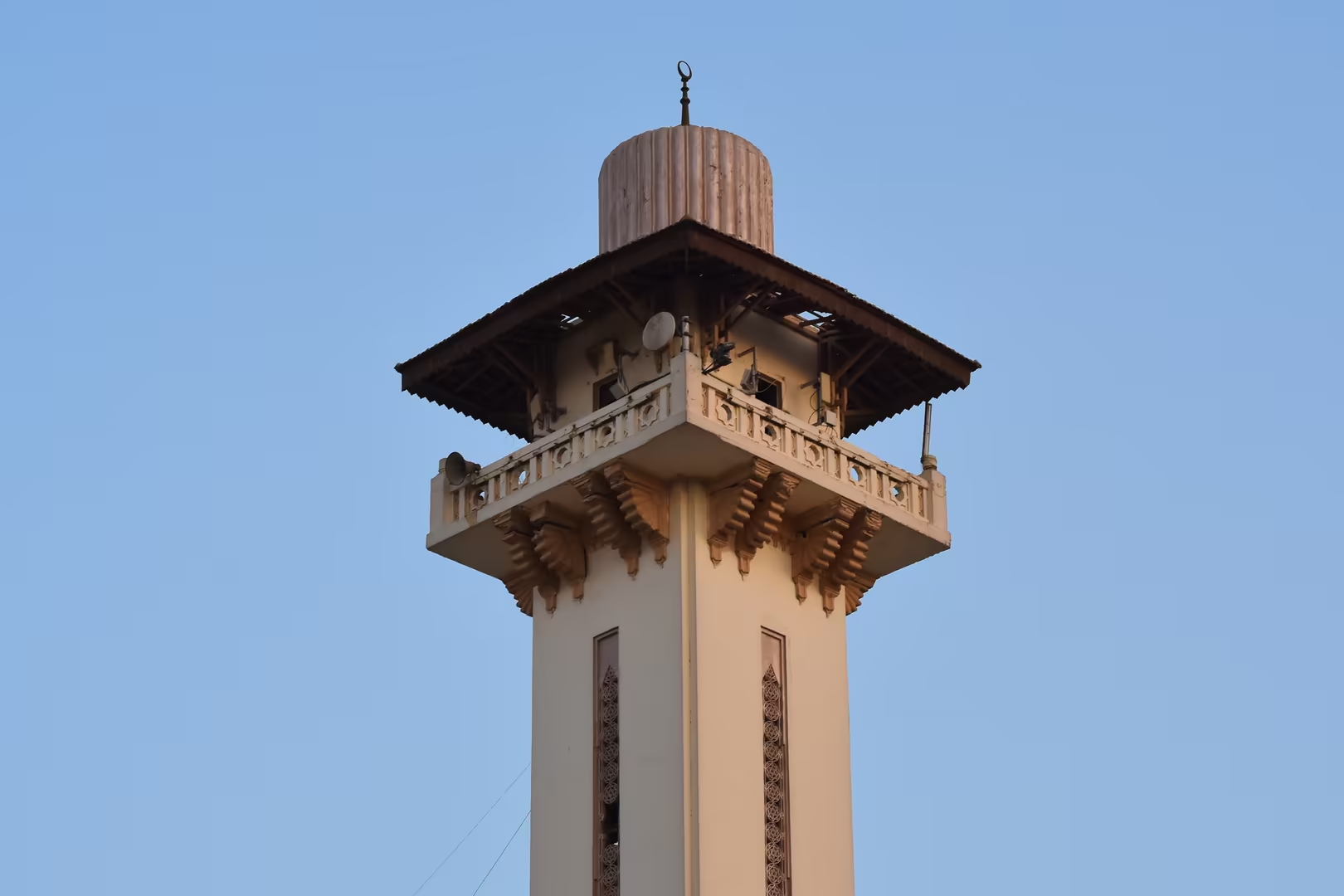
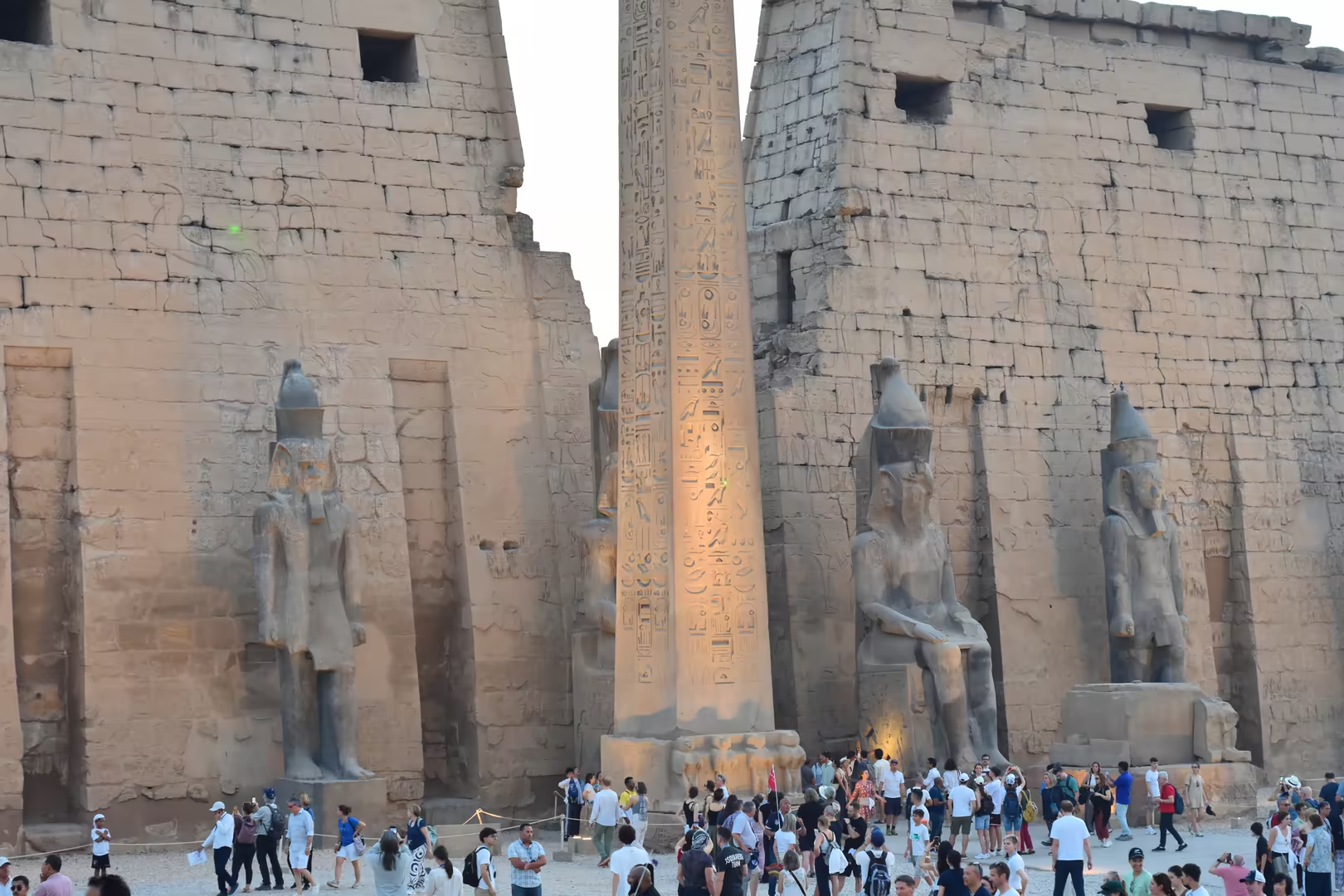
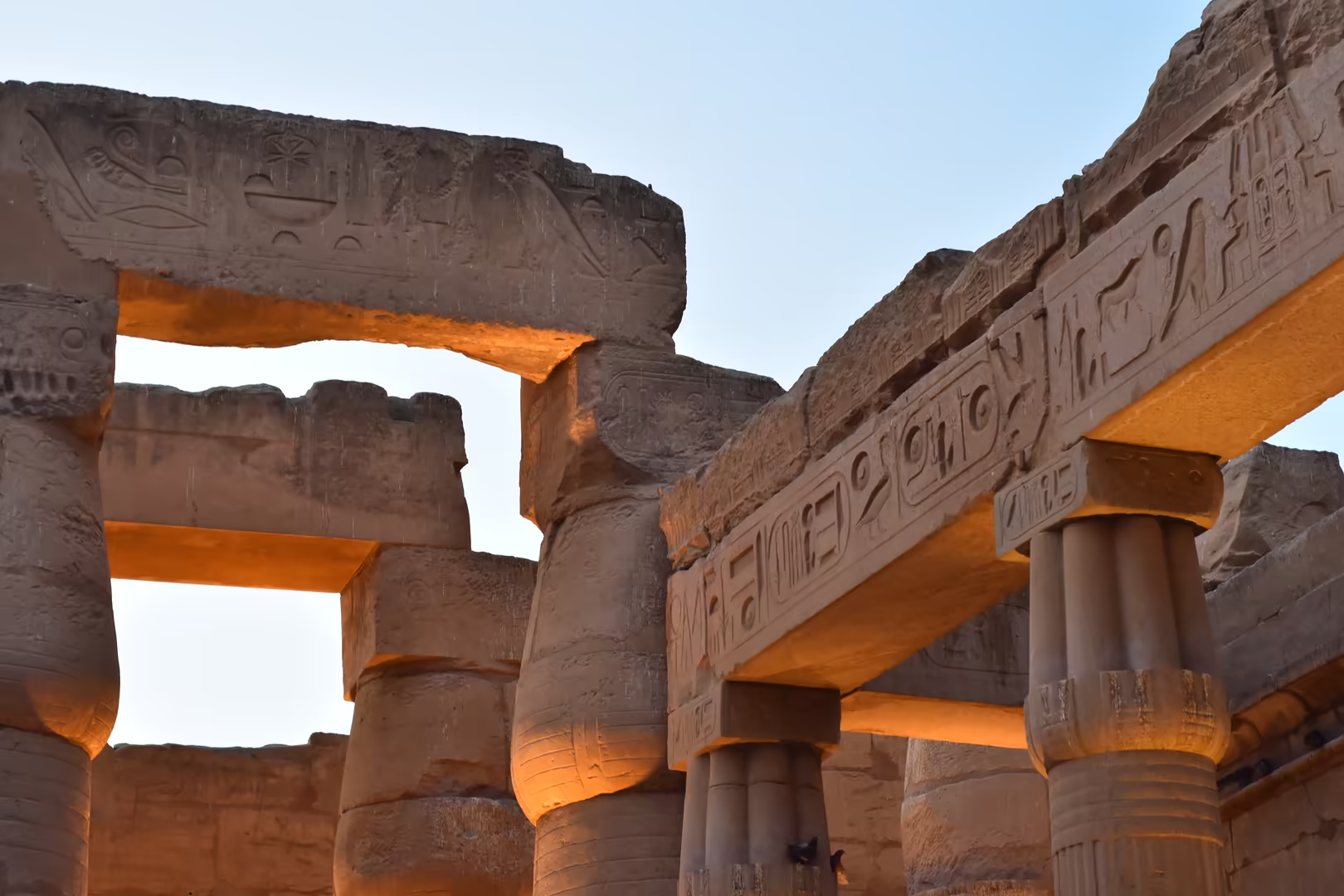
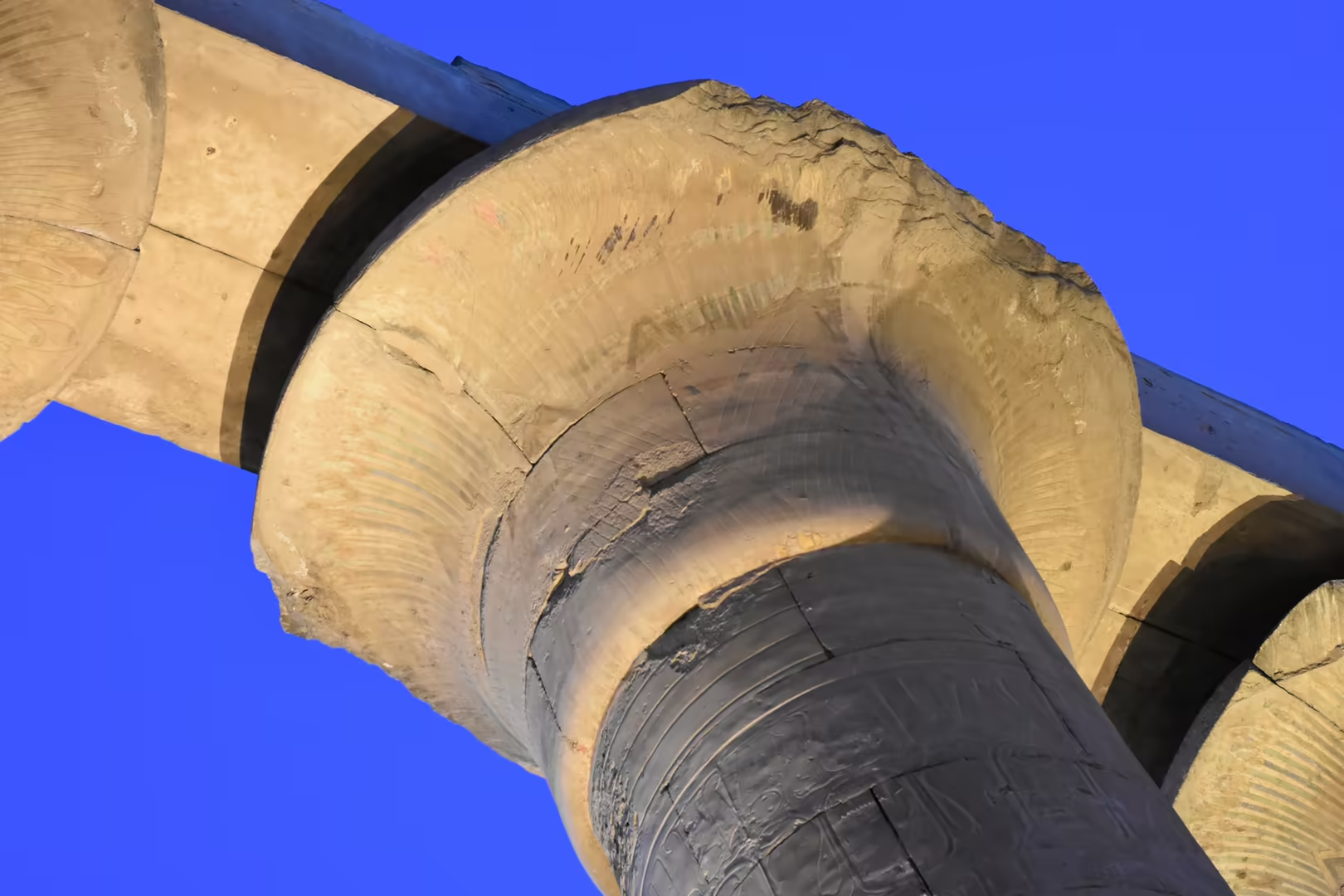
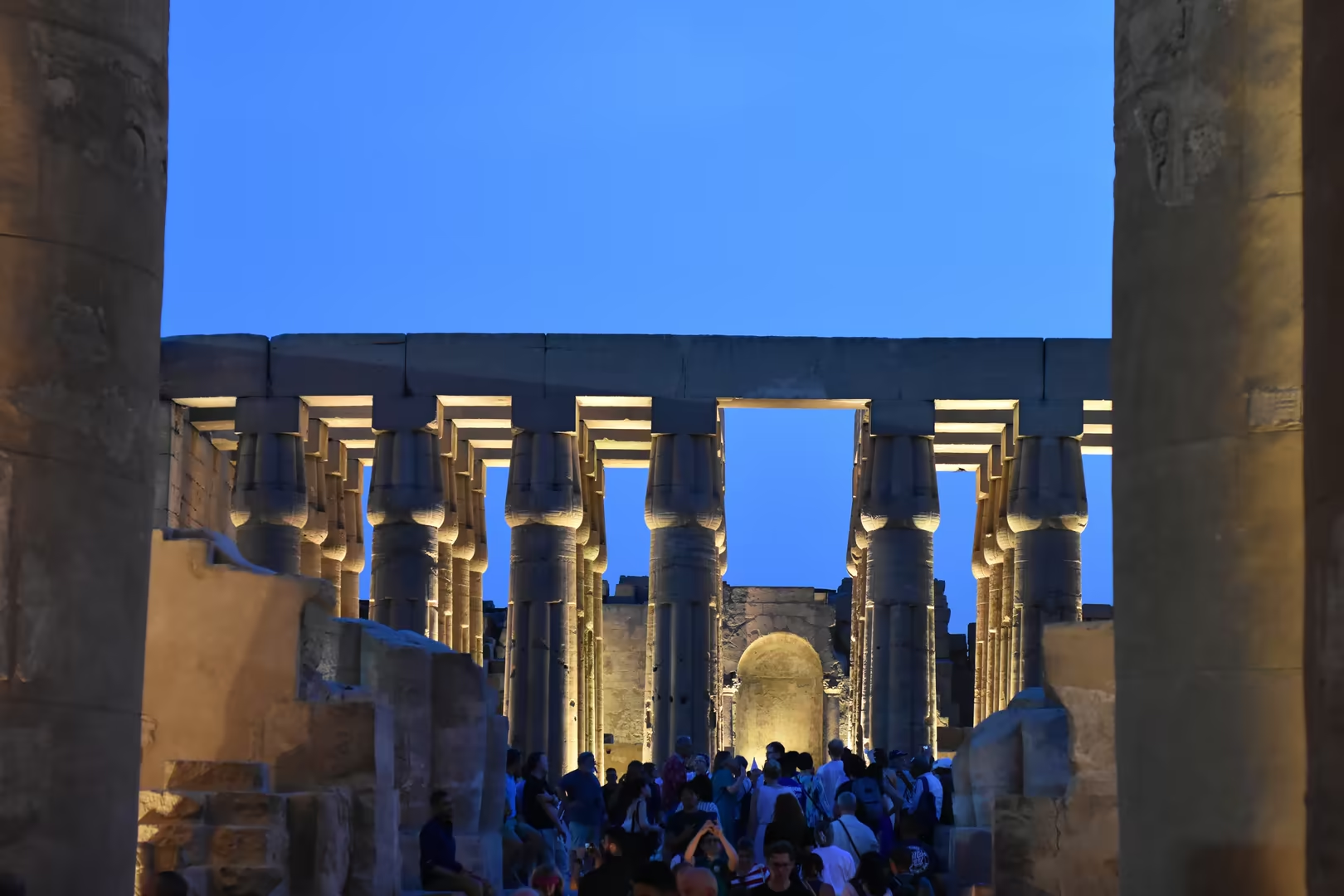
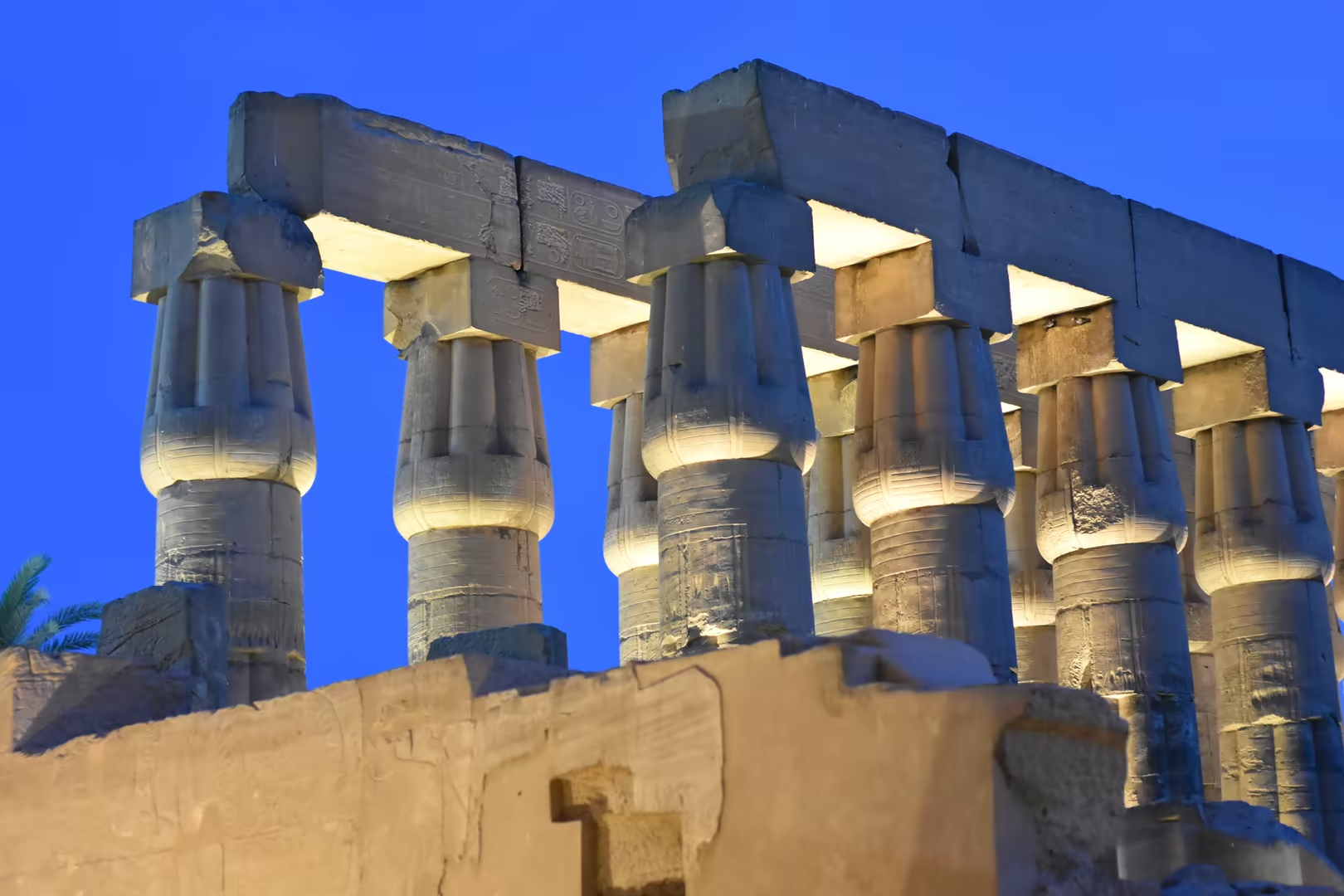
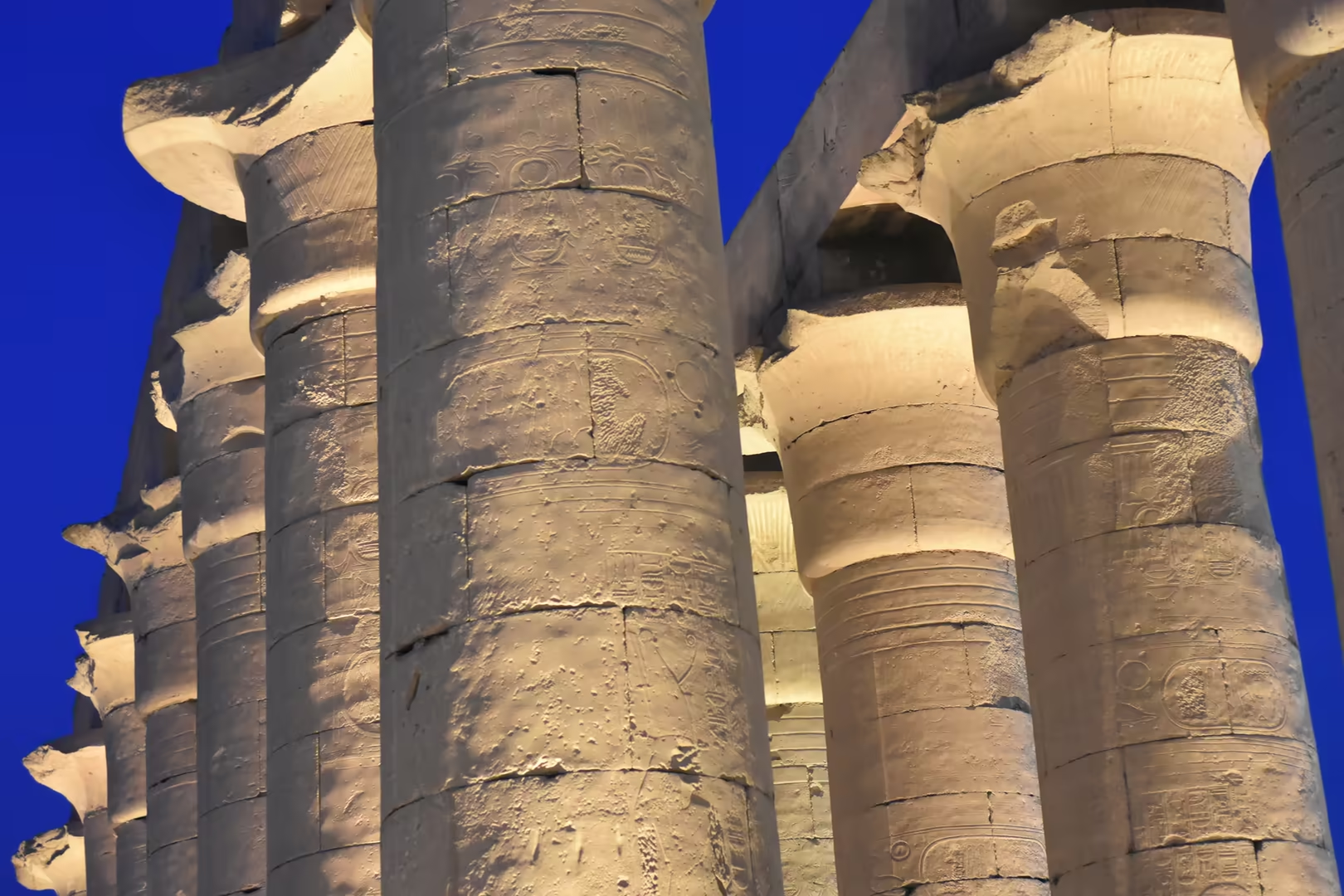
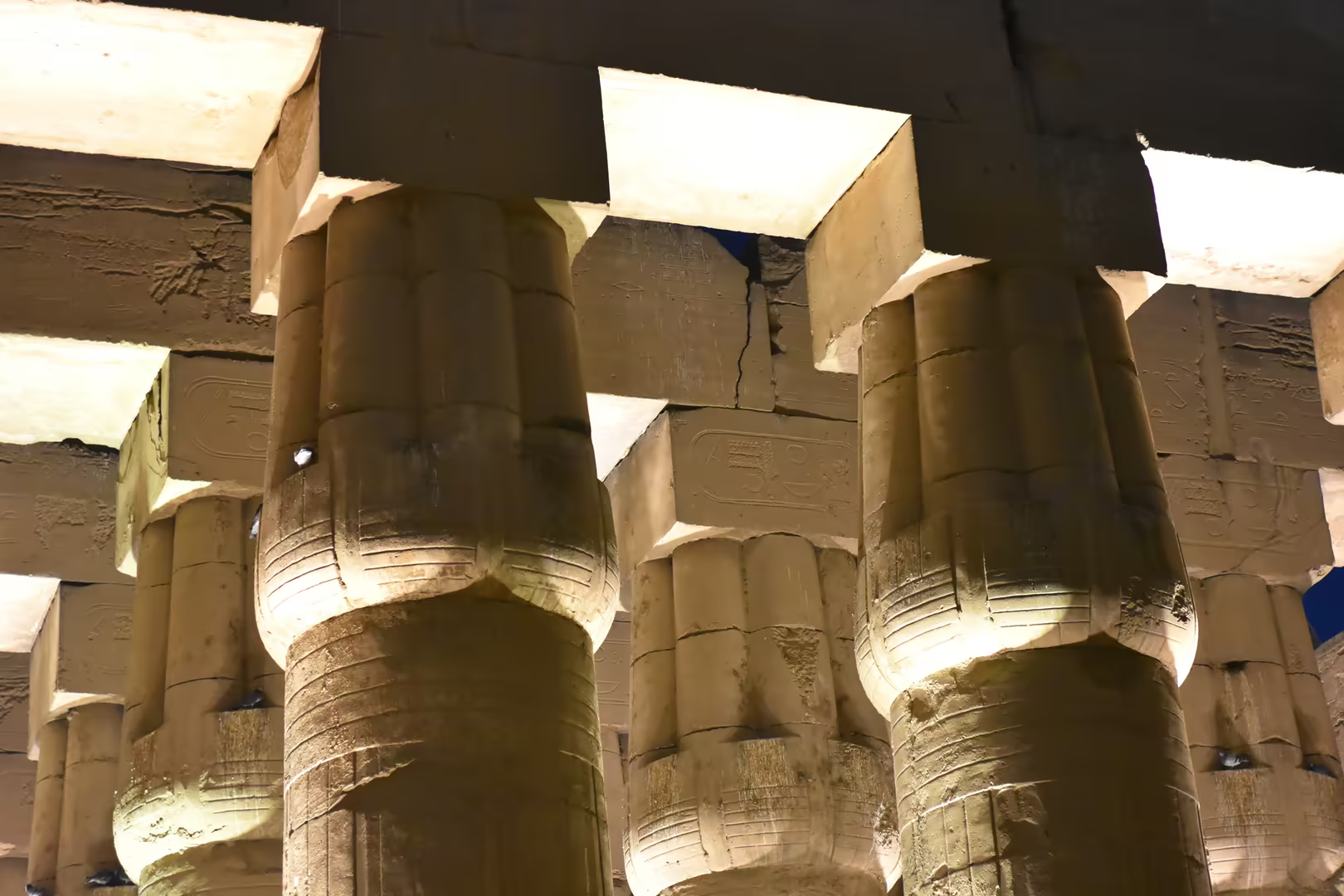
On the east bank of the Nile, the temple of Luxor, raised by Amenhotep III and enlarged by Ramesses II, stands within the modern town, its front approached by a restored avenue of sphinxes; the medieval mosque of Abu el-Haggag rises among the ancient walls, and an obelisk and colossal seated statues of the king stand before the first pylon. The riverside promenade of the town runs past moored cruise boats below the hotels, and after dark the floodlights pick out the columned courts and statues of the temple against the night sky.
References
- Arnold, D. (1991). Building in Egypt: Pharaonic Stone Masonry. New York: Oxford University Press.
- Naville, É. (1894-1908). The Temple of Deir el Bahari. 7 vols. London: Egypt Exploration Fund.
- Roehrig, C. H., Dreyfus, R., & Keller, C. A. (eds) (2005). Hatshepsut: From Queen to Pharaoh. New York: The Metropolitan Museum of Art.
- Said, R. (1990). The Geology of Egypt. Rotterdam: A. A. Balkema.
- UNESCO World Heritage Centre (1979). Ancient Thebes with its Necropolis. World Heritage List, ref. 87. whc.unesco.org/en/list/87/
- Polish Centre of Mediterranean Archaeology, University of Warsaw (2021). Geological appraisal of the Theban cliff overhanging the Hatshepsut Temple at Deir el-Bahari. Polish Archaeology in the Mediterranean, vol. 30. pam-journal.pl/en/issues/30-vol-30-issue-1-special-issue/geological-appraisal-of-the-theban-cliff-overhanging-the-hatshepsut-temple-at-deir-el-bahari
- Egyptian Ministry of Tourism and Antiquities (n.d.). Howard Carter House, West Bank, Luxor (online monument dossier). egymonuments.gov.eg/en/monuments/haward-carter-and-his-house-at-thebes/
- Wikipedia contributors (2026). Mortuary temple of Hatshepsut. en.wikipedia.org/wiki/Mortuary_temple_of_Hatshepsut
- Wikipedia contributors (2026). Deir el-Bahari. en.wikipedia.org/wiki/Deir_el-Bahari
- Wikipedia contributors (2026). Hatshepsut. en.wikipedia.org/wiki/Hatshepsut
- Wikipedia contributors (2026). Senenmut. en.wikipedia.org/wiki/Senenmut
- Wikipedia contributors (2026). Land of Punt. en.wikipedia.org/wiki/Land_of_Punt
- Wikipedia contributors (2026). Mentuhotep II. en.wikipedia.org/wiki/Mentuhotep_II
- Wikipedia contributors (2026). El Qurn. en.wikipedia.org/wiki/El_Qurn
- Wikipedia contributors (2026). Valley of the Kings. en.wikipedia.org/wiki/Valley_of_the_Kings
- Wikipedia contributors (2026). Ramesseum. en.wikipedia.org/wiki/Ramesseum
- Wikipedia contributors (2026). Luxor Temple. en.wikipedia.org/wiki/Luxor_Temple