Stage 11 of 19
Day 12 - Abu Simbel



































Journal Notes
General
Abu Simbel is the name given to two rock-cut temples of Ramesses II on the western bank of Lake Nasser in the Aswan Governorate of Upper Egypt, some 230 kilometres south-west of Aswan and about 300 by road, close to the frontier with Sudan. The site stands at latitude 22°20′N, roughly 120 kilometres south of the Tropic of Cancer, in Lower Nubia, the ancient border zone between Lower and Upper Nubia near the Second Cataract. Until the 1960s the temples faced the river Nile; today the river here is the reservoir of the Aswan High Dam and the monuments look out over the open water of Lake Nasser.
The complex comprises two temples hewn from the solid sandstone cliff in the thirteenth century BC, in the Nineteenth Dynasty. The Great Temple was dedicated to the state gods Amun-Ra, Ra-Horakhty and Ptah and to the deified Ramesses himself, its facade guarded by four seated colossi of the king, each twenty metres high. A short distance away stands the Small Temple of the goddess Hathor and of the chief queen Nefertari, with six standing colossi of the royal couple more than ten metres high. The Egyptians knew the larger monument as the Temple of Ramesses, Beloved by Amun; it is generally accounted the grandest of the rock-cut temples of Nubia.
Between 1964 and 1968 the two temples were sawn into 1,036 numbered blocks and re-erected on an artificial hill above the rising lake, 65 metres higher than their original level and roughly 200 metres inland, as part of the UNESCO-led International Campaign to Save the Monuments of Nubia. In 1979 they were inscribed on the World Heritage List as the serial property Nubian Monuments from Abu Simbel to Philae (ref. 88, criteria i, iii and vi), which unites them with the other rescued sanctuaries of Lower Nubia, from Philae and Kalabsha to Amada and Wadi es-Sebua.
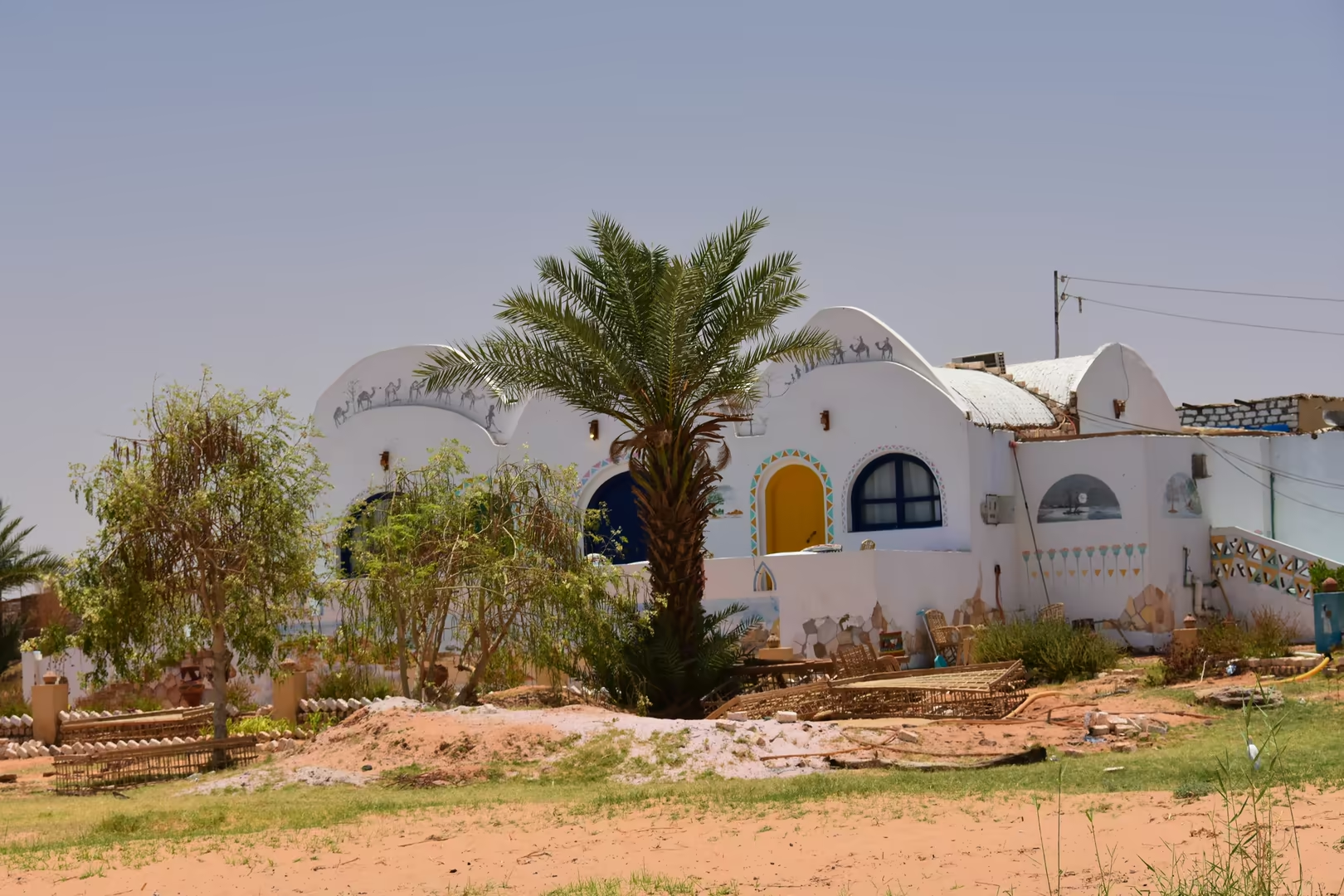
The site is reached from Aswan by the short flight to Abu Simbel Airport, two kilometres from the village, or by road across the desert, normally in police-escorted convoy. The climate is hot desert (BWh after Köppen): cloudless skies, intense dry heat and mild winters, the lake moderating the immediate shore. The modern village of Abu Simbel, rebuilt on the new shore in the 1960s when the reservoir rose, stands beside the monument area, its painted houses and palm gardens set between the desert and the lake.
History
Ramesses II (c. 1279-1213 BC), who reigned sixty-six years and outbuilt every pharaoh before him, raised his great Nubian temples to impress the might of Egypt upon a province rich in gold and to bind its people to the cult of the crown. Work at Abu Simbel began after the Battle of Kadesh (fought against the Hittites of Muwatalli II in the king’s fifth regnal year, generally dated to 1274 BC, and commemorated in the great relief cycle on the north wall of the Great Temple) and lasted about twenty years, the sanctuary completed around the twenty-fourth year of the reign. A stele on the facade recording the king’s marriage to a daughter of the Hittite ruler Hattusili III shows how long the site remained an instrument of royal policy.
With the decline of the New Kingdom the temples fell into disuse and the desert wind buried the Great Temple: by the sixth century BC the sand already reached the knees of its colossi, and for two millennia the monument was a mound of sand with heads protruding. European knowledge begins in March 1813, when the Swiss traveller Johann Ludwig Burckhardt found the Small Temple and the upper frieze of the Great Temple half-buried in the drift. Giovanni Belzoni, acting for the consul-general Henry Salt, cleared the sand in 1816-17 and entered the temple on 1 August 1817, the first recorded entry in modern times. Bankes’s party of 1819 excavated the colossi and drew the interior, drawings that later reached Champollion and aided the decipherment of hieroglyphs; Champollion himself spent two weeks copying the reliefs in November 1828. The nineteenth century then made the temples famous: the lithographs of David Roberts (1838), the first camera views of Maxime Du Camp (1850) and Francis Frith (1857), and Amelia Edwards, whose A Thousand Miles up the Nile (1877) first reported the illumination of the sanctuary by the rising sun.
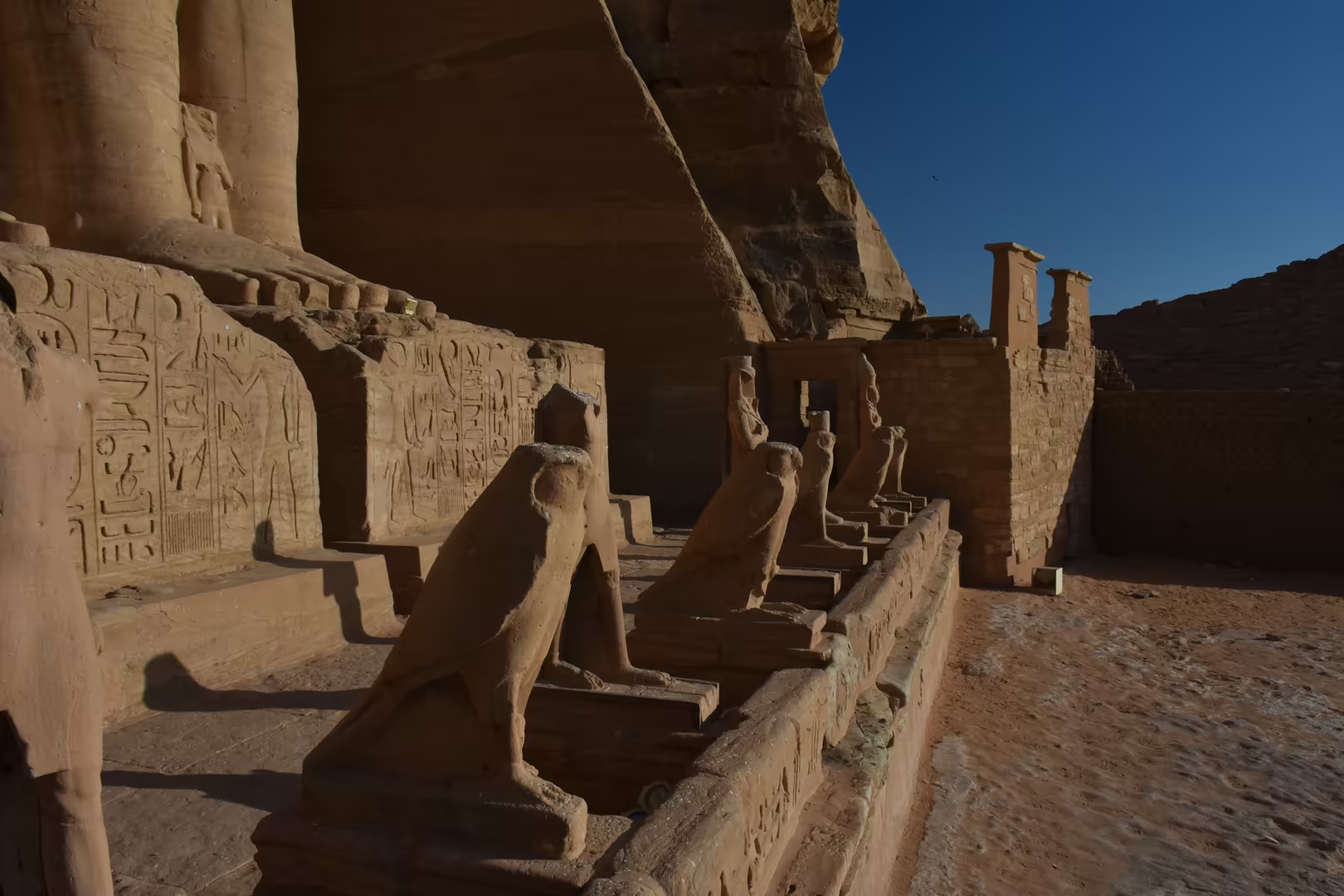
Conservation began early: in 1892-93 Royal Engineers removed some 850 tons of unstable rock overhanging the facade, and in 1909-10 Alessandro Barsanti cleared the great sand drift for good, uncovering the terrace row of statues of the king alternating with the falcon of the sun and stabilising the cracked colossi. The second rescue was forced by the Aswan High Dam, built 1960-1970: the reservoir would flood 479 kilometres of the valley and raise the water at Abu Simbel by up to 60 metres, and the porous sandstone loses its strength when waterlogged. In 1959 Egypt and UNESCO launched the International Campaign to Save the Monuments of Nubia: twenty-two threatened sites, some fifty countries. Of the schemes debated in 1962 (an enclosing dam, the lifting of the cliff on hydraulic jacks, a freshwater dome about the submerged temples), Egypt adopted in June 1963 the plan of the Swedish engineers VBB, at an estimated cost of 36 million dollars: to dismantle the temples into blocks and rebuild them on higher ground.
The move was executed between 1963 and 1968. A cofferdam 25 metres high held back the rising water while the cliff above the temples was cut away (some 300,000 tons of rock) and the interiors braced; the sandstone was strengthened with injected epoxy and sawn into 1,036 blocks of at most 20 tons (30 on the facades), the crowns of the colossi cut off to meet the limit. The first block was lifted out on 21 May 1965, the last on 16 April 1966; reassembly began in January 1966 on foundations 208 metres inland and 65 metres higher, oriented to within five millimetres to preserve the solar alignment. The 235 blocks of the Small Temple were in place by the end of 1966, the 807 of the Great Temple six weeks later, both covered by concrete domes and an artificial hill of 300,000 tons of the original rock. Inaugurated on 22 September 1968 at a cost of 41.7 million dollars, half borne by Egypt, the operation, hailed as the greatest archaeological rescue in history, did much to bring about the World Heritage Convention of 1972 and the inscription of the Nubian Monuments in 1979.
Geology
The temples were carved from a single promontory of quartzose sandstone of the great Nubian Sandstone succession that underlies much of the eastern Sahara: clean, cross-bedded sands laid down on the Precambrian basement of the Arabian-Nubian Shield between the early Palaeozoic and the Upper Cretaceous (in southern Egypt largely in the Cretaceous) by braided rivers and shallow seas, with thin beds of silt, clay and marine limestone. The term Nubian Sandstone was coined in 1837 by Joseph Rüssegger for these non-fossiliferous sections. The stone of the Abu Simbel cliff is typical of the formation: firm enough to carry a carved facade, yet soft and porous, its quartz grains weakly cemented, stained amber by iron oxides, the warm colour of the escarpment in the desert light.
The site was chosen as much for its rock as for its position. In sandstone country the Egyptian builders, long practised in cutting tombs and speos temples into the living rock, found in the high west-bank cliff a mass of stone that could be carved like sculpture. The temples are negative monuments: every colossus and chamber was made by removing stone, working from the summit down. Porosity equally dictated the terms of the rescue: submerged, the sandstone would soften and disintegrate; a freshwater dam foundered on the rock’s permeability; and engineers feared that a third of the stone might shatter when cut into blocks. The answer was to treat the temples as a geotechnical object: months of epoxy injection into every crack, cuts no thicker than six millimetres with diamond-tipped handsaws, blocks lifted on steel pins, decorated surfaces wrapped in linen.
The geological record of the site is written in its wounds. The colossus immediately left of the entrance lost its head and torso in an earthquake in antiquity (attributed by tradition to a tremor not long after construction), and the fallen pieces were left at the statue’s feet when the temple was moved. Sand and water are the other adversaries: the aeolian drift that buried the temple to its knees by the sixth century BC and again in the nineteenth century was mastered only in 1909-10; the overhanging cornice that threatened the facade in 1892 carried a severed mass of some 650 tons; and the debate over the abandoned dam schemes turned on the capillary damp that would have risen through the porous rock. Inside, the painted decoration survives under the mechanically ventilated climate of the domes, which holds the humidity of lake and desert at bay.
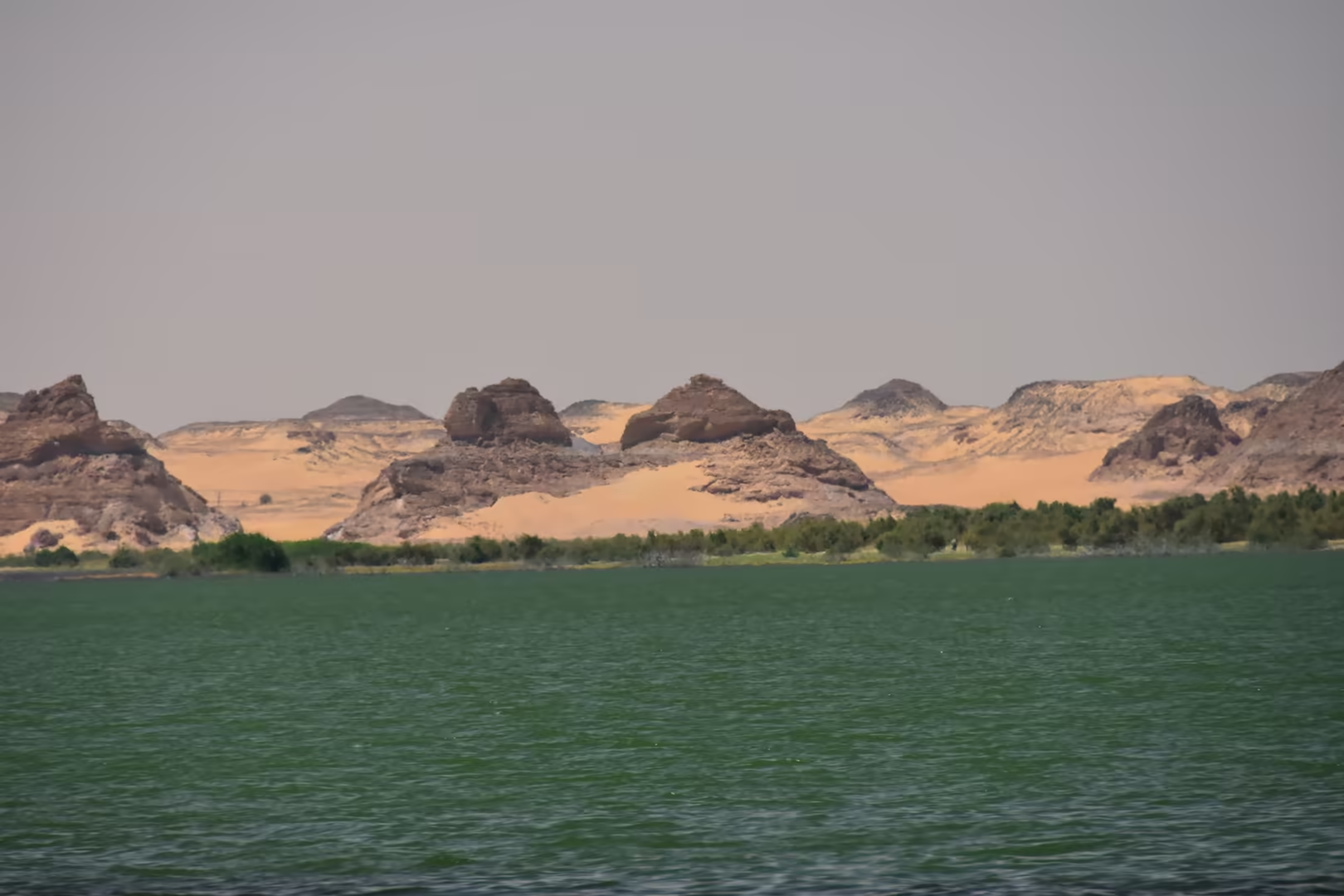
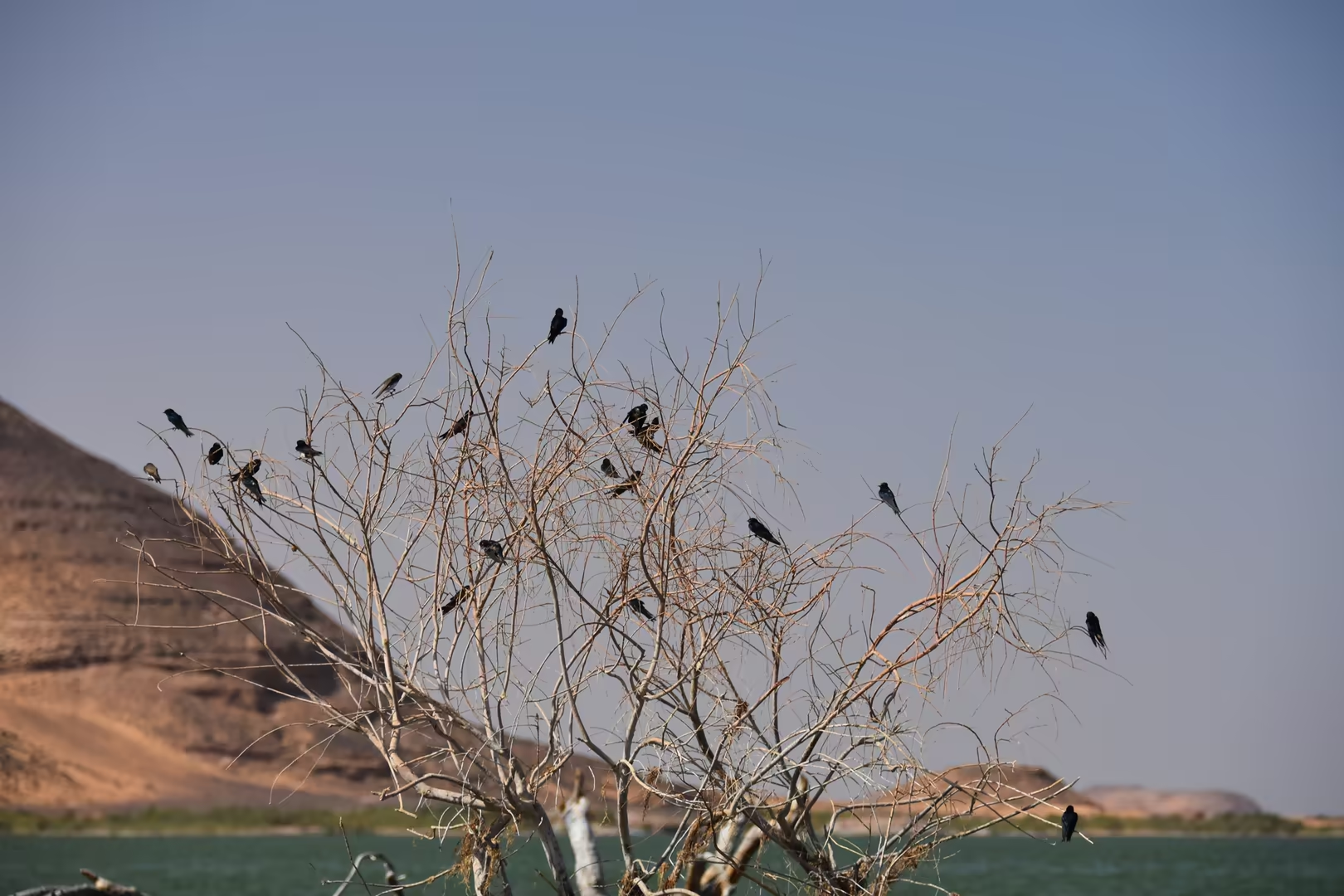
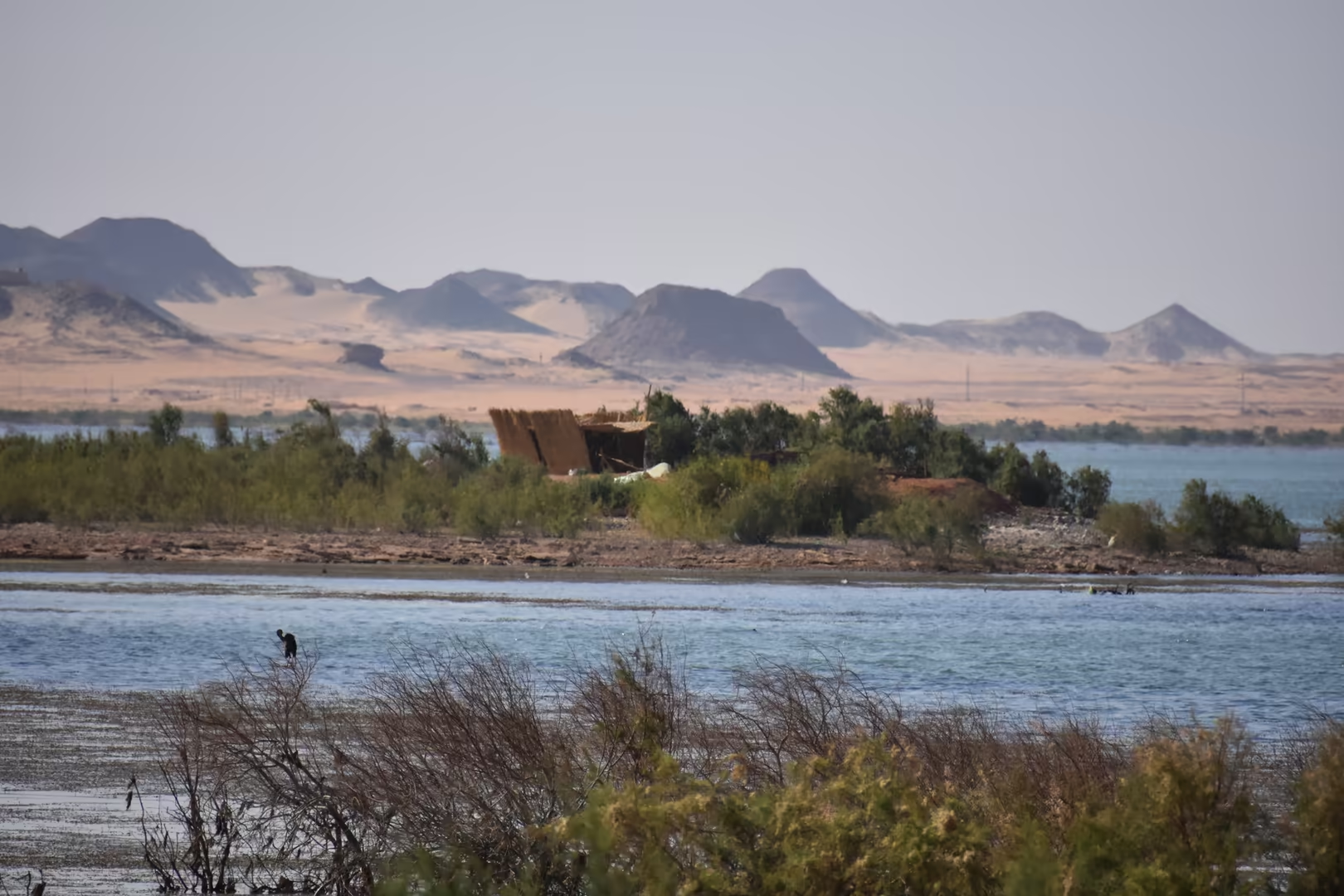
The relocation added a second, artificial geology to the first: the artificial hill was built of 300,000 tons of rock cut from the original cliff, so that the temples again stand within a mountain of their own stone, shaped by cranes and concrete rather than by the Nile. Below lies the drowned landscape of the old floodplain: the acacias and tamarisks of the former riverbank now stand as bleached skeletons in the green water. The lake itself, 550 kilometres long and regulated by the dam, has become the dominant agent of change on this shore; desert hills of the same sandstone ring the water to the horizon, and the rare rains of the hyper-arid climate wash salts through the rock. The care of Abu Simbel has become a permanent dialogue between an ancient sandstone and the reservoir built to save it.
Things to See
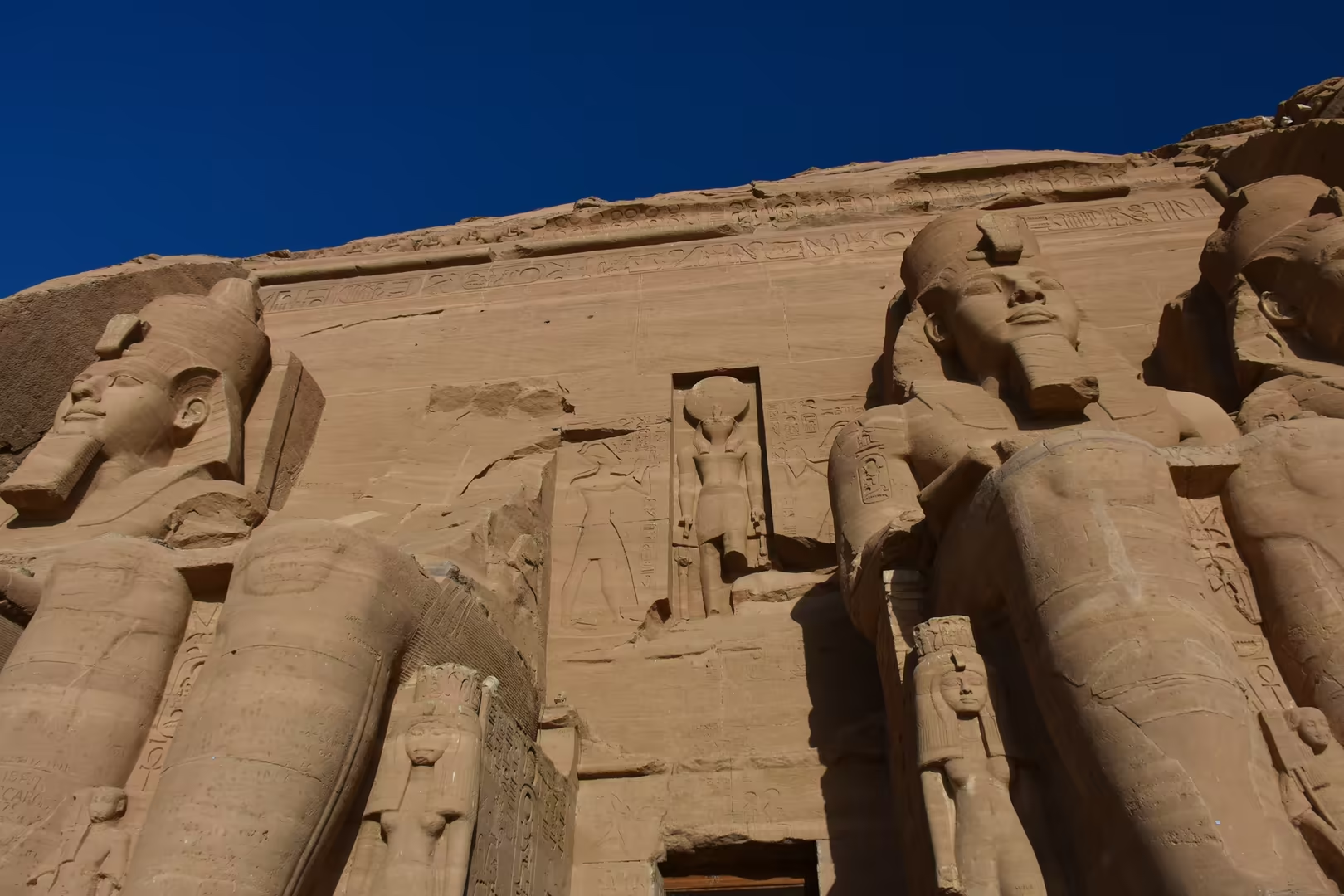
The Great Temple presents a single rock-cut facade 33 metres high and 38 metres wide, with the four seated colossi of Ramesses II ranged in two pairs about the doorway. Each statue stands twenty metres high and wears the double crown of Upper and Lower Egypt; the colossus immediately left of the entrance is the one shattered by the ancient earthquake, its fallen head and torso left at its feet where they were found. About the ankles of the giants cluster the small figures of the royal family, and above the doorway the falcon-headed Ra-Horakhty stands in his niche holding the sceptre and feather that spell the throne name User-Maat-Re. A frieze of twenty-two baboons adoring the rising sun crowns the cornice, and along the terrace in front of the cliff runs a row of statues of the king alternating with the sacred falcon of the sun. The leg of the southernmost colossus carries Greek letters scratched by the Ionian and Carian mercenaries of Psammetichus II on the Nubian campaign of c. 591 BC, among the earliest Greek texts known from Egypt.
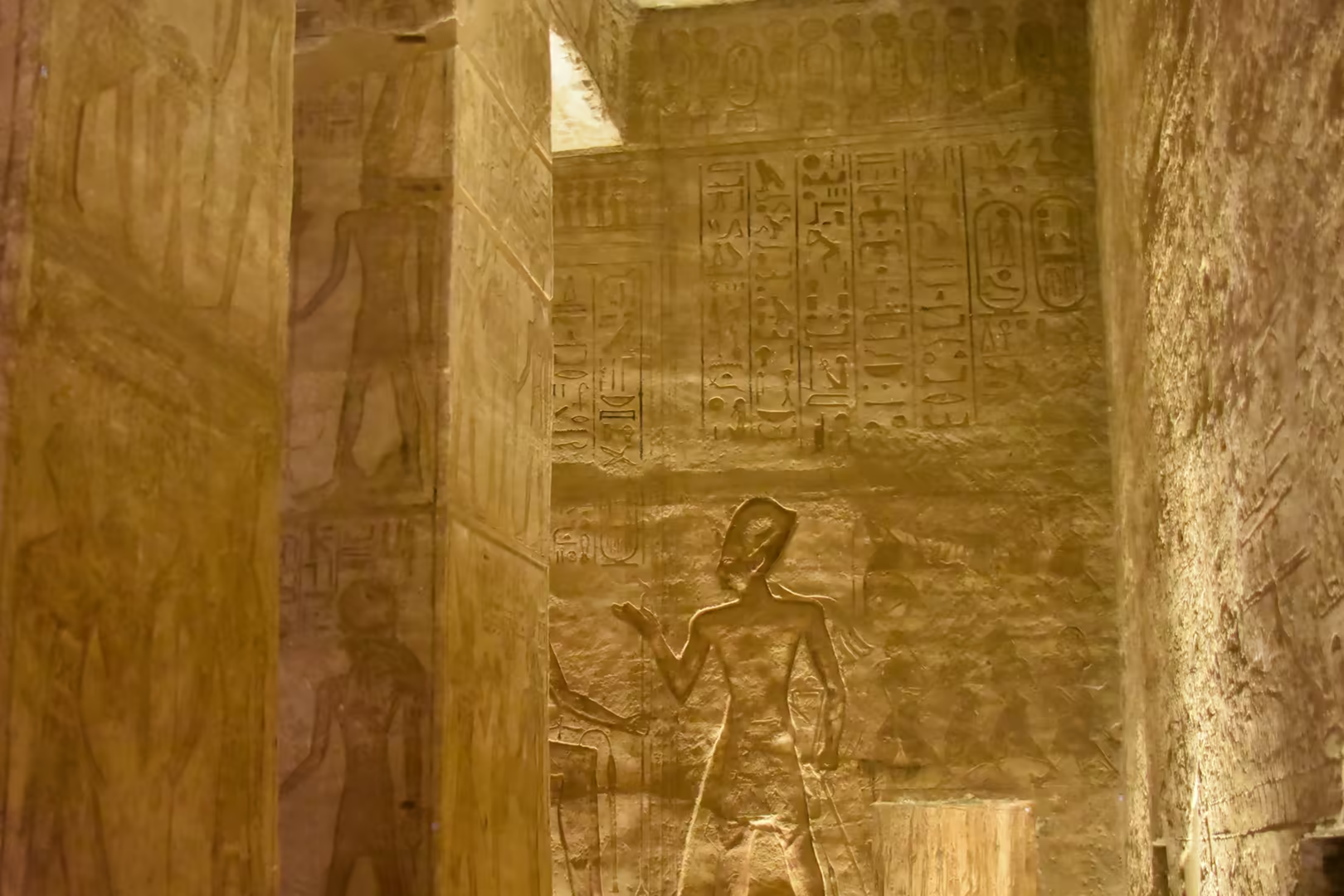
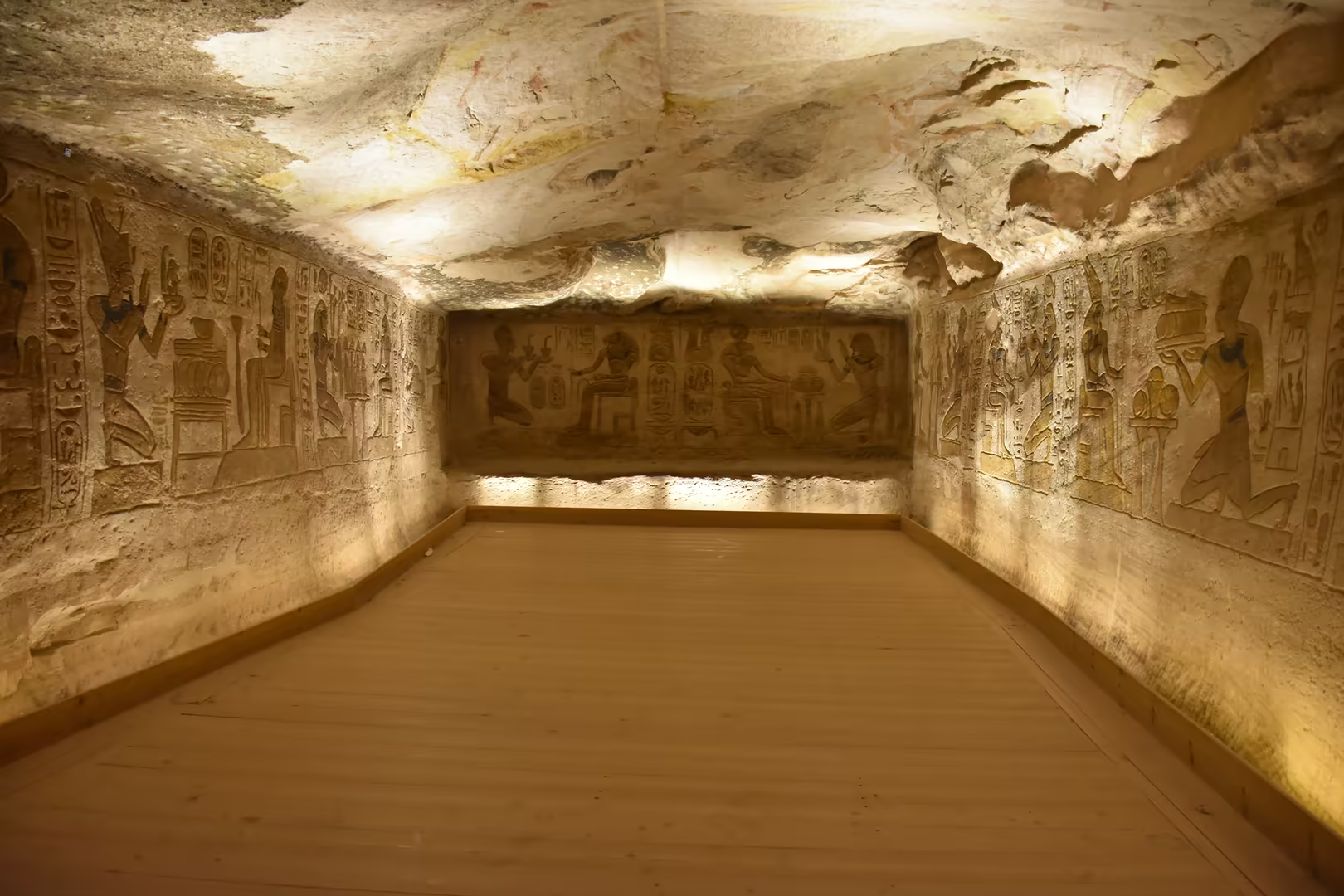
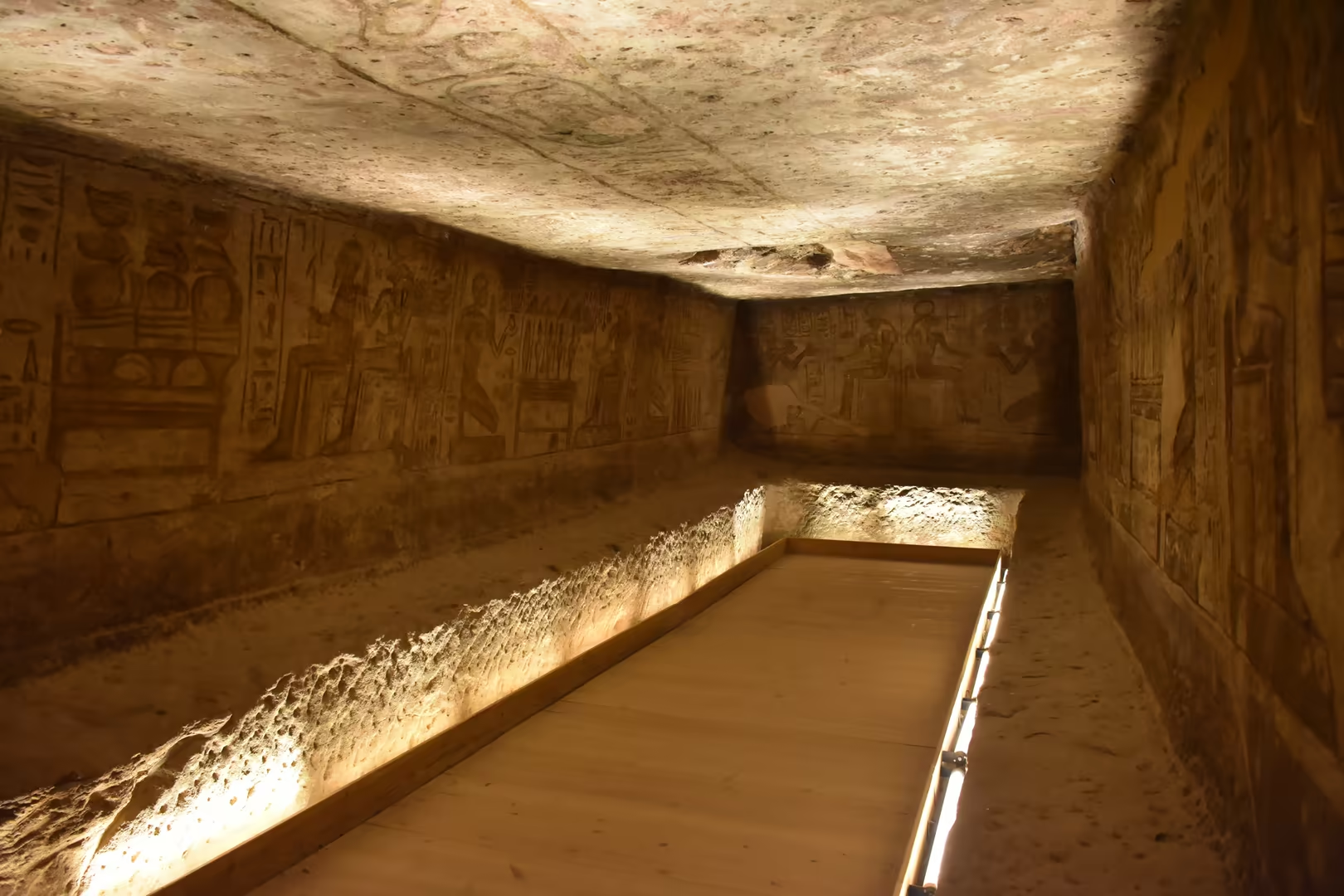
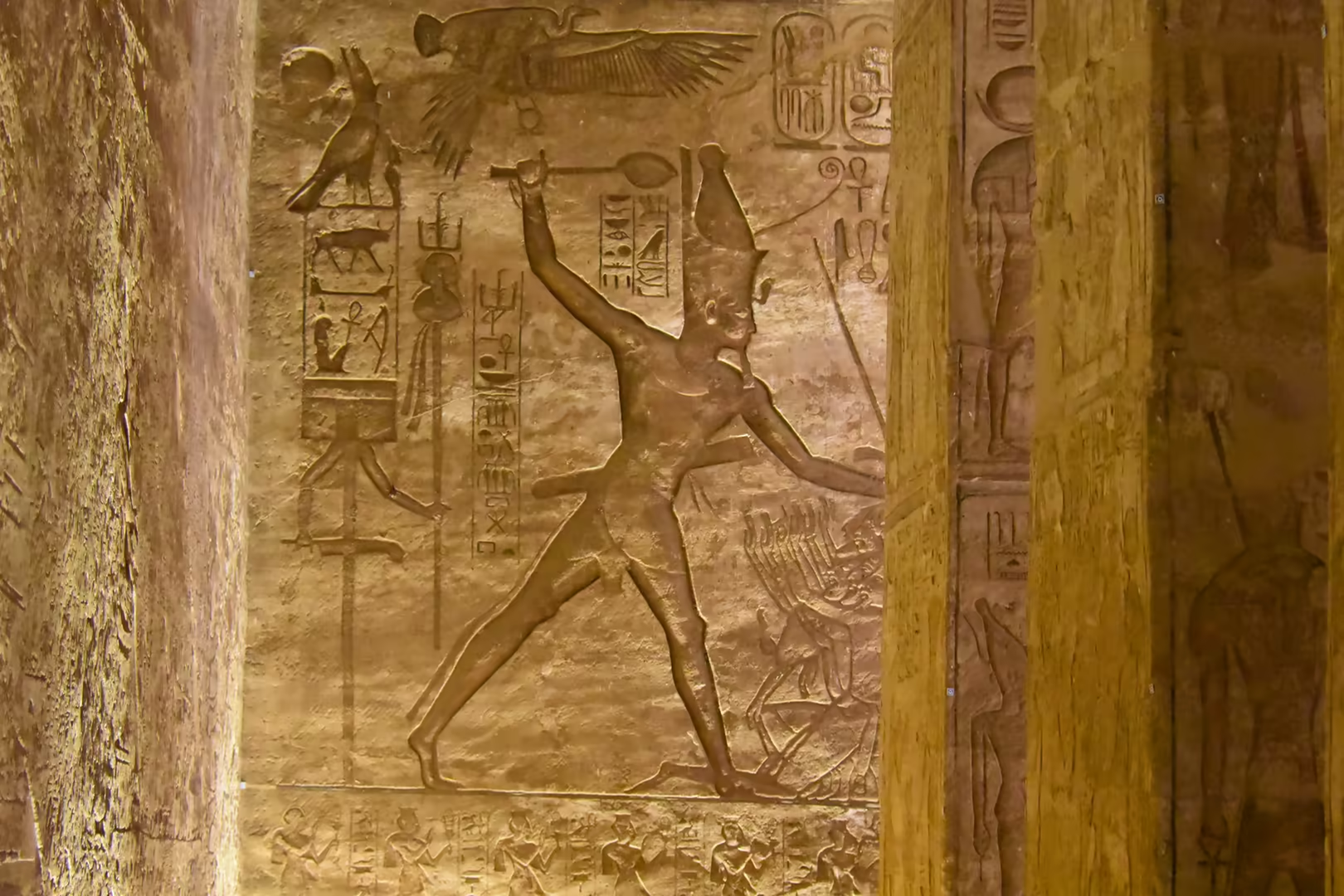
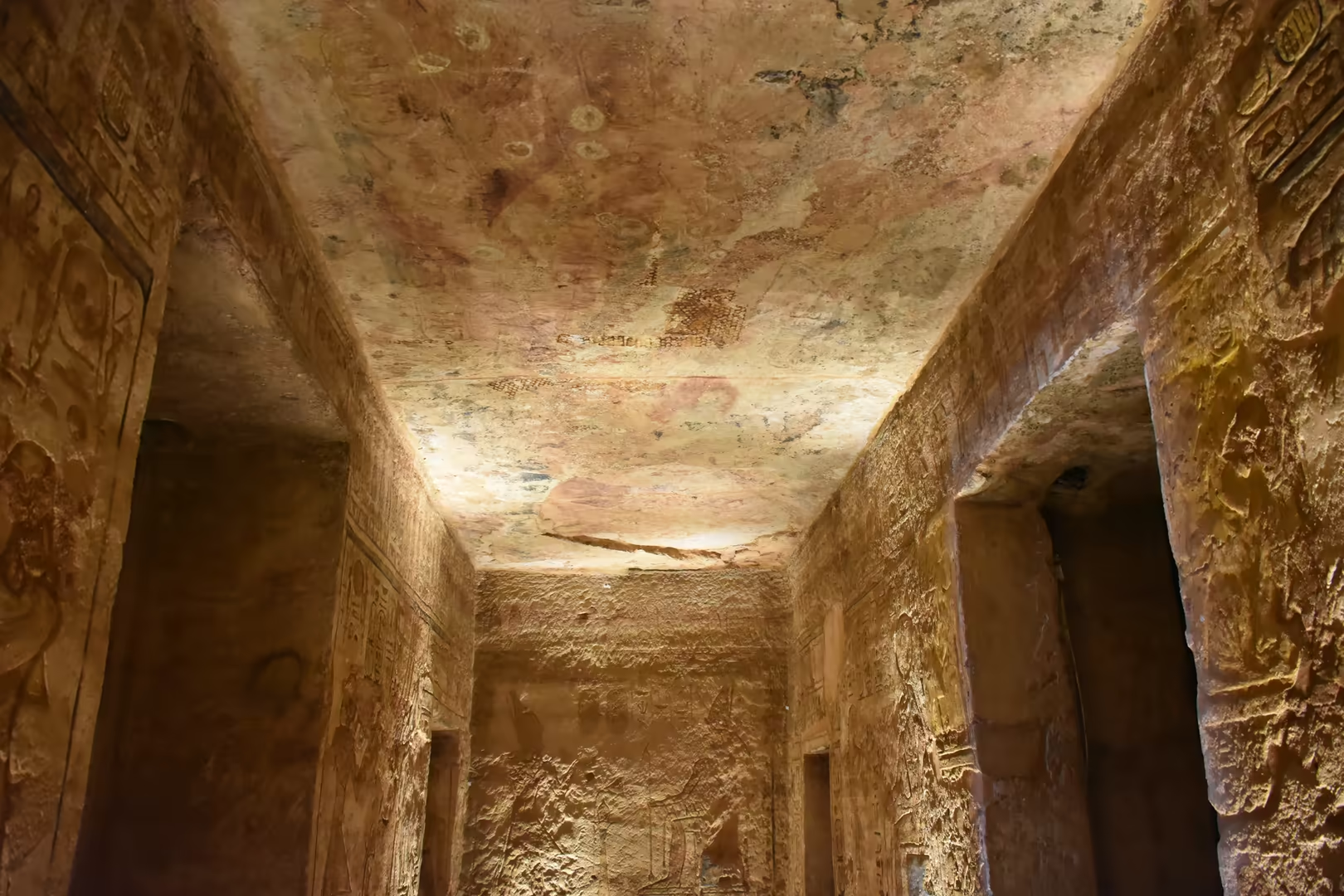
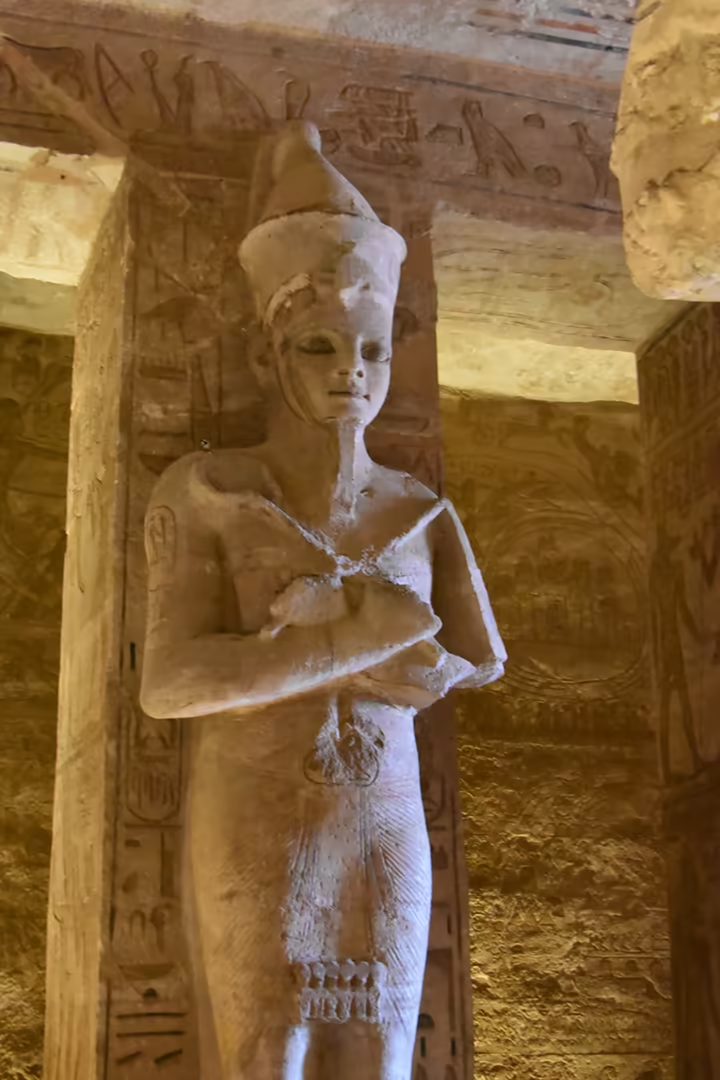
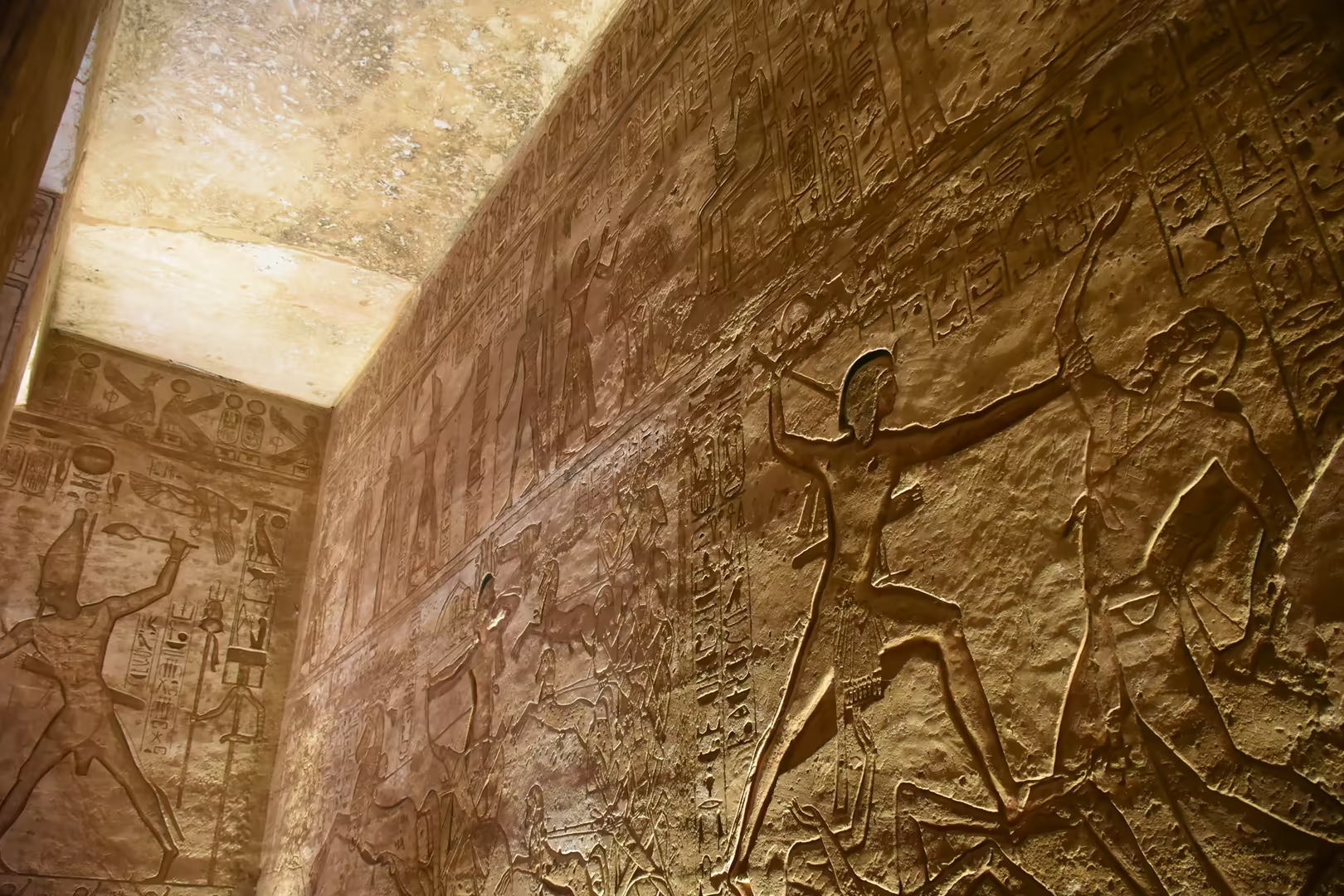
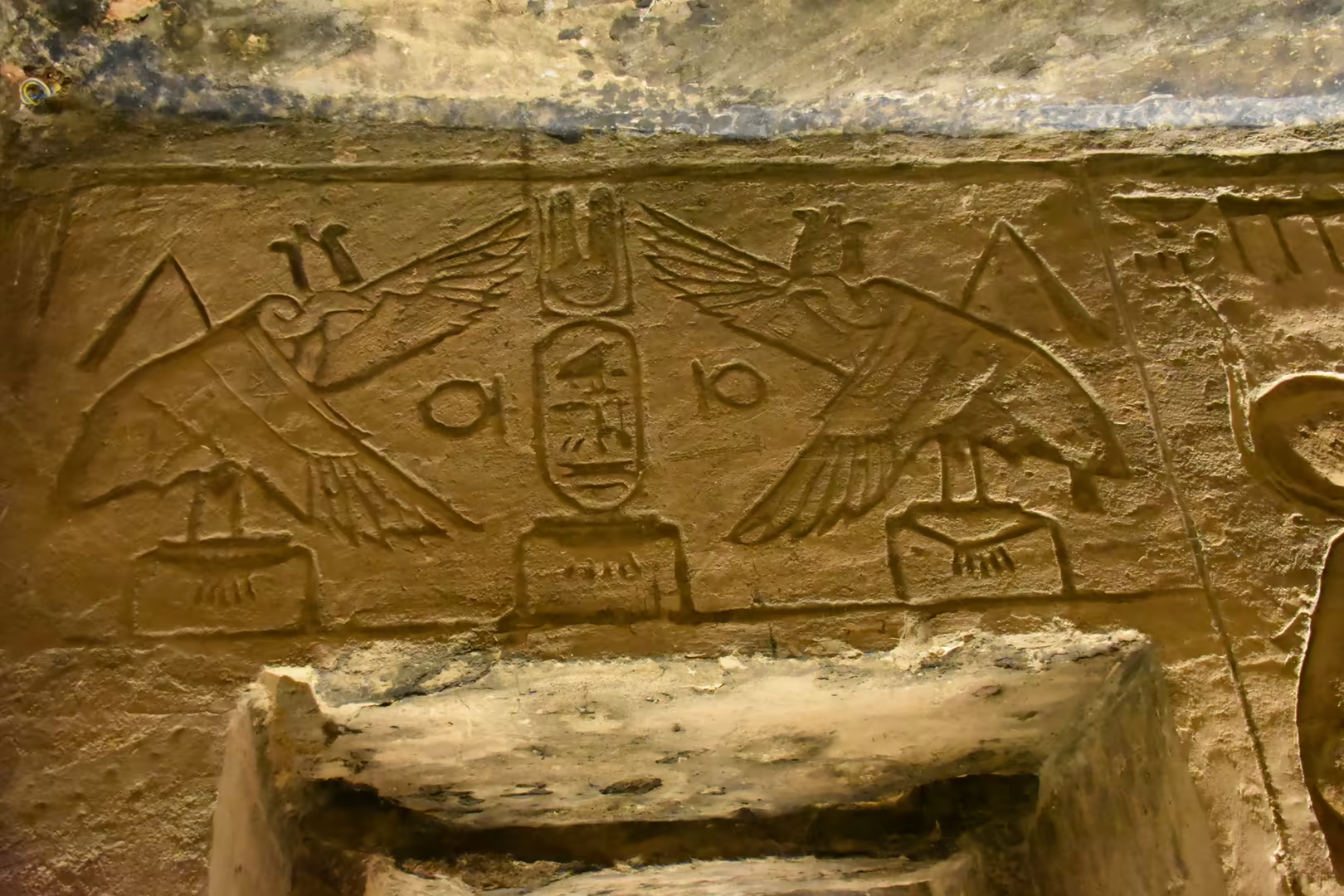
The doorway opens into the hypostyle hall, 18 metres long and 16.7 metres wide, its ceiling of painted stars carried by eight Osiride pillars in which the king appears as the mummiform god with arms crossed. The narrative reliefs of the reign cover the walls: the Battle of Kadesh on the north wall, the king charging in his chariot, smiting scenes, processions of bound prisoners and ranks of hieroglyphic columns. Beyond the hall the temple narrows through a second pillared chamber, its painted columns and scenes of the royal couple before the sacred barques of Amun and Ra-Horakhty, into the vestibule and finally the sanctuary, more than sixty metres from the entrance, where four seated figures, Ra-Horakhty, the deified Ramesses, Amun-Ra and Ptah, face the doorway.
Twice a year the rising sun penetrates the full length of the temple and illuminates three of the four statues in the sanctuary, leaving Ptah, the god of darkness, in shadow. Since the relocation the event falls on 22 February and 22 October, one day later than in the original position; the popular link to the king’s birthday and coronation is a modern tradition that no inscription supports. The two dates draw large crowds to the site.
The Small Temple of Nefertari stands a short distance to the north-east of the Great Temple. Dedicated to Hathor and to the queen, it was only the second time in Egyptian history that a temple was consecrated to a woman, after Akhenaten’s temple for Nefertiti, and one of the very few in which king and consort appear equal in stature. The facade carries six standing colossi more than ten metres high in two groups about the gateway: two figures of Ramesses on each side of the portal, wearing the white crown and the double crown, flanked by statues of Nefertari as Hathor, with princes and princesses between them. Inside, six Hathoric columns whose capitals bear the face of the goddess carry the pillared hall; reliefs there show the queen playing the sistrum before the gods of the cataract, Hathor, Isis, Satis, Anubis and Khnum, and the king offering incense. The most poetic scenes show the royal couple presenting papyrus to Hathor as a cow sailing in a thicket of papyri, and in the sanctuary the goddess herself emerges from the rock as a divine cow.
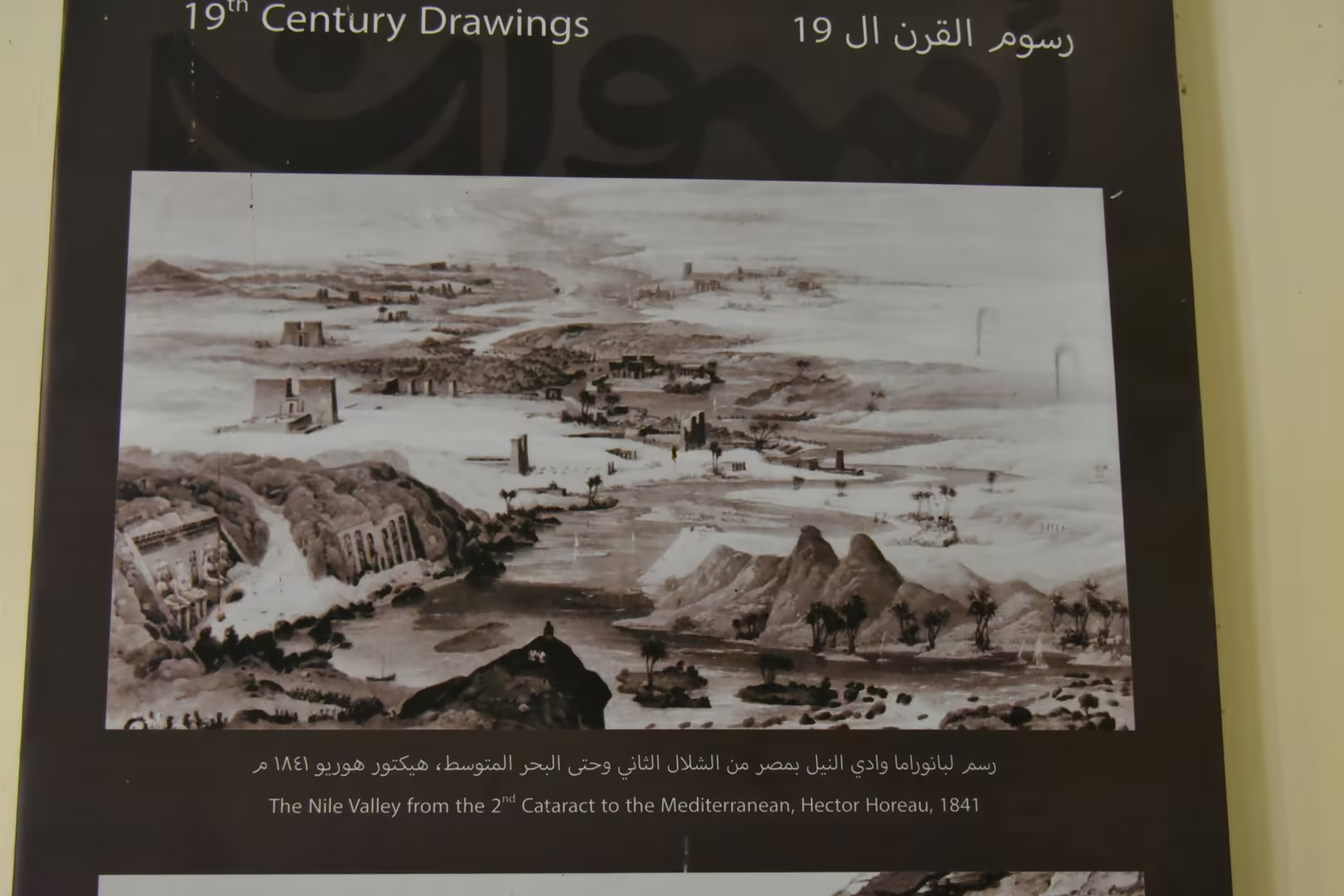
Display panels along the visitor path between the two temples reproduce nineteenth-century views of the monuments half-buried in sand and of the great pillared hall as the first explorers found it; the prints recall that for centuries Abu Simbel offered only the heads of its colossi above the dunes.
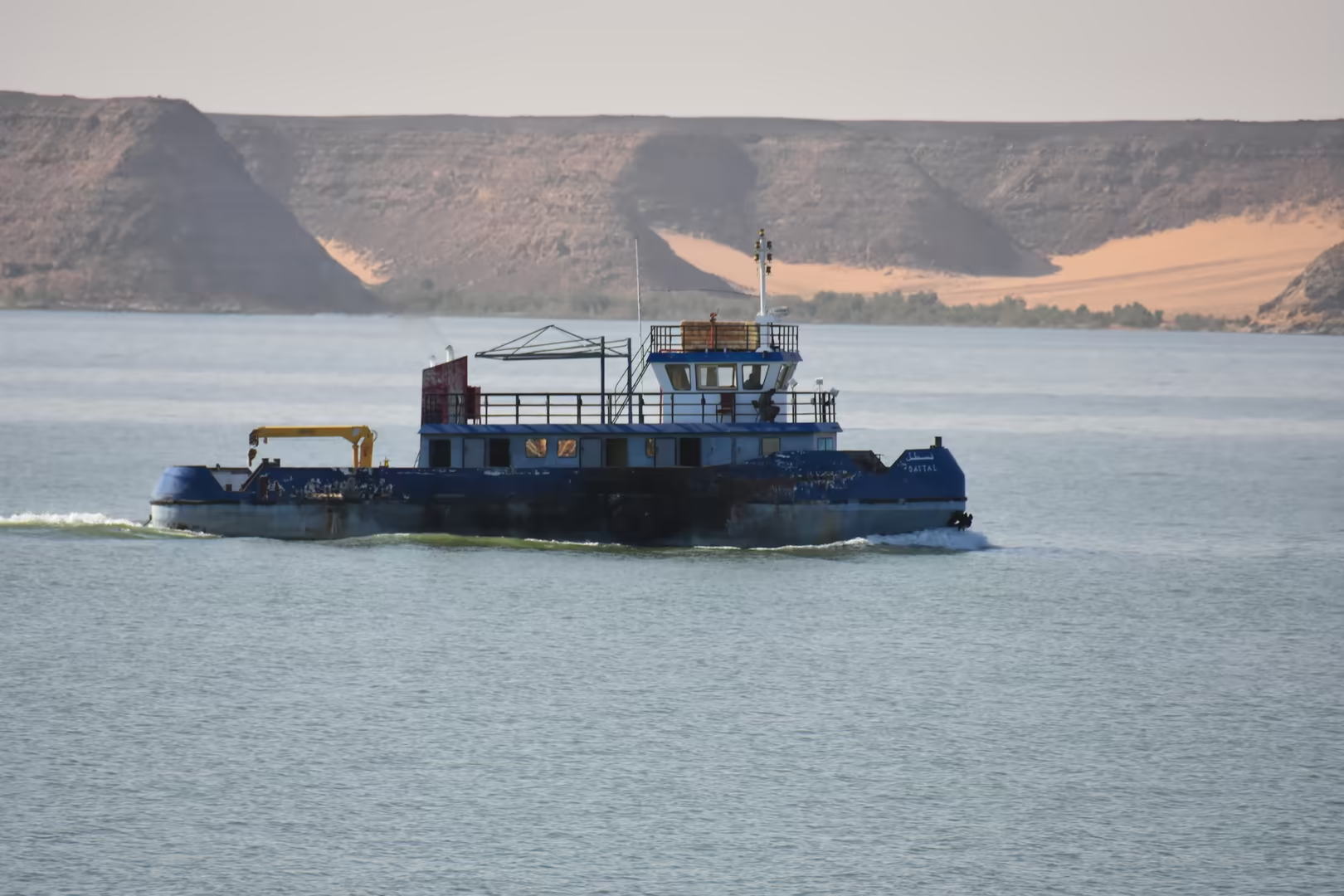
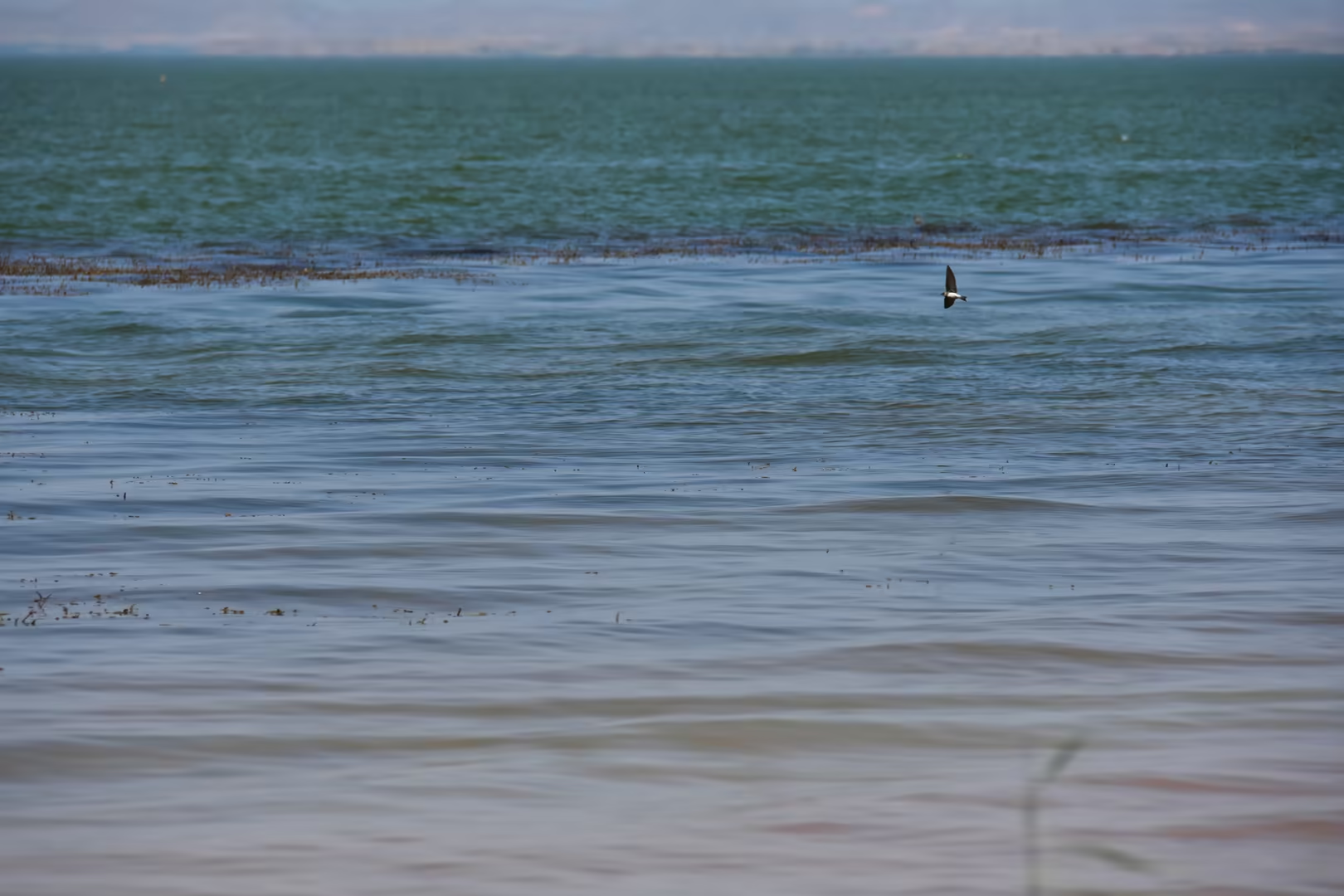
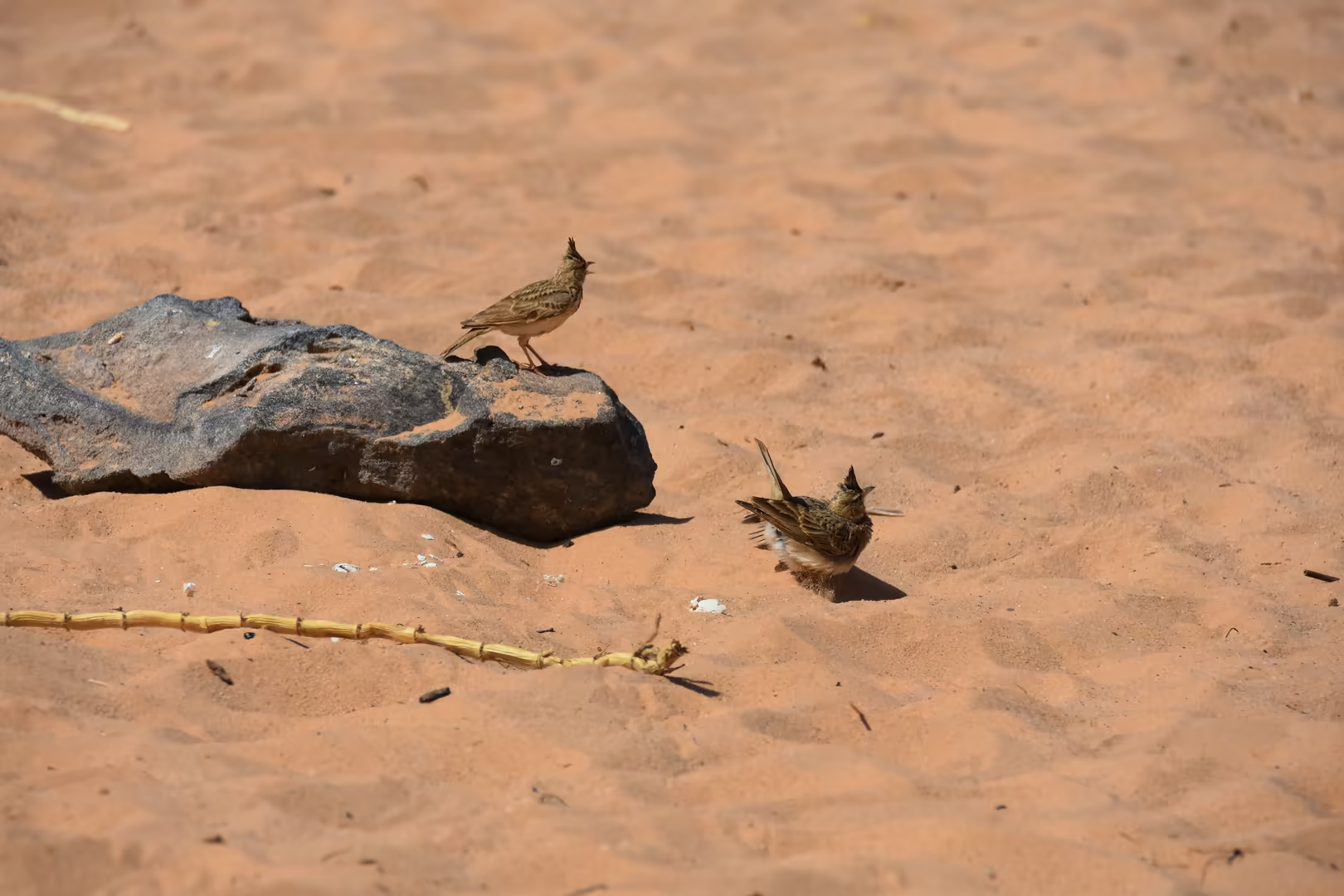
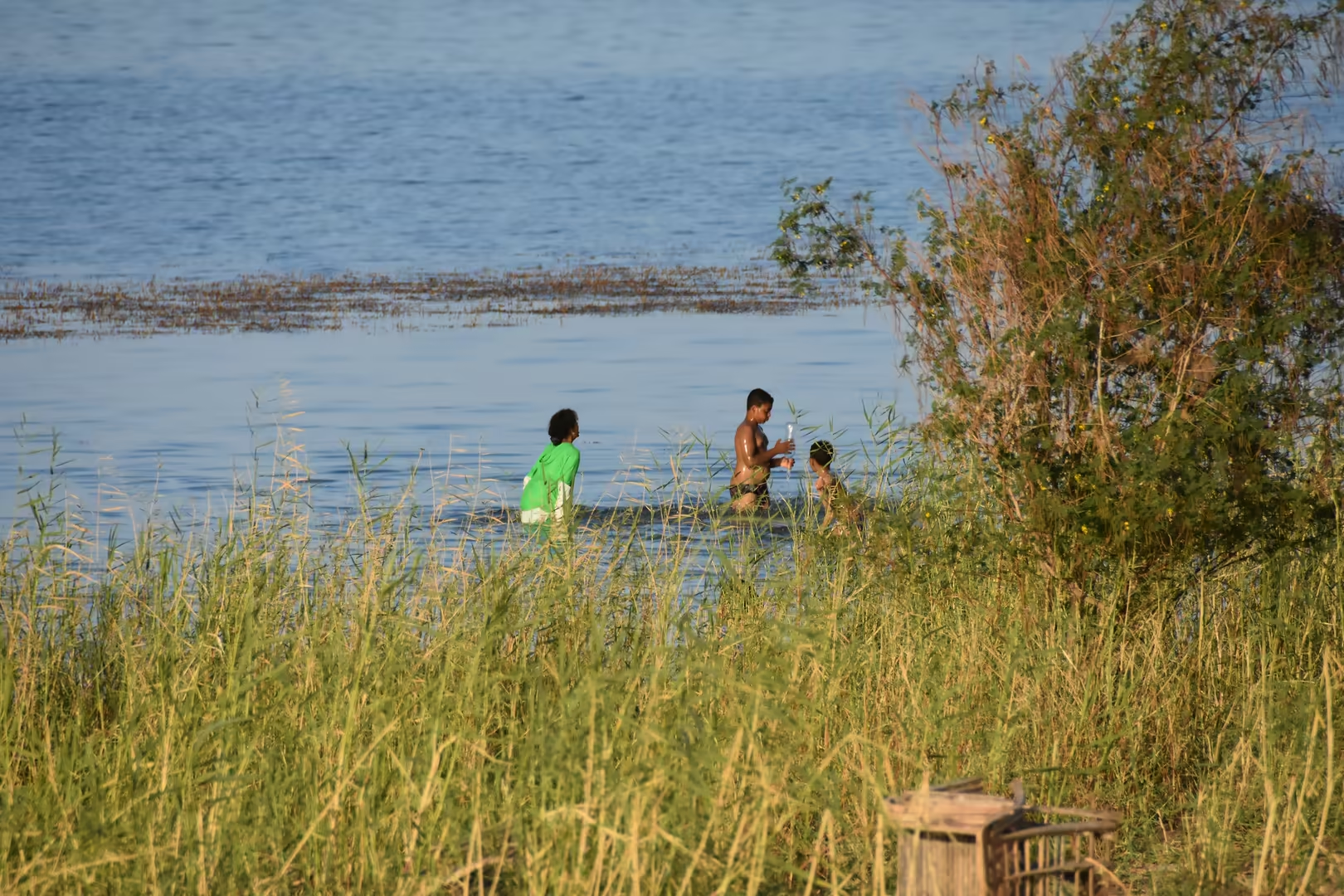
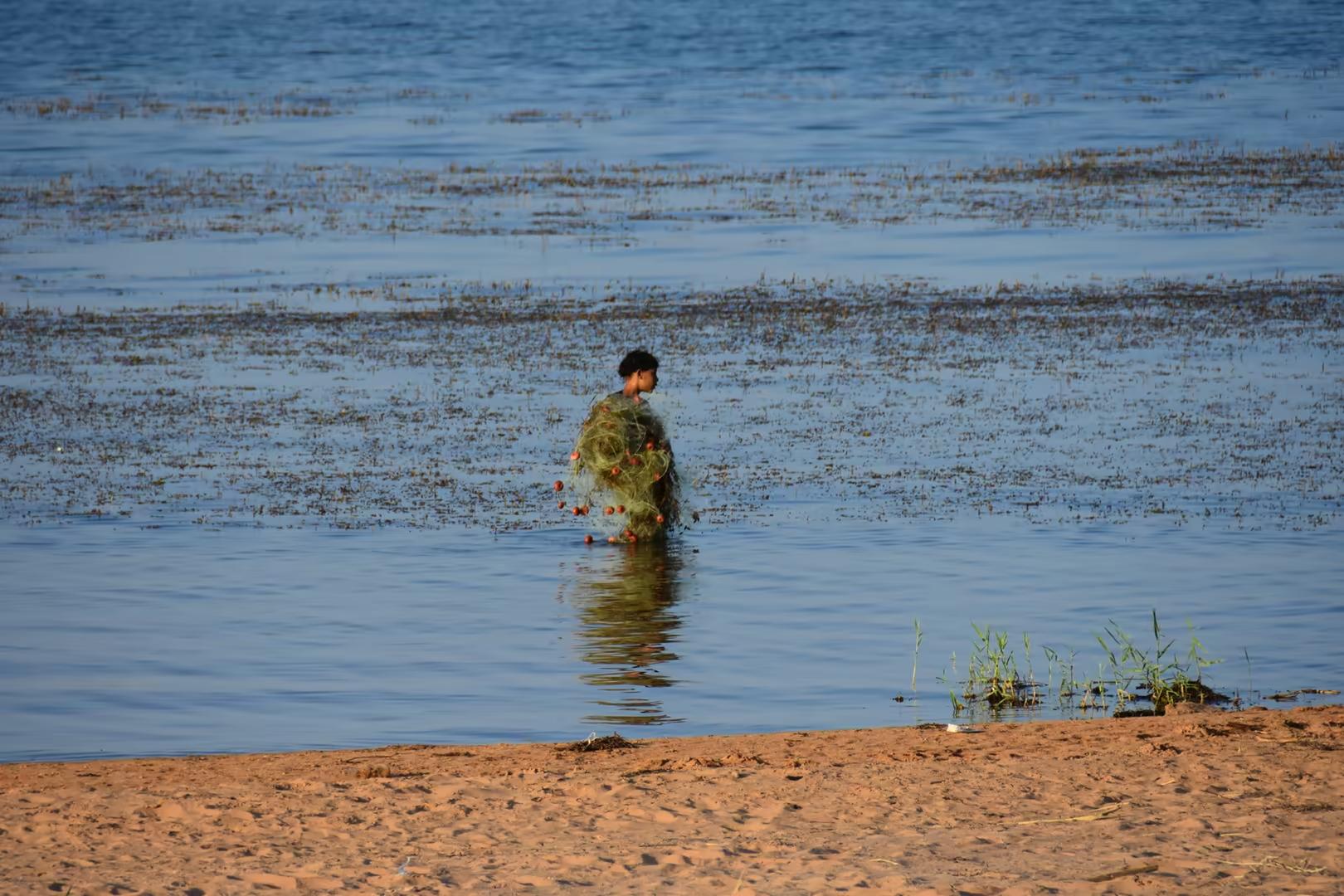
The temples stand on the western shore of Lake Nasser, and the water dominates the setting as much as the rock-cut monuments. From the landing below the Great Temple a ferry crosses to the eastern bank of the lake. Along the shore the drowned trunks of the old floodplain stand in the green water, egrets, larks and swallows work the water’s edge, and raptors circle over the dunes, while desert hills ring the lake to the horizon. North of the temples the Nubian village lines the waterfront with painted house fronts, palm gardens and small jetties, and in the shallows children swim among the reeds and the moored fishing boats.
References
- Kitchen, K. A. (1982). Pharaoh Triumphant: The Life and Times of Ramesses II. Warminster: Aris & Phillips.
- Murnane, W. J. (1990). The Road to Kadesh: A Historical Interpretation of the Battle Reliefs of King Sety I at Karnak (2nd revised edn). Chicago: The Oriental Institute.
- Säve-Söderbergh, T. (ed.) (1987). Temples and Tombs of Ancient Nubia: The International Rescue Campaign at Abu Simbel, Philae and Other Sites. London: Thames & Hudson; Paris: UNESCO.
- Said, R. (1990). The Geology of Egypt. Rotterdam: A. A. Balkema.
- UNESCO World Heritage Centre (1979). Nubian Monuments from Abu Simbel to Philae. World Heritage List, ref. 88. whc.unesco.org/en/list/88/
- Wikipedia contributors (2026). Abu Simbel. en.wikipedia.org/wiki/Abu_Simbel
- Wikipedia contributors (2026). Aswan High Dam. en.wikipedia.org/wiki/Aswan_High_Dam
- Wikipedia contributors (2026). Battle of Kadesh. en.wikipedia.org/wiki/Battle_of_Kadesh
- Wikipedia contributors (2026). Giovanni Belzoni. en.wikipedia.org/wiki/Giovanni_Belzoni
- Wikipedia contributors (2026). International Campaign to Save the Monuments of Nubia. en.wikipedia.org/wiki/International_Campaign_to_Save_the_Monuments_of_Nubia
- Wikipedia contributors (2026). Johann Ludwig Burckhardt. en.wikipedia.org/wiki/Johann_Ludwig_Burckhardt
- Wikipedia contributors (2026). Lake Nasser. en.wikipedia.org/wiki/Lake_Nasser
- Wikipedia contributors (2026). Lower Nubia. en.wikipedia.org/wiki/Lower_Nubia
- Wikipedia contributors (2026). Nefertari. en.wikipedia.org/wiki/Nefertari
- Wikipedia contributors (2026). Nubian Sandstone. en.wikipedia.org/wiki/Nubian_Sandstone
- Wikipedia contributors (2026). Ramesses II. en.wikipedia.org/wiki/Ramesses_II