Skip to content

Egypt · 2025

Day 2 - The Pyramids of Giza

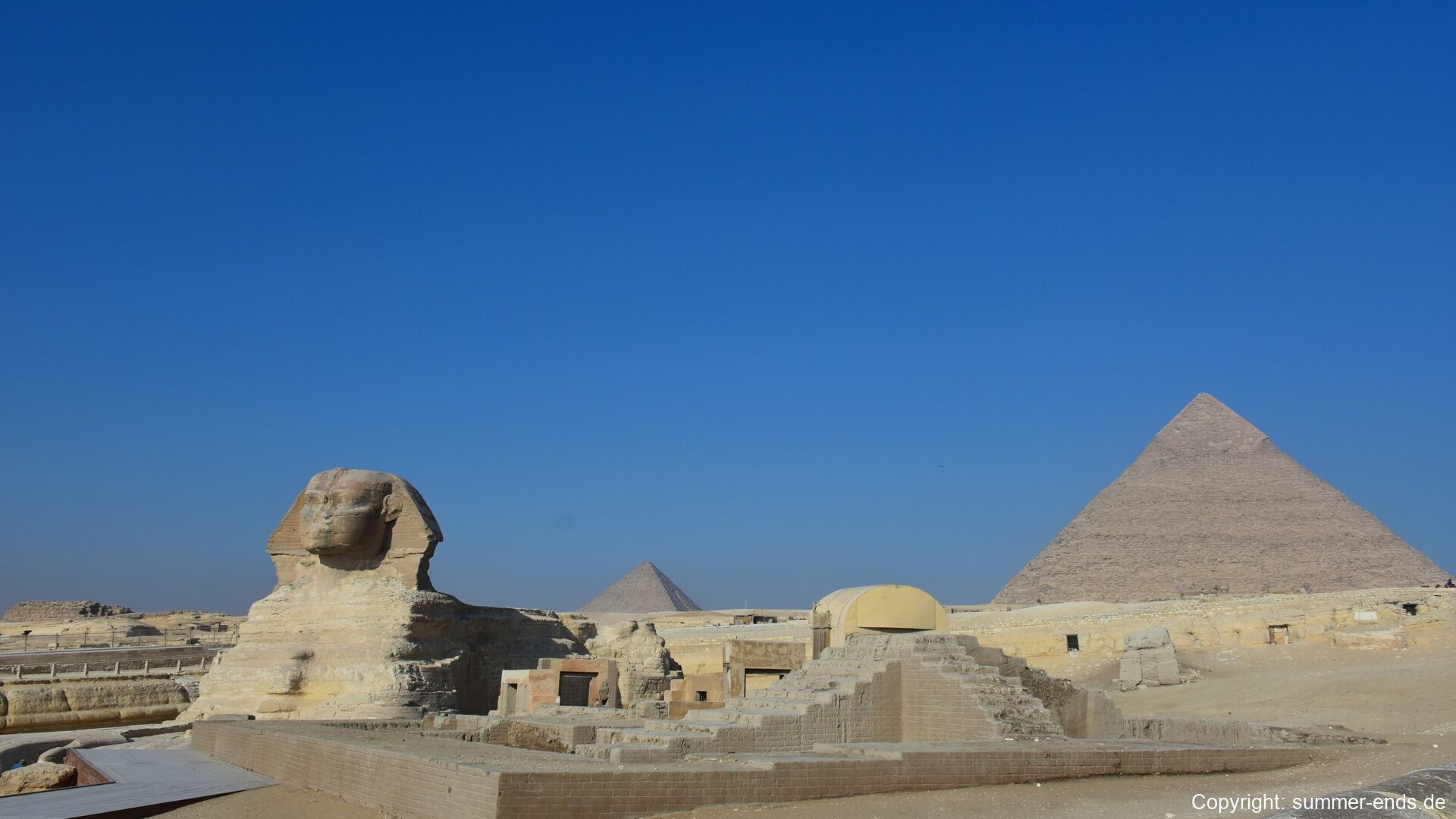
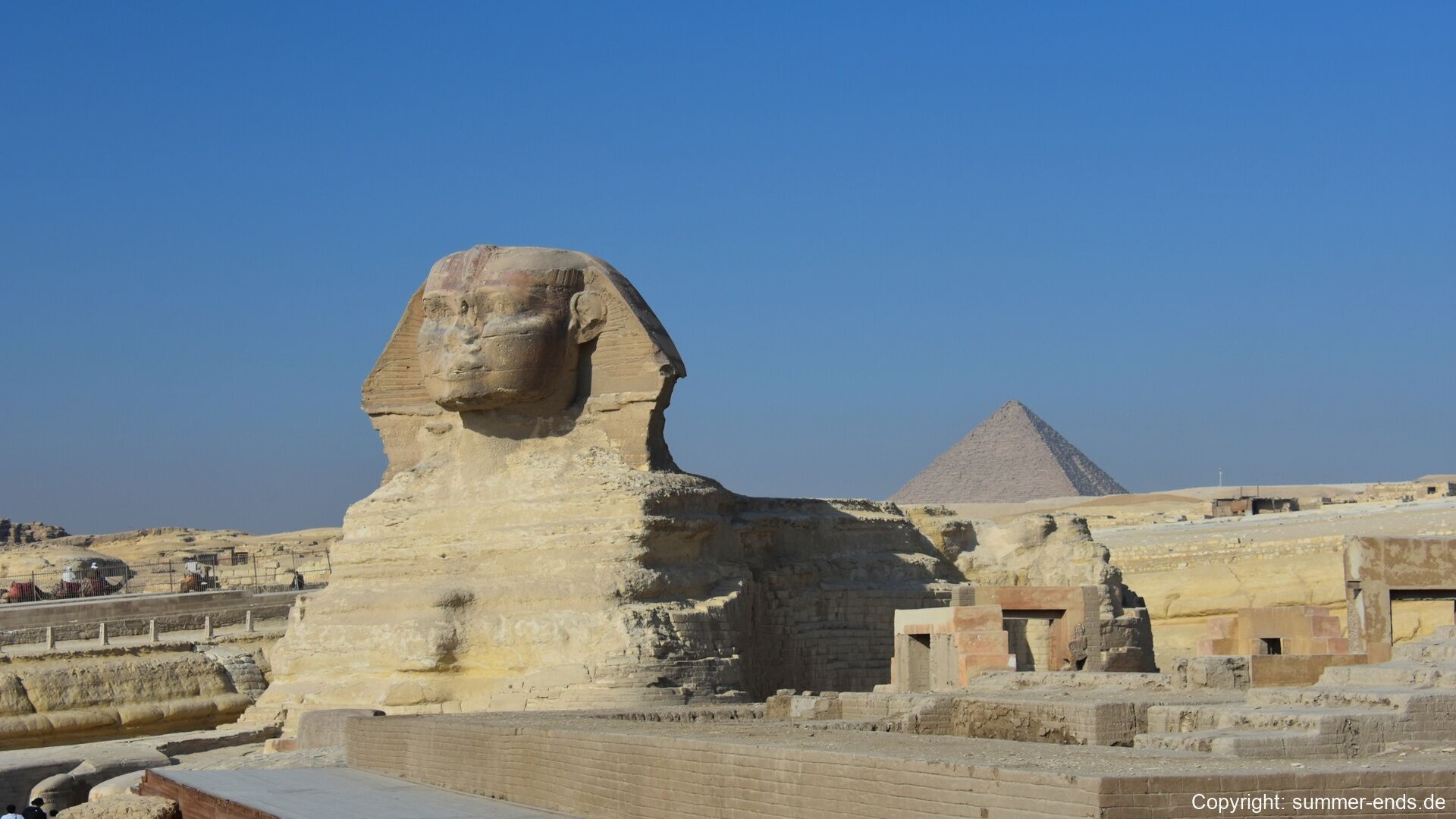
The Sphinx's eroded face is seen up close against a blue sky.
Journal Notes

General

The Giza pyramid complex stands on the desert edge of the Giza Plateau, on the west bank of the Nile within the governorate of Giza, barely a dozen kilometres south-west of the centre of Cairo and directly against the built-up fringe of the metropolis. The plateau carries the three great pyramids of the Fourth Dynasty (those of Khufu, Khafre and Menkaure) together with their valley and mortuary temples and causeways, the subsidiary pyramids of the royal women, the Great Sphinx, extensive mastaba cemeteries and the remains of the town that housed the builders. The site forms the northernmost group of the pyramid fields of the ancient capital Memphis, inscribed in 1979 on the World Heritage List as “Memphis and its Necropolis: the Pyramid Fields from Giza to Dahshur”.

The pyramids of Giza were raised within a strikingly short span of history: all three belong to the middle of the third millennium BC, to the successive reigns of Khufu, Khafre and Menkaure in roughly the years 2560 to 2510 BC, when the resources of the Old Kingdom state were concentrated on a single desert plateau. The Great Pyramid of Khufu, originally about 146 m high, was the tallest structure on earth at the time of its completion and remained so for more than 3,700 years; it is the oldest of the Seven Wonders of the Ancient World and the only one of them still standing. The Egyptians themselves named the monuments for their kings: the Great Pyramid was Akhet Khufu, “the Horizon of Khufu”, the point where the dead king, like the sun, rose into the sky.

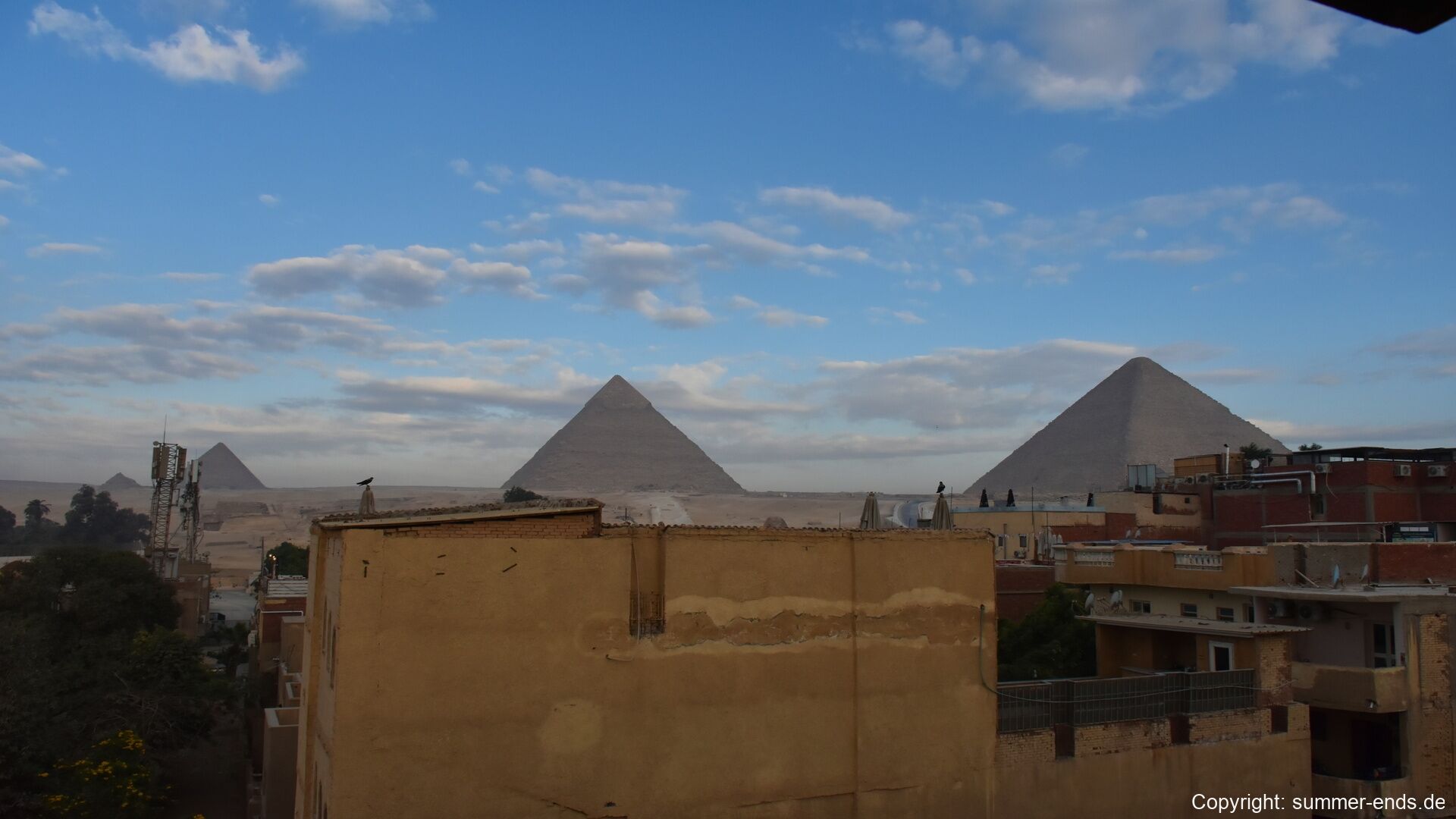
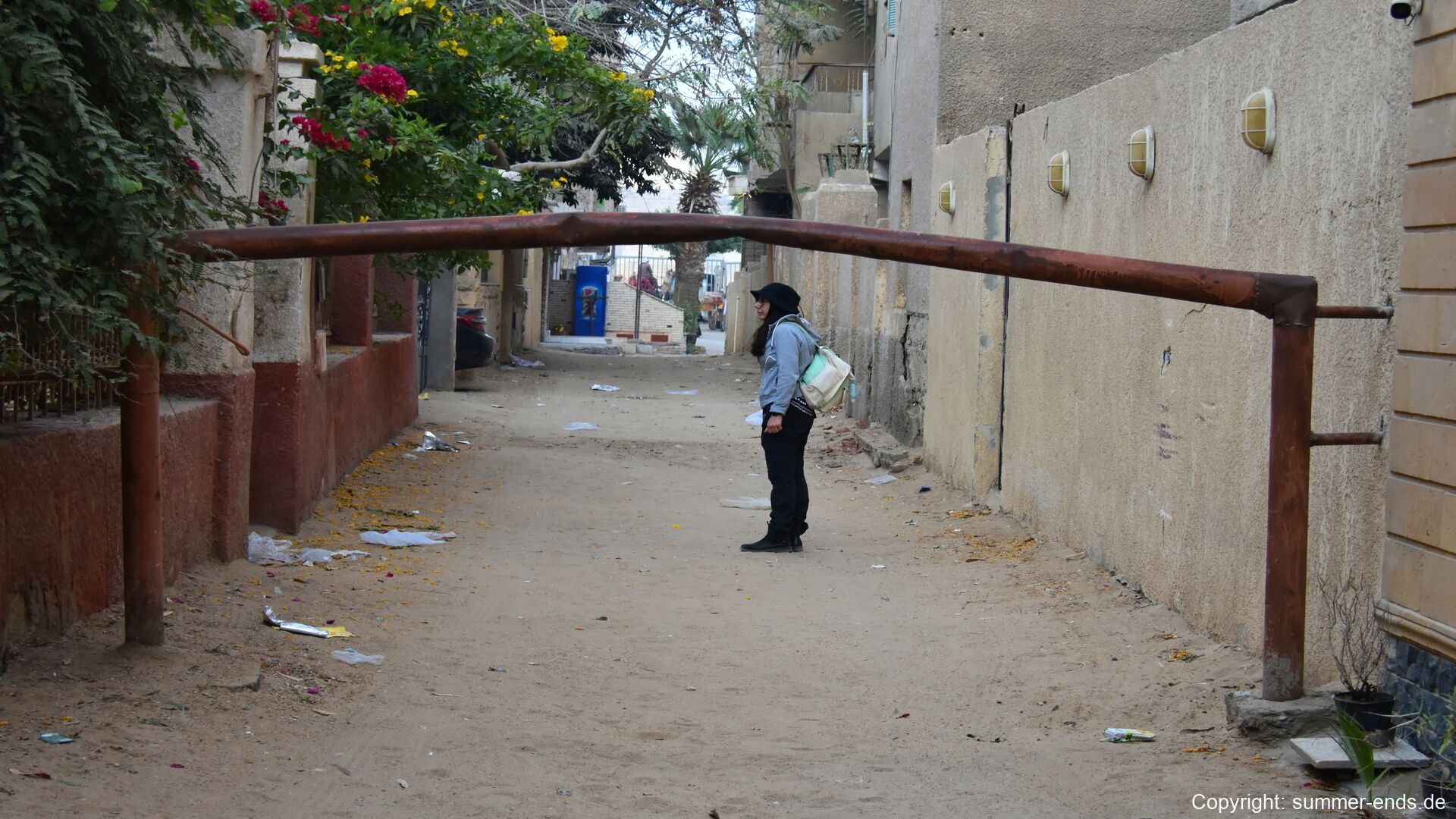
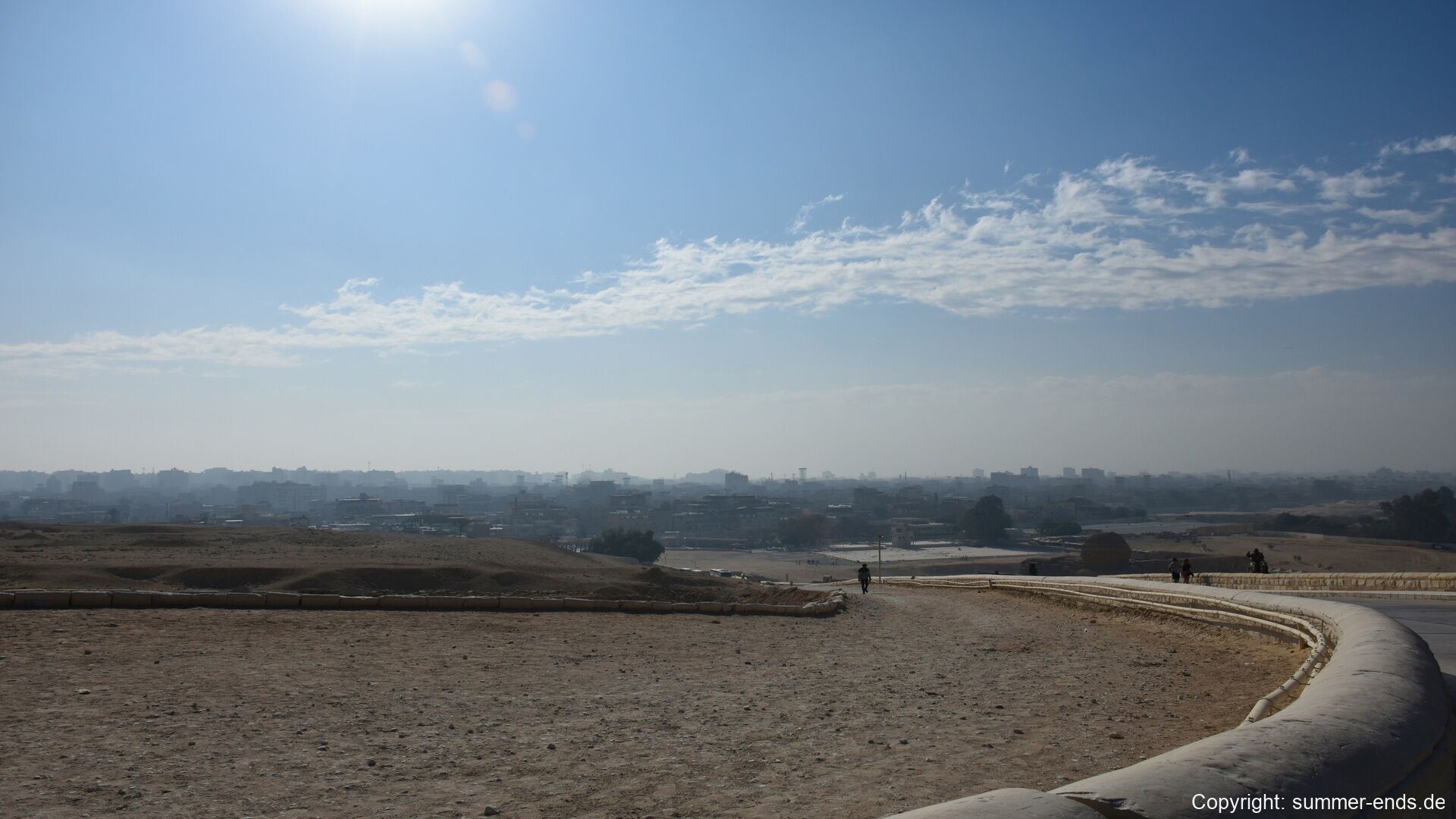
The site owes its remarkable preservation to the desert. The pyramids stand on a bare limestone plateau above the level of the cultivation, beyond the reach of the Nile flood, while the modern town of Nazlet el-Samman and the Giza districts of Greater Cairo have grown up at their eastern foot. The juxtaposition is abrupt: from the rooftops of the town the monuments rise directly over the streets, and from the plateau the view eastwards crosses the hazy expanse of the metropolis towards the Mokattam Hills on the far side of the river.

Climatically the plateau belongs to the desert fringe of Egypt (BWh after Köppen): clear light in winter, long dry summers, dust haze carried by the khamsin between March and May, and rainfall almost entirely confined to the short winter, when the occasional storms can be violent.

History

The pyramid was the tomb form developed by the pharaohs of the Old Kingdom out of the flat-topped mastaba. Djoser, the second king of the Third Dynasty, was buried beneath the step pyramid of Saqqara (twenty-seventh century BC), the oldest monumental stone building of the world, and his successors of the Fourth Dynasty perfected the true pyramid: Sneferu, Khufu’s father, built the Bent Pyramid and the Red Pyramid at Dahshur, the first successful large pyramid with smooth faces. It was Khufu who chose Giza: a level spur of solid limestone on the west bank, immediately north-west of Memphis, the capital of the period, and facing the fine limestone quarries of Tura across the river.

The Great Pyramid was built in the reign of Khufu (c. 2589-2566 BC) over a period of roughly two decades. Herodotus, who visited Egypt in the fifth century BC, was told that 100,000 men worked in three-month shifts for twenty years; modern estimates, based on the workers’ settlement and the volume of the masonry, suggest a permanent labour force of some 20,000 to 30,000 men working over twenty to twenty-seven years. The pyramid contains an estimated 5.5 million tonnes of locally quarried limestone and some 8,000 tonnes of granite brought from Aswan, and was originally faced with fine white Tura limestone. The builders were not slaves: south-east of the plateau the excavations of the workers’ town of Heit el-Ghurab have uncovered barracks, bakeries, breweries and storehouses, and the stone crews left their names in red paint (“the Friends of Khufu”, “the Drunkards of Menkaure”), graffiti of a confident, organised labour force. Within the pyramid, three main chambers (the King’s and Queen’s Chambers and a rough subterranean chamber cut into the bedrock) are linked by a system of passages, and, like all Old Kingdom pyramids, the monument carries no decoration or inscription on its inner walls.

Khafre, the builder of the second pyramid, raised his monument on slightly higher bedrock to the south-west, so that although a little smaller than his father’s it appears the taller; it is the only one of the three to retain its original casing near the apex. His pyramid complex includes the Great Sphinx and the great valley temple of red granite and Tura limestone at the edge of the cultivation, from which the celebrated diorite statue of the seated Khafre now in the Egyptian Museum was recovered. Menkaure’s pyramid, the smallest of the three and barely a tenth of the volume of Khufu’s, was still under construction at the king’s death: its lower courses were sheathed in red granite from Aswan and its casing never completed. The valley temple of Menkaure yielded the famous greywacke triads showing the king with goddesses and the nomes of Egypt.

After the end of the Old Kingdom the monuments entered history as landmarks of the living landscape. In the New Kingdom the Sphinx was twice cleared of the encroaching sand and restored: the eighteenth-dynasty pharaoh Thutmose IV set up the Dream Stela between its paws, recording how the god appeared to him in a dream, and Amenhotep II built a small temple to the sphinx in his own image. Medieval Cairo stripped the pyramids of most of their casing, the fine limestone serving for the mosques and houses of the capital, and in 832 the Abbasid caliph al-Ma’mun is said to have forced a tunnel into the north face of the Great Pyramid, rediscovering the interior passages. The pyramid had long been counted among the Seven Wonders of the Ancient World, and European travellers from antiquity onwards made it the emblem of Egypt.

Modern research began with the scholars of Napoleon’s expedition and the Description de l’Égypte. In 1837 Colonel Vyse, blasting into the chambers above the King’s Chamber, found the red-painted quarry marks that carry the name of Khufu, the only inscription in the entire monument; in 1880-1882 Flinders Petrie conducted the first scientific survey of the plateau. The Sphinx was cleared and restored between the wars, and in 1954 a dismantled cedar boat (the Khufu ship, the oldest intact vessel of antiquity) was discovered in a sealed pit beside the Great Pyramid. In the present century the ScanPyramids mission (from 2015) has applied infrared thermography and muon tomography to the monuments, announcing in Nature in 2017 the discovery of a major void above the Grand Gallery; and at the foot of the plateau the Grand Egyptian Museum, opened progressively since 2021, now houses the Khufu ship and the great collections of the old Egyptian Museum.

Geology

The Giza Plateau is the western counterpart of the Mokattam Hills of Cairo: both are built of the same Middle Eocene succession, the Mokattam Formation, a sequence of nummulitic marine limestones of late Lutetian to Bartonian age (roughly 41-38 million years ago) deposited on a shallow carbonate platform along the southern margin of the Tethys Ocean. The rock consists of the disc-shaped tests of giant foraminifera (Nummulites, some reaching the size of coins) with carbonate mud and shell debris, hardened into massive banks that alternate with softer, more marly beds. The plateau surface is capped by resistant nummulitic benches, while the softer layers below weather into the low scarps and quarry terraces visible across the site. The pyramids stand directly on this bedrock, and their cores were quarried from the same formation on the plateau itself.

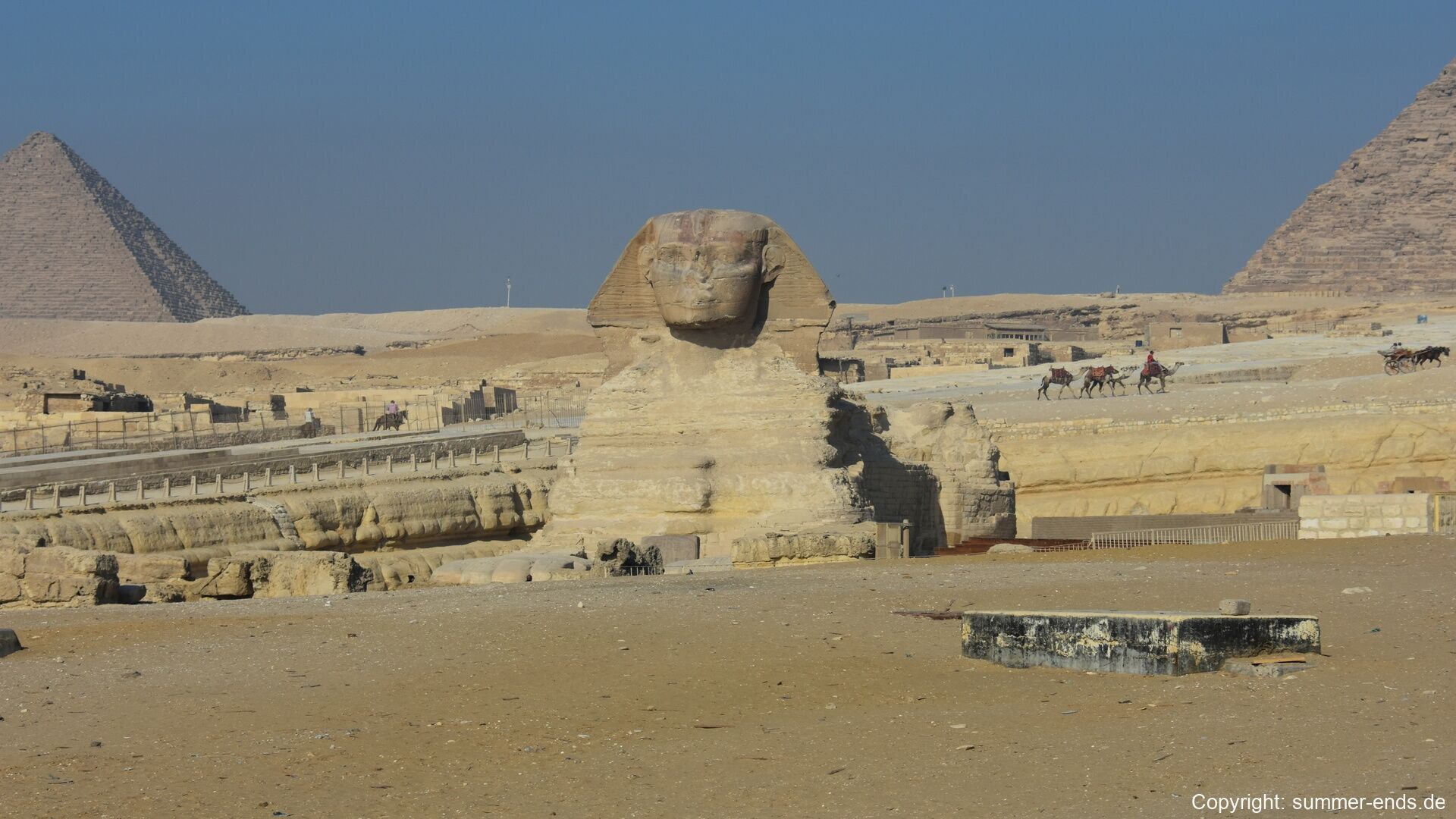
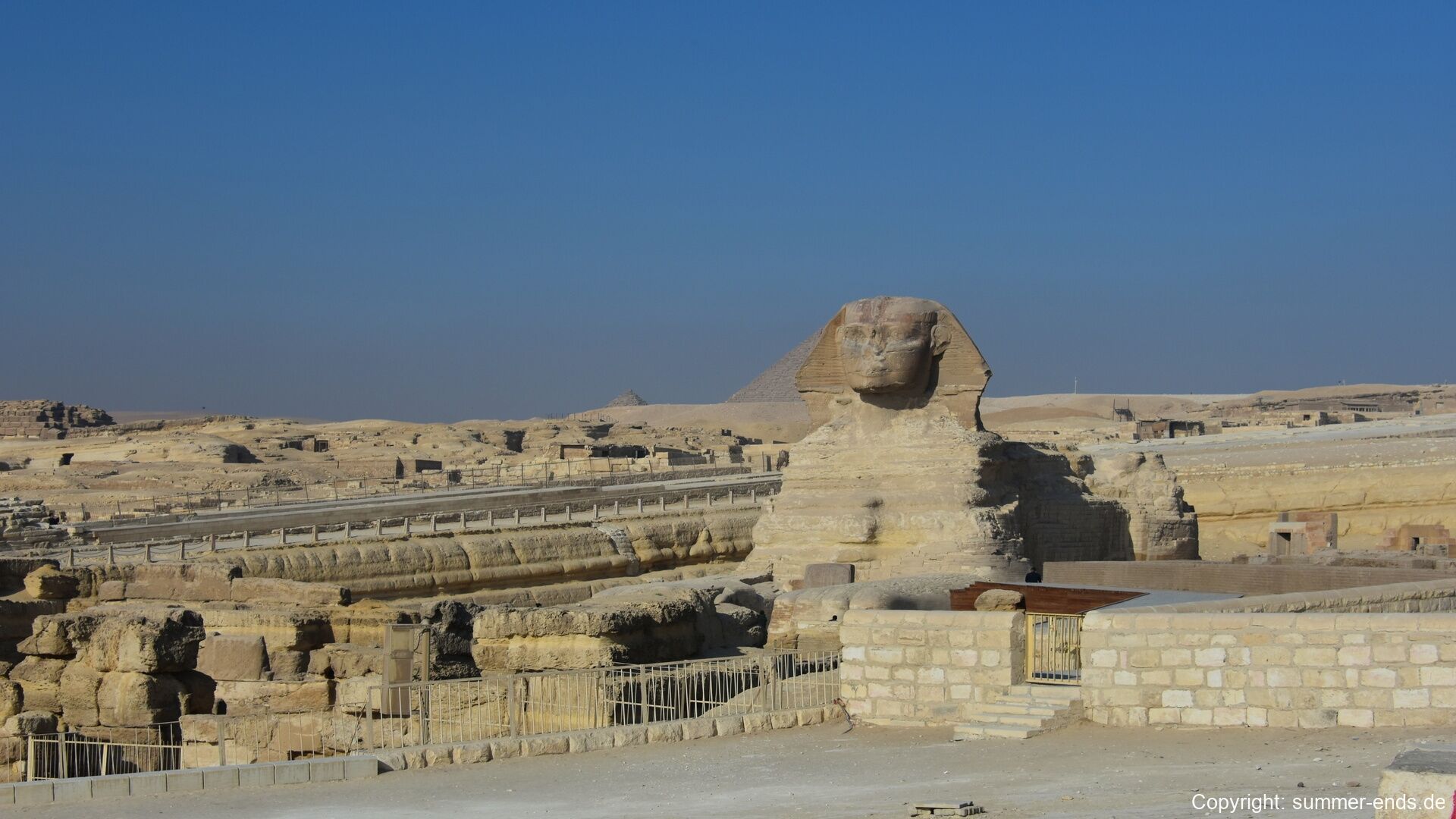
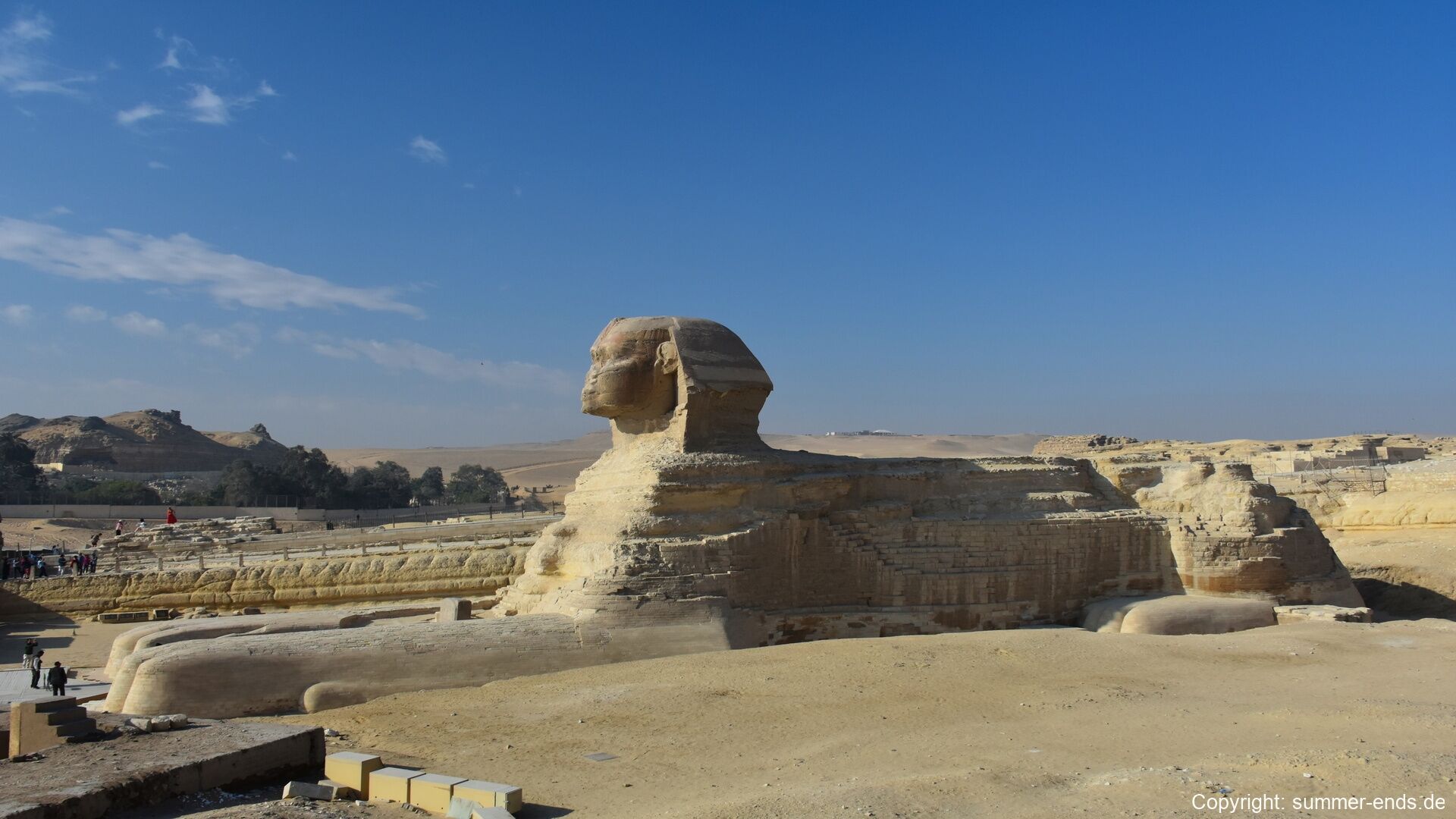
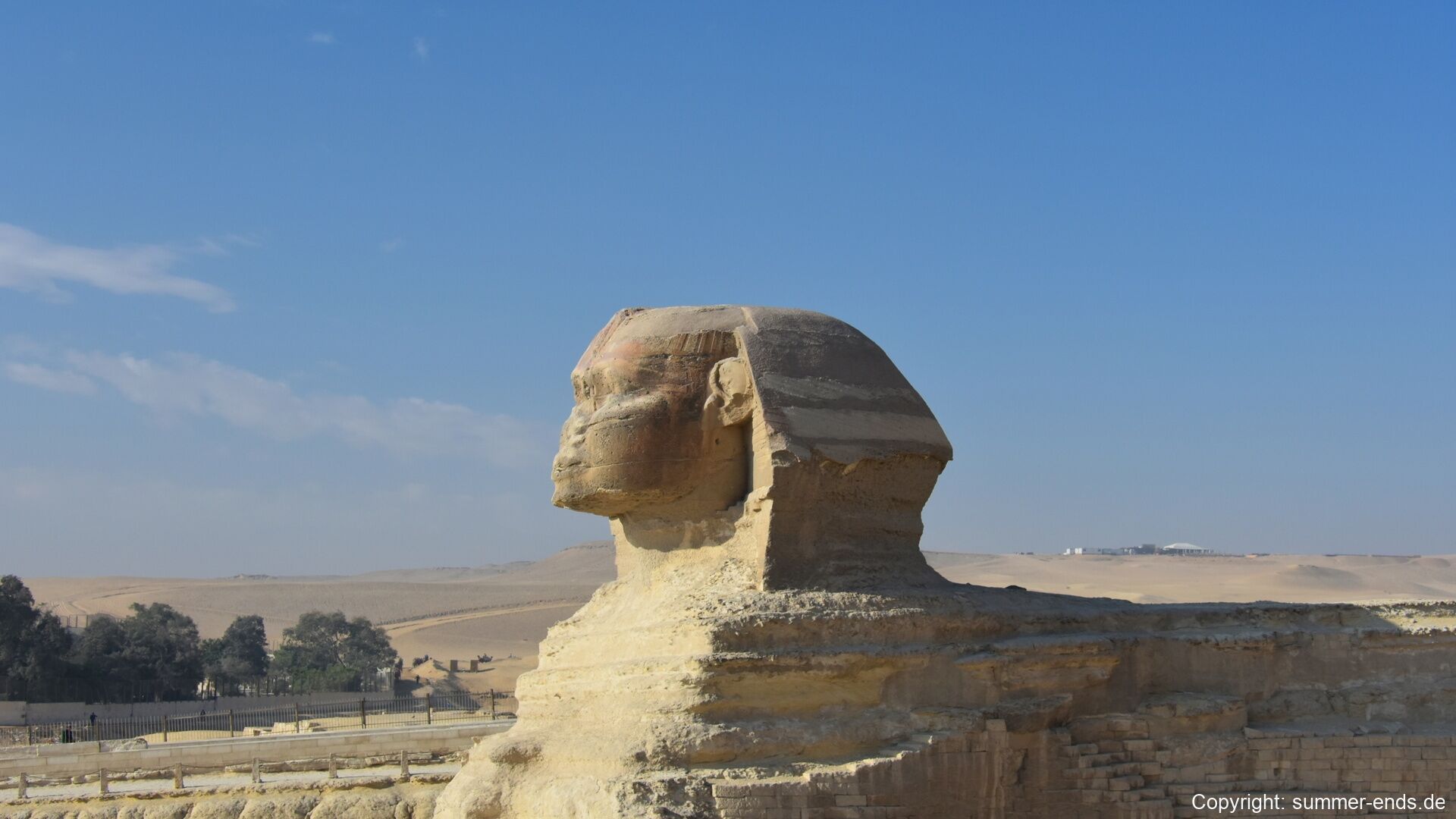
The Great Sphinx is a geological cross-section of that succession. It was carved from a residual massif of the harder limestone that had been left standing in the quarry from which the core blocks of Khafre’s pyramid were cut, and its form reflects the layered resistance of the rock: the head occupies the upper, harder beds, while the body, cut into the softer marly layers beneath, has weathered far more deeply. Wind-blown sand, salt crystallisation and occasional rain have etched the body of the Sphinx into the deeply eroded form visible today, while the head, repeatedly repaired from the New Kingdom onwards, preserves its original proportions.

The building materials of the monuments are equally a record of Egyptian geology. The core masonry came from the horseshoe quarries that still surround the pyramid fields, the fine white casing from the Tura quarries on the east bank of the Nile, ferried across the river, and the granite of the chambers, the valley temples and the lower casing of Menkaure’s pyramid from Aswan, more than 800 km upstream. The choice of the plateau itself was a geotechnical decision: the pyramids required a foundation of solid limestone, not the soft alluvium of the valley floor on which the city of Cairo later grew, and the ancient surveyors levelled the bedrock to within a few centimetres over the whole base of the Great Pyramid.

Four and a half millennia of exposure have made the geology of the plateau the central problem of its conservation. The monuments themselves, built of massive blocks on rock foundations, survived the 1992 Dahshur earthquake (magnitude about 5.8) with little more than the loss of loose summit blocks (a striking contrast to the damage suffered by the masonry of the alluvial city), but the Sphinx and the softer parts of the site continue to be eroded by wind, salt and the rare but violent desert rainstorms. Modern pressures are largely urban: rising groundwater from the irrigation and the growing town of Nazlet el-Samman at the eastern edge of the plateau, air pollution from the adjacent metropolis, and the successive restoration campaigns of the twentieth century, not all of which aged well, keep the interface between geology and conservation a live scientific debate.

Things to See

The Great Sphinx lies in its quarry-cut enclosure south-east of the pyramid of Khafre, whose valley temple it guards. Carved from the living limestone that had been left standing in the quarry, the colossal figure of a recumbent lion with the head of a king measures 73 m from paw to tail and stands 20 m high. The head, cut from the harder upper beds of the plateau, keeps the features of the original sculpture, while the body, carved into the softer marly layers, has weathered far more deeply. Between the paws the Dream Stela of Thutmose IV records the New Kingdom clearing of the sand; the loss of the nose is attributed by the medieval historian al-Maqrizi to the Sufi zealot Muhammad Sa’im al-Dahr in 1378, and fragments of the great beard are preserved in the British Museum.

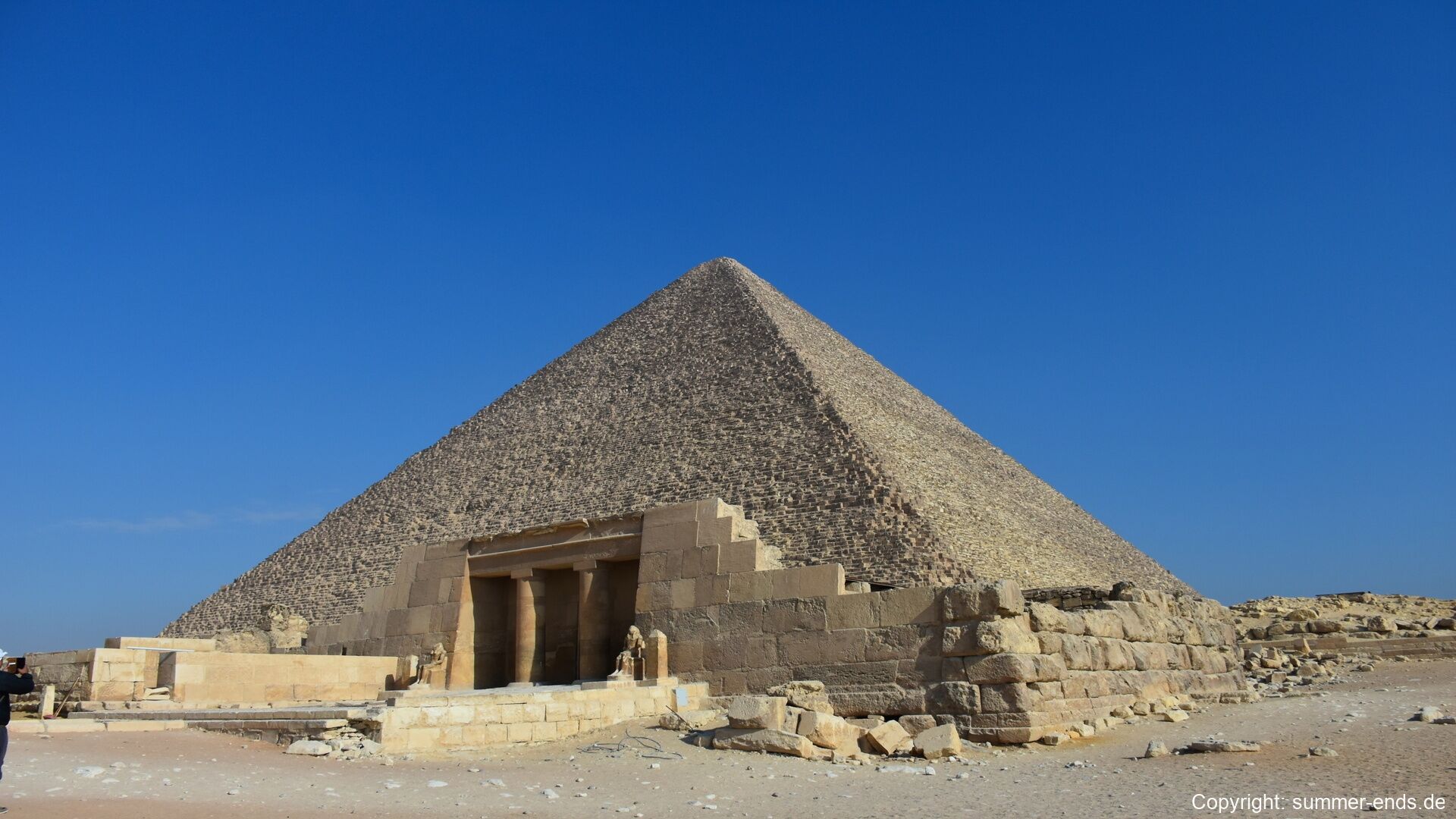
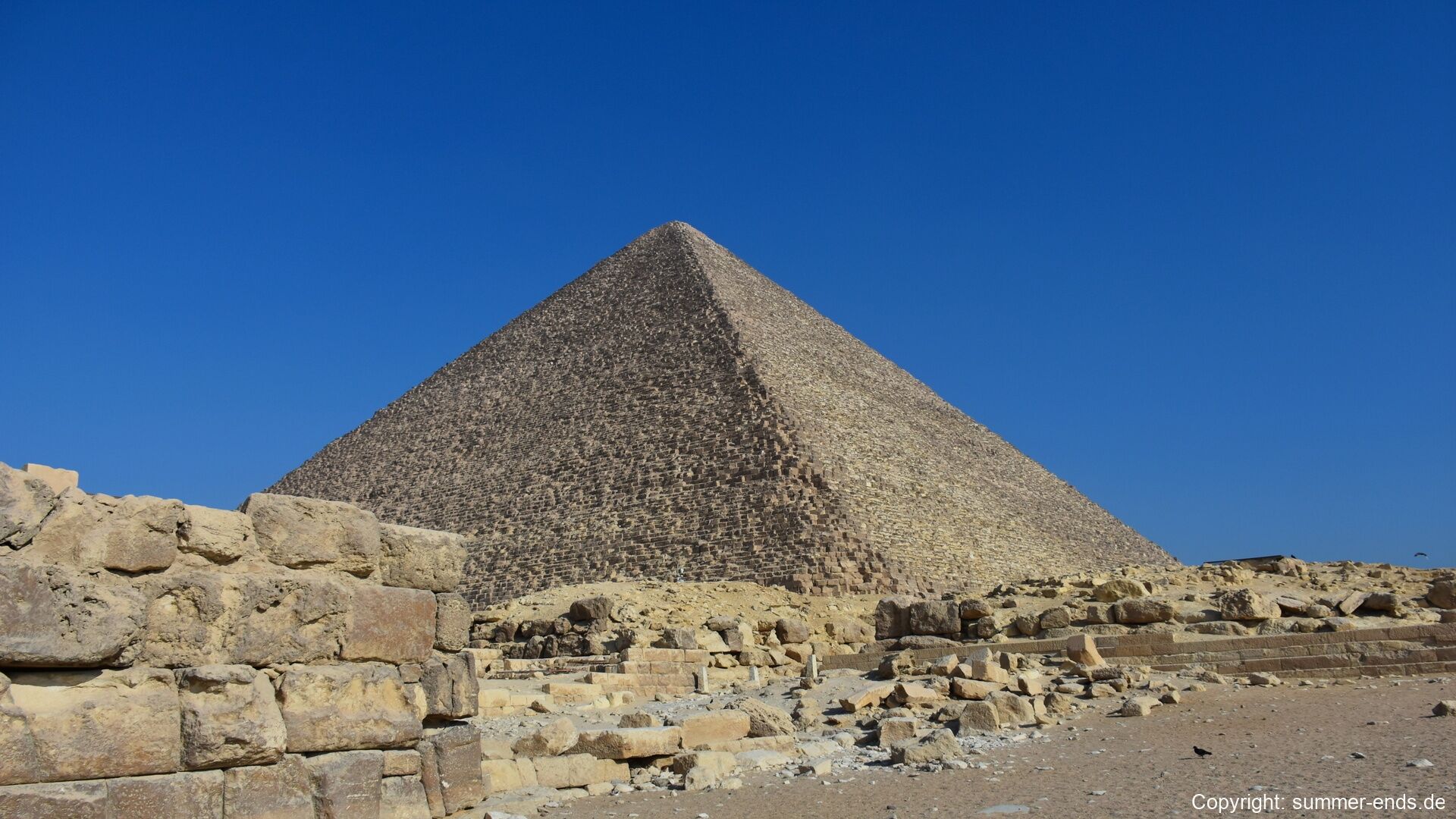
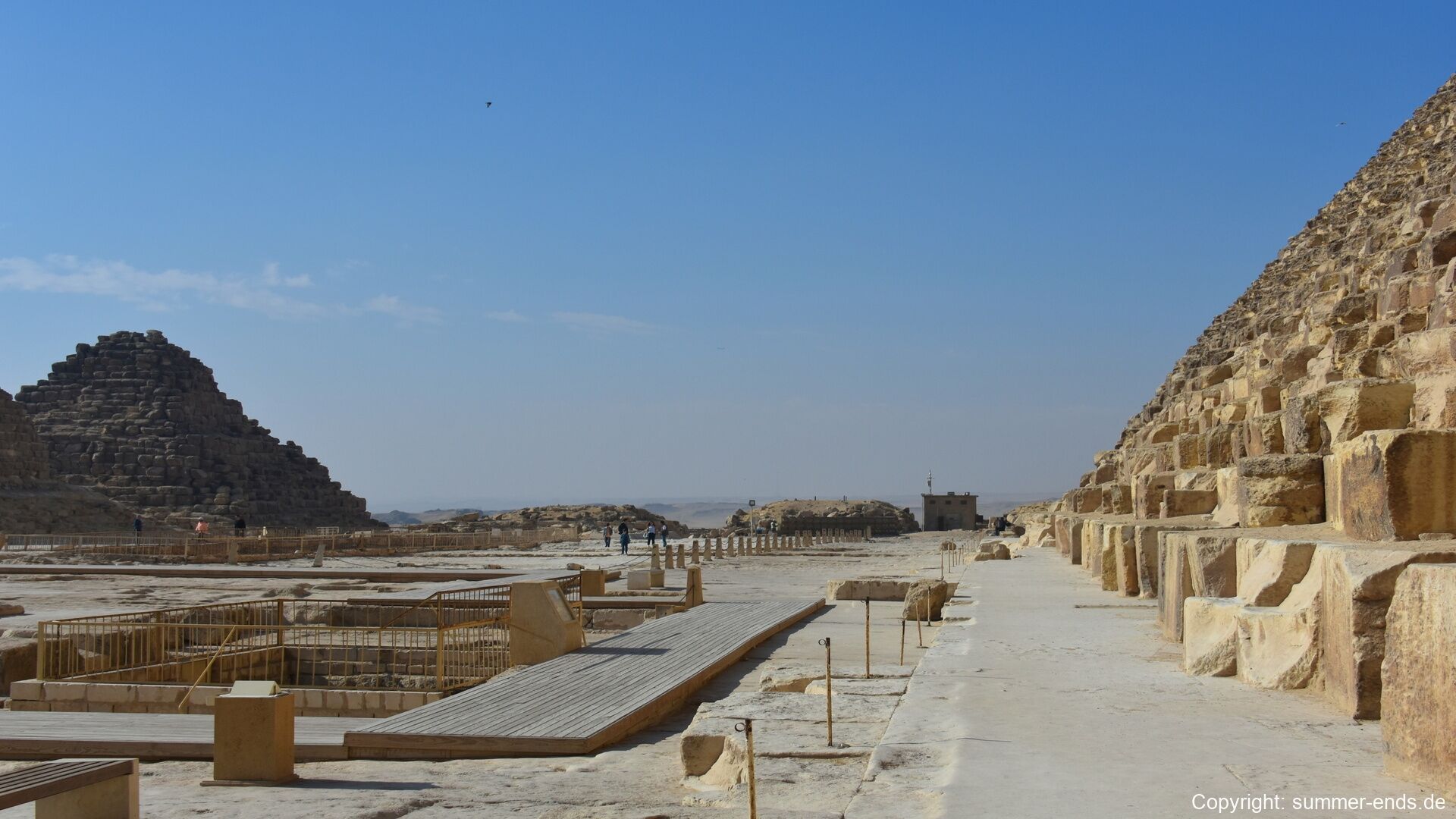
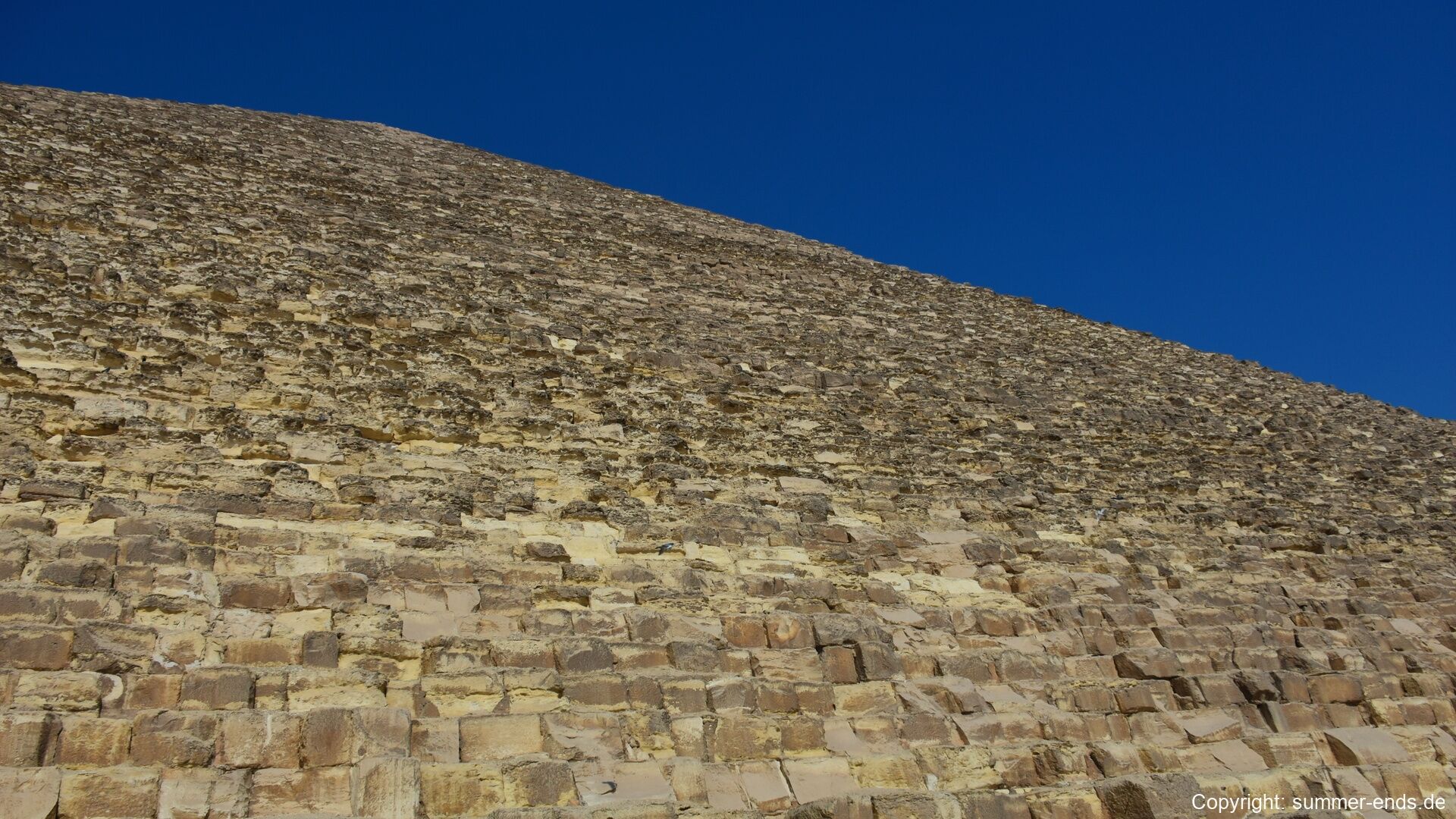
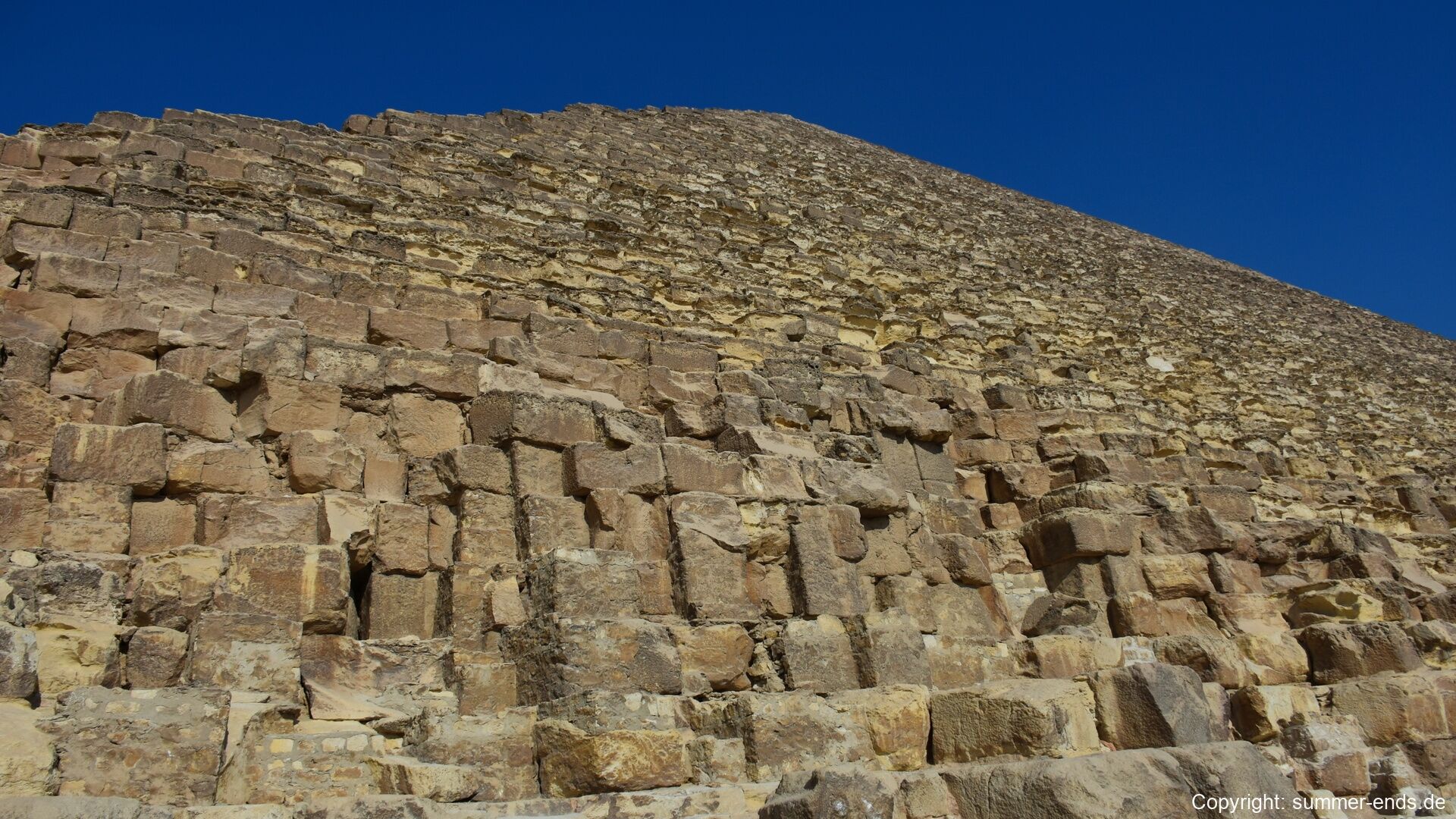
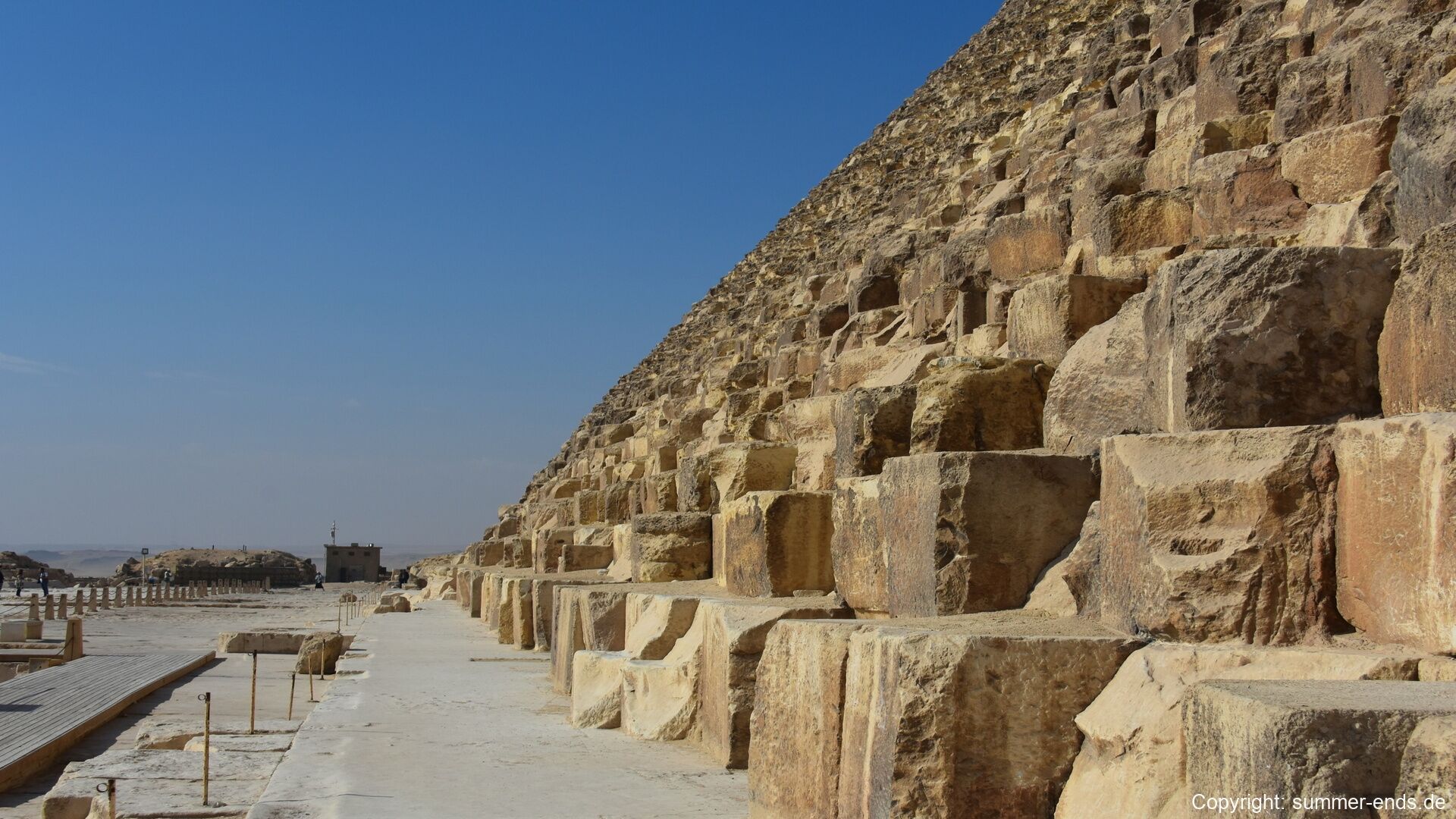
The Great Pyramid of Khufu occupies the north-eastern corner of the plateau, the largest of the three, the oldest of the Seven Wonders of the Ancient World and the only one of them still standing. Built in the reign of Khufu (c. 2589-2566 BC), it rose originally to 146.6 m and measures some 230 m along each side of its base; the stripping of the fine casing of Tura limestone for the buildings of medieval Cairo has reduced it to its present height of 138.5 m. The modern entrance on the north face opens beside the medieval breach traditionally attributed to the caliph al-Ma’mun, who in 832 is said to have forced a tunnel into the pyramid in search of treasure.

Within, the ascending passage climbs to the Grand Gallery, whose corbelled walls of fine limestone rise to more than eight metres; at its head lies the King’s Chamber, walled and roofed with red granite from Aswan and still holding the battered, lidless sarcophagus of Khufu. Two narrow shafts rise from the chamber towards the faces of the pyramid, their purpose, whether ventilation or passages for the king’s spirit towards the stars, still debated. The unfinished Queen’s Chamber opens from the lower end of the gallery, and a rough chamber was cut into the bedrock beneath the pyramid. Above the King’s Chamber the relieving chambers carry the red-painted quarry marks in which Colonel Vyse read the name of Khufu in 1837, the only inscription known in the monument, while muon scans of the ScanPyramids mission revealed in 2017 a large void above the gallery that remains unexplored.

The pyramid of Khafre stands south-west of the Great Pyramid on slightly higher bedrock, so that although its base of about 215 m and its height of 136 m are both smaller than those of Khufu’s monument, it appears the tallest of the three; it alone retains a band of the original casing near the apex. Its pyramid complex includes the Great Sphinx, the mortuary temple against the eastern face and the great valley temple of red granite and Tura limestone at the edge of the cultivation, linked by a causeway; from the valley temple comes the celebrated diorite statue of the seated Khafre, now in the Egyptian Museum.

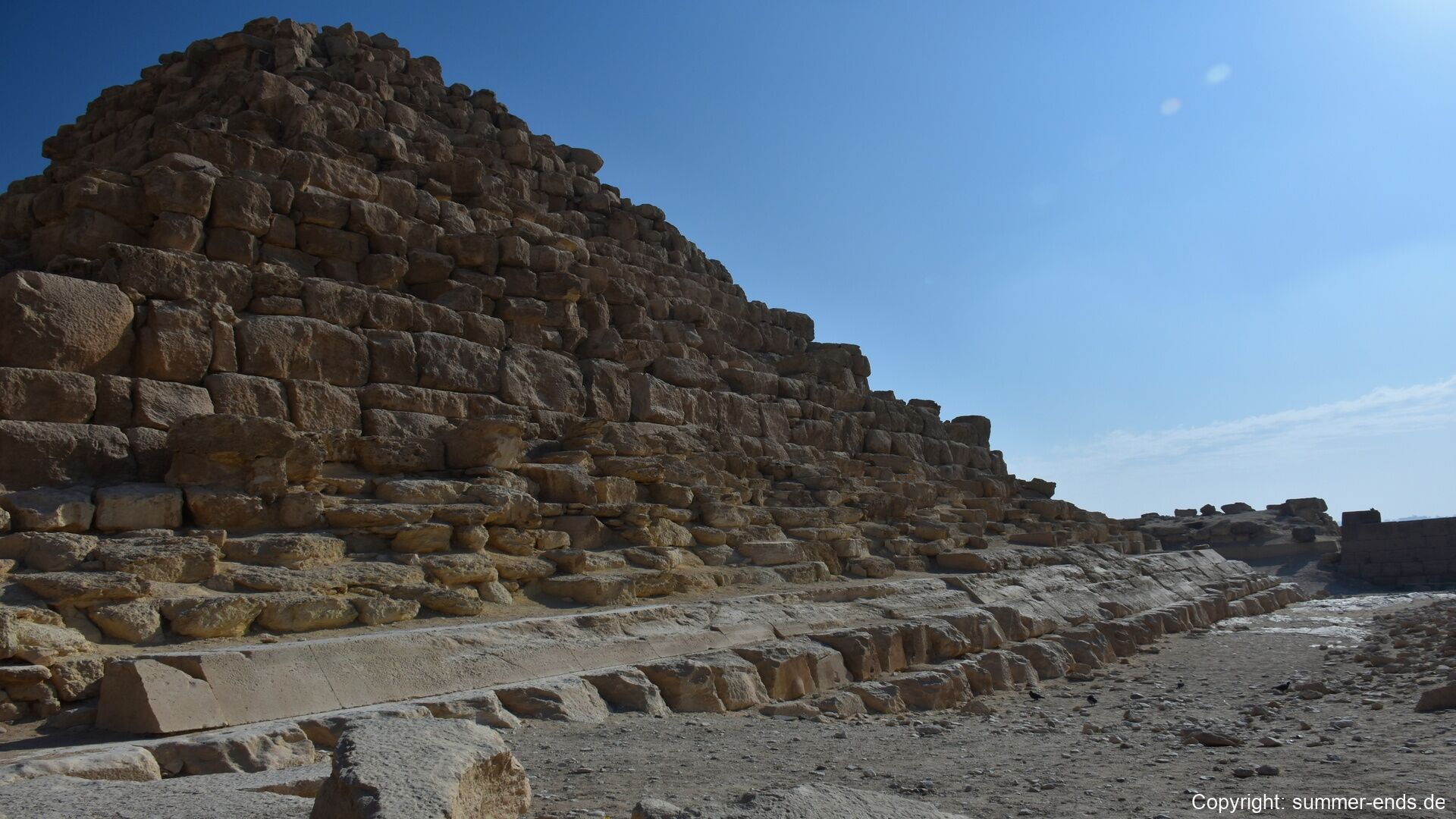
The pyramid of Menkaure, the smallest of the three, closes the line at the south-western end of the plateau with barely a tenth of the volume of Khufu’s monument; it rose originally to 65.5 m above a base of about 108 m. Its lower courses were sheathed in red granite from Aswan, left partly rough where the work stopped at the king’s death, and the casing of fine limestone above them was never completed. Three subsidiary pyramids of the royal women stand in a row along its southern side, and the nearby valley temple yielded the greywacke triads showing the king with goddesses and the nomes of Egypt.

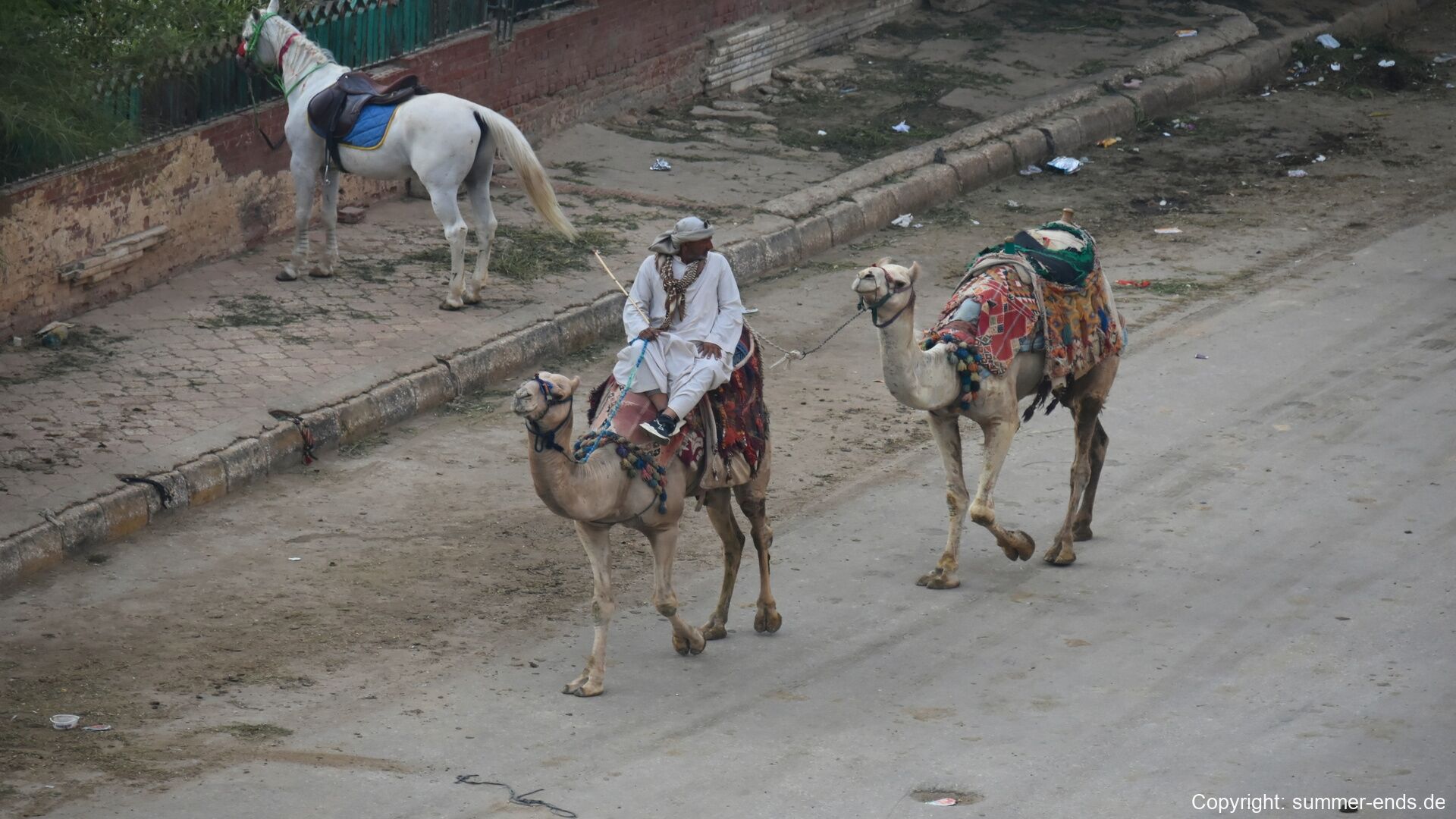
Beyond the pyramids the plateau carries the cemeteries of the Old Kingdom court, long rows of flat-topped mastaba tombs of officials and priests that make the site, in the literal sense, a city of the dead; the largest fields lie west of the Great Pyramid and south of Khafre’s monument. From the high dunes west of Menkaure’s pyramid the classic view presents all three pyramids in a line, with the skyline of Giza and Cairo beyond the green strip of the Nile valley, and camel and horse treks from the eastern foot of the plateau climb towards these viewpoints.

References

  1. Lehner, M. (1997). The Complete Pyramids. London: Thames & Hudson.
  2. Lehner, M. & Hawass, Z. (2017). Giza and the Pyramids: The Definitive History. Chicago: University of Chicago Press.
  3. Romer, J. (2007). The Great Pyramid: Ancient Egypt Revisited. Cambridge: Cambridge University Press.
  4. Said, R. (1990). The Geology of Egypt. Rotterdam: A. A. Balkema.
  5. Morishima, K. et al. (2017). Discovery of a big void in Khufu’s Pyramid by observation of cosmic-ray muons. Nature 552, 386-390. doi.org/10.1038/nature24647
  6. United States Geological Survey (1993). Reconnaissance report on the 12 October 1992 Dahshur, Egypt, earthquake. Open-File Report 93-181. Reston, VA: USGS. doi.org/10.3133/ofr93181
  7. UNESCO World Heritage Centre (1979). Memphis and its Necropolis: the Pyramid Fields from Giza to Dahshur. World Heritage List, ref. 86. whc.unesco.org/en/list/86/
  8. Wikipedia contributors (2026). Giza pyramid complex. en.wikipedia.org/wiki/Giza_pyramid_complex
  9. Wikipedia contributors (2026). Great Pyramid of Giza. en.wikipedia.org/wiki/Great_Pyramid_of_Giza
  10. Wikipedia contributors (2026). Pyramid of Khafre. en.wikipedia.org/wiki/Pyramid_of_Khafre
  11. Wikipedia contributors (2026). Pyramid of Menkaure. en.wikipedia.org/wiki/Pyramid_of_Menkaure
  12. Wikipedia contributors (2026). Great Sphinx of Giza. en.wikipedia.org/wiki/Great_Sphinx_of_Giza
  13. Wikipedia contributors (2026). Khufu ship. en.wikipedia.org/wiki/Khufu_ship
  14. Wikipedia contributors (2026). Giza Plateau. en.wikipedia.org/wiki/Giza_Plateau
  15. Wikipedia contributors (2026). Mokattam Formation. en.wikipedia.org/wiki/Mokattam_Formation
  16. Wikipedia contributors (2026). 1992 Cairo earthquake. en.wikipedia.org/wiki/1992_Cairo_earthquake