Just a short distance from Rome’s ancient port of Ostia Antica, hidden along the road that once led to the harbor, lies one of the most fascinating yet lesser-known archaeological sites in Italy – the Necropoli di Porto. This ancient cemetery, located near the town of Fiumicino and the former Portus harbor of Rome, offers a moving and detailed insight into the lives – and deaths – of the people who shaped the Roman Empire’s maritime gateway. In this video, we explore the Necropoli di Porto, uncovering its history, architecture, and the stories it still tells today.
The necropolis is set along the Via Flavia-Severiana, the main road connecting Portus, the great imperial harbor built by Emperor Claudius and later expanded by Trajan, with Ostia and the rest of the Roman world. For centuries, this area was a thriving hub of commerce, where ships from across the Mediterranean brought goods, people, and ideas into Rome. Alongside such bustling activity grew the need for burial places for sailors, merchants, freedmen, and families connected with the port.
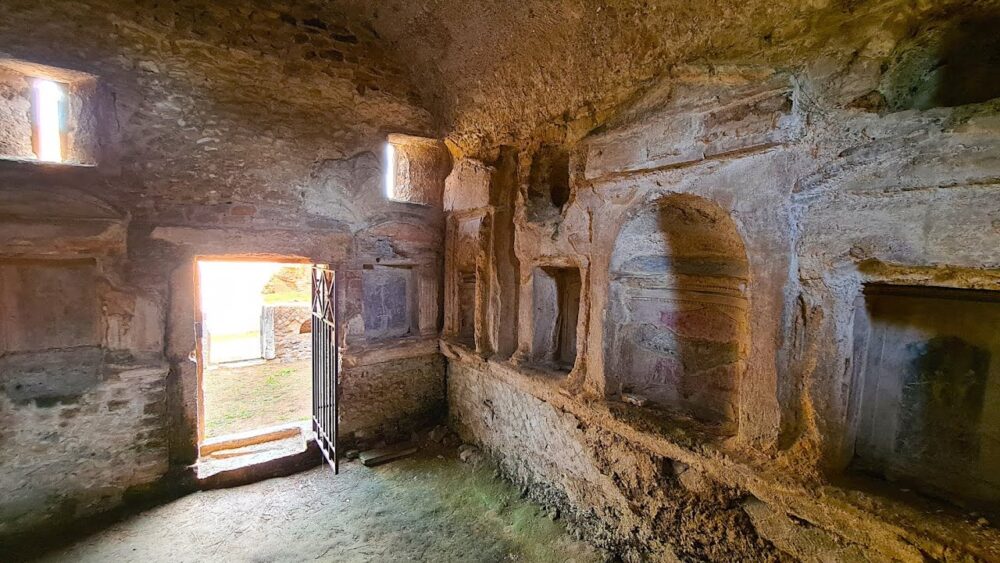
Walking through the site today, you encounter a remarkable collection of tombs and funerary monuments dating from the 1st to the 4th centuries AD. Unlike the grand mausoleums of emperors and elite families, the Necropoli di Porto reflects the lives of ordinary citizens, freed slaves, and members of professional guilds. Each tomb is unique: some are simple brick chambers, while others are decorated with mosaics, inscriptions, and reliefs that reveal not only names and dates, but also professions, beliefs, and personal dedications.
One of the most striking aspects of the site is how intimately human it feels. Inscriptions speak of love, loss, friendship, and community. Many tombs belonged to collegia – professional associations of sailors, craftsmen, or merchants – highlighting how social identity and shared work carried over into the afterlife. Reliefs depict anchors, ships, tools, and symbolic motifs connected with the sea, offering a vivid reminder of how closely tied this community was to maritime life.
The necropolis is also an incredible example of Roman funerary architecture. Visitors can see columbaria – communal tombs with niches for urns – as well as more elaborate family mausoleums, often with barrel vaults or decorative facades. Some tombs were even reused or modified across generations, showing how traditions evolved over time.
What makes the Necropoli di Porto so compelling is its atmosphere. Unlike the crowded tourist areas of Rome, this site is quiet, contemplative, and almost forgotten. Walking among the ruins, surrounded by cypress trees and the sounds of nature, you can almost feel the presence of the people who lived and worked here nearly two thousand years ago. It’s not only a place of archaeology but also a place of memory.
For history lovers, the necropolis is a crucial piece of the puzzle in understanding the daily lives of Romans. While Ostia Antica shows us the bustling streets, warehouses, and theaters of a Roman city, the Necropoli di Porto reminds us of the human side of history – the individuals whose names, professions, and stories would otherwise be lost.
Visiting the site also connects you directly to the story of Portus, the great artificial harbor of Rome. Built to secure grain supplies and trade routes, Portus was one of the most important logistics centers of the empire. The necropolis sits right outside this hub, a silent witness to centuries of activity. Today, only fragments of Portus survive, but combined with the Necropoli, they paint a vivid picture of life in the empire’s maritime world.
Practical information: the Necropoli di Porto can be visited near Isola Sacra, between modern Fiumicino and Ostia Antica. It is managed by the archaeological authorities of Lazio and often overlooked by visitors rushing to Rome or the beaches. Yet for those who make the trip, it offers a quiet and deeply rewarding experience.
So why visit the Necropoli di Porto? Because it offers something unique: a glimpse into the ordinary lives of the Romans who kept the empire’s heart beating. It’s a site that combines history, architecture, and emotion in one unforgettable setting. From the inscriptions of freed slaves to the symbols of sailors, from the modest brick tombs to the more elaborate family monuments, the necropolis speaks directly across the centuries.
👉 If you enjoyed this journey through the Necropoli di Porto, don’t forget to like the video, subscribe to the channel, and hit the bell icon for more travel history adventures. Have you visited Ostia Antica or Portus before? Share your experiences and impressions in the comments – we’d love to hear your stories!