Day 1 - 31.05.2012 - Xingcheng
Journal Notes
Around 07:00 I got up, surfed the internet, and had breakfast: two boiled eggs, bamboo shoots, and fried rice, which also contained ham. The coffee machine produced only hot water, but I made do with that. A slice of white bread with jam cost a total of 12 yuan.
Afterward I took a shower and checked out. It was sunny, and the temperature was around 24 °C. First, I bought some cigarettes and a lighter at a shop near the hotel. The saleswoman didn’t understand me at first, because I pointed at the cigarettes and then at the lighter. The total came to 11 yuan—1 yuan for the lighter and 10 yuan for the cigarettes.
The cigarettes contained only 0.8 mg of nicotine, which used to be sold as “light” cigarettes about 15 years ago, since they had roughly half the nicotine of regular ones. The first lighter lasted only three days before it fell apart completely—long before the gas had run out.
Around 09:00 the backpack was packed. The LP went on top, as it would be used most—for orientation and translation. Passport and bank card went into my trouser pocket. Then I headed toward the train station.
To the left there was supposed to be a post office, where I wanted to send an urgent letter home. On the ground floor there was only a counter, but I quickly realized that I had to go up to the first floor. The letter to Germany cost 6 yuan.
I still had two hours before the train was due to leave. First I sat in front of the station for about an hour, watching the surroundings. Then I went to a small convenience shop to get some pear juice. I also picked up a few sweet pastries. At the station there were cherries sold by all kinds of vendors. On the signs I saw “15+” and “2+,” which I understood to mean 15 yuan for 2 kilograms.
The vendor stood just before the underpass leading to the other exit, where loudspeakers were buzzing at a fairly high volume. The woman filled an entire box and wanted 50 yuan for it. That was clearly too much for me, so I pointed at the sign. She didn’t seem to understand and called someone over, then filled a smaller bag instead. In the end I paid 15 yuan for about 300 grams of cherries—and they weren’t very good at all.
Check-in at the station felt very much like an airport. Luggage had to be put through a scanner, and passengers walked through a metal detector. No one seemed particularly interested in the metal detector, and probably not much in the scanner either—after all, my netbook was inside.
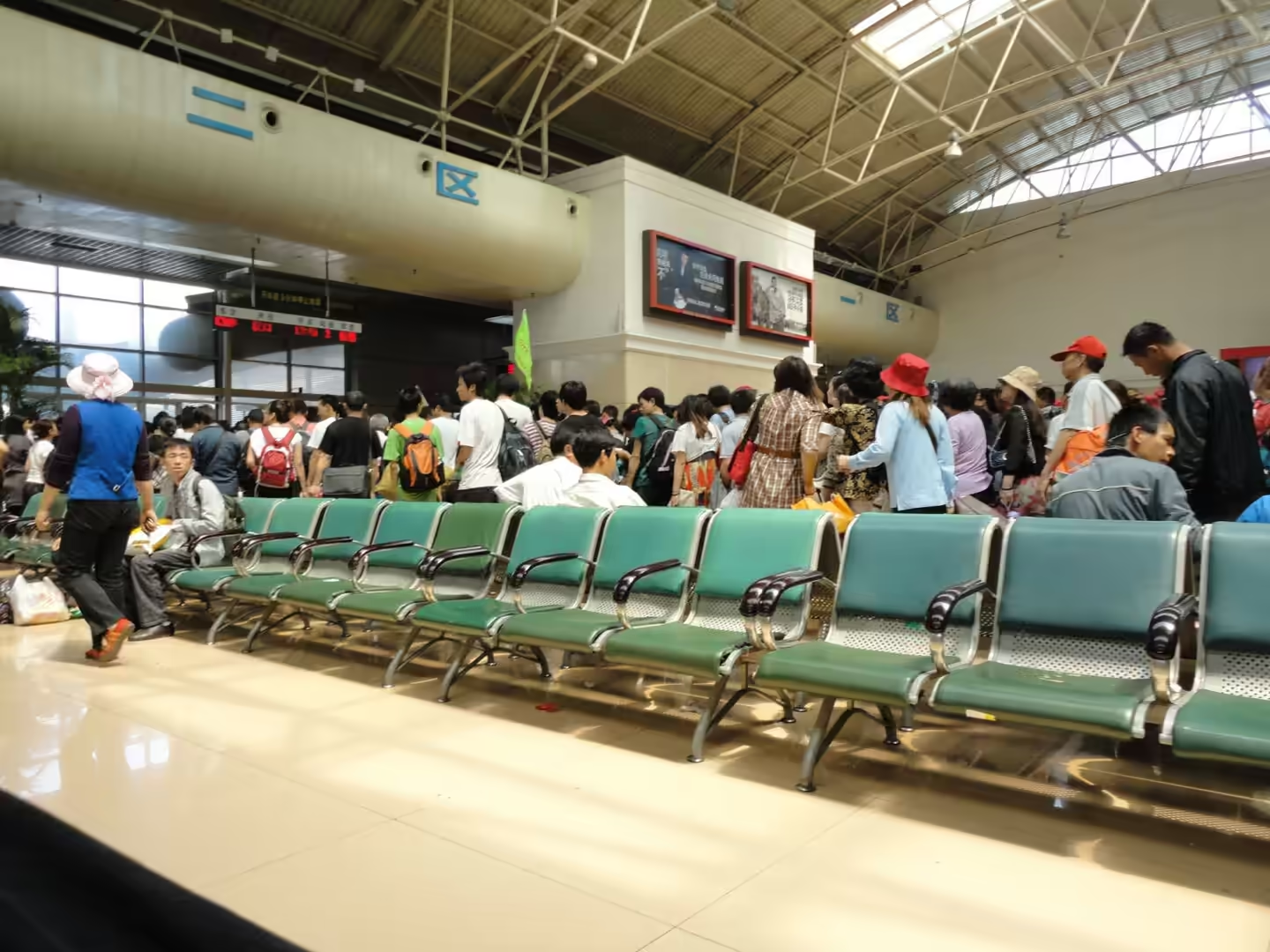
The waiting hall was huge, with “gates” on both sides and the platforms below. When a train arrives, passengers first get off, and only then are those departing allowed onto the platform. Naturally, this only works with orderly queueing. At each carriage, a conductor in a blue shirt checks tickets again. At least this makes it hard to get lost, even though all destinations are written only in Chinese characters. The carriages are numbered, and since the ticket includes a seat reservation, finding your place is easy.
The train was already quite full, even though it didn’t actually depart until Dalian. By then it was quite warm outside, but fortunately the train had air conditioning. It left with a few minutes’ delay. The windows could not be opened.
Smoking was not allowed inside the carriages, but it was permitted between them. This area was officially marked as a smoking zone. The train was a K-train—a normal fast train below the high-speed category, roughly comparable to a German IC. After departure, tickets were checked once again.
The train left Dalian very slowly; the city seemed to stretch on forever. I wasn’t entirely sure when to get off. Some stations had signs with Latin letters, but you could only read them once the train had already started moving again—especially since I was sitting in carriage number 13. My GPS didn’t work inside the train, as there was no reception.
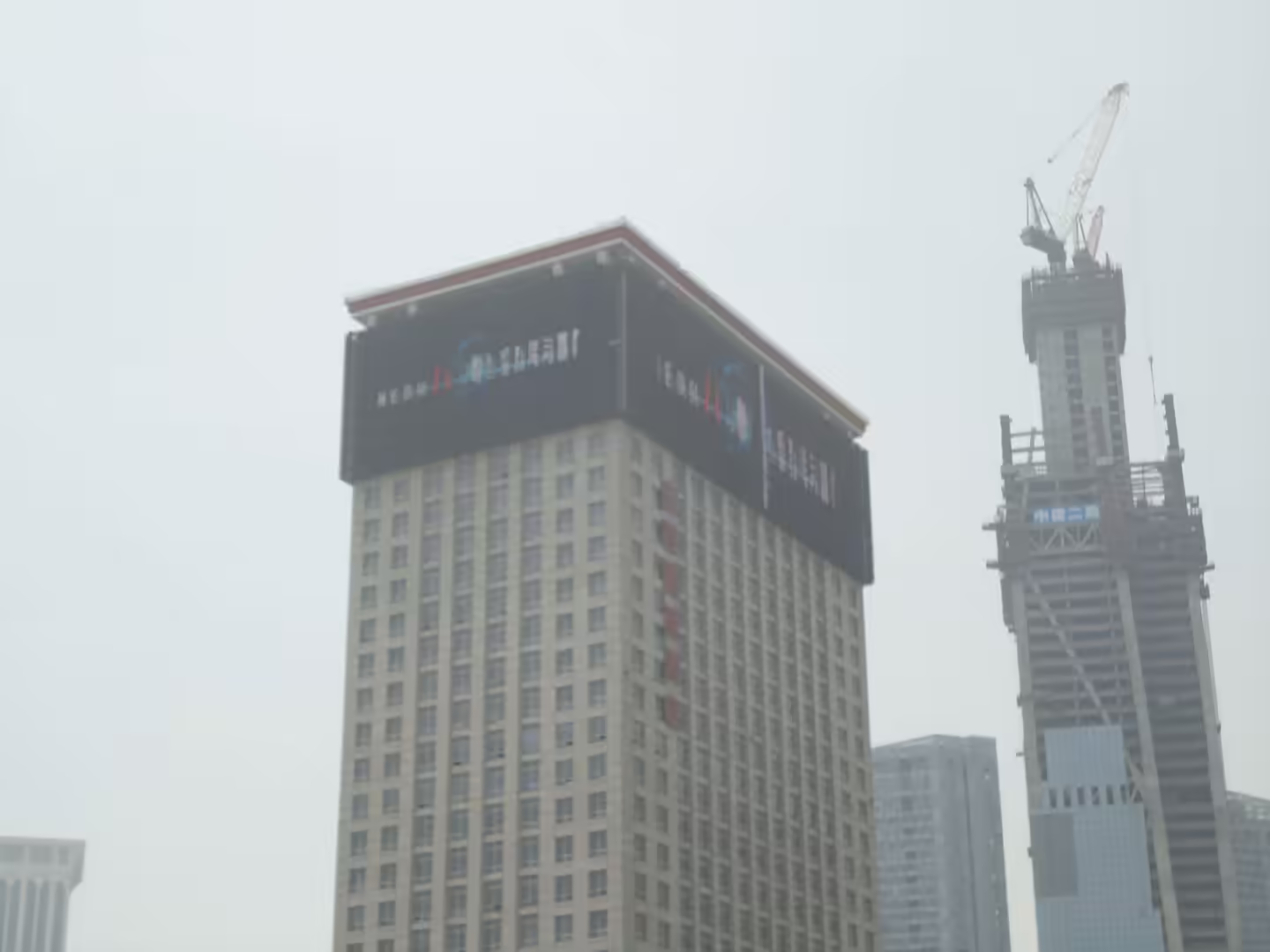
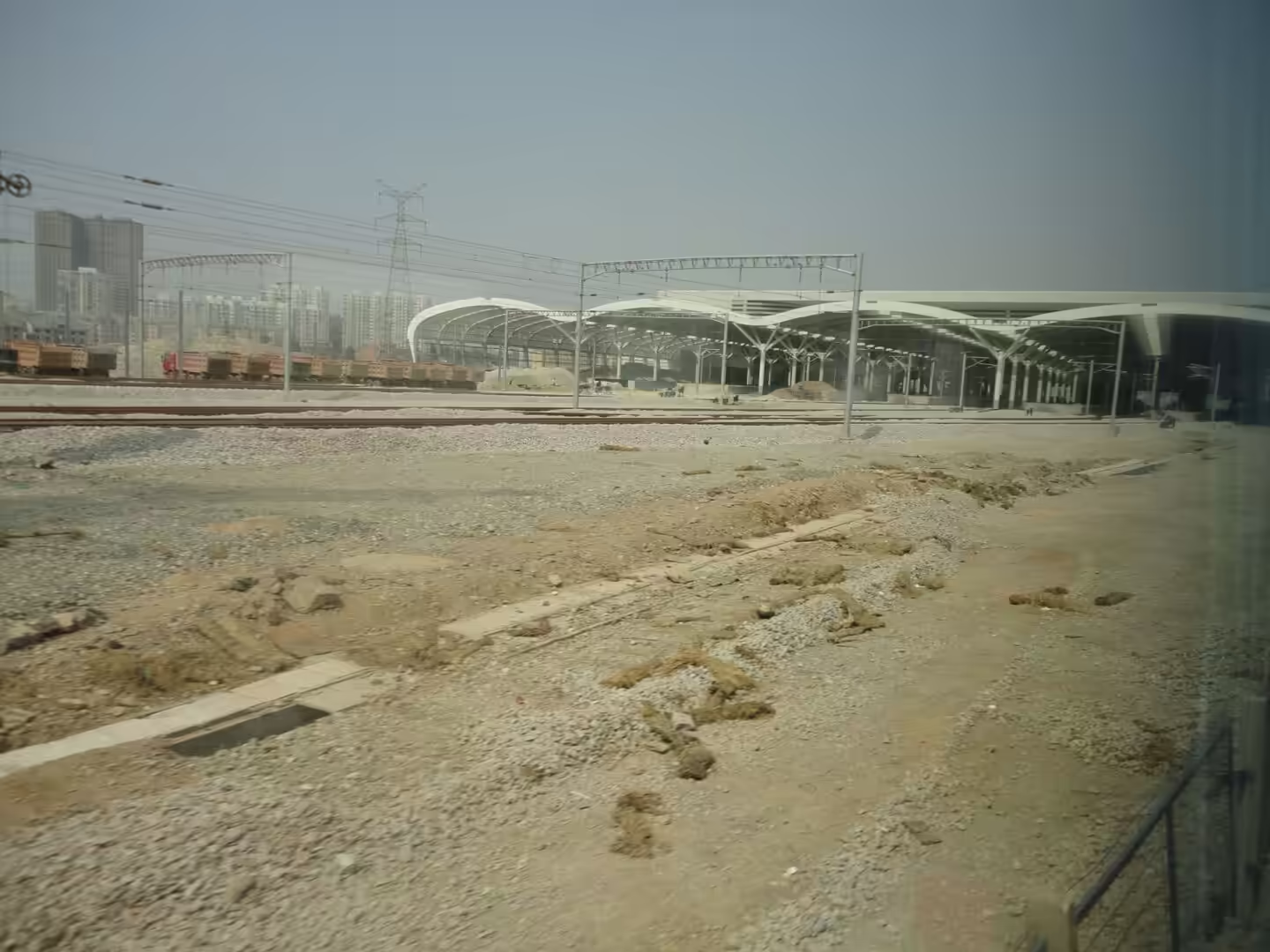
On the outskirts of Dalian, huge districts with 30-storey high-rises and stations with ten to fifteen tracks seemed to appear out of nowhere. The construction, however, looked somewhat improvised. For example, a freight train delivered ballast for new tracks, but the wagons were so overloaded that some of the stones had spilled onto already completed lines. Piles of ballast lay along both sides of the tracks and had to be cleared later.
The stones were distributed by teams of three workers: one handled a shovel with two ropes attached, while the other two pulled on the ropes to spread the gravel. The train first headed north, then west, and finally south, stopping roughly every 30 minutes.
No one was reading anything. I hardly saw anyone with a book or newspaper. I was probably the only non-Asian on the entire train. After a while, I got into conversation with a group of students. One of them used his mobile phone to translate, but that often didn’t work very well, because he tried to translate whole sentences. I didn’t bother explaining that single words would work better—the translated sentences made no sense anyway.
They asked for my name and tried to translate it, which of course didn’t work at all. Thanks to the students, I had little peace for the rest of the journey—but that wasn’t such a bad thing. One of them taught me the correct pronunciation of some Chinese words using the Lonely Planet word lists.
During the trip we went through many Mandarin words together. I occasionally took the liberty of joking and replied with Cantonese words instead. It was probably like someone answering in Saxon instead of standard German. The correct pronunciation was often very different from the phonetic transcription in the guidebook. From time to time, 10 to 15 people gathered around us to listen.
The train arrived in Xingcheng with some delay. I hadn’t really known when it was supposed to arrive in the first place. We arrived around 21:30, and by then it was already dark. You leave the platform through a gate where the ticket is checked again. Outside, numerous taxi drivers were shouting at the arriving passengers.
I first sat down to the right of the exit to look for a hotel in peace and get my bearings. I also waited for my navigation app to reconnect.
I had actually wanted to look everything up on the train, but because of the students I got absolutely nothing done and was, quite literally, thrown abruptly into another world. In front of me stood three taxis. I wanted to go to a street where a hotel I had picked out was located, but the driver made it clear that the hotel was right there and that I could easily walk—it wouldn’t be worth the trip for him.
The students had repeatedly used a word that sounded like “shikerella.” Only then did I realize that it meant something like “arrived.” I briefly considered asking for a hotel right on the beach, but decided to stay near the station after all. Thanks to my navigation system, which was now working again, I could orient myself using the map. That turned out to be extremely helpful, since the Lonely Planet section on the city didn’t include a map and I always knew exactly where I was.
After a while, I stopped on the sidewalk to consult the guidebook, because I didn’t know the Chinese characters for the hotel I was looking for. I looked up—and realized I was standing directly in front of a hotel. The reception staff inside waved happily at me, which must have looked rather odd. I went in and asked about the price. It wasn’t the hotel I had originally intended to stay in, but I wanted to take a look anyway. The room was 100 yuan, about €12.
Immediately an elderly woman rushed over, shaking her head—apparently that wasn’t possible. I had read in the LP that foreigners are often not allowed to stay in the cheapest hotels, and this seemed to confirm it. I didn’t really want to stay there anyway.
The two receptionists kindly wrote down the Chinese characters for the hotel I had been looking for. That hotel turned out to be quite elaborate and located on a corner. Five women sat at the reception desk, none of whom spoke a word of English. The price was 600 yuan—almost €80. I had no interest in that and walked back toward the station.
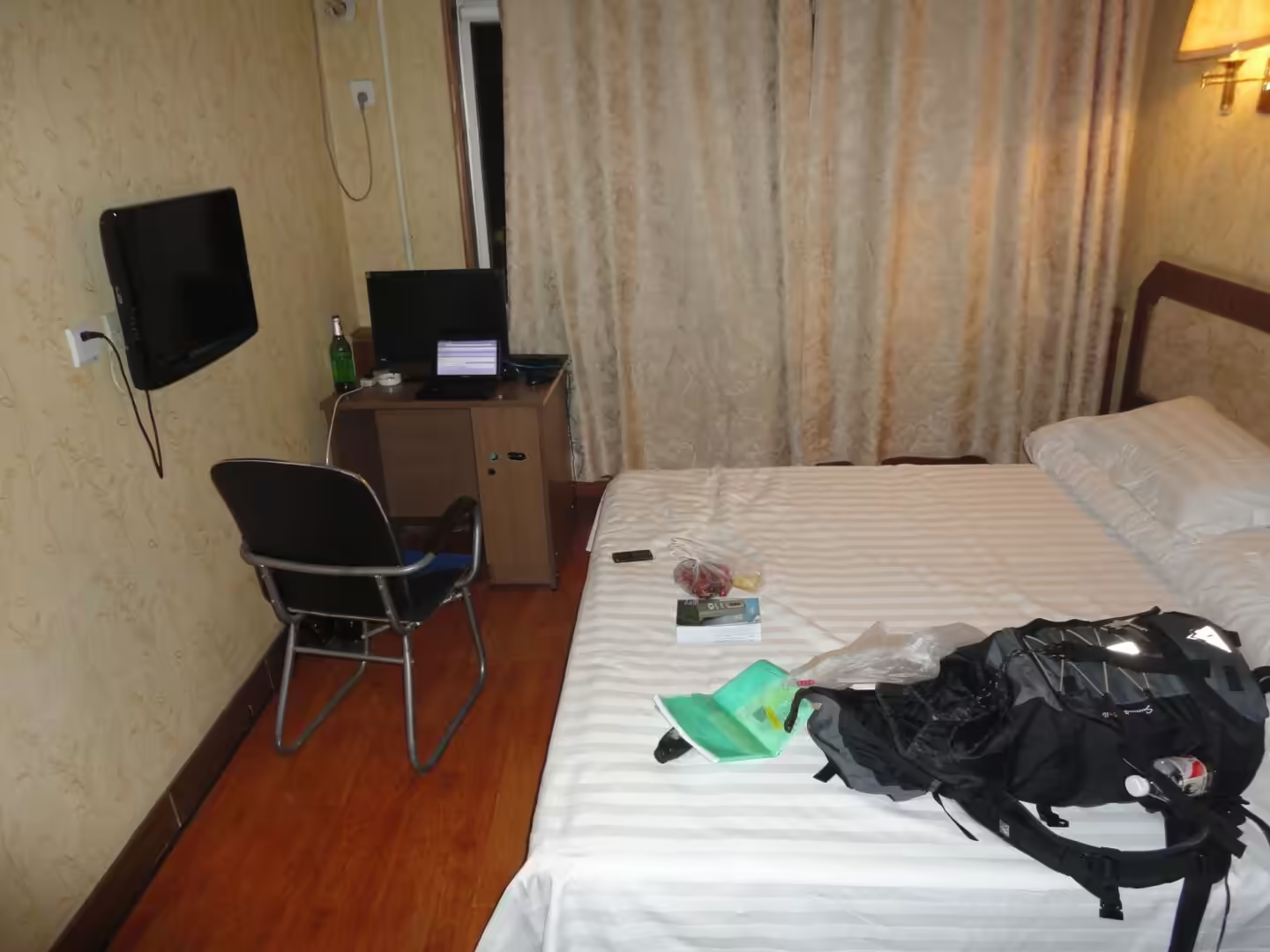
After about five minutes I came across another hotel offering rooms for 189 yuan. Again, no English, but that didn’t matter. A cleaning lady showed me the room: air conditioning, TV, shower, and even a PC with internet access. That was all I needed. The room was clean, so I agreed.
At reception I was asked to pay a 200-yuan deposit, which I initially understood as 700. Then the woman suddenly seemed to lose interest in the whole matter and gave me back the 200 yuan—leaving only the 189 yuan for the room. I later realized that I hadn’t filled out any form at all, nor had anyone asked for my ID or passport.
I went up to the room and switched on the computer. Of course, everything was in Chinese. I unplugged the network cable and tried it with my netbook, but it didn’t work immediately. I plugged it back into the PC and only then noticed—when opening a website—that Internet Explorer 6 was installed. Joomla promptly reminded me that this browser really shouldn’t exist anymore, which made me wonder how there could still be users with IE6.
I took the cable again and checked the PC’s network settings. The IP addresses were fixed, and both the proxy and DNS were external. I copied the settings to my netbook, and after that the internet worked as usual.
In the late afternoon I went back out onto the street to buy some of the local 3% beer. There wasn’t much going on outside. Beer and cigarettes together cost only 17 yuan, with the cigarettes alone already making up 10 yuan. I returned to the room, surfed a bit, and set the air conditioning to a mild 18 °C.