This time I woke up before sunrise. During the night it had become quite cold, and I was woken by the persistent coughing of a man who, judging by the sound of it, would not last much longer. I made do with a quick wash and went downstairs with my things to the café, which was already open.
There I once again enjoyed a decent Moroccan coffee with a solid caffeine kick. I was wearing my winter clothes, and even so it was still quite cold. After the coffee, I went to a shop and bought some flatbread and cheese for the journey to Tiznit and onward to Sidi Ifni.
This time I woke up before sunrise. During the night it had become quite cold, and I was woken by the endless coughing of a man who, judging by the sound of it, didn’t seem to have much time left. I made do with a minimal wash and went downstairs with my things to a café that was already open. There I once again enjoyed a solid Moroccan coffee with a respectable caffeine content. I was wearing my winter clothes, and even so it was still cold.
After the coffee, I went to a shop and bought some flatbread and cheese for the trip to Tiznit and onward to Sidi Ifni.
The nearby bus station was full of buses and taxis—by far the largest I had encountered so far, and it would remain so. This was the main hub for north–south and east–west travel in southern Morocco. After a short search I found a suitable bus to Tiznit for little money. Tiznit is another hub even farther south.


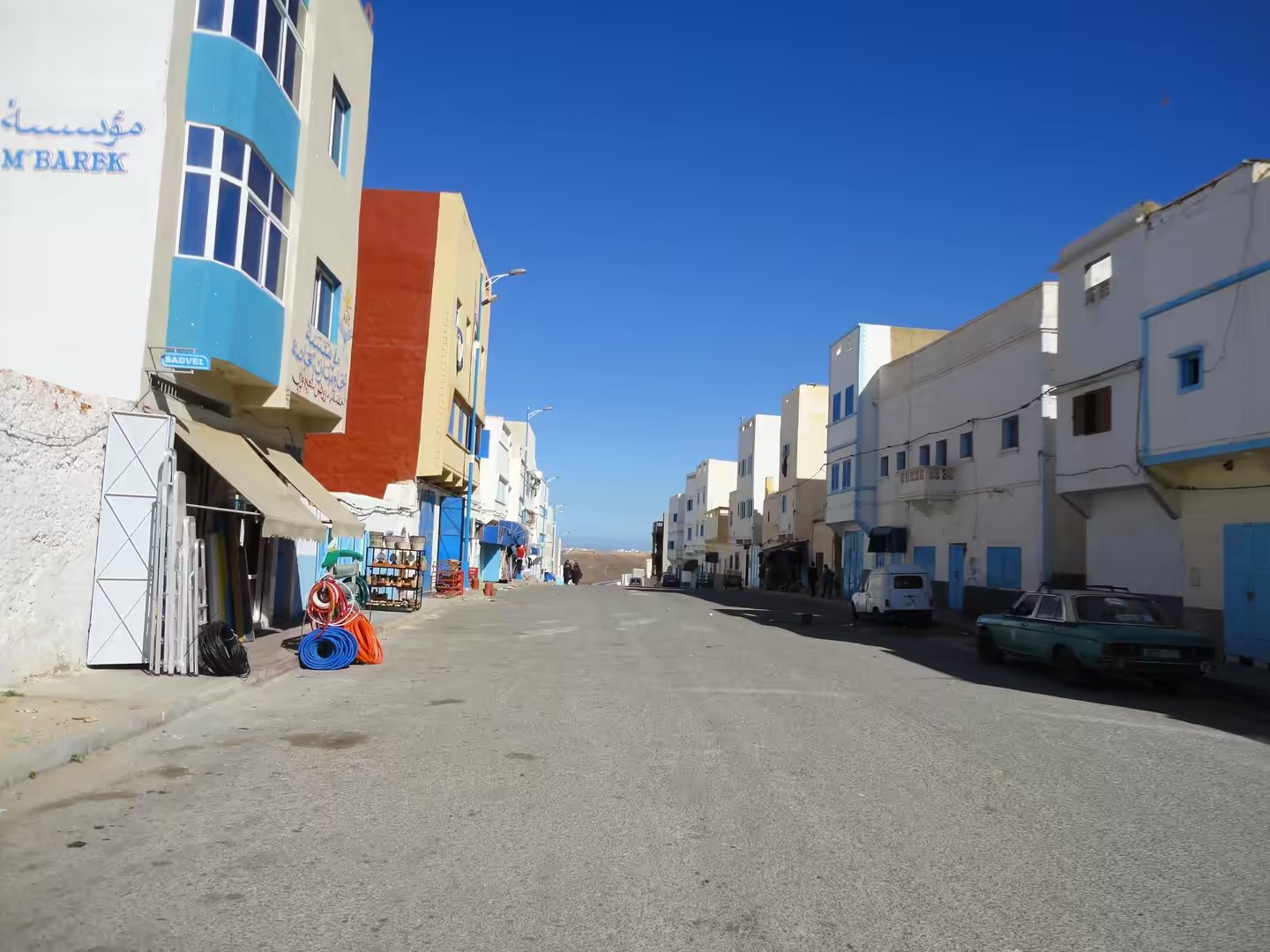
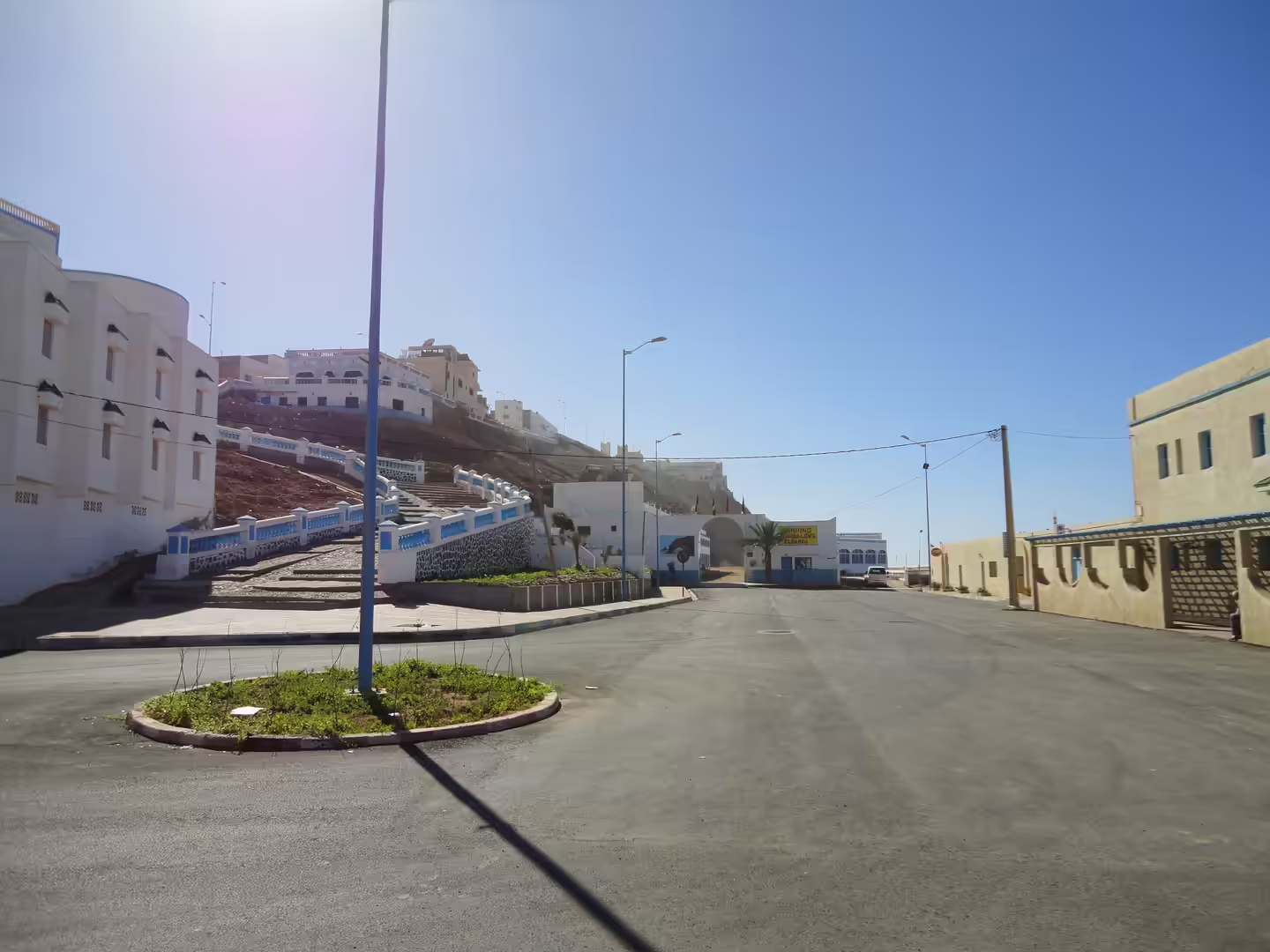

At first the bus windows were steamed up from the humidity, but after sunrise it warmed up quickly. After about two hours we arrived in Tiznit. I got off at the main road near the first larger intersection; to the right was the medina. According to the guidebook, there was nothing special to see in Tiznit, and that seemed accurate. I oriented myself using the map in the guidebook and headed to the taxi stand. To reach Sidi Ifni, one has to take a taxi.
At the first taxi stand there were about twenty taxis. I asked one driver, who just shook his head. I asked a second—same reaction. Finally, one driver approached me and offered to go to Sidi Ifni for 300 dirhams, which was far too much, so I refused. Another driver then told me I was at the wrong taxi stand; taxis to Sidi Ifni depart farther south. I went to the stand he described.
On the way, I stopped at an ATM. As sometimes happens, my memory failed me right after entering the PIN, and I somehow scrambled the numbers. The machine swallowed my card. That was a serious problem. Fortunately, the bank was open. After filling out some forms, I got my card back and was finally able to withdraw cash.
The small town was full of travelers, and outside the medina there was nothing much to see. What stood out was that the buildings and roads were in relatively good condition, and construction activity seemed to be happening everywhere. Under an increasingly strong sun, I finally reached the correct taxi stand.
After a brief exchange, I got into the right taxi. As usual, the driver waited until enough passengers had gathered: three in the front seat and four in the back of the old Mercedes. After about an hour of waiting, we finally set off. The sun grew hotter, and the drive went south over hills and through villages.
Everywhere there were cacti covering entire slopes, most likely cultivated for prickly pears. After about three hours we reached Sidi Ifni, arriving at the central taxi stand, which consisted of just a few taxis. I took a photo of the stand without noticing at the time that someone there was camouflaged; I only realized it later.


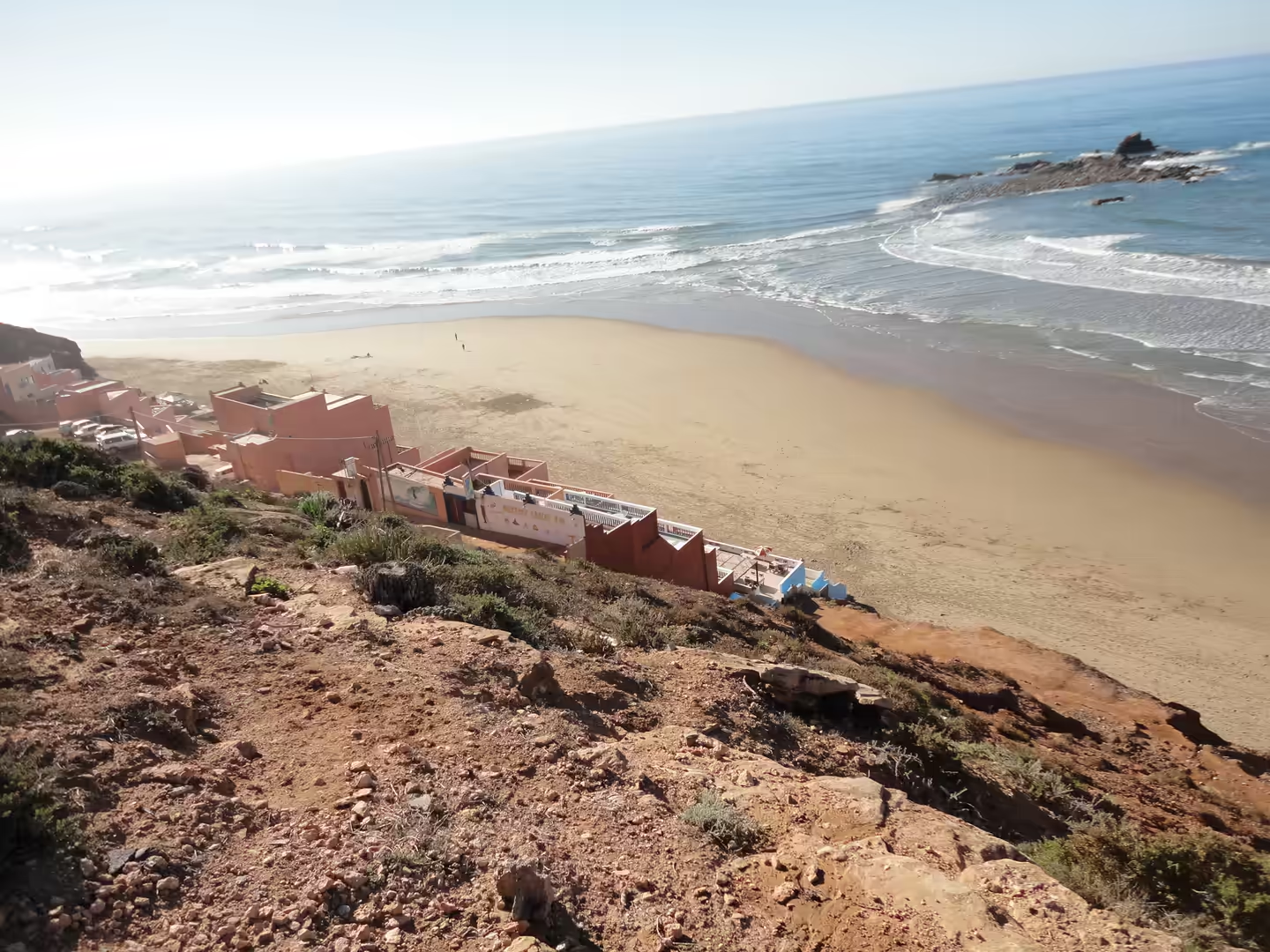

I walked toward the sea through the small town. There were only a few streets, and everything felt very compact. Soon I reached the promenade high above the water. There were no shops and only a few locals. Below I could see camper vans parked near the beach, mostly French vehicles belonging to retired travelers. No one was actually on the beach.
On the promenade, a young man asked whether I needed accommodation. I did need a place to stay, but I didn’t want to take anything directly from him. Still, I let him show me what he had. He offered an apartment for about €5 per night—essentially a small, very low, narrow Arabic-style flat in the town center. It had everything one might need, but nothing was new or Western. I thanked him and declined, as I wanted to go to Legzira.
I walked north along the beach toward Legzira, which the guidebook said was about 15 km away. At the edge of the town, foul-smelling liquid poured from a pipe into the sea—presumably the city’s sewage. The path continued over stones, with steep cliffs about 20 meters high on the right and the sea on the left.
After some time I encountered an old man standing in the water. I greeted him and watched what he was doing. Through gestures he explained that he was collecting worms for fishing. I asked whether this was the way to Legzira. He said it was, but warned that the tide was rising and the route would soon be blocked. I thanked him and continued anyway.
After a while I noticed a small fire made of a few sticks in the sand. I hadn’t seen another person for about twenty minutes. With cliffs on one side and the sea on the other, the situation felt increasingly isolated. I climbed over large stones to continue along the narrowing beach, but eventually there was no way forward: sea ahead, rock to the right. The water wasn’t very deep, but with the rising tide and the uncertain return route, I hesitated.
I spotted a steep path up to the plateau on the cliffs and took it, assuming I must be near Legzira. The path followed a wadi, with a magnificent view of the sea below. After a few minutes I reached houses under construction, some already inhabited. The area felt deserted. I tried asking for directions, but couldn’t make myself understood.


I knew there should be a hotel in Legzira, but nothing here suggested that. Wandering between the buildings, someone suddenly called out to me in German. It was a younger man who explained that I had misjudged my progress—I had only covered about 2 km in several hours. He also told me that a bus would be leaving soon from the settlement.
I hurried to find it but couldn’t locate the stop. I decided to go back to the main road instead. I waited there for about thirty minutes. Hardly any cars passed, and I relaxed in the sun. Eventually a taxi came by. Most were full, but one still had a seat. I made the mistake of not negotiating the price.
The ten-minute ride cost ten euros—almost half the fare to Tiznit. Still, it wasn’t disastrous. I was dropped off in an even more deserted area. I saw a few buildings under construction high above the sea. From the road, nothing suggested a beach. Only when I approached the edge did I suddenly see the sandy beach below, along with buildings and parked cars. The lagoon was so well hidden that it was invisible until the last moment.
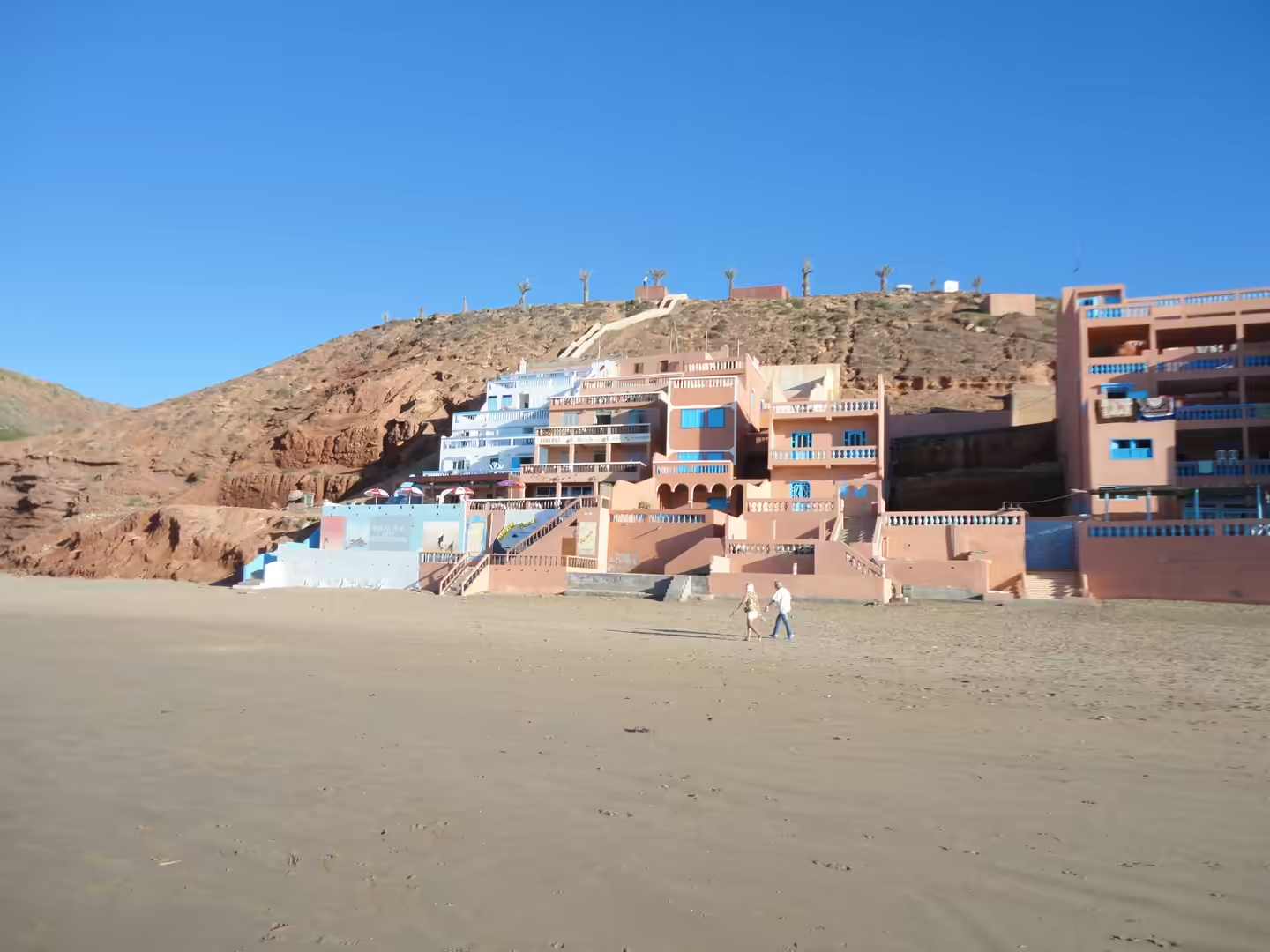
I went down to the beach. Three hotels were built directly into the slope. There was more activity than I had expected, though still very quiet. One hotel was closed. I checked the other two and chose the one on the far left, where the receptionist negotiated with me and we agreed on 200 dirhams per night.
That was five times more than the night before, but the view, location, and comfort were far superior. The room was clean, small, and minimal: bed, cupboard, nothing else. No TV, no fridge, no air conditioning—just what was necessary. The cupboard alone was already an improvement. This time I explicitly asked about electricity and hot water. Electricity came from a generator after dark until 23:00, which was enough to recharge everything.
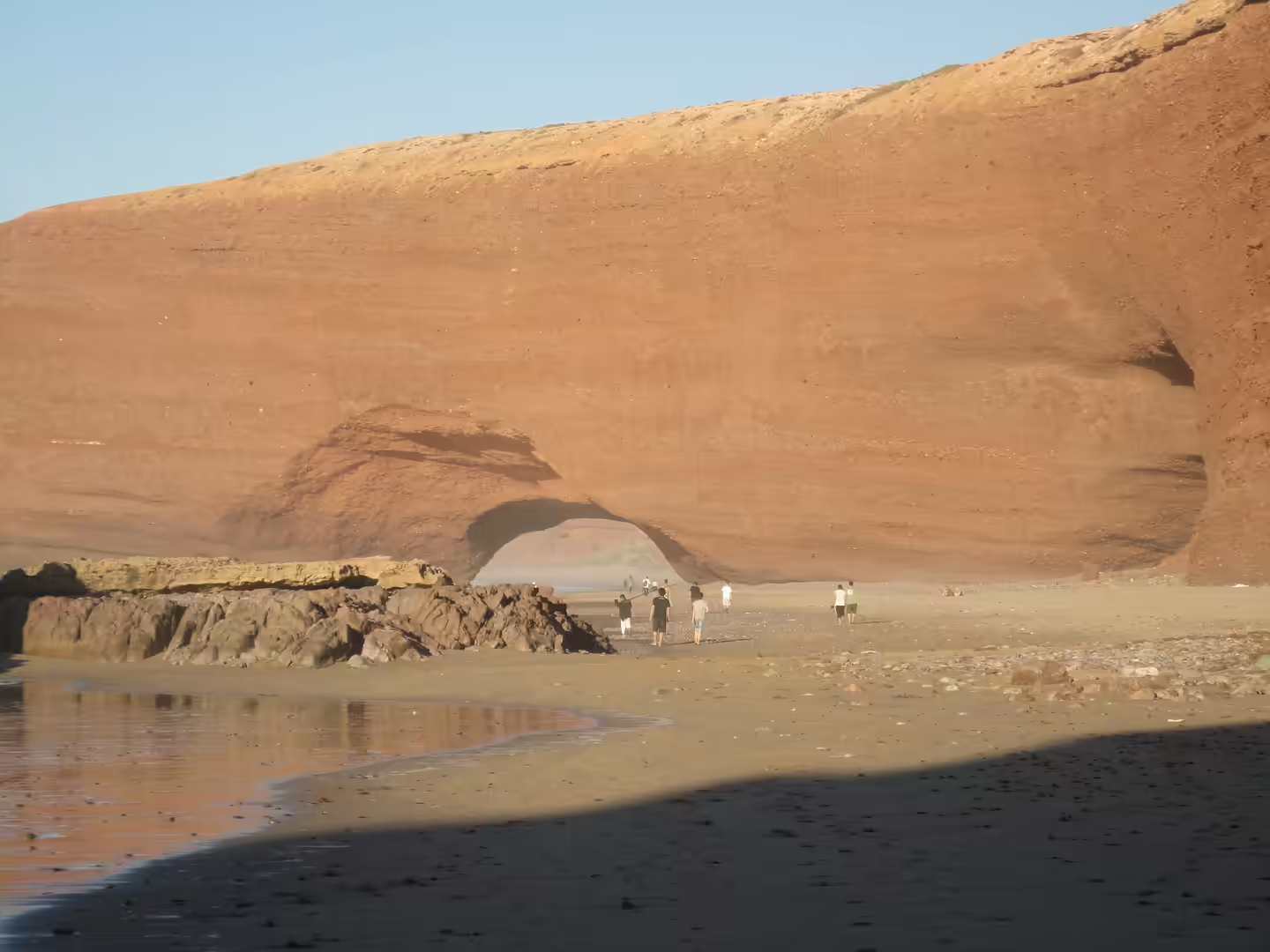
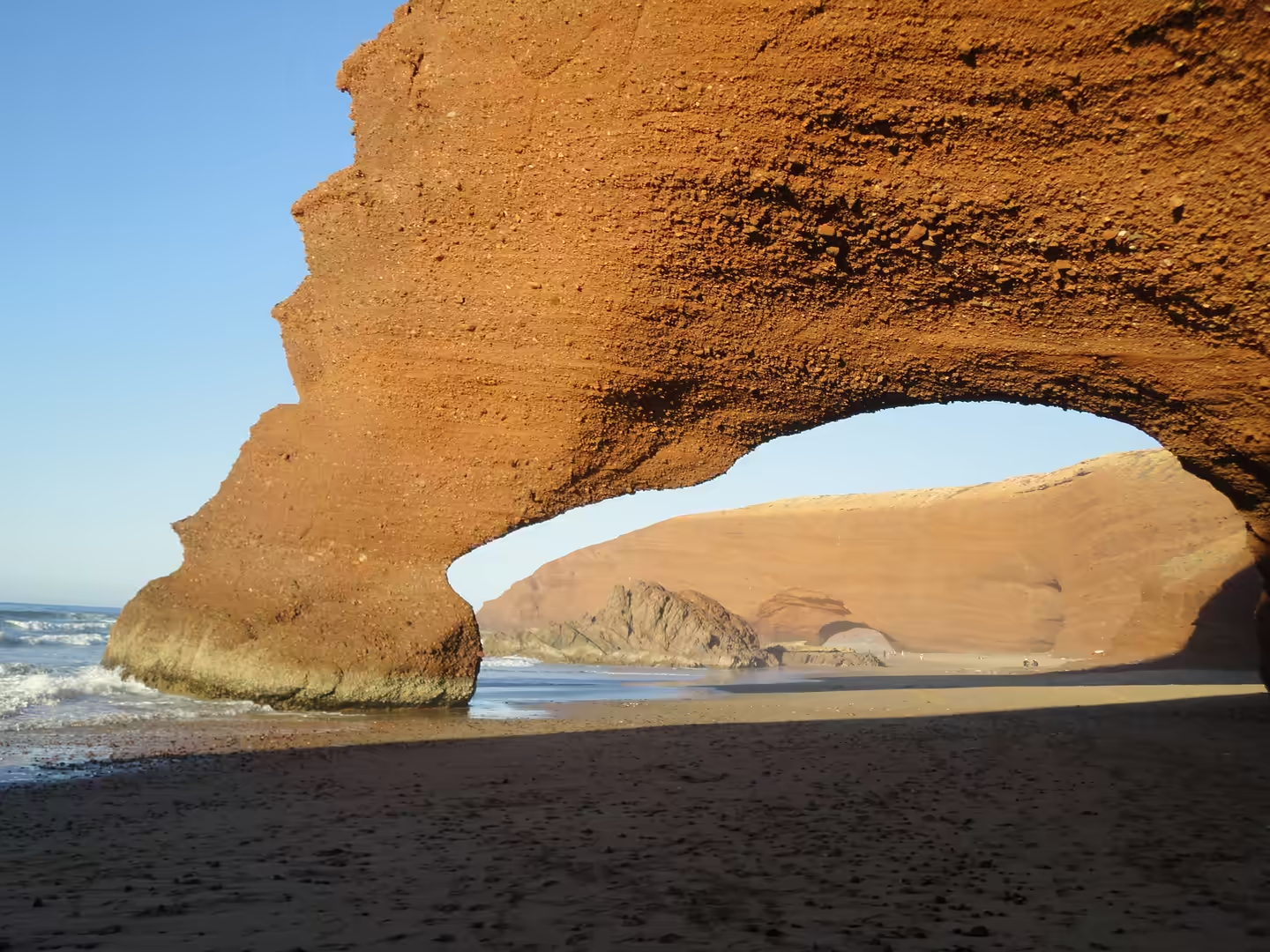
The room had a small terrace overlooking the sea. Below was a larger restaurant terrace. After unpacking, I walked left past the red-glowing rock arches in the setting sun. Despite the apparent emptiness, there were a few tourists and fishermen on the beach, along with some dogs running freely.
I passed through the first arch and reached the second. Against the sunlit spray of the waves, it was impossible to see what lay beyond. The sea was loud, crashing against rocks both near and farther out. Beyond the final arch I reached a cave and realized I could never have reached this place at high tide—the water would have blocked everything.
At first I thought what a perfect party location this would be: a large cave, the beach, space for dozens of people. The sun set, and I walked back. Some hippies were balancing pointed stones on top of one another, creating floating-looking sculptures. I went past the hotels to some rocks by the water to watch the sunset.
Unlike the previous night in Essaouira, there was no wind at all. It was pleasantly warm, around 28 °C. Nearby was another small lagoon with a tent above the water. After sunset, darkness fell quickly and the generator started up. Lights and chains of bulbs came on. Yet there were only about eight visitors in the entire area. What a party place this could have been—if only there had been music.
Instead, everyone gathered at a small, inexpensive snack bar next to the hotels. Once again I struggled with the menu and made the worst possible choice. I ordered grilled chicken with salad and fries. While I sat there, a barbecue was set up around the corner, and a chicken was grilled specifically for me. I thought to myself that this really wasn’t necessary.
Halfway through the meal, I remembered the electricity schedule. Without electricity, there was no refrigeration. At that moment, the chicken was already in my stomach. I told myself it was paranoia and finished everything. Legzira isn’t cheap, but it isn’t expensive either. The meal didn’t cost more than €10.
In the dim candlelight I could barely see my food and wasn’t even sure if the chicken was fully cooked. After spilling Coke on it, it disappeared into my stomach anyway. I always think of bacterial growth rates in moments like this. I decided not to panic and returned to my room.
From Marrakech I still had a bottle of vodka with me, so I mixed a vodka cola “medicinally” against the suspected salmonella attack and sat on the terrace. Above me was an unbelievable starry sky. With almost no light pollution and no moon, the stars were brighter than I had ever seen. At the edge of Western Sahara, the sky felt endless.
Below, the sea rose with the tide, crashing loudly against the rocks, coming dangerously close to the hotel. When I went to bed, the entire building trembled as waves struck the cliffs. I kept getting up to open the window and look at the stars reflected in the sea.
The next morning I would see that the tide had, in fact, reached the hotel.