
The air conditioning had worked diligently and quietly through the night. I only really noticed it in the morning when I opened the door to the corridor and felt how big the difference between inside and outside actually was. Outside, there was almost nothing going on in the streets.
I drank a cappuccino and then walked to the station about thirty minutes before the train was due to depart. As usual, everything was covered in a thin haze—you could see perhaps five kilometres ahead. It was probably a mixture of fog and smog, though I couldn’t really tell the difference.
After the completely pointless luggage scan and the beeping metal detector, I entered the once again gigantic departure hall and sat down at the correct gate.
I was staring absently at the surroundings when the man next to me asked something in broken English. I asked back whether boarding for my train had already started, then said goodbye. The train had already been underway for some time, just like the one the day before, but I found a place for myself and my luggage without any trouble.
I spent the first two hours writing travel notes, then stood in the smoking area looking out through the foggy landscape. Gradually, everything began to change. Between Dalian and Xingcheng there were rice fields—something I had actually expected much farther south. South of Tianjin, the scenery suddenly consisted of poplars and fields. The corn was about half a metre high, and the wheat was almost ready to be harvested.
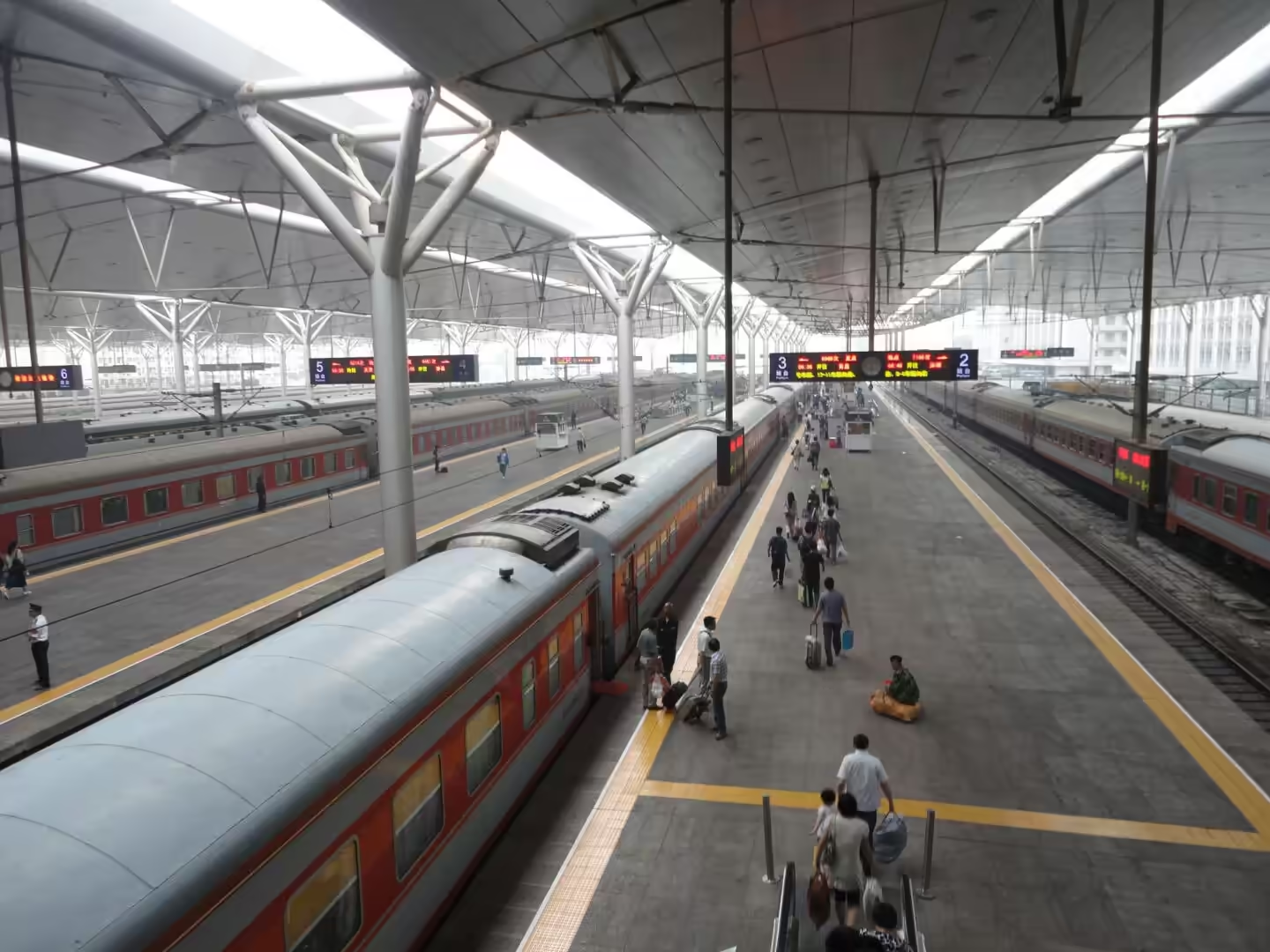
Over the course of the journey, I seemed to travel through several weeks in fast motion. One day later, harvested wheat and potatoes appeared; the corn grew even higher; poplars were replaced by other tree species I didn’t recognise. Eventually, the fields were burned, and later they were all already blackened. I had forgotten that Chinese table manners differ from European ones: loud slurping, sipping, and burping are completely normal.
Not that I mind—it’s just a little strange at first. I briefly considered downing one of the 0.35-litre beers in one go and responding just as loudly.
Around noon I arrived in Jinan. Unfortunately, the train stopped at a station other than the main one, something I only realised after the usual orientation ritual outside the station. The area and the city didn’t look particularly appealing at first glance. As usual, a swarm of taxi drivers descended on the arriving passengers.
I walked a little farther to the side and asked another taxi about the main station. A strange man told me he would drive me there “for 30 minutes.” I made it clear that I only wanted a normal ride with the taximeter on. I still said “20” in Chinese, which amused the people standing nearby. He insisted on 30, so I simply walked away without another word—I wasn’t in the mood for that.
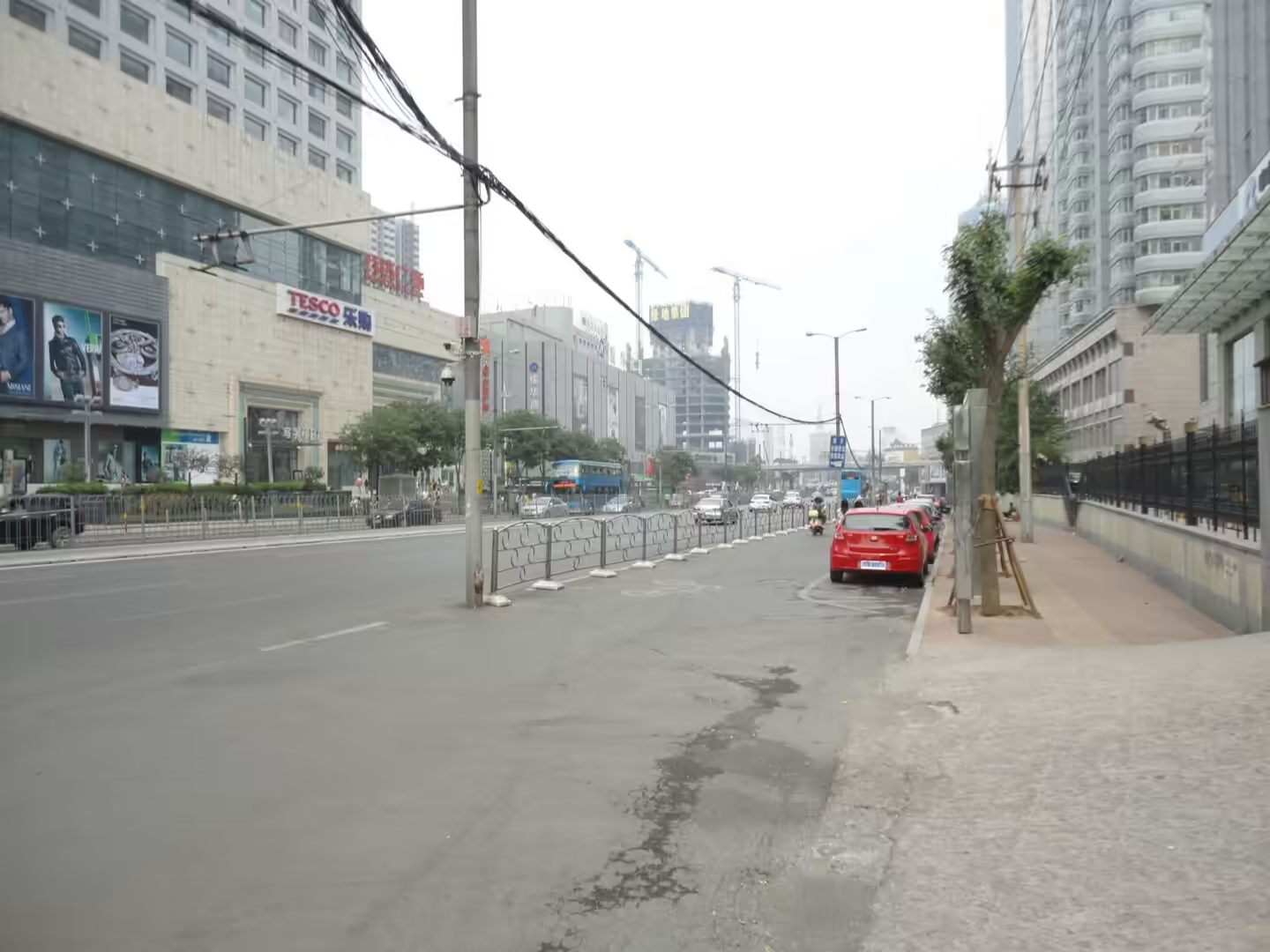
About 100 metres farther on, around the corner, I found another taxi. I explained my destination and was driven the five kilometres for the normal fare of 9.5 yuan. The main station looked completely different from the small western station: busy, crowded, and loud. Opposite the station, I spotted a familiar Chinese hotel chain again—Home Inn.
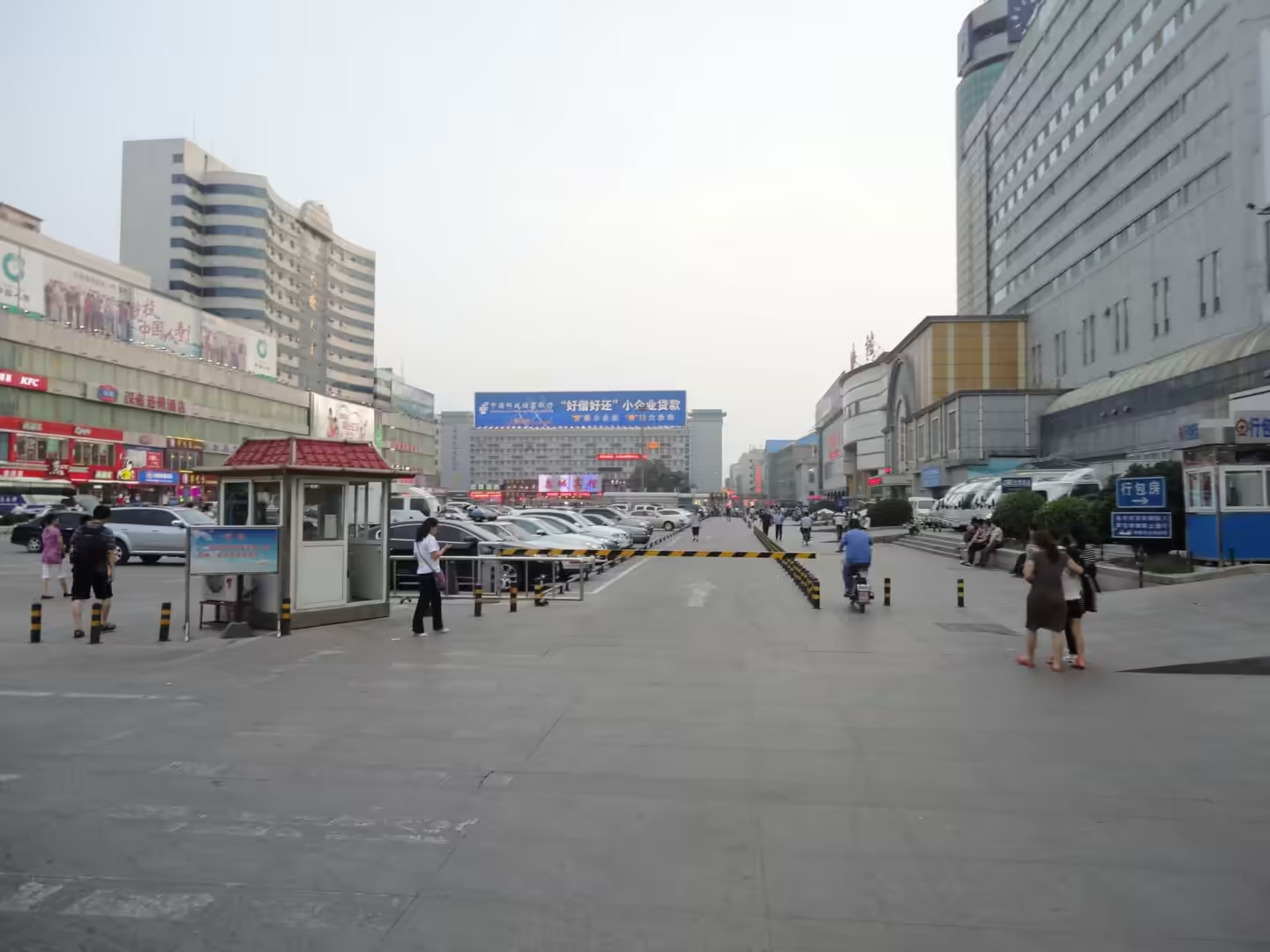
The station forecourt was quite large but enclosed on three sides by tall buildings, creating a somewhat oppressive feeling. The Home Inn was almost fully booked, which I had already expected. One of the receptionists spoke some English and told me that only one room without a window was still available. For one night, that was perfectly fine—I didn’t plan to stare out of a window anyway, only at a screen.
The room cost 188 yuan this time, saving me about five euros, which I could now spend on other, equally pointless things.
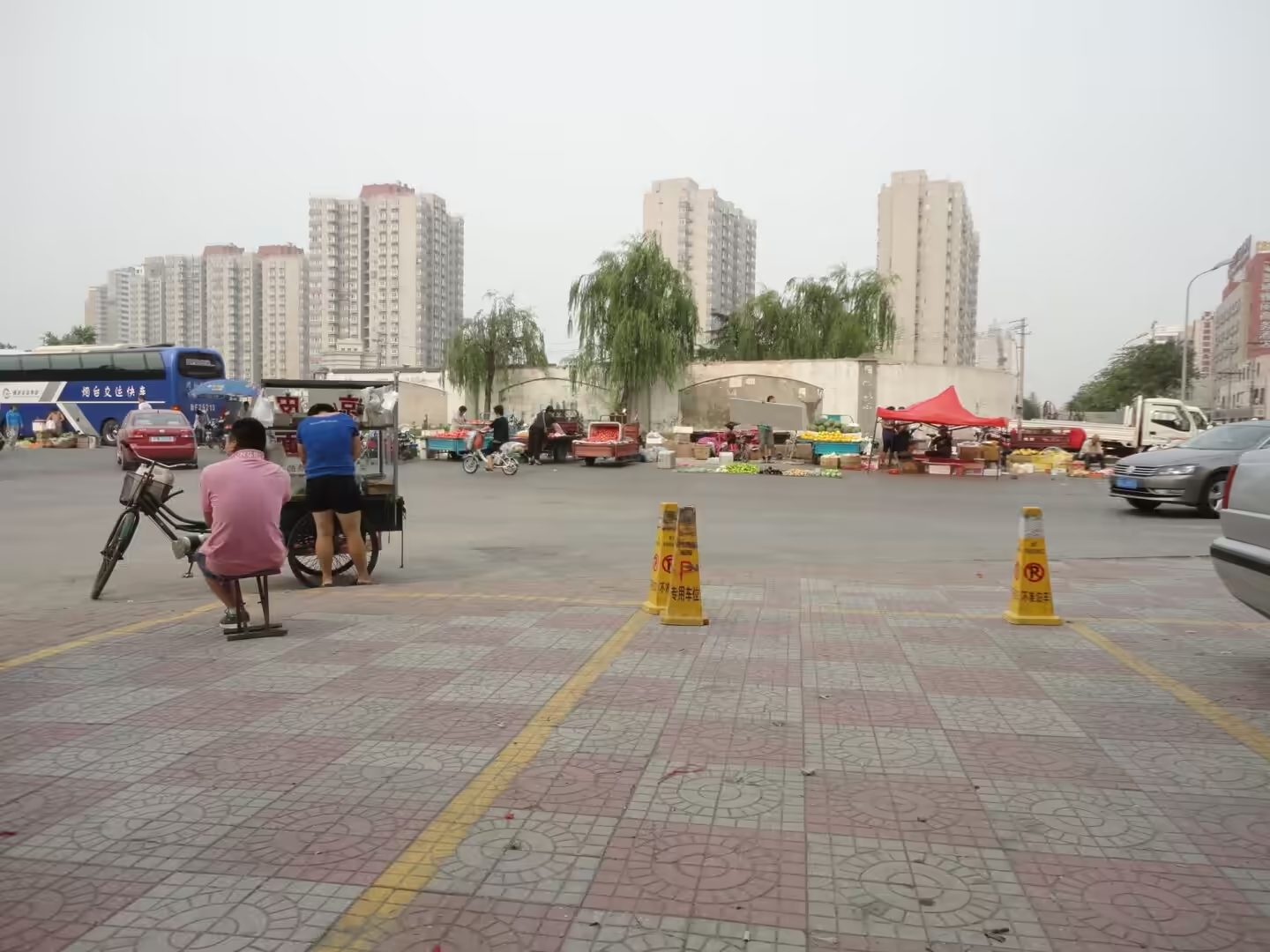
I first went up to the room. It did have a window, but judging by the noise it opened into a cleaning shaft and could not be opened at all. This time there was no kettle in the room, only a water dispenser. I opened a vegetarian instant soup and filled it with water, but it turned out that the water was not really hot, so the glass noodles refused to soften. After inspecting the device more closely, I noticed that it wasn’t even switched on. I poured the otherwise very promising soup down the toilet and made a new one with a second packet I fortunately still had with me. The cleaning lady later had to deal with the consequences and clean the now reddish toilet again.
It was only shortly after noon, so I went straight to the station opposite the hotel to buy a ticket to Nanjing for the next day. There were about fifteen counters, each with queues of twenty to thirty people. It looked as if certain trains had to be booked at specific counters. I simply joined the shortest queue.
When it was my turn, I was just about to explain everything when the clerk suddenly ran off to fetch a colleague who supposedly spoke English, much to the annoyance of the people behind me. Her English wasn’t much better, and I could easily have handled it myself. Still, I used the opportunity to ask about different train options. A D-train to Nanjing would cost 200 yuan. I agreed, only to realize that I had just 195 yuan left. That was really bad timing. I tried to think quickly but couldn’t come up with a solution. I couldn’t leave the counter to get money and then come back—the ticket process had already started. The crowd behind me was clearly losing patience, as the clerk kept shouting something.
In the end I had to take a K-train after all. I was shown the departure times—there was really only one, at 11:17, but it cost only half as much. The clerk then entered some completely random number into the name field instead of my passport number. I have no idea where she got it from, but I didn’t care. Nobody ever checks anyway.
With my ticket in hand, I walked south toward the city center. On the left side of the station I bought a carton of Taishan cigarettes for 11 yuan. The city looked much better now than it had at first glance, with many trees lining the streets. There were numerous small shops, this time with a somewhat broader range of goods. For example, I passed a stamp collector’s shop, although the selection was very limited. It wasn’t something I was interested in, but it was still noteworthy.
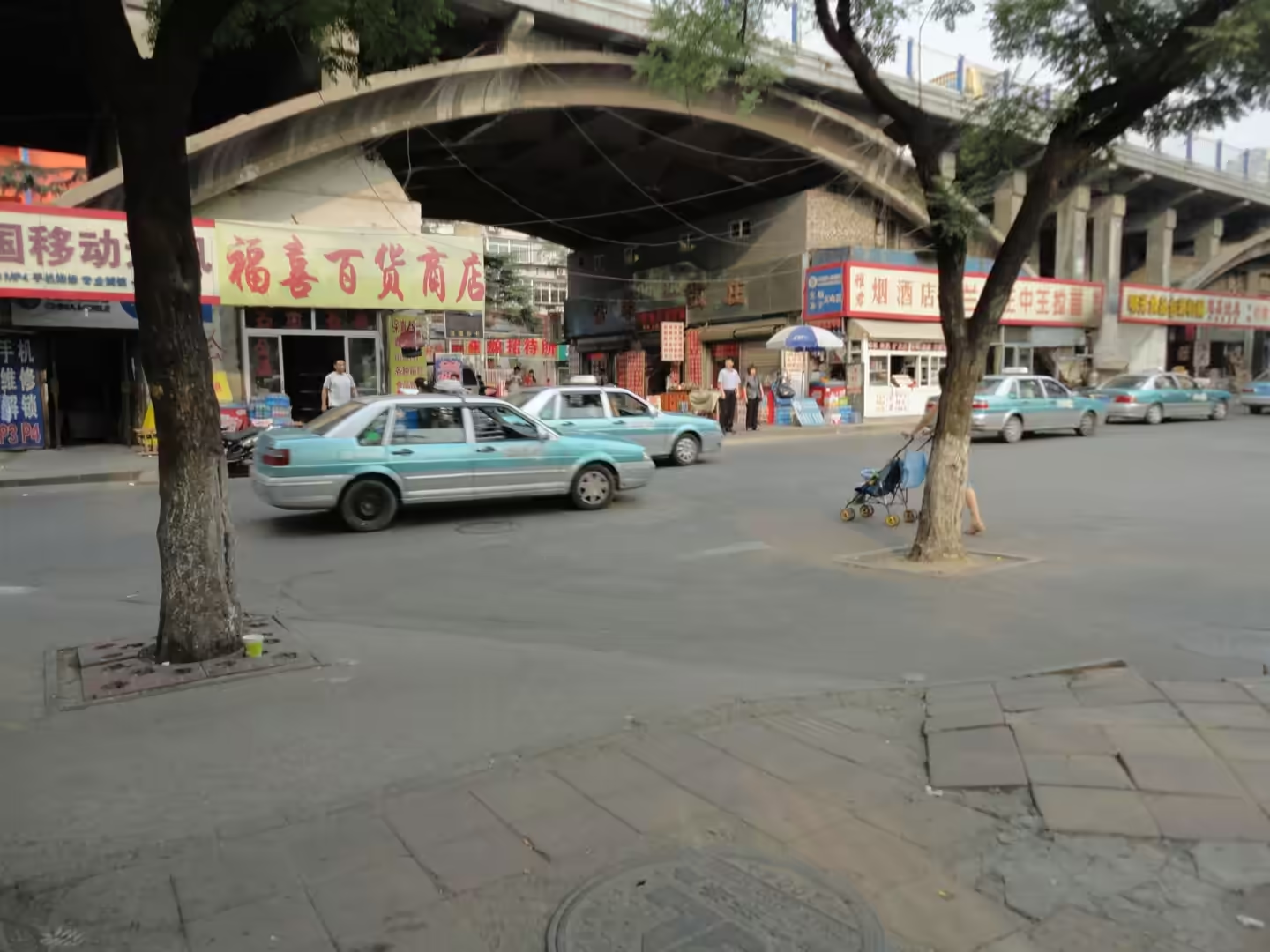
Jinan is described as sprawling, and that description fits perfectly. At one corner there was a department store selling the usual items, but also tourist goods—tea cups, teapots, and complete tea sets. Prices were clearly marked, which gave me a good sense of the range. A decent-looking tea set could easily cost around 100 euros, which immediately raised concerns about backpack space. I was still on the lookout for souvenirs, so I saved the location on my navigation device and continued through the side streets, avoiding the main roads whenever possible.
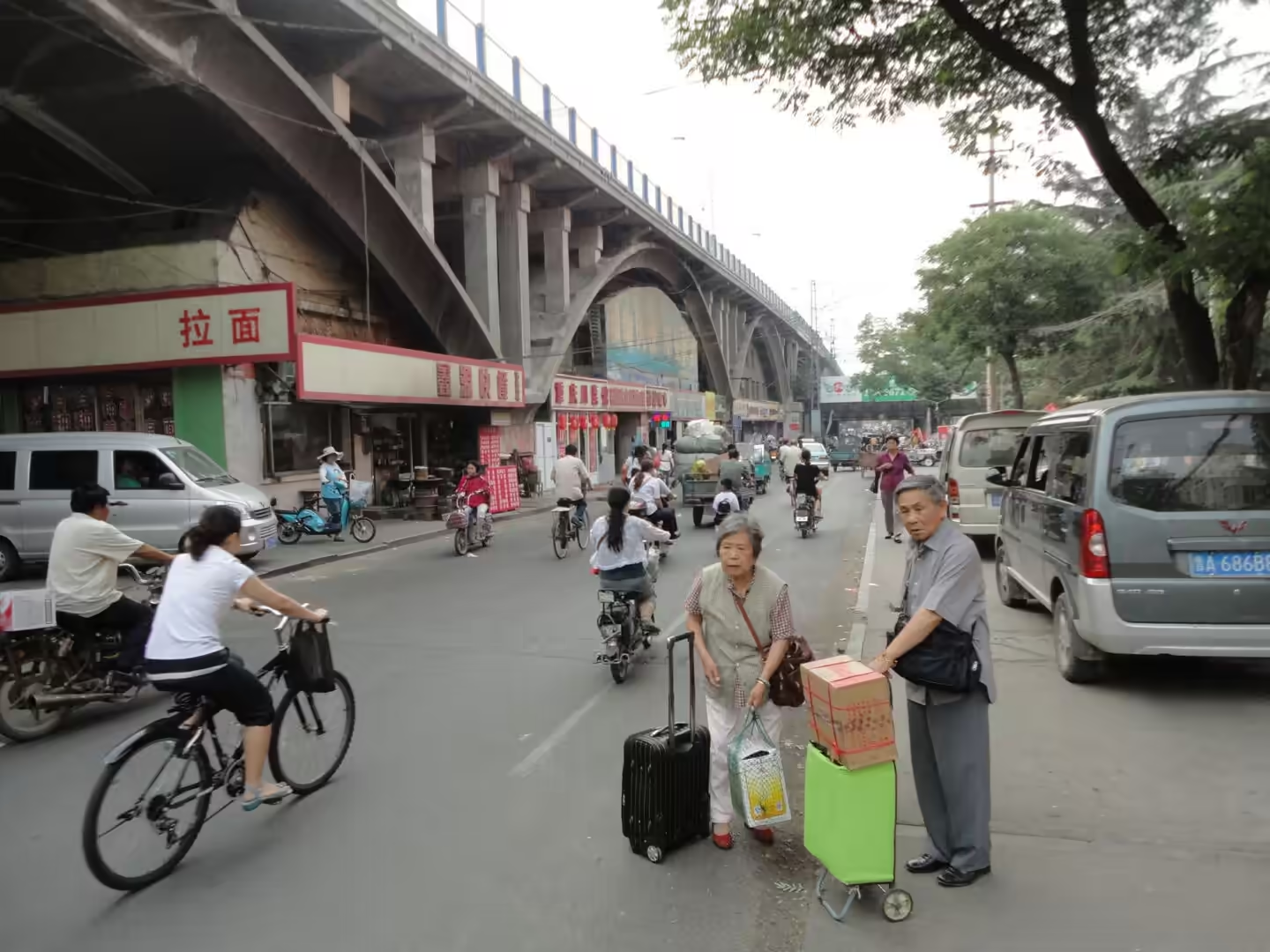
After some time I returned and sat down a few hundred meters left of the station at a lively intersection to rest. By now my feet were really starting to hurt—I had been walking at least thirty kilometers a day. It was already around 17:00. At this intersection, taxis drove straight through an underpass that cut directly between the chairs and tables of a café. Someone had once placed a stone in front of a high curb, creating a shortcut from the station to the left side.
There was also heavy traffic from tricycles—sometimes open, sometimes with cargo boxes—as well as bicycles, mopeds, and motorcycles, many of them electric. Everything moved chaotically in every direction. There was clearly a system behind it, but one that was impossible for an outsider to fully grasp. It was a miracle that accidents didn’t happen more often. Traffic signs seemed more like suggestions and were only really observed at large intersections.
Around me, the evening grilling ritual slowly began. I couldn’t see everything the vendor had brought with him, but when I noticed the list hanging on his cart, I was impressed by the variety. With the help of the Lonely Planet, I managed to identify a few characters and distinguish at least some animals, vegetables, and fish. It looked as though he had a bit of everything, but only small quantities—roughly half a kilo of each item.
He had barely finished setting up when three customers were already waiting. The first ordered a vegetarian noodle soup. I sat almost directly behind the vendor and could watch him work. His movements were incredibly routine, almost blind, and extremely fast. The other two customers ordered meat skewers from the grill.
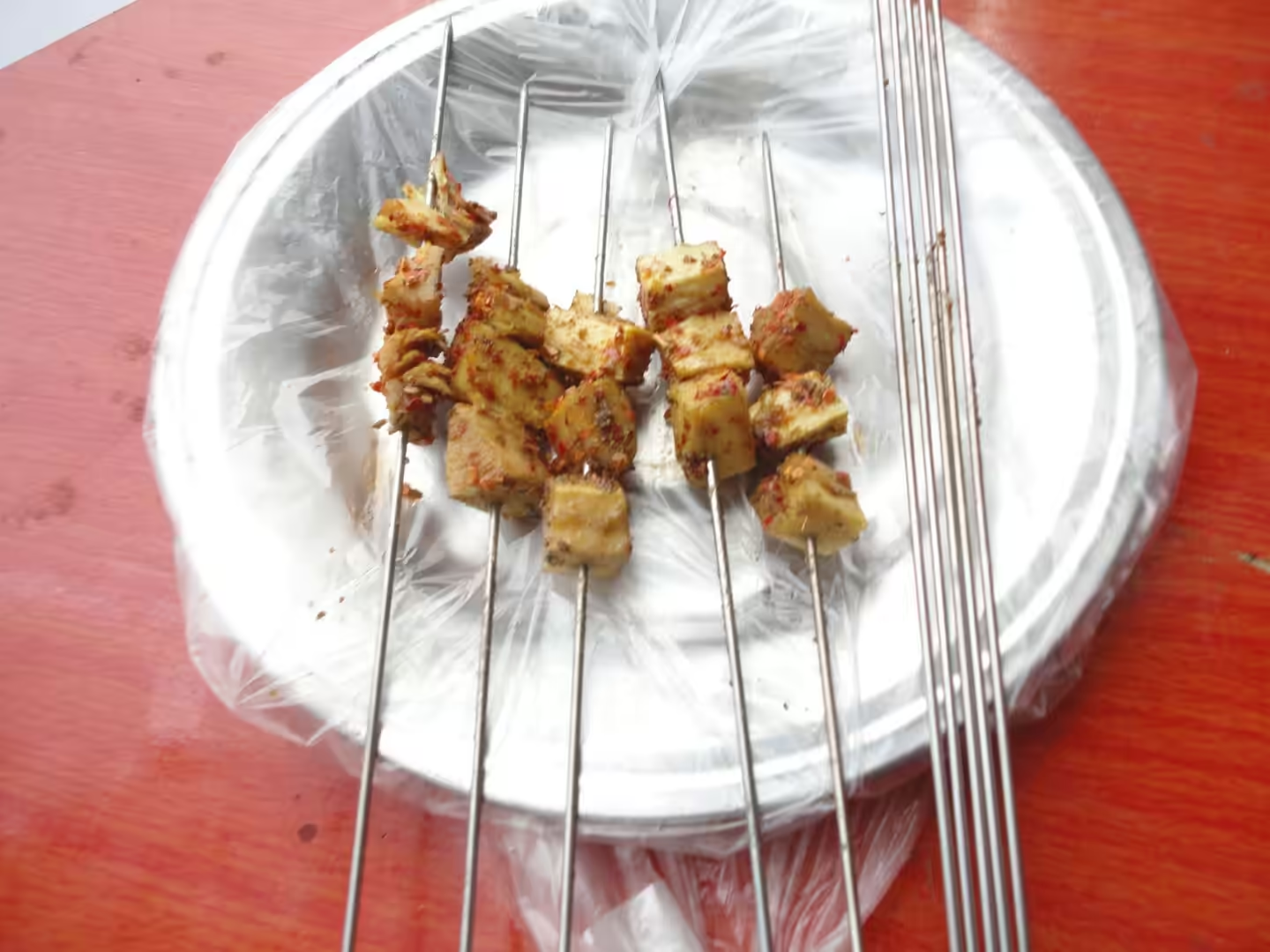
The grill itself was a box about two meters long and roughly fifteen centimeters wide, fired with charcoal. Steel skewers lay across it, allowing around a hundred skewers to be grilled at once. Typically, you ordered five to ten skewers. Eventually, the vendor unpacked something white that I assumed was fish. Its texture looked almost rubbery. To be sure, I asked him. He said something like “yu …” so apparently fish—but it could have been anything with “fish” in the name. He claimed it came from the Yellow River. I’m not sure how I understood that, but somehow I did.
I ordered eight skewers and asked for them to be prepared spicy. They were ready within ten minutes. The fish—or whatever it actually was—tasted almost of nothing, but had the strangest texture I had ever experienced. It was crunchy, almost like bamboo, yet fibrous. With the first bite, I genuinely couldn’t tell whether it was animal or plant. I also ordered a beer, which was necessary, because the spice mix was quite intense but still manageable. I was served a plate of fresh peanuts, paid 15 yuan, and then walked over to the K-Mart near the station, next to my hotel.
There I finally found the tourist section I had been looking for. I bought two teapots for 25 yuan and a folding stool that fit neatly into my backpack. I also picked up some fruit, pastries, and other supplies before heading back to the hotel.
By then the air conditioning was working properly. This time it didn’t shut off automatically with the key card, so I enjoyed a pleasant 23 degrees in my windowless room. It was laundry day. I threw all my clothes into the shower, added some soap from the dispenser, and thoroughly soaked and scrubbed everything with hot water until the entire bathroom was wet and filthy. I hung the clothes in front of the air conditioner to dry and finally went to bed.