Suzhou is one of China’s most refined historic cities, renowned for its classical gardens, canal networks, and long tradition of scholarship, craftsmanship, and urban continuity. Located in the lower Yangtze region west of Shanghai, Suzhou has developed over more than 2,500 years as a city where natural landscape, hydraulic engineering, and cultural ideals are closely interwoven.
Geological Setting and Hydrological Landscape
Suzhou lies within the Yangtze River Delta, one of East Asia’s most geologically recent and dynamic landscapes. The region is composed primarily of Quaternary alluvial and lacustrine sediments deposited by the Yangtze and its tributaries over tens of thousands of years. These fine-grained silts and clays form extremely fertile soils but also create a low-lying, flood-prone environment.


The city sits at the eastern edge of Taihu Lake, a vast freshwater body that plays a central role in regional hydrology. Taihu acts as both a water reservoir and a buffer against flooding, while also feeding a dense network of canals, streams, and drainage channels. Because the natural relief is minimal, Suzhou’s survival and growth have always depended on sophisticated water management rather than defensive topography. The flat terrain encouraged horizontal expansion and a highly regular urban layout shaped by waterways rather than walls.
Early History and Urban Foundations
Suzhou was founded in 514 BCE during the Spring and Autumn period as the capital of the state of Wu. Unlike many ancient Chinese cities built primarily for defense, Suzhou was planned from the outset with an emphasis on water control, commerce, and internal connectivity. Early engineers integrated canals directly into the city grid, establishing a pattern that still defines Suzhou today.
Its position near the Grand Canal—later expanded into the main north–south artery of imperial China—cemented Suzhou’s importance as a logistical and economic hub. Grain transport, taxation, and trade passed through the city, ensuring long-term prosperity and relative political stability.
Classical Gardens and Cultural Landscape
Suzhou reached its cultural peak during the late imperial period, particularly under the Ming and Qing dynasties. Wealth generated through agriculture, silk production, and trade allowed scholar-officials to invest in private gardens that expressed philosophical ideals rather than ostentatious power.
The classical gardens of Suzhou are not merely ornamental spaces but carefully constructed microcosms of nature. Rocks, water, plants, and architecture are arranged to evoke mountains, rivers, and distant landscapes within confined urban plots. The rockeries often use limestone from Lake Tai, whose erosion patterns resemble mountainous terrain, demonstrating a direct link between regional geology and aesthetic philosophy.
These gardens reflect Confucian, Daoist, and Buddhist thought, emphasizing balance, restraint, and contemplation. Their spatial logic influenced landscape architecture far beyond Suzhou and remains one of the city’s most significant intellectual contributions.
Water Management and Urban Life
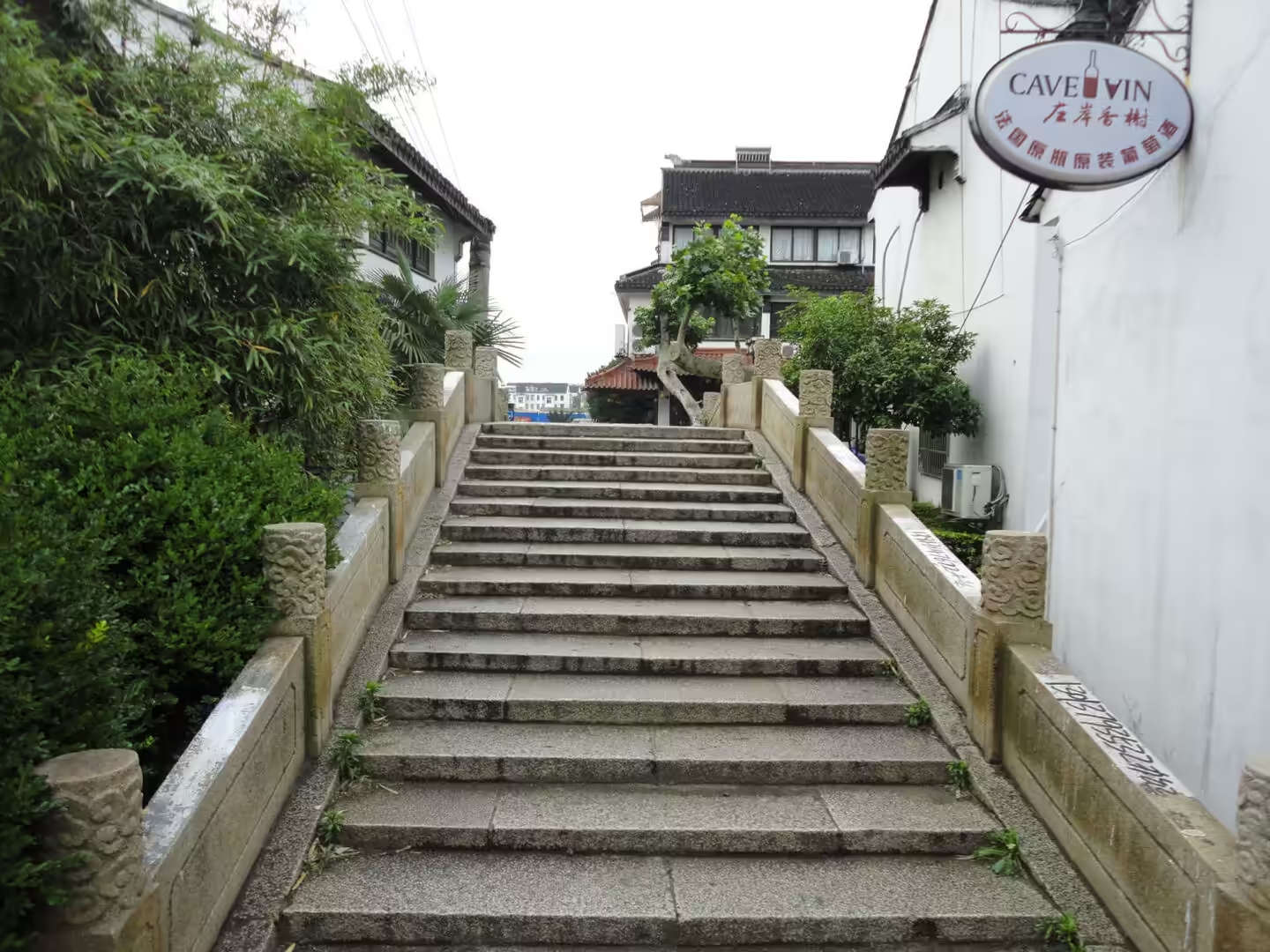
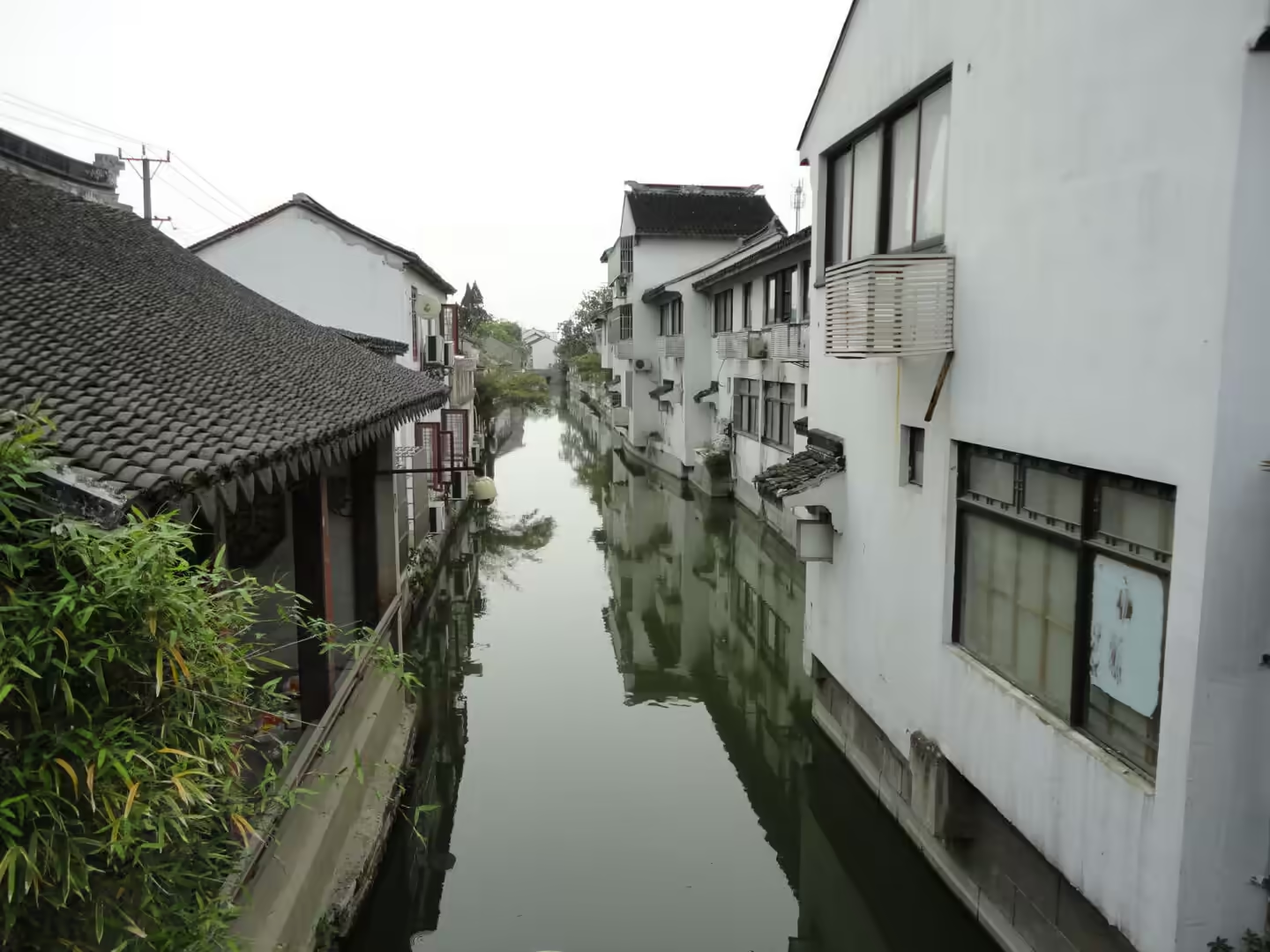
Water defines everyday life in Suzhou. Canals functioned historically as transportation routes, drainage systems, and sources of domestic water. Stone bridges, carefully engineered embankments, and sluice gates regulated flow and prevented stagnation. Unlike cities that later buried or straightened waterways, Suzhou preserved its canal network, adapting it gradually to modern needs.
Flood control was achieved through distributed management rather than massive single structures. This decentralized approach reduced catastrophic failure risks and allowed the city to coexist with seasonal fluctuations in water level. The result is an urban environment where water remains visible, accessible, and culturally meaningful.
Modern Transformation and Continuity
In the 20th century, Suzhou underwent rapid industrialization, particularly after the establishment of high-tech and manufacturing zones on its outskirts. Despite this growth, the historic core retained much of its traditional fabric. Strict preservation policies limited high-rise construction within the old city and protected key visual axes along canals and garden walls.
Modern infrastructure—railways, expressways, and industrial parks—was largely placed outside the historic center, allowing Suzhou to expand economically without erasing its cultural landscape. This balance between preservation and modernization has made Suzhou a model for heritage-sensitive urban development.
Scientific and Educational Significance
Suzhou has long been associated with scholarship, craftsmanship, and applied science. Historically, it was a center for mathematics, cartography, medicine, and textile technology, particularly silk production. Today, the city hosts major research institutions and universities, with strengths in materials science, nanotechnology, and environmental engineering—fields that echo its historical focus on precision and material knowledge.
Environmental research in Suzhou increasingly addresses challenges inherited from its geography, including water pollution, sediment management, and sustainable urban drainage in deltaic environments.