Day 1 - Sonora Desert
Journal Notes
General
The Sonoran Desert is a hot desert and ecoregion of North America that covers part of the Mexican states of Sonora, Baja California and Baja California Sur as well as parts of Arizona and California in the United States. It is set apart from the neighbouring deserts by two things: subtropical warmth in winter and two seasons of rainfall rather than one. That combination produces a burst of growth unknown in the Mojave or the Great Basin, and it supports plants found nowhere else, among them the saguaro and the organ pipe cactus. In phytogeography the desert belongs to the Sonoran floristic province of the Madrean region. Its largest city is Phoenix, Arizona, with a metropolitan population of about 4.7 million in 2017.
The usual base for the western part of this desert is Tucson, the county seat of Pima County and the second most populous city in Arizona, with 542,630 residents at the 2020 census and about 1.08 million in the metropolitan area. The city lies south east of Phoenix and north of the Mexican border, ringed by mountain ranges that rise abruptly from the desert floor. Its streets carry the marks of a place that has grown quickly in a dry country: wide roads, irrigation channels, gravel yards and gardens planted with species that need almost no water. Beyond the last suburb the desert proper begins within a few minutes of driving.
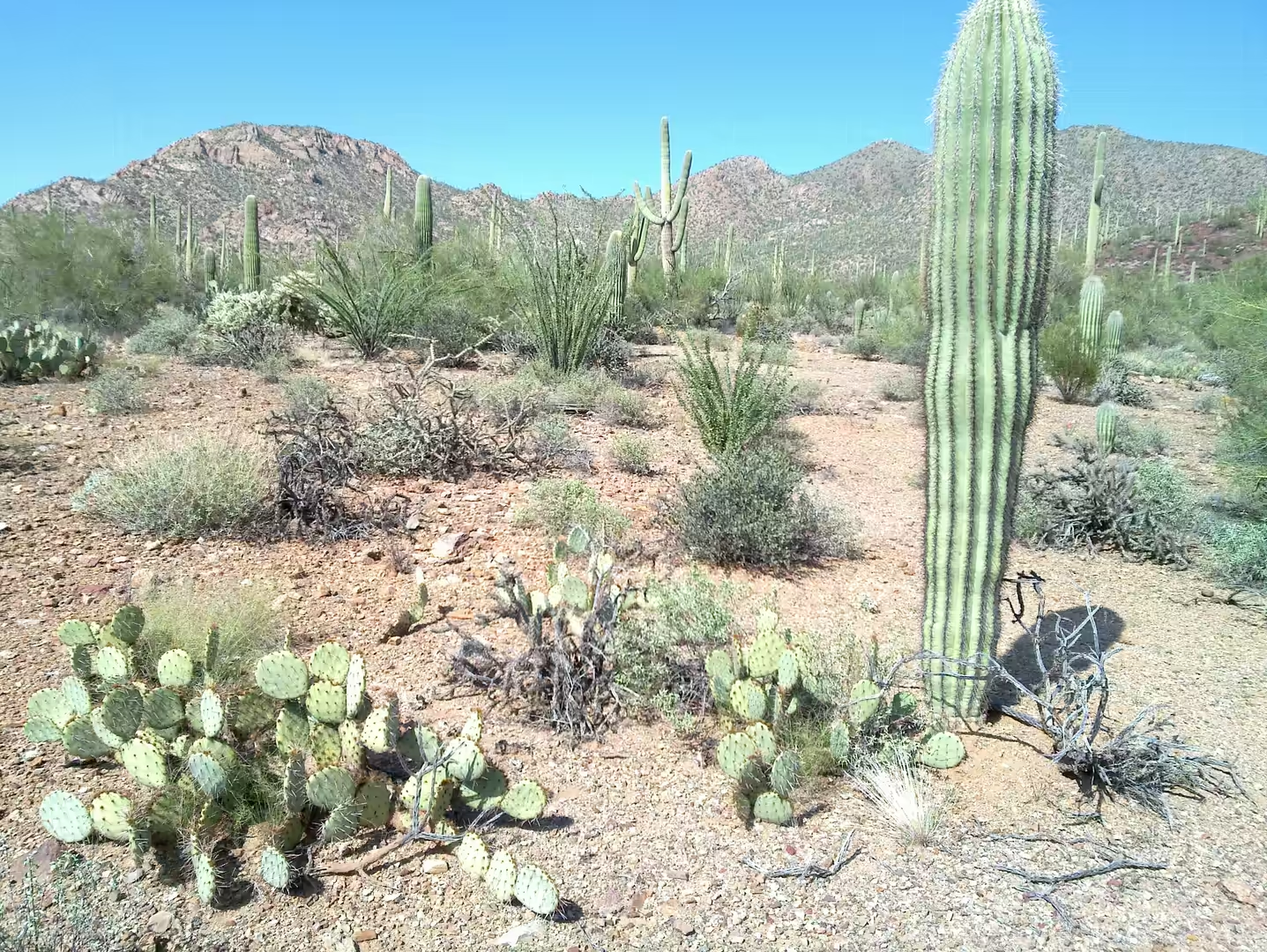
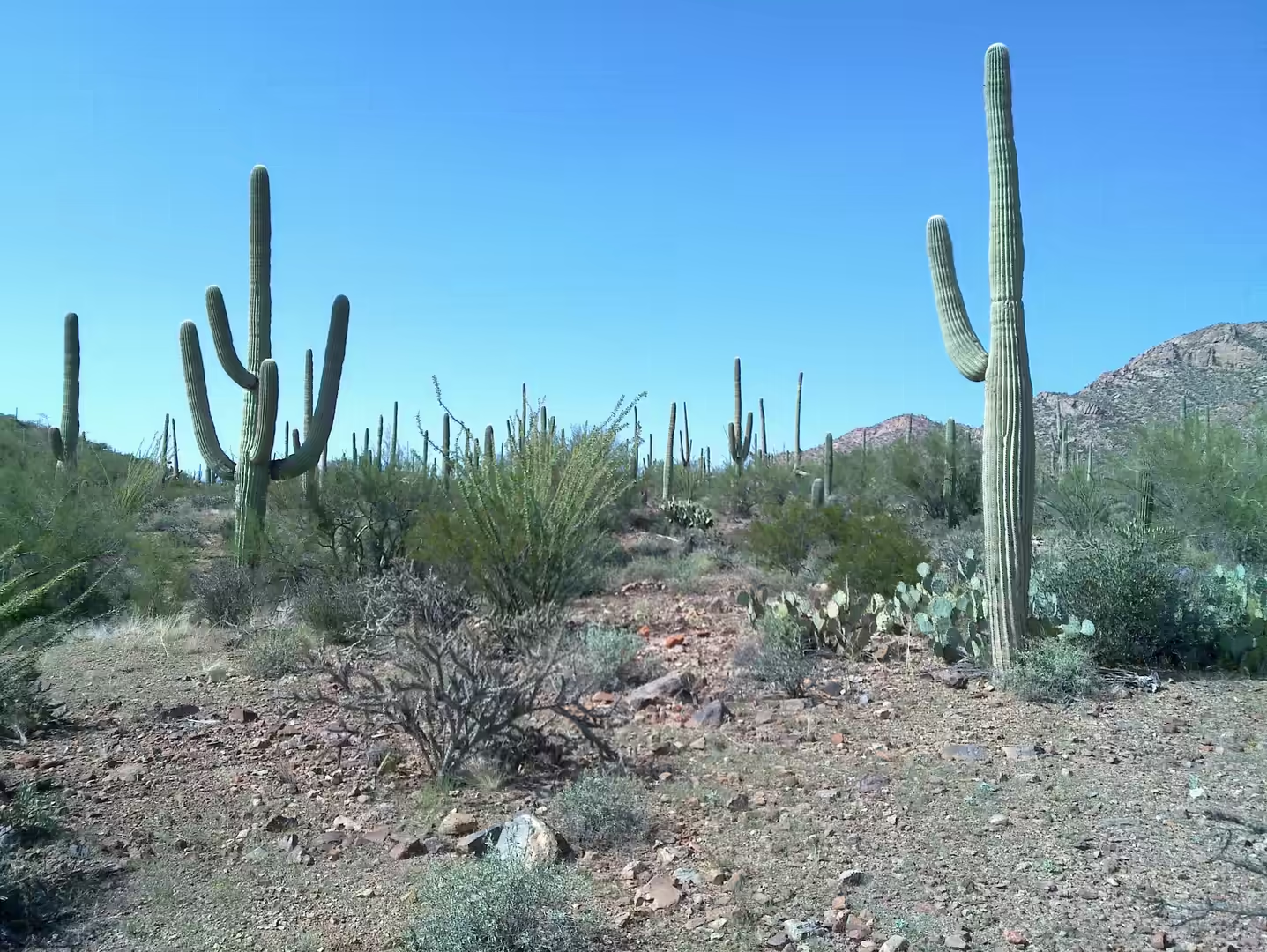
Saguaro National Park, near Tucson, was designated in 1933 to protect the cactus and its habitat. The saguaro, Carnegiea gigantea, is a tree-like cactus in a genus of its own, able to grow to more than twelve metres, and it is native to the Sonoran Desert in Arizona, to the Mexican state of Sonora and to the Whipple Mountains and Imperial County in California. It grows from sea level up to about 1,200 metres, and individual plants often live longer than 150 years, growing their first side arms only at the age of 75 to 100. The blossom is the state wildflower of Arizona, and the scientific name honours Andrew Carnegie.
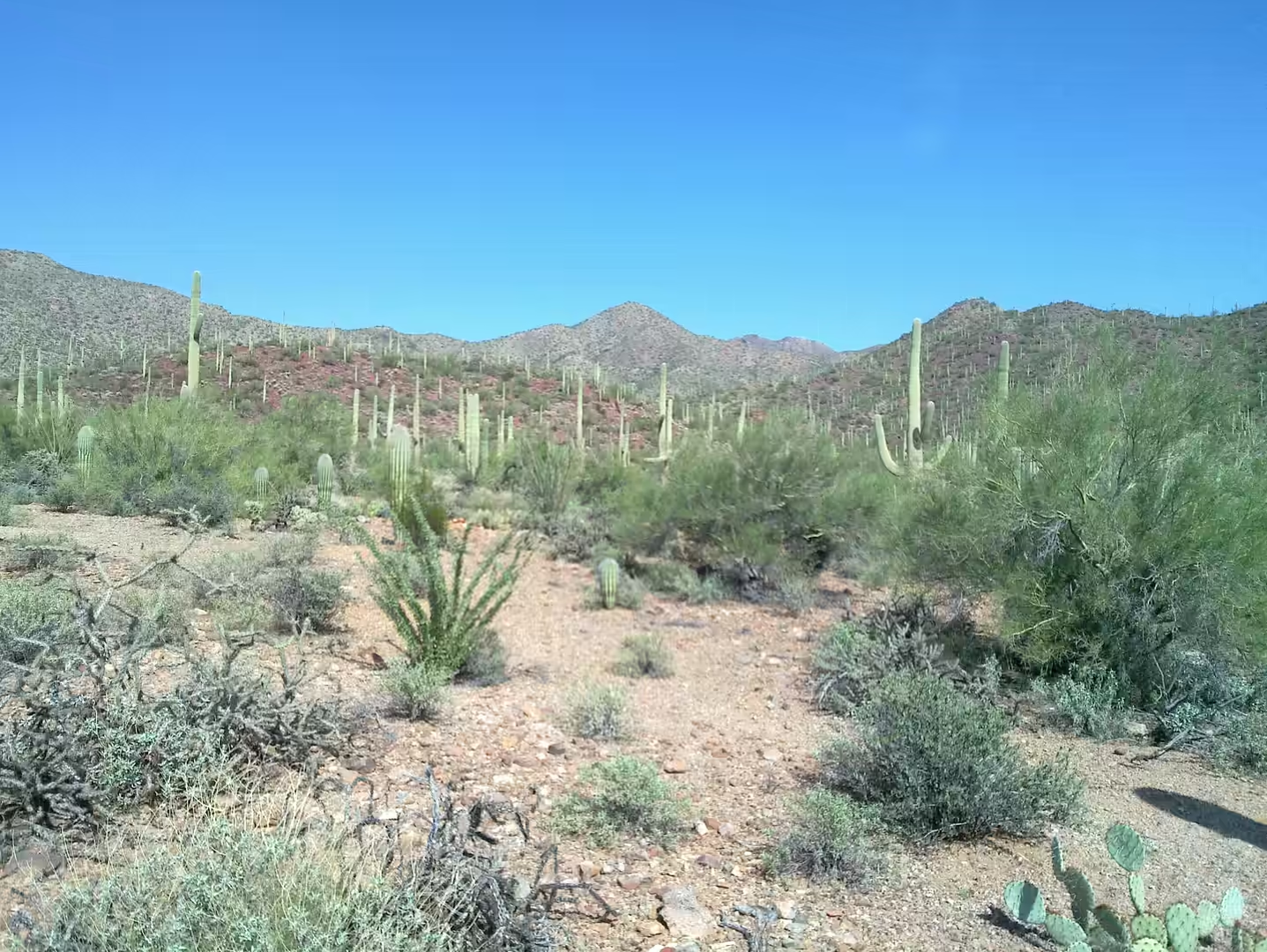
The landscape of the desert days is made of three elements. There are the ranges, which appear as dark brown and purple walls on the horizon and hold cooler air and pine forest high up; there are the flood plains between them, carrying creosote bush, palo verde, mesquite and cactus; and there are the dry washes that cut across both. Driving here means moving between these bands, and the road itself is the best place to read them, because the verges show the whole sequence of plants in a narrow strip between the asphalt and the open ground.
The growth of the saguaro is the slowest thing in this landscape. A seedling may be only a quarter of an inch tall after two years, and the plant spends its first decades as a low spiny column before it thickens; the first side arm usually appears between the ages of 75 and 100, and some plants never produce one at all. A fully hydrated saguaro can weigh between 1,450 and 2,180 kilograms, held in a stem built of ribs and pleats that expand and contract with the water inside. The largest known living saguaro in the United States, listed by the National Register of Champion Trees in Maricopa County, stands 13.8 metres high with a girth of 3.1 metres, is about 200 years old, and survived damage in the 2005 Cave Creek Complex fire. The tallest ever measured was an armless specimen 23.8 metres high, toppled by a windstorm in 1986.
Saguaros have also been a source of food and material for people for thousands of years. The sweet red flesh of the fruit was turned into syrup by native peoples including the Tohono O’odham and the Pima, and the wooden ribs of dead plants were used as building material in a desert that has almost no timber. The cactus is a common image in Mexican and Arizonan culture and in films about the American Southwest, which is why it looks familiar on a first visit. Some plants are cristate, or crested, because of a developmental fault called fasciation, in which the growing point spreads into a fan; house sparrows nest in holes in the stems.
History
Tucson began as a military outpost of the Spanish empire. The Presidio San Agustín del Tucsón was authorised by Hugo O’Conor in 1775, and the settlement that grew around it became part of the state of Sonora when Mexico gained independence from Spain in 1821. The present border was drawn after the war between the United States and Mexico, when the United States acquired the region of southern Arizona and south western New Mexico in the middle of the nineteenth century. The old presidio site is now marked in the middle of a modern city, and the street grid around it still follows the lines of the original compound.
South of Tucson the desert is protected in a different way. Organ Pipe Cactus National Monument lies in southern Arizona against the Mexican border, and it is one of the few places in the United States where the senita and the organ pipe cactus grow wild, together with many other species of the Yuma Desert section of the Sonoran Desert. The land was opened as a national monument in 1937, declared a UNESCO biosphere reserve in 1976, and 95 per cent of it was designated wilderness in 1977. At the north entrance is the small community of Why, and at the southern boundary the town of Lukeville faces Sonoyta in Sonora across the border crossing.
Growth has been the other force in this desert, and it has been measured. In 2007 the desert around Phoenix was losing ground to urban sprawl at a rate of about one acre an hour, and the same pressure runs along the corridors between Phoenix and Tucson and south towards the border. Against it stand the reservations, the national monument and the national park, which between them keep large blocks of desert out of development. For a visitor this is the practical background of the drive: the city ends abruptly, and the protection begins just as abruptly.
Geology
This is Basin and Range country. The crust here has been stretched and broken into long blocks, some of which have risen into fault block ranges while others have dropped to form the basins between them, and the pattern repeats across southern Arizona and New Mexico. Seen from a pass, the landscape reads as a series of parallel ridges separated by flat ground, and the ranges are steep on one side and gentle on the other because of the way the faults have tilted them. The mountain ranges around Tucson are the highest and wettest of these blocks, and the rain that falls on them is what makes the desert below habitable.
Water arrives in two seasons rather than one. Winter brings slow, widespread rain from the Pacific, and high summer brings the monsoon, when moist air from the Gulf of California and the Gulf of Mexico produces sudden thunderstorms that drop heavy rain in a short time. Because the ground is baked hard, most of that water runs off at once, filling the dry washes and moving gravel and sand down the drainages towards the valleys. The result is a landscape shaped less by rivers than by floods, in which the channels are usually empty and occasionally violent.
The rocks of the basin floor are a mixture of everything the mountains have shed: gravel, sand, silt and clay washed out of the ranges and hardened into layer upon layer of sediment. Beneath and around them stand older rocks, including limestones and volcanic rocks, and the ranges themselves contain granite and metamorphic rock that is far older than the basins. On the surface the process continues: the sun and the wind work on the rock, and in the dry air mineral deposits form on exposed faces as clay minerals and iron oxides, giving the stone a dark varnish.
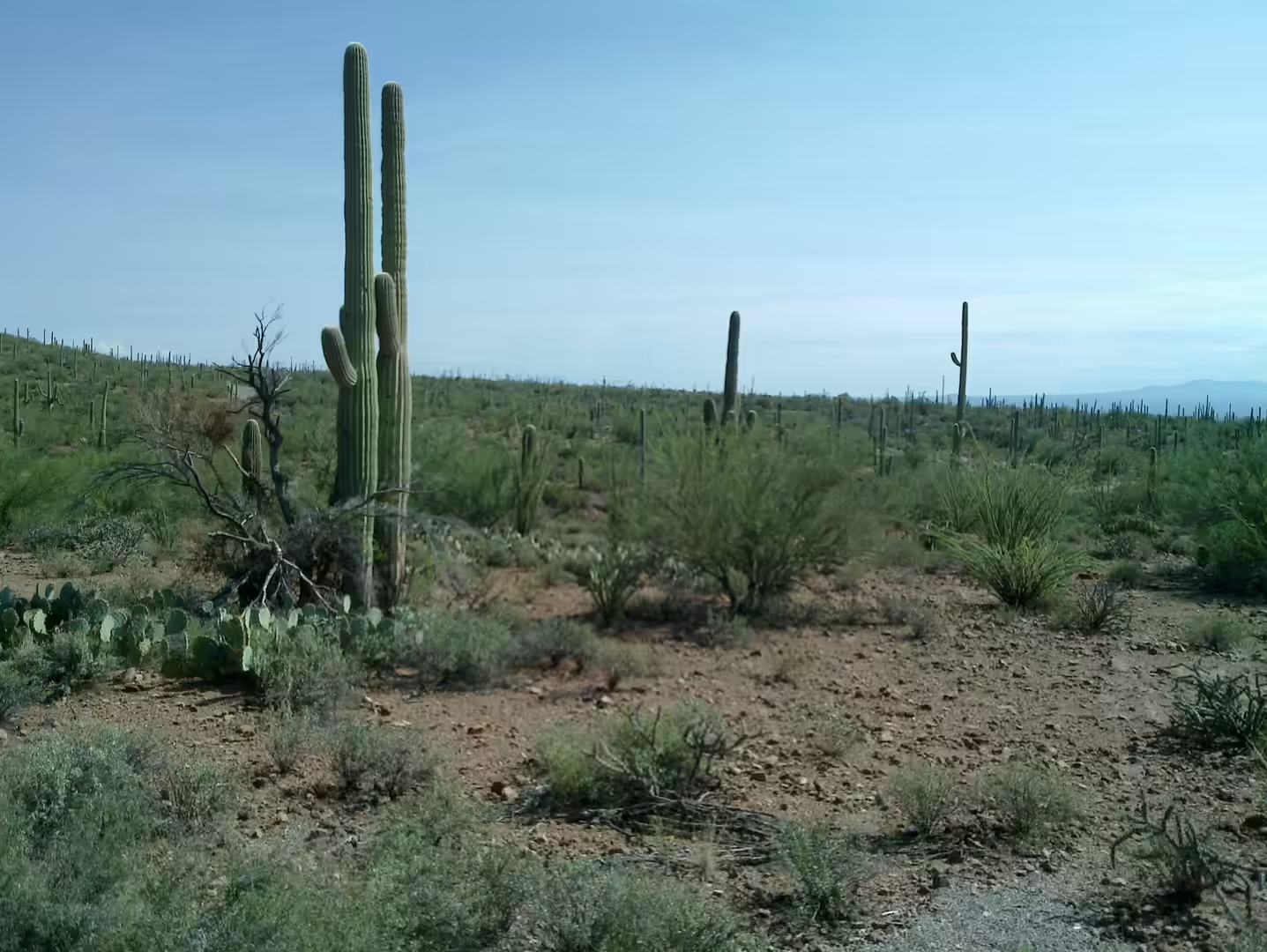
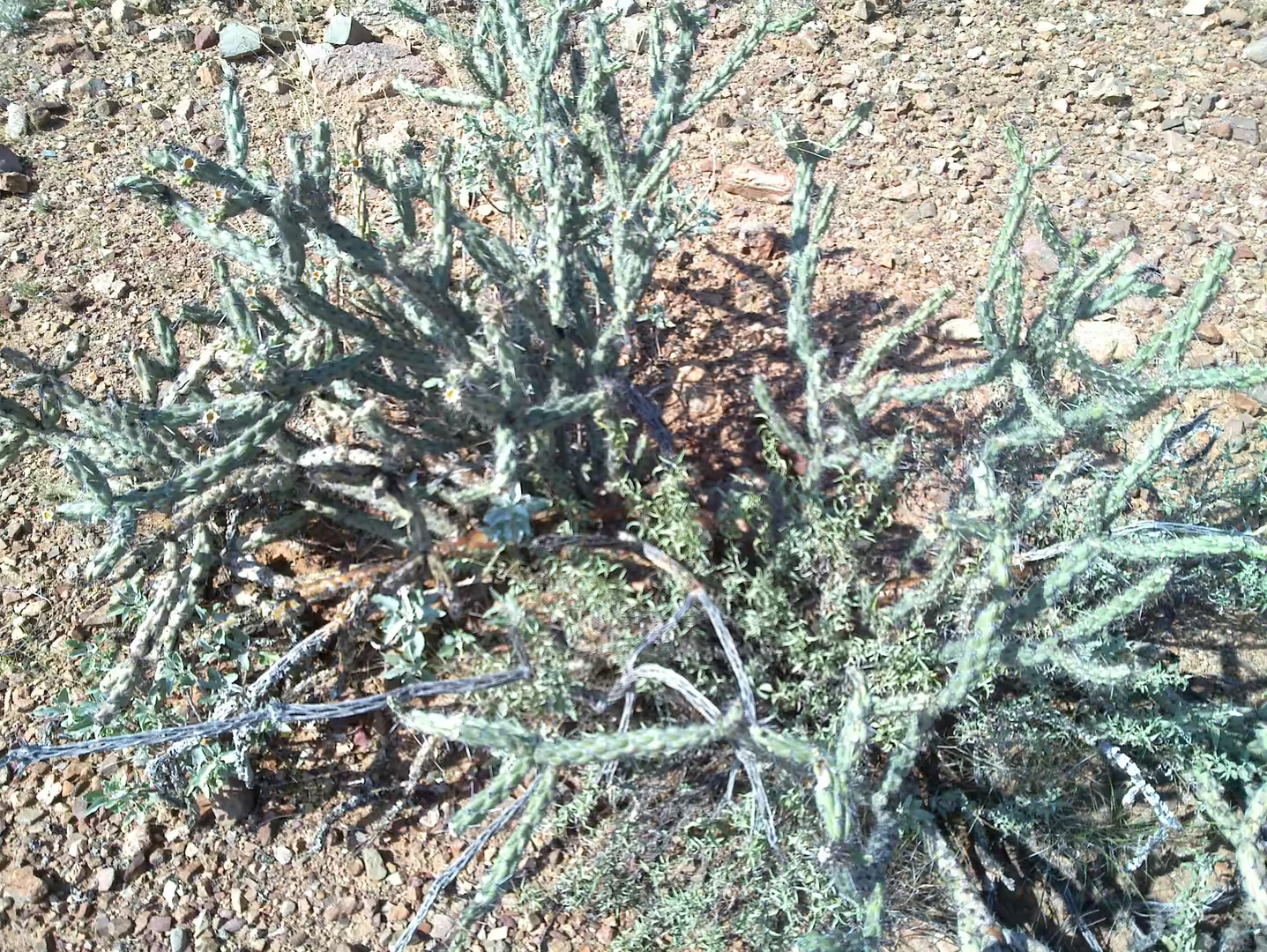
Plants here are built for drought rather than for cold. The saguaro stores water in its trunk and arms, expands in the summer rains and shrinks again in the dry months, and its ribs allow the stem to change volume without splitting. The organ pipe cactus of the south has many slender stems rising from a common base, and the prickly pear, growing between them, holds water in flat pads. All of them carry spines that shade the surface and protect it from animals, and all of them grow slowly, which is why a stand of large cactus is a record of decades without fire, frost or clearing.
Things to See
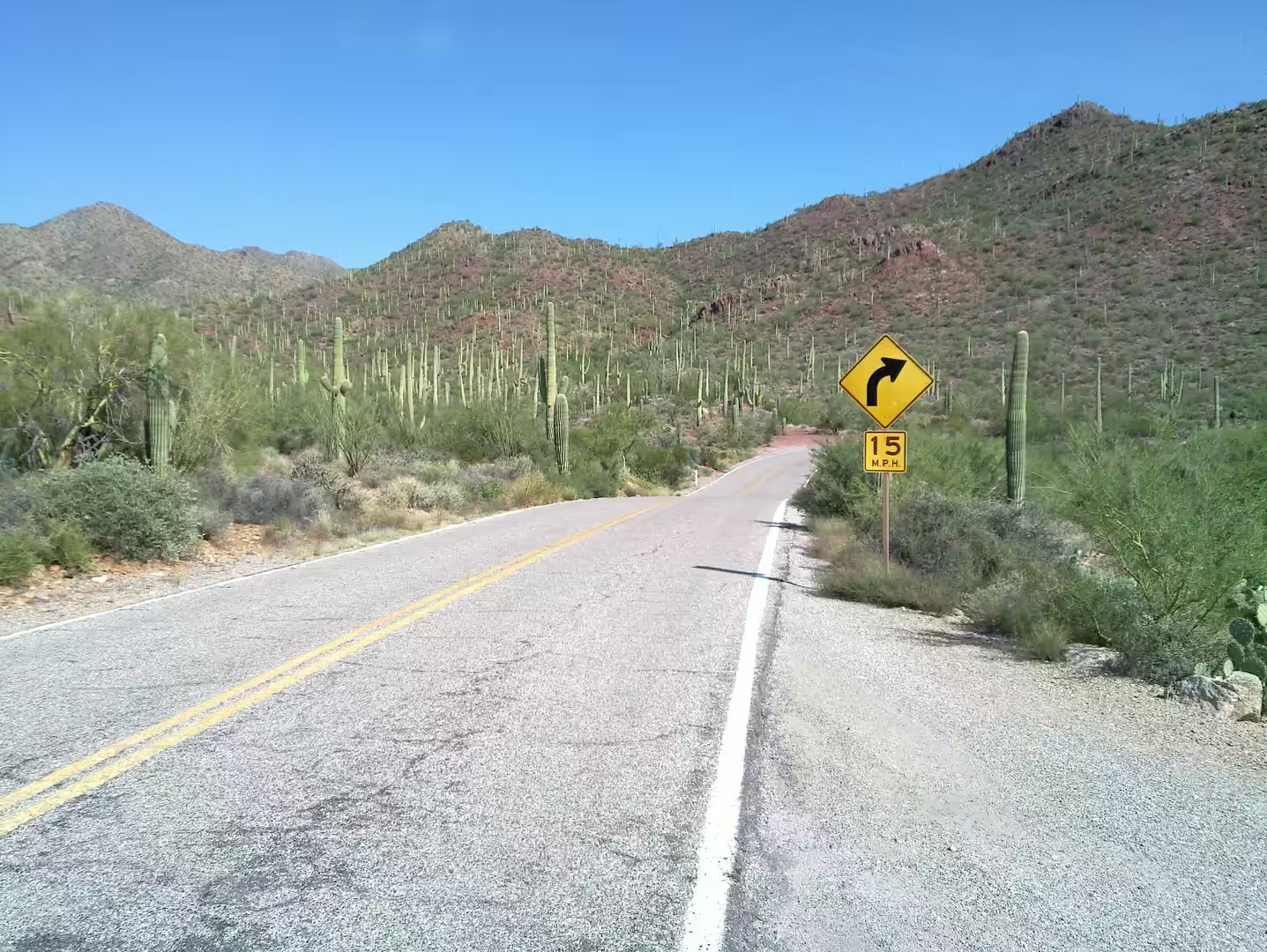
The cactus forest inside the national park is the first thing to look at, and the easiest way to see it is to drive the loop roads and stop at the pull offs. Saguaros stand in loose groups rather than in clumps, with prickly pear, ocotillo and small shrubs between them, and the ground between the plants is bare red soil and gravel. Signs along the way explain how the cactus reproduces and how long it takes to reach full size, which makes a difference to what you are looking at: almost every large plant in the park is older than the park itself.
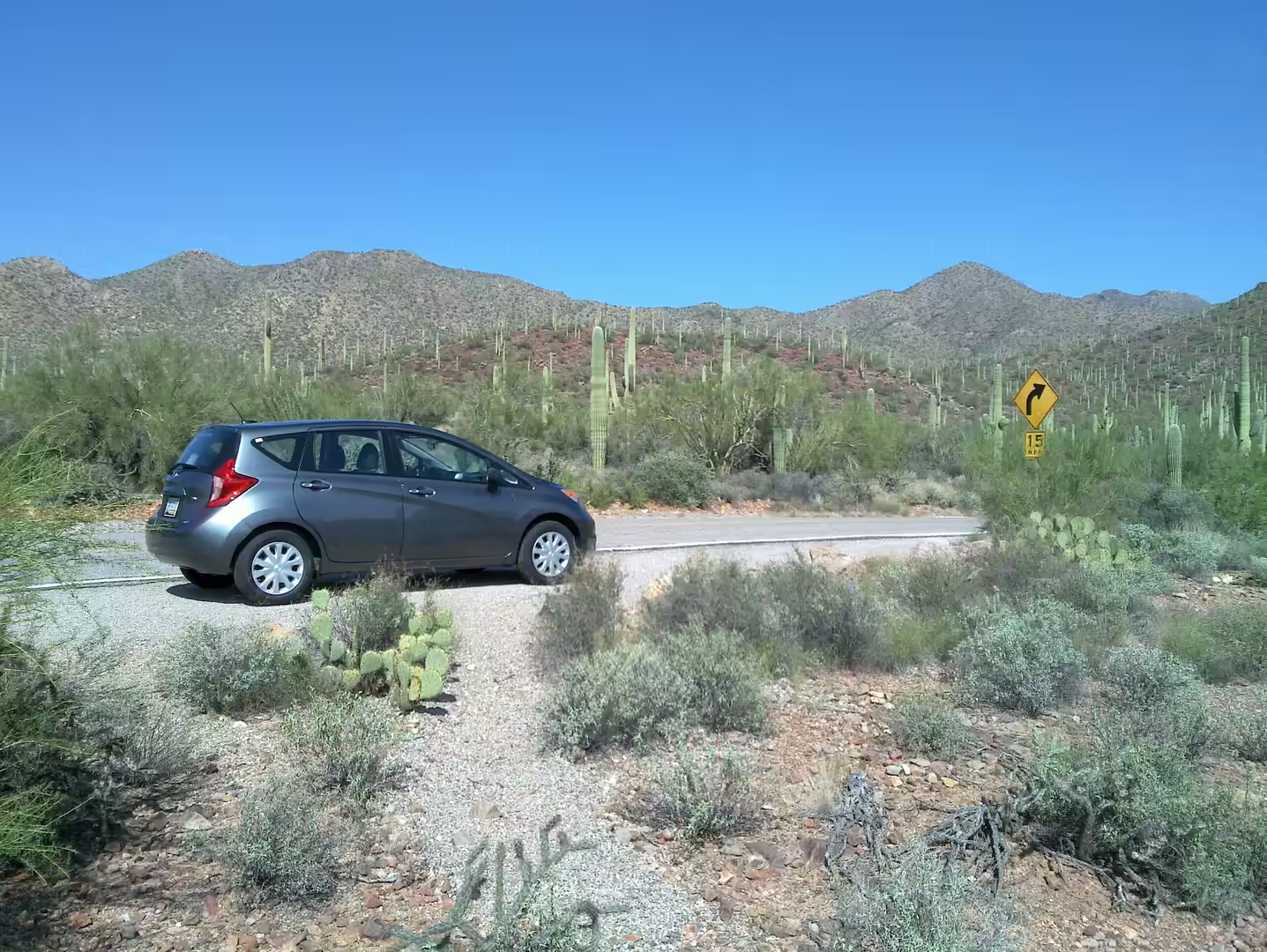
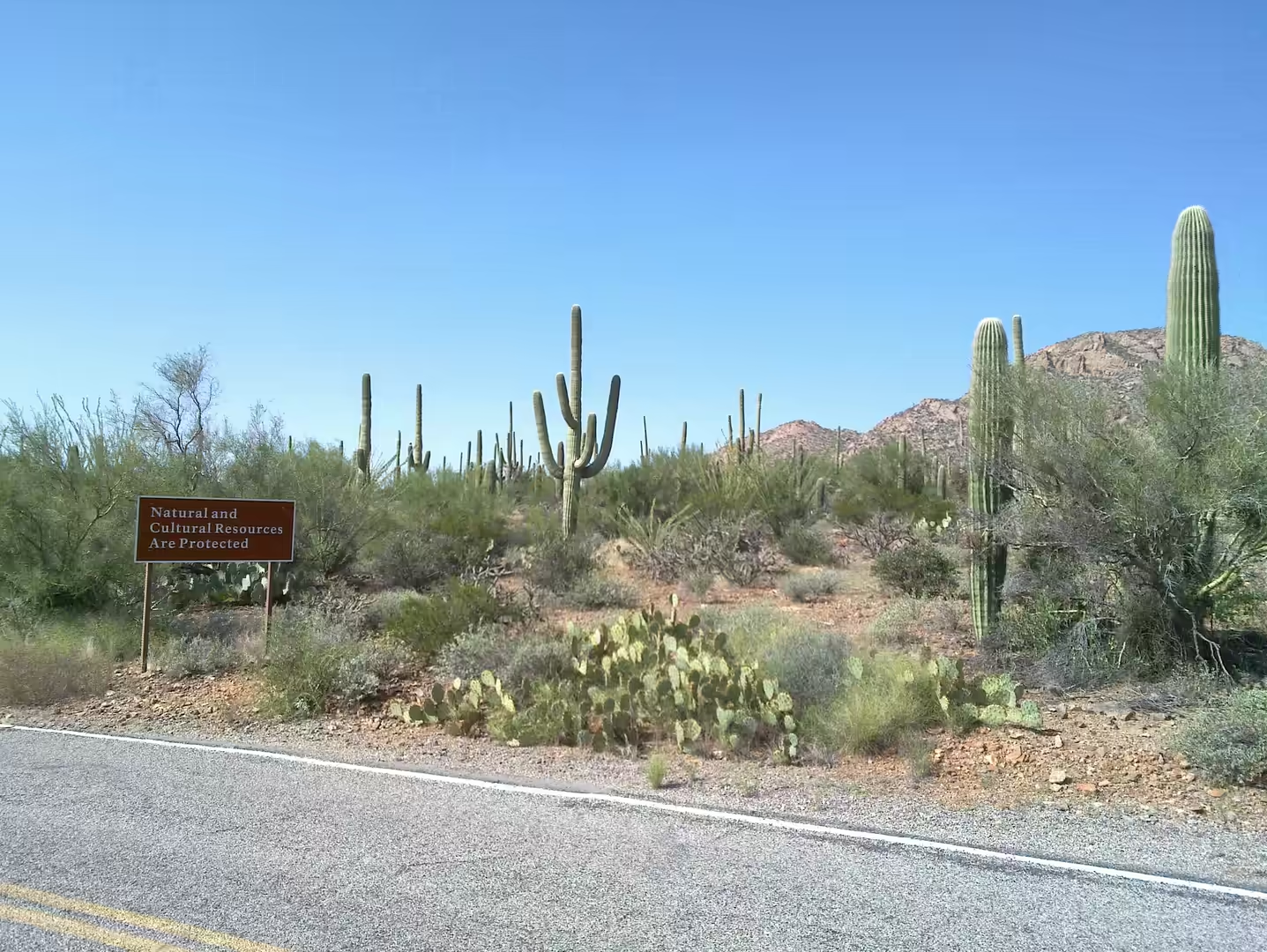
The roads are worth attention in their own right, because the desert is best read at a slow speed. Curves carry warning signs and, at the boundaries, notices that natural and cultural resources are protected, and the verges change with every rise and fall: cactus and creosote on the flats, grass and oak higher up, pine forest on the summit ridges. Water crossings are marked with depth gauges even though most of them are dry, because a monsoon storm can put water across the road within an hour on the same day that the thermometer passes forty degrees.
South of Tucson the drive to Organ Pipe Cactus National Monument is about two and a half hours in ordinary conditions and crosses some of the emptiest country in Arizona. The monument is warm and quiet, and because 95 per cent of it is wilderness, almost all of it has to be seen from the road or on foot. The cactus gardens here carry species that do not grow further north, and the border itself is part of the landscape: the crossing at Lukeville leads to Sonoyta in Mexico, and the traffic of a working frontier runs through a place that is otherwise barely settled.
For the practical side of a desert day, three things matter. Water should be carried in quantity, since the dry air removes it faster than most visitors expect and the distances between services are long. Walking is best before ten in the morning and after four in the afternoon, with the middle of the day reserved for driving or for shade. And the light should be planned for, because the low sun of early morning and late afternoon is what gives the ranges their colour and shows the shape of the ground that the flat light of noon hides.
The border is part of any visit to the southern part of this desert, and it has a hard history. In August 2002 a United States Border Patrol ranger, Kristopher Eggle, was shot and killed inside Organ Pipe Cactus National Monument by a drug smuggler, and the following year the majority of the monument was closed because of the continuing flow of people and drugs across the boundary. The visitor centre was renamed in his memory later that year, and the park has since reopened with a permanent border presence. The crossing at Lukeville is a normal, working frontier post, and the traffic through it is the latest layer of a border country that has shifted several times since the presidio was built.
References
- Averill-Murray, R. C. (ed.) (2019). Population Ecology of the Sonoran Desert Tortoise in Arizona. The Sonoran Desert Tortoise. doi.org/10.2307/j.ctvfjcx1x.9
- Lowe, C. H. (1967). Supercooling of the Saguaro Species Drosophila nigrospiracula in the Sonoran Desert. Ecology 48, 989-992. doi.org/10.2307/1934547
- Rodriguez-Buritica, H. & Ezcurra, E. (2013). Population dynamics of Sonoran Desert saguaro cactus (Carnegiea gigantea) at the Desert Laboratory, Tucson, Arizona. Ecology 94, 2503-2511. doi.org/10.1890/13-0182.1
- Wikipedia contributors (2026). Baja California Sur. en.wikipedia.org/wiki/Baja_California_Sur
- Wikipedia contributors (2026). Baja California. en.wikipedia.org/wiki/Baja_California
- Wikipedia contributors (2026). Basin and Range Province. en.wikipedia.org/wiki/Basin_and_Range_Province
- Wikipedia contributors (2026). Chihuahuan Desert. en.wikipedia.org/wiki/Chihuahuan_Desert
- Wikipedia contributors (2026). Great Basin Desert. en.wikipedia.org/wiki/Great_Basin_Desert
- Wikipedia contributors (2026). Mojave Desert. en.wikipedia.org/wiki/Mojave_Desert
- Wikipedia contributors (2026). Monsoon. en.wikipedia.org/wiki/Monsoon
- Wikipedia contributors (2026). Organ Pipe Cactus National Monument. en.wikipedia.org/wiki/Organ_Pipe_Cactus_National_Monument
- Wikipedia contributors (2026). Phoenix, Arizona. en.wikipedia.org/wiki/Phoenix,_Arizona
- Wikipedia contributors (2026). Saguaro. en.wikipedia.org/wiki/Saguaro
- Wikipedia contributors (2026). Sonoran Desert. en.wikipedia.org/wiki/Sonoran_Desert
- Wikipedia contributors (2026). Tucson, Arizona. en.wikipedia.org/wiki/Tucson,_Arizona