
The White Tank Mountains are a rugged and visually striking mountain range located in central Arizona, forming the western edge of the Phoenix metropolitan area. Stretching across a large portion of western Maricopa County, the range separates expanding urban development from the open desert landscapes that extend toward the lower Colorado River basin. Despite their proximity to major population centers, the White Tank Mountains retain a largely undeveloped and remote character.
The range reaches its highest point at Barry Goldwater Peak, which rises to approximately 4,083 feet (1,245 meters) above sea level. From many vantage points, the mountains dominate the horizon, with sharp ridgelines, rocky slopes, and broad desert valleys creating a classic Sonoran Desert landscape. The mountains are best known today as the centerpiece of White Tank Mountain Regional Park, which protects a vast area of desert wilderness and provides public access for recreation and education.
The climate is typical of the Sonoran Desert, with extremely hot summers, mild winters, and low annual precipitation. Rainfall is concentrated during winter storms and the summer monsoon season, when brief but intense rainfall can dramatically transform the landscape. During wetter years, the desert blooms with wildflowers, adding seasonal color to the otherwise muted tones of rock and vegetation.
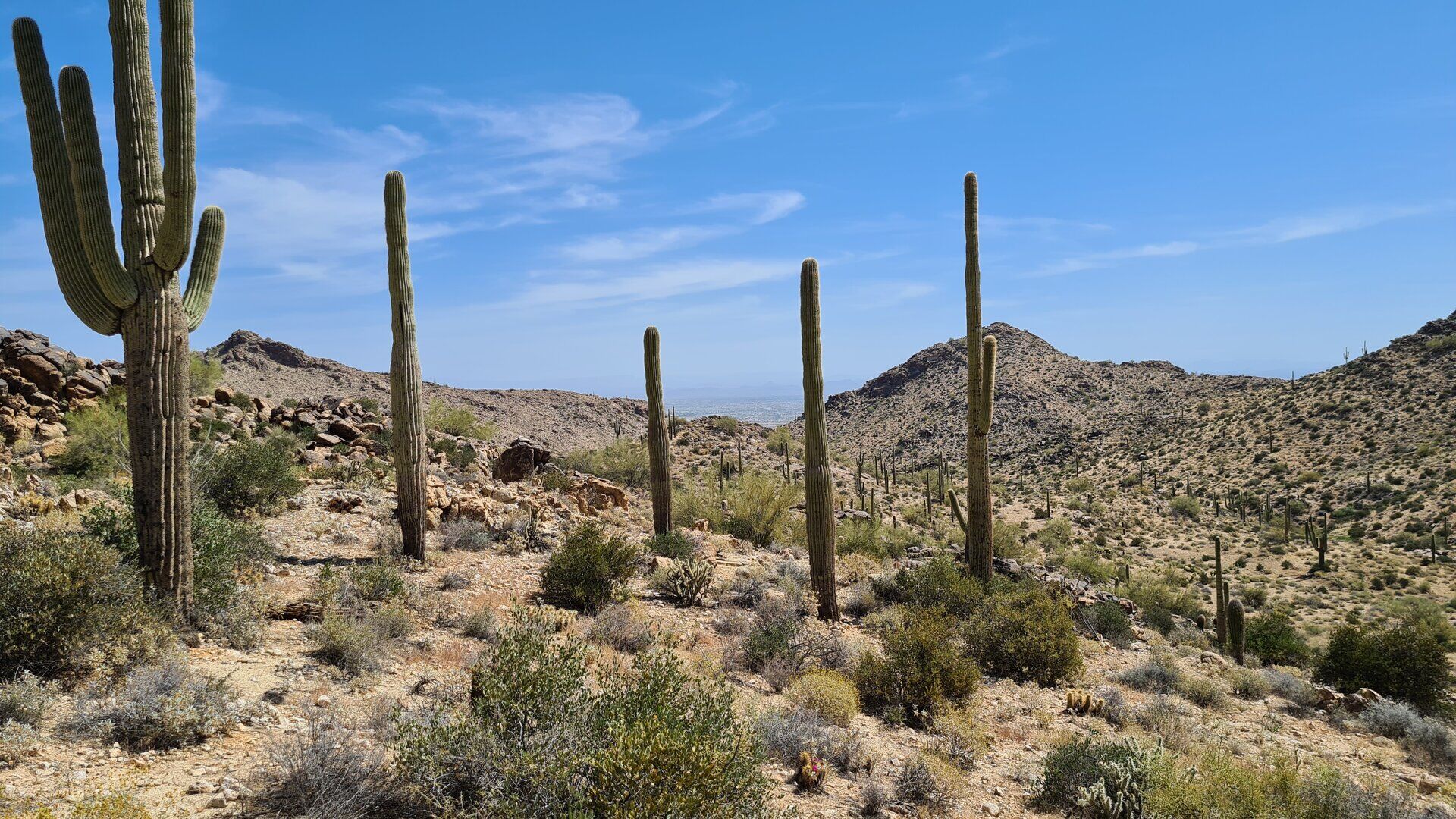
Vegetation includes iconic Sonoran Desert species such as saguaro cacti, barrel cacti, ocotillo, creosote bush, palo verde trees, and mesquite. Wildlife is diverse and includes reptiles, birds, and mammals adapted to desert conditions. The White Tank Mountains play an important ecological role as a habitat corridor and refuge within an increasingly urbanized region.
History
Human presence in the White Tank Mountains dates back thousands of years. The area was used extensively by Indigenous peoples, most notably the Hohokam culture, who inhabited much of central and southern Arizona from roughly 300 to 1450 CE. Evidence of their presence is widespread throughout the range, including petroglyphs, trails, and remnants of habitation sites.
For Indigenous communities, the White Tank Mountains were an important seasonal resource area. Natural rock basins, known as tinajas or “tanks,” collected rainwater and provided reliable water sources in an otherwise arid environment. These water features supported travel, hunting, gathering, and spiritual practices. The name “White Tank Mountains” is believed to derive from these water-holding basins, some of which appear light-colored or “white” due to mineral deposits and weathering.
During the 19th century, European-American explorers, prospectors, and settlers passed through the region, though permanent settlement remained limited. The harsh desert climate, lack of consistent water, and rugged terrain discouraged large-scale development. Ranching, mining exploration, and military activity occurred in surrounding areas but had relatively limited impact on the mountains themselves.
In the 20th century, rapid growth in the Phoenix area increased awareness of the need to protect nearby natural landscapes. Maricopa County acquired land to establish White Tank Mountain Regional Park, ensuring the preservation of cultural sites, wildlife habitat, and scenic desert landscapes. Today, the mountains serve as both a historical archive and a recreational resource for residents and visitors.
Geology
The White Tank Mountains are among the oldest geological features in central Arizona, composed primarily of ancient igneous and metamorphic rocks. Much of the range consists of granite and gneiss formed more than one billion years ago, making these rocks some of the oldest exposed formations in the region.
Volcanic activity also played a role in shaping the range. In later geological periods, lava flows and volcanic intrusions added layers of basalt and other volcanic materials to the landscape. These processes contributed to the complex rock patterns and textures visible throughout the mountains.
Over millions of years, tectonic uplift and erosion sculpted the range into its present form. Wind, water, and temperature extremes gradually wore down the rock, creating steep slopes, exposed ridges, narrow canyons, and broad alluvial fans at the base of the mountains. Seasonal runoff carved channels and washes that direct water toward the surrounding desert plains.
One of the most distinctive geological features of the White Tank Mountains is the presence of natural rock basins. These basins formed where water pooled in depressions in hard bedrock, slowly enlarging them through chemical weathering and erosion. These features were crucial for both wildlife and human survival and remain an important part of the desert ecosystem.
Things to See
The White Tank Mountains offer a rich variety of natural, cultural, and recreational experiences, especially within White Tank Mountain Regional Park.
Natural Landscapes
- Expansive Sonoran Desert vistas with dense saguaro forests
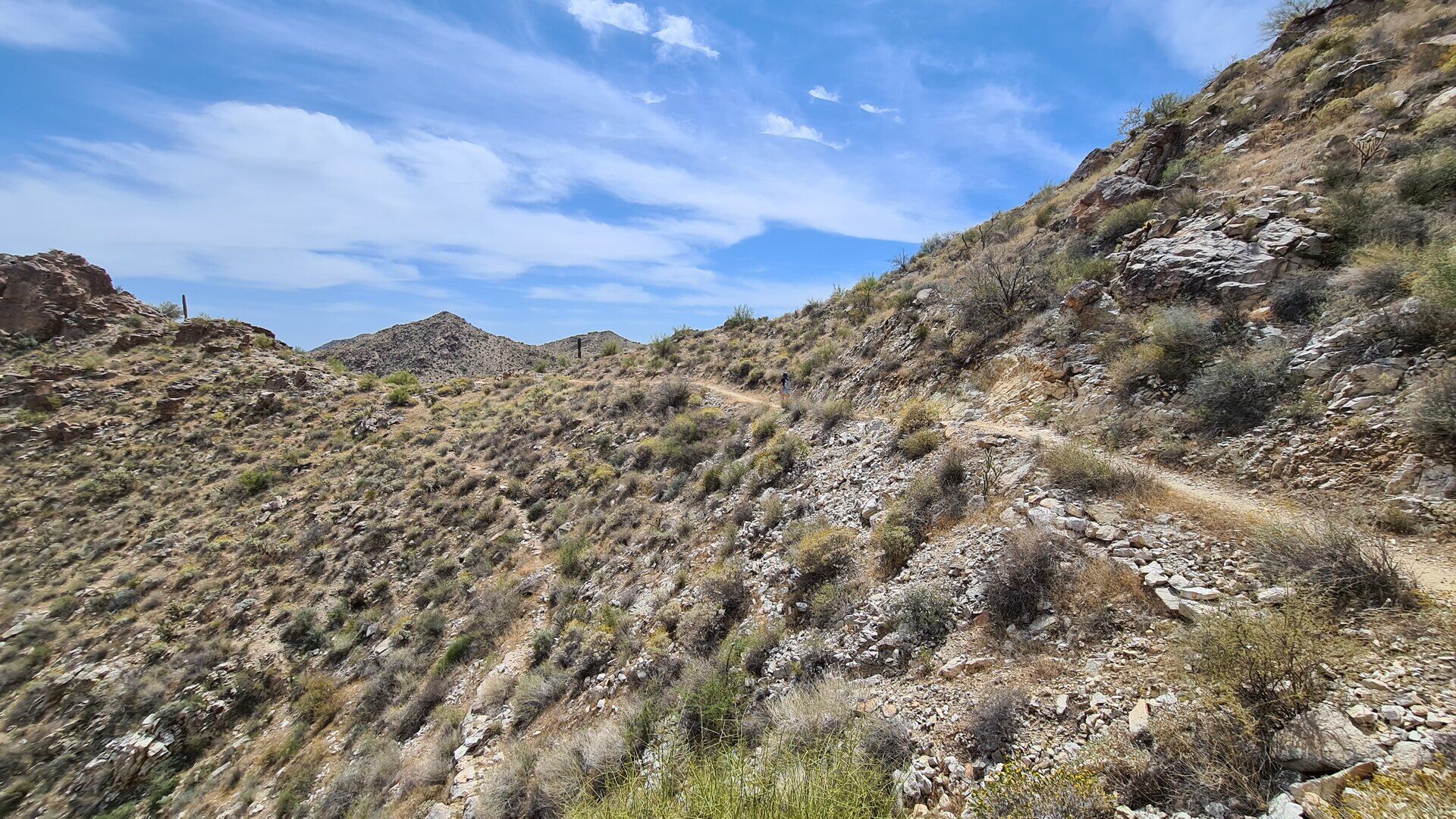
- Rocky ridgelines and rugged mountain slopes
- Desert washes and canyons shaped by seasonal rainfall
- Panoramic viewpoints with sweeping views of the Phoenix Valley
Cultural and Archaeological Features
- Extensive Hohokam petroglyph sites carved into dark desert rock
- Ancient trail corridors used for travel and trade
- Interpretation areas explaining Indigenous history and symbolism
- Historic references to early settlers and desert survival
Outdoor Recreation
- A large network of hiking trails ranging from short interpretive walks to challenging summit routes
- Opportunities for mountain biking and horseback riding on designated trails
- Wildlife observation, including desert birds, coyotes, bobcats, and reptiles
- Photography and nature study focused on desert light, texture, and seasonal change
Educational and Visitor Facilities
- Trailheads with maps and informational signage
- Ranger-led programs and guided hikes
- Picnic areas set within scenic desert surroundings
- Exhibits highlighting geology, ecology, and cultural heritage
Experience and Character
The White Tank Mountains offer a sense of space and solitude that contrasts strongly with nearby urban areas. Visitors often experience a feeling of isolation and quiet, even though the city lies just beyond the horizon. The scale of the landscape, the clarity of desert light, and the visibility of ancient cultural markings create a strong connection to both natural and human history.
The range represents a living desert environment where geology, ecology, and culture intersect. Whether explored for recreation, education, or reflection, the White Tank Mountains provide a deep and layered experience of the Sonoran Desert.